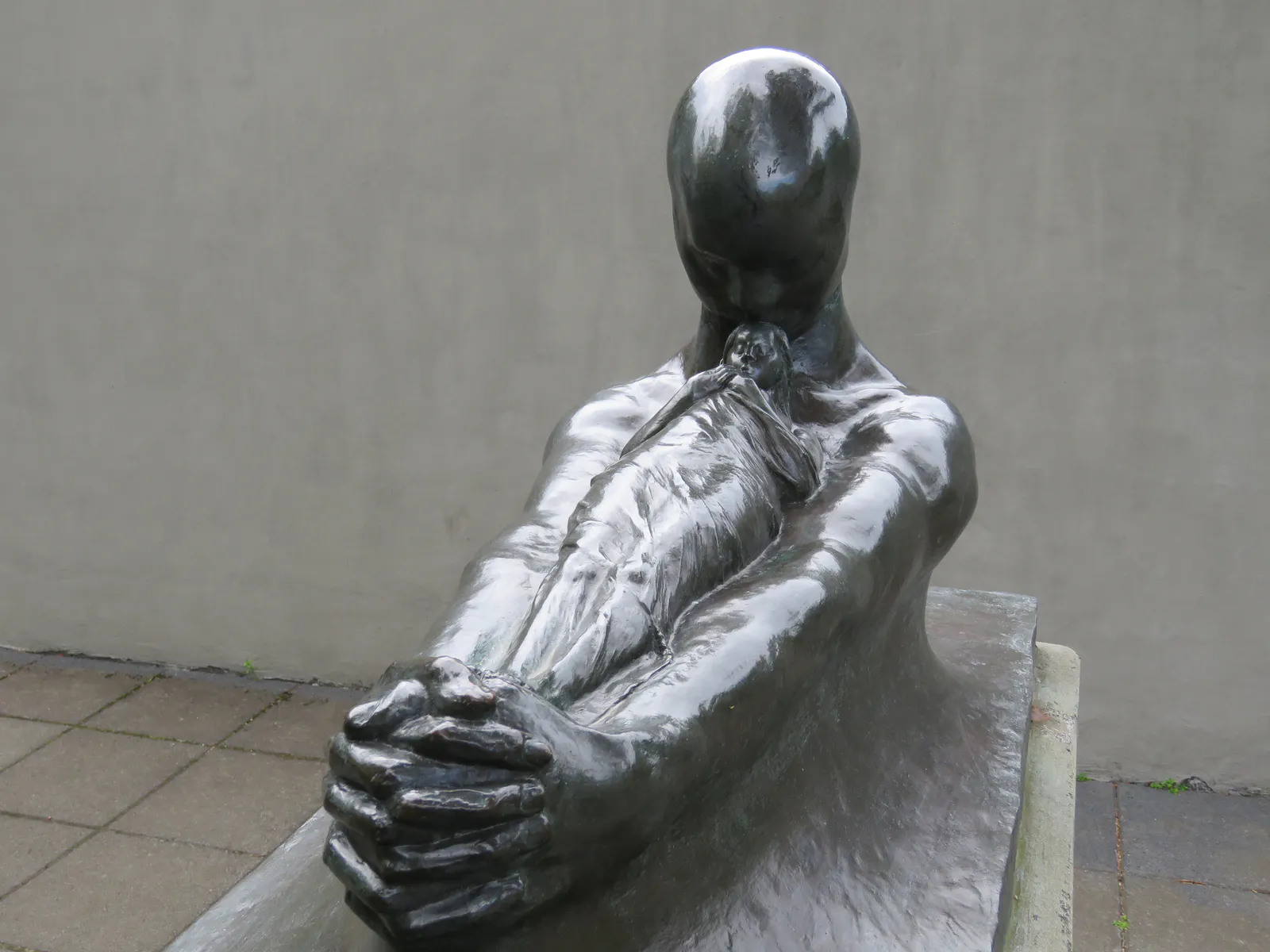
Earth
Einar Jónsson
This sculpture (1904–08) depicts a human figure cradling a smaller, draped form, symbolizing the Earth or nature. Jónsson, an Icelandic sculptor, is known for his symbolic and allegorical works exploring mythology, spirituality, and the human condition. This piece reflects his exploration of humanity’s connection to the natural world and the spiritual realm.
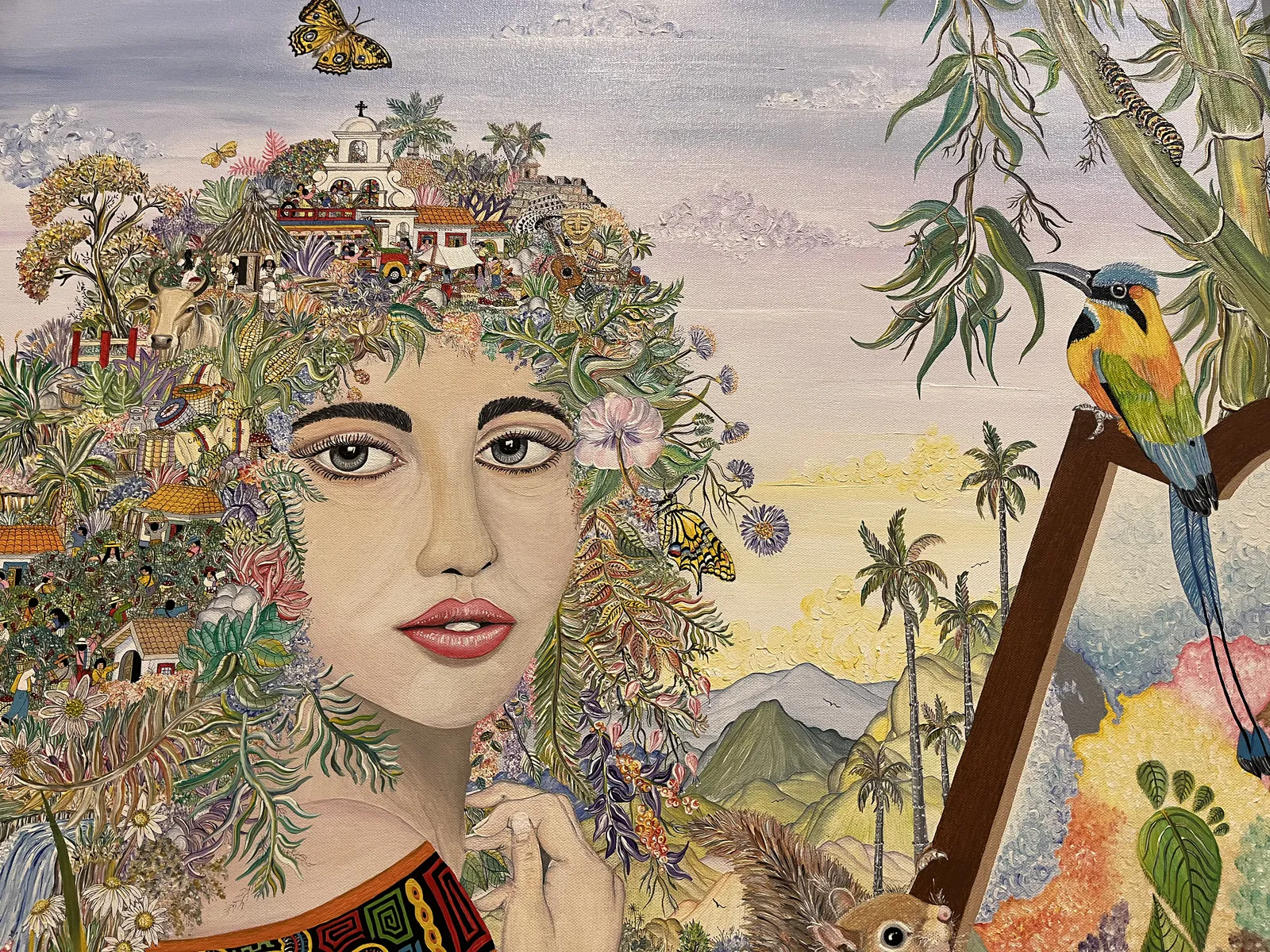
Aún Hay Tiempo
Julio César Ojeda Ariza
This 2021 work blends oil and ink to portray a woman whose hair becomes a lush tapestry of biodiversity and rural life. Symbolizing Colombia’s natural and cultural abundance, it warns of its fragility. The title, There’s Still Time, urges collective action to preserve the environment and ancestral wisdom.
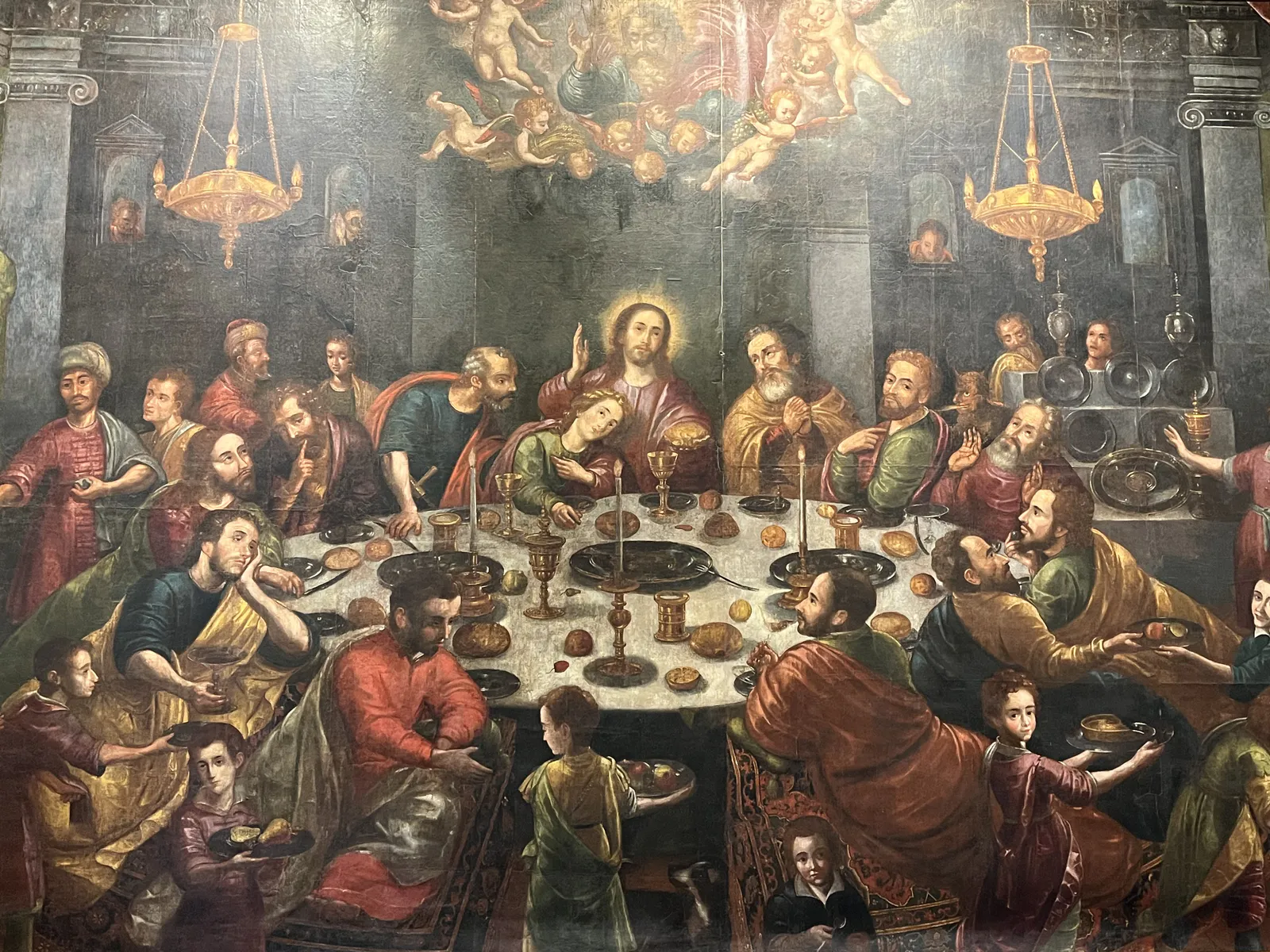
The Last Supper (with Cuy)
Diego de la Puente
De la Puente’s 1658 painting uniquely blends Spanish colonial art with Peruvian culture. It depicts Jesus and his disciples eating cuy (guinea pig), a local delicacy, instead of lamb. This substitution reflects how Catholic imagery was adapted to local customs, offering a clear example of the visual and cultural hybridization that shaped colonial Peru.
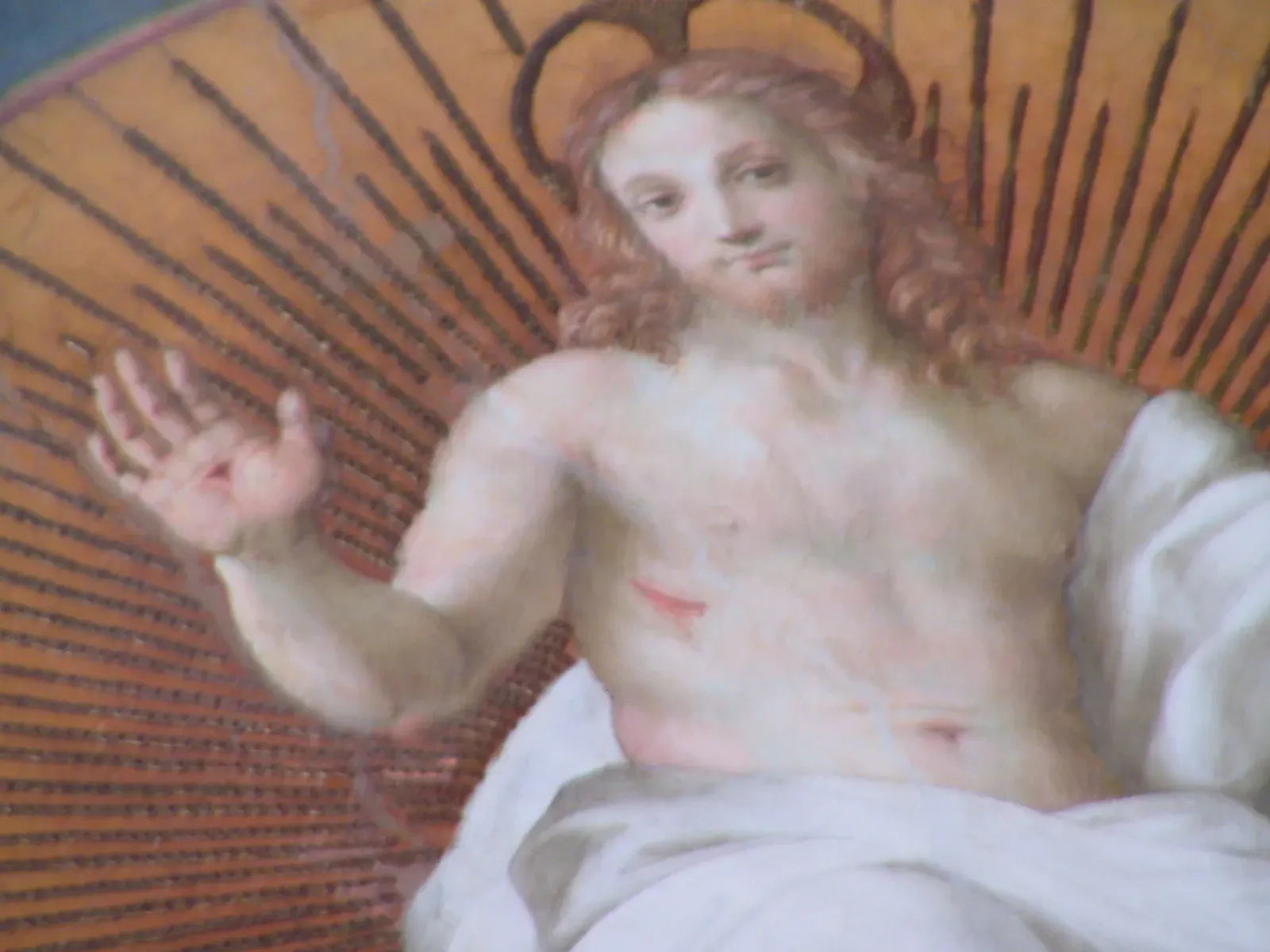
Christ in Glory (detail)
Raphael
The radiant figure of the risen Christ (1508–10) crowns the celestial register of The Disputation of the Sacrament. His raised hand and visible wounds recall both his Passion and his role as judge at the end of time. Encircled by golden rays, he visually affirms the doctrine of the Eucharist as the enduring, real presence of Christ.
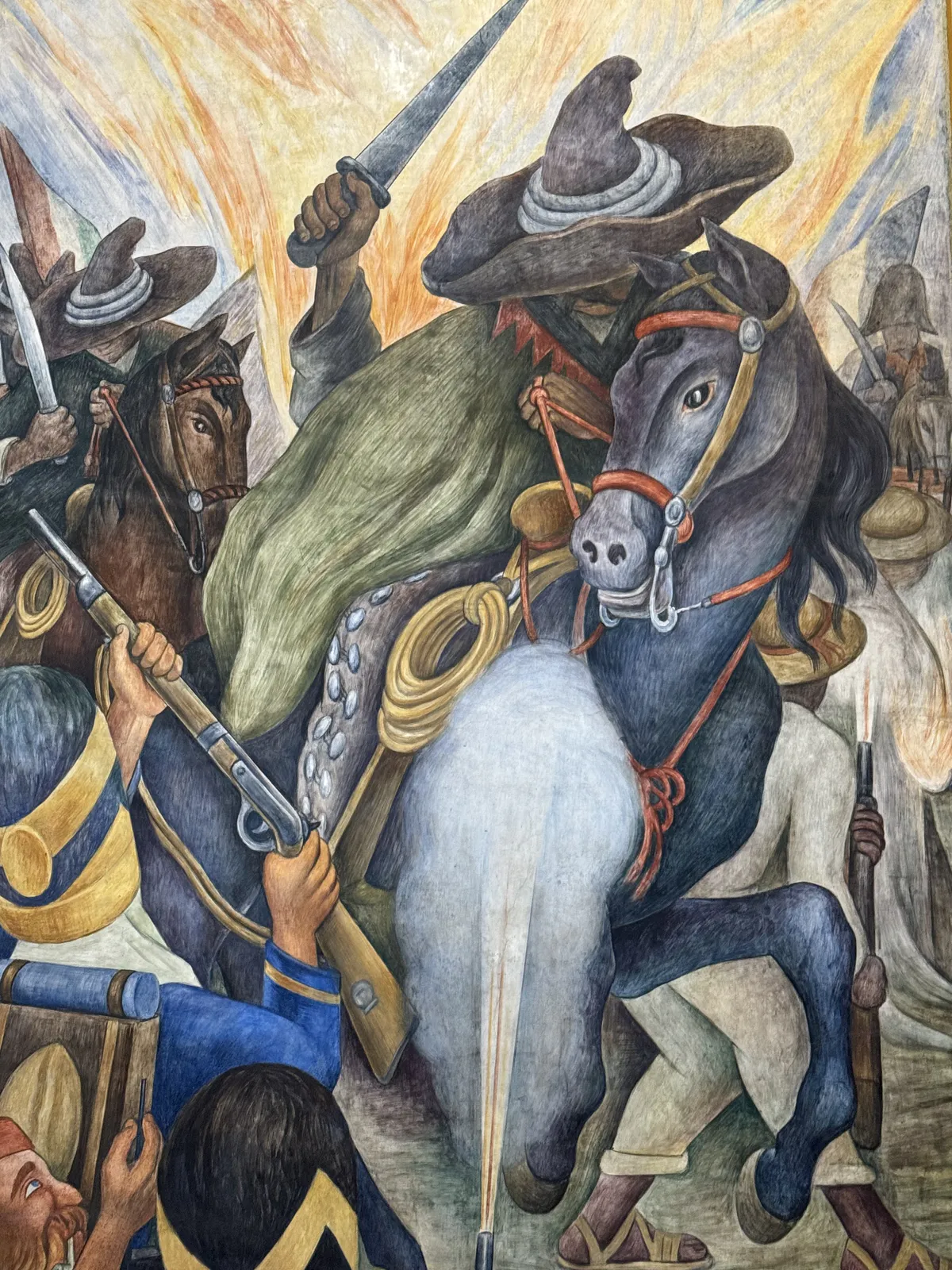
The Legend of Agustín Lorenzo (detail)
Diego Rivera
This 1936 fresco dramatizes the legendary outlaw Agustín Lorenzo as a symbol of resistance. Armed revolutionaries clash with government forces, their horses rearing amid smoke and flames. Rivera fuses myth and history, casting Lorenzo as a Mexican Robin Hood whose defiant struggle against injustice became folklore in the national imagination.
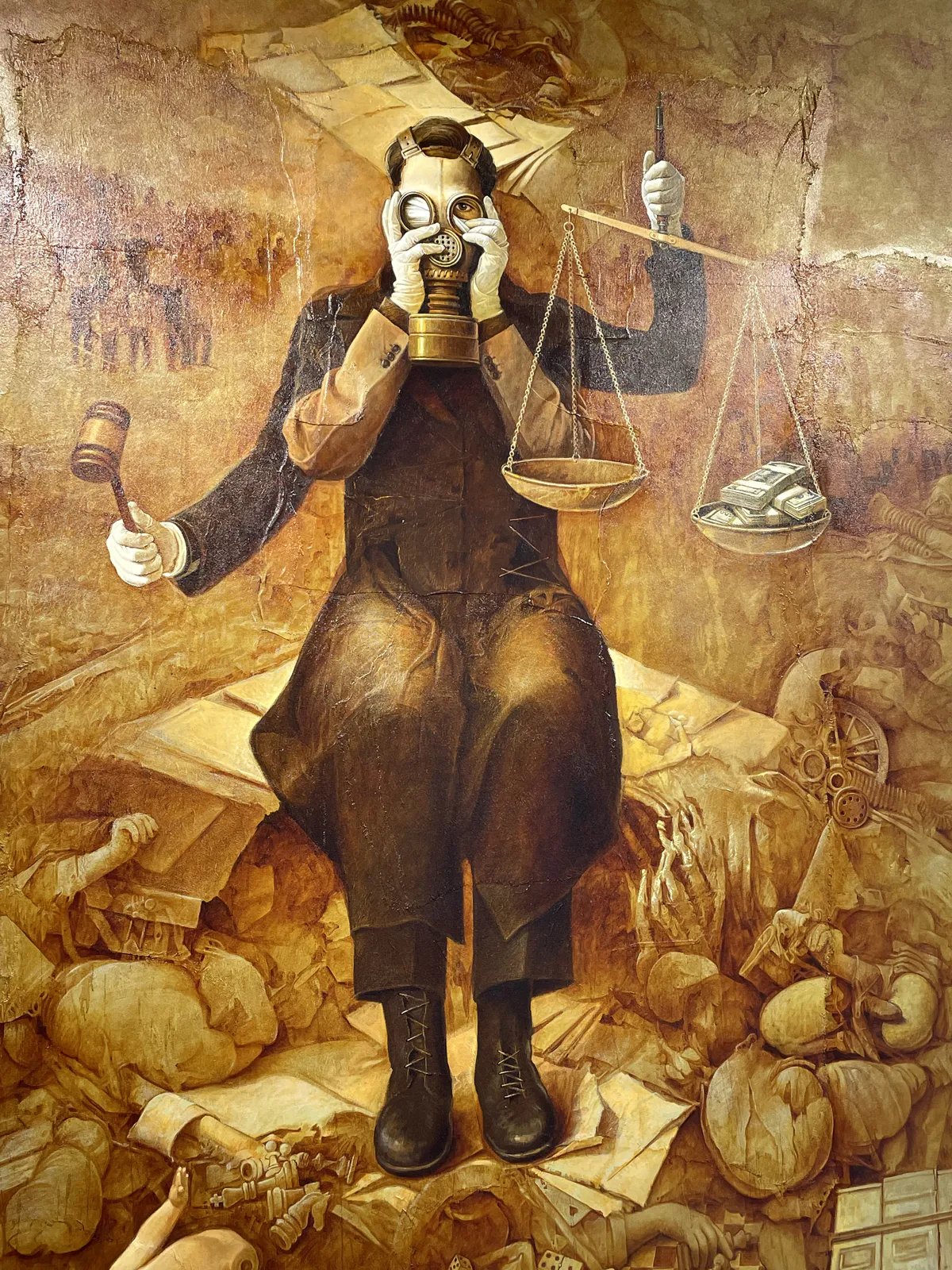
Retrato alegórico de la injusticia
Dustín Muñoz
In his powerful Allegoric Portrait of Justice (2018), Muñoz portrays a masked judge seated atop chaos, weighing gold bars against an empty scale. His gavel and gas mask signal institutional blindness and moral decay. Painted in acrylic on canvas, the work denounces injustice as systemic, silencing truth and privileging wealth over human life.
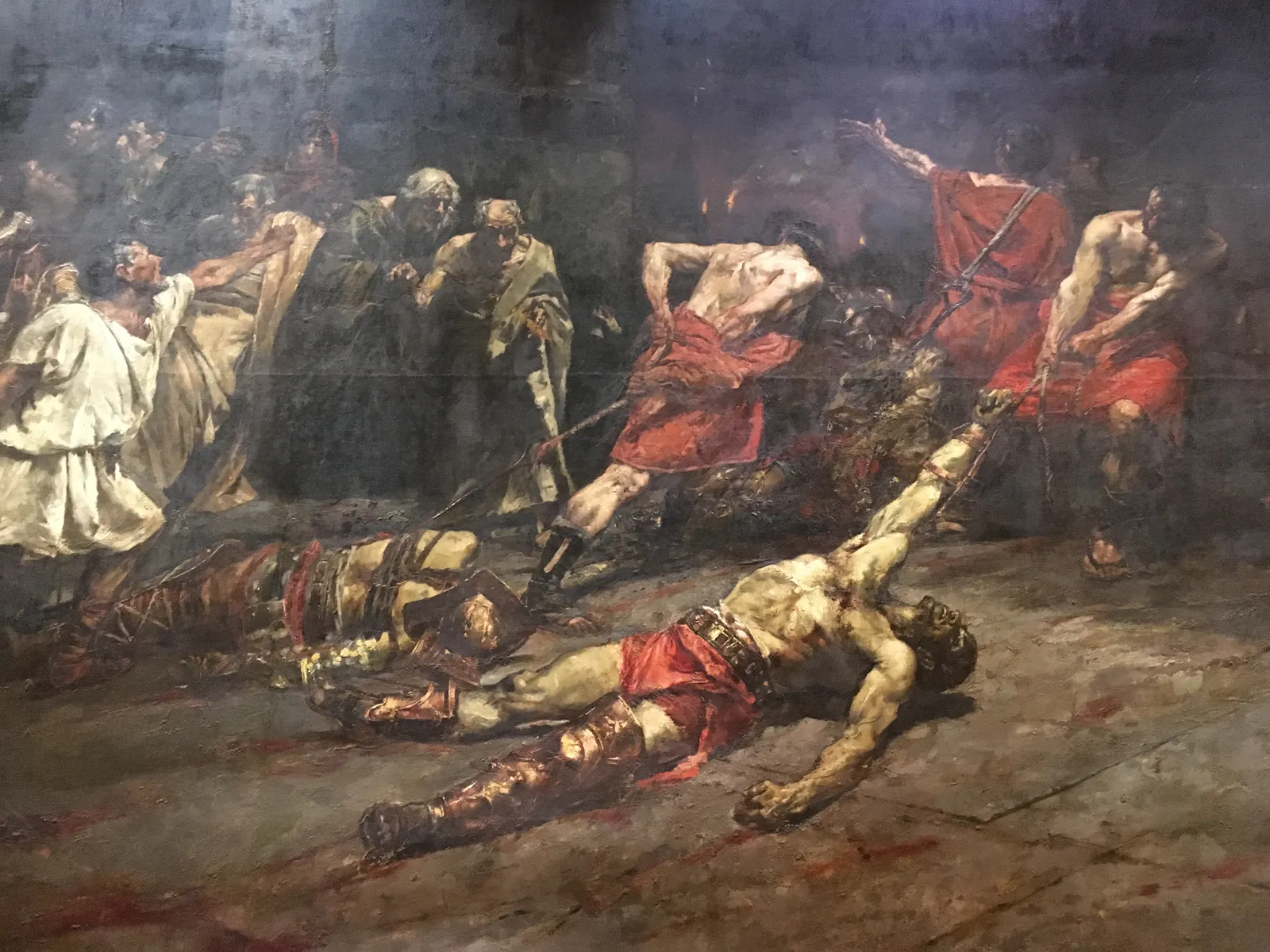
Spoliarium
Juan Luna
This vast 1884 canvas depicts slain gladiators dragged from the Roman arena, their bodies stripped in the spoliarium — the chamber beneath the Colosseum where the dead were despoiled. Luna used the scene as an allegory for the Philippines under Spanish rule, exposing oppression and voicing a nationalist cry for dignity and liberation.
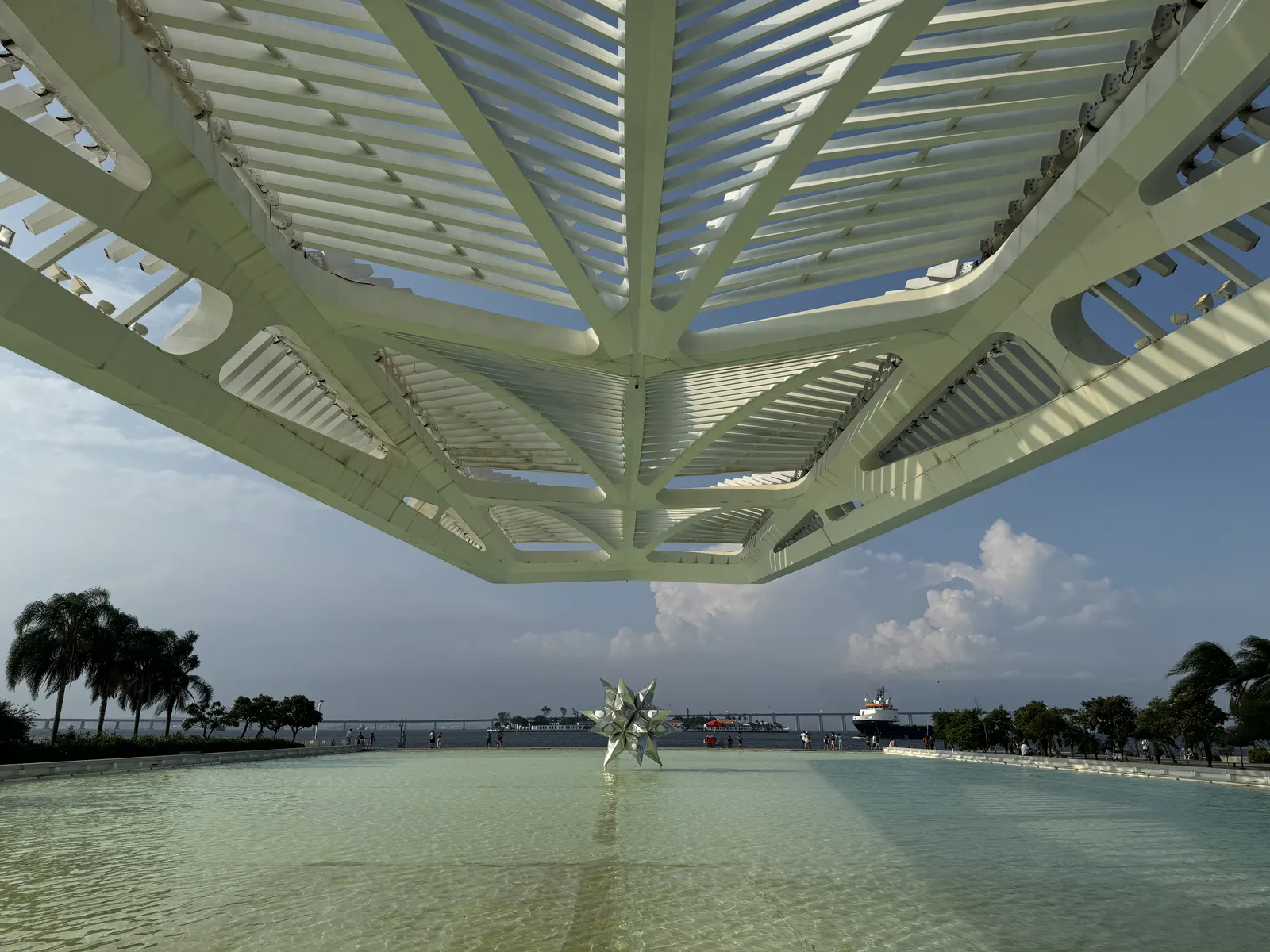
Puffed Star
Frank Stella
Installed before the Museum of Tomorrow in Rio de Janeiro (2016), this metallic sculpture by American artist Frank Stella dazzles with radiating points and mirrored planes. Its star-like form evokes cosmology and perception, inviting reflection on the interconnectedness of space, matter, and human imagination.
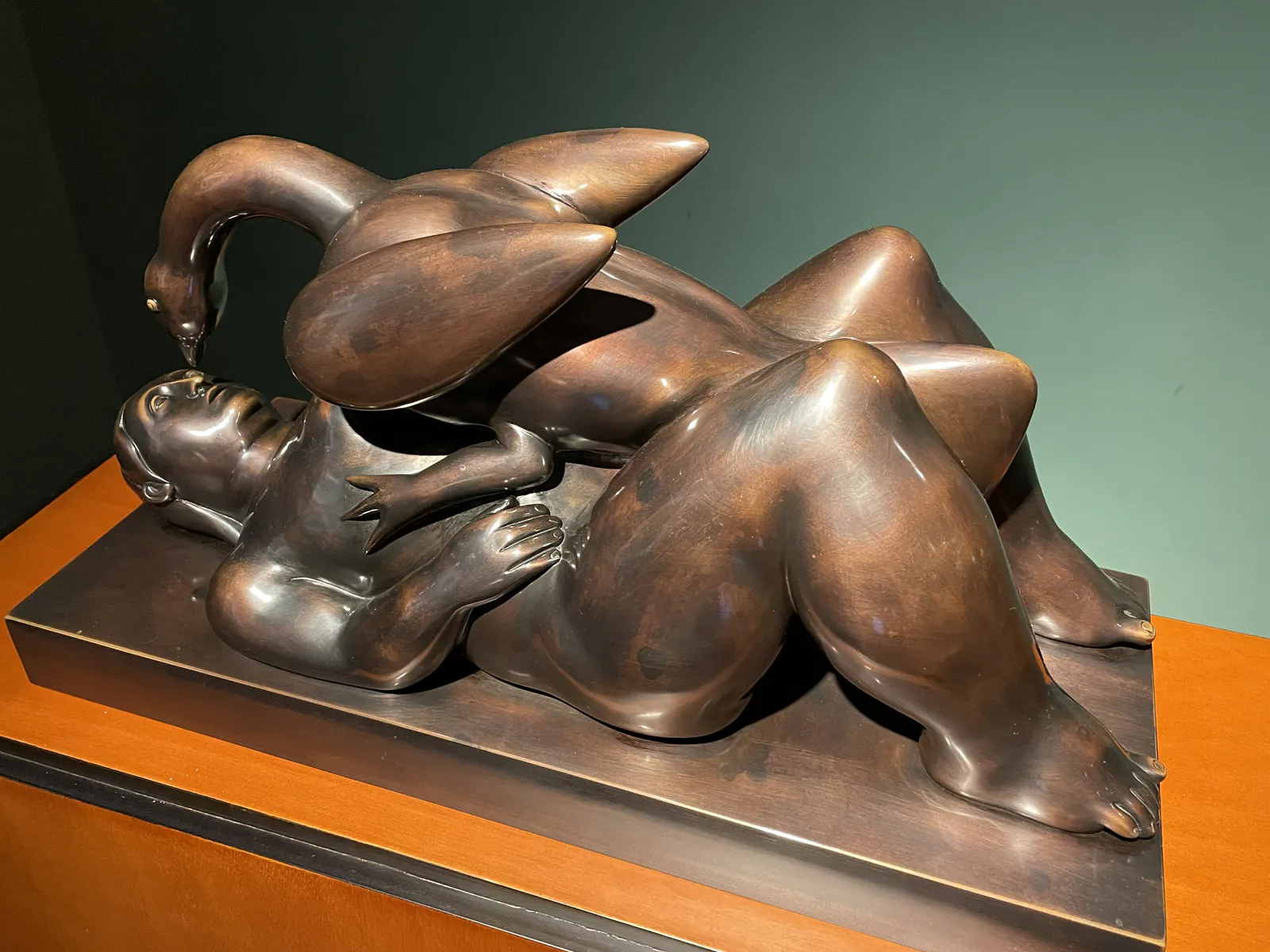
Leda and the Swan
Fernando Botero
This 1996 bronze sculpture reinterprets the myth in which Zeus, king of the gods, seduces or assaults Leda, Queen of Sparta, in the form of a swan. From their union, according to legend, were born Helen of Troy and other heroic figures. Botero’s voluptuous forms soften the myth’s violence, transforming it into a surreal, sensual tableau. His signature style invites reflection on desire, divinity, and the boundary between seduction and power.
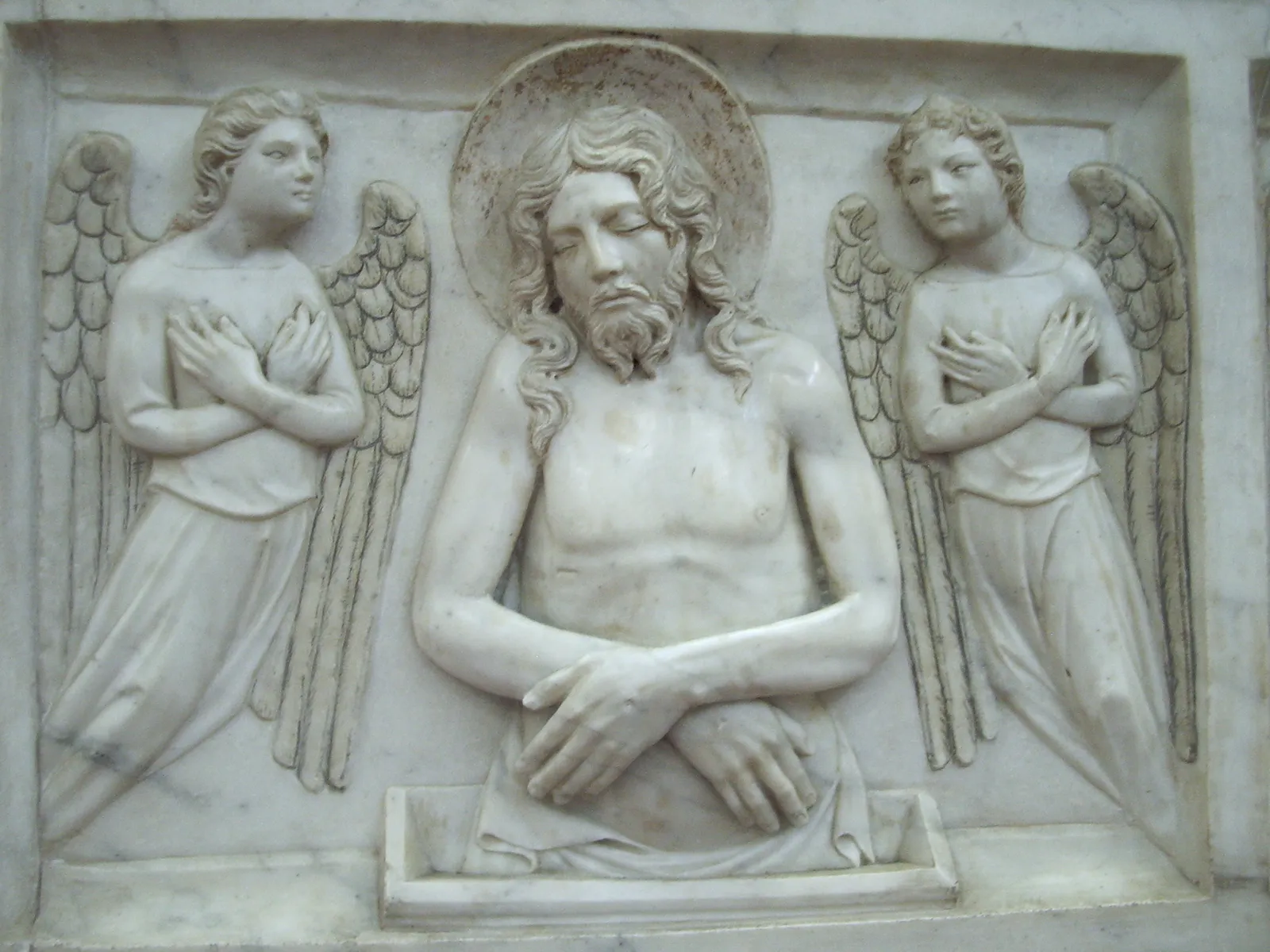
Tomb of Archbishop Scherlatti
Nino Pisano
This marble relief (c. 1300–1350) formed part of the tomb of Archbishop Scherlatti. Christ is depicted in the Imago Pietatis pose, rising from the tomb with eyes closed, flanked by two mourning angels. The scene blends devotional tenderness with refined Gothic elegance, exemplifying Nino Pisano’s lyrical style and the growing emotional realism in 14th-c. funerary art.
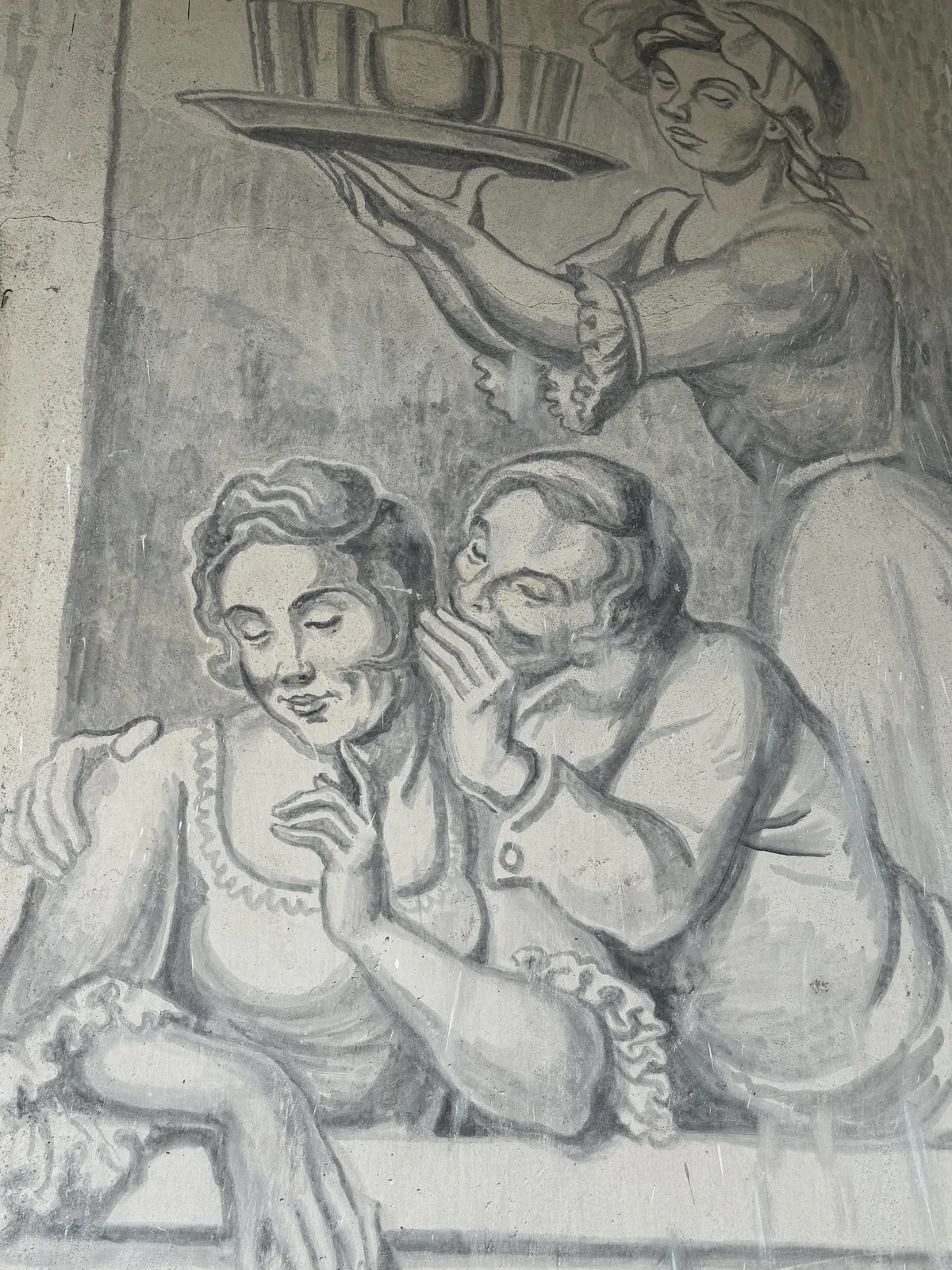
A Dangerous Whisper
Luis Alberto Acuña
This mural (1950s) by Luis Alberto Acuña depicts a man whispering seductively into a woman’s ear while she listens with a mix of curiosity and restraint. The intimate gesture contrasts with the servant above, who quietly performs her duties, reinforcing themes of gender dynamics, social roles, and the tension between desire and decorum in colonial society.
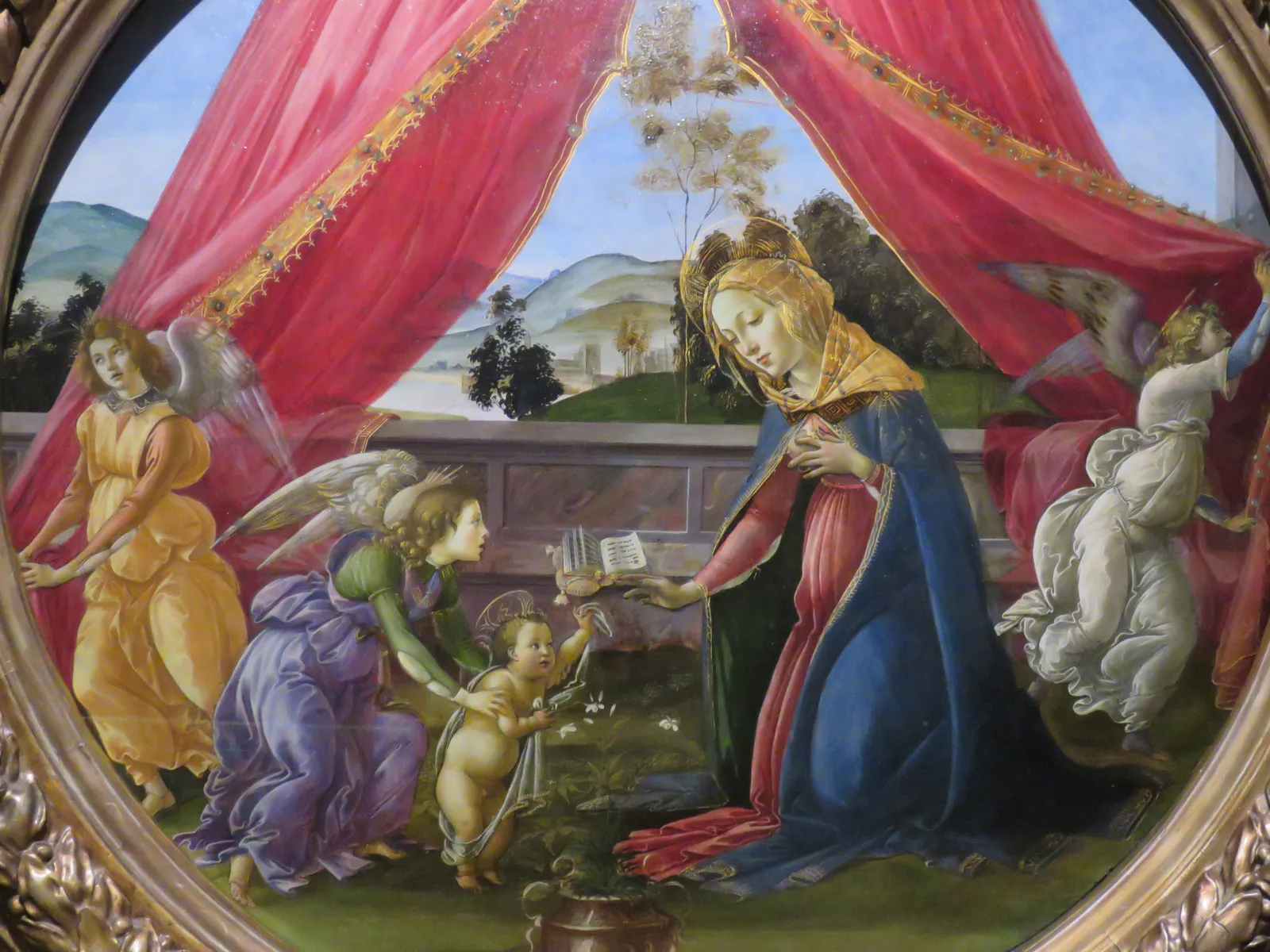
Madonna del Padiglione
Sandro Botticelli
This tempera painting (c. 1493) shows the Virgin Mary adoring the Christ Child beneath a luxurious red canopy, assisted by angels. Botticelli fuses spiritual intimacy with courtly elegance. The open book and flowering symbols evoke divine wisdom and purity, while the tent references the tabernacle—God’s dwelling among humanity.
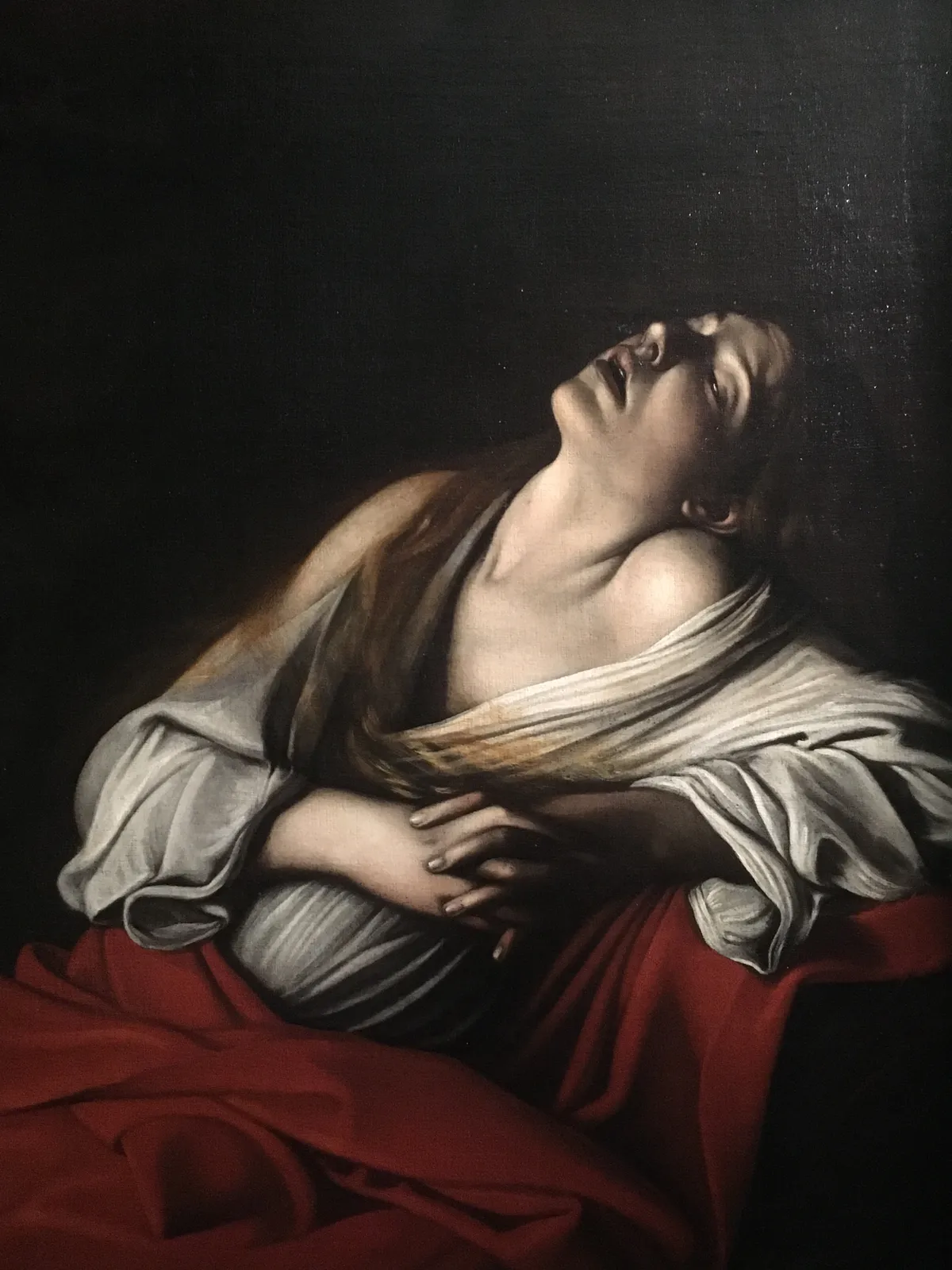
The Penitent Magdalene
Caravaggio
This painting (1594–95) shows Mary Magdalene seated in repentance, jewels cast aside at her feet. With downcast eyes and folded hands, she embodies both sensual beauty and spiritual transformation. Caravaggio merges naturalism with sacred symbolism, turning penitence into a deeply human, intimate moment of grace.
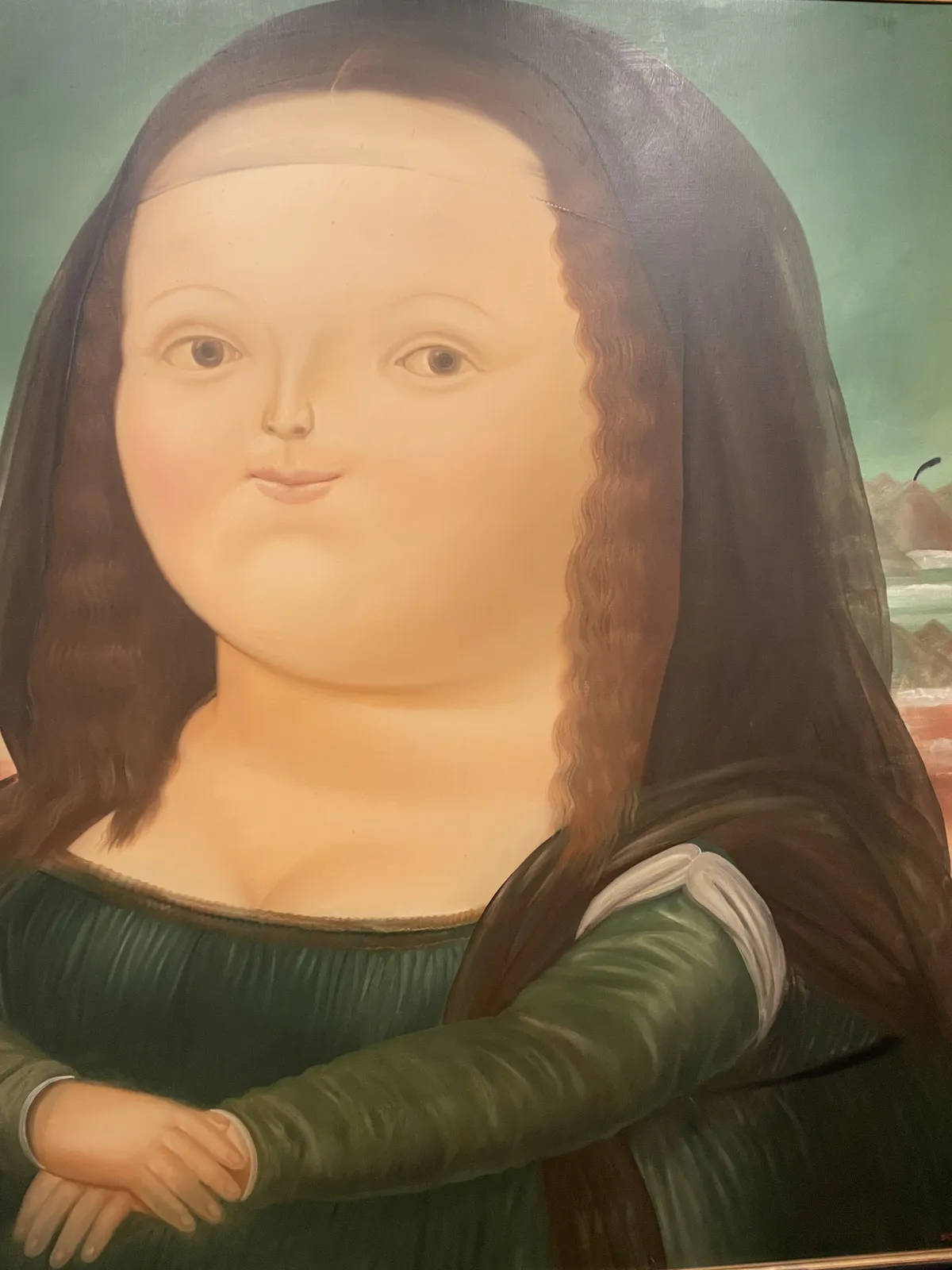
Mona Lisa, Age Twelve
Fernando Botero
In this whimsical reimagining (1959), Botero transforms da Vinci’s iconic subject into a voluminous child. Created in his signature Boterismo style, the painting blends parody with homage. Born from a cleaning lady’s remark, the work helped launch Botero’s career, celebrating exaggerated form as a tool for both humor and artistic identity.
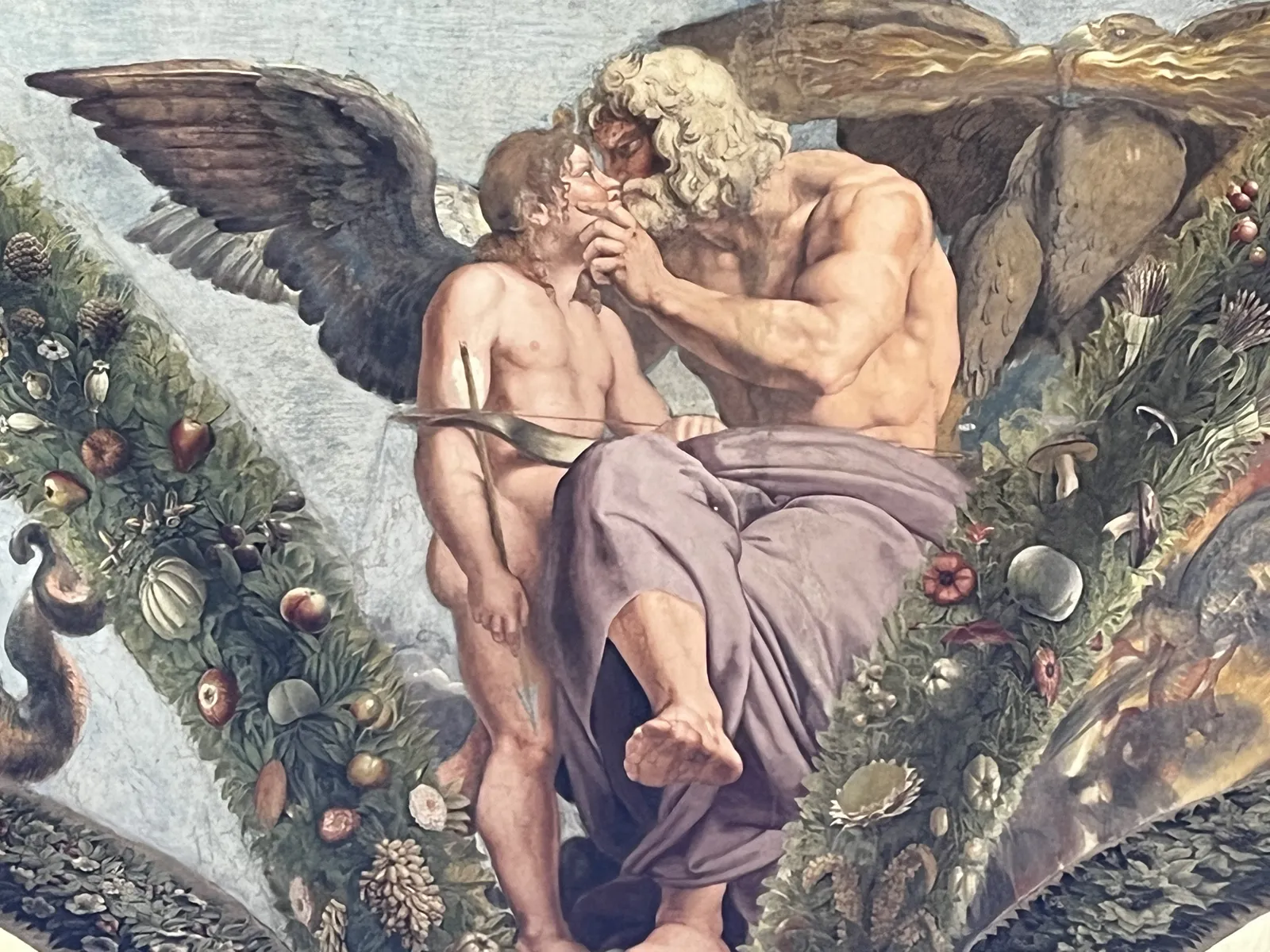
Cupid Pleads with Jupiter for Psyche
Raphael
In this fresco (1517–18), Raphael depicts the moment when Cupid petitions Jupiter for Psyche’s immortality. Jupiter’s intimate gesture suggests divine consent and compassion, while Cupid’s youthful vulnerability contrasts with the god’s authority. The work reflects Renaissance fascination with classical myths and divine love.
“When the path is beautiful, do not ask where it leads.” — Zen proverb
Welcome to my travel photography!
“When the path is beautiful, do not ask where it leads.” — Zen proverb
Welcome to my travel photography!
For as long as I can remember, my path has been one of discovery—seeking beauty, timelessness, and connection in every corner of the world. It has also been a journey of deep learning and understanding. I’ve been an avid traveler (or perhaps a travel addict?) for most of my life. My love for travel began long before I ever left home: as a child, I drew a fantasy map of my grandparents’ apartment and “traveled” through it with my cousin Sonya, imagining adventures in every corner. Nearly 90 countries and countless moments of awe later, I’m excited to share this journey with you.
Thanks to the tireless and ingenious programming of Diagilev, we’re now able to present about fifteen percent of the images I’ve accumulated over the years. More will be released in small batches depending on your interest. While the first release leans toward museum photography, later ones will include more nature, architecture, culture, and general travel experiences. If you’d like to receive email notifications about new releases, feel free to reach out—no commercial use, ever.
Throughout my travels, I’ve been drawn to two intertwined kinds of discovery. One is intellectual: learning why the world is the way it is. History became my guide, shaping my perspective and filling my camera roll with museums and old buildings. To me, history is not the past—it is the key to understanding the present and how the world became what it is. The other is emotional: seeking moments of elevation—spirituality, beauty, harmony—often found in nature, monasteries, and ancient sacred spaces. Together, these impulses shape my photography. It invites you to learn, admire, and soar—to rise above the mundane and see the world through a lens of curiosity and wonder.
Much of my later travel became possible thanks to my job with Delta Air Lines, but the wanderlust began years earlier. By the time I joined the industry, I had already visited over 35 countries and lived in several—largely thanks to a backpacking journey around the world with Luis León, whose face appears in many early photos. I grew up in Ufa in the USSR, and since leaving it I have lived, studied, and worked in Latvia, the United States, France, South Korea, Canada, Spain, Italy, Brazil, Japan, and Colombia.
A life of near-constant movement may seem a little crazy, but it has deepened my understanding of the world and produced the photography you are about to see. Over the years, my style has evolved—more intentional, more refined—yet its core remains the same: a search for understanding, timeless beauty, and a connection to those who walked this earth long before us.
I hope these photos stir something in your soul, just as they did in mine. I’d love to hear from you—whether reactions, suggestions, corrections, or a request to be added to the email list for new releases (no commercial use, I promise). You can learn more about my travels here, and my academic life here.
Enjoy our shared journey!