Hybrid Beings, Captives, and Sacrifice in Moche Rituals
Some scenes highlight hybrid beings, such as bird-warriors, who take part in battles, captives’ processions, and sacrificial rites. These figures, along with other fantastic creatures, form a subordinate group beneath the main deities of the Moche pantheon. Naked prisoners, with ropes around their necks, were led in procession to the temple, sometimes carried on litters or allowed to keep distinctive headdresses. Effigies of captives have been found shattered near the remains of dozens of bound young prisoners sacrificed at the upper plazas of Huaca de la Luna in La Libertad.
One form of sacrifice involved tying naked prisoners to wooden posts and leaving them to vultures and other carrion birds. In some cases, victims were tortured by facial disfigurement or mutilation, especially of lips or nose. These individuals may have survived the ritual, in which their flowing blood was offered, but they remained permanently marked both physically and socially.
One form of sacrifice involved tying naked prisoners to wooden posts and leaving them to vultures and other carrion birds. In some cases, victims were tortured by facial disfigurement or mutilation, especially of lips or nose. These individuals may have survived the ritual, in which their flowing blood was offered, but they remained permanently marked both physically and socially.
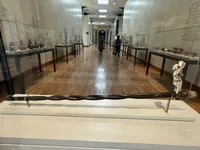
Wari Spear-Thrower with Zoomorphic Design
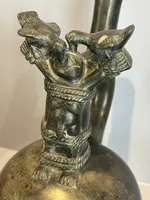
Wari Spear Thrower with Zoomorphic Handle
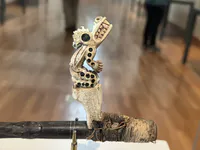
Wari Spear-Thrower with Zoomorphic Handle
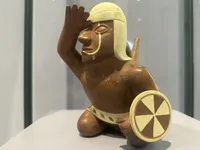
Moche Warrior Watchman
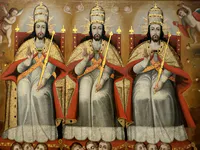
Enthroned Trinity
Geometric Designs and Motifs in Nasca Ceramic Art
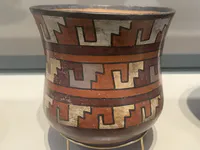
More than fifty geometric motifs have been identified on Nasca ceramics. These designs appear alone or combined with a wide range of mythological images. The most frequent elements are stepped triangles, stepped forms with volutes, spirals, zigzag lines, and later chevrons and crosses. Although their meaning is still uncertain, some motifs may be stylized, abbreviated versions of creatures or objects within the complex Nasca iconographic system.
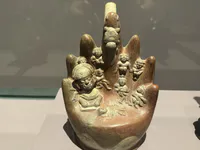
Mochica Bottle with Sacrifice Scene
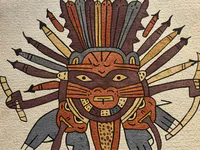
Study of a Nasca Motif
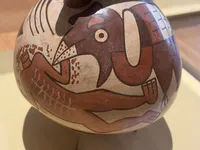
Ceramic Bottle with Condors and Human Body
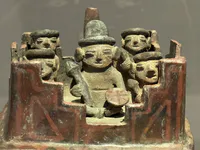
Ceramic Bottle with Warrior Scene
Cajamarca Ceramics: A Visually Rich Andean Tradition
Widely recognized for its use of white clays, the Cajamarca style from the northern Peruvian highlands features a broad range of geometric, linear, and stylized motifs painted in fine brushstrokes on cream and reddish backgrounds. It is considered one of the visually richest artistic traditions of pre-Hispanic Peru. Related styles, such as Coastal Cajamarca, arose from contact between highland and coastal traditions during the Middle Horizon (c. 600–1000).
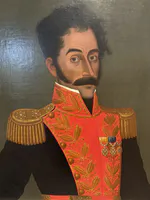
Portrait of Simón Bolívar
Battles and Human Sacrifices in Nasca Art
Nasca art depicts people engaged in farming, fishing, and herding, but also striking scenes of conflict and sacrifice dominated by male figures. These warriors wear distinctive clothing, carry weapons, and display facial paint. In several images they hold severed human heads, generally interpreted as trophies obtained through the sacrifice of prisoners.
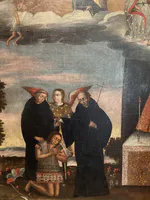
Conversion of an Andean Nobleman
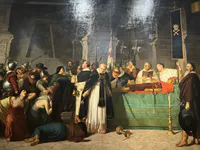
The Funeral of Atahualpa
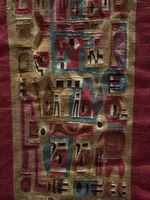
Wari Tunic with Stylized Motifs
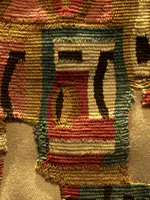
Wari Tunic with Stylized Motifs
Mochica Warfare and Highland Migrant Communities
Most battle scenes show clashes between two Moche groups, recognizable by similar clothing and weapons such as conical helmets and clubs with mushroom-shaped heads. Some images portray foreign groups distinguished by garments, ornaments, weapons, fighting styles, face paint, and hairstyles, traits also seen in Recuay-style stone and ceramic warrior figures from highland regions like Callejón de Huaylas, Conchucos, and Huamachuco. In these intergroup scenes, Moche warriors are always shown as victorious.
Archaeological research in the Moche Valley reveals early communities of highland migrants. By the 6th c., as the Moche state consolidated in the region, these groups abandoned their settlements and moved to higher areas in neighboring valleys such as Sinsicap and Alto Moche, apparently retaining control over coca production and deer hunting grounds—resources highly valued by Moche elites, as reflected in their art.
Archaeological research in the Moche Valley reveals early communities of highland migrants. By the 6th c., as the Moche state consolidated in the region, these groups abandoned their settlements and moved to higher areas in neighboring valleys such as Sinsicap and Alto Moche, apparently retaining control over coca production and deer hunting grounds—resources highly valued by Moche elites, as reflected in their art.
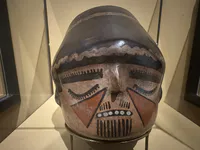
Nasca Trophy Head Bottle
Torture, Sacrifice, and Blood Offerings in Moche Rituals
Once defeated, warriors were stripped and brought before victorious leaders. Some prisoners were flayed or decapitated, but most were mutilated or had their throats cut so their blood could be offered. Moche art and archaeology show that such sacrifices took place in temple courtyards and special chambers, as well as in mountains and on offshore islands. Rulers, dressed as major deities, received the liquid offerings in cups.
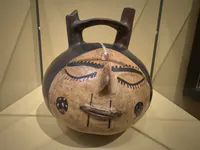
Nasca Trophy Head Bottle
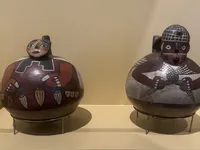
Nasca Ceramic Bottles with Figures
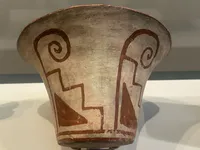
Mochica Flaring Bowl with Stepped Design
Moche Palace Scene
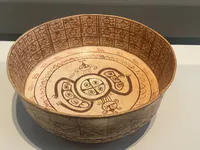
Cajamarca-Style Ceramic Plate
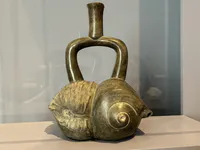
Bottle with Spondylus and Strombus Shells
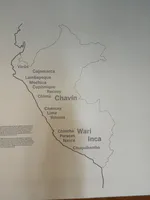
Ancient Cultures of the Andes
Stepped Triangle and Volute Motifs
Life, Environment, and Belief in Nasca Art
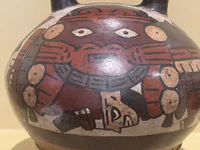
In Nasca art, naturalistic images coexist with supernatural motifs that reveal a belief system where humans interact with animals, plants, ancestors, and deities. The vivid colors of these designs contrast with the monotony of the desert, evoking the life of valleys and sea—vital spaces that sustained coastal communities.
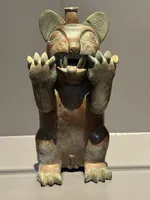
Mochica Ceramic Bottle with Feline Design
Nasca Ceramic Bottle with Mythical Being
Nasca Vase with Geometric Motifs
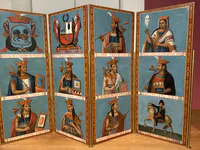
Trifacial Trinity Painting
Mythical Ancestor Video
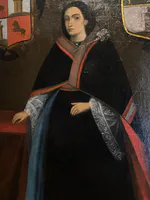
Portrait of Manuela Tupa Amaro
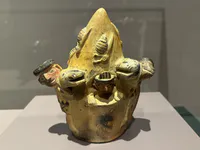
Bottle with Mythological Mountain Scene
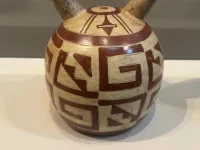
Bottle with Geometric Designs
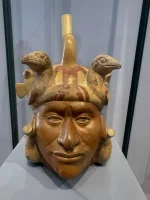
Tomb of Two Floors Nasca Late Period
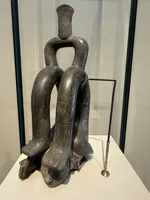
Ancient Bottle with Contortionist Figure
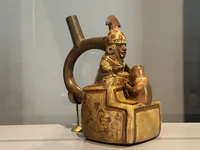
Mochica Warrior Chief and Prisoner Bottle
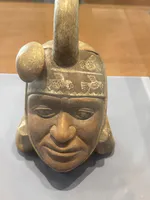
Mochica Portrait Vessels and Effigies
Ancient Andean Cultures and Their Lasting Legacies
Indigenous populations adapted successfully to the varied environments of the Andes and the coast. Over millennia they developed cultures that left rich artistic, technological, social, and everyday legacies. Groups such as the Mochica and Nasca made lasting contributions to art and technology, while wider-reaching states like Wari and the Inca extended their influence across large parts of the Andean world.
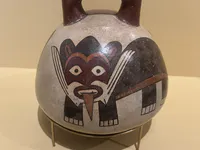
Nasca Anthropomorphic Mythical Being Bottle
Nasca Art: Geometry, Life, and a World of Belief
Nasca art combines naturalistic scenes with supernatural beings and a rich range of geometric motifs, offering insight into a worldview where humans interact with animals, plants, ancestors, and deities. More than fifty geometric designs have been identified on Nasca ceramics, including stepped triangles, forms with volutes, spirals, zigzags, and, in later phases, chevrons and crosses. Their precise meaning remains unclear, but some may be stylized versions of creatures or objects within a complex iconographic system.
The intense palette of these painted designs contrasts with the monotonous desert landscape, evoking the life of valleys and sea—vital spaces for coastal subsistence. Through this interplay of color, geometry, and mythic figures, Nasca imagery recreates a living environment in which fertile fields, marine resources, and sacred forces are visually bound together.
The intense palette of these painted designs contrasts with the monotonous desert landscape, evoking the life of valleys and sea—vital spaces for coastal subsistence. Through this interplay of color, geometry, and mythic figures, Nasca imagery recreates a living environment in which fertile fields, marine resources, and sacred forces are visually bound together.
Lima Art MuseumMuseo de Arte de Lima
Lima Art Museum is housed in the 1872 Palacio de la Exposición, a civic landmark that now holds Peru’s visual memory in public trust. Its galleries move from ancient Andean ceramics and textiles through viceregal painting and the Cuzco School to modern and contemporary work, tracing how power, devotion, and landscape shaped changing artistic languages. For many Peruvians, the museum reads as a quiet map of the country itself—coast and highlands, empire and republic—gathered into one collection.
Explore by type and place