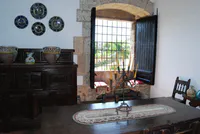
Colonial Dining Room with Majolica and Wrought Iron
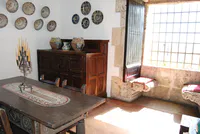
Colonial Window Niche and Dining Alcove
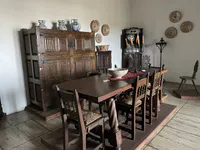
Colonial Dining Room Furniture

Wrought-Iron Candelabrum
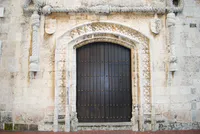
Gothic Mudéjar Entrance Portal with Rope Motif
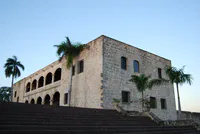
Fortified Rear Façade of Alcázar de Colón

Ivory Relief of a Knight and Dragon
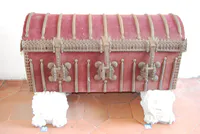
Velvet-Covered Traveling Chest
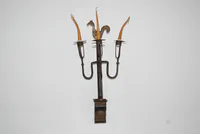
Three-Arm Iron Wall Sconce with Rooster

Henry II of France
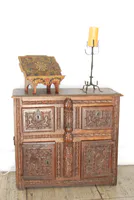
Carved Chest with Bookstand and Candelabra
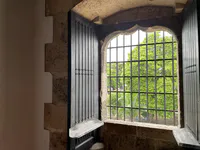
Colonial Stone-Framed Window
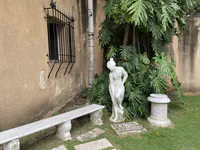
Marble Sculpture of Venus
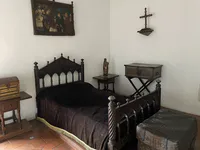
Colonial Bedroom with Devotional Furnishings
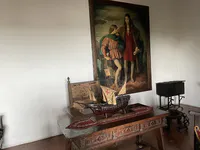
Caravel Model with Portrait of the Colón Brothers
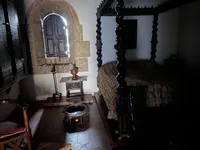
Colonial-Era Four-Poster Bedchamber
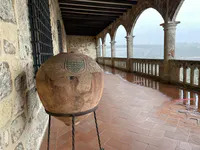
Ceramic Storage Jar with Heraldic Seal
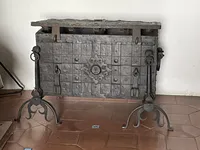
Iron Strongbox with Locking Mechanism
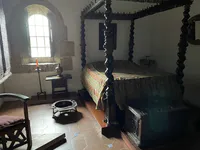
Four-Poster Bed with Warming Brazier

Silver Jug with Ornamental Handle
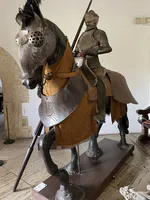
Armored Knight and Horse in Full Plate
Alcázar de Colón
Alcázar de Colón was built c. 1510–14 as the palace of Diego Colón, son of Christopher Columbus, when Santo Domingo was Spain’s first durable seat of power in the Americas. Facing the Ozama River, its limestone arcades and fortified walls translate late Gothic and early Renaissance court architecture into a Caribbean climate, where shade, airflow, and authority mattered equally. Later restored and reimagined as a museum, the palace endures as a charged symbol of the early colonial court and the making of the Atlantic world.
Explore by type and place