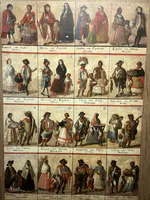
Casta Painting

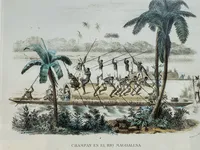
Champán en el río Magdalena

The Flower Vase Incident

Palace of Justice Siege

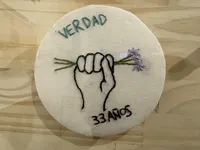
Embroidered Symbol of Justice and Memory
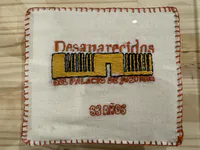
The Disappeared of the Palace of Justice
The Palace of Justice Siege: Memory, Evidence, and Human Rights
The Palace of Justice Siege
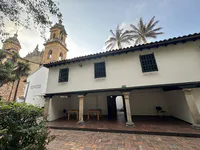
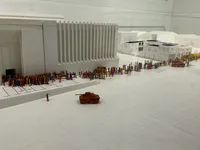
On November 6–7, 1985, this house was used by Colombia’s security forces as a military operations center. Here, people suspected of involvement in the Palace of Justice takeover were detained, interrogated, and tortured, and evidence of these abuses was deliberately concealed for years. Findings from Forensic Architecture’s investigation and the Truth Commission’s 2022 report informed the exhibition Huellas de desaparición at the Museo de Arte Miguel Urrutia. By presenting this material, the Museo de la Independencia – Casa del Florero seeks to clarify the events of the siege and its aftermath, honor the victims, and promote human rights and non-repetition. The room includes architectural models created by Forensic Architecture and donated to the museum, offering a space for reflection, dialogue, and collective memory.
Reimagining Colombia’s Independence Through Photography
Reimagining History Through Photography
In 2017 Canon Colombia organised a National Photography Contest to mark Colombia’s National Photography Day, attracting 3,700 participants in several categories. As part of this initiative, historians, designers, and photographers collaborated to digitally reconstruct the scene of the July 20 uprising—an iconic episode in the country’s independence process—drawing on existing historical paintings. Their work demonstrates how contemporary visual techniques can reframe foundational events and invite new reflection on national memory.

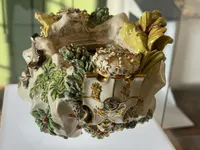
Llorente’s Vase
Casa del Florero: Tracing the Infrastructure of Disappearance
Casa del Florero and the Infrastructure of Disappearance
Research by Forensic Architecture and the Truth Commission reconstructed what occurred inside this building by analysing testimonies from judicial officials, visitors, magistrates, cleaning staff, journalists, relatives of victims, and military personnel. The ground floor was used for initial interrogations and for registering and identifying detainees, functioning as a counter-insurgency screening space. The staircase to the upper floor marked a physical separation between “special” detainees and the rest. On the second floor, suspects were interrogated in groups in several rooms and in the interior balcony.
By synchronising hours of video and photographic records, architectural models reveal the infrastructure and logistics of forced disappearance organised by state agents. They show how the rooms of the Casa del Florero, military facilities at the Cantón Norte, and other spaces were used within this system. The reconstructions follow the trajectories of those labelled “specials”—workers from the court cafeteria, students, visitors, guerrillas, and judges—from their first appearance on camera, through detention, to the moment of their last recorded sighting. In doing so, they expose the mechanisms by which these people were led towards death or forced disappearance, and underline the need for truth, remembrance, and justice.
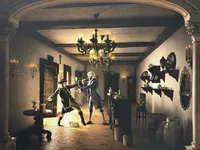
Research by Forensic Architecture and the Truth Commission reconstructed what occurred inside this building by analysing testimonies from judicial officials, visitors, magistrates, cleaning staff, journalists, relatives of victims, and military personnel. The ground floor was used for initial interrogations and for registering and identifying detainees, functioning as a counter-insurgency screening space. The staircase to the upper floor marked a physical separation between “special” detainees and the rest. On the second floor, suspects were interrogated in groups in several rooms and in the interior balcony.
By synchronising hours of video and photographic records, architectural models reveal the infrastructure and logistics of forced disappearance organised by state agents. They show how the rooms of the Casa del Florero, military facilities at the Cantón Norte, and other spaces were used within this system. The reconstructions follow the trajectories of those labelled “specials”—workers from the court cafeteria, students, visitors, guerrillas, and judges—from their first appearance on camera, through detention, to the moment of their last recorded sighting. In doing so, they expose the mechanisms by which these people were led towards death or forced disappearance, and underline the need for truth, remembrance, and justice.
Tracing the Infrastructure and Logistics of Forced Disappearance
Infrastructure of Disappearance
Using synchronized hours of video and photographs, Forensic Architecture’s models reveal the infrastructure and logistics of forced disappearance organized by state agents. They show how rooms in the Casa del Florero and facilities at the Cantón Norte military base were used, and how multiple actors participated. The reconstructions follow the paths of the so-called “specials”—workers from the Palace of Justice cafeteria, students, visitors, guerrilla members, and judges—from the moment they were filmed after the hostages’ release, through their detention by the security forces, to the point of their last recorded sighting before they were taken toward death or forced disappearance.

Casa del Florero
Interrogation Spaces Inside the Seized House
Interrogation Spaces
Forensic Architecture and the Truth Commission reconstructed events that occurred inside this house by analyzing testimonies from judicial officials, visitors, magistrates, cleaning staff, journalists, victims’ relatives, and military personnel. During the siege, the first floor served for initial interrogations, registration, and identification of people classified as suspects. The staircase marked a physical separation between the “specials” and the other detainees. On the second floor, interrogations continued in several rooms—then called Sala Antonio Nariño, Sala Fernández del Castillo, the Sala de las Herencias, and the interior balcony—today repurposed as temporary exhibition and storage areas.
Casa del Florero: From Military Hub to Site of Memory
Casa del Florero: From Operation Centre to Site of Memory
On 6 and 7 November 1985, during the military retaking of the Palace of Justice, this house served as an operations centre for the armed forces and state security services. People suspected of involvement in the siege were brought here, classified, interrogated, and tortured. Evidence of these events was deliberately concealed for many years. Later, exhaustive investigations by the international research group Forensic Architecture and the Colombian Truth Commission produced key findings, presented in the exhibition Huellas de desaparición in 2021.
The Museo de la Independencia – Casa del Florero now uses these results to help clarify what happened during the siege and recapture, and to redefine the house as a place of memory. It honours the victims, promotes the defence of human rights, and advocates non-repetition of state violence. The museum also serves as a space for dialogue with victims’ families, who participate in activities of remembrance and reparation, integrating personal testimonies into the broader historical narrative.
On 6 and 7 November 1985, during the military retaking of the Palace of Justice, this house served as an operations centre for the armed forces and state security services. People suspected of involvement in the siege were brought here, classified, interrogated, and tortured. Evidence of these events was deliberately concealed for many years. Later, exhaustive investigations by the international research group Forensic Architecture and the Colombian Truth Commission produced key findings, presented in the exhibition Huellas de desaparición in 2021.
The Museo de la Independencia – Casa del Florero now uses these results to help clarify what happened during the siege and recapture, and to redefine the house as a place of memory. It honours the victims, promotes the defence of human rights, and advocates non-repetition of state violence. The museum also serves as a space for dialogue with victims’ families, who participate in activities of remembrance and reparation, integrating personal testimonies into the broader historical narrative.
Independence Museum
###Prada, Adrián Llorente
2017 Montaje fotográfico Canon Colombia / Agencia: Grupo DDB Colombia/Postproducción: Latina Studio 1.13 x 84 cms
Colección Museo de la Independencia Casa del Florero
"Llorente", es la imagen del Concurso Nacional de Fotografía organizado por Canon Colombia en el 2017 para celebrar el Día Nacional de la Fotografía en Colombia. Participaron 3.700 personas en diferentes modalidades.
Este cuadro resultó del trabajo articulado entre histo-riadores, diseñadores y fotógrafos para reconstruir la escena de la reyerta del 20 de julio, utilizando una técnica digital y basándose en los cuadros existentes de este importante acontecimiento en la historia de nuestro país.
###Los días 6 y 7 de noviembre de 1985, esta casa fue utilizada por la Fuerza Pública y los servicios de seguridad del Estado como centro de operaciones militares. En este lugar, las personas fueron clasificadas como sospechosas por haber tenido participación en la toma del Palacio de Justicia y fueron sometidas a interrogatorios y torturas. Las evidencias alrededor de estos hechos se ocultaron de manera deliberada durante muchos años.
2024-03-02 La Candelaria, Bogotá
La Candelaria, Bogotá
2024-03-02 La Candelaria, Bogotá
☆
2024-03-02
La andelaria, Rogotá
20
Can
☆
A
2024-03-02
La Candelaria, Bogotá
2024-03-02
La Candelaria, Bogotá
20
Can
A partir del proceso exhaustivo de investigación realizado por la agencia internacional Forensic Architecture y del riguroso informe de la Comisión de la Verdad entregado en el año 2022 se encontraron importantes resultados que fueron plasmados en la exposición Huellas de desaparición presentada en el Museo de Arte Miguel Urrutia del Banco de la República en el año 2021.
El Museo de la Independencia - Casa del Florero organiza este espacio con el fin de contribuir a la divulgación del esclarecimiento de la verdad sobre los hechos ocurridos durante la toma y retoma del Palacio de Justicia y de resignificar la casa como un lugar de memoria en el que se reconoce a las víctimas, se promueve la defensa de los derechos humanos y la no repetición de violencia contra los ciudadanos. De la misma manera, el museo es un lugar de encuentro y diálogo con los familiares de las víctimas quienes participan en actividades de construcción de memoria y reparación
Esta sala vincula las maquetas arquitectónicas realizadas por la agencia internacional de investigación Forensic Architecture que hicieron parte de la exposición Huellas de desaparición y fueron donadas al Museo de la Independencia Casa del Florero, on lugar en el que se reflexiona sobre hechos de nuestra historia que la sociedad colombiana debe conocer, no olvidar y no repetir
###Casa del Florero
La investigación realizada por Forensic Architecture Ta Comisión de la Verdad buste reconstruir to sucedidn en las instalaciones de esta casa, por lo que se reстра analizaron testimonios de funcionarios judiciales visitantes, magistrados, empleados de limpinas, periodetic familiares de las victimas y militares.
El primer piso de la casa fue utilizado para los nterogator iniciales y el registro e identificación de los sospechosos como un filtro de clasificación contrainsurgente La escalera al segundo piso representaba, en ese contodo la separación fisica entre los especiales con respecto a los demás detenidos. Por otra parte, el segundo piso fue usado para interrogar a los sospechosos por grupos, en la llamada entonces Sala Antonio Nariño (actual Sala Temporal), Sala Fermantes def Acta (actual S Contextos de Independencia), la Sala de las Hereinan (actual reserva de mobiliario) y el balcón interior del segundo piso
2024-03-02
2024-03-02
La andelaria, Rogotá
5
☆
La Candelaria, Bogotá
La infraestructura de la desaparición
Como el resultado de la sincronización de horas de grabaciones y fotografías, las maquetas de Forensic Architecture representan la infraestructura y logistica de la desaparición forzada organizada por los agentes del Estado, mostrando como fueron utilizadas para ese fin las salas de la Casa del Florero y las instalaciones militares del Cantón Norte, además de la diversidad de actores que participaron en el proceso.
Estas piezas cumplen el propósito de reconstruir escenas clave que ocurrieron a partir de la liberación de rehenes por parte de las fuerzas militares, haciendo un seguimiento a los llamados 'especiales' (clasificados como sospechosos de tener participación en la toma insurgente del M-19), un grupo de trabajadores de la cafetería del palacio, estudiantes, visitantes, guerrilleros y jueces. Así, se destaca la hora exacta en la que estas personas fueron vistas por primera vez por las cámaras, luego detenidas por la fuerza pública y finalmente el momento de su último contacto visual de acuerdo a los registros o fuentes audiovisuales, antes de ser conducidos en una trayectoria hacia la muerte o la desaparición forzada
COPYRIGHT
2017 Montaje fotográfico Canon Colombia / Agencia: Grupo DDB Colombia/Postproducción: Latina Studio 1.13 x 84 cms
Colección Museo de la Independencia Casa del Florero
"Llorente", es la imagen del Concurso Nacional de Fotografía organizado por Canon Colombia en el 2017 para celebrar el Día Nacional de la Fotografía en Colombia. Participaron 3.700 personas en diferentes modalidades.
Este cuadro resultó del trabajo articulado entre histo-riadores, diseñadores y fotógrafos para reconstruir la escena de la reyerta del 20 de julio, utilizando una técnica digital y basándose en los cuadros existentes de este importante acontecimiento en la historia de nuestro país.
###Los días 6 y 7 de noviembre de 1985, esta casa fue utilizada por la Fuerza Pública y los servicios de seguridad del Estado como centro de operaciones militares. En este lugar, las personas fueron clasificadas como sospechosas por haber tenido participación en la toma del Palacio de Justicia y fueron sometidas a interrogatorios y torturas. Las evidencias alrededor de estos hechos se ocultaron de manera deliberada durante muchos años.
2024-03-02 La Candelaria, Bogotá
La Candelaria, Bogotá
2024-03-02 La Candelaria, Bogotá
☆
2024-03-02
La andelaria, Rogotá
20
Can
☆
A
2024-03-02
La Candelaria, Bogotá
2024-03-02
La Candelaria, Bogotá
20
Can
A partir del proceso exhaustivo de investigación realizado por la agencia internacional Forensic Architecture y del riguroso informe de la Comisión de la Verdad entregado en el año 2022 se encontraron importantes resultados que fueron plasmados en la exposición Huellas de desaparición presentada en el Museo de Arte Miguel Urrutia del Banco de la República en el año 2021.
El Museo de la Independencia - Casa del Florero organiza este espacio con el fin de contribuir a la divulgación del esclarecimiento de la verdad sobre los hechos ocurridos durante la toma y retoma del Palacio de Justicia y de resignificar la casa como un lugar de memoria en el que se reconoce a las víctimas, se promueve la defensa de los derechos humanos y la no repetición de violencia contra los ciudadanos. De la misma manera, el museo es un lugar de encuentro y diálogo con los familiares de las víctimas quienes participan en actividades de construcción de memoria y reparación
Esta sala vincula las maquetas arquitectónicas realizadas por la agencia internacional de investigación Forensic Architecture que hicieron parte de la exposición Huellas de desaparición y fueron donadas al Museo de la Independencia Casa del Florero, on lugar en el que se reflexiona sobre hechos de nuestra historia que la sociedad colombiana debe conocer, no olvidar y no repetir
###Casa del Florero
La investigación realizada por Forensic Architecture Ta Comisión de la Verdad buste reconstruir to sucedidn en las instalaciones de esta casa, por lo que se reстра analizaron testimonios de funcionarios judiciales visitantes, magistrados, empleados de limpinas, periodetic familiares de las victimas y militares.
El primer piso de la casa fue utilizado para los nterogator iniciales y el registro e identificación de los sospechosos como un filtro de clasificación contrainsurgente La escalera al segundo piso representaba, en ese contodo la separación fisica entre los especiales con respecto a los demás detenidos. Por otra parte, el segundo piso fue usado para interrogar a los sospechosos por grupos, en la llamada entonces Sala Antonio Nariño (actual Sala Temporal), Sala Fermantes def Acta (actual S Contextos de Independencia), la Sala de las Hereinan (actual reserva de mobiliario) y el balcón interior del segundo piso
2024-03-02
2024-03-02
La andelaria, Rogotá
5
☆
La Candelaria, Bogotá
La infraestructura de la desaparición
Como el resultado de la sincronización de horas de grabaciones y fotografías, las maquetas de Forensic Architecture representan la infraestructura y logistica de la desaparición forzada organizada por los agentes del Estado, mostrando como fueron utilizadas para ese fin las salas de la Casa del Florero y las instalaciones militares del Cantón Norte, además de la diversidad de actores que participaron en el proceso.
Estas piezas cumplen el propósito de reconstruir escenas clave que ocurrieron a partir de la liberación de rehenes por parte de las fuerzas militares, haciendo un seguimiento a los llamados 'especiales' (clasificados como sospechosos de tener participación en la toma insurgente del M-19), un grupo de trabajadores de la cafetería del palacio, estudiantes, visitantes, guerrilleros y jueces. Así, se destaca la hora exacta en la que estas personas fueron vistas por primera vez por las cámaras, luego detenidas por la fuerza pública y finalmente el momento de su último contacto visual de acuerdo a los registros o fuentes audiovisuales, antes de ser conducidos en una trayectoria hacia la muerte o la desaparición forzada
COPYRIGHT
Popular categories
Advertising space