2024 © Maxim Tabachnik
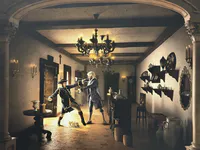
 In 2017 Canon Colombia organised a National Photography Contest to mark Colombia’s National Photography Day, attracting 3,700 participants in several categories. As part of this initiative, historians, designers, and photographers collaborated to digitally reconstruct the scene of the July 20 uprising—an iconic episode in the country’s independence process—drawing on existing historical paintings. Their work demonstrates how contemporary visual techniques can reframe foundational events and invite new reflection on national memory.
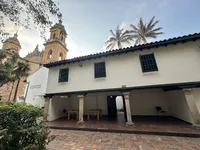
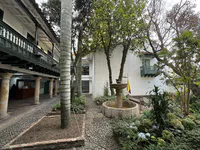
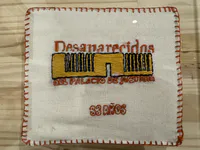 On 6 and 7 November 1985, during the military retaking of the Palace of Justice, the House of the Flower Vase served as an operations center for the armed forces and state security services. People suspected of involvement in the siege were brought here, classified, interrogated, and tortured. Evidence of these events was deliberately concealed for years. Investigations by the international research group Forensic Architecture and the Colombian Truth Commission later produced key findings, presented in the 2021 exhibition Huellas de desaparición.
The Museum of Independence — House of the Flower Vase uses these findings to clarify what happened during the siege and retaking, while redefining the house as a site of memory. It honors the victims, defends human rights, and calls for the non-repetition of state violence. The museum also provides a space for dialogue with victims’ families, whose participation in remembrance and reparation activities brings personal testimony into the broader historical narrative.
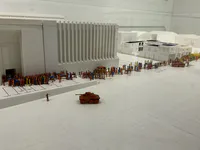 Research by Forensic Architecture and the Truth Commission reconstructed events inside the House of the Flower Vase through testimony from judicial officials, visitors, magistrates, cleaning staff, journalists, victims’ relatives, and military personnel. The ground floor served as a counter-insurgency screening space where detainees underwent initial interrogation, registration, and identification. The staircase to the upper floor physically separated special detainees from the others. On the second floor, suspects were interrogated in groups in several rooms and on the interior balcony.
By synchronising hours of video and photographic records, the researchers created architectural models that reveal the infrastructure and logistics of forced disappearance organised by state agents. The models show how rooms in the House of the Flower Vase, military facilities at Cantón Norte, and other spaces formed part of this system. They trace those labelled specials—court cafeteria workers, students, visitors, guerrillas, and judges—from their first appearance on camera through detention to their last recorded sighting. These reconstructions expose the mechanisms by which people were led towards death or forced disappearance, underscoring the need for truth, remembrance, and justice.
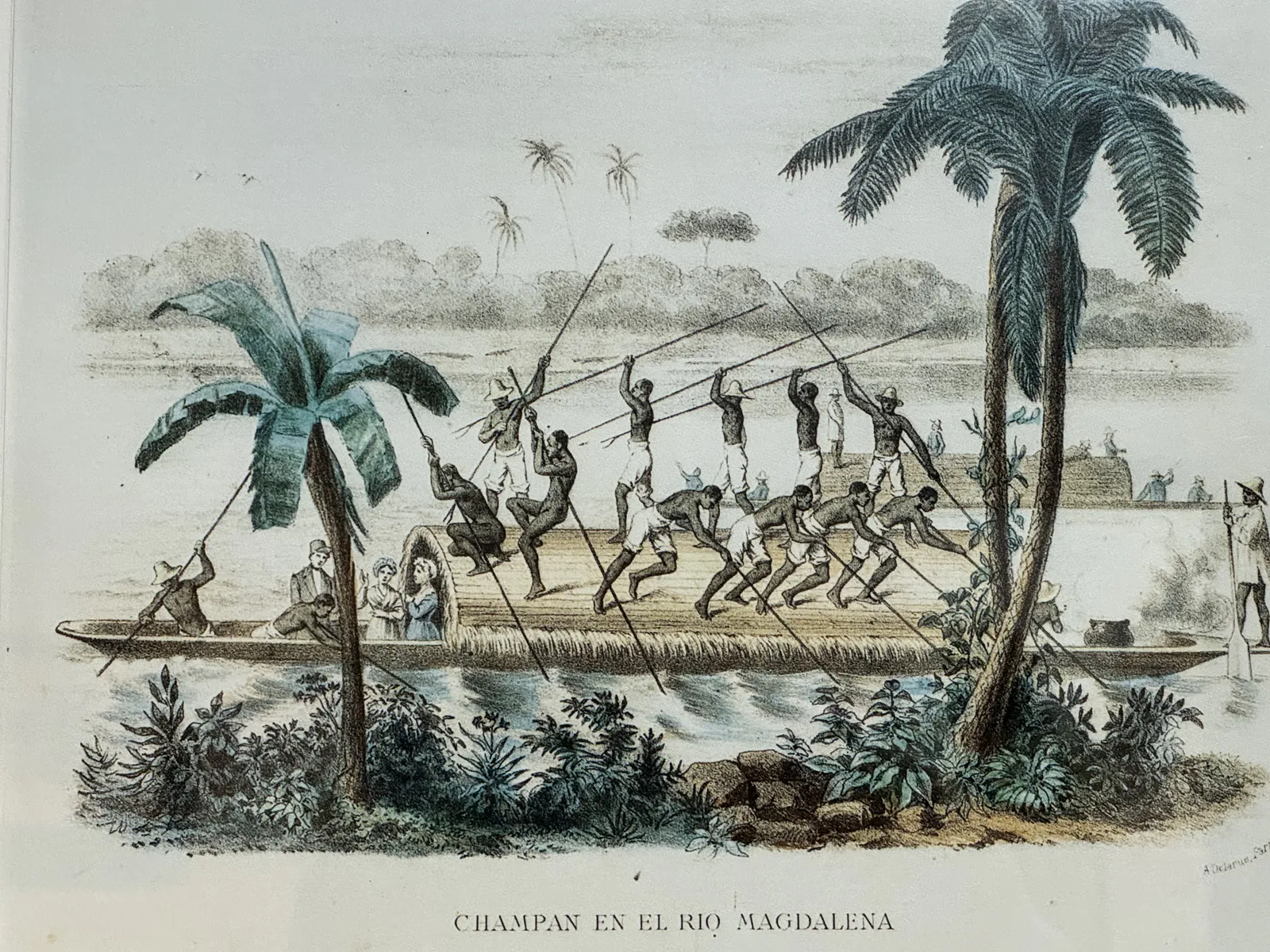
Champán on the Magdalena RiverDe la Rue & Torres Méndez
This 1878 lithograph depicts a champán, a flat-bottomed river raft common on the Magdalena River, propelled by Afro-Colombian workers using long poles. Wealthy passengers rest under a thatched shelter, highlighting the stark racial and class divisions of the era. The image captures both Colombia’s natural landscape and its colonial labor hierarchies in transition.
Explore by type and place