Nazareth Household
The Columbian Exchange and the Birth of Global Food Culture
The Columbian Exchange
Following European arrival in the Americas in the late 15th c., the world entered an unprecedented era of biological and culinary exchange. American crops—such as maize, potatoes, tomatoes, cacao, peanuts, beans, pineapple, cassava, and many tropical fruits—spread across Europe, Africa, and Asia, becoming global staples. In return, the Americas received livestock, grains, fruit trees, spices, and vegetables that reshaped local agriculture. This circulation of plants and animals transformed diets, economies, and ecosystems on every continent, creating a shared global food culture born from migration, trade, and conquest.

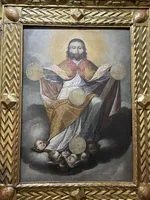
Símbolo de la Trinidad

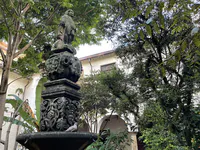
Museo Colonial Courtyard
Foods on the Move: How Crops Traveled Across Continents
Foods on the Move
The Americas contributed crops that transformed global diets: maize, potatoes, tomatoes, cacao, avocados, peppers, papaya, pineapple, peanuts, beans, cassava, vanilla, and many tropical fruits. Europe introduced livestock (cattle, pigs, chickens), grains (wheat, barley, oats), fruit trees (grape, pear, fig), and numerous herbs and vegetables such as lettuce, celery, garlic, radish, artichoke, asparagus, and peas. Asia brought sugarcane, rice, citrus, tea, mango, onion, spices (clove, cinnamon, ginger), legumes (lentils, soy), and key fruit and nut trees. Africa contributed coffee, melon, watermelon, and tamarind through historic Mediterranean and Atlantic routes.


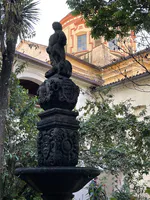
Mono de la Pila Fountain

The Monkey of the Fountain
Purity of Blood and Racial Hierarchies in the Americas
Purity of Blood
In the colonial period, gaining access to privileges, honors, public office, certain professions, or admission to educational institutions required a legal procedure known as a probanza de limpieza de sangre—a certification of “purity of blood.” Applicants had to prove they had no Jewish, Moorish, Black, or Indigenous ancestry, categories then labeled as “bad blood.” This strict divide between “whites” and “others” did not vanish after Independence; it continued in political and scientific discourses that analyzed the racial composition of the new republic and claimed the supposed inferiority of Indigenous and Afro-descendant peoples. Over time, these ideas took root and still echo today in everyday language and political rhetoric.
Worlds in Exchange: How Foods Transformed After 1492
Worlds in Exchange: Foods After 1492
After Europeans reached the Americas in the late 15th c., the world experienced an unprecedented movement of plants, animals, and culinary traditions, often called the Columbian Exchange. This global circulation reshaped diets, economies, and environments on every continent. From the Americas came crops that later became staples of world food security, such as maize, potatoes, tomatoes, cacao, peanuts, beans, cassava, pineapple, sweet potato, peppers, papaya, and avocado, as well as tobacco, rubber, and many tropical fruits.
In return, Europe contributed lettuce, grapes, pears, oats, pigs, cattle, horses, chickens, and culinary herbs like rosemary, thyme, and parsley, along with other vegetables and fruits. Asia supplied sugarcane, rice, wheat, tea, citrus fruits, mangoes, spices such as cloves and cinnamon, and plants like cotton and soy, while Africa provided products such as coffee, melon, watermelon, and tamarind through complex routes. Together, these exchanges created new cuisines, transformed landscapes, and bound distant regions into a single, interdependent world.

After Europeans reached the Americas in the late 15th c., the world experienced an unprecedented movement of plants, animals, and culinary traditions, often called the Columbian Exchange. This global circulation reshaped diets, economies, and environments on every continent. From the Americas came crops that later became staples of world food security, such as maize, potatoes, tomatoes, cacao, peanuts, beans, cassava, pineapple, sweet potato, peppers, papaya, and avocado, as well as tobacco, rubber, and many tropical fruits.
In return, Europe contributed lettuce, grapes, pears, oats, pigs, cattle, horses, chickens, and culinary herbs like rosemary, thyme, and parsley, along with other vegetables and fruits. Asia supplied sugarcane, rice, wheat, tea, citrus fruits, mangoes, spices such as cloves and cinnamon, and plants like cotton and soy, while Africa provided products such as coffee, melon, watermelon, and tamarind through complex routes. Together, these exchanges created new cuisines, transformed landscapes, and bound distant regions into a single, interdependent world.
Museo Colonial
Museo Colonial invites visitors to explore the complex world that emerged in Latin America after the arrival of Europeans. Housed in a historic building, it examines how religion, law, race, and daily life were reshaped in the colonial period. Through themes such as the Spiritual Exercises of Saint Ignatius of Loyola, the museum shows how new forms of personal devotion and inner life were encouraged, using images, texts, and sensory imagination to connect believers with the divine.
At the same time, Museo Colonial confronts the social hierarchies and racial ideologies that structured colonial society, from legal proofs of “purity of blood” to the lasting impact of these ideas in modern politics and language. Exhibitions also highlight the vast exchange of plants, animals, and foods between the Americas, Europe, Africa, and Asia, showing how global trade transformed local diets and landscapes, and how these legacies still shape contemporary Colombia.
Popular categories
Advertising space