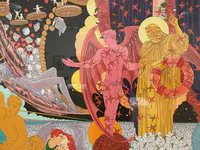
The Devil Showing Christ the Delights of the World

Mona Lisa, Age Twelve

Woman with Umbrella

The Family

Un Pueblo
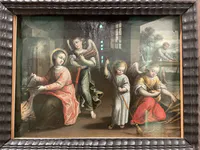
The Home of Nazareth
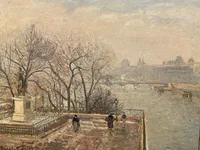
Morning Haze Over the Seine and the Louvre

Lying Woman

The Painter and His Model
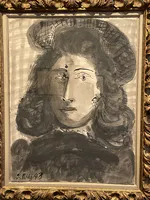
Woman with Sombrero

Skeleton with Guitar
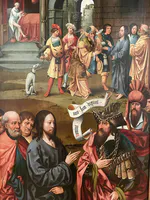
Christ and the Centurion of Capernaum

Nude on the Beach
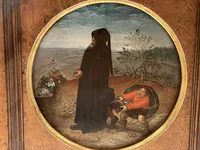
The Misanthrope

Max at the Botero Museum
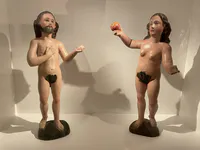
Adam and Eve

Women of the Gallant Life
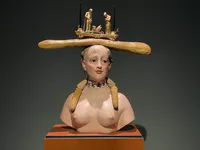
Retrospective Bust of a Woman
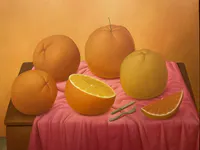
Oranges
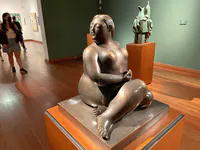
Seated Woman
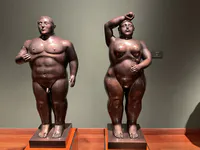
Adam and Eve

Mother Superior
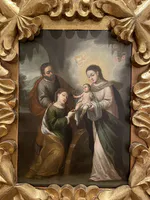
The Holy Family
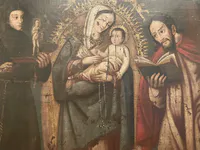
Virgin of Chiquinquirá

The Dancers
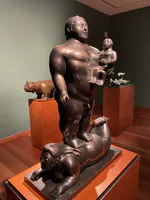
Family

Bird
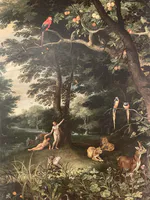
Adam and Eve in the Garden of Eden
Saintly Images and the Making of Colonial Society
After the Council of Trent, devotion to saints became Church policy. Saints modeled virtues for a unified community, and paintings aimed to evoke affective conformity, guiding viewers to identify with them. Some saints had specific roles—protecting against earthquakes or plague; others expressed emerging Creole identity, like St John Nepomucene. Although religious in theme, these images reveal colonial concerns: fear of disease, the urgency of evangelization, and anxiety about death.
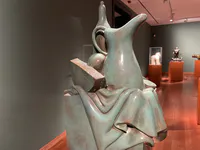
Still Life with Watermelon

Cat

The Bathroom
Art, the Body, and Mortification in Baroque Spirituality
The modern world inherited medieval ideas of the body as impure materiality. The shift from an oral to a written culture, intensified by the spread of print and the upheavals of the 16th c., produced a new individual consciousness focused on bodily care, etiquette, and sociability. Mysticism likewise emphasized that divine contact required corporeal experience. Baroque spirituality embraced trances, illness, and bodily mortification as paths to purification, promoting saints as models of suffering whose bodies taught imitation and promised the reward of contemplating the sacred.

Pear
Art for Redemption: Visualizing Purgatory and Inner Struggle
After the Reformation, society became vigilant about moral conduct. Purgatory, linked to the feast of Corpus Christi, symbolized a unified community made of the Church Militant, Purgative, and Triumphant. Images of purgatory visualized this interconnected body: saints interceded for souls, benefiting the living viewer. These works prepared believers for inner struggle, urging them to combat passions through reflection and imitation of Christ’s suffering.
Imagining the Sacred: The Spiritual Exercises of St Ignatius
The Spiritual Exercises of St Ignatius of Loyola offered believers a method for connecting with the divine through an interior, subjective religious experience. The practice first relied on imagination, prompted by reading the Exercises aloud, and was later reinforced by memory through printed texts and painted images. To compose a place —heaven, purgatory, or hell— Ignatius instructed practitioners to form mental images using sensations of sight, smell, touch, and hearing. This disciplined use of the senses shaped an inner life capable of perceiving the sacred and cultivating personal spiritual awareness.
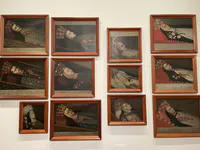
Portraits of Deceased Nuns
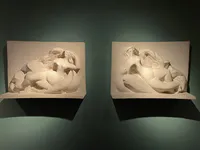
Undines

Infanta Margarita
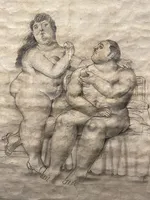
Adam and Eve
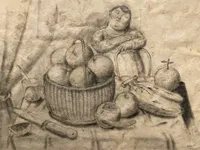
Still Life with Fruit Basket
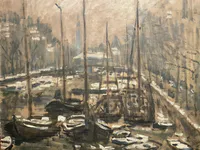
The Geldersekade in Amsterdam in Winter
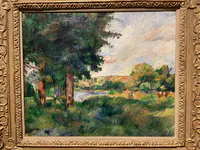
Landscape of Île-de-France
Art to Teach: Baroque Images and Inner Spiritual Insight
Baroque art emerged in a society preoccupied with salvation and distrustful of the senses. The Devotio moderna encouraged inner moral discipline through meditation and self-examination, fostering the practice of seeing beyond appearances—the desengaño. Paintings hid a meditative theme beneath their imagery, helping believers discern spiritual truths. The Virgin Mary, a central colonial devotion, embodied theological ideas such as the Immaculate Conception, the Trinity, and the mystery of obedience and faith, while offering an ideal of chastity and piety.
The Holy Family and the Rise of the Early Modern Nuclear Home
In the 16th–17th cc., rising individualism reshaped family life, replacing the medieval extended household with the nuclear family of parents and children. Catholic visual culture introduced the Holy Family as a model of virtue for social relations, promoting the value of childhood, the importance of sacramental marriage, and the ideal of domestic intimacy.
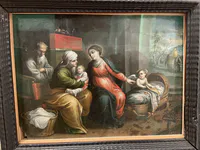
The Birth of the Virgin
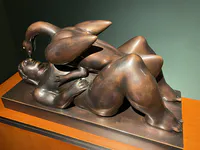
Leda and the Swan
Flowers of Sanctity: Colonial Nuns and Sacred Portraits
Elite colonial women had only two paths: the convent or marriage, neither chosen freely, since fathers decided their daughters’ fate. Nuns formed the part of the social body assigned to suffer for the salvation of all. Hence the importance of mortification and suffering: a society was rewarded by God when flowers of sanctity bloomed in its convents—figures such as Rose of Lima, Mariana de Jesús of Quito, or Gertrudis de Santa Inés of Bogotá. By the mid-18th c., it had become customary to paint these women, who had lived in exemplary mortification and died with a reputation for holiness.
They appear lying down in the habit of their order, sometimes resting their heads on a brick—symbol of extreme penance—or on a cushion. A medallion on the chest shows the figure to whom they consecrated themselves. The face displays personal virtues, while the surrounding flowers reveal specific qualities: the red rose for passion and mortification, the lily for chastity, the carnation for love, the white poppy for holy ignorance, the jasmine for grace and virginal elegance, the violet for humility, among others. If they were crowned at the moment of death, it signified that they had attained the reward of eternal union with Christ, their mystical spouse. Painting them in the passage to this new life crowned the culmination of their virtues.
They appear lying down in the habit of their order, sometimes resting their heads on a brick—symbol of extreme penance—or on a cushion. A medallion on the chest shows the figure to whom they consecrated themselves. The face displays personal virtues, while the surrounding flowers reveal specific qualities: the red rose for passion and mortification, the lily for chastity, the carnation for love, the white poppy for holy ignorance, the jasmine for grace and virginal elegance, the violet for humility, among others. If they were crowned at the moment of death, it signified that they had attained the reward of eternal union with Christ, their mystical spouse. Painting them in the passage to this new life crowned the culmination of their virtues.
Baroque Vanitas: Images That Move the Viewer to Act
Early modern culture explored vanitas—the idea that beauty, wealth, and power are fleeting illusions. Paintings, whether still lifes, portraits, or saints’ lives, emphasized life’s transience and the deceptive nature of the senses. Baroque imagery served devotion: its drama and theatricality aimed to stir emotion so that contemplation would lead to moral action. Life was seen as a staged performance, and images provided guidance for recognizing how the senses mislead.
Botero MuseumMuseo Botero
Botero Museum occupies a restored colonial house in Bogota’s La Candelaria and opened in 2000 after Fernando Botero donated a major group of his paintings and sculptures, along with much of his private collection of modern European and American art. His swollen, lucid figures, often called Boterismo, use volume for both satire and tenderness, while the surrounding works trace the wider artistic conversation he wanted Colombia to share.
Explore by type and place