The Dying Centaur Sculpture
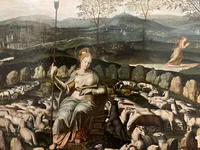
Saint Geneviève Herding Sheep
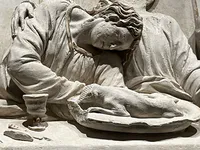
Wood-Carved Altarpiece: The Last Supper
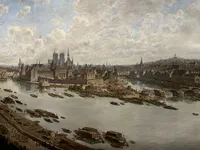
Panoramic View of Paris in 1588
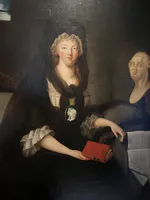
Portrait of Marie-Antoinette in Prison
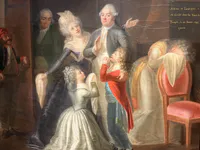
Louis XVI Bidding Farewell to Family
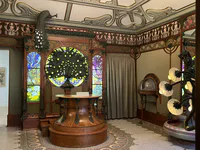
Art Nouveau Boutique Decor by Mucha
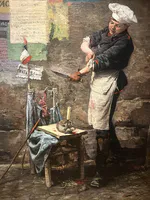
A Rat Seller during the Siege of Paris
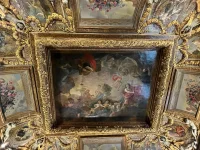
Apollo and the Hours

Salon Demarteau
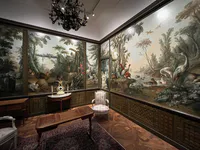
The Salon Demarteau
Early Years of France’s First Republic, 1792–1795
The National Convention, which took office on 21 September 1792, was divided between two main political groups: the Girondins, who favored a liberal, moderate republic, and the Montagnards, closer to the sans-culottes and supportive of extensive exceptional measures. In spring 1793 the Convention created a Committee of Public Safety and reorganized the Committee of General Security. After the Girondins were ousted on 2 June 1793, the Montagnards had the more democratic Constitution of Year I adopted.
Facing civil war and foreign invasion, the deputies left a mixed legacy. The revolutionary dictatorship repressed all opposition and excluded women from political life, yet also introduced foundational political, economic, and institutional reforms, including the first abolition of slavery in history on 4 February 1794. On 10 June 1794 (22 Prairial Year II), a new law accelerated political repression. The arrest and execution of Robespierre and his allies on 27 July 1794 (9 Thermidor Year II) marked a turning point and the desire to moderate the Revolution. In 1792, the Montagnards, allied with the sans-culottes, had overcome the Girondins; by 1794 their own leader was guillotined in turn.
Facing civil war and foreign invasion, the deputies left a mixed legacy. The revolutionary dictatorship repressed all opposition and excluded women from political life, yet also introduced foundational political, economic, and institutional reforms, including the first abolition of slavery in history on 4 February 1794. On 10 June 1794 (22 Prairial Year II), a new law accelerated political repression. The arrest and execution of Robespierre and his allies on 27 July 1794 (9 Thermidor Year II) marked a turning point and the desire to moderate the Revolution. In 1792, the Montagnards, allied with the sans-culottes, had overcome the Girondins; by 1794 their own leader was guillotined in turn.
Le Chat Noir Auction Poster
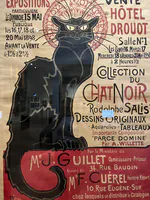
Le Chat Noir Auction Poster
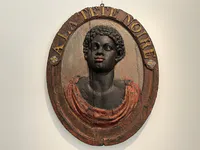
“The Black Head” Wine Merchant Sign

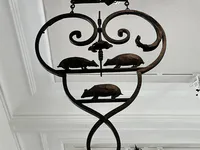
The Black Cat Sign

Roman Milestone from Paris
The Directory: A Republican Laboratory Before Napoleon
Created by the Constitution of Year III (22 August 1795), the Directory took its name from the five directors who jointly exercised executive power. Bourgeois in inspiration, the regime restored indirect, tax-based suffrage to elect two legislative chambers: the Council of the Five Hundred and the Council of Ancients. It became an important republican laboratory, especially in Europe, where several sister republics were established. In Paris, existing scientific institutions were confirmed and new ones founded, drawing on a broader pool of talent; in 1798 a traveler described the capital as the great whirlwind of the world, animated by an ostentatious youth.
Nonetheless, civil war and unrest persisted. Conspiracies and coups d’état from both the neo-Jacobin left and royalist right followed one another until Napoleon Bonaparte’s coup of 9 November 1799 (18 Brumaire Year VIII). The Directory was then replaced by the Consulate, an authoritarian regime headed by three consuls, the first of whom, Bonaparte, was appointed for life in 1802 and in reality held all power.
Nonetheless, civil war and unrest persisted. Conspiracies and coups d’état from both the neo-Jacobin left and royalist right followed one another until Napoleon Bonaparte’s coup of 9 November 1799 (18 Brumaire Year VIII). The Directory was then replaced by the Consulate, an authoritarian regime headed by three consuls, the first of whom, Bonaparte, was appointed for life in 1802 and in reality held all power.
Fountain of Bacchus

Neolithic Urns
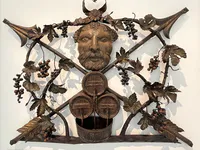
The Fountain of Bacchus

The Mighty Stag Sign
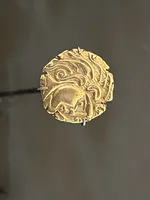
Ancient Parisii Gold Coins
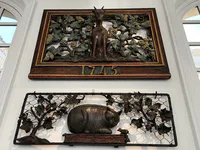
The Stag Wine Merchant Sign

The Golden Plough Sign

18th Century Wrought Iron Sign
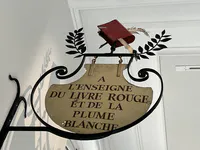
The Red Book and White Feather Sign
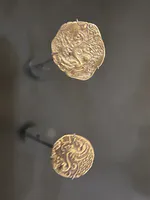
Evolution of Gaulish Coinage
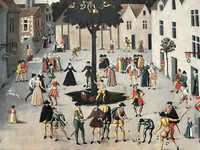
French Street Festival Scene
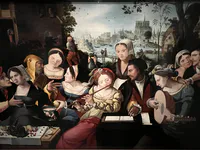
The Prodigal Son among Courtesans

15th-Century Leather Shoes from Île de la Cité

Decorated Tiles from Saint-Germain-des-Prés
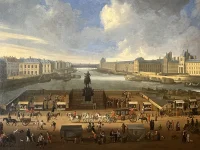
The Seine, the Louvre and the Collège des Quatre-Nations from Pont Neuf
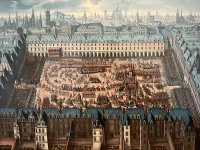
Carrousel of the Royal Palace
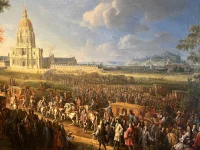
Visit of Louis XIV to the Church of the Hôtel des Invalides
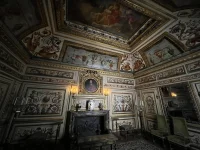
Louis XIII Style Wood Paneled Study
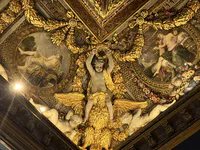
Baroque Festoons on Boiserie

Self-Portrait of Charles Le Brun

Portrait of Marie de Rabutin-Chantal

Portrait of François-Michel Le Tellier
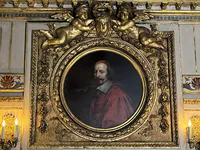
Portrait of Cardinal Jules Mazarin
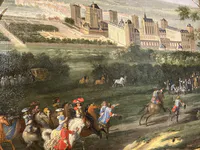
View of the Château de Vincennes

Characters from Italian Popular Theatre
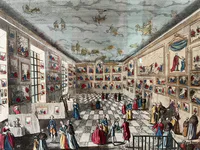
Salon of the Royal Academy in Louvre

17th Century Kit Violin for Dance
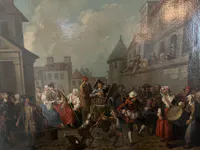
The Carnival in Paris
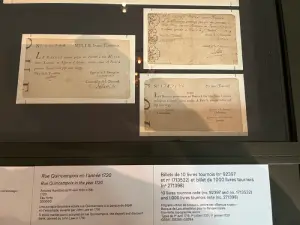
10,000 and 1,000 Livres tournois Banknotes
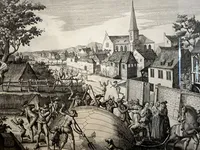
Panic in Gonesse from Balloon Descent
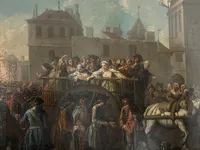
Taking Prostitutes to the Salpêtrière
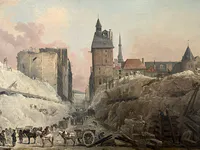
Demolition of Pont-au-Change 1788
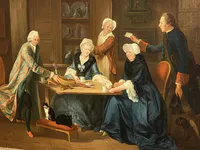
Family Gathering in 1772

Demolition of Houses on Pont Notre-Dame
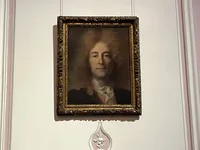
Portrait of Hyacinthe Rigaud
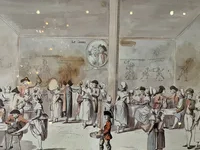
Le Cabaret Ramponneau Illustration
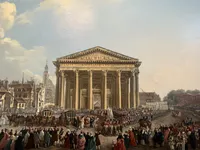
Foundation Ceremony of Sainte-Geneviève Church
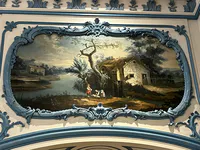
19th-Century French Trumeau Mirror with Pastoral Scene
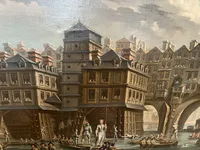
Festivities on the Seine for Duc de Bourgogne
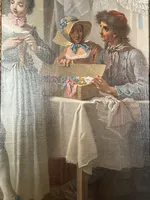
The Ribbon Seller Fragment
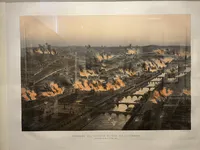
Fires in Paris during the Commune
Napoleon’s Transformation of Paris into a Modern Metropolis
To rival ancient Rome, Napoleon commissioned Roman-style monuments such as the Arc de Triomphe and launched major works to modernize Paris. He equipped the capital with new markets, fountains, a canal, and a more systematic sewer network. By then, Paris had grown into a metropolis of more than 600,000 inhabitants.
Fall of the French Monarchy and the Royal Family’s Fate
Although the monarchy was abolished on 21 September 1792, Louis XVI and his family had been imprisoned since 13 August. Renamed Louis Capet, in reference to his ancestor Hugues Capet, he was treated as a simple citizen. The discovery of the iron chest, containing documents proving his collusion with foreign sovereigns and his corruption of political figures, convinced the Convention to put him on trial. After long debates, he was found guilty almost unanimously, but condemned to death by only a narrow majority.
Louis XVI was guillotined on 21 January 1793, followed by Marie-Antoinette on 16 October and the king’s sister, Madame Élisabeth. The dauphin died in the Temple prison on 8 June 1795. For many in France and across Europe, the king’s execution was a sacrilege that accelerated events. Refusing conscription into republican armies, many French people—especially in the West—took up arms against the Revolution, while the formation of a broad European coalition pushed the Revolution toward greater radicalization.
⸻
Louis XVI was guillotined on 21 January 1793, followed by Marie-Antoinette on 16 October and the king’s sister, Madame Élisabeth. The dauphin died in the Temple prison on 8 June 1795. For many in France and across Europe, the king’s execution was a sacrilege that accelerated events. Refusing conscription into republican armies, many French people—especially in the West—took up arms against the Revolution, while the formation of a broad European coalition pushed the Revolution toward greater radicalization.
⸻

Portrait of Jean-Paul Marat

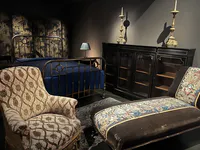
Marcel Proust’s Bedroom
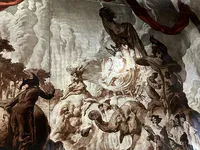
Queen of Sheba
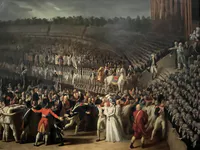
Fête de la Fédération

Marie Antoinette Leaving the Conciergerie

Portrait of Georges Danton
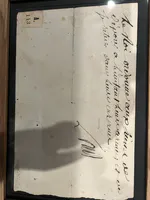
Last Order of Louis XVI to Colonel Dürler
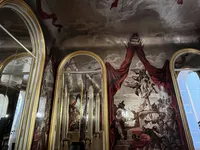
Ballroom Décor by Josep Maria Sert
From Royal Flight to Republic: France 1791–1792
Refusing to accept limits on his power, Louis XVI tried to flee in the night of 20–21 June 1791, but was intercepted at Varennes and brought back to the Tuileries in a tense atmosphere. Most deputies opted for a constitutional monarchy, and on 14 September the king swore an oath to the 1791 Constitution. The Constituent Assembly gave way to the Legislative Assembly, while the Revolution, seen as a threat by European courts and royalist émigrés, exposed France to the risk of invasion. Anticipating danger, the French declared war on Austria on 20 April 1792.
At the same time, the king’s double game became increasingly visible, and radical republicans prepared an uprising. In the night of 9–10 August a revolutionary Commune replaced the old municipal council, and on 10 August federated volunteers and Parisian workers attacked the Tuileries. The king’s powers were suspended, and a new National Convention was elected by universal male suffrage. On 21 September 1792 it abolished the monarchy; the next day France effectively became a republic.
⸻
At the same time, the king’s double game became increasingly visible, and radical republicans prepared an uprising. In the night of 9–10 August a revolutionary Commune replaced the old municipal council, and on 10 August federated volunteers and Parisian workers attacked the Tuileries. The king’s powers were suspended, and a new National Convention was elected by universal male suffrage. On 21 September 1792 it abolished the monarchy; the next day France effectively became a republic.
⸻

Napoleon I in Chasseur Uniform
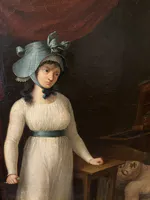
The Assassination of Jean-Paul Marat
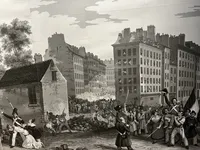
Historical Scene on Block Printed Wallpaper
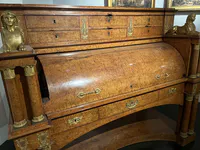
Desk of King Louis-Philippe
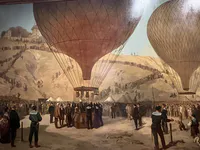
Léon Gambettas Balloon Escape from Paris
The July Revolution of 1830 and the Three Glorious Days
In July 1830 Charles X issued decrees curbing the deputies’ power, restricting the vote, and suppressing press freedom. Journalists led the protest, quickly joined by crowds of Parisians. The capital rose in three days of insurrection—the Three Glorious Days of 27, 28, and 29 July 1830—which toppled the king and opened a new political era.
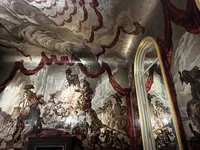
Ballroom Decor of Hôtel Wendel
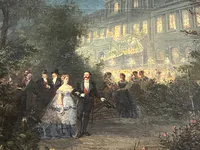
Night Festivities at Tuileries 1867

Marie Antoinettes Chemise from Prison
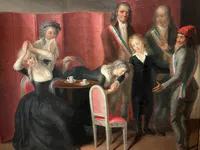
Louis XVII Separated from His Mother

Portrait of Maximilien Robespierre

Portrait of Franz Liszt by Henri Lehmann
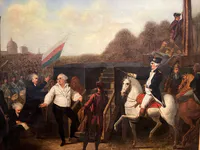
Execution of Louis XVI
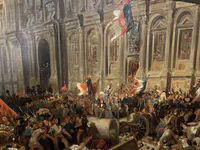
Lamartine Rejecting the Red Flag
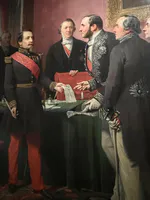
Napoleon III and Baron Haussmann
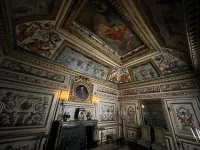
Baroque Grotesques on Boiserie Panels
Lasting Reforms of the French Revolution
The Revolution reshaped everyday life in France. The country was reorganized into départements, and the old patchwork of weights and measures was replaced by a unified metric system using metres, litres, and grams. At the same time, the modern idea of the museum emerged: a public institution open to all, preserving rare and precious objects as a shared memory of the past.

Salon Design for Café de Paris

Louis XVI Imprisoned at the Temple

Portrait of Nicolas Fouquet
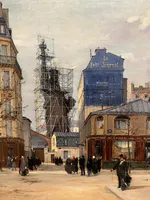
Inauguration of Triomphe de la République
Carnavalet MuseumMusée Carnavalet
Carnavalet Museum anchors Paris’s self-portrait in the Marais, spread across the Renaissance Hôtel Carnavalet and the 17th c. Hôtel Le Peletier de Saint-Fargeau. Founded in 1880 as the city’s history museum, it follows Paris as it is continually remade—by monarchy and revolution, street life and salons, Haussmann’s demolitions and modern politics—through paintings, documents, shop signs, and immersive period rooms. For many Parisians it feels like a cabinet of civic memory where grand events and ordinary lives meet.
Explore by type and place