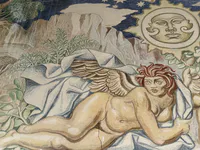
Mural of Huitaca, the Rebellious Deity
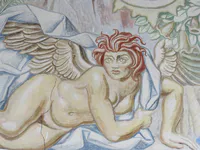
Huitaca, the Fallen Goddess
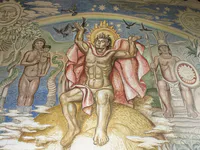
Chiminigagua and the Origin of the Chibcha
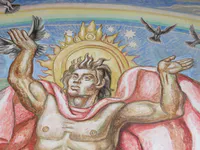
Chiminigagua Releases Light
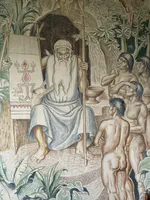
Bochica Teaching the Muisca
Bochica Teaching the Muisca
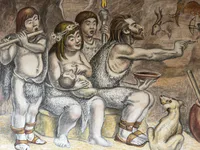
Cave Painter
Cave Painter
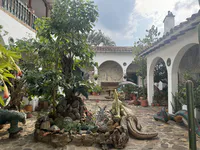
Museum Courtyard
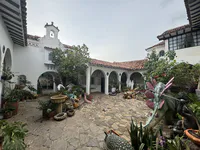
Courtyard of Myths and Origins
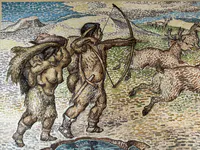
Prehistoric Hunt
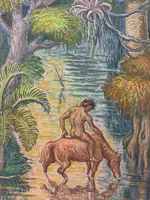
Indo-American Scene
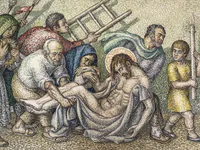
Descent from the Cross
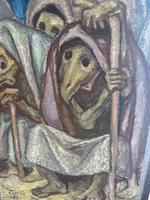
The Witch of Zascandil
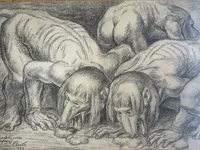
The Dog Men
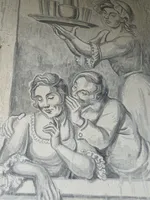
A Dangerous Whisper
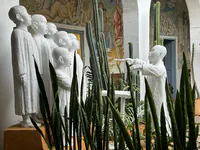
Choir of Novices
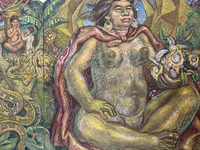
Mapiripana
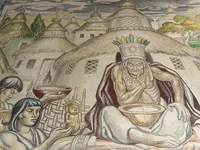
Idacansas in Sugamuxi
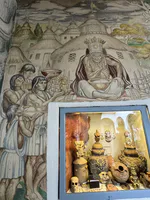
Idacansas, Guardian of Tradition
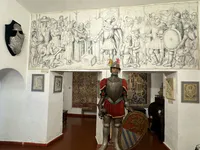
Model for the Founding of Villa de Leyva
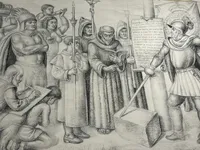
Model for the Founding of Villa de Leyva
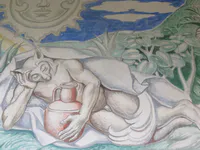
Nencatacoa, God of Dreams
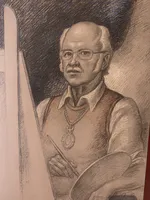
Self-Portrait
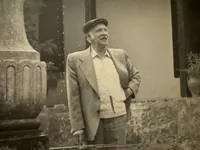
Luis Alberto Acuña at Casa Museo
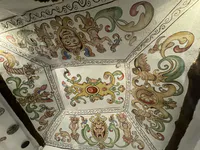
Ceiling Fresco with Grotesques and Mythical Figures
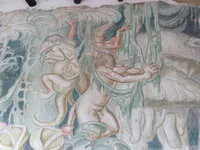
Emergence of Life
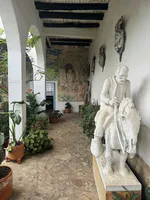
Don Quixote and Sancho Panza
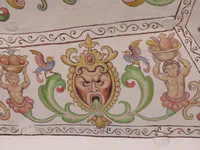
Decorative Ceiling Frieze
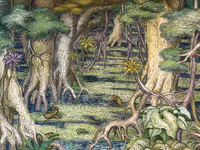
Saquencipá Swamp, Cretaceous Period
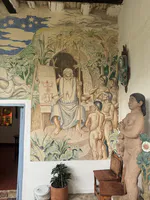
Bochica and Aborigine with Child
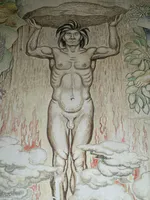
Chibchacum Bearing the Earth
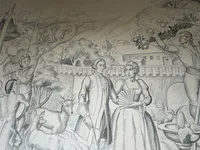
Colonial Garden Scene
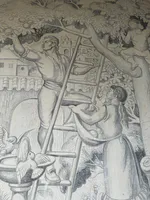
Fruit Harvest
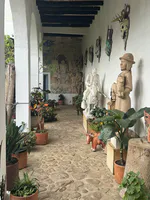
Corridor with Sculptures and Mural
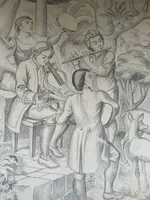
Colonial Musicians
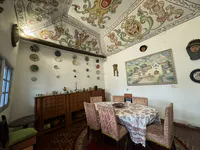
Dining Room with Mythological Ceiling
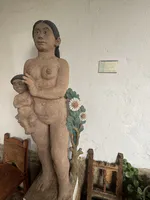
Aborigine with Child
The Bachué Movement: Indigenous Roots of Colombian Modernism
After the Mexican Revolution and the First World War, artistic culture in Spanish America shifted toward nationalist, Impressionist, and Surrealist tendencies. An indigenous, earth-centred spirit became the new axis of cultural nationalism and a pathway to modernism in the region’s art. In Colombia, this current took shape as the Bachué movement.
Its thematic origins lie in Paris, where Colombian artists Luis Alberto Acuña and Rómulo Rozo were challenged by Pablo Picasso. He praised Acuña’s technique but criticised the absence of an authentically Andean voice, urging him to draw on the great indigenous artists of the past. This criticism led them to study the sculpture of San Agustín and the Toltec, Aztec, and Maya arts at the Musée de l’Homme in the Trocadéro.
After five years of study abroad, they returned to Colombia determined to recover vernacular, indigenous, and fully local traditions. The movement took its name from the goddess Bachué—mythical mother of humanity in Muisca cosmology—thanks to writer Jaime Barrera Parra, who used it in a 1920s editorial inspired by Rozo’s 1926 sculpture of Bachué, later exhibited in the Colombian pavilion at the 1929 Ibero-American Exposition in Seville.
For about two decades, the Bachué movement was represented in painting by Luis Alberto Acuña, Pedro Nel Gómez, Ignacio Gómez Jaramillo, Jorge Elías Triana, and Alipio Jaramillo, among others; in sculpture by Rómulo Rozo, Rodrigo Arenas Betancourt, José Domingo Rodríguez, and Julio Abril; in music by Guillermo Uribe Holguín and José Rozo Contreras; and in literature by J. A. Osorio Lizarazo with novels such as El pantano and La cosecha.
Contemporary with the Bachuistas were the Academicists, who upheld classical European ideals and universalist aesthetics. Artists like Andrés de Santa María and Epifanio Garay preferred landscapes and portraits steeped in European fashions and conventions, rejecting the search for a nationalism rooted in indigenous origins.
The Bachué movement lost strength in the 1950s with the growing influence of international modernism and universalist aesthetics. Nonetheless, its founder Luis Alberto Acuña continued his personal struggle to defend and develop the movement’s original vision.
Its thematic origins lie in Paris, where Colombian artists Luis Alberto Acuña and Rómulo Rozo were challenged by Pablo Picasso. He praised Acuña’s technique but criticised the absence of an authentically Andean voice, urging him to draw on the great indigenous artists of the past. This criticism led them to study the sculpture of San Agustín and the Toltec, Aztec, and Maya arts at the Musée de l’Homme in the Trocadéro.
After five years of study abroad, they returned to Colombia determined to recover vernacular, indigenous, and fully local traditions. The movement took its name from the goddess Bachué—mythical mother of humanity in Muisca cosmology—thanks to writer Jaime Barrera Parra, who used it in a 1920s editorial inspired by Rozo’s 1926 sculpture of Bachué, later exhibited in the Colombian pavilion at the 1929 Ibero-American Exposition in Seville.
For about two decades, the Bachué movement was represented in painting by Luis Alberto Acuña, Pedro Nel Gómez, Ignacio Gómez Jaramillo, Jorge Elías Triana, and Alipio Jaramillo, among others; in sculpture by Rómulo Rozo, Rodrigo Arenas Betancourt, José Domingo Rodríguez, and Julio Abril; in music by Guillermo Uribe Holguín and José Rozo Contreras; and in literature by J. A. Osorio Lizarazo with novels such as El pantano and La cosecha.
Contemporary with the Bachuistas were the Academicists, who upheld classical European ideals and universalist aesthetics. Artists like Andrés de Santa María and Epifanio Garay preferred landscapes and portraits steeped in European fashions and conventions, rejecting the search for a nationalism rooted in indigenous origins.
The Bachué movement lost strength in the 1950s with the growing influence of international modernism and universalist aesthetics. Nonetheless, its founder Luis Alberto Acuña continued his personal struggle to defend and develop the movement’s original vision.
Luis Alberto Acuña MuseumMuseo Luis Alberto Acuña
Luis Alberto Acuña Museum in Villa de Leyva occupies a colonial courtyard house turned into a personal cosmos by painter and sculptor Luis Alberto Acuña (1904–93). A key figure in Colombia’s Bachué movement of the 1930s, Acuña drew on Muisca creation stories and Andean archetypes to challenge imported academic taste and argue for a modern identity rooted in Indigenous memory. Murals, drawings, and stone figures of Bochica, Huitaca, and Chiminigagua make the museum feel less like a gallery than a manifesto in color and carved myth.
Explore by type and place