2024 © Maxim Tabachnik
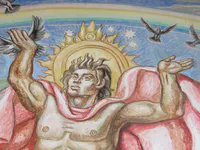
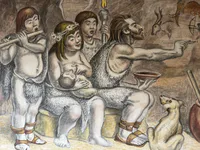
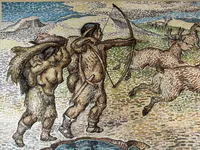
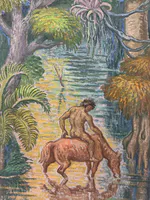
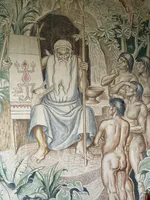
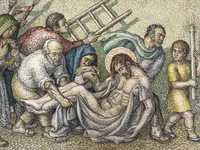
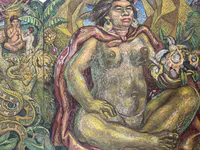
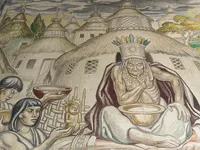
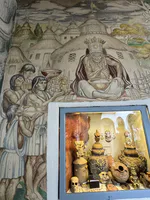
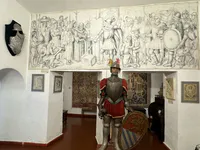
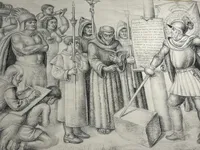
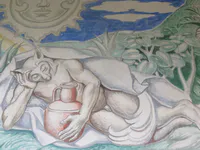 After the Mexican Revolution and the First World War, artistic culture in Spanish America shifted toward nationalist, Impressionist, and Surrealist tendencies. An indigenous, earth-centred spirit became the new axis of cultural nationalism and a pathway to modernism in the region’s art. In Colombia, this current took shape as the Bachué movement.
Its thematic origins lie in Paris, where Colombian artists Luis Alberto Acuña and Rómulo Rozo were challenged by Pablo Picasso. He praised Acuña’s technique but criticised the absence of an authentically Andean voice, urging him to draw on the great indigenous artists of the past. This criticism led them to study the sculpture of San Agustín and the Toltec, Aztec, and Maya arts at the Musée de l’Homme in the Trocadéro.
After five years of study abroad, they returned to Colombia determined to recover vernacular, indigenous, and fully local traditions. The movement took its name from the goddess Bachué—mythical mother of humanity in Muisca cosmology—thanks to writer Jaime Barrera Parra, who used it in a 1920s editorial inspired by Rozo’s 1926 sculpture of Bachué, later exhibited in the Colombian pavilion at the 1929 Ibero-American Exposition in Seville.
For about two decades, the Bachué movement was represented in painting by Luis Alberto Acuña, Pedro Nel Gómez, Ignacio Gómez Jaramillo, Jorge Elías Triana, and Alipio Jaramillo, among others; in sculpture by Rómulo Rozo, Rodrigo Arenas Betancourt, José Domingo Rodríguez, and Julio Abril; in music by Guillermo Uribe Holguín and José Rozo Contreras; and in literature by J. A. Osorio Lizarazo with novels such as El pantano and La cosecha.
Contemporary with the Bachuistas were the Academicists, who upheld classical European ideals and universalist aesthetics. Artists like Andrés de Santa María and Epifanio Garay preferred landscapes and portraits steeped in European fashions and conventions, rejecting the search for a nationalism rooted in indigenous origins.
The Bachué movement lost strength in the 1950s with the growing influence of international modernism and universalist aesthetics. Nonetheless, its founder Luis Alberto Acuña continued his personal struggle to defend and develop the movement’s original vision.
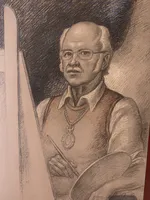
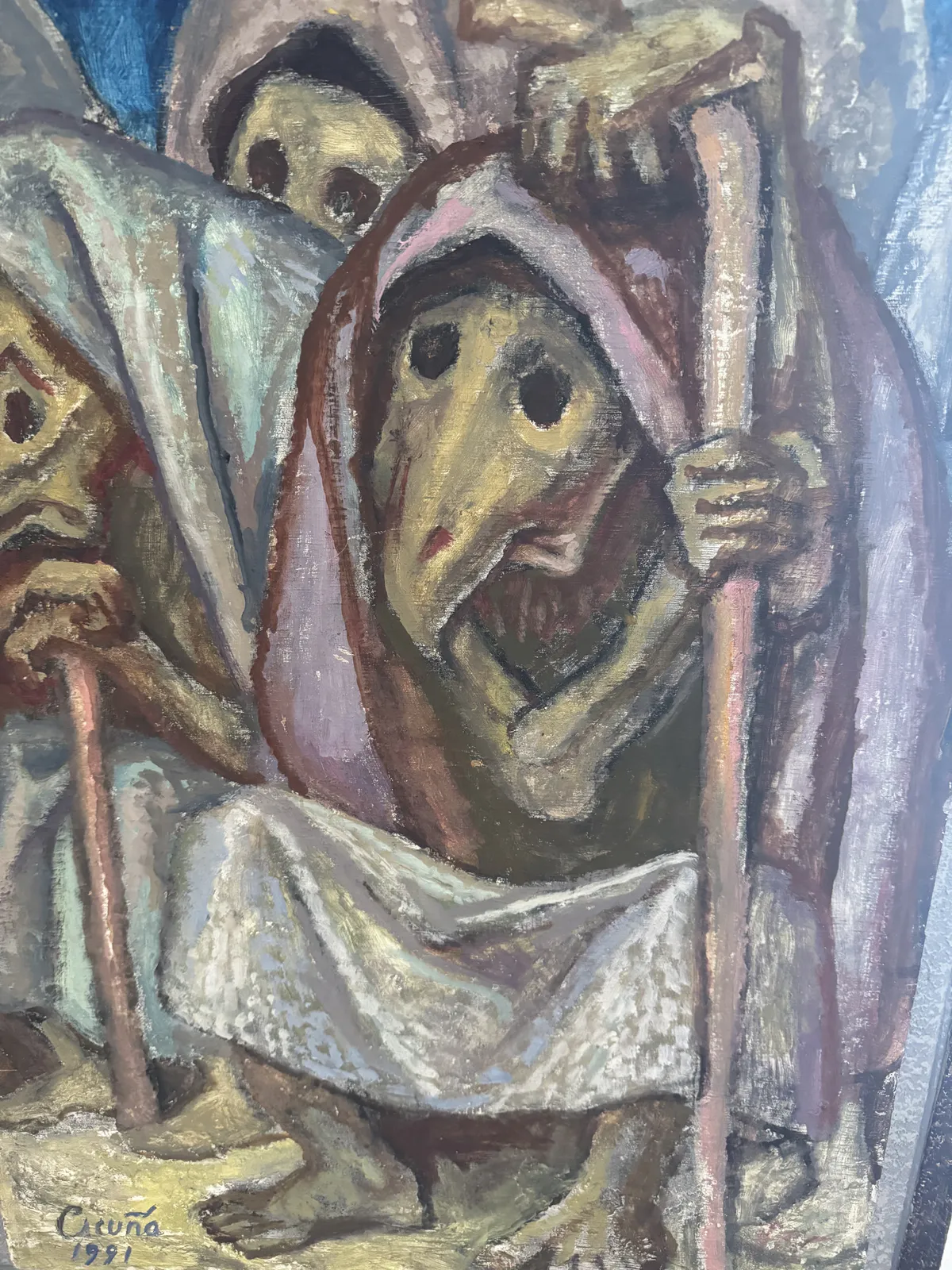
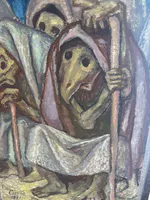
Zascandil the WitchLuis Alberto Acuña
The gaunt witch (1991) grips a staff while hooded faces press close behind her, their hollow eyes and sharp profiles crowding the composition. Acuña returned repeatedly to Zascandil, the witch used to frighten him as a child. Muddy greens, mauves, and blue-grays compress the figures into a spectral mass, giving remembered fear a claustrophobic force.
Explore by type and place