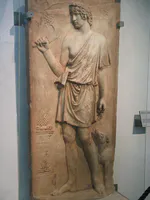
Marble Relief of Antinous as Silvanus
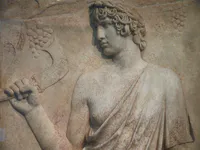
Marble Relief of Antinous as Silvanus
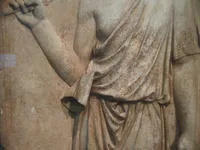
Marble Relief of Antinous as Silvanus
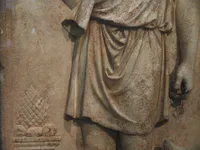
Antinous as Silvanus
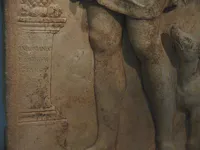
Antinous as Silvanus
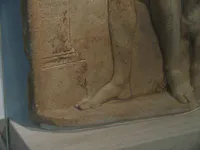
Antinous as Silvanus
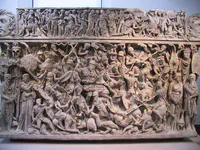
Portonaccio Sarcophagus
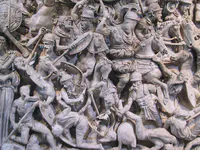
Heroic Center of the Portonaccio Sarcophagus
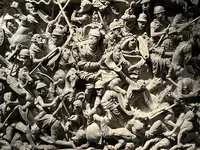
Roman Commander Leading the Battle
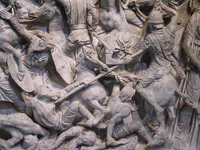
Battle Scene
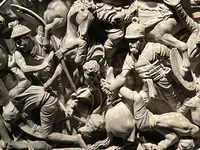
Roman Cavalry Overcoming Germanic Tribes
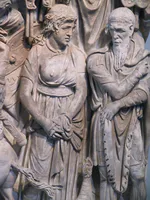
Barbarian Captives
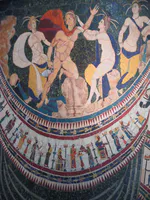
Opus Sectile Panel: Abduction of Hylas and Festive Procession
Dionysus, Garden Theatres, and Roman Memories of Virtue
In Roman town houses (domus) and suburban villas, gardens were carefully designed landscapes of groves, streams, pools, and ornamental plants framed by sculpture and mosaics. Works such as the Medusa mosaic, the Bacchus mosaic, and the mosaic of the Seasons with cornucopias evoked sacred and pastoral settings, turning these spaces into theatrical stages of nature. Marble vases, small square reliefs, and fountain figures often showed bucolic scenes, woodland deities, and mythological beings, blurring the line between private garden and sacred grove.
Dionysus was especially favored in these decorative programs. As god of the vine, wine, theatre, and ecstatic transformation, he embodied the vital energy of nature and the power of rebirth seen in growing plants. His retinue of Maenads and Satyrs, along with deities like Artemis and Pan, populated garden imagery and celebrated conviviality, intoxication, and festivity. Myths credited Dionysus with teaching humans how to cultivate the vine and make wine, a divine gift that allowed them to forget their troubles. Theatrical performances of his stories at festivals gave birth to Greek tragedy and comedy, and Roman culture later absorbed this close link between Dionysus and the world of theatre. Masks, actor statues, and reliefs with stage imagery therefore suited decorative schemes inspired by this multifaceted god.
From the second century AD, marble sarcophagi created for inhumation gave rise to a new figurative language. In their richly carved friezes, elite patrons displayed learning and virtue by casting the deceased in allegorical narratives. Battle sarcophagi, drawing on heroic combat scenes from Hellenistic art, began to appear after around 170 AD, at the time of Rome’s wars against the Quadi and Marcomanni. High-ranking officers who fought alongside the emperor commissioned these monuments so that their virtus—their courage and moral excellence—would be celebrated forever.
One monumental example, found near the Via Tiburtina in 1931, arranges its battle scene on several levels. At the center, a Roman horseman advances triumphantly through a tangle of soldiers, lances, and horses, embodying the ideal of the universal victor as Romans strike down and overwhelm their foes. At the edges, pairs of subdued barbarians with downcast, suffering expressions warn of the fate awaiting those who resist Rome. Deep carving and strong contrasts of light and shadow heighten the drama of the clash.
The side reliefs show what follows the battle: on one flank, barbarian prisoners cross a river on a pontoon bridge under Roman guard; on the other, defeated leaders submit to Roman officers. The lid frieze, framed by theatrical masks, honors the deceased and his wife in a central handshake (dextrarum iunctio), with her virtue shown in the domestic sphere as she educates their children, and his in the public realm as he receives the surrender of enemies, displaying both bravery and clementia. The faces of the main figures were left unfinished, awaiting the carving of the actual features of the deceased couple. Inspired by scenes from the Column of Marcus Aurelius, the sarcophagus is dated to around 180 AD. Military standards on the upper edge—an eagle of Legio IIII Flavia and a boar of Legio I Italica—may identify the dead man as Aulus Iulius Pompilius, an officer who commanded cavalry detachments from these units during the Marcomannic wars.
Dionysus was especially favored in these decorative programs. As god of the vine, wine, theatre, and ecstatic transformation, he embodied the vital energy of nature and the power of rebirth seen in growing plants. His retinue of Maenads and Satyrs, along with deities like Artemis and Pan, populated garden imagery and celebrated conviviality, intoxication, and festivity. Myths credited Dionysus with teaching humans how to cultivate the vine and make wine, a divine gift that allowed them to forget their troubles. Theatrical performances of his stories at festivals gave birth to Greek tragedy and comedy, and Roman culture later absorbed this close link between Dionysus and the world of theatre. Masks, actor statues, and reliefs with stage imagery therefore suited decorative schemes inspired by this multifaceted god.
From the second century AD, marble sarcophagi created for inhumation gave rise to a new figurative language. In their richly carved friezes, elite patrons displayed learning and virtue by casting the deceased in allegorical narratives. Battle sarcophagi, drawing on heroic combat scenes from Hellenistic art, began to appear after around 170 AD, at the time of Rome’s wars against the Quadi and Marcomanni. High-ranking officers who fought alongside the emperor commissioned these monuments so that their virtus—their courage and moral excellence—would be celebrated forever.
One monumental example, found near the Via Tiburtina in 1931, arranges its battle scene on several levels. At the center, a Roman horseman advances triumphantly through a tangle of soldiers, lances, and horses, embodying the ideal of the universal victor as Romans strike down and overwhelm their foes. At the edges, pairs of subdued barbarians with downcast, suffering expressions warn of the fate awaiting those who resist Rome. Deep carving and strong contrasts of light and shadow heighten the drama of the clash.
The side reliefs show what follows the battle: on one flank, barbarian prisoners cross a river on a pontoon bridge under Roman guard; on the other, defeated leaders submit to Roman officers. The lid frieze, framed by theatrical masks, honors the deceased and his wife in a central handshake (dextrarum iunctio), with her virtue shown in the domestic sphere as she educates their children, and his in the public realm as he receives the surrender of enemies, displaying both bravery and clementia. The faces of the main figures were left unfinished, awaiting the carving of the actual features of the deceased couple. Inspired by scenes from the Column of Marcus Aurelius, the sarcophagus is dated to around 180 AD. Military standards on the upper edge—an eagle of Legio IIII Flavia and a boar of Legio I Italica—may identify the dead man as Aulus Iulius Pompilius, an officer who commanded cavalry detachments from these units during the Marcomannic wars.
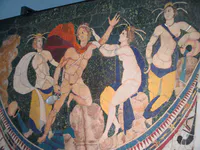
Roman Opus Sectile Panel of Hylas
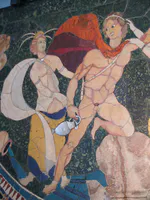
Hylas and the Nymphs
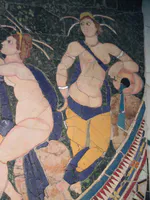
Nymphs Abducting Hylas
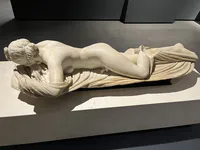
Sleeping Hermaphrodite
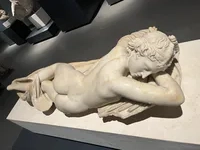
Sleeping Hermaphrodite
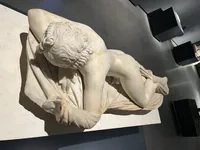
Sleeping Hermaphrodite
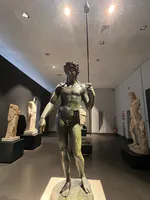
Dionysus with Thyrsus
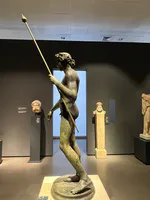
Dionysus with Thyrsus from Side
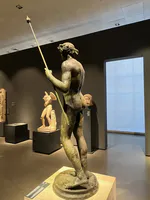
Dionysus with Thyrsus from Back
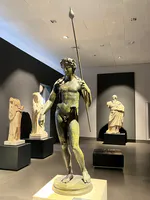
Bronze Statue of Dionysus
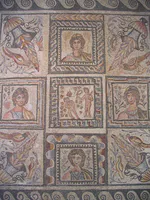
Mosaic of the Seasons with Cornucopias
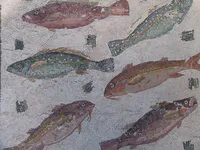
Fish
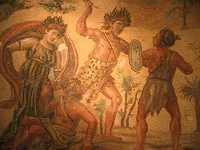
Dionysus
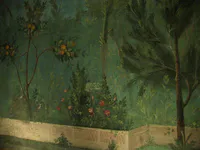
Garden Room Frescos from Livia's Villa
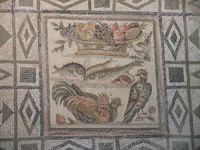
Abundance
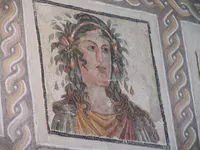
Garlanded Woman
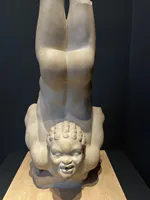
Young African Acrobat
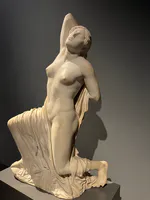
Wounded Niobid Sculpture
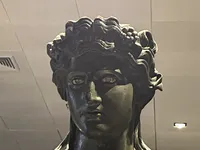
Dionysus
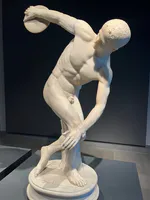
Discobolus
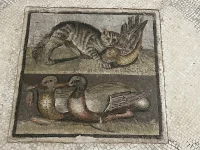
Cat and Ducks
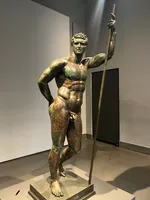
Bronze Youth with Spear
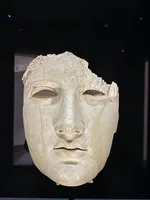
Apollo
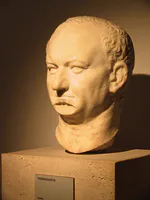
Emperor Vespasian
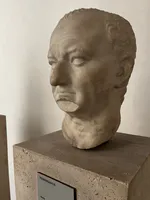
Emperor Vespasian
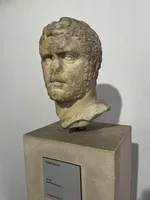
Emperor Caracalla
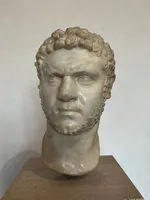
Emperor Caracalla
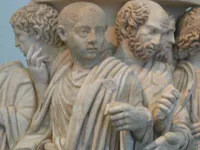
Roman Senators in Processus Consularis
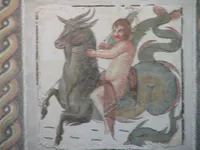
Cupid Riding Aegipan Across the Sea
Roman Fresco of Rustic Shrine and Satyr
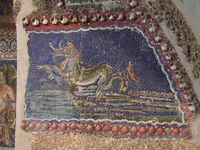
Roman Sea Monster Mosaic
Roman Sarcophagi with Battle Scenes and Imperial Virtus
From the 2nd c. AD, as inhumation became common, marble sarcophagi fostered a new figurative language. In their richly carved friezes, elites displayed their education and celebrated the moral qualities of the deceased through allegory. After about 170 AD, sarcophagi with battle scenes appeared, drawing on mythological struggles familiar from Hellenistic art. Around twenty are known from the reign of Marcus Aurelius to the early reign of Septimius Severus, coinciding with wars against the Quadi and Marcomanni.
The patrons, high officers in the emperor’s entourage, commissioned these monuments to have their virtus—courage, excellence, and leadership—honoured on their tombs. They wished to be remembered simultaneously as successful commanders and exemplary Roman citizens.
The patrons, high officers in the emperor’s entourage, commissioned these monuments to have their virtus—courage, excellence, and leadership—honoured on their tombs. They wished to be remembered simultaneously as successful commanders and exemplary Roman citizens.
Roman Fresco Fragments with Women
Antinous
Dionysus
Oscillum with Dionysus
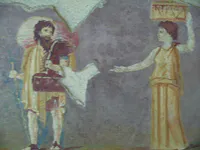
Roman Fresco of Crates and Hipparchia
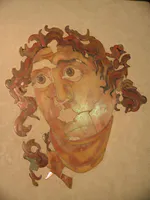
Helios
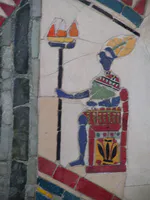
Seated Figure with Torch
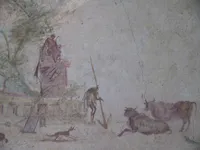
Pastoral Scene with a Satyr
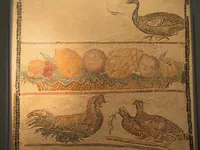
Birds and Fruits
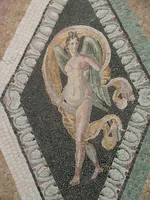
Mosaic of Victoria
Shell and Mosaic Decoration from a Nymphaeum
Cupid
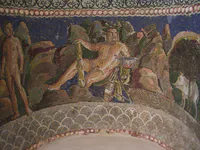
Mosaic of Dionysus
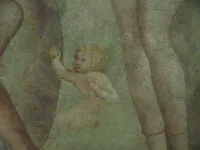
Child with Fruit
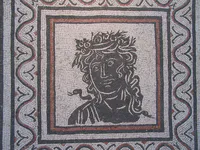
Bacchus Mosaic
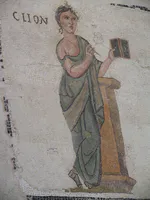
Clio the Muse
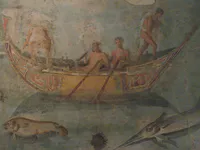
Fishermen and Boat
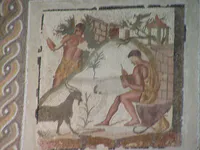
Pastoral Scene
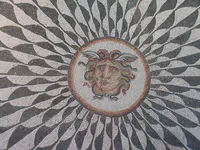
Medusa
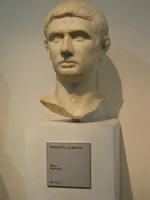
Brutus
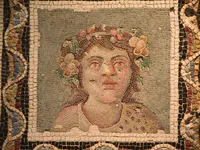
Young Dionysus
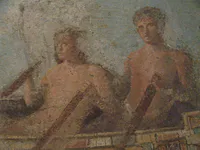
Young Rowers
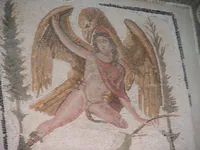
Ganymede Kidnapped by Zeus
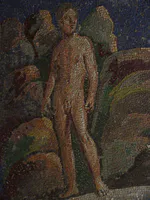
Satyr
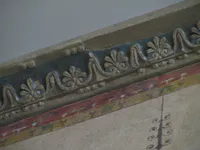
Painted Architectural Frieze
Potnia Theron
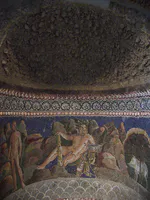
Dionysus in Grotto
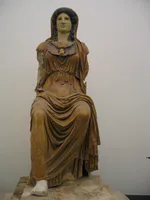
Athena Carpegna
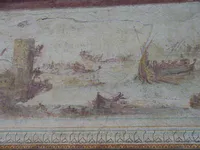
Naval Battle Scene
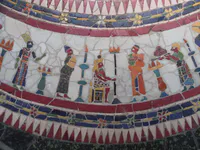
Festive Procession
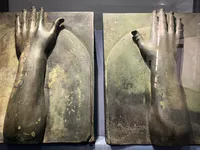
Ship Forearms with Open Hands
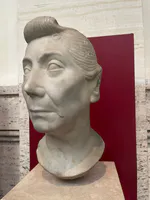
Roman Matron
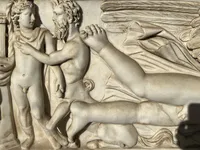
Satyr and Youth
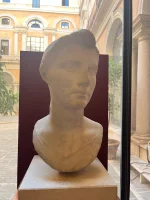
Portrait of Octavia Minor
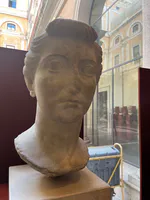
Portrait of Livia
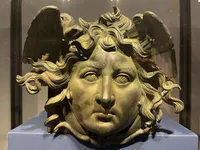
Head of Medusa
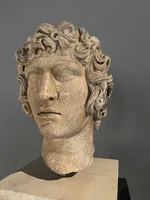
Portrait of Antinous
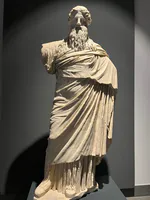
Dionysus “Sardanapalus”
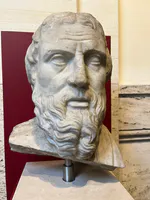
Herodotus of Halicarnassus
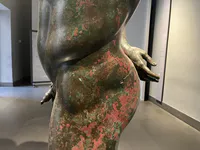
Hellenistic Prince’s Torso
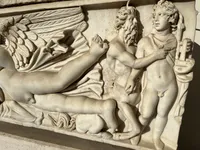
Dionysian Scene
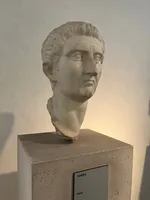
Emperor Nerva
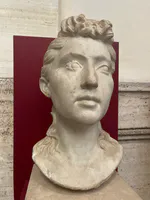
Woman with Octavia’s Hairstyle
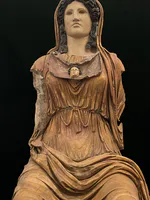
Seated Minerva
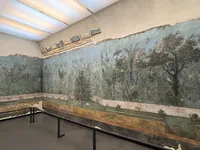
Garden Room Frescoes
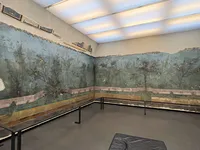
Garden Room Frescoes from the Villa of Livia
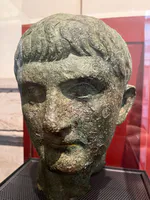
Bronze Portrait Bust of Germanicus
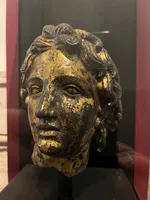
Alexander the Great
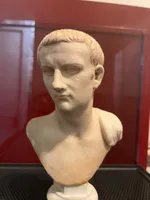
Bust of Emperor Caligula
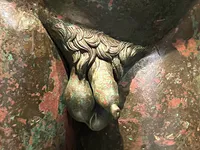
Classical Heroic Nudity
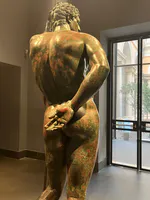
Hellenistic Hero
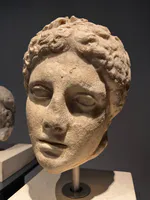
Young Athlete
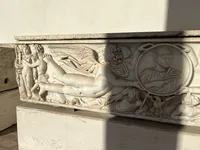
Marble Sarcophagus with Winged Figures
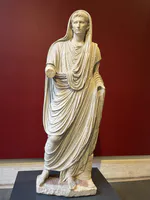
Augustus as Pontifex Maximus
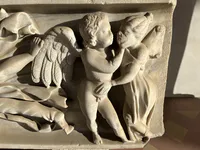
Erotes Embracing
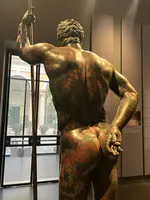
Hellenistic Hero from Behind
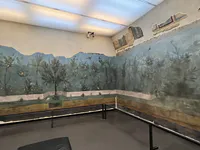
Garden Room Frescoes from Livia's Villa
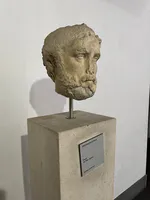
Antoninus Pius
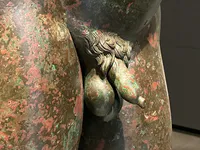
Classical Heroic Nude
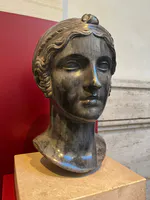
Sappho
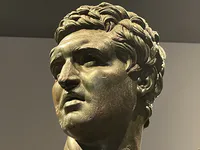
Head of Hellenistic Prince
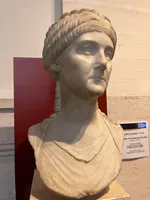
Julio-Claudian Princess
National Roman Museum – Palazzo MassimoMuseo Nazionale Romano – Palazzo Massimo
National Roman Museum – Palazzo Massimo, a late-19th-c. palazzo near Termini Station, is the National Roman Museum’s most intimate window onto Roman private life. Frescoes from the Villa of Livia and the Villa della Farnesina, glittering floor mosaics, portraits, and carved sarcophagi trace how Romans staged nature, myth, and status inside the domus and in death. Seen together, these works turn decoration into evidence—of Augustan ideology, elite taste, and the stories families wanted stone to keep.
Explore by type and place