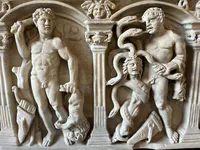
Hercules Slaying the Lion and the Hydra
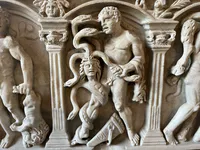
Hercules Battling the Lernaean Hydra
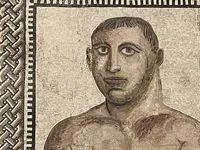
Boxer Mosaic Fragment
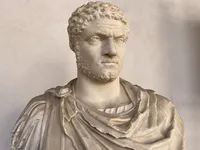
Caracalla
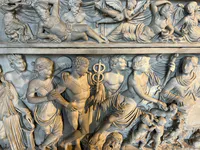
Marriage of Dionysus and Ariadne
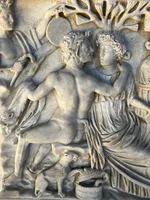
Dionysus and Ariadne
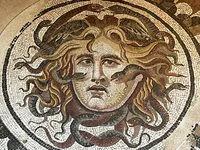
Medusa
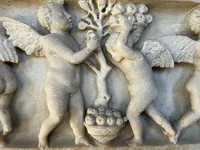
Winged Putti Harvesting Fruit
Population and Funerary Customs in Early Latium
Paleodemographic analysis from cemeteries such as Osteria dell’Osa suggests that those who reached 20 years of age could expect, on average, about 25 more years of life. Among adults, women significantly outnumbered men, with a sex ratio of roughly 0.73 males per female. In the second Latial period (c. 10th–9th c. BC), adult men often received distinct funerary treatment: early on they were commonly cremated and later sometimes excluded from burial in the main sacred area. Changes in ritual and grave goods reveal evolving ideas about status, gender, and the community’s relationship to its dead.
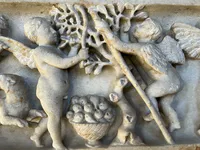
Winged Putti Harvesting Fruit
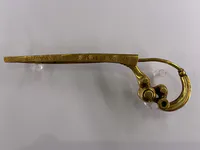
Praeneste Fibula
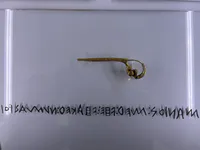
Praeneste Fibula
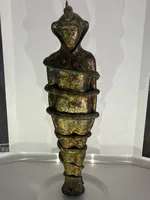
Deity with Serpent Coils
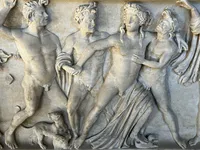
Dionysian Procession
Latium’s Varied Landscapes and Shaping River Networks
Latium’s landscape is highly varied: to the north, volcanic relief dominates around the Alban Hills; to the south, limestone chains of the pre-Apennines (Lepini, Ausoni, Aurunci) frame the land. Coastal plains—Campagna Romana, Pontine plain, and Fondi plain—rise gently inland. Major rivers such as the Tiber, Aniene, Sacco, Liri, and Garigliano provided natural routes and borders with Etruria, Sabina, Abruzzo, and Campania, while smaller streams formed a dense internal network. These geomorphological contrasts shaped shifting centers of power, with the Alban Hills prominent in early periods before Rome’s expansion eclipsed them.
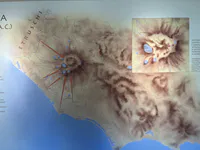
Map of Early Latial Centers
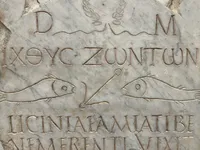
Funerary Stele of Licinia Amias
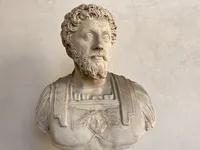
Emperor Marcus Aurelius
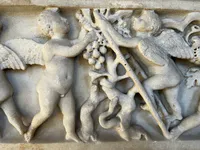
Winged Putti Harvesting Grapes
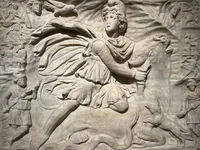
Mithras Slaying the Bull
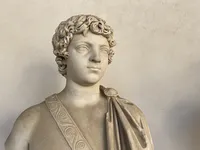
Caracalla as a Child
Latium’s Ancient Boundaries and Early Urbanization
Ancient Latium was a much smaller region than modern Lazio, bounded by the Tiber, Sacco, Liri, and Garigliano rivers and the Tyrrhenian Sea. Tradition distinguishes Latium Vetus, between the Tiber and Monte Circeo, inhabited by the Latins, from Latium Adjectum, annexed later from neighboring peoples such as the Ausoni and Aurunci. Rome urbanized early in the Iron Age, while centers like Lavinium, Ardea, Anzio, Satricum, Gabii, Tivoli, and Praeneste grew later—dates now revised earlier thanks to dendrochronology and radiocarbon analysis.
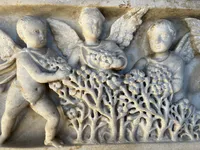
Putti Gathering Blossoms
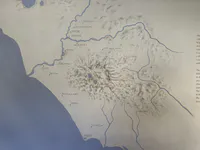
Map of Ancient Latium Settlements
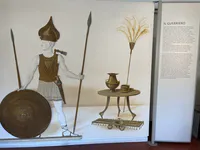
The Warrior
The Cult of Mithras: Mystery, Soldiers, and the Sun
Mithras was an Iranian god whose name means contract or friendship, revered as a solar guarantor of social order and royal power. In the Roman world, his cult appeared in the later 1st century CE as a mystery religion reserved mainly for male initiates, often soldiers. According to the myth, Mithras is born from a rock with knife, torch, and Phrygian cap, defeats the Sun to gain a radiant crown, and performs the central act of tauroctonia: slaying a bull attended by a raven, dog, serpent, scorpion, and symbols of fertility like wheat sprouting from the bull’s tail.
The cult was practiced in underground mithraea—rectangular, apse-ended rooms with side benches where initiates shared a ritual meal of bread and wine facing an image of the tauroctony. Mithraism organized its followers through seven grades of initiation, from Corax (Raven) up to Pater (Father), guiding members through a symbolic journey tied to cosmic cycles of beginning and end, dawn and sunset, Sun and Moon.
The cult was practiced in underground mithraea—rectangular, apse-ended rooms with side benches where initiates shared a ritual meal of bread and wine facing an image of the tauroctony. Mithraism organized its followers through seven grades of initiation, from Corax (Raven) up to Pater (Father), guiding members through a symbolic journey tied to cosmic cycles of beginning and end, dawn and sunset, Sun and Moon.
Latium’s Climate, Soils, and Ancient Economy
Latium has a Mediterranean climate, with hot, dry summers and humid winters that favored seasonal transhumance of herds. Vegetation ranges from coastal scrub below 500 m to mixed woods and beech forests at higher altitudes. Volcanic soils are notably fertile, whereas marshlands (only recently drained) and many southern limestone areas are poorer. Ancient subsistence combined cereals (emmer, barley, einkorn, millet, wheat, spelt), legumes, and livestock—goats, pigs, cattle—supplemented by hunting and riverine resources. Horses are attested from the Copper Age, and domestic cats appear archaeologically from the 9th century BC.
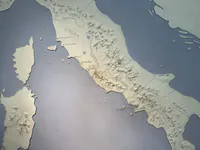
Ancient Latium and Neighbors
Baths of DiocletianTerme di Diocleziano
Baths of Diocletian, built under Emperor Diocletian in 298–306, were Rome’s largest public baths—an engineered city within the city where exercise, bathing, reading, and gardens shaped civic life. Their immense brick vaults still register imperial ambition, even after late-antique decline and Renaissance reuse, when Michelangelo transformed the soaring frigidarium into Santa Maria degli Angeli e dei Martiri. Today the surviving halls anchor the National Roman Museum, turning a place of leisure into a lens on Roman society.
Explore by type and place