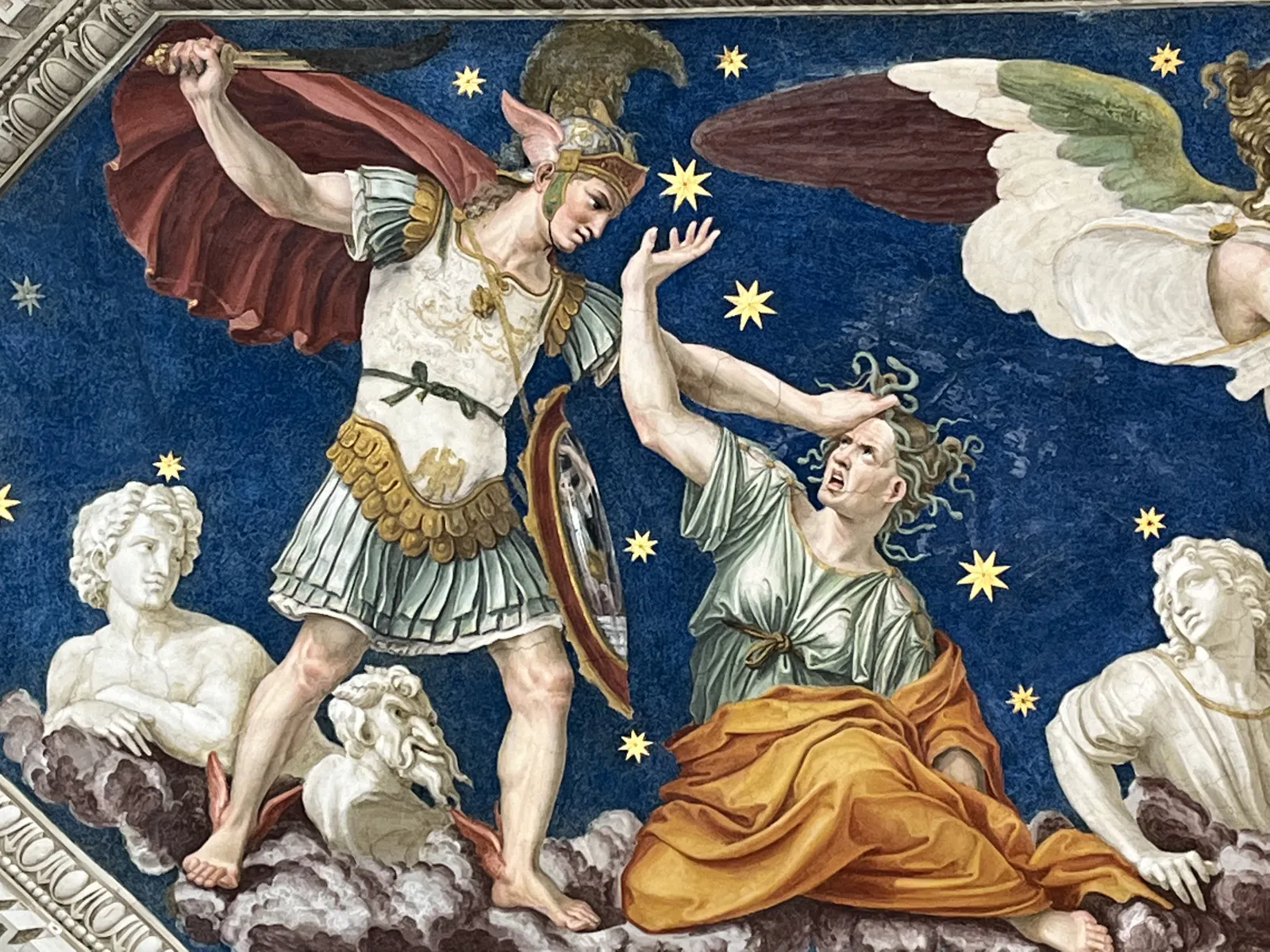
Perseus and Medusa
Baldassarre Peruzzi
In this fresco (c. 1511), Peruzzi depicts Perseus about to behead Medusa. Medusa’s petrifying gaze has already turned victims to stone, visible as pale figures below. Pegasus, born from Medusa’s blood, emerges nearby, symbolizing rebirth. The scene reflects triumph over monstrous chaos.
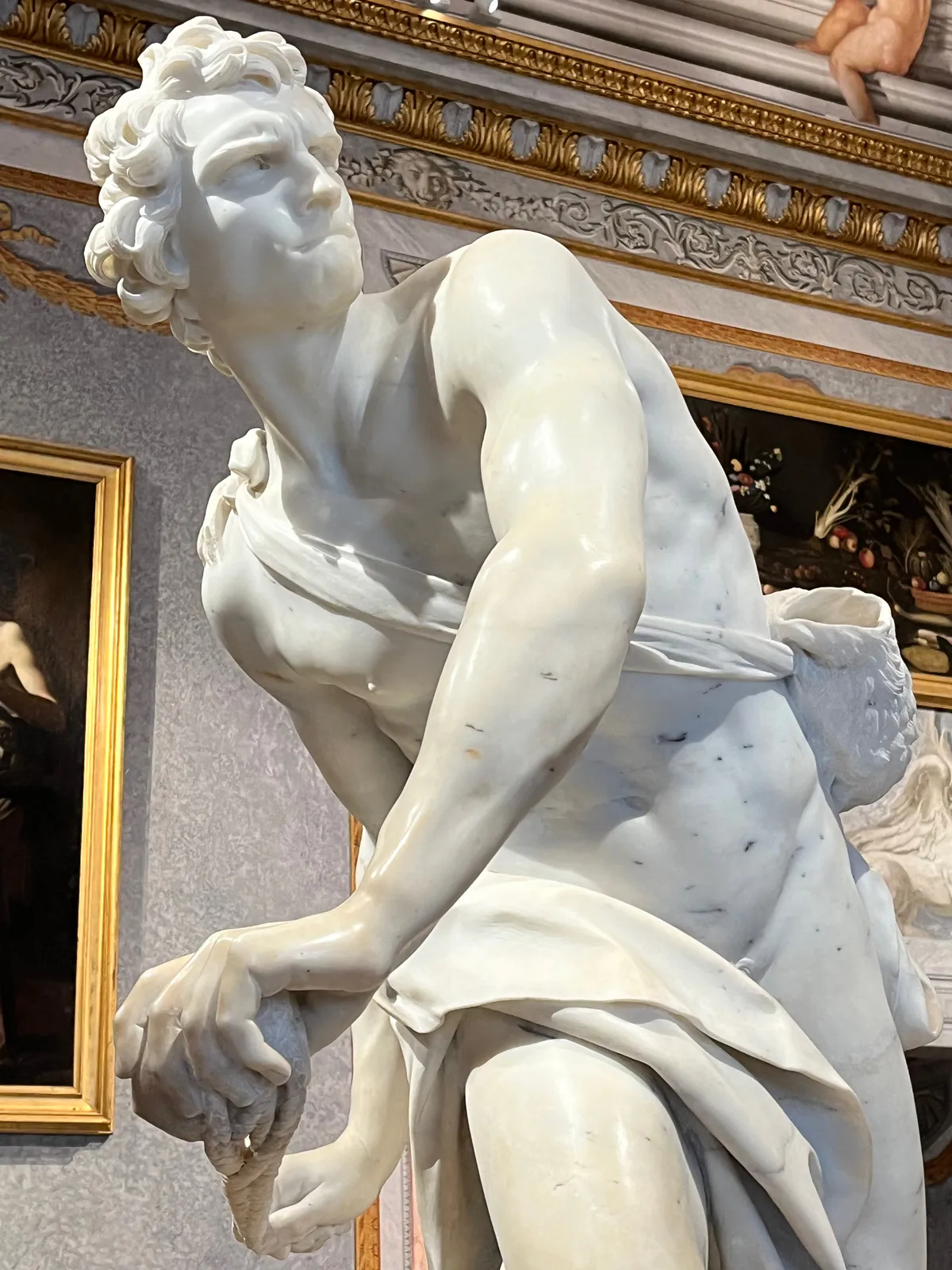
David
Gian Lorenzo Bernini
This marble sculpture (1623–24) captures David in a twisting stance, body coiled as his hand grips the sling. Muscles, drapery, and focused gaze all align with the implied arc of the stone. Commissioned by Cardinal Scipione Borghese, it exemplifies Baroque interest in movement and psychological intensity, turning a biblical hero into a study of concentrated action.
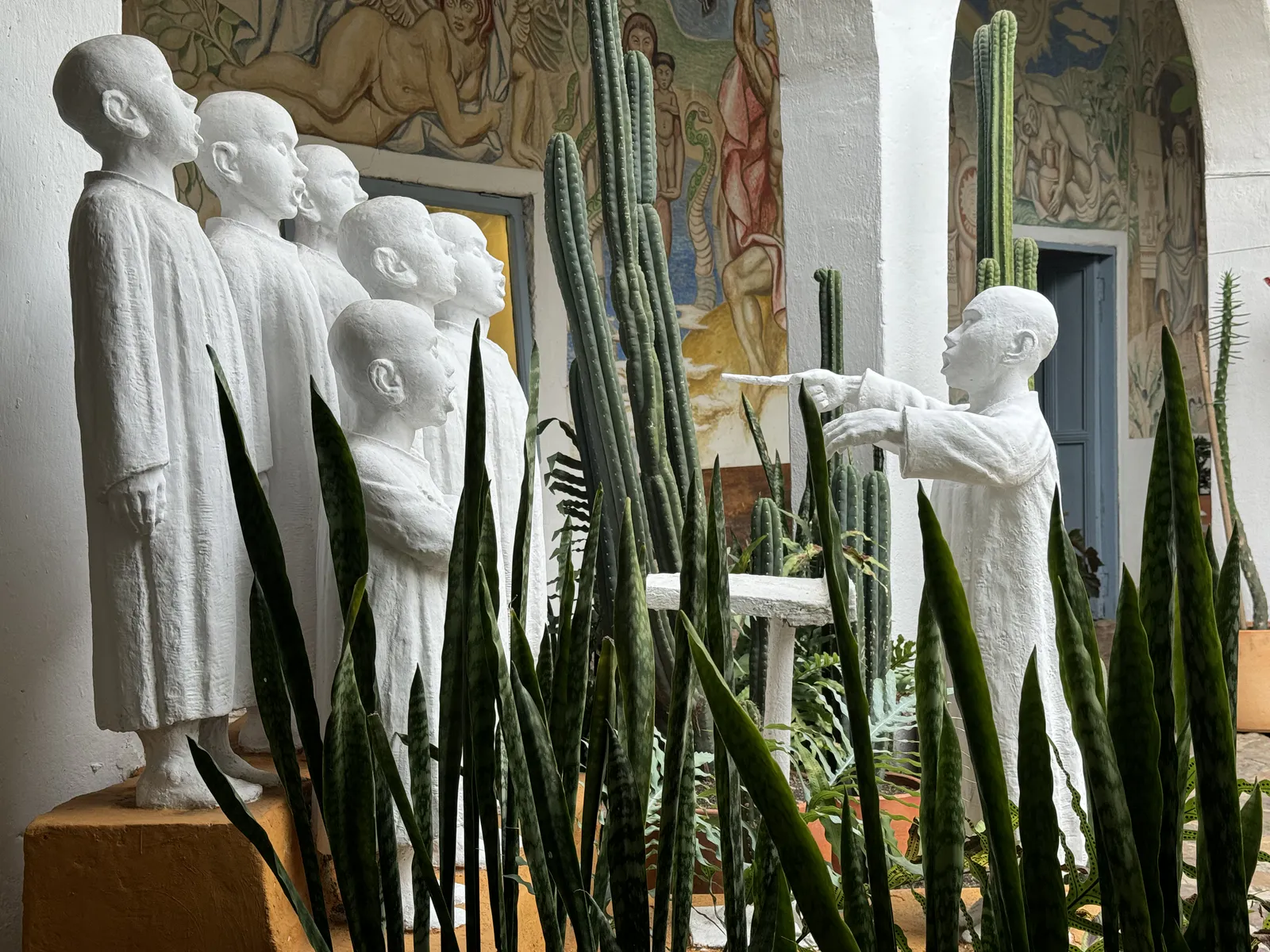
Choir of Novices
Luis Alberto Acuña
This sculptural group by Luis Alberto Acuña (1970s) depicts a choir of young novices led by a conductor, rendered in white plaster. Positioned in the courtyard of Casa Museo Acuña, it captures themes of spiritual education, harmony, and discipline. The rigid poses and minimalist forms evoke a timeless reverence, bridging artistic expression with monastic tradition.
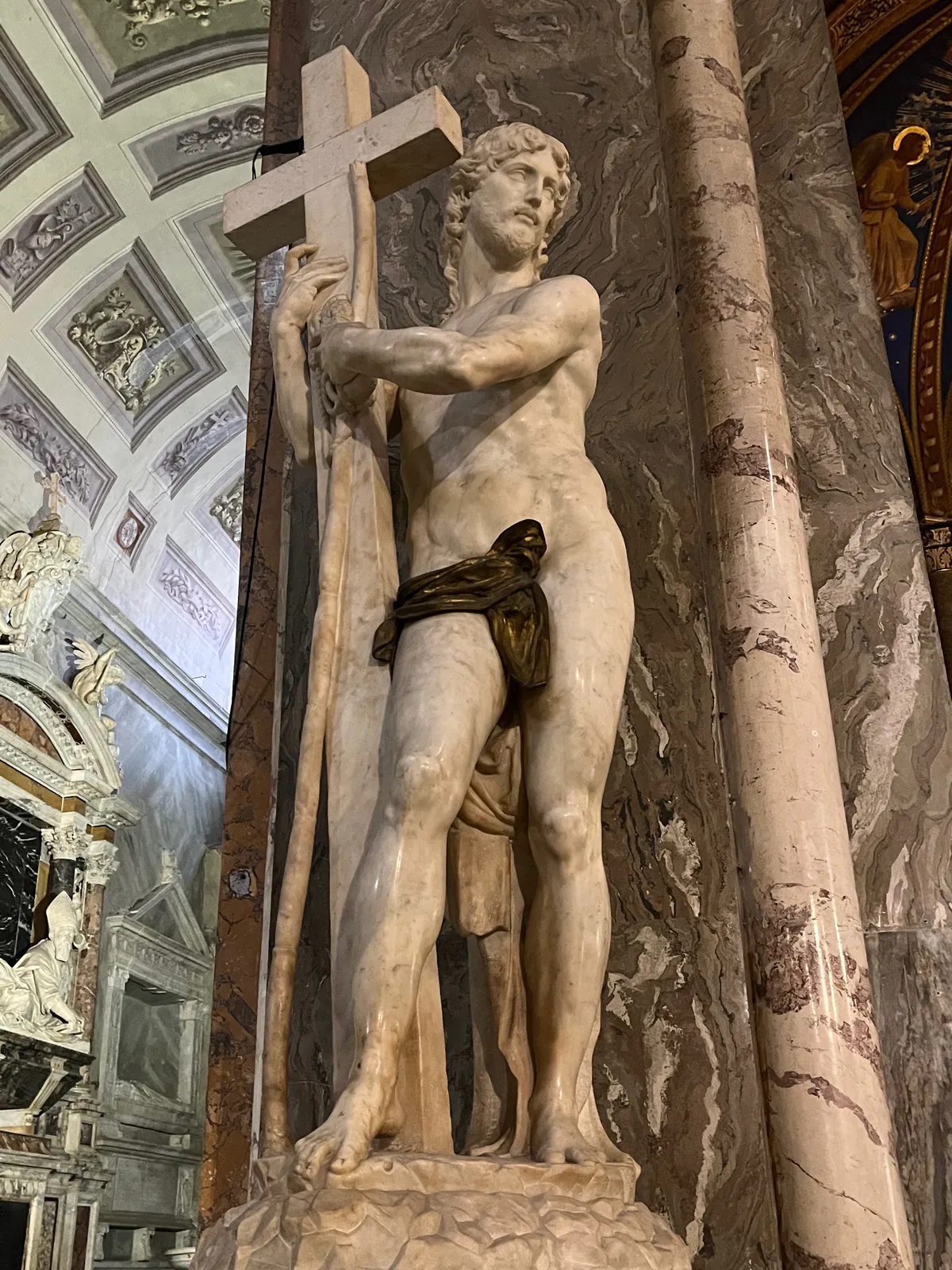
The Risen Christ
Michelangelo
Michelangelo's The Risen Christ (1521) depicts the resurrected Christ holding a cross, symbolizing triumph over death. This marble statue embodies Renaissance humanism, blending classical beauty with spiritual dignity. The idealized nude form reflects the fusion of divine suffering and victory, showcasing Michelangelo's mastery in capturing both physical perfection and profound spiritual themes.
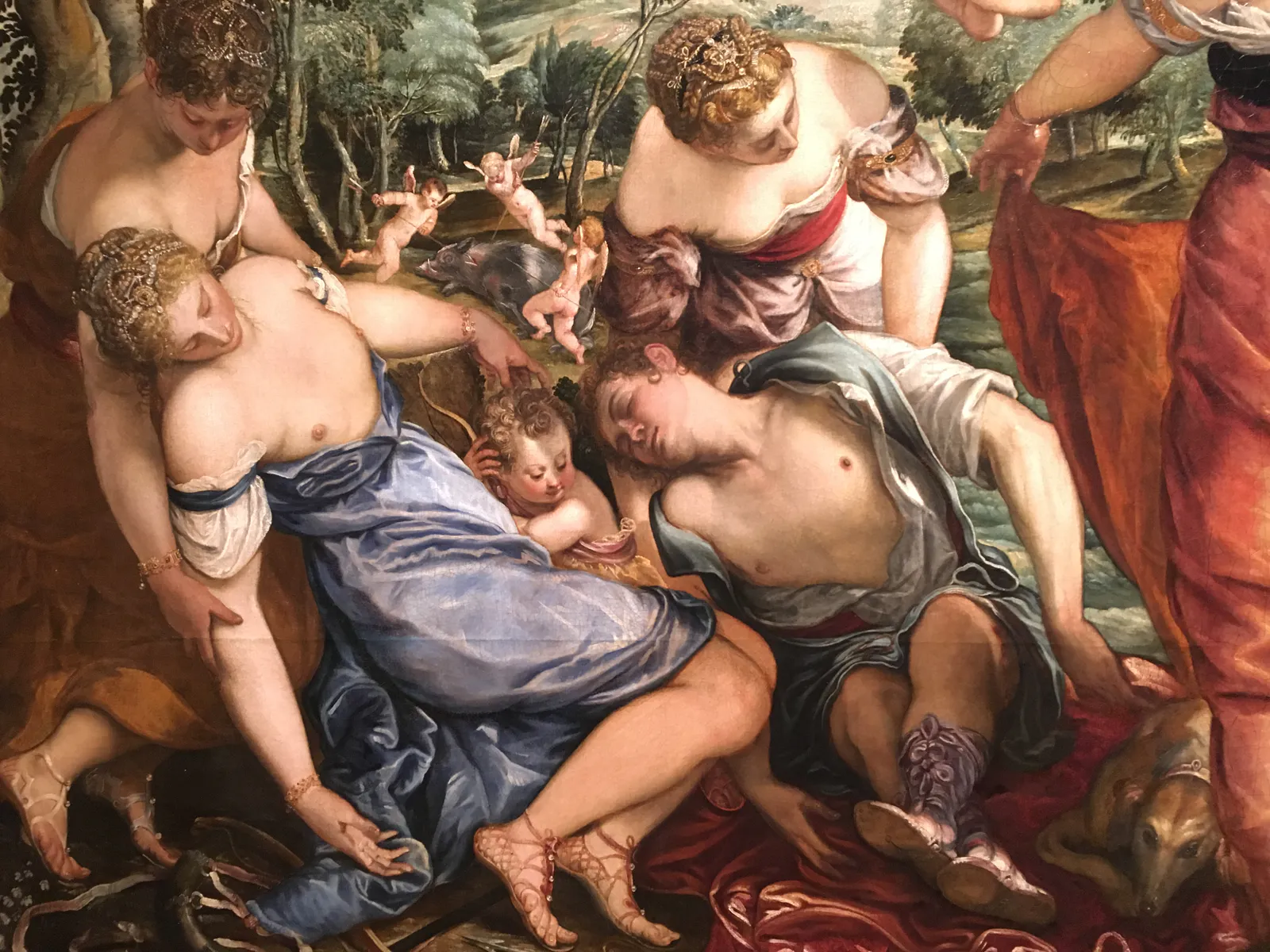
The Death of Adonis
Tintoretto's Workshop
The Death of Adonis (1550–55) captures Venus fainting at Adonis's death, diverging from Ovid’s Metamorphoses by including young women not in the original tale. Created by a Nordic artist in Tintoretto’s Venetian workshop, it blends Tintoretto’s dramatic style with the collaborator’s unique touch, evident in the expressive figures and vibrant colors. This fusion highlights the shared human themes of love and loss, inviting reflection on the timeless nature of myth and emotion.
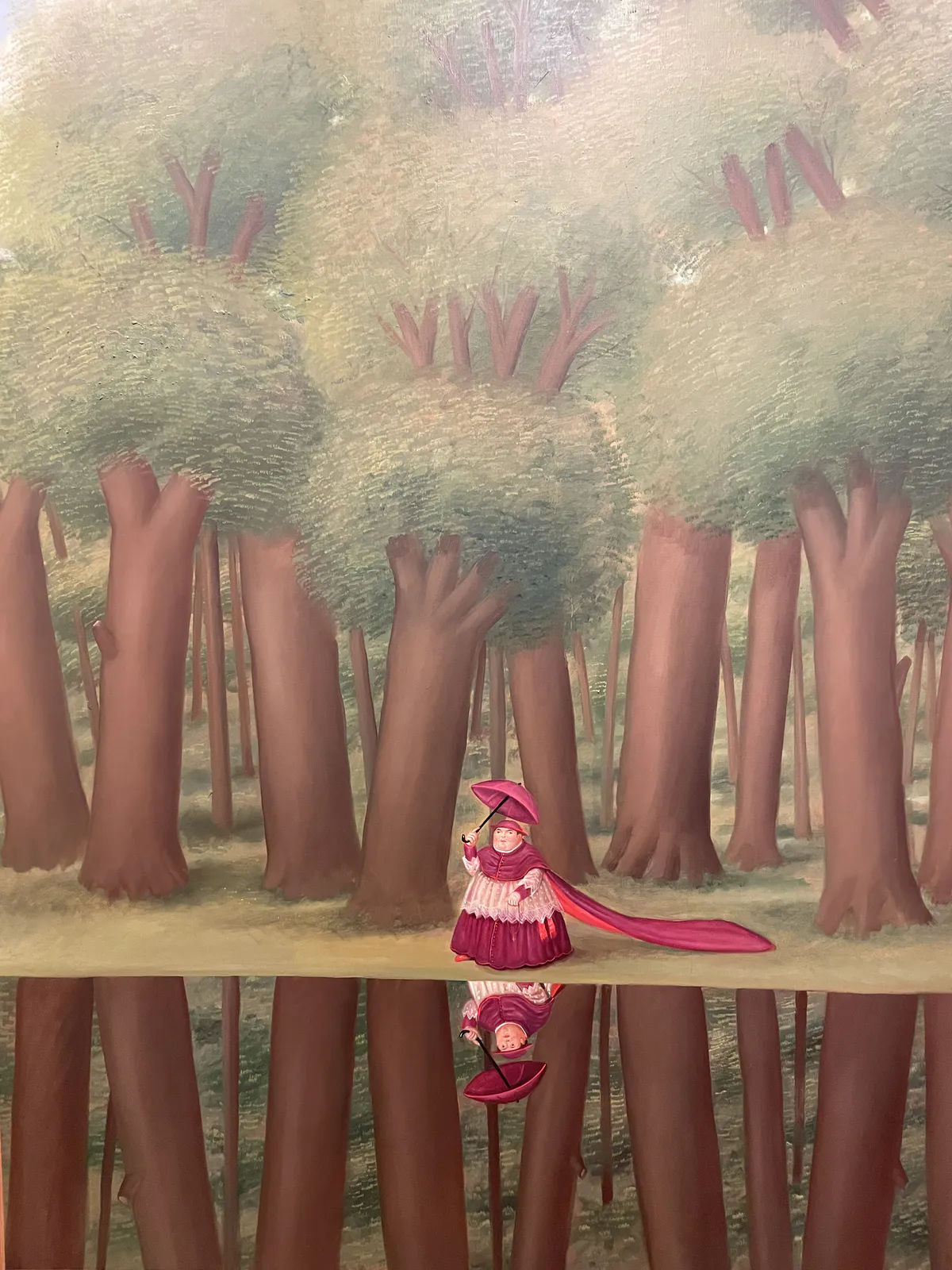
Woman with Umbrella
Fernando Botero
A solitary figure walks through a forest, her reflection mirrored below as if suspended between worlds. Her voluminous dress and umbrella contrast with the vertical rhythm of the trees. With surreal calm and poetic symmetry, Botero (1989) transforms a simple stroll into a meditation on solitude, identity, and the quiet theatricality of everyday life.
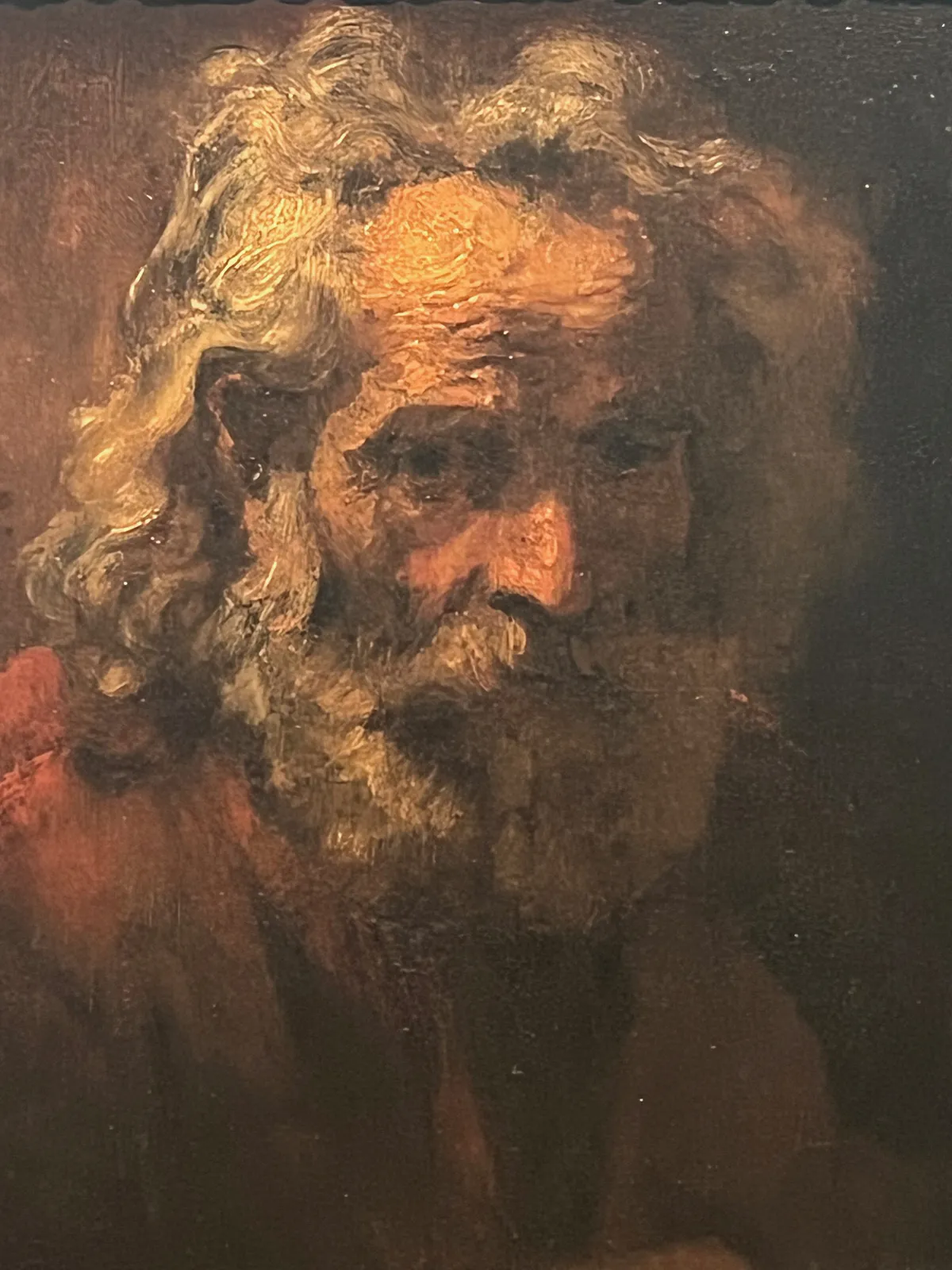
Bust of a Bearded Old Man
Rembrandt
This painting (c. 1630) by Rembrandt van Rijn exemplifies the tronie genre, focusing on character over identity. The expressive face of the elderly man, rendered in oil on panel, showcases Rembrandt’s mastery of light and shadow. As one of his smallest works, it explores themes of old age, capturing the nuances of human expression and emotion, marking an early exploration of the artist’s fascination with the human condition.
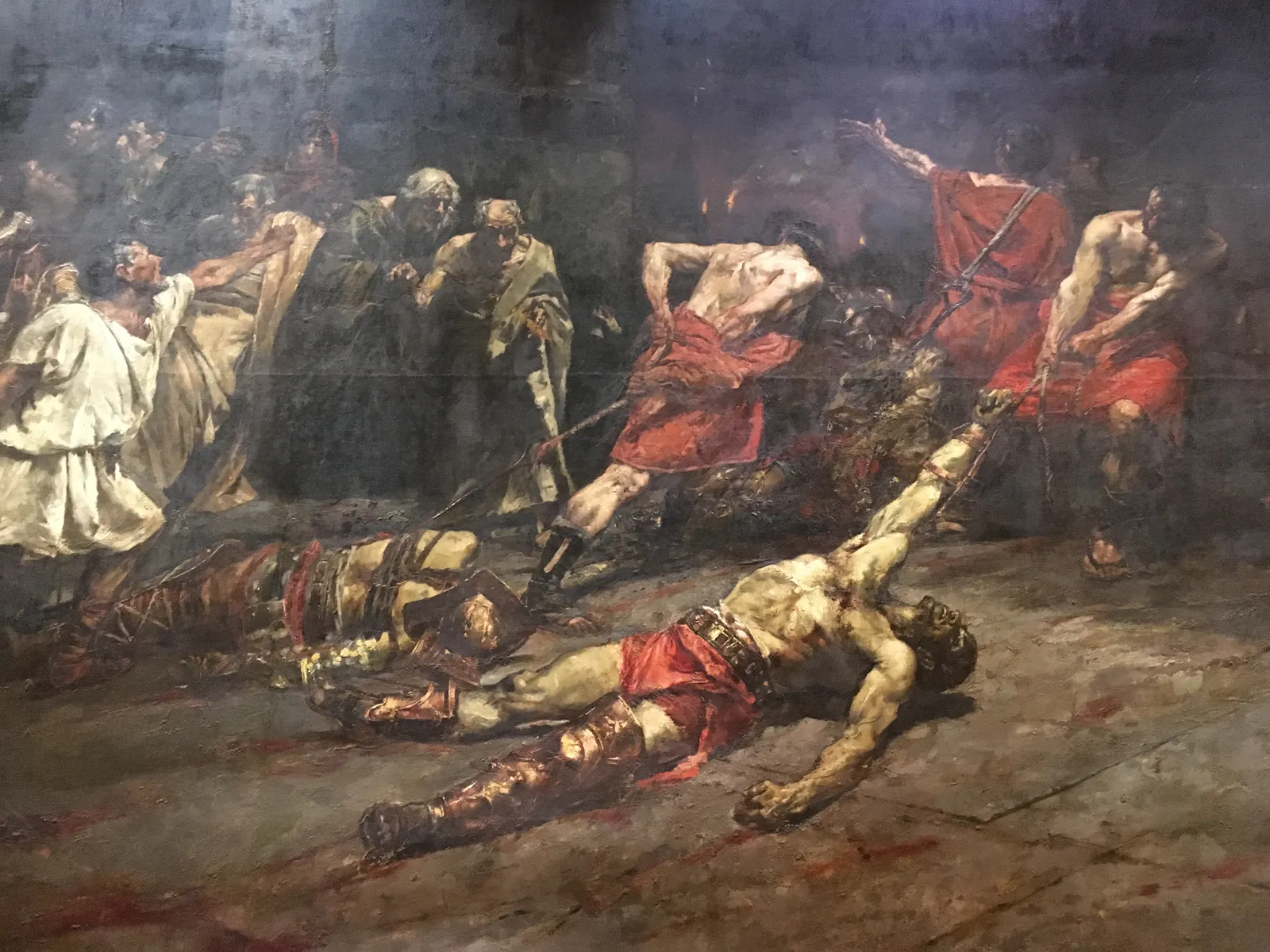
Spoliarium
Juan Luna
This vast 1884 canvas depicts slain gladiators dragged from the Roman arena, their bodies stripped in the spoliarium — the chamber beneath the Colosseum where the dead were despoiled. Luna used the scene as an allegory for the Philippines under Spanish rule, exposing oppression and voicing a nationalist cry for dignity and liberation.
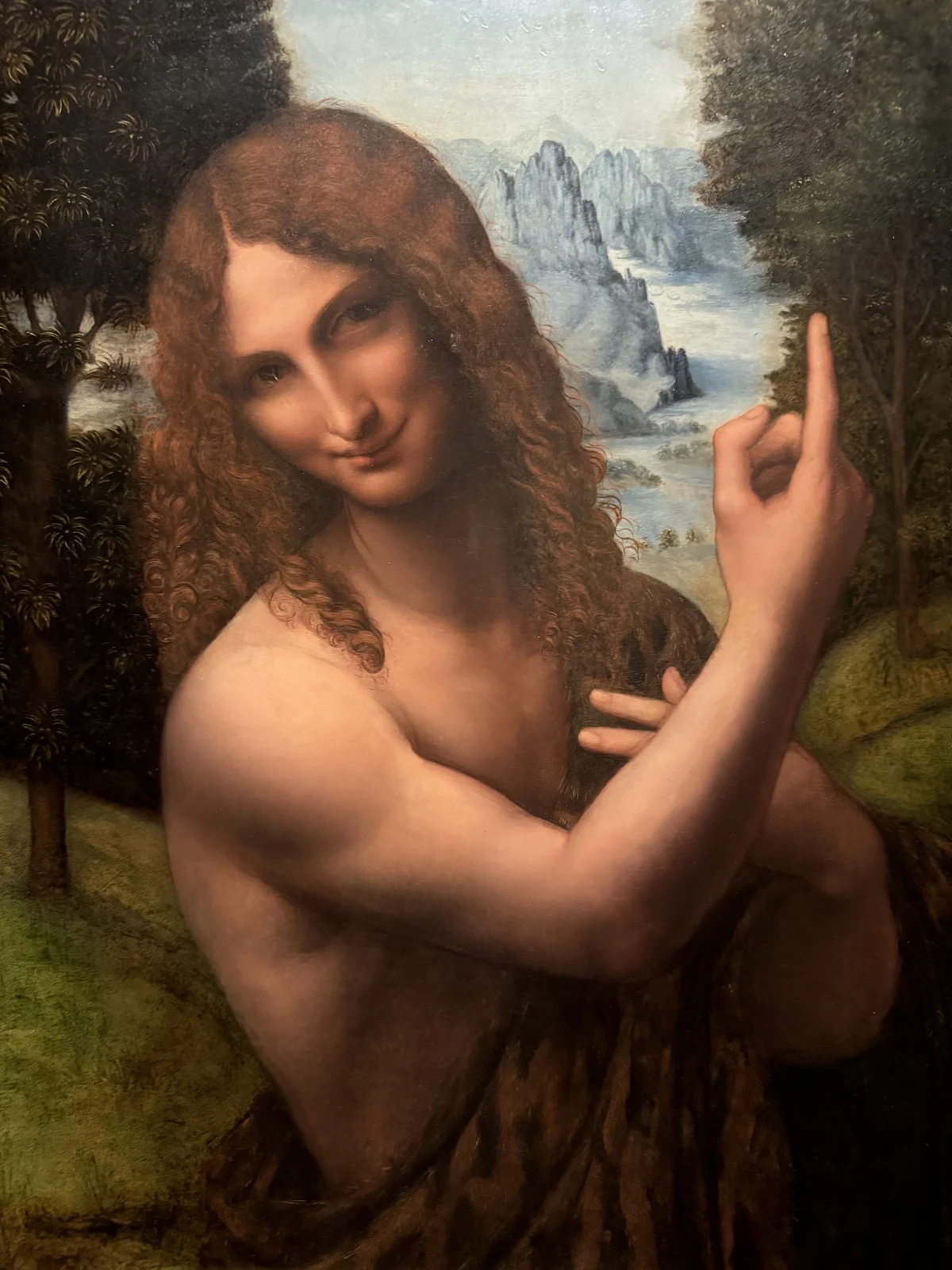
St John the Baptist
Salaino
This sensuous portrayal of John the Baptist (early 16th c.) blends spiritual solemnity with ambiguous allure. Influenced by Leonardo da Vinci, the figure’s delicate features and mysterious smile reflect a complex merging of divine grace and human beauty, inviting contemplation beyond doctrine.
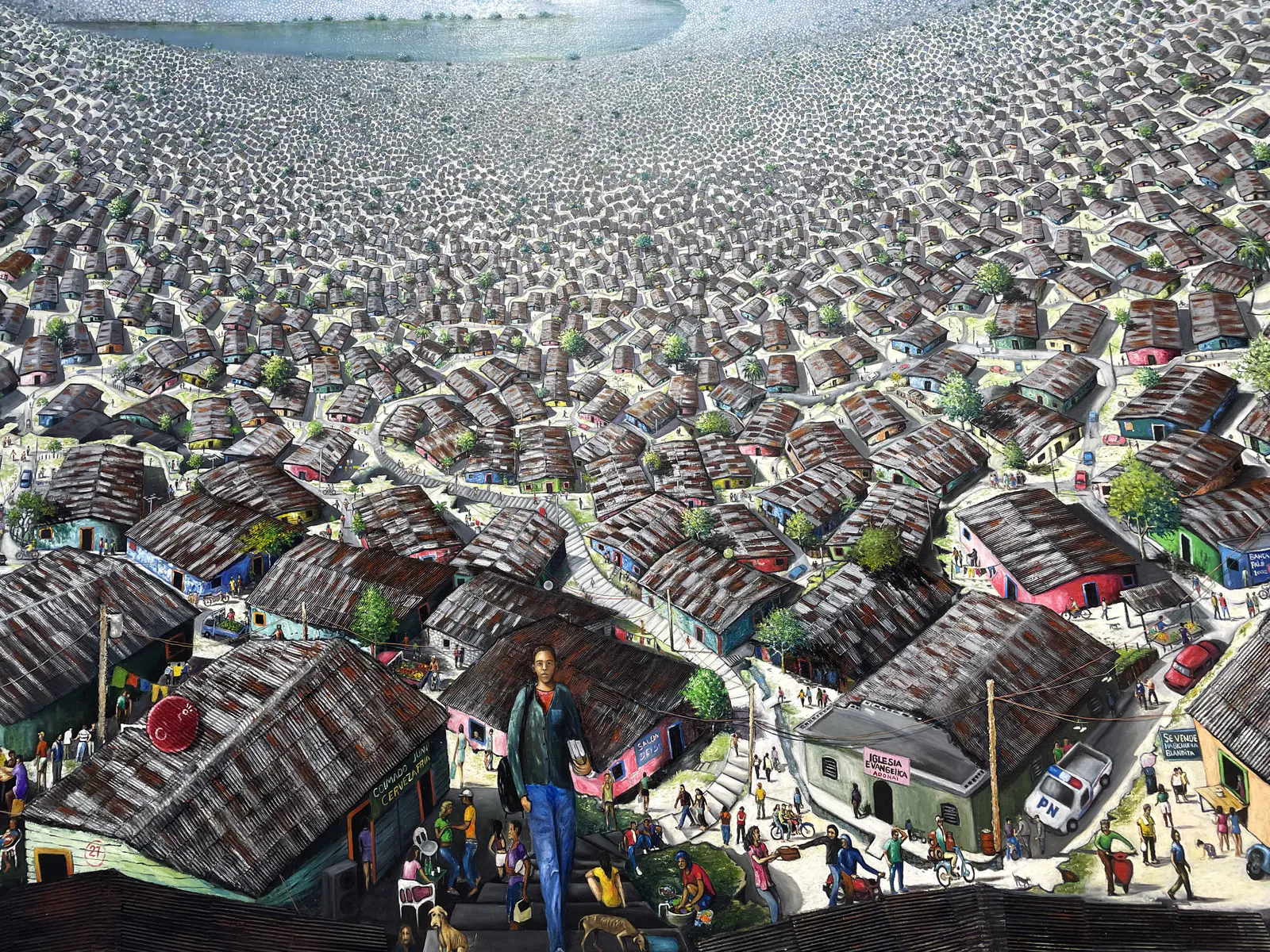
It’s Not Where You Come From, but Where You’re Going
Ramón Calcaño
This oil painting (2018), entitled No importa de dónde vienes, sino hacia dónde vas, Calcaño presents a vast view of informal housing. Central to the scene is a figure holding books, emerging from the margins. The work highlights resilience and the transformative power of education, emphasizing the pursuit of a better future beyond one's origins.
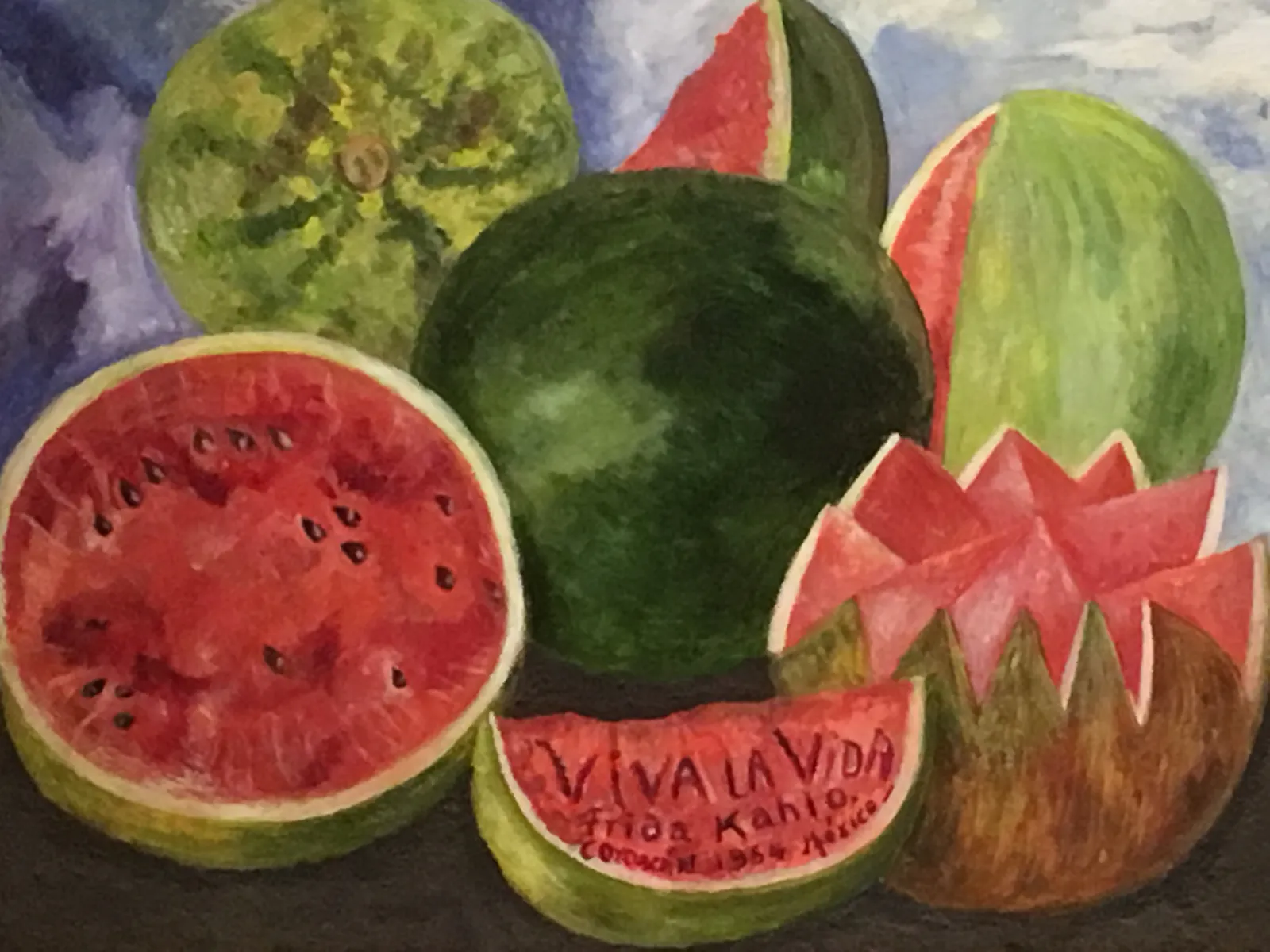
Viva la Vida, Watermelons
Frida Kahlo
Painted just days before her death in 1954, this still life features ripe watermelons—some whole, some cut—bursting with color and vitality. The inscription Viva la Vida (Long Live Life) appears carved into a slice, signed and dated by Kahlo. Though her body was failing, this joyful image radiates defiance and reverence for life’s beauty amid suffering.
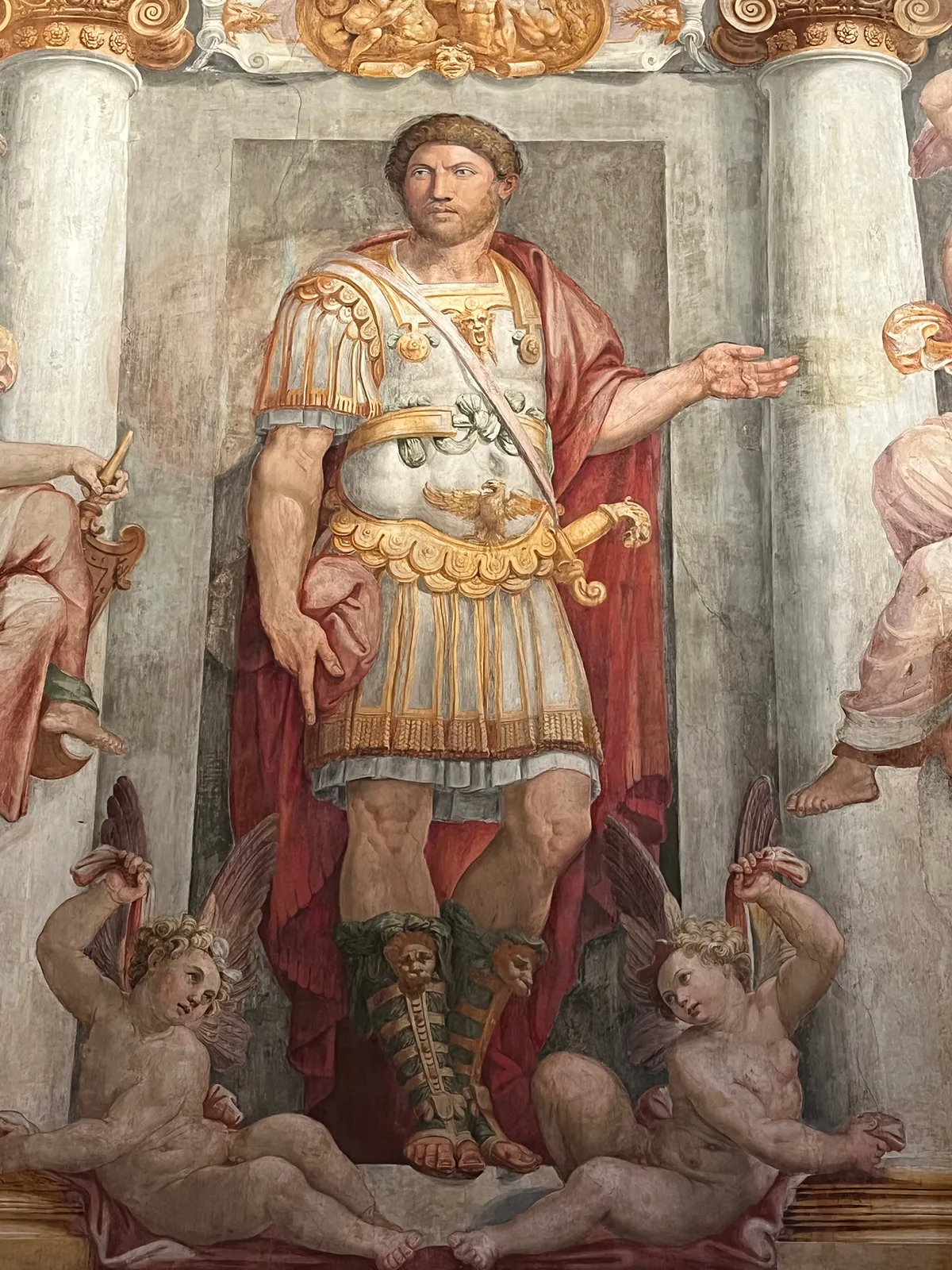
Emperor Hadrian
Girolamo Siciolante da Sermoneta (attrib.)
This 16th-c. fresco from the Sala Paolina depicts Emperor Hadrian in idealized Roman military attire. Portrayed with commanding calm, Hadrian stands framed by classical architecture and winged putti, symbolizing both earthly rule and divine favor. The work affirms his legacy as builder, humanist, and guardian of imperial order—within the very mausoleum he commissioned.
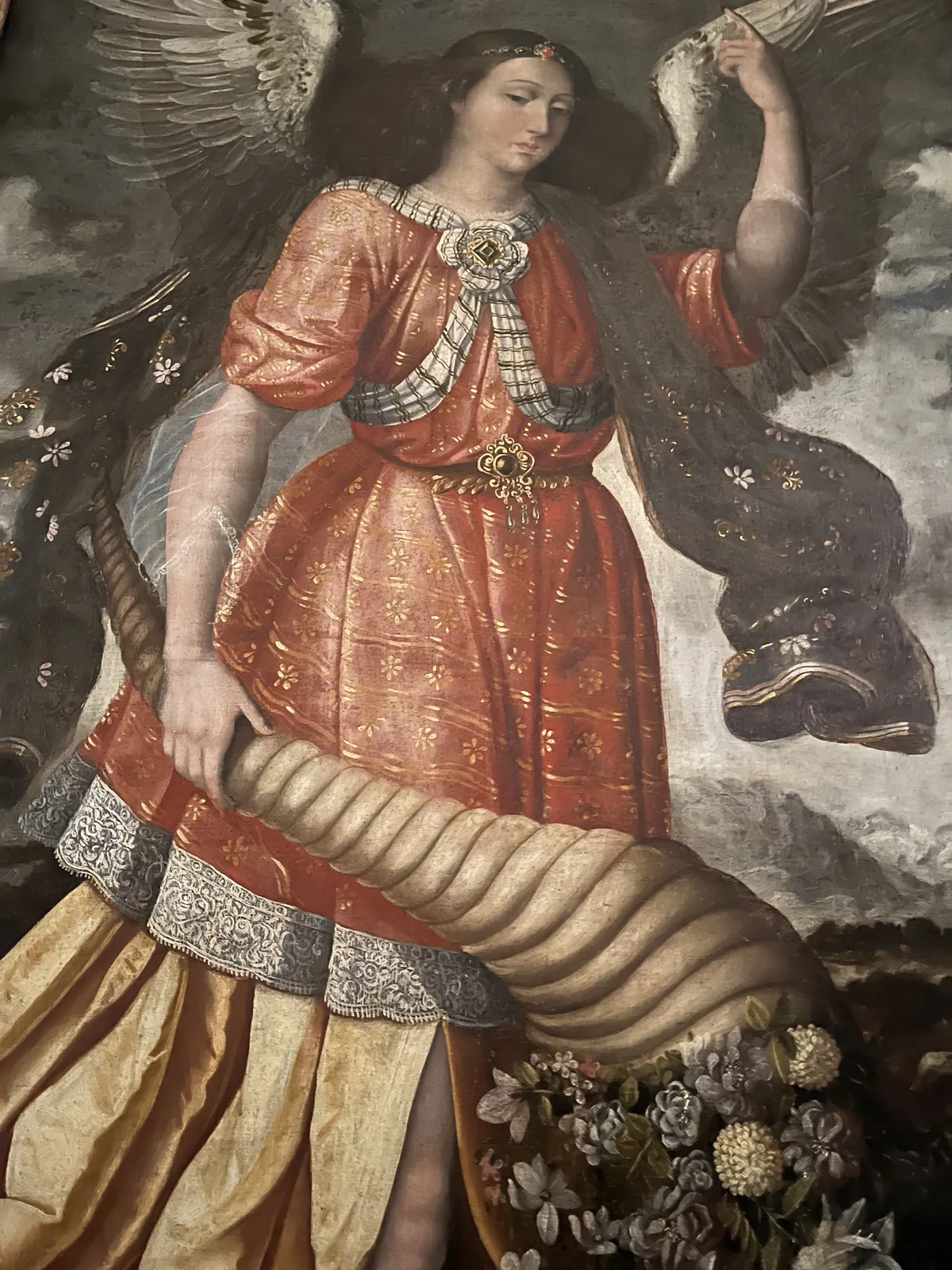
Isabel de Santiago
Archangel Gabriel
This early 18th-c. work by Isabel de Santiago—a rare female artist of the Quito School—portrays Gabriel as a celestial messenger of abundance. Draped in luminous textiles, the archangel holds a cornucopia, blending classical fertility symbols with baroque angelology in a uniquely Andean devotional image.
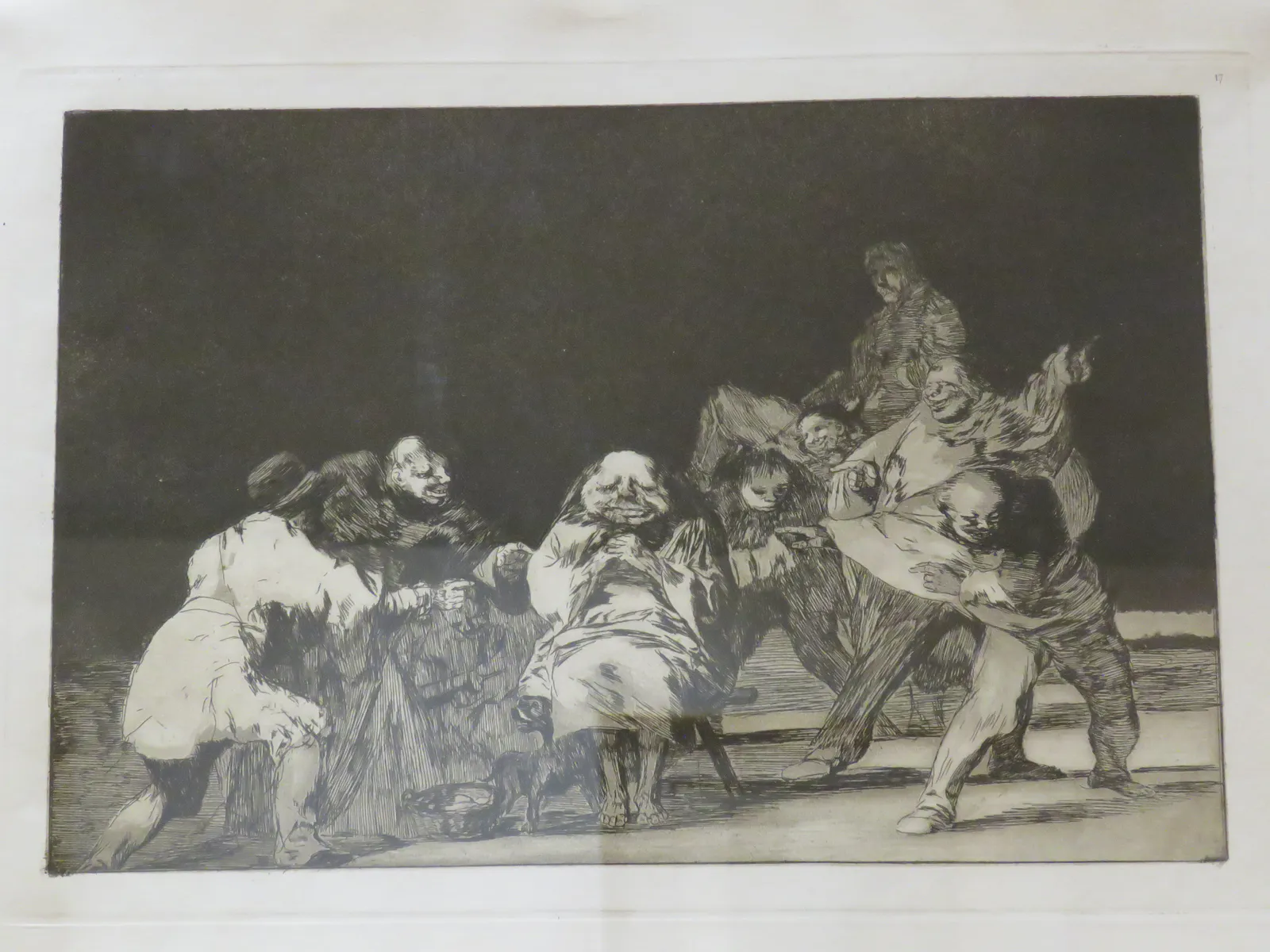
Loyalty from Los Disparates Series
Francisco Goya
This etching (1815–1823) by Francisco Goya, part of the Los Disparates series, explores themes of chaos and irrationality. Featuring grotesque figures, it suggests blind loyalty or foolishness, reflecting the turbulent era of Ferdinand VII’s reign in Spain. Goya’s use of aquatint and etching techniques enhances dramatic contrasts and textures, providing a dark commentary on the social and political upheavals of his time.
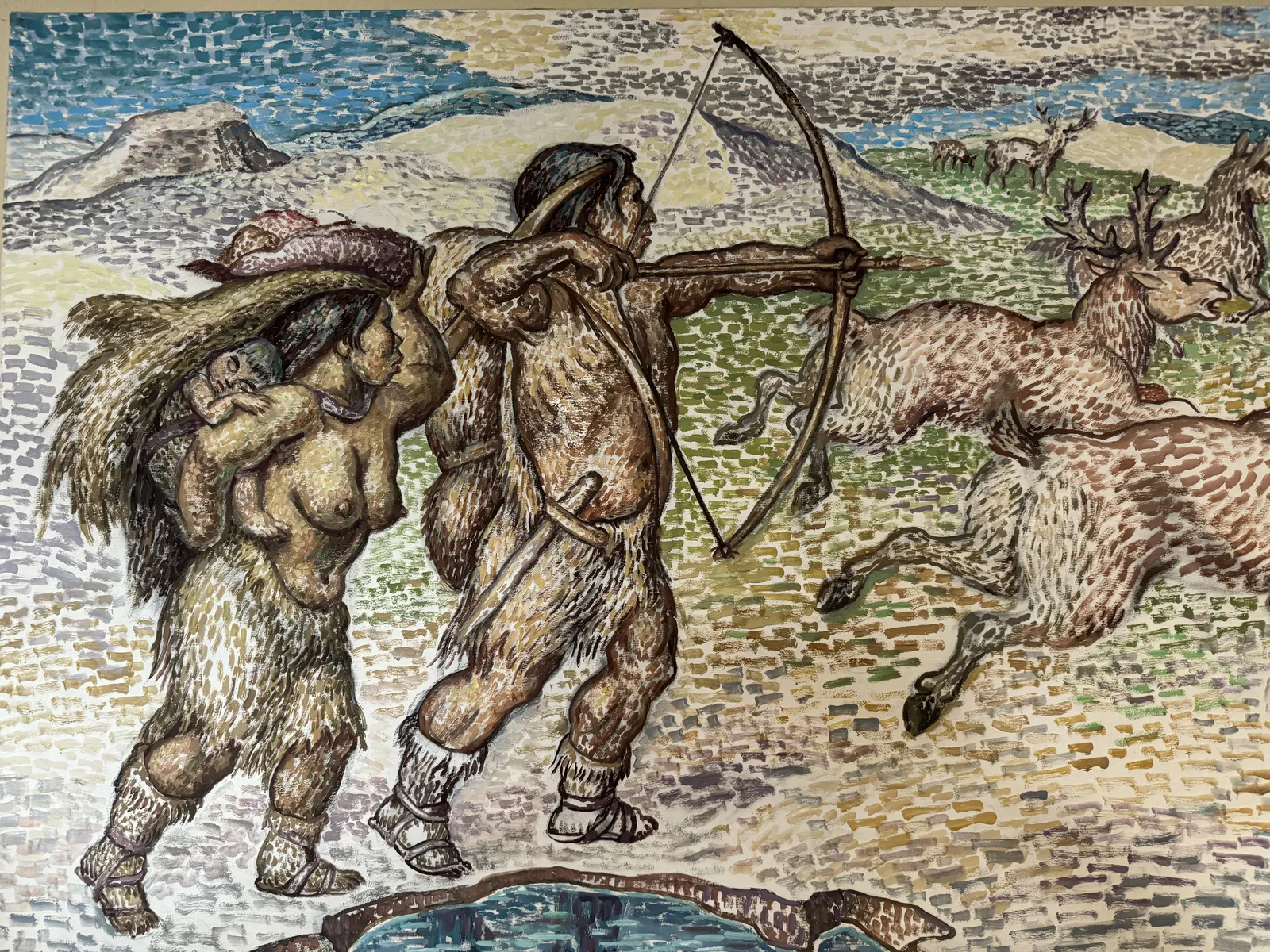
Prehistoric Hunt
Luis Alberto Acuña
This dynamic mural depicts a prehistoric hunting scene, with a male figure aiming his bow at deer while a woman, carrying a child and bundled goods, follows closely. Painted in Acuña’s signature neo-primitivist style (late 1960s-early 1970s), it reflects his interest in the mythic foundations of civilization and the daily heroism of early human life. The textured brushwork echoes rock art while grounding the composition in a modern, expressive idiom rooted in Colombian identity.
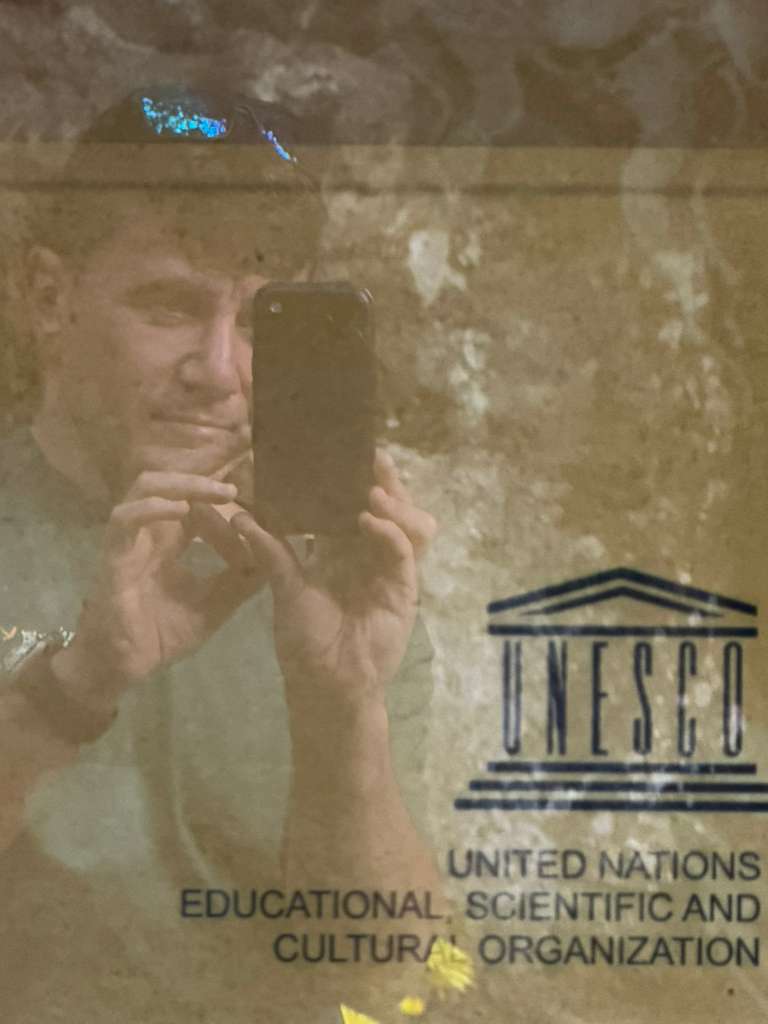
“When the path is beautiful, do not ask where it leads.” — Zen proverb
Welcome to my travel photography!
“When the path is beautiful, do not ask where it leads.” — Zen proverb
Welcome to my travel photography!
For as long as I can remember, my path has been one of discovery—seeking beauty, timelessness, and connection in every corner of the world. It has also been a journey of deep learning and understanding. I’ve been an avid traveler (or perhaps a travel addict?) for most of my life. My love for travel began long before I ever left home: as a child, I drew a fantasy map of my grandparents’ apartment and “traveled” through it with my cousin Sonya, imagining adventures in every corner. Nearly 90 countries and countless moments of awe later, I’m excited to share this journey with you.
Thanks to the tireless and ingenious programming of Diagilev, we’re now able to present about fifteen percent of the images I’ve accumulated over the years. More will be released in small batches depending on your interest. While the first release leans toward museum photography, later ones will include more nature, architecture, culture, and general travel experiences. If you’d like to receive email notifications about new releases, feel free to reach out—no commercial use, ever.
Throughout my travels, I’ve been drawn to two intertwined kinds of discovery. One is intellectual: learning why the world is the way it is. History became my guide, shaping my perspective and filling my camera roll with museums and old buildings. To me, history is not the past—it is the key to understanding the present and how the world became what it is. The other is emotional: seeking moments of elevation—spirituality, beauty, harmony—often found in nature, monasteries, and ancient sacred spaces. Together, these impulses shape my photography. It invites you to learn, admire, and soar—to rise above the mundane and see the world through a lens of curiosity and wonder.
Much of my later travel became possible thanks to my job with Delta Air Lines, but the wanderlust began years earlier. By the time I joined the industry, I had already visited over 35 countries and lived in several—largely thanks to a backpacking journey around the world with Luis León, whose face appears in many early photos. I grew up in Ufa in the USSR, and since leaving it I have lived, studied, and worked in Latvia, the United States, France, South Korea, Canada, Spain, Italy, Brazil, Japan, and Colombia.
A life of near-constant movement may seem a little crazy, but it has deepened my understanding of the world and produced the photography you are about to see. Over the years, my style has evolved—more intentional, more refined—yet its core remains the same: a search for understanding, timeless beauty, and a connection to those who walked this earth long before us.
I hope these photos stir something in your soul, just as they did in mine. I’d love to hear from you—whether reactions, suggestions, corrections, or a request to be added to the email list for new releases (no commercial use, I promise). You can learn more about my travels here, and my academic life here.
Enjoy our shared journey!