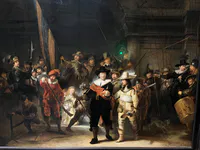
Copy of The Night Watch
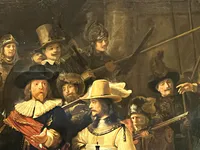
Copy of The Night Watch
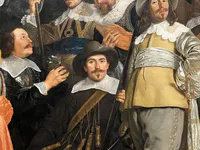
Copy of The Night Watch
Oopjen, Maerten Daey, and the Violence of Slavery
After the death of her husband Marten Soolmans, Oopjen married Maerten Daey. Before their marriage Daey had spent a few years in Brazil. The tragic story of the enslaved Francisca has come down to us from contemporary sources. Daey had taken her captive, locked her up, and raped her multiple times. When it turned out that Francisca was pregnant, he sent her away and refused to recognise their daughter Elunam.
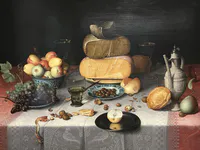
Still Life with Cheese
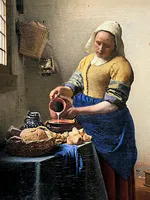
The Milkmaid
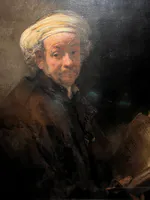
Self-Portrait as the Apostle Paul
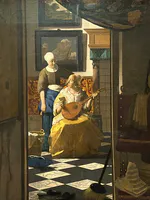
The Love Letter
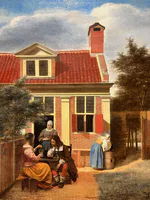
Figures in a Courtyard
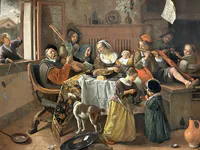
The Merry Family
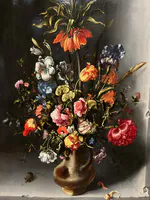
Flower Still Life with Crown Imperial
Slavery and Amsterdam: Art, Trade, and Enslaved Lives
Slavery in Asia, Africa or the Americas was long common and difficult to eliminate. The first Rembrandts were sold to buyers in the 1630s. Enslaved persons might be born into slavery or sold abroad by their own authorities. According to researchers at the Rijksmuseum and Amsterdam Museum, the city of Amsterdam shared in the benefits of the slave trade. One of Rembrandt’s sitters, for example, was an enslaved man. After his arrival he was still not free, and he was also able to sue for that freedom.
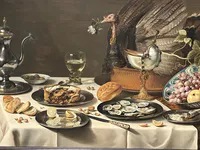
Still Life with Turkey Pie
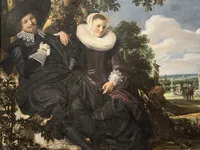
Portrait of a Smiling Couple
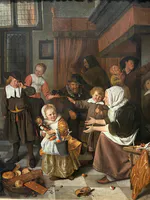
The Feast of St Nicholas
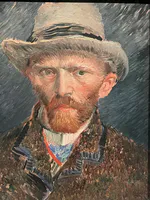
Self-Portrait as a Parisian
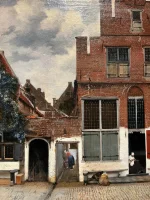
The Little Street in Delft
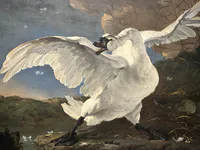
The Threatened Swan Defending Its Nest
Marten and Oopjen: Wealth Built on Enslaved Labor
Marten and Oopjen owed their wealth to slave labour. In Amsterdam Marten’s father, and later the couple themselves, made a fortune from the refining of raw sugar from Brazil. It had been cultivated, harvested and processed there by Africans who had been enslaved. Sugar had become very popular in Europe in a short period of time, and a great deal of money was made from it. The demand in Europe was met in large part by the Amsterdam sugar industry. This enormous production would not have been possible without the large-scale deployment of people in slavery.
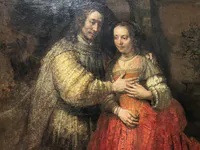
The Jewish Bride
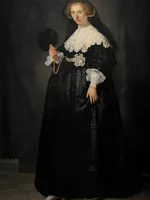
Portrait of Oopjen Coppit by Rembrandt
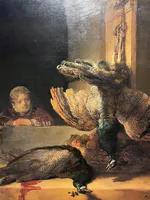
Still Life with Peacocks
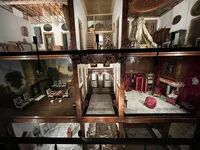
Petronella Oortman’s 17th-Century Dollhouse
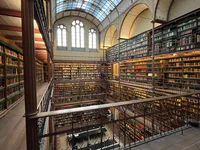
Rijksmuseum Research Library, Amsterdam
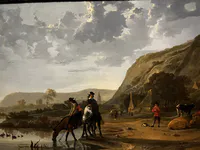
River Landscape with Riders
Spices, Violence, and Slavery in Dutch Colonial Trade
The spices in these pies were often obtained by the Dutch East India Company (VOC) through violence and slavery. Cloves came from Ambon, one of the Moluccan islands, which was conquered by the VOC in 1605. The Ambonese had to harvest cloves alongside workers enslaved by the VOC. Nutmeg came from the Banda Islands (south of Ambon), which were taken by force in 1621. Enslaved people had to pick the nutmeg seeds on plantations and strip off their covering (aril).
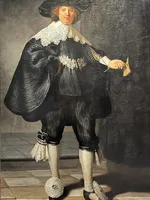
Portrait of Marten Soolmans
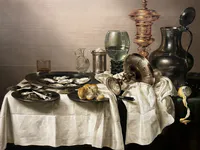
Still Life with a Gilt Cup
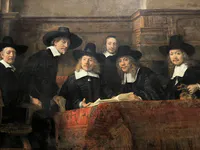
The Syndics by Rembrandt
Rijksmuseum
Rijksmuseum, the Netherlands’ national museum, grew from the Nationale Kunstgalerij founded in 1800 and found its civic stage when Pierre Cuypers’s neo-Gothic building opened in 1885 beside Amsterdam’s Museumplein. Its rooms hold the visual memory of a seafaring republic—painting, silver, ships’ models, and everyday things that anchor the Dutch Golden Age in lived culture. Recent interpretation also faces the costs of that prosperity, tracing how global trade and slavery shaped both collections and country.
Explore by type and place