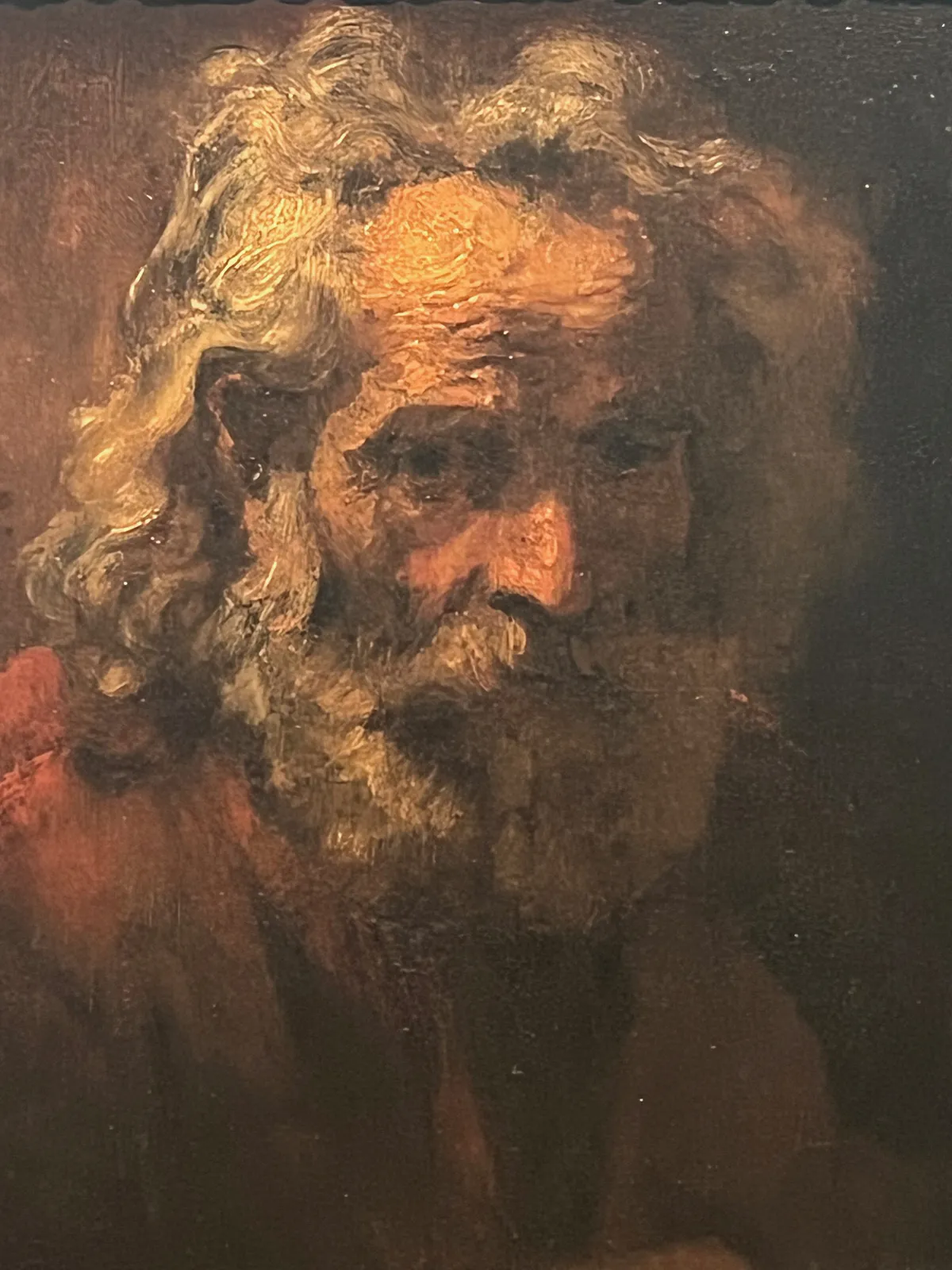
Bust of a Bearded Old Man
Rembrandt
This painting (c. 1630) by Rembrandt van Rijn exemplifies the tronie genre, focusing on character over identity. The expressive face of the elderly man, rendered in oil on panel, showcases Rembrandt’s mastery of light and shadow. As one of his smallest works, it explores themes of old age, capturing the nuances of human expression and emotion, marking an early exploration of the artist’s fascination with the human condition.
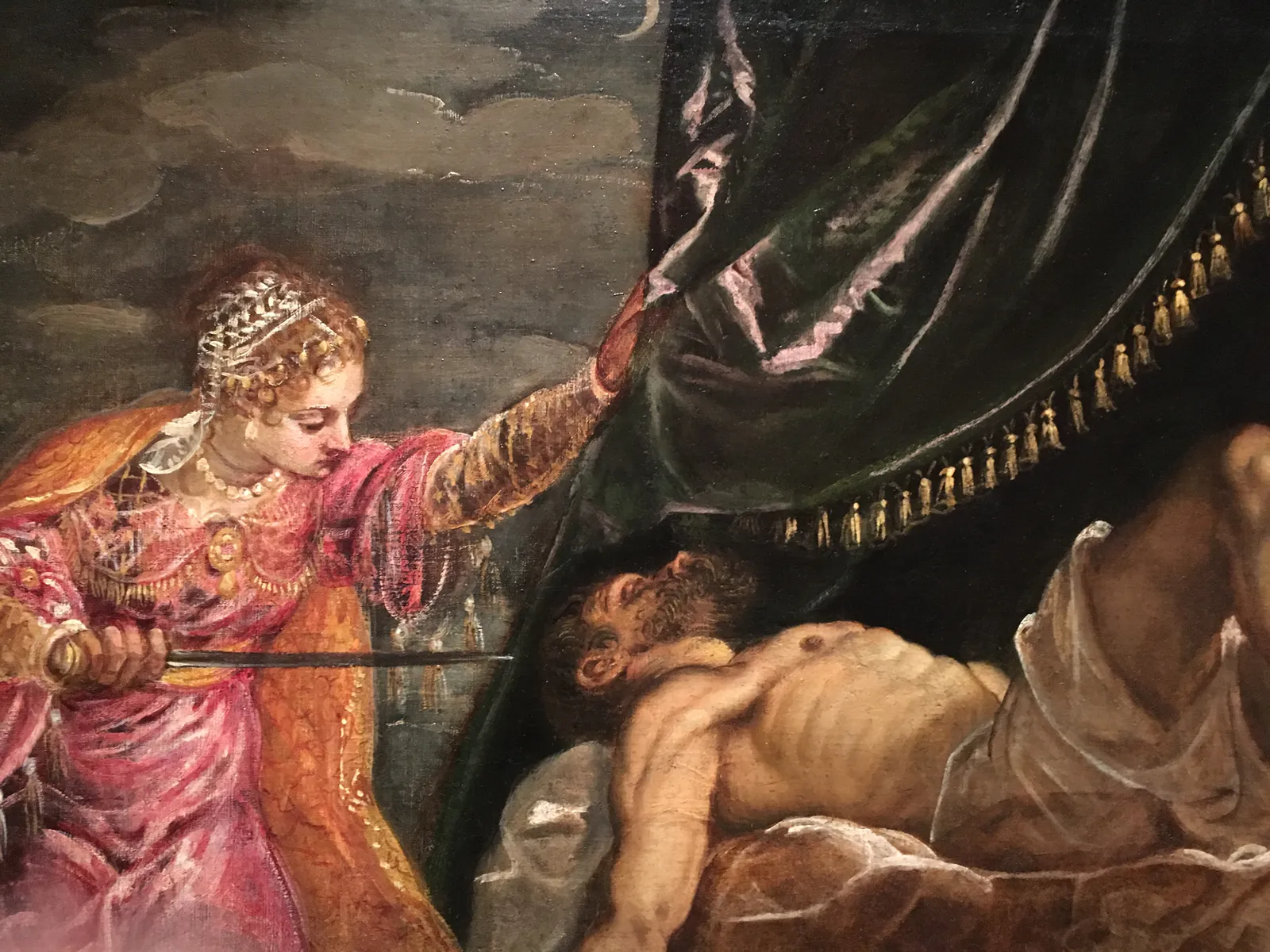
Judith Beheading Holofernes
Jacopo Tintoretto
This painting (c. 1577) by the studio of Jacopo Tintoretto depicts the biblical scene where Judith beheads Holofernes, an Assyrian general, to save her people. Executed in the Mannerist style, it emphasizes tension and emotion, typical of the Late Renaissance. The scene symbolizes courage and divine justice, reflecting the era’s interest in heroic narratives.
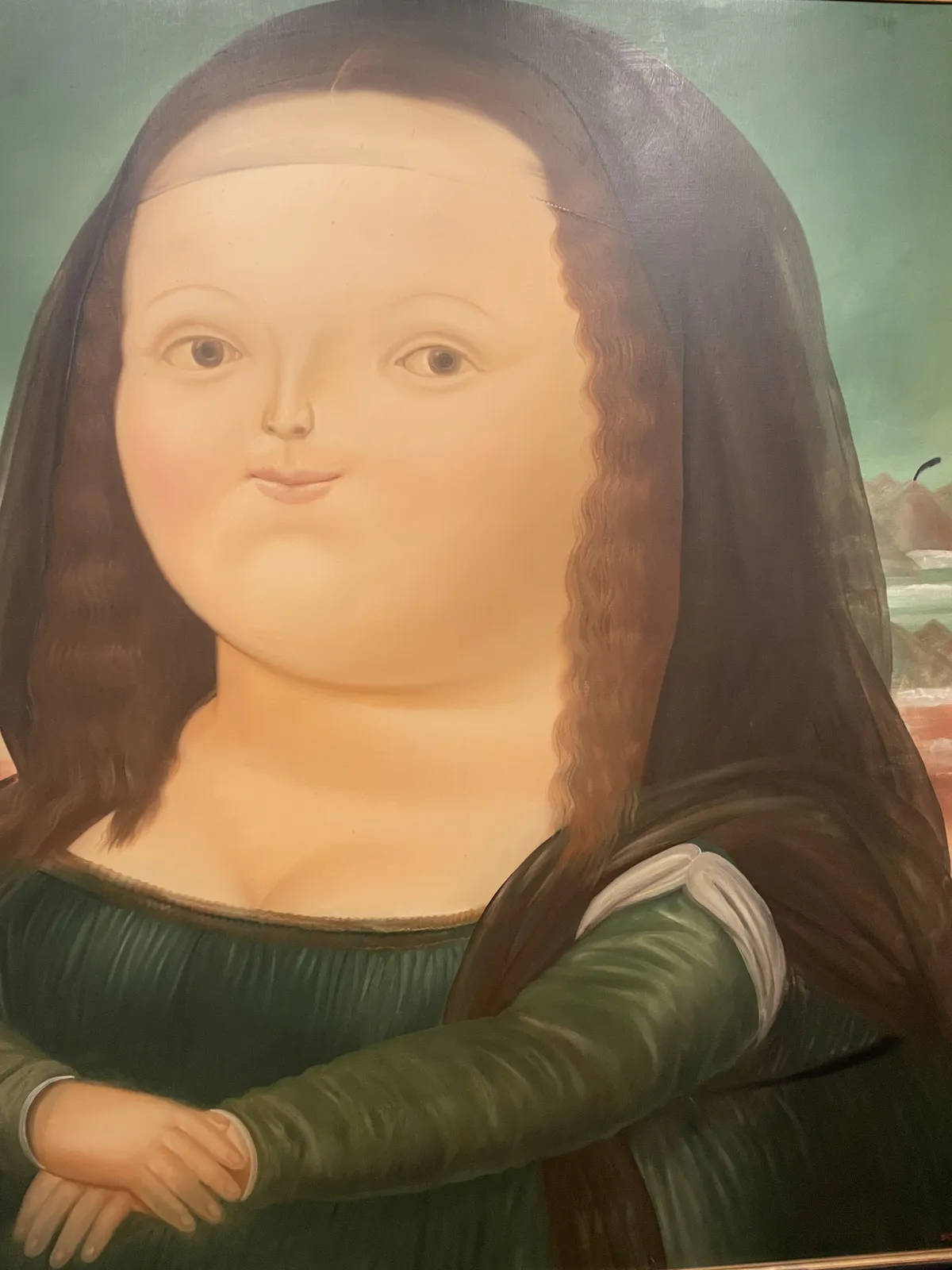
Mona Lisa, Age Twelve
Fernando Botero
In this whimsical reimagining (1959), Botero transforms da Vinci’s iconic subject into a voluminous child. Created in his signature Boterismo style, the painting blends parody with homage. Born from a cleaning lady’s remark, the work helped launch Botero’s career, celebrating exaggerated form as a tool for both humor and artistic identity.
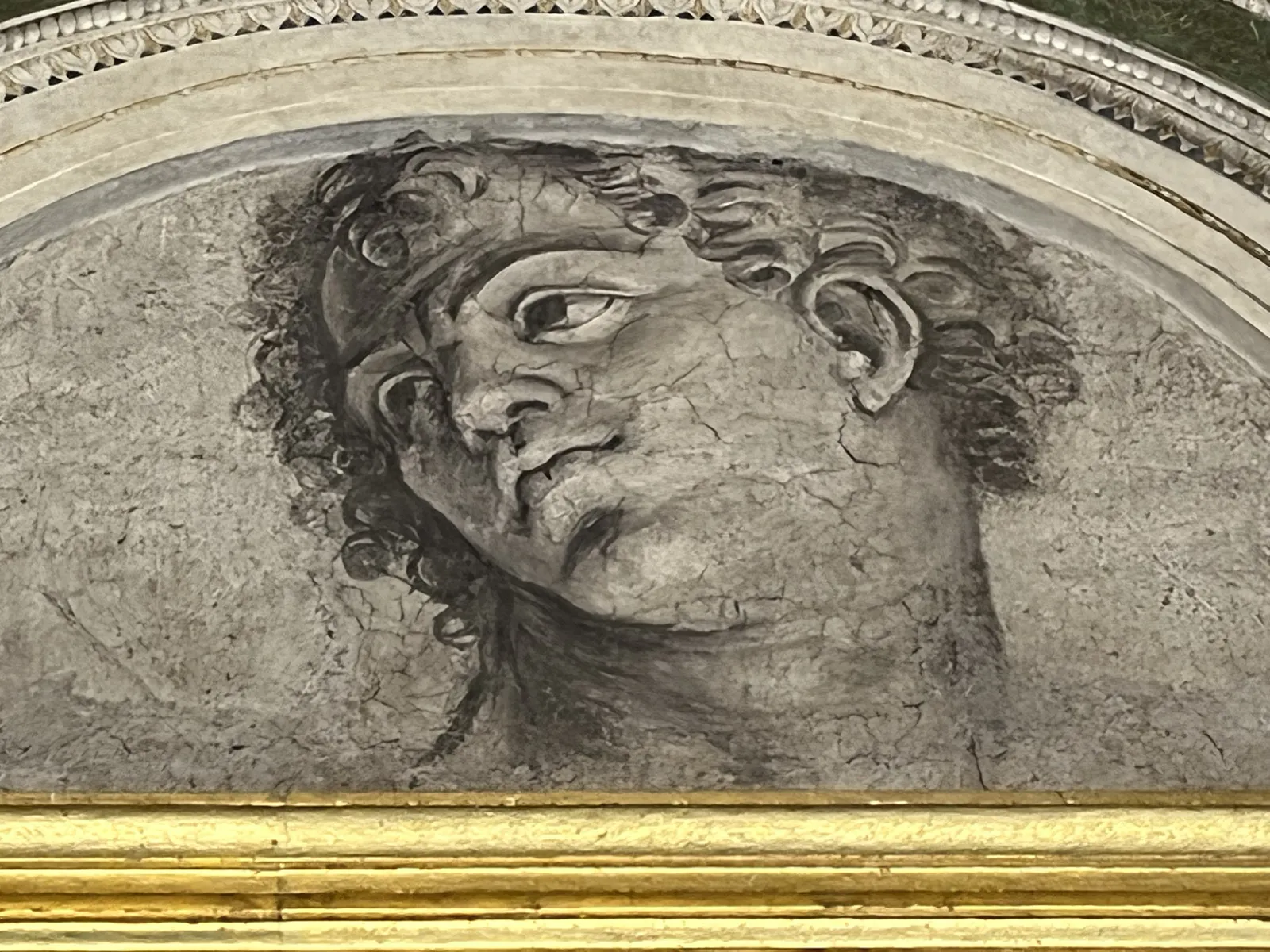
Head of a Youth
Michelangelo
This charcoal head of a youth (1511–12) fills a shallow lunette, the face turned sharply upward and modeled with dense, sculptural shading. Created while Michelangelo worked at Villa Farnesina, it is understood as a visual homage to Raphael’s work in the same setting. The fusion of muscular anatomy with a calm, idealized profile demonstrates how Michelangelo engaged directly with Raphael’s Renaissance style.
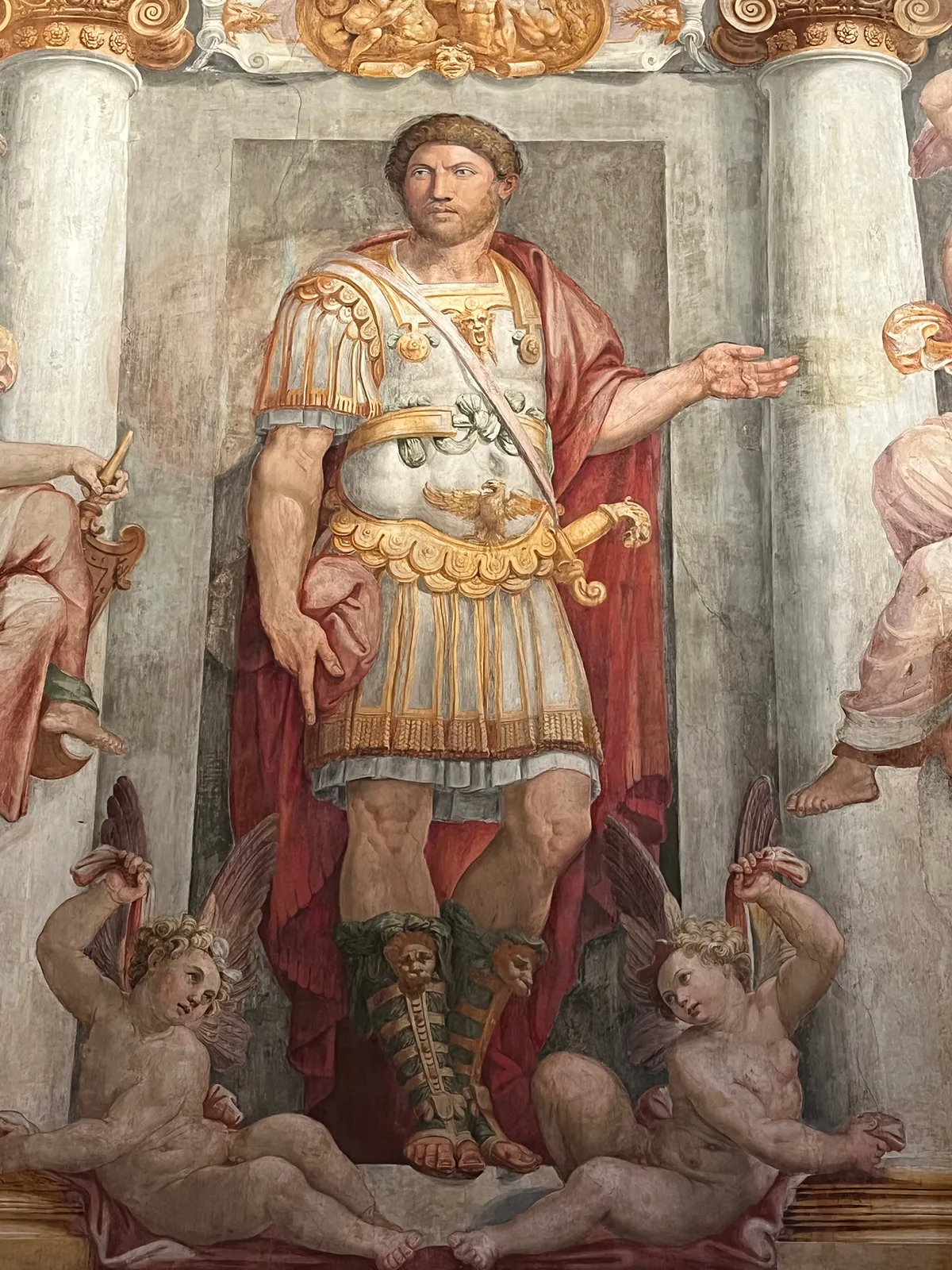
Emperor Hadrian
Girolamo Siciolante da Sermoneta (attrib.)
This 16th-c. fresco from the Sala Paolina depicts Emperor Hadrian in idealized Roman military attire. Portrayed with commanding calm, Hadrian stands framed by classical architecture and winged putti, symbolizing both earthly rule and divine favor. The work affirms his legacy as builder, humanist, and guardian of imperial order—within the very mausoleum he commissioned.
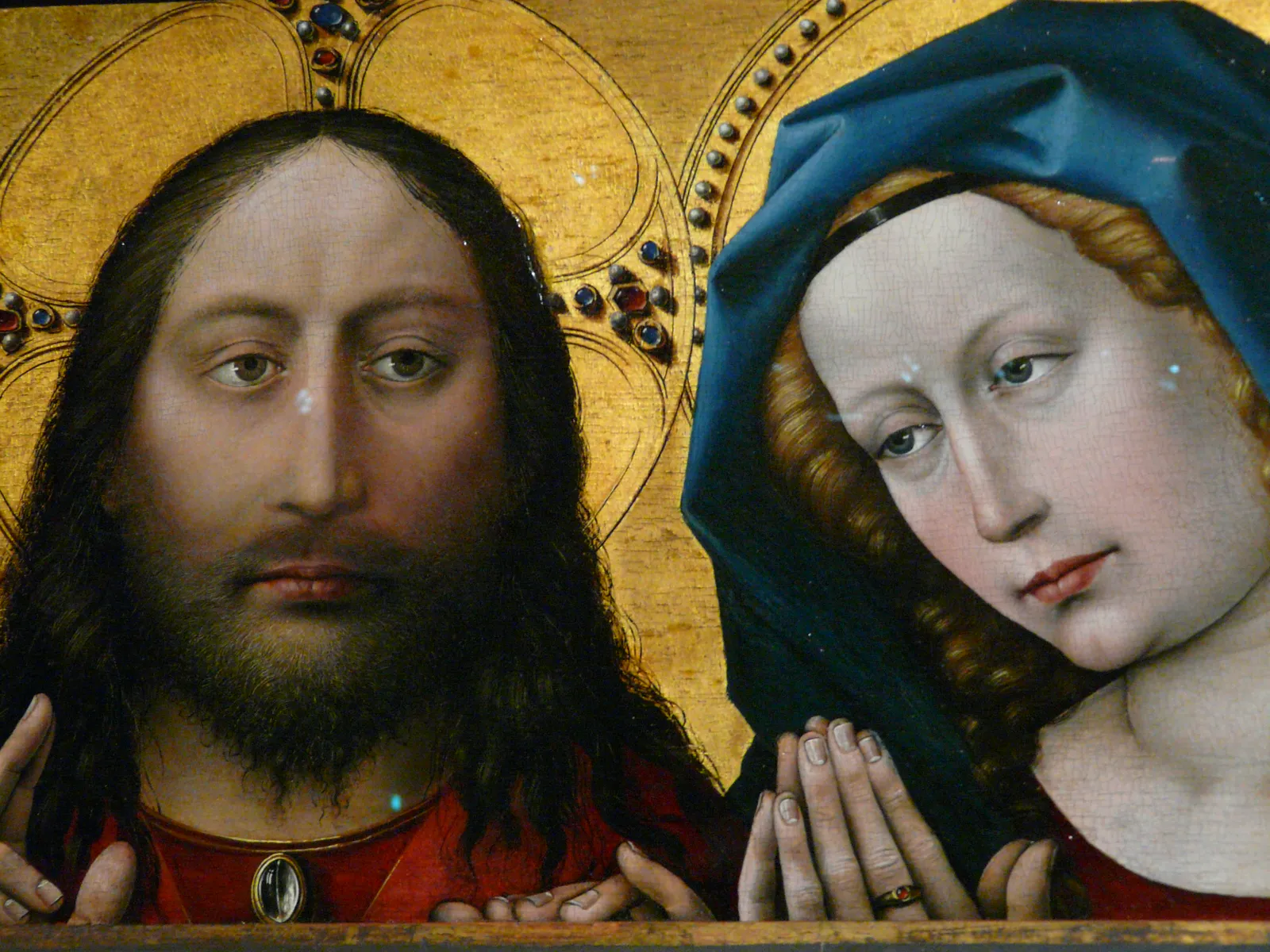
Christ Blessing with Virgin at Prayer
Master of Flémalle
This 15th-c. oak panel by the Master of Flémalle, often associated with Robert Campin, exemplifies early Netherlandish style. It showcases realistic detail through innovative oil paint use. The depiction of Christ blessing and the Virgin Mary at prayer reflects the era’s religious devotion and artistic innovation, marking a pivotal moment in European art’s evolution.
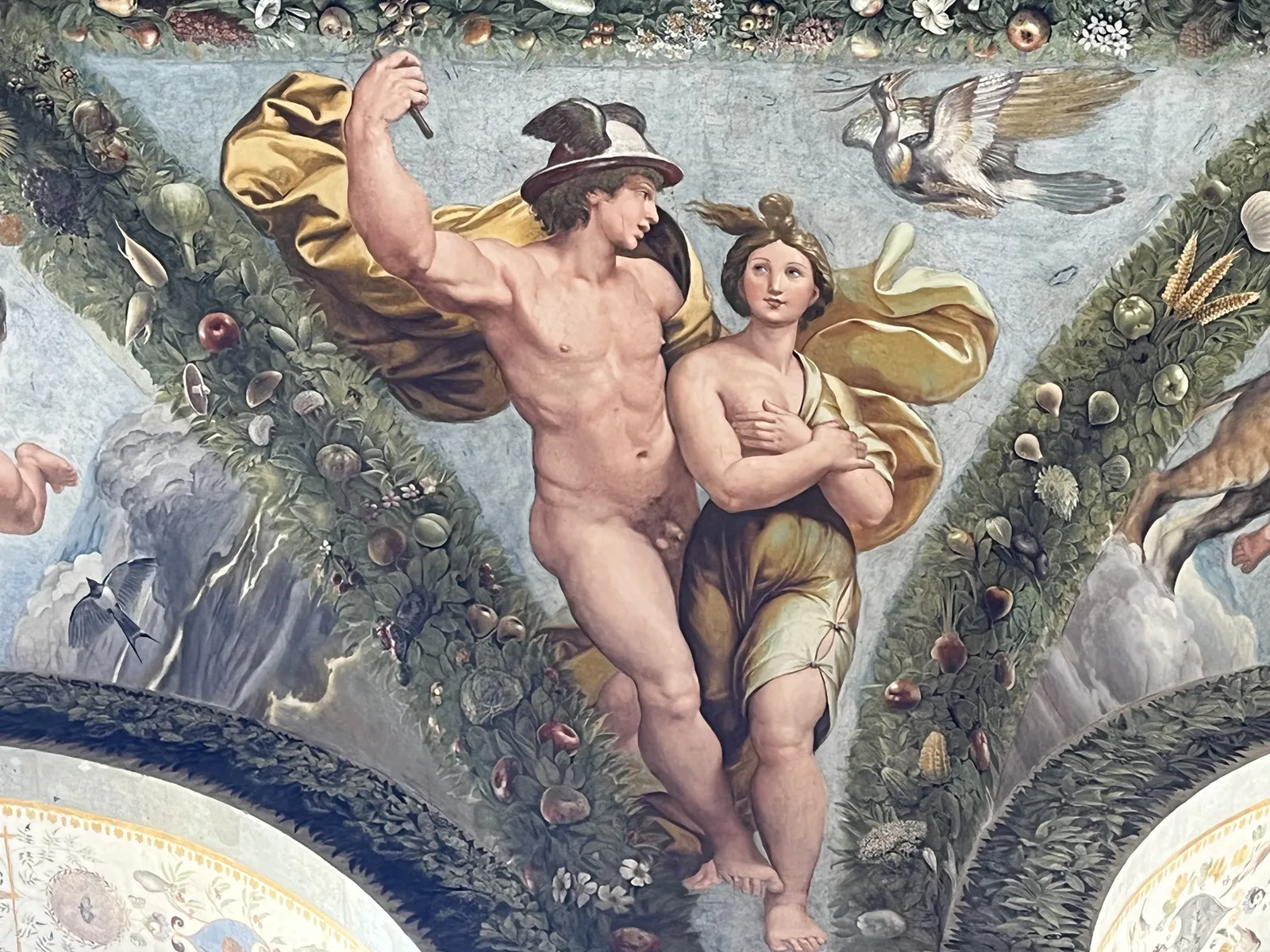
Mercury Brings Psyche up to Olympus
Raphael
In this fresco (1517–18), Raphael depicts Mercury escorting Psyche to Olympus, symbolizing her apotheosis. Mercury’s winged hat and caduceus highlight his role as divine messenger, while Psyche embodies the soul’s ascent to immortality. The scene reflects Renaissance fascination with classical myths as allegories of spiritual transformation.
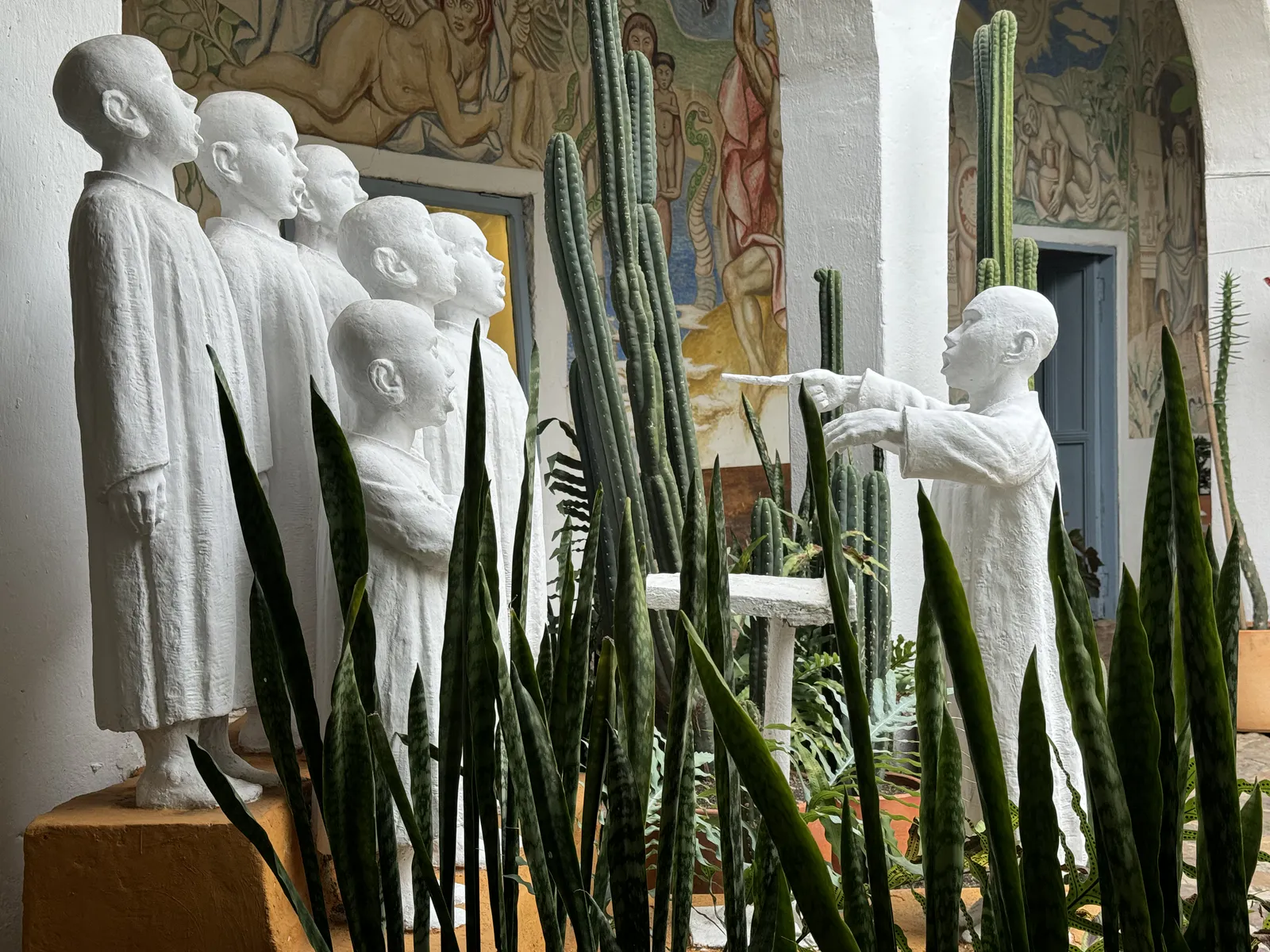
Choir of Novices
Luis Alberto Acuña
This sculptural group by Luis Alberto Acuña (1970s) depicts a choir of young novices led by a conductor, rendered in white plaster. Positioned in the courtyard of Casa Museo Acuña, it captures themes of spiritual education, harmony, and discipline. The rigid poses and minimalist forms evoke a timeless reverence, bridging artistic expression with monastic tradition.
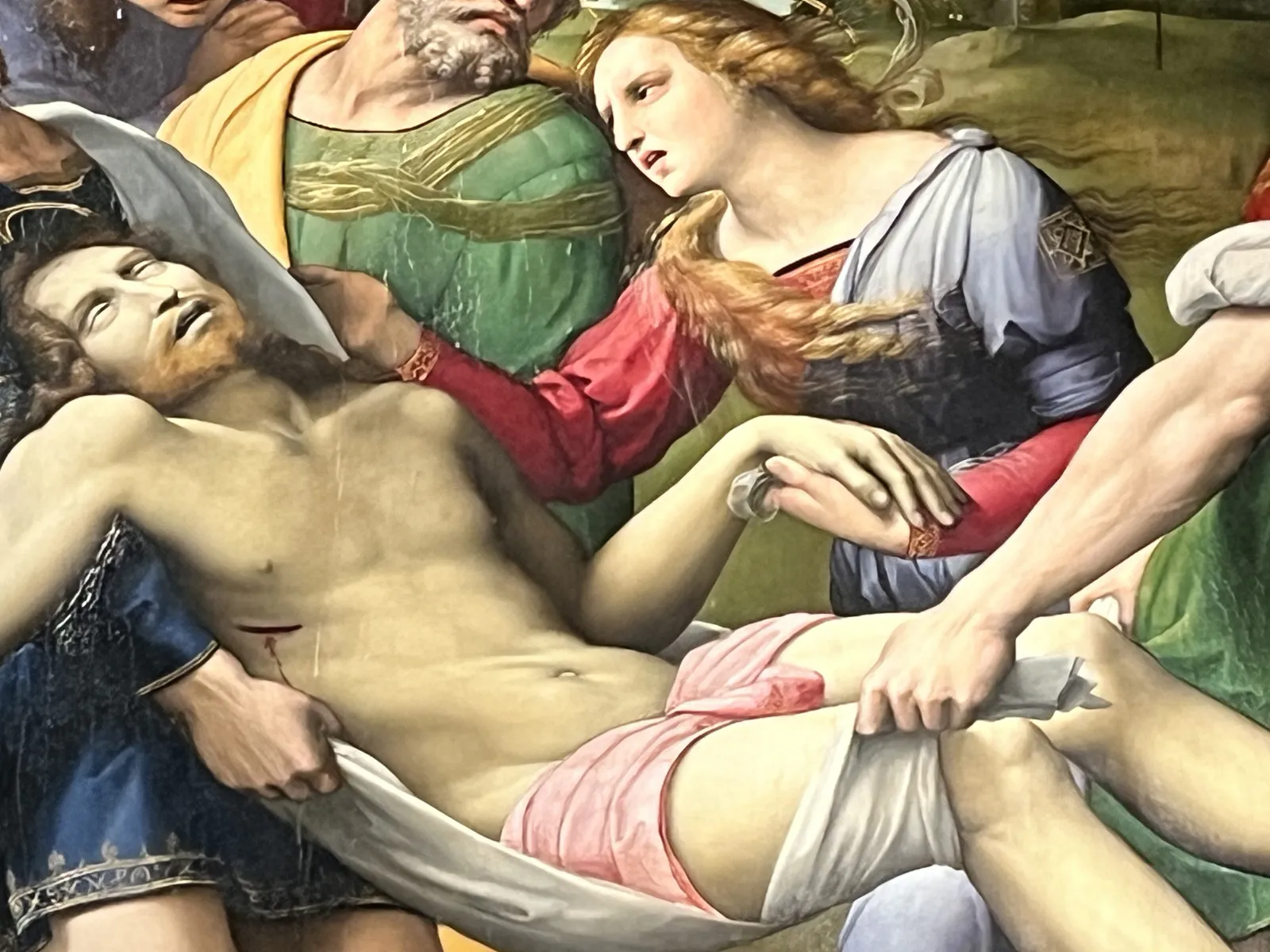
The Entombment (detail)
Raphael
This masterpiece (1507) shows a group of figures surrounding the lifeless body of Christ, merging themes of Deposition, Lamentation, and Entombment. Commissioned by Atalanta Baglioni, it honors her murdered son. Raphael’s composition shows Michelangelo’s influence in the sculptural form of Christ. A 2020 restoration revealed refinements in Raphael’s underdrawing, pigment choices, and layered modeling, clarifying how he built depth and anatomical precision.
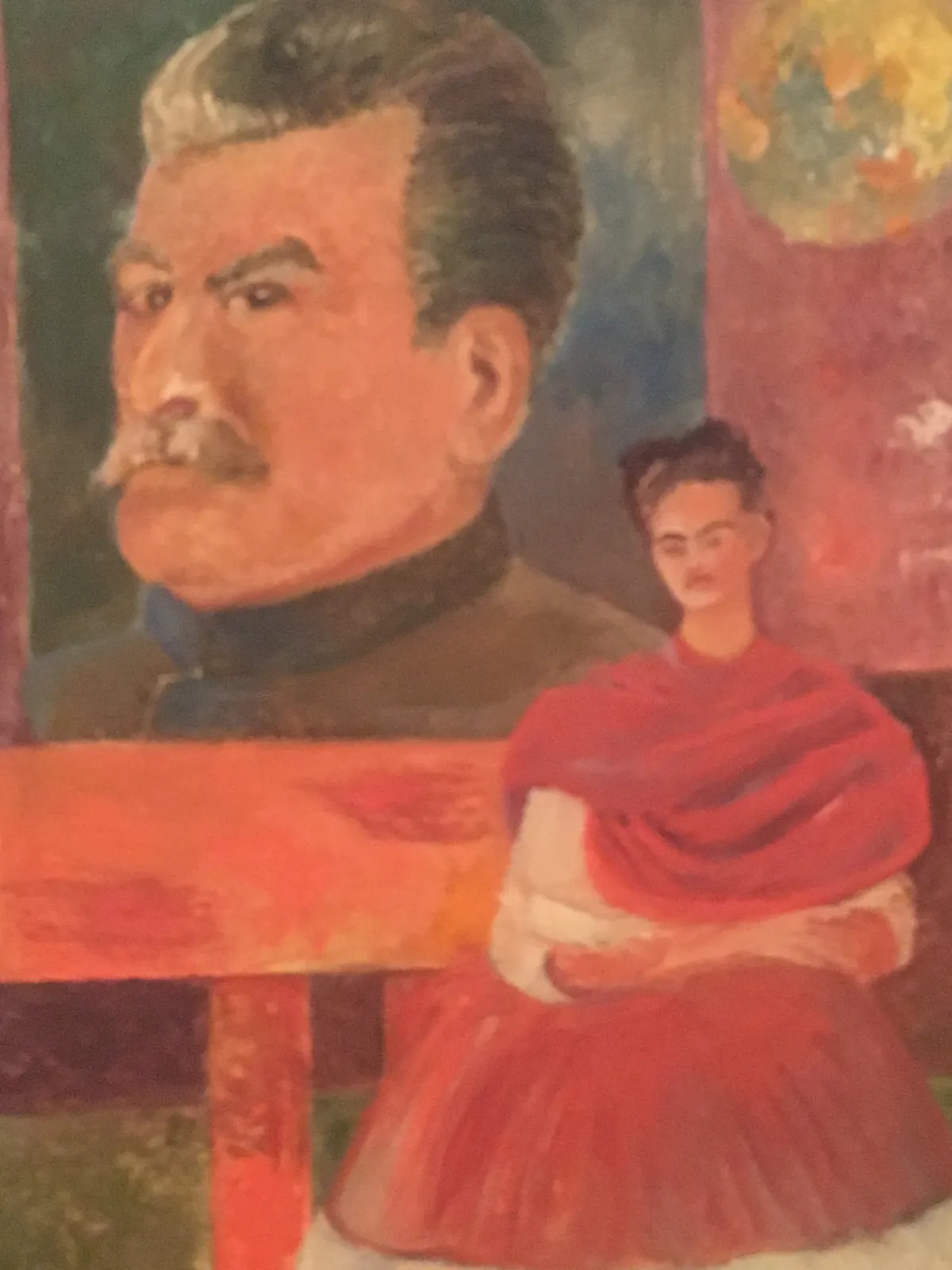
Self-Portrait with Stalin
Frida Kahlo
Painted in 1954, right before death, this political work shows Kahlo seated beside an imposing image of Stalin, whom she revered late in life. The portrait—originally titled Peace on Earth so the Marxist Science may Save the Sick and Those Oppressed by Criminal Yankee Capitalism—reflects her Marxist convictions and final artistic ideological defiance.
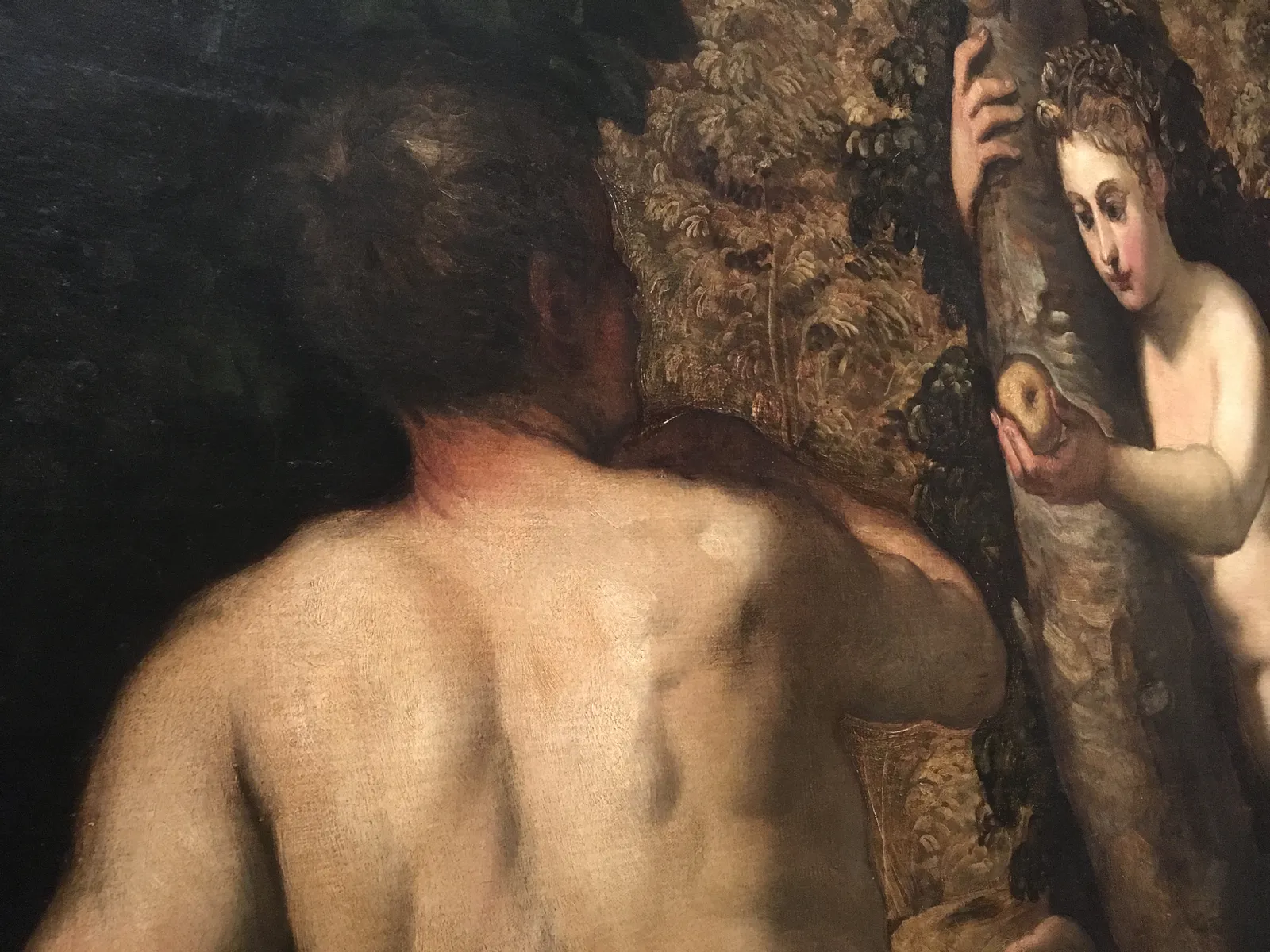
Adam and Eve
Tintoretto
Tintoretto’s painting (1550–53) depicts the biblical scene of temptation in the Garden of Eden. Eve offers the forbidden fruit to Adam, with their expulsion illustrated in the background. Influenced by Michelangelo, the composition emphasizes the nude figures and employs oblique lines to structure the landscape. This work reflects the Renaissance interest in human form and moral themes.
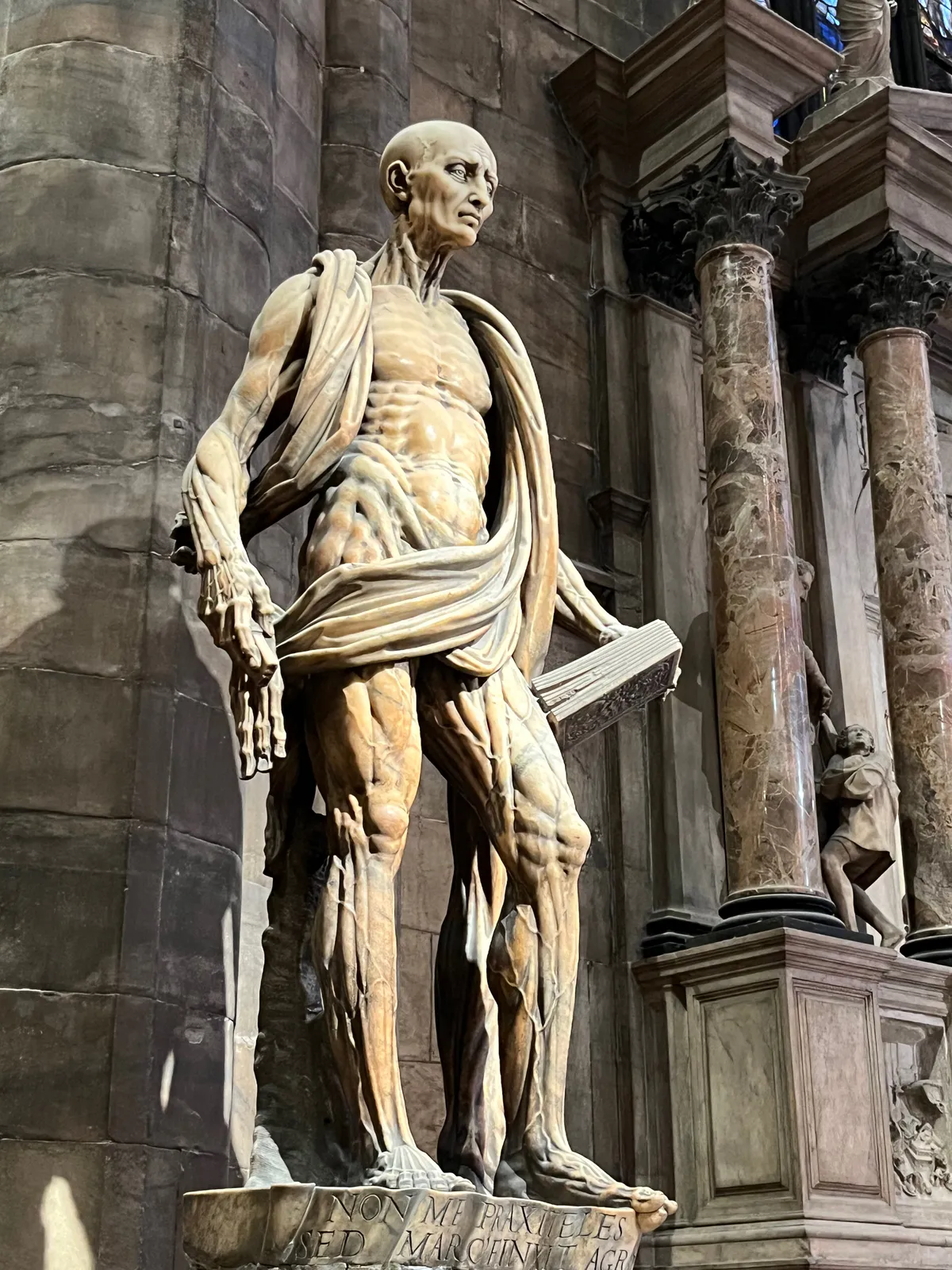
St Bartholomew Flayed
Marco d’Agrate
This marble statue (1562) shows St Bartholomew as a flayed figure, his own skin arranged like a draped garment around an exposed muscular body. Such extreme anatomical precision draws on Renaissance study of dissected cadavers. The saint’s upright stance and calm, frontal gaze demonstrate how martyrdom could be articulated as steadfast faith rather than physical defeat.
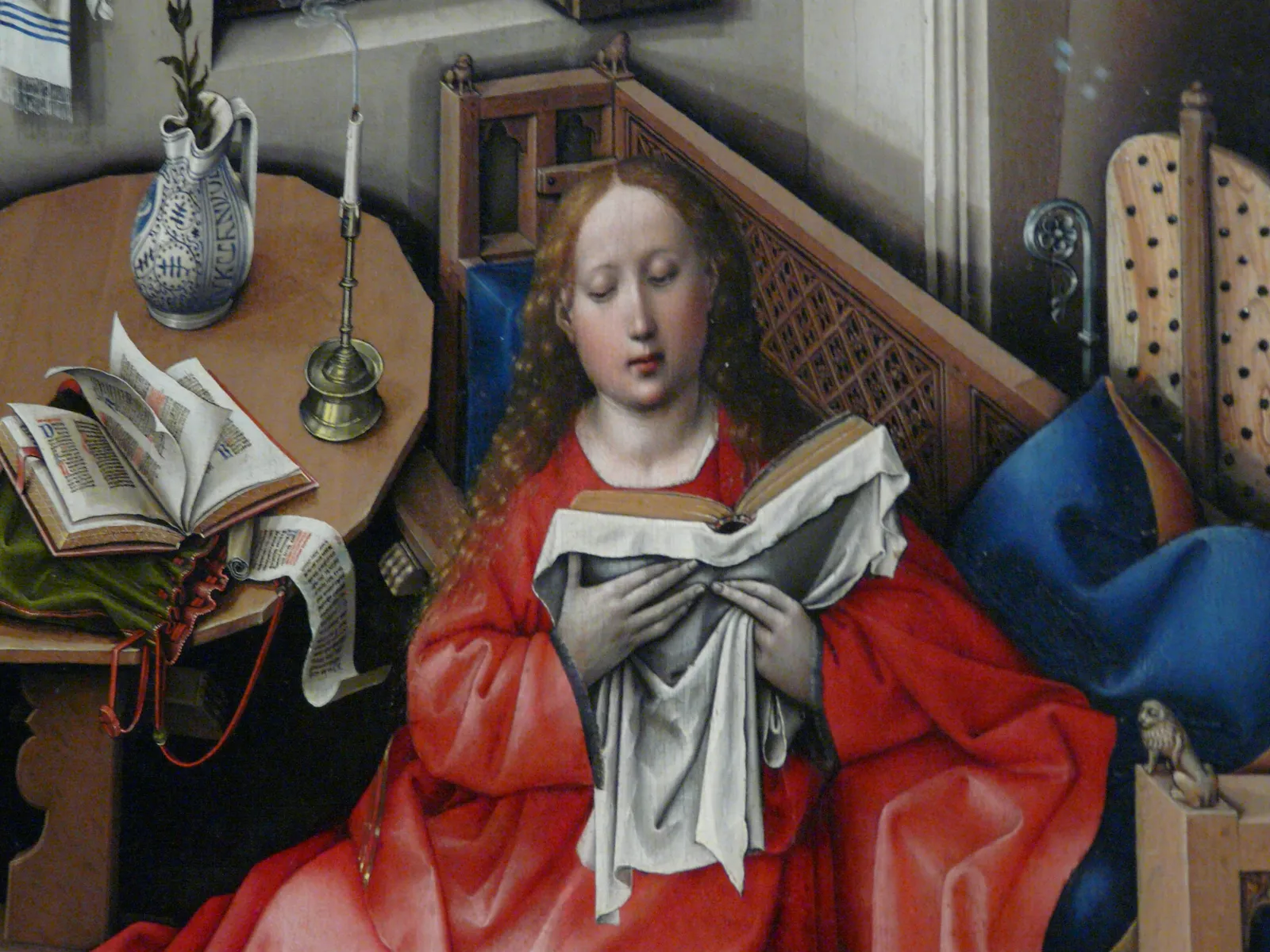
Mérode Altarpiece Central Panel
Robert Campin
This panel (c.1425–1428) shows Mary reading as Gabriel arrives. Domestic details carry layered meaning: the open book signals devotion, the lily purity, and the candle the Incarnation. The water jug with a white cloth evokes Mary’s virginity, while the enclosed garden glimpsed outside recalls her chastity. Named after later owners, the Mérode family, the work unites divine mystery with Flemish household realism.
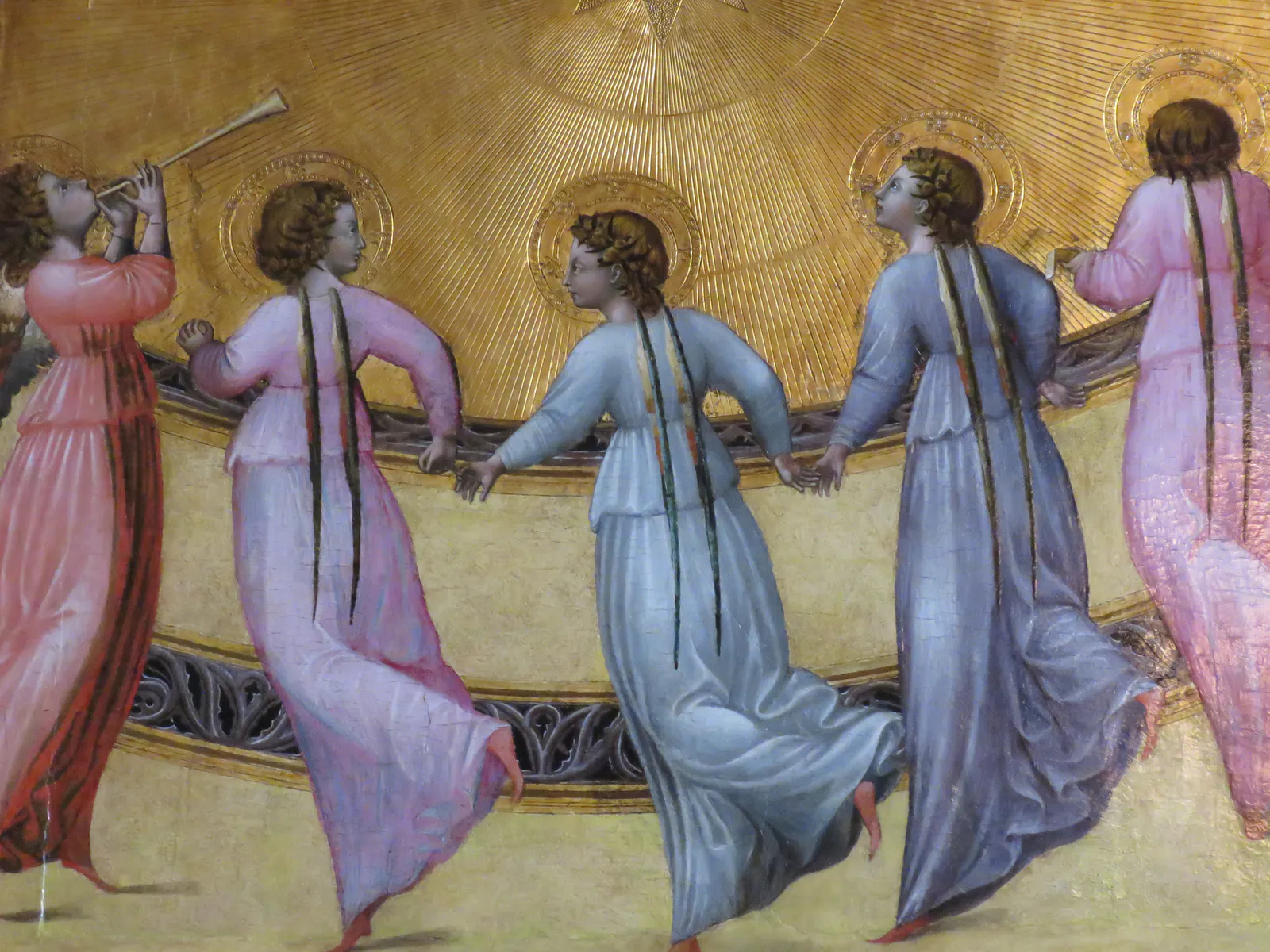
Five Dancing Angels (detail)
Giovanni di Paolo
This detail (c.1436) comes from Giovanni di Paolo’s Five Dancing Angels. Here, three angels join hands in a celestial dance while another plays the trumpet before a golden sun, symbolizing God. Their flowing robes and rhythmic gestures convey divine harmony, reflecting the spiritual intensity of 15th-c. Sienese art.
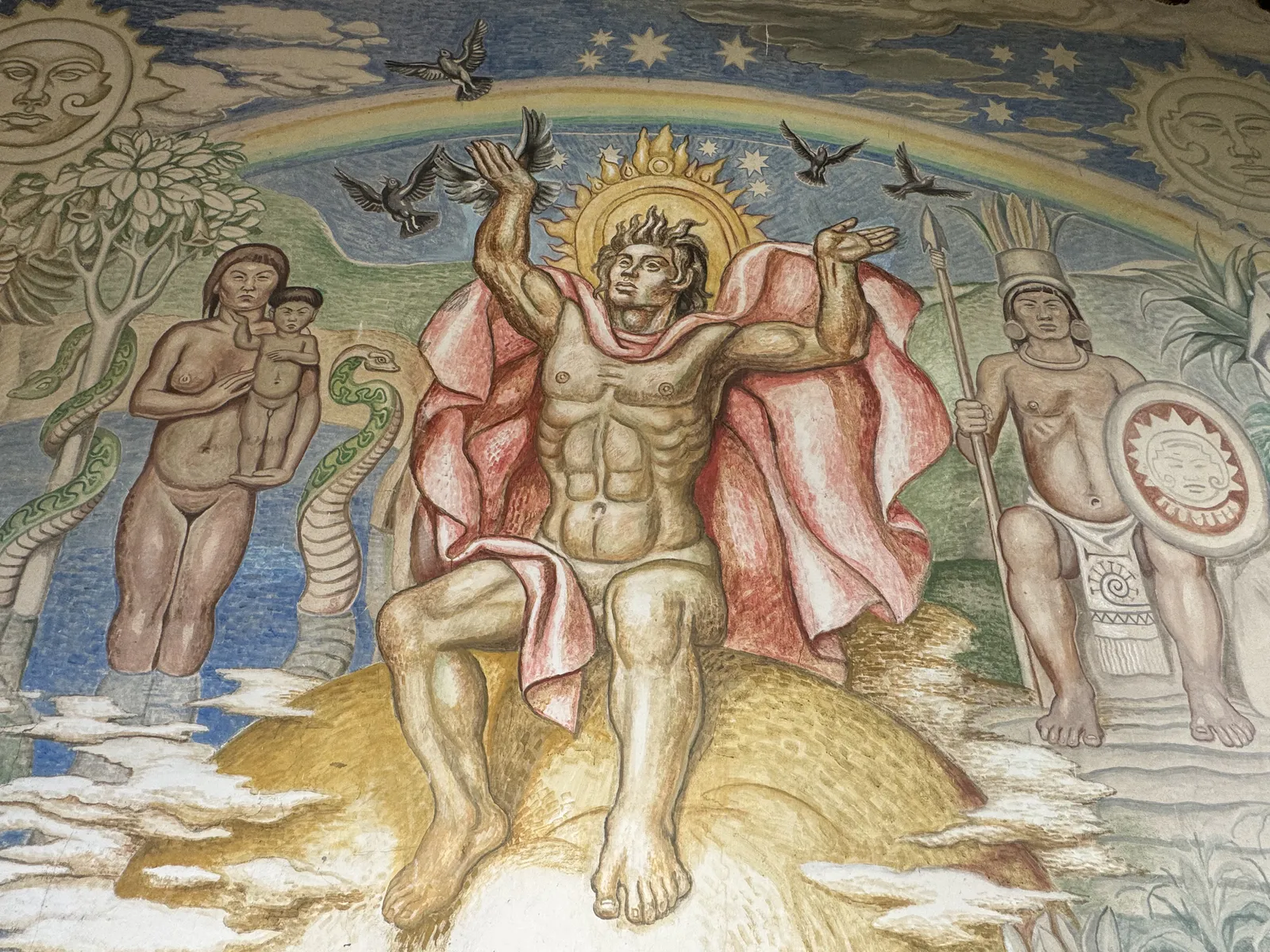
Chiminigagua and the Origen of Chibcha
Luis Alberto Acuña
This mural (1960–70s) reimagines the Chibcha creation myth. At center, the god Chiminigagua releases radiant birds to bring light to the cosmos. To his right stands Bachué with her son Iguaque, founders of the Muisca people. At left is Chaquén, guardian of lands and borders. The scene is set at the sacred Iguaque Lagoon, the cradle of Muisca origin.
“When the path is beautiful, do not ask where it leads.” — Zen proverb
Welcome to my travel photography!
“When the path is beautiful, do not ask where it leads.” — Zen proverb
Welcome to my travel photography!
For as long as I can remember, my path has been one of discovery—seeking beauty, timelessness, and connection in every corner of the world. It has also been a journey of deep learning and understanding. I’ve been an avid traveler (or perhaps a travel addict?) for most of my life. My love for travel began long before I ever left home: as a child, I drew a fantasy map of my grandparents’ apartment and “traveled” through it with my cousin Sonya, imagining adventures in every corner. Nearly 90 countries and countless moments of awe later, I’m excited to share this journey with you.
Thanks to the tireless and ingenious programming of Diagilev, we’re now able to present about fifteen percent of the images I’ve accumulated over the years. More will be released in small batches depending on your interest. While the first release leans toward museum photography, later ones will include more nature, architecture, culture, and general travel experiences. If you’d like to receive email notifications about new releases, feel free to reach out—no commercial use, ever.
Throughout my travels, I’ve been drawn to two intertwined kinds of discovery. One is intellectual: learning why the world is the way it is. History became my guide, shaping my perspective and filling my camera roll with museums and old buildings. To me, history is not the past—it is the key to understanding the present and how the world became what it is. The other is emotional: seeking moments of elevation—spirituality, beauty, harmony—often found in nature, monasteries, and ancient sacred spaces. Together, these impulses shape my photography. It invites you to learn, admire, and soar—to rise above the mundane and see the world through a lens of curiosity and wonder.
Much of my later travel became possible thanks to my job with Delta Air Lines, but the wanderlust began years earlier. By the time I joined the industry, I had already visited over 35 countries and lived in several—largely thanks to a backpacking journey around the world with Luis León, whose face appears in many early photos. I grew up in Ufa in the USSR, and since leaving it I have lived, studied, and worked in Latvia, the United States, France, South Korea, Canada, Spain, Italy, Brazil, Japan, and Colombia.
A life of near-constant movement may seem a little crazy, but it has deepened my understanding of the world and produced the photography you are about to see. Over the years, my style has evolved—more intentional, more refined—yet its core remains the same: a search for understanding, timeless beauty, and a connection to those who walked this earth long before us.
I hope these photos stir something in your soul, just as they did in mine. I’d love to hear from you—whether reactions, suggestions, corrections, or a request to be added to the email list for new releases (no commercial use, I promise). You can learn more about my travels here, and my academic life here.
Enjoy our shared journey!