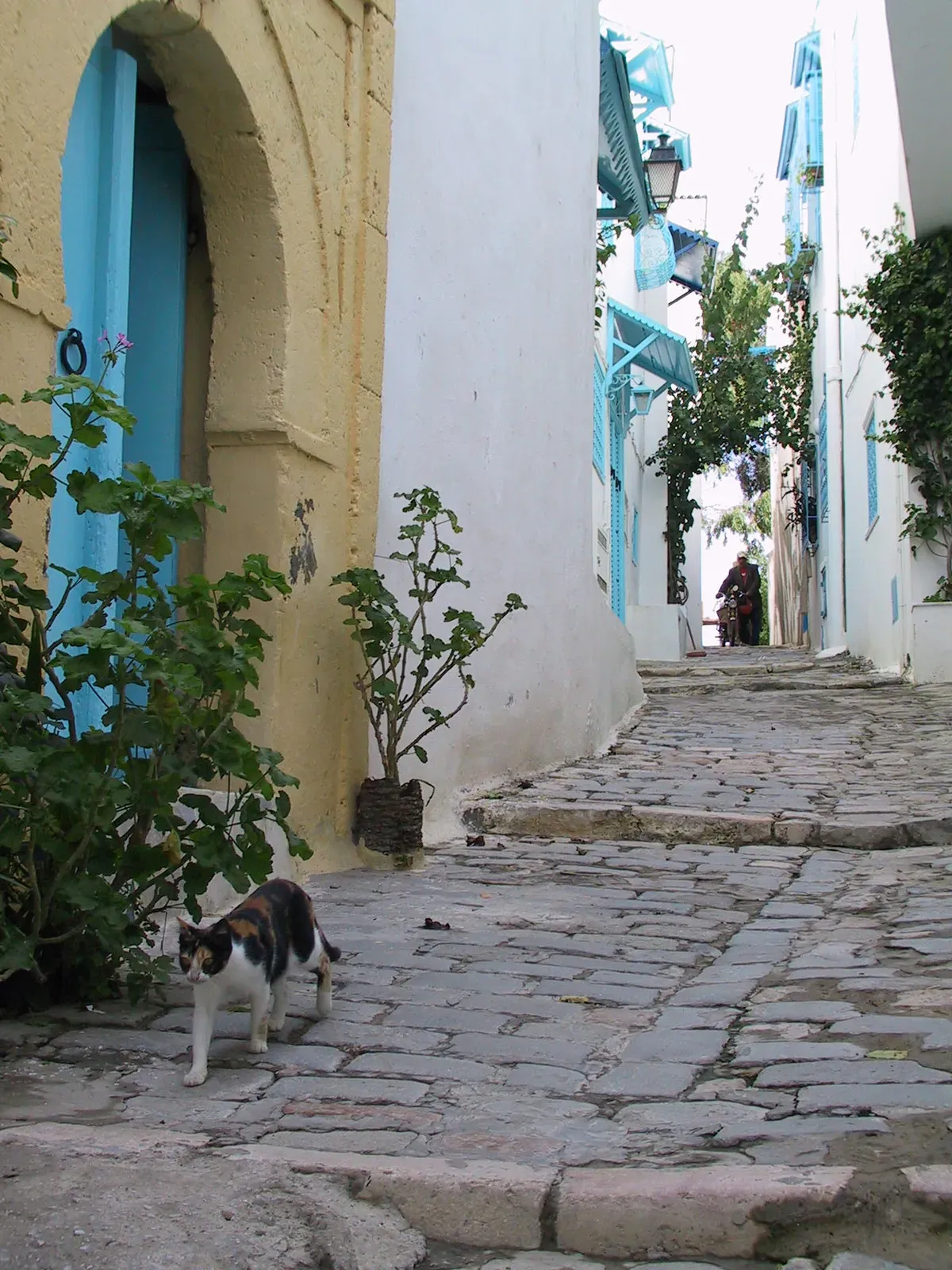
Cat Strolling Through the Alley
A calico cat walks confidently along a cobbled path in Sidi Bou Said, framed by soft yellow walls, trailing vines, and bright blue woodwork. The scene captures the village’s quiet poetry, where cats are not just companions but iconic inhabitants—moving freely through a maze of Mediterranean light and architectural grace.
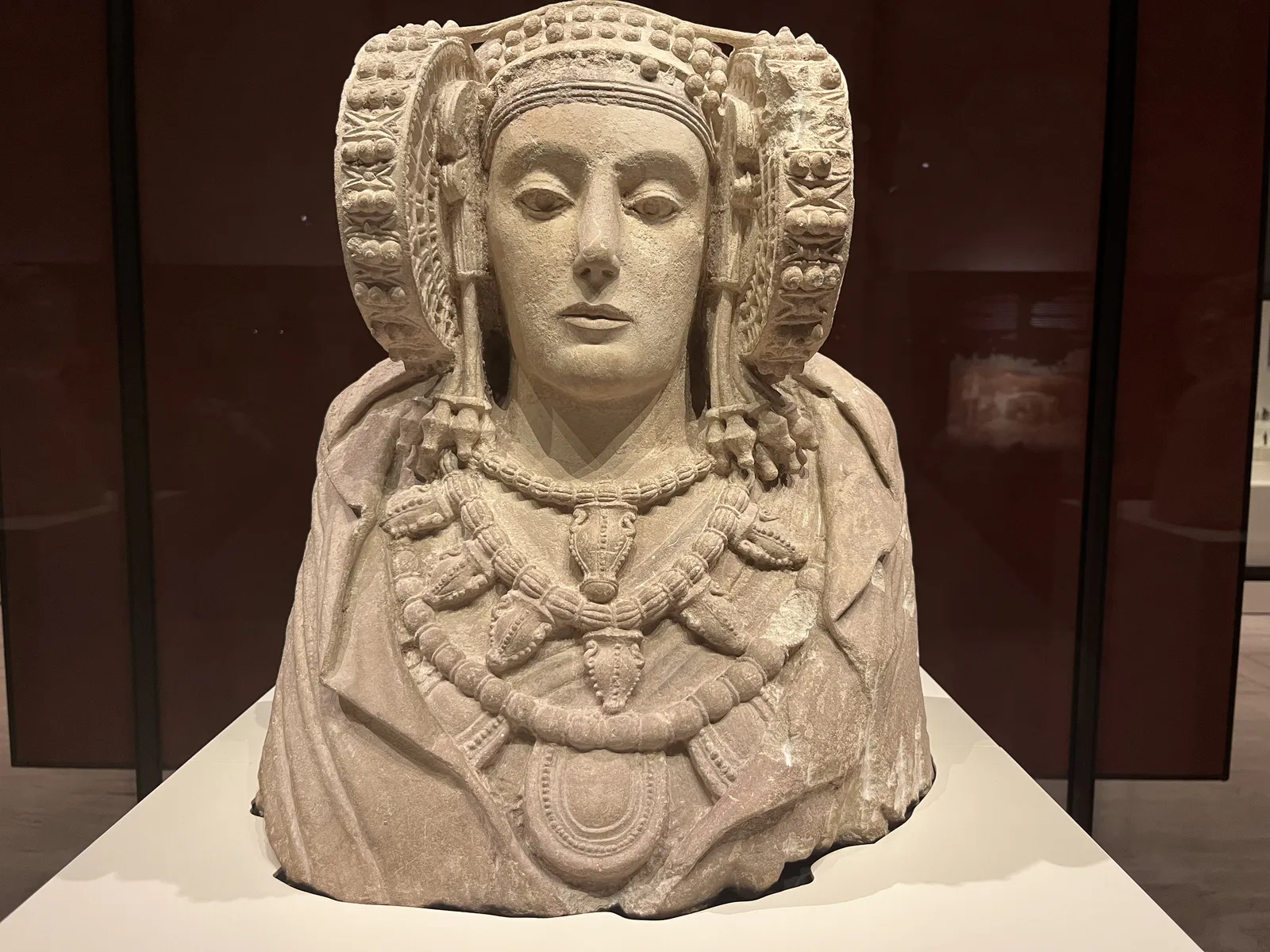
Lady of Elche
This Iberian limestone bust (4th c. BC), discovered in Elche in 1897, depicts an aristocratic woman, possibly honored as a deity. Its elaborate headdress reflects Mediterranean influences, while a rear cavity suggests use as a funerary urn. Traces of polychromy hint at its original vibrancy. Today, it endures as a symbol of Iberian culture and Spanish identity.
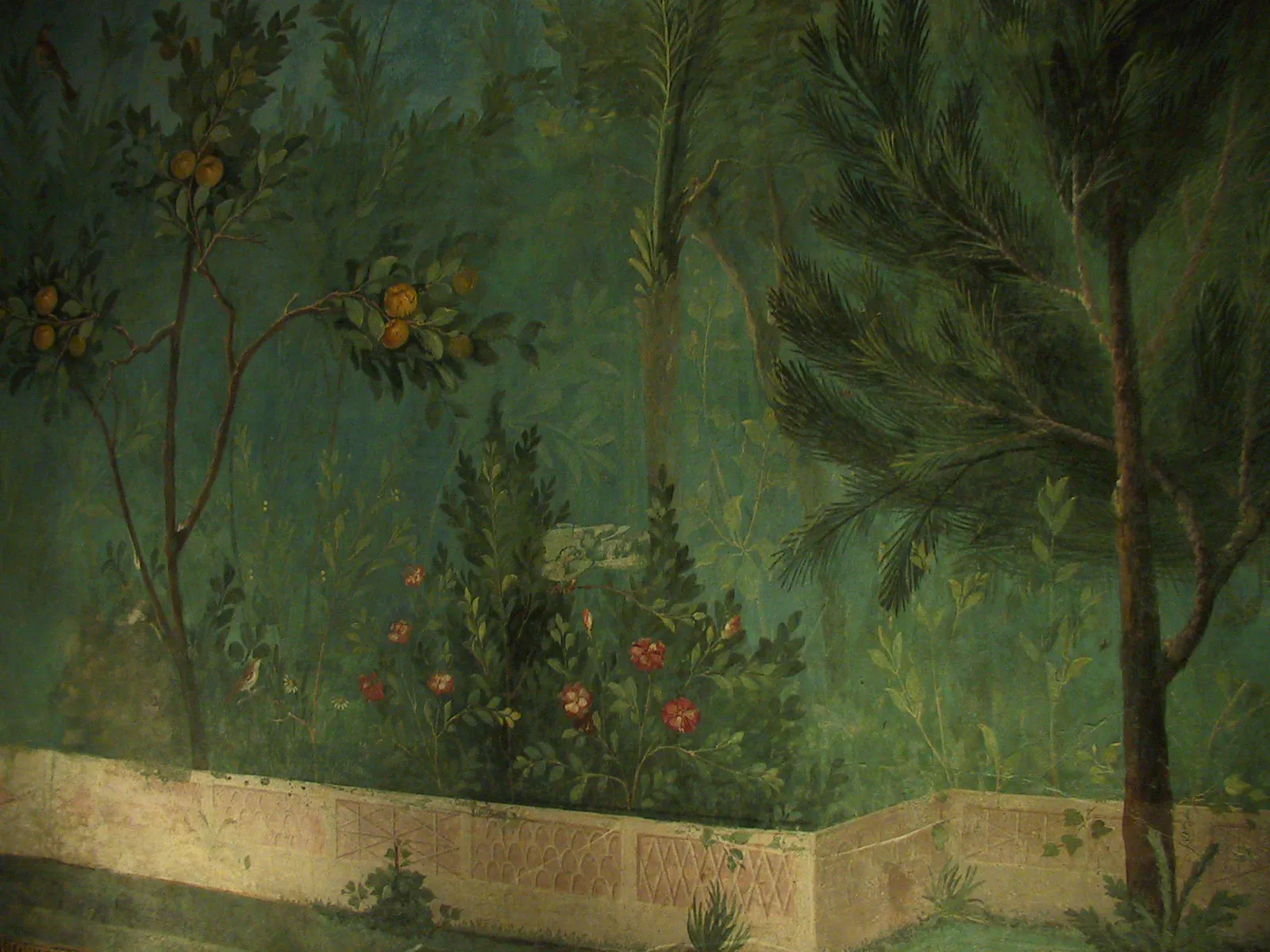
Garden Room Frescos from Livia's Villa
This section of the Garden Room fresco from the Villa of Livia (30–20 BC) decorated a summer dining room, transforming it into an immersive orchard of pines, roses, and fruit trees. Livia Drusilla, wife of Augustus and Rome’s first empress, used such spaces to project harmony and prosperity. The painted walls dissolve into a perpetual spring where birds perch amid lush foliage, evoking abundance, divine protection, and the renewal central to Augustan ideology.
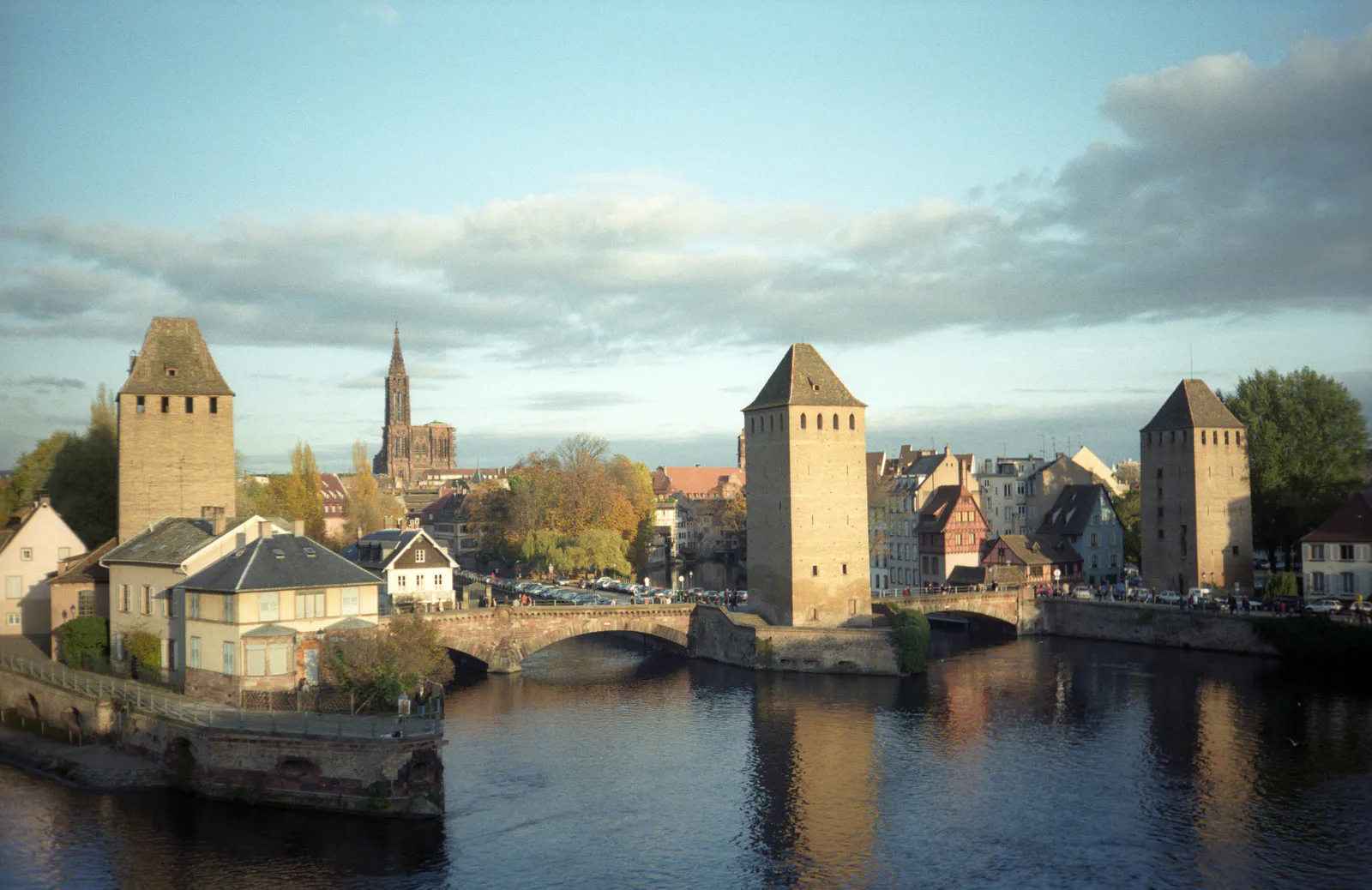
Covered Bridges
The Covered Bridges (13th c.) formed part of Strasbourg’s medieval defenses, spanning the River Ill with four fortified towers. Their wooden roofs disappeared in the 18th c., though the name remains. Beyond rises the cathedral spire, linking the city’s civic and religious landmarks in a single fortified panorama of the historic core.
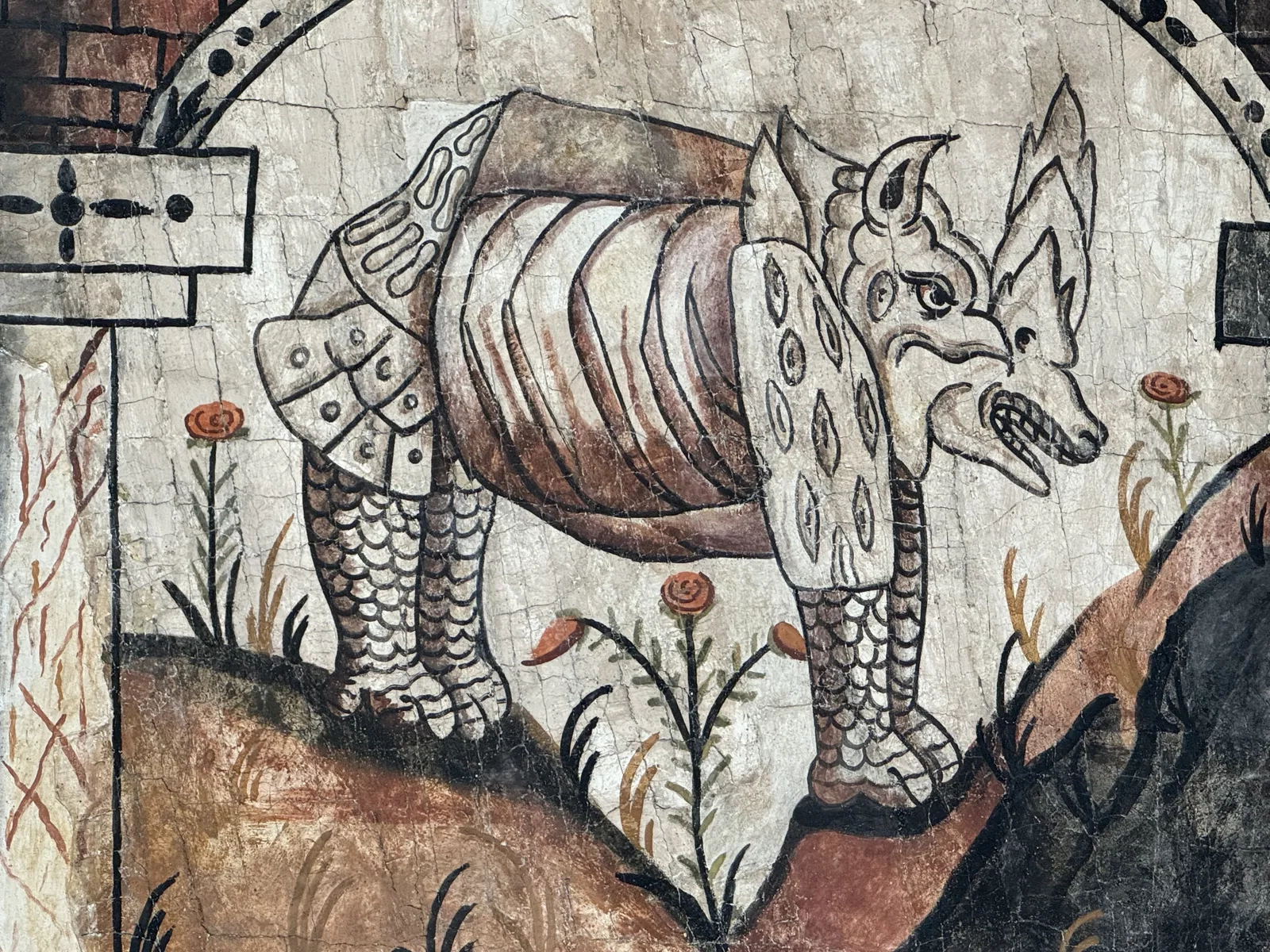
Fantastical Creature with Armored Hide
This fantastical creature (c. 1590), reflects colonial fascination with exotic fauna. Its armor-like plates and scaled legs suggest it was inspired by Albrecht Dürer’s 1515 Rhinoceros woodcut—an iconic but inaccurate image that shaped European and colonial visions of unfamiliar animals.
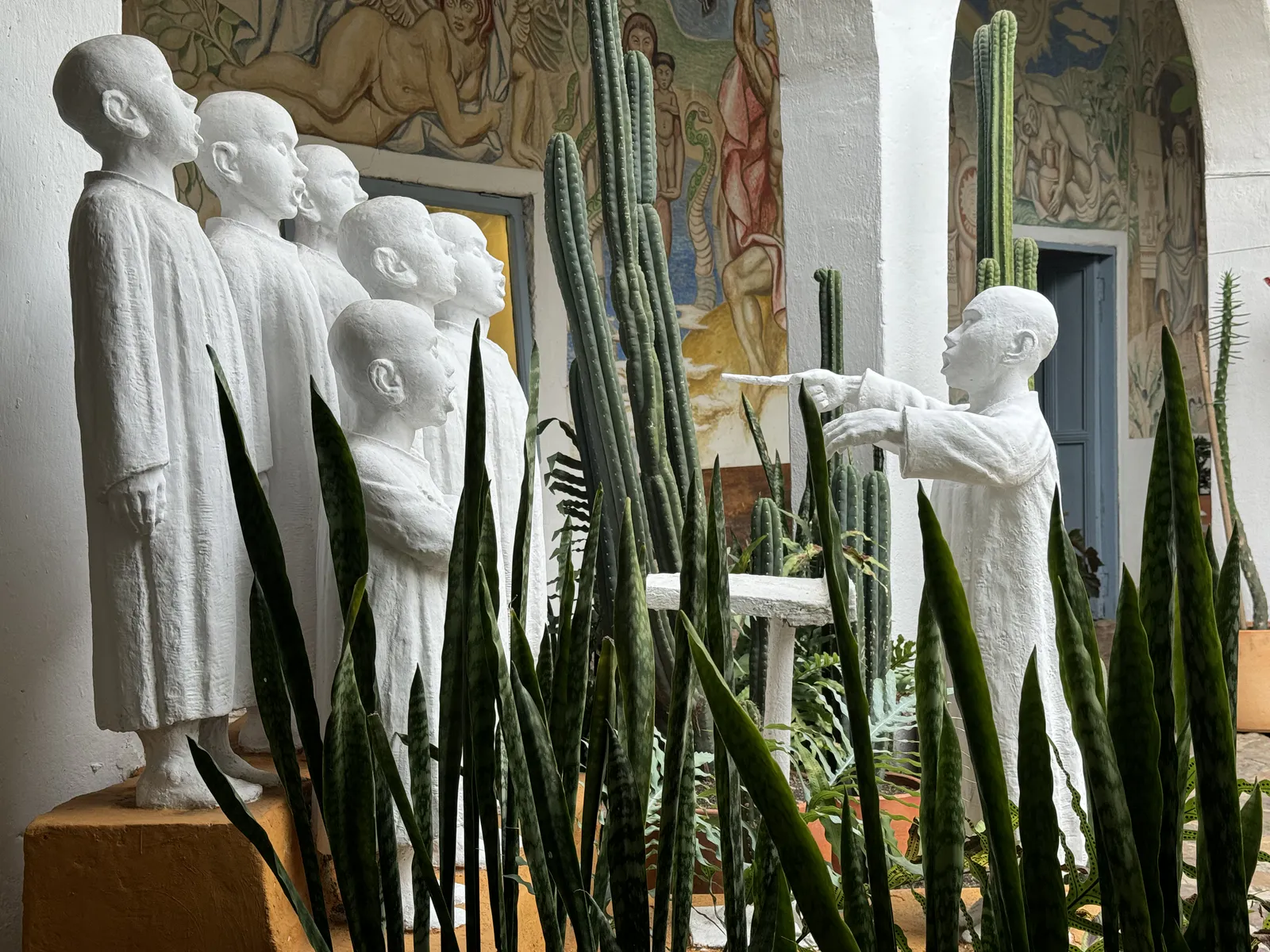
Choir of Novices
Luis Alberto Acuña
This sculptural group by Luis Alberto Acuña (1970s) depicts a choir of young novices led by a conductor, rendered in white plaster. Positioned in the courtyard of Casa Museo Acuña, it captures themes of spiritual education, harmony, and discipline. The rigid poses and minimalist forms evoke a timeless reverence, bridging artistic expression with monastic tradition.
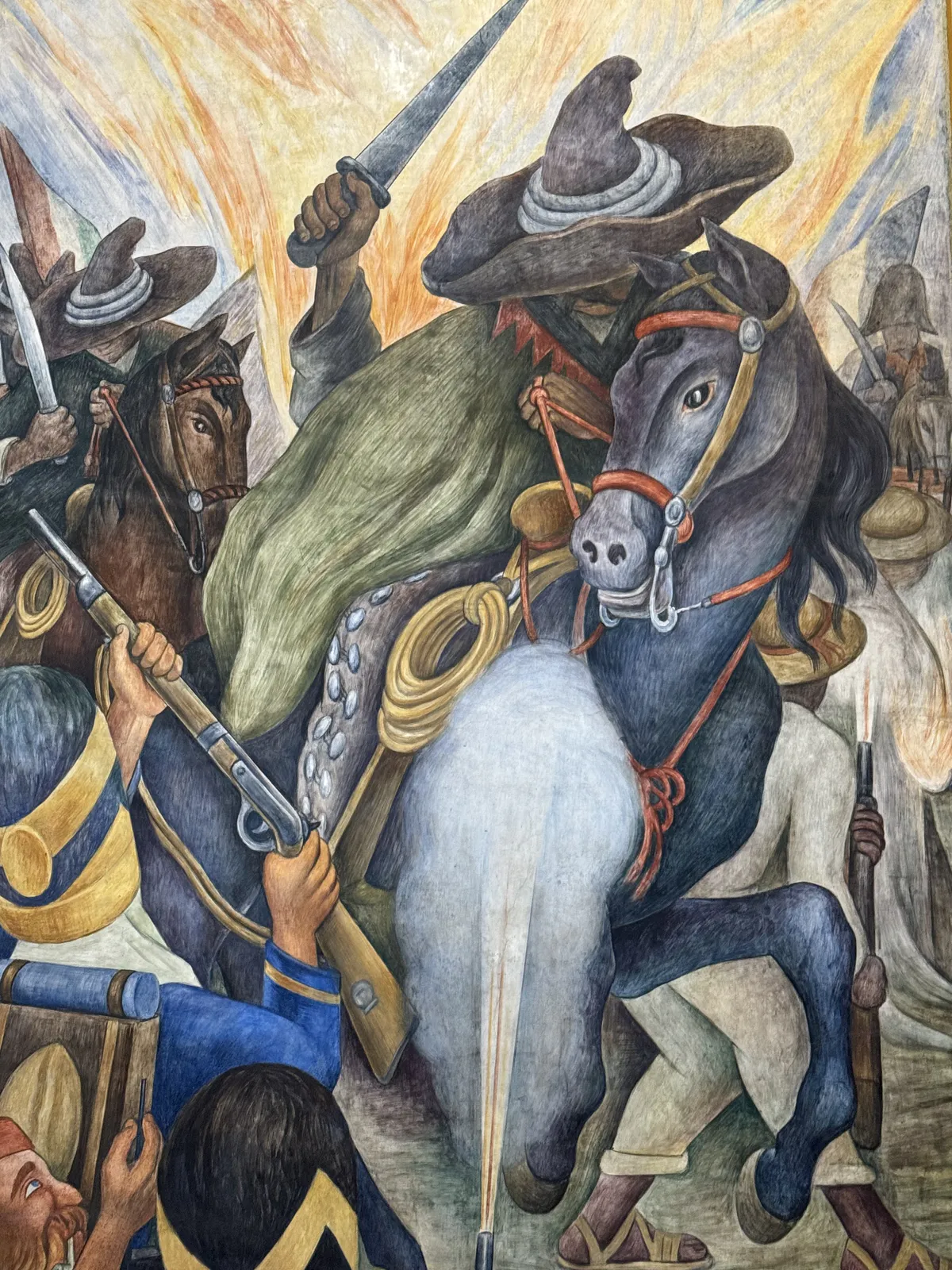
The Legend of Agustín Lorenzo (detail)
Diego Rivera
This 1936 fresco dramatizes the legendary outlaw Agustín Lorenzo as a symbol of resistance. Armed revolutionaries clash with government forces, their horses rearing amid smoke and flames. Rivera fuses myth and history, casting Lorenzo as a Mexican Robin Hood whose defiant struggle against injustice became folklore in the national imagination.
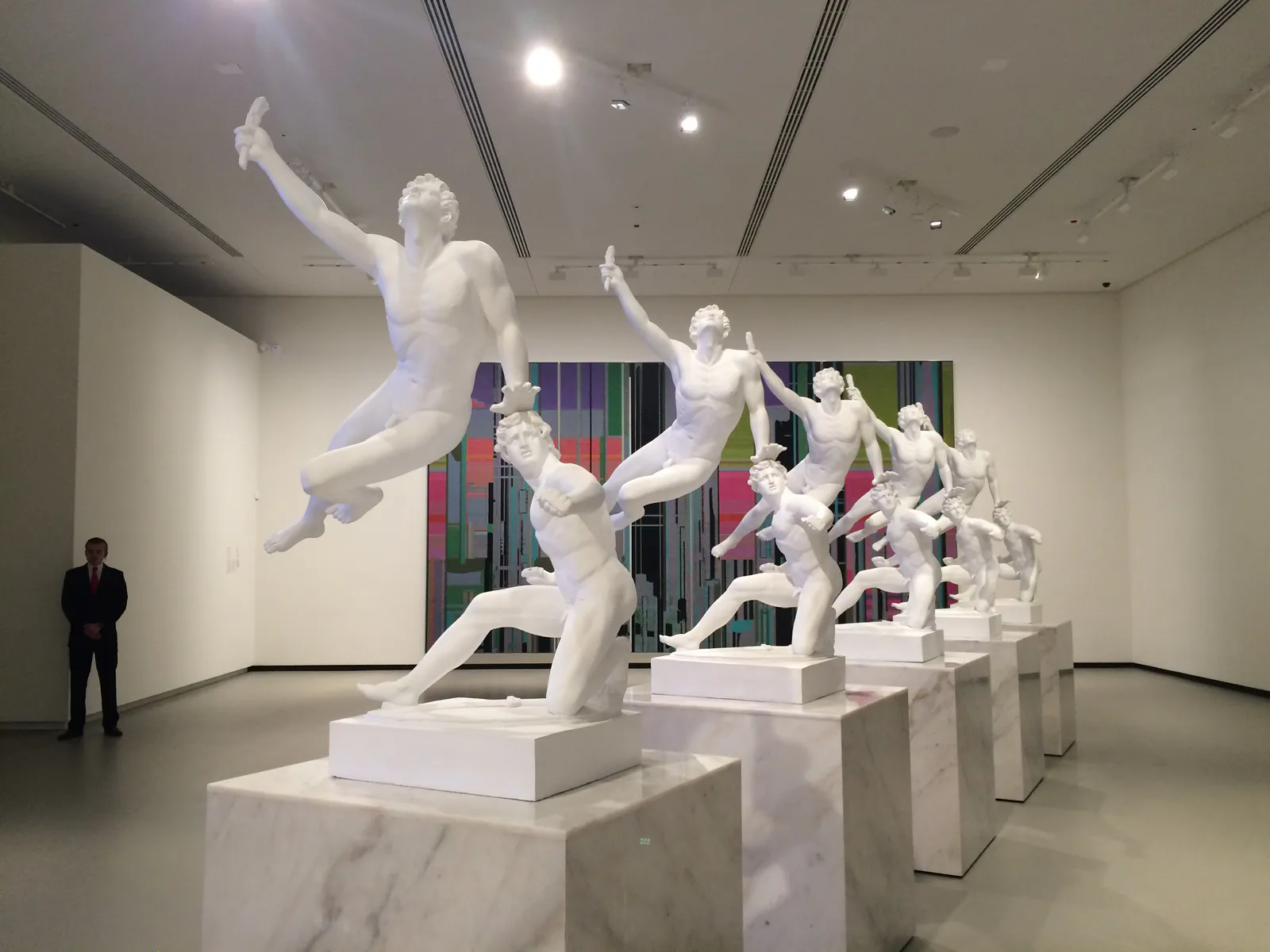
Eternity – The Soldier of Marathon Announcing Victory
Xu Zhen
This 2011 sculpture installation Eternity – Eternity - The Soldier of Marathon Announcing Victory, a Wounded Galatian fuses classical Greek forms with contemporary fragmentation. Crafted from concrete, fiberglass, marble powder, and metal, the sequence begins with a whole figure and gradually breaks apart, evoking cultural transformation and the erosion of historical continuity.
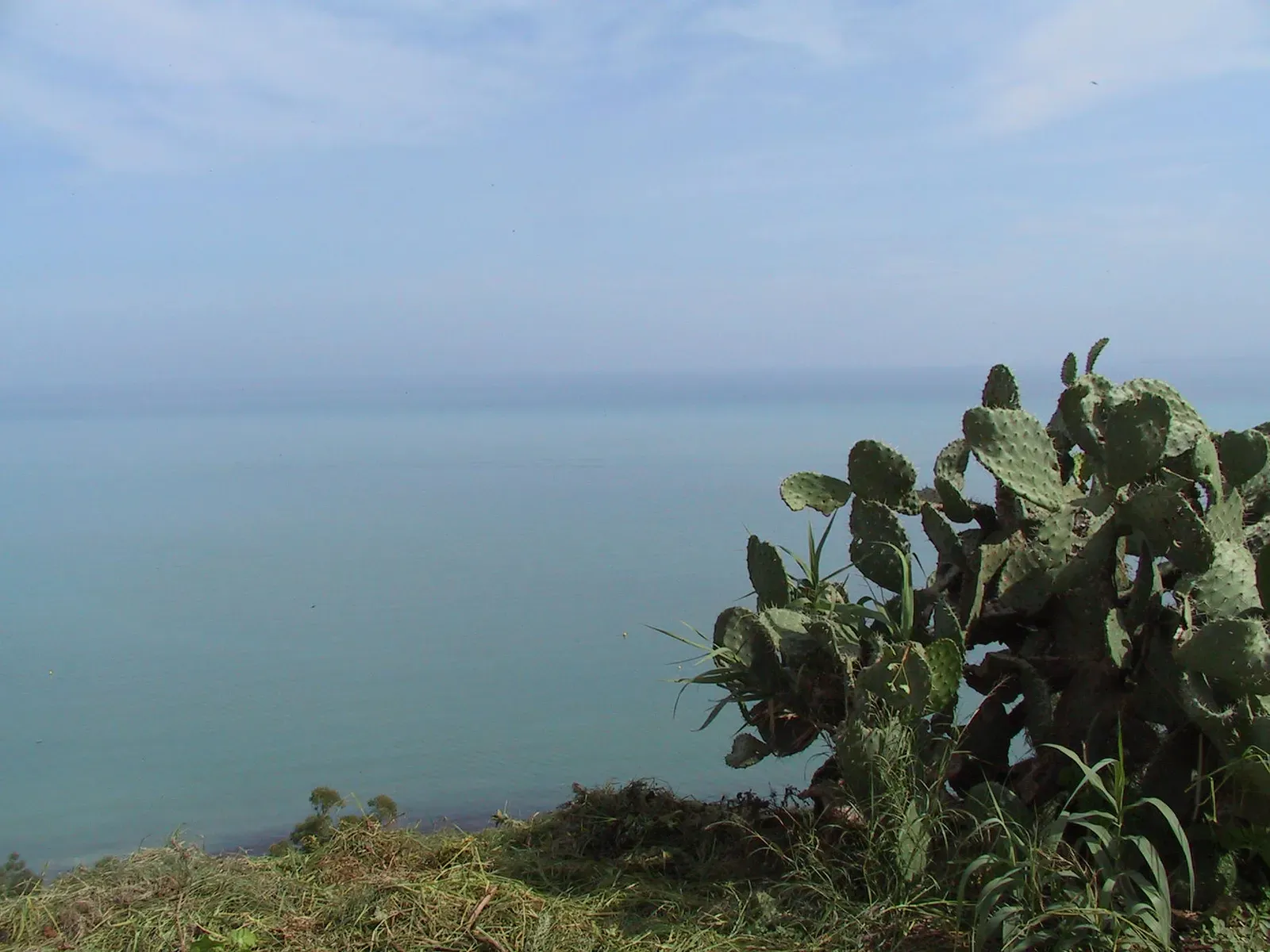
Prickly Pear and the Mediterranean Horizon
At the edge of a cliff near Sidi Bou Said, a cactus stands firm against the vast blue expanse of the sea. The prickly pear, native to North Africa, symbolizes endurance and quiet resilience. This tranquil vista reflects the meeting of land and water, plant and sky—a still moment in Tunisia’s coastal poetry.
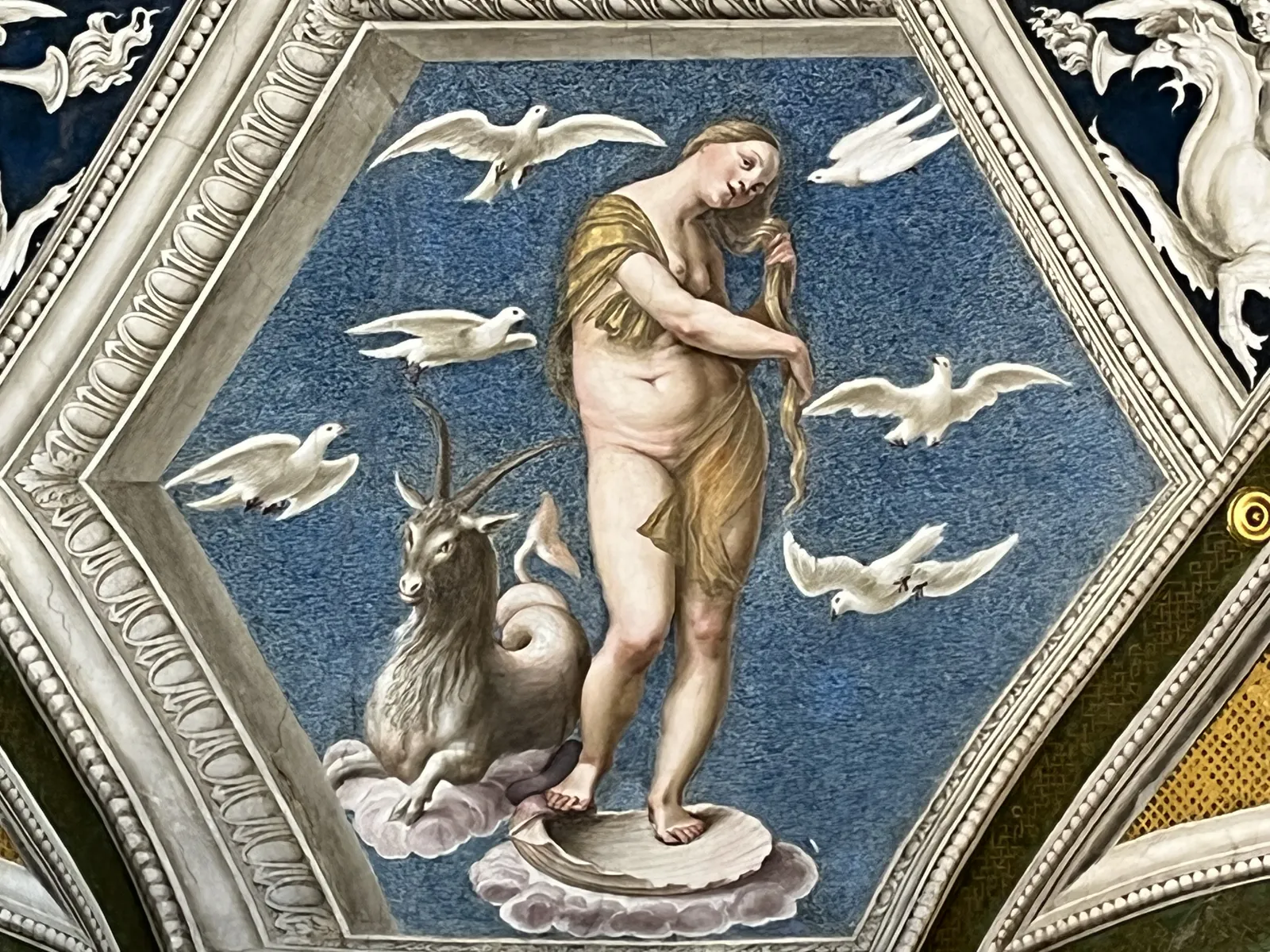
Venus and Capricorn
Baldassarre Peruzzi
The painting (c.1511) in the Loggia of Galatea depicts Venus, the goddess of love, on a shell surrounded by doves, symbols of love. Beside her, Capricorn, a hybrid creature, represents astrological wisdom. This artwork merges mythological beauty with cosmic symbolism, reflecting the Renaissance fascination with harmony between earthly and celestial realms. The inclusion of Capricorn underscores the era's belief in astrology's influence on human affairs.
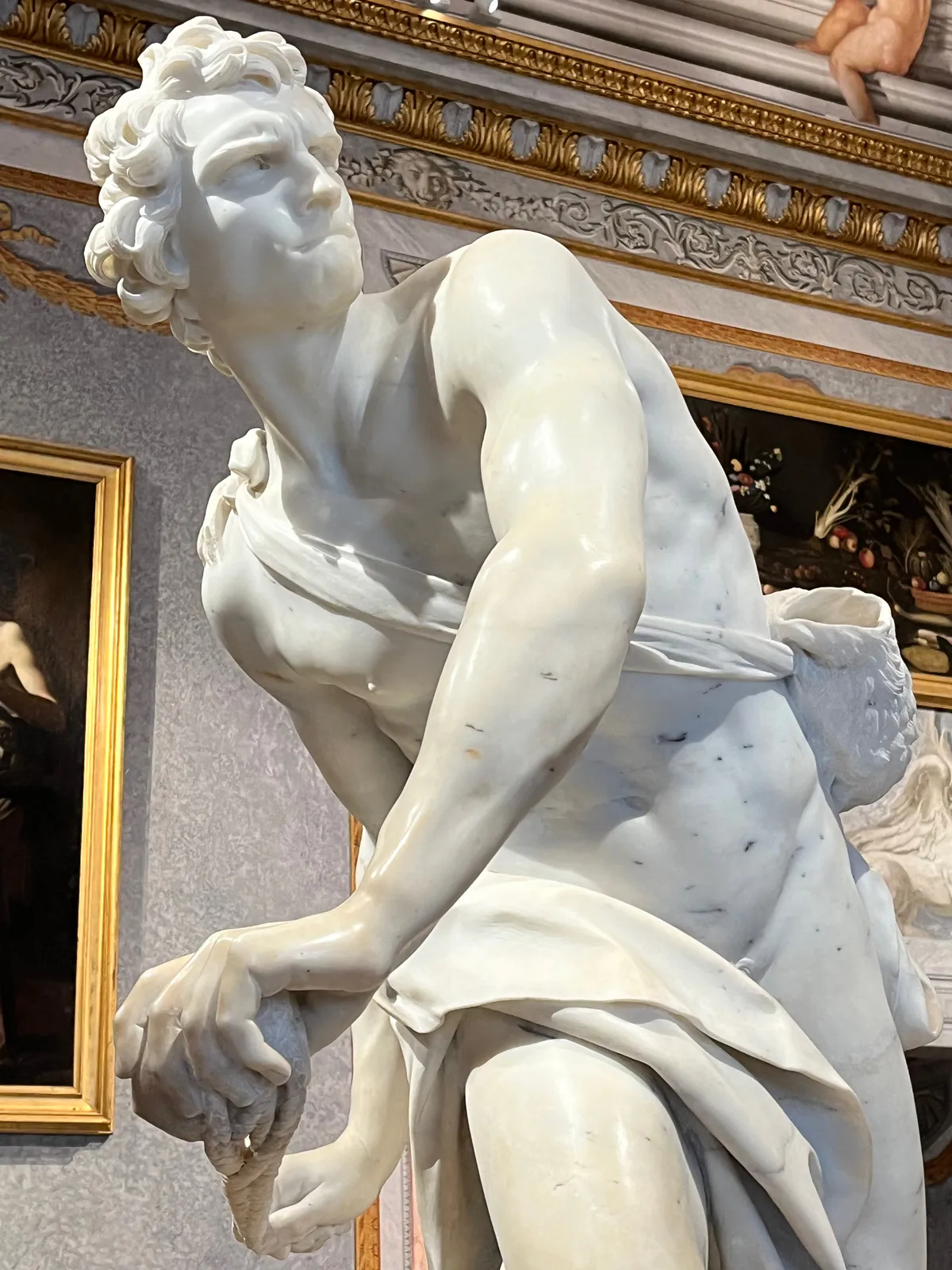
David
Gian Lorenzo Bernini
This marble sculpture (1623–24) captures David in a twisting stance, body coiled as his hand grips the sling. Muscles, drapery, and focused gaze all align with the implied arc of the stone. Commissioned by Cardinal Scipione Borghese, it exemplifies Baroque interest in movement and psychological intensity, turning a biblical hero into a study of concentrated action.
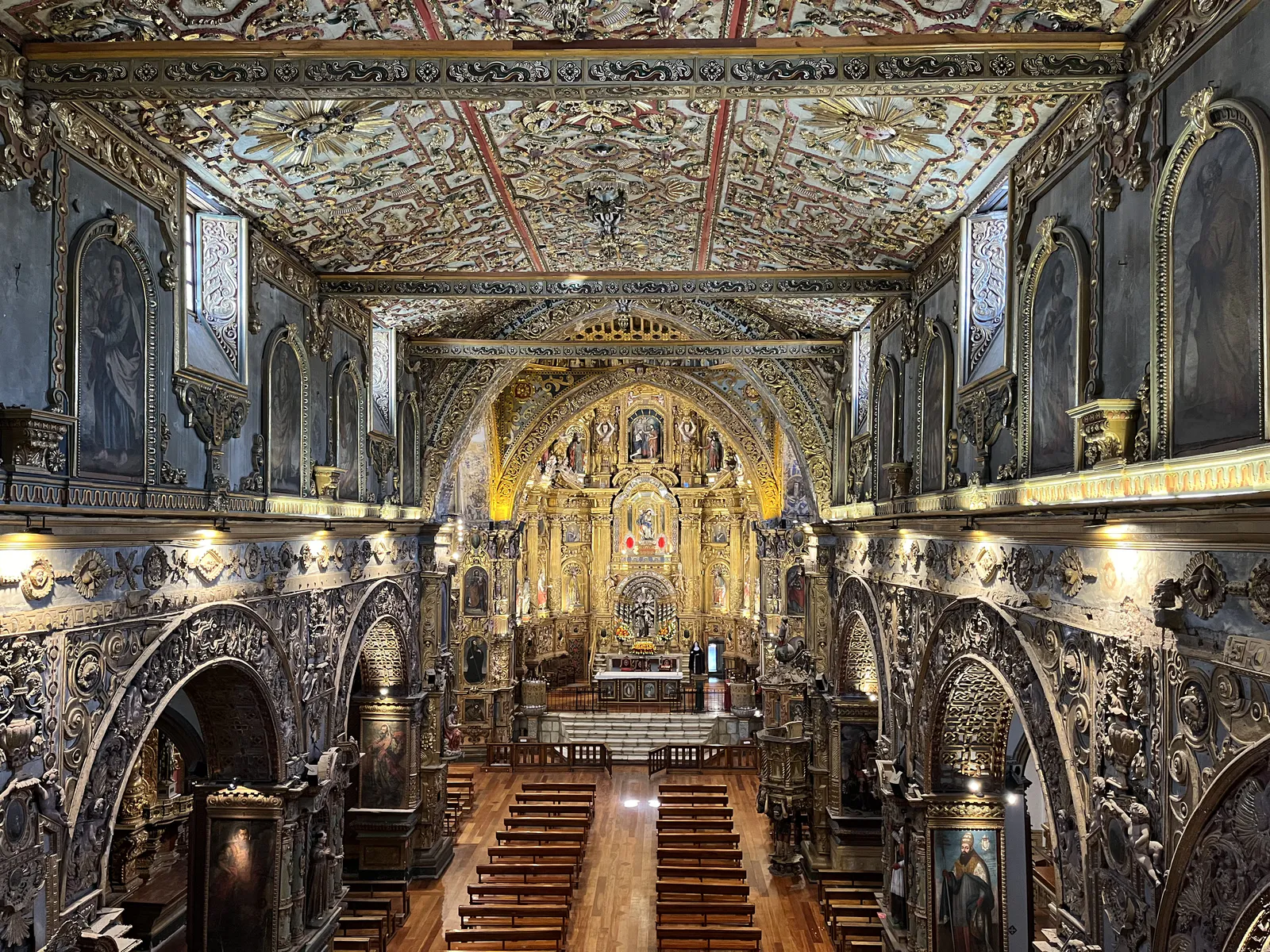
Interior of the Church of San Francisco
This view reveals the full splendor of the Quito School at its height. The richly carved walls, painted vaults, and gilded altar blend European baroque with Indigenous aesthetics. Built from the 16th–18th cc., the space was designed to overwhelm the senses—drawing the faithful into a mystical encounter with the divine through light, ornament, and sacred geometry.
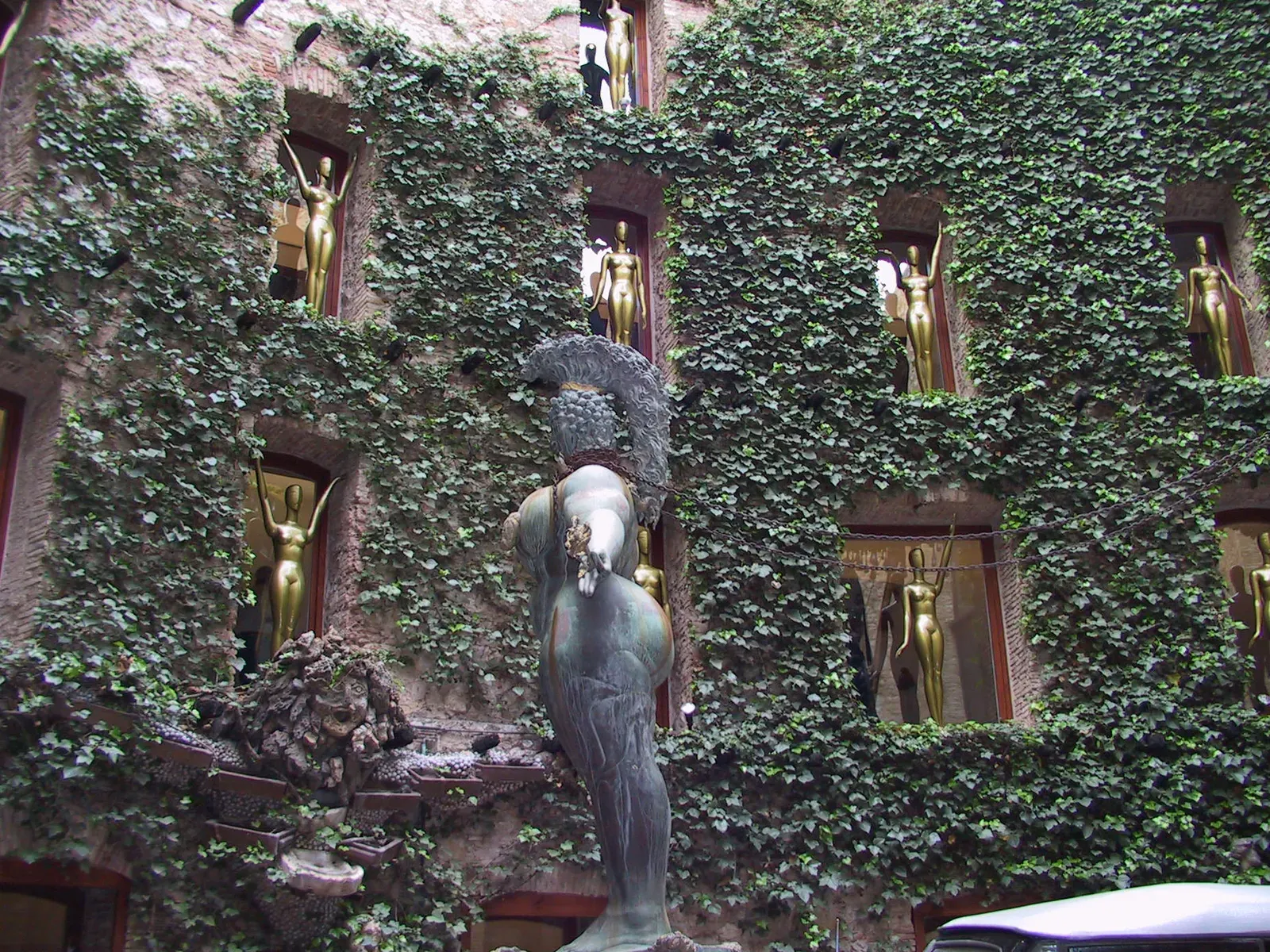
The Courtyard of the Wind Palace
Salvador Dalí
Dalí’s surreal installation (1970s) features golden female mannequins resembling votive icons in windows surrounding a central bronze figure of Venus crowned with a ship. This work merges classical motifs with theatrical elements, creating a fantastical vision of fertility, mythology, and voyeurism, showcasing Dalí’s unique blend of art and architecture.
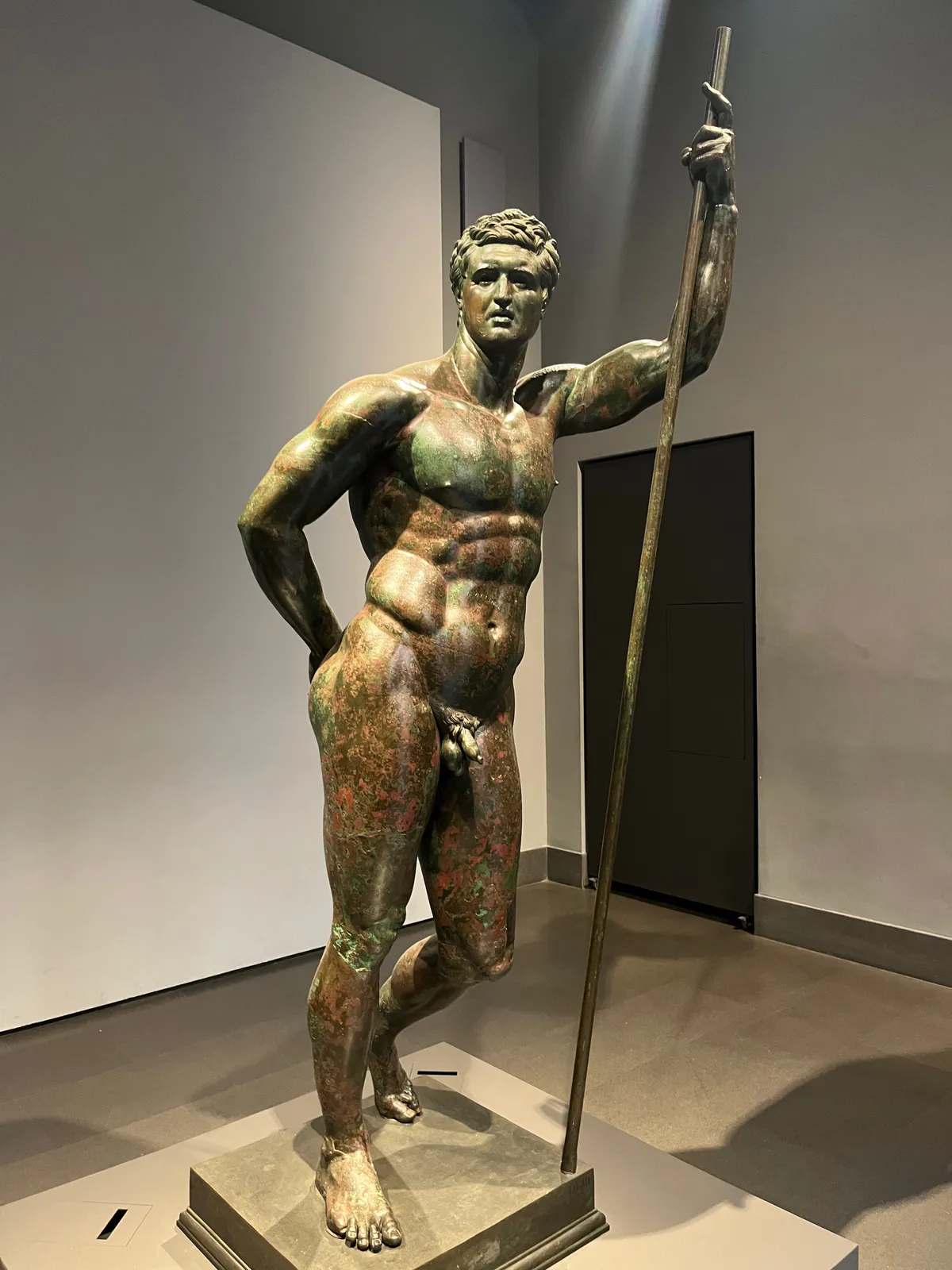
Bronze Youth with Spear
This Hellenistic bronze (2nd c. BC), found in Rome, shows a young man in heroic nudity, the visual language of leaders and demi-gods. His relaxed contrapposto, short beard, and athletic build recall works by Lysippos, sculptor of Alexander the Great. The spear (a modern replacement) completes the image of poised authority. Likely a prince or elite figure admired in Rome, the statue exemplified Greek idealism to Roman elite.
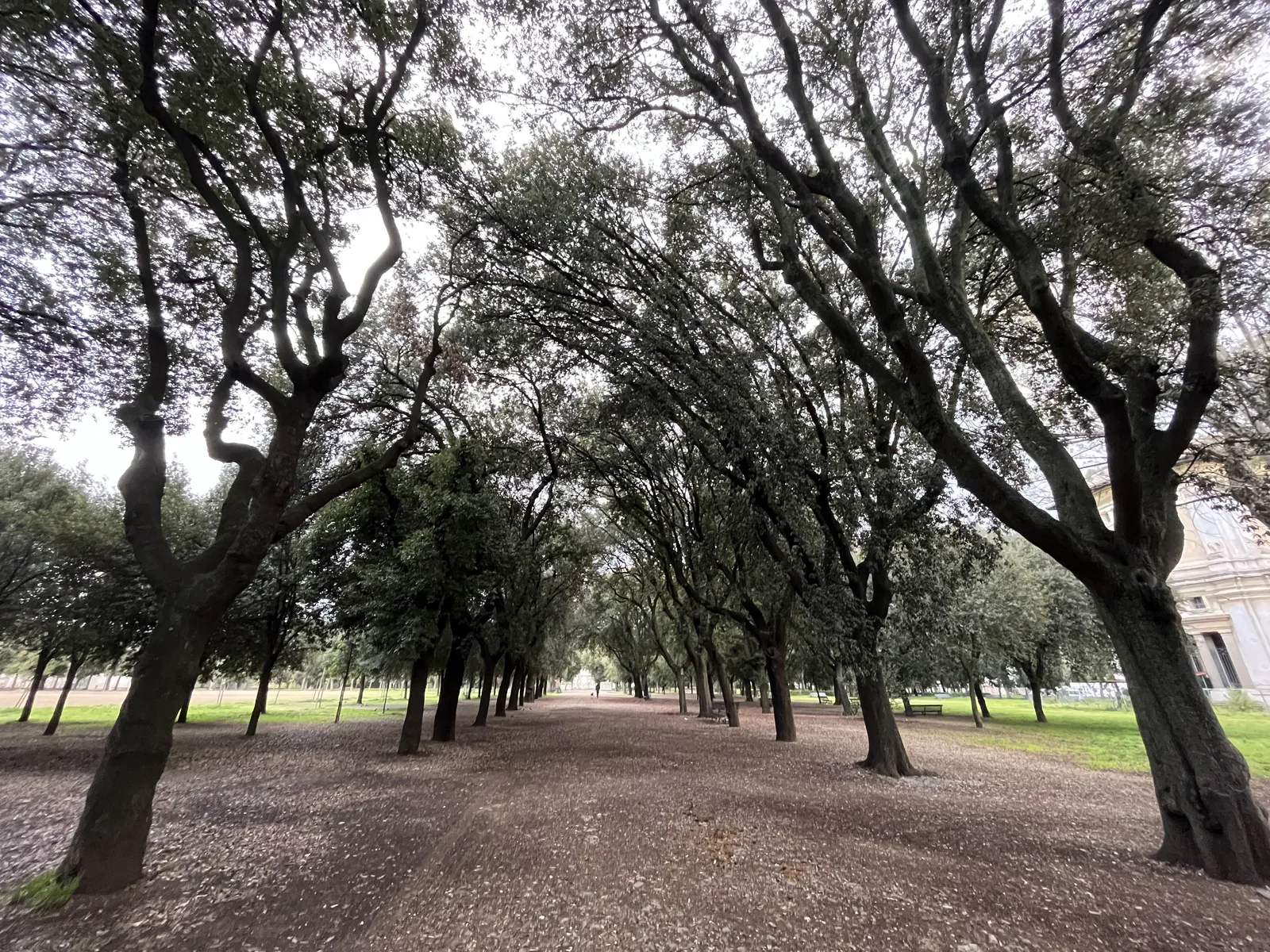
Shaded Promenade of Villa Borghese
This arched allée of evergreen oaks forms a shaded promenade within Villa Borghese’s extensive landscape. Such tree-lined paths, typical of formal Italian gardens, offered noble visitors a scenic route for strolling and carriage rides. The design reflects Enlightenment ideals of order, harmony, and cultivated nature.
Explore the world through my eyes: begin with the image below, the map, the dropdowns above, or the search button. Every photo includes a thoughtful caption.
Explore the world through my eyes: begin with the image below, the map, the dropdowns above, or the search button. Every photo includes a thoughtful caption.
When the path is beautiful, do not ask where it leads.
My travels have always been shaped by two intertwined forms of discovery. One is intellectual: learning why the world is the way it is. History became my guide, drawing me toward museums, old cities, architecture, and the layers of meaning carried by places. The other is emotional: the search for beauty, harmony, and moments of elevation, often found in nature, monasteries, and sacred spaces.
Together, these impulses shape how I travel, what I photograph, and how I interpret what I see. This site is my way of sharing that lifelong learning in visual form—one image at a time, with enough context to deepen curiosity and understanding. I hope these photographs leave you with a sense of wonder and a deeper feeling for the world.
Now let’s explore together.