Interiors and Decorative Details
Interiors and Decorative Details
Interiors and Decorative Details
Interiors and Decorative Details
Interiors and Decorative Details
Interiors and Decorative Details
Interiors and Decorative Details
Garden
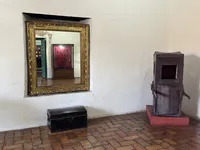
Interiors and Decorative Details
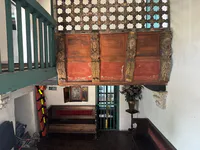
Interiors and Decorative Details
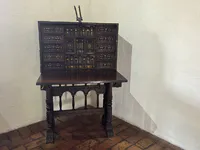
Interiors and Decorative Details
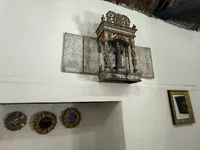
Interiors and Decorative Details
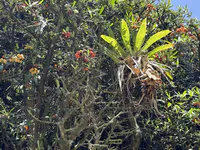
Garden
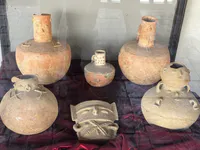
Interiors and Decorative Details
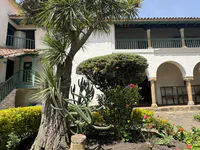
Interiors and Decorative Details
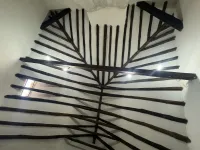
Interiors and Decorative Details
Garden
Interiors and Decorative Details
Interiors and Decorative Details

Garden

Interiors and Decorative Details
Manierist Ceilings and Symbolic Imagery at Casa del Fundador
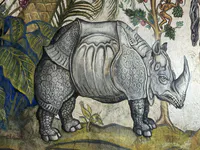
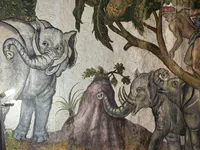
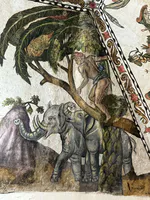
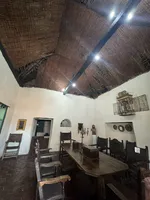
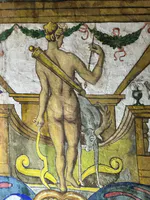
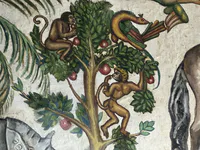
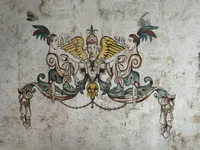
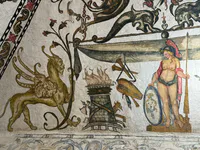
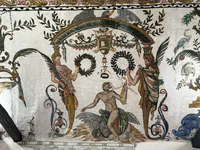
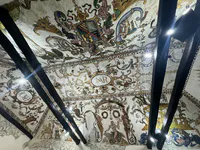
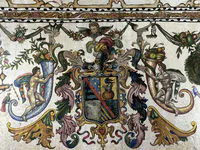
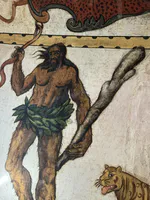
In the coffered ceilings of the main hall appear animals, flowers, trees, cornucopias, and other symbols characteristic of Manierism. This artistic movement, situated between the Renaissance and the Baroque, arose in Italy and spread through Europe and the Americas in the late 16th and early 17th cc.
Manierist painters, influenced by Michelangelo, sought expressiveness and delighted in the unusual and artificial. They depicted mythological figures, symbolic animals, exotic plants, monstrous beings, and hybrid forms. In the Casa del Fundador, the style appears in tempera paintings on plaster, some based on printed illustrations then circulating in the Hispanic world. These paintings date to the period of Doña Menda de Figueroa’s second marriage to Don Juan Núñez de la Cerda. Hidden by a 19th-c. ceiling, they were uncovered and restored between 1964 and 1969.
Manierist painters, influenced by Michelangelo, sought expressiveness and delighted in the unusual and artificial. They depicted mythological figures, symbolic animals, exotic plants, monstrous beings, and hybrid forms. In the Casa del Fundador, the style appears in tempera paintings on plaster, some based on printed illustrations then circulating in the Hispanic world. These paintings date to the period of Doña Menda de Figueroa’s second marriage to Don Juan Núñez de la Cerda. Hidden by a 19th-c. ceiling, they were uncovered and restored between 1964 and 1969.
Interiors and Decorative Details
Interiors and Decorative Details

Garden
Garden
Interiors and Decorative Details
Interiors and Decorative Details
Interiors and Decorative Details
Interiors and Decorative Details
Interiors and Decorative Details
Interiors and Decorative Details
Don Juan de Vargas Scribe’s House MuseumMuseo Casa del Escribano Don Juan de Vargas
A late-16th-c. home where Tunja’s colonial power was exercised as much through paperwork as through display. Its most enduring legacy is a Mannerist ceiling program (c. 1590–1620), painted in tempera on plaster, where classical gods, heraldry, Christian emblems, and imagined creatures—often traced from European prints—are recomposed into a local visual language of status and protection. Hidden behind a 19th-c. false ceiling and restored in the 1960s, it remains a rare domestic record of belief and aspiration.
Explore by type and place