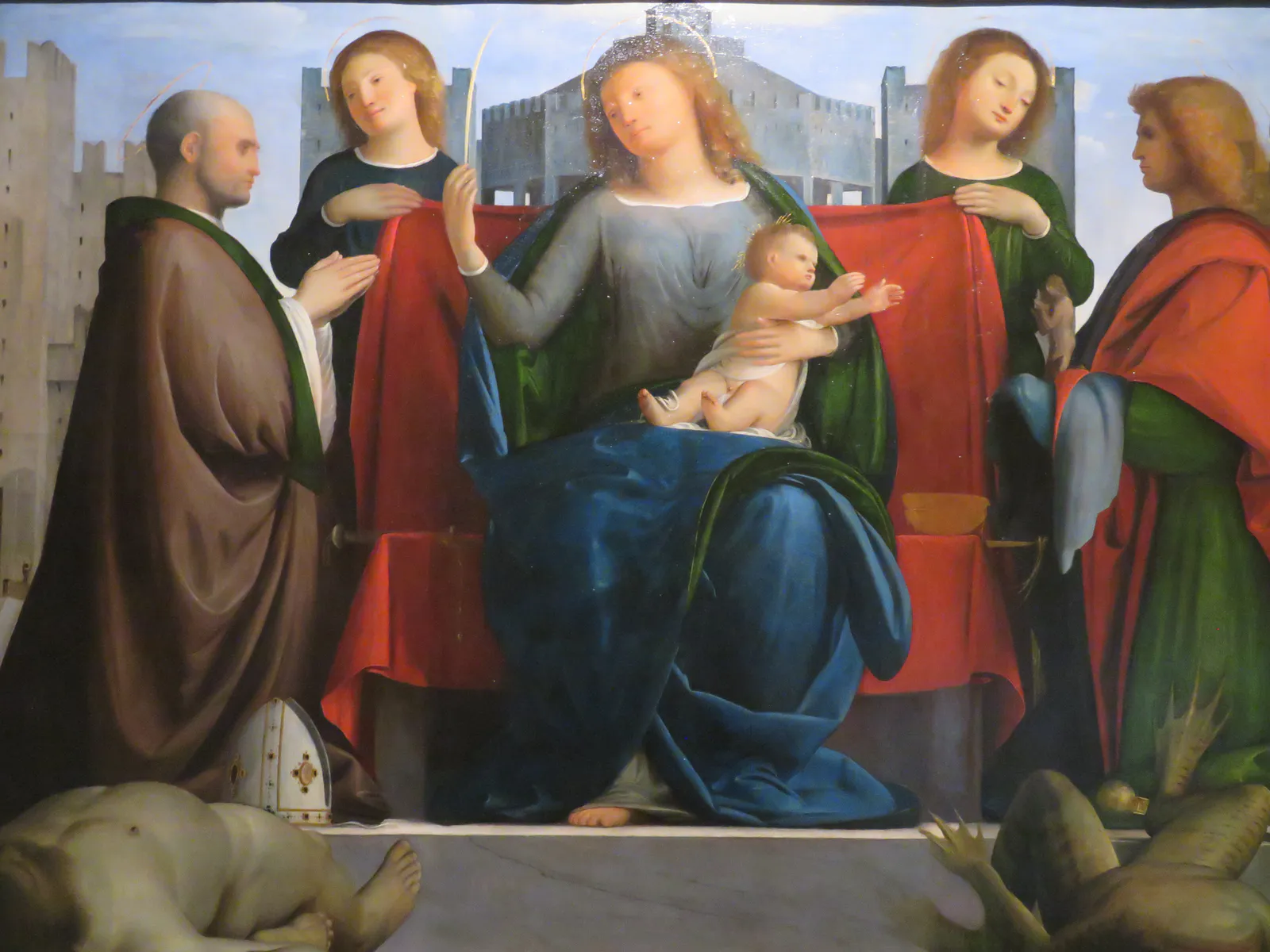
Madonna of the Towers
Bramantino
This tempera and oil painting (1515–20) presents the Madonna and Child enthroned between Saint Ambrose and Saint Michael. Set before fortified towers symbolizing Marian protection, the composition reflects Leonardo’s influence in its symmetry and restraint. Below, a toad representing the Devil lies defeated, underscoring the Virgin’s triumph over evil.
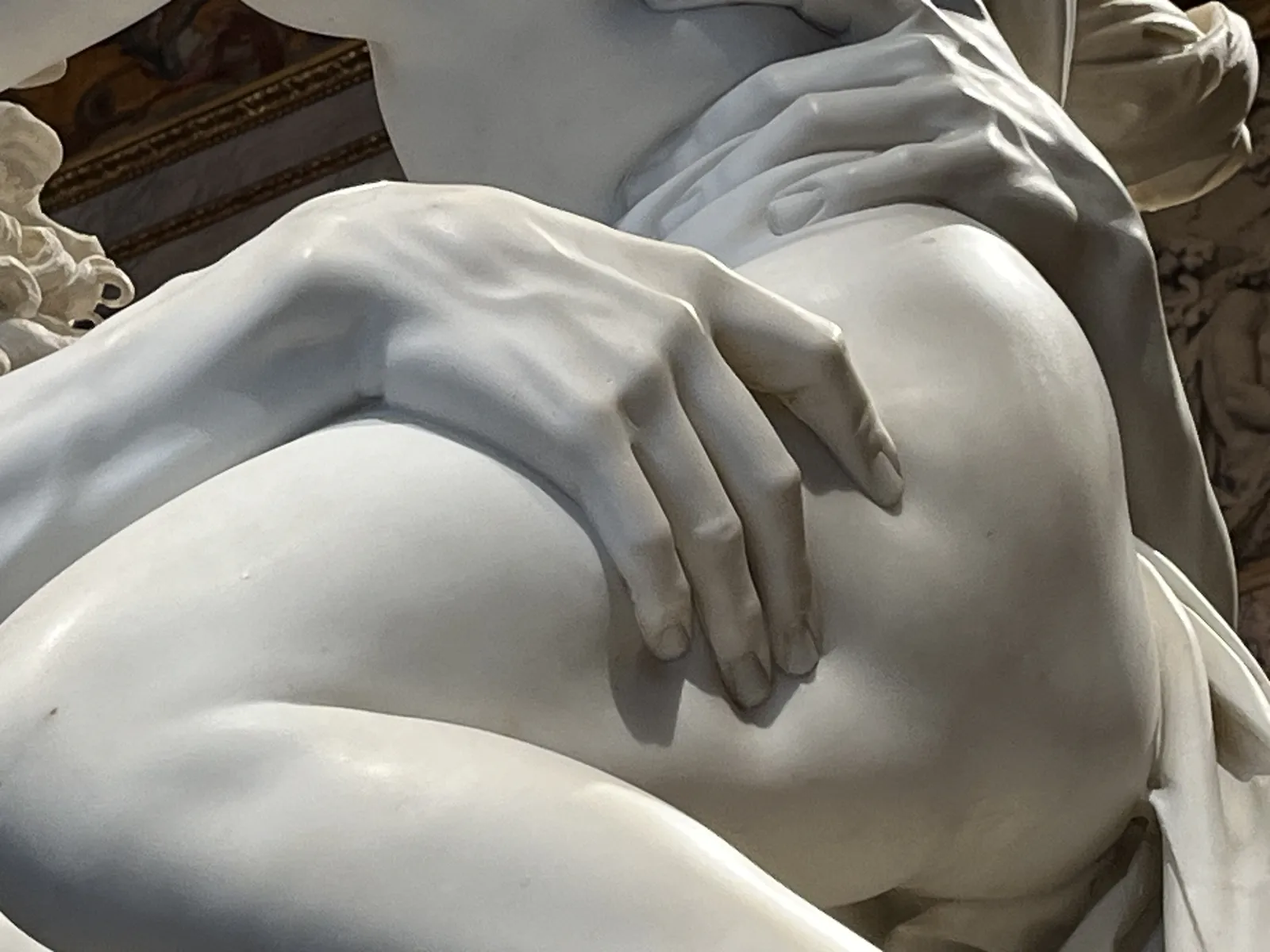
The Rape of Proserpina (detail)
Gian Lorenzo Bernini
This gripping close-up from Bernini’s marble group (1621–22) captures Pluto’s hand pressing into Proserpina’s flesh. The marble appears to yield under his grip, a dazzling illusion of softness and force. Bernini’s technical brilliance here transforms stone into living drama, amplifying the sculpture’s emotional and physical realism.
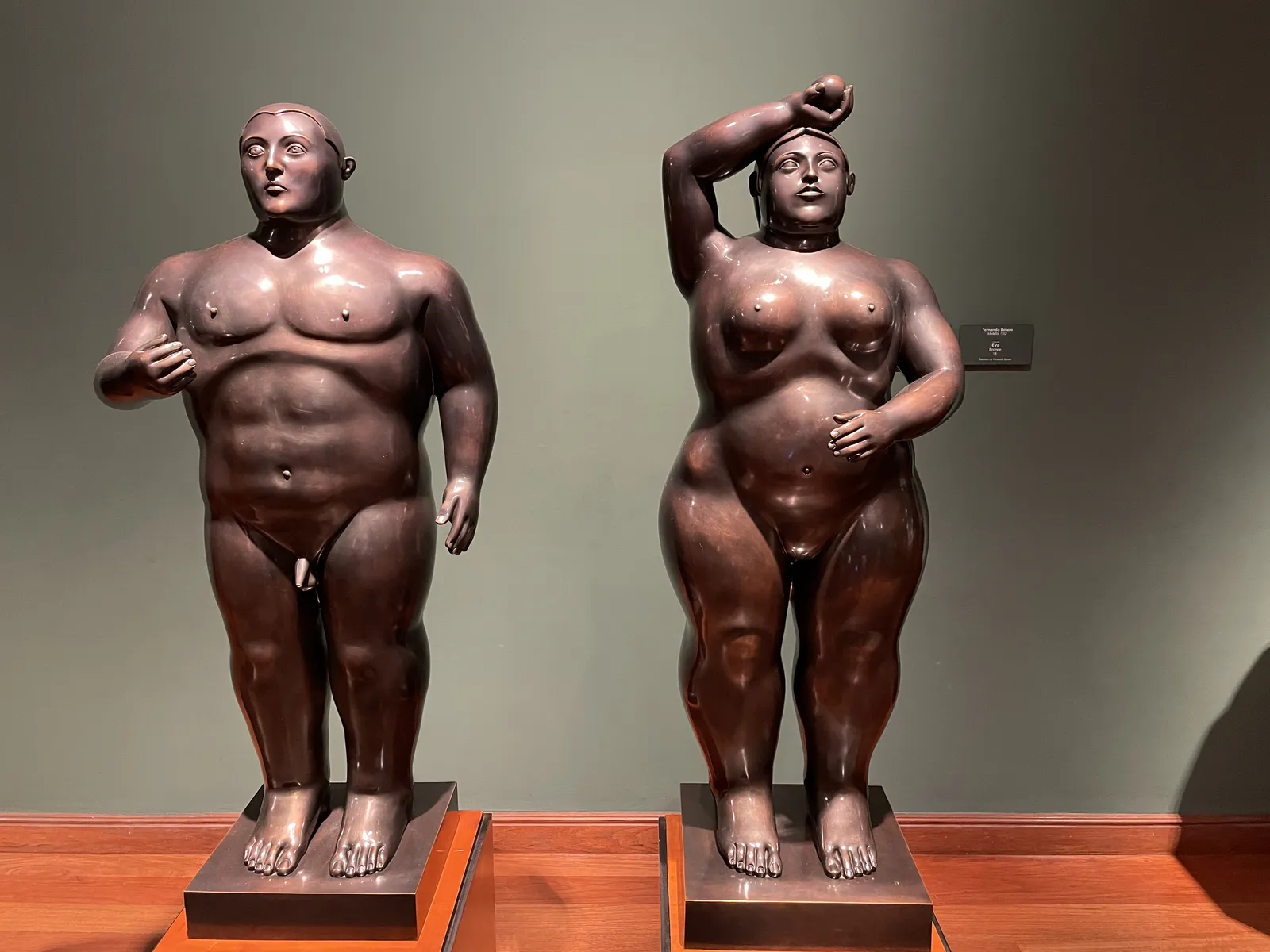
Adam and Eve
Fernando Botero
These 1999 bronze figures reimagine the biblical first humans with Botero’s hallmark voluminous style. Their serene, exaggerated forms strip the myth of guilt and drama, offering a playful yet dignified meditation on innocence, corporeality, and the timeless tension between flesh and spirit.
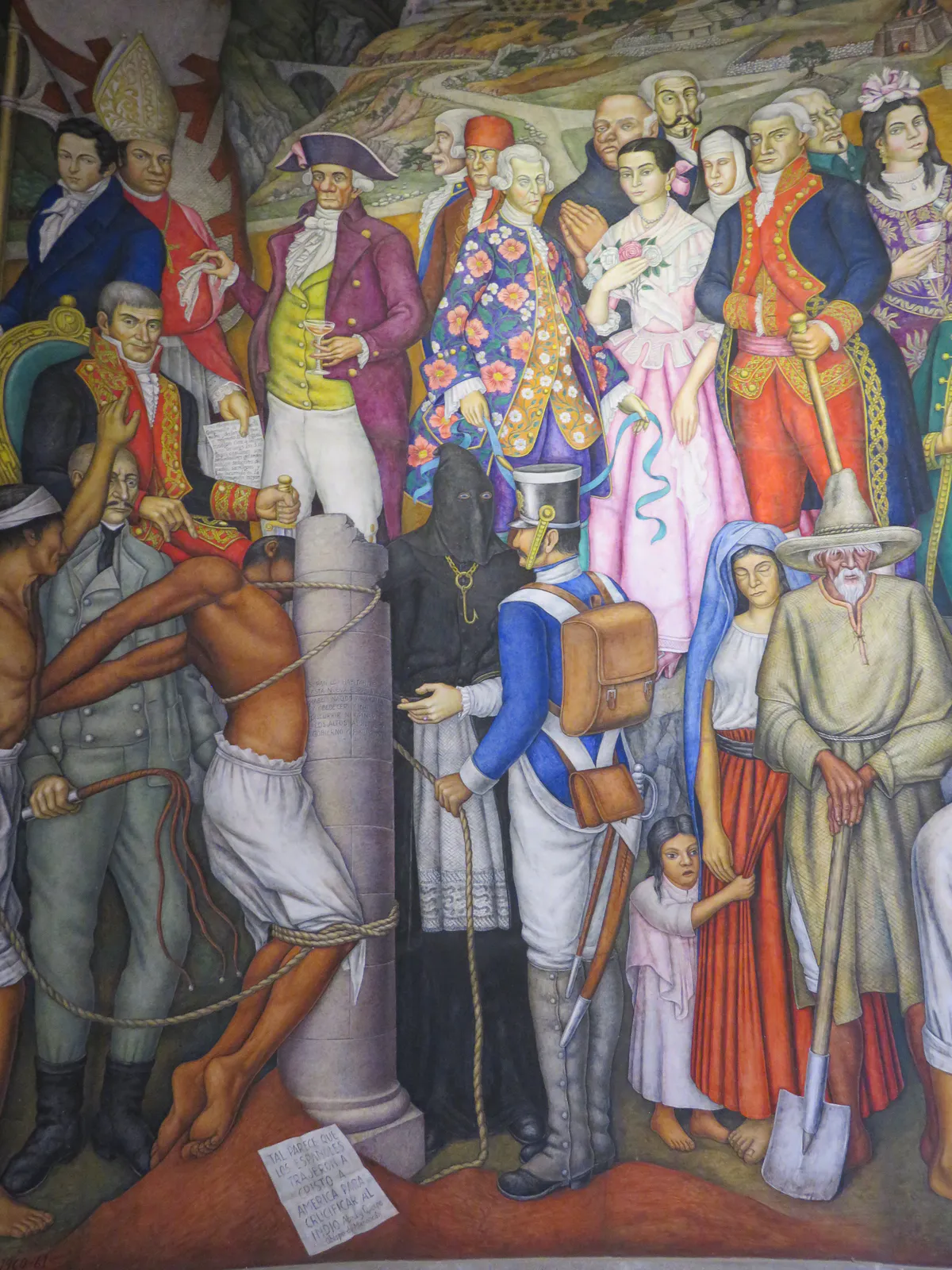
Detail from Retablo de la Independencia
Juan O'Gorman
This mural detail (1960–61) dramatizes colonial brutality during Mexico’s struggle for independence (1810–1821). A near-nude man is tortured before Spanish troops and clergy, symbolizing oppression. At left appear insurgent leaders Miguel Hidalgo and José María Morelos, while nobles and clerics in bright dress embody privilege. The peasants and child at right embody the pueblo whose suffering and resilience fueled the revolt for freedom.
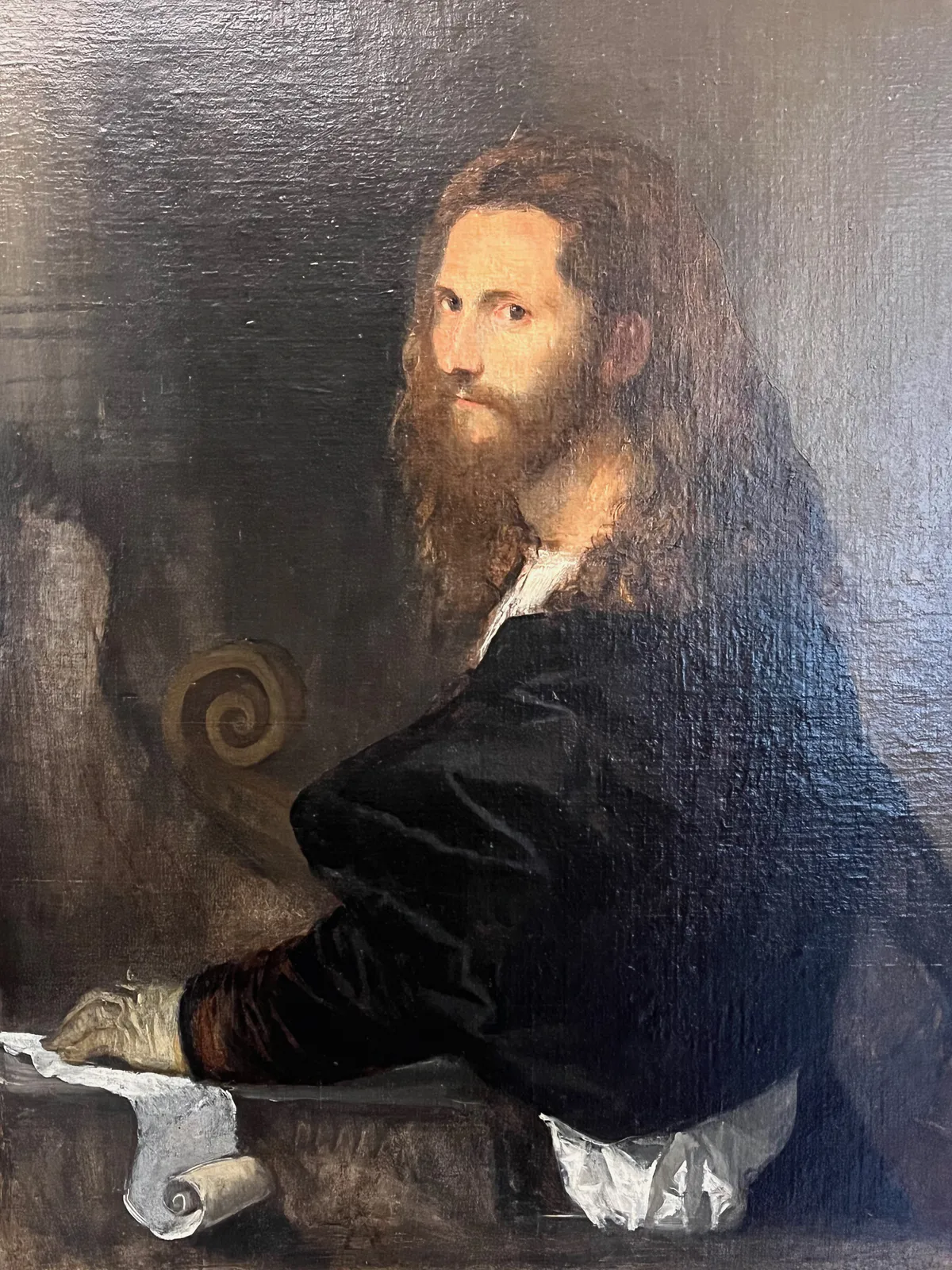
A Man with a Glove
Titian
This introspective portrait (c. 1515) captures a bearded man in mid-turn, scroll in hand, his gaze piercing yet reserved. Rendered with Venetian richness, the work highlights the sitter’s intellect and social poise. The subtle play of light on fabric and flesh reveals Titian’s early mastery of psychological depth and painterly nuance.
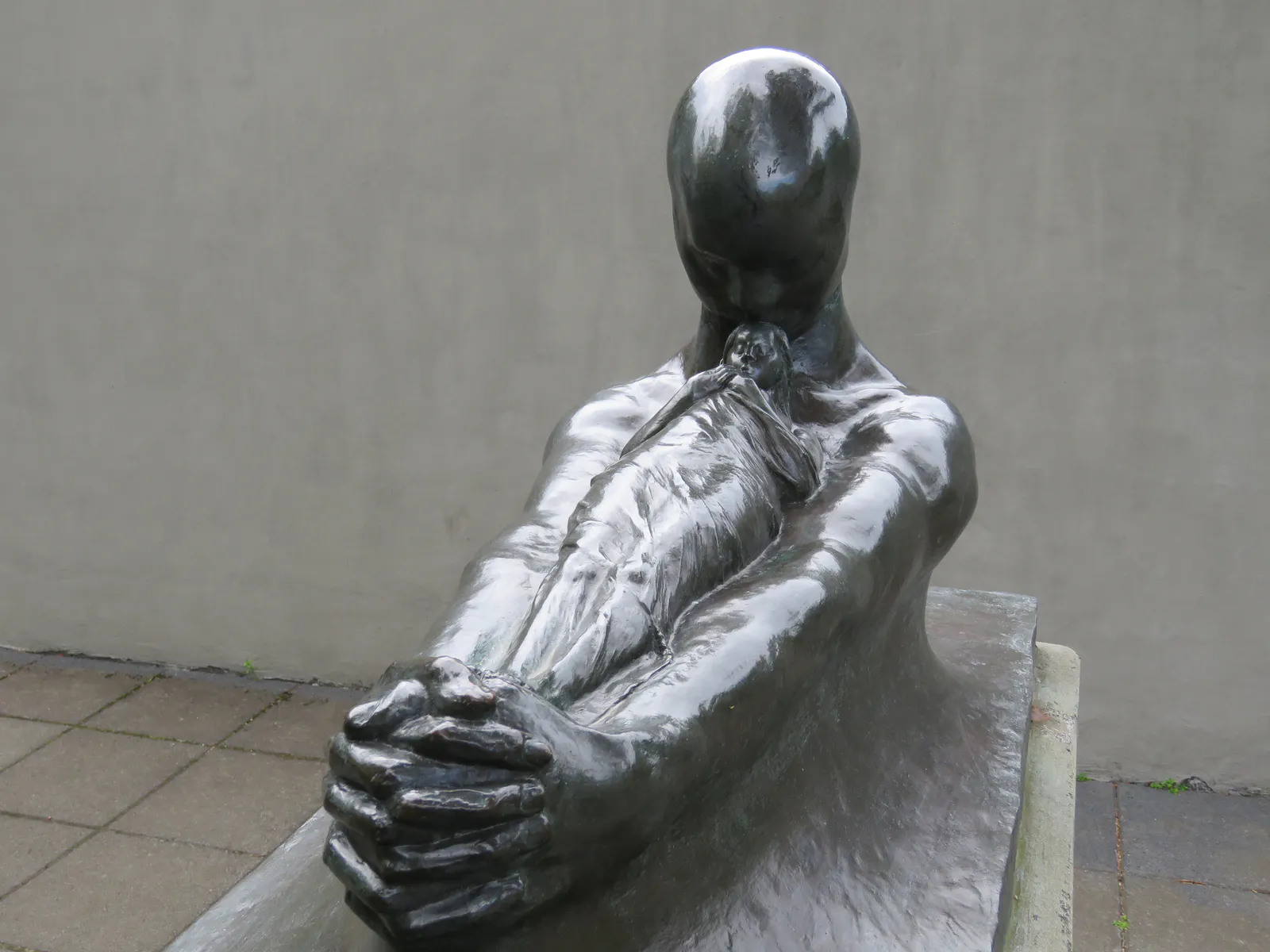
Earth
Einar Jónsson
This sculpture (1904–08) depicts a human figure cradling a smaller, draped form, symbolizing the Earth or nature. Jónsson, an Icelandic sculptor, is known for his symbolic and allegorical works exploring mythology, spirituality, and the human condition. This piece reflects his exploration of humanity’s connection to the natural world and the spiritual realm.
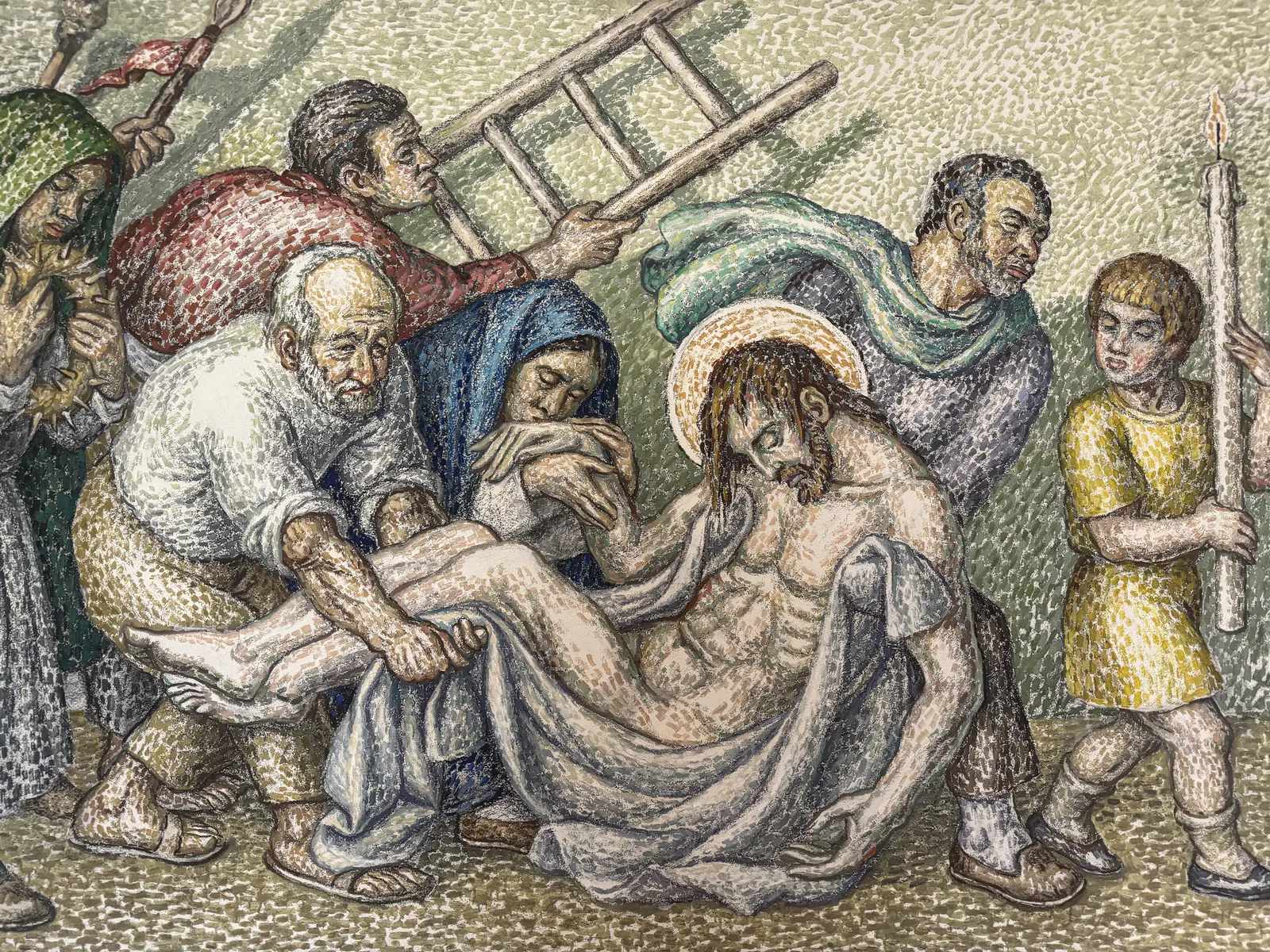
Descent from the Cross
Luis Alberto Acuña
Acuña (mid-1950s) renders the moment of Christ’s body being lowered from the cross with emotional gravity and communal sorrow. The composition emphasizes solidarity in grief, surrounding Christ with figures of all ages and backgrounds, reinforcing the universality of human suffering and compassion.
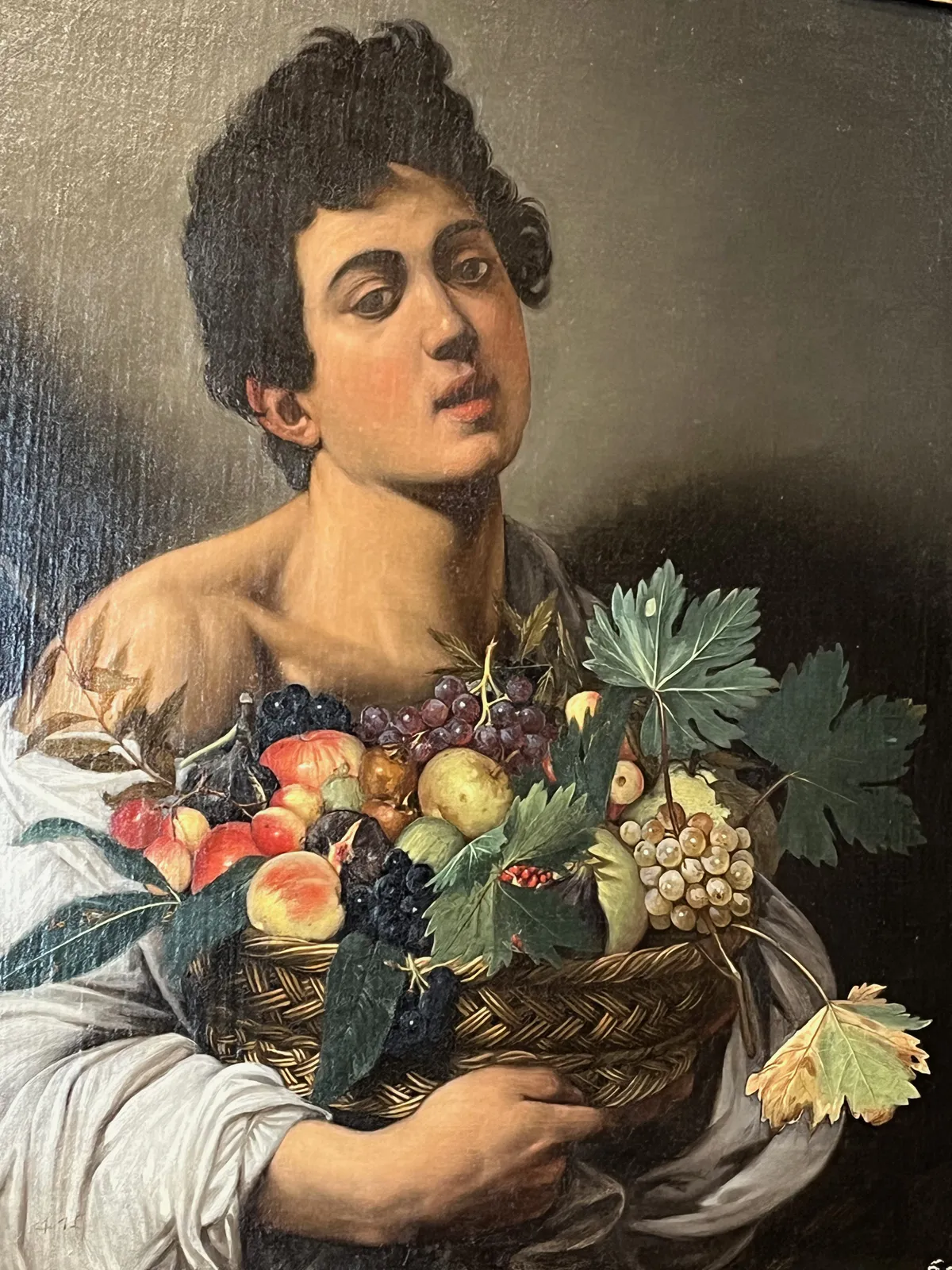
Boy with a Basket of Fruit
Caravaggio
This early Baroque painting (c. 1593) merges portraiture with still life, showing Mario Minniti holding a basket of overripe fruit. Caravaggio renders blemishes and textures with unflinching realism. The sensual posture and decaying abundance evoke themes of youthful beauty, ephemerality, and temptation.
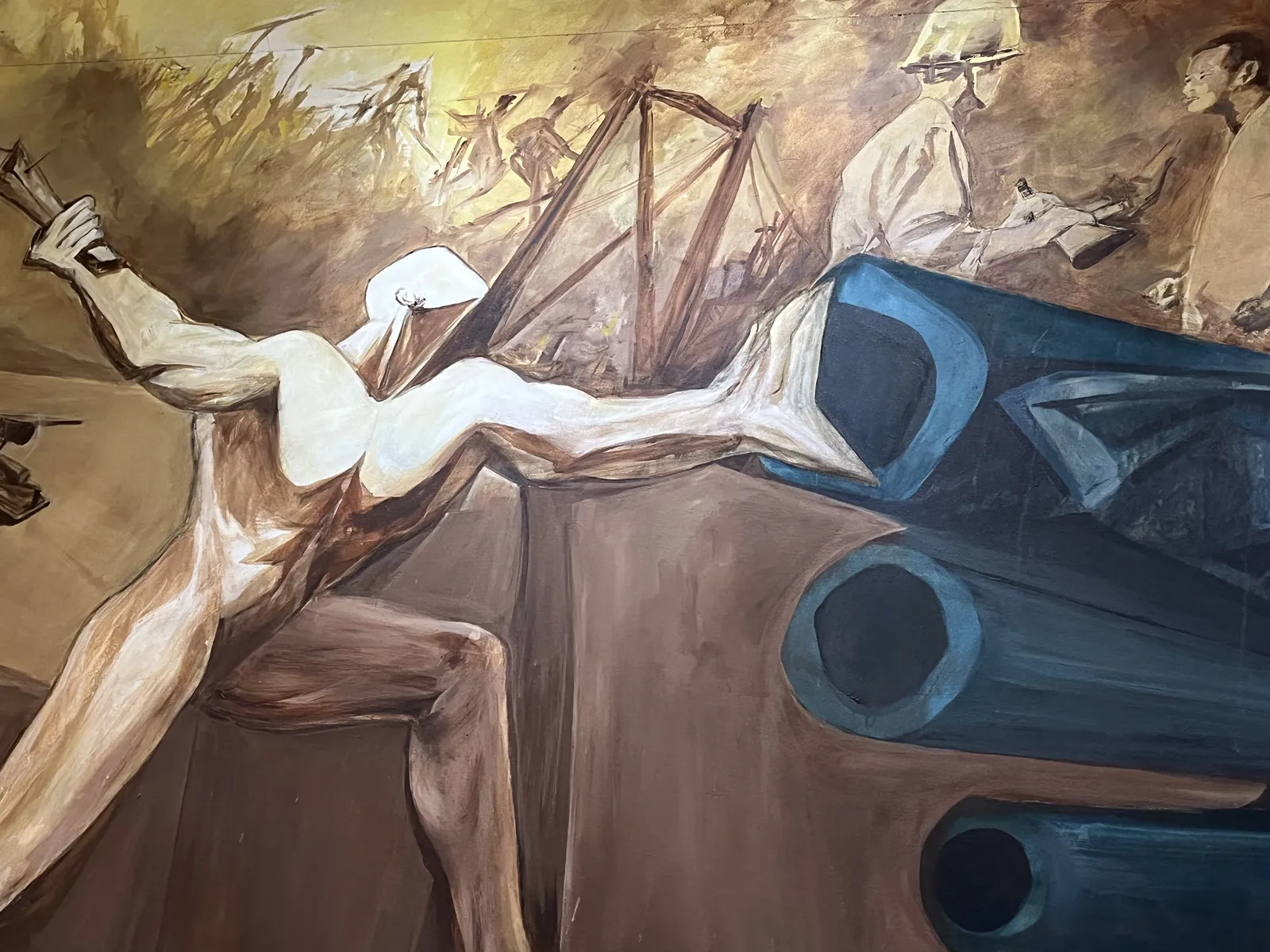
El pueblo en lucha
Ramón Oviedo
This mural (2013) shows a bound, faceless figure hurling itself toward the dark mouths of cannons, while ghostly soldiers and crowds emerge in the background. The scene recalls the Dominican struggle against dictatorship and foreign intervention in the 20th c. By fusing a single straining body with collective, blurred forms, Oviedo concentrates individual sacrifice into a broader history of resistance.
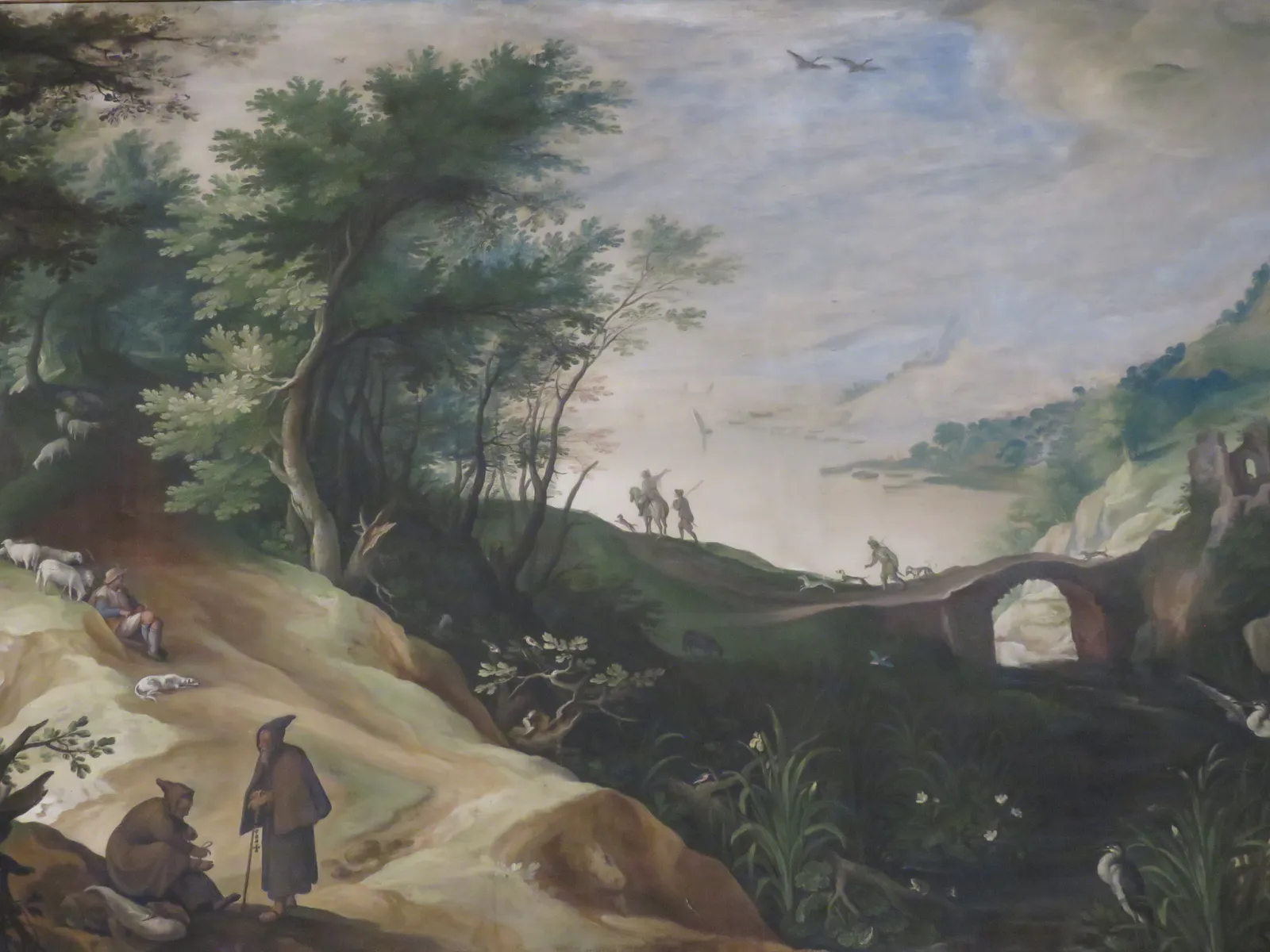
Landscape with Hermits
Paul Bril
This landscape (c. 1600) shows monks gathered in a wooded clearing beneath a broad, luminous sky. Their small figures sit or stand along a path that opens toward distant hills. Such scenes appeared in early Baroque painting, especially in northern regions where sacred retreat was a common theme. The composition indicates how artists linked hermitic life with the ordered quiet of nature.
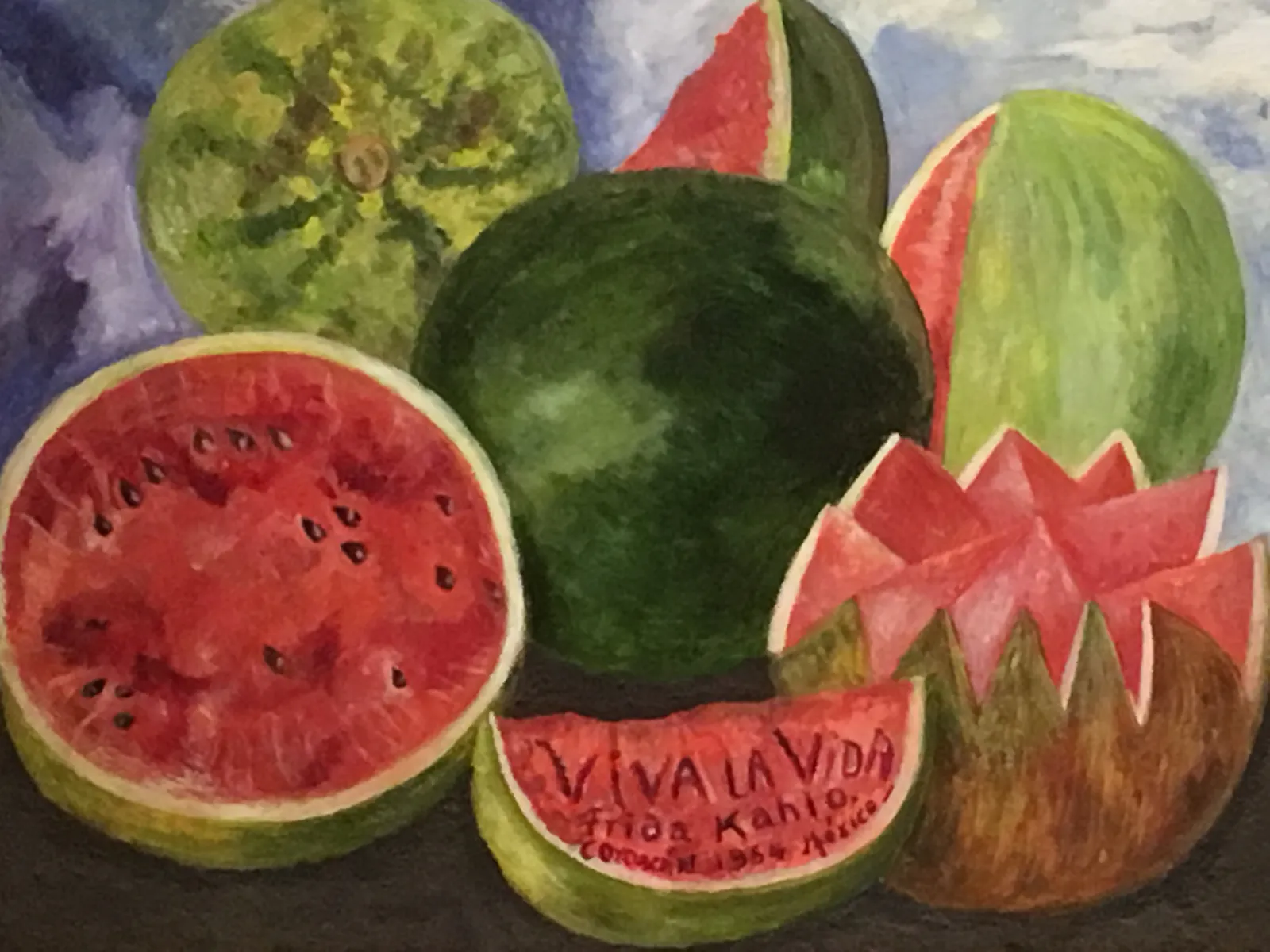
Viva la Vida, Watermelons
Frida Kahlo
Painted just days before her death in 1954, this still life features ripe watermelons—some whole, some cut—bursting with color and vitality. The inscription Viva la Vida (Long Live Life) appears carved into a slice, signed and dated by Kahlo. Though her body was failing, this joyful image radiates defiance and reverence for life’s beauty amid suffering.
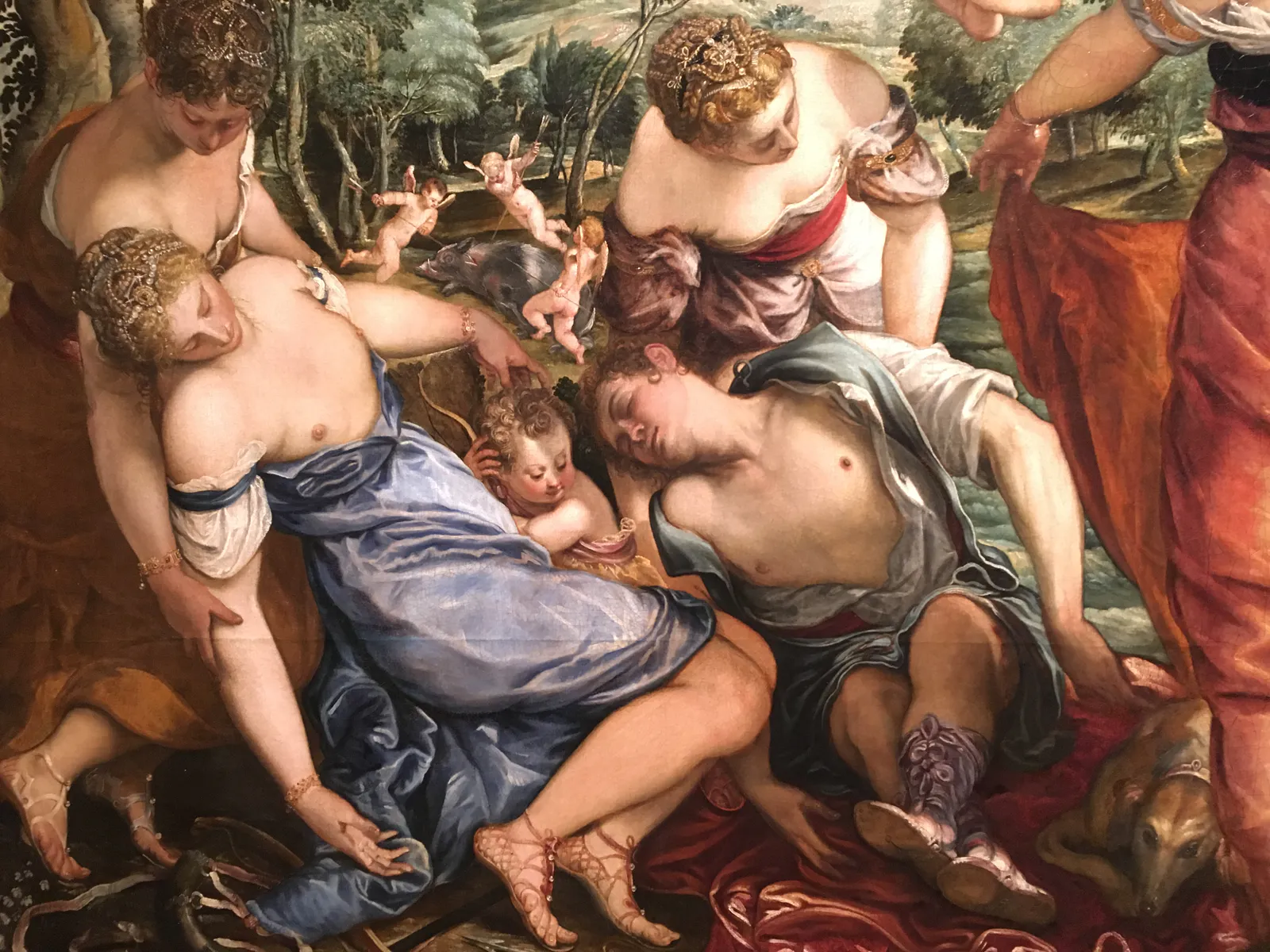
The Death of Adonis
Tintoretto's Workshop
The Death of Adonis (1550–55) captures Venus fainting at Adonis's death, diverging from Ovid’s Metamorphoses by including young women not in the original tale. Created by a Nordic artist in Tintoretto’s Venetian workshop, it blends Tintoretto’s dramatic style with the collaborator’s unique touch, evident in the expressive figures and vibrant colors. This fusion highlights the shared human themes of love and loss, inviting reflection on the timeless nature of myth and emotion.
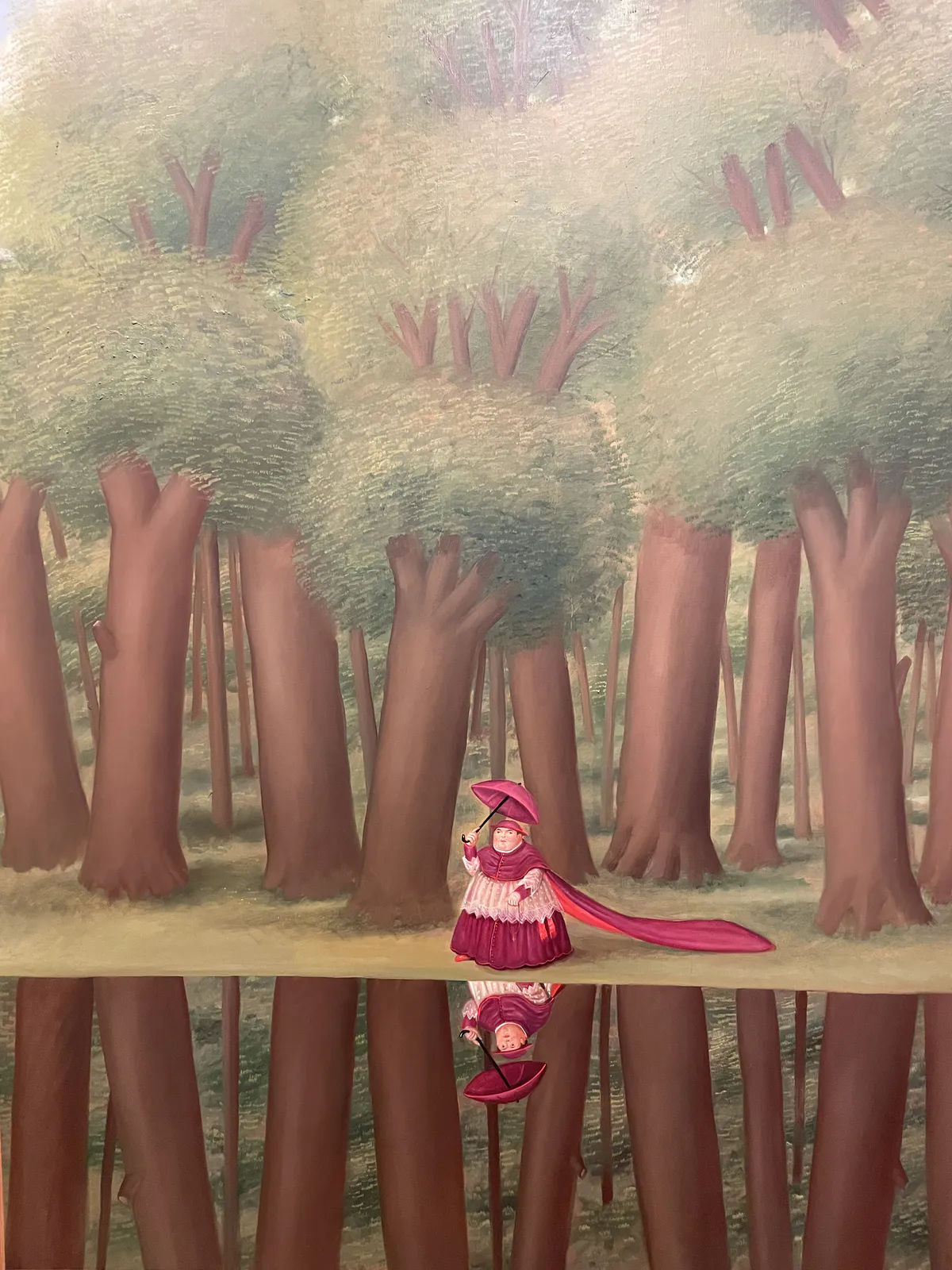
Woman with Umbrella
Fernando Botero
A solitary figure walks through a forest, her reflection mirrored below as if suspended between worlds. Her voluminous dress and umbrella contrast with the vertical rhythm of the trees. With surreal calm and poetic symmetry, Botero (1989) transforms a simple stroll into a meditation on solitude, identity, and the quiet theatricality of everyday life.
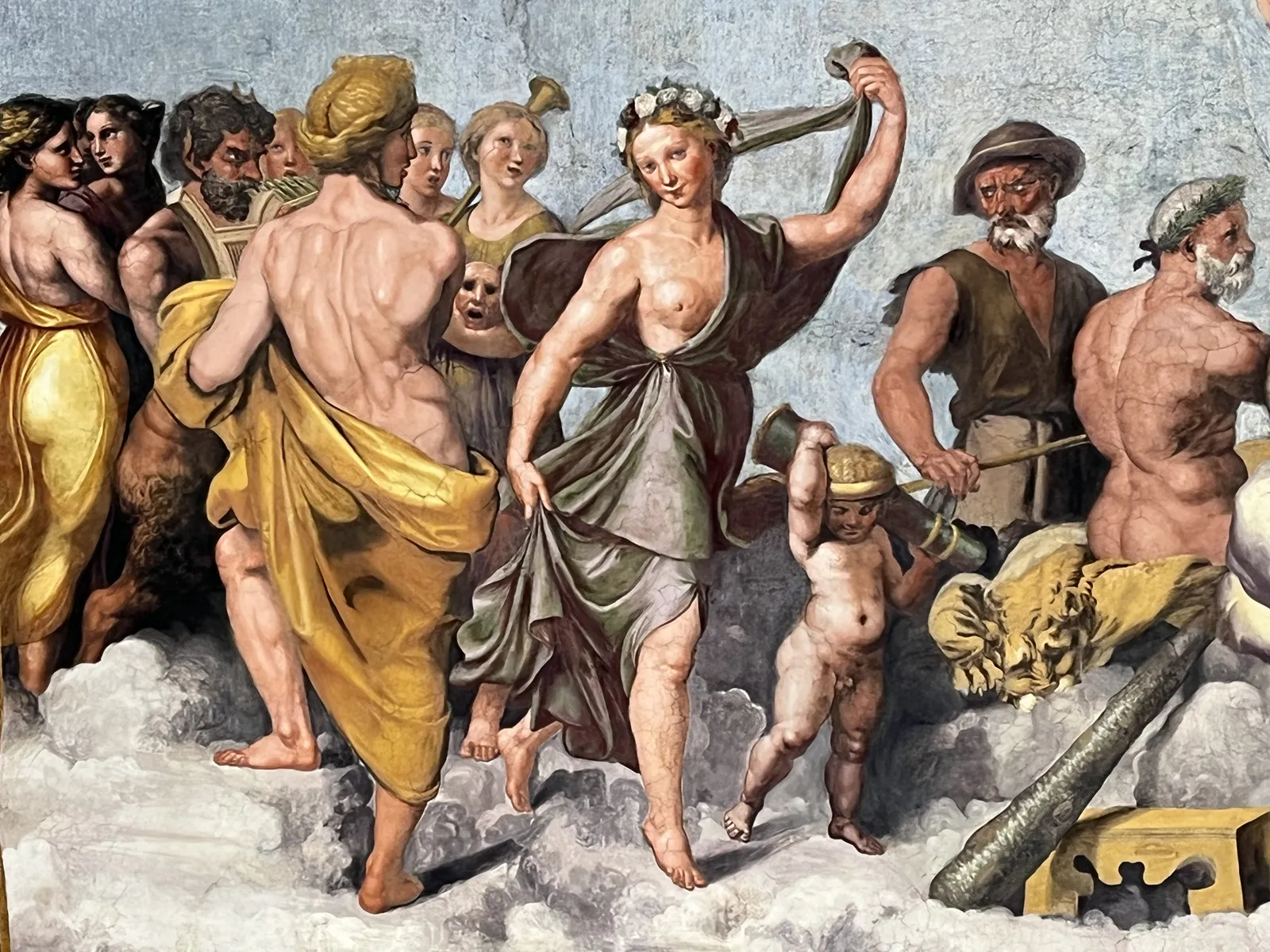
Dionysian Procession
Raphael
In this scene (1518), Raphael depicts Bacchus (Dionysus) leading a joyful procession of Maenads, Satyrs toward Cupid and Psyche’s wedding. The central Maenad, in ecstasy, embodies the Dionysian cult of revelry, blending divine intoxication with theatrical festivity.
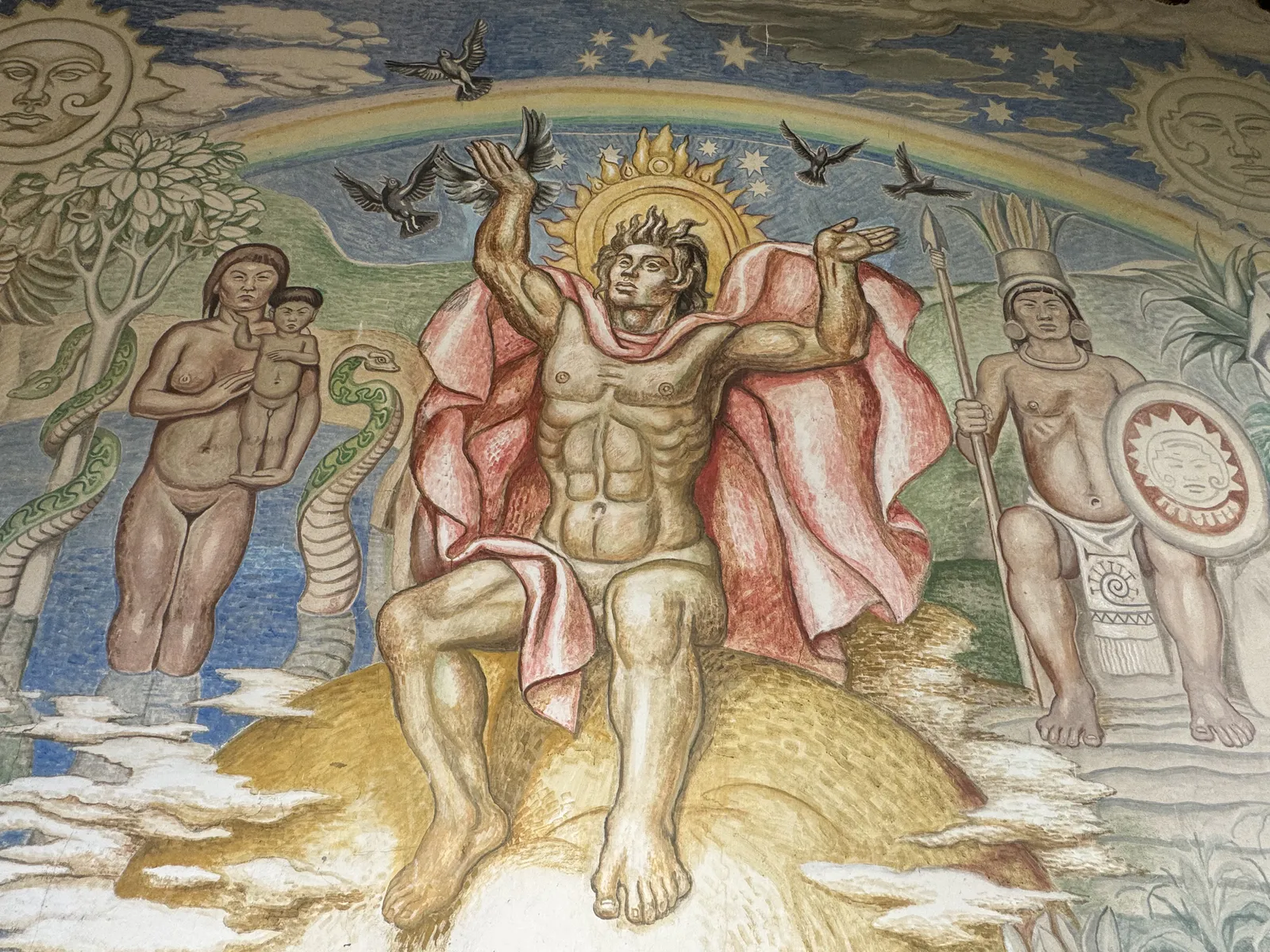
Chiminigagua and the Origen of Chibcha
Luis Alberto Acuña
This mural (1960–70s) reimagines the Chibcha creation myth. At center, the god Chiminigagua releases radiant birds to bring light to the cosmos. To his right stands Bachué with her son Iguaque, founders of the Muisca people. At left is Chaquén, guardian of lands and borders. The scene is set at the sacred Iguaque Lagoon, the cradle of Muisca origin.
“When the path is beautiful, do not ask where it leads.” — Zen proverb
Welcome to my travel photography!
“When the path is beautiful, do not ask where it leads.” — Zen proverb
Welcome to my travel photography!
For as long as I can remember, my path has been one of discovery—seeking beauty, timelessness, and connection in every corner of the world. It has also been a journey of deep learning and understanding. I’ve been an avid traveler (or perhaps a travel addict?) for most of my life. My love for travel began long before I ever left home: as a child, I drew a fantasy map of my grandparents’ apartment and “traveled” through it with my cousin Sonya, imagining adventures in every corner. Nearly 90 countries and countless moments of awe later, I’m excited to share this journey with you.
Thanks to the tireless and ingenious programming of Diagilev, we’re now able to present about fifteen percent of the images I’ve accumulated over the years. More will be released in small batches depending on your interest. While the first release leans toward museum photography, later ones will include more nature, architecture, culture, and general travel experiences. If you’d like to receive email notifications about new releases, feel free to reach out—no commercial use, ever.
Throughout my travels, I’ve been drawn to two intertwined kinds of discovery. One is intellectual: learning why the world is the way it is. History became my guide, shaping my perspective and filling my camera roll with museums and old buildings. To me, history is not the past—it is the key to understanding the present and how the world became what it is. The other is emotional: seeking moments of elevation—spirituality, beauty, harmony—often found in nature, monasteries, and ancient sacred spaces. Together, these impulses shape my photography. It invites you to learn, admire, and soar—to rise above the mundane and see the world through a lens of curiosity and wonder.
Much of my later travel became possible thanks to my job with Delta Air Lines, but the wanderlust began years earlier. By the time I joined the industry, I had already visited over 35 countries and lived in several—largely thanks to a backpacking journey around the world with Luis León, whose face appears in many early photos. I grew up in Ufa in the USSR, and since leaving it I have lived, studied, and worked in Latvia, the United States, France, South Korea, Canada, Spain, Italy, Brazil, Japan, and Colombia.
A life of near-constant movement may seem a little crazy, but it has deepened my understanding of the world and produced the photography you are about to see. Over the years, my style has evolved—more intentional, more refined—yet its core remains the same: a search for understanding, timeless beauty, and a connection to those who walked this earth long before us.
I hope these photos stir something in your soul, just as they did in mine. I’d love to hear from you—whether reactions, suggestions, corrections, or a request to be added to the email list for new releases (no commercial use, I promise). You can learn more about my travels here, and my academic life here.
Enjoy our shared journey!