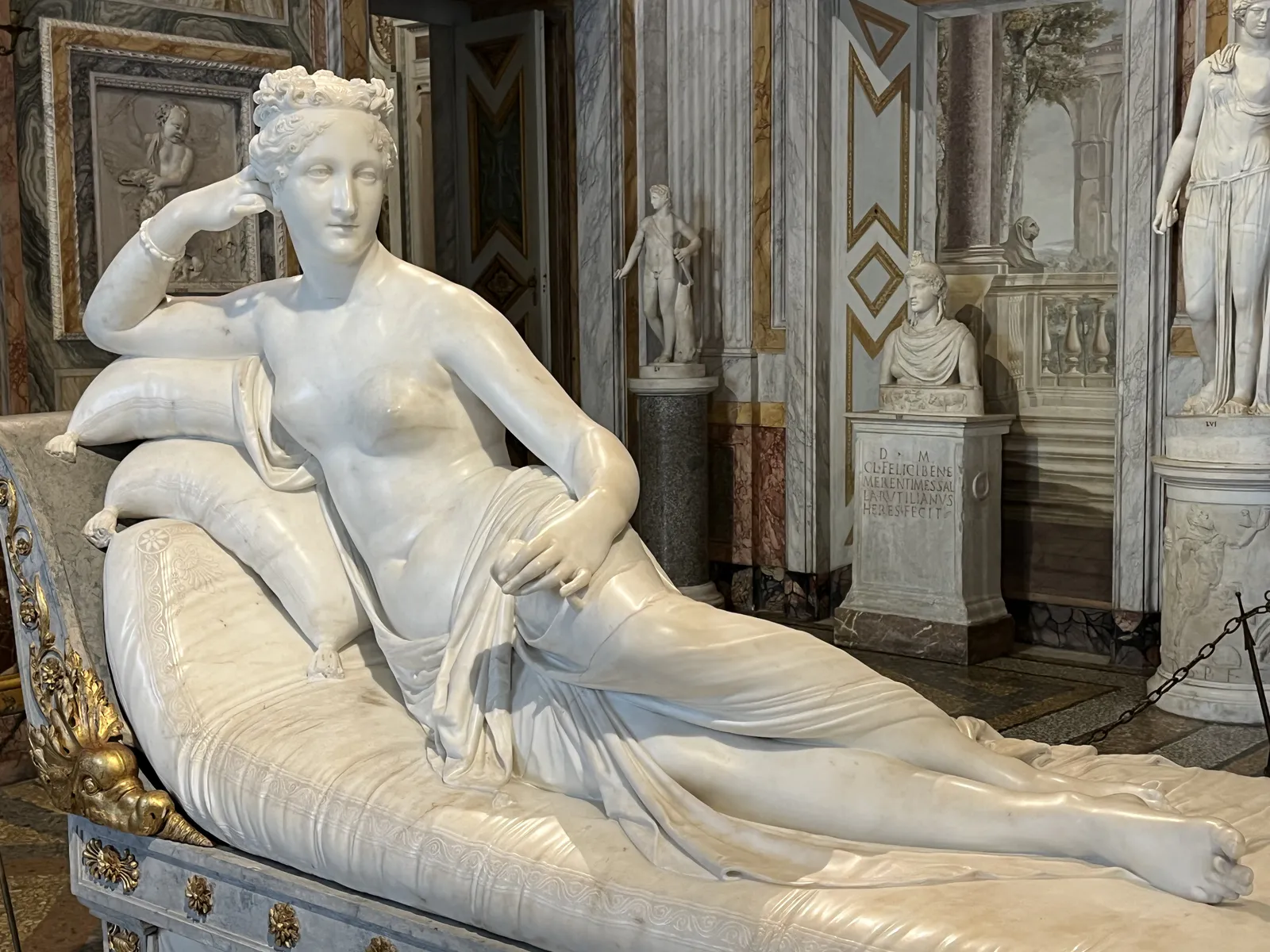
Pauline Bonaparte as Venus Victrix
Antonio Canova
This statue (1805–08) presents Pauline Bonaparte, sister of Napoleon, as Venus, reclining semi-nude and holding the golden apple of victory. Commissioned by her husband Camillo Borghese, the statue blends neoclassical elegance with sensual myth. Its rotating base once allowed viewers to admire it from every angle.
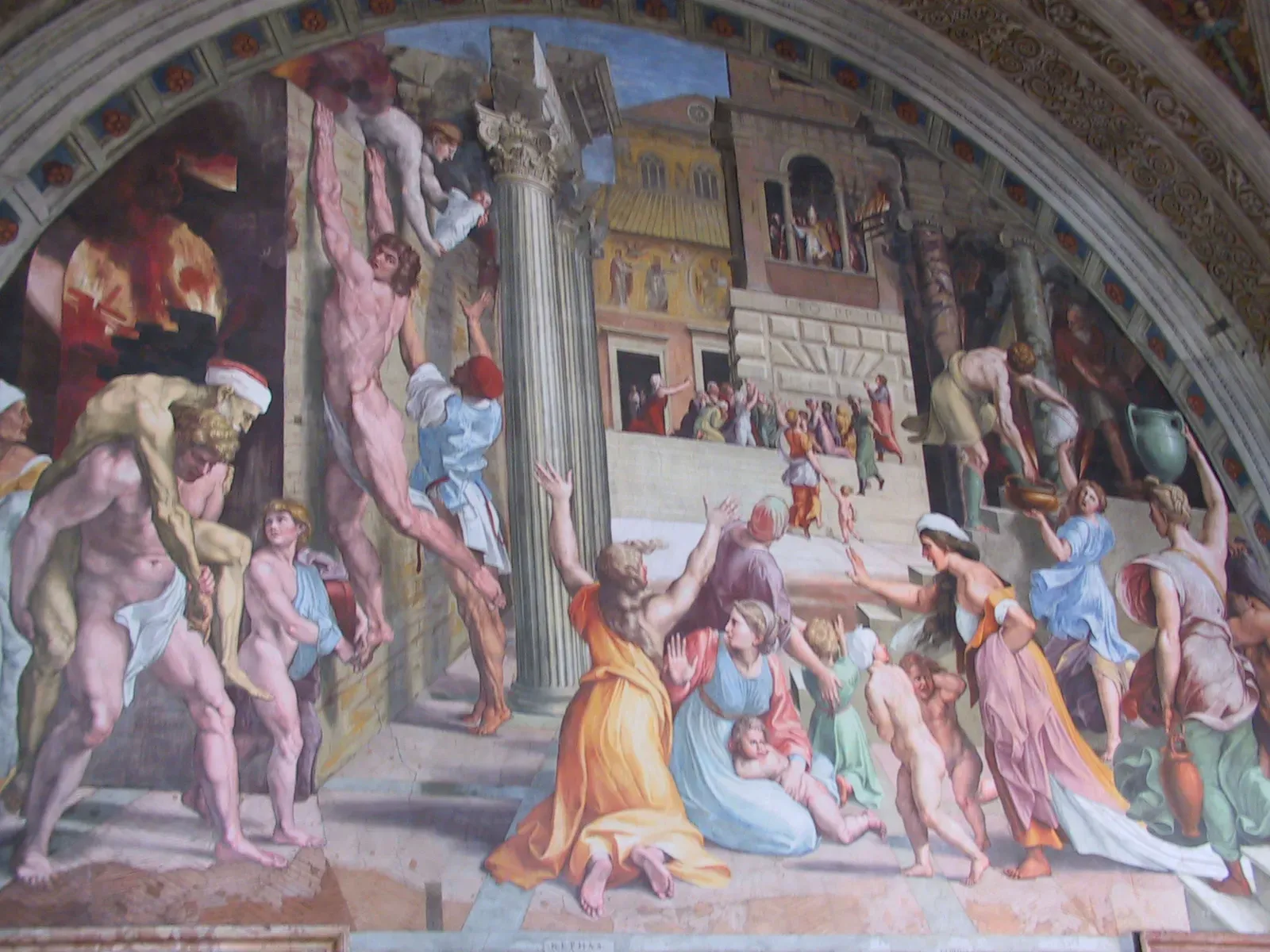
Fire in the Borgo
Rapahael and Giulio Romano
This fresco (1514) captures a legendary fire in Rome's Borgo district, illustrating divine intervention through Pope Leo IV's prayer. The fresco, part of the Raphael Rooms in the Vatican, blends classical and Renaissance elements, showcasing dynamic figures and architectural precision. This work reflects the era's belief in the power of faith and the church's central role in societal protection and order.
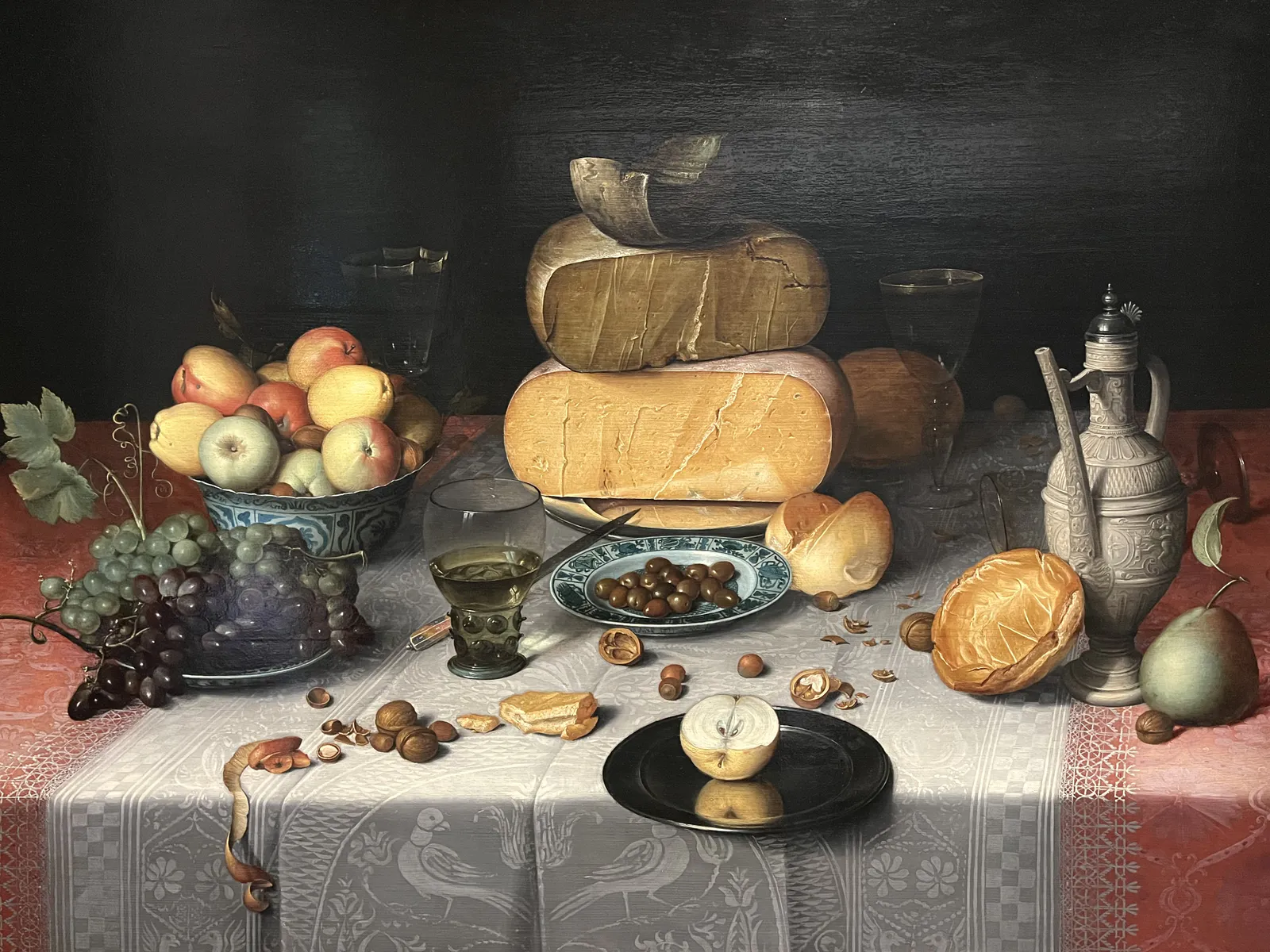
Still Life with Cheese
Floris Claesz van Dijck
On a damask-draped table (c.1615) lie fruit, bread, and three cheeses, carefully grouped by type. Floris van Dijck’s mastery of illusion is evident in the pewter plate jutting over the edge, as if within reach. A pioneer of Haarlem still-life painting, he helped establish the Dutch Golden Age tradition of rendering everyday abundance with startling realism.
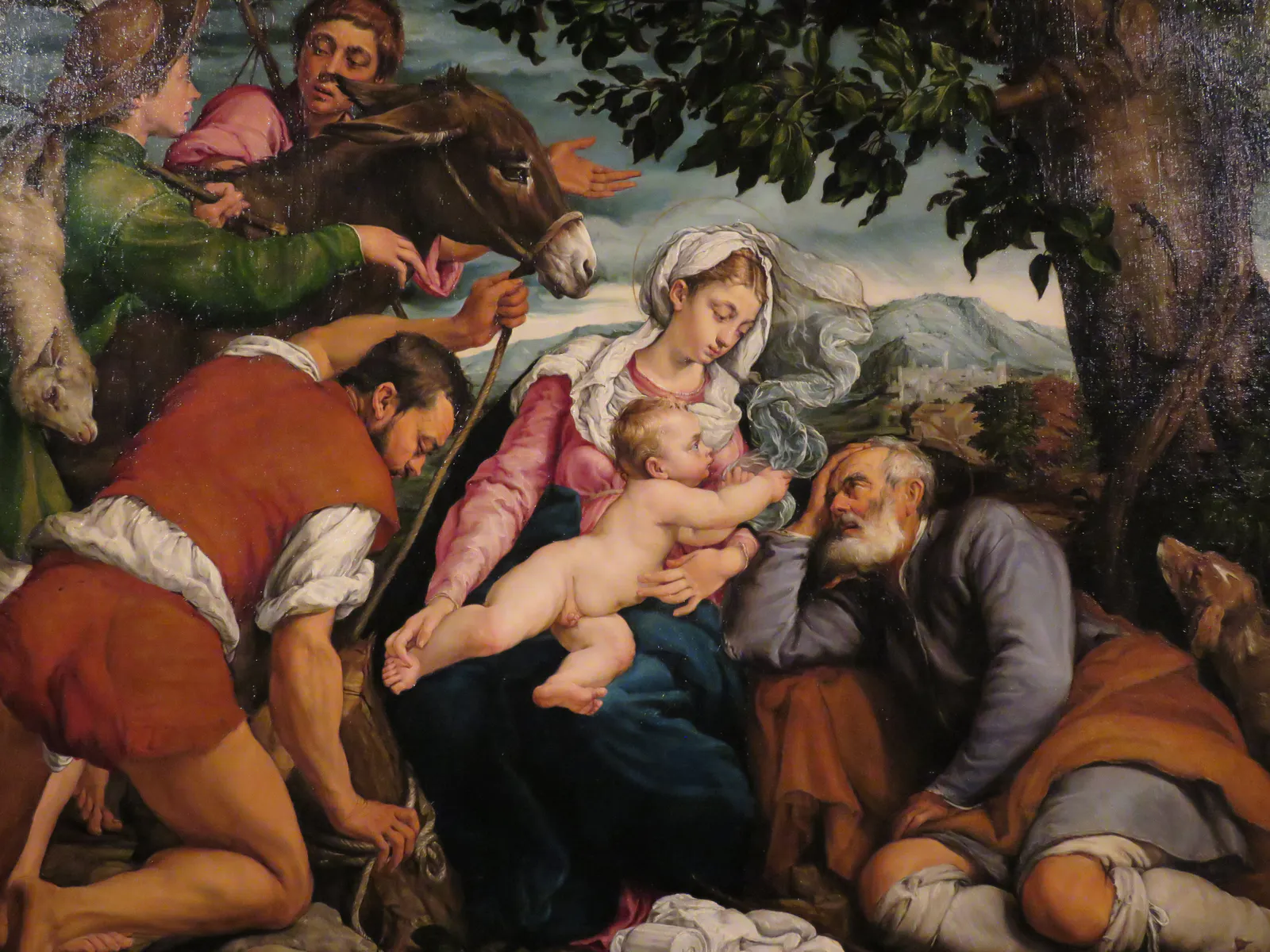
Rest on the Flight to Egypt
Jacopo Bassano
In this luminous canvas (c. 1547), Bassano blends biblical narrative with rustic realism. The Holy Family, joined by shepherds and animals, pauses under a tree. The tender gesture of the Child reaching for Joseph evokes familial warmth amid hardship, while the detailed pastoral setting links divine history to everyday Venetian life.
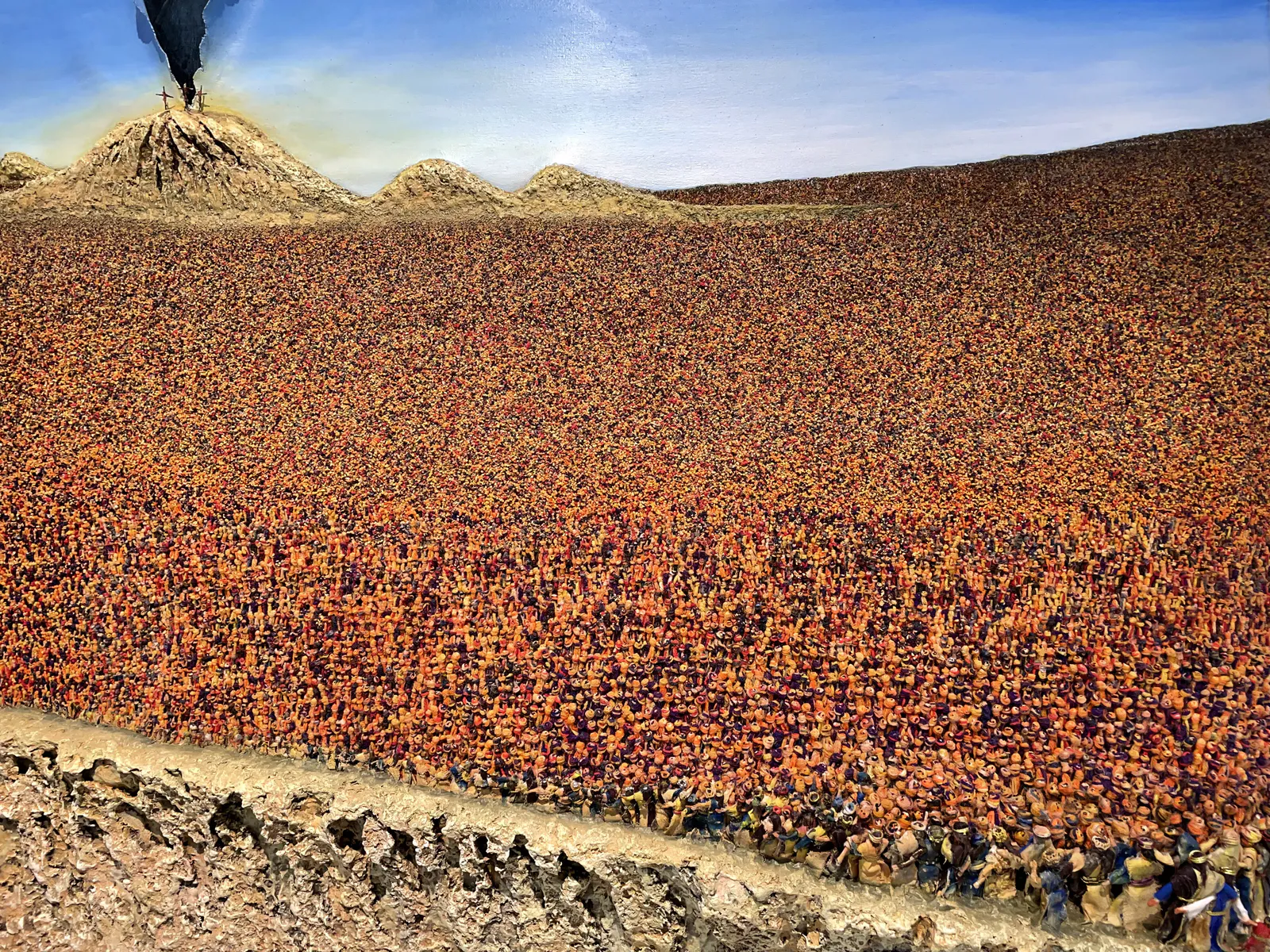
The Veil Torn (The Door to Heaven)
Mariano Bidó
In this mixed-media work (2018), a vast crowd moves toward a hill crowned by three crosses under a black veil of smoke. Referencing the crucifixion, the piece evokes mass devotion, suffering, and salvation. The dense humanity contrasts with the distant, divine climax—highlighting faith as both a collective journey and personal reckoning.
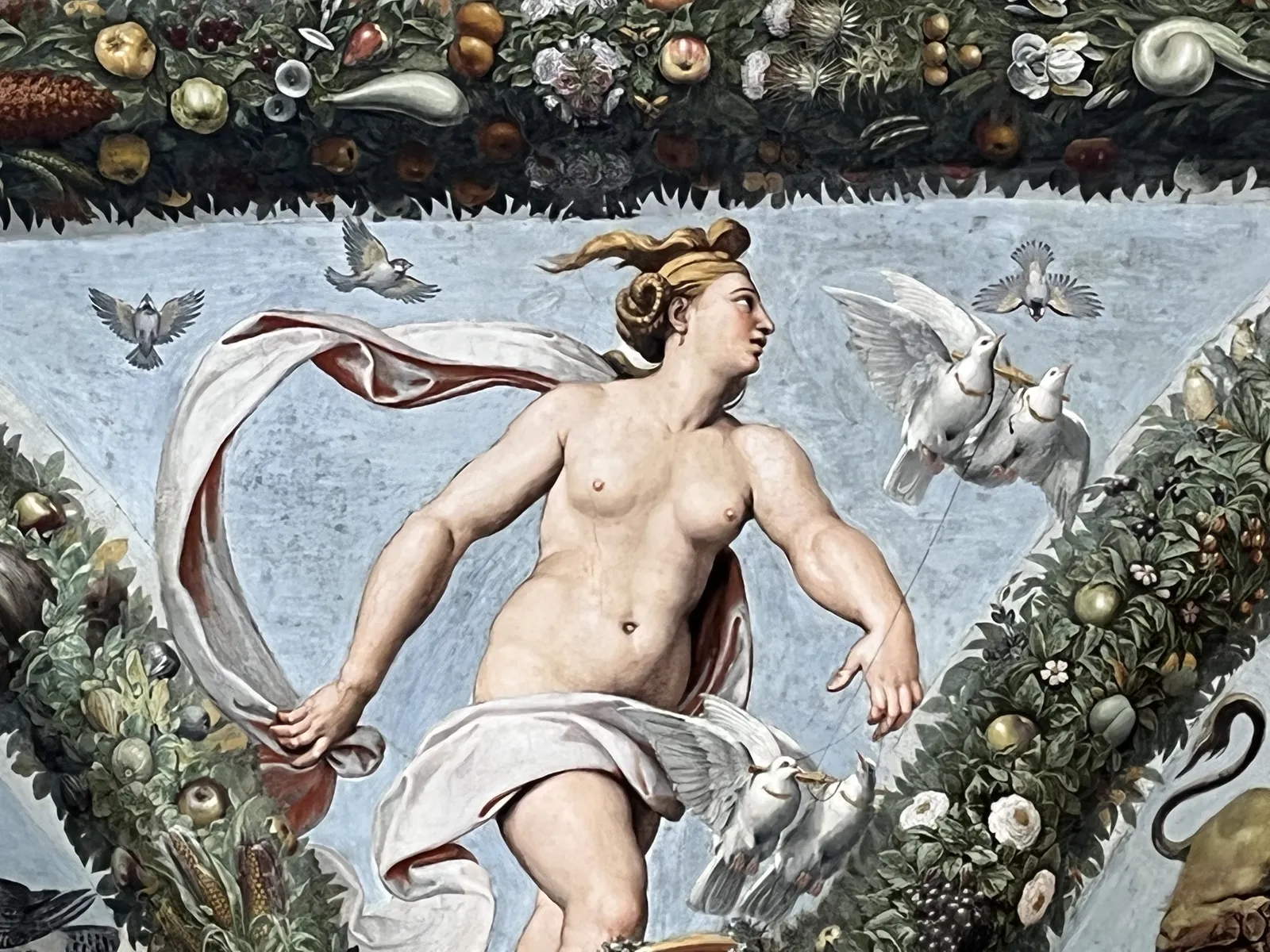
Venus and the Doves
Raphael
In this fresco (1518), Raphael presents Venus, goddess of love, gracefully accompanied by doves, her sacred birds. The flowing ribbon emphasizes her divine beauty and motion, while the doves allude to purity and erotic desire. The image echoes Venus’ central role in the myth of Cupid and Psyche, where love governs both divine and mortal fates.
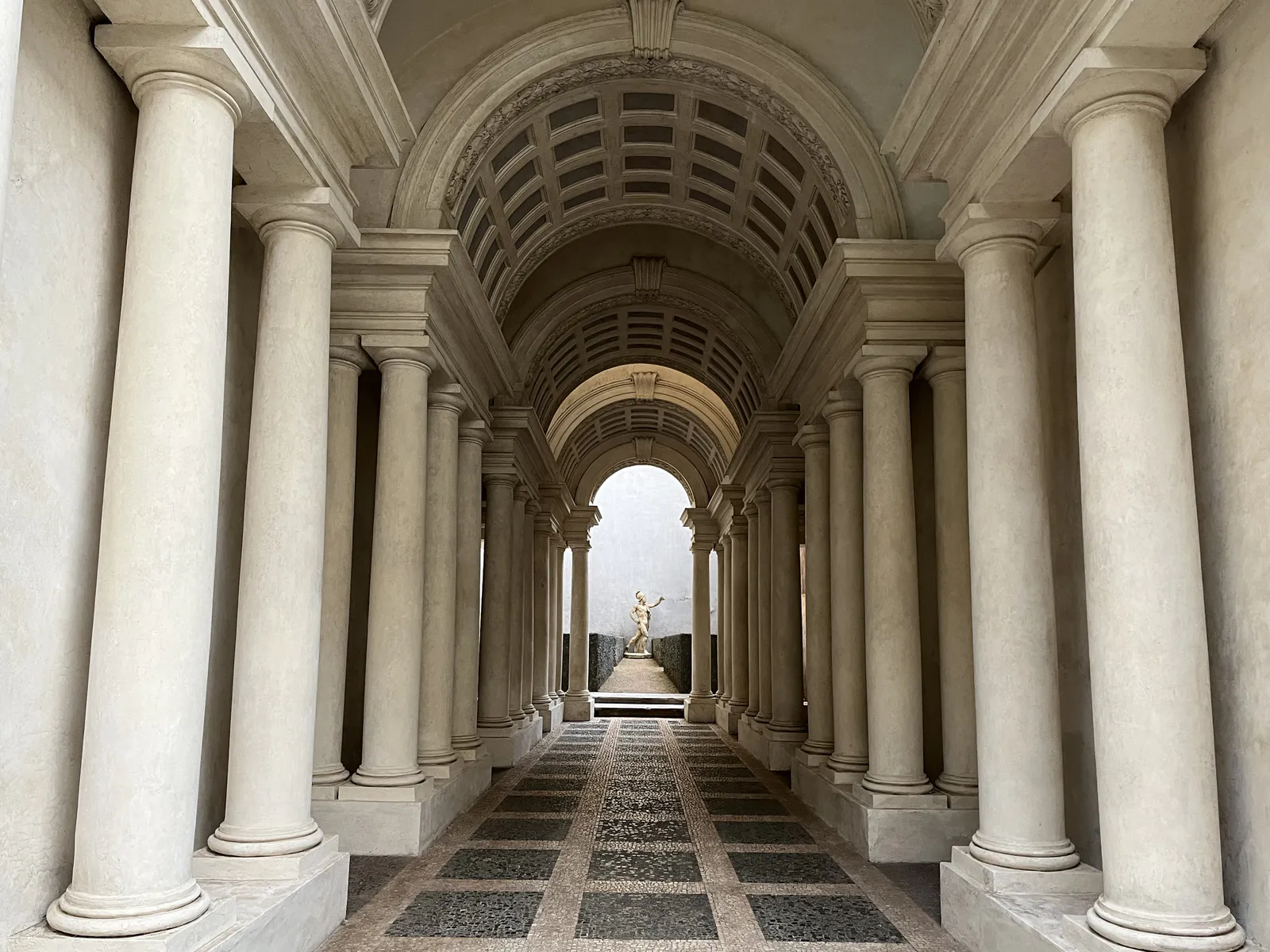
Perspective Gallery
Francesco Borromini
Created for Cardinal Spada, this architectural illusion (1653) compresses nine meters into an illusion of great depth. By subtly reducing the size of columns, floor tiles, and ceiling coffers, Borromini crafted a vanishing point that evokes grandeur. The statue at the end, appearing monumental, is just 90 cm tall—transforming scale into metaphysical reflection.
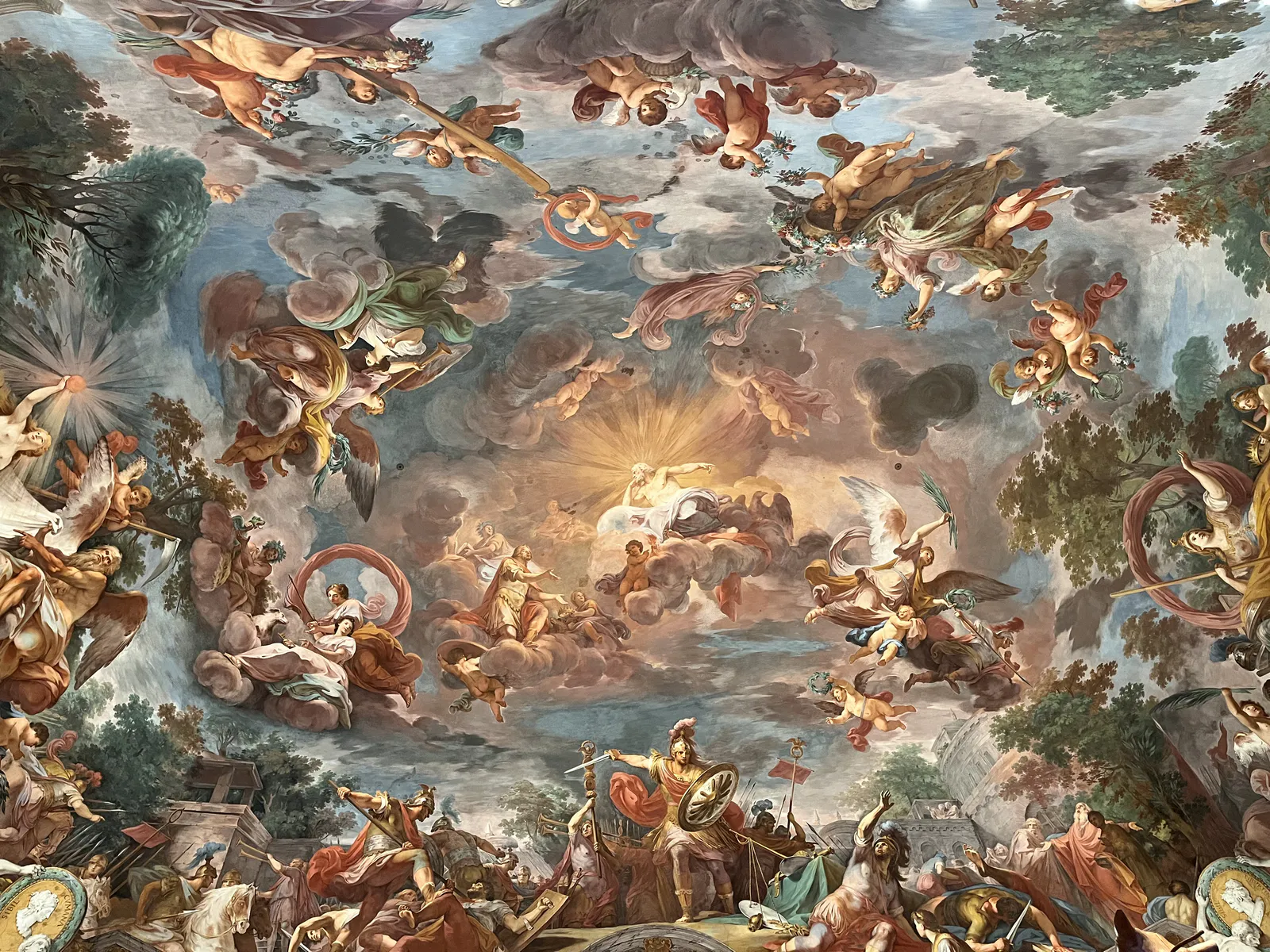
Roman Civilization and the Heroic Virtue of Honor
Mariano Rossi
This illusionistic ceiling (1775) shows a vortex of gods, heroes, and allegorical figures arranged in rising spirals. Rossi organized the composition with deep foreshortening to create a theatrical Baroque panorama. The central burst of light frames scenes of conflict and ascent, indicating how Roman culture linked civic honor with collective greatness.
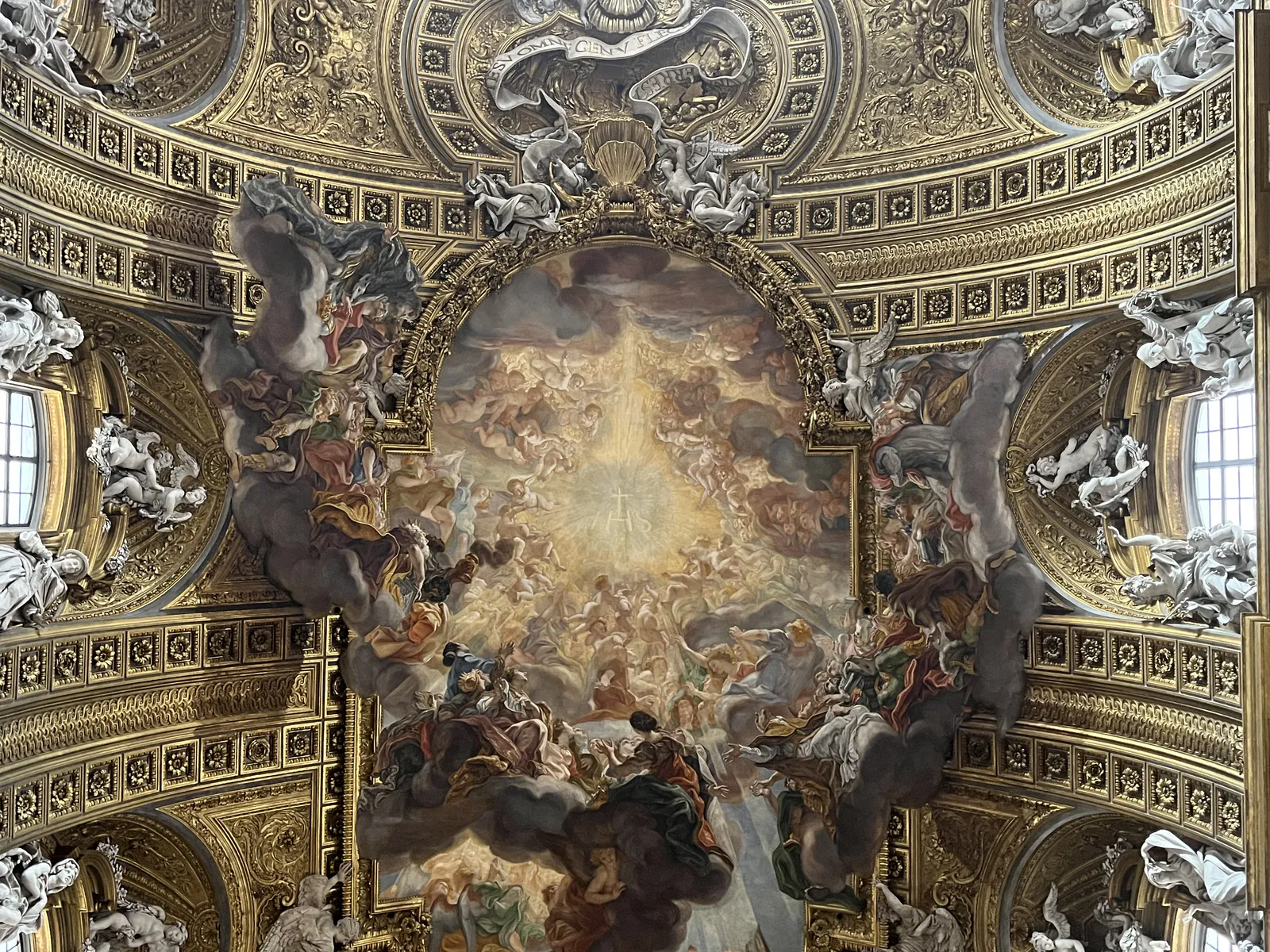
Triumph of the Name of Jesus
Giovanni Battista Gaulli
This dramatic fresco (1676–79) fills the nave ceiling with a celestial eruption of light and figures. At its center, divine radiance emanates from the monogram IHS, the symbol of Jesus. Saved souls rise toward the light, while sinners tumble into shadow. Blending paint and stucco, the work fuses heaven and church in Baroque theatricality.
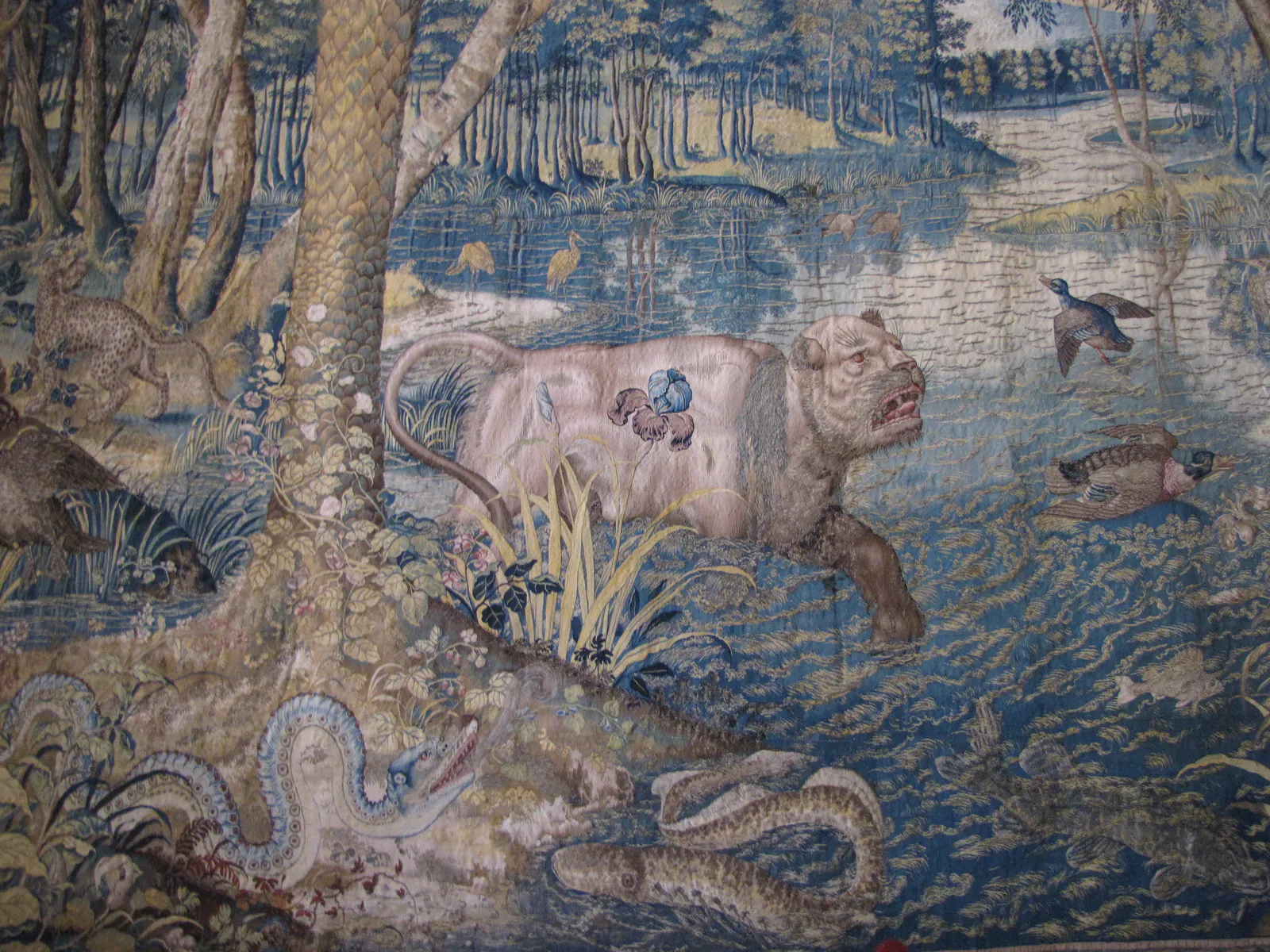
Tapestry of Fantastical Beasts in a River
Michael Coxcie
Woven in Brussels (c.1565) in a Flemish workshop according to Coxcie's design, this tapestry depicts hybrid beasts and serpents in a dense river landscape reflecting Renaissance fascination with nature’s wildness and moral allegory, symbolizing sin and chaos before divine order.
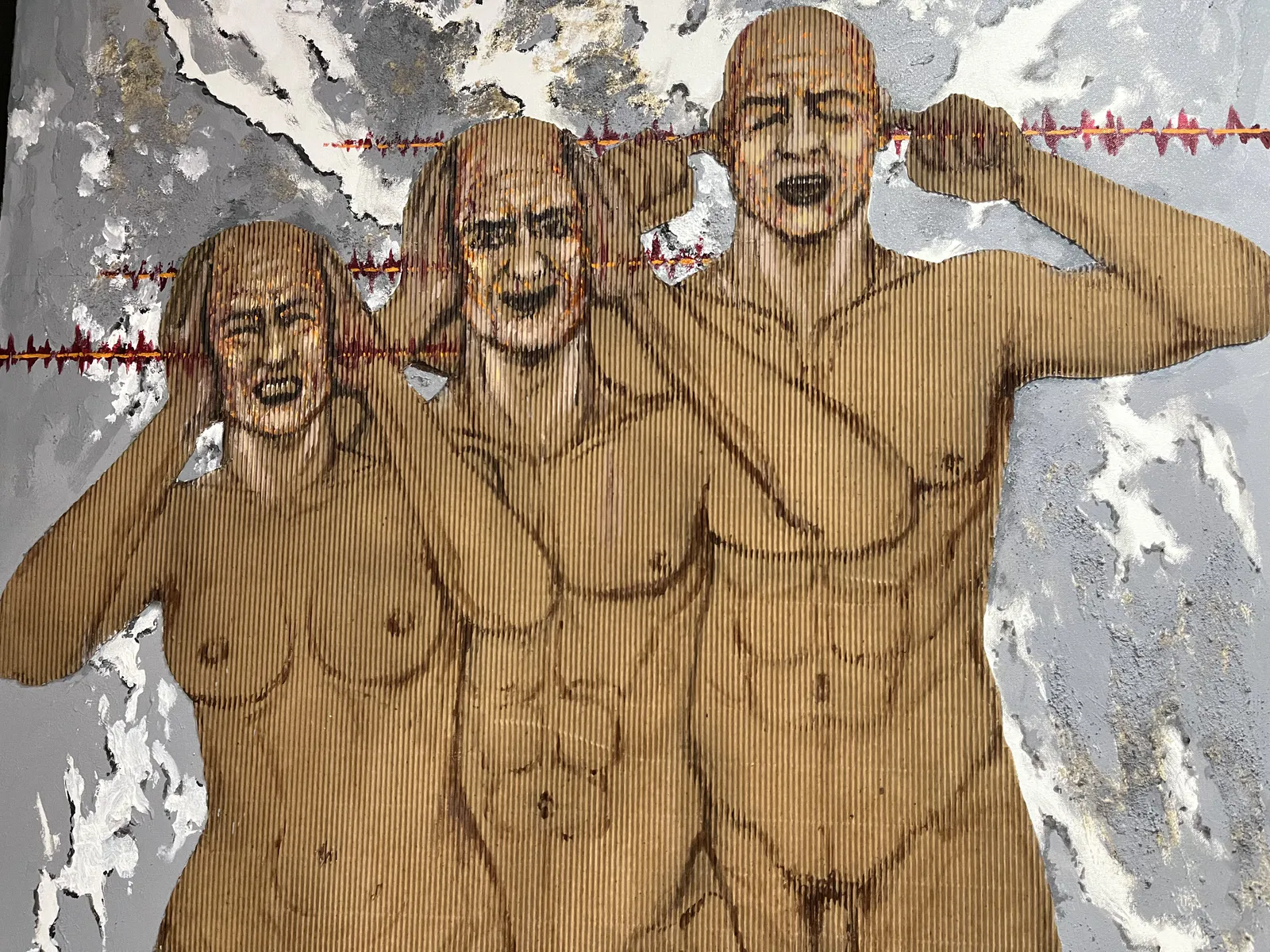
Silenced by Pain
Ángel Haché
This mixed-media work (2014) uses corrugated cardboard to depict three anguished nude figures pierced through the head by jagged red waves, symbols of auditory torture or psychological trauma. Their tense bodies and gestures of covering their ears suggest helplessness before systemic violence. The scene recalls the enforced silence and invisible suffering experienced under Trujillo’s dictatorship in the Dominican Republic.
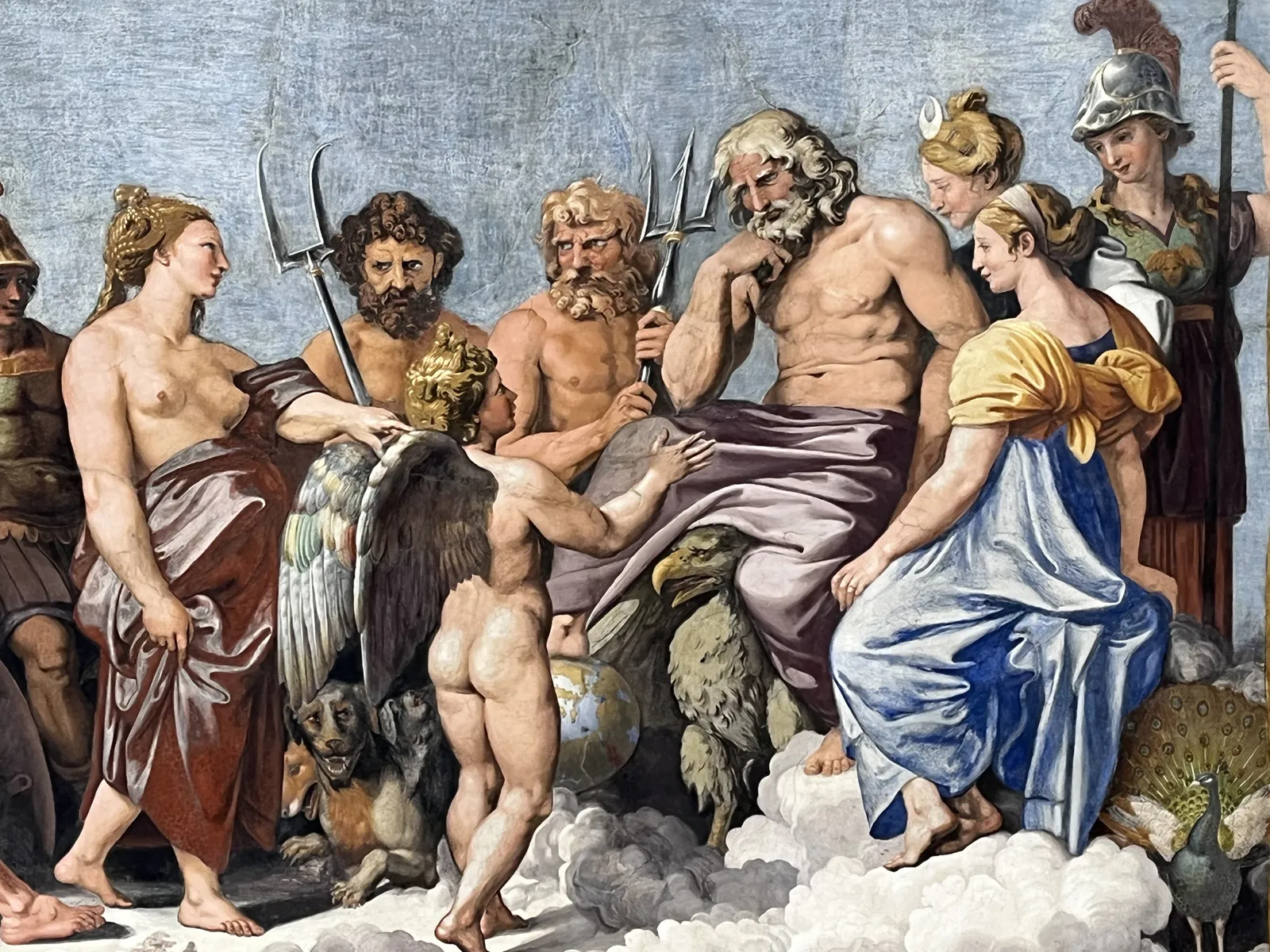
The Council of the Gods (detail)
Raphael
In this scene (1518), Raphael depicts Cupid pleading with Jupiter to grant Psyche immortality and approve their union. Jupiter, seated with his eagle, listens thoughtfully. Beside him are Juno (with peacock), Diana (with crescent moon), and Minerva (in armor). Venus stands bare-breasted beside her son, while Neptune (with trident) and Pluto (with bident and dog Cerberus) and Mars (in armor) observe from behind.
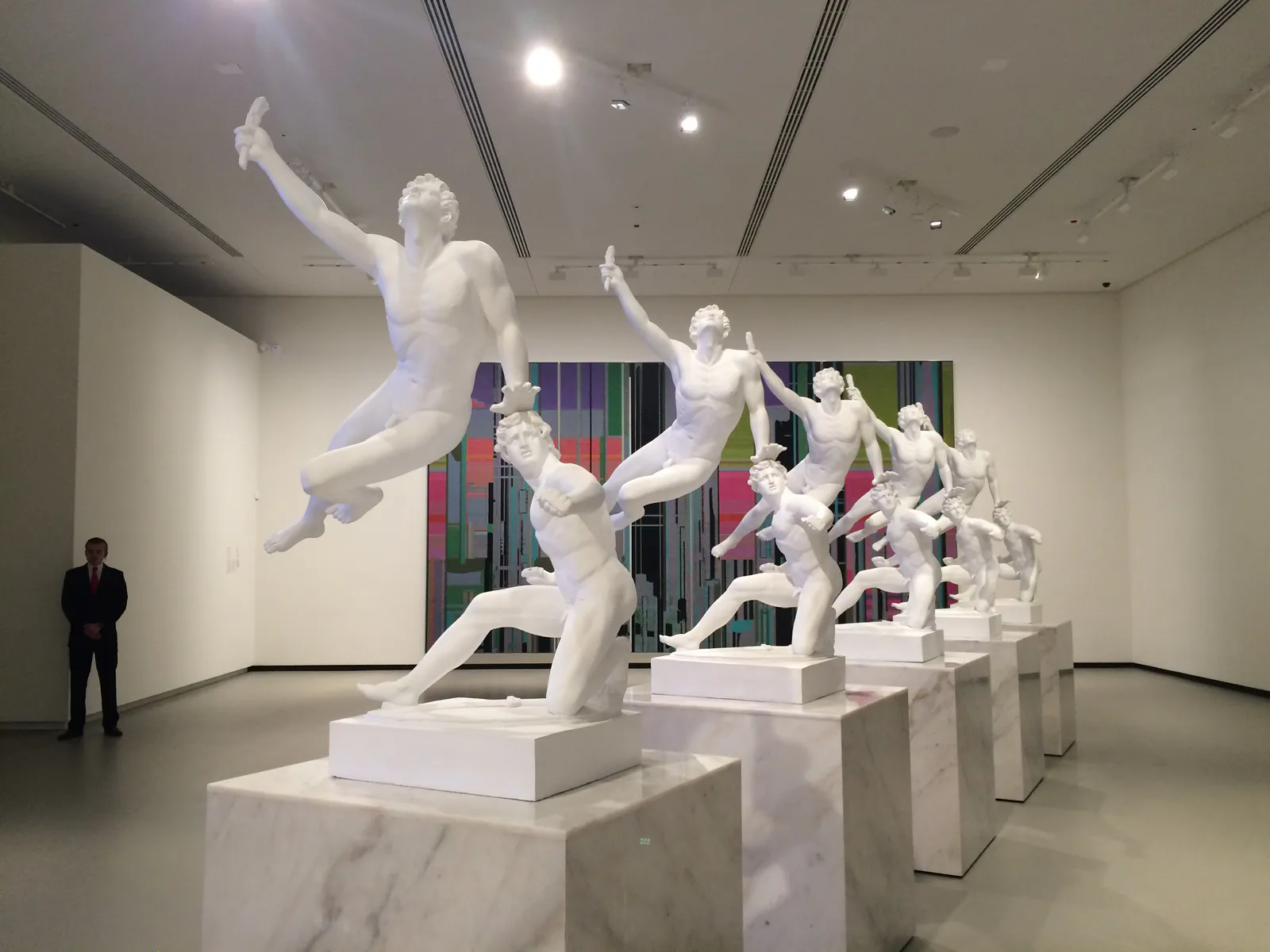
Eternity - The Soldier of Marathon Announcing Victory
Xu Zhen
This 2011 sculpture installation Eternity – Eternity - The Soldier of Marathon Announcing Victory, a Wounded Galatian fuses classical Greek forms with contemporary fragmentation. Crafted from concrete, fiberglass, marble powder, and metal, the sequence begins with a whole figure and gradually breaks apart, evoking cultural transformation and the erosion of historical continuity.
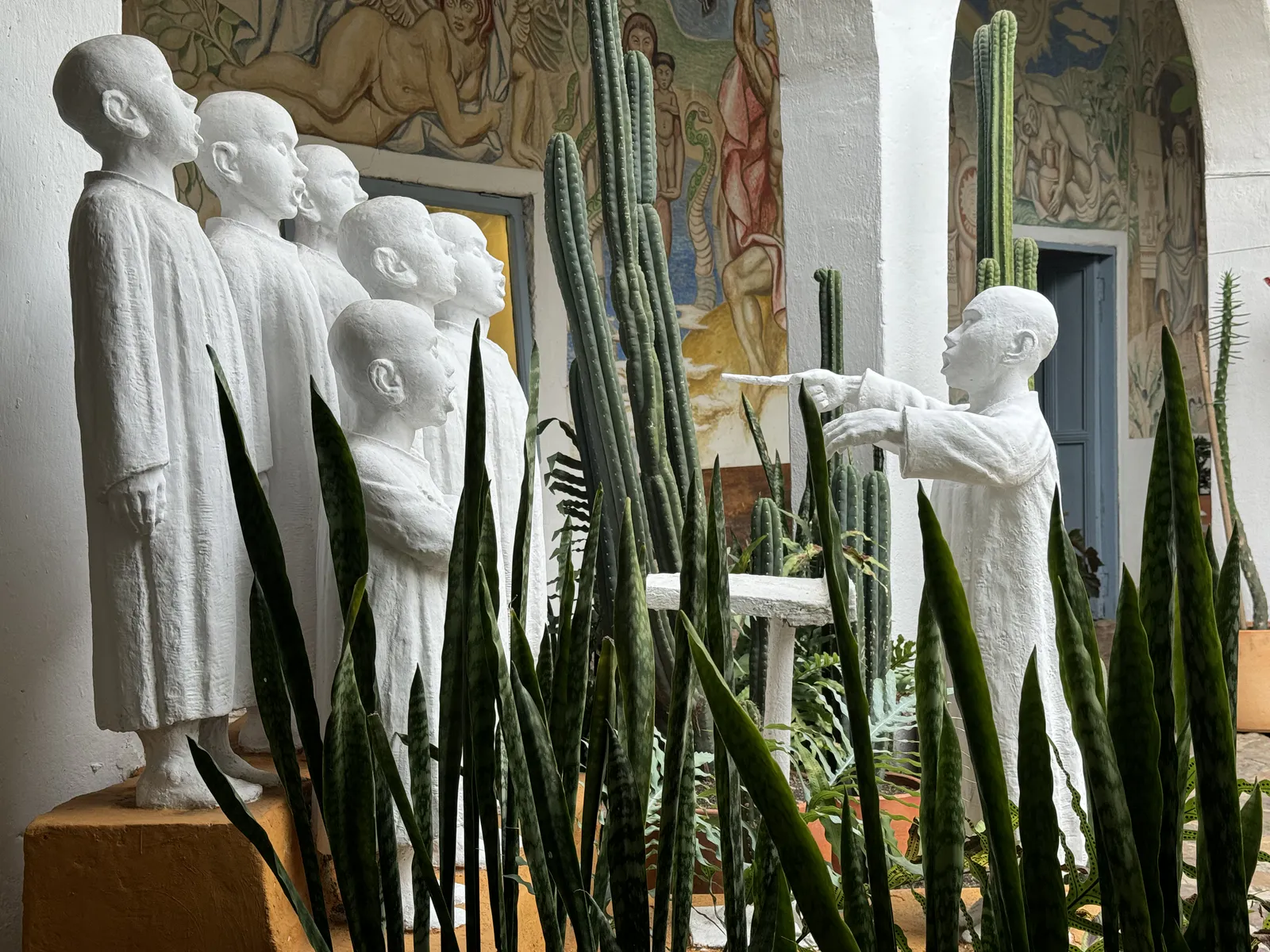
Choir of Novices
Luis Alberto Acuña
This sculptural group by Luis Alberto Acuña (1970s) depicts a choir of young novices led by a conductor, rendered in white plaster. Positioned in the courtyard of Casa Museo Acuña, it captures themes of spiritual education, harmony, and discipline. The rigid poses and minimalist forms evoke a timeless reverence, bridging artistic expression with monastic tradition.
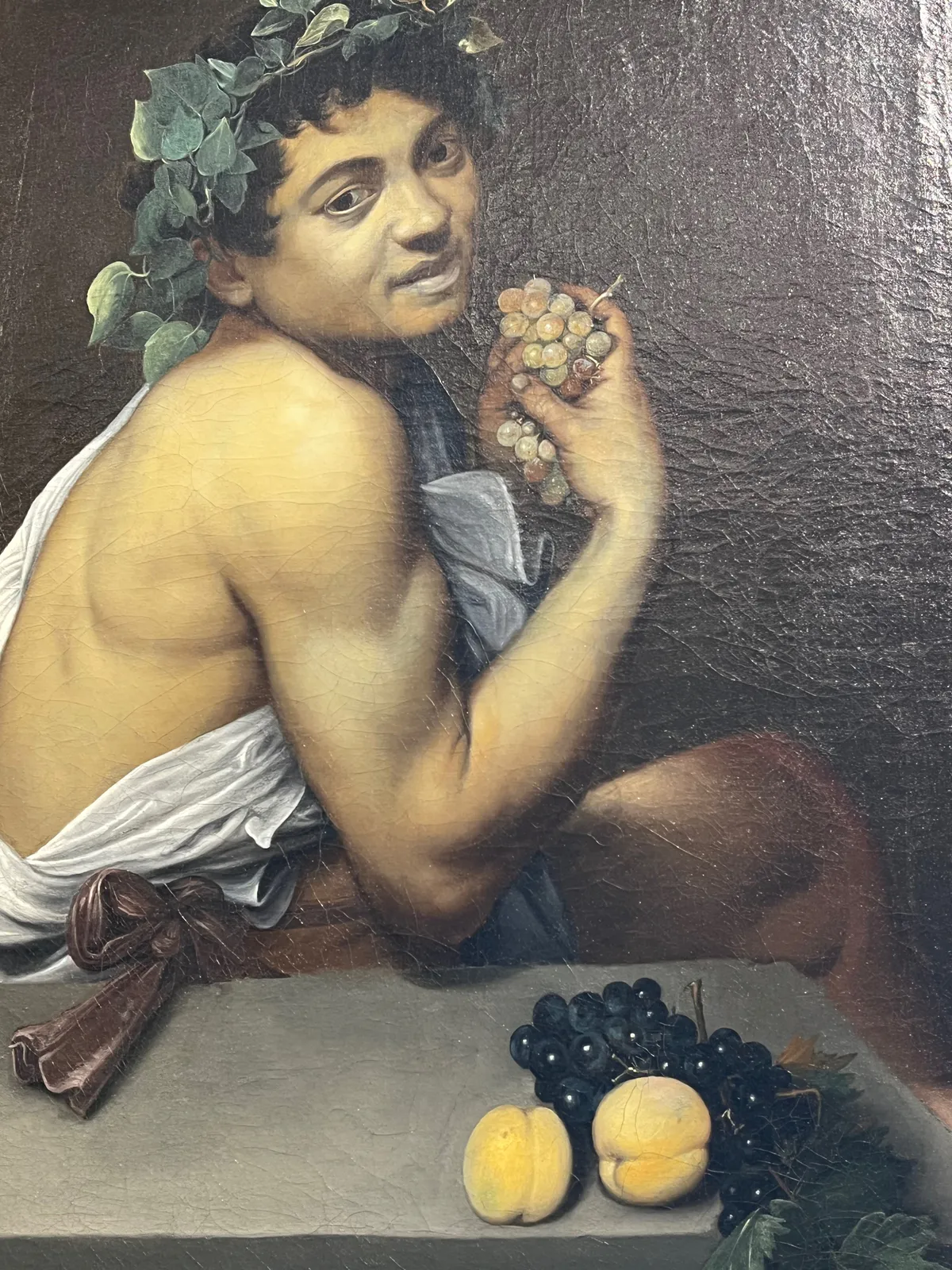
Young Sick Bacchus
Caravaggio
This self-portrait (c. 1593) shows Caravaggio as Bacchus with jaundiced skin and tense features, painted while recovering from illness. The ivy crown replaces the usual vine leaves, subverting divine idealism. Both sensual and unsettling, the image mocks classical beauty and reveals the artist’s own physical vulnerability.
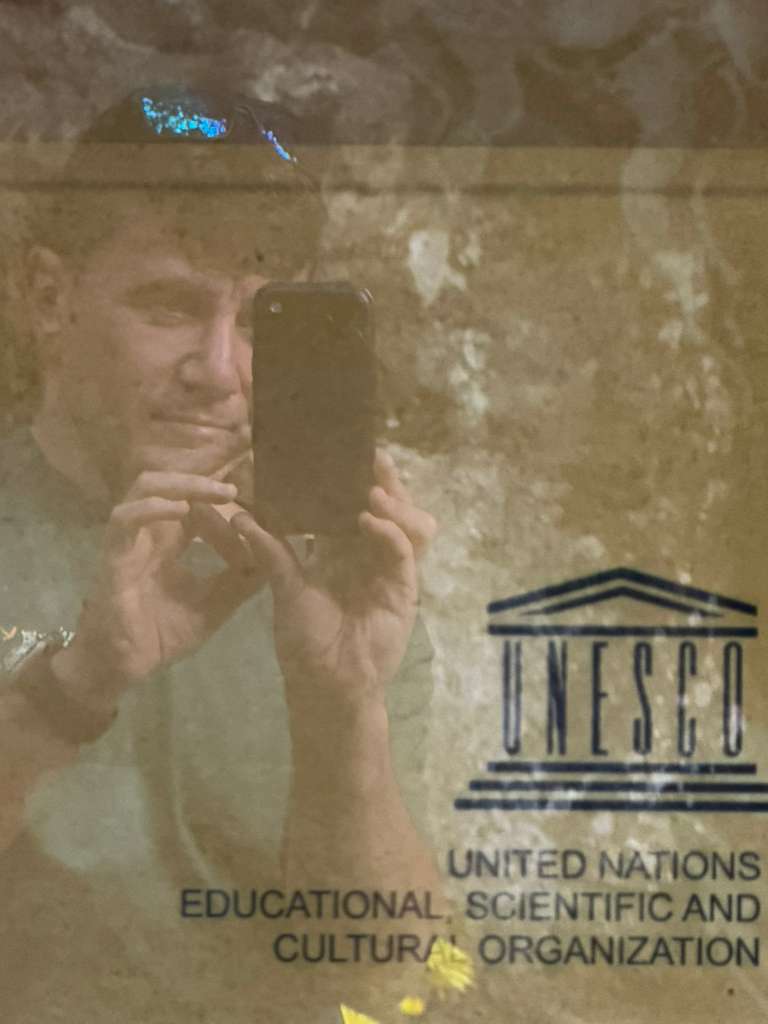
“When the path is beautiful, do not ask where it leads.” — Zen proverb
Welcome to my travel photography!
“When the path is beautiful, do not ask where it leads.” — Zen proverb
Welcome to my travel photography!
For as long as I can remember, my path has been one of discovery—seeking beauty, timelessness, and connection in every corner of the world. It has also been a journey of deep learning and understanding. I’ve been an avid traveler (or perhaps a travel addict?) for most of my life. My love for travel began long before I ever left home: as a child, I drew a fantasy map of my grandparents’ apartment and “traveled” through it with my cousin Sonya, imagining adventures in every corner. Nearly 90 countries and countless moments of awe later, I’m excited to share this journey with you.
Thanks to the tireless and ingenious programming of Diagilev, we’re now able to present about fifteen percent of the images I’ve accumulated over the years. More will be released in small batches depending on your interest. While the first release leans toward museum photography, later ones will include more nature, architecture, culture, and general travel experiences. If you’d like to receive email notifications about new releases, feel free to reach out—no commercial use, ever.
Throughout my travels, I’ve been drawn to two intertwined kinds of discovery. One is intellectual: learning why the world is the way it is. History became my guide, shaping my perspective and filling my camera roll with museums and old buildings. To me, history is not the past—it is the key to understanding the present and how the world became what it is. The other is emotional: seeking moments of elevation—spirituality, beauty, harmony—often found in nature, monasteries, and ancient sacred spaces. Together, these impulses shape my photography. It invites you to learn, admire, and soar—to rise above the mundane and see the world through a lens of curiosity and wonder.
Much of my later travel became possible thanks to my job with Delta Air Lines, but the wanderlust began years earlier. By the time I joined the industry, I had already visited over 35 countries and lived in several—largely thanks to a backpacking journey around the world with Luis León, whose face appears in many early photos. I grew up in Ufa in the USSR, and since leaving it I have lived, studied, and worked in Latvia, the United States, France, South Korea, Canada, Spain, Italy, Brazil, Japan, and Colombia.
A life of near-constant movement may seem a little crazy, but it has deepened my understanding of the world and produced the photography you are about to see. Over the years, my style has evolved—more intentional, more refined—yet its core remains the same: a search for understanding, timeless beauty, and a connection to those who walked this earth long before us.
I hope these photos stir something in your soul, just as they did in mine. I’d love to hear from you—whether reactions, suggestions, corrections, or a request to be added to the email list for new releases (no commercial use, I promise). You can learn more about my travels here, and my academic life here.
Enjoy our shared journey!