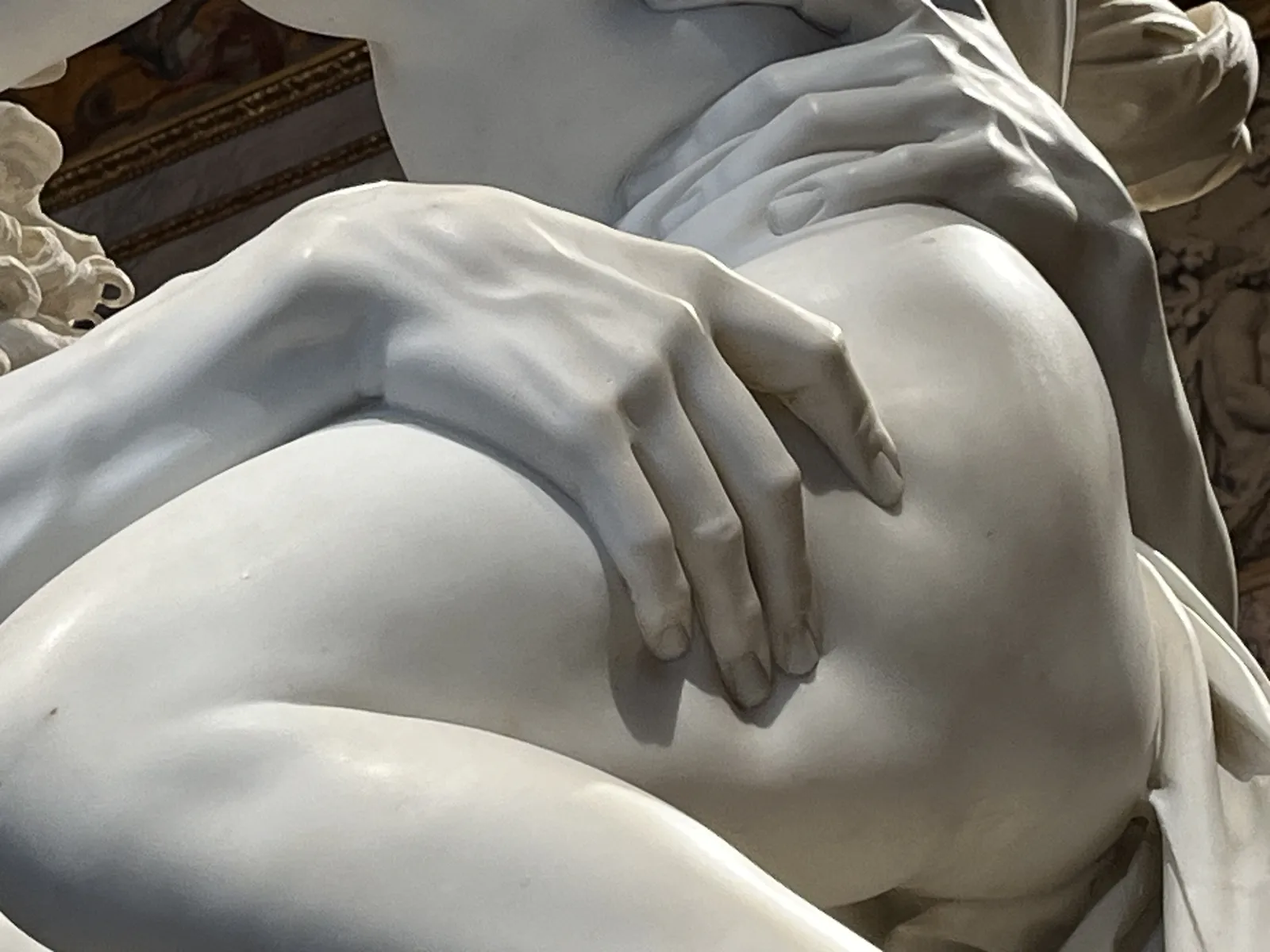
The Rape of Proserpina (detail)
Gian Lorenzo Bernini
This gripping close-up from Bernini’s marble group (1621–22) captures Pluto’s hand pressing into Proserpina’s flesh. The marble appears to yield under his grip, a dazzling illusion of softness and force. Bernini’s technical brilliance here transforms stone into living drama, amplifying the sculpture’s emotional and physical realism.
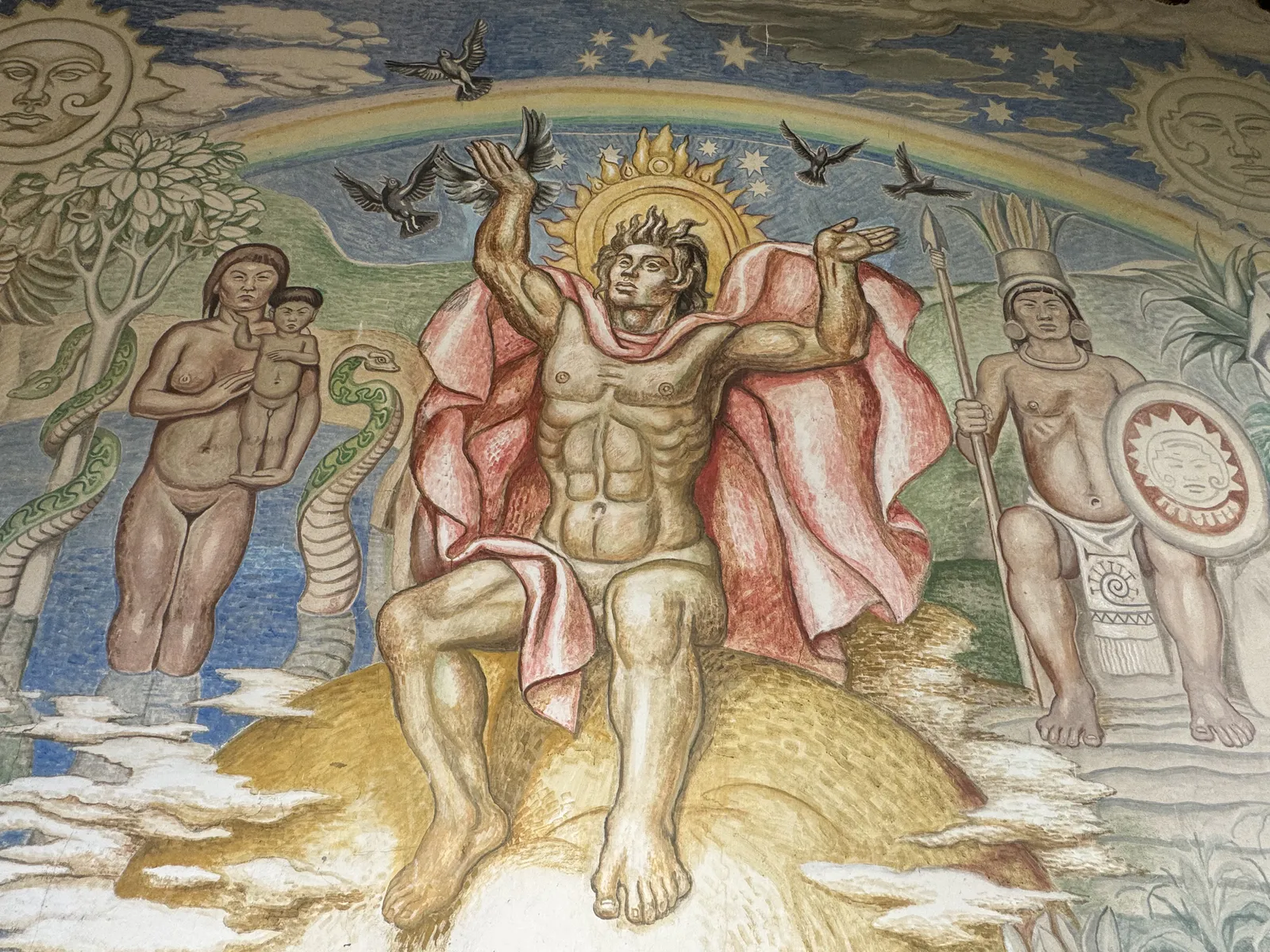
Chiminigagua and the Origen of Chibcha
Luis Alberto Acuña
This mural (1960–70s) reimagines the Chibcha creation myth. At center, the god Chiminigagua releases radiant birds to bring light to the cosmos. To his right stands Bachué with her son Iguaque, founders of the Muisca people. At left is Chaquén, guardian of lands and borders. The scene is set at the sacred Iguaque Lagoon, the cradle of Muisca origin.
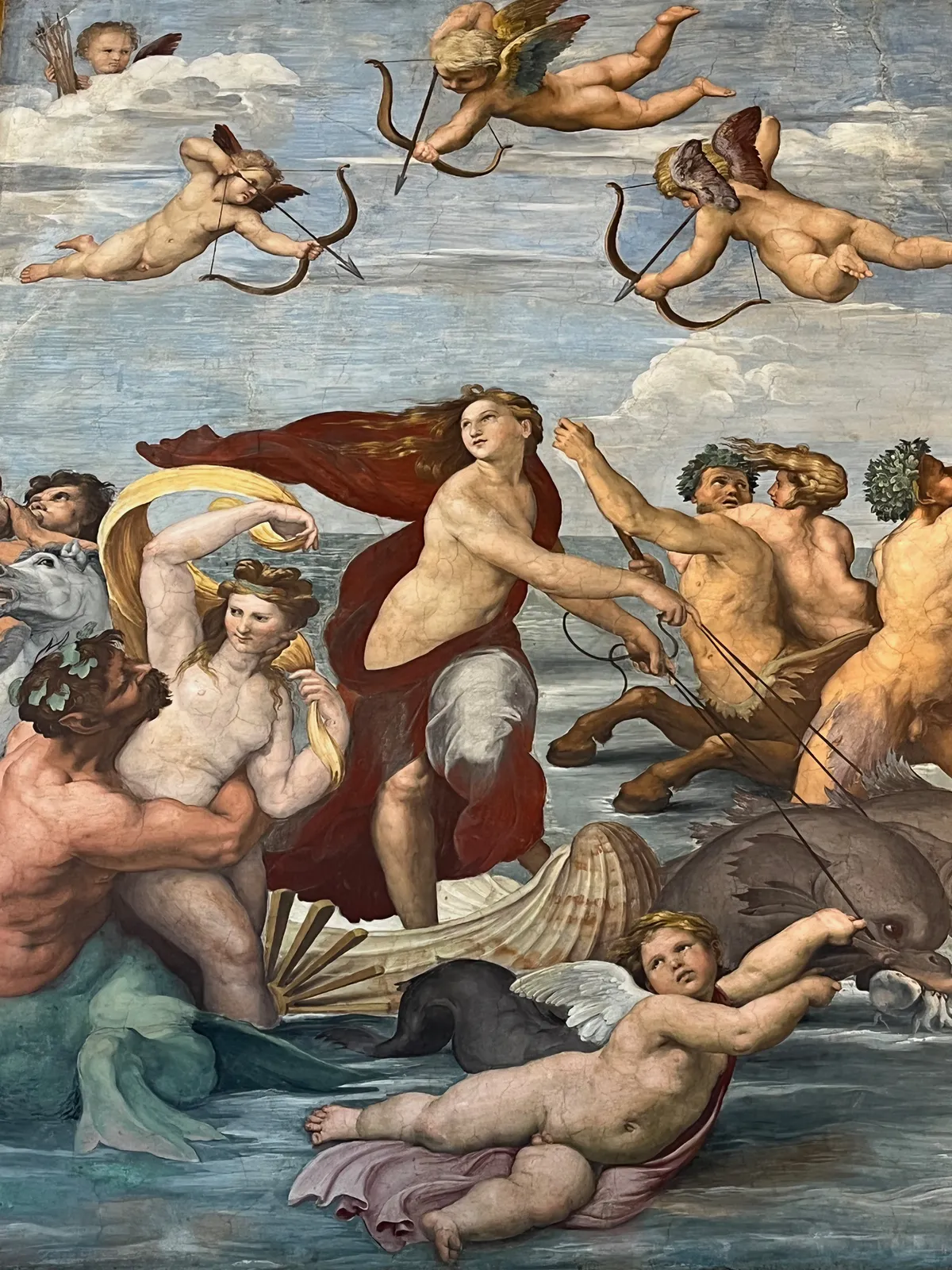
The Triumph of Galatea
Raphael
In this fresco (c. 1512), Raphael transforms Galatea’s myth into a celebration of divine beauty. The sea nymph rides a shell chariot drawn by dolphins (linked to Venus), while cupids shoot arrows symbolizing love’s universal power. Though the original tale includes jealousy and tragedy, Raphael omits them, presenting an idealized vision of harmony and grace.
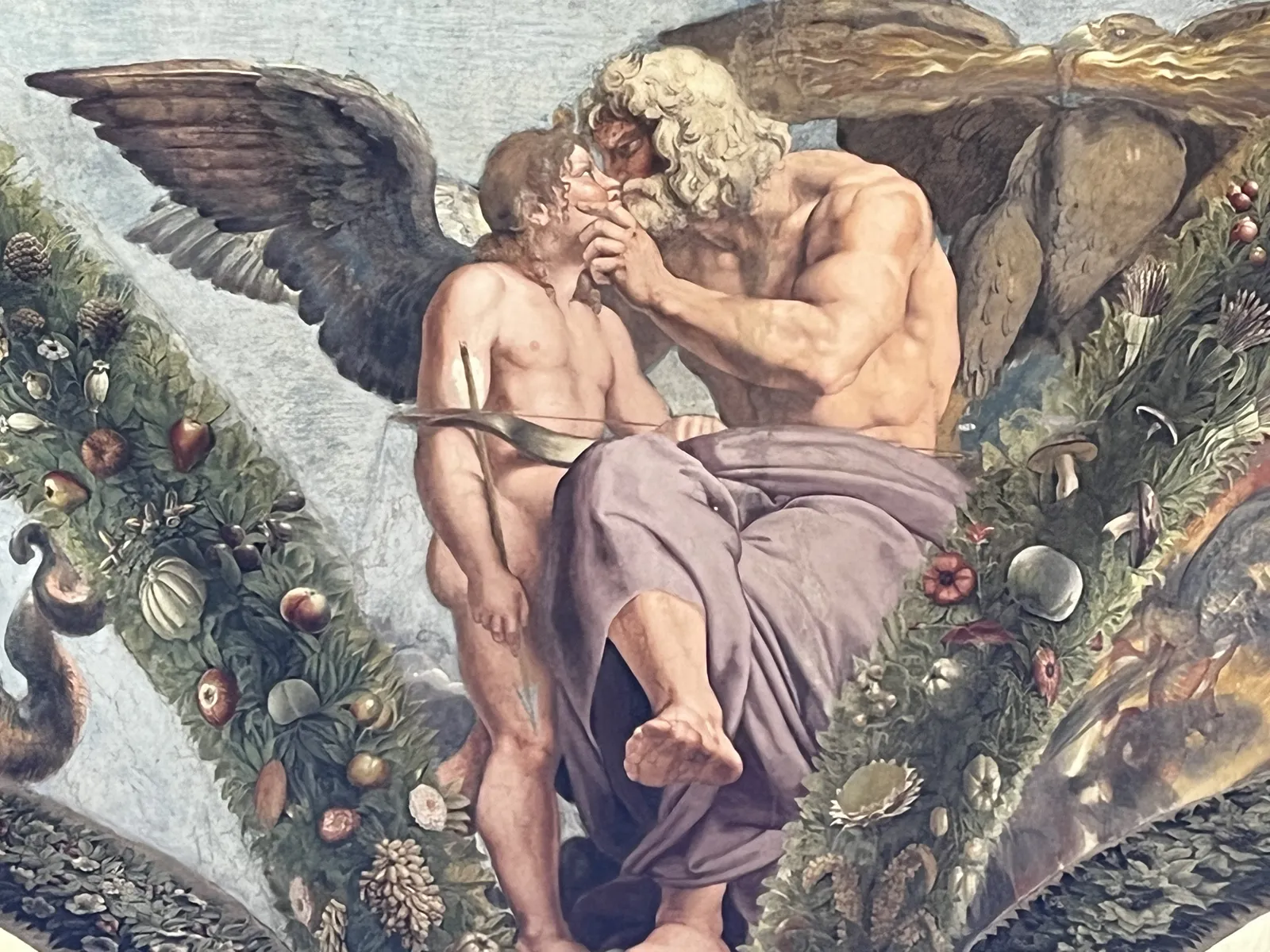
Cupid Pleads with Jupiter for Psyche
Raphael
In this fresco (1517–18), Raphael depicts the moment when Cupid petitions Jupiter for Psyche’s immortality. Jupiter’s intimate gesture suggests divine consent and compassion, while Cupid’s youthful vulnerability contrasts with the god’s authority. The work reflects Renaissance fascination with classical myths and divine love.
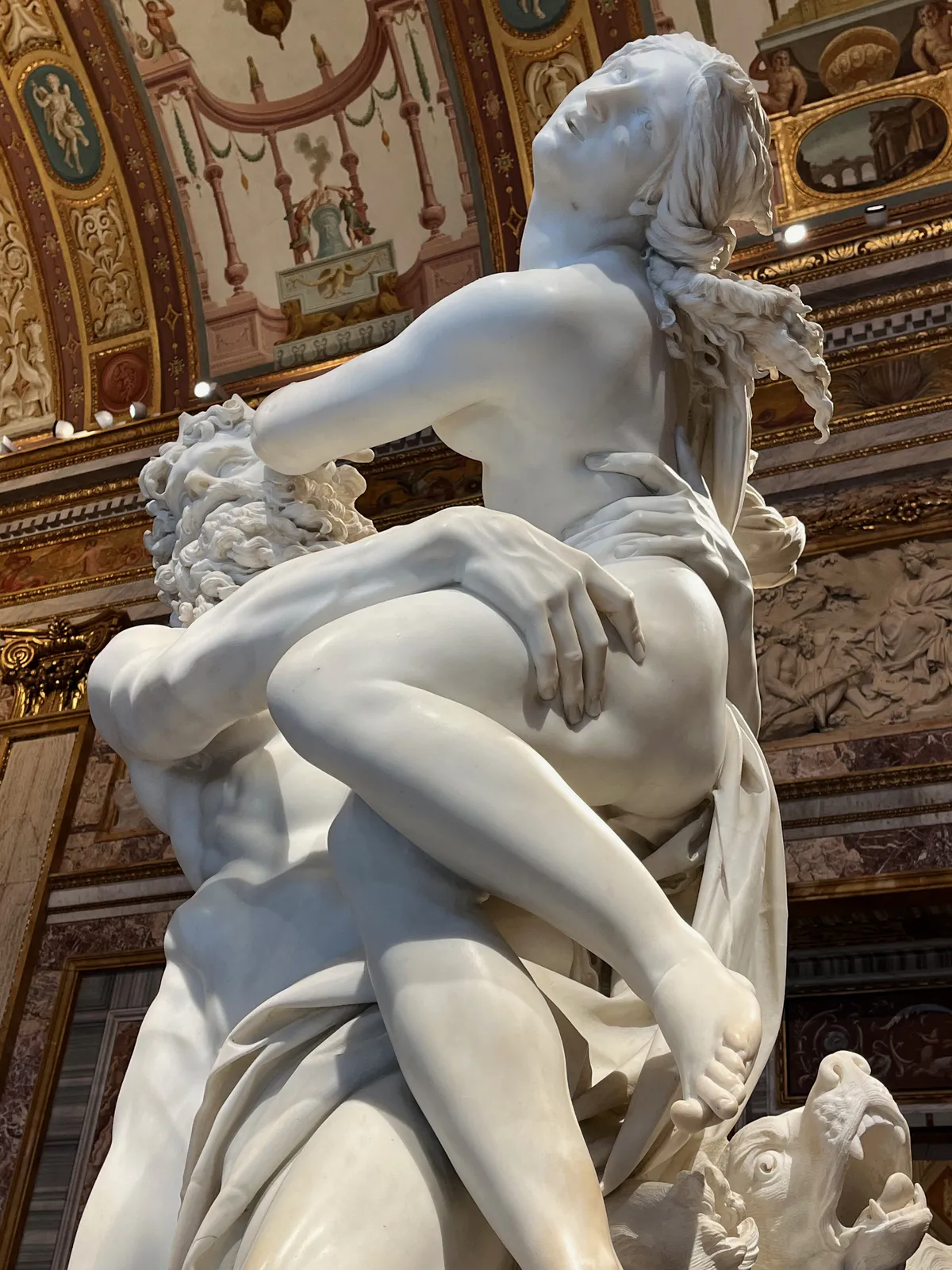
The Rape of Proserpina
Bernini
In this stunning detail of Bernini’s marble group (1621–22), Pluto’s fingers sink into Proserpina’s thigh with unnerving realism, while her twisting form and anguished face heighten the emotional intensity. The composition’s tactile illusionism and psychological drama mark a defining triumph of early Baroque sculpture.
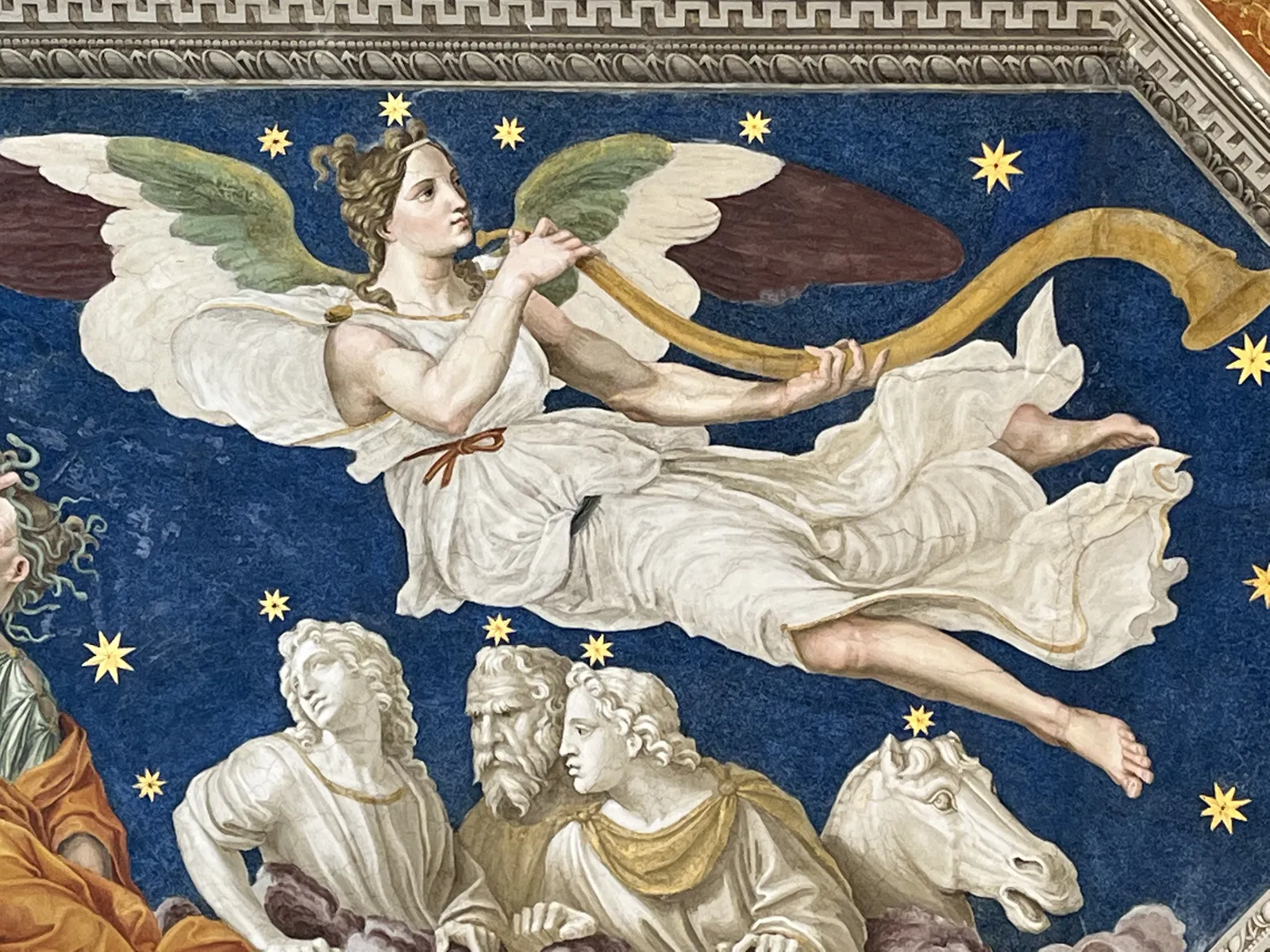
Fame and Medusa's Victims
Baldassarre Peruzzi
This fresco (1511) shows Fame soaring through the sky, announcing glory with her trumpet. Below, three men and a horse emerge from the clouds, their pallor and stiffness indicating they are victims turned to stone by Medusa's gaze. The composition reflects Renaissance interest in mythology, illustrating the power of reputation and the consequences of divine encounters.
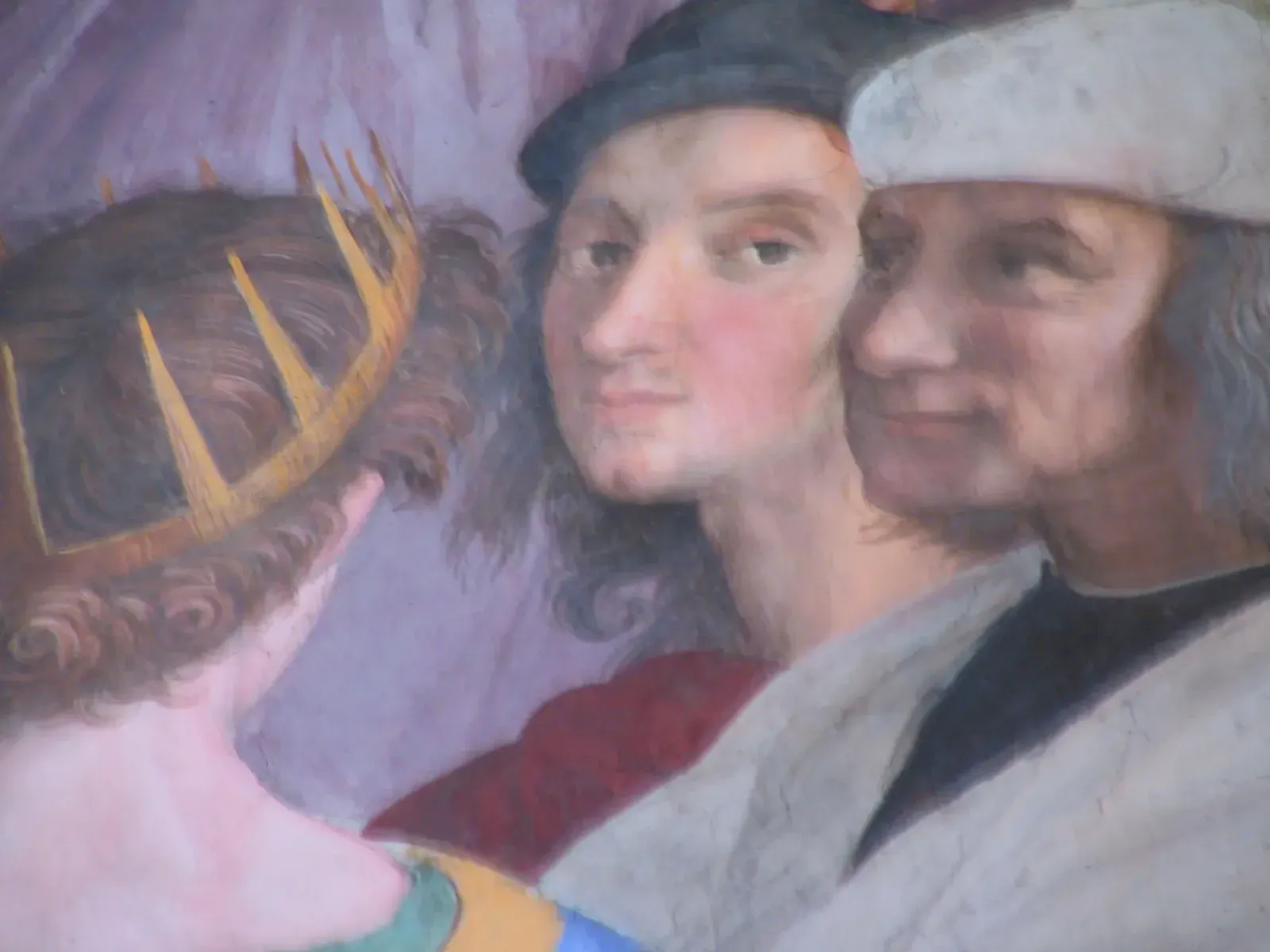
Raphael and Perugino (detail)
Raphael
This section of The School of Athens (1509-11) features a rare self-portrait of Raphael (center) alongside his teacher Perugino (right). Originating from the Italian High Renaissance, the work subtly inserts the artist into the legacy of classical knowledge, aligning painters with philosophers as bearers of intellectual ideals.
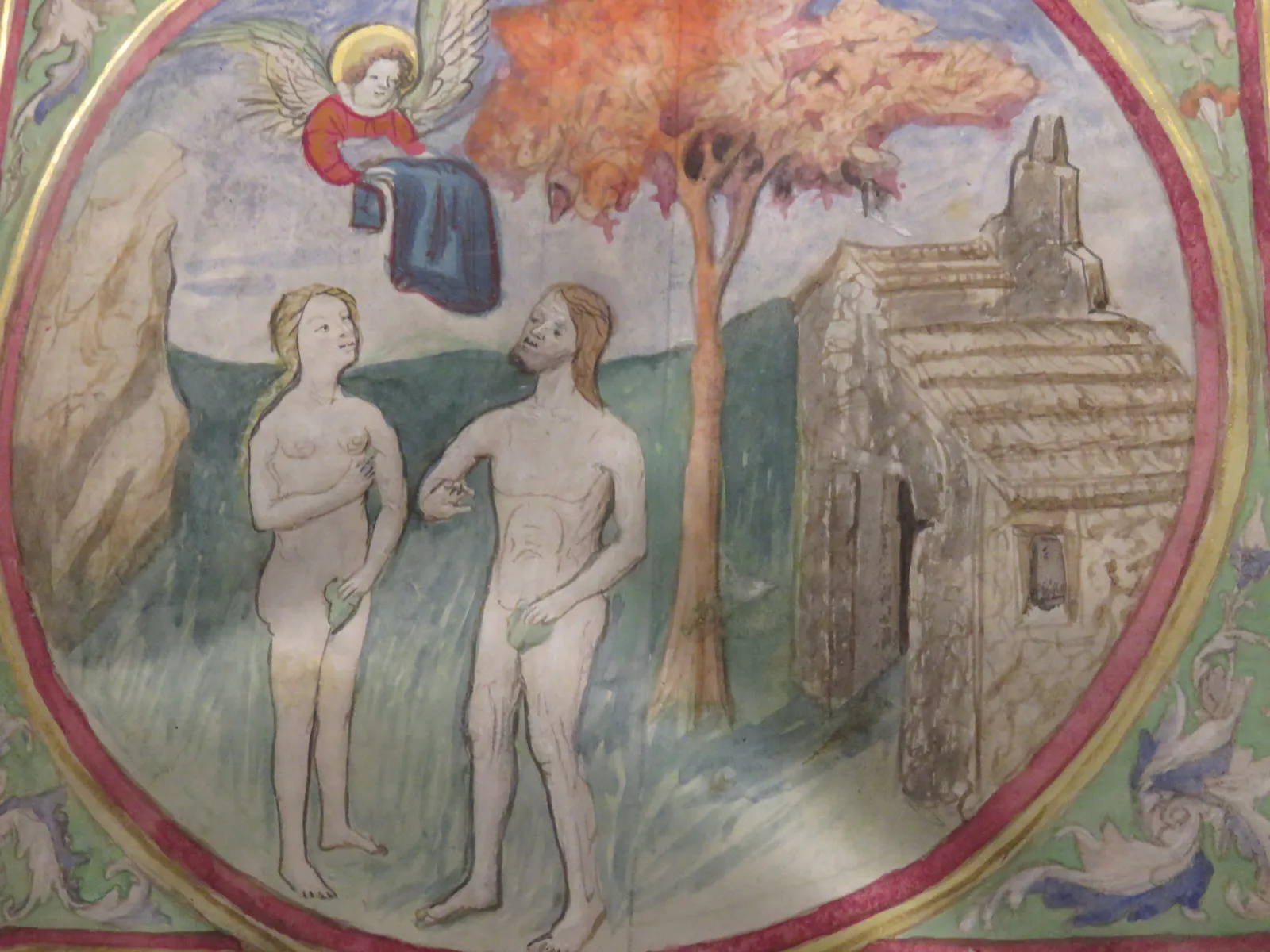
Expulsion from Eden
Maître des Médaillons
This French manuscript miniature (early 15th c.) shows Adam and Eve after the Fall, modestly covering themselves with leaves. An angel descends with a robe, while the Tree of Knowledge burns red above them. To the right stands a stone building, symbolizing exile from Paradise. The vivid colors and fine detail reflect late medieval devotional art.
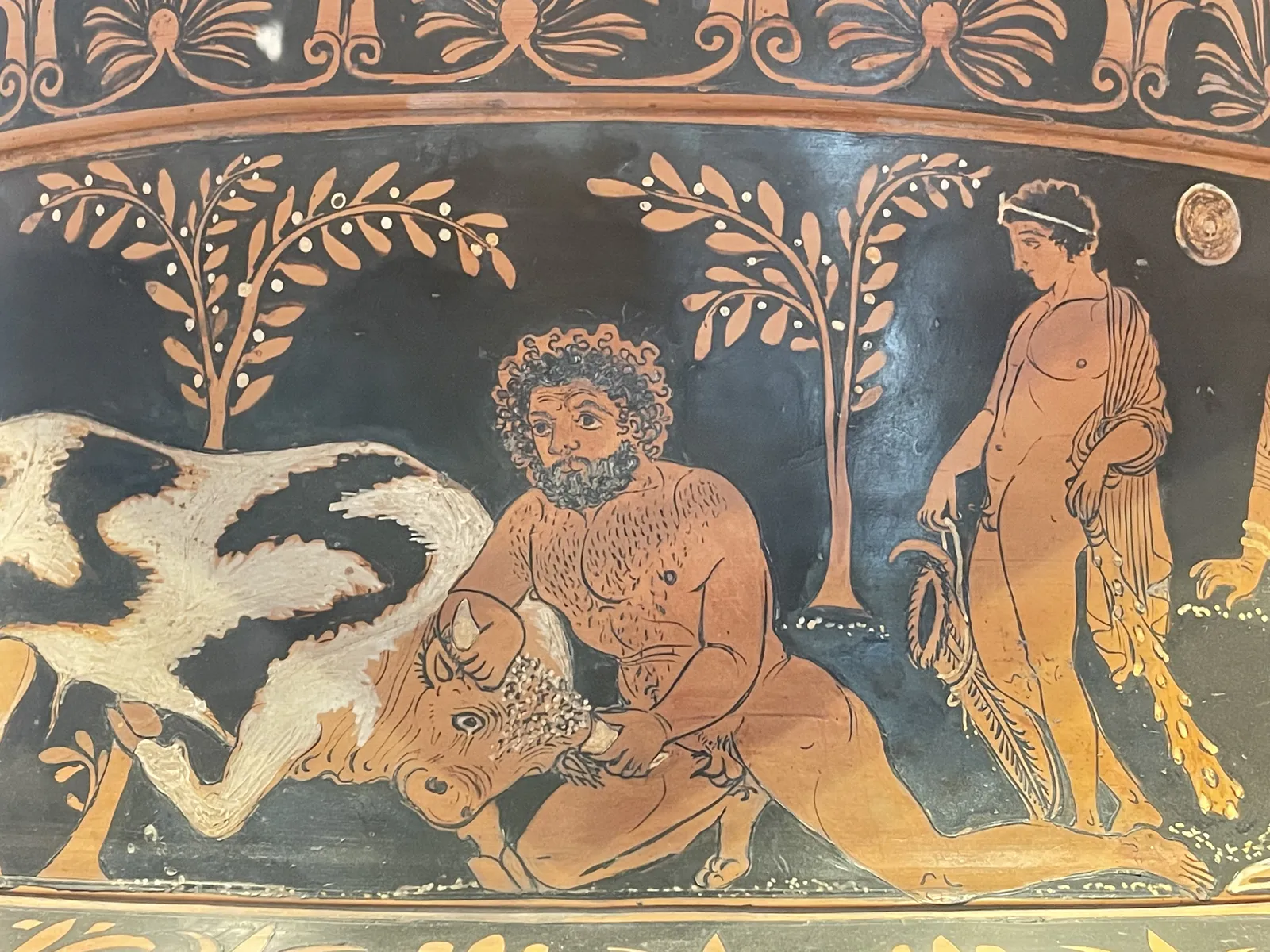
The Capture of the Cretan Bull
Lycungus Painter
Heracles grapples with the Cretan bull, locking its horns as the animal lunges, while Athena and a youthful attendant stand calmly among stylized trees. The scene represents his seventh labour, subduing the bull sent by Poseidon after King Minos withheld a promised sacrifice. This Apulian red-figure volute krater (mixing bowl) (360–345 BC) reflects South Italian interest in myth as a drama of human strength under divine supervision.
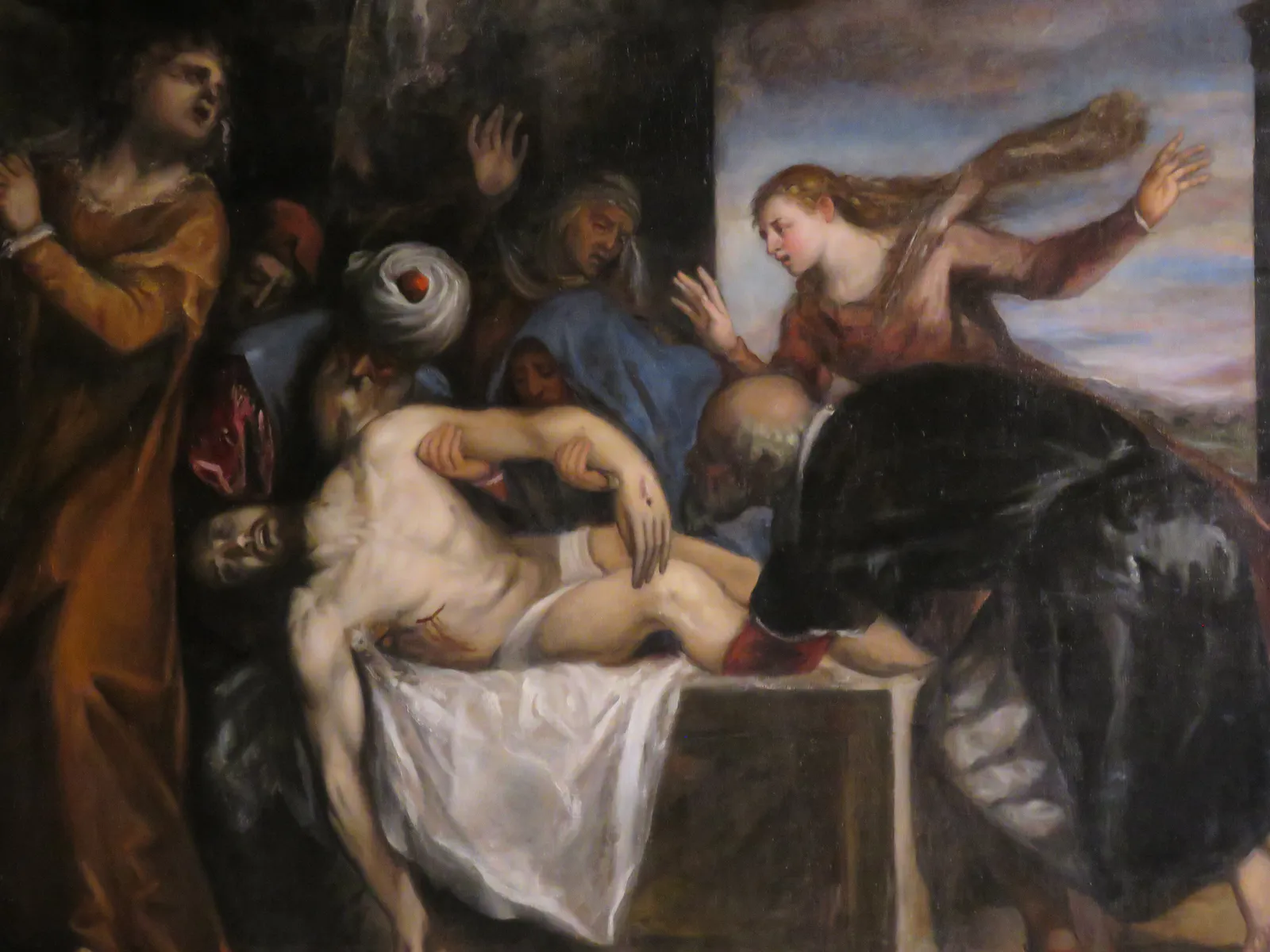
The Entombment of Christ
Titian and Palma the Younger
A poignant rendering of Christ’s burial, this oil on canvas (1618) was begun by Titian and completed by Palma the Younger. The composition captures collective grief, emphasizing the physical weight of death and the emotional weight of loss. The figures’ gestures and expressions mirror Renaissance ideals of pathos and human dignity.
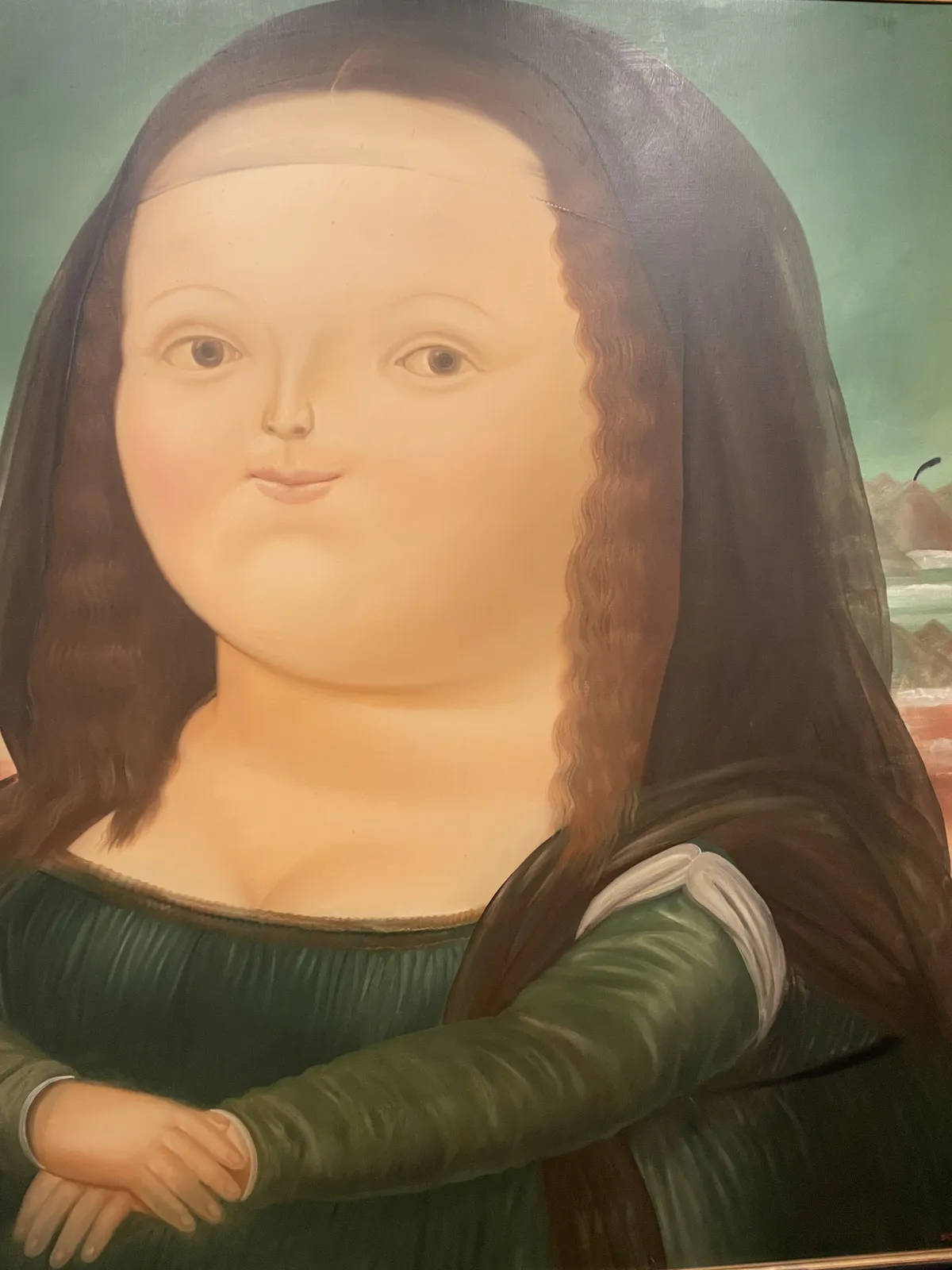
Mona Lisa, Age Twelve
Fernando Botero
In this whimsical reimagining (1959), Botero transforms da Vinci’s iconic subject into a voluminous child. Created in his signature Boterismo style, the painting blends parody with homage. Born from a cleaning lady’s remark, the work helped launch Botero’s career, celebrating exaggerated form as a tool for both humor and artistic identity.
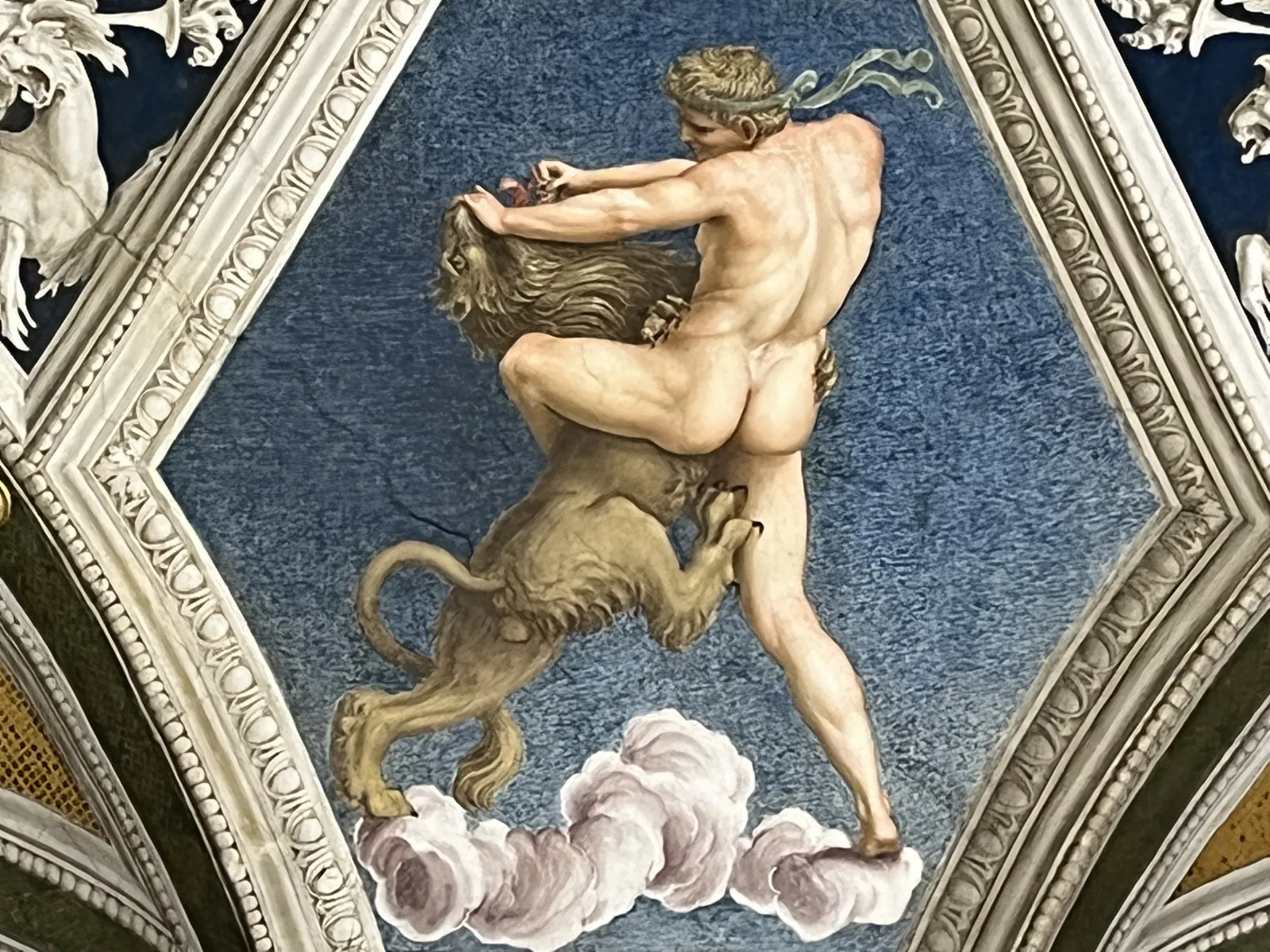
Hercules Defeating the Nemean Lion
Baldassare Peruzzi
This fresco (c. 1511) in the Loggia of Galatea shows Hercules wrestling the invulnerable Nemean Lion, one of his Twelve Labors. The hero’s twisting nude body and the lion’s straining muscles emphasize physical struggle and controlled force. As part of a zodiac cycle, the scene represents the sign of Leo and links mythological heroism to Renaissance interests in astrology and humanist virtue.
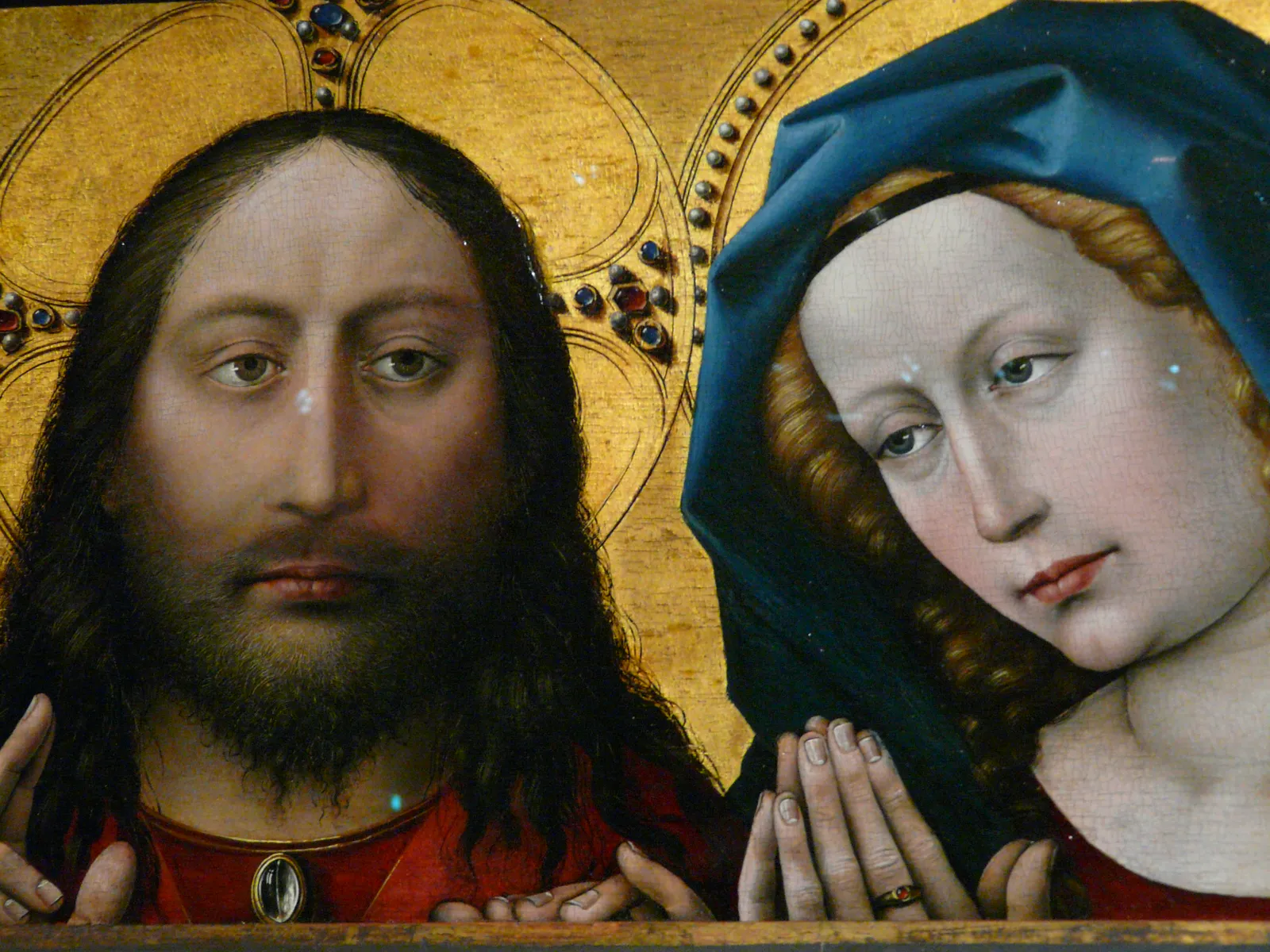
Christ Blessing with Virgin at Prayer
Master of Flémalle
This 15th-c. oak panel by the Master of Flémalle, often associated with Robert Campin, exemplifies early Netherlandish style. It showcases realistic detail through innovative oil paint use. The depiction of Christ blessing and the Virgin Mary at prayer reflects the era’s religious devotion and artistic innovation, marking a pivotal moment in European art’s evolution.
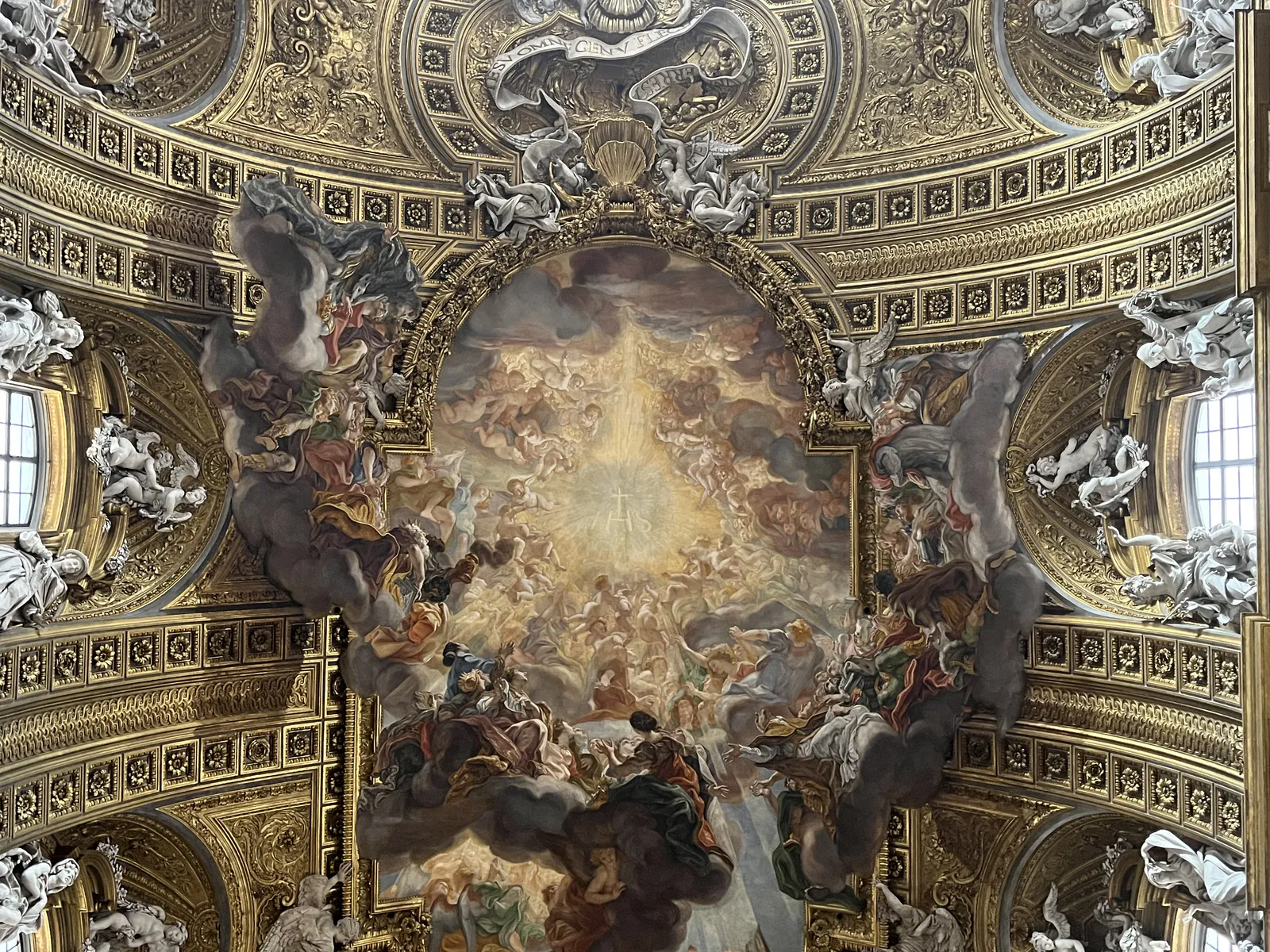
Triumph of the Name of Jesus
Giovanni Battista Gaulli
This dramatic fresco (1676–79) fills the nave ceiling with a celestial eruption of light and figures. At its center, divine radiance emanates from the monogram IHS, the symbol of Jesus. Saved souls rise toward the light, while sinners tumble into shadow. Blending paint and stucco, the work fuses heaven and church in Baroque theatricality.
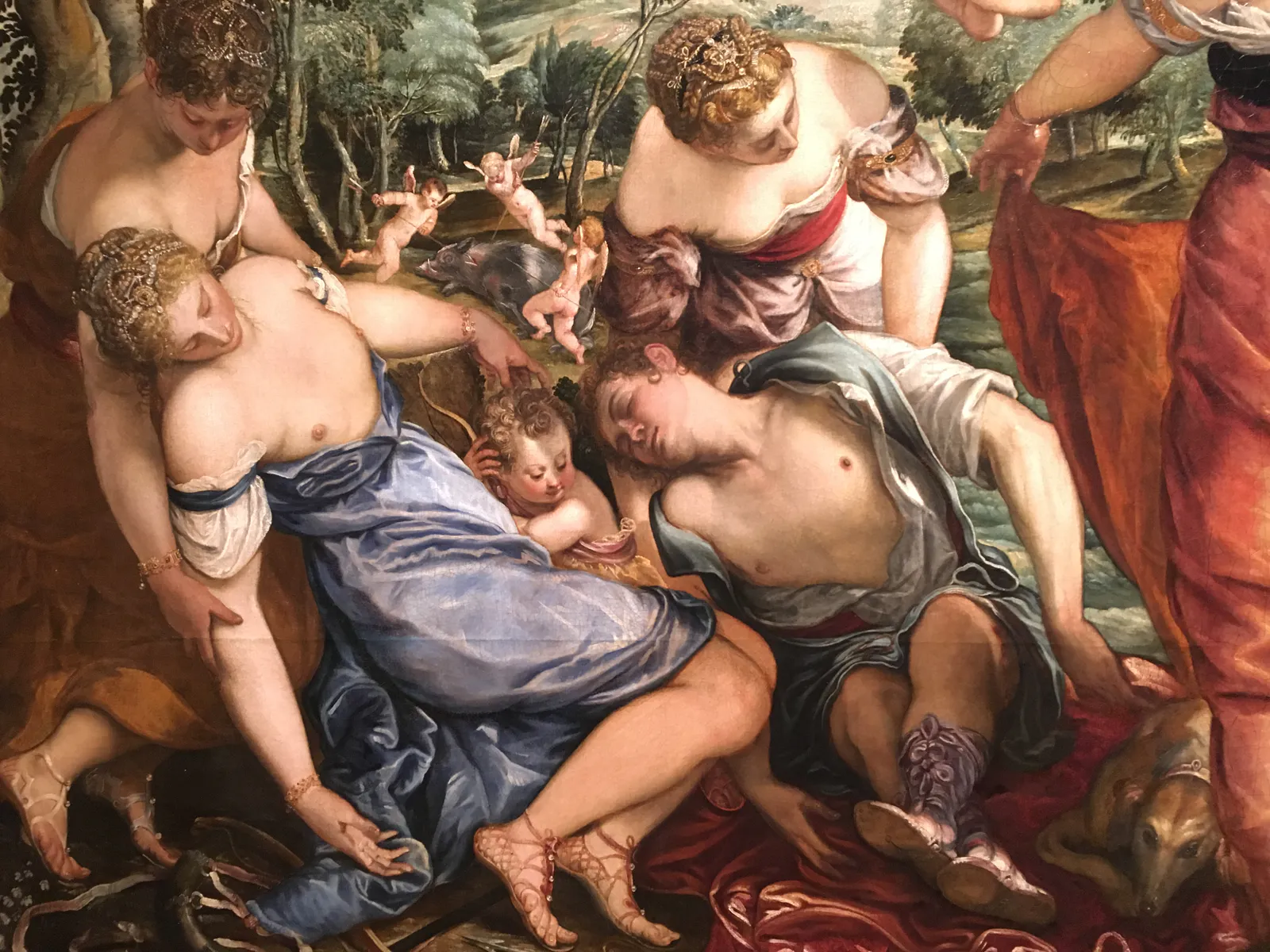
The Death of Adonis
Tintoretto's Workshop
The Death of Adonis (1550–55) captures Venus fainting at Adonis's death, diverging from Ovid’s Metamorphoses by including young women not in the original tale. Created by a Nordic artist in Tintoretto’s Venetian workshop, it blends Tintoretto’s dramatic style with the collaborator’s unique touch, evident in the expressive figures and vibrant colors. This fusion highlights the shared human themes of love and loss, inviting reflection on the timeless nature of myth and emotion.
“When the path is beautiful, do not ask where it leads.” — Zen proverb
Welcome to my travel photography!
“When the path is beautiful, do not ask where it leads.” — Zen proverb
Welcome to my travel photography!
For as long as I can remember, my path has been one of discovery—seeking beauty, timelessness, and connection in every corner of the world. It has also been a journey of deep learning and understanding. I’ve been an avid traveler (or perhaps a travel addict?) for most of my life. My love for travel began long before I ever left home: as a child, I drew a fantasy map of my grandparents’ apartment and “traveled” through it with my cousin Sonya, imagining adventures in every corner. Nearly 90 countries and countless moments of awe later, I’m excited to share this journey with you.
Thanks to the tireless and ingenious programming of Diagilev, we’re now able to present about fifteen percent of the images I’ve accumulated over the years. More will be released in small batches depending on your interest. While the first release leans toward museum photography, later ones will include more nature, architecture, culture, and general travel experiences. If you’d like to receive email notifications about new releases, feel free to reach out—no commercial use, ever.
Throughout my travels, I’ve been drawn to two intertwined kinds of discovery. One is intellectual: learning why the world is the way it is. History became my guide, shaping my perspective and filling my camera roll with museums and old buildings. To me, history is not the past—it is the key to understanding the present and how the world became what it is. The other is emotional: seeking moments of elevation—spirituality, beauty, harmony—often found in nature, monasteries, and ancient sacred spaces. Together, these impulses shape my photography. It invites you to learn, admire, and soar—to rise above the mundane and see the world through a lens of curiosity and wonder.
Much of my later travel became possible thanks to my job with Delta Air Lines, but the wanderlust began years earlier. By the time I joined the industry, I had already visited over 35 countries and lived in several—largely thanks to a backpacking journey around the world with Luis León, whose face appears in many early photos. I grew up in Ufa in the USSR, and since leaving it I have lived, studied, and worked in Latvia, the United States, France, South Korea, Canada, Spain, Italy, Brazil, Japan, and Colombia.
A life of near-constant movement may seem a little crazy, but it has deepened my understanding of the world and produced the photography you are about to see. Over the years, my style has evolved—more intentional, more refined—yet its core remains the same: a search for understanding, timeless beauty, and a connection to those who walked this earth long before us.
I hope these photos stir something in your soul, just as they did in mine. I’d love to hear from you—whether reactions, suggestions, corrections, or a request to be added to the email list for new releases (no commercial use, I promise). You can learn more about my travels here, and my academic life here.
Enjoy our shared journey!