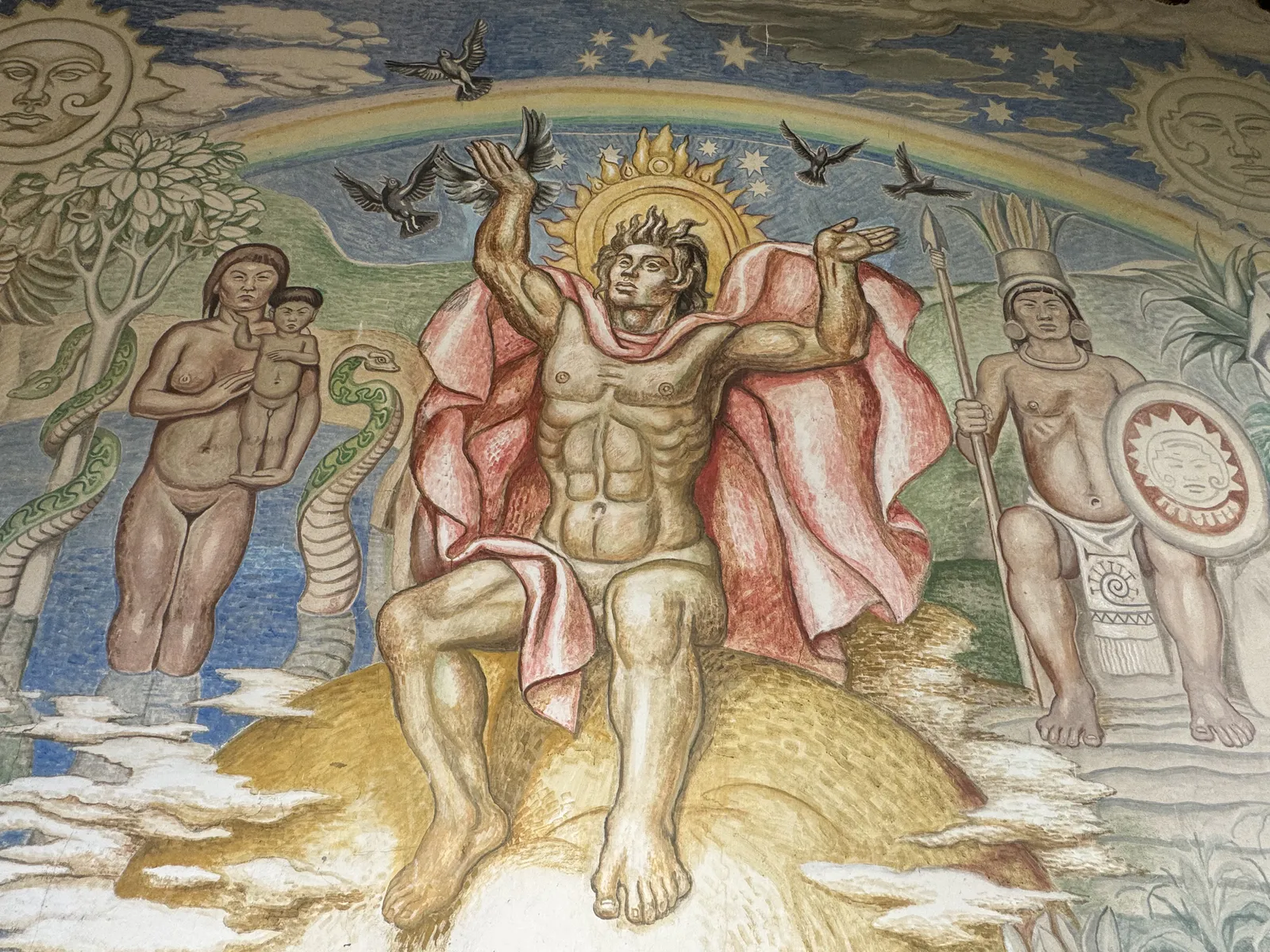
Chiminigagua and the Origen of Chibcha
Luis Alberto Acuña
This mural (1960–70s) reimagines the Chibcha creation myth. At center, the god Chiminigagua releases radiant birds to bring light to the cosmos. To his right stands Bachué with her son Iguaque, founders of the Muisca people. At left is Chaquén, guardian of lands and borders. The scene is set at the sacred Iguaque Lagoon, the cradle of Muisca origin.
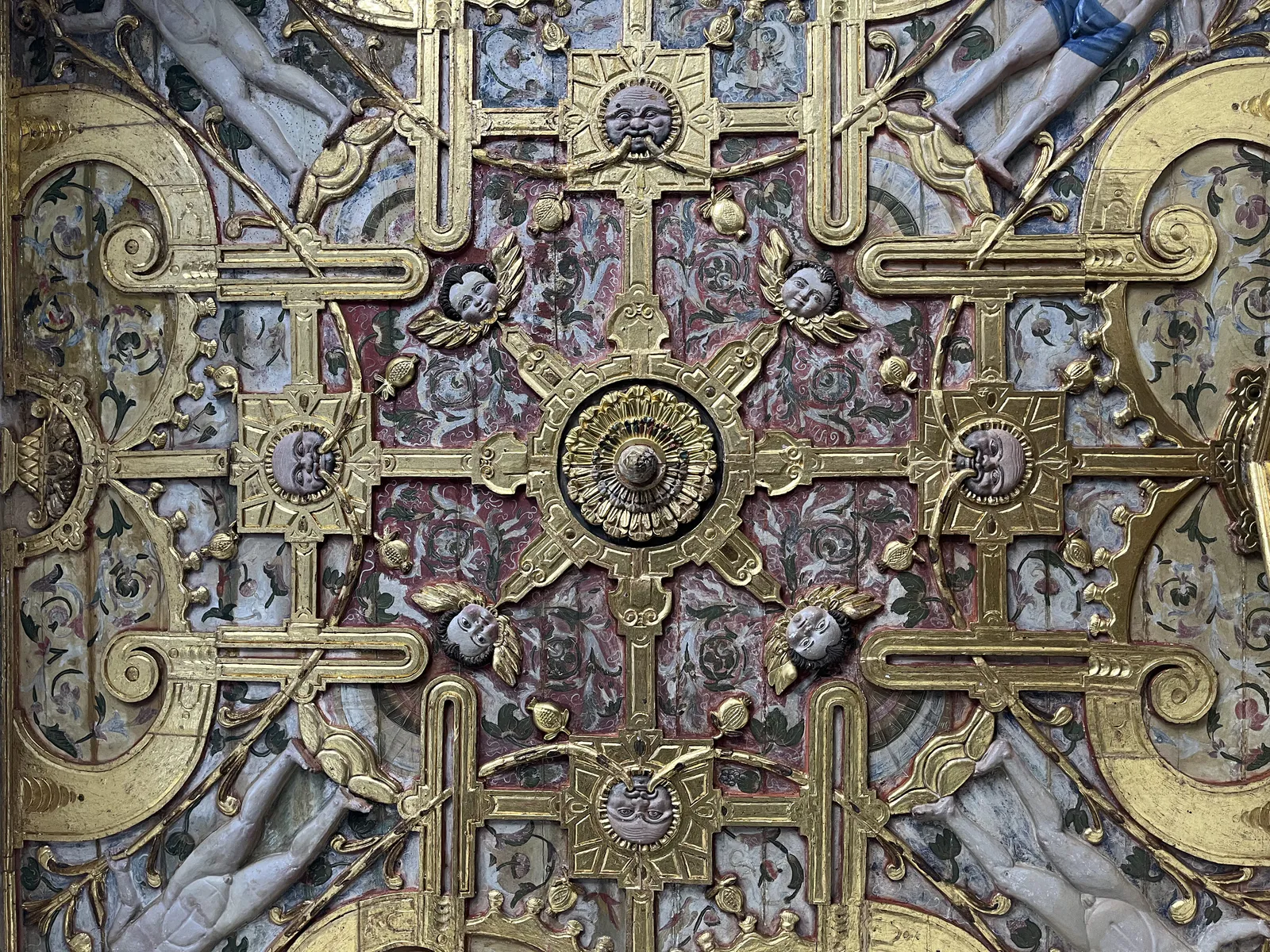
Andean Baroque Ceiling Panel
Manuel Chili (Capiscara)
This carved and gilded ceiling panel (1770–80) shows radiant faces, golden beams, and floral motifs arranged around a central sunburst. Produced in late-colonial Quito, it aligns with the Andean baroque’s celestial imagery. Caspicara joined Catholic cosmology with Indigenous conceptions of ordered, sacred geometry.
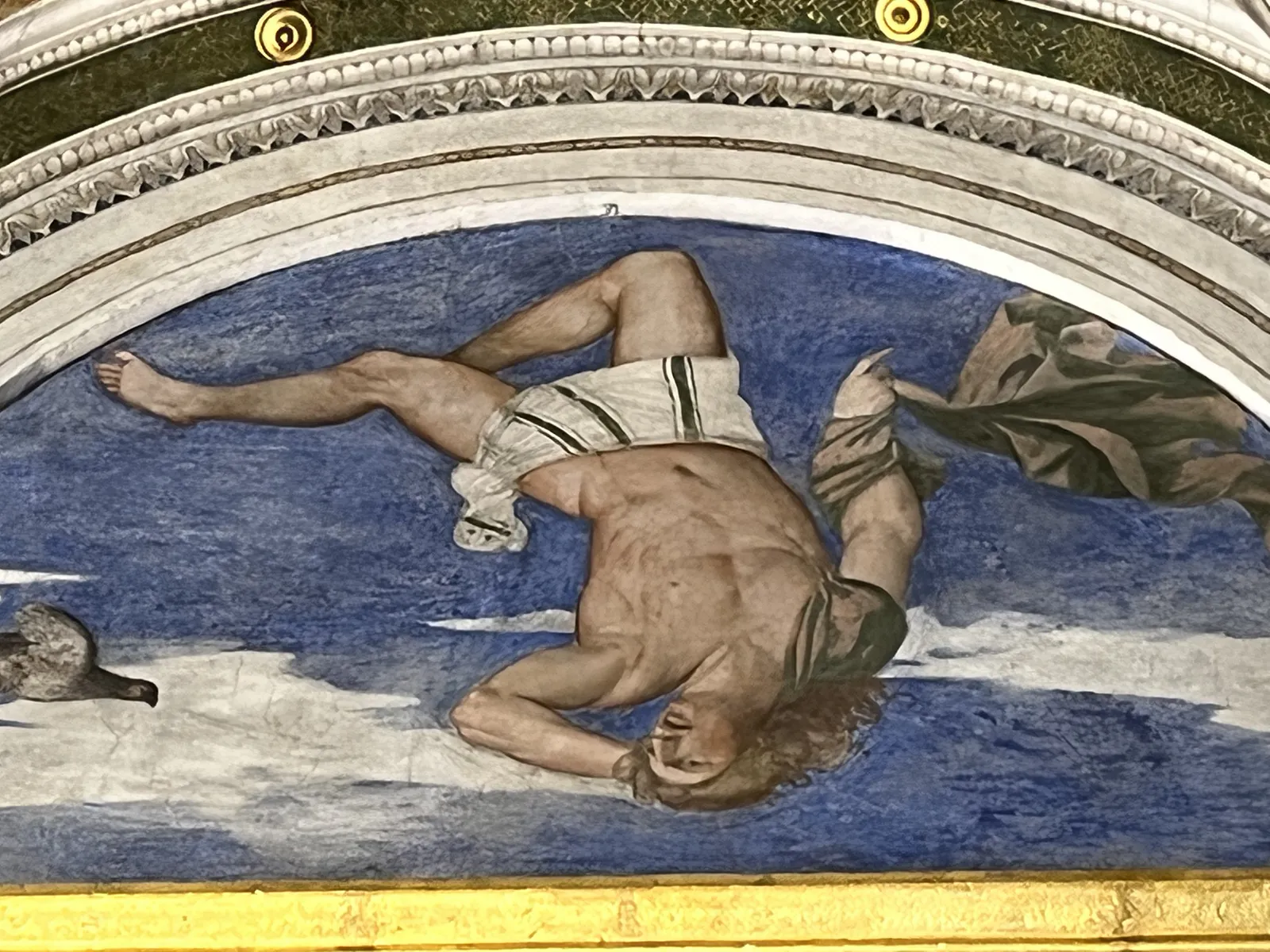
The Fall of Phaeton
Sebastiano del Piombo
This fragment (c. 1511) shows Phaeton falling from the sky after failing to control the sun chariot of his father Helios. To save the world, Zeus strikes him down. Part of Sebastiano del Piombo’s mythological cycle at Villa Farnesina, it complements Raphael’s Triumph of Galatea with a dramatic warning against hubris.
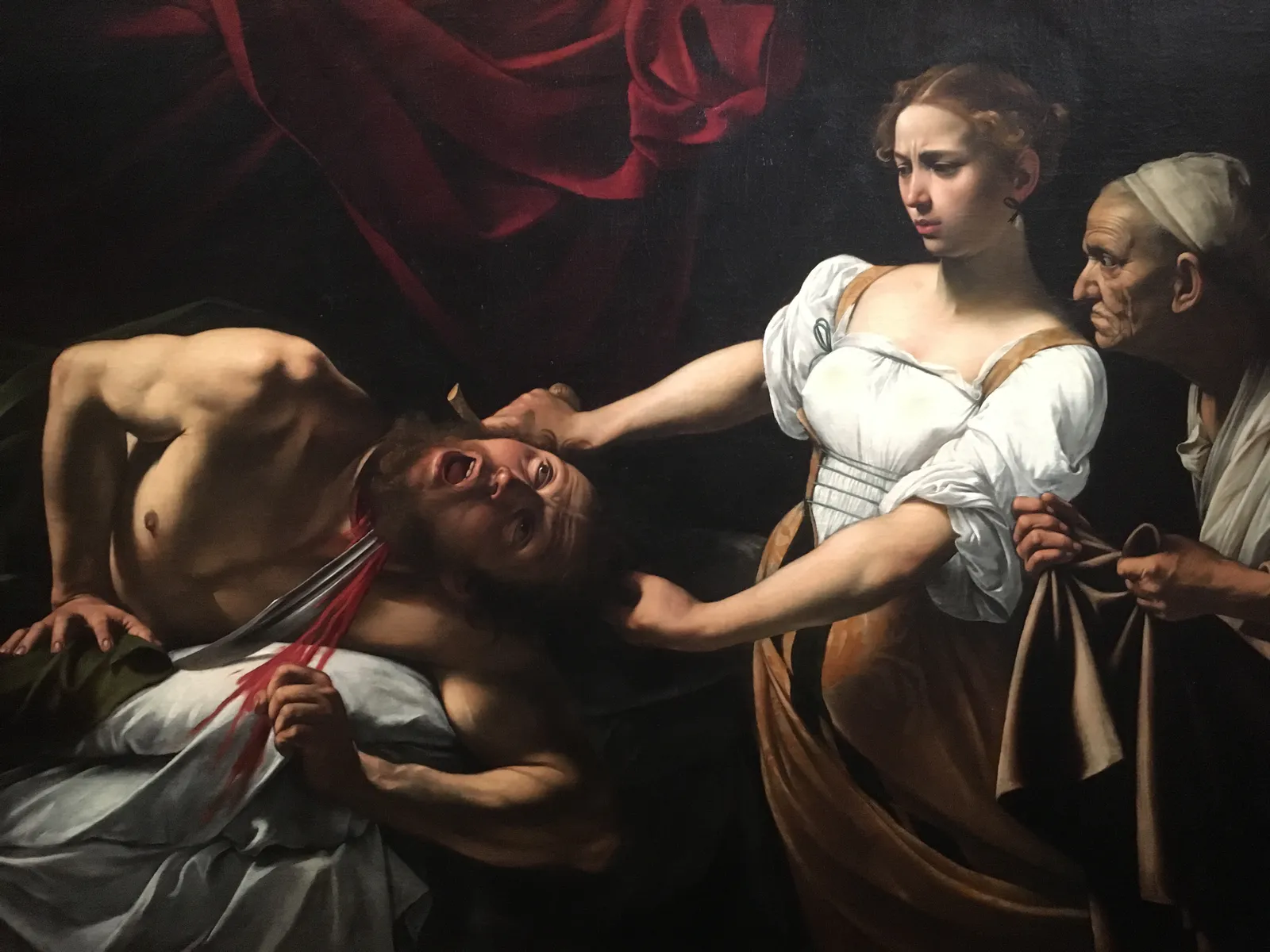
Judith Beheading Holofernes
Caravaggio
This canvas (c. 1599) painted in Rome embodies Caravaggio’s radical realism and theatrical chiaroscuro. Judith, a young widow, slays the Assyrian general Holofernes to save her people. Her calm determination contrasts with his violent death and the maid’s aged pragmatism. By staging sacred violence with unflinching naturalism, Caravaggio redefined biblical painting as a drama of human courage and divine justice.
Christ the Judge
Rogier van der Weyden
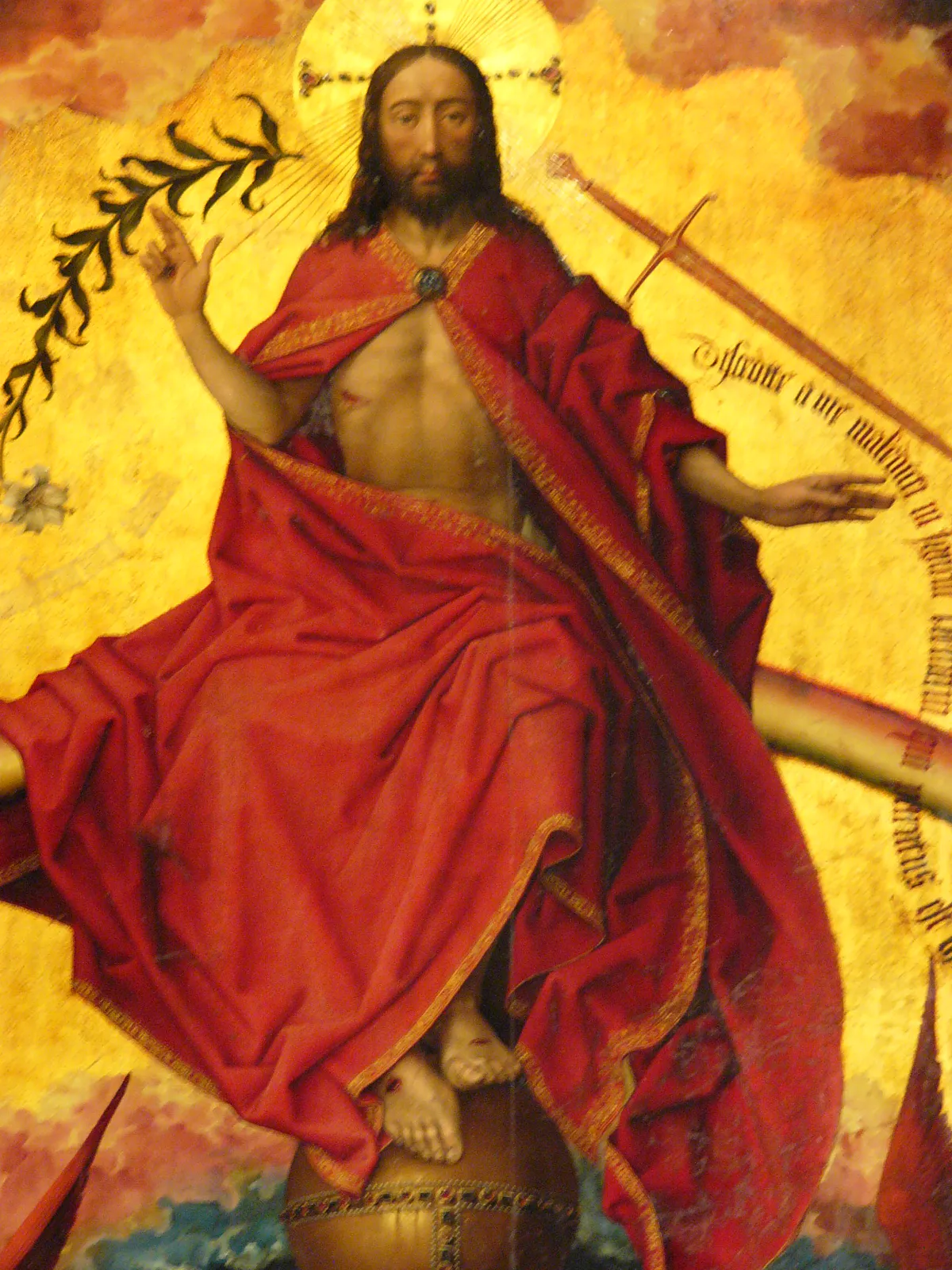
At the summit of the Last Judgment Altarpiece (1445–50), Christ sits enthroned on a rainbow, resting his feet on a golden globe that symbolizes dominion over the world. He raises his right hand in blessing, while his left gestures toward judgment. The sword and lily flanking him signify justice and mercy, balancing wrath with compassion. Draped in vivid red, Christ embodies divine authority, anchoring the entire altarpiece in the promise of eternal judgment and salvation.
The Lagoon of Peace
Jorge Alberto Smith Ellas
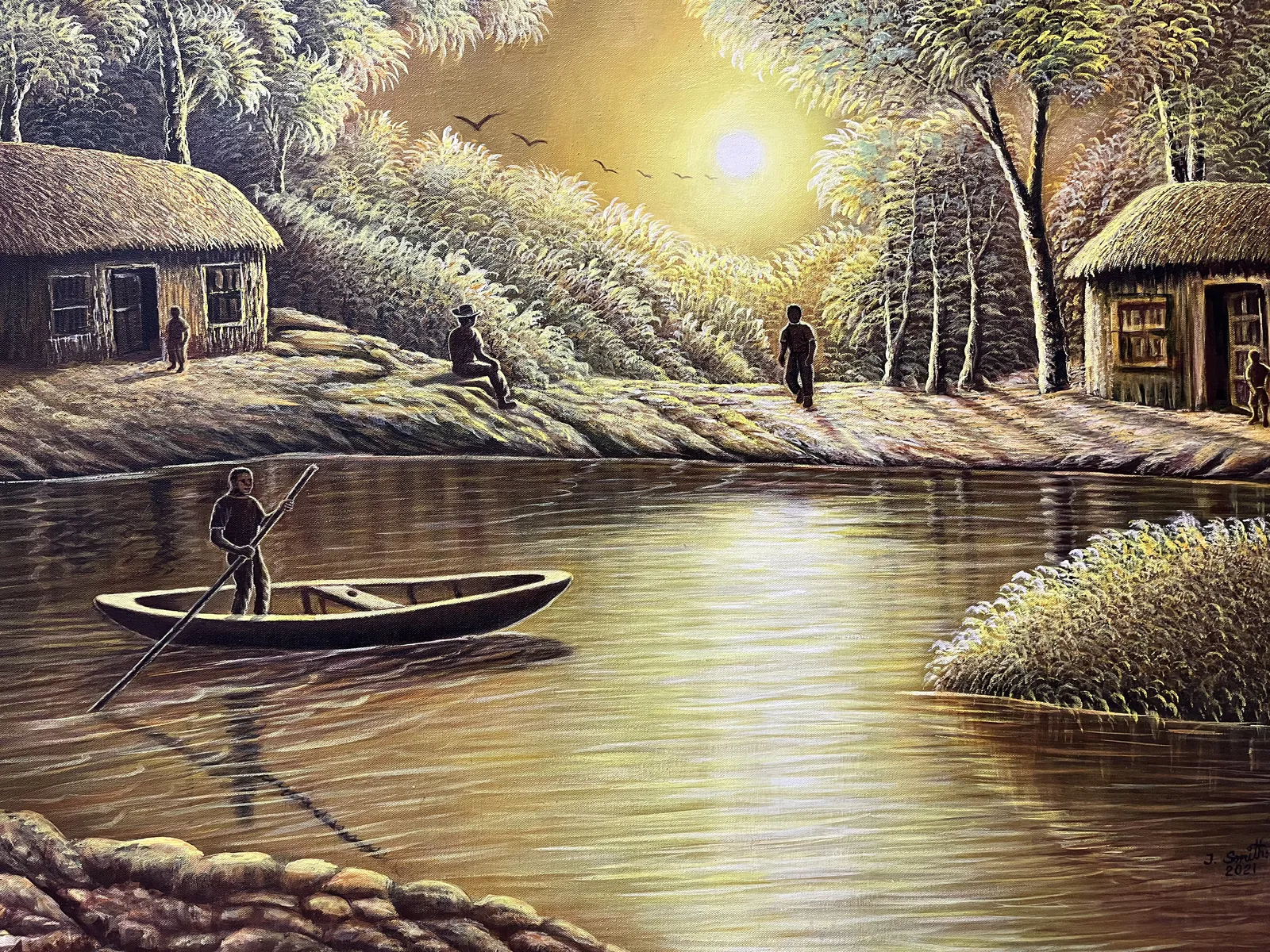
This 2021 oil and acrylic painting evokes serenity and ancestral rhythm. A golden twilight bathes the rural scene, where everyday life unfolds by a calm lagoon. The composition speaks to Colombia’s Pacific and Caribbean heritage, honoring peace through stillness, memory, and connection to the land.
Eternity - The Soldier of Marathon Announcing Victory
Xu Zhen
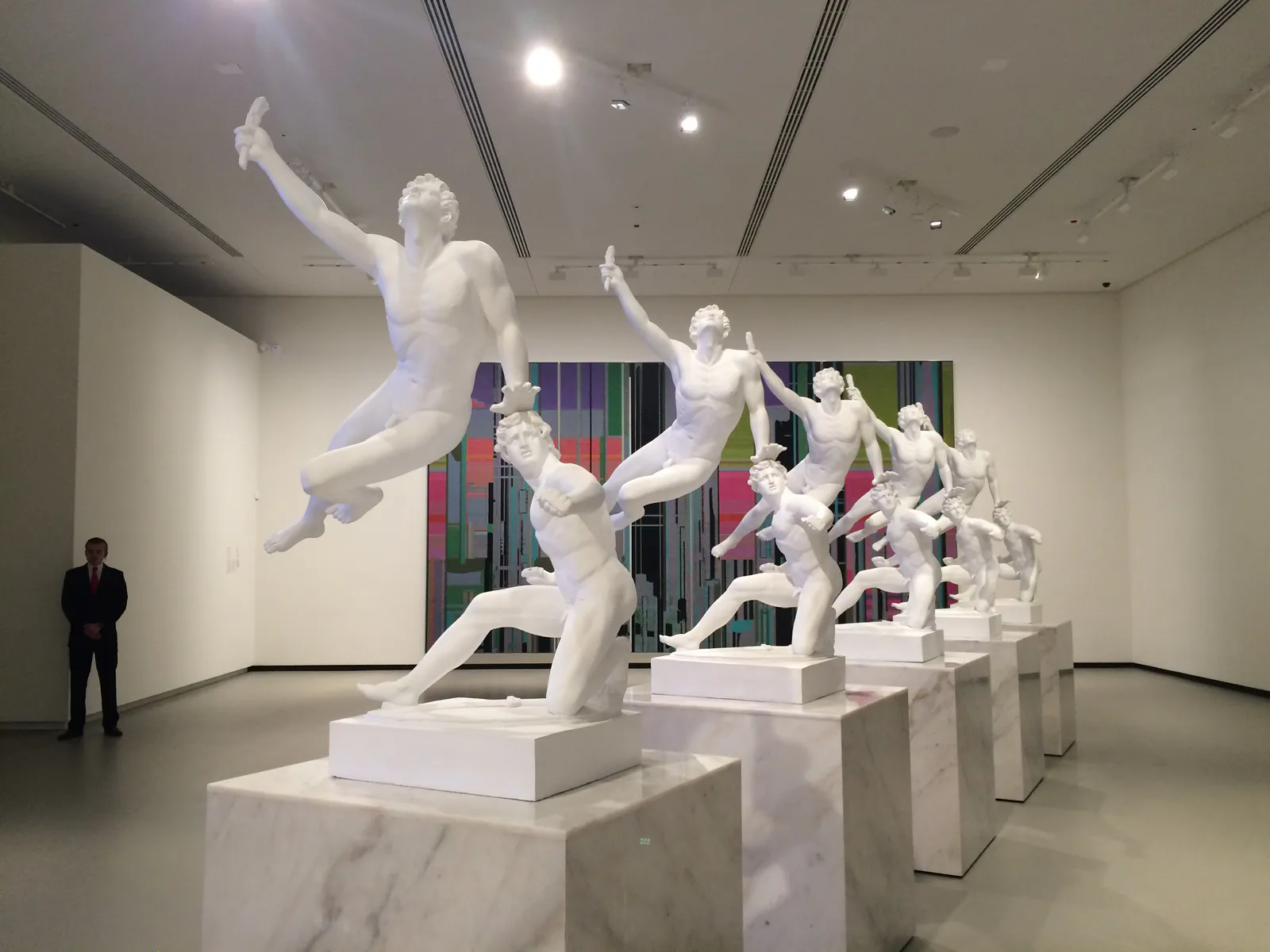
This 2011 sculpture installation Eternity – Eternity - The Soldier of Marathon Announcing Victory, a Wounded Galatian fuses classical Greek forms with contemporary fragmentation. Crafted from concrete, fiberglass, marble powder, and metal, the sequence begins with a whole figure and gradually breaks apart, evoking cultural transformation and the erosion of historical continuity.
Saint Anthony the Hermit
Jan Brueghel
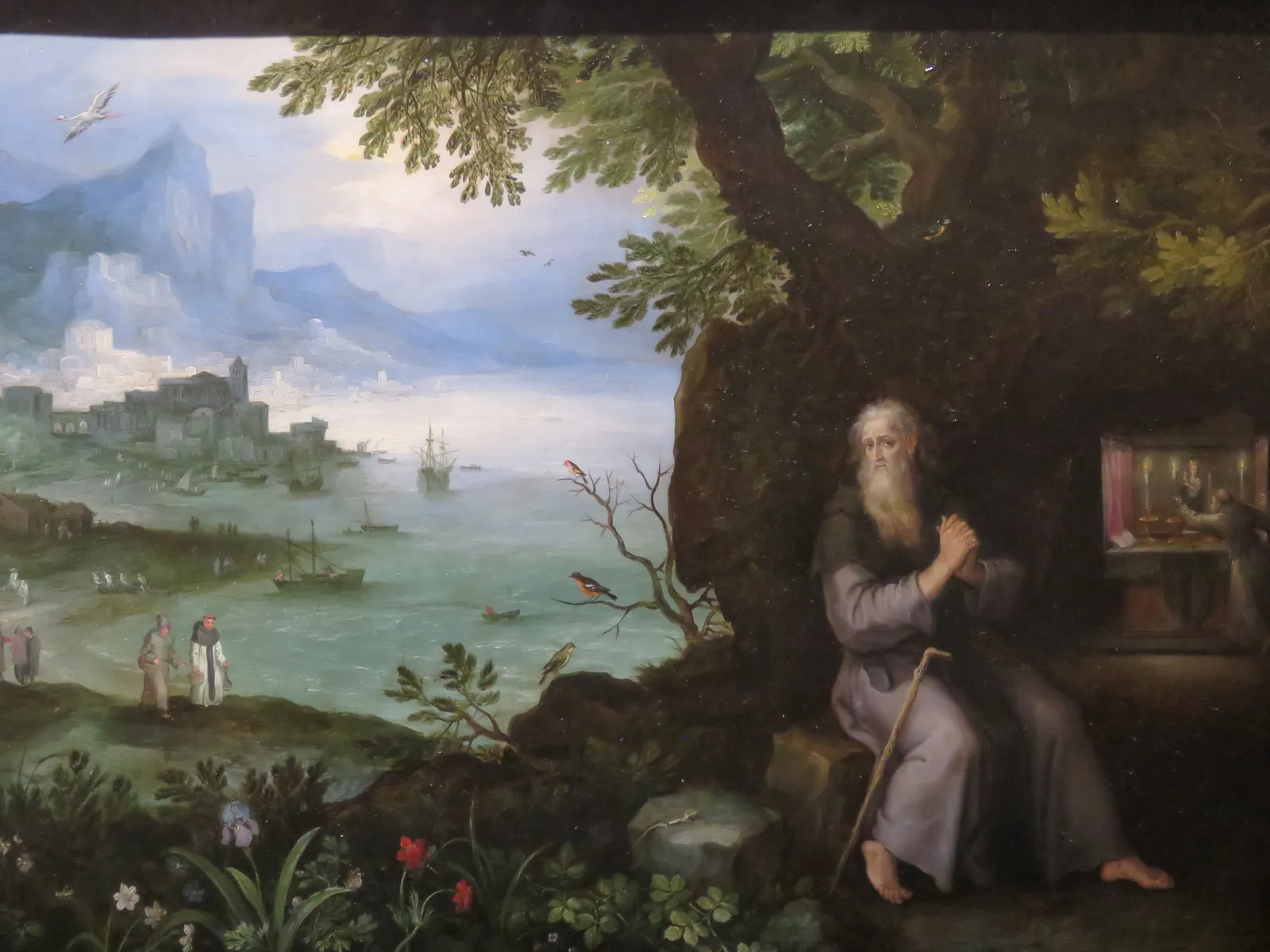
This tranquil painting (early 17th c.) shows Saint Anthony seated at the mouth of a cave, gazing contemplatively toward the city and sea. The vivid flora and distant harbor contrast with his solitude, symbolizing the tension between worldly life and spiritual retreat. A vision of a sacred altar within the cave suggests divine presence in the midst of earthly temptation.
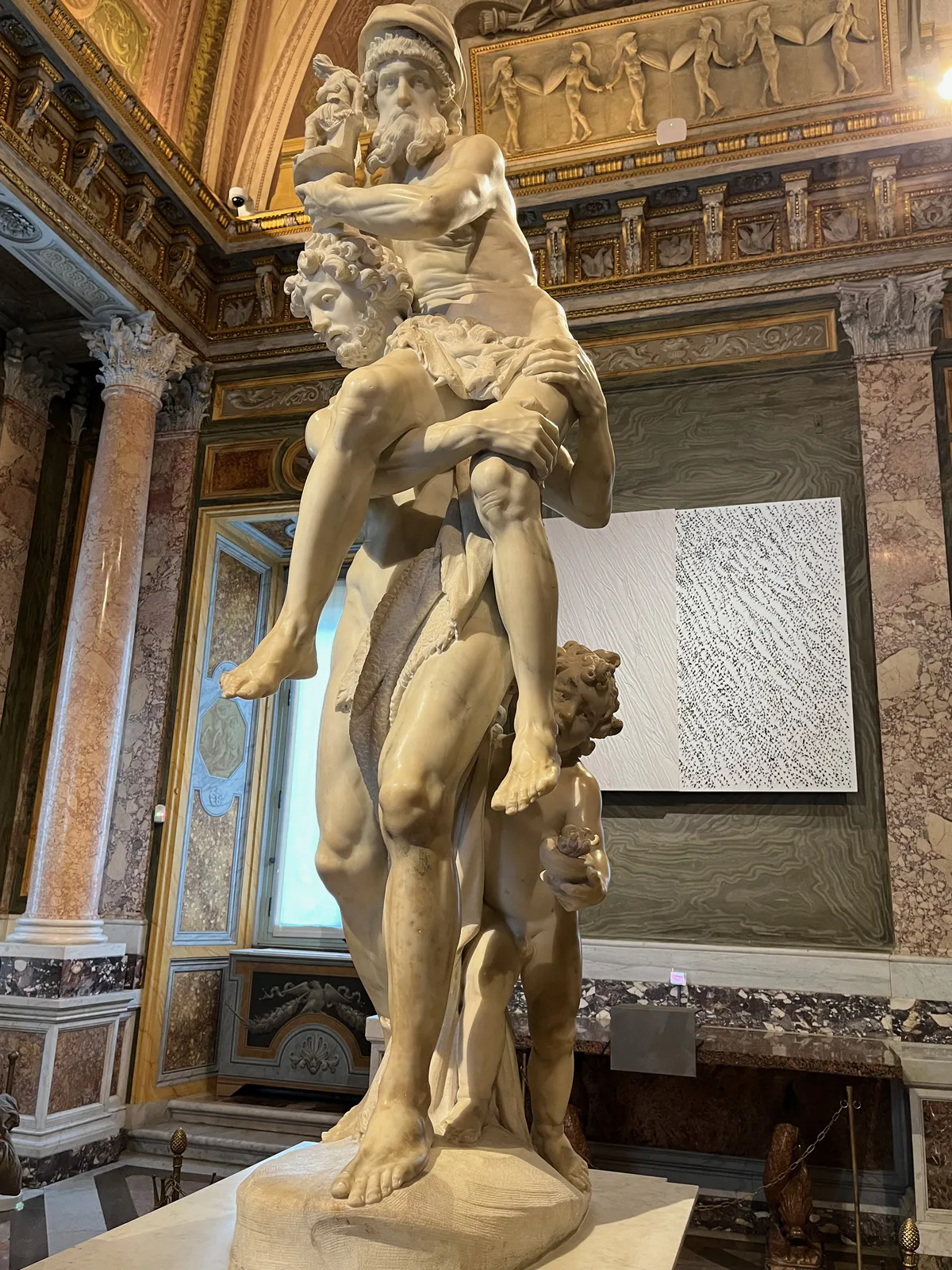
Aeneas, Anchises, and Ascanius
Bernini
This early masterpiece (1618–19) shows Aeneas carrying his father Anchises and leading his son Ascanius as they flee Troy. Anchises holds the Penates (household gods safeguarding family and hearth), while Ascanius carries a flame, symbol of Rome’s divine lineage. Bernini unites filial duty, piety, and sacrifice with striking youthful vigor.
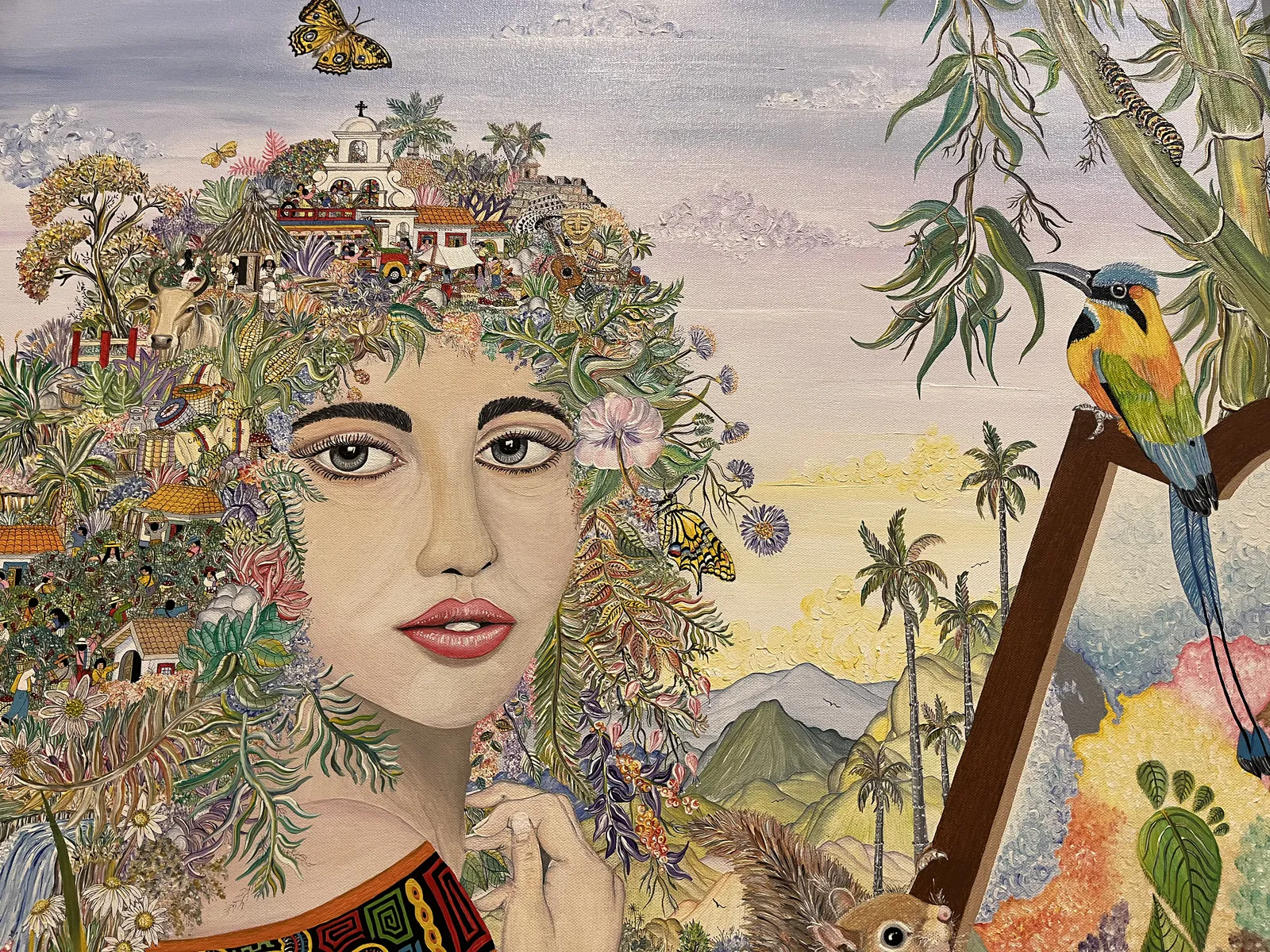
Aún Hay Tiempo
Julio César Ojeda Ariza
This 2021 work blends oil and ink to portray a woman whose hair becomes a lush tapestry of biodiversity and rural life. Symbolizing Colombia’s natural and cultural abundance, it warns of its fragility. The title, There’s Still Time, urges collective action to preserve the environment and ancestral wisdom.
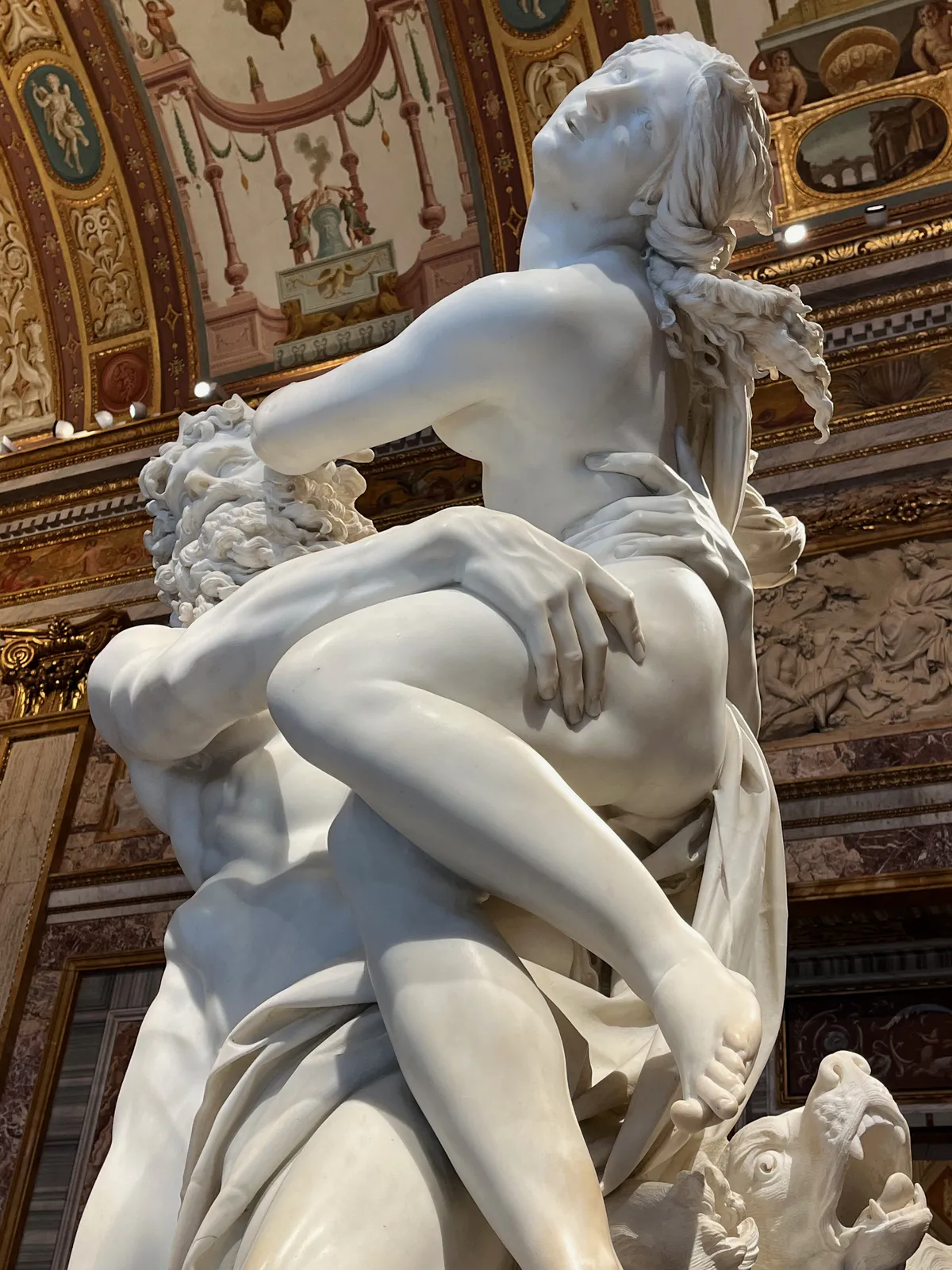
The Rape of Proserpina
Bernini
In this stunning detail of Bernini’s marble group (1621–22), Pluto’s fingers sink into Proserpina’s thigh with unnerving realism, while her twisting form and anguished face heighten the emotional intensity. The composition’s tactile illusionism and psychological drama mark a defining triumph of early Baroque sculpture.
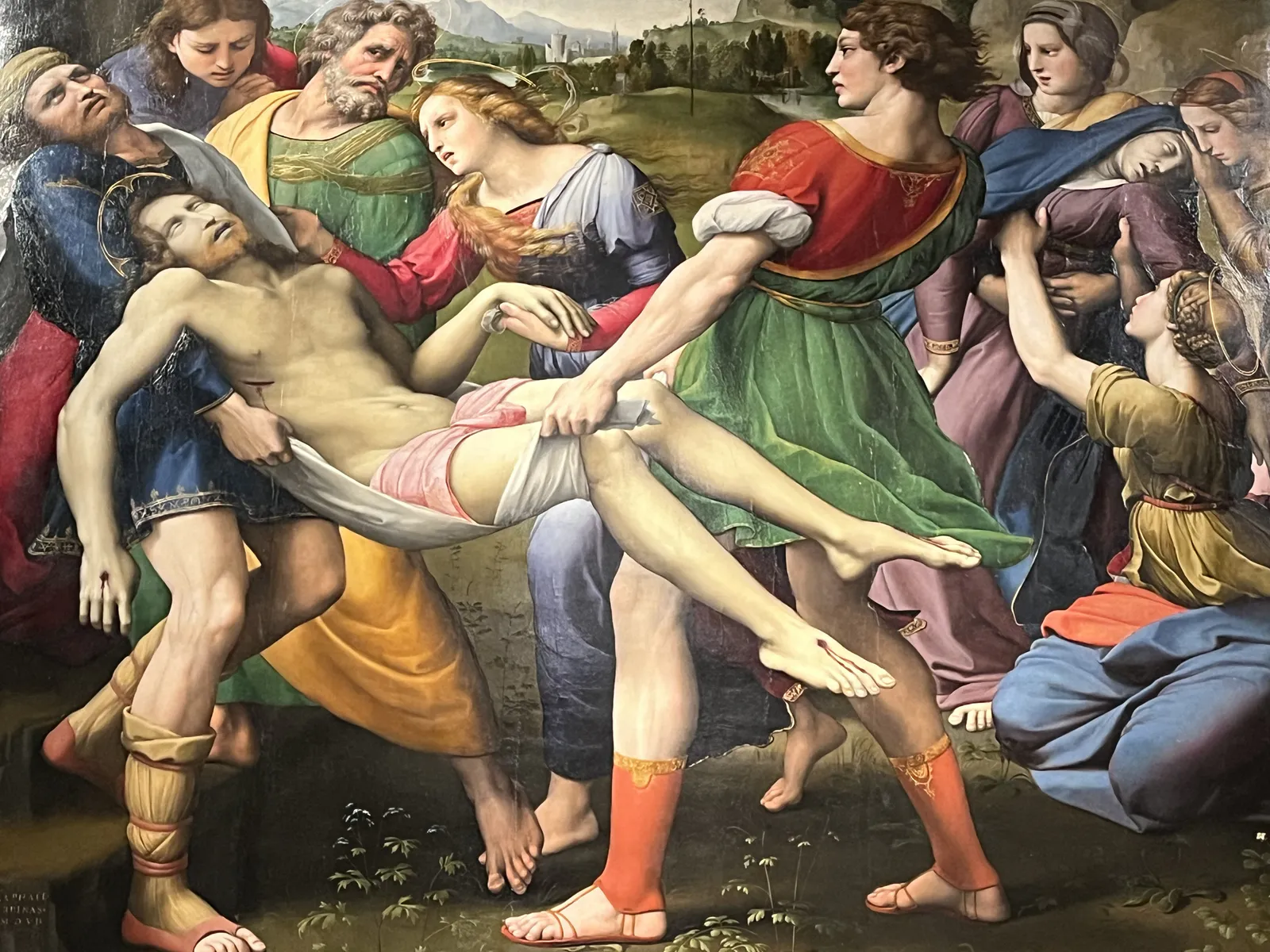
The Entombment
Raphael
Commissioned in 1507 by Atalanta Baglioni to honor her slain son, this painting unites the Deposition, Lamentation, and Entombment in one scene. Raphael’s dynamic figures, especially Christ’s, show Michelangelo’s influence. Stolen in 1608 by agents of Cardinal Borghese, it now hangs in the Galleria Borghese. A 2020 restoration revealed vivid colors, delicate sfumato (soft tonal blending), and adjustments in Raphael’s evolving design.
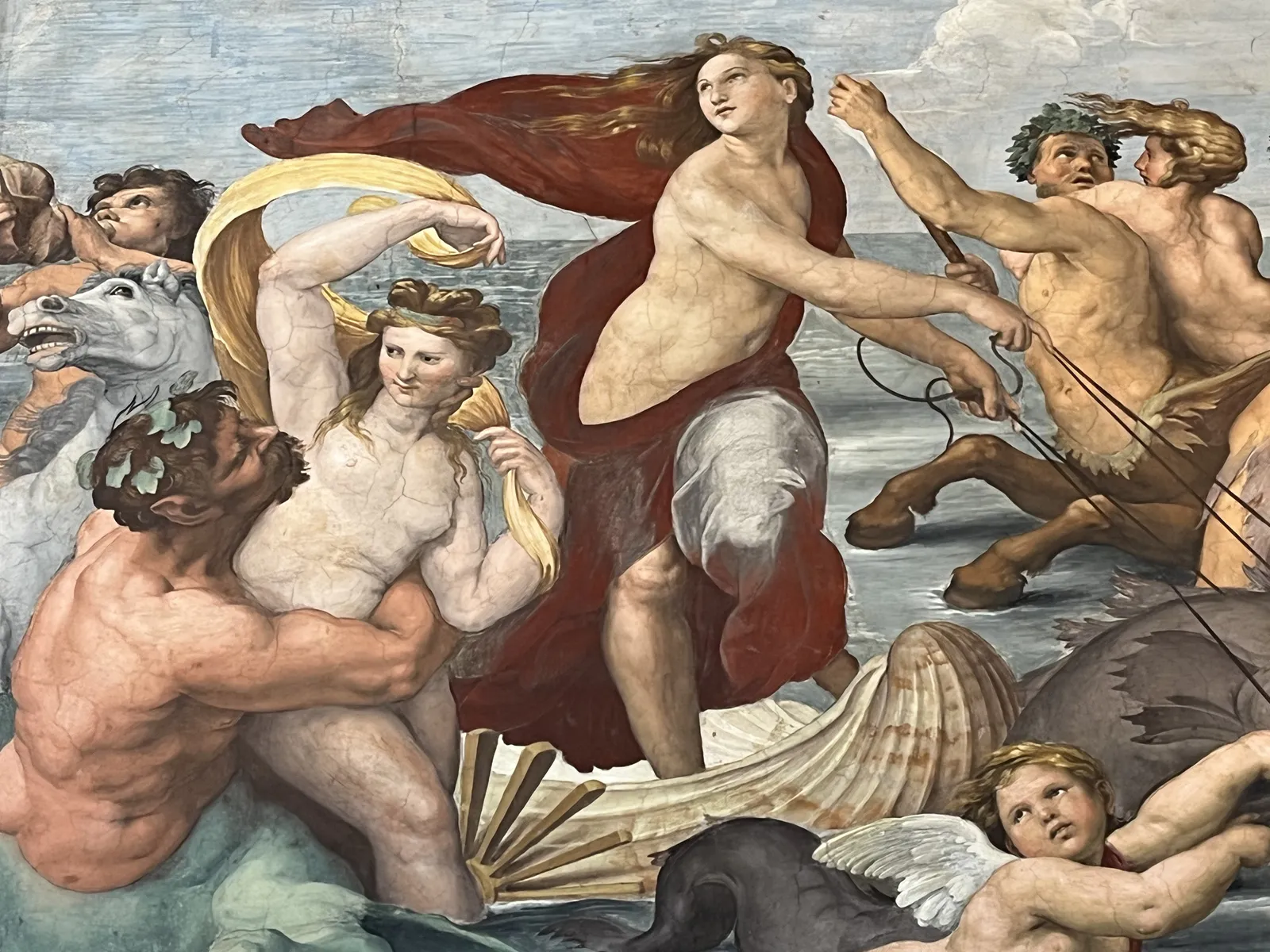
Triumph of Galatea (detail)
Raphael
This portion (1511–12) shows Galatea, the sea nymph of Greek myth, riding a dolphin-drawn shell chariot. Around her, tritons and nereids embody the vibrant energy of the sea. Raphael’s design celebrates Galatea’s beauty and grace, while capturing the joyful movement of the marine procession.
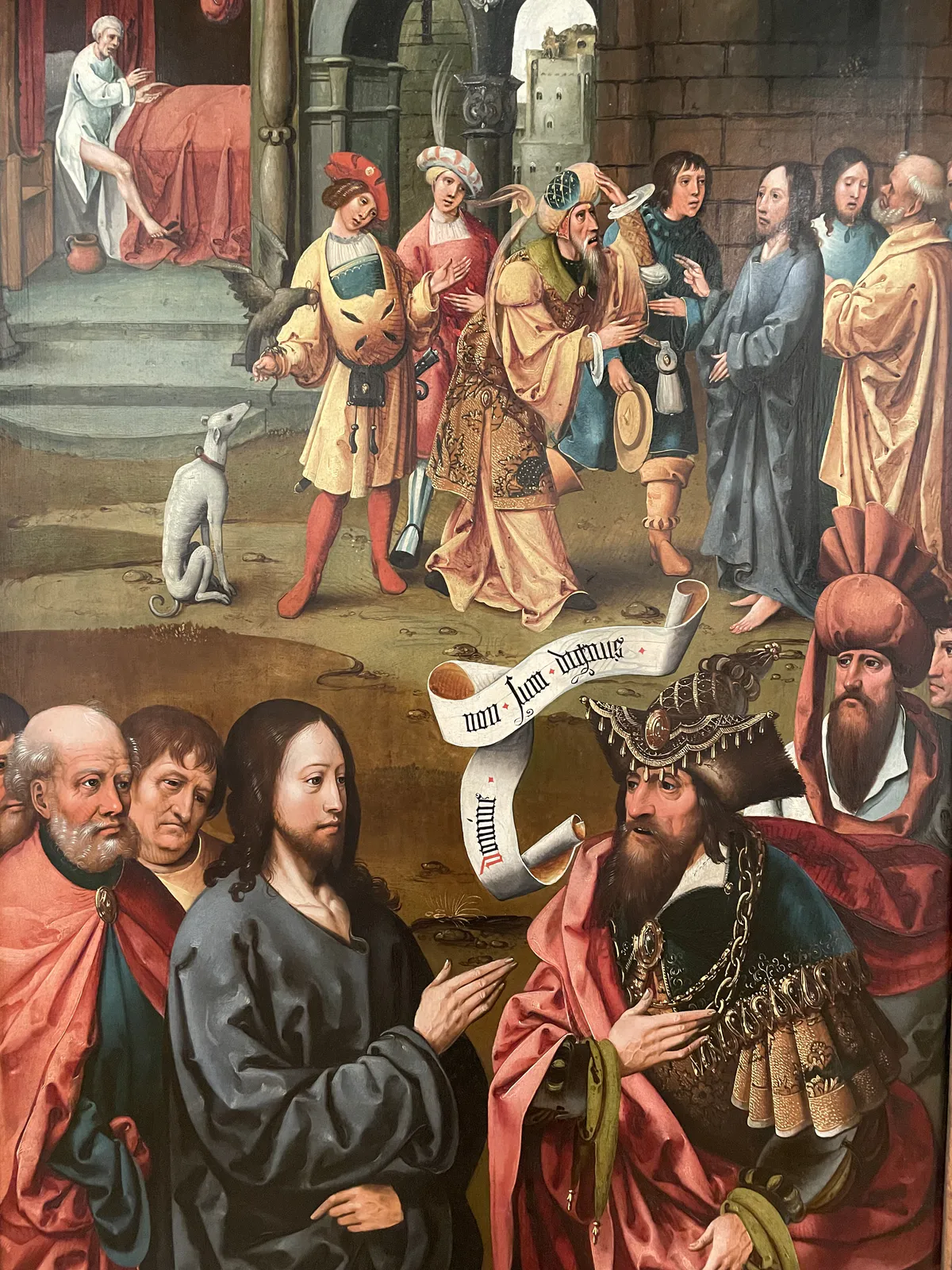
Christ and the Centurion of Capernaum
Master of Adoration of Amberes
This Northern Renaissance panel (1520–30) captures the moment a Roman centurion asks Christ to heal his servant, saying Lord, I am not worthy. The scene blends biblical narrative with contemporary Flemish attire, highlighting faith over status. The expressive gestures and rich details emphasize humility and the universal appeal of compassion, reflecting the era's fusion of religious and cultural elements.
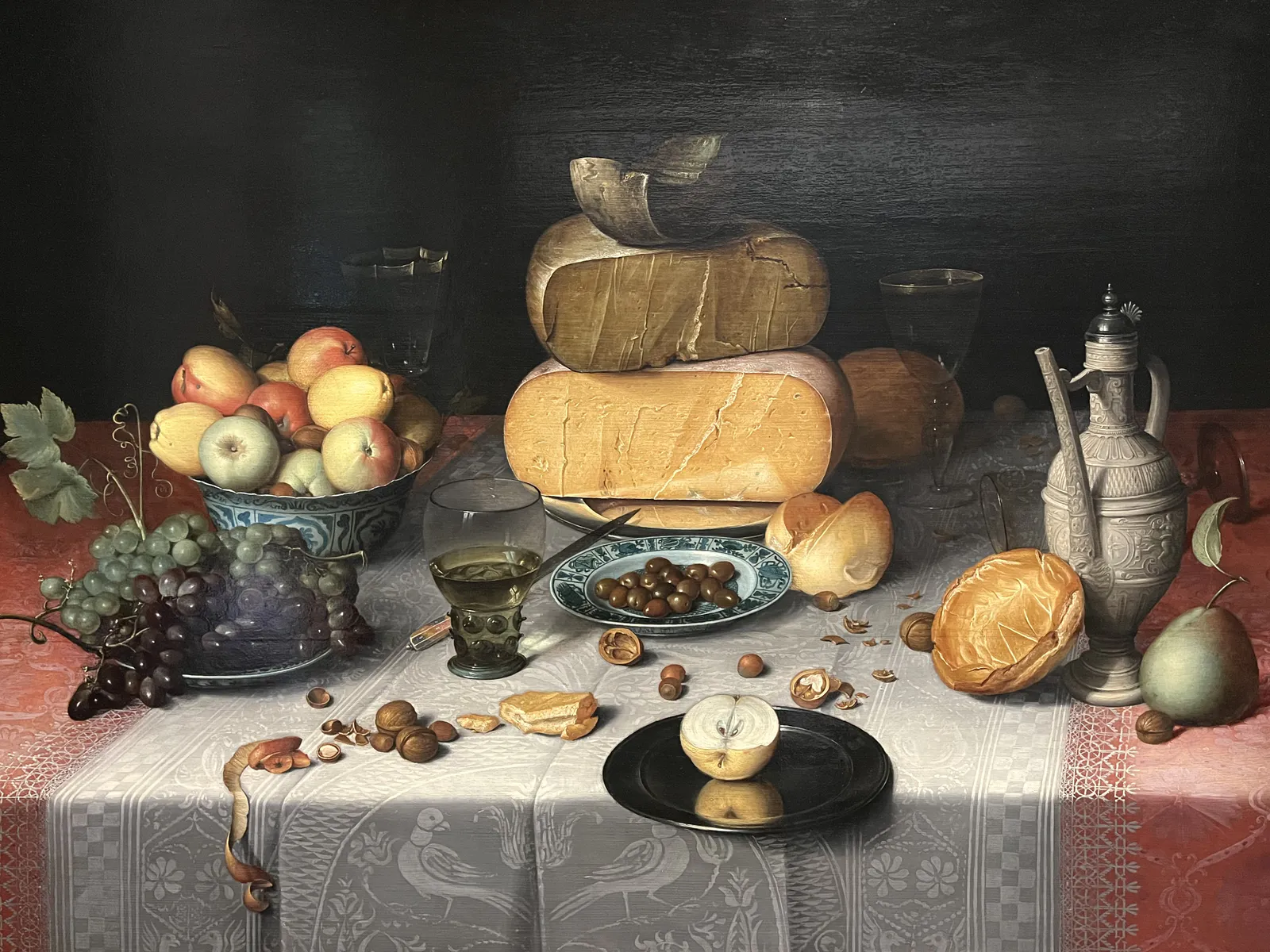
Still Life with Cheese
Floris Claesz van Dijck
On a damask-draped table (c.1615) lie fruit, bread, and three cheeses, carefully grouped by type. Floris van Dijck’s mastery of illusion is evident in the pewter plate jutting over the edge, as if within reach. A pioneer of Haarlem still-life painting, he helped establish the Dutch Golden Age tradition of rendering everyday abundance with startling realism.
“When the path is beautiful, do not ask where it leads.” — Zen proverb
Welcome to my travel photography!
“When the path is beautiful, do not ask where it leads.” — Zen proverb
Welcome to my travel photography!
For as long as I can remember, my path has been one of discovery—seeking beauty, timelessness, and connection in every corner of the world. It has also been a journey of deep learning and understanding. I’ve been an avid traveler (or perhaps a travel addict?) for most of my life. My love for travel began long before I ever left home: as a child, I drew a fantasy map of my grandparents’ apartment and “traveled” through it with my cousin Sonya, imagining adventures in every corner. Nearly 90 countries and countless moments of awe later, I’m excited to share this journey with you.
Thanks to the tireless and ingenious programming of Diagilev, we’re now able to present about fifteen percent of the images I’ve accumulated over the years. More will be released in small batches depending on your interest. While the first release leans toward museum photography, later ones will include more nature, architecture, culture, and general travel experiences. If you’d like to receive email notifications about new releases, feel free to reach out—no commercial use, ever.
Throughout my travels, I’ve been drawn to two intertwined kinds of discovery. One is intellectual: learning why the world is the way it is. History became my guide, shaping my perspective and filling my camera roll with museums and old buildings. To me, history is not the past—it is the key to understanding the present and how the world became what it is. The other is emotional: seeking moments of elevation—spirituality, beauty, harmony—often found in nature, monasteries, and ancient sacred spaces. Together, these impulses shape my photography. It invites you to learn, admire, and soar—to rise above the mundane and see the world through a lens of curiosity and wonder.
Much of my later travel became possible thanks to my job with Delta Air Lines, but the wanderlust began years earlier. By the time I joined the industry, I had already visited over 35 countries and lived in several—largely thanks to a backpacking journey around the world with Luis León, whose face appears in many early photos. I grew up in Ufa in the USSR, and since leaving it I have lived, studied, and worked in Latvia, the United States, France, South Korea, Canada, Spain, Italy, Brazil, Japan, and Colombia.
A life of near-constant movement may seem a little crazy, but it has deepened my understanding of the world and produced the photography you are about to see. Over the years, my style has evolved—more intentional, more refined—yet its core remains the same: a search for understanding, timeless beauty, and a connection to those who walked this earth long before us.
I hope these photos stir something in your soul, just as they did in mine. I’d love to hear from you—whether reactions, suggestions, corrections, or a request to be added to the email list for new releases (no commercial use, I promise). You can learn more about my travels here, and my academic life here.
Enjoy our shared journey!