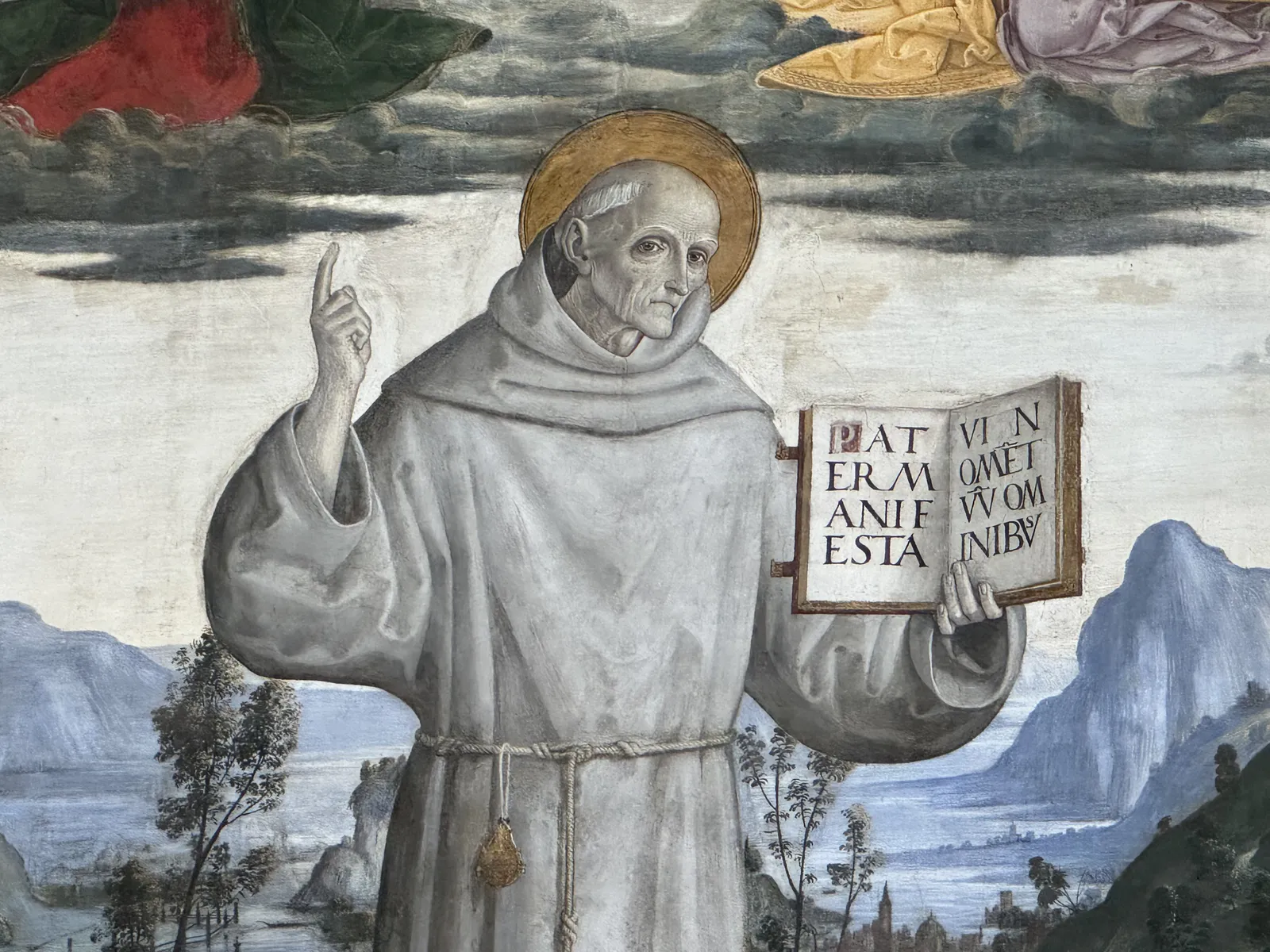
St. Bernardino (Detail)
Pinturicchio
In this detail (1484–1486), Pinturicchio portrays St. Bernardino holding an open book inscribed PATER MANIFESTA NOMEN TUUM OMNIBUS (Father, manifest Your name to all). His raised finger points toward heaven, symbolizing his mission to glorify the Holy Name of Jesus and promote peace amid social discord.
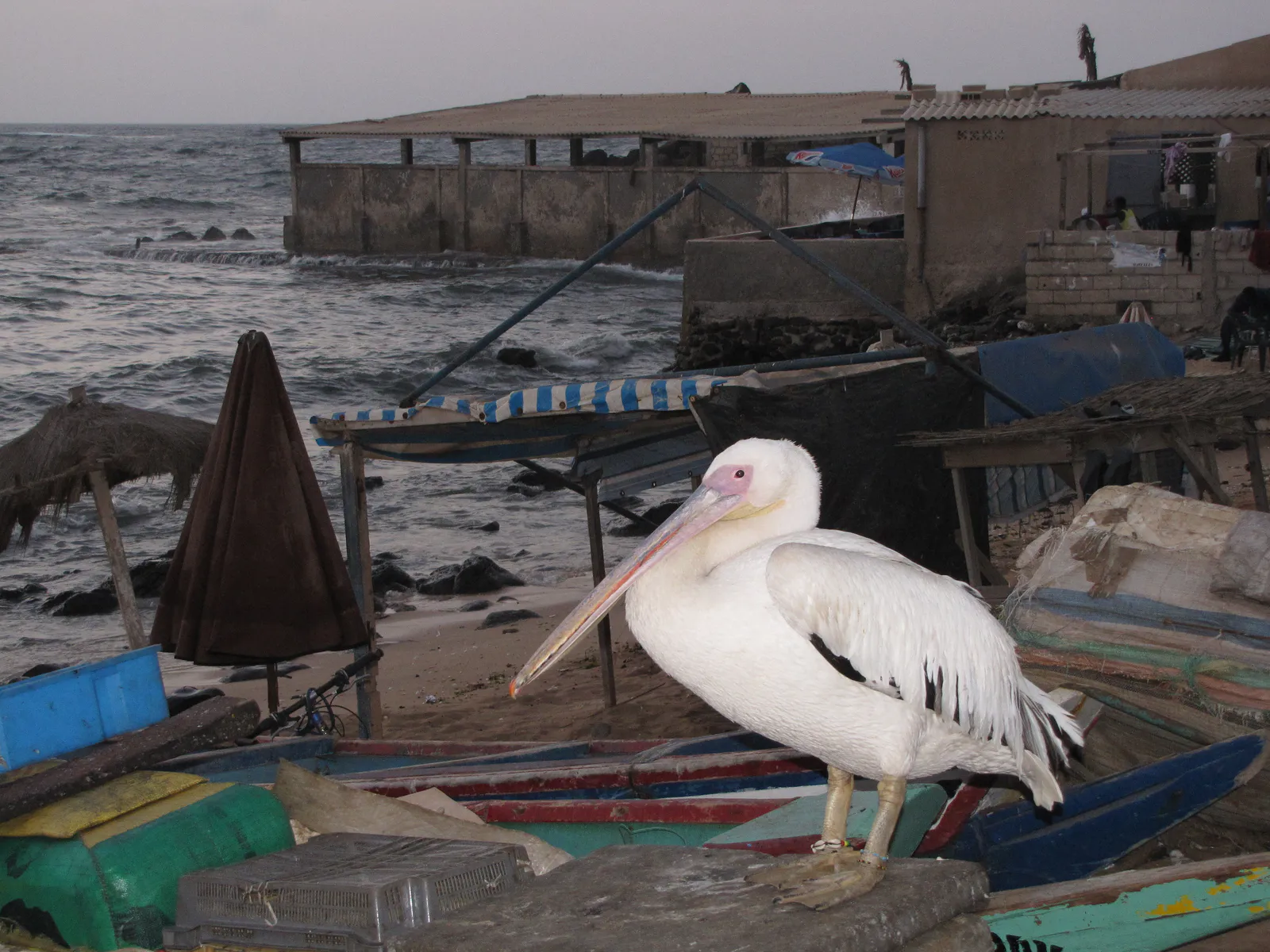
Great White Pelican
Perched calmly amid colorful pirogues and fishing gear, this great white pelican (Pelecanus onocrotalus) surveys the Atlantic at dusk. A familiar presence in West African coastal towns, the species thrives near human activity, drawn by abundant fish and the rhythm of life along Senegal’s bustling shores.
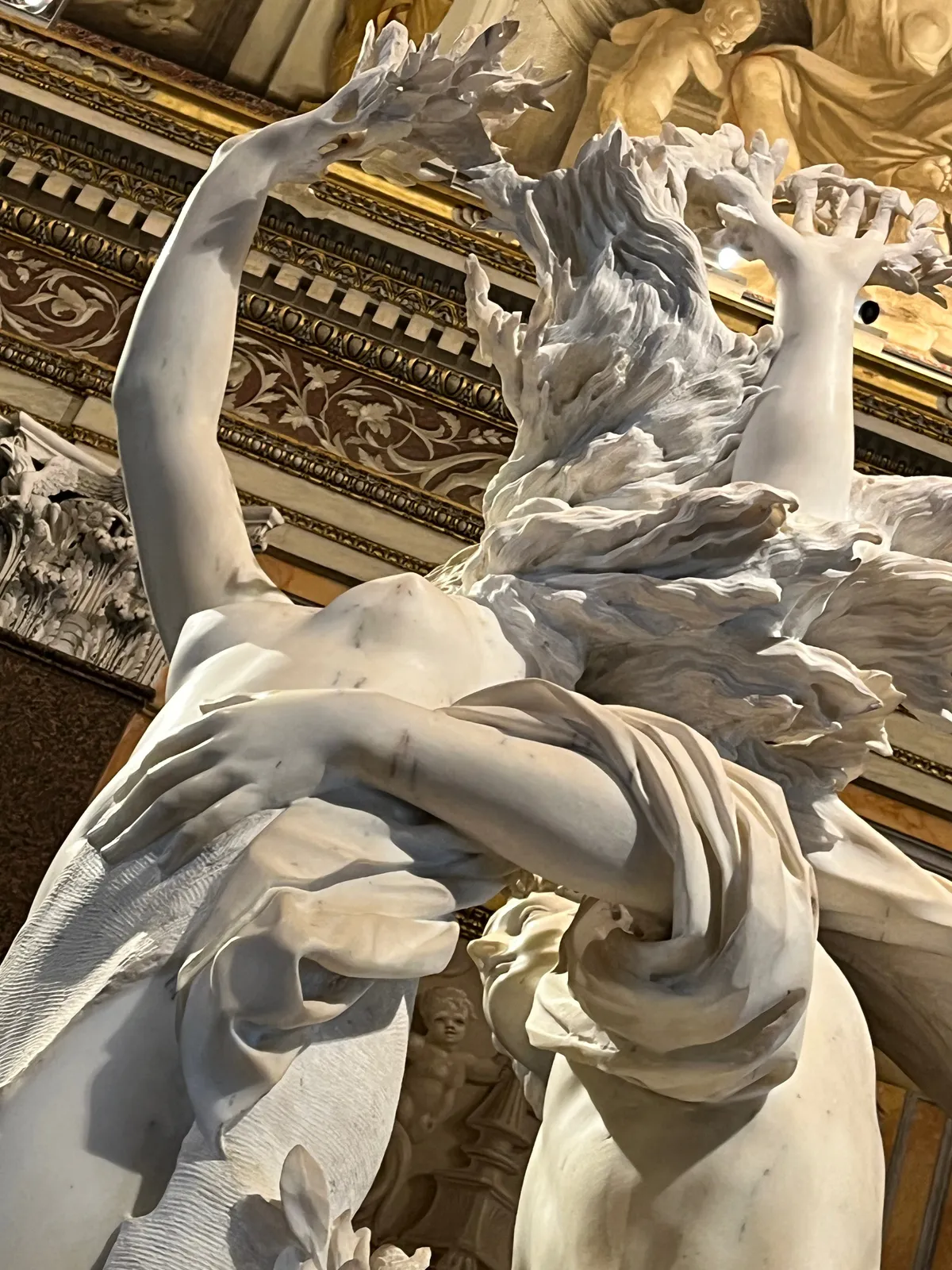
Apollo and Daphne (detail)
Gian Lorenzo Bernini
In this electrifying detail from Apollo and Daphne (1622–25), Daphne’s transformation peaks: her fingers stretch skyward as they fracture into laurel branches. Bernini’s carving achieves an uncanny fluidity—Apollo’s embrace contrasts her fleeing limbs, while bark and hair blur into motion, embodying divine metamorphosis and tragic escape.
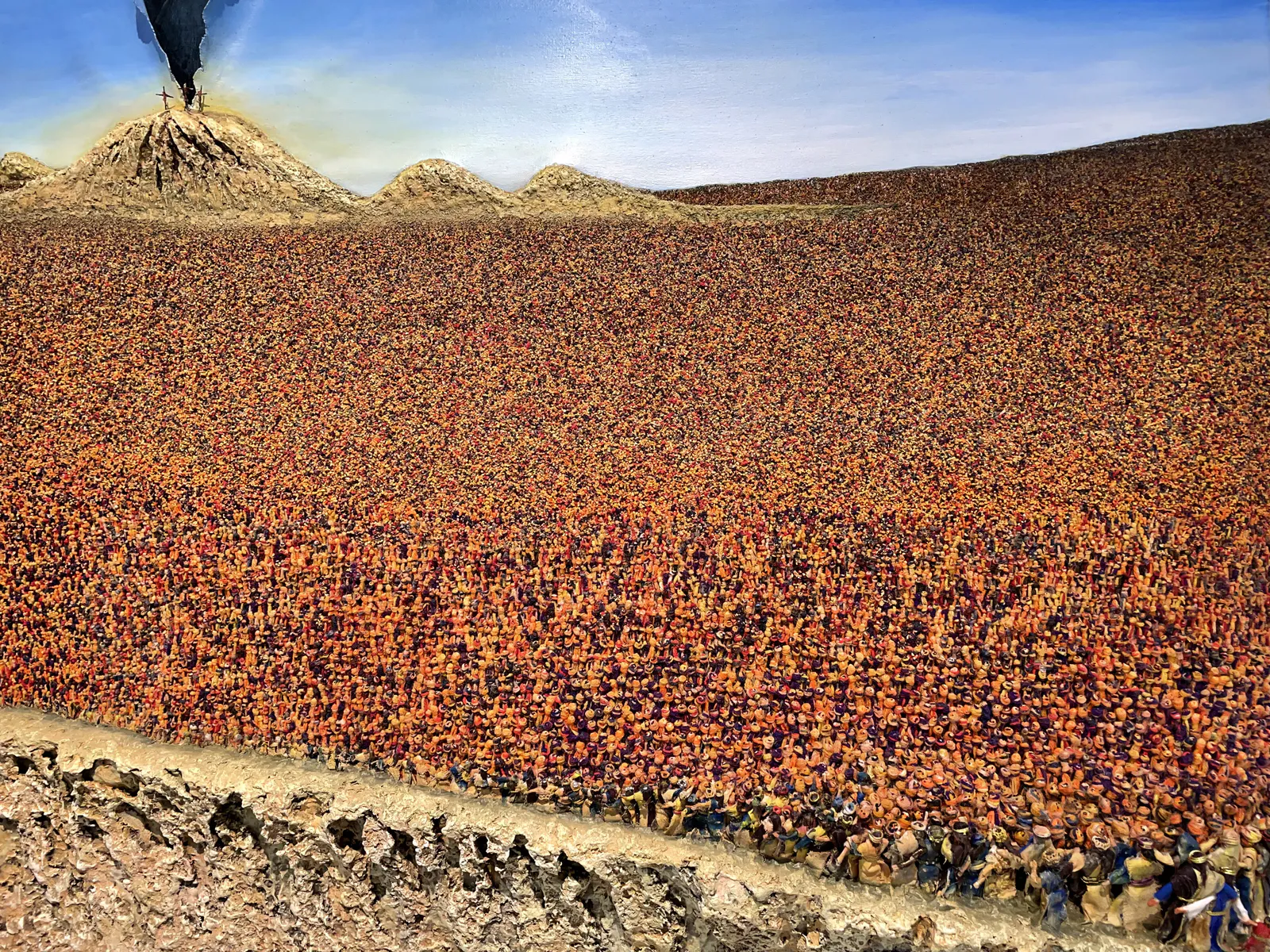
The Veil Torn (The Door to Heaven)
Mariano Bidó
In this mixed-media work (2018), a vast crowd moves toward a hill crowned by three crosses under a black veil of smoke. Referencing the crucifixion, the piece evokes mass devotion, suffering, and salvation. The dense humanity contrasts with the distant, divine climax—highlighting faith as both a collective journey and personal reckoning.
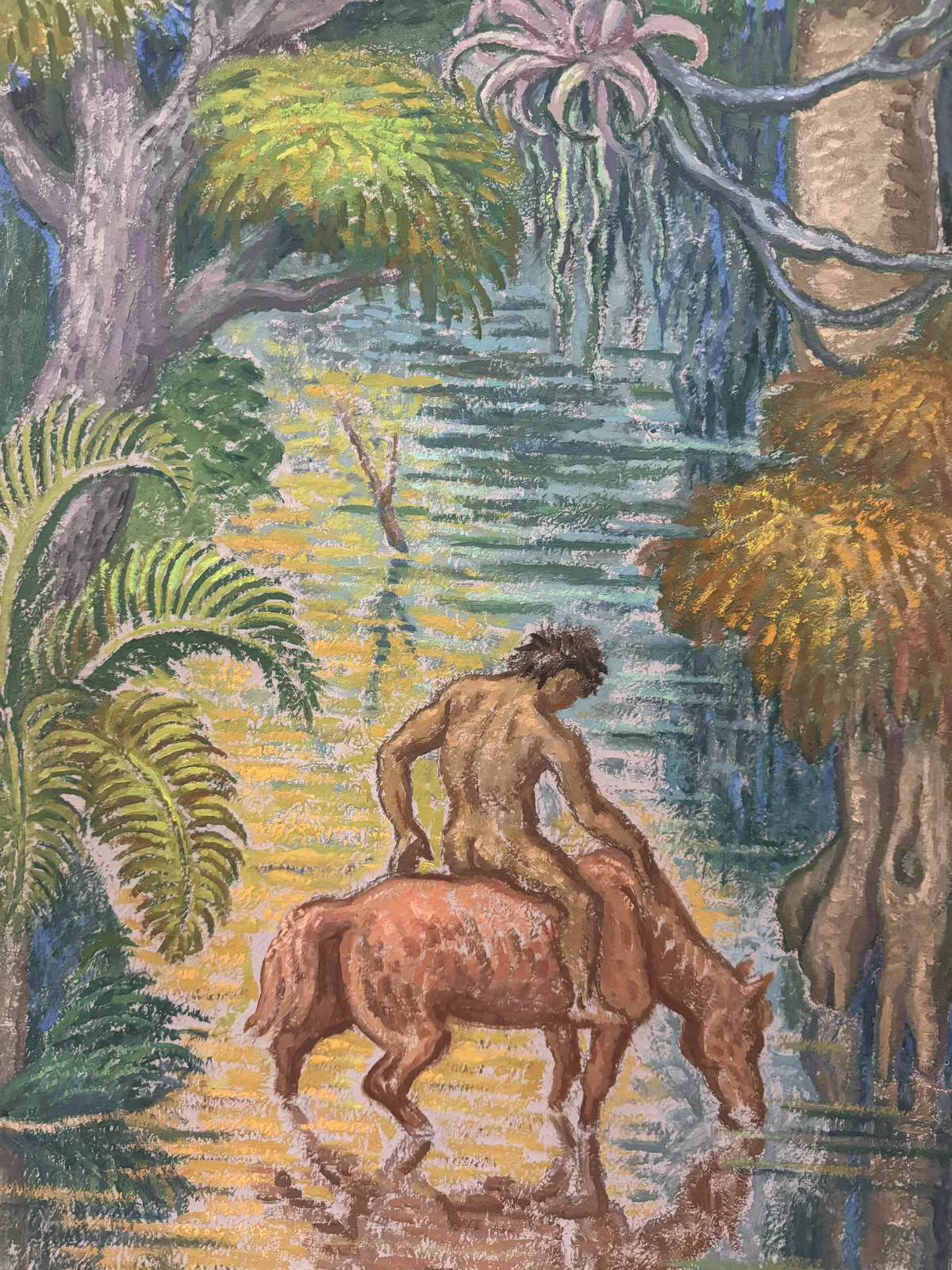
Indo-American Scene
Luis Alberto Acuña
A lone, naked rider on horseback drinks from a forest stream, immersed in a lush tropical setting. Acuña's painting (1950-60s) evokes a primordial connection between Indigenous people and the natural world, blending mythic and symbolic elements into a vision of harmony, solitude, and ancestral presence.
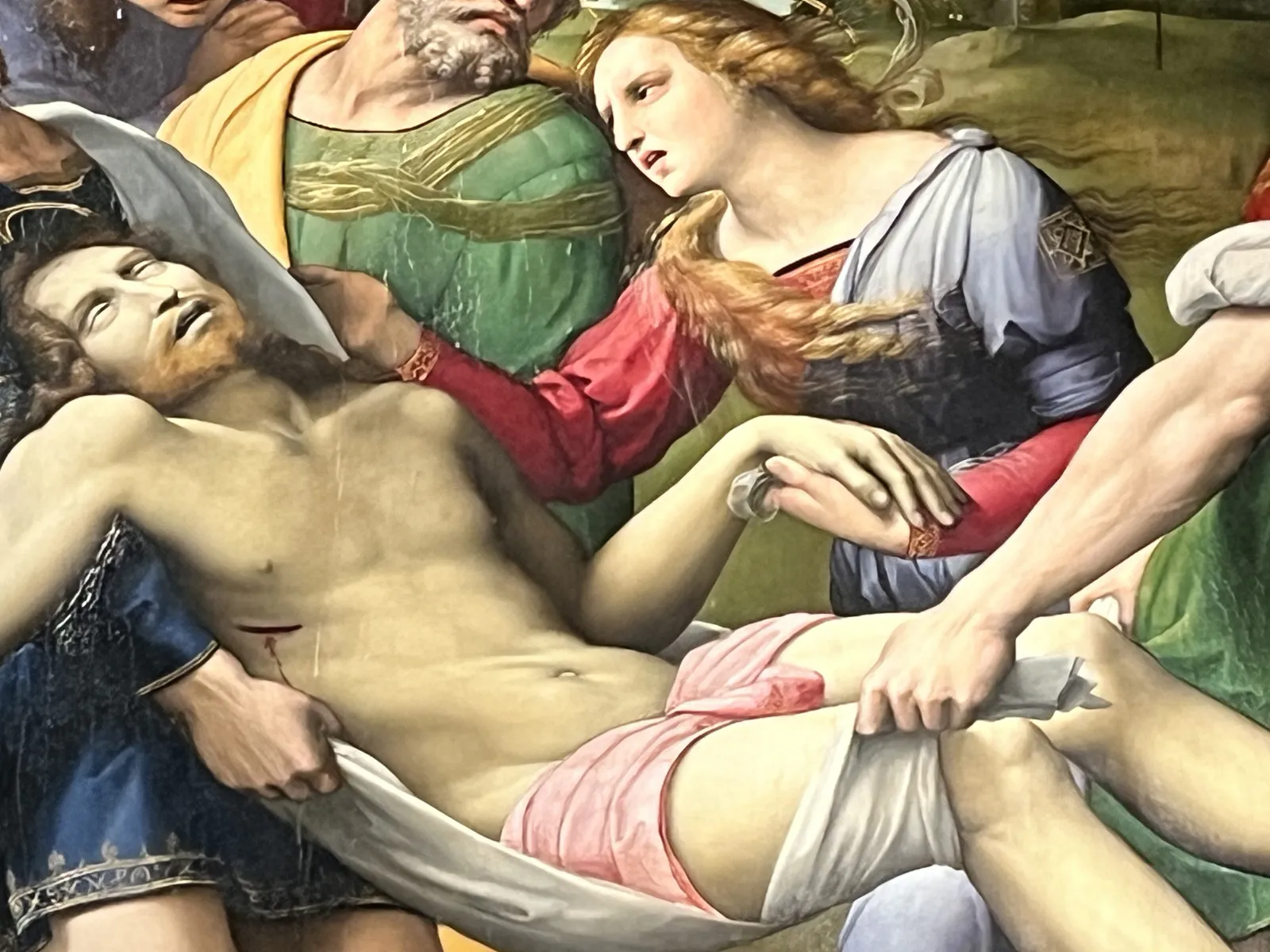
The Entombment (detail)
Raphael
This masterpiece (1507) shows a group of figures surrounding the lifeless body of Christ, merging themes of Deposition, Lamentation, and Entombment. Commissioned by Atalanta Baglioni, it honors her murdered son. Raphael’s composition shows Michelangelo’s influence in the sculptural form of Christ. A 2020 restoration revealed refinements in Raphael’s underdrawing, pigment choices, and layered modeling, clarifying how he built depth and anatomical precision.
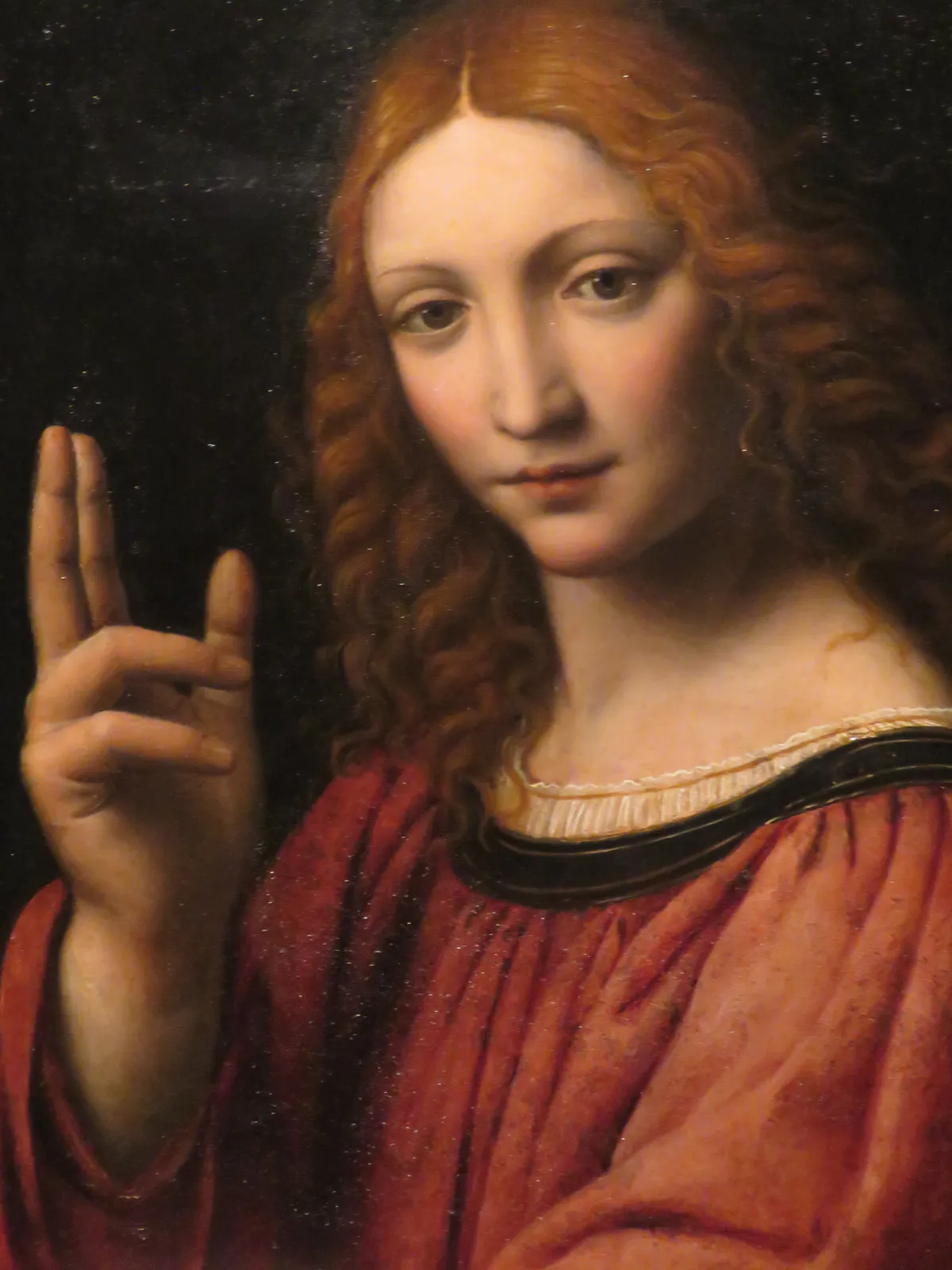
Christ Blessing
Bernardino Luini
In this serene image of Christ (c. 1520), Luini captures divine benevolence with a gentle gesture of blessing. The soft modeling of features, rich red garment, and delicate curls echo Leonardo da Vinci’s influence, yet Luini’s style emphasizes a tranquil spirituality. The raised hand unites authority with compassion, inviting personal devotion.
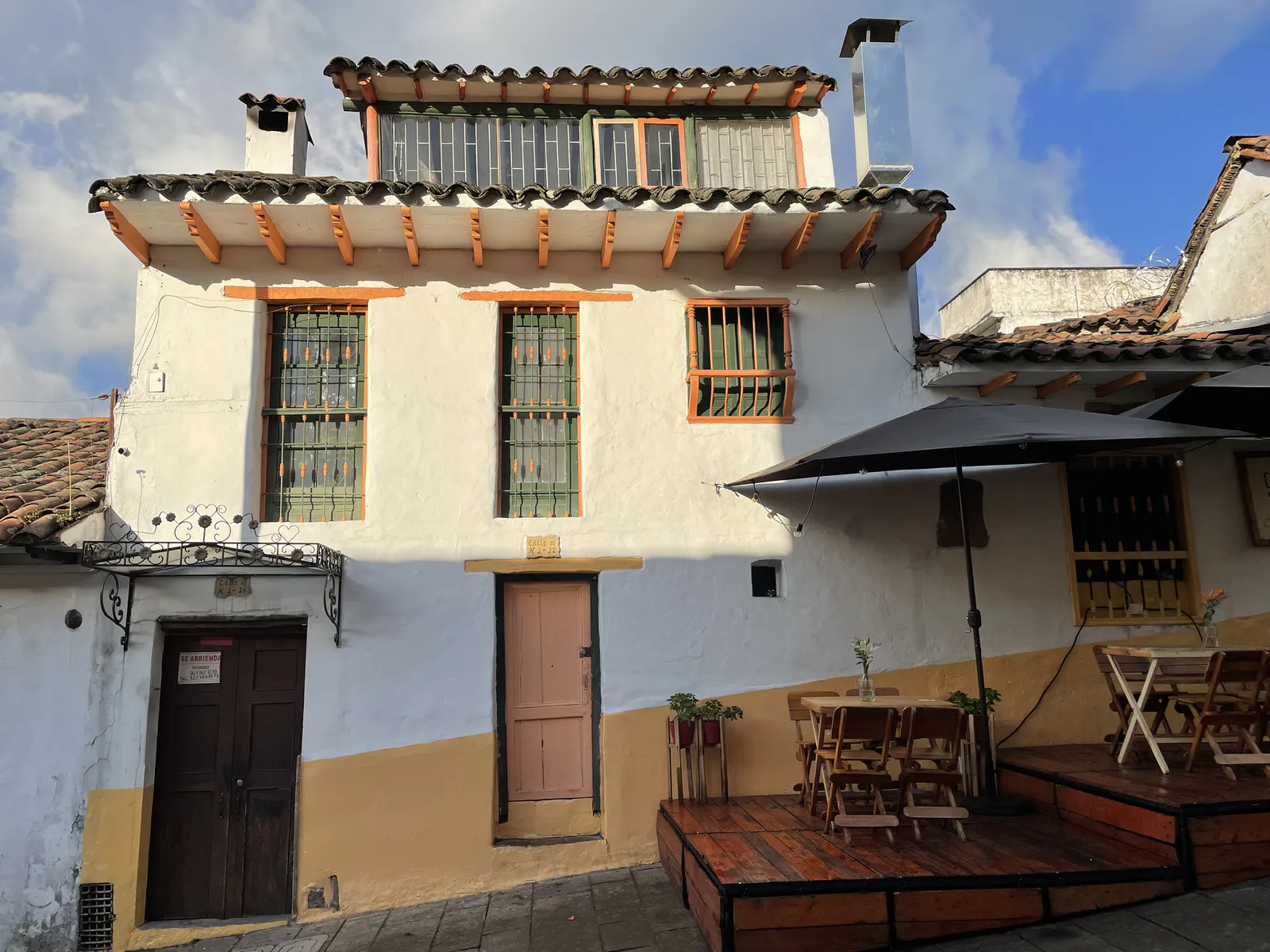
Traditional House with Café in La Candelaria
This colonial-era home in La Candelaria (17th c.)exemplifies Andean-Spanish vernacular architecture with its irregular windows, clay-tile roof, and green iron bars. The wooden platform and café tables reflect the area's transformation, where historic buildings now host bookstores, art spaces, and cafés. This blend of tradition and modernity highlights Bogotá's dynamic cultural evolution, illustrating how past and present coexist in urban creativity.
Door of No Return
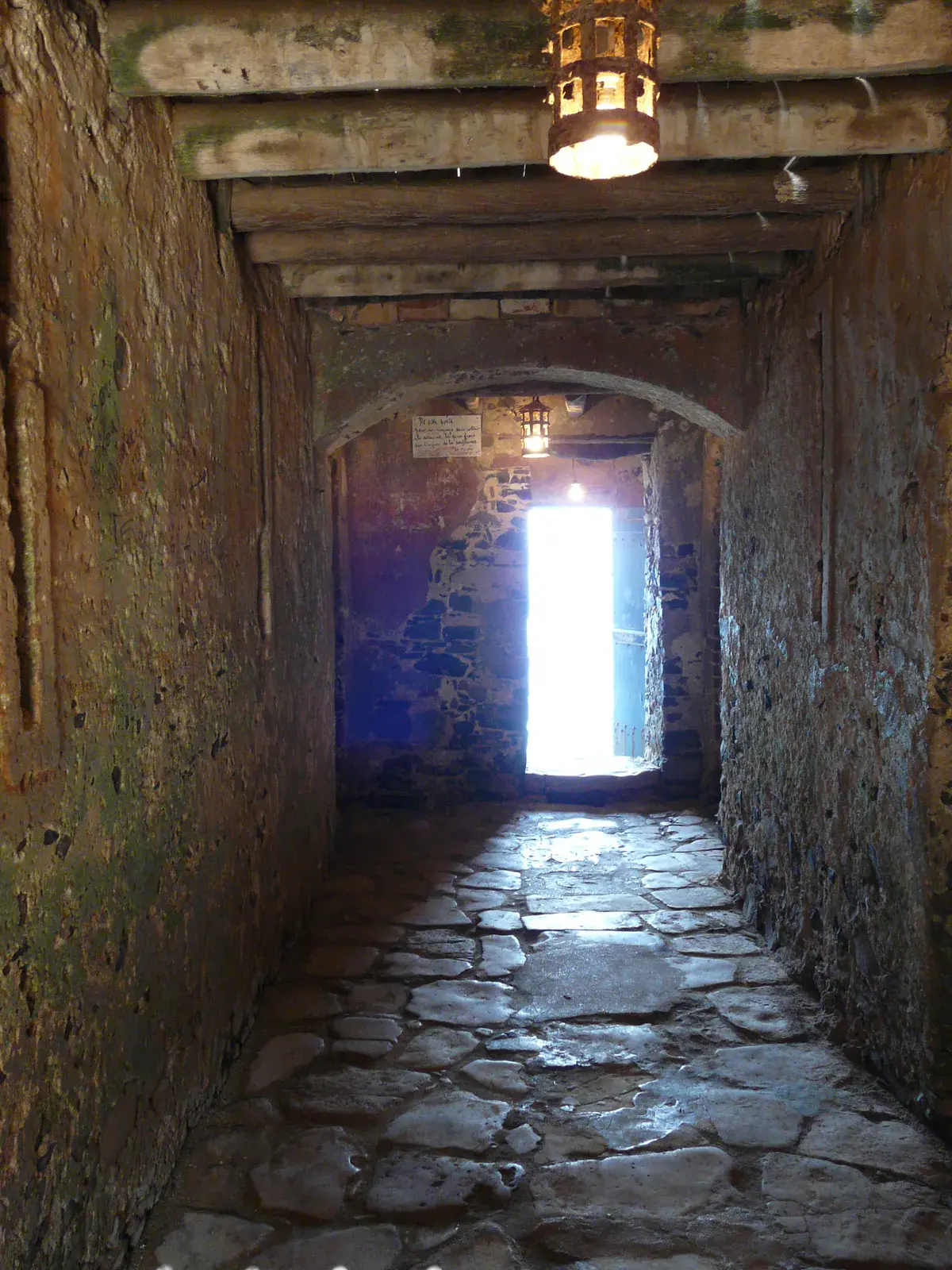
This stone doorway (18th c.) appears at the end of a narrow corridor that opens directly to the sea. It served as the final exit point for enslaved Africans taken to Atlantic-bound ships. The confined passage and single outward view demonstrate the enforced one-way movement through this threshold, making the Door of No Return a stark marker of rupture and displacement.
Mural of Huitaca, the Rebellious Deity
Luis Alberto Acuña
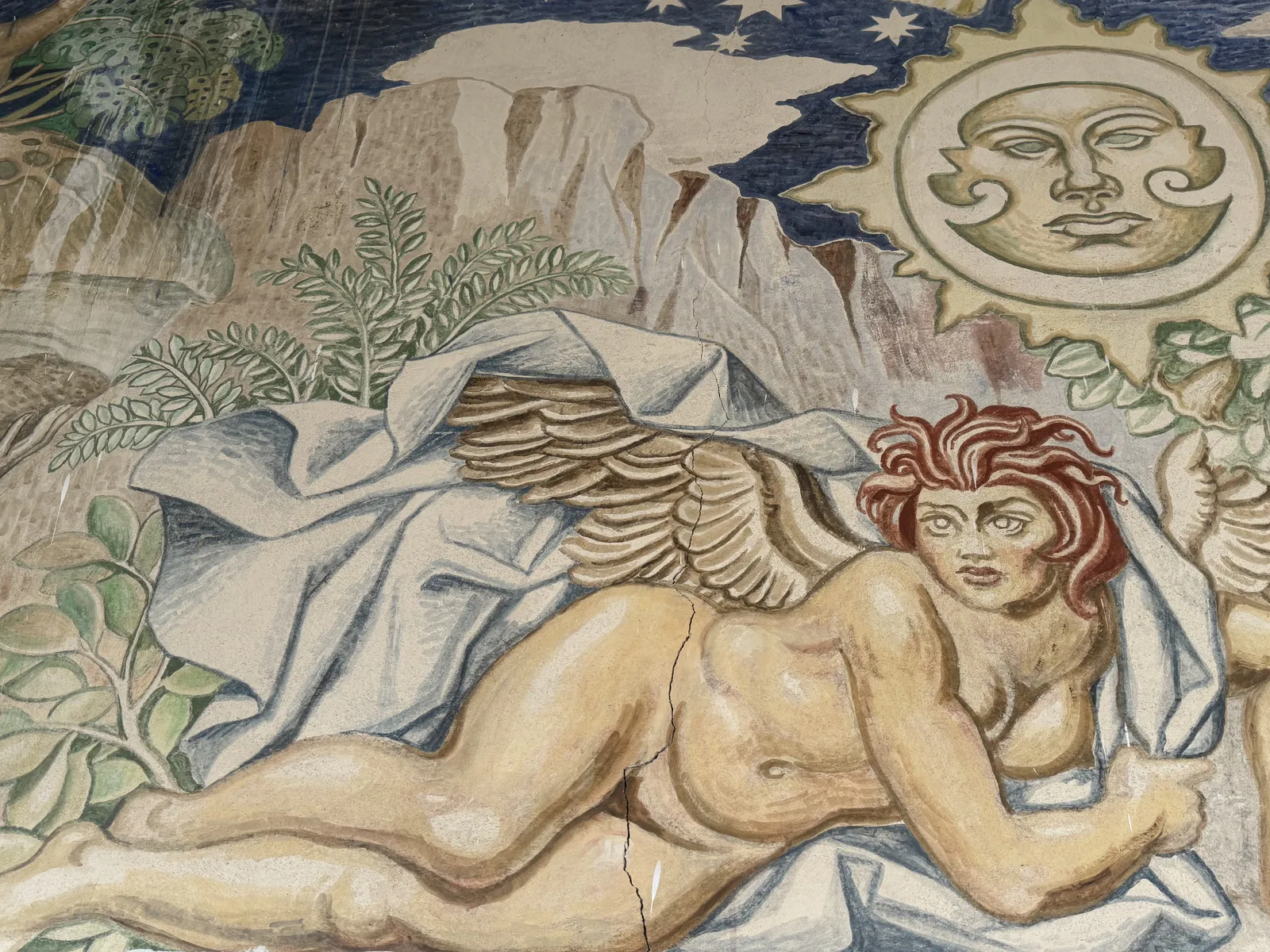
This mural (1950s) portrays Huitaca, a sensual Muisca goddess of pleasure and disorder, who defied Bochica, the culture hero who taught law, farming, and morality. Condemned for her rebellion, she was transformed into an owl. Her winged form here embodies the clash between instinct and discipline, chaos and cosmic order at the heart of Muisca belief.
Cat and Ducks
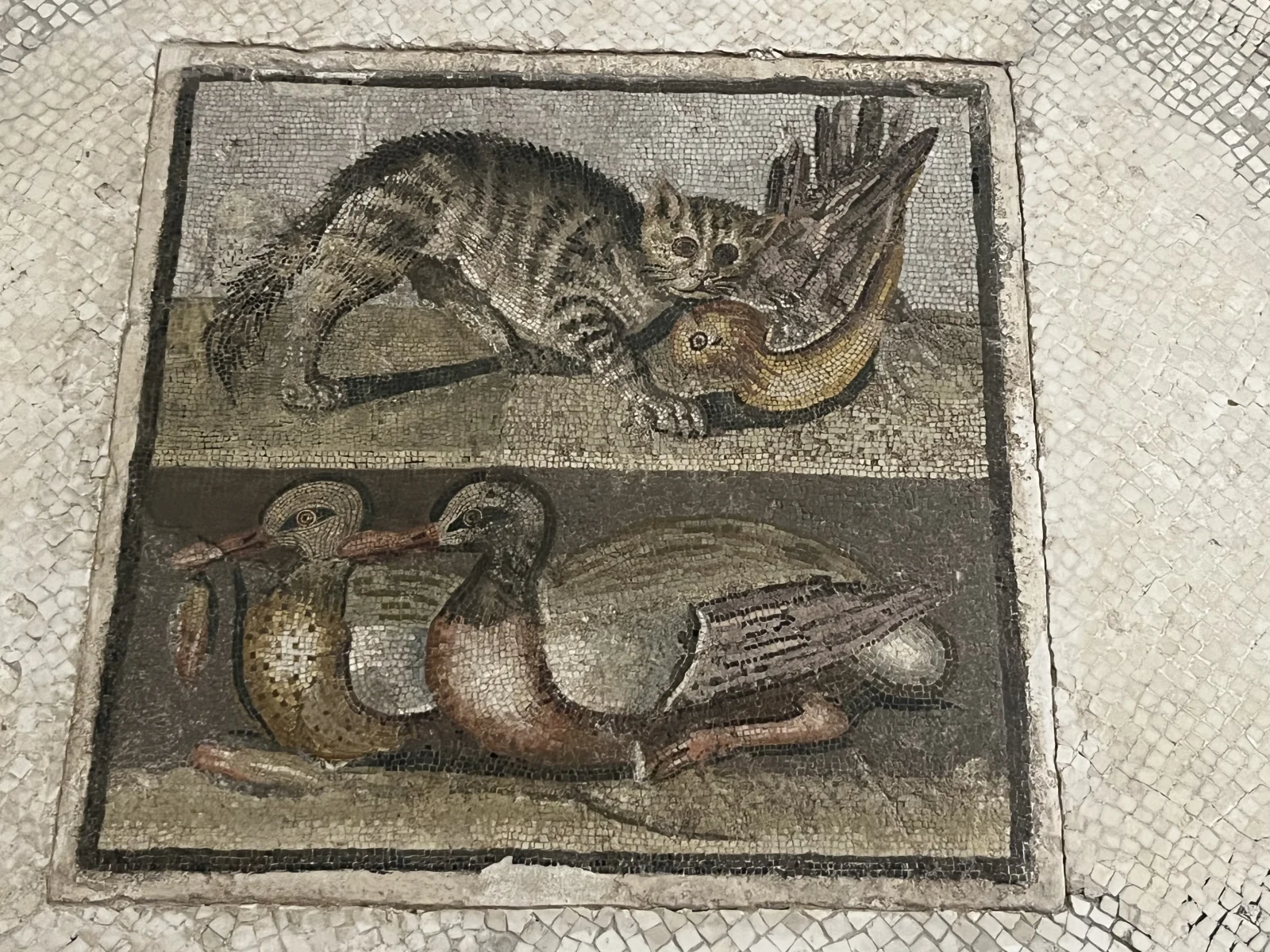
This villa floor mosaic (early 1st c. BC) centers on a panel in opus vermiculatum (fine mosaic using tiny tesserae), divided into two registers. The upper scene shows a cat seizing a bird, while the lower band presents two ducks, one holding a lotus flower. The painterly shading and lively poses echo Hellenistic easel painting. Set in a triclinium (formal dining room), it signaled cultivated taste to reclining guests.
Musical Angels (detail)
Pinturicchio
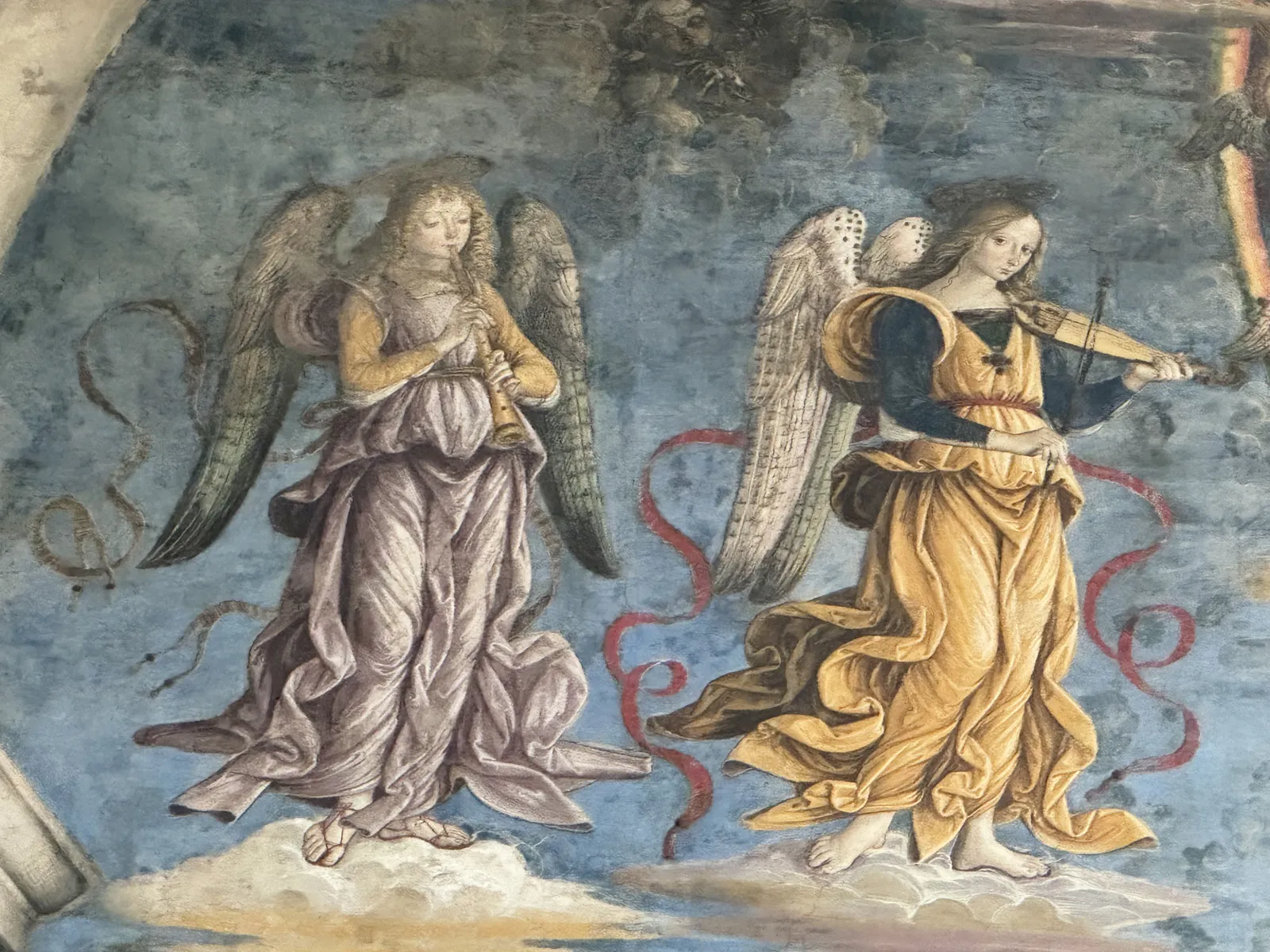
In this detail (1484–86), Pinturicchio paints two angelic musicians, one playing a violin and the other a wind instrument. Floating on clouds, they contribute to the celestial harmony surrounding Christ in Majesty. The graceful movement of their garments reflects Pinturicchio’s refined sense of rhythm, light, and divine celebration.
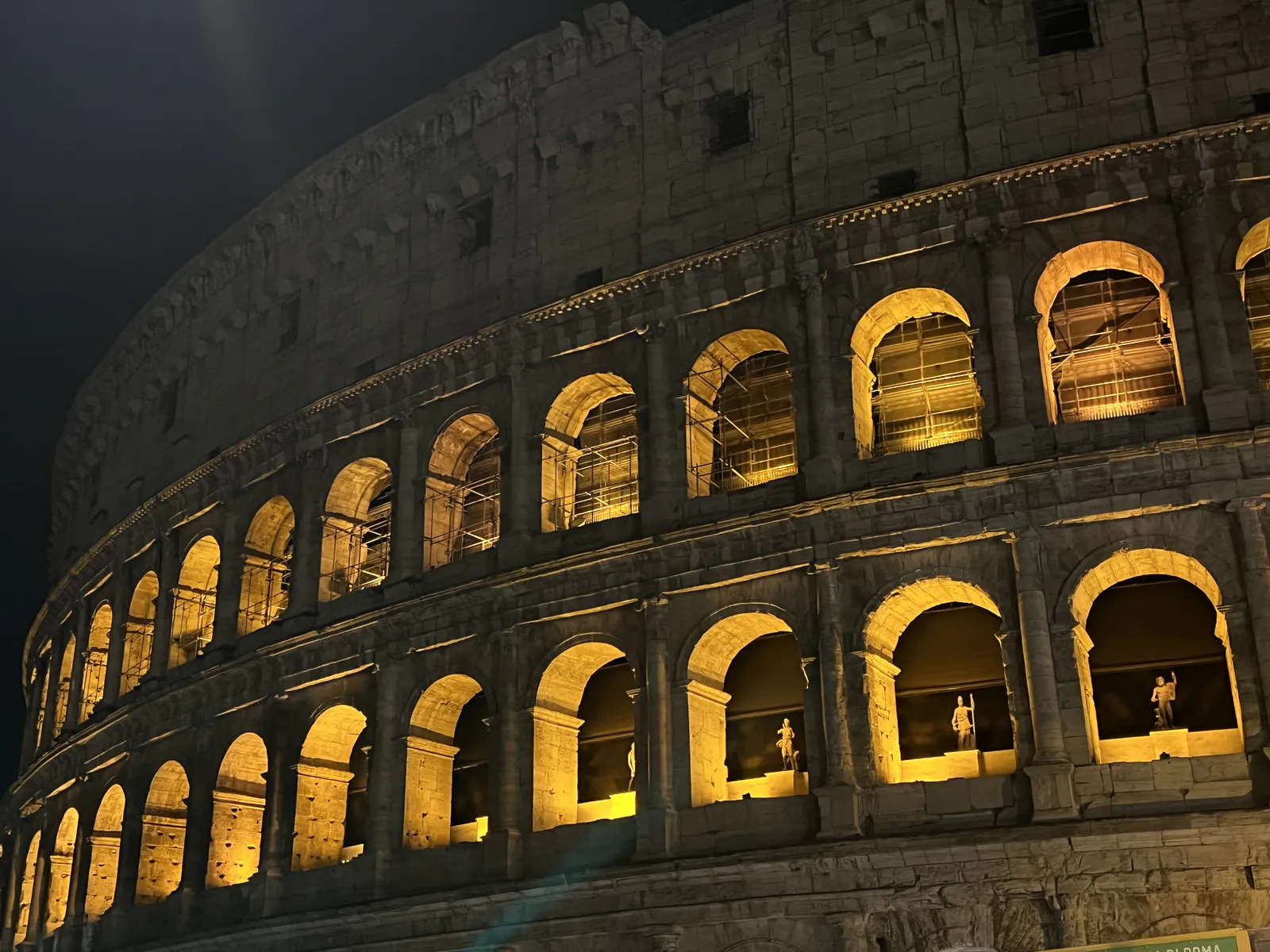
Colosseum Facade
The Colosseum’s outer facade (70–80), with superimposed arches framed by Tuscan, Ionic, and Corinthian orders, reflects Roman architectural mastery. Originally, statues of gods, emperors, and heroes filled many niches, projecting imperial grandeur while harmonizing structure, decoration, and political symbolism.
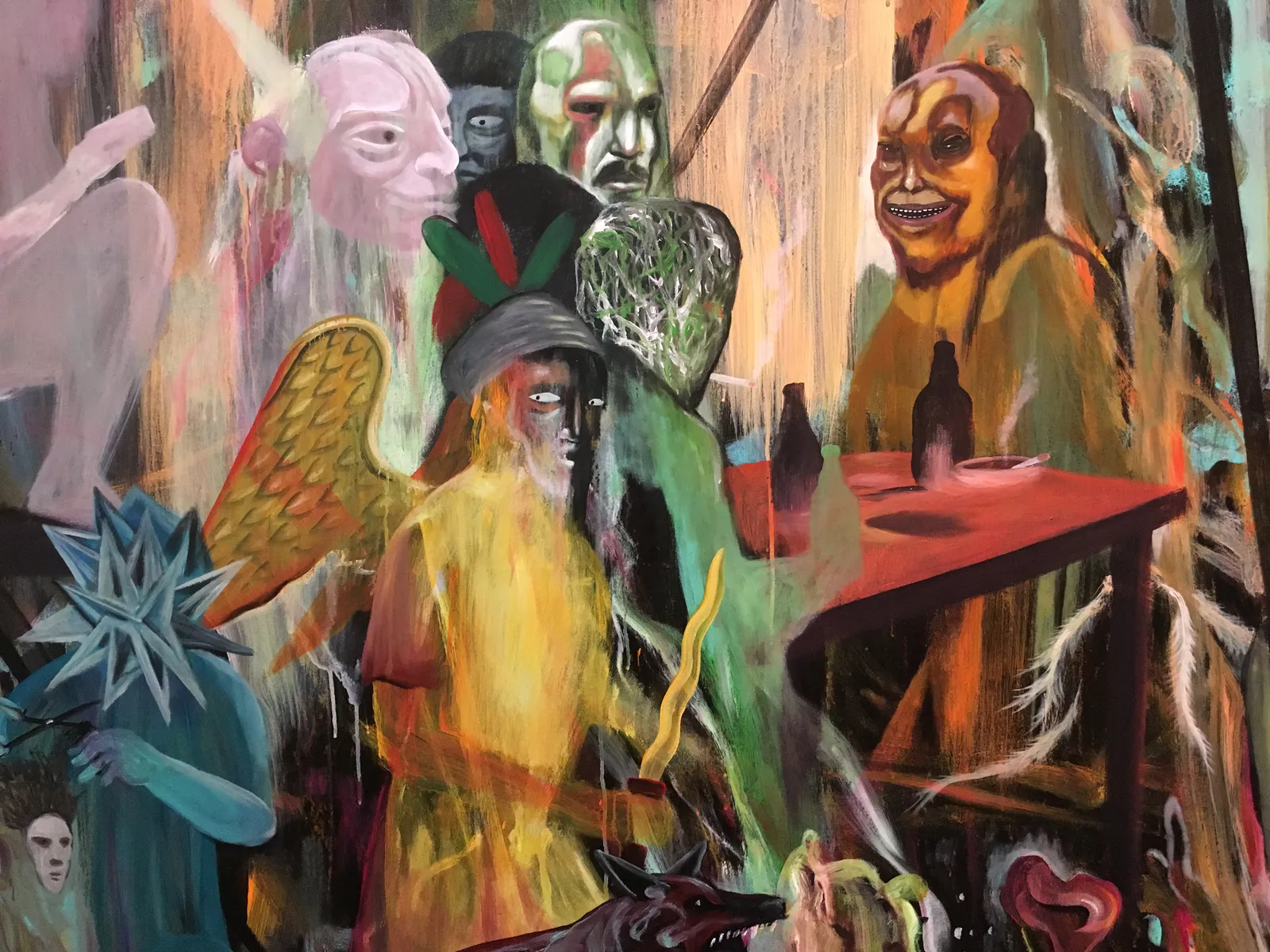
The Comedy, Parody, and Tragedy
Rodel Tapaya
This painting (2018) from Tapaya’s Urban Labyrinth series swirls with hybrid beings, masks, and mythic figures at a chaotic table. Angelic wings, demonic grins, and spectral visages blur folk imagination with urban satire. Tapaya weaves Philippine mythology into contemporary critique, where humor and menace mirror the fractured realities of modern city life.
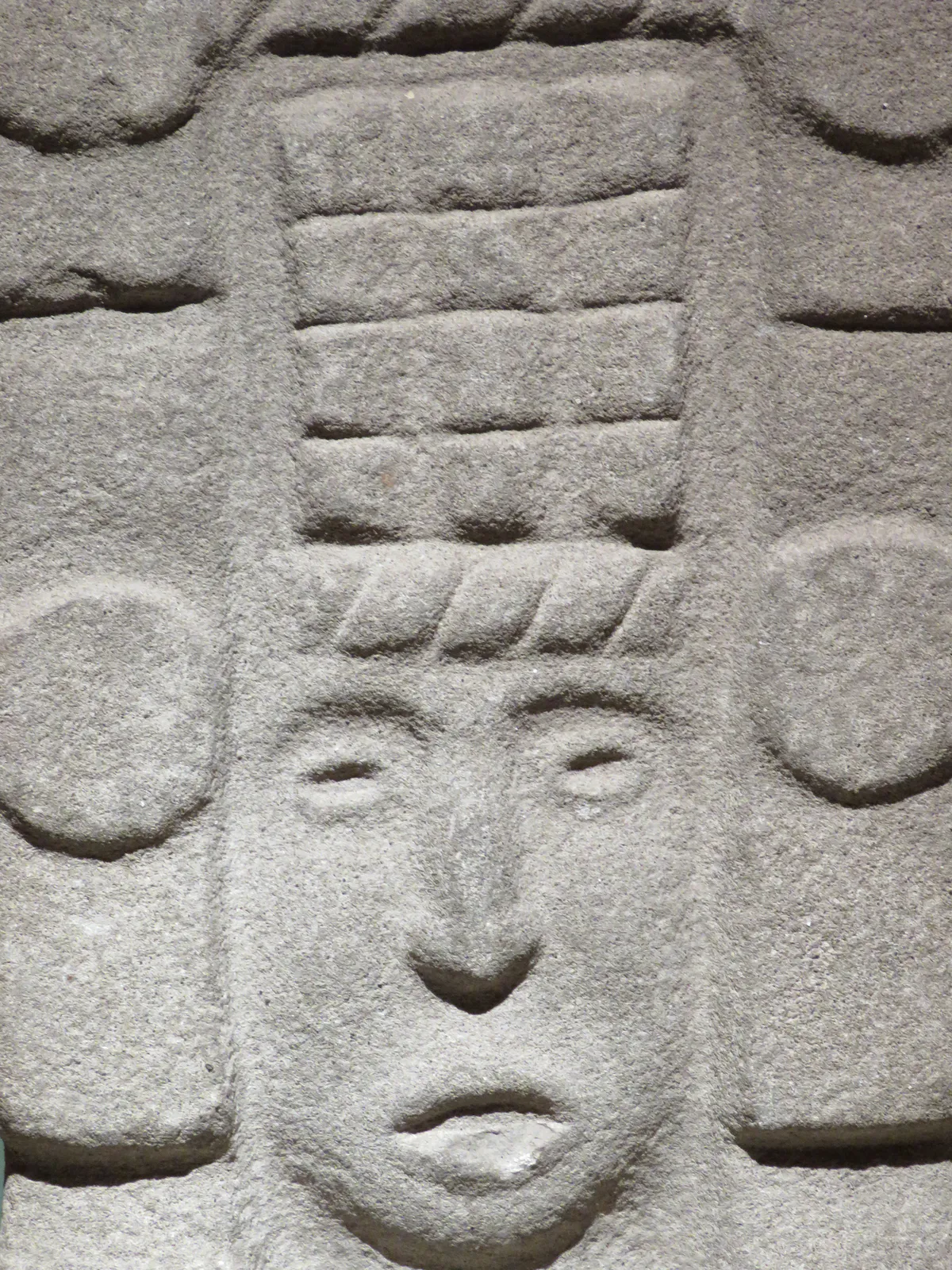
Stela of Xicomecoatl
This Mexica stela (15th–16th c.) depicts Xicomecoatl, the goddess of fertility and sustenance. Her stylized features and headdress emphasize divine power and the life-giving force of maize, central to Mexica cosmology. Such carvings linked ritual practice with the cycles of nature, affirming the bond between gods, people, and agricultural survival.
Explore the world through my eyes: begin with the image below, the map, the dropdowns above, or the search button. Every photo includes a thoughtful caption.
Explore the world through my eyes: begin with the image below, the map, the dropdowns above, or the search button. Every photo includes a thoughtful caption.
When the path is beautiful, do not ask where it leads.
My travels have always been shaped by two intertwined forms of discovery. One is intellectual: learning why the world is the way it is. History became my guide, drawing me toward museums, old cities, architecture, and the layers of meaning carried by places. The other is emotional: the search for beauty, harmony, and moments of elevation, often found in nature, monasteries, and sacred spaces.
Together, these impulses shape how I travel, what I photograph, and how I interpret what I see. This site is my way of sharing that lifelong learning in visual form—one image at a time, with enough context to deepen curiosity and understanding. I hope these photographs leave you with a sense of wonder and a deeper feeling for the world.
Now let’s explore together.