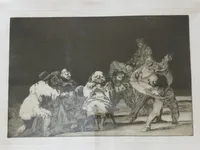
Loyalty
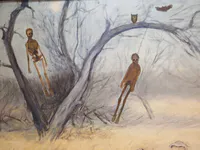
Zacatecas Landscape with Hanged Men
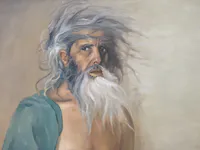
Head of an Old Man
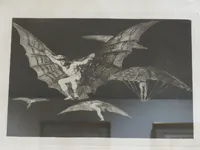
A Way of Flying
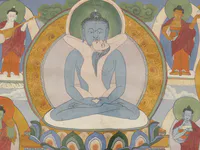
Samantabhadra and Samantabhadrī in Yab-Yum
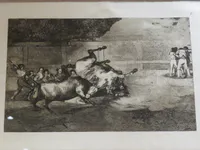
Horse Thrown by a Bull
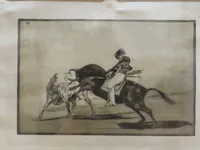
Mariano Ceballos Kills the Bull
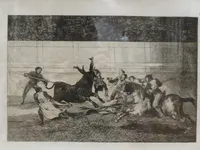
The Unfortunate Death of Pepe Illo
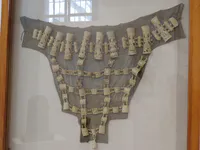
Symbolic Bone Ornaments in Tibetan Culture
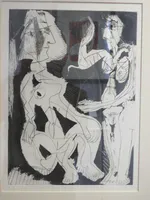
Two Women with a Mirror
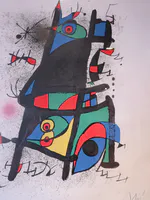
The Gestation of Colors
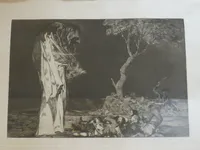
Folly of Fear by Francisco Goya
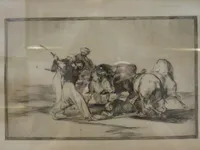
Moorish Bull-Spearing Scene
When Modern Art Text Is Too Damaged to Reconstruct
The final fragment in this group (about modern art, the Great Depression, and artists in New York) is too garbled and incomplete to be reliably reconstructed. Words, names, and sentences are cut off in ways that make the original meaning unclear. To avoid inventing content or distorting the historical information, it’s safer not to fill in the missing parts. If you can capture a clearer photo or scan of that text, I can then translate or rewrite it accurately in English.
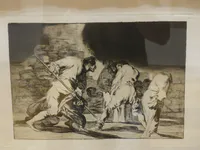
Disparate Furioso
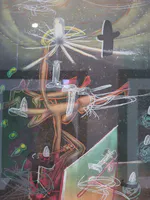
Je Fixe des Vertiges
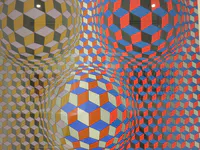
Op Art Illusion
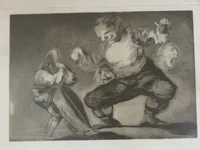
Simpleton
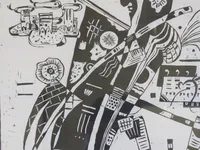
Improvisation 7
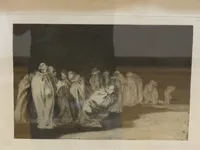
Etching “Los ensacados”
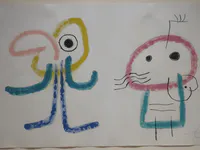
L’Enfance d’Ubu
Jung’s Collective Unconscious and the Power of Archetypes
The Swiss psychologist Carl Gustav Jung coined the term analytical psychology, or the psychology of complexes, to describe his own theoretical and clinical approach, distinguishing it from the psychoanalysis developed by Sigmund Freud.
According to Jung, the human unconscious has a relatively superficial layer that is personal, formed by each individual’s life experiences. Beneath this lies a deeper, innate layer: the collective unconscious. He called it collective because it is universal in nature—its contents and patterns of behavior are essentially the same everywhere and in all human beings.
The collective unconscious is made up of archetypes. An archetype is essentially an unconscious pattern that, when it surfaces into awareness, takes on a specific form in each person, shaped by that individual’s culture and personality. All the inherited information accumulated over the course of human evolution is stored there in the form of symbols and predispositions.
Among the many archetypes Jung identified, a small group—such as the Self, the Shadow, the Anima/Animus, the Persona, and the Wise Old Man/Woman—achieved a higher level of development and influence than the rest. These deep patterns underpin myths, religions, dreams, and many recurring images in art and literature across cultures.
According to Jung, the human unconscious has a relatively superficial layer that is personal, formed by each individual’s life experiences. Beneath this lies a deeper, innate layer: the collective unconscious. He called it collective because it is universal in nature—its contents and patterns of behavior are essentially the same everywhere and in all human beings.
The collective unconscious is made up of archetypes. An archetype is essentially an unconscious pattern that, when it surfaces into awareness, takes on a specific form in each person, shaped by that individual’s culture and personality. All the inherited information accumulated over the course of human evolution is stored there in the form of symbols and predispositions.
Among the many archetypes Jung identified, a small group—such as the Self, the Shadow, the Anima/Animus, the Persona, and the Wise Old Man/Woman—achieved a higher level of development and influence than the rest. These deep patterns underpin myths, religions, dreams, and many recurring images in art and literature across cultures.
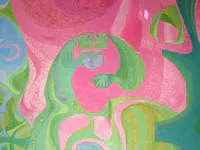
Jade Murmurs
Manuel Felguérez Museum of Abstract ArtMuseo de Arte Abstracto Manuel Felguérez
Manuel Felguérez Museum of Abstract Art, opened in 1998 in a former 19th c. seminary, marks Zacatecas’s embrace of modern Mexican abstraction. Built around a major donation by Manuel Felguérez (1928–2020), a leading figure of the Ruptura generation, it follows how geometry, texture, and industrial materials challenged academic canons and nationalist storytelling. In the building’s austere stone rooms, the work reads as both experiment and civic statement, treating art as thinking in rhythm, form, and space.
Explore by type and place