2019 © Maxim Tabachnik

















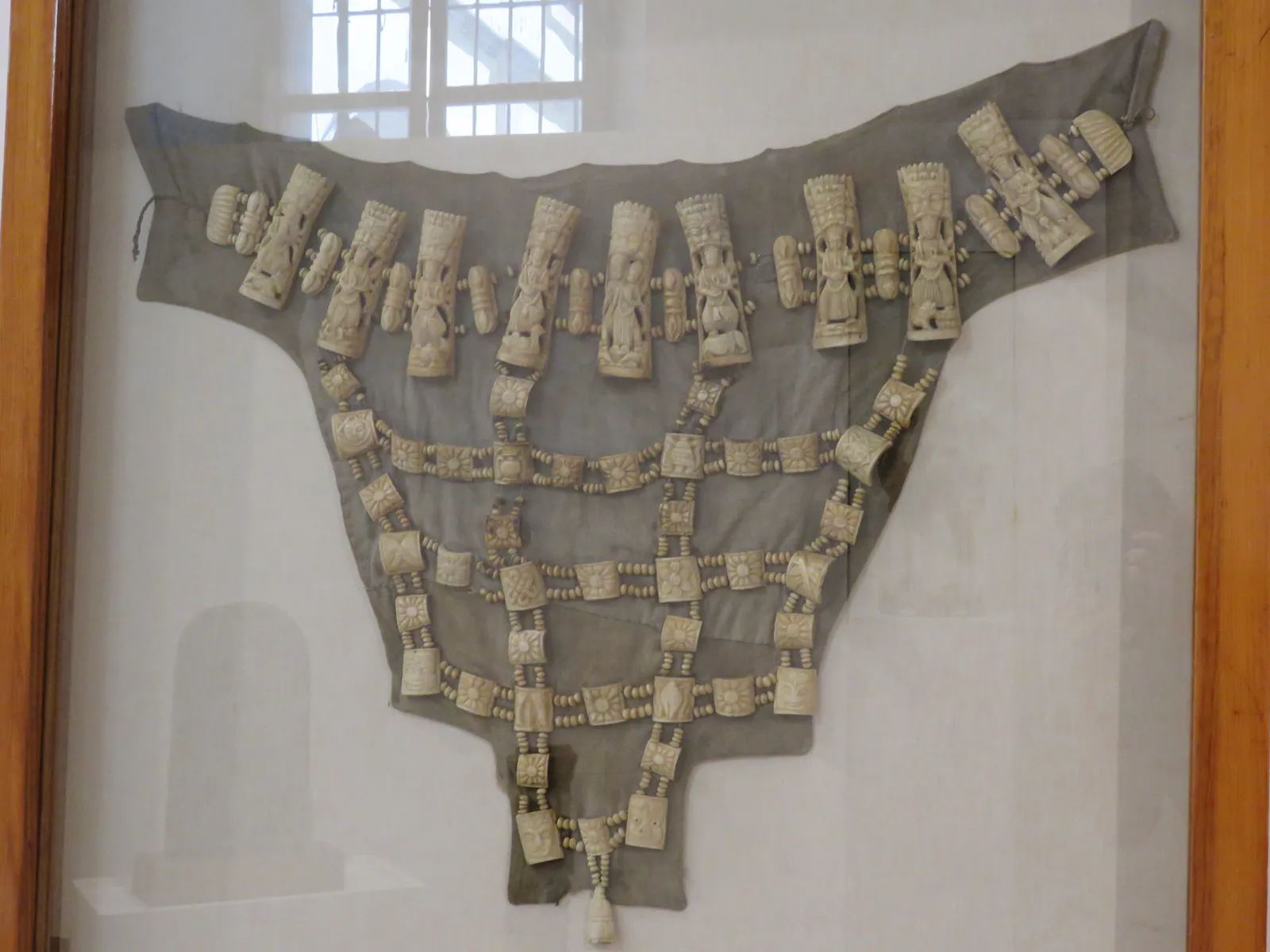
Ritual Bone Apron
Attributed to the 18th–19th c., this Himalayan bone apron, known as rus gyan, combines carved figures with a network of beads and pendants. Such ornaments are worn in Tibetan Buddhist ceremonies and sacred dances, allowing practitioners to assume the appearance of meditation deities. The bone makes mortality part of the ritual, reminding the wearer that the body, too, is impermanent.
Explore by type and place