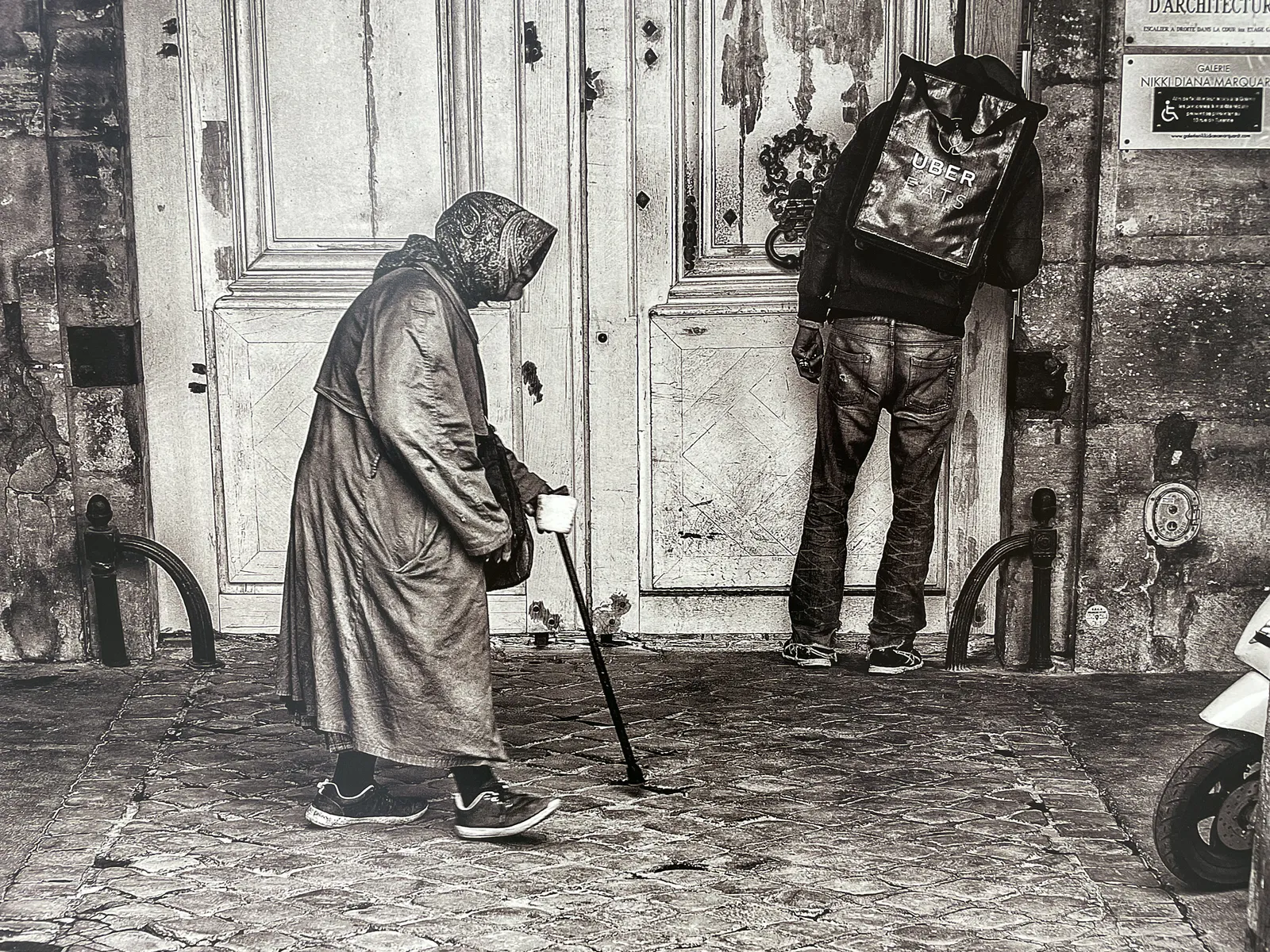
Uber Eats
Roger Zayas
This photo (2017), taken in the historic Marais district of Paris, captures a striking urban contrast: an elderly woman with a cane passes a food courier bent over a doorway. Zayas underscores generational divides and social invisibility, reflecting on aging and shifting economic realities in the European metropolis.
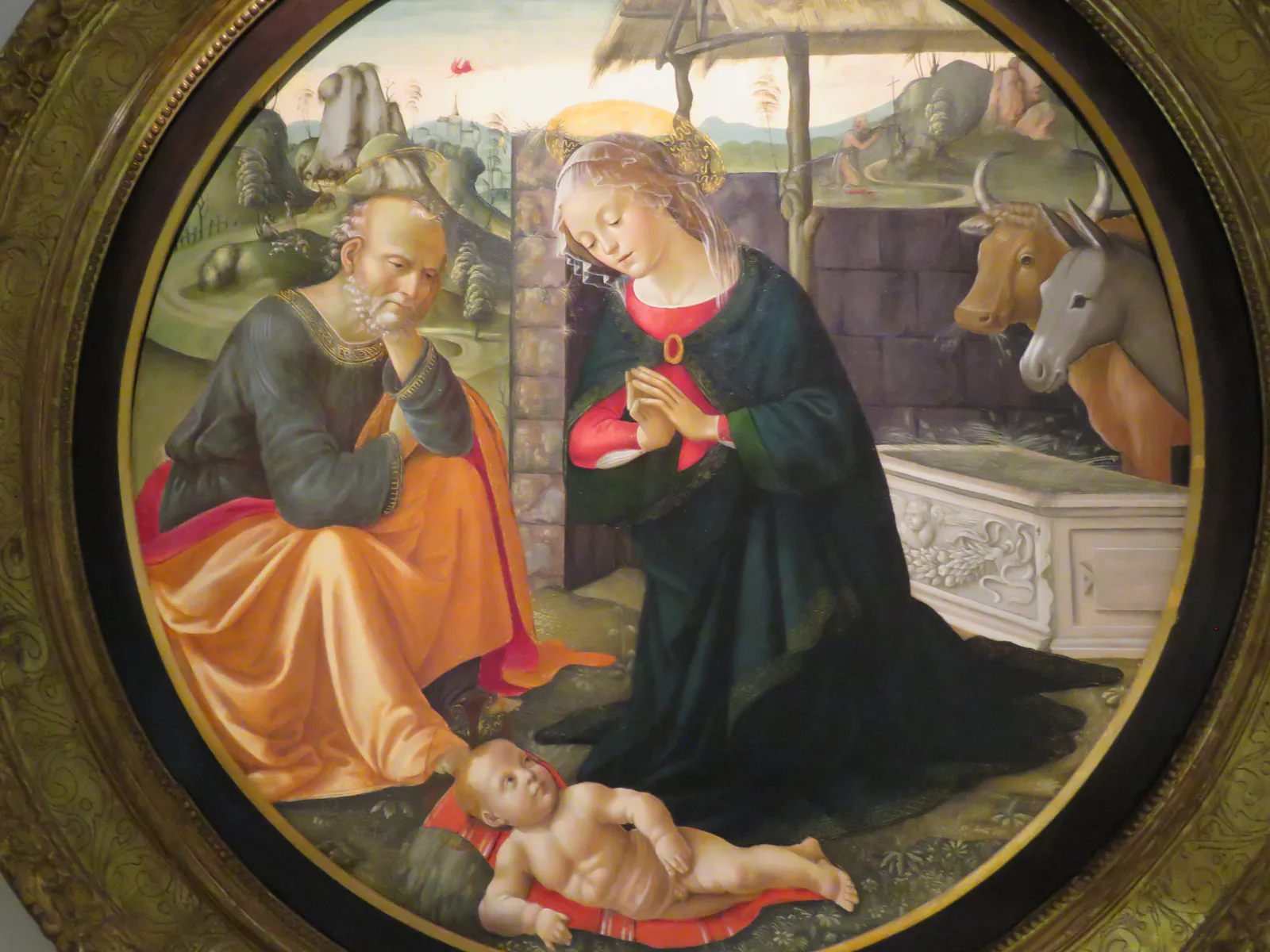
Adoration of the Christ Child
Workshop of Domenico Ghirlandaio
This tondo (c. 1485–1490) shows Mary and Joseph adoring the infant Christ, lying humbly on the earth. The sarcophagus-like manger prefigures his Passion, while the ox and donkey fulfill Isaiah and Habakkuk’s prophecy of animals recognizing the Lord. The scene binds intimacy, humility, and cosmic redemption.
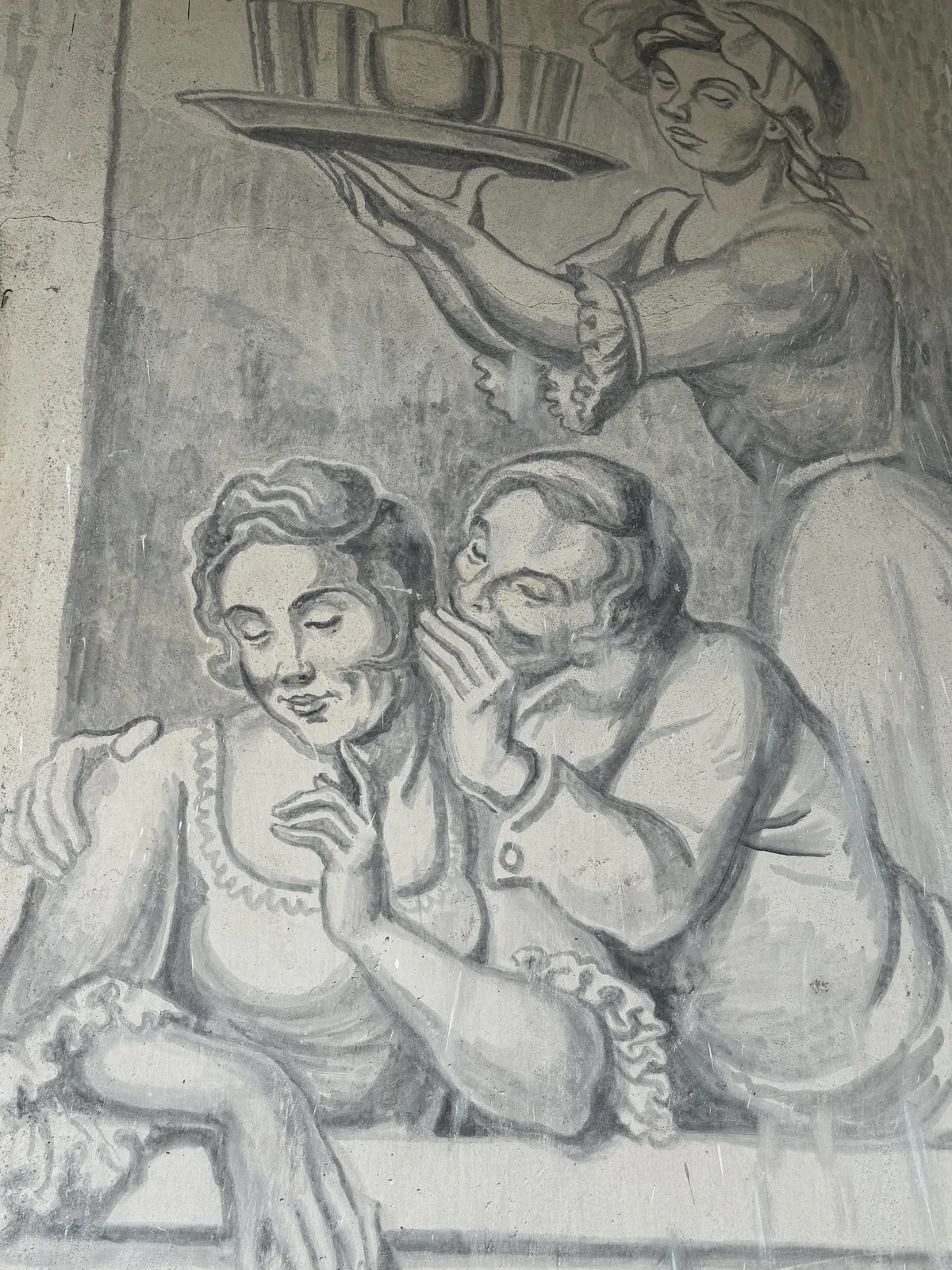
A Dangerous Whisper
Luis Alberto Acuña
This mural (1950s) by Luis Alberto Acuña depicts a man whispering seductively into a woman’s ear while she listens with a mix of curiosity and restraint. The intimate gesture contrasts with the servant above, who quietly performs her duties, reinforcing themes of gender dynamics, social roles, and the tension between desire and decorum in colonial society.
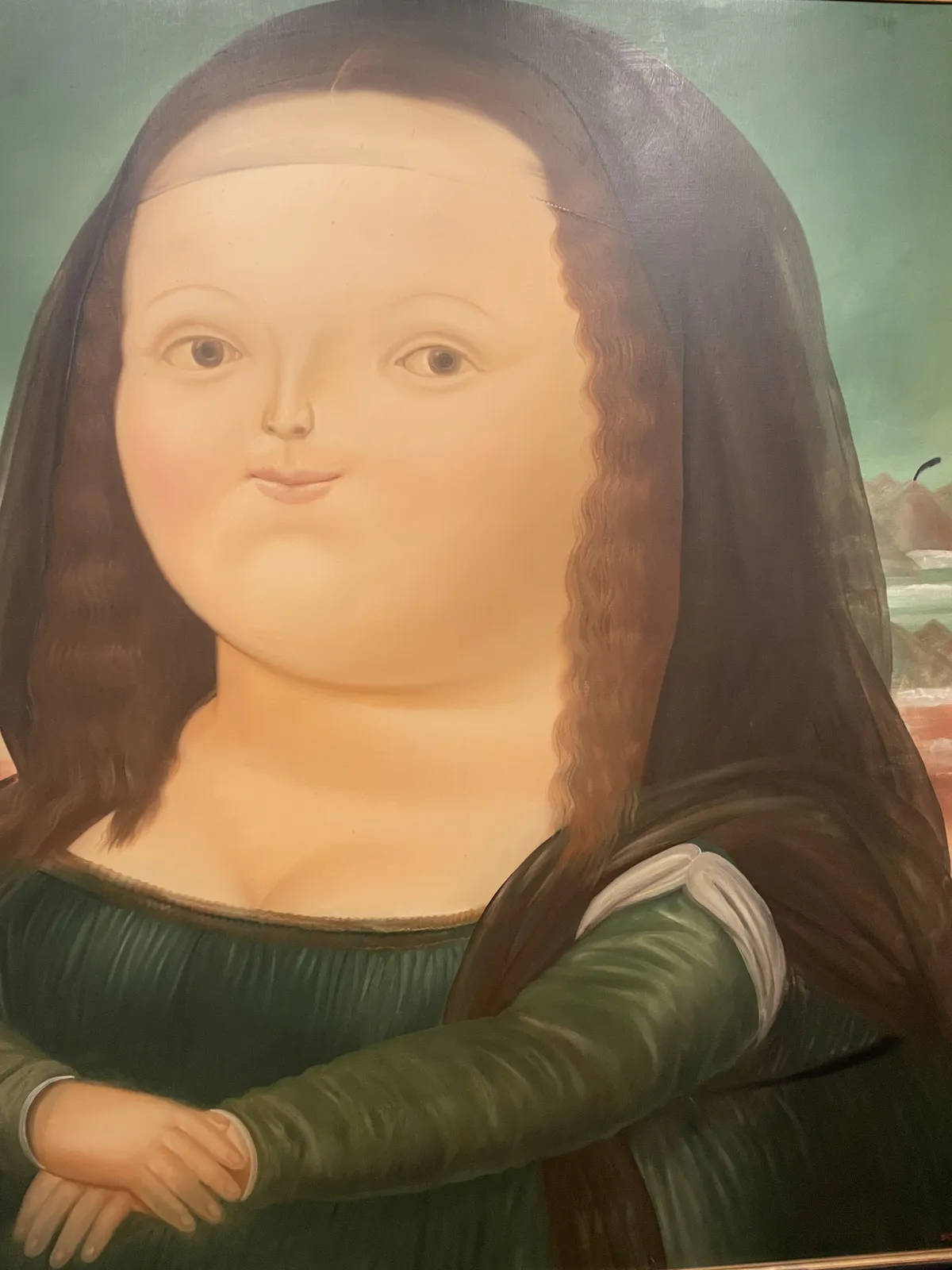
Mona Lisa, Age Twelve
Fernando Botero
In this whimsical reimagining (1959), Botero transforms da Vinci’s iconic subject into a voluminous child. Created in his signature Boterismo style, the painting blends parody with homage. Born from a cleaning lady’s remark, the work helped launch Botero’s career, celebrating exaggerated form as a tool for both humor and artistic identity.
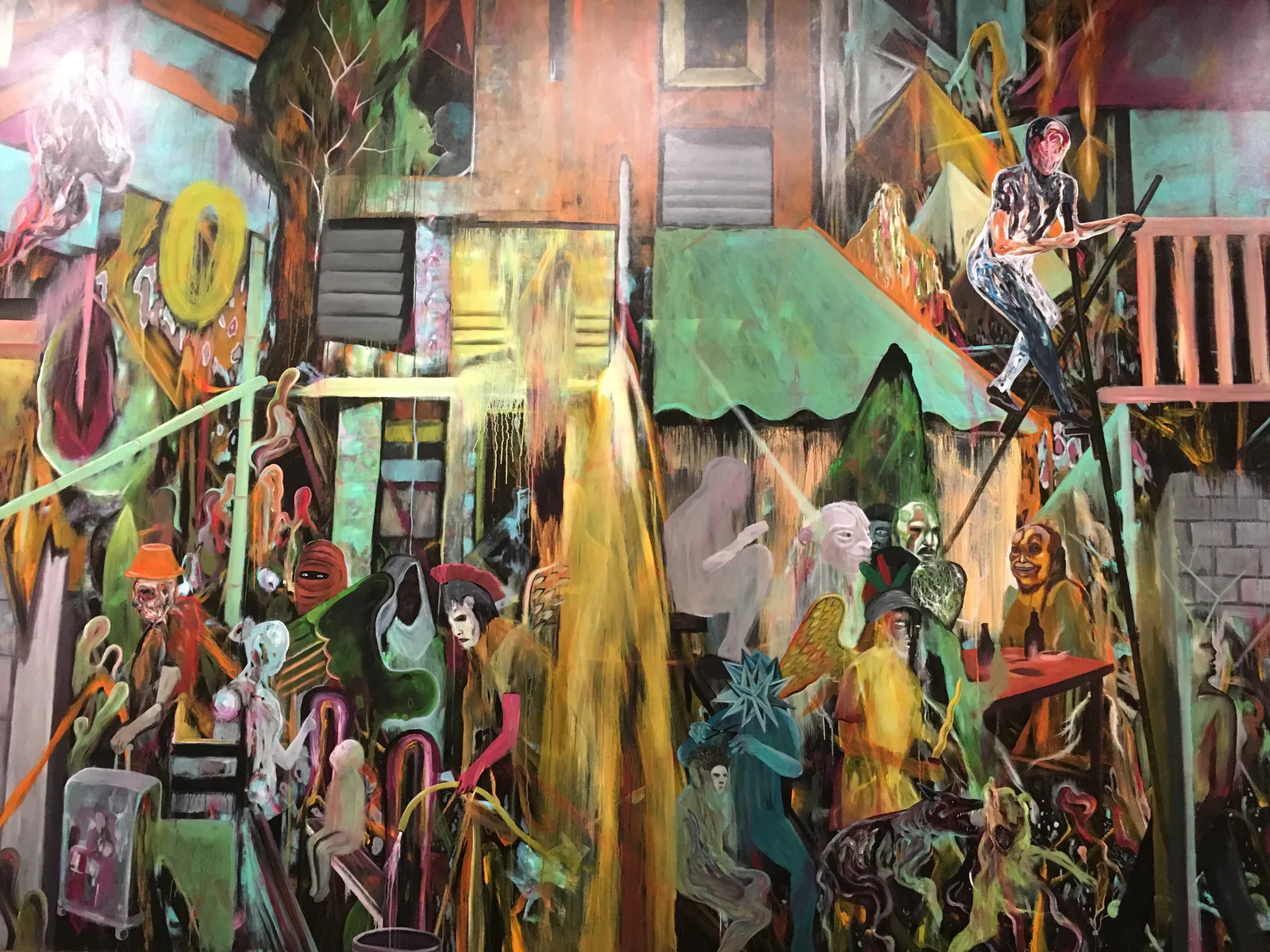
The Comedy, Parody, and Tragedy
Rodel Tapaya
This 2018 painting layers crowded shanties, billboards, and tangled walkways with mythic creatures from Philippine folklore. Human figures mingle with spirits and masked characters, blurring everyday life with the supernatural. Bright colors and abrupt shifts in scale evoke noise, congestion, and spectacle. Tapaya unfolds contemporary urban experience as a chaotic folk tale, where comedy, parody, and tragedy coexist in a single scene.
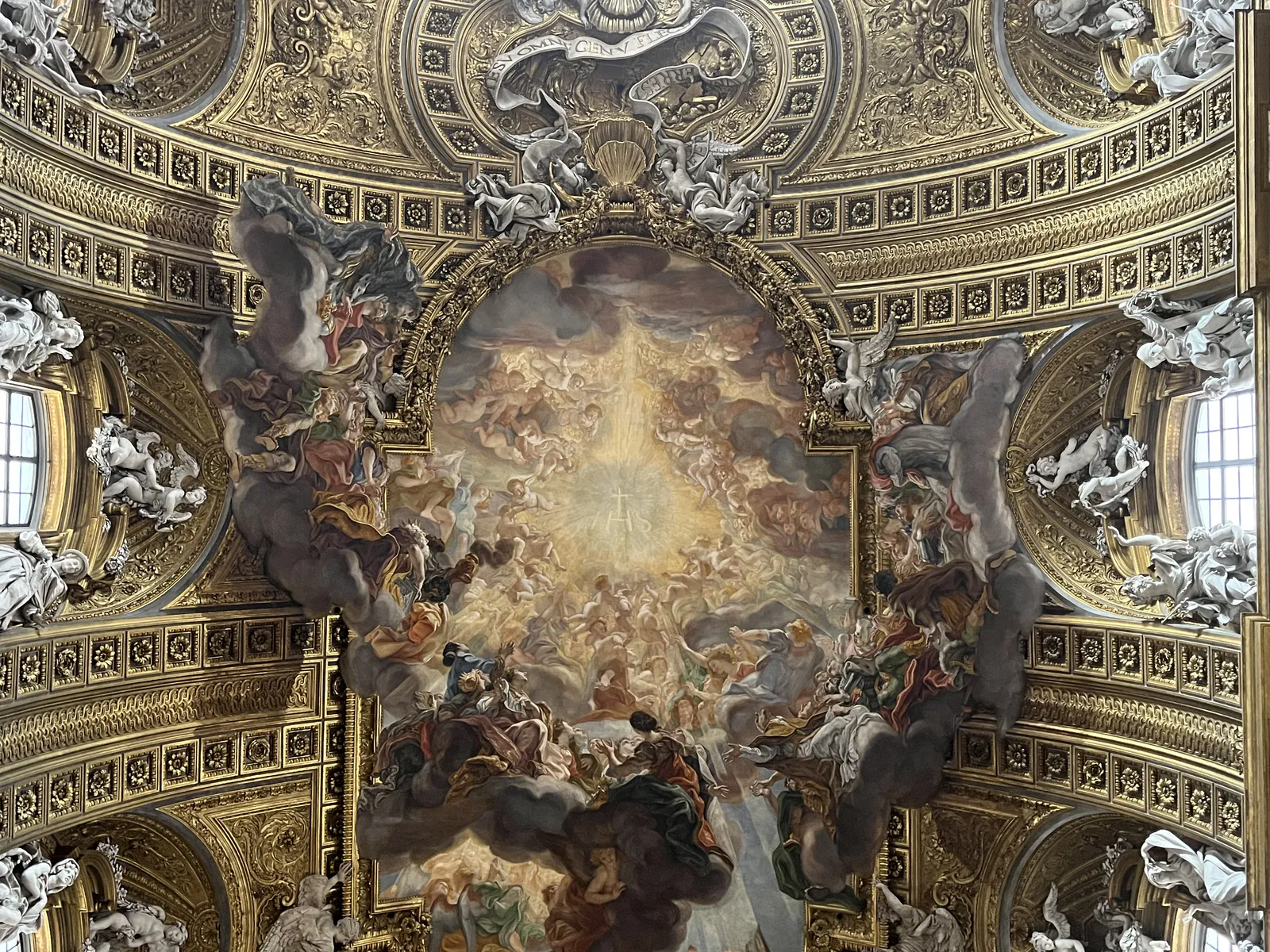
Triumph of the Name of Jesus
Giovanni Battista Gaulli
This dramatic fresco (1676–79) fills the nave ceiling with a celestial eruption of light and figures. At its center, divine radiance emanates from the monogram IHS, the symbol of Jesus. Saved souls rise toward the light, while sinners tumble into shadow. Blending paint and stucco, the work fuses heaven and church in Baroque theatricality.
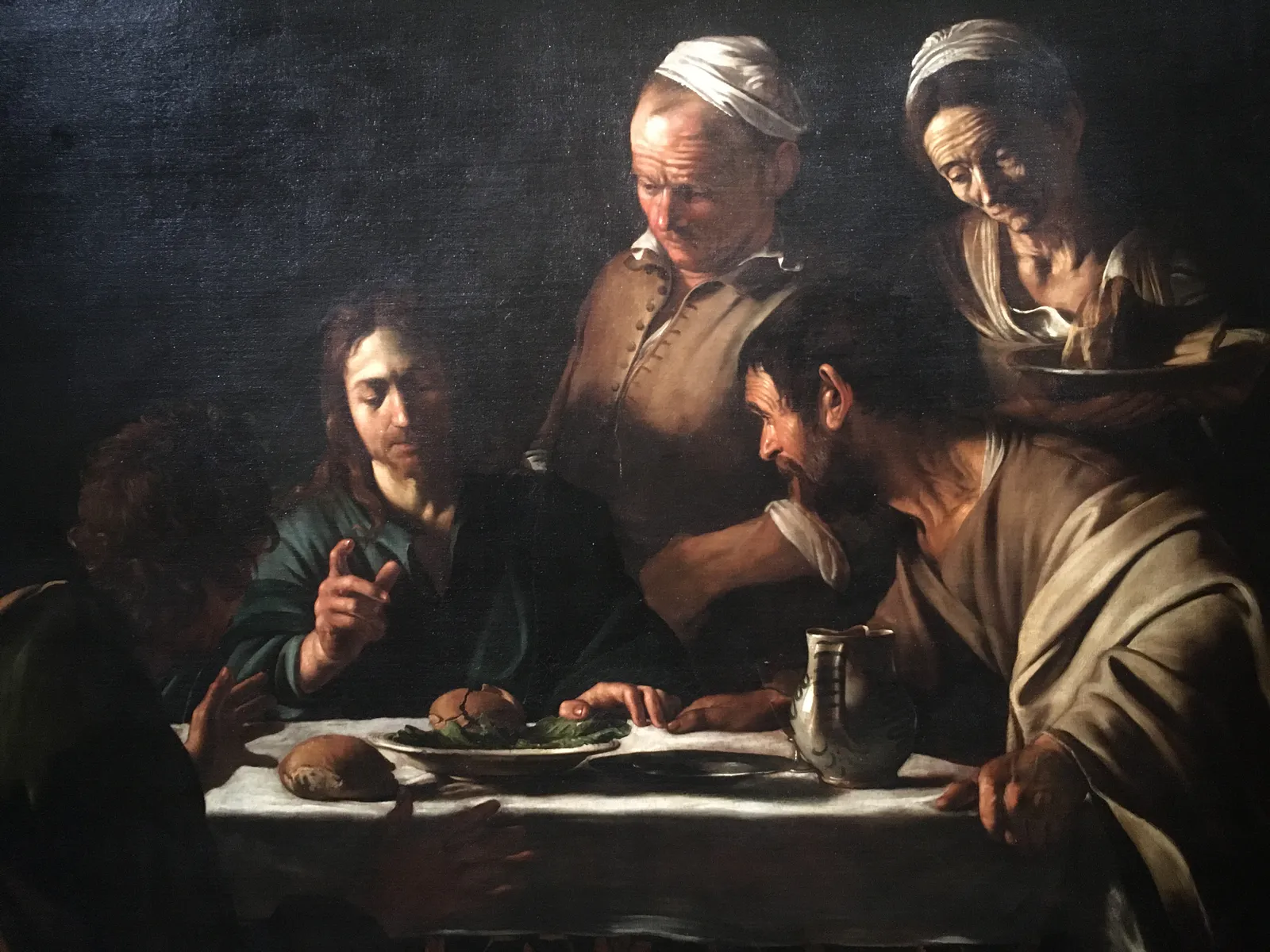
The Supper at Emmaus
Caravaggio
This painting (c.1606) focuses on Christ’s quiet gesture and the attentive figures around him. Subtle expressions replace dramatic shock, emphasizing intimacy over display. Caravaggio draws revelation into the realm of the ordinary, showing faith as recognition that dawns quietly amid human fragility.
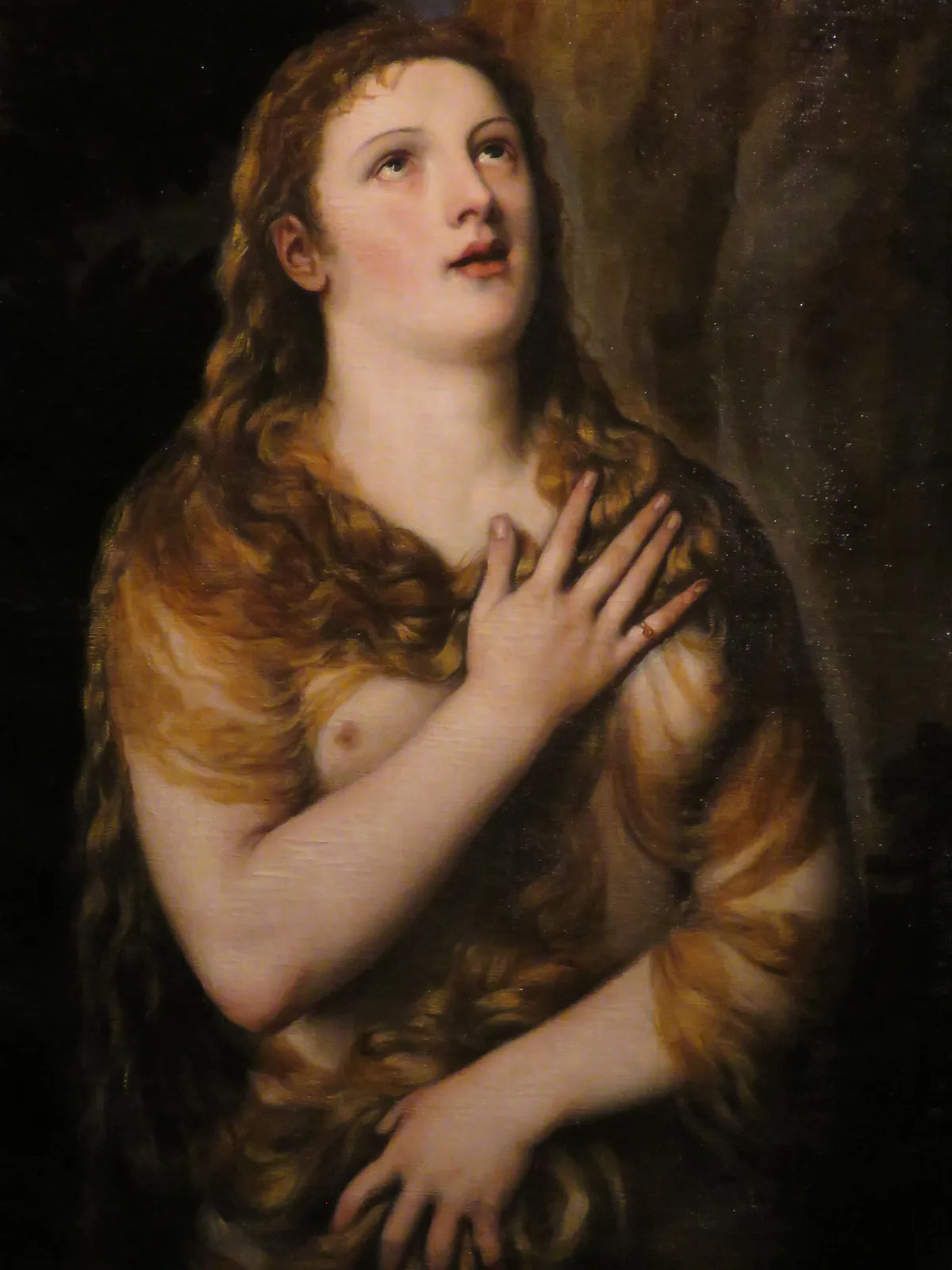
Mary Magdalene
Titian
This intimate portrayal of Mary Magdalene (c. 1560) captures the saint in a moment of spiritual ecstasy. Covered by cascading hair, her body becomes a vessel of penitence and divine grace. Titian’s sensual rendering reflects the Renaissance ideal of redemptive beauty and the transformative power of divine love.
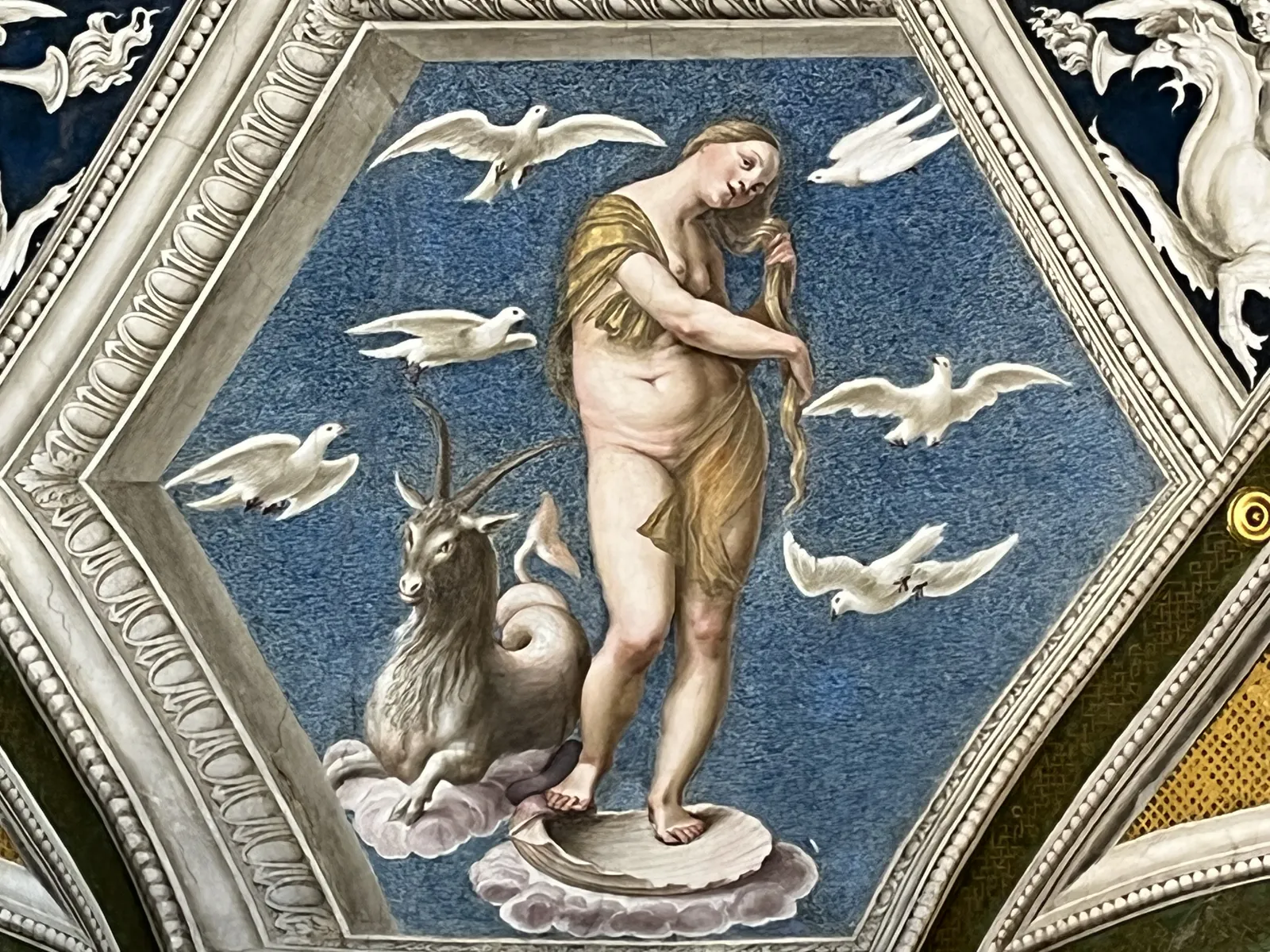
Venus and Capricorn
Baldassarre Peruzzi
The painting (c.1511) in the Loggia of Galatea depicts Venus, the goddess of love, on a shell surrounded by doves, symbols of love. Beside her, Capricorn, a hybrid creature, represents astrological wisdom. This artwork merges mythological beauty with cosmic symbolism, reflecting the Renaissance fascination with harmony between earthly and celestial realms. The inclusion of Capricorn underscores the era's belief in astrology's influence on human affairs.
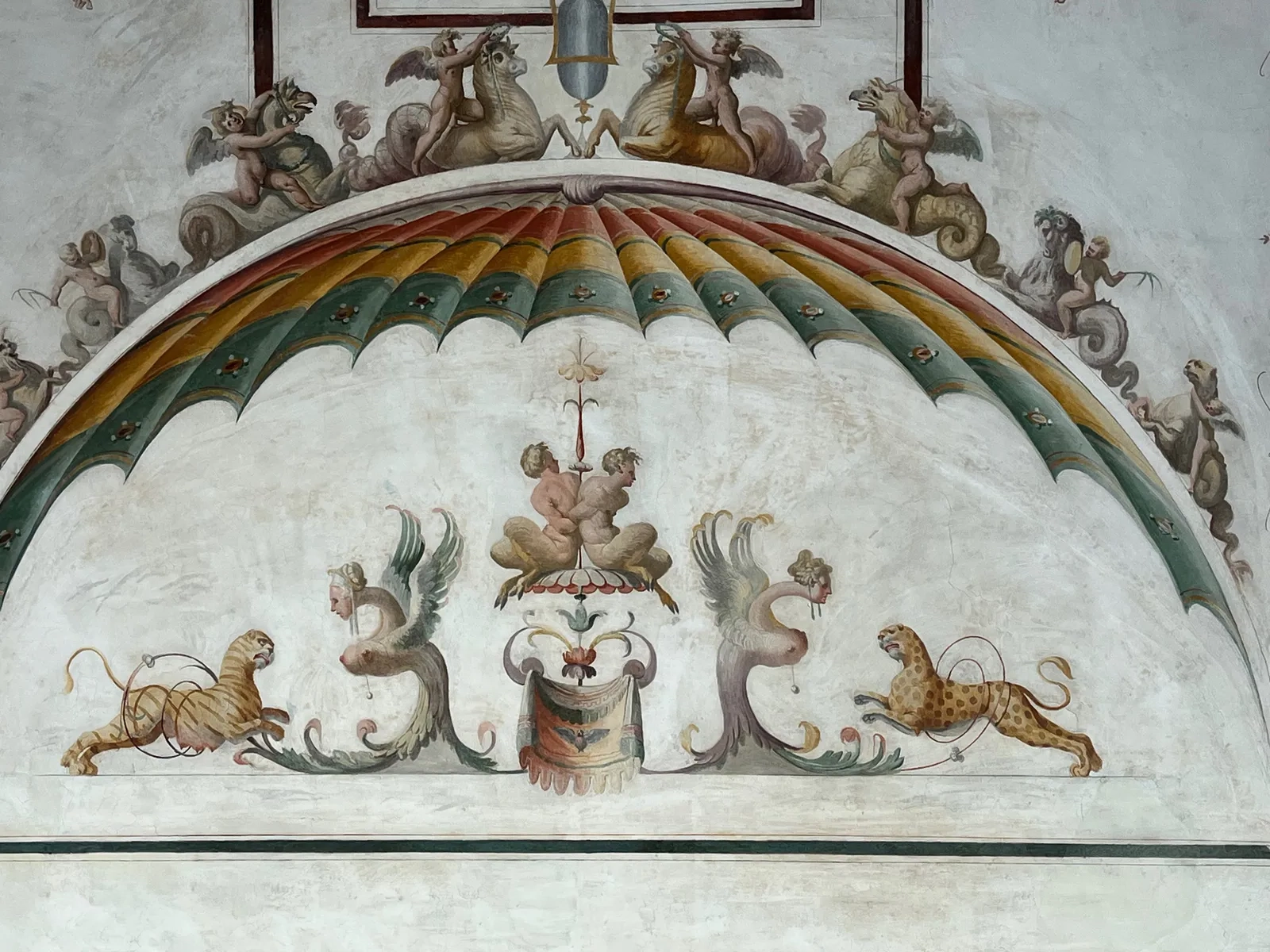
Grotesque Fantasy with Beasts
Perino del Vaga, Rietti Domenico
This fresco (1545–46) shows a rainbow-like arch filled with hybrid beasts, winged creatures, feline predators, and playful putti (cherubic child figures) arranged over a pale ground. The painters adapt the Roman taste for grottesche (fantastic ornamental motifs) rediscovered in ancient ruins. Their dense fantasy best reveals how Renaissance courts used such imagery to turn walls into imaginative spectacle.
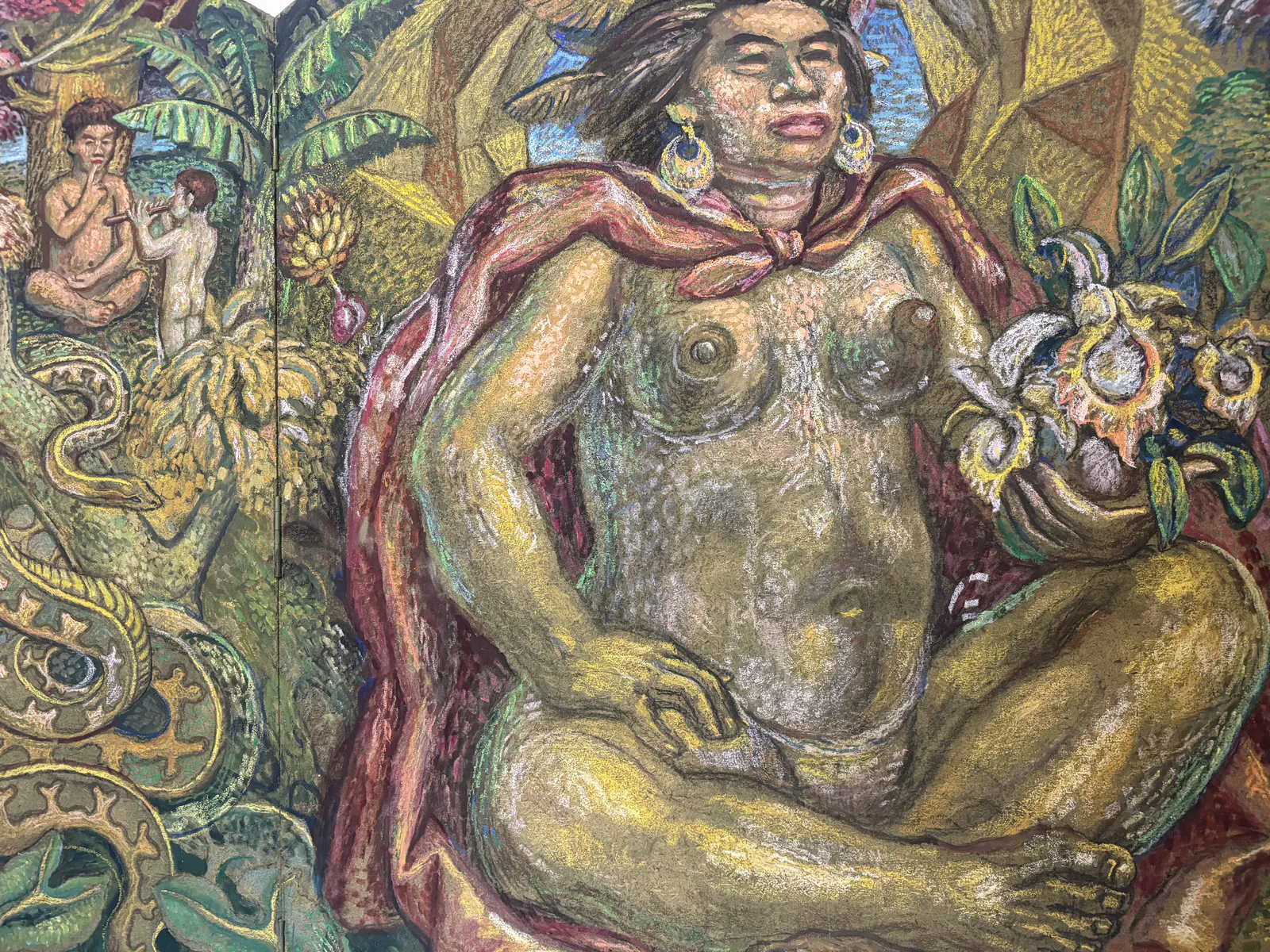
Mapiripana
Luis Alberto Acuña
Inspired by a myth from La Vorágine (a novel by José Eustasio Rivera), this 1950s painting depicts Mapiripana, a river spirit who guards silence and nature’s purity. When a missionary attempts to capture her, she punishes him by birthing monstrous twins—a vampire and an owl. In his final feverish agony, he sees a blue butterfly, symbol of his soul’s escape and eternal remorse.
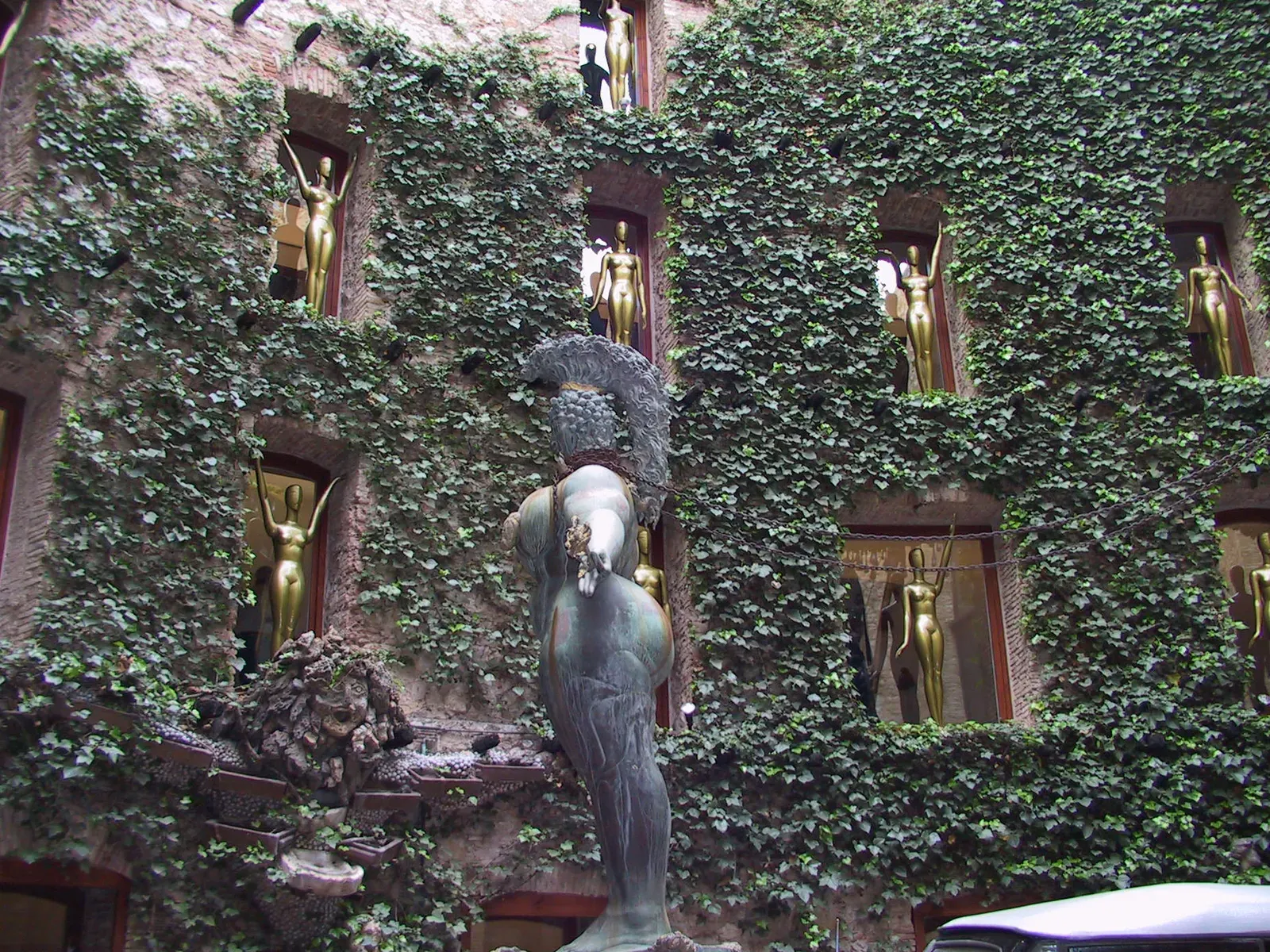
The Courtyard of the Wind Palace
Salvador Dalí
Dalí’s surreal installation (1970s) features golden female mannequins resembling votive icons in windows surrounding a central bronze figure of Venus crowned with a ship. This work merges classical motifs with theatrical elements, creating a fantastical vision of fertility, mythology, and voyeurism, showcasing Dalí’s unique blend of art and architecture.
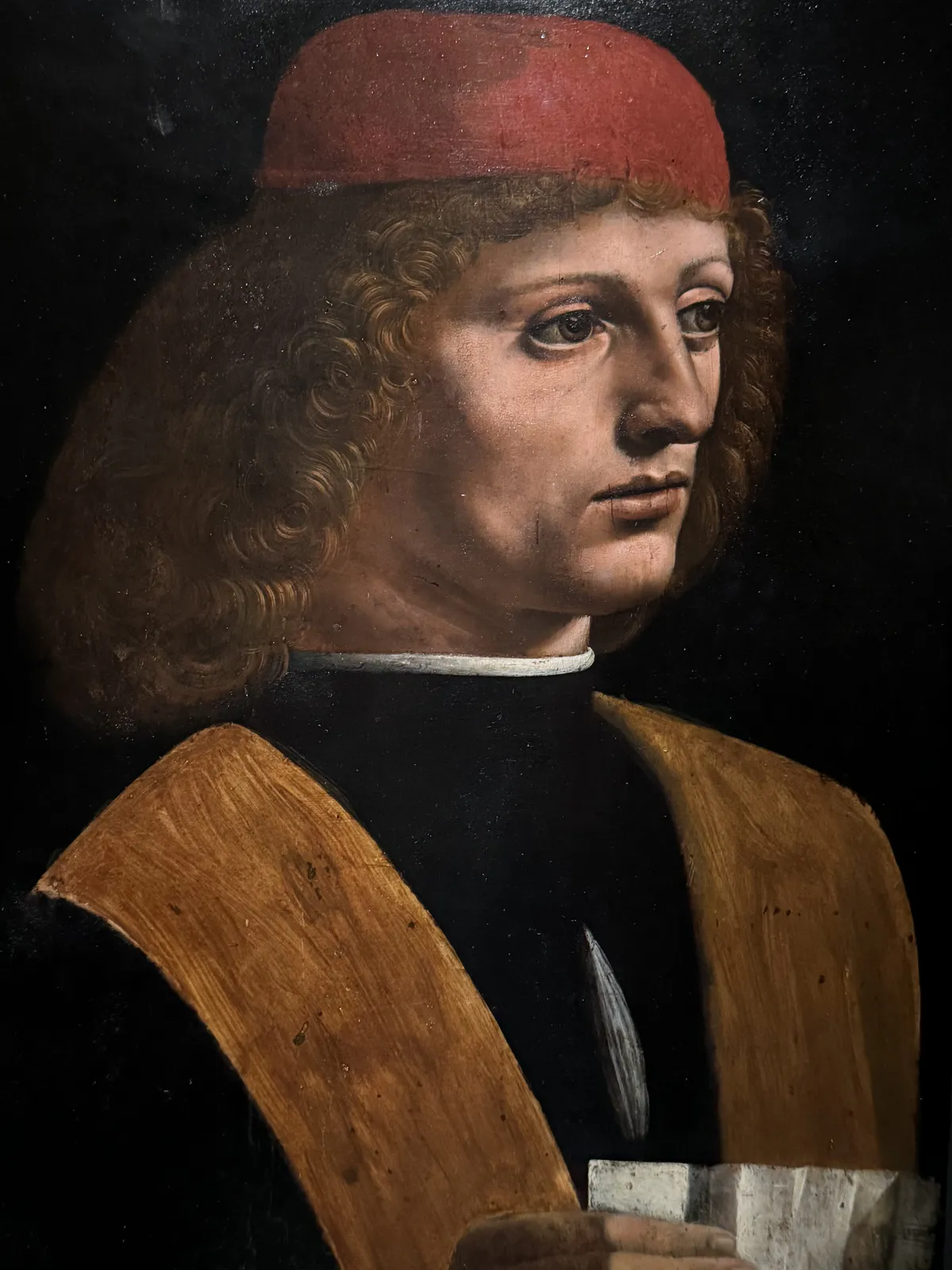
Portrait of a Musician
Leonardo da Vinci
This intimate oil on panel (c. 1485) is Leonardo da Vinci’s only known male portrait. Likely depicting a court musician in Milan, the sitter clutches a sheet of music, suggesting both profession and intellect. The unfinished lower section contrasts with the intense gaze, highlighting Leonardo’s interest in capturing psychological presence over ornamental finish.
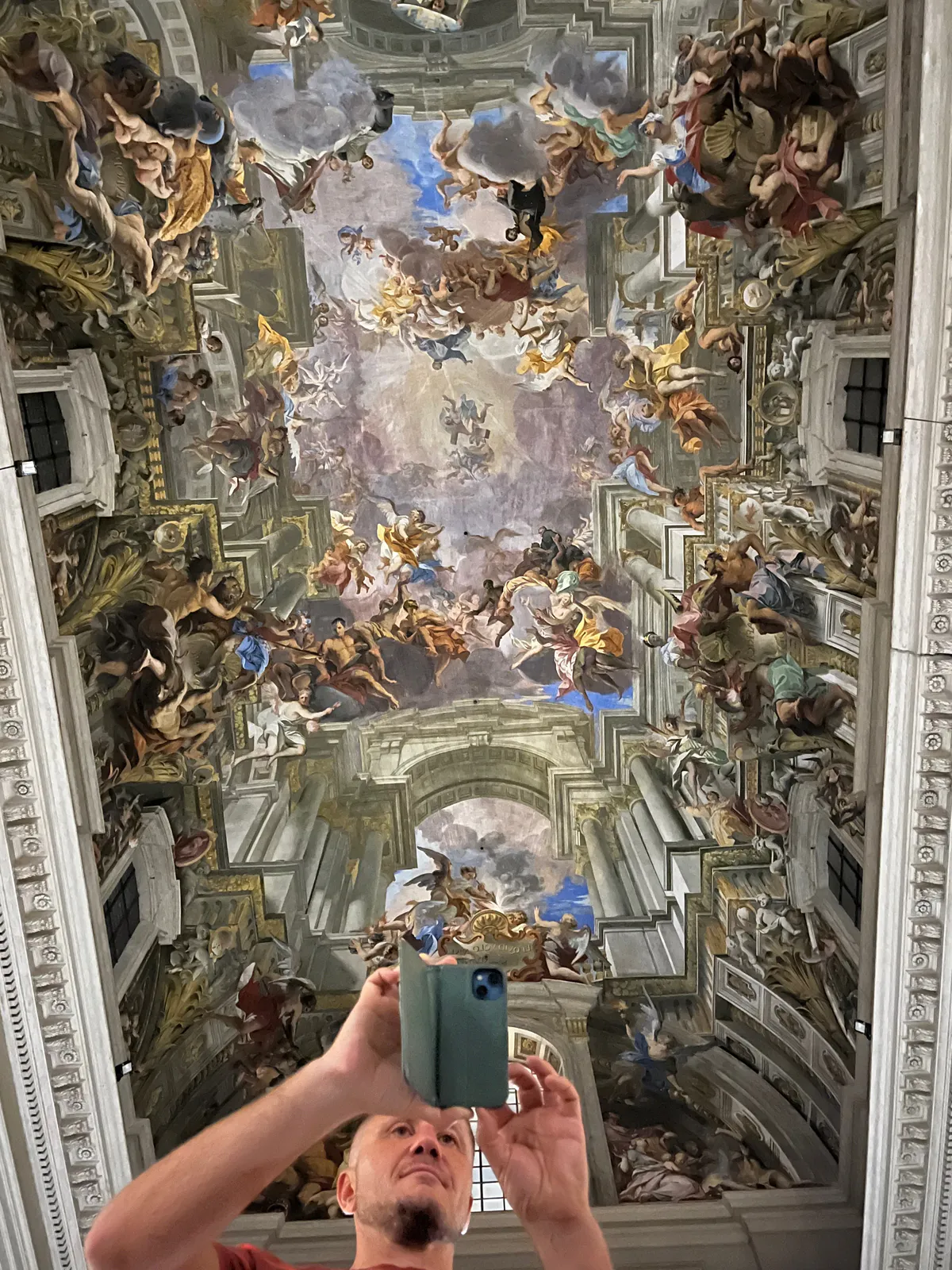
The Apotheosis of St. Ignatius
Andrea Pozzo
Max captures The Apotheosis of St. Ignatius (1685–1694) using a viewing mirror beneath the ceiling, enhancing Pozzo’s Baroque illusionism. This optical device unveils the masterful perspective that transforms the flat vault into a celestial vision, merging art and exemplifying the Baroque fascination with perspective: a dynamic interplay between earthly and divine realms.
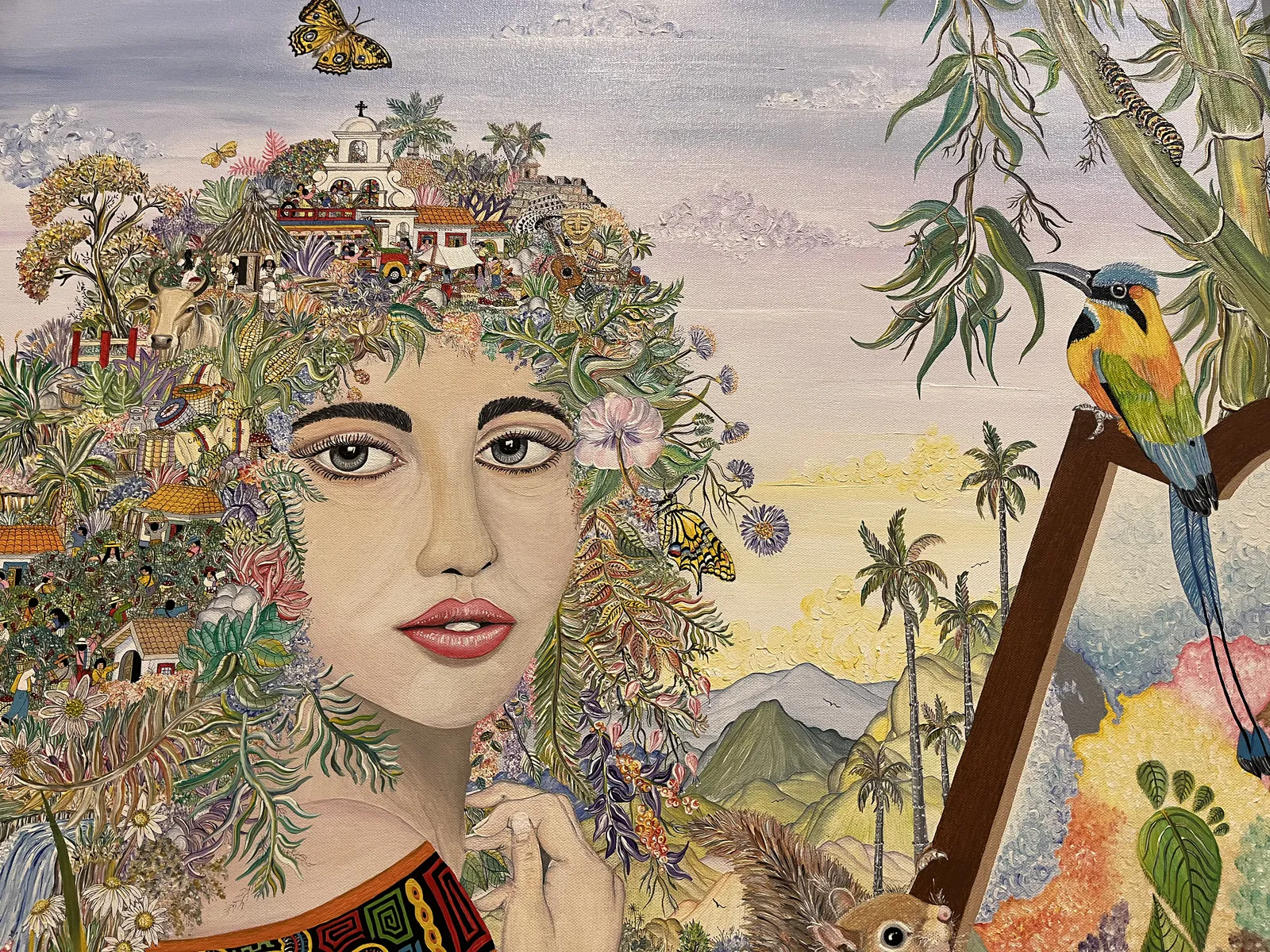
Aún Hay Tiempo
Julio César Ojeda Ariza
This 2021 work blends oil and ink to portray a woman whose hair becomes a lush tapestry of biodiversity and rural life. Symbolizing Colombia’s natural and cultural abundance, it warns of its fragility. The title, There’s Still Time, urges collective action to preserve the environment and ancestral wisdom.
“When the path is beautiful, do not ask where it leads.” — Zen proverb
Welcome to my travel photography!
“When the path is beautiful, do not ask where it leads.” — Zen proverb
Welcome to my travel photography!
For as long as I can remember, my path has been one of discovery—seeking beauty, timelessness, and connection in every corner of the world. It has also been a journey of deep learning and understanding. I’ve been an avid traveler (or perhaps a travel addict?) for most of my life. My love for travel began long before I ever left home: as a child, I drew a fantasy map of my grandparents’ apartment and “traveled” through it with my cousin Sonya, imagining adventures in every corner. Nearly 90 countries and countless moments of awe later, I’m excited to share this journey with you.
Thanks to the tireless and ingenious programming of Diagilev, we’re now able to present about fifteen percent of the images I’ve accumulated over the years. More will be released in small batches depending on your interest. While the first release leans toward museum photography, later ones will include more nature, architecture, culture, and general travel experiences. If you’d like to receive email notifications about new releases, feel free to reach out—no commercial use, ever.
Throughout my travels, I’ve been drawn to two intertwined kinds of discovery. One is intellectual: learning why the world is the way it is. History became my guide, shaping my perspective and filling my camera roll with museums and old buildings. To me, history is not the past—it is the key to understanding the present and how the world became what it is. The other is emotional: seeking moments of elevation—spirituality, beauty, harmony—often found in nature, monasteries, and ancient sacred spaces. Together, these impulses shape my photography. It invites you to learn, admire, and soar—to rise above the mundane and see the world through a lens of curiosity and wonder.
Much of my later travel became possible thanks to my job with Delta Air Lines, but the wanderlust began years earlier. By the time I joined the industry, I had already visited over 35 countries and lived in several—largely thanks to a backpacking journey around the world with Luis León, whose face appears in many early photos. I grew up in Ufa in the USSR, and since leaving it I have lived, studied, and worked in Latvia, the United States, France, South Korea, Canada, Spain, Italy, Brazil, Japan, and Colombia.
A life of near-constant movement may seem a little crazy, but it has deepened my understanding of the world and produced the photography you are about to see. Over the years, my style has evolved—more intentional, more refined—yet its core remains the same: a search for understanding, timeless beauty, and a connection to those who walked this earth long before us.
I hope these photos stir something in your soul, just as they did in mine. I’d love to hear from you—whether reactions, suggestions, corrections, or a request to be added to the email list for new releases (no commercial use, I promise). You can learn more about my travels here, and my academic life here.
Enjoy our shared journey!