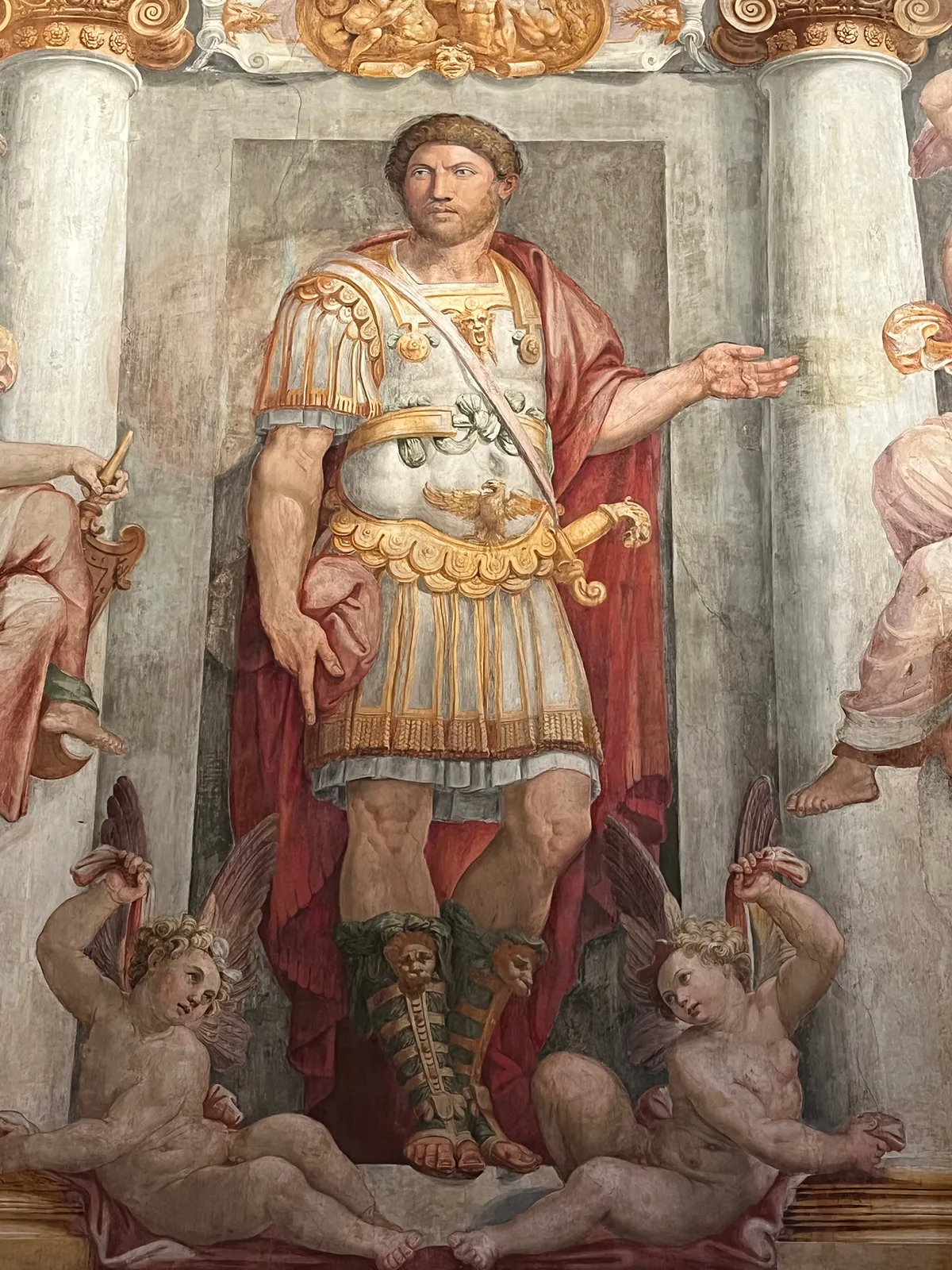
Emperor Hadrian
Girolamo Siciolante da Sermoneta (attrib.)
This 16th-c. fresco from the Sala Paolina depicts Emperor Hadrian in idealized Roman military attire. Portrayed with commanding calm, Hadrian stands framed by classical architecture and winged putti, symbolizing both earthly rule and divine favor. The work affirms his legacy as builder, humanist, and guardian of imperial order—within the very mausoleum he commissioned.
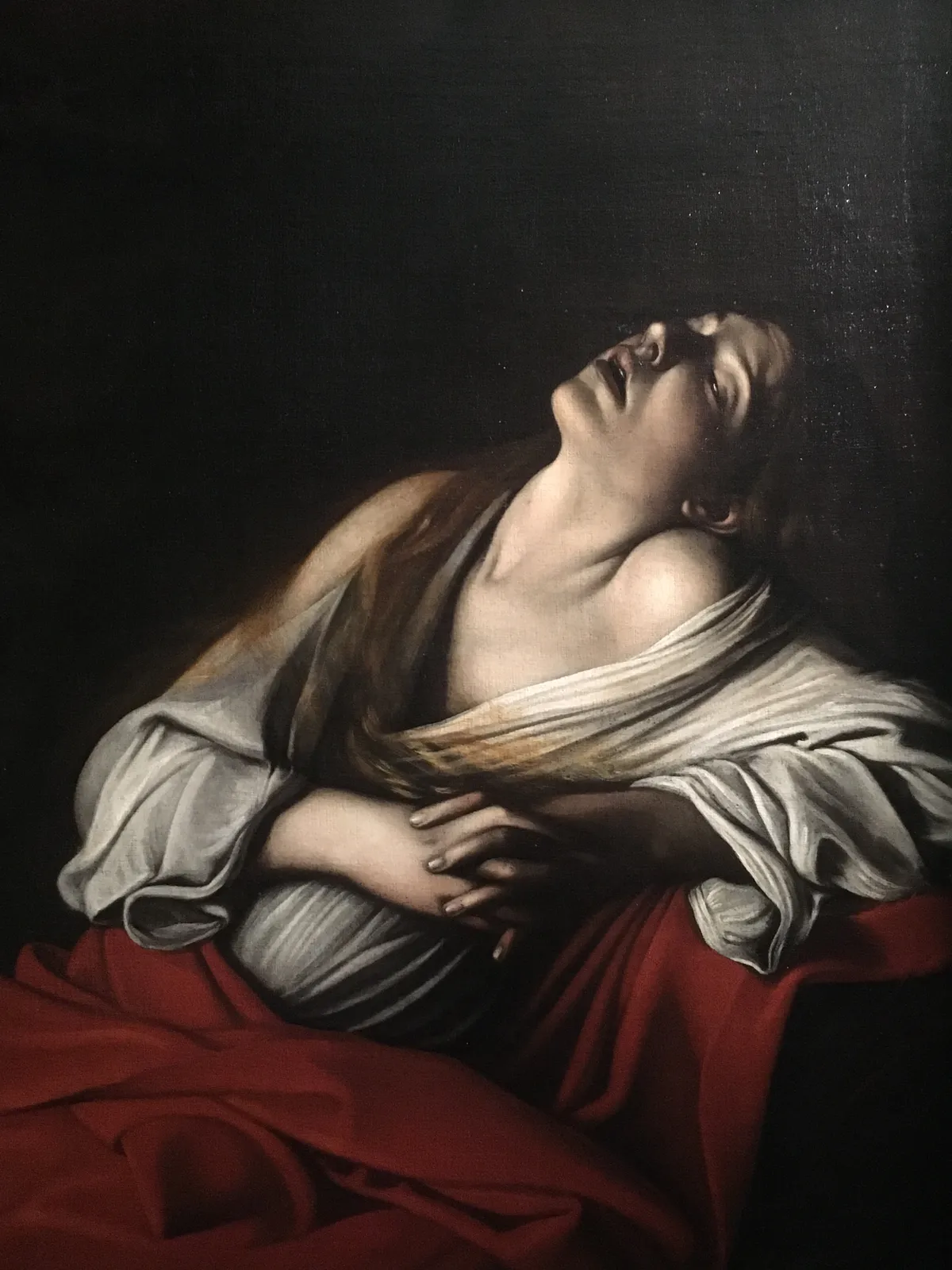
The Penitent Magdalene
Caravaggio
This painting (1594–95) shows Mary Magdalene seated in repentance, jewels cast aside at her feet. With downcast eyes and folded hands, she embodies both sensual beauty and spiritual transformation. Caravaggio merges naturalism with sacred symbolism, turning penitence into a deeply human, intimate moment of grace.
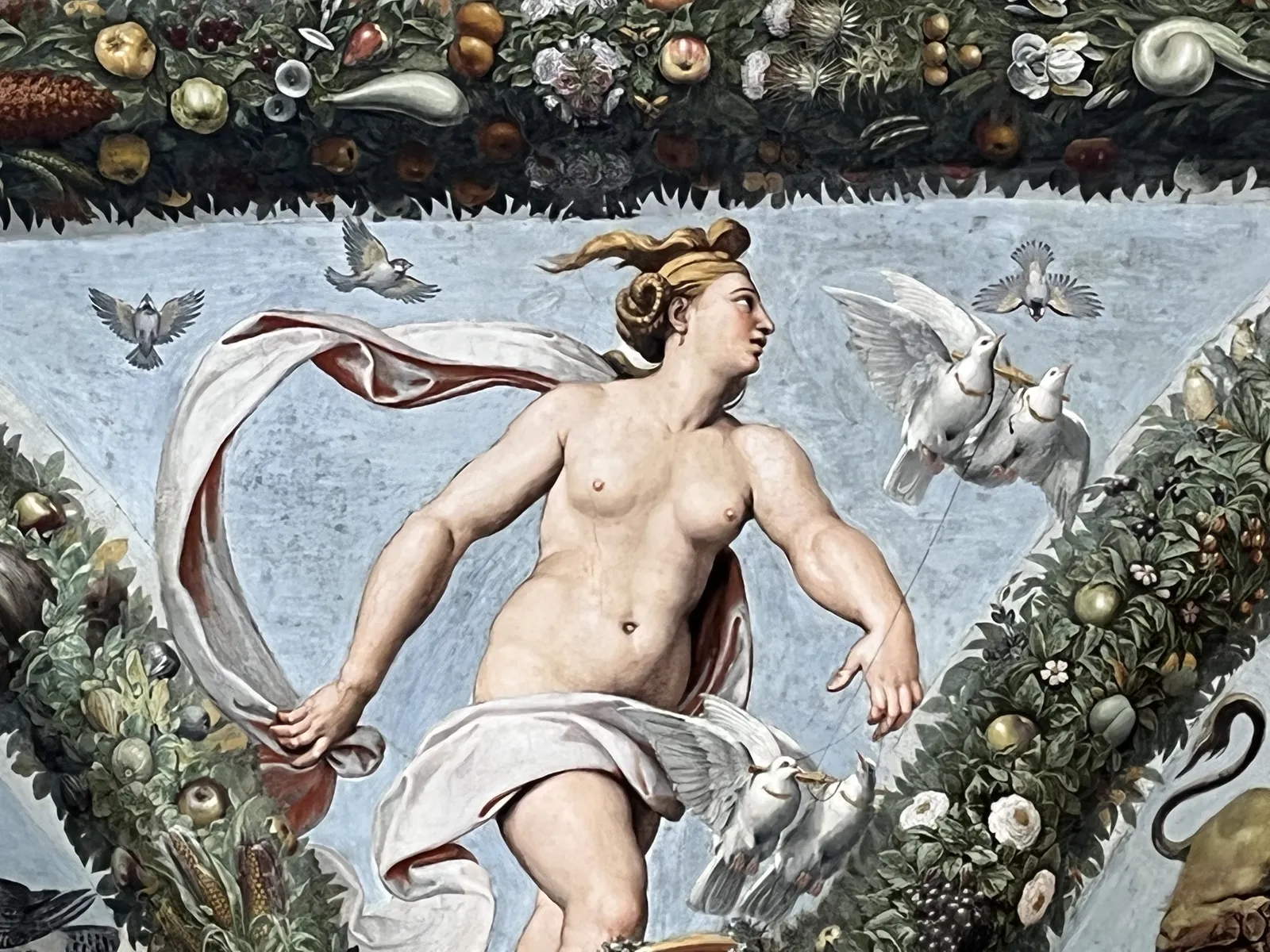
Venus and the Doves
Raphael
In this fresco (1518), Raphael presents Venus, goddess of love, gracefully accompanied by doves, her sacred birds. The flowing ribbon emphasizes her divine beauty and motion, while the doves allude to purity and erotic desire. The image echoes Venus’ central role in the myth of Cupid and Psyche, where love governs both divine and mortal fates.
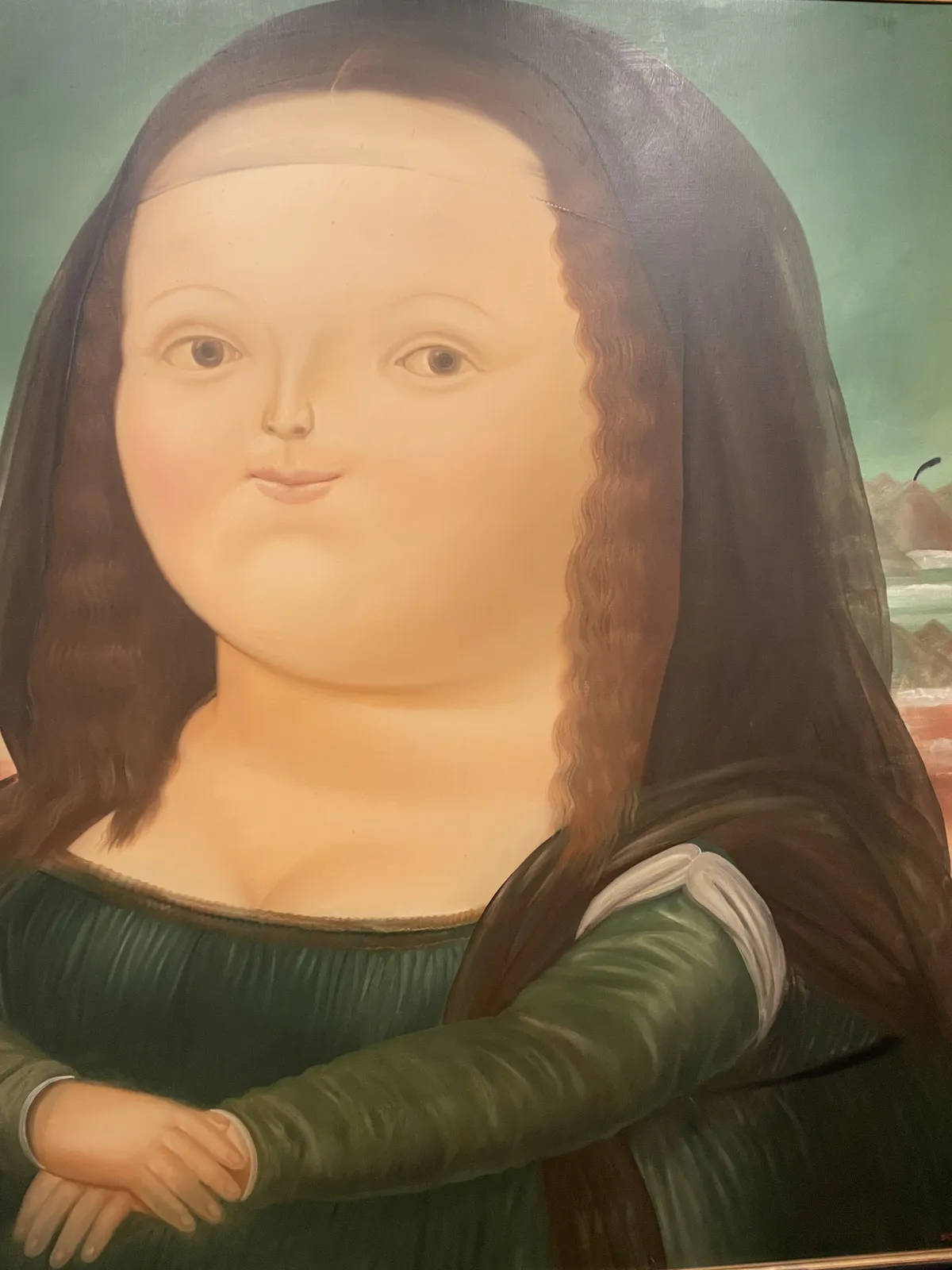
Mona Lisa, Age Twelve
Fernando Botero
In this whimsical reimagining (1959), Botero transforms da Vinci’s iconic subject into a voluminous child. Created in his signature Boterismo style, the painting blends parody with homage. Born from a cleaning lady’s remark, the work helped launch Botero’s career, celebrating exaggerated form as a tool for both humor and artistic identity.
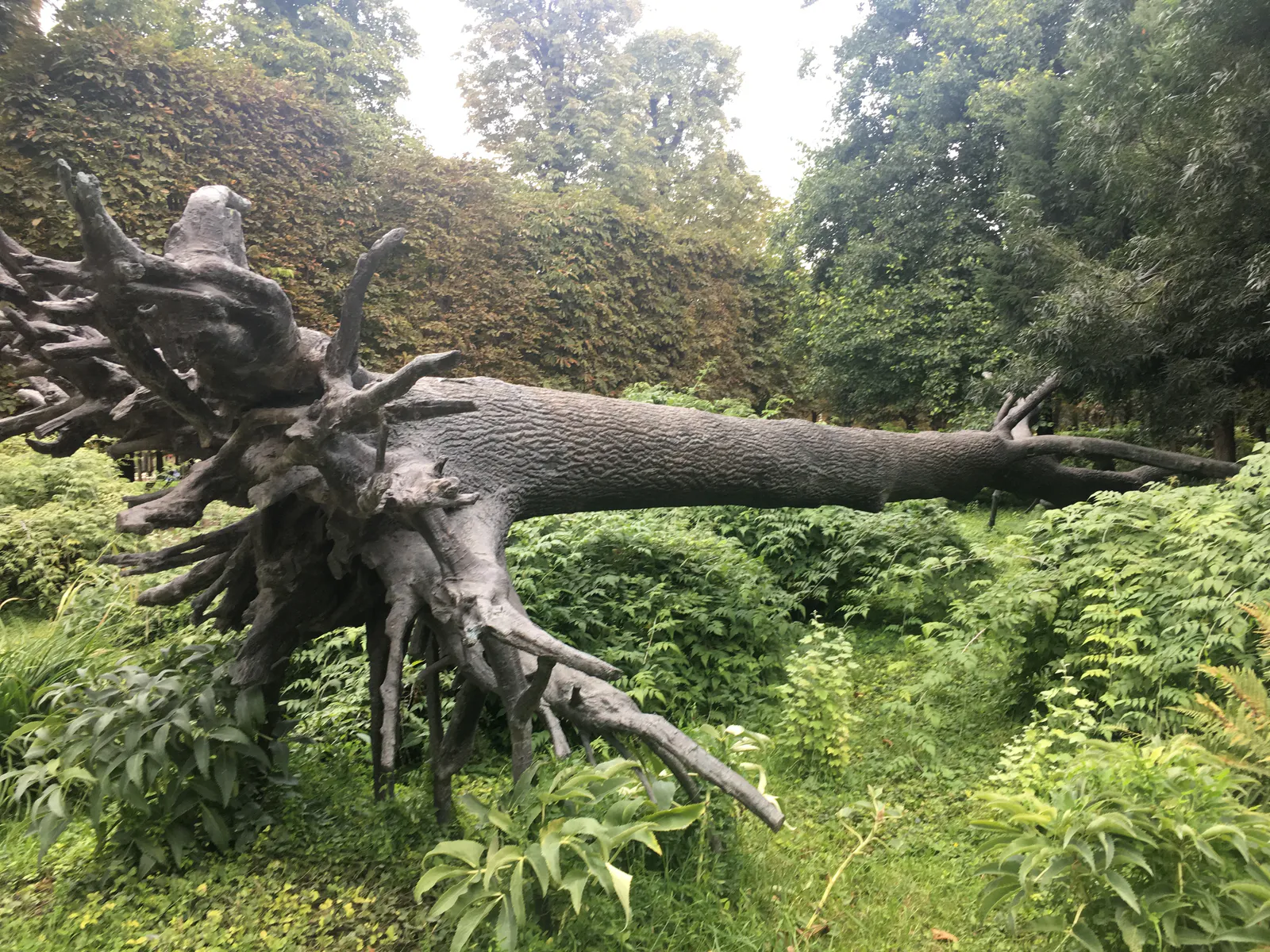
The Tree of Vowels
Giuseppe Penone
This monumental bronze sculpture (2000) shows a fallen oak with roots extending like veins across the ground. Installed in the Jardin des Tuileries, it demonstrates Penone’s exploration of the connection between humanity and nature. The work combines organic memory with sculptural permanence, inviting reflection on time, fragility, and the endurance of natural forms.
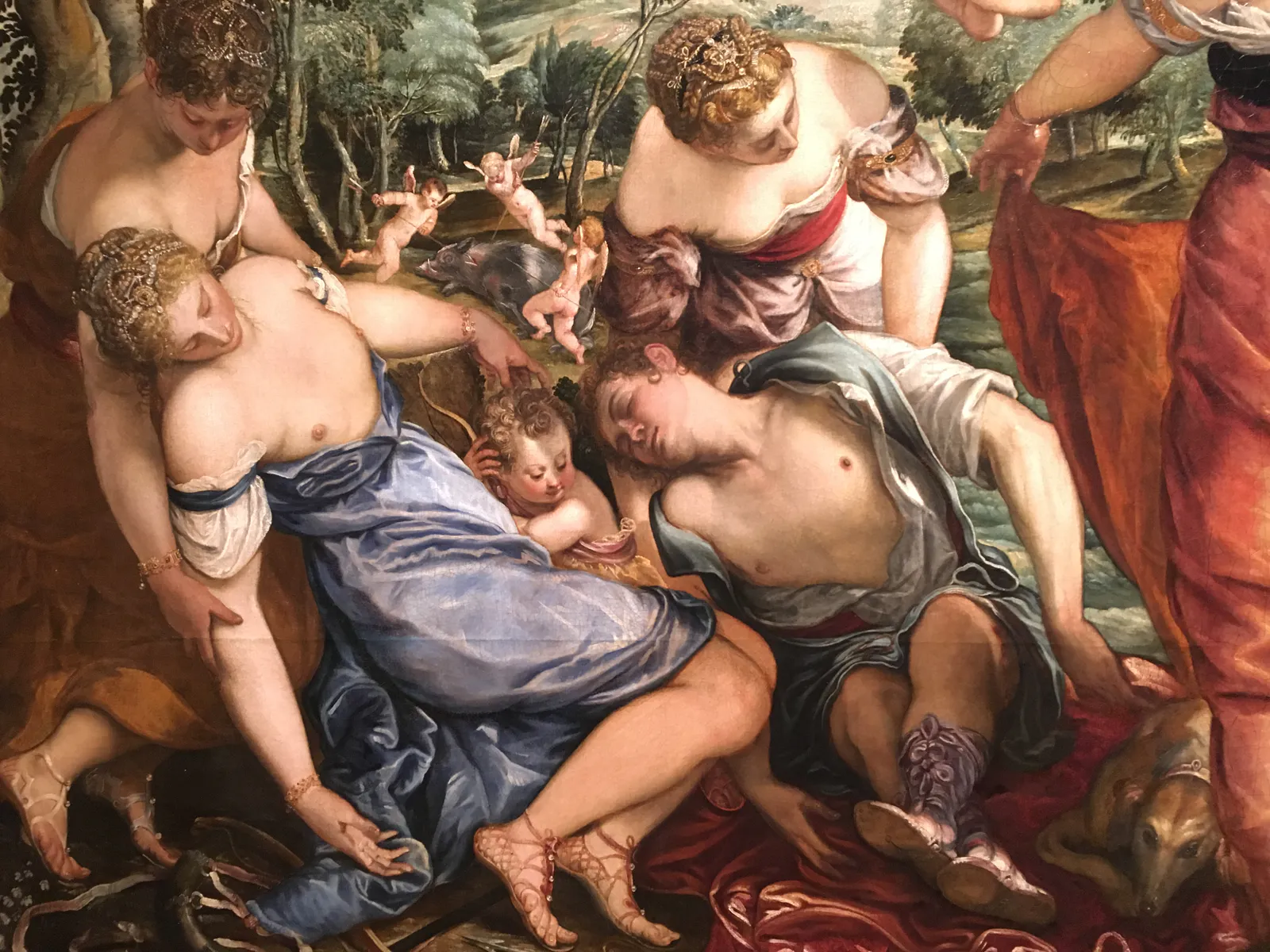
The Death of Adonis
Tintoretto's Workshop
The Death of Adonis (1550–55) captures Venus fainting at Adonis's death, diverging from Ovid’s Metamorphoses by including young women not in the original tale. Created by a Nordic artist in Tintoretto’s Venetian workshop, it blends Tintoretto’s dramatic style with the collaborator’s unique touch, evident in the expressive figures and vibrant colors. This fusion highlights the shared human themes of love and loss, inviting reflection on the timeless nature of myth and emotion.
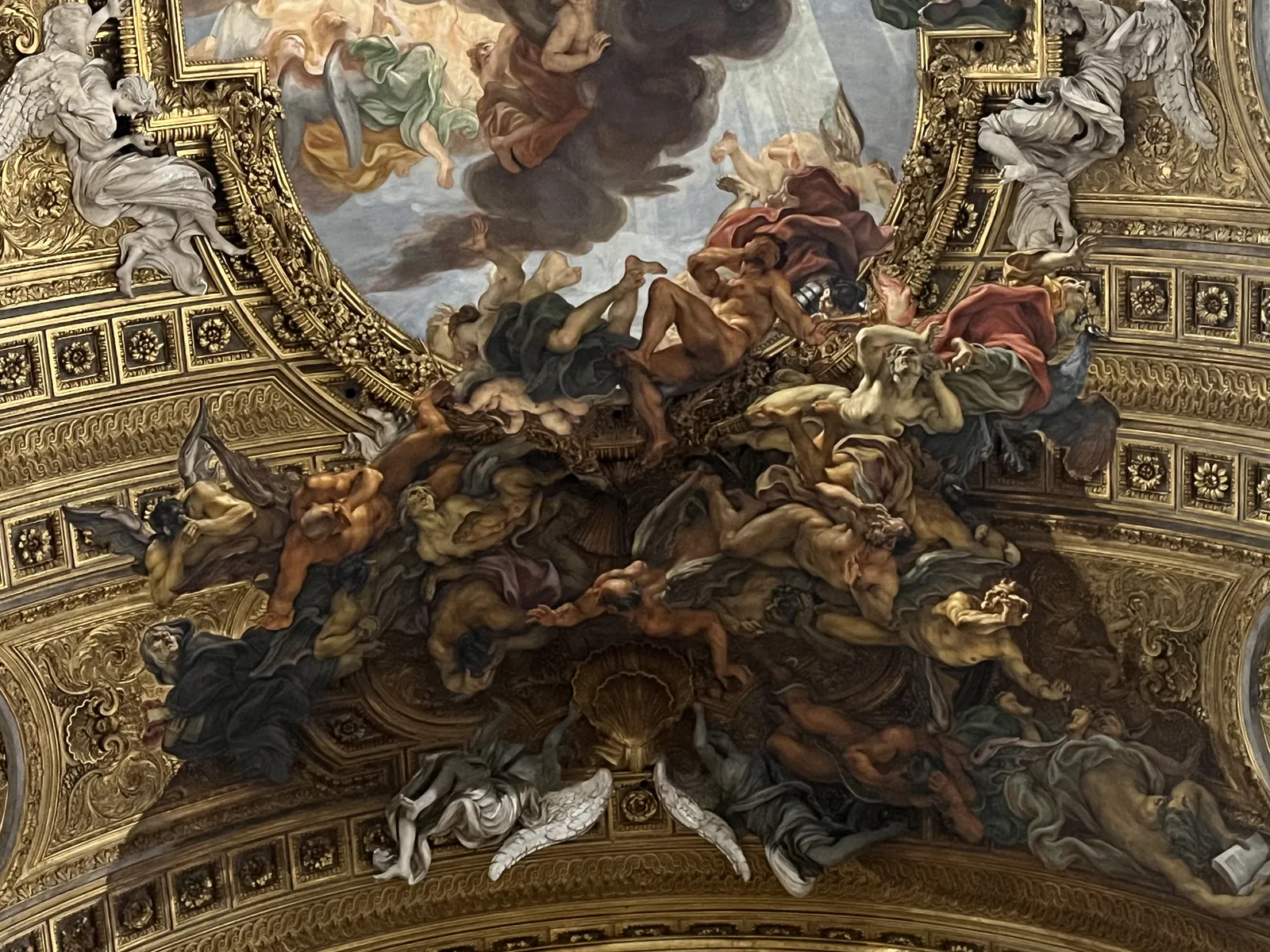
The Damned
Giovanni Battista Gaulli
In this dramatic segment (1676–79) from the Triumph of the Name of Jesus, Gaulli casts the damned from heaven into shadow and chaos. Their bodies twist, morph, and scream as they recoil from the divine light. Cloaked in darkness and shame, they contrast sharply with the radiant saved above—embodying Baroque emotion and the terrifying cost of spiritual failure.
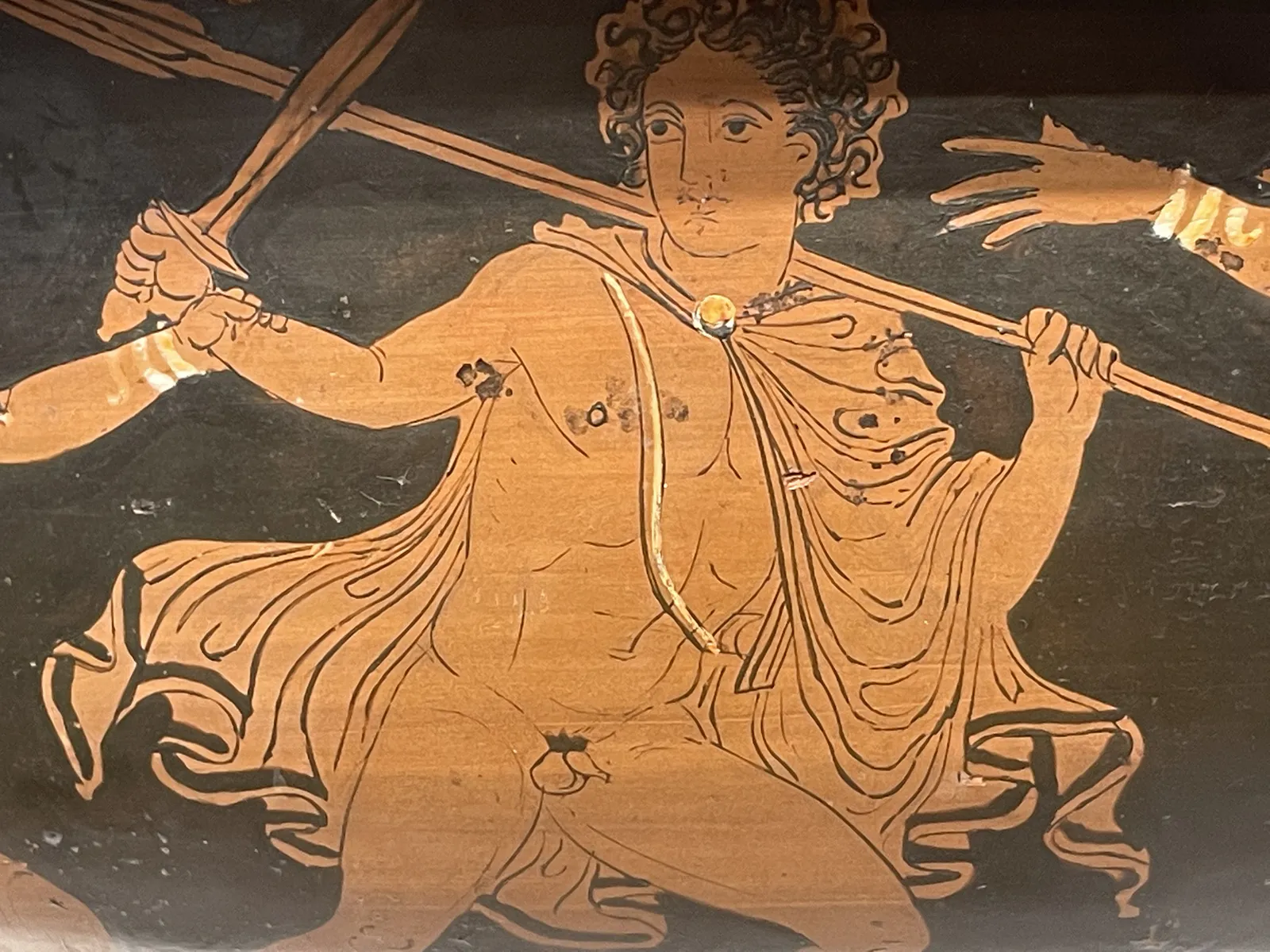
Pentheus Attacked by Bacchic Women
The Oxford Group Workshop
This Apulian red-figure plate (360–350 BC) shows Pentheus arming himself against Dionysus’ cult. In myth, he is seized by Bacchic women, including his mother Agave, who mistake him for prey and tear him apart. The scene warns against impiety and defying divine power, embodying the tragic cost of resisting Dionysian ecstasy and communal worship.
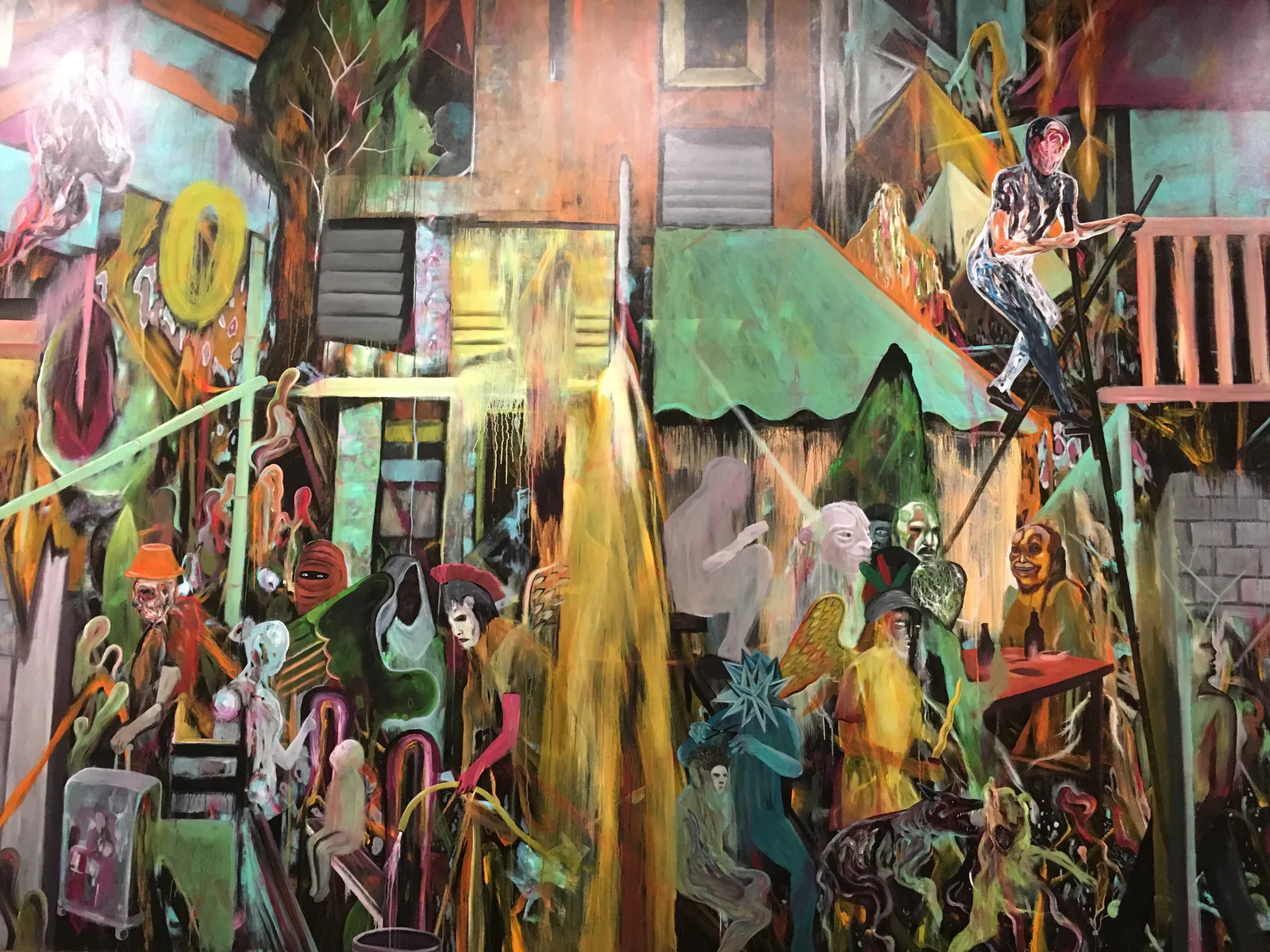
The Comedy, Parody, and Tragedy
Rodel Tapaya
This 2018 painting layers crowded shanties, billboards, and tangled walkways with mythic creatures from Philippine folklore. Human figures mingle with spirits and masked characters, blurring everyday life with the supernatural. Bright colors and abrupt shifts in scale evoke noise, congestion, and spectacle. Tapaya unfolds contemporary urban experience as a chaotic folk tale, where comedy, parody, and tragedy coexist in a single scene.
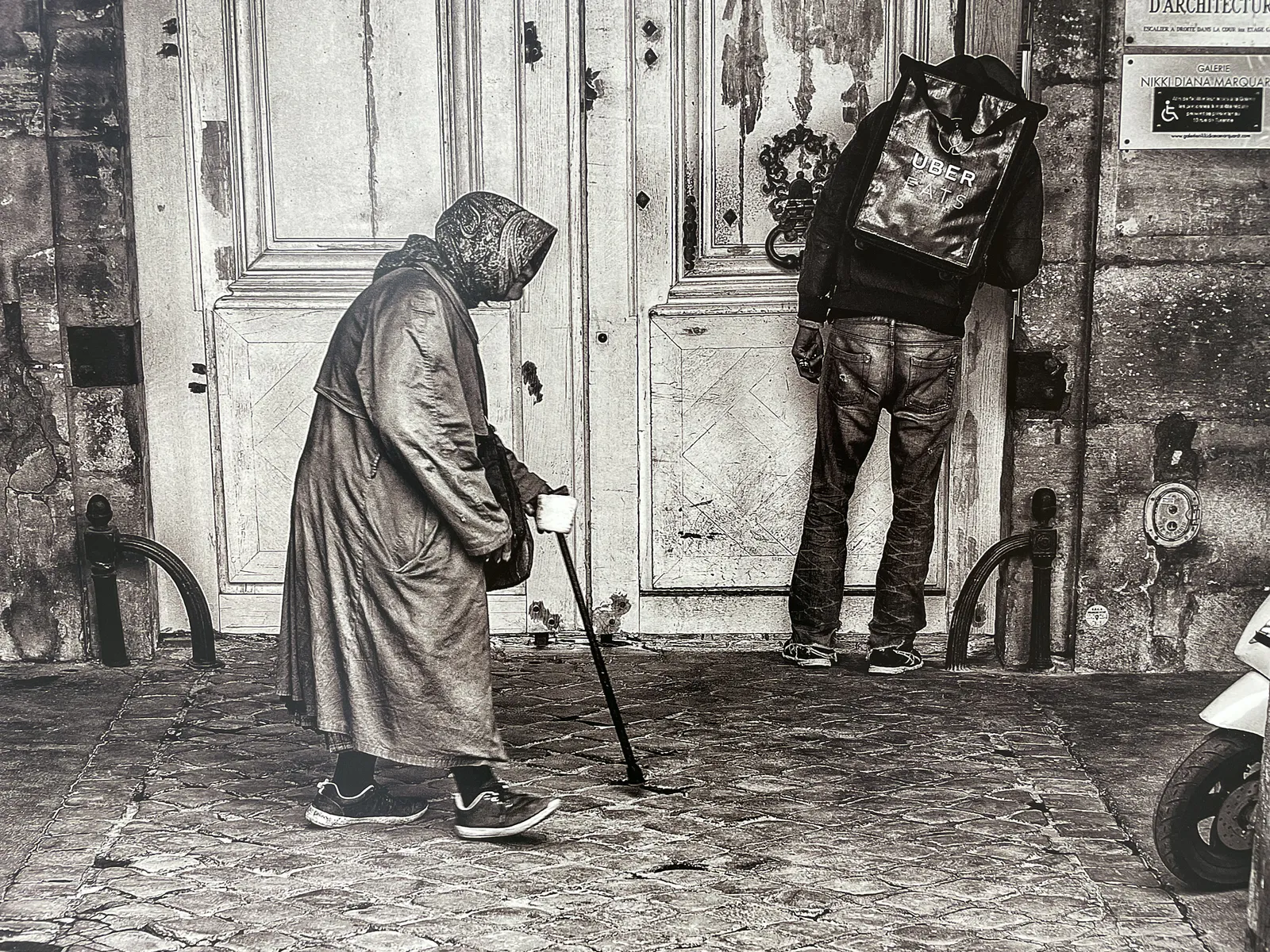
Uber Eats
Roger Zayas
This photo (2017), taken in the historic Marais district of Paris, captures a striking urban contrast: an elderly woman with a cane passes a food courier bent over a doorway. Zayas underscores generational divides and social invisibility, reflecting on aging and shifting economic realities in the European metropolis.
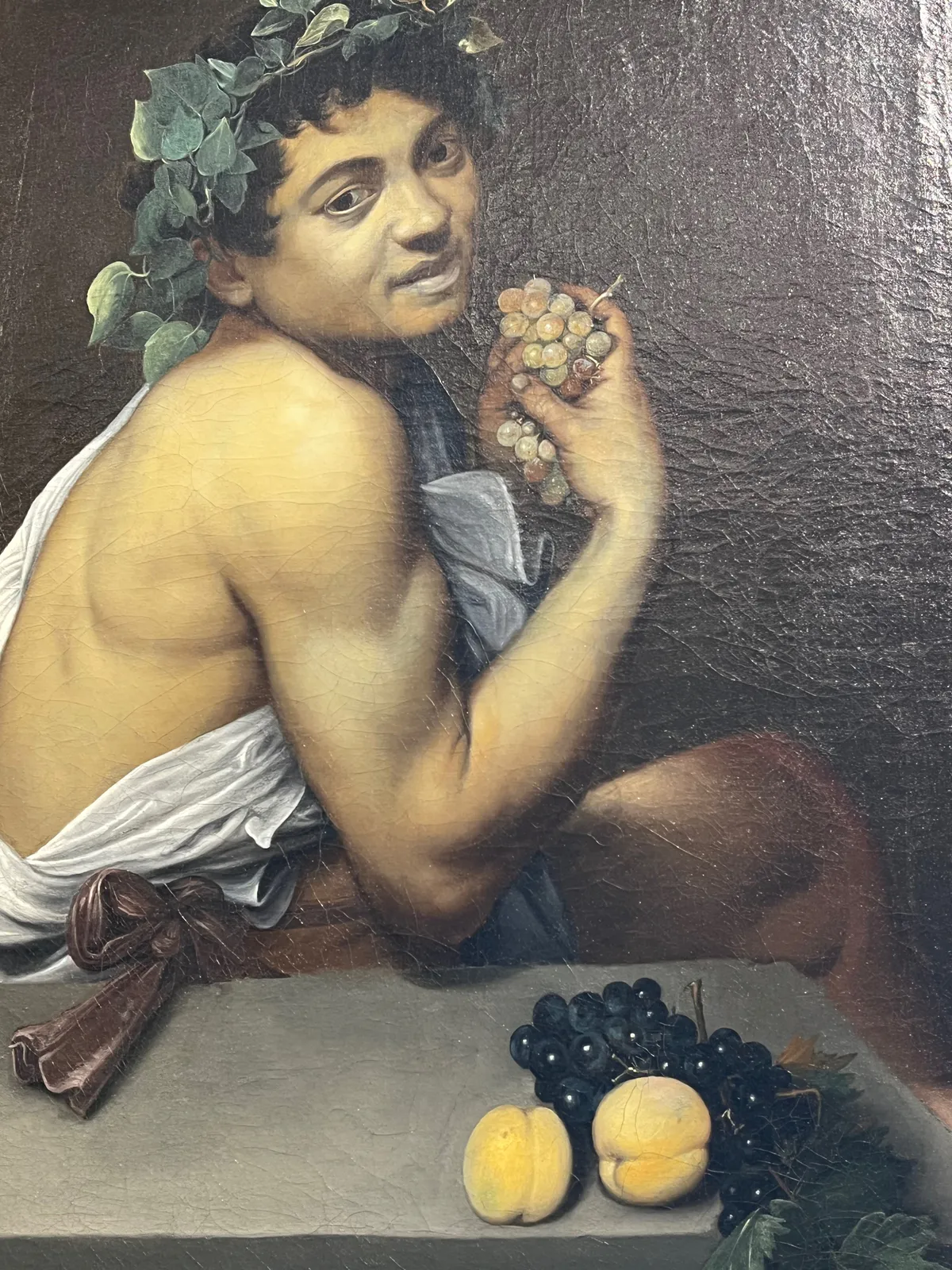
Young Sick Bacchus
Caravaggio
This self-portrait (c. 1593) shows Caravaggio as Bacchus with jaundiced skin and tense features, painted while recovering from illness. The ivy crown replaces the usual vine leaves, subverting divine idealism. Both sensual and unsettling, the image mocks classical beauty and reveals the artist’s own physical vulnerability.
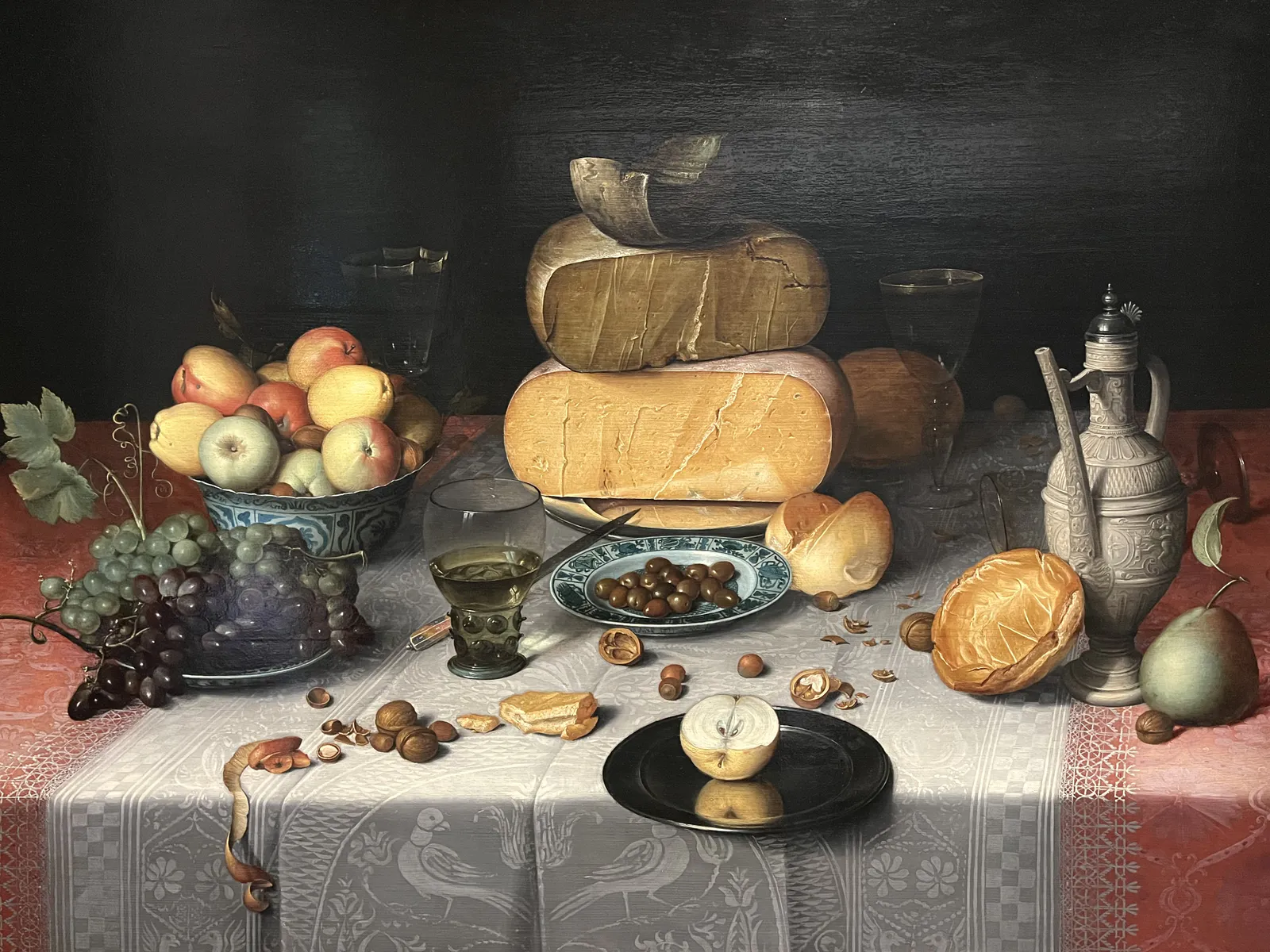
Still Life with Cheese
Floris Claesz van Dijck
On a damask-draped table (c.1615) lie fruit, bread, and three cheeses, carefully grouped by type. Floris van Dijck’s mastery of illusion is evident in the pewter plate jutting over the edge, as if within reach. A pioneer of Haarlem still-life painting, he helped establish the Dutch Golden Age tradition of rendering everyday abundance with startling realism.
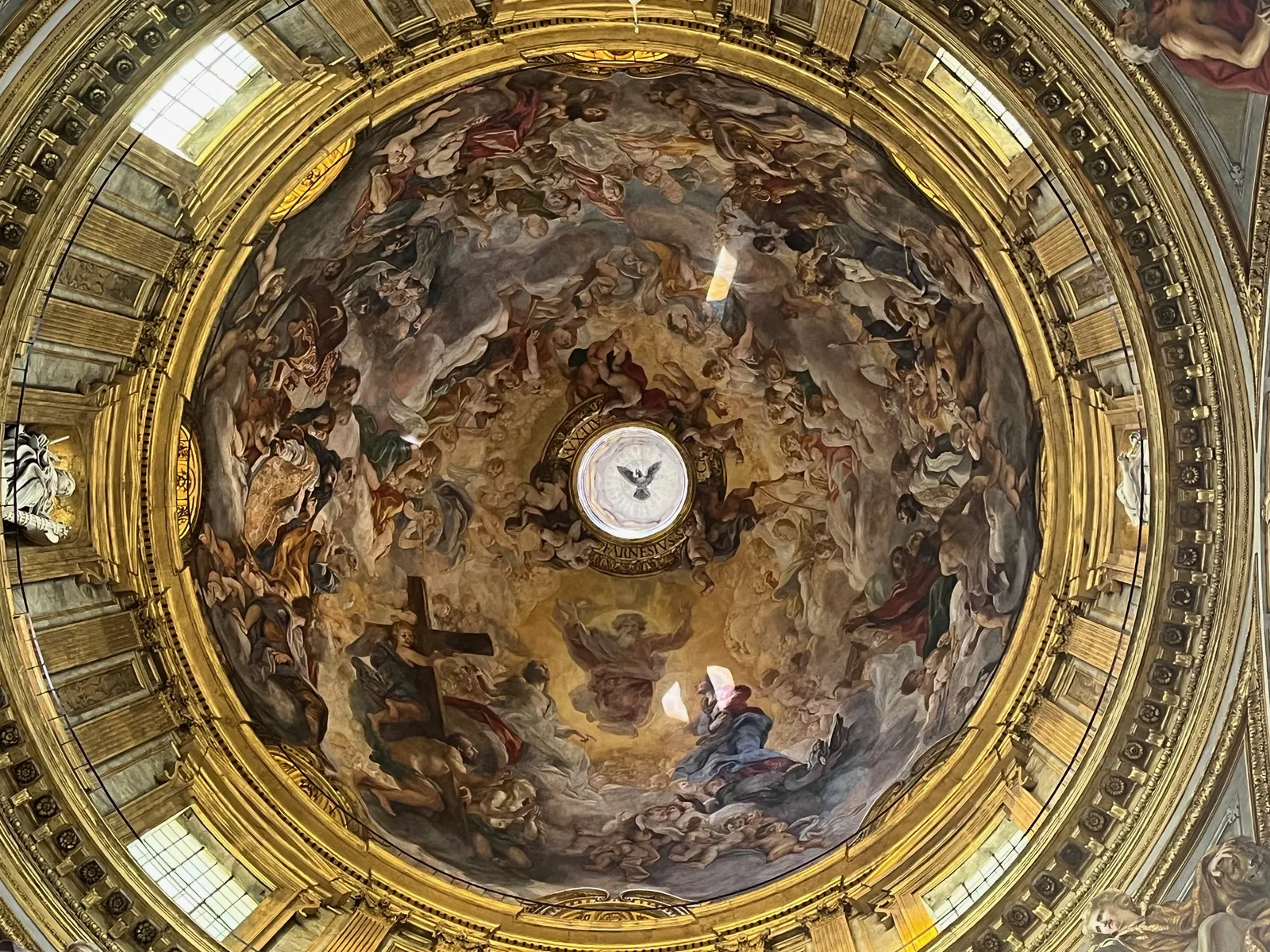
The Glory of the Holy Spirit
Giovanni Battista Gaulli
This radiant fresco (c. 1679) fills the dome with concentric rings of clouds, gilded ribs, and crowded figures. At the center, the Holy Spirit appears as a white dove in a glowing medallion, encircled by saints and angels swept upward in swirling light. The painted architecture merges with the real cornice, a Baroque illusion that makes the vault seem to open into a realm of revelation.
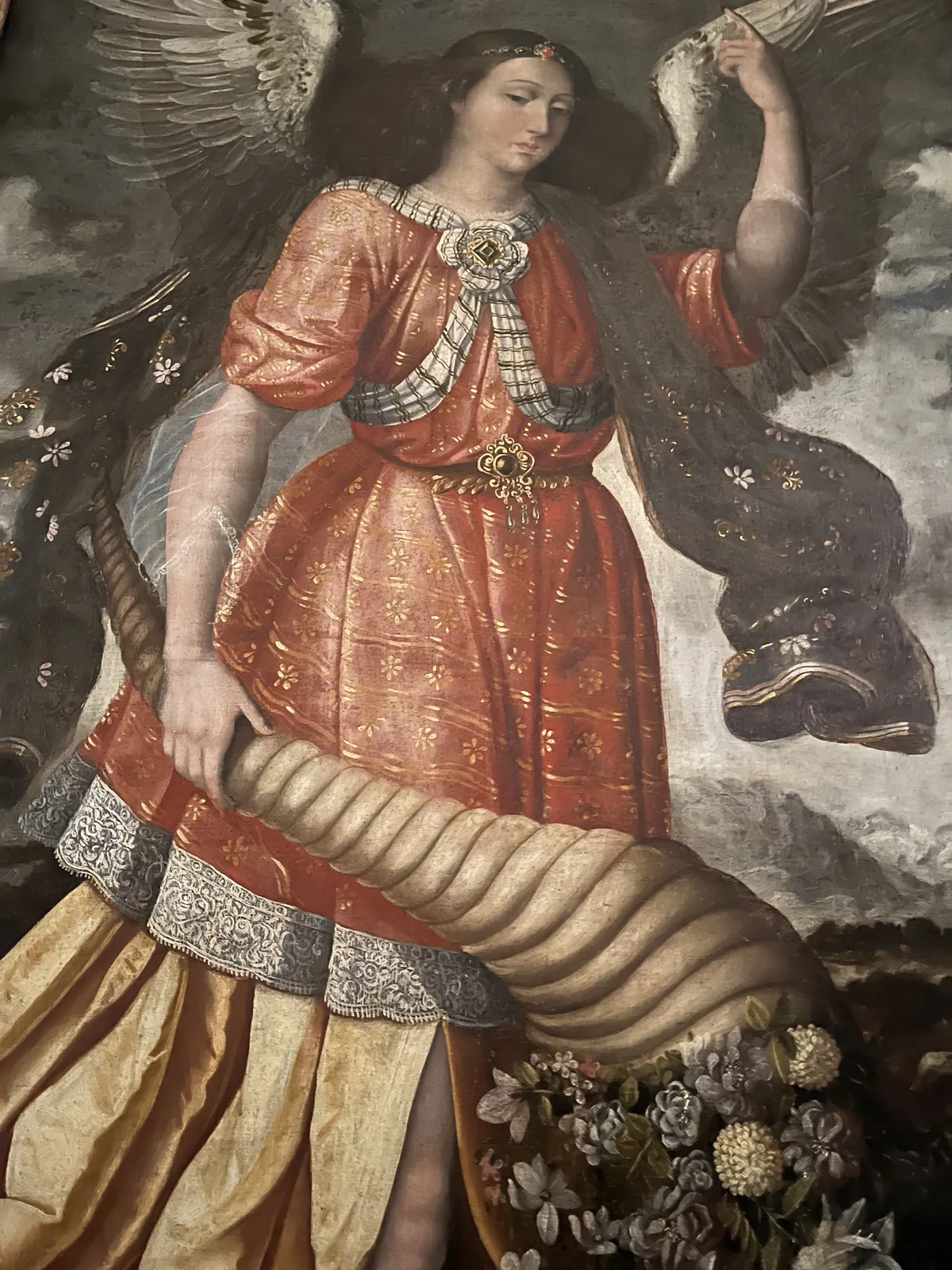
Isabel de Santiago
Archangel Gabriel
This early 18th-c. work by Isabel de Santiago—a rare female artist of the Quito School—portrays Gabriel as a celestial messenger of abundance. Draped in luminous textiles, the archangel holds a cornucopia, blending classical fertility symbols with baroque angelology in a uniquely Andean devotional image.
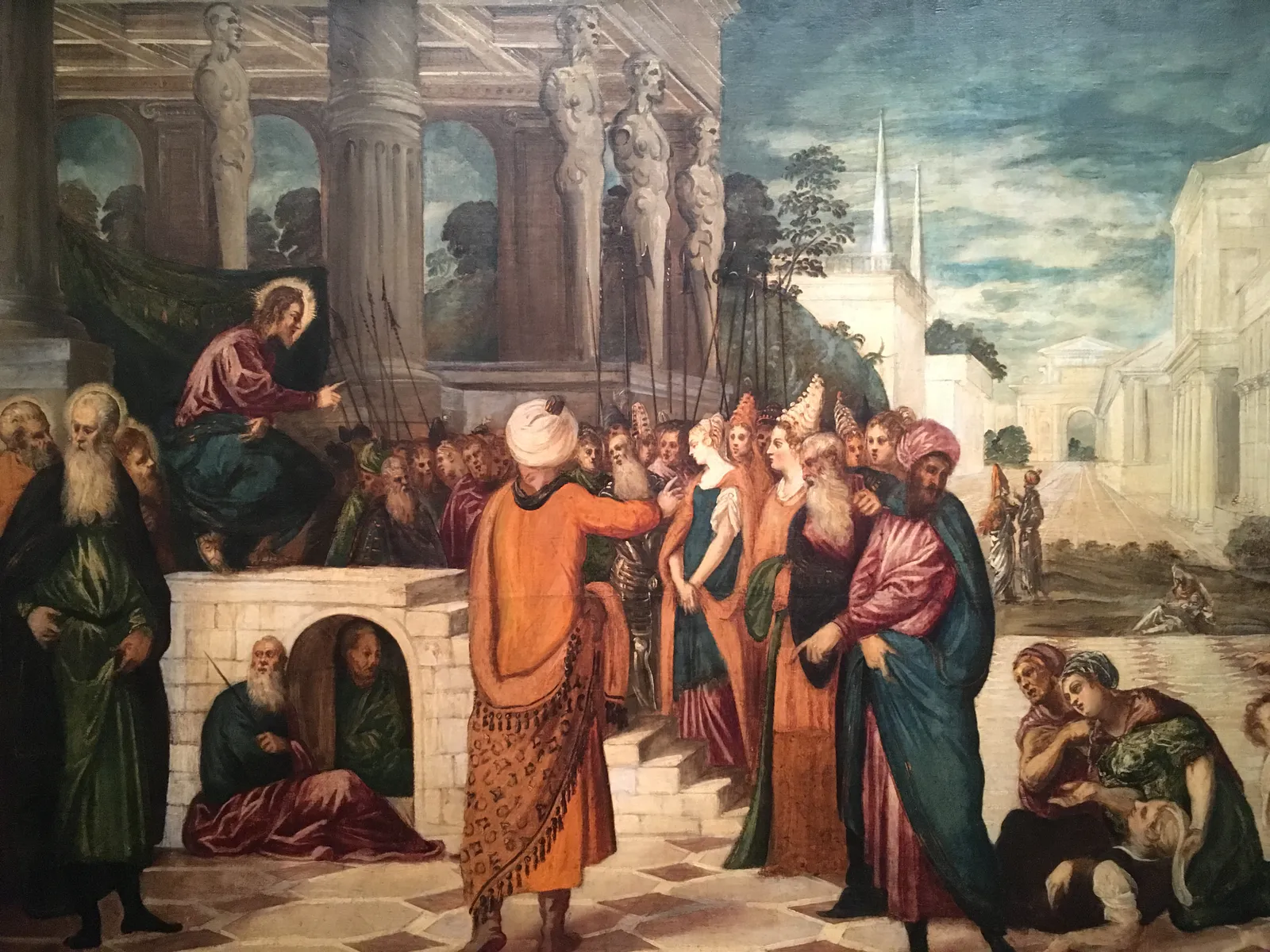
Christ and the Adulteress
Tintoretto
This scene (c. 1555) is from the Gospel of John: Jesus responds to scribes and Pharisees demanding judgment on an adulterous woman. His challenge—inviting the sinless to cast the first stone—teaches mercy over condemnation. Tintoretto’s dynamic style appears in the sharp contrasts of light and shadow, elongated figures, and oblique spatial arrangement that intensify the moral tension. Classical architectural elements frame the encounter, emphasizing the conflict between legalism and redemption.
“When the path is beautiful, do not ask where it leads.” — Zen proverb
Welcome to my travel photography!
“When the path is beautiful, do not ask where it leads.” — Zen proverb
Welcome to my travel photography!
For as long as I can remember, my path has been one of discovery—seeking beauty, timelessness, and connection in every corner of the world. It has also been a journey of deep learning and understanding. I’ve been an avid traveler (or perhaps a travel addict?) for most of my life. My love for travel began long before I ever left home: as a child, I drew a fantasy map of my grandparents’ apartment and “traveled” through it with my cousin Sonya, imagining adventures in every corner. Nearly 90 countries and countless moments of awe later, I’m excited to share this journey with you.
Thanks to the tireless and ingenious programming of Diagilev, we’re now able to present about fifteen percent of the images I’ve accumulated over the years. More will be released in small batches depending on your interest. While the first release leans toward museum photography, later ones will include more nature, architecture, culture, and general travel experiences. If you’d like to receive email notifications about new releases, feel free to reach out—no commercial use, ever.
Throughout my travels, I’ve been drawn to two intertwined kinds of discovery. One is intellectual: learning why the world is the way it is. History became my guide, shaping my perspective and filling my camera roll with museums and old buildings. To me, history is not the past—it is the key to understanding the present and how the world became what it is. The other is emotional: seeking moments of elevation—spirituality, beauty, harmony—often found in nature, monasteries, and ancient sacred spaces. Together, these impulses shape my photography. It invites you to learn, admire, and soar—to rise above the mundane and see the world through a lens of curiosity and wonder.
Much of my later travel became possible thanks to my job with Delta Air Lines, but the wanderlust began years earlier. By the time I joined the industry, I had already visited over 35 countries and lived in several—largely thanks to a backpacking journey around the world with Luis León, whose face appears in many early photos. I grew up in Ufa in the USSR, and since leaving it I have lived, studied, and worked in Latvia, the United States, France, South Korea, Canada, Spain, Italy, Brazil, Japan, and Colombia.
A life of near-constant movement may seem a little crazy, but it has deepened my understanding of the world and produced the photography you are about to see. Over the years, my style has evolved—more intentional, more refined—yet its core remains the same: a search for understanding, timeless beauty, and a connection to those who walked this earth long before us.
I hope these photos stir something in your soul, just as they did in mine. I’d love to hear from you—whether reactions, suggestions, corrections, or a request to be added to the email list for new releases (no commercial use, I promise). You can learn more about my travels here, and my academic life here.
Enjoy our shared journey!