
Warrior Confronts Sacred Bull
A warrior clad in a belted garment confronts a towering bull, while leopards and wild beasts encircle this Gundestrup Cauldron panel (150 BC - 1 AD). The bull symbolizes cosmic strength, fertility, or divine authority. The composition may depict a ritual challenge or offering, rooted in Celtic myths of bull sacrifice and heroic trials.
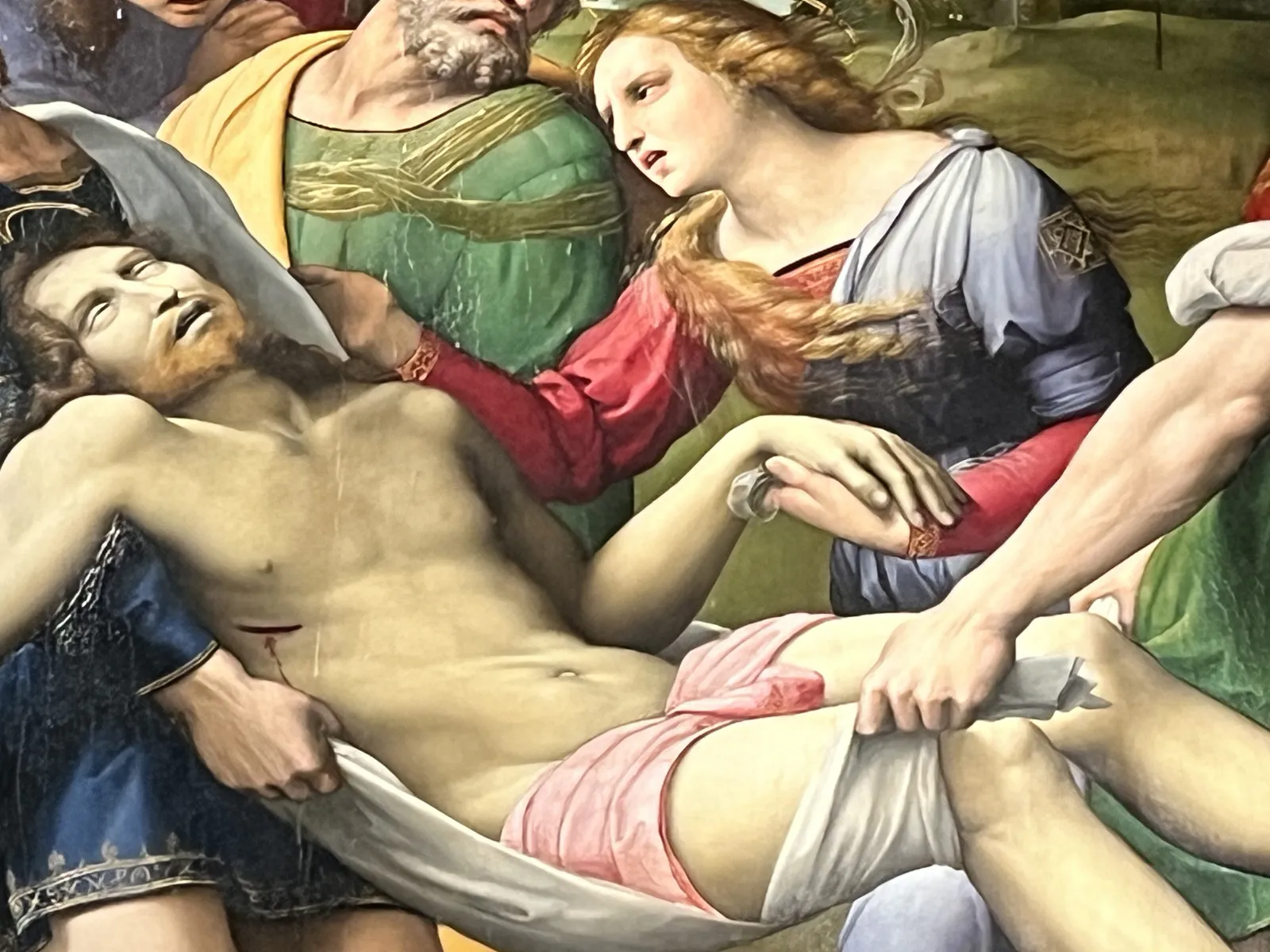
The Entombment (detail)
Raphael
This masterpiece (1507) shows a group of figures surrounding the lifeless body of Christ, merging themes of Deposition, Lamentation, and Entombment. Commissioned by Atalanta Baglioni, it honors her murdered son. Raphael’s composition shows Michelangelo’s influence in the sculptural form of Christ. A 2020 restoration revealed refinements in Raphael’s underdrawing, pigment choices, and layered modeling, clarifying how he built depth and anatomical precision.
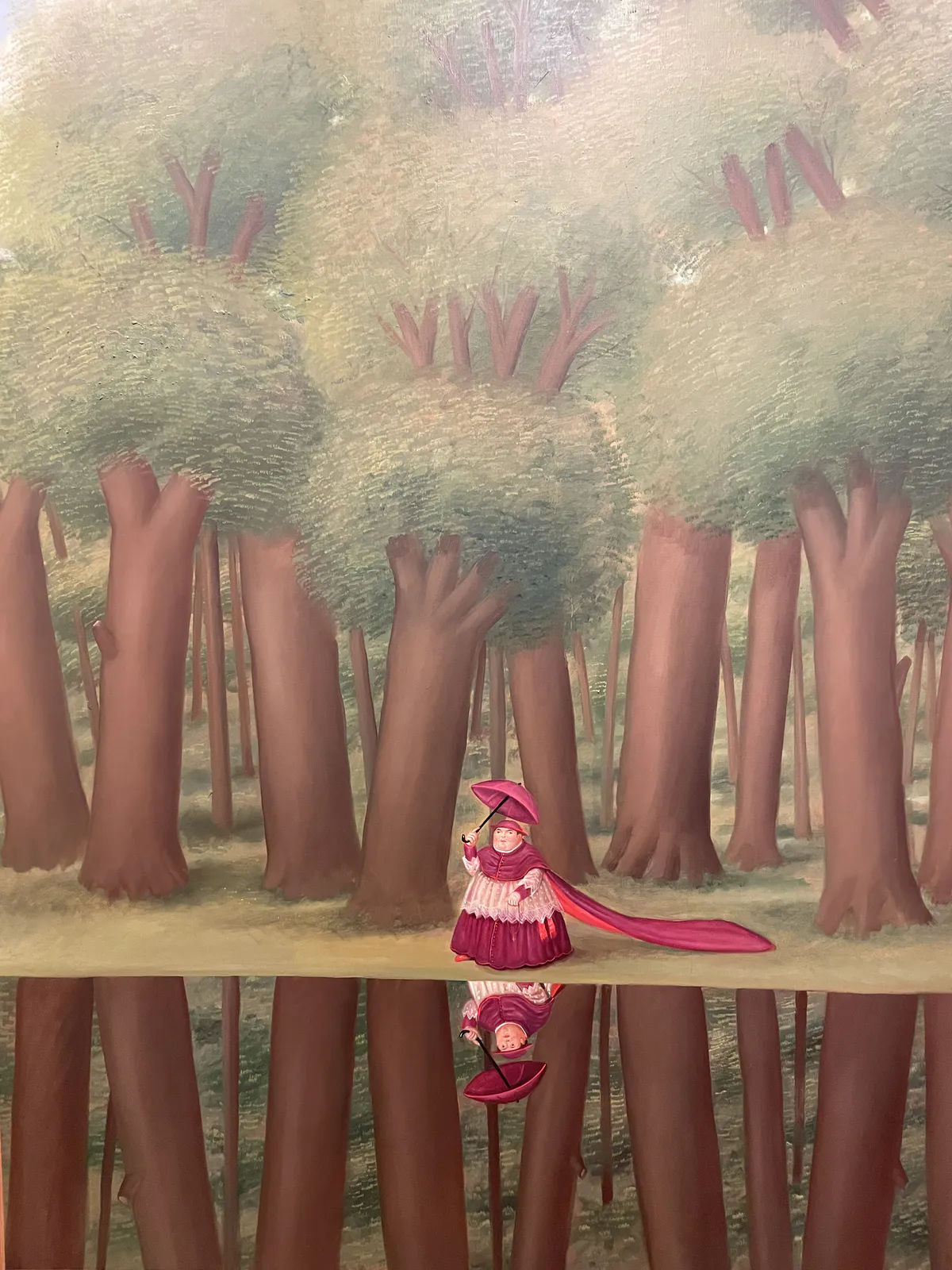
Woman with Umbrella
Fernando Botero
A solitary figure walks through a forest, her reflection mirrored below as if suspended between worlds. Her voluminous dress and umbrella contrast with the vertical rhythm of the trees. With surreal calm and poetic symmetry, Botero (1989) transforms a simple stroll into a meditation on solitude, identity, and the quiet theatricality of everyday life.
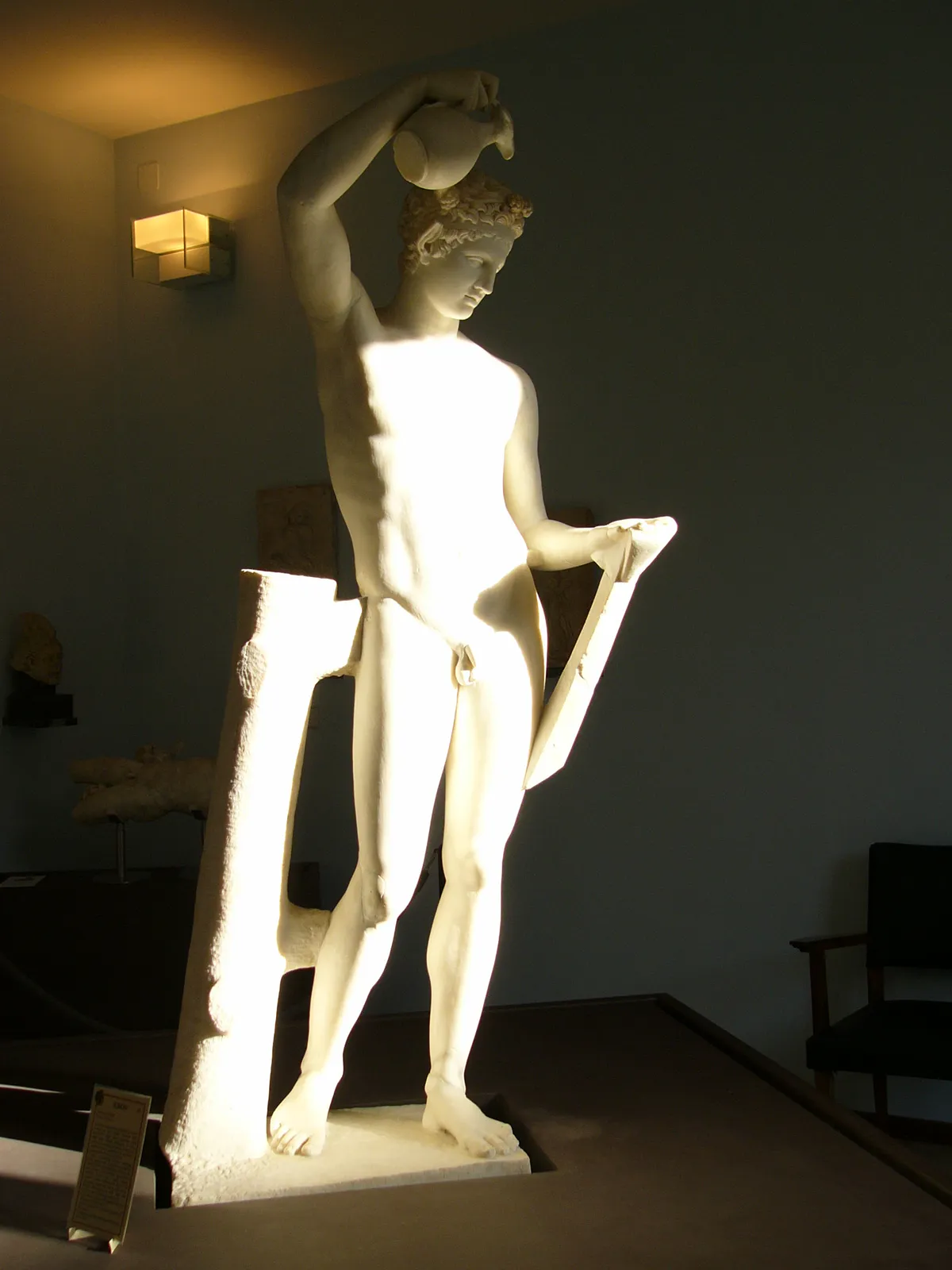
Satyr Pouring Wine
Praxiteles
This Roman marble statue is a copy of Praxiteles’ 4th-c. BC Greek original, depicting a youthful satyr, a companion of Dionysus, pouring wine. Though the pitcher and cup are missing, it captures the revelry and music linked to satyrs. Found near Naples in 1797, it exemplifies Praxiteles’ style with sinuous curves and a naturalistic pose, embodying the carefree spirit of Dionysian myth.
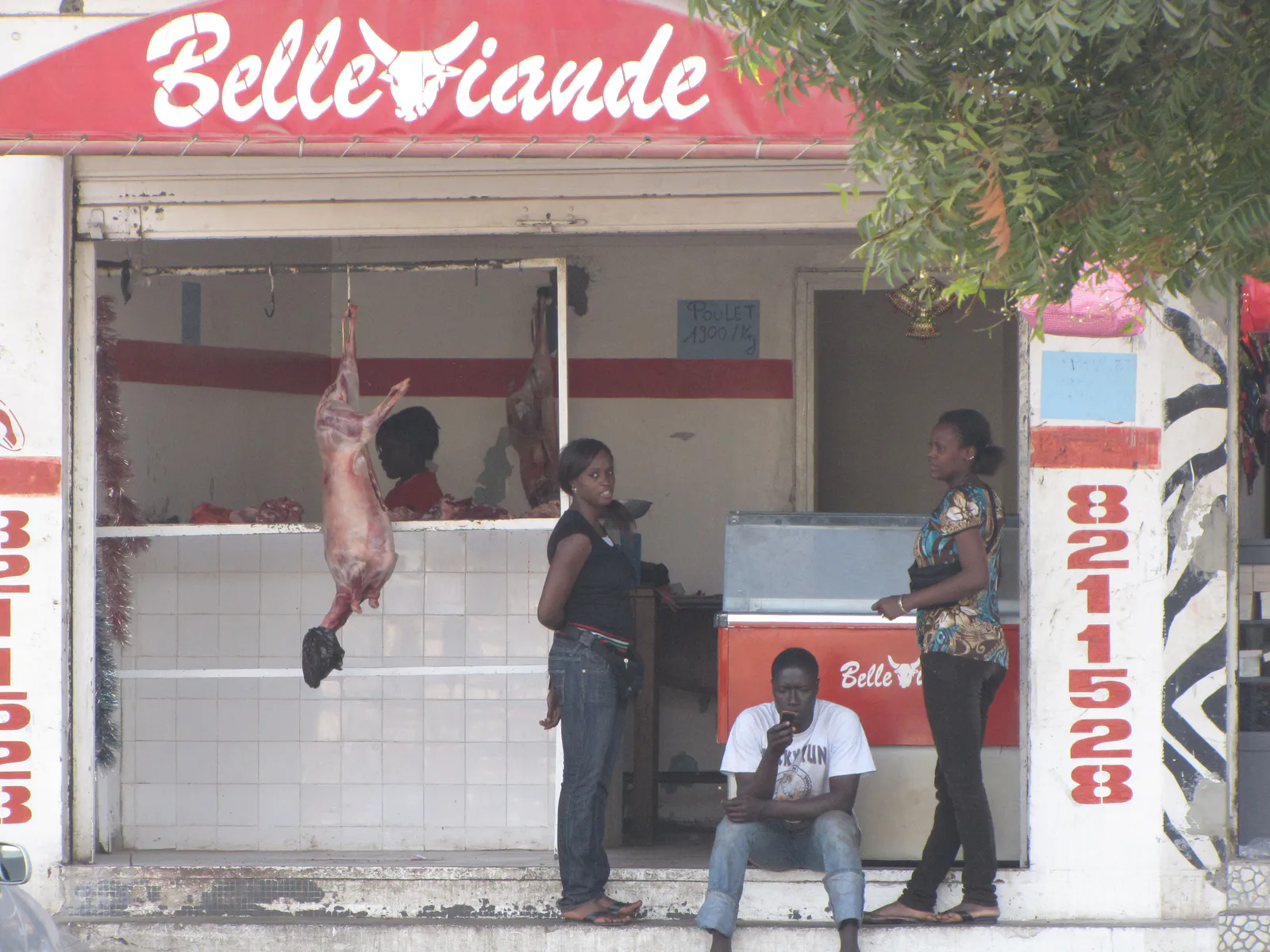
Belle Viande Butcher Shop
This local butcher shop in Dakar, named Belle Viande (Beautiful Meat), offers a raw glimpse into daily life and commerce. A full animal carcass hangs by the front, and customers interact casually, reflecting the open-air, informal atmosphere common in many West African cities. The sign for poulet (chicken) at 1,900 CFA per kilo highlights affordability and local food culture.
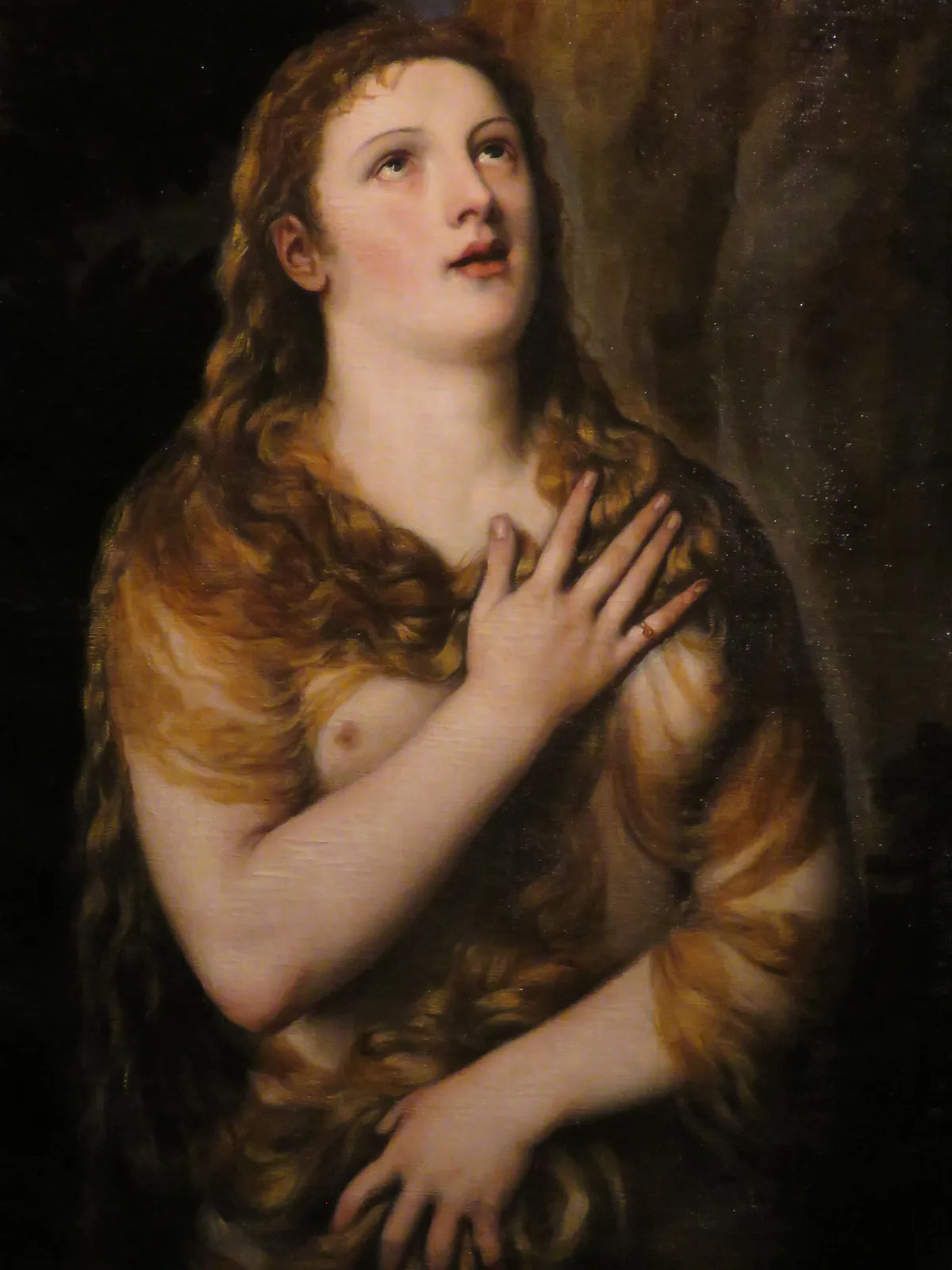
Mary Magdalene
Titian
This intimate portrayal of Mary Magdalene (c. 1560) captures the saint in a moment of spiritual ecstasy. Covered by cascading hair, her body becomes a vessel of penitence and divine grace. Titian’s sensual rendering reflects the Renaissance ideal of redemptive beauty and the transformative power of divine love.
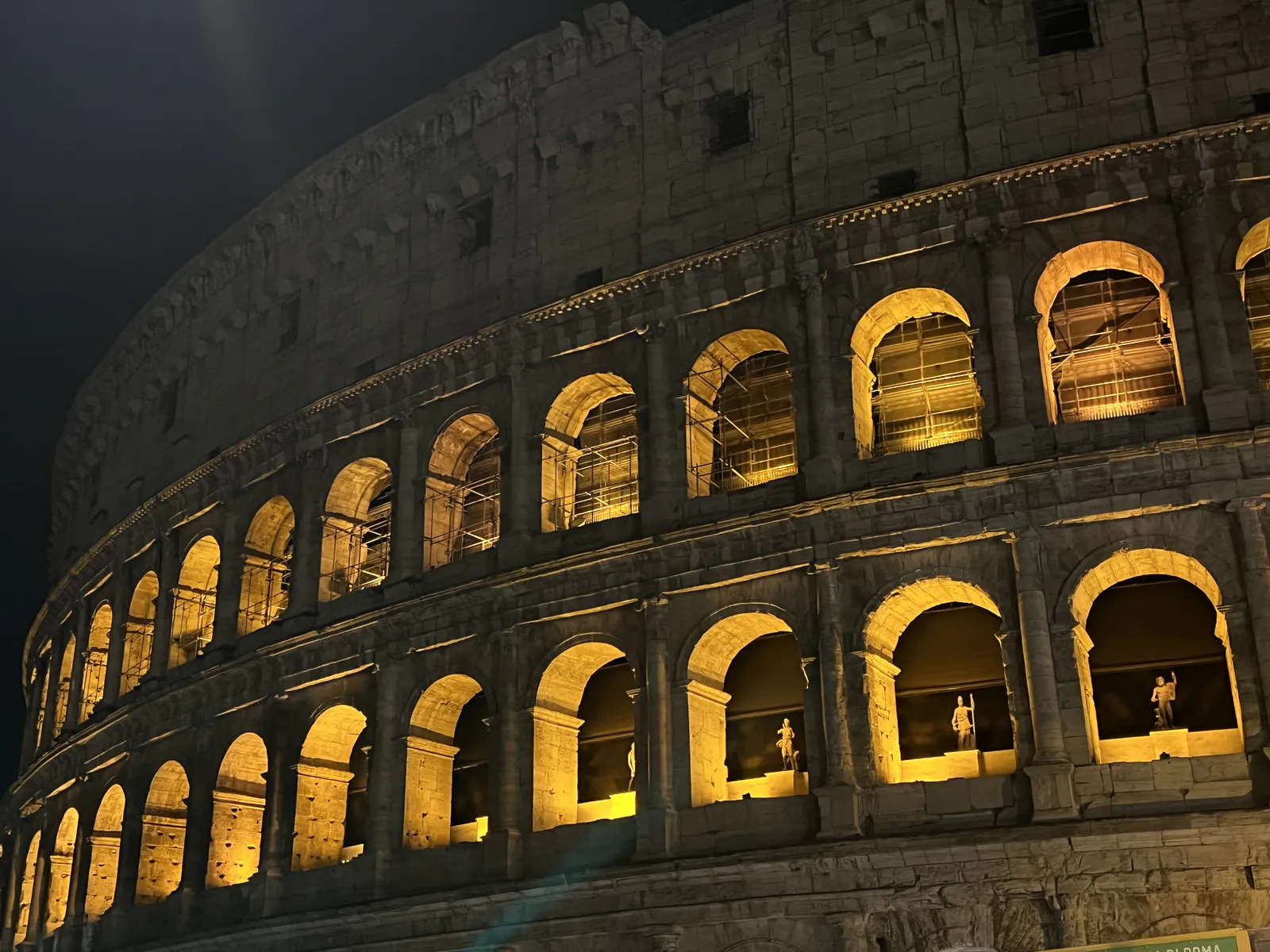
Colosseum Facade
The Colosseum’s outer facade (70–80), with superimposed arches framed by Tuscan, Ionic, and Corinthian orders, reflects Roman architectural mastery. Originally, statues of gods, emperors, and heroes filled many niches, projecting imperial grandeur while harmonizing structure, decoration, and political symbolism.
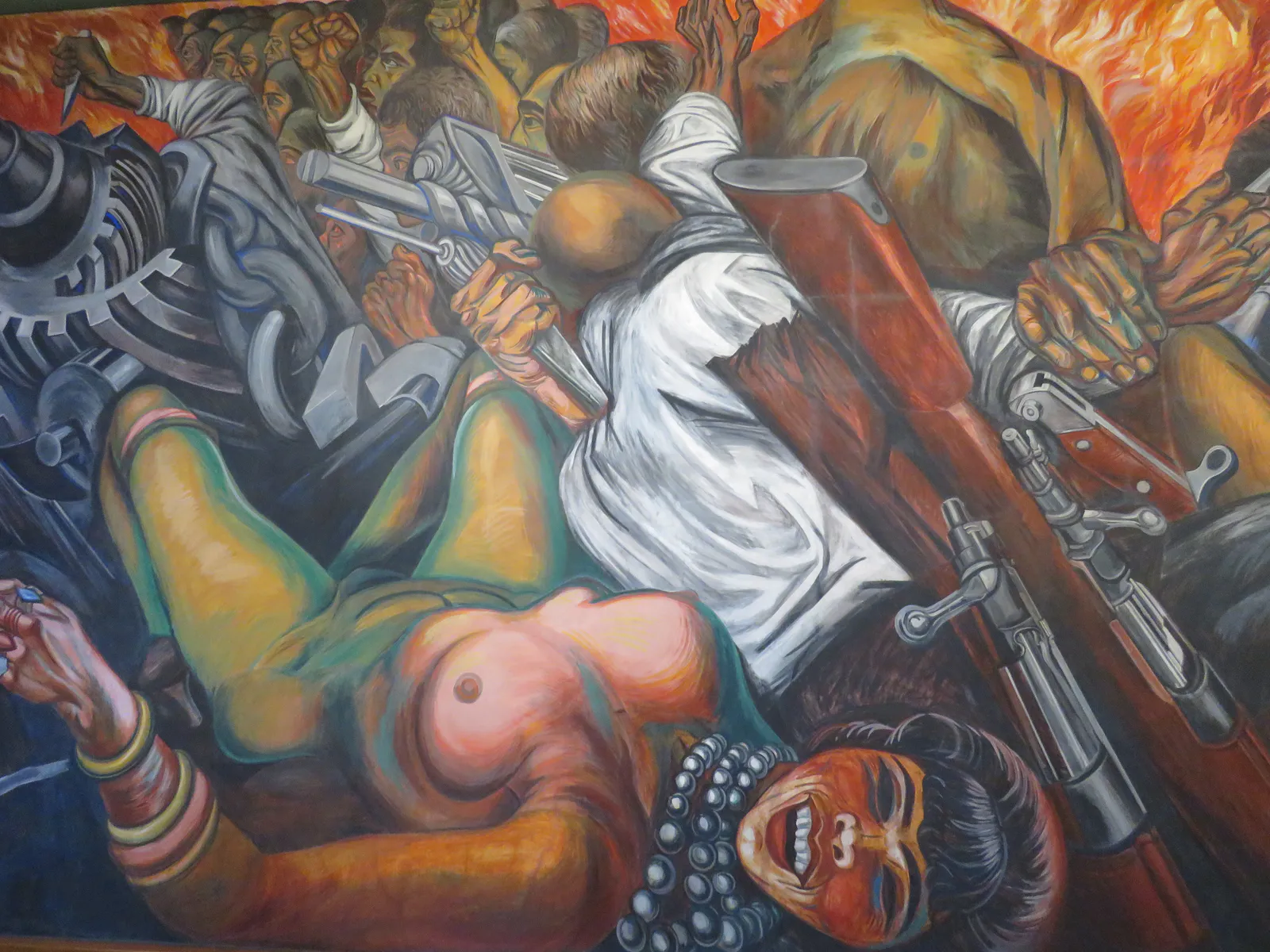
Katharsis (detail)
José Clemente Orozco
This explosive mural section (1934) fuses war, lust, and revolution into a single convulsion. Clashing fists, rifles, and machines crush bodies into chaos. The nude woman evokes both violence and moral decay, while fire and protest surge behind. Orozco presents modernity as an inferno—only through destruction can truth emerge.
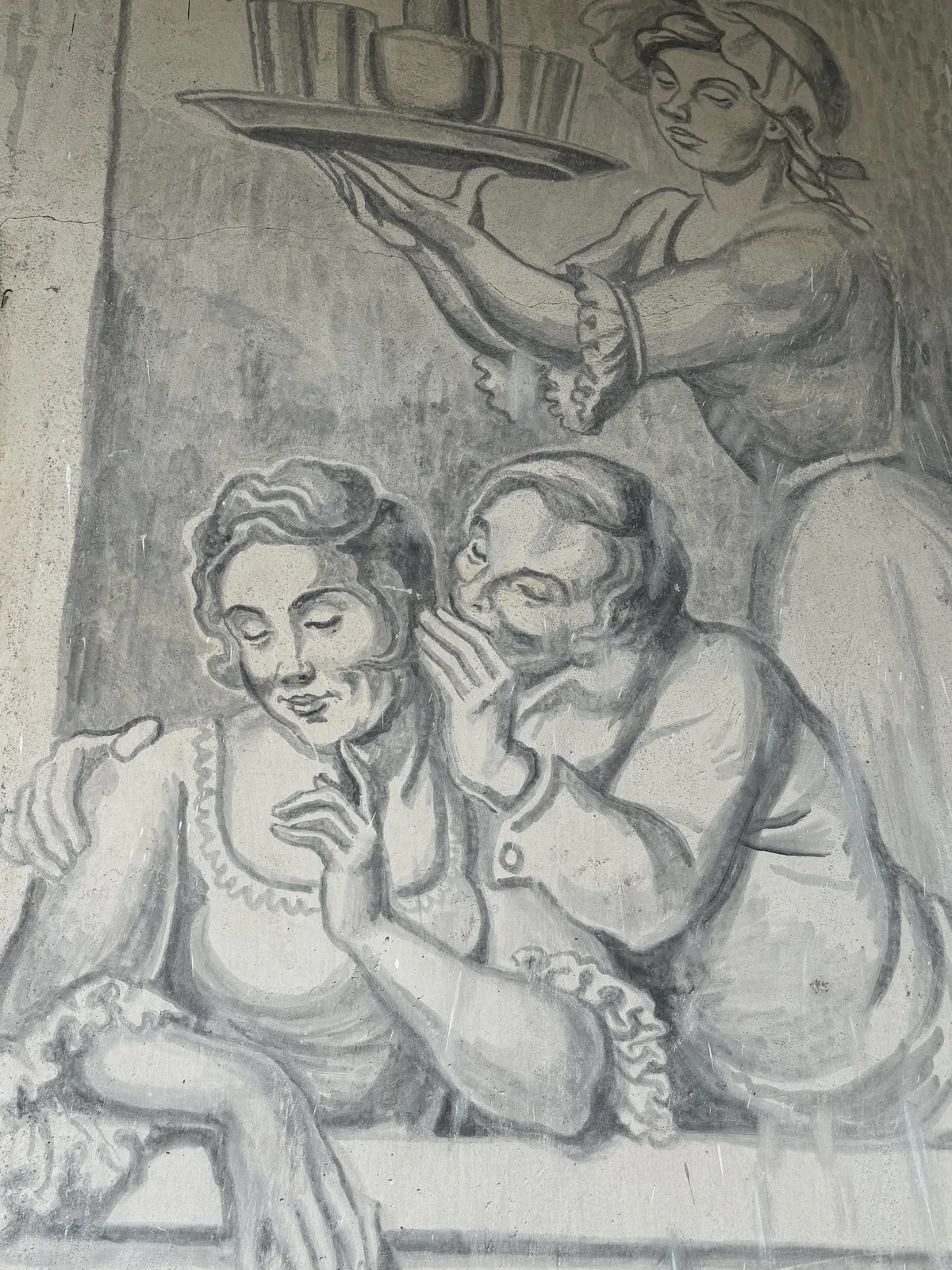
A Dangerous Whisper
Luis Alberto Acuña
This mural (1950s) by Luis Alberto Acuña depicts a man whispering seductively into a woman’s ear while she listens with a mix of curiosity and restraint. The intimate gesture contrasts with the servant above, who quietly performs her duties, reinforcing themes of gender dynamics, social roles, and the tension between desire and decorum in colonial society.
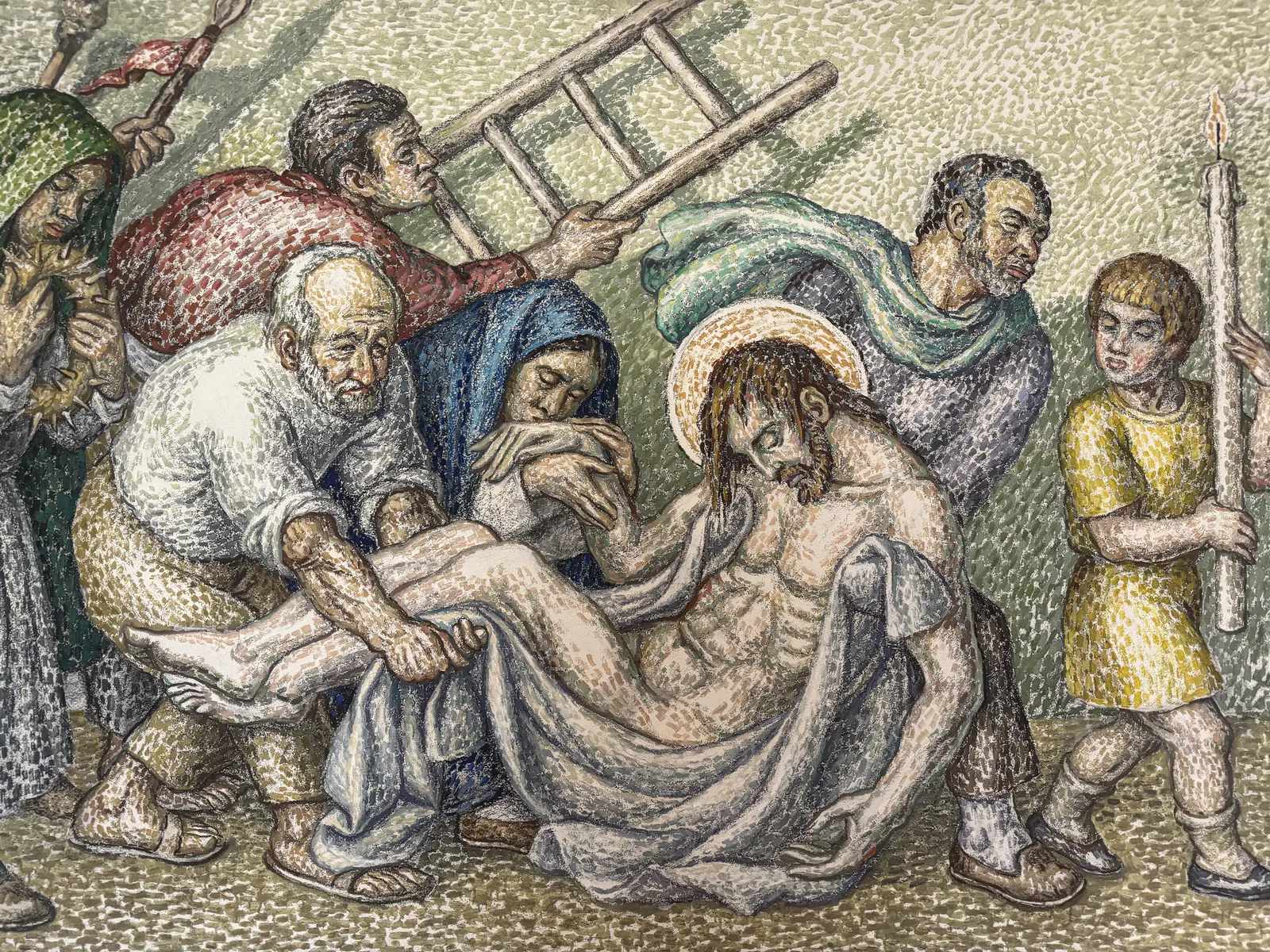
Descent from the Cross
Luis Alberto Acuña
Acuña (mid-1950s) renders the moment of Christ’s body being lowered from the cross with emotional gravity and communal sorrow. The composition emphasizes solidarity in grief, surrounding Christ with figures of all ages and backgrounds, reinforcing the universality of human suffering and compassion.
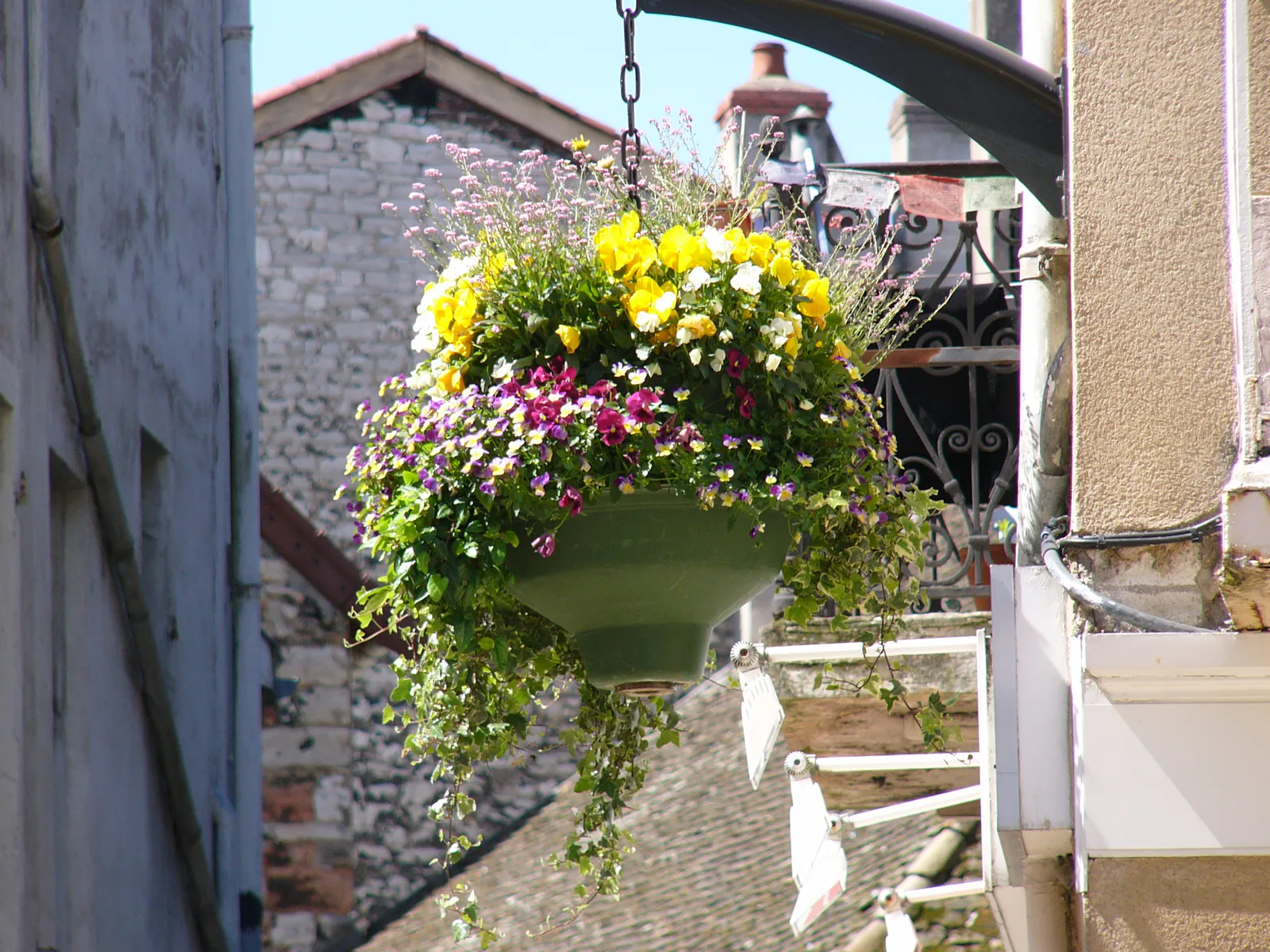
Hanging Flower Basket
A metal bracket holds a green hanging basket spilling yellow, purple, and white blooms into the narrow street. In towns like Chalon-sur-Saône, public planters often mix hardy annuals suited to Burgundy’s temperate climate. Their height frames the pedestrian view and softens the contrast between medieval stone and later plastered facades.
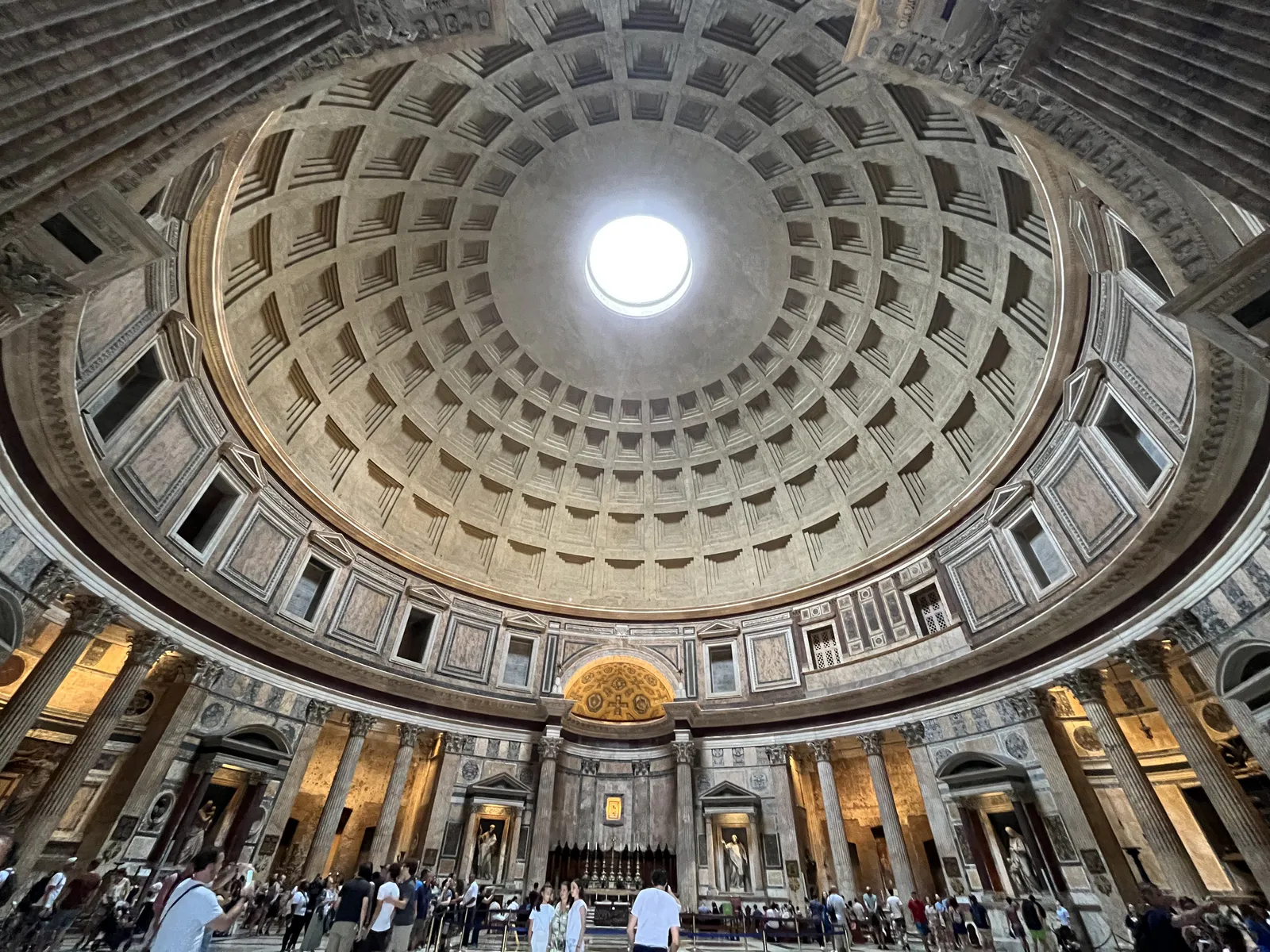
Pantheon Interior
The Pantheon's interior (c.126 AD), with its iconic coffered dome and central oculus, exemplifies Roman architectural ingenuity. Originally a temple for all Roman gods, its harmonious proportions and the interplay of light and shadow create a transcendent space. The oculus, open to the sky, symbolizes the connection between the earthly and the divine. This architectural marvel has influenced countless structures, underscoring the enduring legacy of Roman engineering and design.
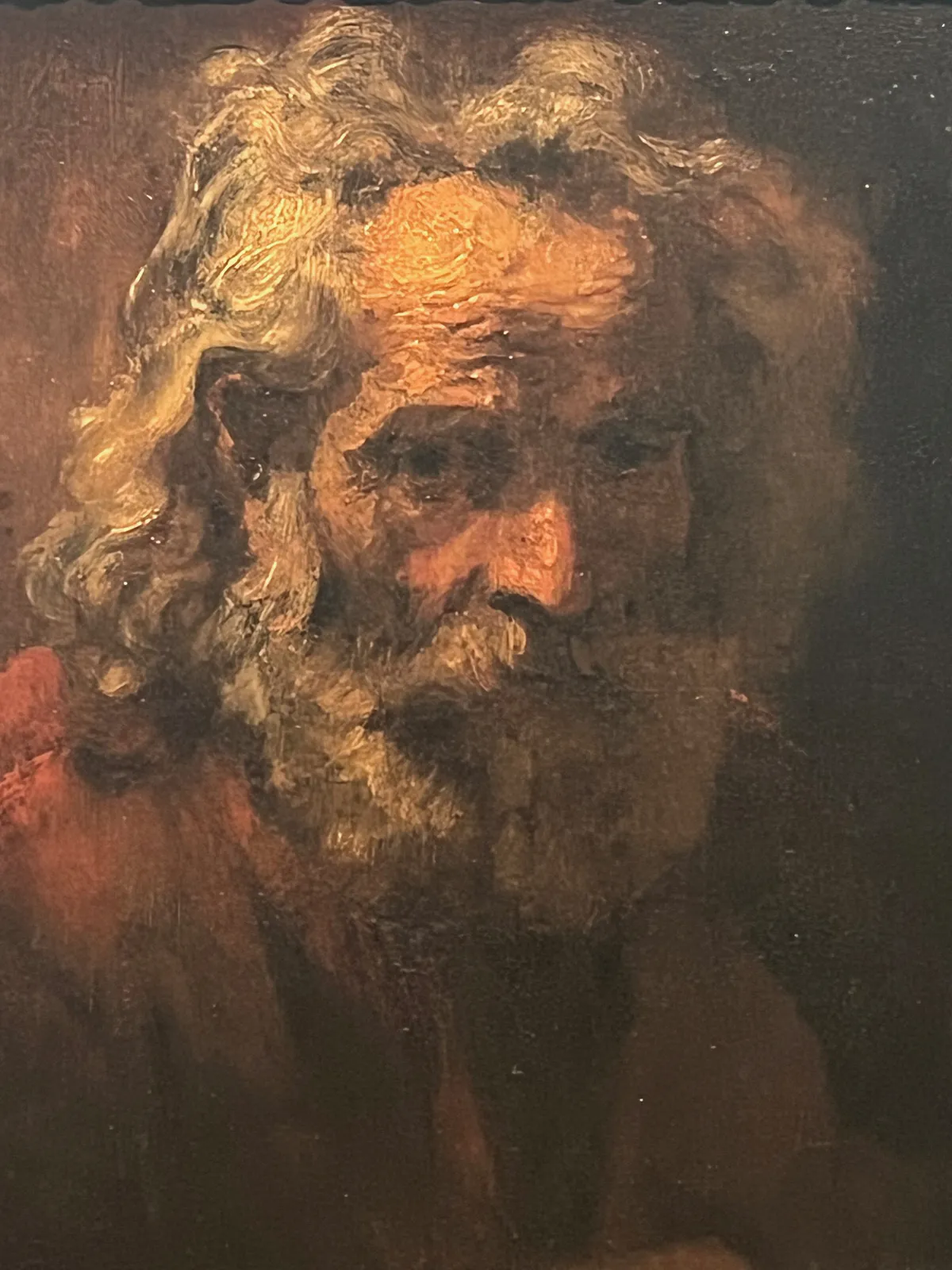
Bust of a Bearded Old Man
Rembrandt
This painting (c. 1630) by Rembrandt van Rijn exemplifies the tronie genre, focusing on character over identity. The expressive face of the elderly man, rendered in oil on panel, showcases Rembrandt’s mastery of light and shadow. As one of his smallest works, it explores themes of old age, capturing the nuances of human expression and emotion, marking an early exploration of the artist’s fascination with the human condition.
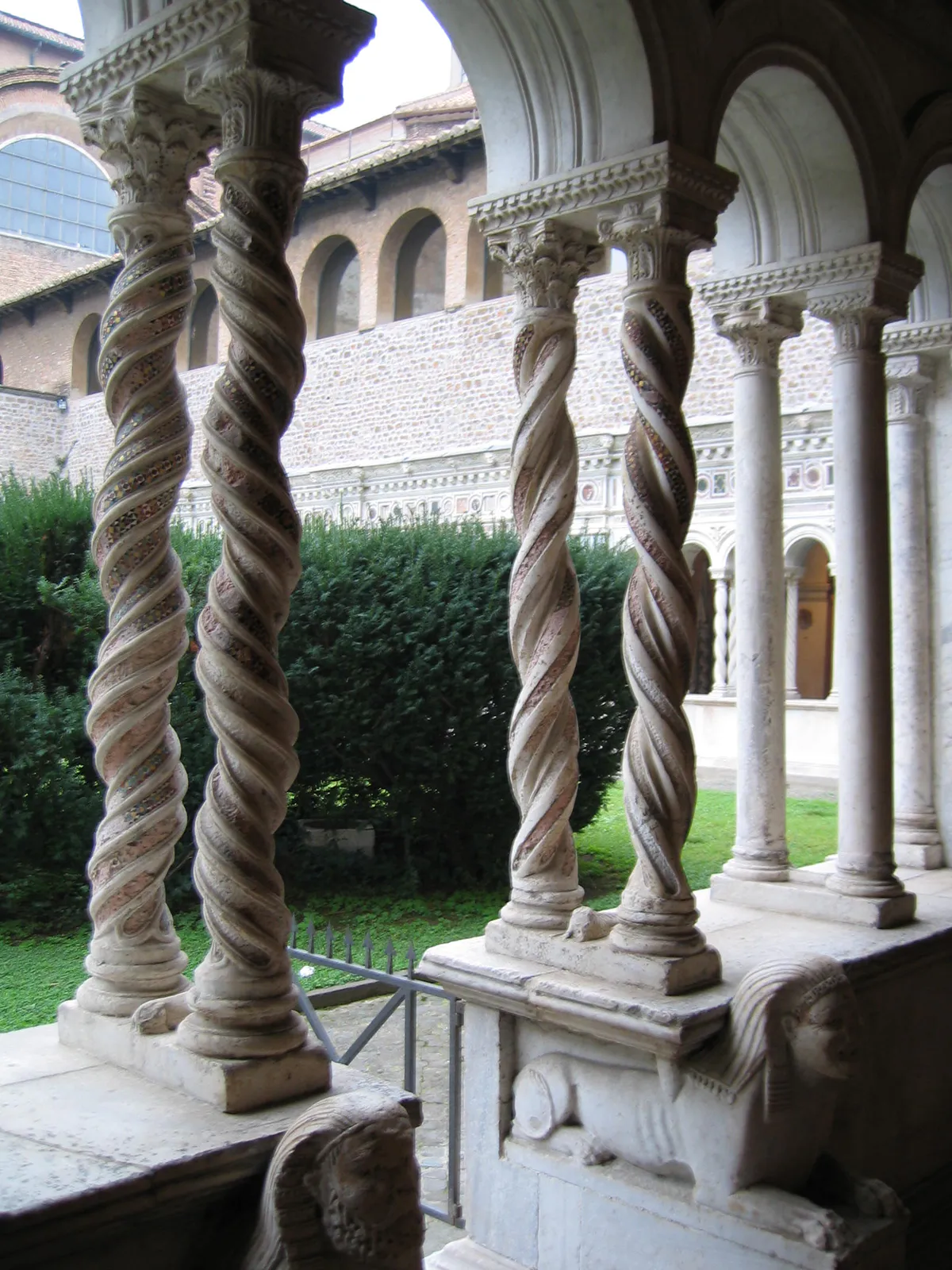
Cosmatesque Columns with Lions and Sphinxes
Vassalletto Workshop
These cloister columns (c.1215), with spiraled shafts and vivid mosaic inlays in the cosmatesque style—a Roman art blending colored marble, glass, and porphyry into geometric patterns—rest on sculpted lions and sphinxes. Crafted by the Vassalletto masters, they unite classical form and Christian meaning, embodying medieval Rome’s vision of divine order through ancient craft.
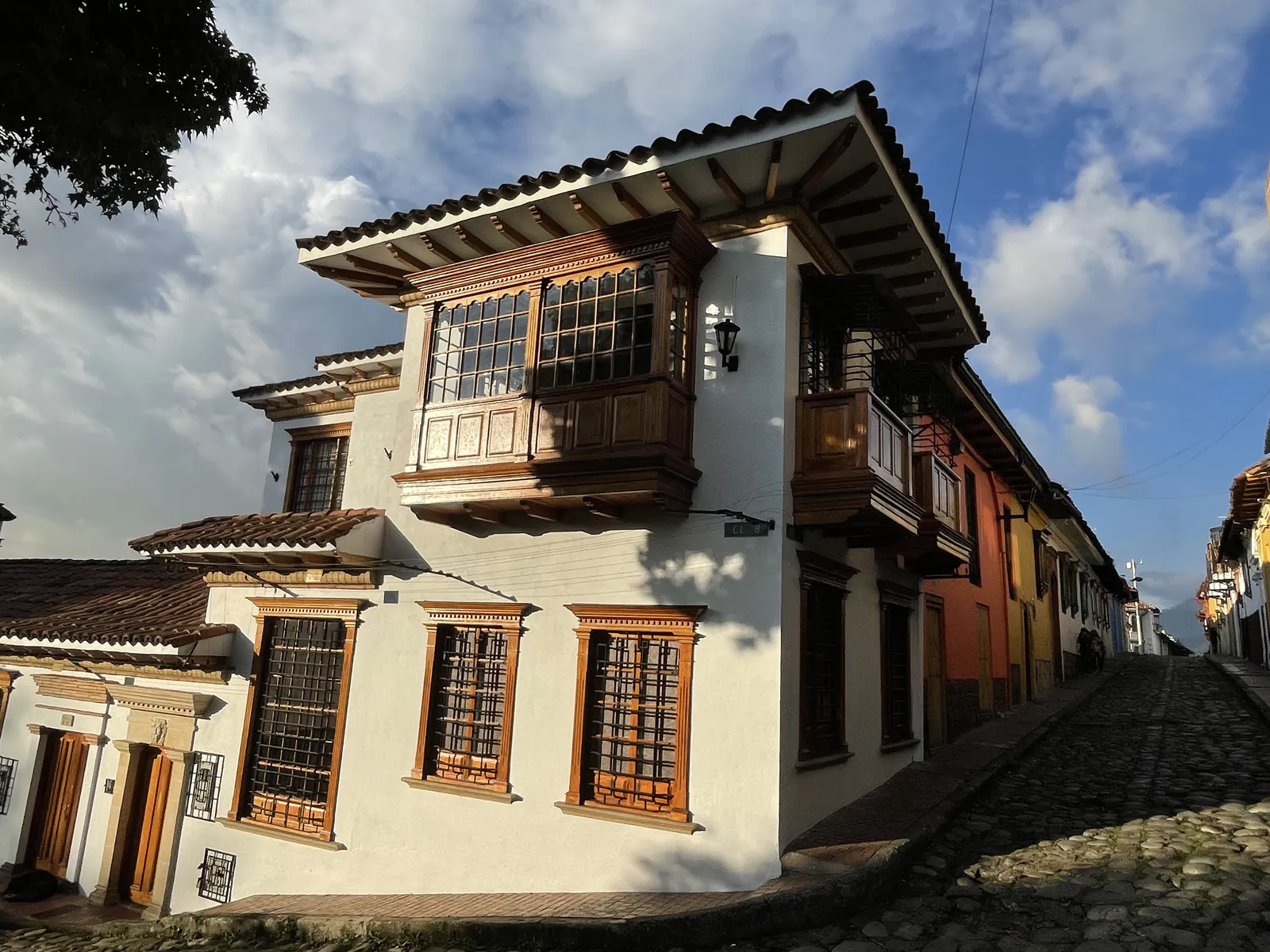
Corner House with Balcony in La Candelaria
This striking corner home in La Candelaria features projecting wooden balconies, barred windows, and deep eaves—hallmarks of elite colonial residences (18th c.). These enclosed balconies (known as miradores) offered privacy and views of the street below. Set on a cobbled rise, the house stands as a sculptural relic of Bogotá’s aristocratic past.
Explore the world through my eyes: begin with the image below, the map, the dropdowns above, or the search button. Every photo includes a thoughtful caption.
Explore the world through my eyes: begin with the image below, the map, the dropdowns above, or the search button. Every photo includes a thoughtful caption.
When the path is beautiful, do not ask where it leads.
My travels have always been shaped by two intertwined forms of discovery. One is intellectual: learning why the world is the way it is. History became my guide, drawing me toward museums, old cities, architecture, and the layers of meaning carried by places. The other is emotional: the search for beauty, harmony, and moments of elevation, often found in nature, monasteries, and sacred spaces.
Together, these impulses shape how I travel, what I photograph, and how I interpret what I see. This site is my way of sharing that lifelong learning in visual form—one image at a time, with enough context to deepen curiosity and understanding. I hope these photographs leave you with a sense of wonder and a deeper feeling for the world.
Now let’s explore together.