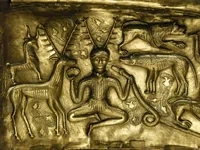
Horned God Panel, Gundestrup Cauldron
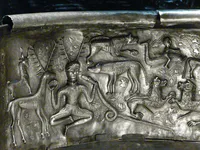
Antlered God with Animals
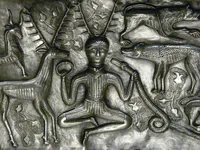
Cernunnos
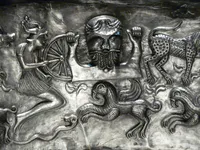
Taranis and the Sacred Wheel
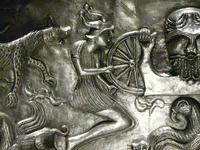
Taranis with Wheel
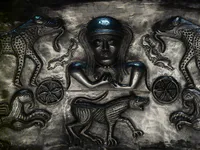
Master of Beasts Panel
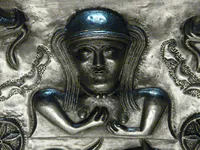
Master of Beasts
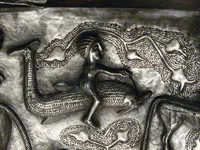
Rider on a Fish
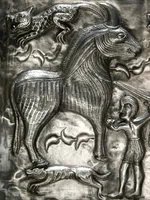
Warrior Confronts Sacred Bull
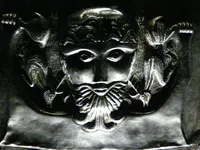
Taranis Emerging with Beasts
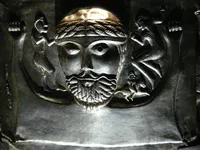
Bearded Deity Relief
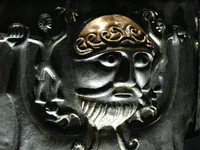
Bearded Deity Mask
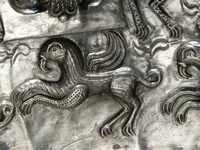
Winged Griffin
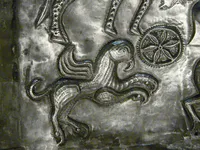
Winged Griffin
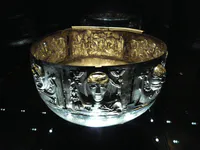
Gundestrup Cauldron
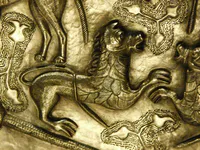
Sea-Lion Hybrid
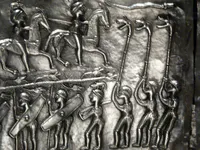
Celtic Warriors and Carnyx Players
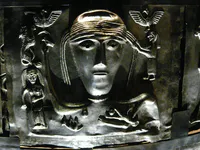
Goddess Panel
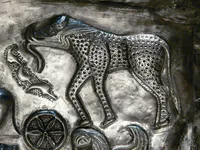
A Beast with Torc Tail
National Museum of Denmark
Copenhagen (traditionally founded in 1167) is often perceived as Denmark’s calm center of gravity: confident, orderly, and quietly inventive. Arriving, you meet a capital that feels deliberately human-scaled, where pale Nordic light catches brick facades and clean-lined modernism, and water sits close enough to set the city’s tempo. Its authority is understated, expressed less through monumentality than through design, public space, and a civic ease that makes daily life feel carefully considered.
That present mood rests on older layers of trade, monarchy, and a seafaring outlook, still visible in how the city frames its past and its place in Europe. At the National Museum of Denmark, history is told through objects that stay close to lived experience, moving from deep prehistory and the Viking world into the making of the modern state; the Gundestrup Cauldron, with dense Iron Age imagery, hints at cultural currents far beyond Denmark’s borders. Today Copenhagen balances government and culture with a global-facing economy, yet its identity remains tactile and practical: craft, continuity, and a public trust that keeps heritage feeling present rather than staged.
That present mood rests on older layers of trade, monarchy, and a seafaring outlook, still visible in how the city frames its past and its place in Europe. At the National Museum of Denmark, history is told through objects that stay close to lived experience, moving from deep prehistory and the Viking world into the making of the modern state; the Gundestrup Cauldron, with dense Iron Age imagery, hints at cultural currents far beyond Denmark’s borders. Today Copenhagen balances government and culture with a global-facing economy, yet its identity remains tactile and practical: craft, continuity, and a public trust that keeps heritage feeling present rather than staged.
Explore by type and place