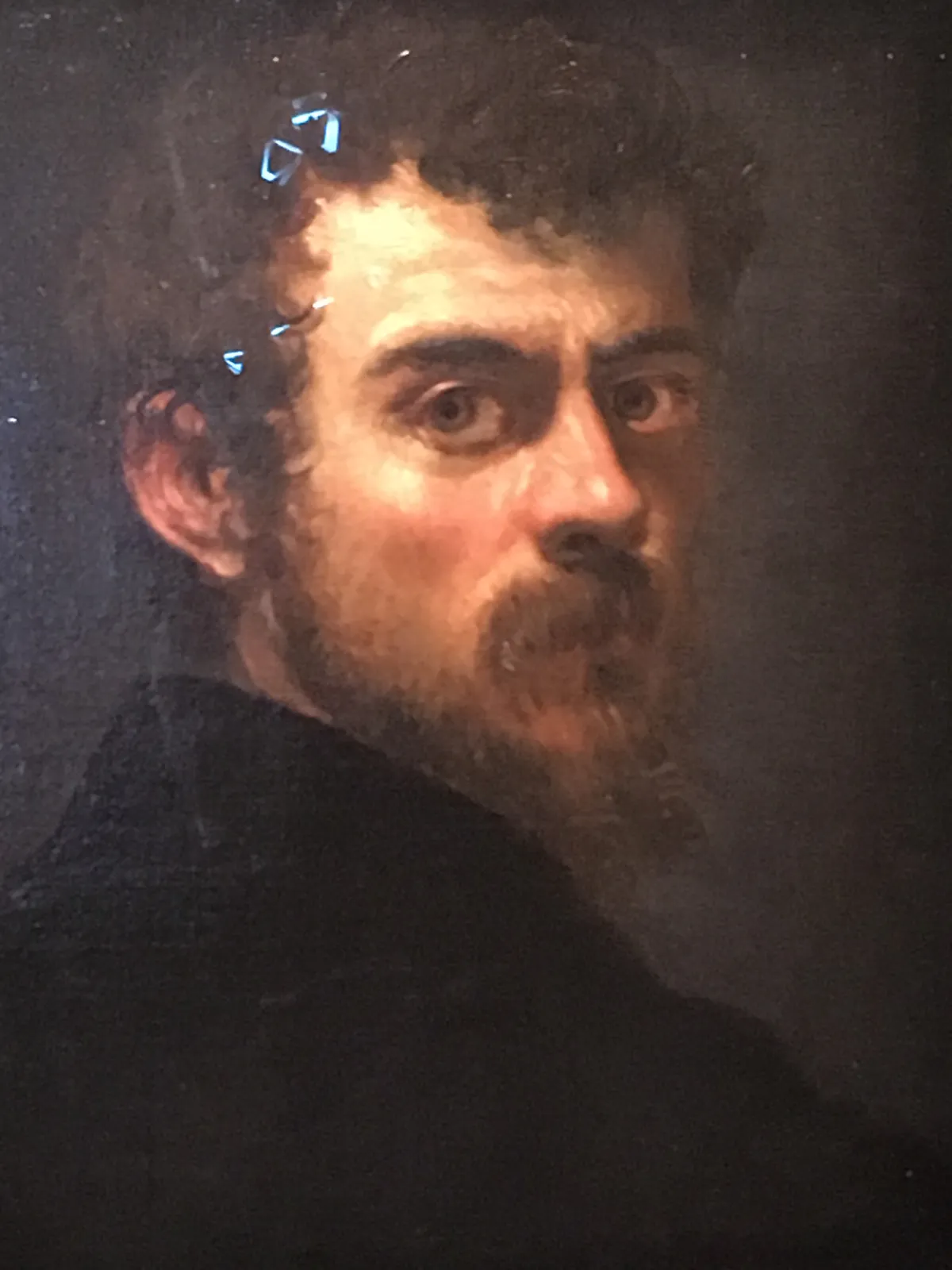
Self-Portrait
Tintoretto
This self-portrait (1546–48) by Tintoretto, a leading figure of the Venetian Renaissance, presents the artist with an intense, direct gaze that suggests introspection and resolve. The subdued palette and earthy tones create a solemn mood, yet the brisk, energetic handling of paint hints at the dramatic style that defined his larger works. Emphasizing inner character over setting, the portrait later entered the Orleans Collection and was acquired for Marie Antoinette in 1785.
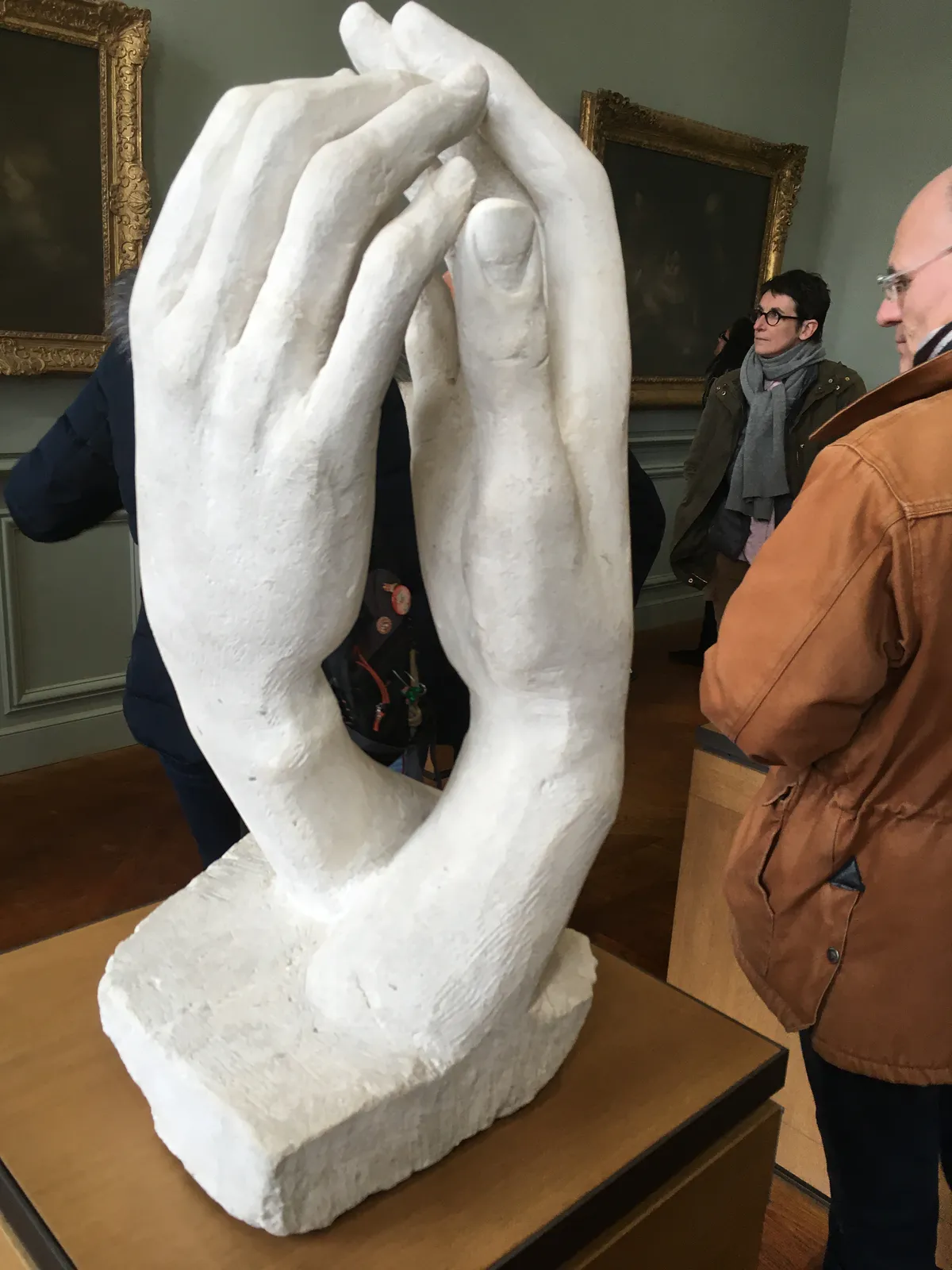
The Cathedral
Auguste Rodin
This 1908 sculpture features two right hands reaching towards each other, symbolizing connection and unity. Initially named The Arch of Alliance, it was inspired by Gothic cathedral rib vaults and renamed in 1914. The texture and interplay of light and shadow evoke prayer and contemplation. This work marks Rodin’s shift from realism to modernism, emphasizing emotional depth over physical form.
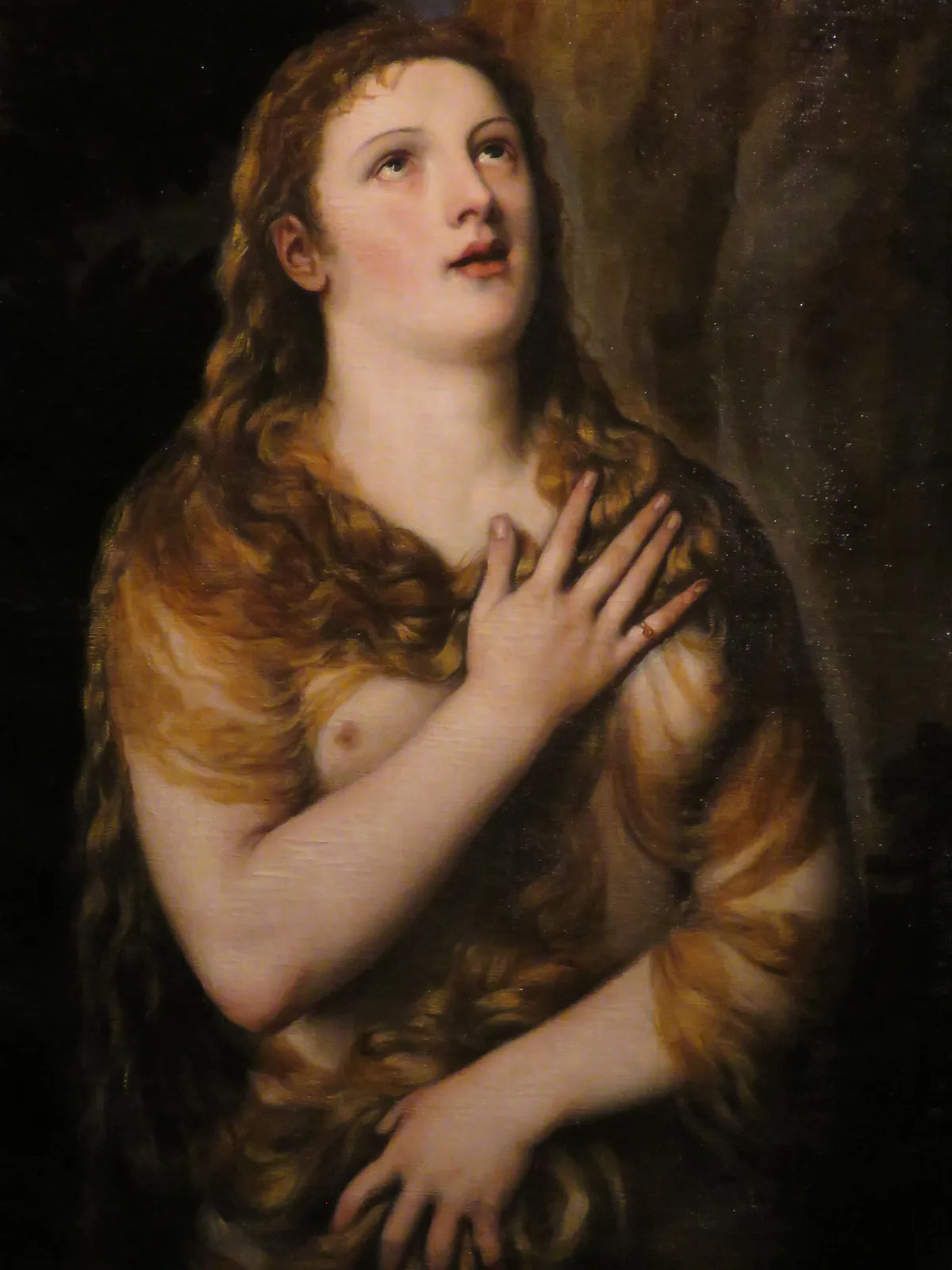
Mary Magdalene
Titian
This intimate portrayal of Mary Magdalene (c. 1560) captures the saint in a moment of spiritual ecstasy. Covered by cascading hair, her body becomes a vessel of penitence and divine grace. Titian’s sensual rendering reflects the Renaissance ideal of redemptive beauty and the transformative power of divine love.
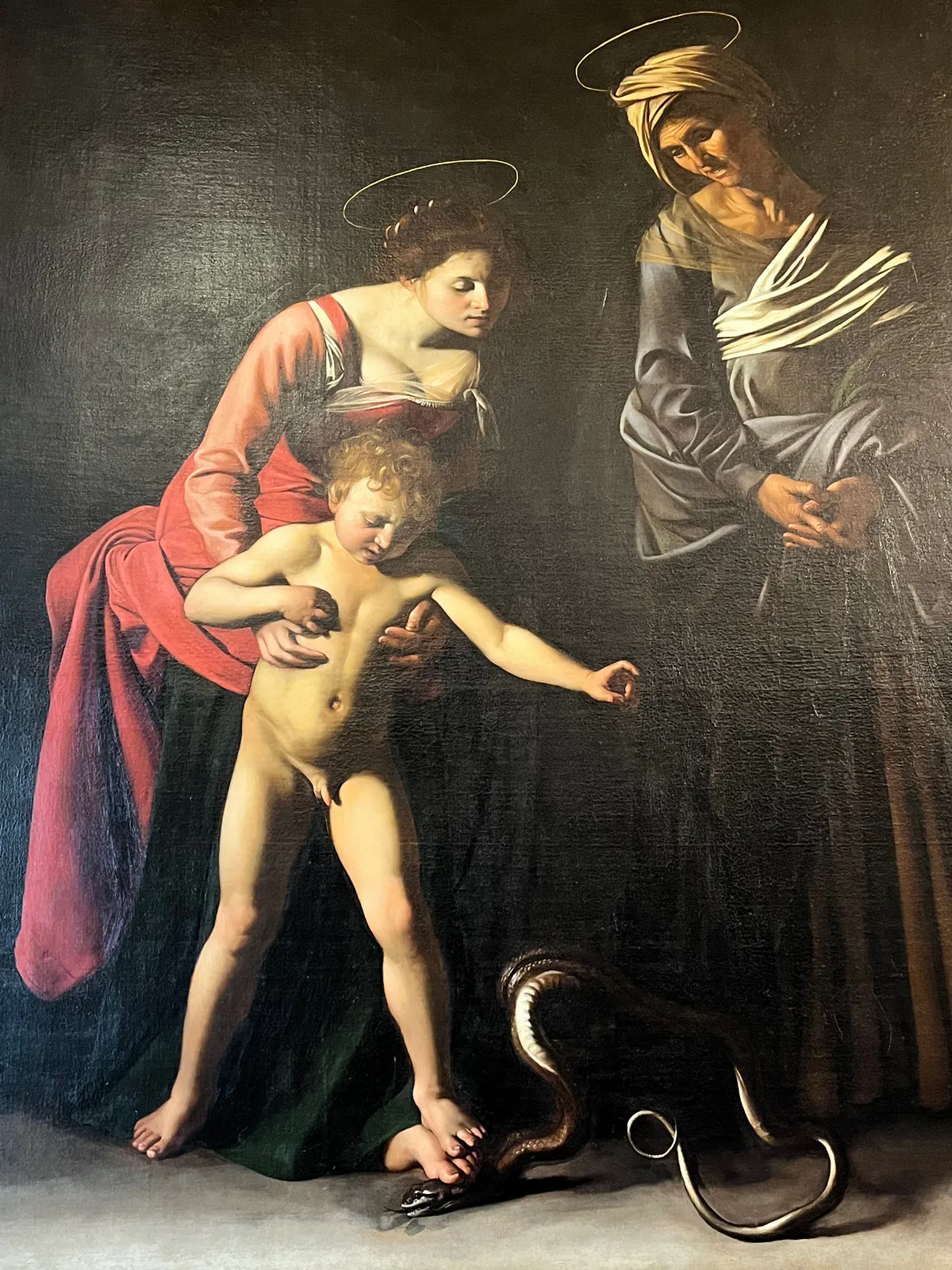
Madonna and Child with St Anne (Madonna dei Palafrenieri)
Caravaggio
This bold altarpiece (1605–06) shows the Virgin Mary guiding the Christ Child as he crushes a serpent—symbol of original sin. St Anne watches solemnly, evoking generational grace. Caravaggio’s realism and chiaroscuro infuse the holy scene with human emotion, provoking awe and controversy upon its brief display in St Peter’s.
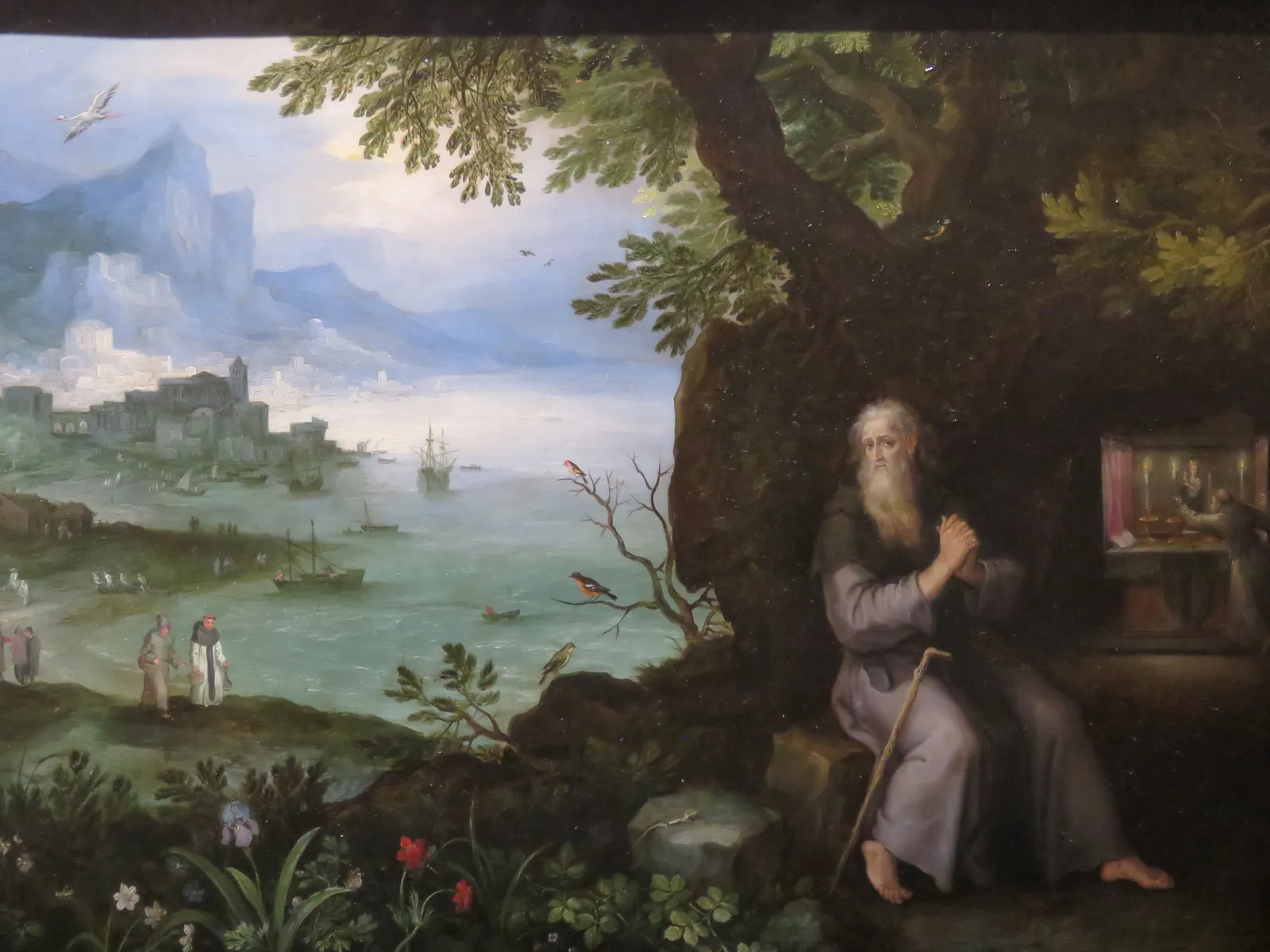
Saint Anthony the Hermit
Jan Brueghel
This tranquil painting (early 17th c.) shows Saint Anthony seated at the mouth of a cave, gazing contemplatively toward the city and sea. The vivid flora and distant harbor contrast with his solitude, symbolizing the tension between worldly life and spiritual retreat. A vision of a sacred altar within the cave suggests divine presence in the midst of earthly temptation.
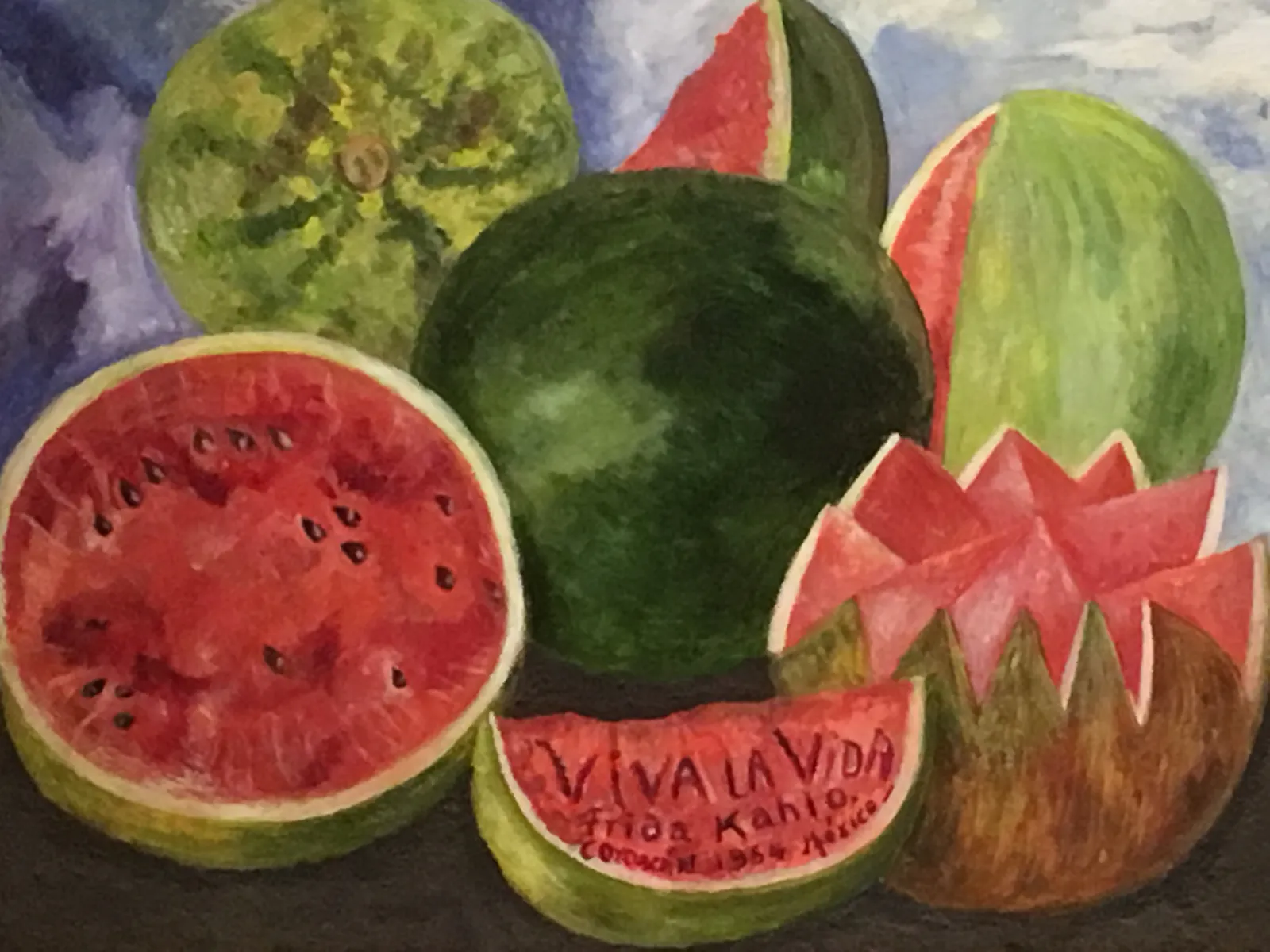
Viva la Vida, Watermelons
Frida Kahlo
Painted just days before her death in 1954, this still life features ripe watermelons—some whole, some cut—bursting with color and vitality. The inscription Viva la Vida (Long Live Life) appears carved into a slice, signed and dated by Kahlo. Though her body was failing, this joyful image radiates defiance and reverence for life’s beauty amid suffering.
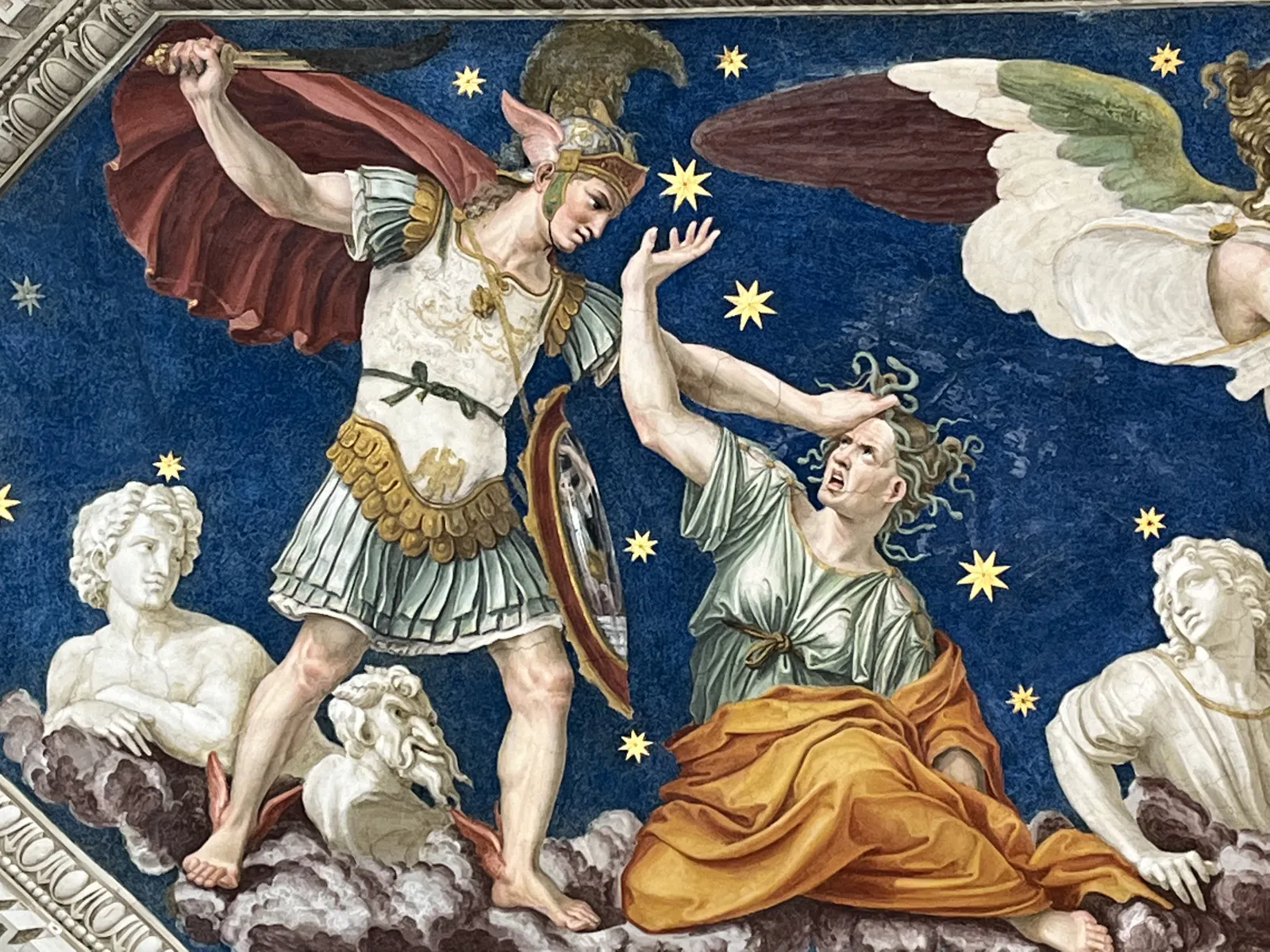
Perseus and Medusa
Baldassarre Peruzzi
In this fresco (c. 1511), Peruzzi depicts Perseus about to behead Medusa. Medusa’s petrifying gaze has already turned victims to stone, visible as pale figures below. Pegasus, born from Medusa’s blood, emerges nearby, symbolizing rebirth. The scene reflects triumph over monstrous chaos.
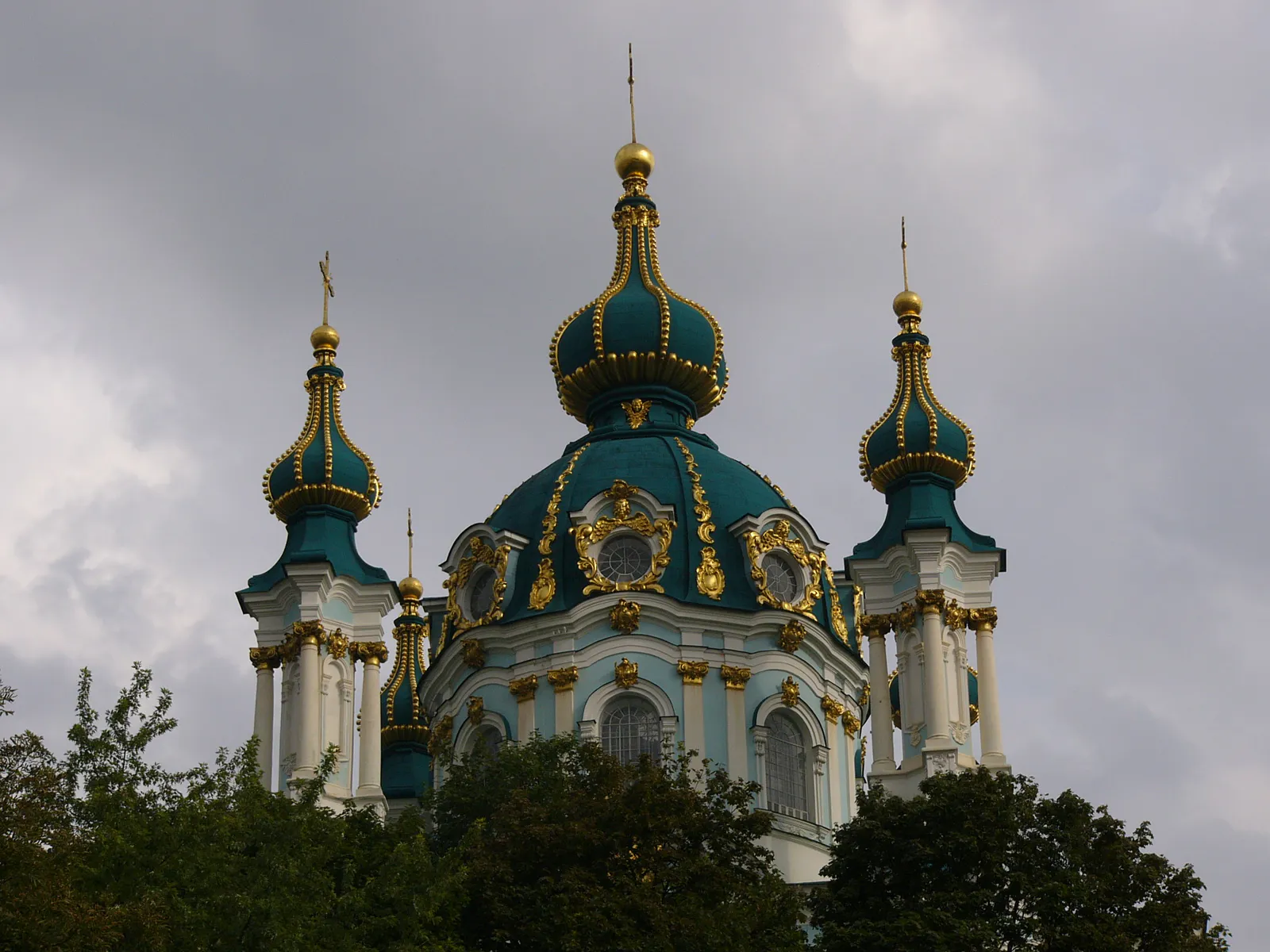
St. Andrew's Church
Bartolomeo Rastrelli
St. Andrew’s Church (1747–54) crowns a Kyiv hill with gilded domes and turquoise ornament typical of late Baroque design introduced by the Italian architect Bartolomeo Rastrelli. Its dynamic composition and elaborate detailing adapt Western forms to Orthodox liturgy. The church stands as a landmark of 18th-c. imperial architecture in Eastern Europe.
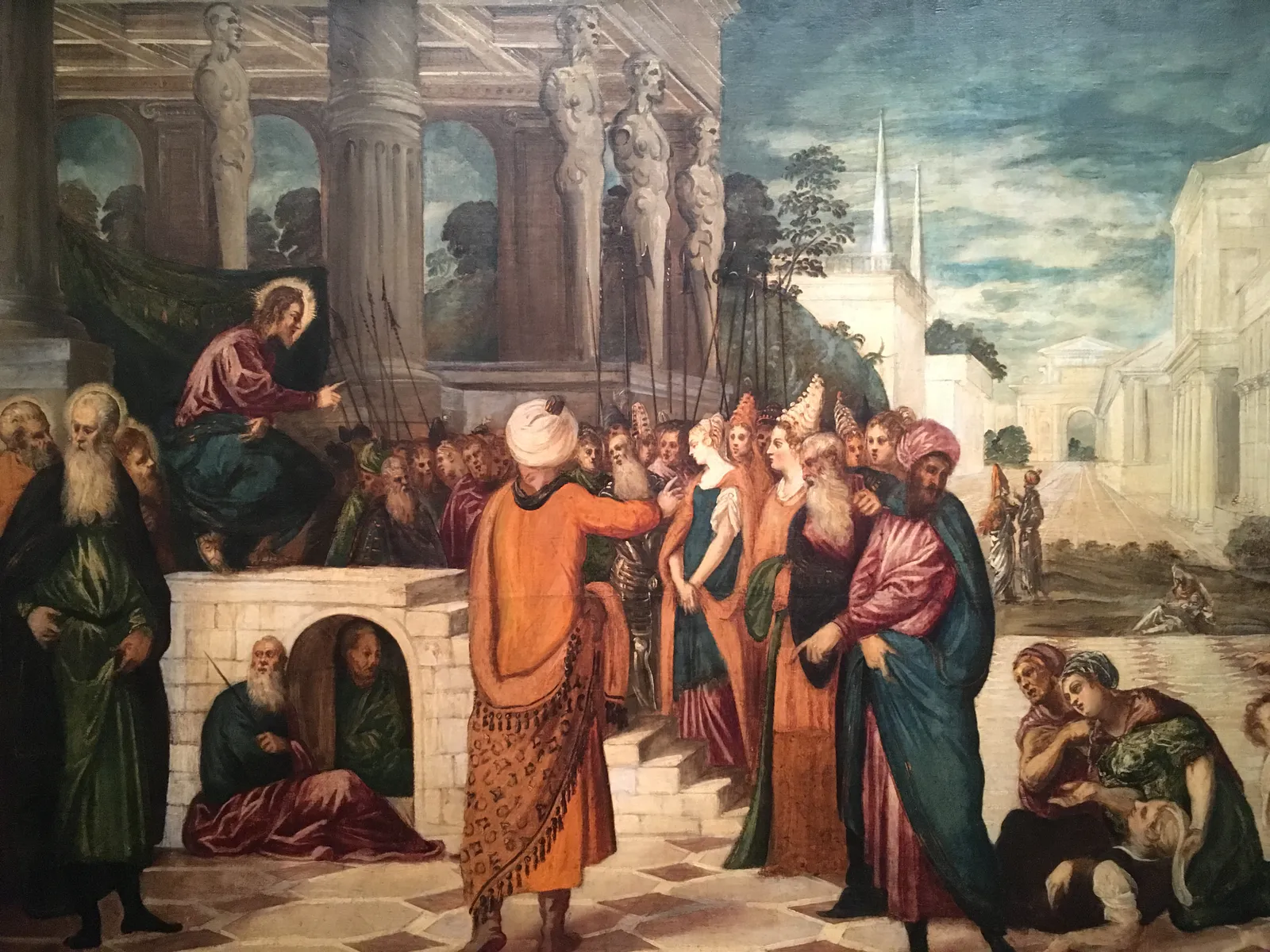
Christ and the Adulteress
Tintoretto
This scene (c. 1555) is from the Gospel of John: Jesus responds to scribes and Pharisees demanding judgment on an adulterous woman. His challenge—inviting the sinless to cast the first stone—teaches mercy over condemnation. Tintoretto’s dynamic style appears in the sharp contrasts of light and shadow, elongated figures, and oblique spatial arrangement that intensify the moral tension. Classical architectural elements frame the encounter, emphasizing the conflict between legalism and redemption.
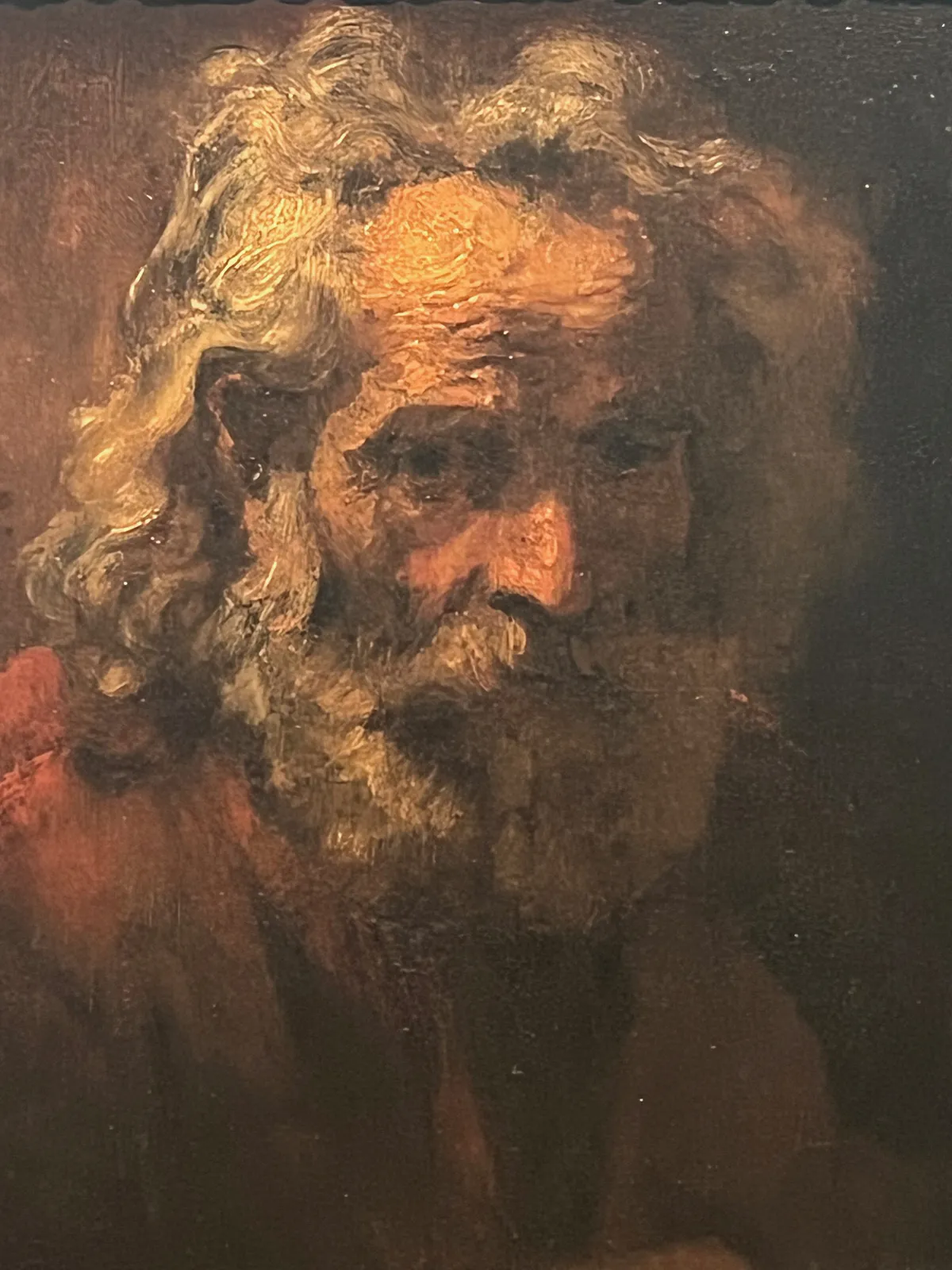
Bust of a Bearded Old Man
Rembrandt
This painting (c. 1630) by Rembrandt van Rijn exemplifies the tronie genre, focusing on character over identity. The expressive face of the elderly man, rendered in oil on panel, showcases Rembrandt’s mastery of light and shadow. As one of his smallest works, it explores themes of old age, capturing the nuances of human expression and emotion, marking an early exploration of the artist’s fascination with the human condition.
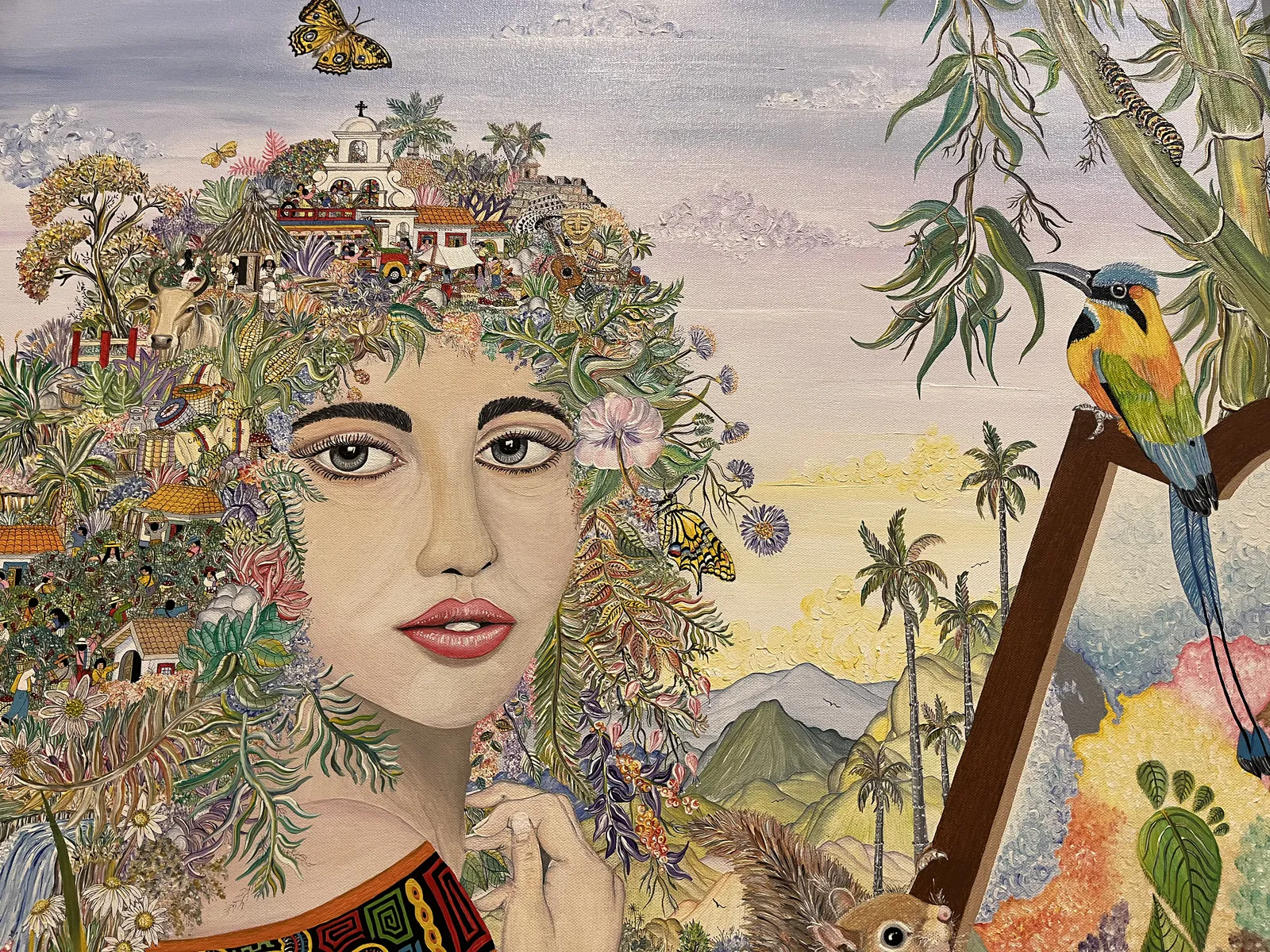
Aún Hay Tiempo
Julio César Ojeda Ariza
This 2021 work blends oil and ink to portray a woman whose hair becomes a lush tapestry of biodiversity and rural life. Symbolizing Colombia’s natural and cultural abundance, it warns of its fragility. The title, There’s Still Time, urges collective action to preserve the environment and ancestral wisdom.
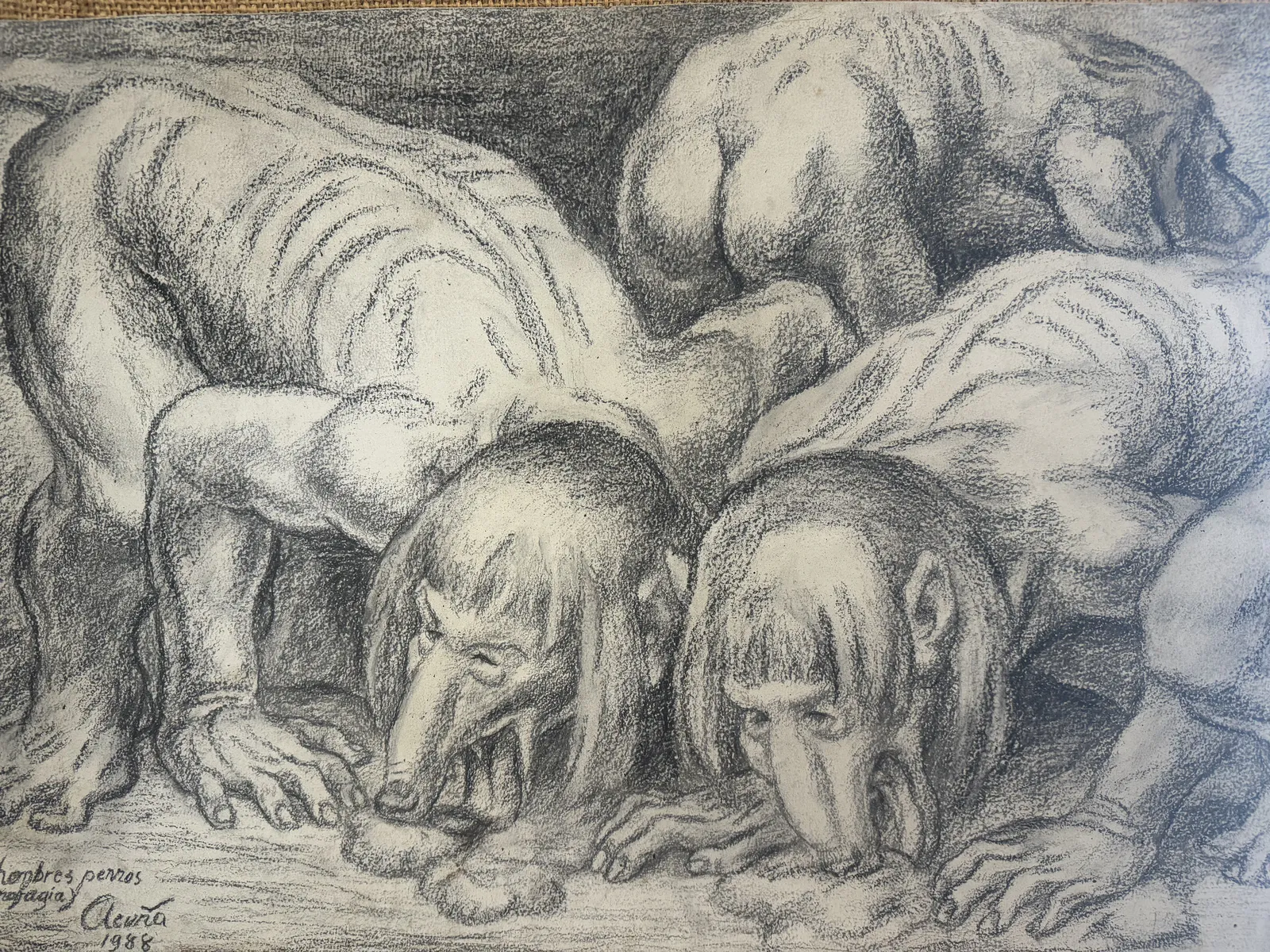
The Dog Men (Coprophagia)
Luis Alberto Acuña
This disturbing drawing (1988) shows three gaunt hybrid figures with human torsos and doglike heads crouched on all fours. Part of Acuña’s late series on distorted bodies, it examines the boundary between human and animal. The title refers to coprophagia (the consumption of excrement), which Acuña uses to articulate a vision of moral collapse and social dehumanization.
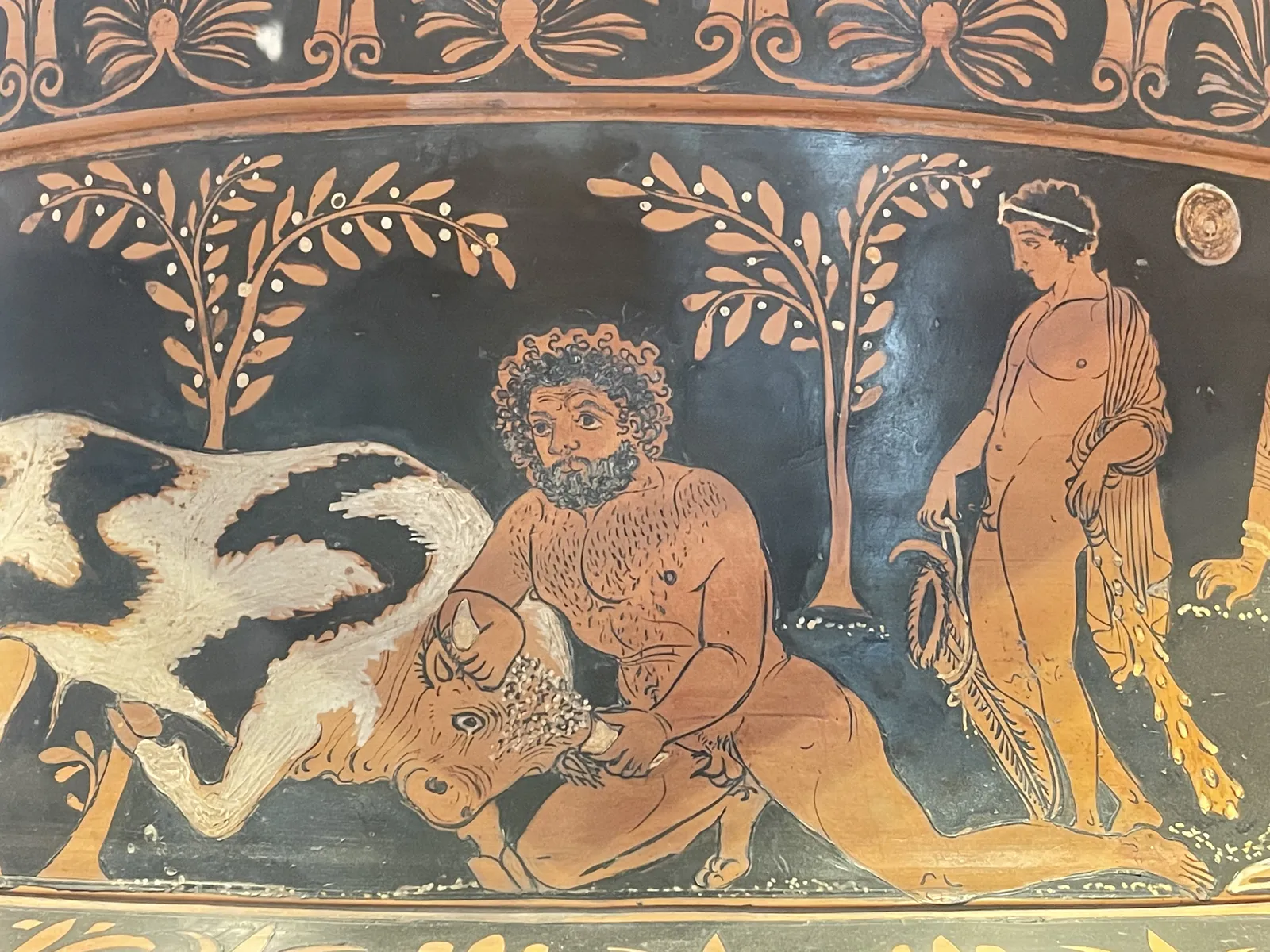
The Capture of the Cretan Bull
Lycungus Painter
Heracles grapples with the Cretan bull, locking its horns as the animal lunges, while Athena and a youthful attendant stand calmly among stylized trees. The scene represents his seventh labour, subduing the bull sent by Poseidon after King Minos withheld a promised sacrifice. This Apulian red-figure volute krater (mixing bowl) (360–345 BC) reflects South Italian interest in myth as a drama of human strength under divine supervision.
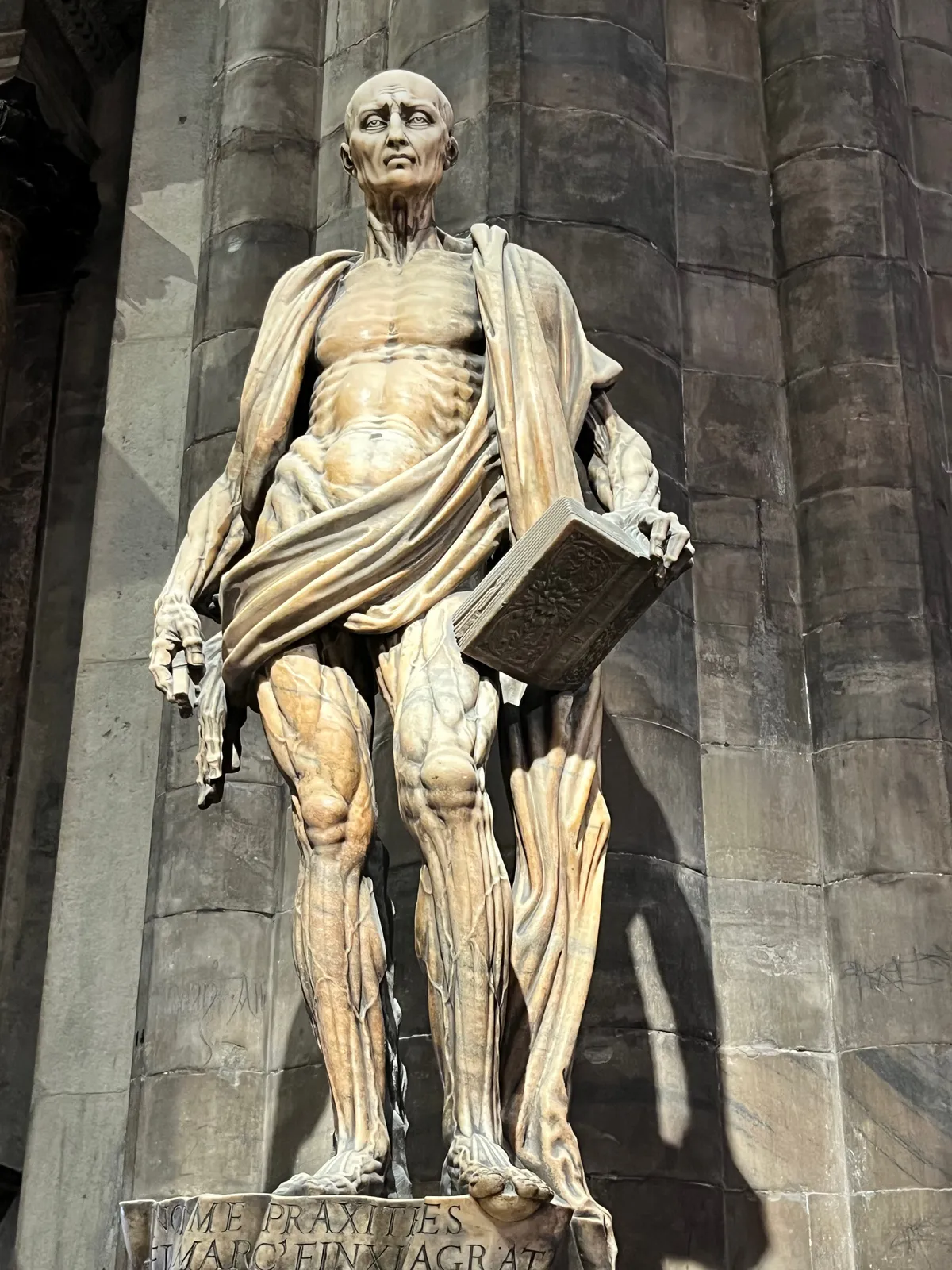
St Bartholomew Flayed
Marco d’Agrate
This haunting statue of Saint Bartholomew (1562) shows the martyr after being skinned alive, wearing his own flayed skin like a cloak. The anatomical precision reveals a Renaissance fascination with the human body, while the calm expression evokes spiritual endurance beyond physical torment.
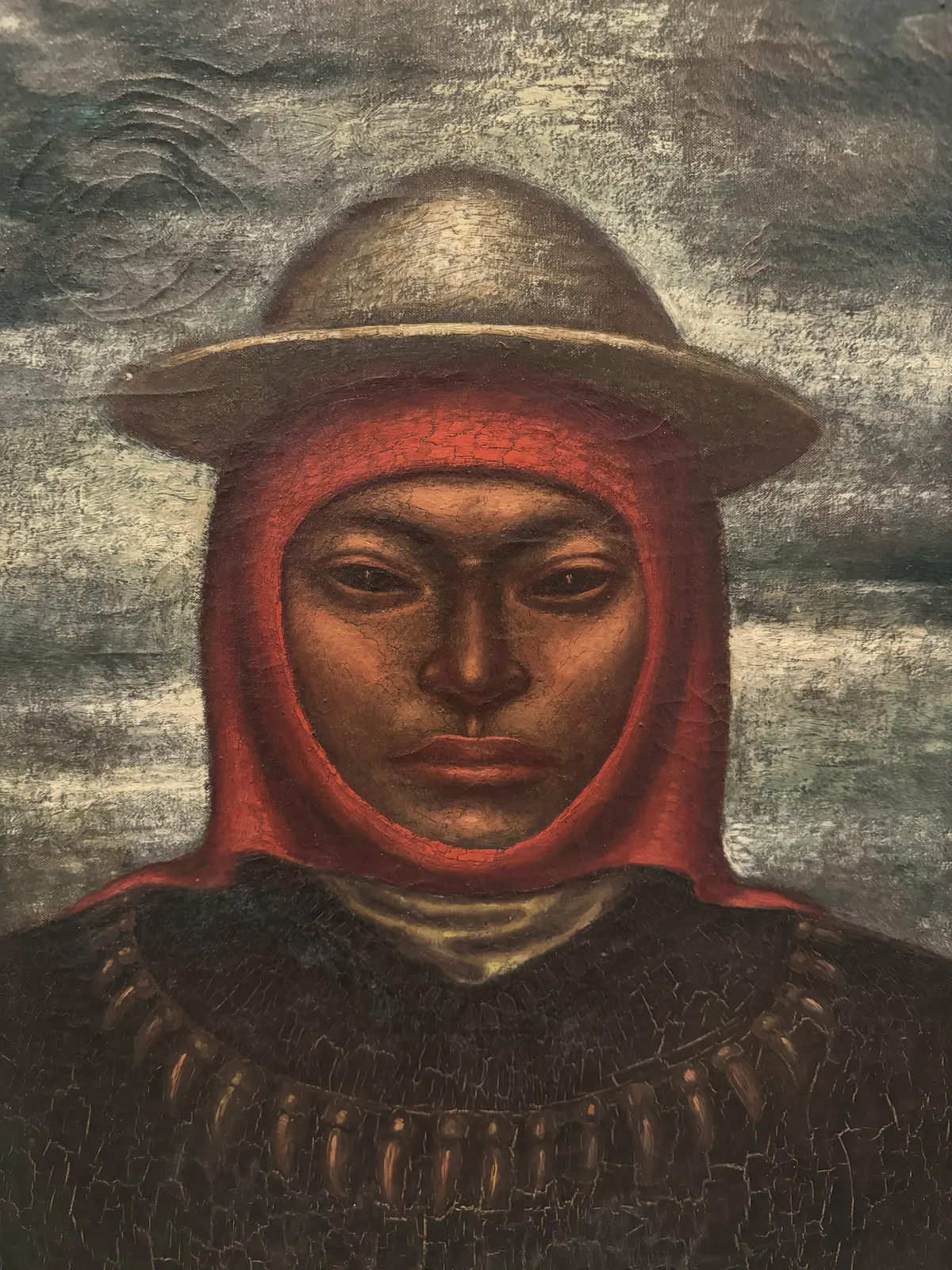
Portrait of Indigenous Person
Luis Alberto Acuña
This striking 1934 oil painting reflects the artist’s deep engagement with indigenous identity and pre-Columbian heritage. The stoic, symmetrical face, wrapped in a red hood beneath a wide-brimmed hat, evokes dignity and resilience. Acuña, a key figure in Colombian modernism, often highlighted native ancestry as a counter-narrative to Eurocentric ideals.
“When the path is beautiful, do not ask where it leads.” — Zen proverb
Welcome to my travel photography!
“When the path is beautiful, do not ask where it leads.” — Zen proverb
Welcome to my travel photography!
For as long as I can remember, my path has been one of discovery—seeking beauty, timelessness, and connection in every corner of the world. It has also been a journey of deep learning and understanding. I’ve been an avid traveler (or perhaps a travel addict?) for most of my life. My love for travel began long before I ever left home: as a child, I drew a fantasy map of my grandparents’ apartment and “traveled” through it with my cousin Sonya, imagining adventures in every corner. Nearly 90 countries and countless moments of awe later, I’m excited to share this journey with you.
Thanks to the tireless and ingenious programming of Diagilev, we’re now able to present about fifteen percent of the images I’ve accumulated over the years. More will be released in small batches depending on your interest. While the first release leans toward museum photography, later ones will include more nature, architecture, culture, and general travel experiences. If you’d like to receive email notifications about new releases, feel free to reach out—no commercial use, ever.
Throughout my travels, I’ve been drawn to two intertwined kinds of discovery. One is intellectual: learning why the world is the way it is. History became my guide, shaping my perspective and filling my camera roll with museums and old buildings. To me, history is not the past—it is the key to understanding the present and how the world became what it is. The other is emotional: seeking moments of elevation—spirituality, beauty, harmony—often found in nature, monasteries, and ancient sacred spaces. Together, these impulses shape my photography. It invites you to learn, admire, and soar—to rise above the mundane and see the world through a lens of curiosity and wonder.
Much of my later travel became possible thanks to my job with Delta Air Lines, but the wanderlust began years earlier. By the time I joined the industry, I had already visited over 35 countries and lived in several—largely thanks to a backpacking journey around the world with Luis León, whose face appears in many early photos. I grew up in Ufa in the USSR, and since leaving it I have lived, studied, and worked in Latvia, the United States, France, South Korea, Canada, Spain, Italy, Brazil, Japan, and Colombia.
A life of near-constant movement may seem a little crazy, but it has deepened my understanding of the world and produced the photography you are about to see. Over the years, my style has evolved—more intentional, more refined—yet its core remains the same: a search for understanding, timeless beauty, and a connection to those who walked this earth long before us.
I hope these photos stir something in your soul, just as they did in mine. I’d love to hear from you—whether reactions, suggestions, corrections, or a request to be added to the email list for new releases (no commercial use, I promise). You can learn more about my travels here, and my academic life here.
Enjoy our shared journey!