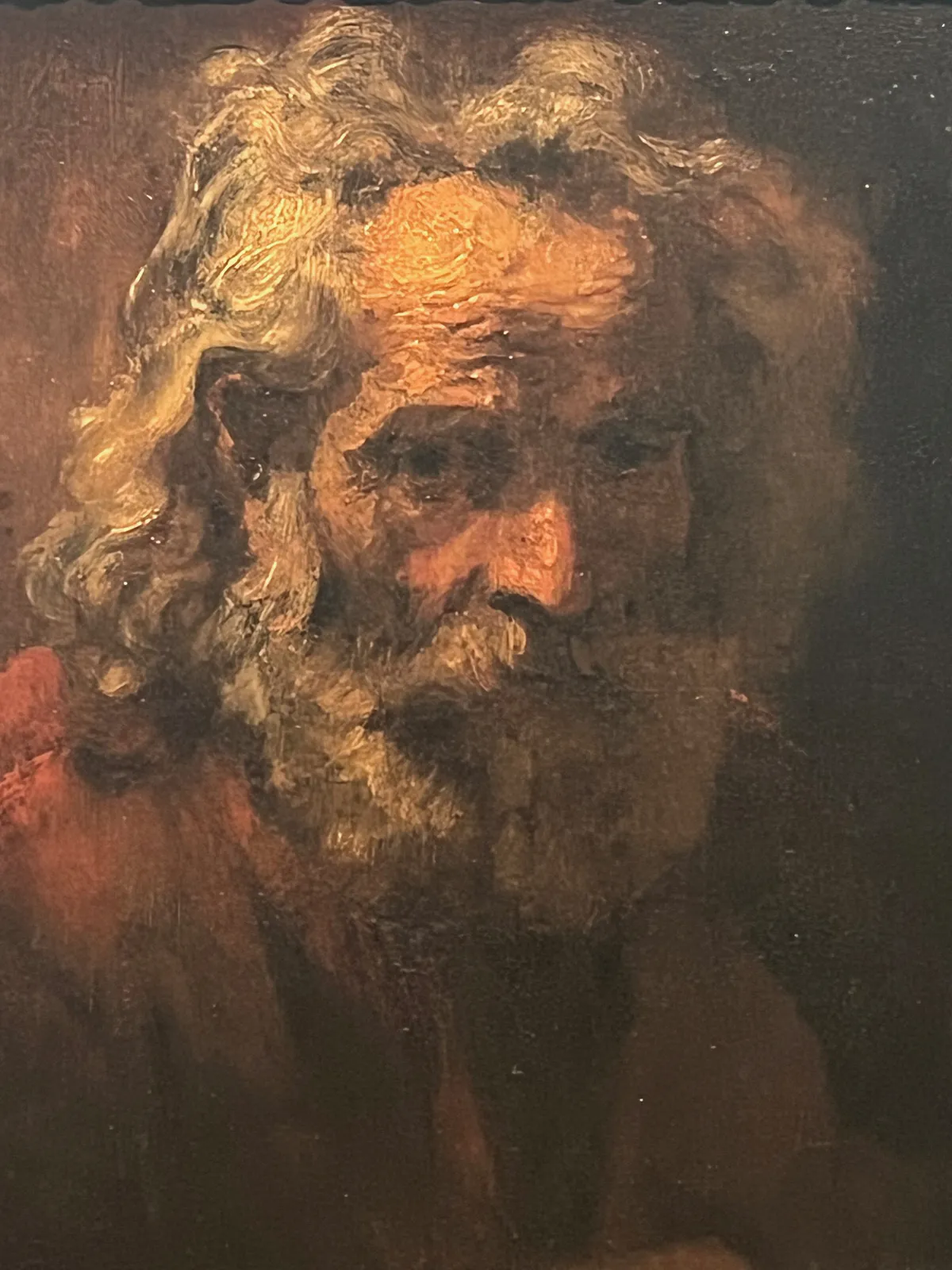
Bust of a Bearded Old Man
Rembrandt
This painting (c. 1630) by Rembrandt van Rijn exemplifies the tronie genre, focusing on character over identity. The expressive face of the elderly man, rendered in oil on panel, showcases Rembrandt’s mastery of light and shadow. As one of his smallest works, it explores themes of old age, capturing the nuances of human expression and emotion, marking an early exploration of the artist’s fascination with the human condition.
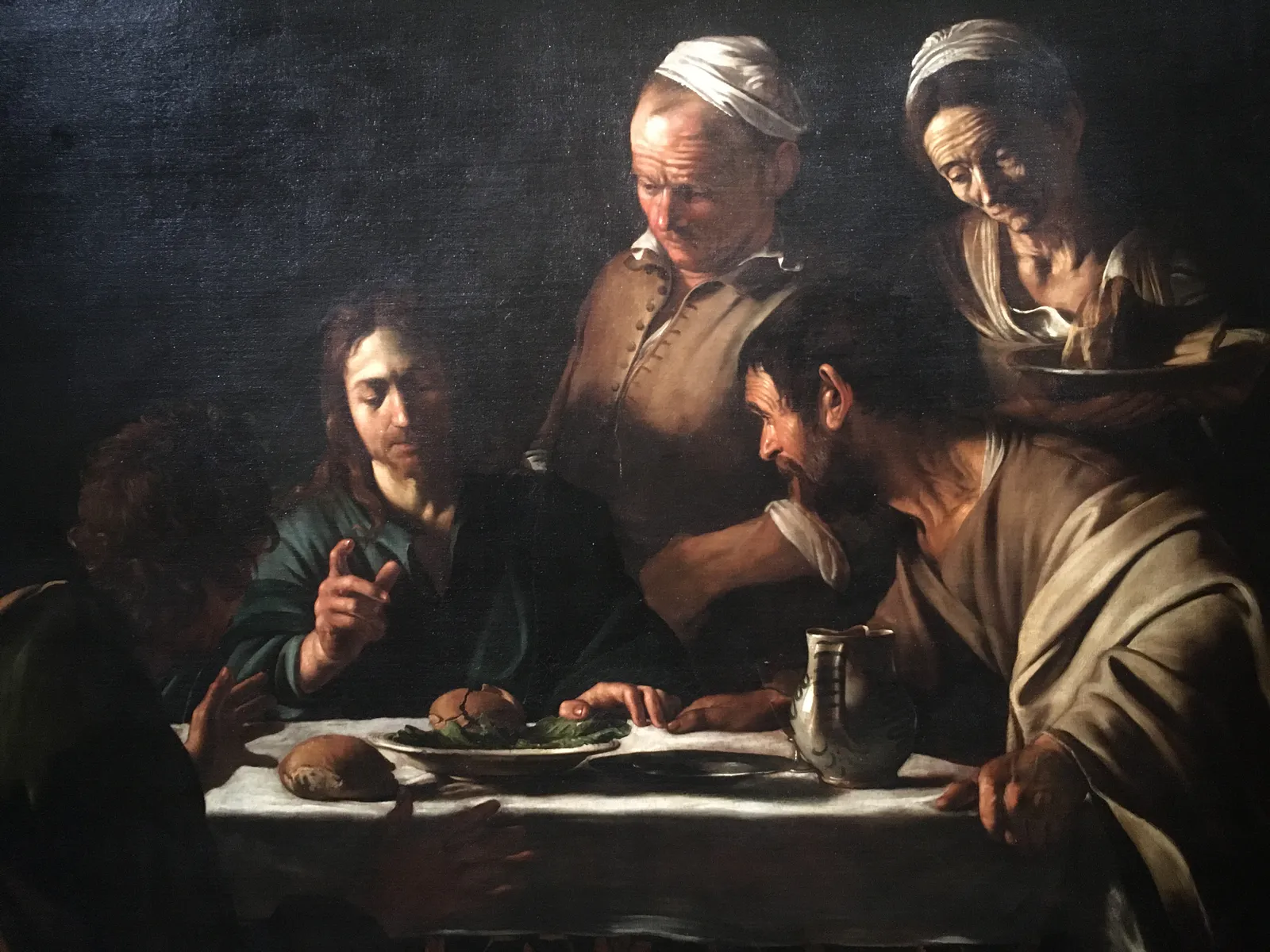
The Supper at Emmaus
Caravaggio
This painting (c.1606) focuses on Christ’s quiet gesture and the attentive figures around him. Subtle expressions replace dramatic shock, emphasizing intimacy over display. Caravaggio draws revelation into the realm of the ordinary, showing faith as recognition that dawns quietly amid human fragility.
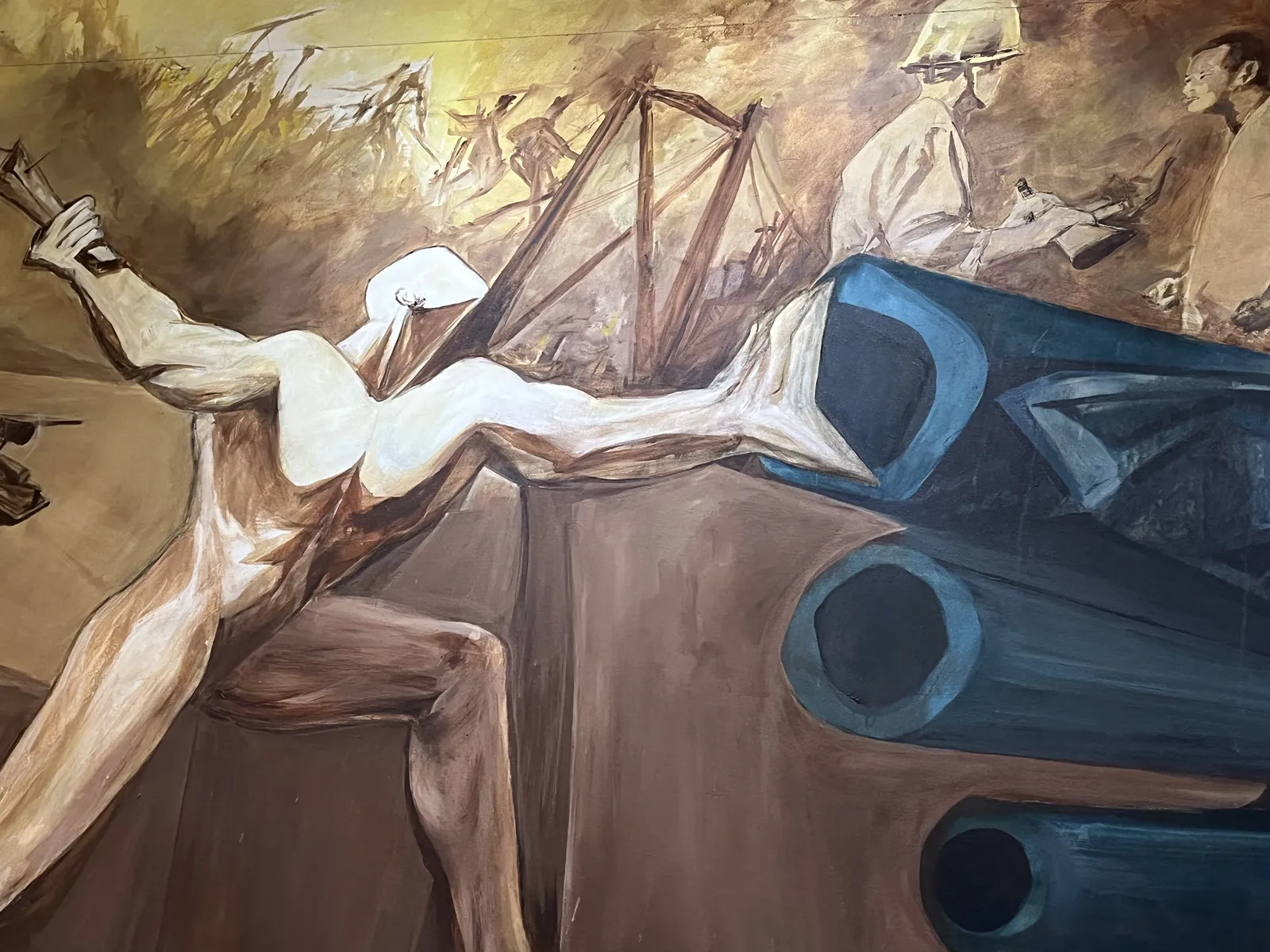
El pueblo en lucha
Ramón Oviedo
This mural (2013) shows a bound, faceless figure hurling itself toward the dark mouths of cannons, while ghostly soldiers and crowds emerge in the background. The scene recalls the Dominican struggle against dictatorship and foreign intervention in the 20th c. By fusing a single straining body with collective, blurred forms, Oviedo concentrates individual sacrifice into a broader history of resistance.
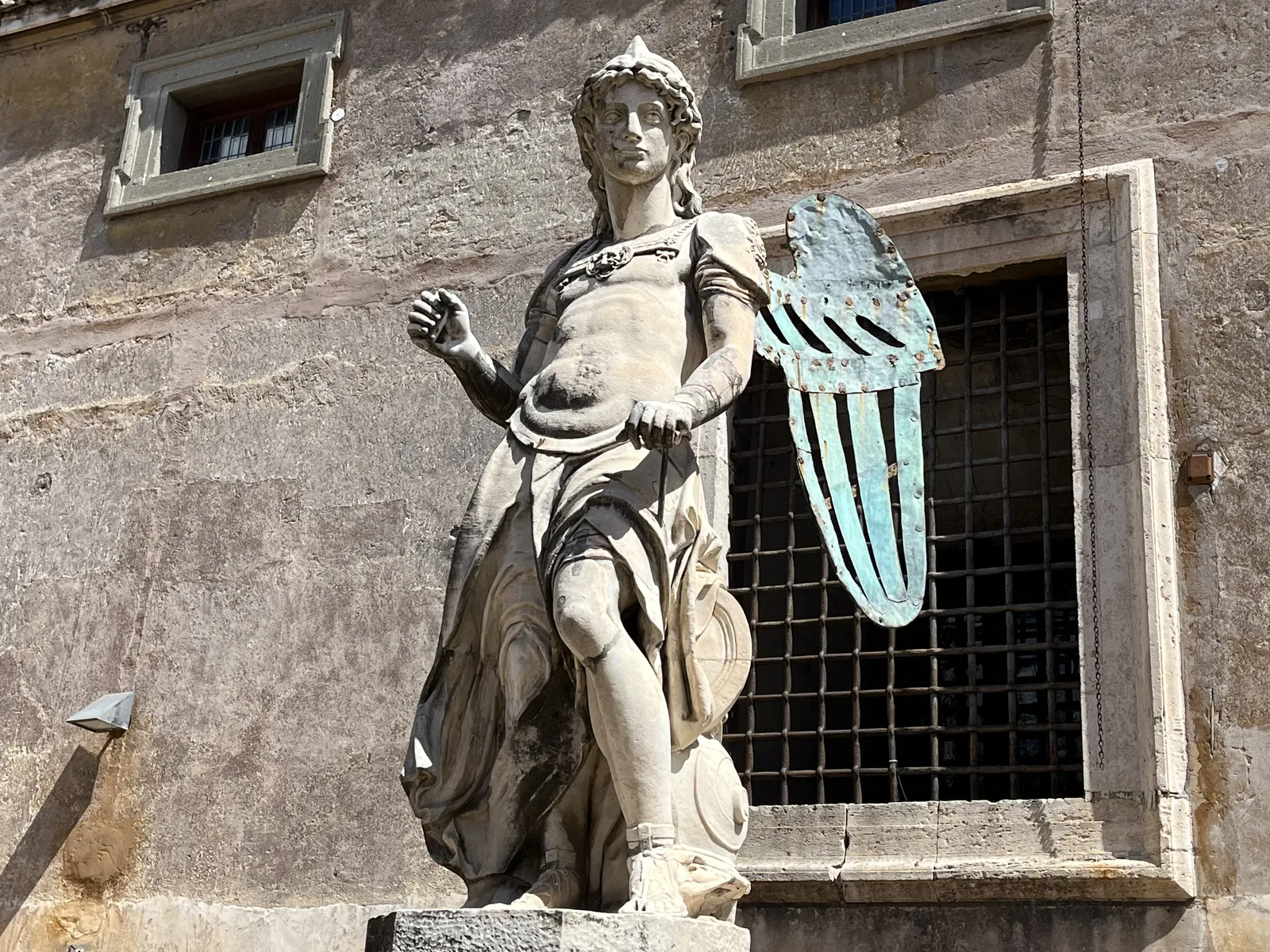
Archangel Michael
Raffaello da Montelupo
This marble statue (1544) once crowned the fortress, showing the Archangel Michael in the moment of sheathing his sword after ending the plague of 590. The figure’s contrapposto stance and idealized anatomy recall classical sculpture, while the raised wings and military dress assert his role as heavenly protector. The blend of antique form and Christian subject turns a local miracle into a civic symbol of deliverance.
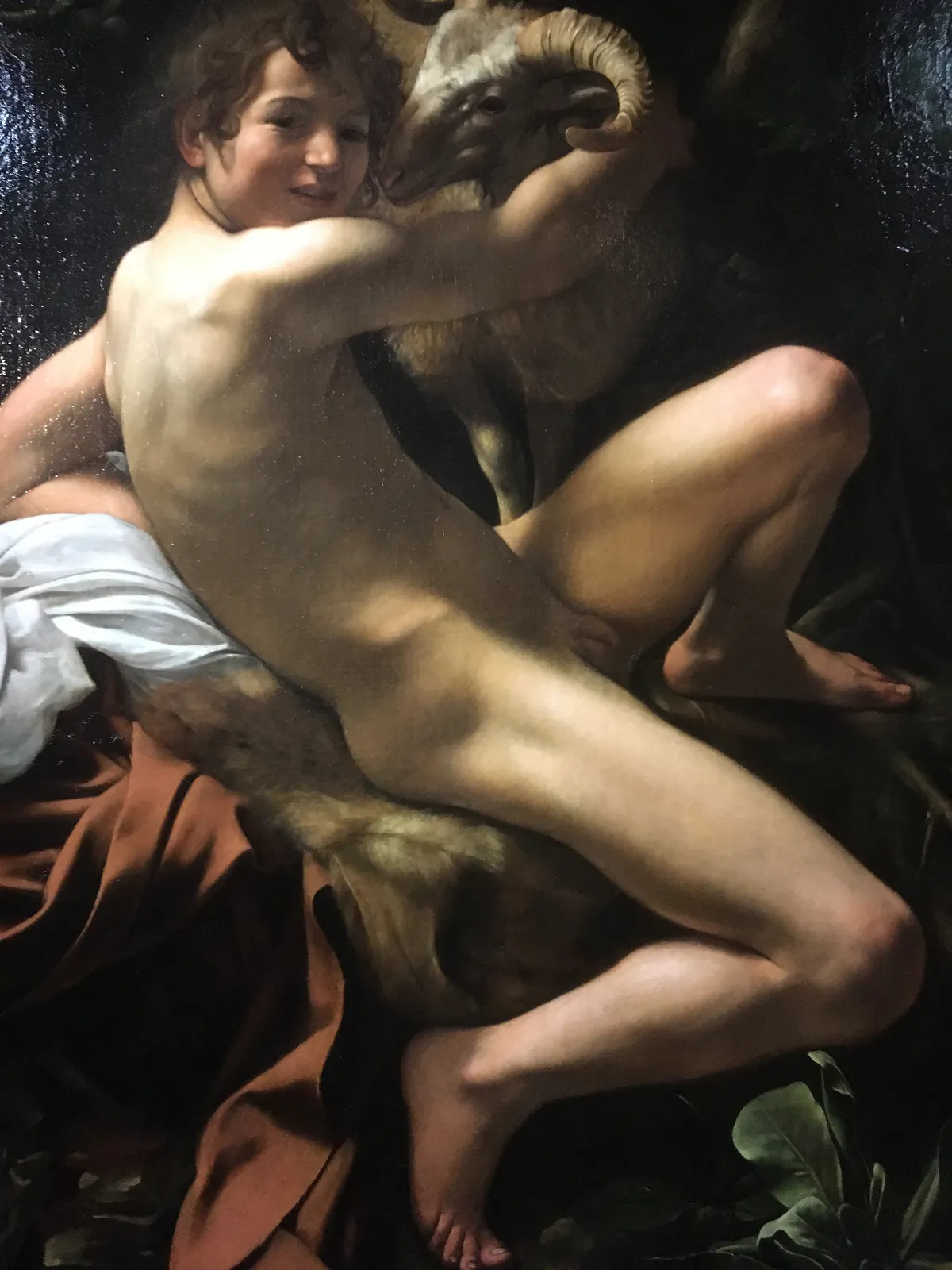
John the Baptist (Youth with a Ram)
Caravaggio
Painted around 1602, this work portrays John the Baptist as a youthful figure embracing a ram. Caravaggio departs from solemn prophecy to present vitality, sensuality, and human immediacy. The saint’s glance engages the viewer, while the animal evokes sacrifice and redemption. Through natural light and unidealized form, the painting fuses biblical meaning with raw, earthy presence.
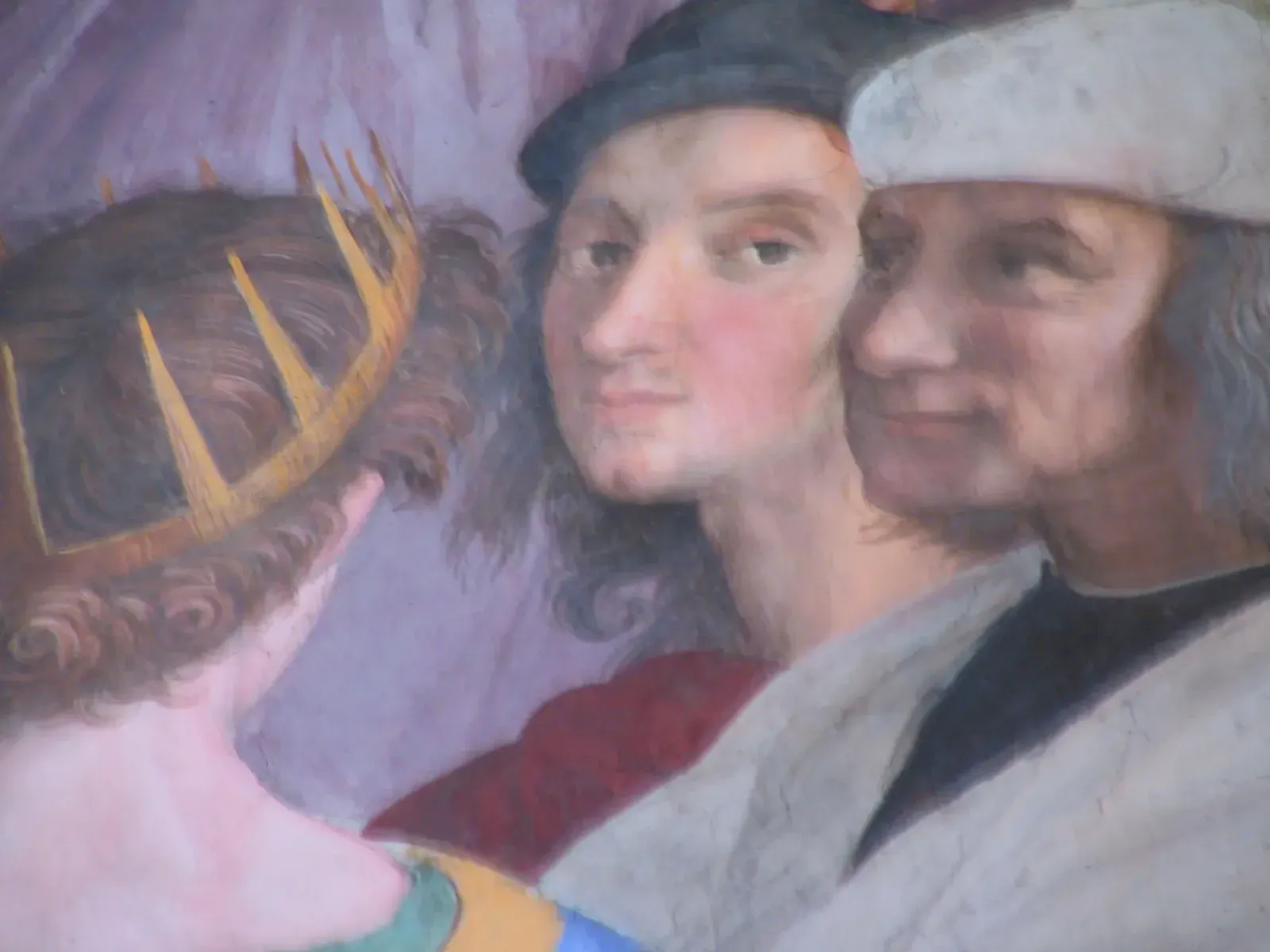
Raphael and Perugino (detail)
Raphael
This section of The School of Athens (1509-11) features a rare self-portrait of Raphael (center) alongside his teacher Perugino (right). Originating from the Italian High Renaissance, the work subtly inserts the artist into the legacy of classical knowledge, aligning painters with philosophers as bearers of intellectual ideals.
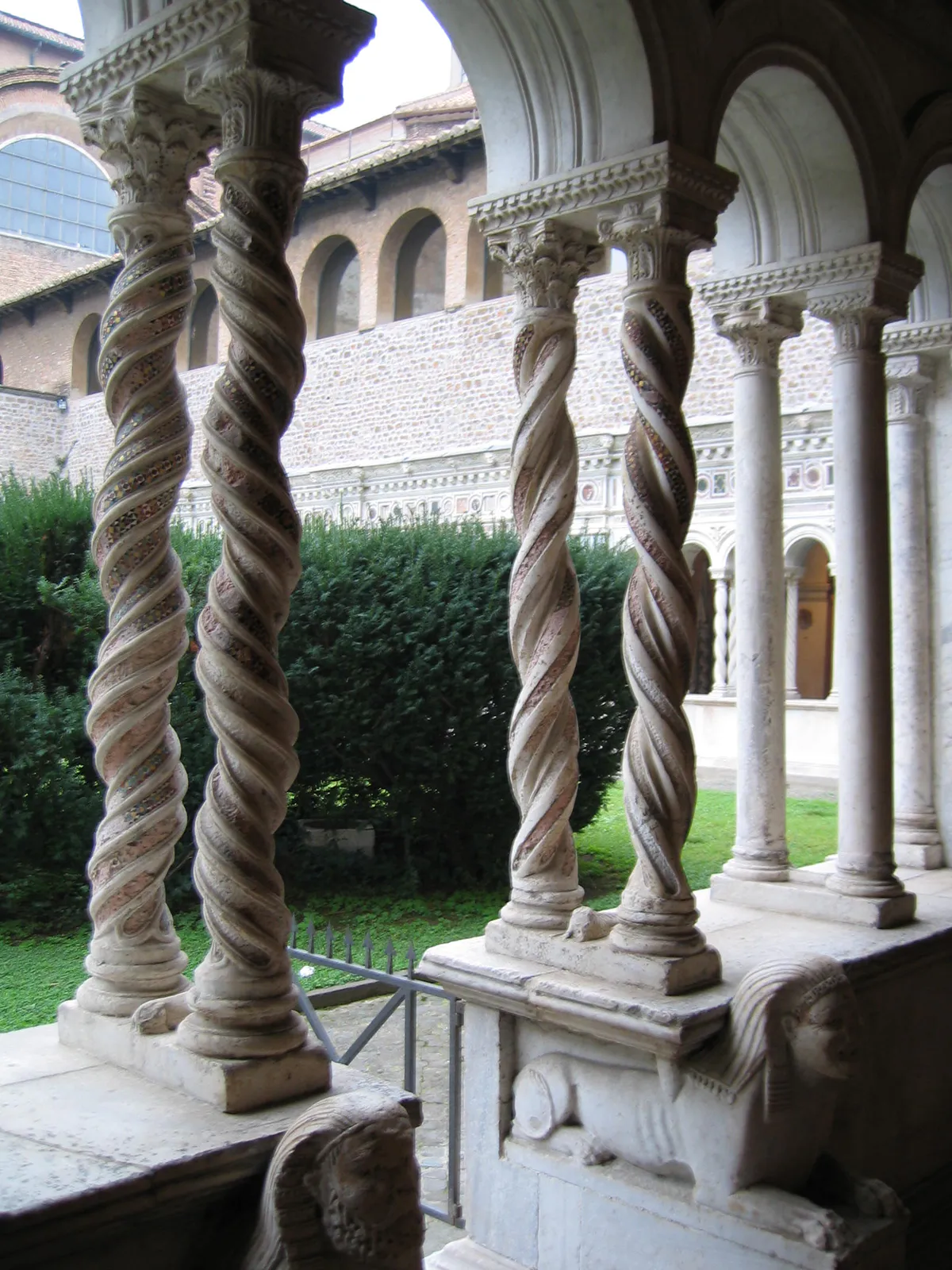
Cosmatesque Columns with Lions and Sphinxes
Vassalletto Workshop
These cloister columns (c.1215), with spiraled shafts and vivid mosaic inlays in the cosmatesque style—a Roman art blending colored marble, glass, and porphyry into geometric patterns—rest on sculpted lions and sphinxes. Crafted by the Vassalletto masters, they unite classical form and Christian meaning, embodying medieval Rome’s vision of divine order through ancient craft.
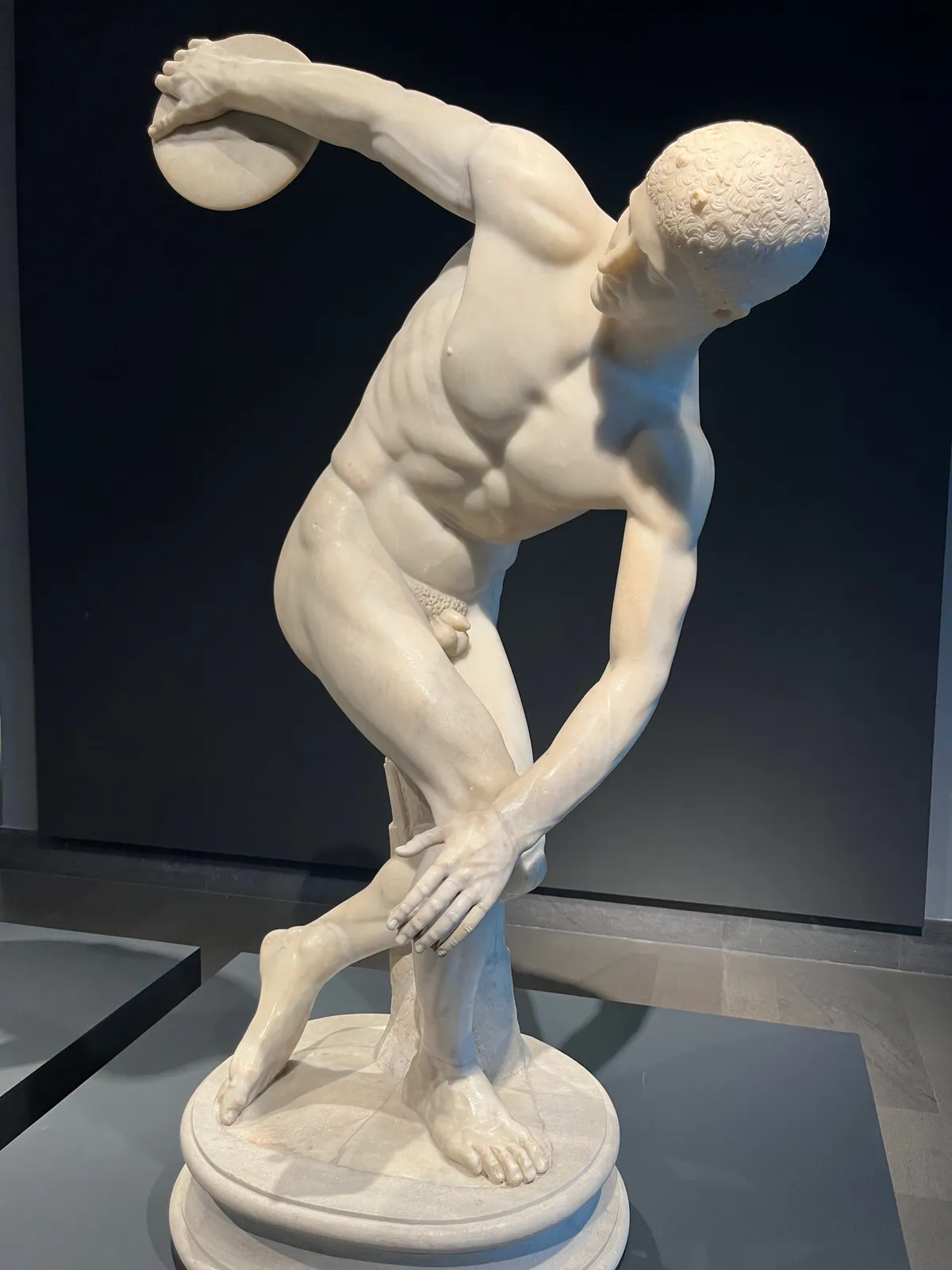
Discobolus
Myron
This Roman marble statue (mid-2nd c.) is a faithful copy of Myron’s Greek bronze Discobolus (c. 450 BC). It depicts an athlete in a dynamic pose, poised to release a discus, showcasing the Greek exploration of human form and movement. The sculpture highlights the tension and grace of athletic prowess, reflecting Roman admiration for Greek art and the enduring legacy of classical ideals in depicting the human body.
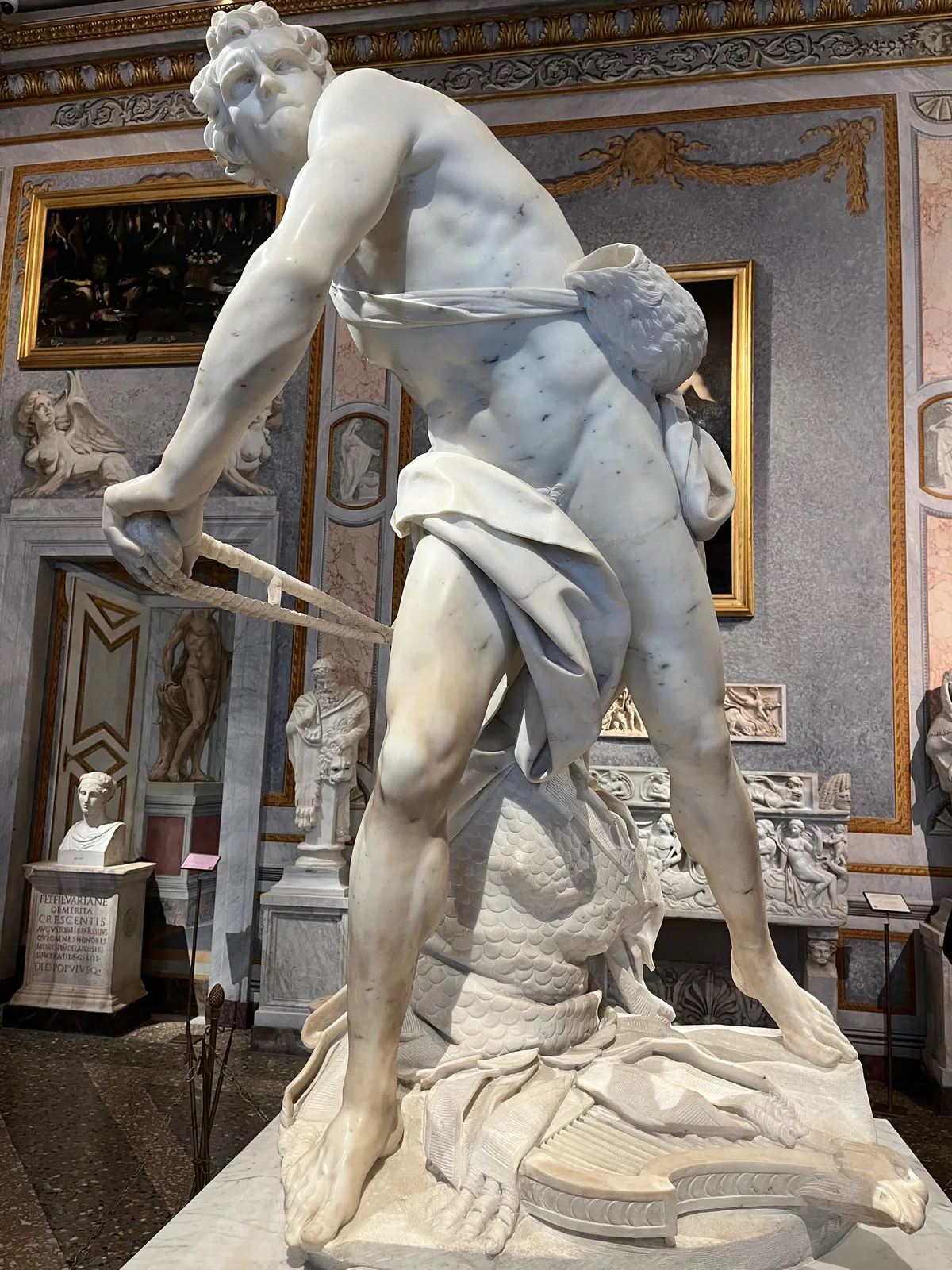
David
Gian Lorenzo Bernini
This electrifying sculpture (1623–24) captures David mid-swing as he prepares to strike Goliath. Commissioned by Cardinal Scipione Borghese, it breaks from static Renaissance models by freezing a moment of intense motion and psychological resolve. Bernini’s vivid realism and spiraling pose typify the Baroque celebration of drama and energy.
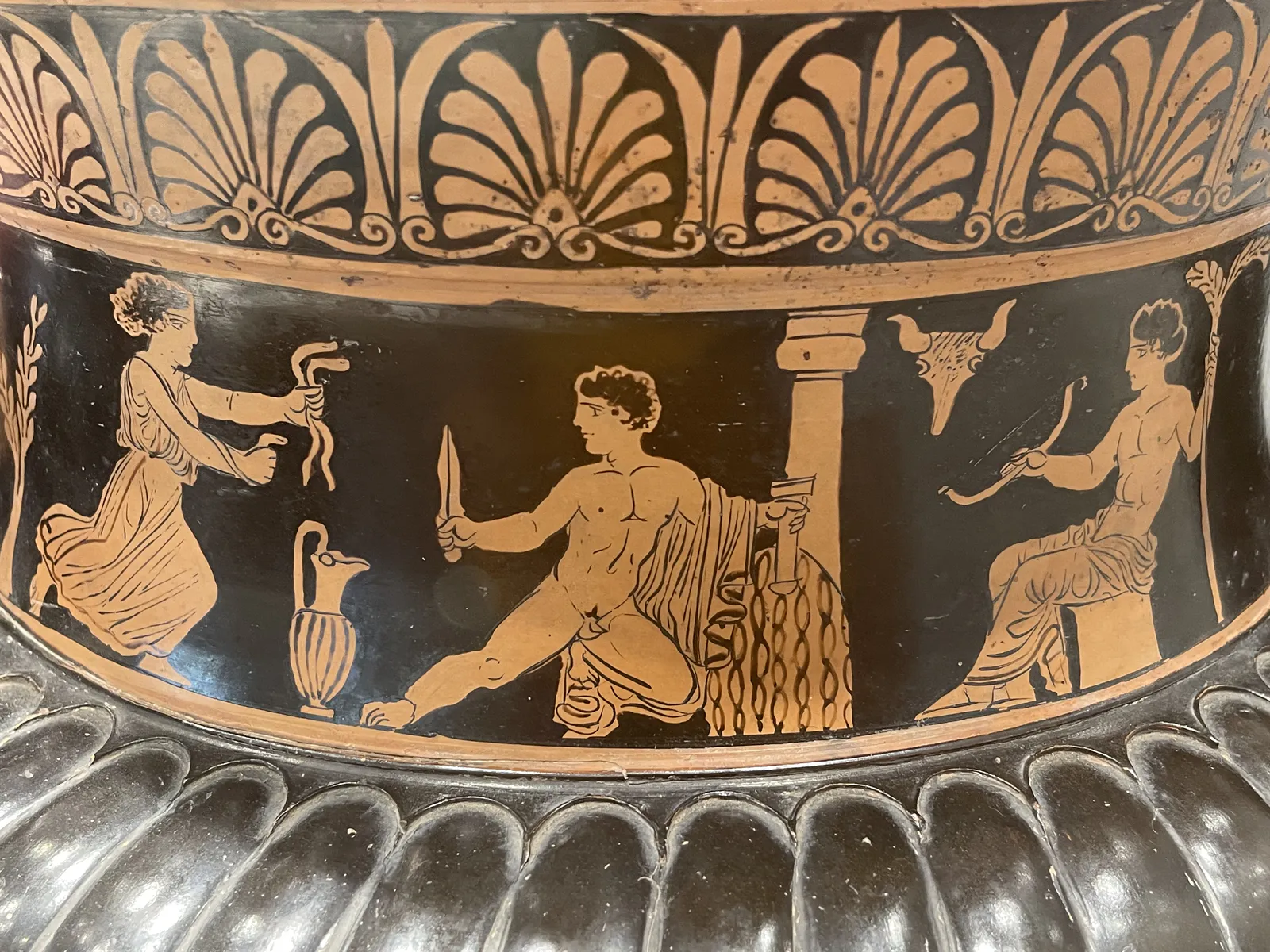
Orestes Pursued by the Furies
Painter of the Birth of Dionysus
This Apulian red-figure krater, used for mixing wine and water, (410–390 BC) depicts Orestes defending himself with a sword against the Erinyes, avenging his mother's death. Apollo, seated with a bow, offers protection, symbolizing divine sanction amid human guilt. This scene illustrates the complex interplay of justice and retribution in Greek mythology.
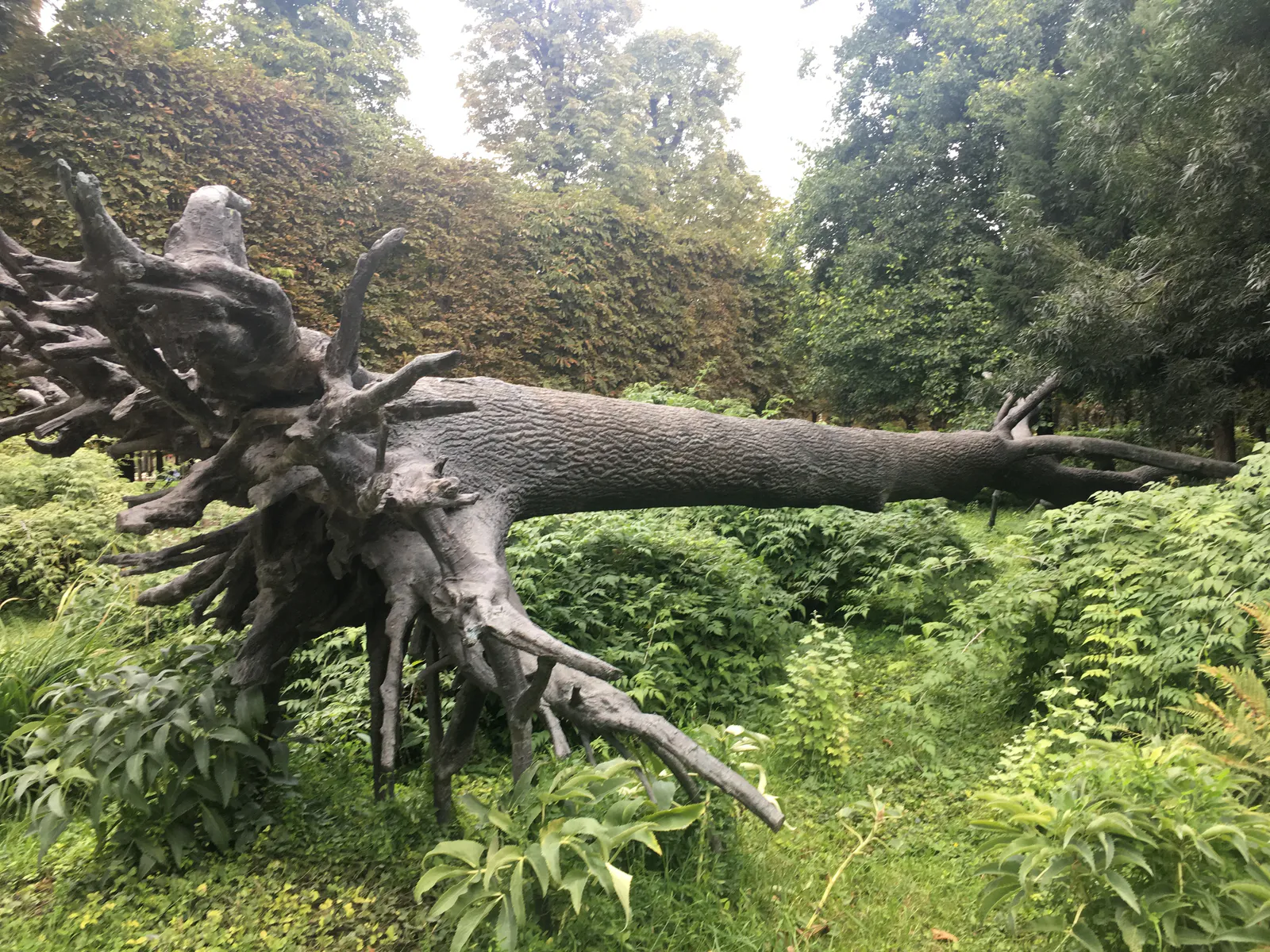
The Tree of Vowels
Giuseppe Penone
This monumental bronze sculpture (2000) shows a fallen oak with roots extending like veins across the ground. Installed in the Jardin des Tuileries, it demonstrates Penone’s exploration of the connection between humanity and nature. The work combines organic memory with sculptural permanence, inviting reflection on time, fragility, and the endurance of natural forms.
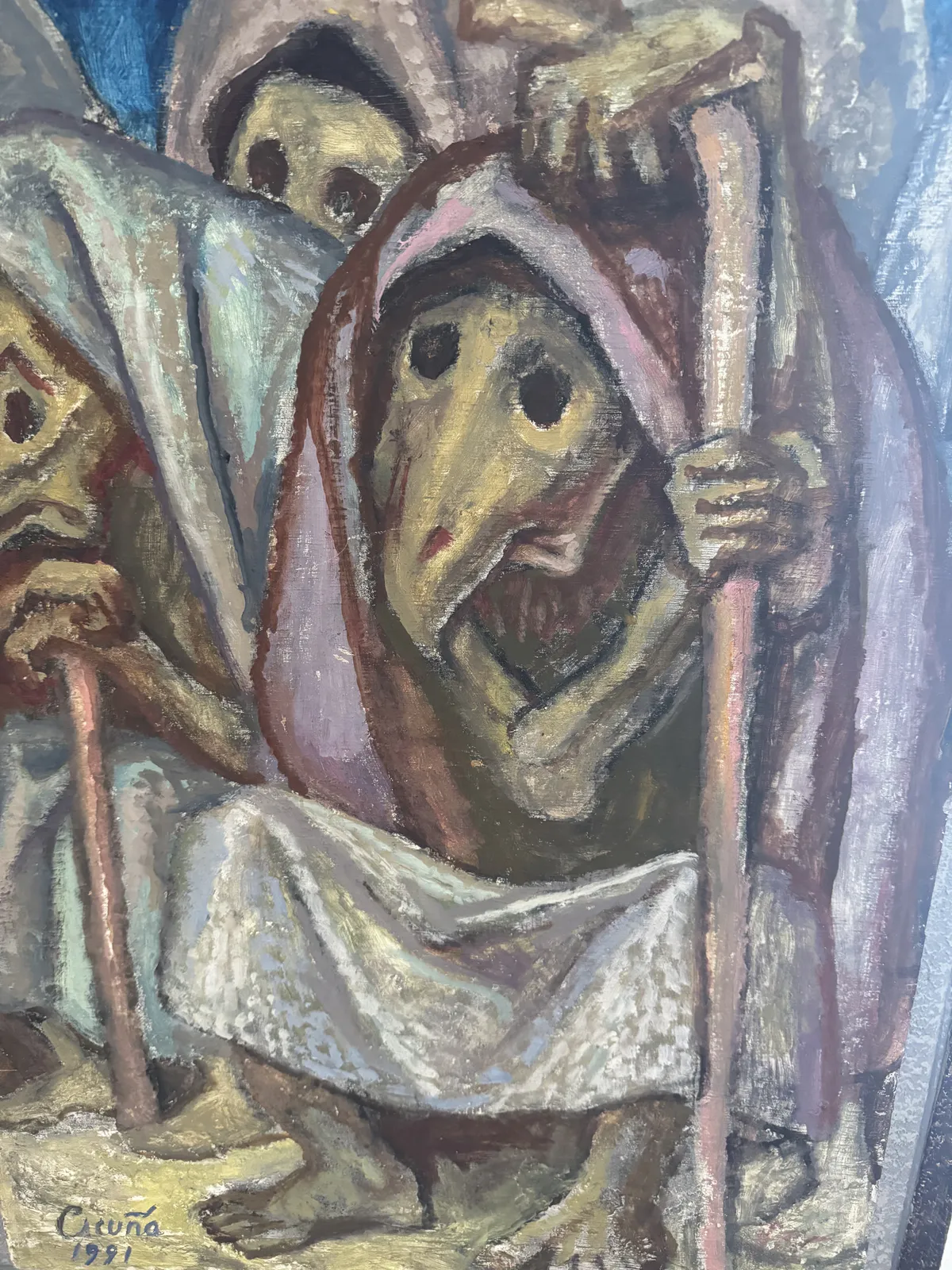
The Witch of Zascandil
Luis Alberto Acuña
This portrait (1991) shows the Witch of Zascandil, a figure rooted in Colombian folklore. Sharp features and widened eyes create a tense, exaggerated profile. The name Zascandil refers to a trickster or wandering mischief-maker in regional stories. The image indicates how rural mythology blends satire, fear, and ancestral belief.
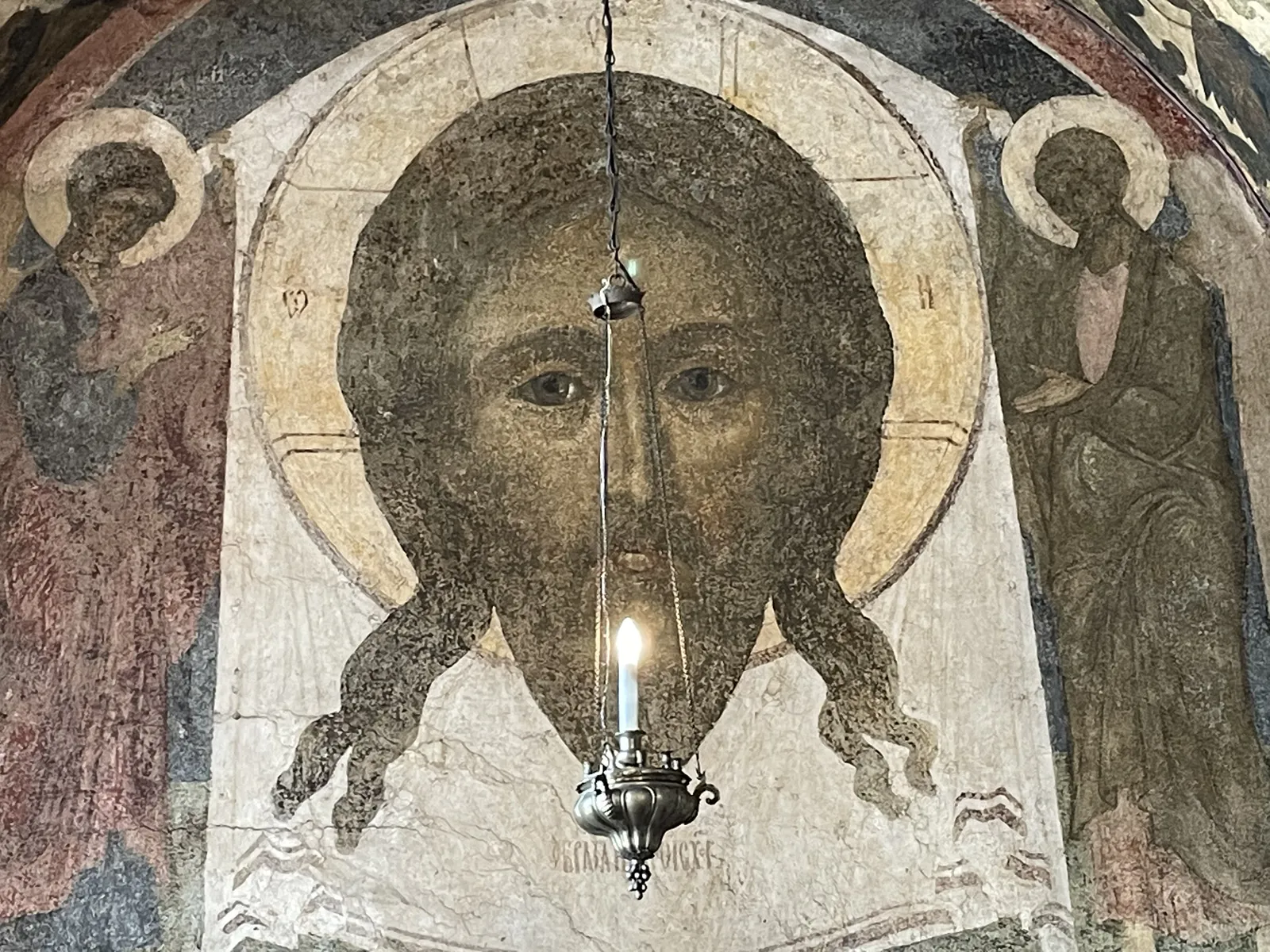
The Saviour Not Made by Hand
Simon Ushakov
This mid–late 17th-c. fresco depicts Spas Nerukotvorny (The Saviour Not Made by Hand), an image understood as a direct imprint of Christ’s face and a sign of his enduring presence. Ushakov follows Byzantine conventions yet introduces soft modeling and spatial depth drawn from Western art. The work reflects a moment when Moscow blended inherited Orthodox forms with new artistic influences to express religious renewal.
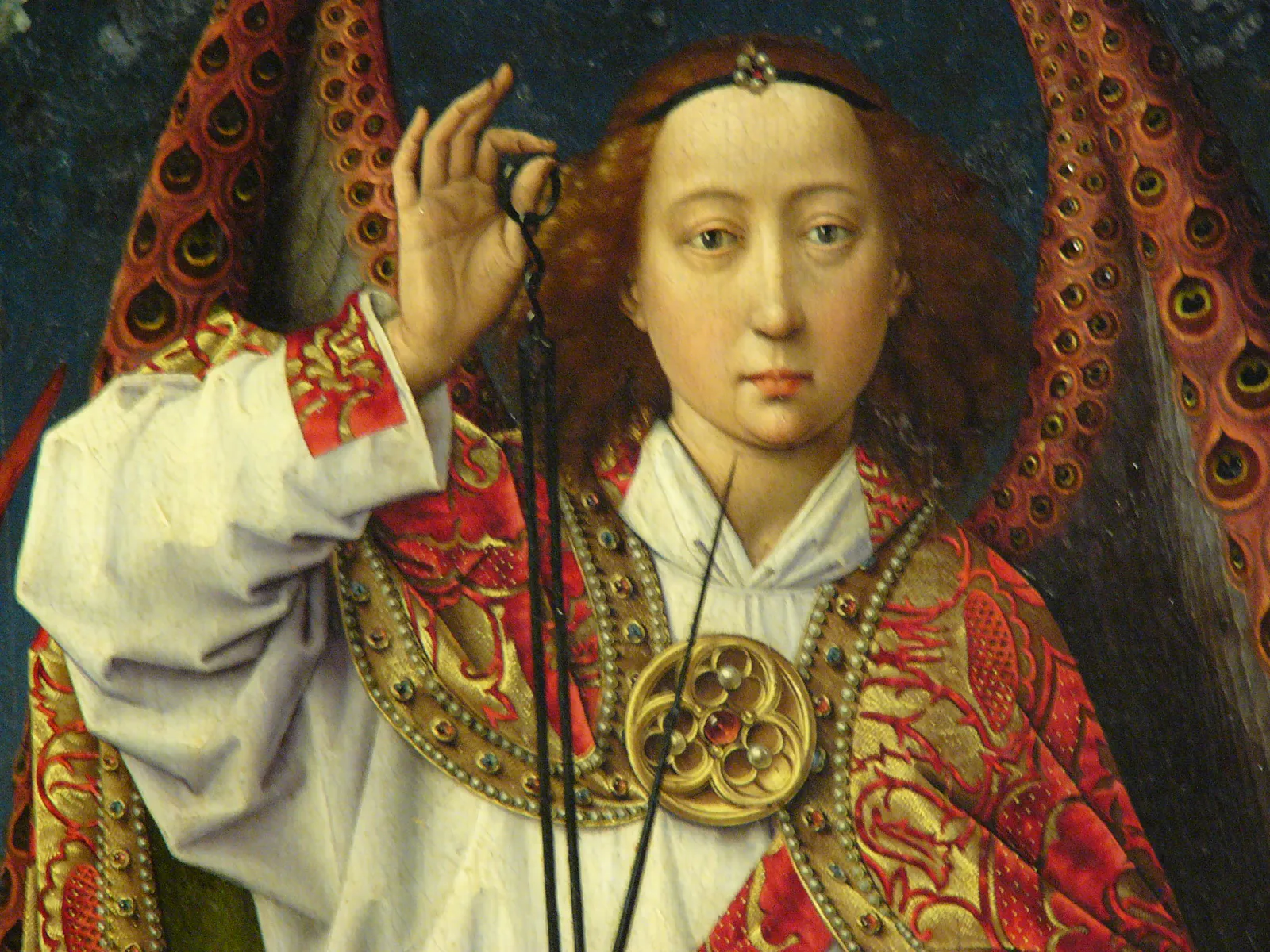
Archangel Michael
Rogier van der Weyden
This panel (1445–50) from the Beaune Altarpiece shows Archangel Michael weighing souls on Judgment Day. His youthful calm contrasts with the gravity of divine judgment. The richly patterned brocade and peacock-feather wings reflect Burgundian court opulence, linking celestial imagery with the devotional grandeur of 15th-century Flanders.
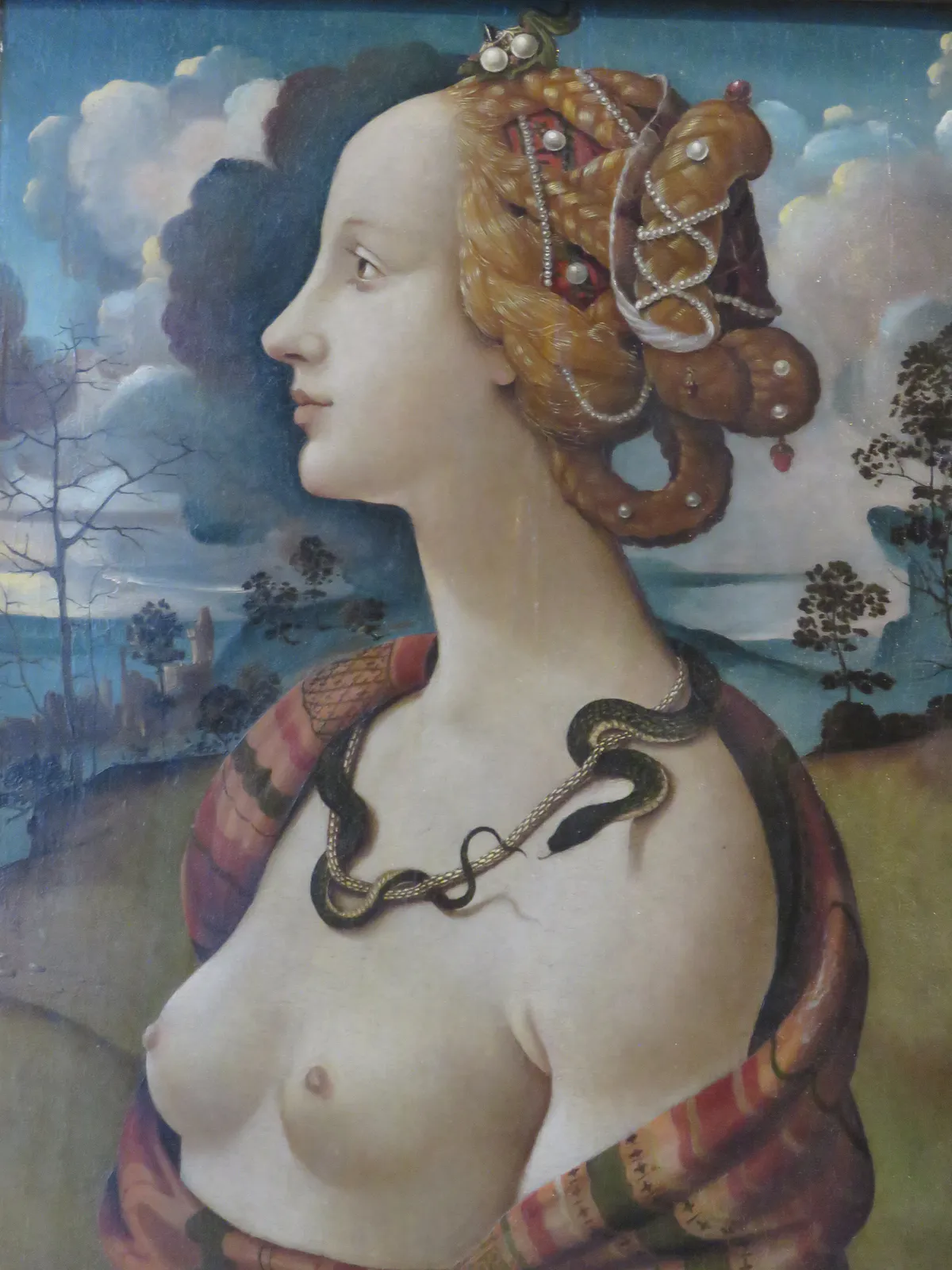
Simonetta Vespucci as Cleopatra
Piero di Cosimo
This painting (c. 1480) by di Cosimo depicts Simonetta Vespucci as Cleopatra, with an asp coiled around her neck. Created posthumously, it honors Vespucci’s beauty; she died in 1476 at 23. The profile view echoes medal portraits, while the snake may symbolize her death from tuberculosis. The serene landscape and sky enhance her ethereal presence, making this work a poignant tribute.
“When the path is beautiful, do not ask where it leads.” — Zen proverb
Welcome to my travel photography!
“When the path is beautiful, do not ask where it leads.” — Zen proverb
Welcome to my travel photography!
For as long as I can remember, my path has been one of discovery—seeking beauty, timelessness, and connection in every corner of the world. It has also been a journey of deep learning and understanding. I’ve been an avid traveler (or perhaps a travel addict?) for most of my life. My love for travel began long before I ever left home: as a child, I drew a fantasy map of my grandparents’ apartment and “traveled” through it with my cousin Sonya, imagining adventures in every corner. Nearly 90 countries and countless moments of awe later, I’m excited to share this journey with you.
Thanks to the tireless and ingenious programming of Diagilev, we’re now able to present about fifteen percent of the images I’ve accumulated over the years. More will be released in small batches depending on your interest. While the first release leans toward museum photography, later ones will include more nature, architecture, culture, and general travel experiences. If you’d like to receive email notifications about new releases, feel free to reach out—no commercial use, ever.
Throughout my travels, I’ve been drawn to two intertwined kinds of discovery. One is intellectual: learning why the world is the way it is. History became my guide, shaping my perspective and filling my camera roll with museums and old buildings. To me, history is not the past—it is the key to understanding the present and how the world became what it is. The other is emotional: seeking moments of elevation—spirituality, beauty, harmony—often found in nature, monasteries, and ancient sacred spaces. Together, these impulses shape my photography. It invites you to learn, admire, and soar—to rise above the mundane and see the world through a lens of curiosity and wonder.
Much of my later travel became possible thanks to my job with Delta Air Lines, but the wanderlust began years earlier. By the time I joined the industry, I had already visited over 35 countries and lived in several—largely thanks to a backpacking journey around the world with Luis León, whose face appears in many early photos. I grew up in Ufa in the USSR, and since leaving it I have lived, studied, and worked in Latvia, the United States, France, South Korea, Canada, Spain, Italy, Brazil, Japan, and Colombia.
A life of near-constant movement may seem a little crazy, but it has deepened my understanding of the world and produced the photography you are about to see. Over the years, my style has evolved—more intentional, more refined—yet its core remains the same: a search for understanding, timeless beauty, and a connection to those who walked this earth long before us.
I hope these photos stir something in your soul, just as they did in mine. I’d love to hear from you—whether reactions, suggestions, corrections, or a request to be added to the email list for new releases (no commercial use, I promise). You can learn more about my travels here, and my academic life here.
Enjoy our shared journey!