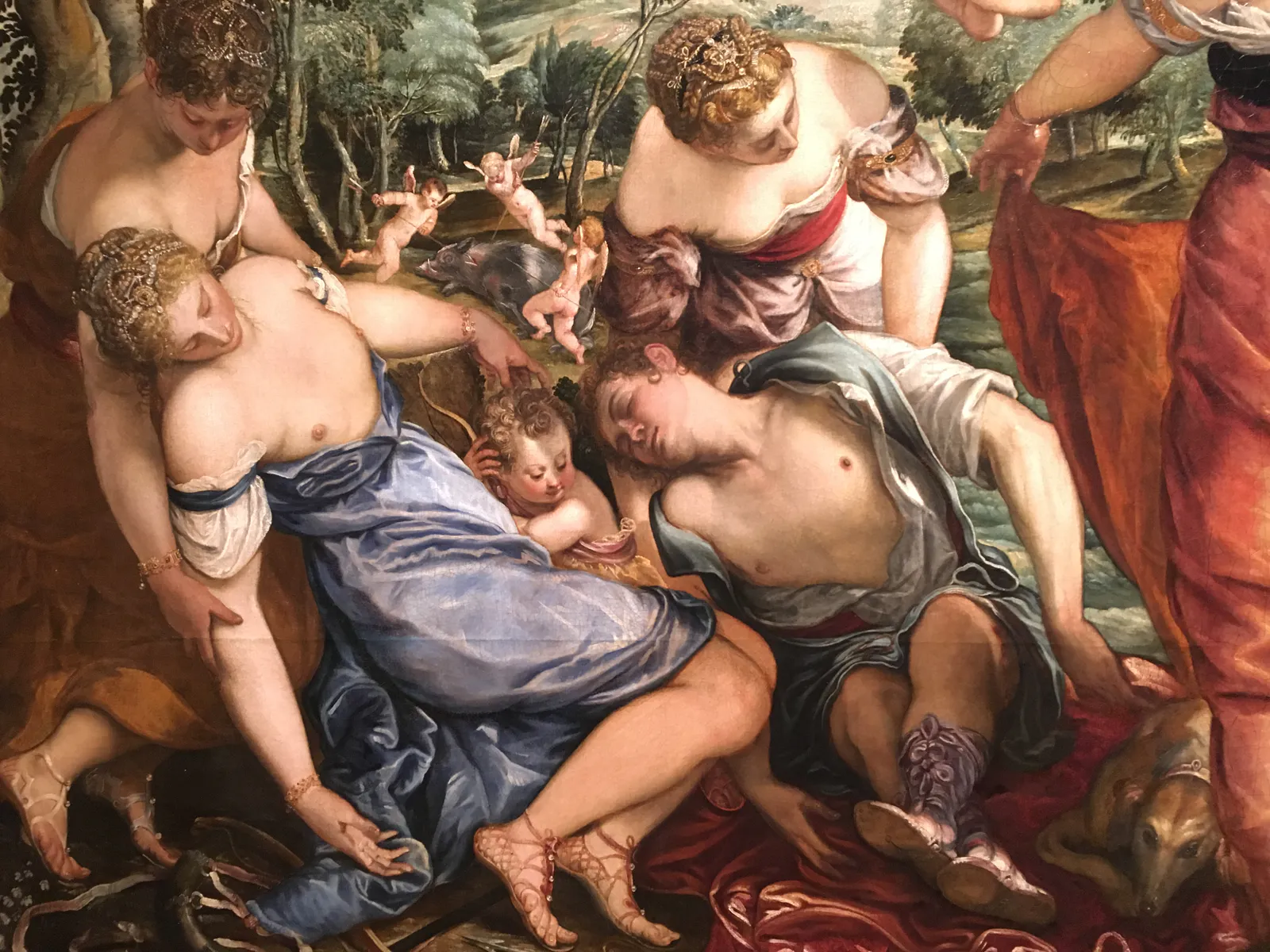
The Death of Adonis
Tintoretto's Workshop
The Death of Adonis (1550–55) captures Venus fainting at Adonis's death, diverging from Ovid’s Metamorphoses by including young women not in the original tale. Created by a Nordic artist in Tintoretto’s Venetian workshop, it blends Tintoretto’s dramatic style with the collaborator’s unique touch, evident in the expressive figures and vibrant colors. This fusion highlights the shared human themes of love and loss, inviting reflection on the timeless nature of myth and emotion.
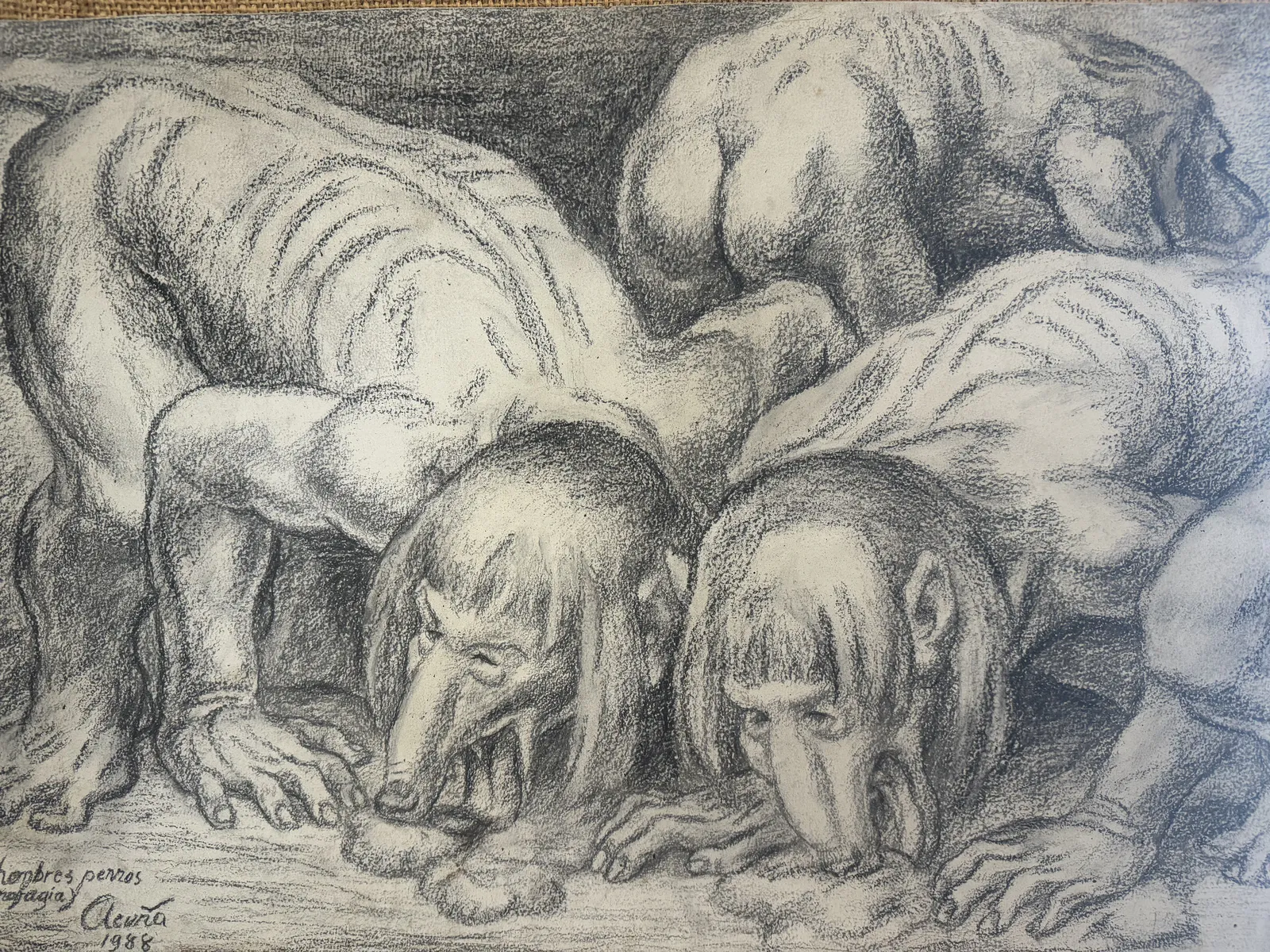
The Dog Men (Coprophagia)
Luis Alberto Acuña
This disturbing drawing (1988) shows three gaunt hybrid figures with human torsos and doglike heads crouched on all fours. Part of Acuña’s late series on distorted bodies, it examines the boundary between human and animal. The title refers to coprophagia (the consumption of excrement), which Acuña uses to articulate a vision of moral collapse and social dehumanization.
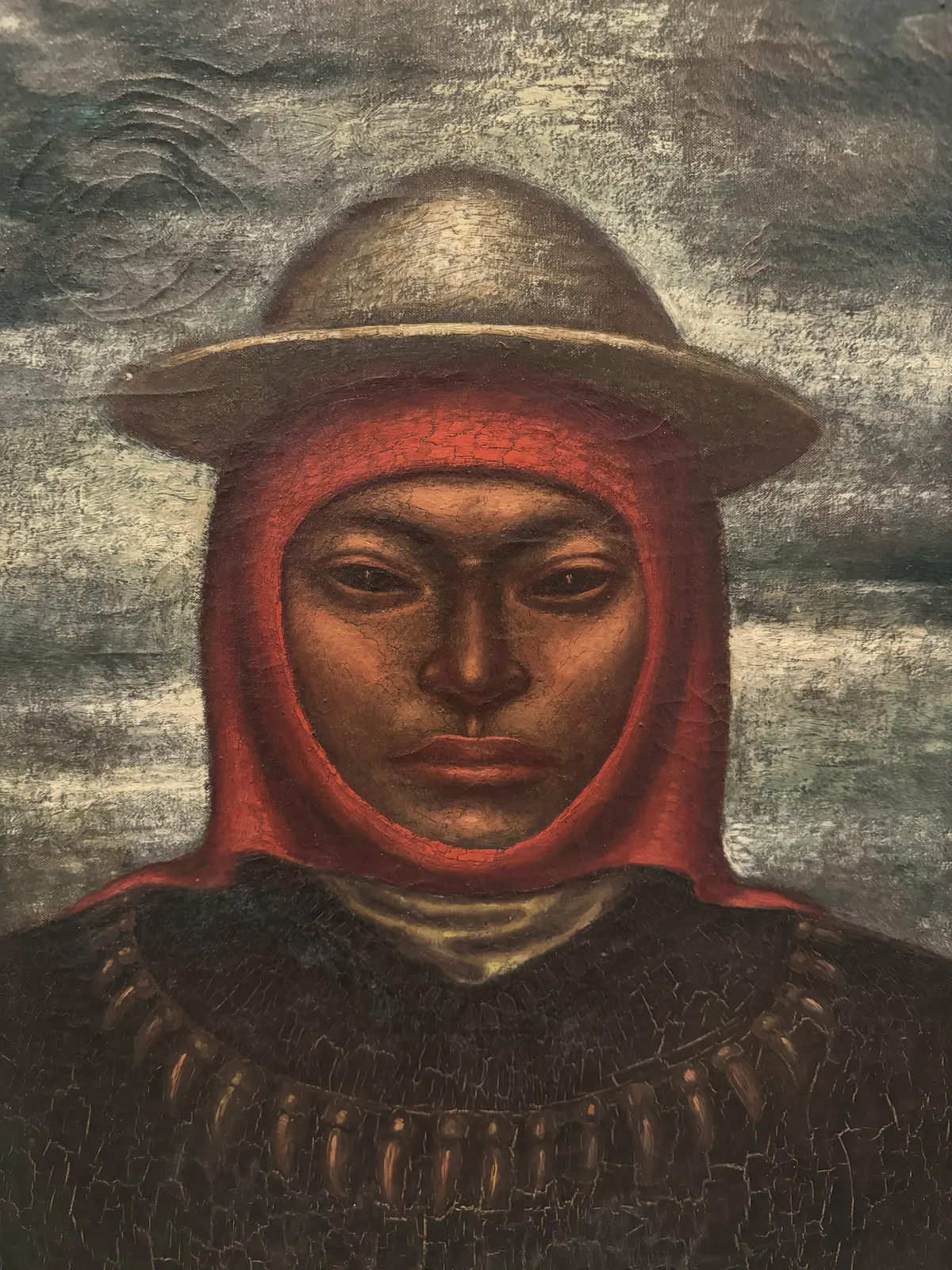
Portrait of Indigenous Person
Luis Alberto Acuña
This striking 1934 oil painting reflects the artist’s deep engagement with indigenous identity and pre-Columbian heritage. The stoic, symmetrical face, wrapped in a red hood beneath a wide-brimmed hat, evokes dignity and resilience. Acuña, a key figure in Colombian modernism, often highlighted native ancestry as a counter-narrative to Eurocentric ideals.
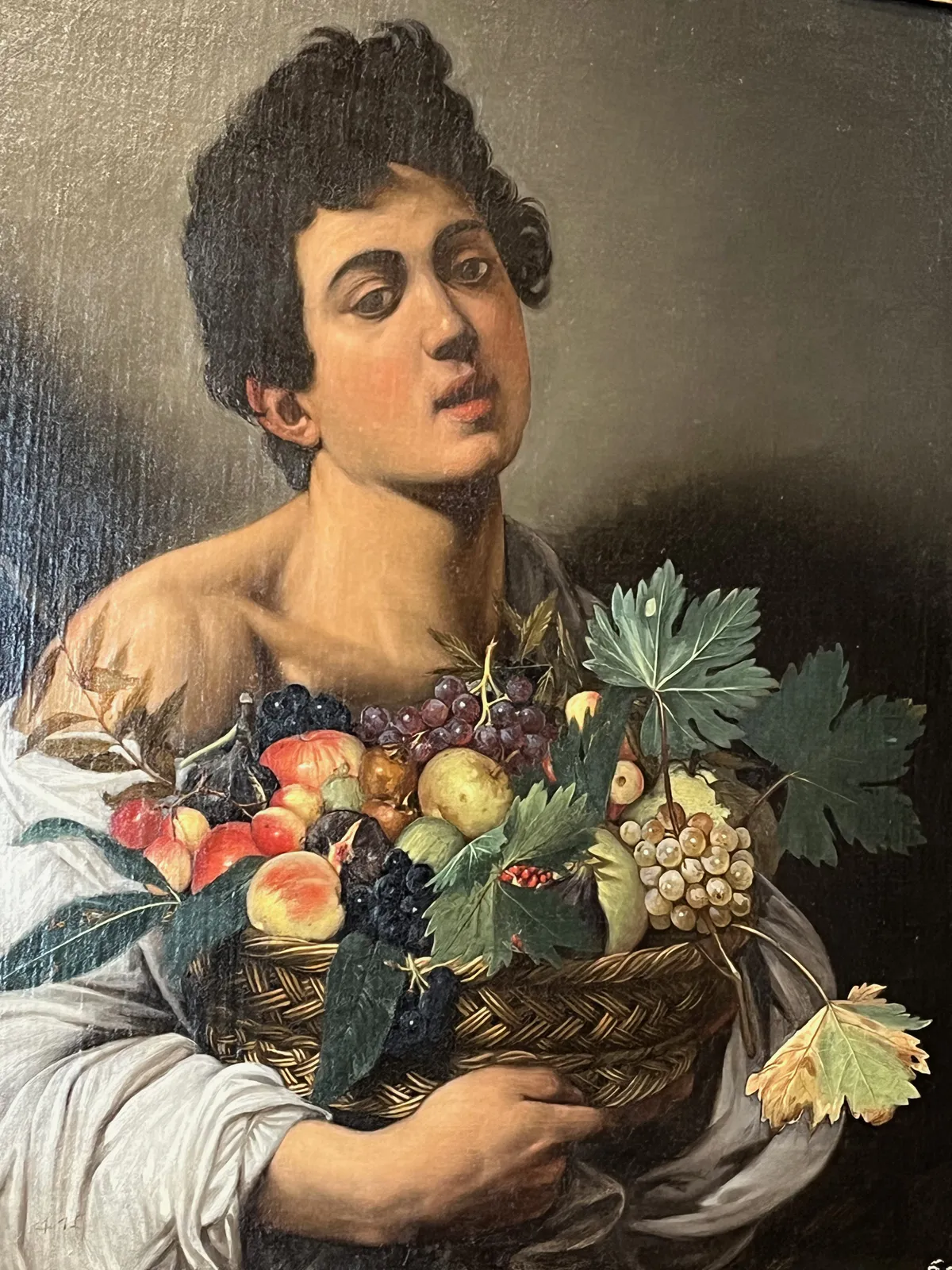
Boy with a Basket of Fruit
Caravaggio
This early Baroque painting (c. 1593) merges portraiture with still life, showing Mario Minniti holding a basket of overripe fruit. Caravaggio renders blemishes and textures with unflinching realism. The sensual posture and decaying abundance evoke themes of youthful beauty, ephemerality, and temptation.
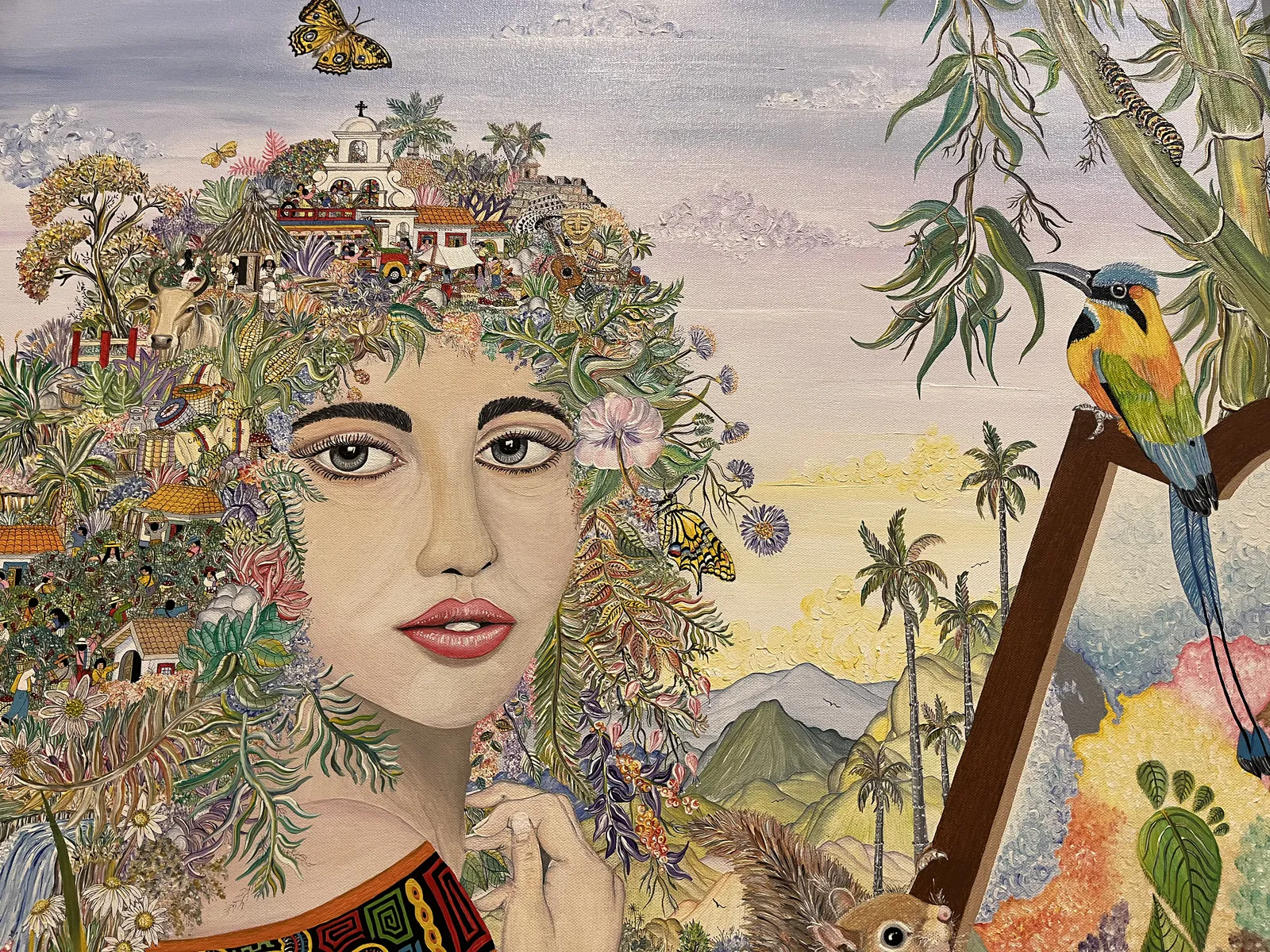
Aún Hay Tiempo
Julio César Ojeda Ariza
This 2021 work blends oil and ink to portray a woman whose hair becomes a lush tapestry of biodiversity and rural life. Symbolizing Colombia’s natural and cultural abundance, it warns of its fragility. The title, There’s Still Time, urges collective action to preserve the environment and ancestral wisdom.
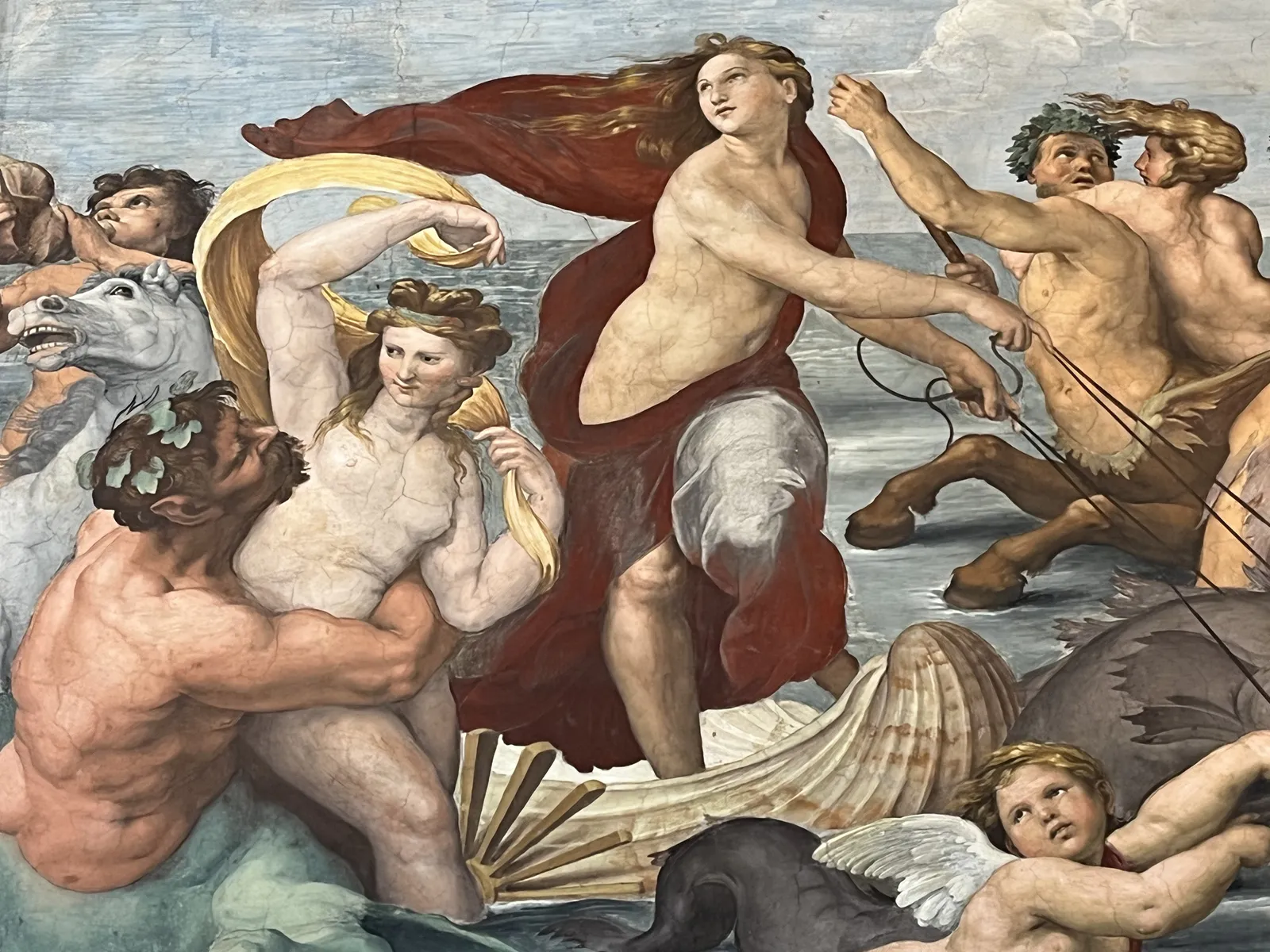
Triumph of Galatea (detail)
Raphael
This portion (1511–12) shows Galatea, the sea nymph of Greek myth, riding a dolphin-drawn shell chariot. Around her, tritons and nereids embody the vibrant energy of the sea. Raphael’s design celebrates Galatea’s beauty and grace, while capturing the joyful movement of the marine procession.
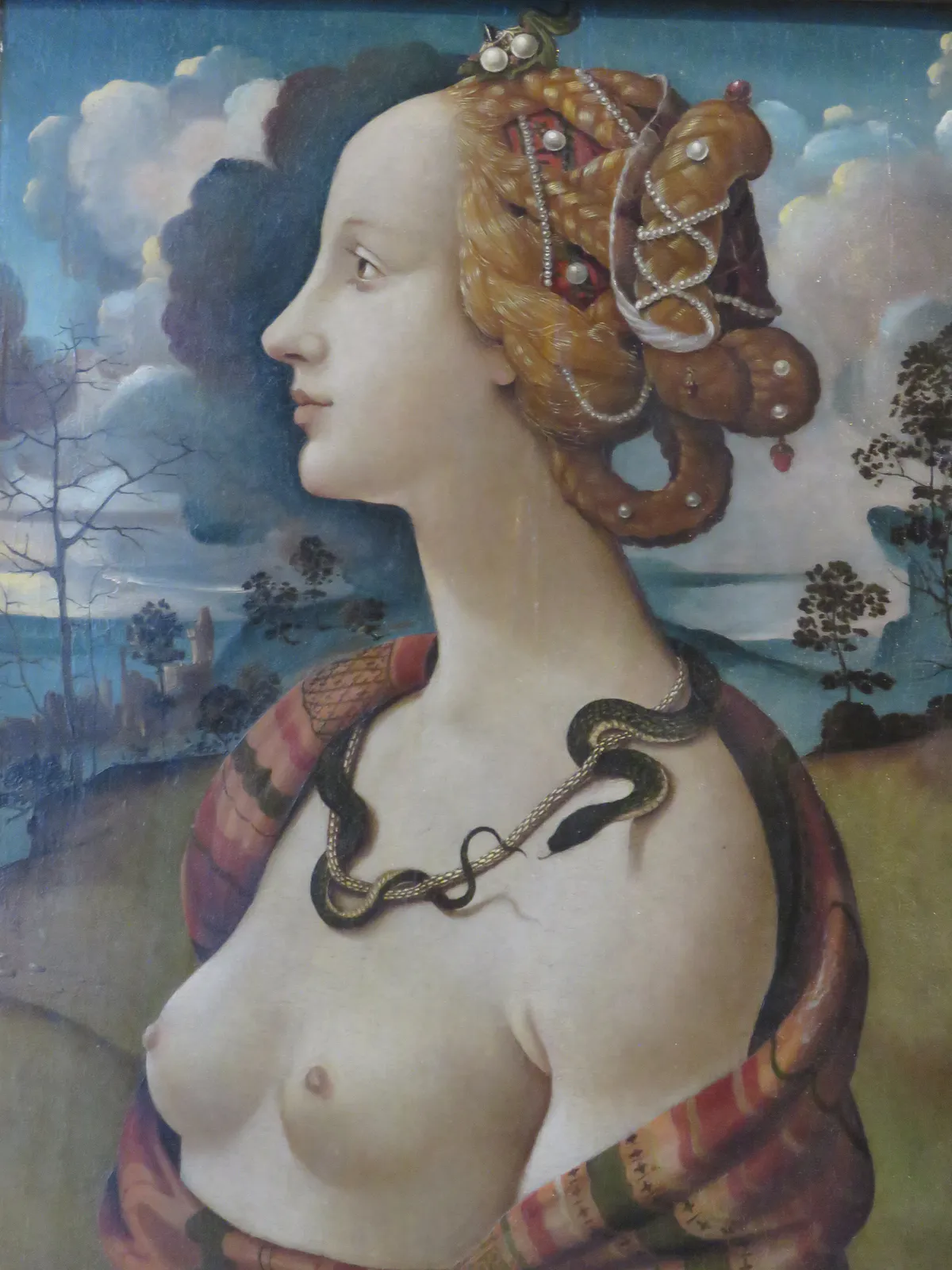
Simonetta Vespucci as Cleopatra
Piero di Cosimo
This painting (c. 1480) by di Cosimo depicts Simonetta Vespucci as Cleopatra, with an asp coiled around her neck. Created posthumously, it honors Vespucci’s beauty; she died in 1476 at 23. The profile view echoes medal portraits, while the snake may symbolize her death from tuberculosis. The serene landscape and sky enhance her ethereal presence, making this work a poignant tribute.
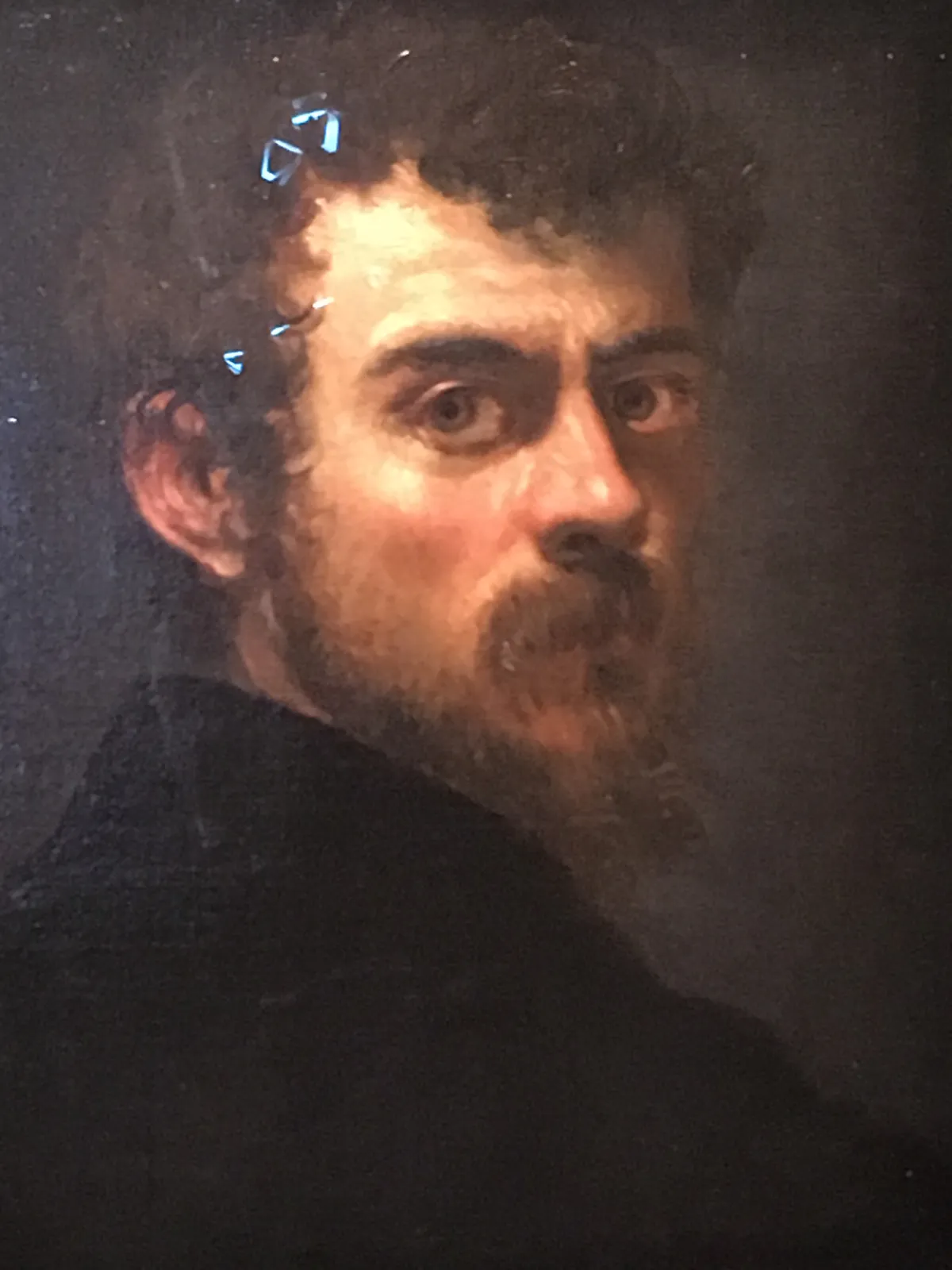
Self-Portrait
Tintoretto
This self-portrait (1546–48) by Tintoretto, a leading figure of the Venetian Renaissance, presents the artist with an intense, direct gaze that suggests introspection and resolve. The subdued palette and earthy tones create a solemn mood, yet the brisk, energetic handling of paint hints at the dramatic style that defined his larger works. Emphasizing inner character over setting, the portrait later entered the Orleans Collection and was acquired for Marie Antoinette in 1785.
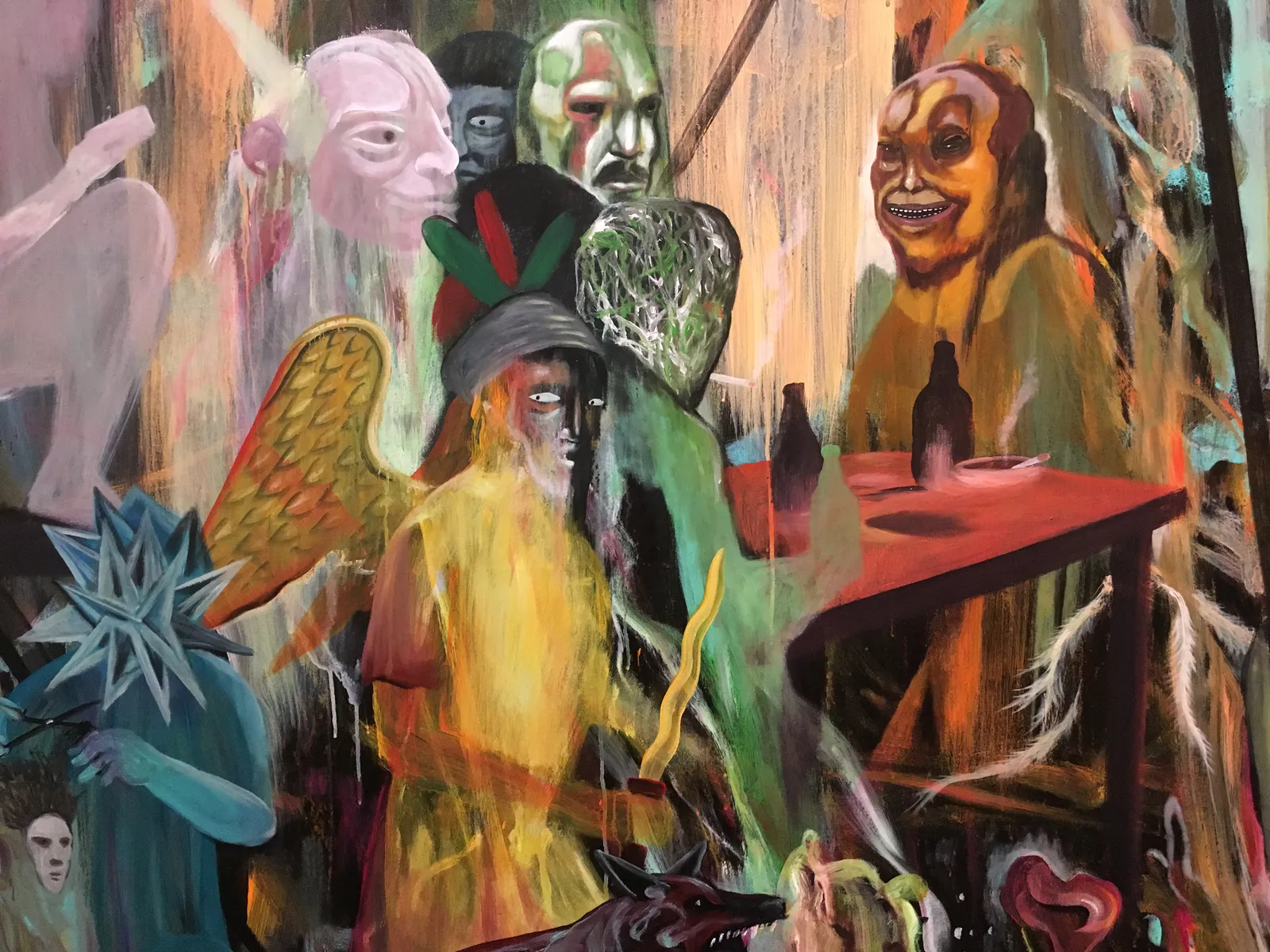
The Comedy, Parody, and Tragedy
Rodel Tapaya
This painting (2018) from Tapaya’s Urban Labyrinth series swirls with hybrid beings, masks, and mythic figures at a chaotic table. Angelic wings, demonic grins, and spectral visages blur folk imagination with urban satire. Tapaya weaves Philippine mythology into contemporary critique, where humor and menace mirror the fractured realities of modern city life.
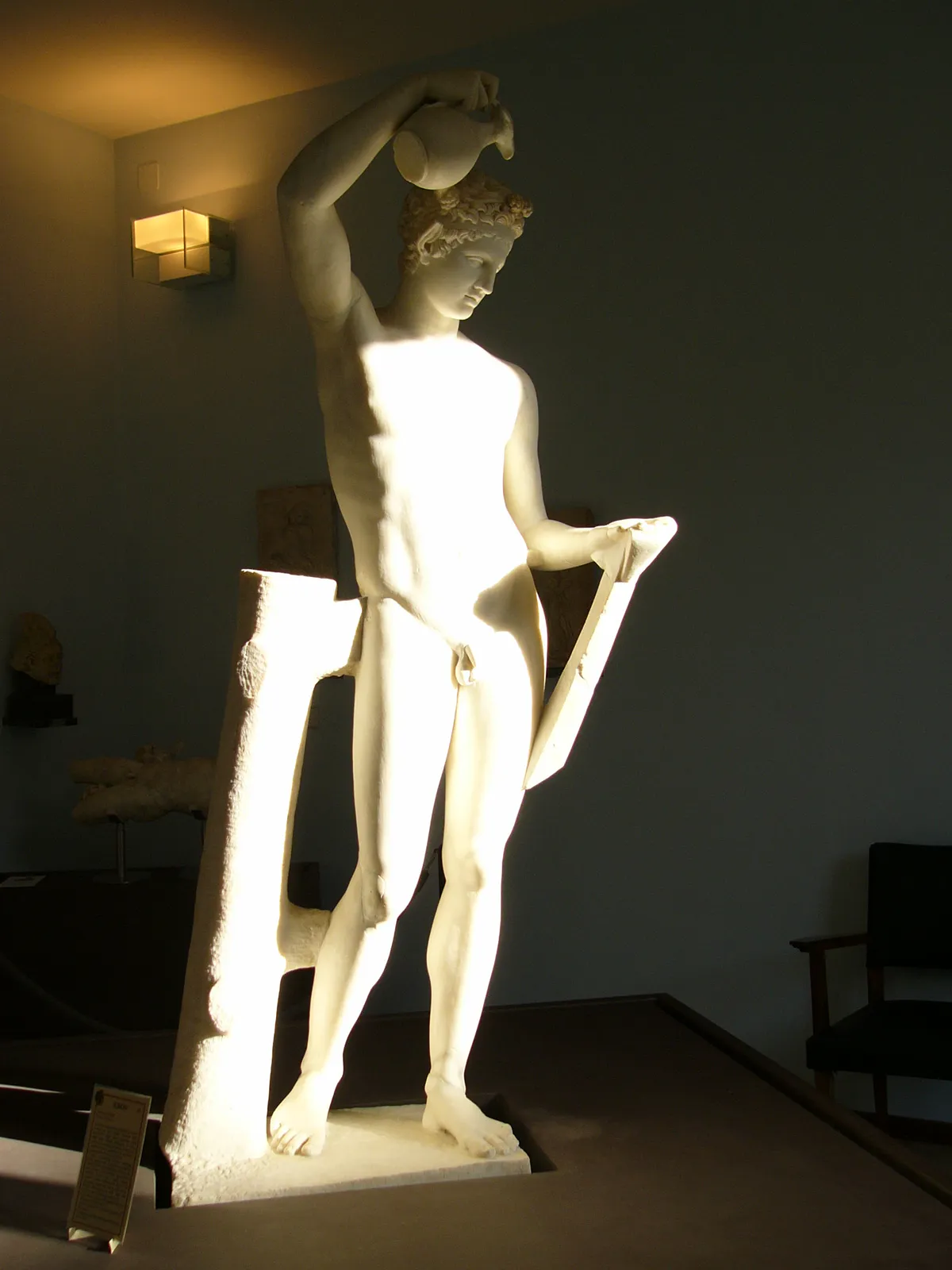
Satyr Pouring Wine
Praxiteles
This Roman marble statue is a copy of Praxiteles’ 4th-c. BC Greek original, depicting a youthful satyr, a companion of Dionysus, pouring wine. Though the pitcher and cup are missing, it captures the revelry and music linked to satyrs. Found near Naples in 1797, it exemplifies Praxiteles’ style with sinuous curves and a naturalistic pose, embodying the carefree spirit of Dionysian myth.
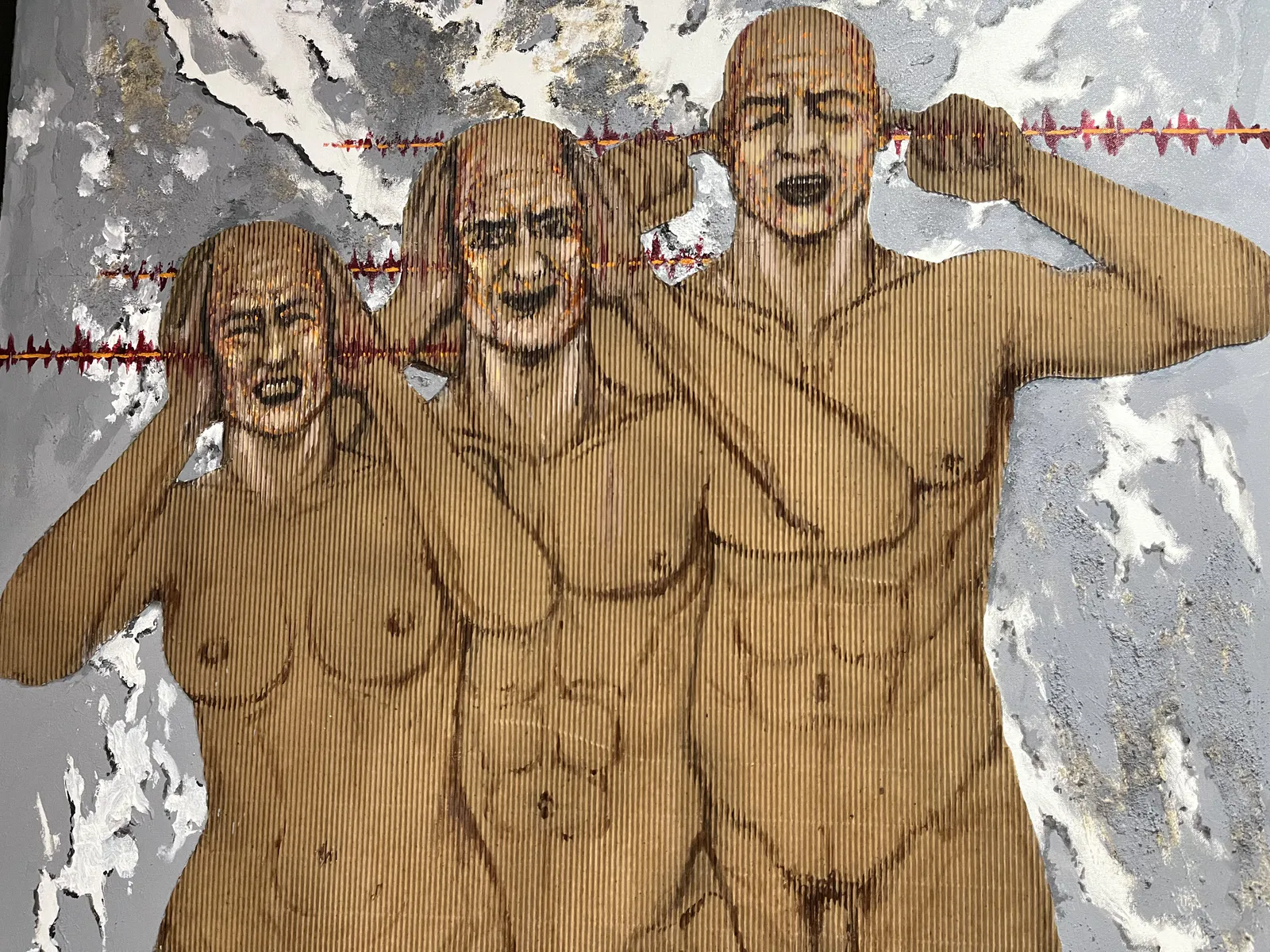
Silenced by Pain
Ángel Haché
This mixed-media work (2014) uses corrugated cardboard to depict three anguished nude figures pierced through the head by jagged red waves, symbols of auditory torture or psychological trauma. Their tense bodies and gestures of covering their ears suggest helplessness before systemic violence. The scene recalls the enforced silence and invisible suffering experienced under Trujillo’s dictatorship in the Dominican Republic.
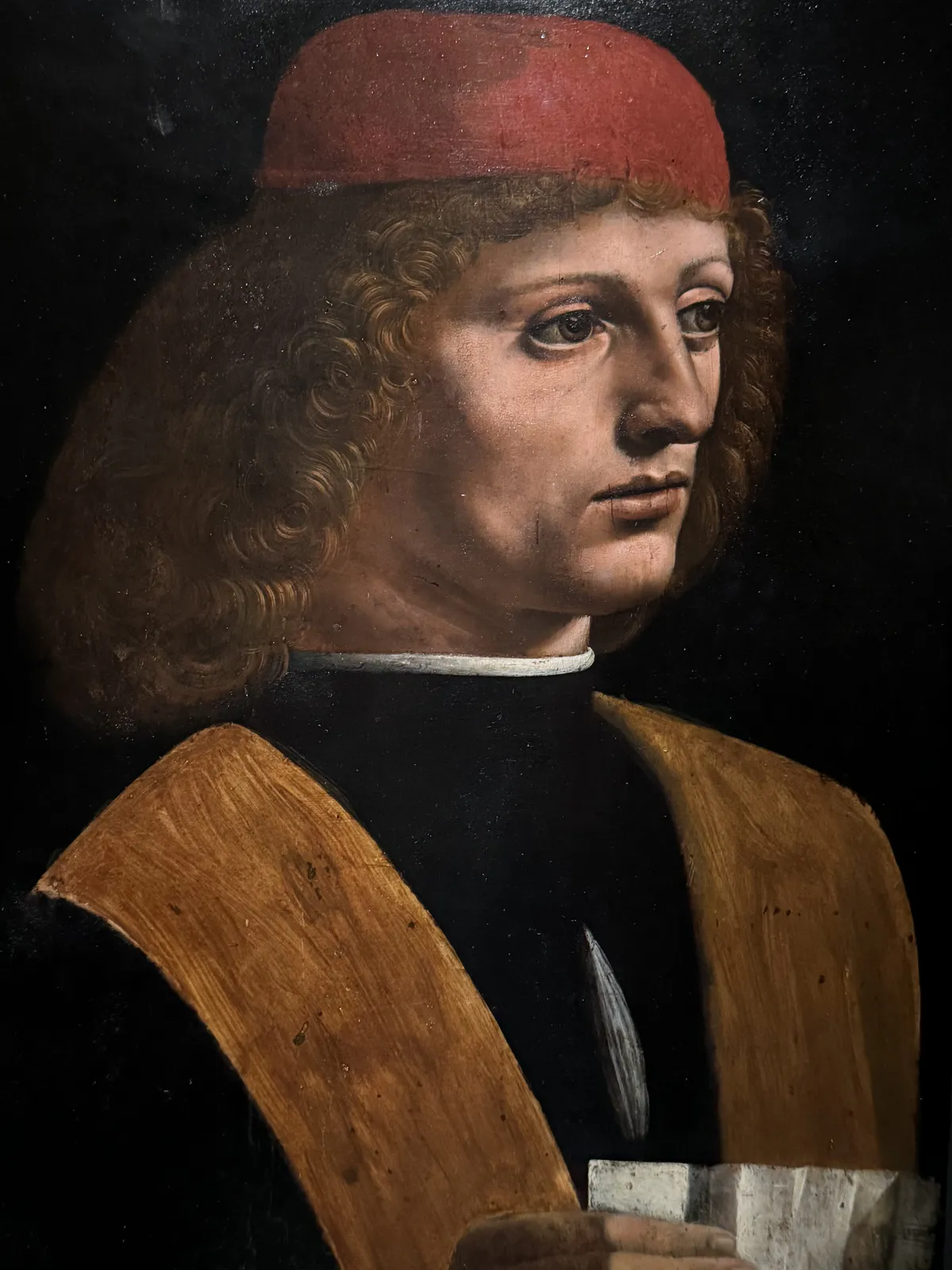
Portrait of a Musician
Leonardo da Vinci
This intimate oil on panel (c. 1485) is Leonardo da Vinci’s only known male portrait. Likely depicting a court musician in Milan, the sitter clutches a sheet of music, suggesting both profession and intellect. The unfinished lower section contrasts with the intense gaze, highlighting Leonardo’s interest in capturing psychological presence over ornamental finish.
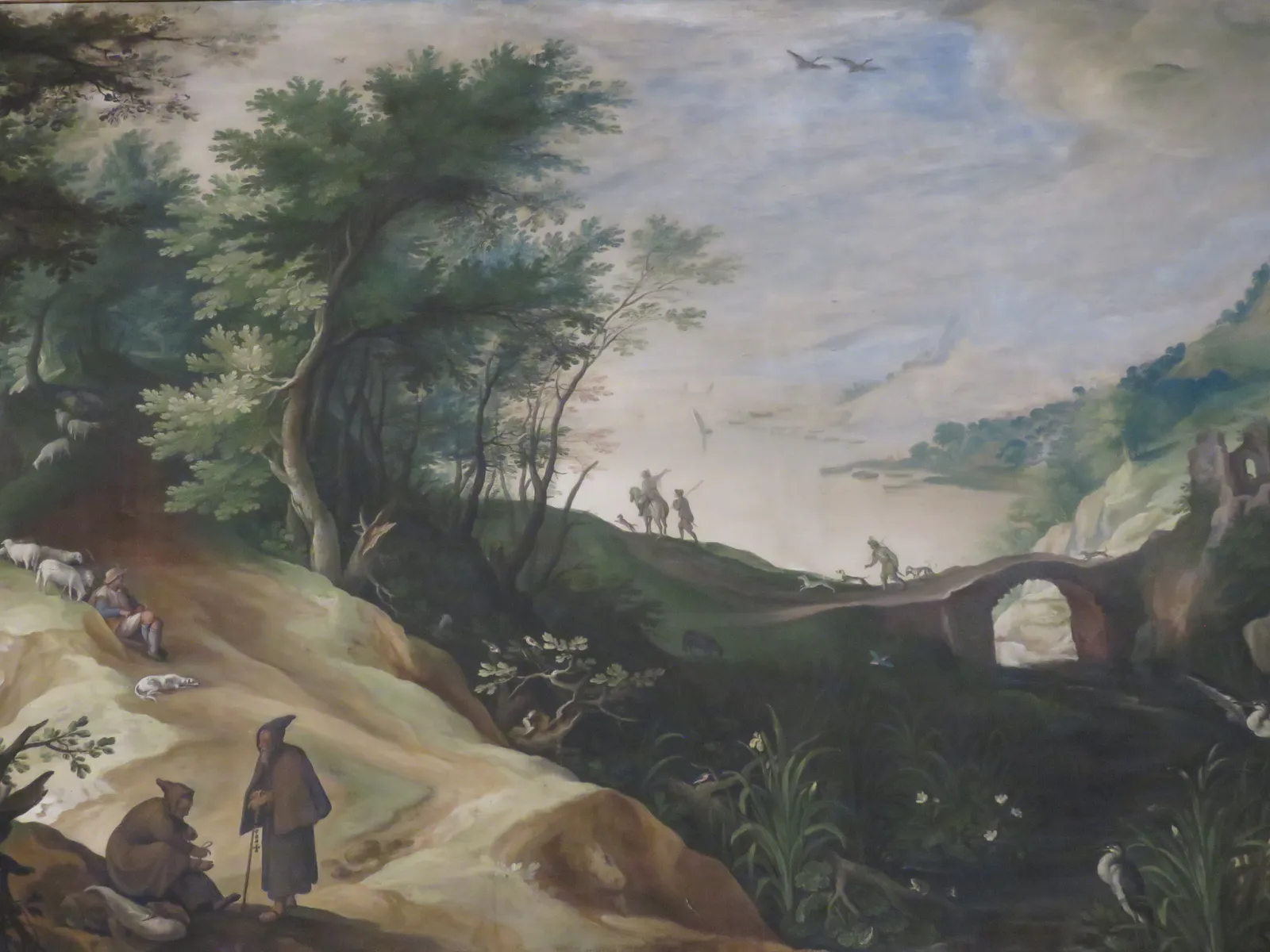
Landscape with Hermits
Paul Bril
This landscape (c. 1600) shows monks gathered in a wooded clearing beneath a broad, luminous sky. Their small figures sit or stand along a path that opens toward distant hills. Such scenes appeared in early Baroque painting, especially in northern regions where sacred retreat was a common theme. The composition indicates how artists linked hermitic life with the ordered quiet of nature.
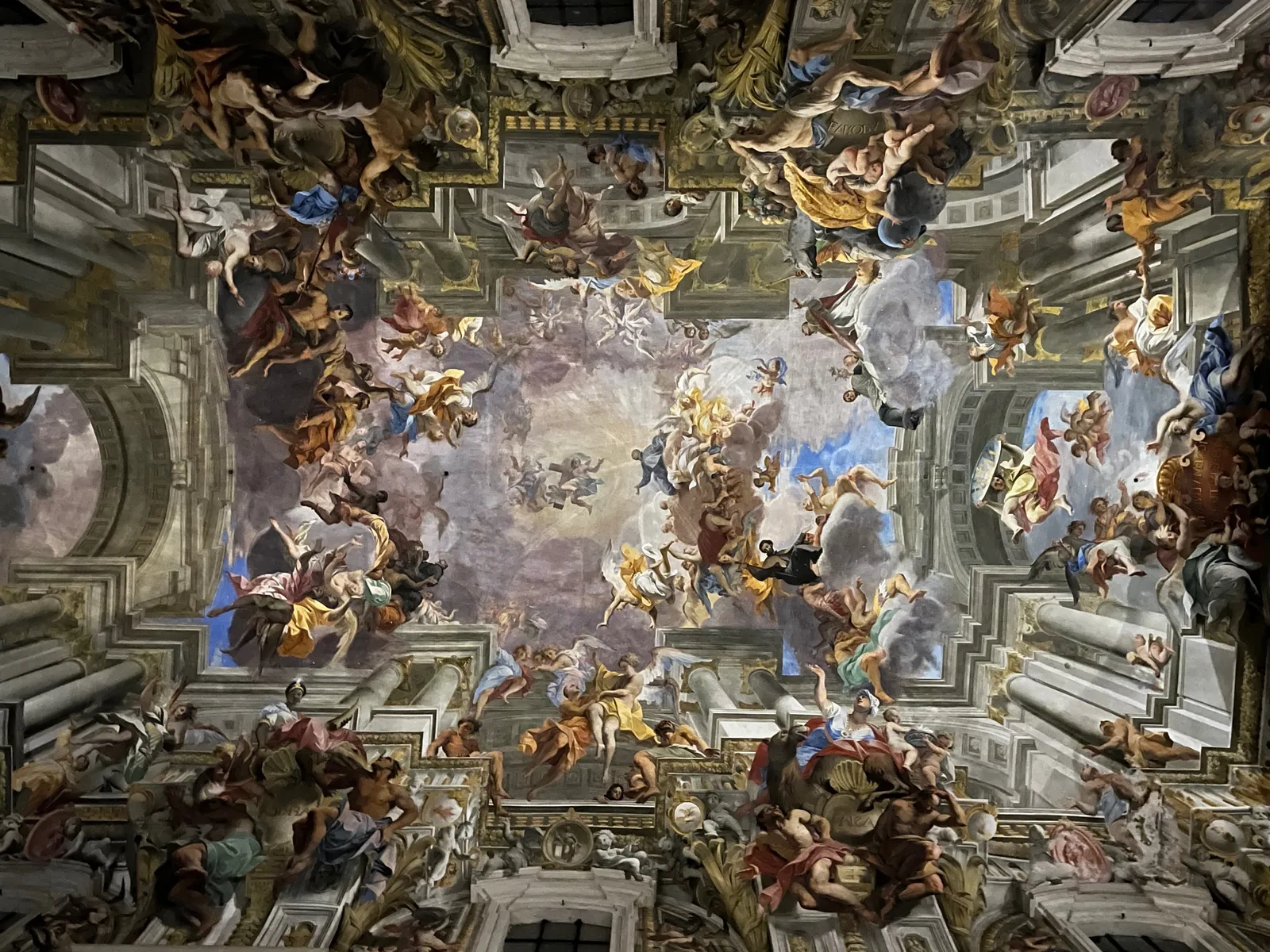
The Apotheosis of St. Ignatius
Andrea Pozzo
This Baroque trompe-l’œil painting (1685–94) transforms the flat ceiling into a soaring heavenly vision. St. Ignatius is welcomed into paradise by Christ and the Virgin, while allegories of the continents celebrate Jesuit missions. Pozzo’s masterful illusionism merges faith, perspective, and global ambition.
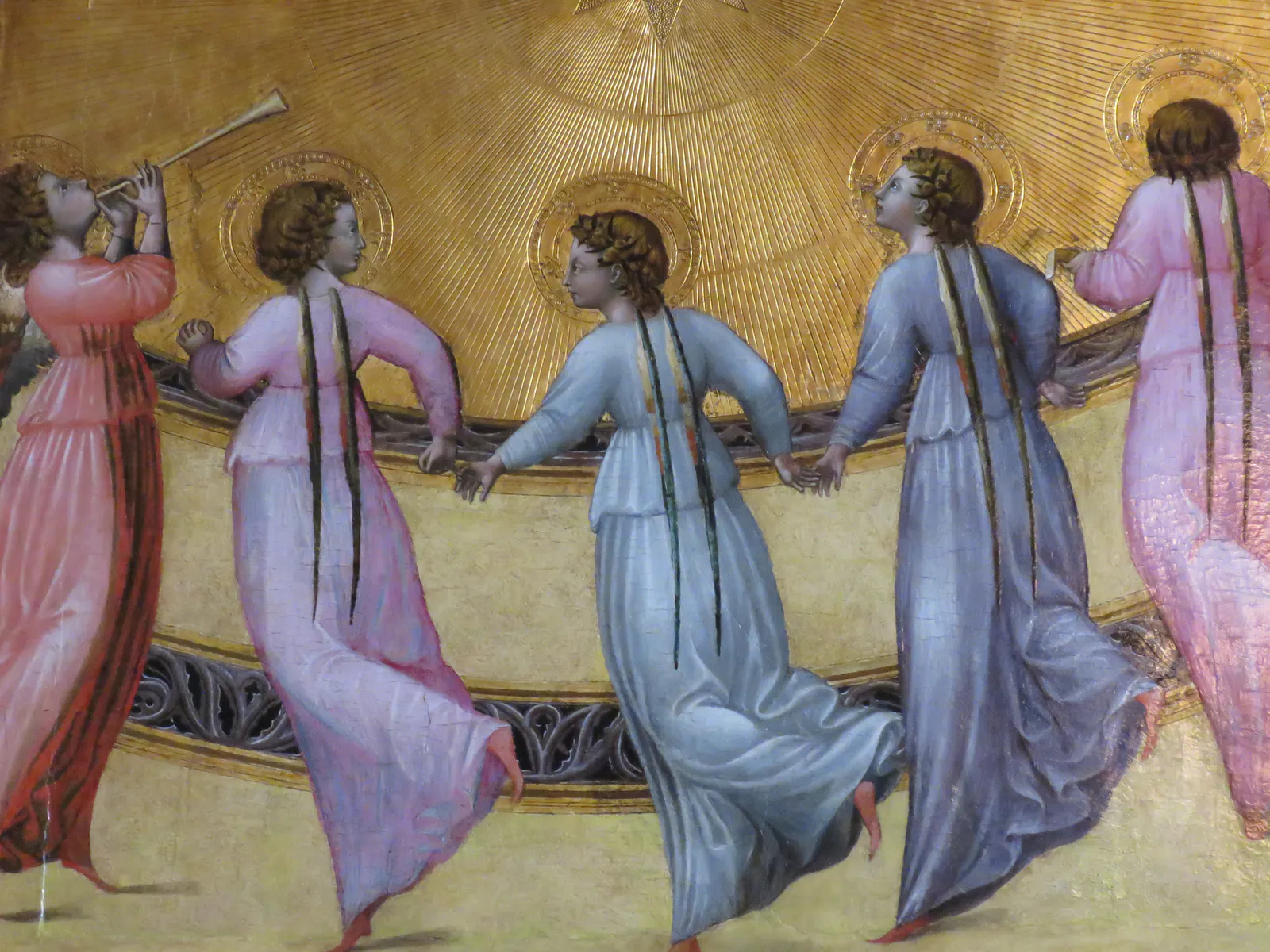
Five Dancing Angels (detail)
Giovanni di Paolo
This detail (c.1436) comes from Giovanni di Paolo’s Five Dancing Angels. Here, three angels join hands in a celestial dance while another plays the trumpet before a golden sun, symbolizing God. Their flowing robes and rhythmic gestures convey divine harmony, reflecting the spiritual intensity of 15th-c. Sienese art.
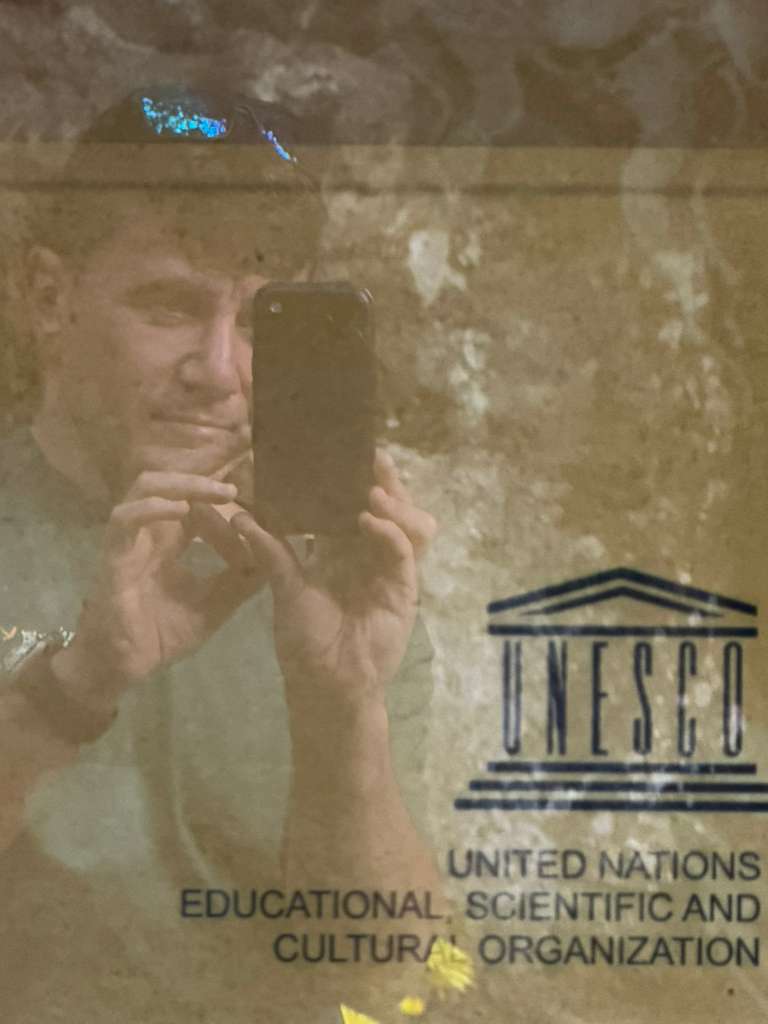
“When the path is beautiful, do not ask where it leads.” — Zen proverb
Welcome to my travel photography!
“When the path is beautiful, do not ask where it leads.” — Zen proverb
Welcome to my travel photography!
For as long as I can remember, my path has been one of discovery—seeking beauty, timelessness, and connection in every corner of the world. It has also been a journey of deep learning and understanding. I’ve been an avid traveler (or perhaps a travel addict?) for most of my life. My love for travel began long before I ever left home: as a child, I drew a fantasy map of my grandparents’ apartment and “traveled” through it with my cousin Sonya, imagining adventures in every corner. Nearly 90 countries and countless moments of awe later, I’m excited to share this journey with you.
Thanks to the tireless and ingenious programming of Diagilev, we’re now able to present about fifteen percent of the images I’ve accumulated over the years. More will be released in small batches depending on your interest. While the first release leans toward museum photography, later ones will include more nature, architecture, culture, and general travel experiences. If you’d like to receive email notifications about new releases, feel free to reach out—no commercial use, ever.
Throughout my travels, I’ve been drawn to two intertwined kinds of discovery. One is intellectual: learning why the world is the way it is. History became my guide, shaping my perspective and filling my camera roll with museums and old buildings. To me, history is not the past—it is the key to understanding the present and how the world became what it is. The other is emotional: seeking moments of elevation—spirituality, beauty, harmony—often found in nature, monasteries, and ancient sacred spaces. Together, these impulses shape my photography. It invites you to learn, admire, and soar—to rise above the mundane and see the world through a lens of curiosity and wonder.
Much of my later travel became possible thanks to my job with Delta Air Lines, but the wanderlust began years earlier. By the time I joined the industry, I had already visited over 35 countries and lived in several—largely thanks to a backpacking journey around the world with Luis León, whose face appears in many early photos. I grew up in Ufa in the USSR, and since leaving it I have lived, studied, and worked in Latvia, the United States, France, South Korea, Canada, Spain, Italy, Brazil, Japan, and Colombia.
A life of near-constant movement may seem a little crazy, but it has deepened my understanding of the world and produced the photography you are about to see. Over the years, my style has evolved—more intentional, more refined—yet its core remains the same: a search for understanding, timeless beauty, and a connection to those who walked this earth long before us.
I hope these photos stir something in your soul, just as they did in mine. I’d love to hear from you—whether reactions, suggestions, corrections, or a request to be added to the email list for new releases (no commercial use, I promise). You can learn more about my travels here, and my academic life here.
Enjoy our shared journey!