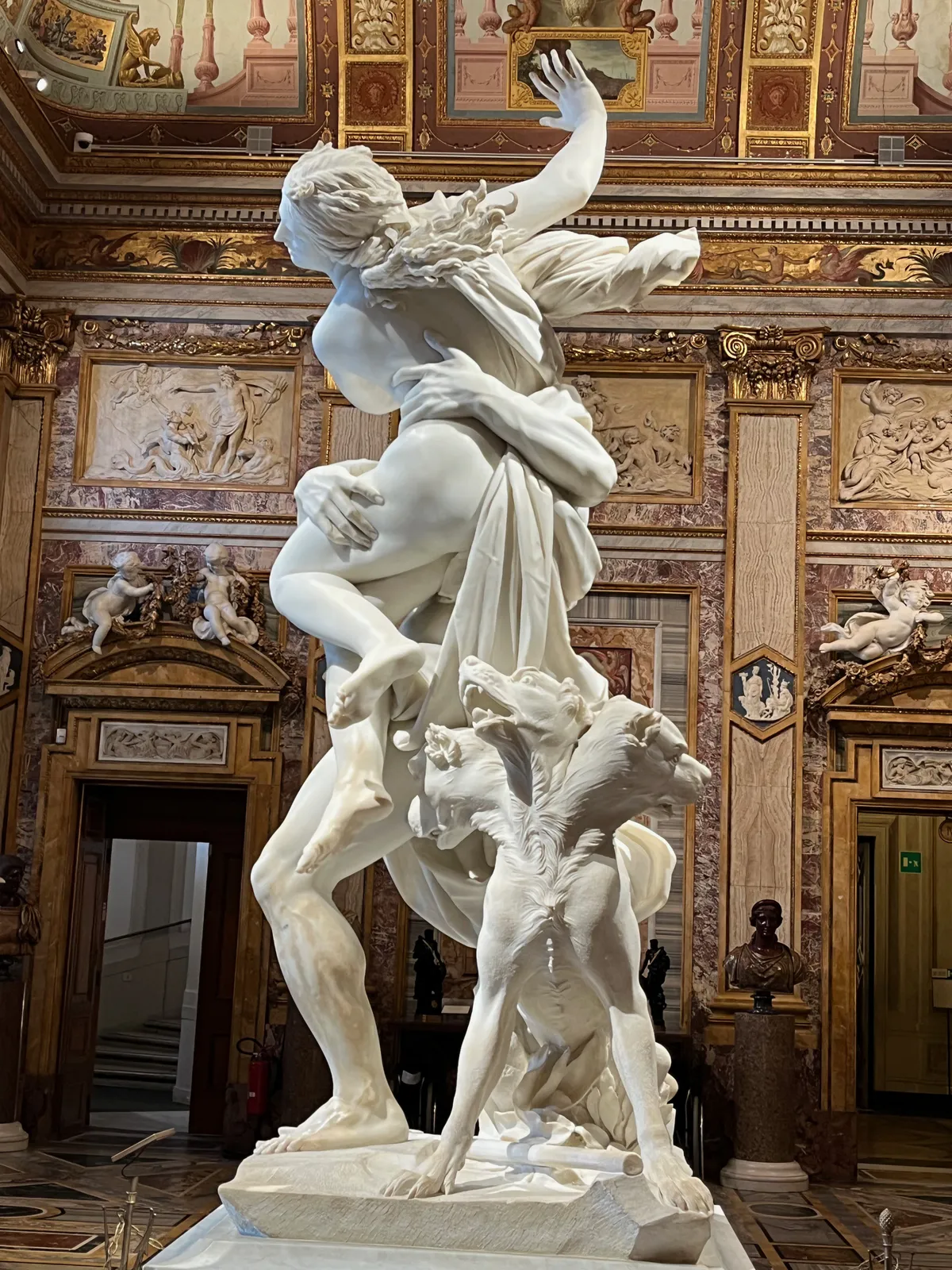
The Rape of Proserpina
Bernini
This angle captures the emotional arc of Proserpina’s resistance as she twists away from Pluto’s grasp. Her outstretched arm and flowing hair dramatize the violence of the abduction. Cerberus, the infernal hound, reinforces the mythological setting, while the composition’s spiral motion showcases Bernini’s virtuosity in carving living flesh from marble.
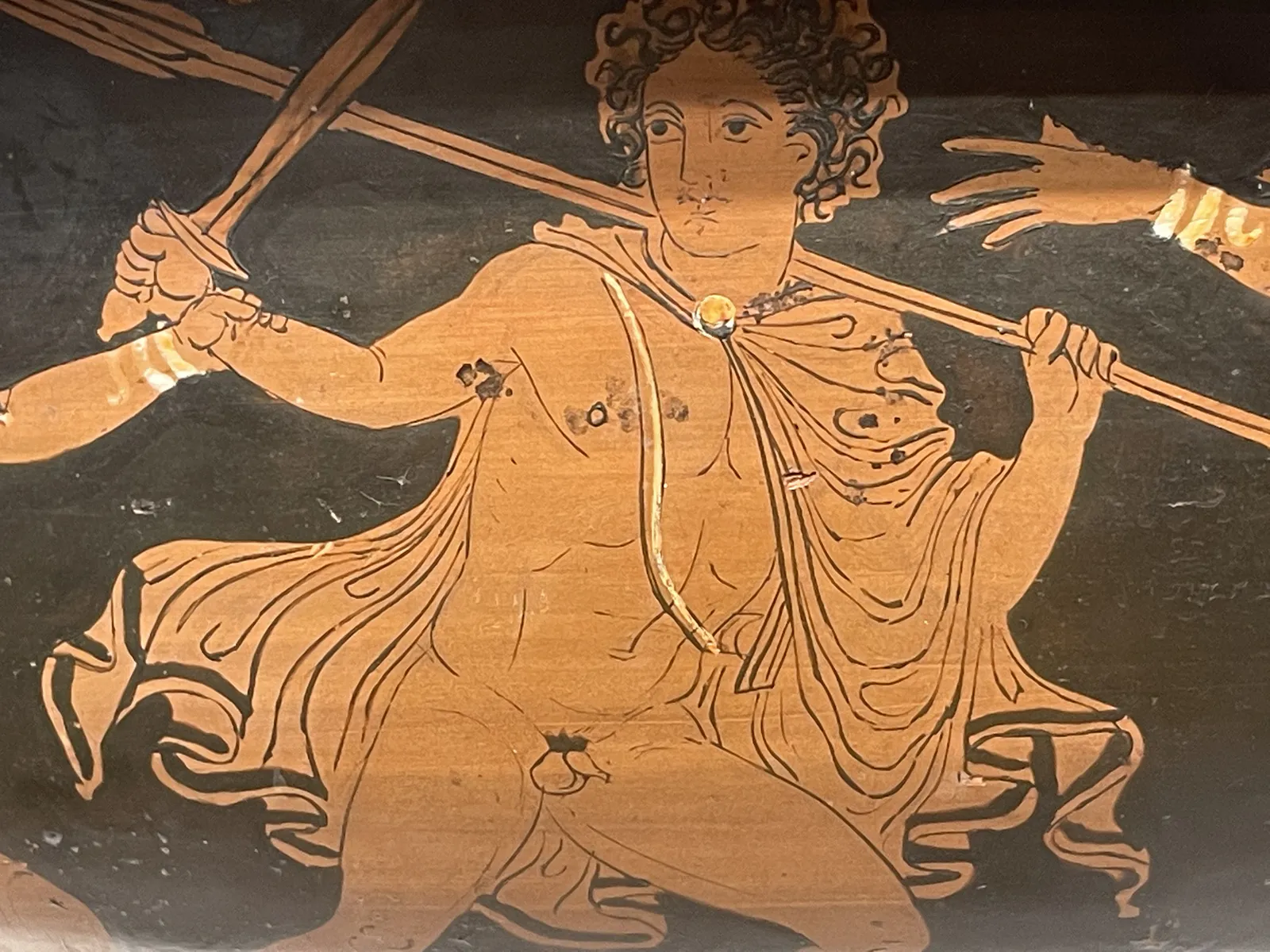
Pentheus Attacked by Bacchic Women
The Oxford Group Workshop
This Apulian red-figure plate (360–350 BC) shows Pentheus arming himself against Dionysus’ cult. In myth, he is seized by Bacchic women, including his mother Agave, who mistake him for prey and tear him apart. The scene warns against impiety and defying divine power, embodying the tragic cost of resisting Dionysian ecstasy and communal worship.
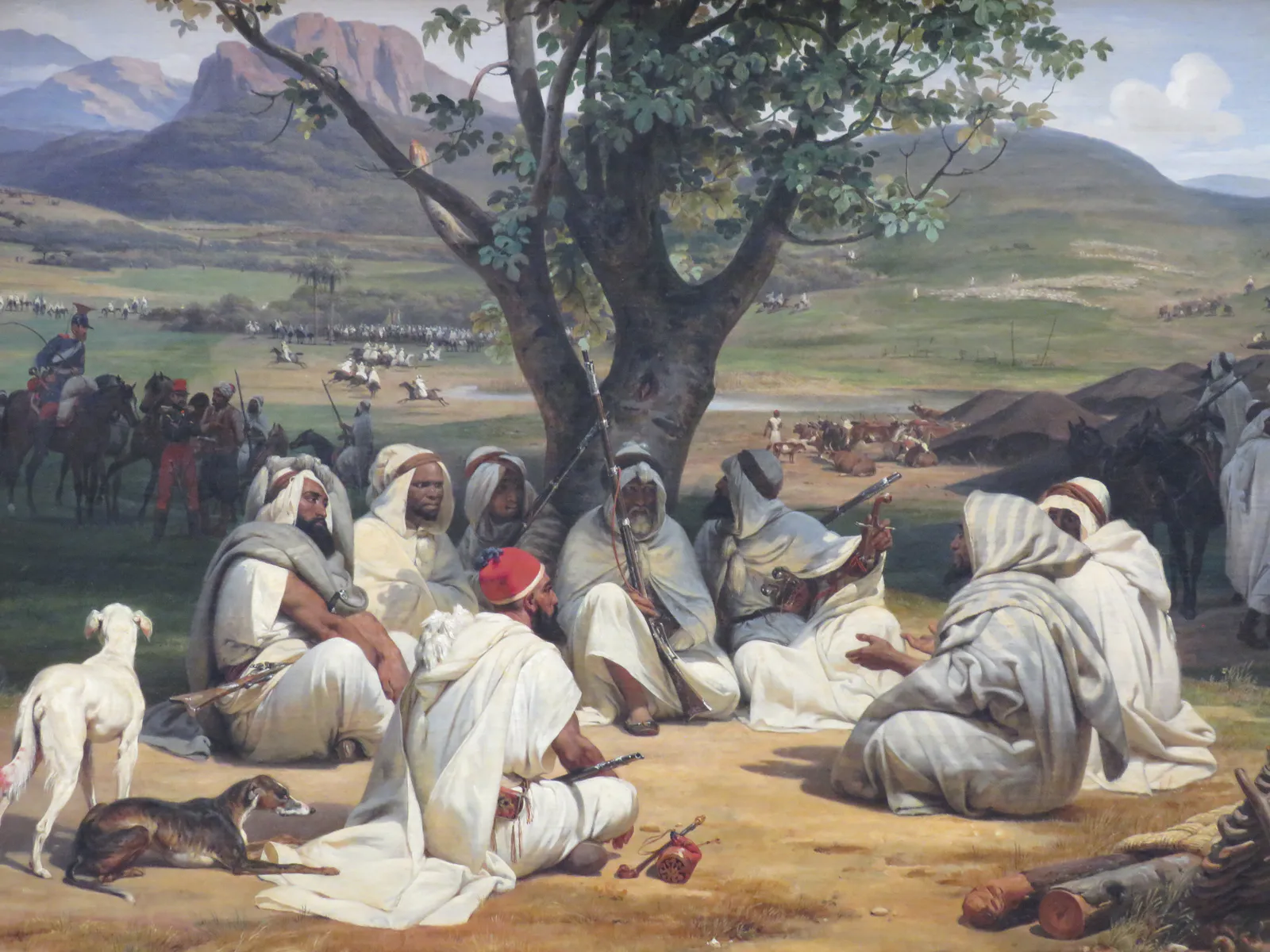
Arab Chieftains in Council
Horace Vernet
This 1834 work depicts Arab chieftains in council, likely discussing tribal matters or alliances. Vernet, a French artist known for battle scenes and Orientalist themes, illustrates the 19th-c. European interest in the Orient. The painting reflects the complex interplay of art, culture, and imperialism of the era.
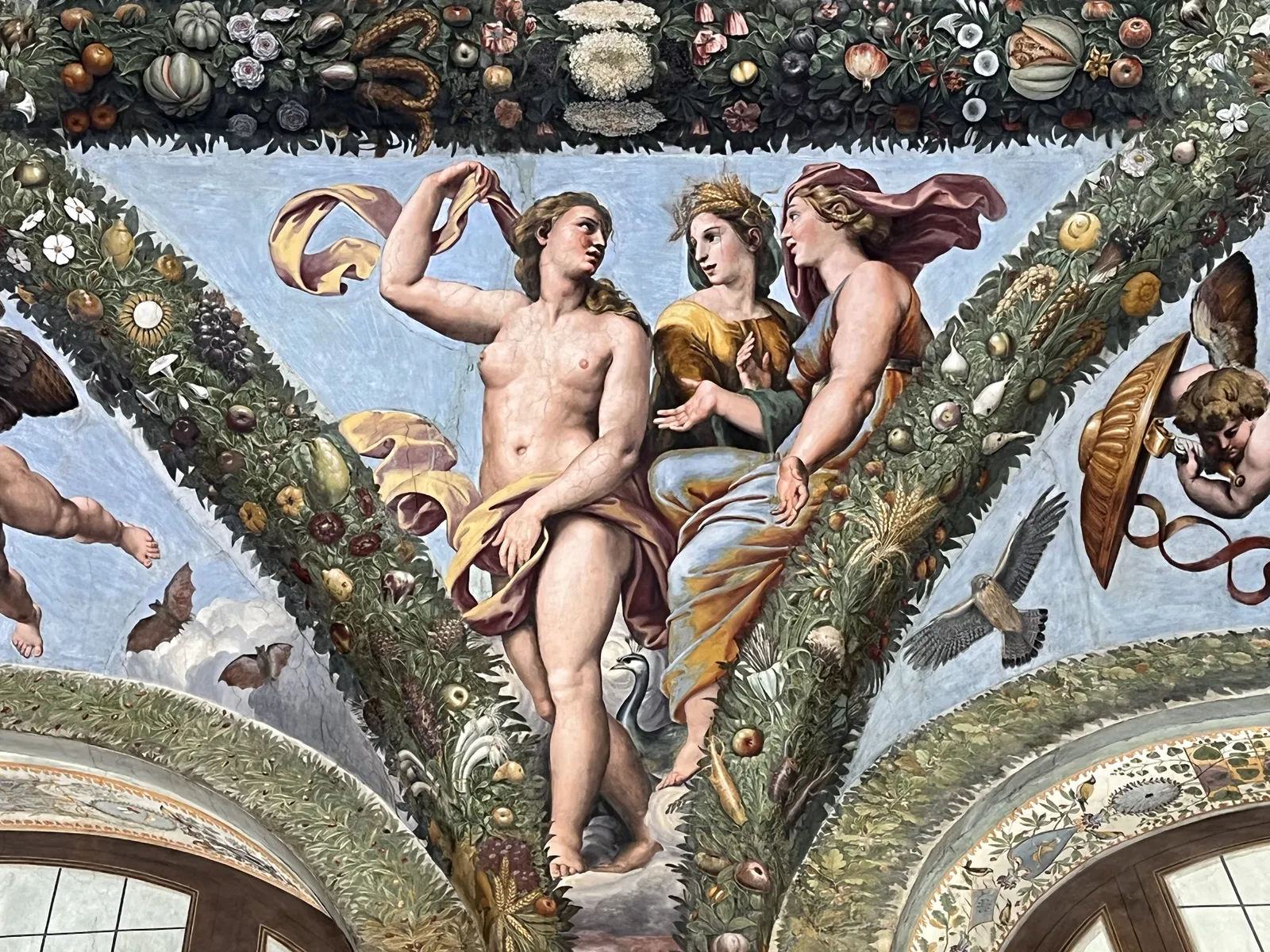
Venus Appeals to Ceres and Juno
Raphael, Giovanni da Udine
In this scene (1518), Raphael depicts Venus appealing to Ceres and Juno for vengeance on Psyche, but both goddesses refuse. The fresco illustrates the tension between divine power and mortal love. Da Udine’s elaborate botanical festoons frame the composition, enhancing its Renaissance richness.
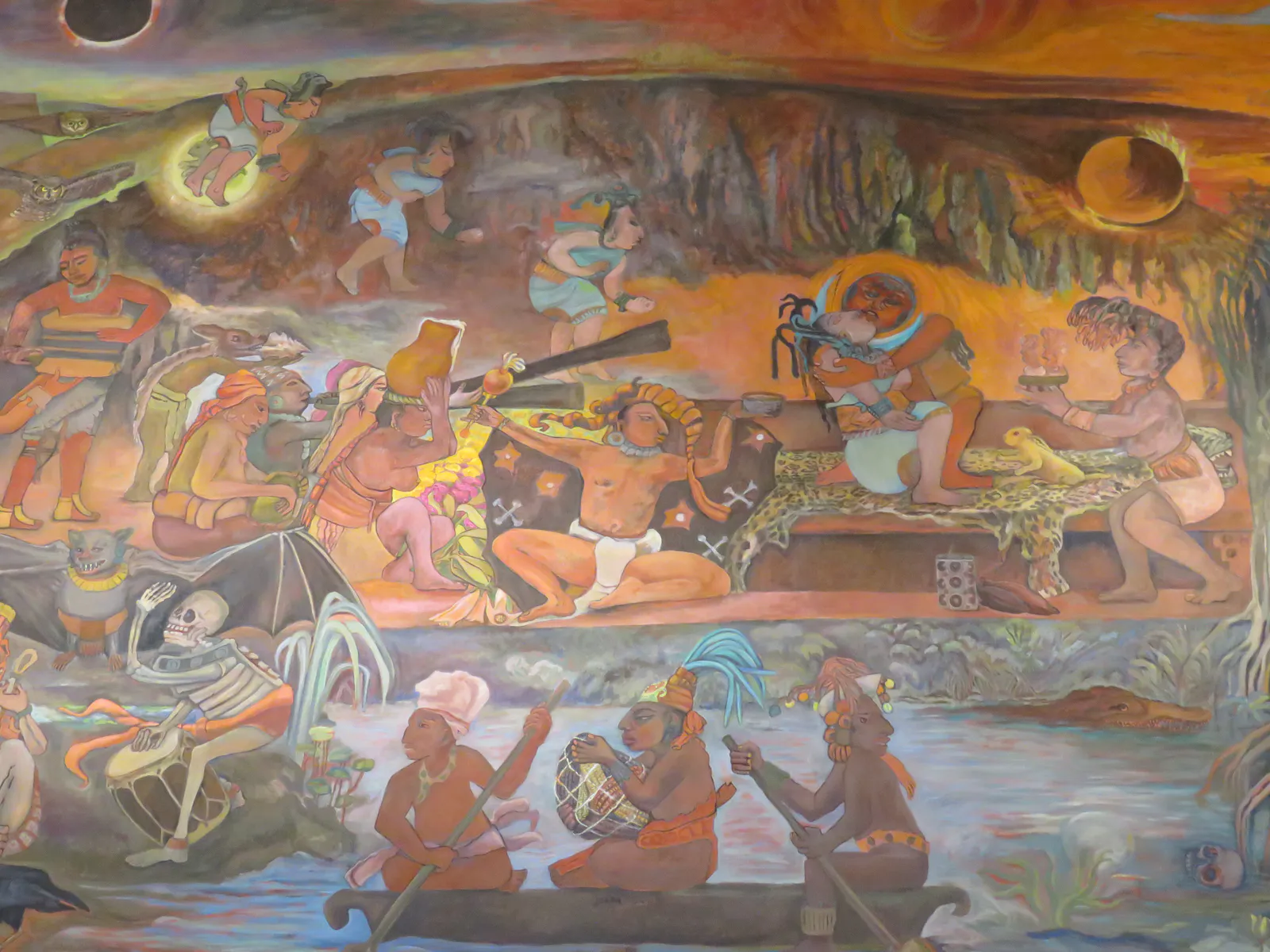
Inframundo Maya
Rina Lazo
In this mural (2019), Lazo reimagines Xibalba—the Mayan underworld—through the lens of the Popol Vuh. The Hero Twins traverse rivers, deities oversee sacrifice and desire, and spirits haunt the sacred landscape. Blending myth and memory, the artist fuses political vision with ancestral wisdom in her final celebration of Maya cosmology.
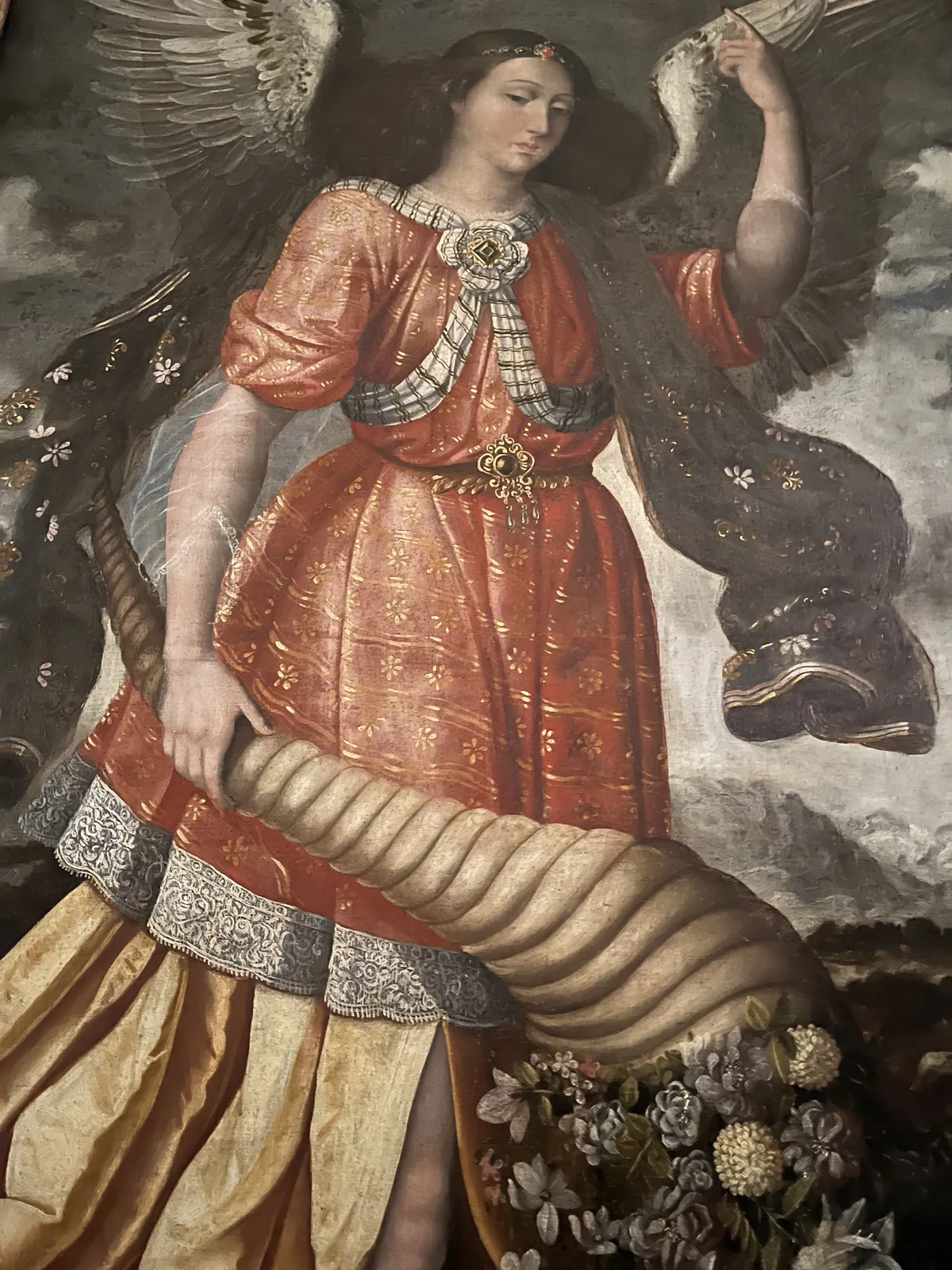
Isabel de Santiago
Archangel Gabriel
This early 18th-c. work by Isabel de Santiago—a rare female artist of the Quito School—portrays Gabriel as a celestial messenger of abundance. Draped in luminous textiles, the archangel holds a cornucopia, blending classical fertility symbols with baroque angelology in a uniquely Andean devotional image.
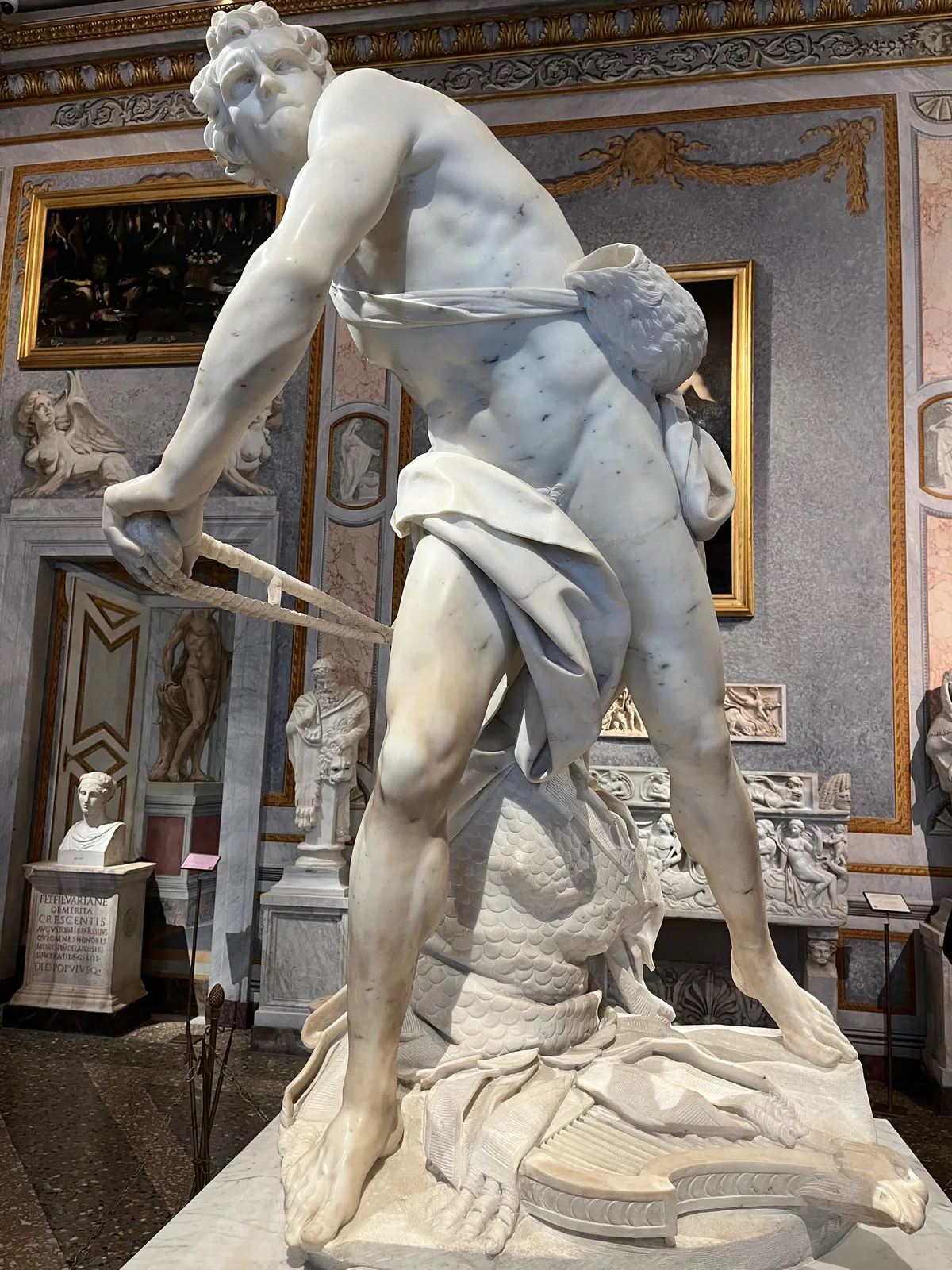
David
Gian Lorenzo Bernini
This electrifying sculpture (1623–24) captures David mid-swing as he prepares to strike Goliath. Commissioned by Cardinal Scipione Borghese, it breaks from static Renaissance models by freezing a moment of intense motion and psychological resolve. Bernini’s vivid realism and spiraling pose typify the Baroque celebration of drama and energy.
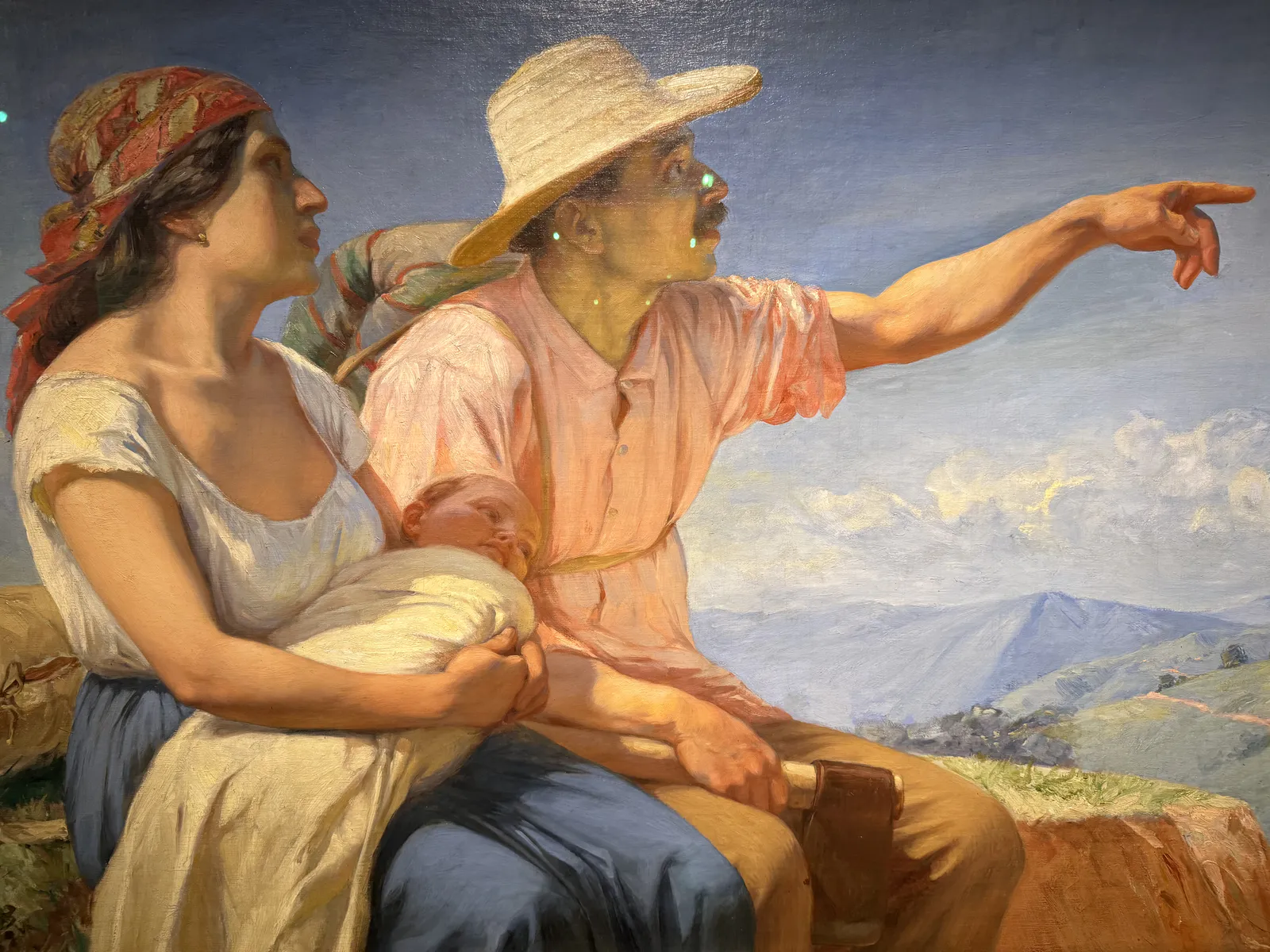
Horizons
Francisco Antonio Cano
Horizontes (1913) presents an idealized vision of Colombia’s settler frontier. The man's outstretched arm signifies hope and destiny, while the woman and child convey continuity and rootedness. This work by a leading Colombian academic painter uses the peasant family to symbolize national identity and the forging of a future in the Andean landscape.
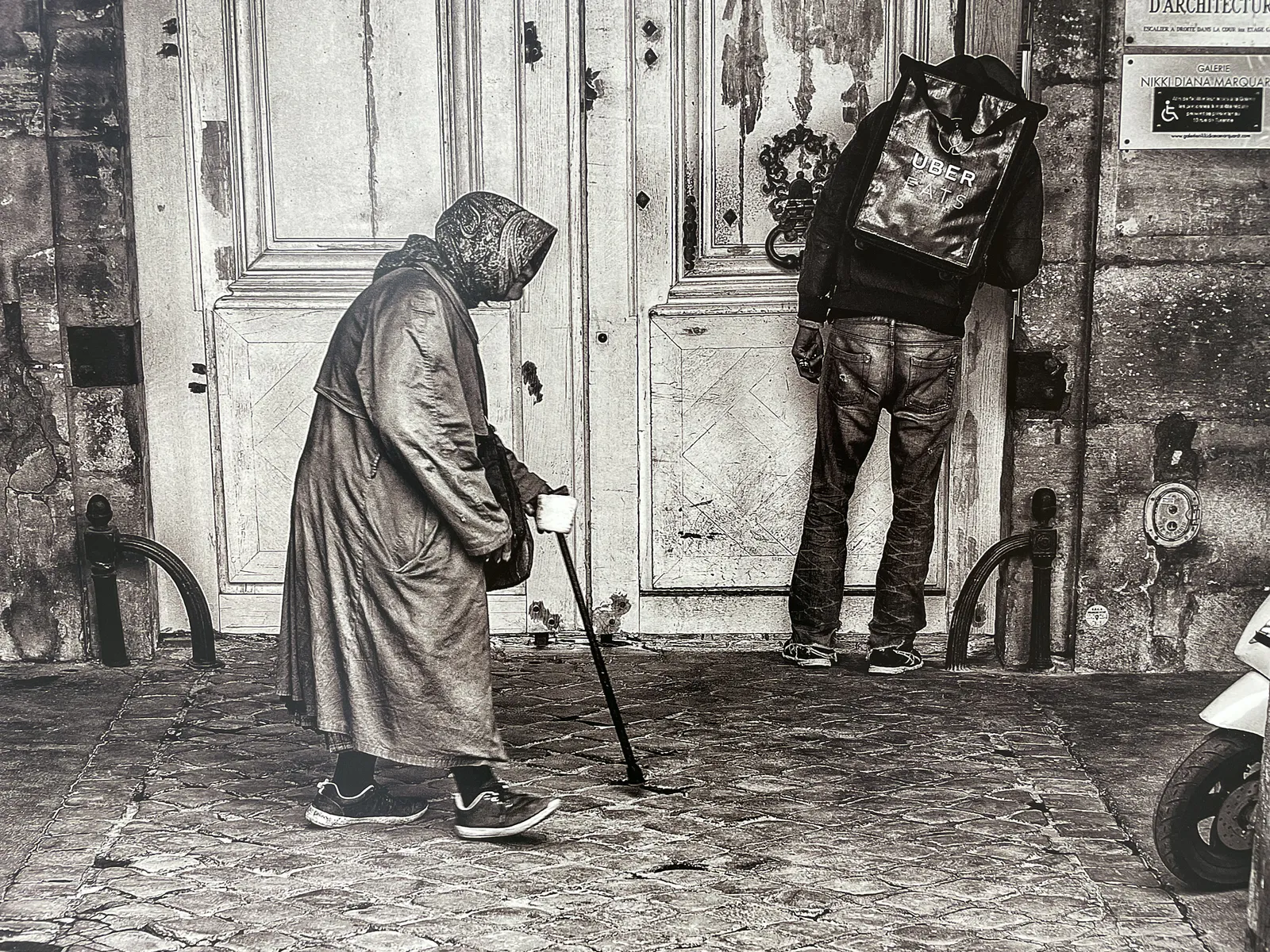
Uber Eats
Roger Zayas
This photo (2017), taken in the historic Marais district of Paris, captures a striking urban contrast: an elderly woman with a cane passes a food courier bent over a doorway. Zayas underscores generational divides and social invisibility, reflecting on aging and shifting economic realities in the European metropolis.
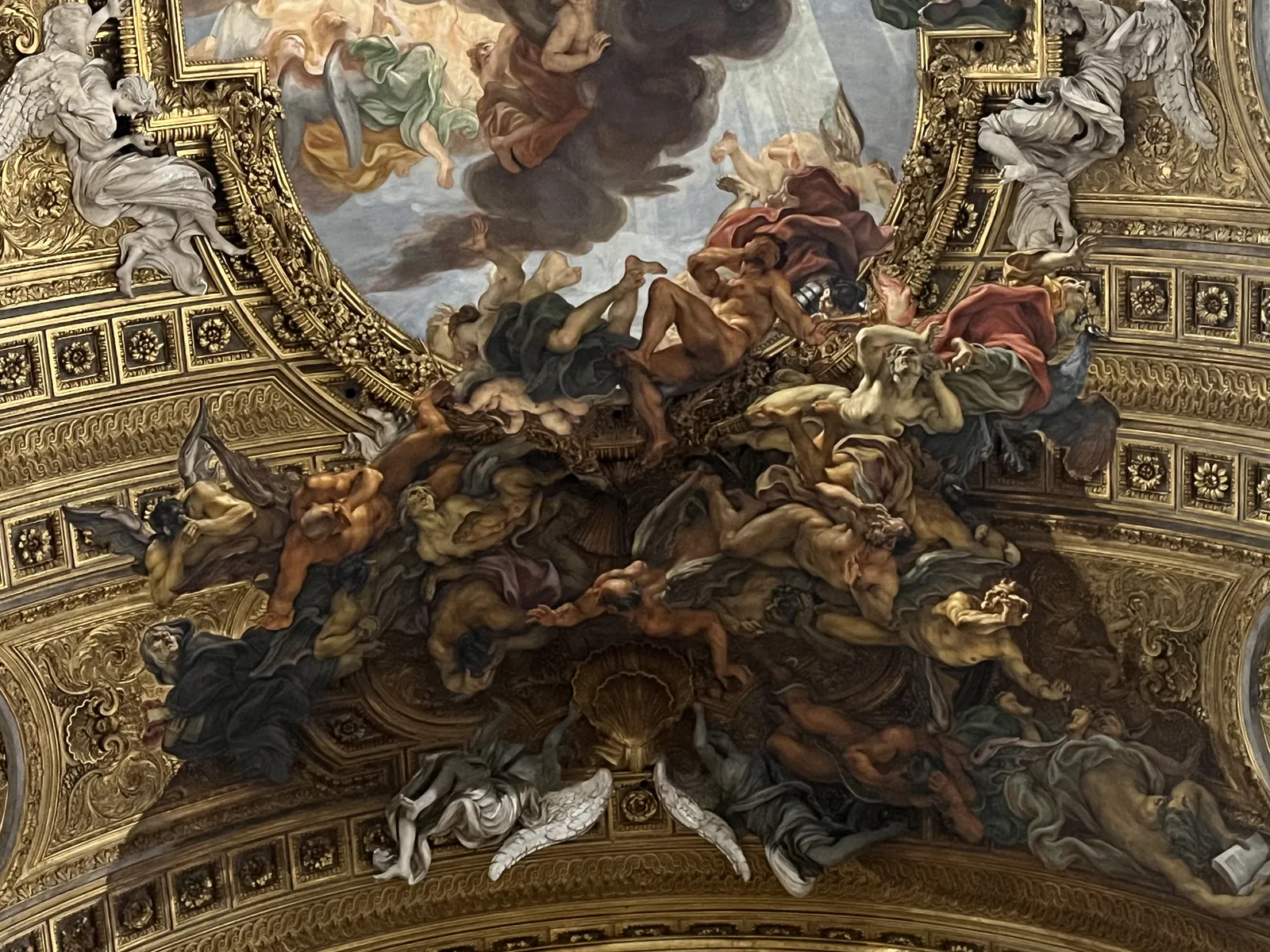
The Damned
Giovanni Battista Gaulli
In this dramatic segment (1676–79) from the Triumph of the Name of Jesus, Gaulli casts the damned from heaven into shadow and chaos. Their bodies twist, morph, and scream as they recoil from the divine light. Cloaked in darkness and shame, they contrast sharply with the radiant saved above—embodying Baroque emotion and the terrifying cost of spiritual failure.
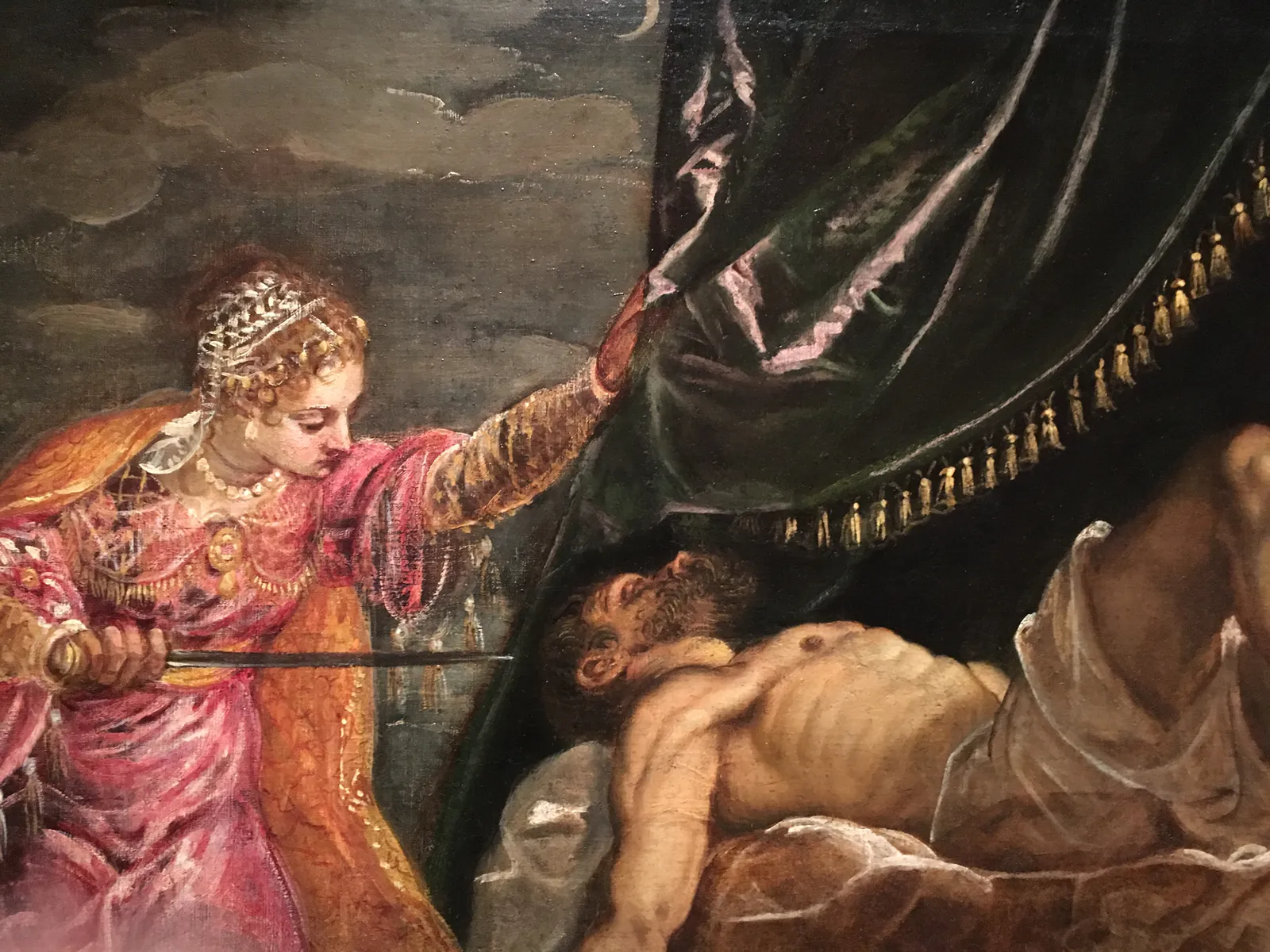
Judith Beheading Holofernes
Jacopo Tintoretto
This painting (c. 1577) by the studio of Jacopo Tintoretto depicts the biblical scene where Judith beheads Holofernes, an Assyrian general, to save her people. Executed in the Mannerist style, it emphasizes tension and emotion, typical of the Late Renaissance. The scene symbolizes courage and divine justice, reflecting the era’s interest in heroic narratives.
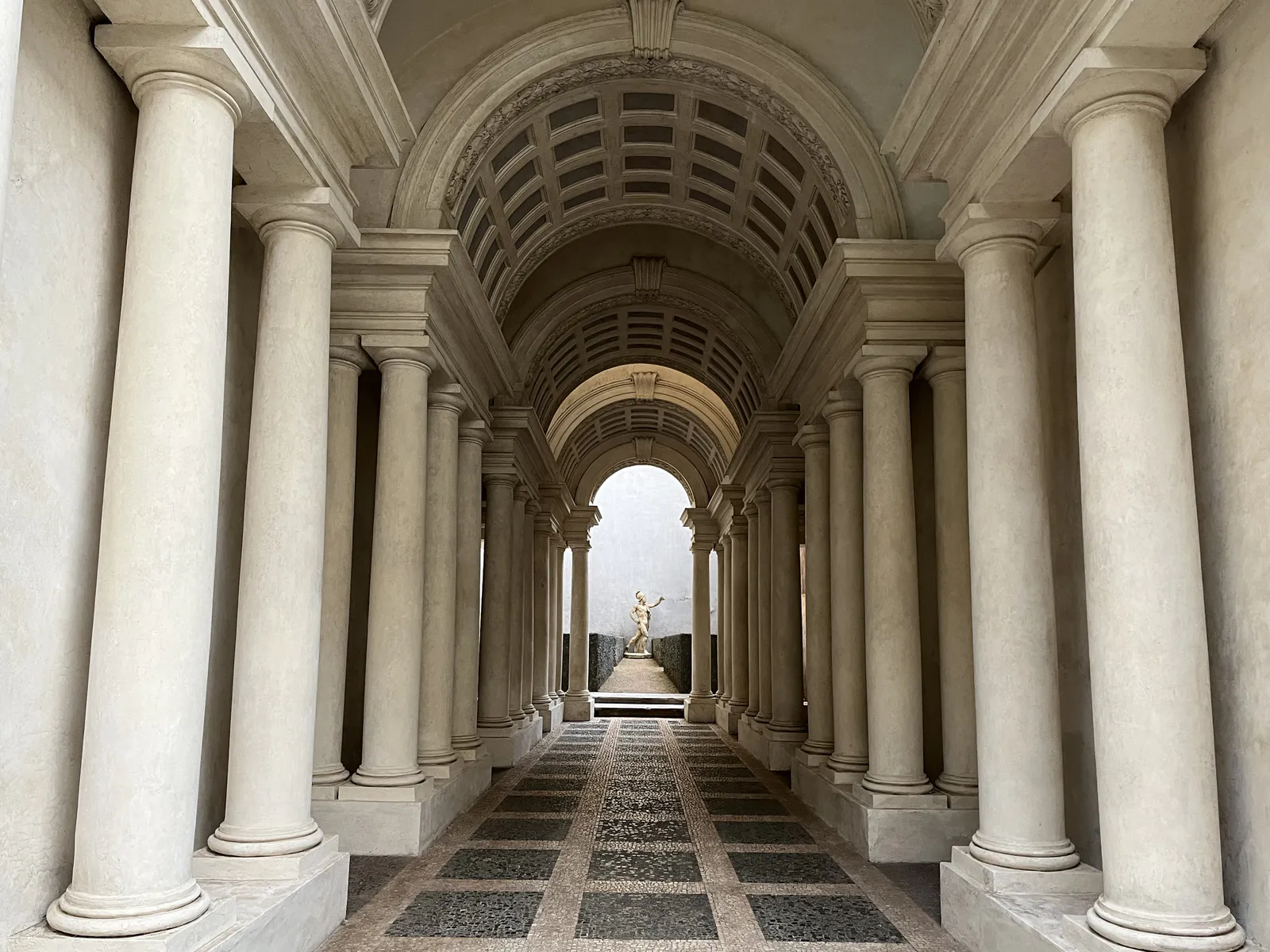
Perspective Gallery
Francesco Borromini
Created for Cardinal Spada, this architectural illusion (1653) compresses nine meters into an illusion of great depth. By subtly reducing the size of columns, floor tiles, and ceiling coffers, Borromini crafted a vanishing point that evokes grandeur. The statue at the end, appearing monumental, is just 90 cm tall—transforming scale into metaphysical reflection.
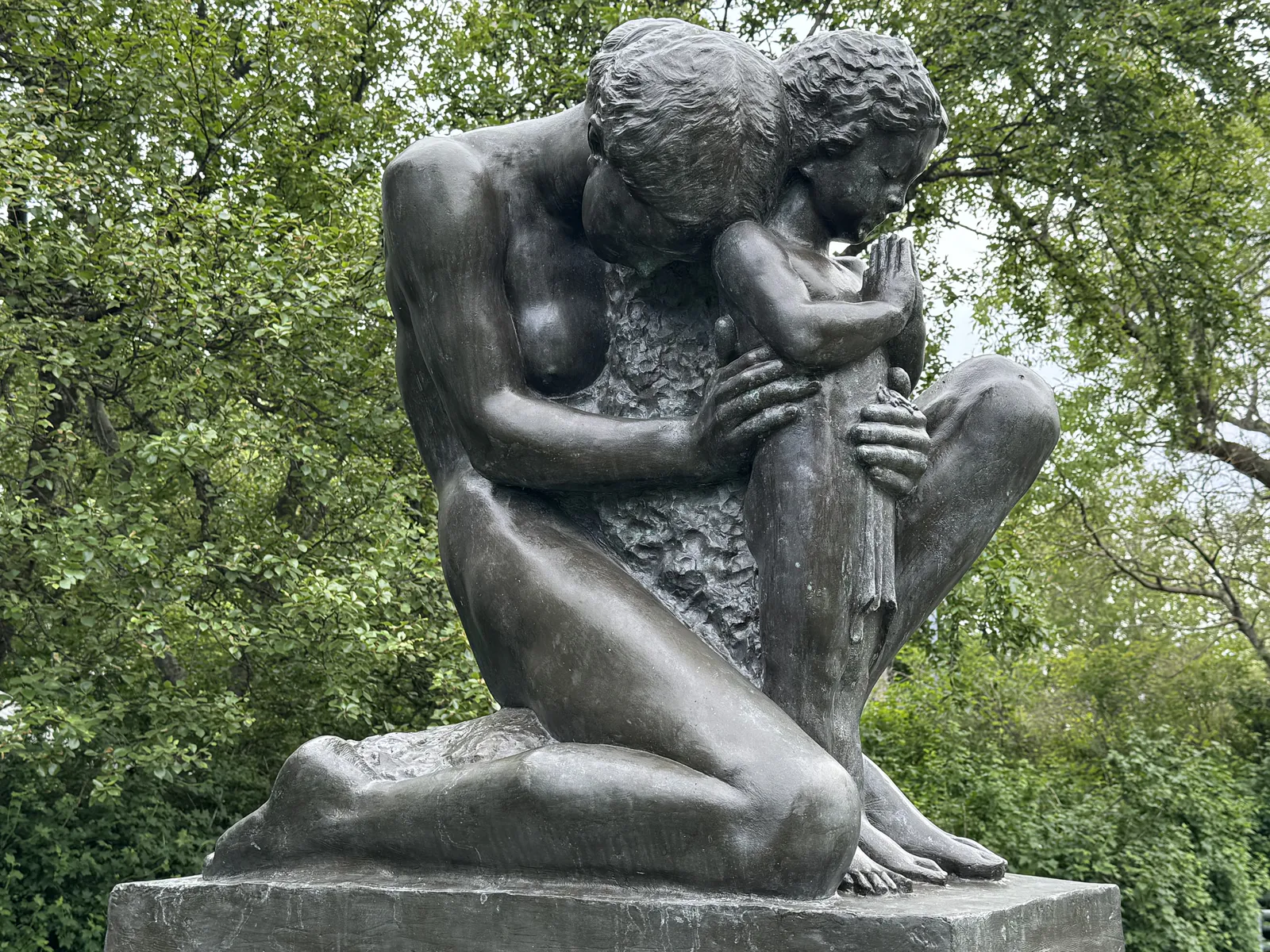
The Prayer
Einar Jónsson
Created in 1909 and later cast in bronze, this sculpture shows a kneeling woman embracing a praying child, merging maternal love with spiritual devotion. Jónsson, pioneer of Icelandic sculpture, wove Nordic symbolism into works that joined earthly care and divine aspiration. His 1909 donation of all his art to the nation ensured the founding of Iceland’s first art museum in 1923, making pieces like The Prayer central to national identity.
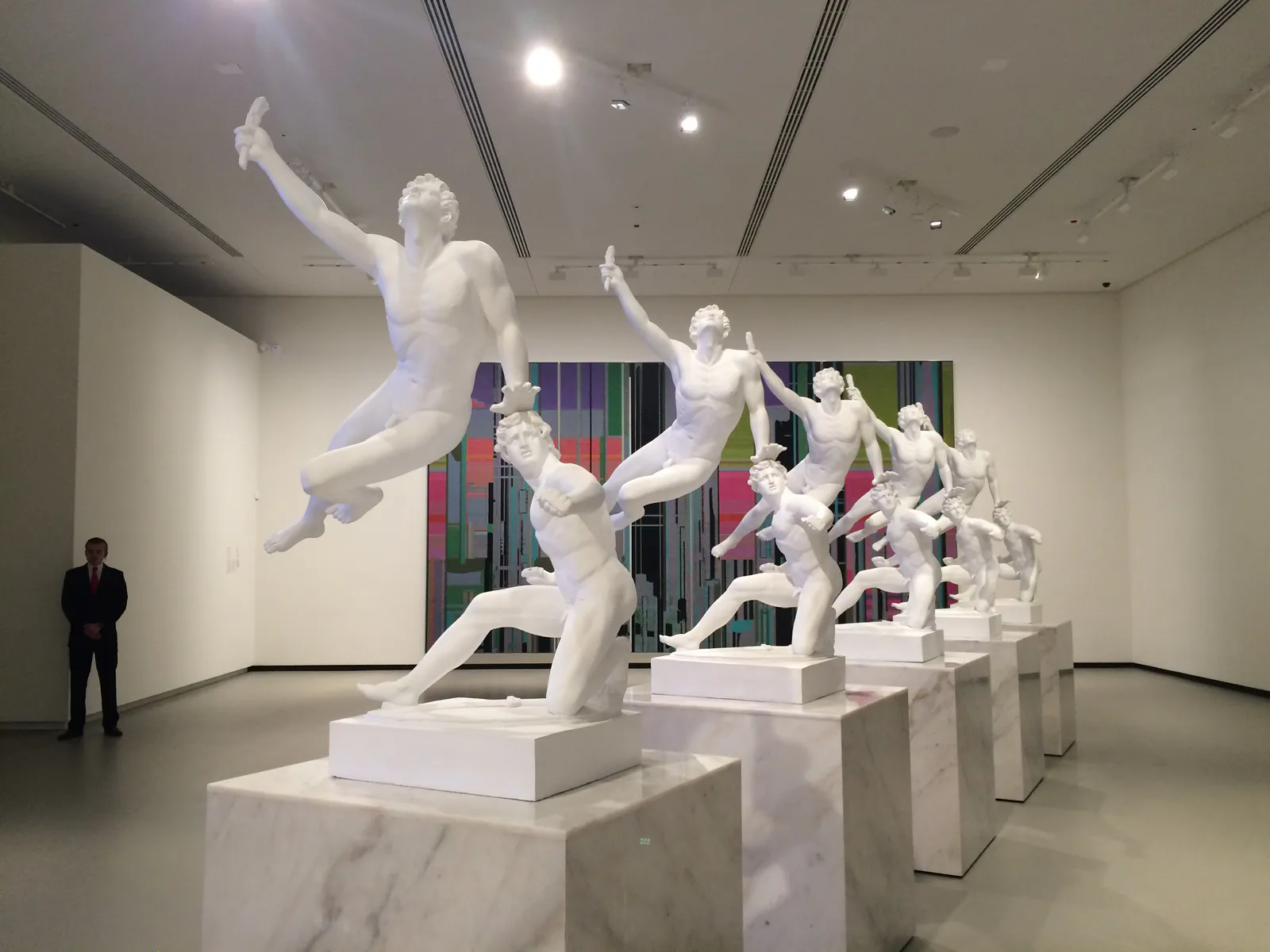
Eternity - The Soldier of Marathon Announcing Victory
Xu Zhen
This 2011 sculpture installation Eternity – Eternity - The Soldier of Marathon Announcing Victory, a Wounded Galatian fuses classical Greek forms with contemporary fragmentation. Crafted from concrete, fiberglass, marble powder, and metal, the sequence begins with a whole figure and gradually breaks apart, evoking cultural transformation and the erosion of historical continuity.
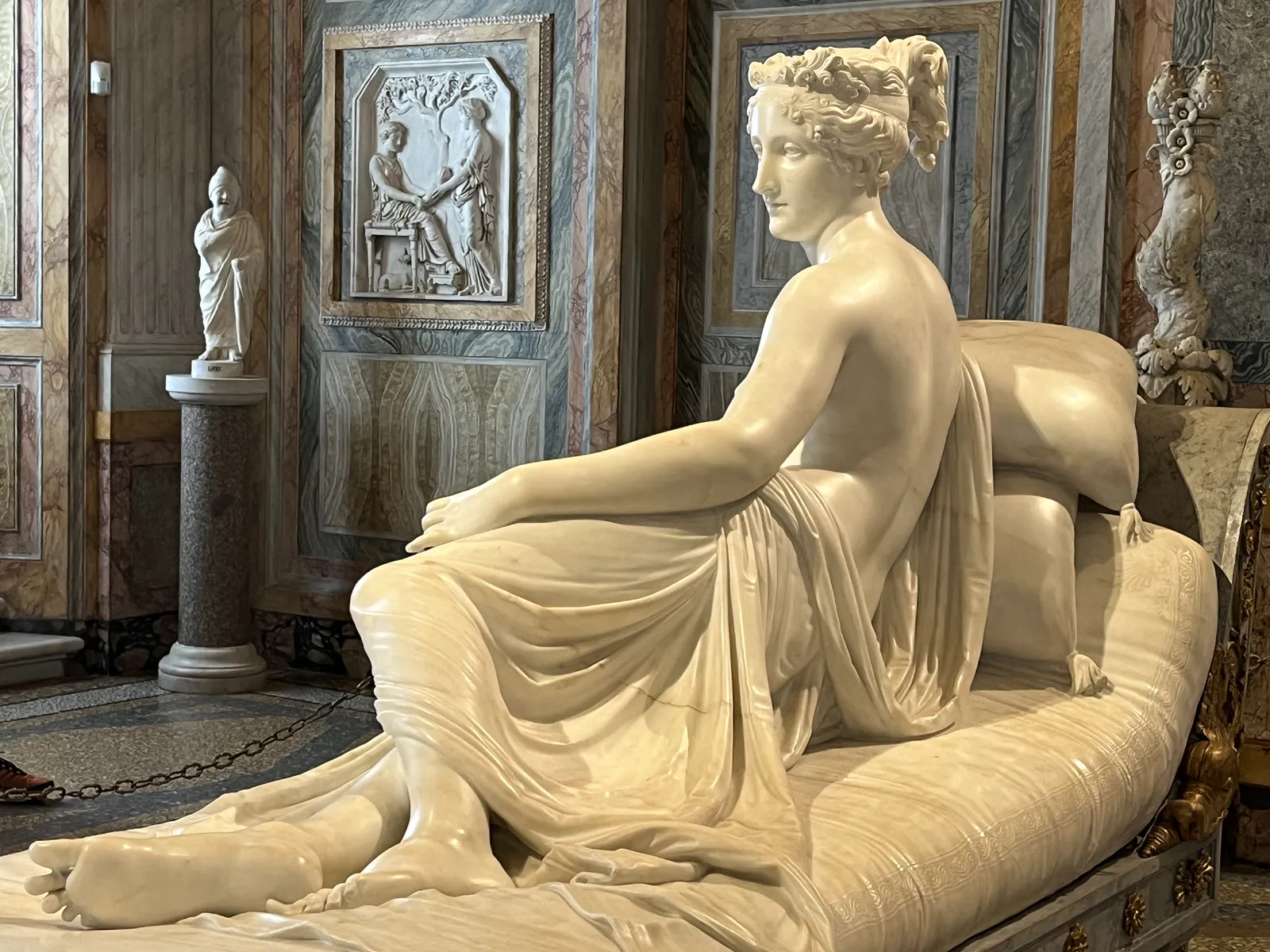
Pauline Bonaparte as Venus Victrix
Antonio Canova
Antonio Canova's marble masterpiece (1805–08) depicts Pauline Bonaparte as Venus Victrix, reclining semi-nude on a couch, holding an apple symbolizing Venus's triumph in the Judgement of Paris. Commissioned by her husband, Camillo Borghese, Pauline insisted on being portrayed as Venus rather than Diana. The sculpture, originally designed to rotate, reflects both personal ambition and classical beauty.
“When the path is beautiful, do not ask where it leads.” — Zen proverb
Welcome to my travel photography!
“When the path is beautiful, do not ask where it leads.” — Zen proverb
Welcome to my travel photography!
For as long as I can remember, my path has been one of discovery—seeking beauty, timelessness, and connection in every corner of the world. It has also been a journey of deep learning and understanding. I’ve been an avid traveler (or perhaps a travel addict?) for most of my life. My love for travel began long before I ever left home: as a child, I drew a fantasy map of my grandparents’ apartment and “traveled” through it with my cousin Sonya, imagining adventures in every corner. Nearly 90 countries and countless moments of awe later, I’m excited to share this journey with you.
Thanks to the tireless and ingenious programming of Diagilev, we’re now able to present about fifteen percent of the images I’ve accumulated over the years. More will be released in small batches depending on your interest. While the first release leans toward museum photography, later ones will include more nature, architecture, culture, and general travel experiences. If you’d like to receive email notifications about new releases, feel free to reach out—no commercial use, ever.
Throughout my travels, I’ve been drawn to two intertwined kinds of discovery. One is intellectual: learning why the world is the way it is. History became my guide, shaping my perspective and filling my camera roll with museums and old buildings. To me, history is not the past—it is the key to understanding the present and how the world became what it is. The other is emotional: seeking moments of elevation—spirituality, beauty, harmony—often found in nature, monasteries, and ancient sacred spaces. Together, these impulses shape my photography. It invites you to learn, admire, and soar—to rise above the mundane and see the world through a lens of curiosity and wonder.
Much of my later travel became possible thanks to my job with Delta Air Lines, but the wanderlust began years earlier. By the time I joined the industry, I had already visited over 35 countries and lived in several—largely thanks to a backpacking journey around the world with Luis León, whose face appears in many early photos. I grew up in Ufa in the USSR, and since leaving it I have lived, studied, and worked in Latvia, the United States, France, South Korea, Canada, Spain, Italy, Brazil, Japan, and Colombia.
A life of near-constant movement may seem a little crazy, but it has deepened my understanding of the world and produced the photography you are about to see. Over the years, my style has evolved—more intentional, more refined—yet its core remains the same: a search for understanding, timeless beauty, and a connection to those who walked this earth long before us.
I hope these photos stir something in your soul, just as they did in mine. I’d love to hear from you—whether reactions, suggestions, corrections, or a request to be added to the email list for new releases (no commercial use, I promise). You can learn more about my travels here, and my academic life here.
Enjoy our shared journey!