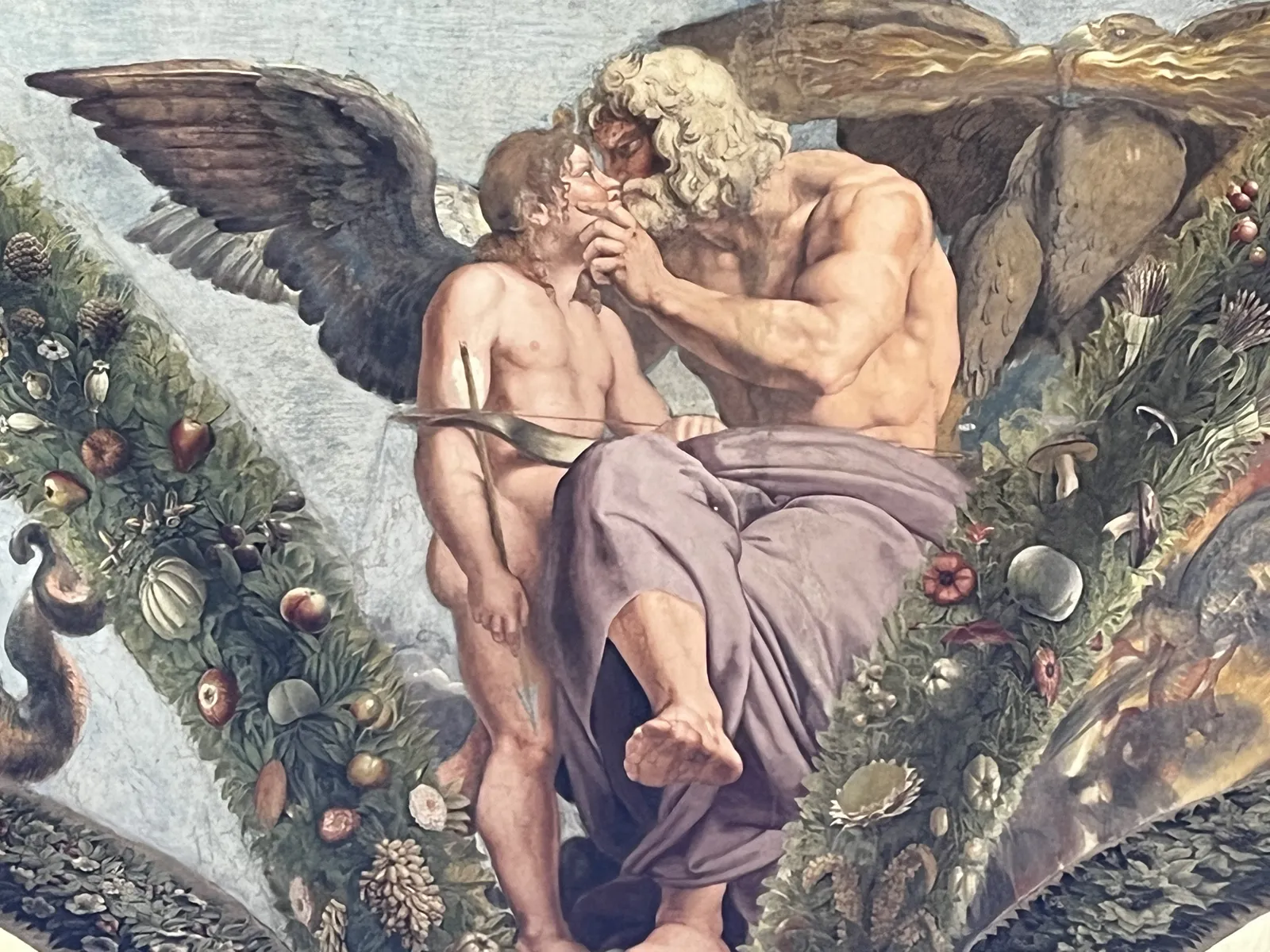
Cupid Pleads with Jupiter for Psyche
Raphael
In this fresco (1517–18), Raphael depicts the moment when Cupid petitions Jupiter for Psyche’s immortality. Jupiter’s intimate gesture suggests divine consent and compassion, while Cupid’s youthful vulnerability contrasts with the god’s authority. The work reflects Renaissance fascination with classical myths and divine love.
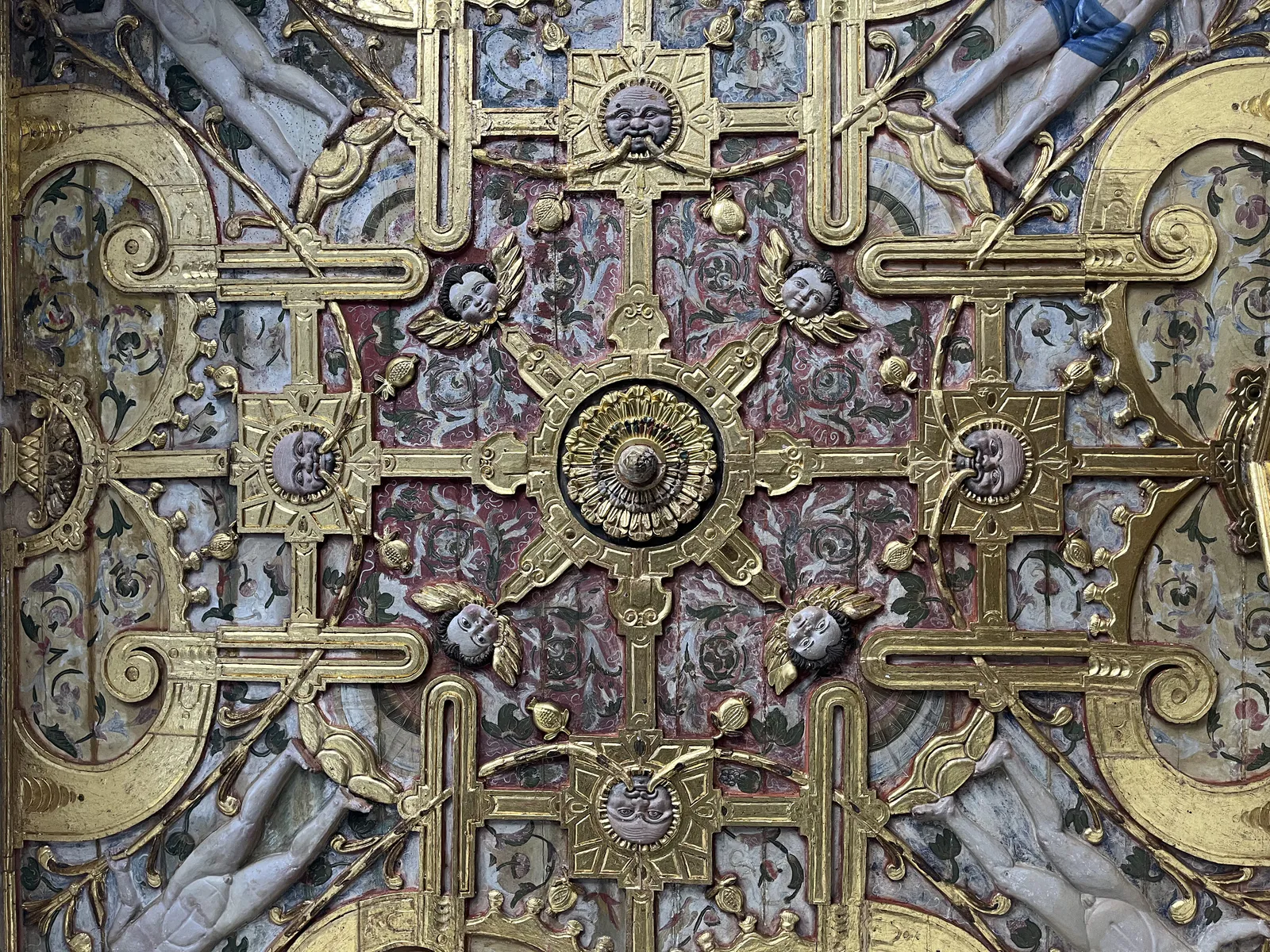
Andean Baroque Ceiling Panel
Manuel Chili (Capiscara)
This carved and gilded ceiling panel (1770–80) shows radiant faces, golden beams, and floral motifs arranged around a central sunburst. Produced in late-colonial Quito, it aligns with the Andean baroque’s celestial imagery. Caspicara joined Catholic cosmology with Indigenous conceptions of ordered, sacred geometry.
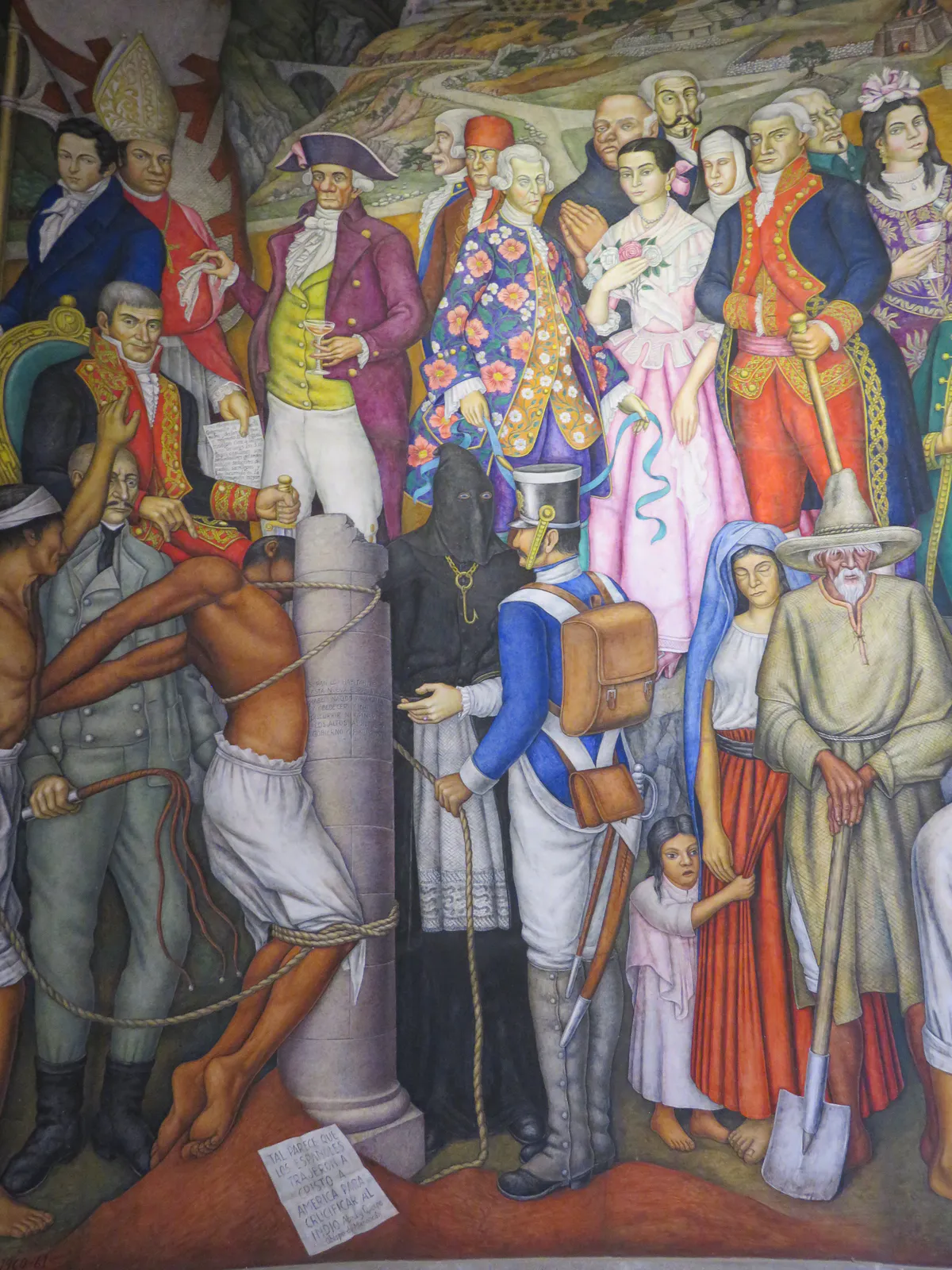
Detail from Retablo de la Independencia
Juan O'Gorman
This mural detail (1960–61) dramatizes colonial brutality during Mexico’s struggle for independence (1810–1821). A near-nude man is tortured before Spanish troops and clergy, symbolizing oppression. At left appear insurgent leaders Miguel Hidalgo and José María Morelos, while nobles and clerics in bright dress embody privilege. The peasants and child at right embody the pueblo whose suffering and resilience fueled the revolt for freedom.
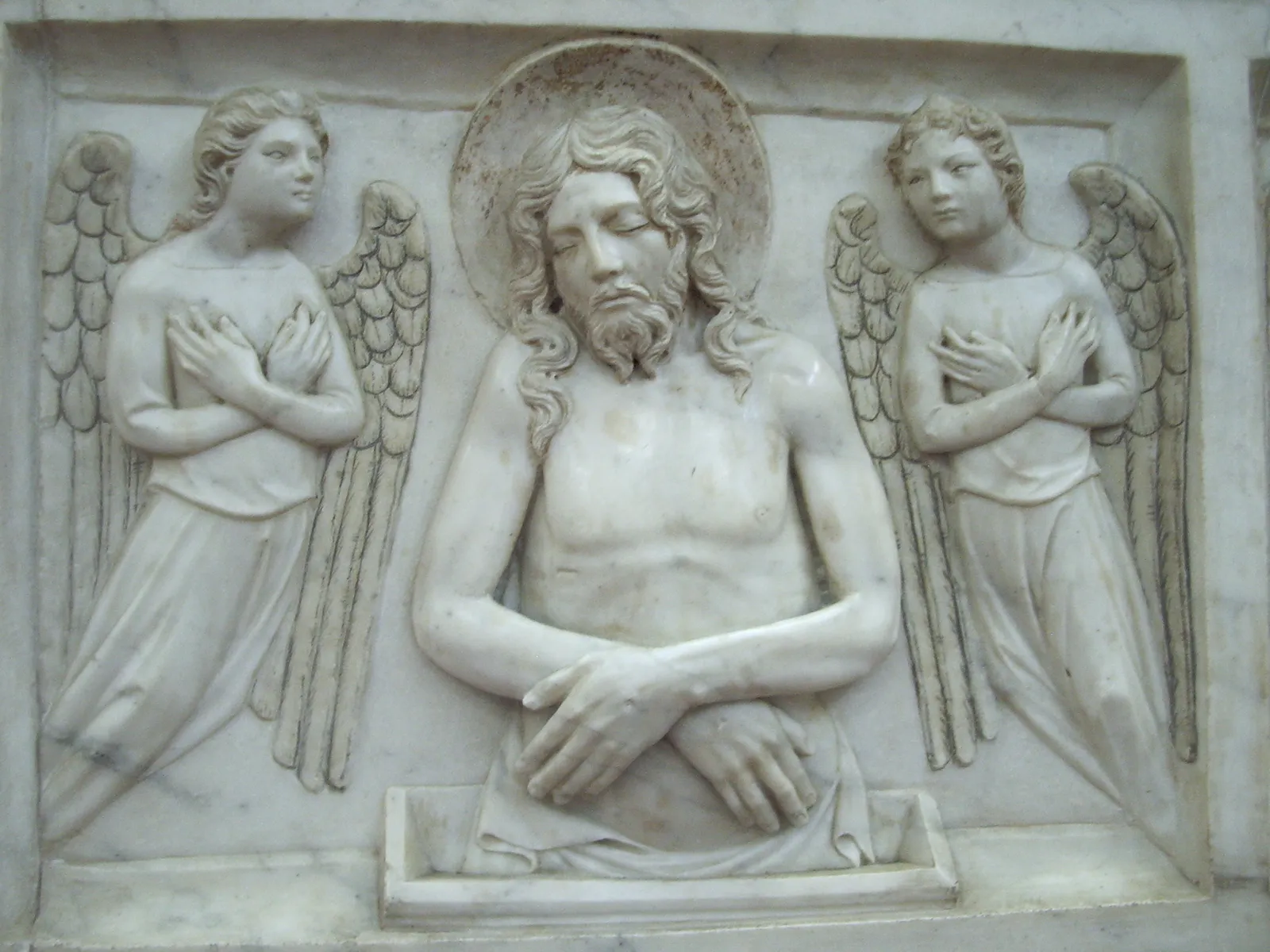
Tomb of Archbishop Scherlatti
Nino Pisano
This marble relief (c. 1300–1350) formed part of the tomb of Archbishop Scherlatti. Christ is depicted in the Imago Pietatis pose, rising from the tomb with eyes closed, flanked by two mourning angels. The scene blends devotional tenderness with refined Gothic elegance, exemplifying Nino Pisano’s lyrical style and the growing emotional realism in 14th-c. funerary art.
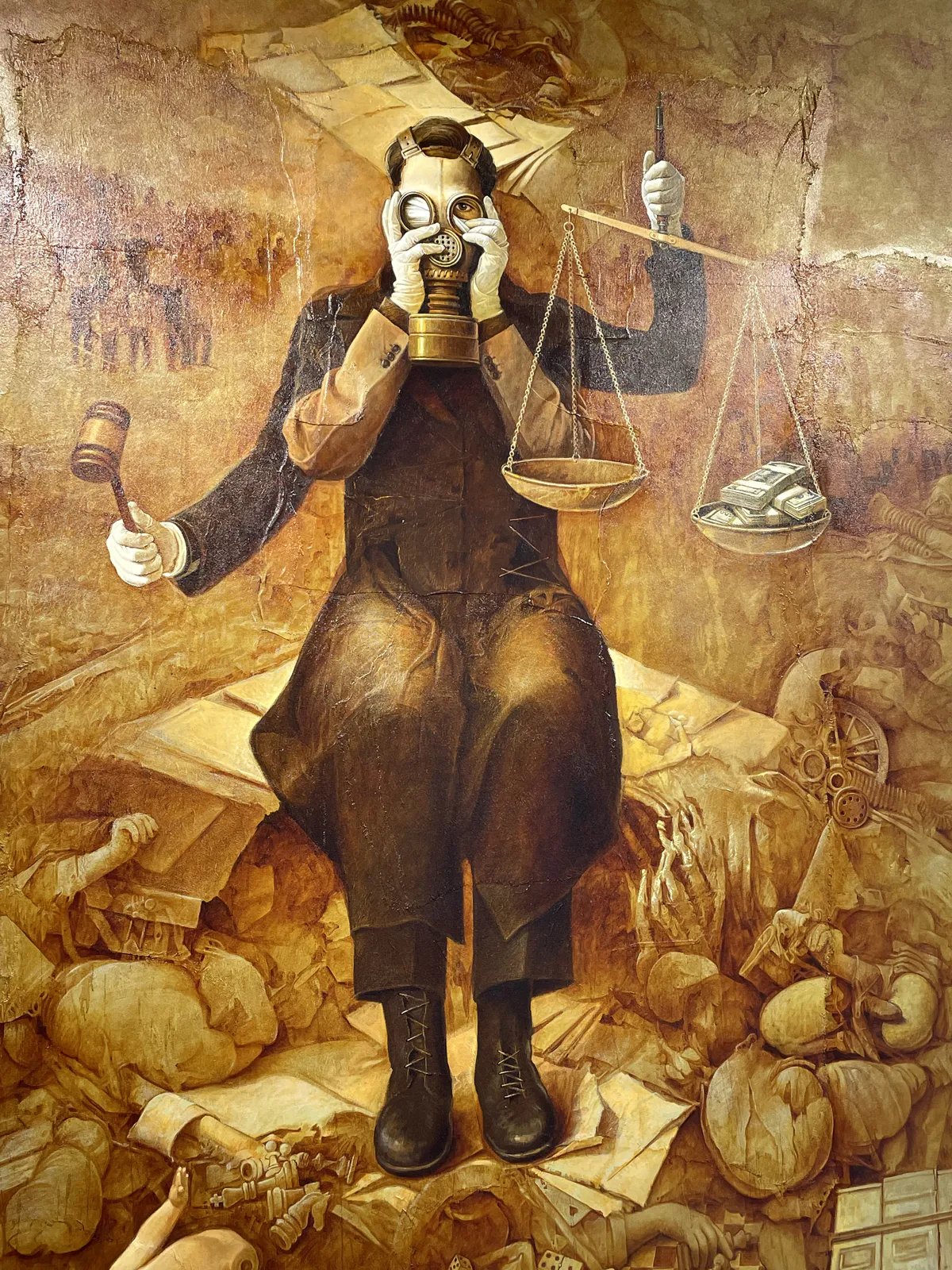
Retrato alegórico de la injusticia
Dustín Muñoz
In his powerful Allegoric Portrait of Justice (2018), Muñoz portrays a masked judge seated atop chaos, weighing gold bars against an empty scale. His gavel and gas mask signal institutional blindness and moral decay. Painted in acrylic on canvas, the work denounces injustice as systemic, silencing truth and privileging wealth over human life.
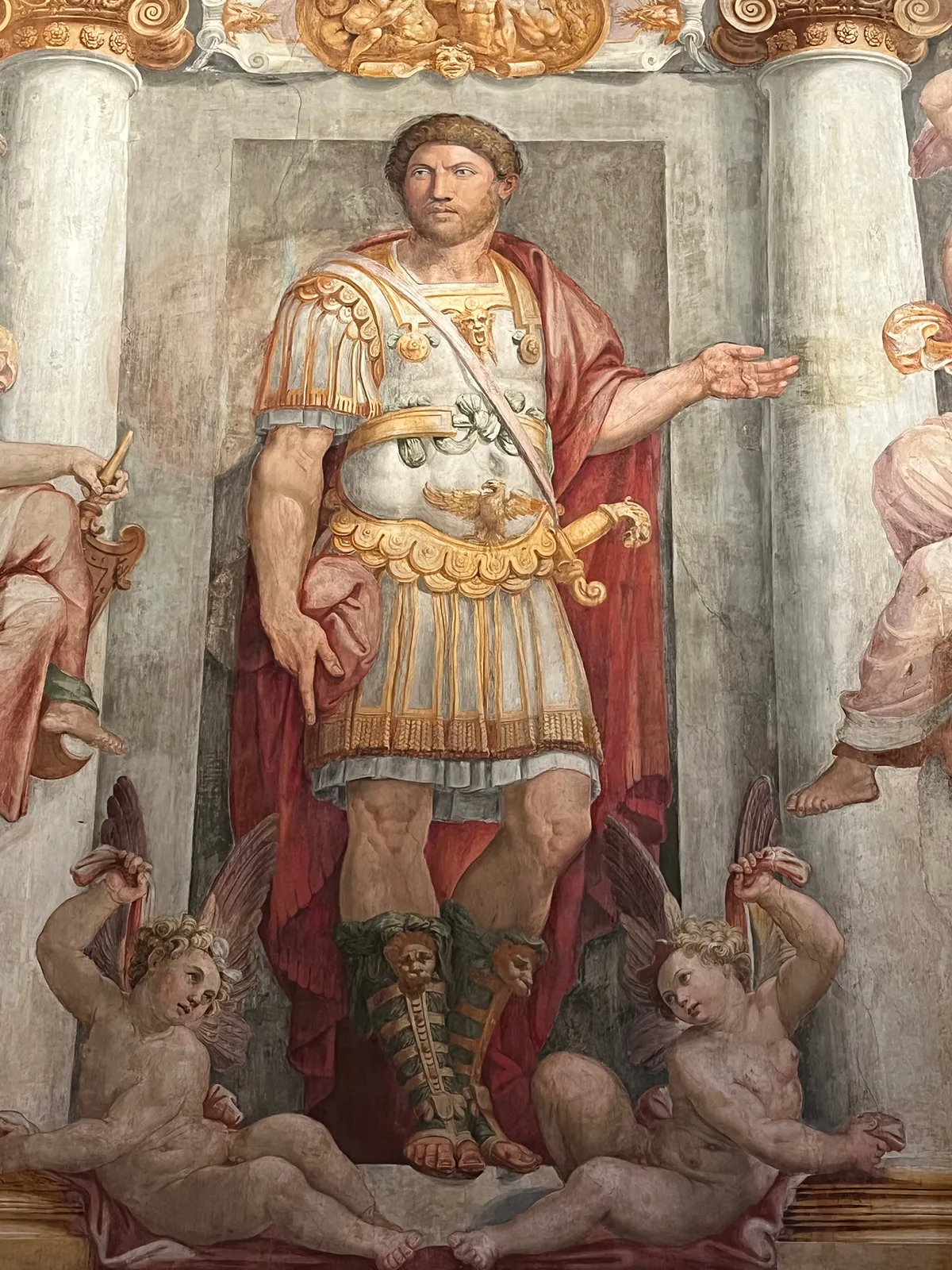
Emperor Hadrian
Girolamo Siciolante da Sermoneta (attrib.)
This 16th-c. fresco from the Sala Paolina depicts Emperor Hadrian in idealized Roman military attire. Portrayed with commanding calm, Hadrian stands framed by classical architecture and winged putti, symbolizing both earthly rule and divine favor. The work affirms his legacy as builder, humanist, and guardian of imperial order—within the very mausoleum he commissioned.
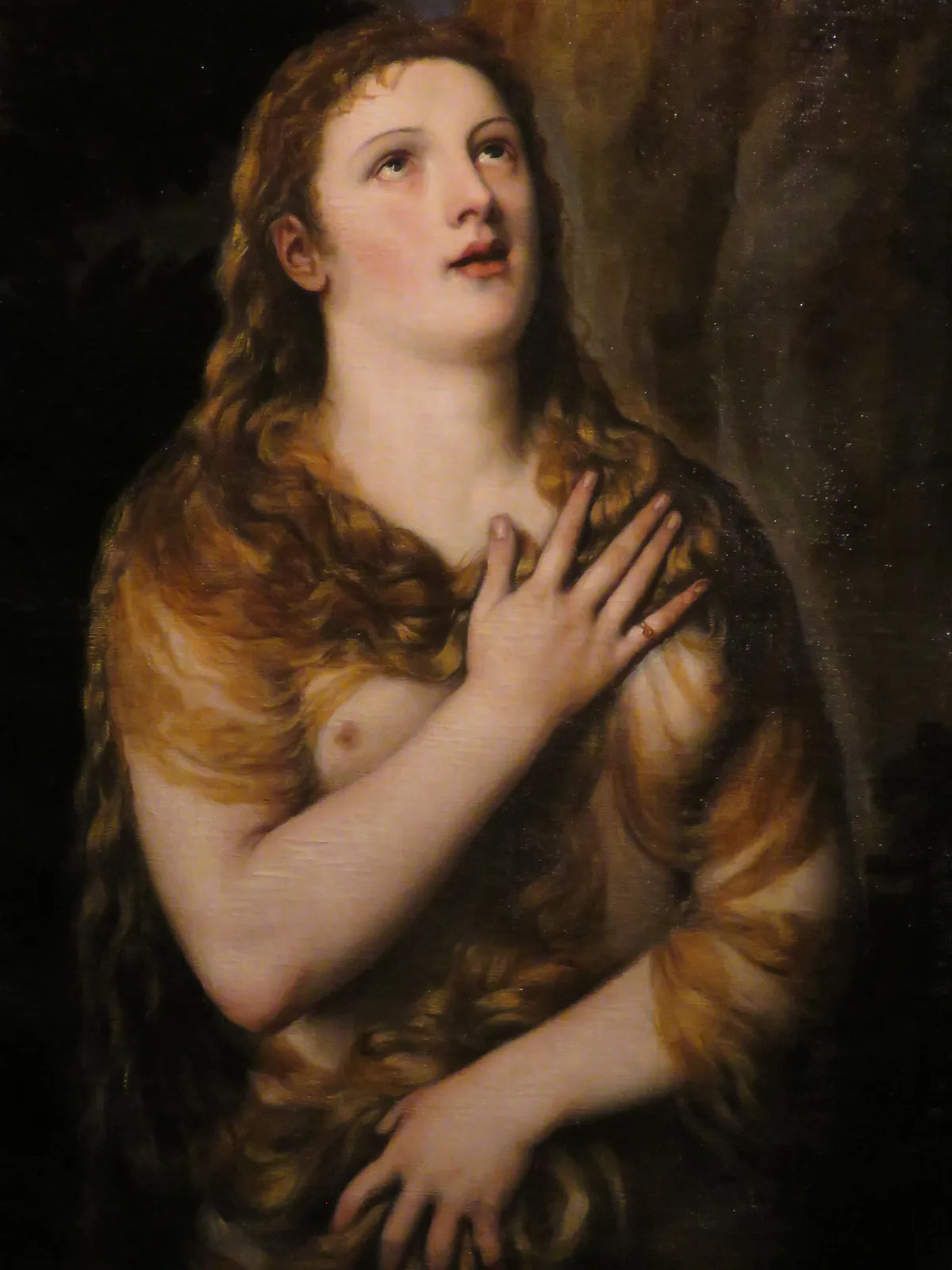
Mary Magdalene
Titian
This intimate portrayal of Mary Magdalene (c. 1560) captures the saint in a moment of spiritual ecstasy. Covered by cascading hair, her body becomes a vessel of penitence and divine grace. Titian’s sensual rendering reflects the Renaissance ideal of redemptive beauty and the transformative power of divine love.
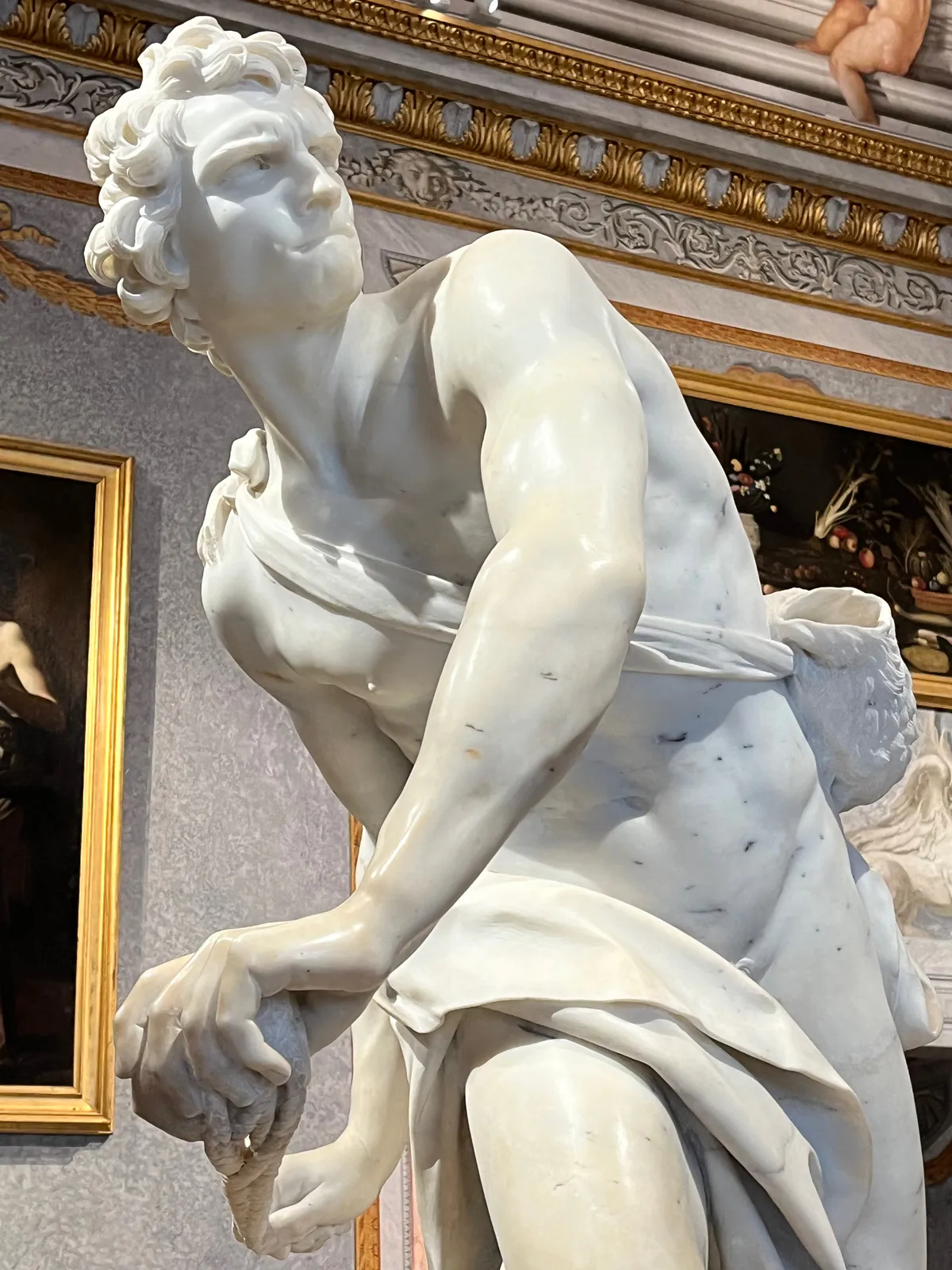
David
Gian Lorenzo Bernini
This marble sculpture (1623–24) captures David in a twisting stance, body coiled as his hand grips the sling. Muscles, drapery, and focused gaze all align with the implied arc of the stone. Commissioned by Cardinal Scipione Borghese, it exemplifies Baroque interest in movement and psychological intensity, turning a biblical hero into a study of concentrated action.
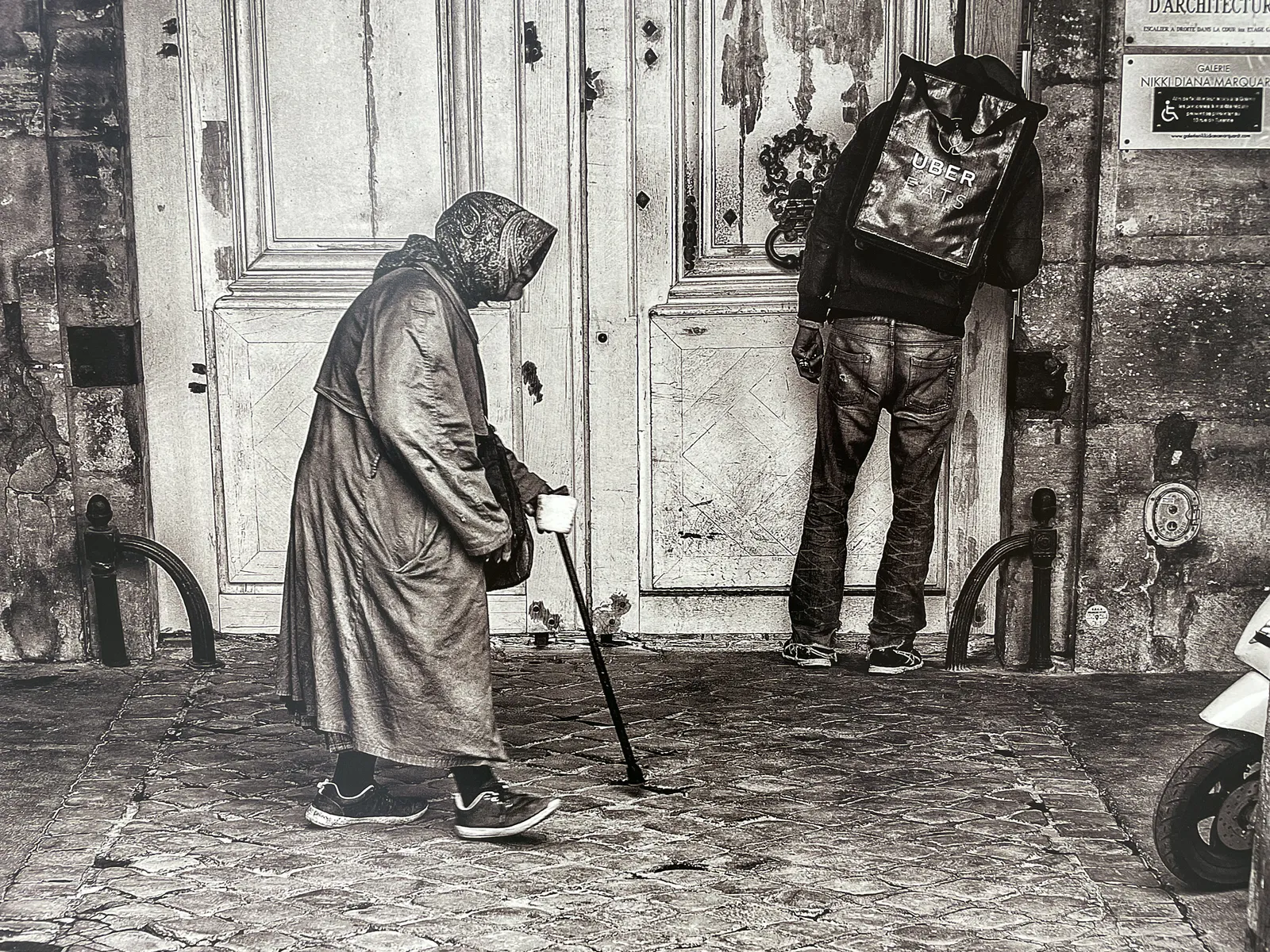
Uber Eats
Roger Zayas
This photo (2017), taken in the historic Marais district of Paris, captures a striking urban contrast: an elderly woman with a cane passes a food courier bent over a doorway. Zayas underscores generational divides and social invisibility, reflecting on aging and shifting economic realities in the European metropolis.
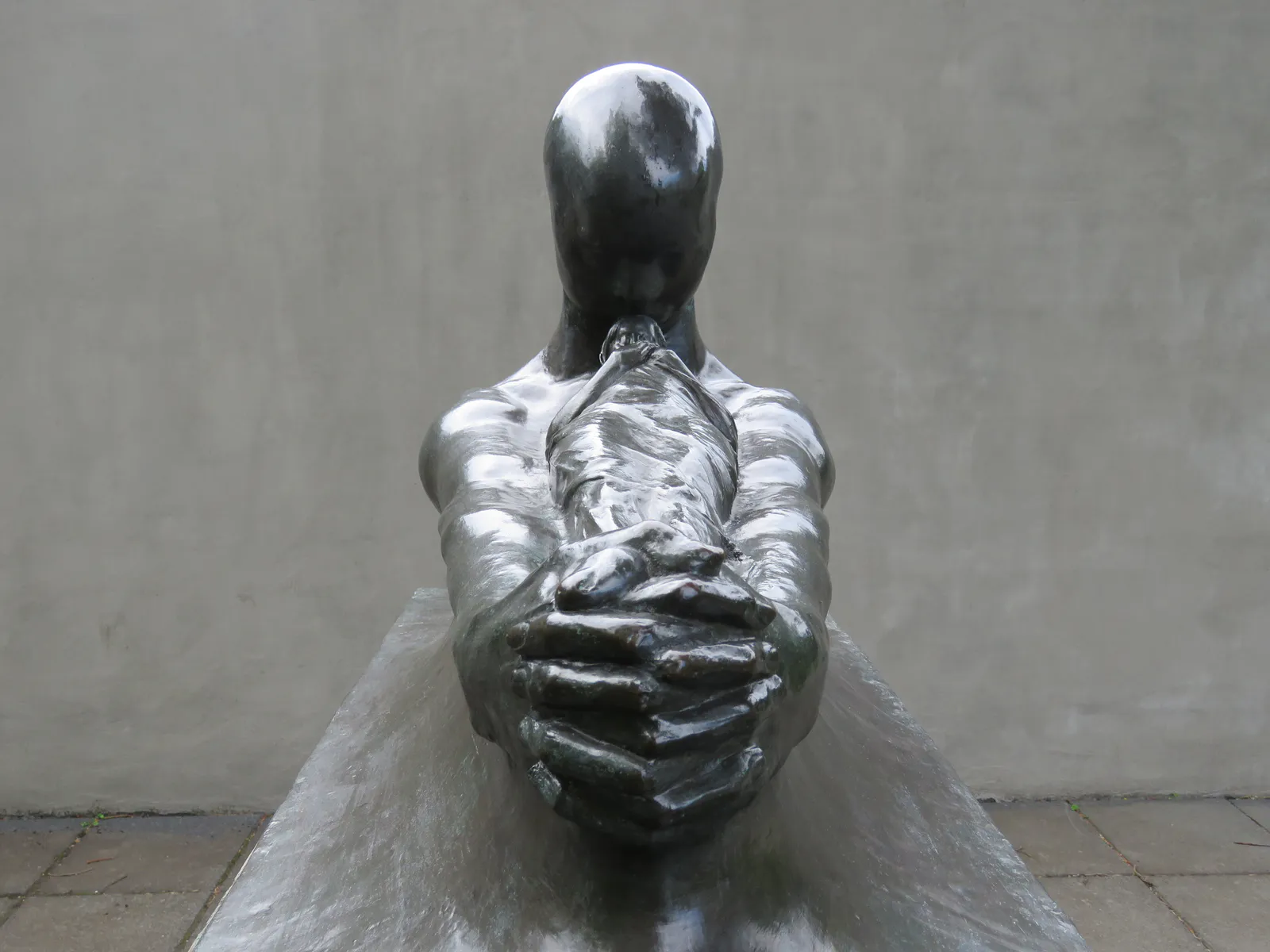
Earth (Mother Earth)
Einar Jónsson
Einar Jónsson’s sculpture (1904–1908) portrays a monumental figure cradling a smaller, draped form symbolizing Earth. Blending allegory and myth, it reflects Icelandic spirituality and cultural narratives. The work embodies humanity’s protective yet dependent bond with nature, inviting reflection on cosmic order and the fragility of existence.
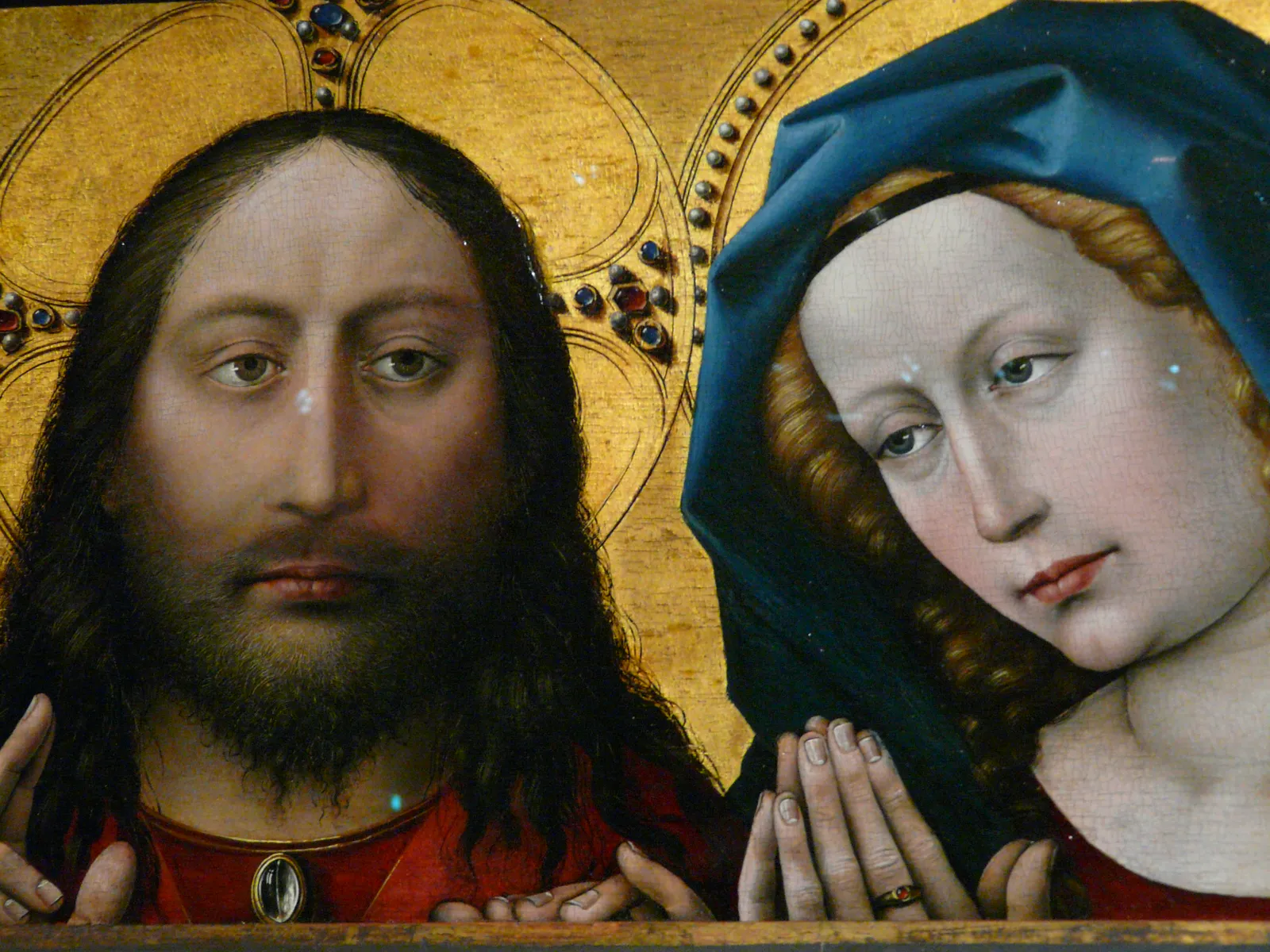
Christ Blessing with Virgin at Prayer
Master of Flémalle
This 15th-c. oak panel by the Master of Flémalle, often associated with Robert Campin, exemplifies early Netherlandish style. It showcases realistic detail through innovative oil paint use. The depiction of Christ blessing and the Virgin Mary at prayer reflects the era’s religious devotion and artistic innovation, marking a pivotal moment in European art’s evolution.
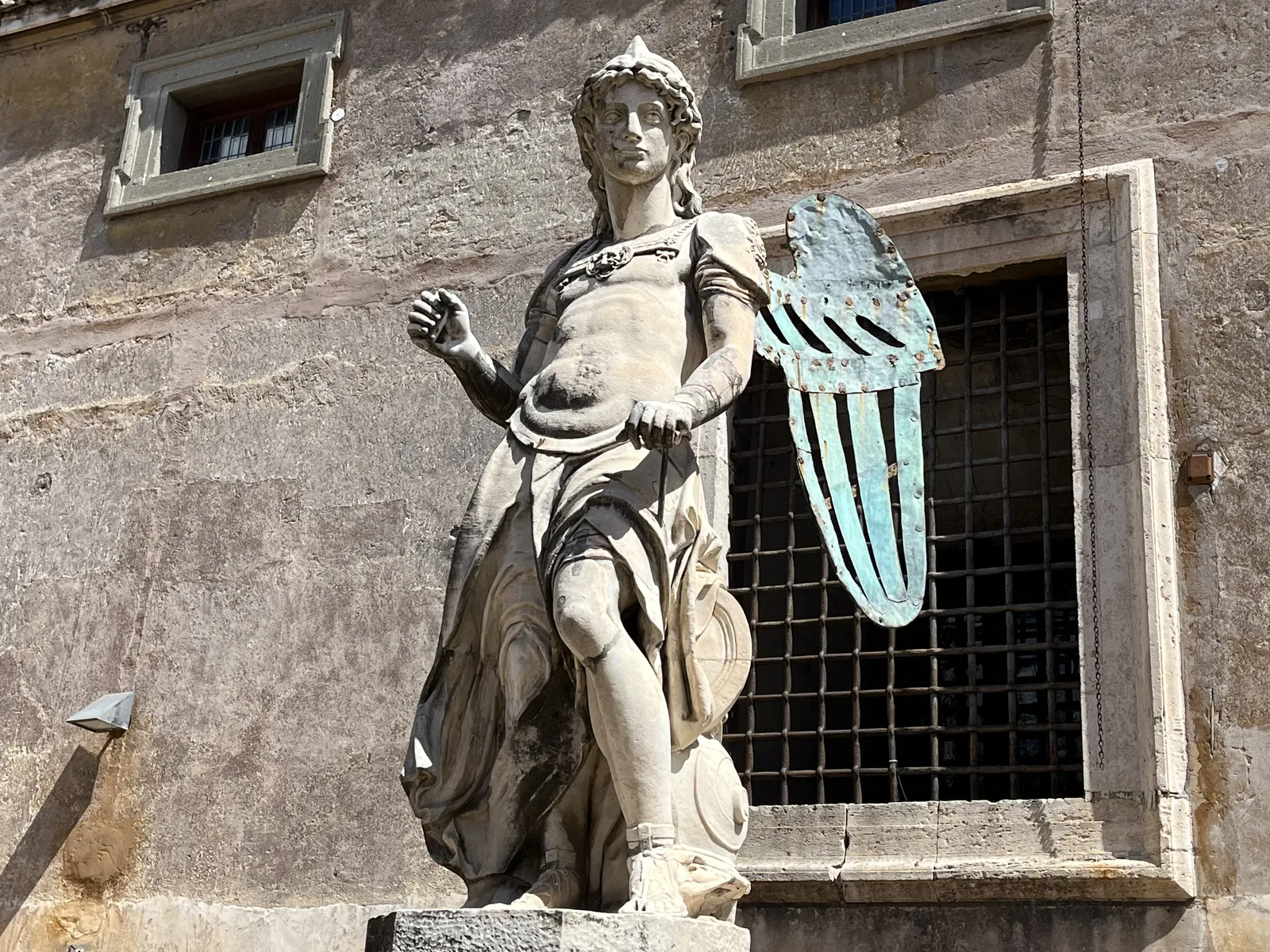
Archangel Michael
Raffaello da Montelupo
This marble statue (1544) once crowned the fortress, showing the Archangel Michael in the moment of sheathing his sword after ending the plague of 590. The figure’s contrapposto stance and idealized anatomy recall classical sculpture, while the raised wings and military dress assert his role as heavenly protector. The blend of antique form and Christian subject turns a local miracle into a civic symbol of deliverance.
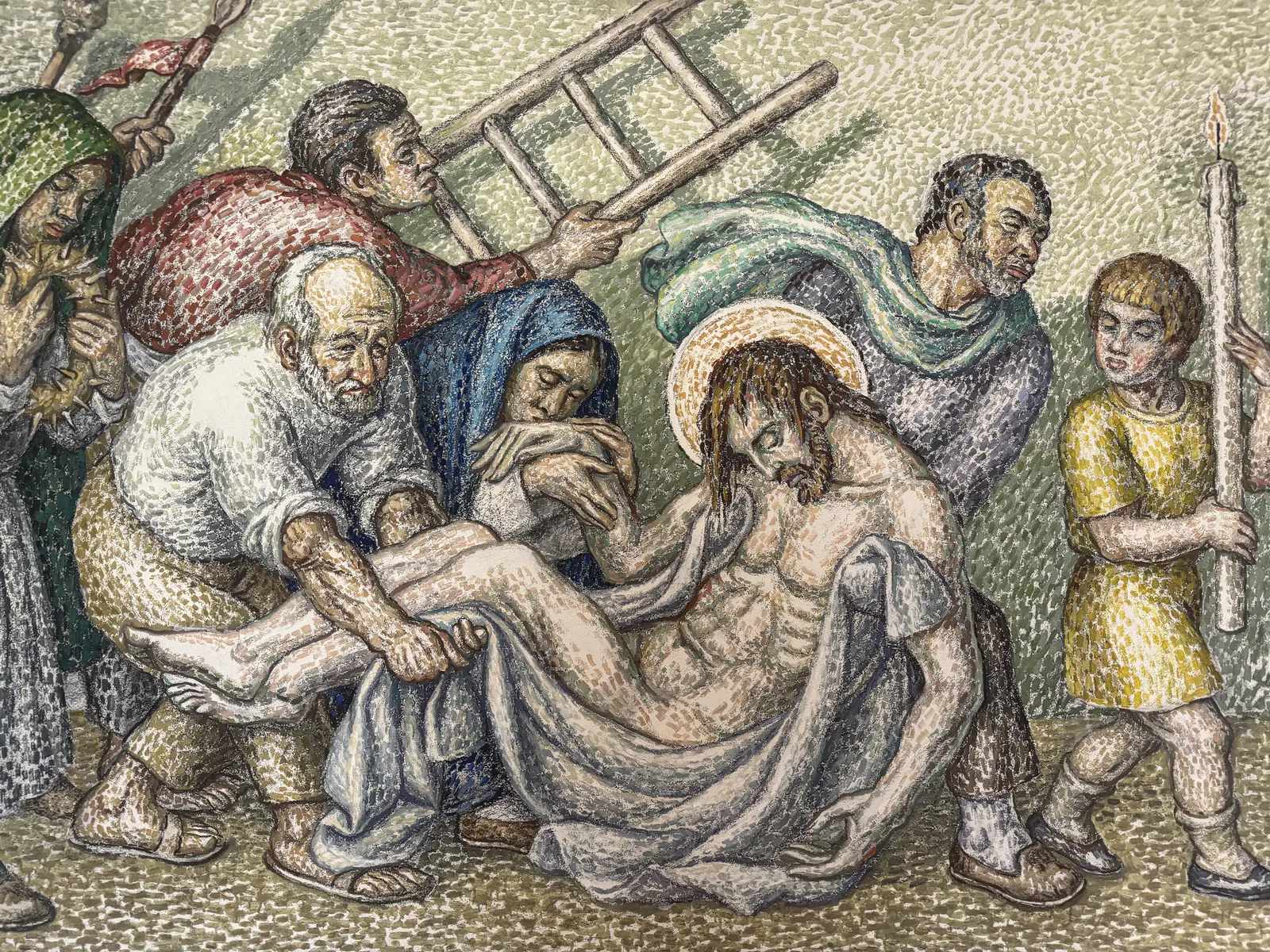
Descent from the Cross
Luis Alberto Acuña
Acuña (mid-1950s) renders the moment of Christ’s body being lowered from the cross with emotional gravity and communal sorrow. The composition emphasizes solidarity in grief, surrounding Christ with figures of all ages and backgrounds, reinforcing the universality of human suffering and compassion.
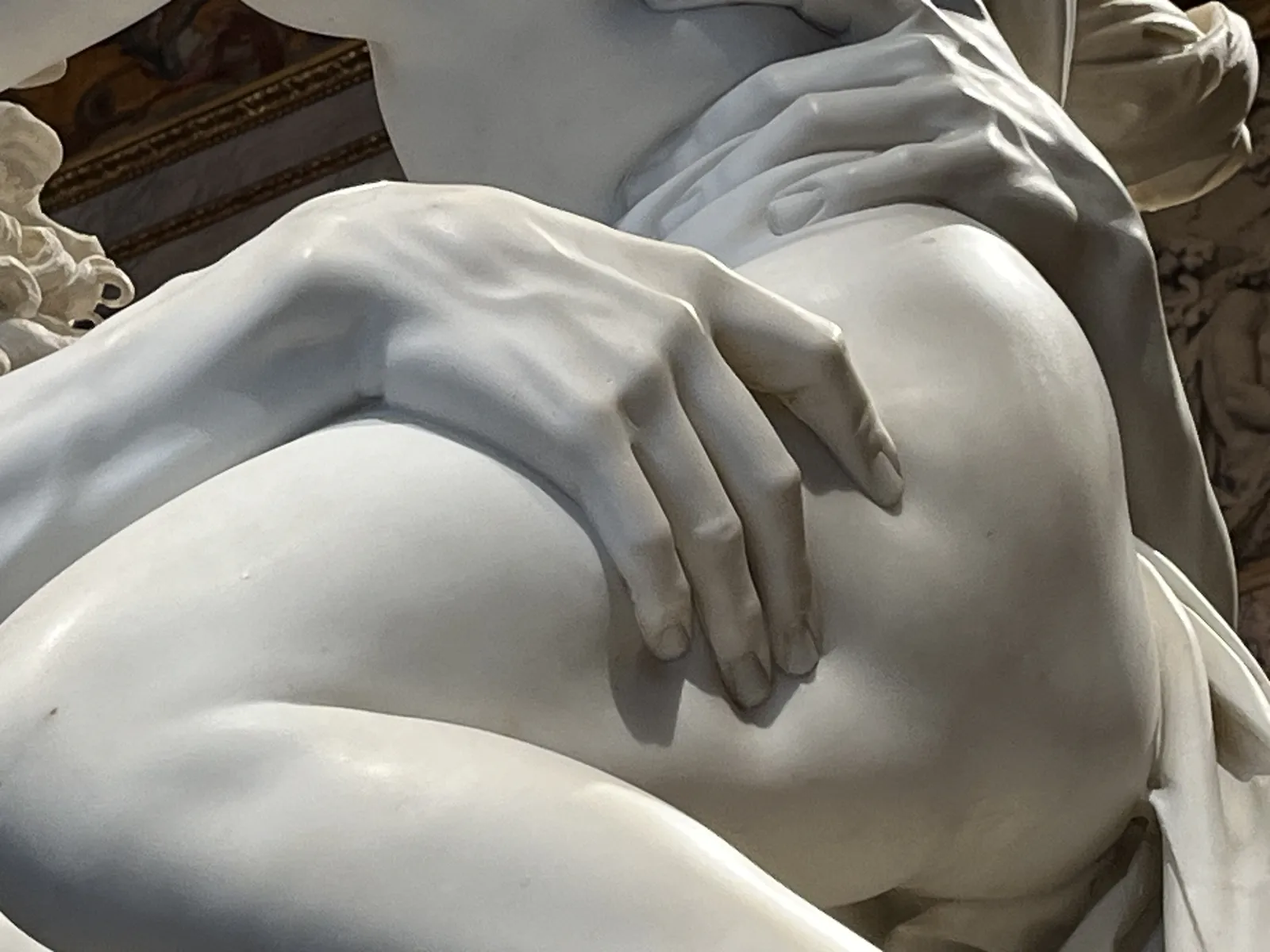
The Rape of Proserpina (detail)
Gian Lorenzo Bernini
This gripping close-up from Bernini’s marble group (1621–22) captures Pluto’s hand pressing into Proserpina’s flesh. The marble appears to yield under his grip, a dazzling illusion of softness and force. Bernini’s technical brilliance here transforms stone into living drama, amplifying the sculpture’s emotional and physical realism.
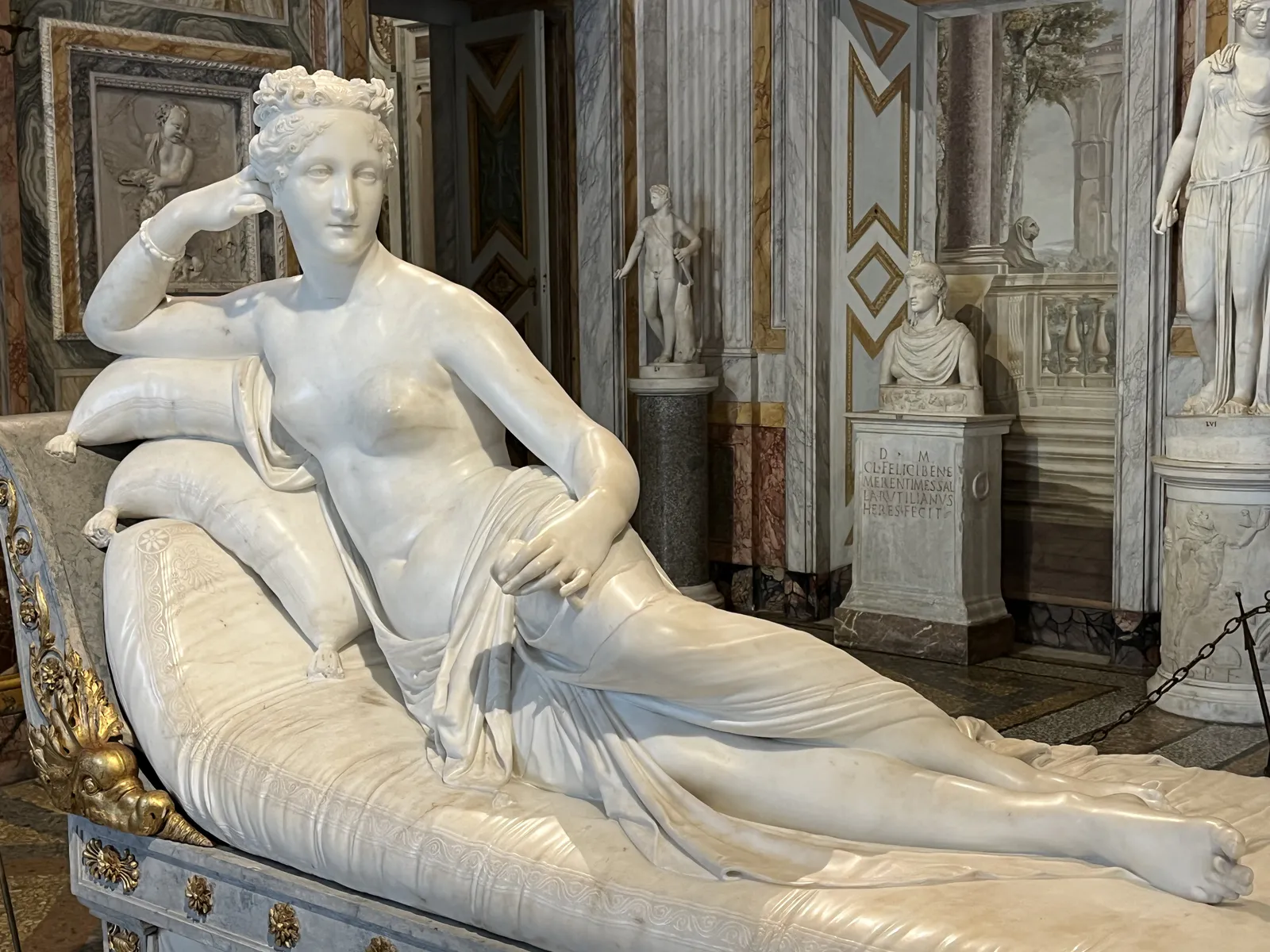
Pauline Bonaparte as Venus Victrix
Antonio Canova
This statue (1805–08) presents Pauline Bonaparte, sister of Napoleon, as Venus, reclining semi-nude and holding the golden apple of victory. Commissioned by her husband Camillo Borghese, the statue blends neoclassical elegance with sensual myth. Its rotating base once allowed viewers to admire it from every angle.
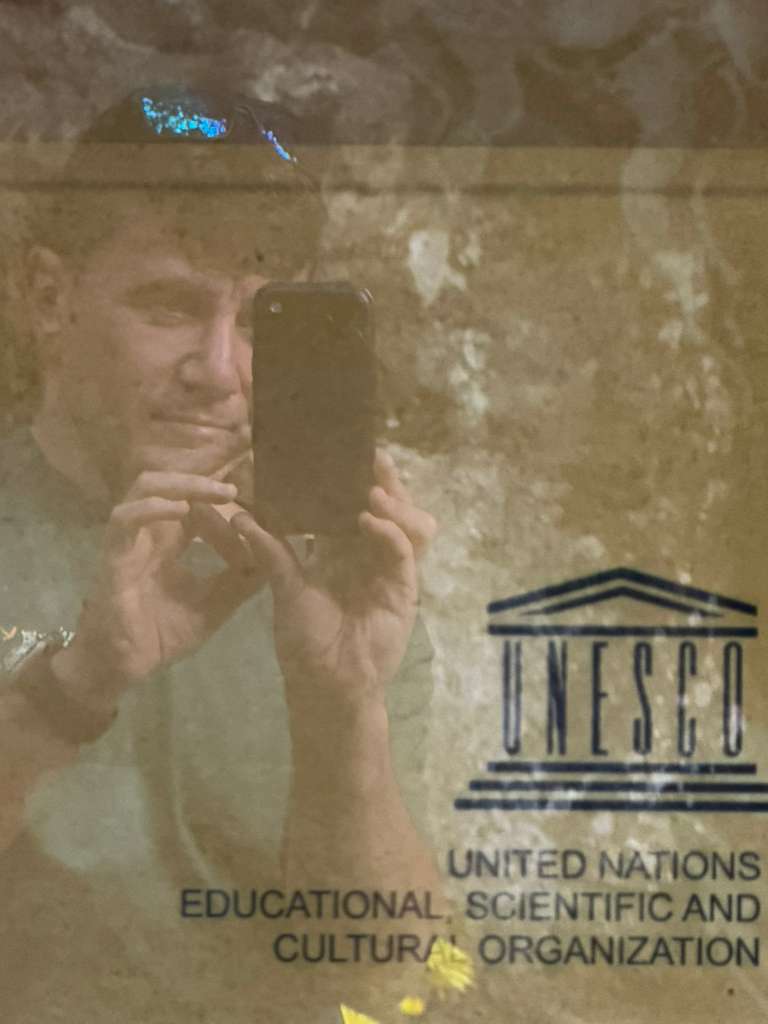
“When the path is beautiful, do not ask where it leads.” — Zen proverb
Welcome to my travel photography!
“When the path is beautiful, do not ask where it leads.” — Zen proverb
Welcome to my travel photography!
For as long as I can remember, my path has been one of discovery—seeking beauty, timelessness, and connection in every corner of the world. It has also been a journey of deep learning and understanding. I’ve been an avid traveler (or perhaps a travel addict?) for most of my life. My love for travel began long before I ever left home: as a child, I drew a fantasy map of my grandparents’ apartment and “traveled” through it with my cousin Sonya, imagining adventures in every corner. Nearly 90 countries and countless moments of awe later, I’m excited to share this journey with you.
Thanks to the tireless and ingenious programming of Diagilev, we’re now able to present about fifteen percent of the images I’ve accumulated over the years. More will be released in small batches depending on your interest. While the first release leans toward museum photography, later ones will include more nature, architecture, culture, and general travel experiences. If you’d like to receive email notifications about new releases, feel free to reach out—no commercial use, ever.
Throughout my travels, I’ve been drawn to two intertwined kinds of discovery. One is intellectual: learning why the world is the way it is. History became my guide, shaping my perspective and filling my camera roll with museums and old buildings. To me, history is not the past—it is the key to understanding the present and how the world became what it is. The other is emotional: seeking moments of elevation—spirituality, beauty, harmony—often found in nature, monasteries, and ancient sacred spaces. Together, these impulses shape my photography. It invites you to learn, admire, and soar—to rise above the mundane and see the world through a lens of curiosity and wonder.
Much of my later travel became possible thanks to my job with Delta Air Lines, but the wanderlust began years earlier. By the time I joined the industry, I had already visited over 35 countries and lived in several—largely thanks to a backpacking journey around the world with Luis León, whose face appears in many early photos. I grew up in Ufa in the USSR, and since leaving it I have lived, studied, and worked in Latvia, the United States, France, South Korea, Canada, Spain, Italy, Brazil, Japan, and Colombia.
A life of near-constant movement may seem a little crazy, but it has deepened my understanding of the world and produced the photography you are about to see. Over the years, my style has evolved—more intentional, more refined—yet its core remains the same: a search for understanding, timeless beauty, and a connection to those who walked this earth long before us.
I hope these photos stir something in your soul, just as they did in mine. I’d love to hear from you—whether reactions, suggestions, corrections, or a request to be added to the email list for new releases (no commercial use, I promise). You can learn more about my travels here, and my academic life here.
Enjoy our shared journey!