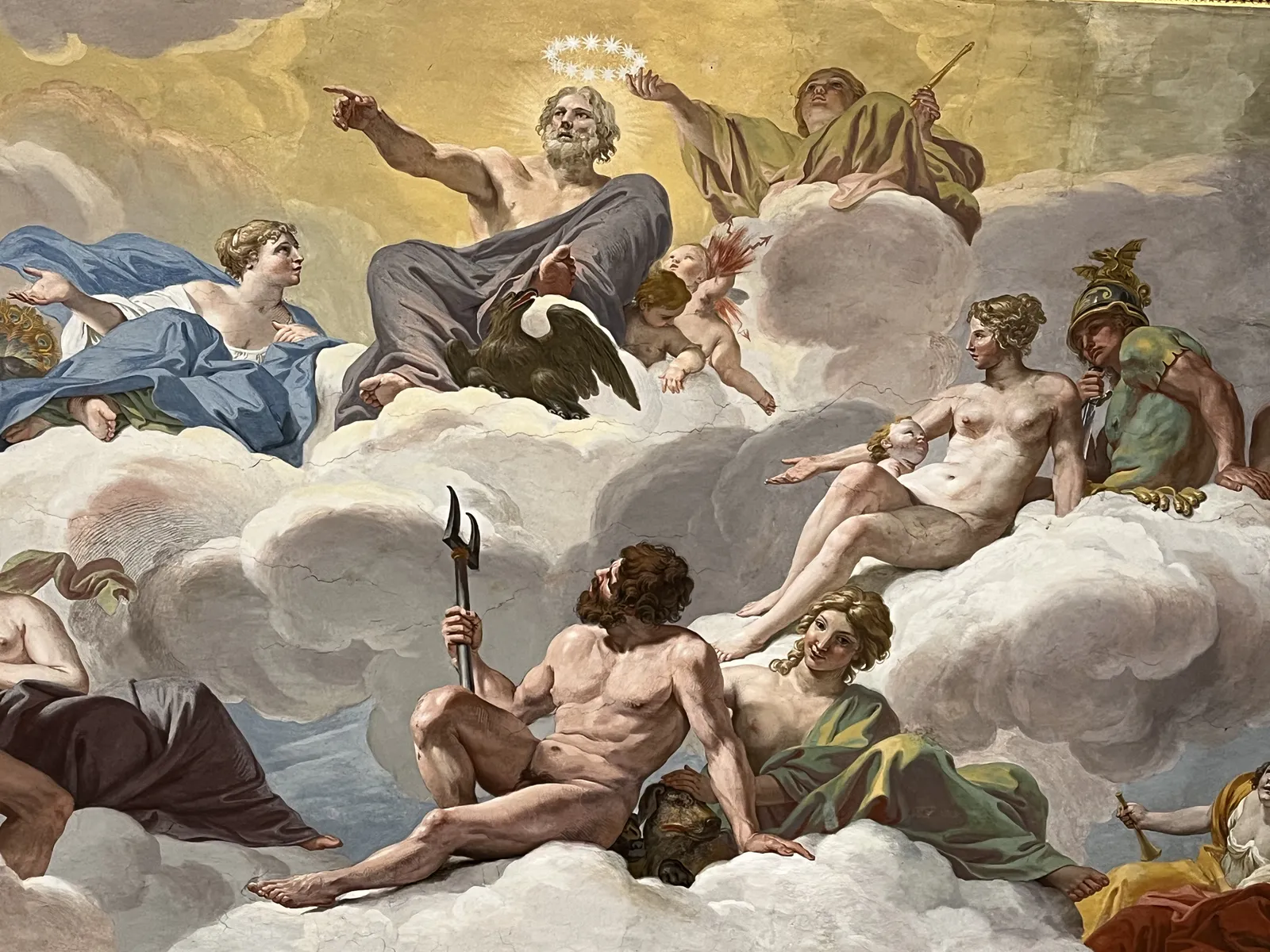
The Council of the Gods (detail)
Giovanni Lanfranco
In this celestial scene from The Council of the Gods (1624–25), Jupiter presides over Olympus, crowned with stars and flanked by his eagle. Surrounding him are Juno, Venus, Mars, and Pluto, their divine forms emerging from clouds. Painted for the Sala della Loggia in Villa Borghese, the fresco evokes the grandeur and illusionistic power of Baroque heaven.
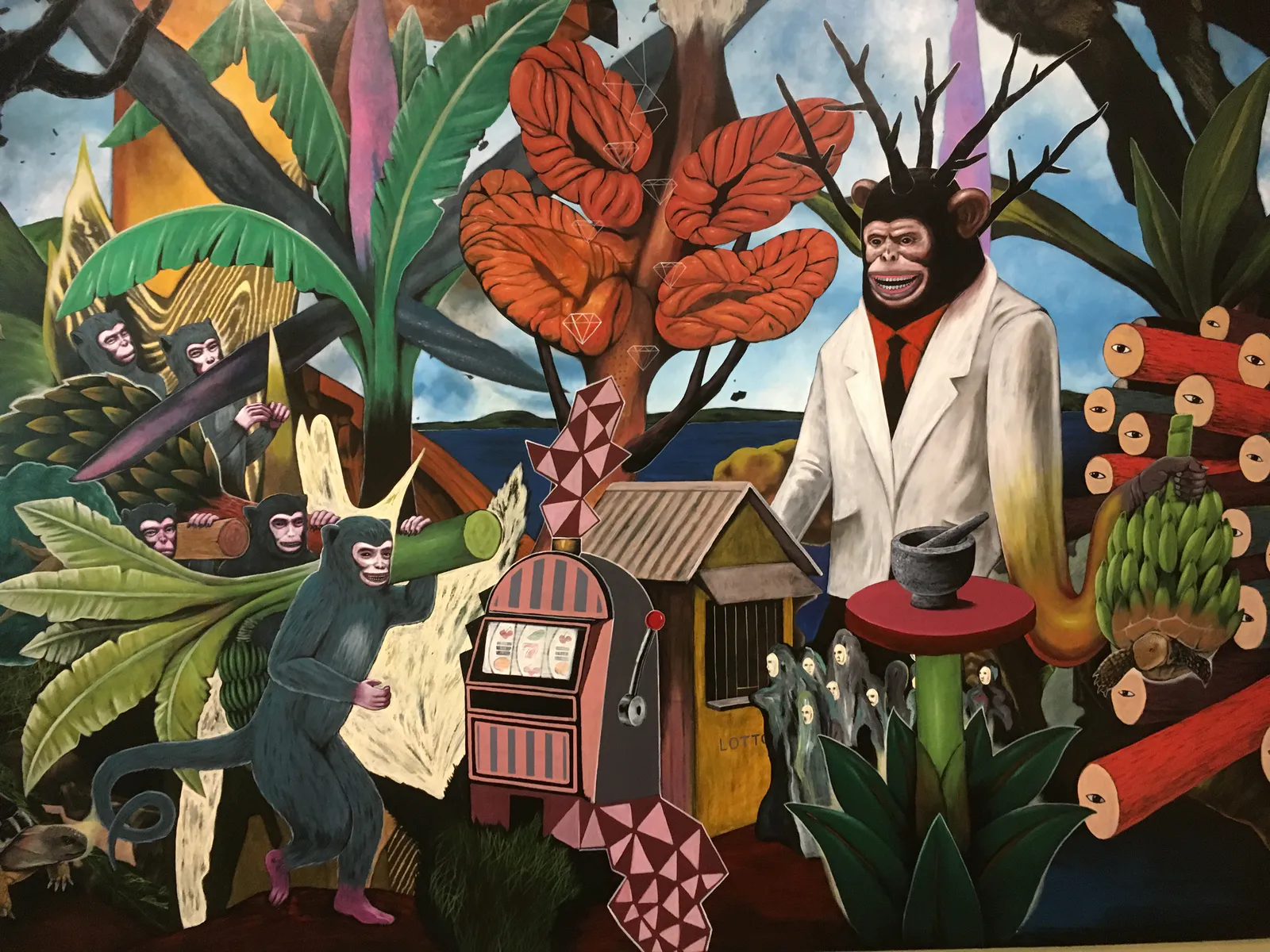
Instant Gratification
Rodel Tapaya
This work (2018) reinterprets the Filipino fable of The Monkey and the Turtle, placing its lesson within a crowded jungle of gambling stalls and restless figures. Monkeys embody the tale’s impatience and hunger for quick gain, while a small turtle-the steady effort outlasts reckless desire. Log piles, patterned trunks, and theatrical foliage frame a world driven by instant gratification and easy profit. Tapaya adapts indigenous storytelling to expose modern cycles of greed.
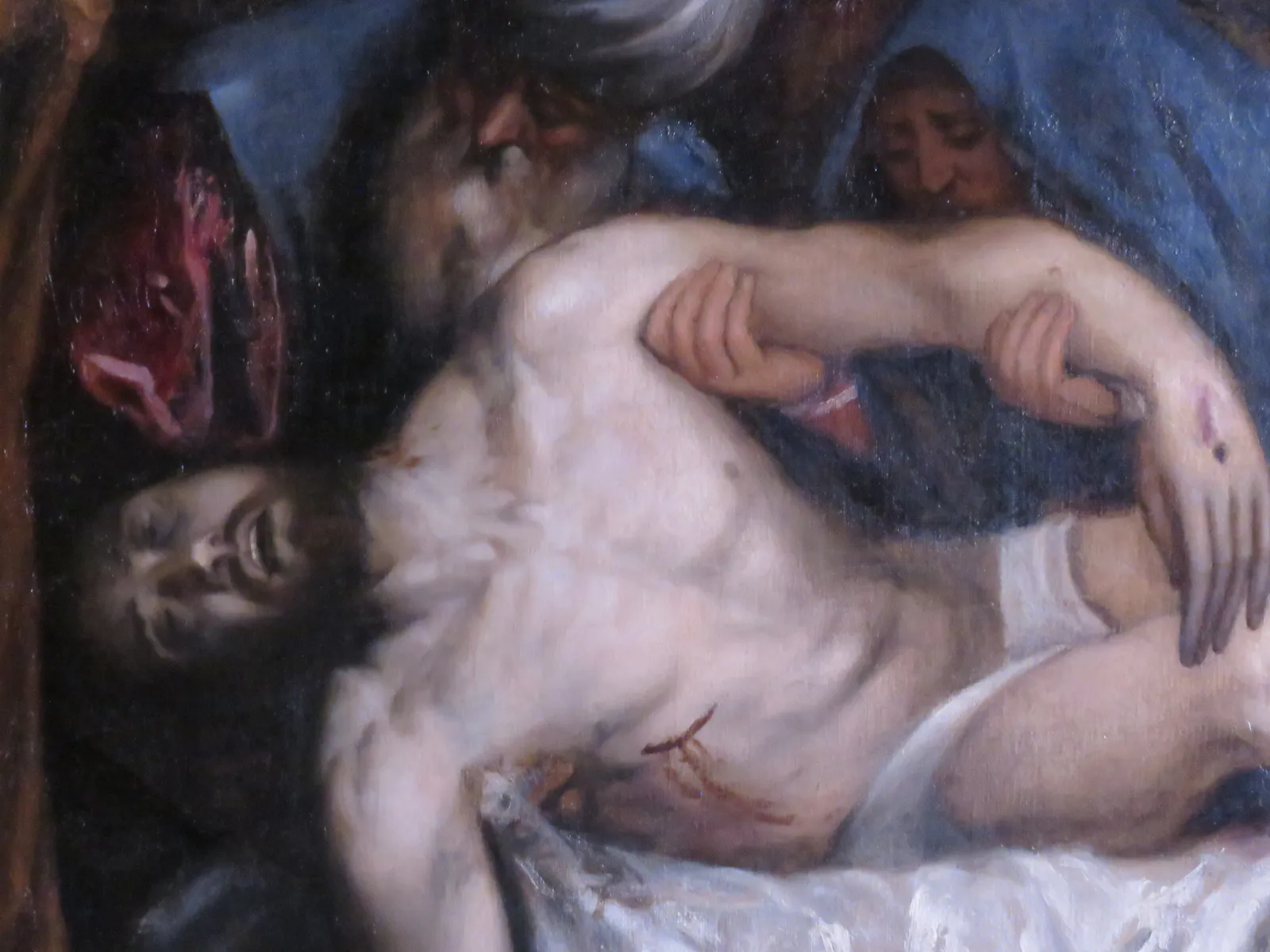
The Entombment of Christ (detail)
Titian and Palma the Younger
This fragment (1618) reveals Christ’s lifeless body marked by crucifixion wounds, cradled with reverence by mourning figures. The interplay of flesh, fabric, and sorrow exemplifies Titian’s emotive realism, while Palma the Younger completes the drama with expressive gestures—honoring human grief and divine sacrifice in one timeless moment.
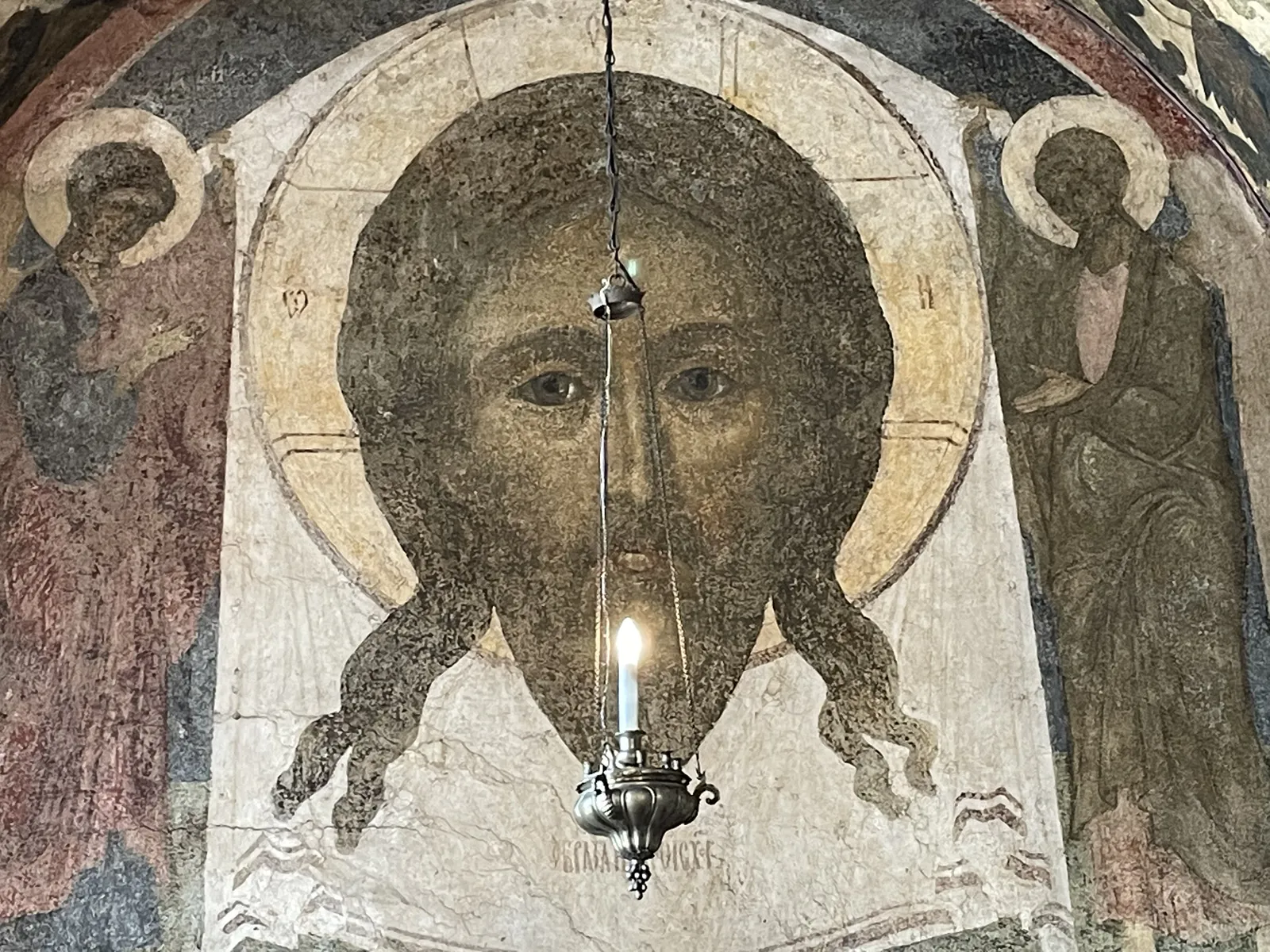
The Saviour Not Made by Hand
Simon Ushakov
This mid–late 17th-c. fresco depicts Spas Nerukotvorny (The Saviour Not Made by Hand), an image understood as a direct imprint of Christ’s face and a sign of his enduring presence. Ushakov follows Byzantine conventions yet introduces soft modeling and spatial depth drawn from Western art. The work reflects a moment when Moscow blended inherited Orthodox forms with new artistic influences to express religious renewal.
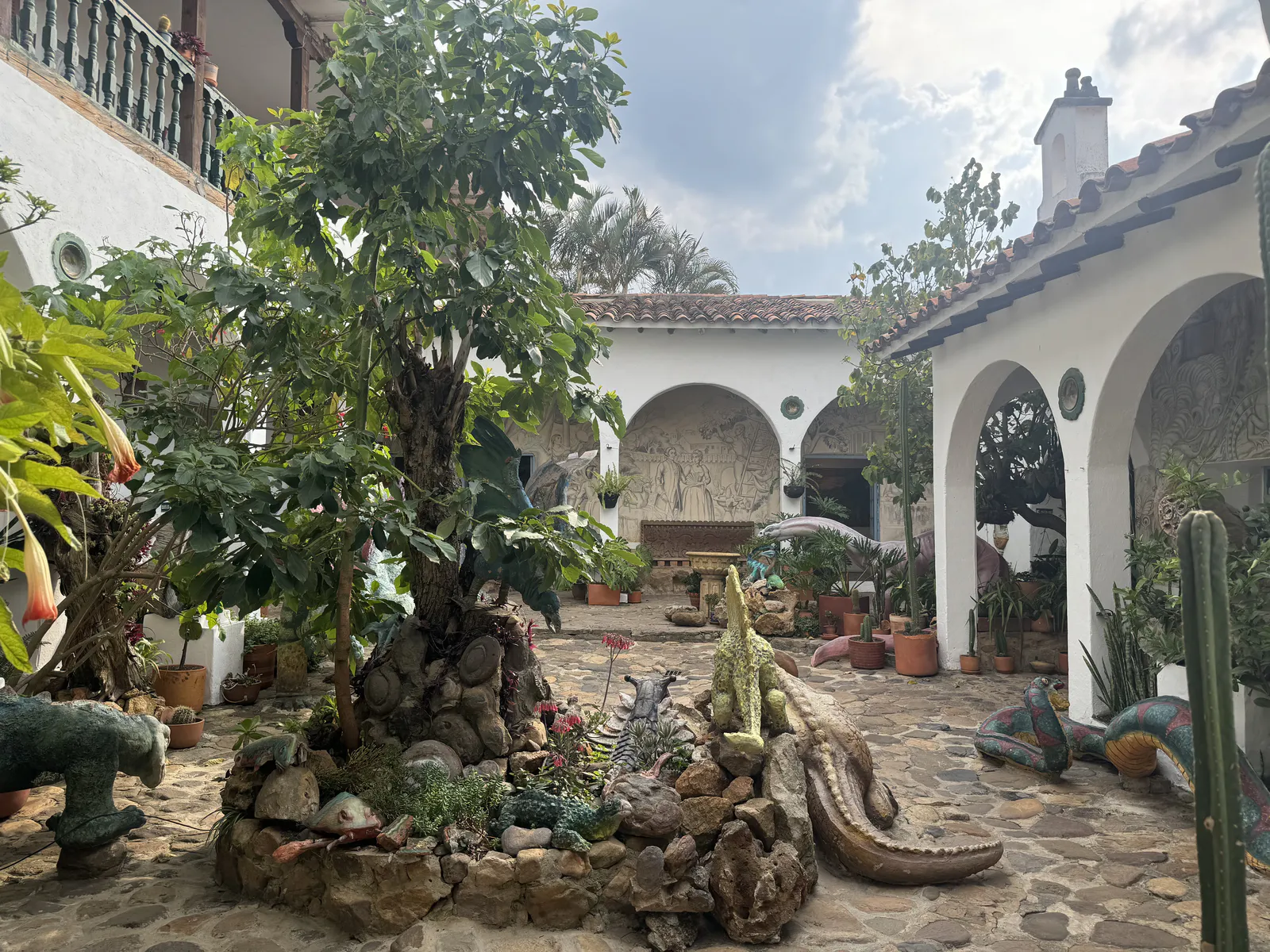
Museum Courtyard
Luis Alberto Acuña
This eclectic courtyard blends colonial architecture with fantastical sculptures and lush vegetation. Dinosaurs, jaguars, and snakes emerge from the stone paths, reflecting Acuña’s imaginative fusion of pre-Columbian, mythological, and surrealist influences.
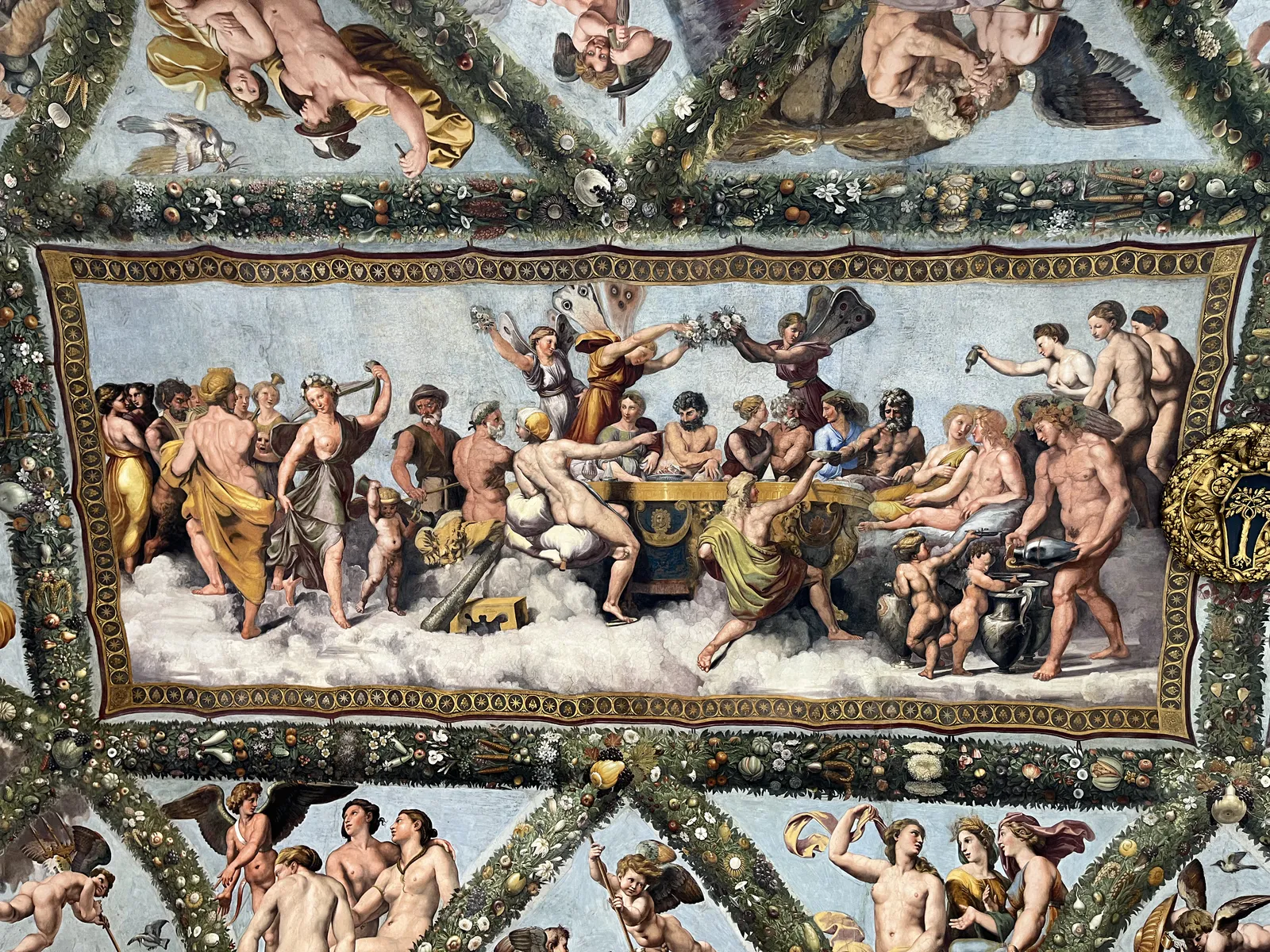
The Wedding Banquet of Cupid and Psyche
Raphael
In this grand fresco (1518), Raphael depicts the divine banquet celebrating the marriage of Cupid and Psyche. At the center, Jupiter and Juno preside; beside them sit Pluto, Persephone, Neptune, and Venus. Ganymede offers wine to Jupiter, while Bacchus (Dionysus), assisted by putti, pours wine at the right. The scene embodies divine harmony, joy, and the union of soul and love.
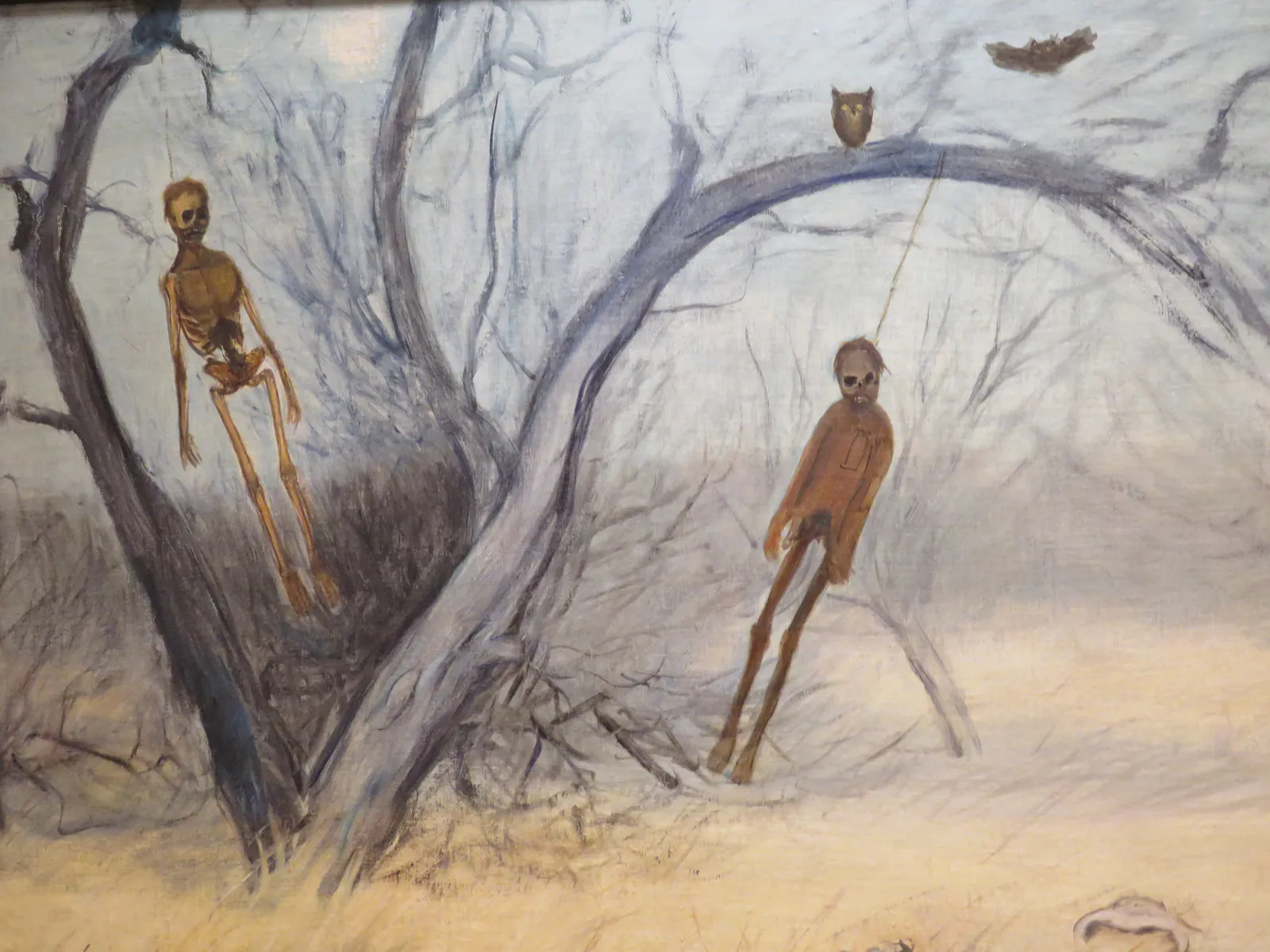
Zacatecas Landscape with Hanged Men
Francisco Goitia
This 1914 canvas exposes the horrors of the Mexican Revolution. Two skeletal corpses hang from a barren tree, their twisted bodies blending with the lifeless landscape, while an owl perches above as a symbol of death. Goitia, who witnessed the battle of Zacatecas, rejected heroic depictions in favor of brutal realism. His work stands as both testimony and condemnation, capturing the trauma of a nation torn by war.
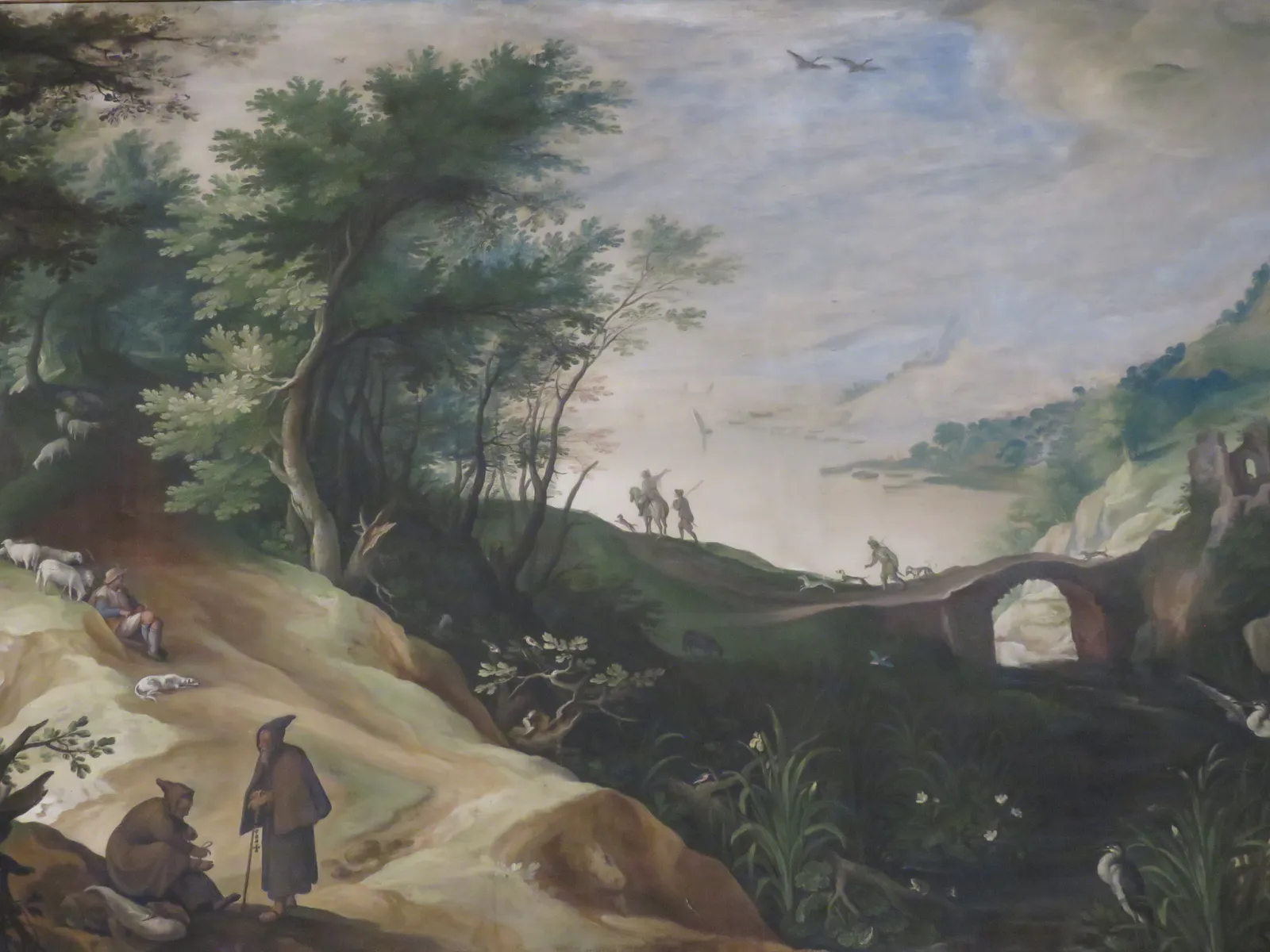
Landscape with Hermits
Paul Bril
This landscape (c. 1600) shows monks gathered in a wooded clearing beneath a broad, luminous sky. Their small figures sit or stand along a path that opens toward distant hills. Such scenes appeared in early Baroque painting, especially in northern regions where sacred retreat was a common theme. The composition indicates how artists linked hermitic life with the ordered quiet of nature.
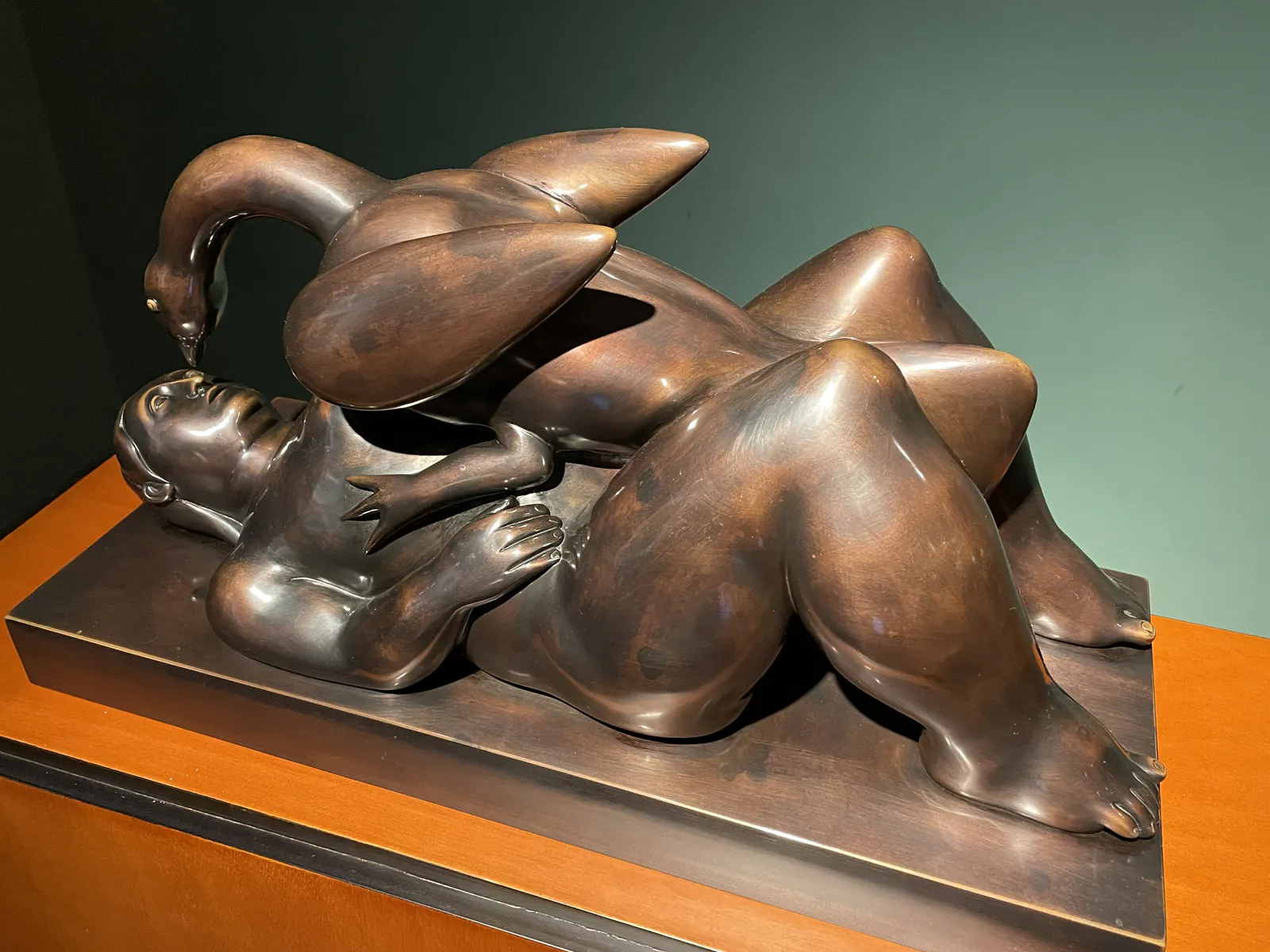
Leda and the Swan
Fernando Botero
This 1996 bronze sculpture reinterprets the myth in which Zeus, king of the gods, seduces or assaults Leda, Queen of Sparta, in the form of a swan. From their union, according to legend, were born Helen of Troy and other heroic figures. Botero’s voluptuous forms soften the myth’s violence, transforming it into a surreal, sensual tableau. His signature style invites reflection on desire, divinity, and the boundary between seduction and power.
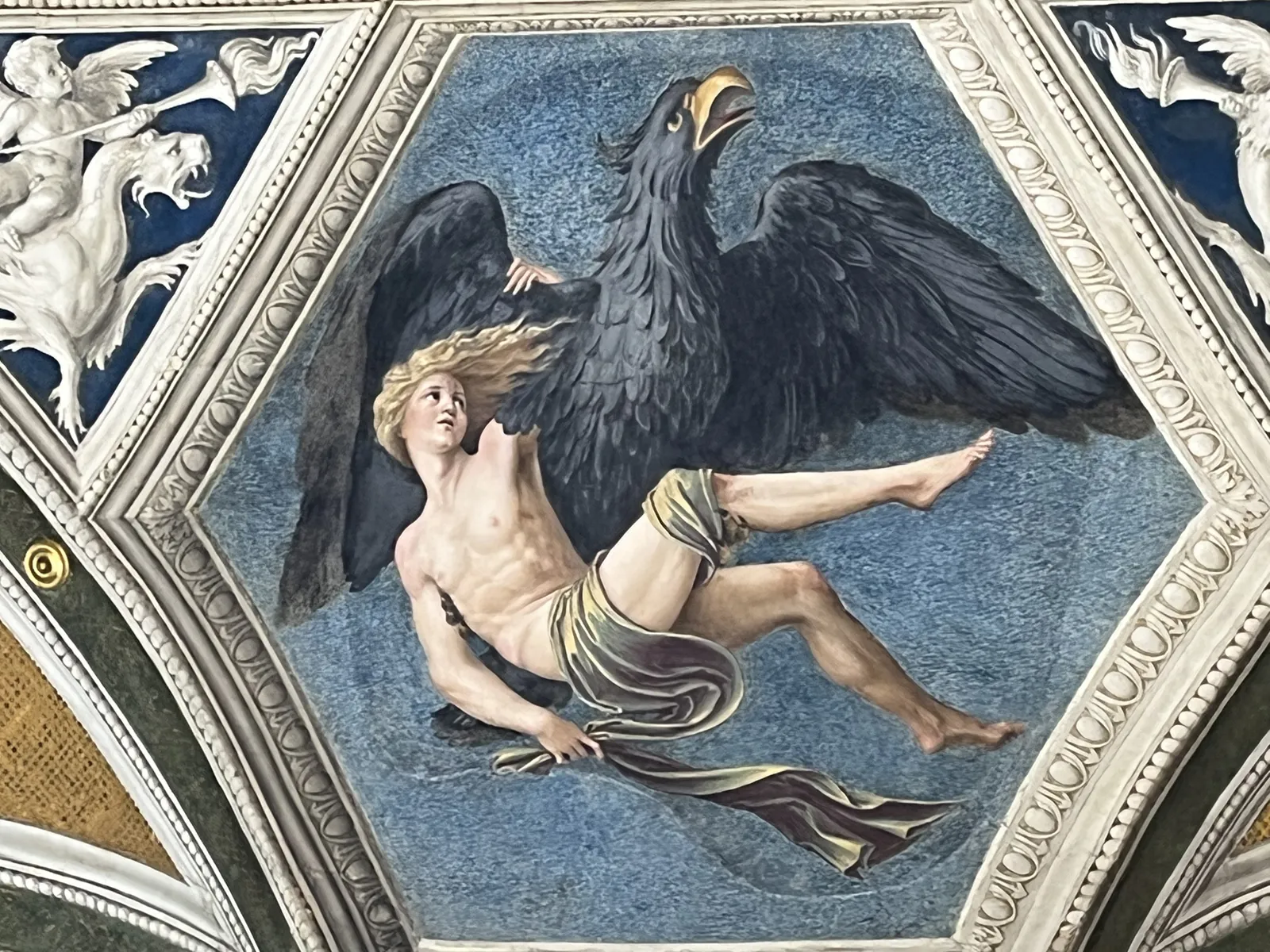
The Rape of Ganymede
Baldassarre Peruzzi
This Renaissance ceiling panel (1509–14) shows Zeus, in the form of an eagle, abducting the beautiful youth Ganymede to Olympus. The myth frames the act as a moment of divine erotic desire, with Ganymede raised to immortal companionship as Zeus’s beloved. The term rape follows the Latin raptus, meaning abduction, not its modern sense.
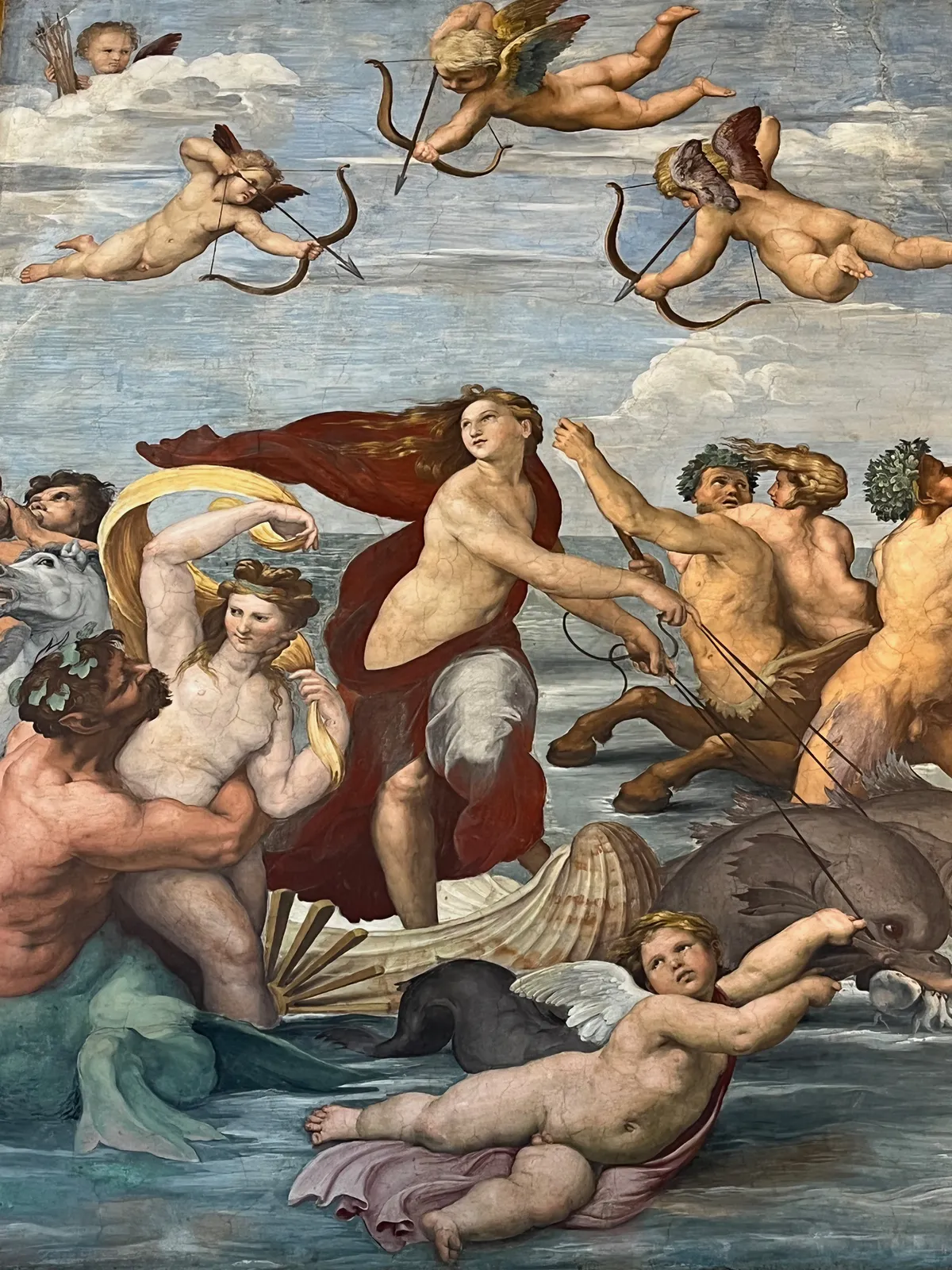
The Triumph of Galatea
Raphael
In this fresco (c. 1512), Raphael transforms Galatea’s myth into a celebration of divine beauty. The sea nymph rides a shell chariot drawn by dolphins (linked to Venus), while cupids shoot arrows symbolizing love’s universal power. Though the original tale includes jealousy and tragedy, Raphael omits them, presenting an idealized vision of harmony and grace.
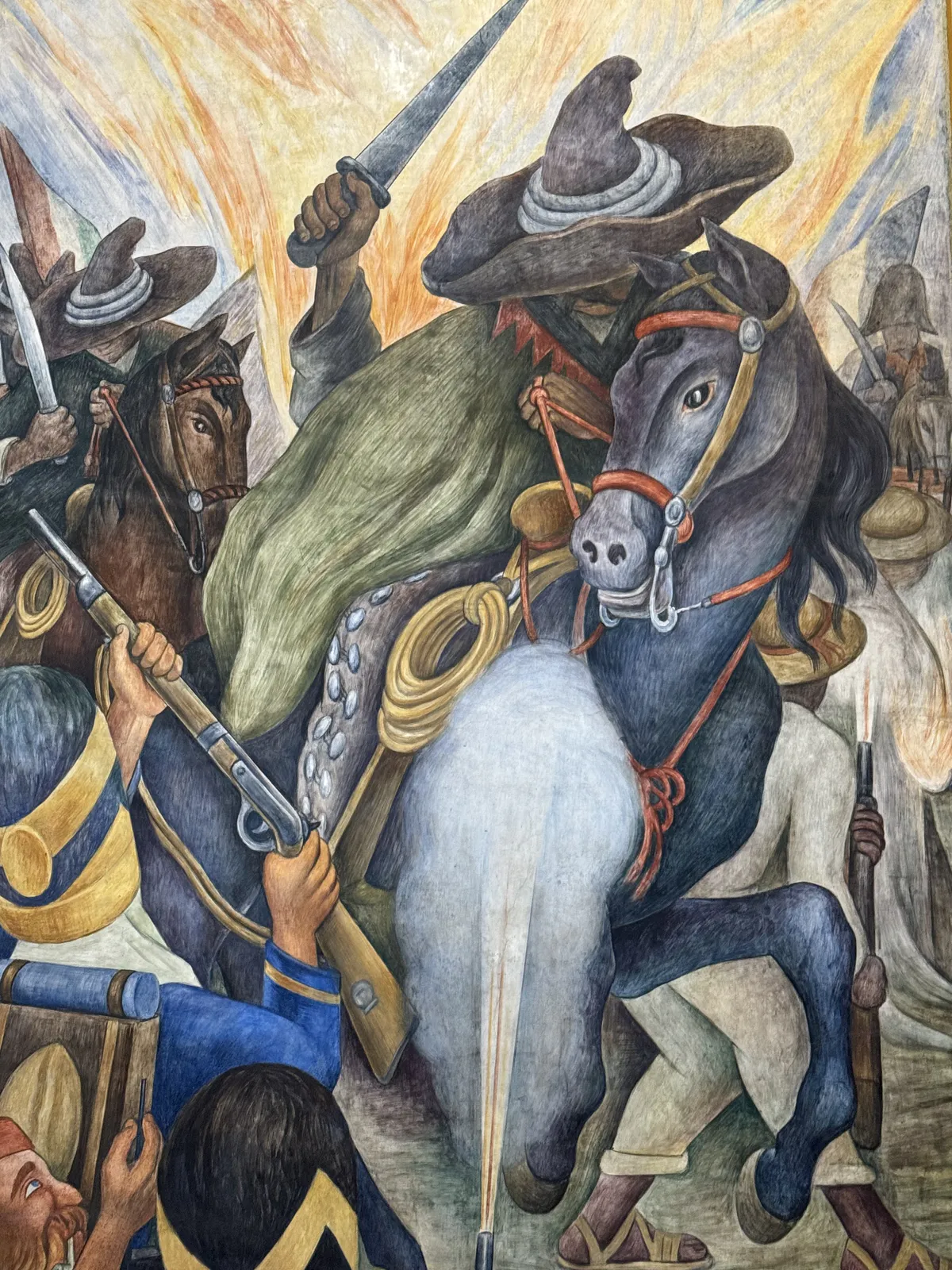
The Legend of Agustín Lorenzo (detail)
Diego Rivera
This 1936 fresco dramatizes the legendary outlaw Agustín Lorenzo as a symbol of resistance. Armed revolutionaries clash with government forces, their horses rearing amid smoke and flames. Rivera fuses myth and history, casting Lorenzo as a Mexican Robin Hood whose defiant struggle against injustice became folklore in the national imagination.
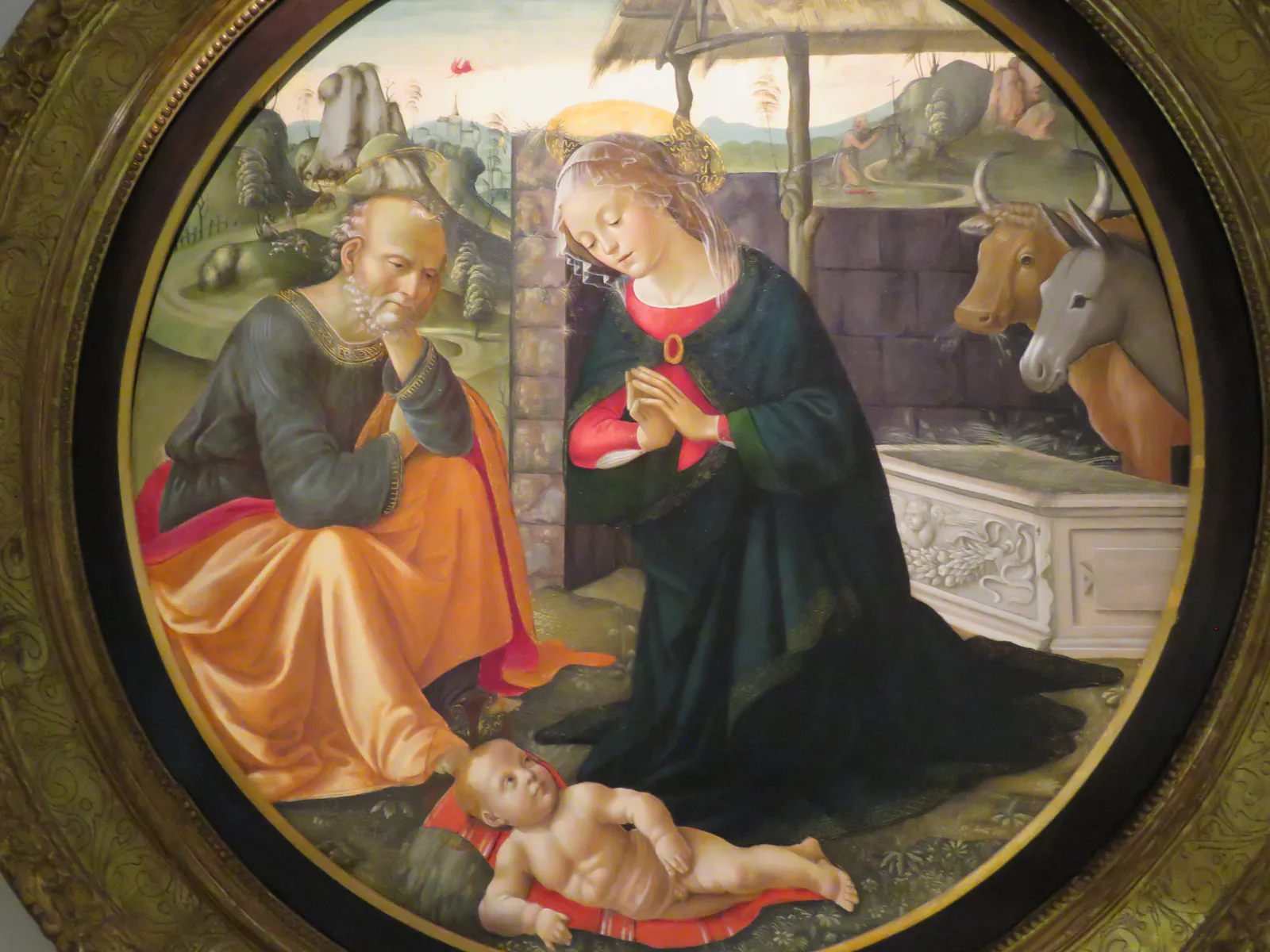
Adoration of the Christ Child
Workshop of Domenico Ghirlandaio
This tondo (c. 1485–1490) shows Mary and Joseph adoring the infant Christ, lying humbly on the earth. The sarcophagus-like manger prefigures his Passion, while the ox and donkey fulfill Isaiah and Habakkuk’s prophecy of animals recognizing the Lord. The scene binds intimacy, humility, and cosmic redemption.
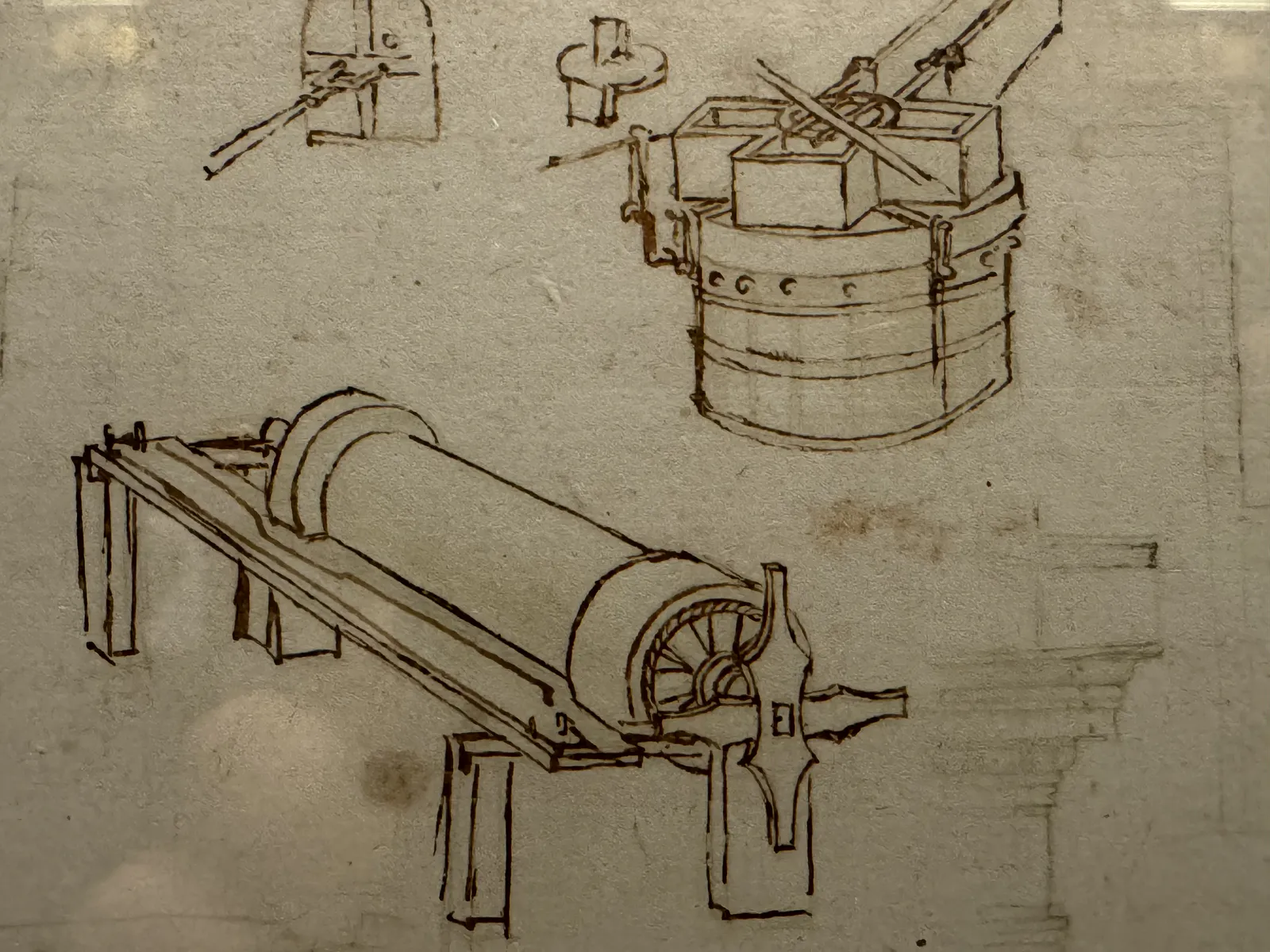
Machine for Polishing Mirrors
Leonardo da Vinci
This technical drawing (c. 1490) shows Leonardo’s device for polishing concave mirrors, likely used in optical or experimental studies. Its mechanism demonstrates advanced knowledge of geometry, motion, and material tension. The design reflects his pursuit of instruments that could extend human perception through mechanical precision.
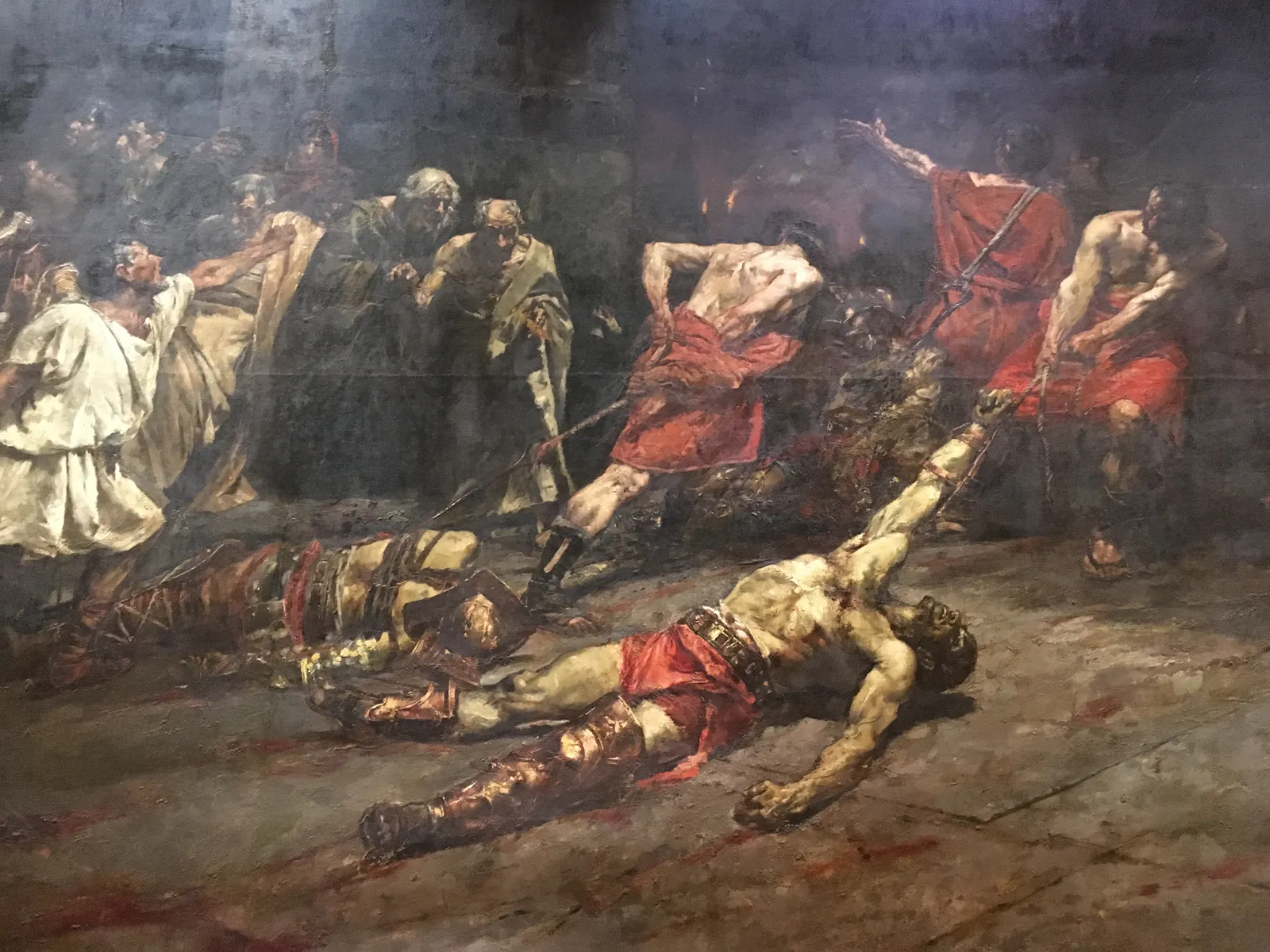
Spoliarium
Juan Luna
This vast 1884 canvas depicts slain gladiators dragged from the Roman arena, their bodies stripped in the spoliarium — the chamber beneath the Colosseum where the dead were despoiled. Luna used the scene as an allegory for the Philippines under Spanish rule, exposing oppression and voicing a nationalist cry for dignity and liberation.
“When the path is beautiful, do not ask where it leads.” — Zen proverb
Welcome to my travel photography!
“When the path is beautiful, do not ask where it leads.” — Zen proverb
Welcome to my travel photography!
For as long as I can remember, my path has been one of discovery—seeking beauty, timelessness, and connection in every corner of the world. It has also been a journey of deep learning and understanding. I’ve been an avid traveler (or perhaps a travel addict?) for most of my life. My love for travel began long before I ever left home: as a child, I drew a fantasy map of my grandparents’ apartment and “traveled” through it with my cousin Sonya, imagining adventures in every corner. Nearly 90 countries and countless moments of awe later, I’m excited to share this journey with you.
Thanks to the tireless and ingenious programming of Diagilev, we’re now able to present about fifteen percent of the images I’ve accumulated over the years. More will be released in small batches depending on your interest. While the first release leans toward museum photography, later ones will include more nature, architecture, culture, and general travel experiences. If you’d like to receive email notifications about new releases, feel free to reach out—no commercial use, ever.
Throughout my travels, I’ve been drawn to two intertwined kinds of discovery. One is intellectual: learning why the world is the way it is. History became my guide, shaping my perspective and filling my camera roll with museums and old buildings. To me, history is not the past—it is the key to understanding the present and how the world became what it is. The other is emotional: seeking moments of elevation—spirituality, beauty, harmony—often found in nature, monasteries, and ancient sacred spaces. Together, these impulses shape my photography. It invites you to learn, admire, and soar—to rise above the mundane and see the world through a lens of curiosity and wonder.
Much of my later travel became possible thanks to my job with Delta Air Lines, but the wanderlust began years earlier. By the time I joined the industry, I had already visited over 35 countries and lived in several—largely thanks to a backpacking journey around the world with Luis León, whose face appears in many early photos. I grew up in Ufa in the USSR, and since leaving it I have lived, studied, and worked in Latvia, the United States, France, South Korea, Canada, Spain, Italy, Brazil, Japan, and Colombia.
A life of near-constant movement may seem a little crazy, but it has deepened my understanding of the world and produced the photography you are about to see. Over the years, my style has evolved—more intentional, more refined—yet its core remains the same: a search for understanding, timeless beauty, and a connection to those who walked this earth long before us.
I hope these photos stir something in your soul, just as they did in mine. I’d love to hear from you—whether reactions, suggestions, corrections, or a request to be added to the email list for new releases (no commercial use, I promise). You can learn more about my travels here, and my academic life here.
Enjoy our shared journey!