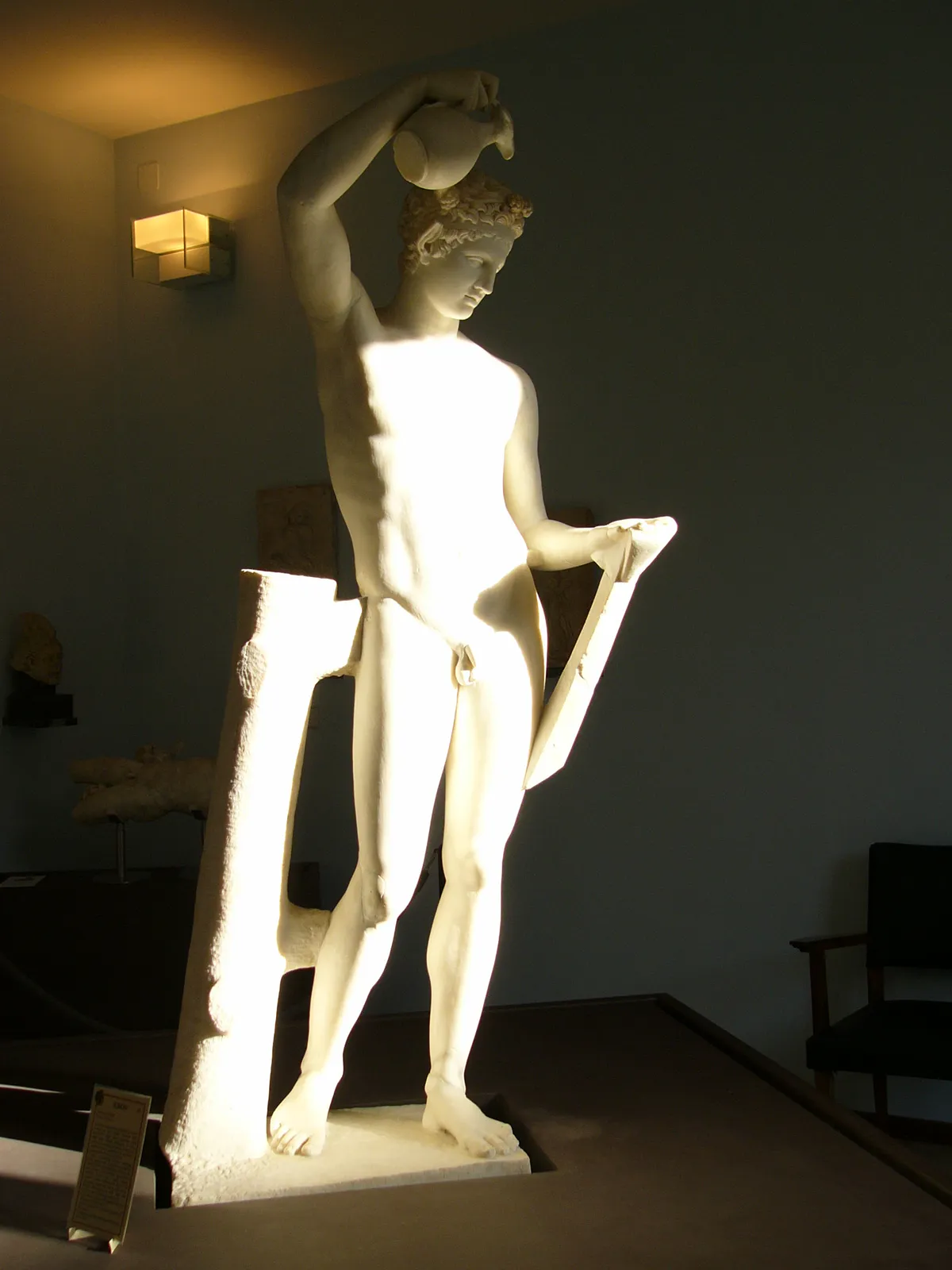
Satyr Pouring Wine
Praxiteles
This Roman marble statue is a copy of Praxiteles’ 4th-c. BC Greek original, depicting a youthful satyr, a companion of Dionysus, pouring wine. Though the pitcher and cup are missing, it captures the revelry and music linked to satyrs. Found near Naples in 1797, it exemplifies Praxiteles’ style with sinuous curves and a naturalistic pose, embodying the carefree spirit of Dionysian myth.
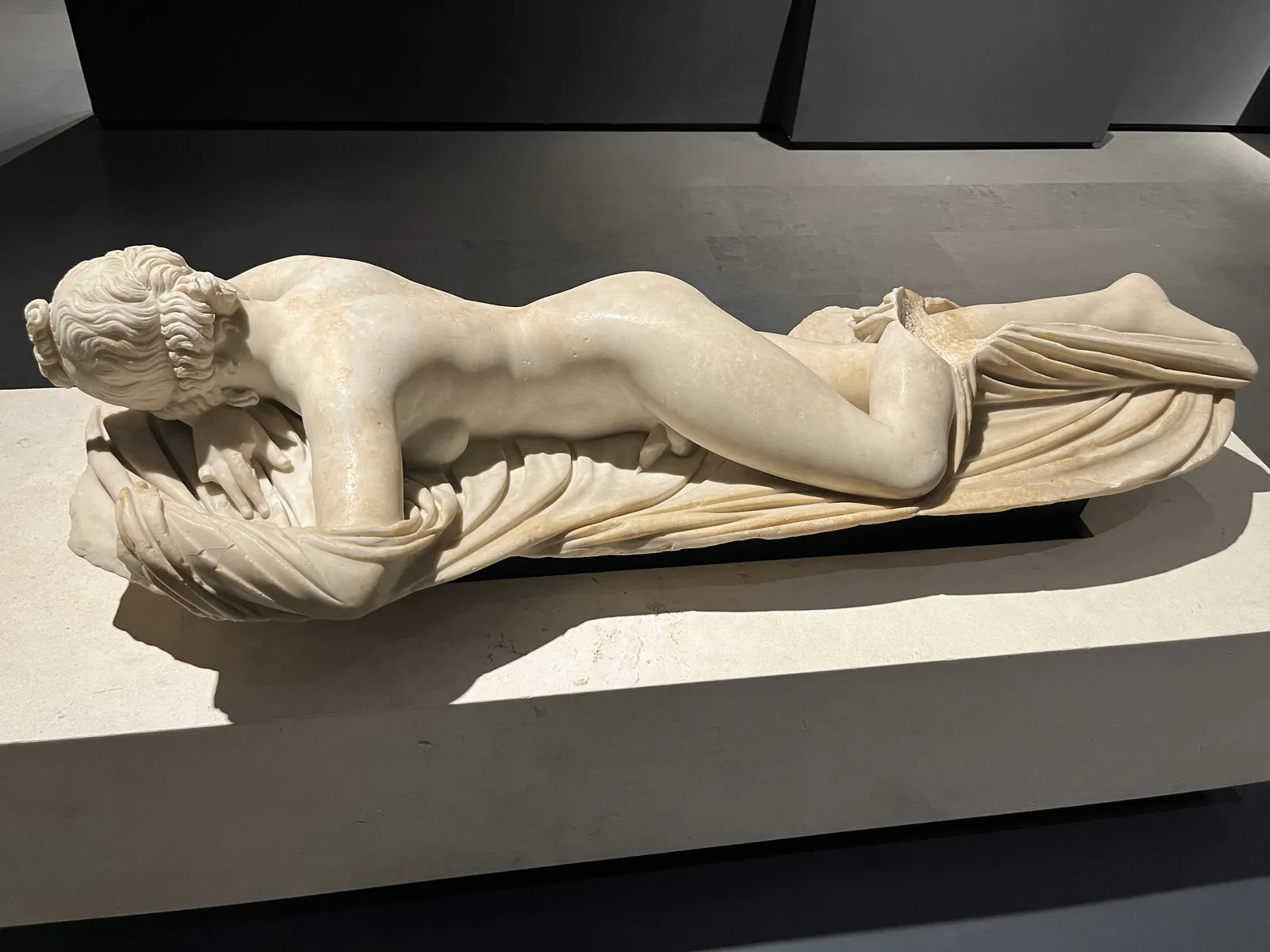
Sleeping Hermaphrodite
This marble sculpture (mid-2nd c.) shows a reclining figure with both male and female traits, resting on a draped couch. It follows a bronze original from the Asia Minor school (2nd c. BC), whose composition invited viewers to walk around and discover the dual anatomy. The work probes ancient ideas of bodily ambiguity, turning the surprise of recognition into a reflection on identity and change.
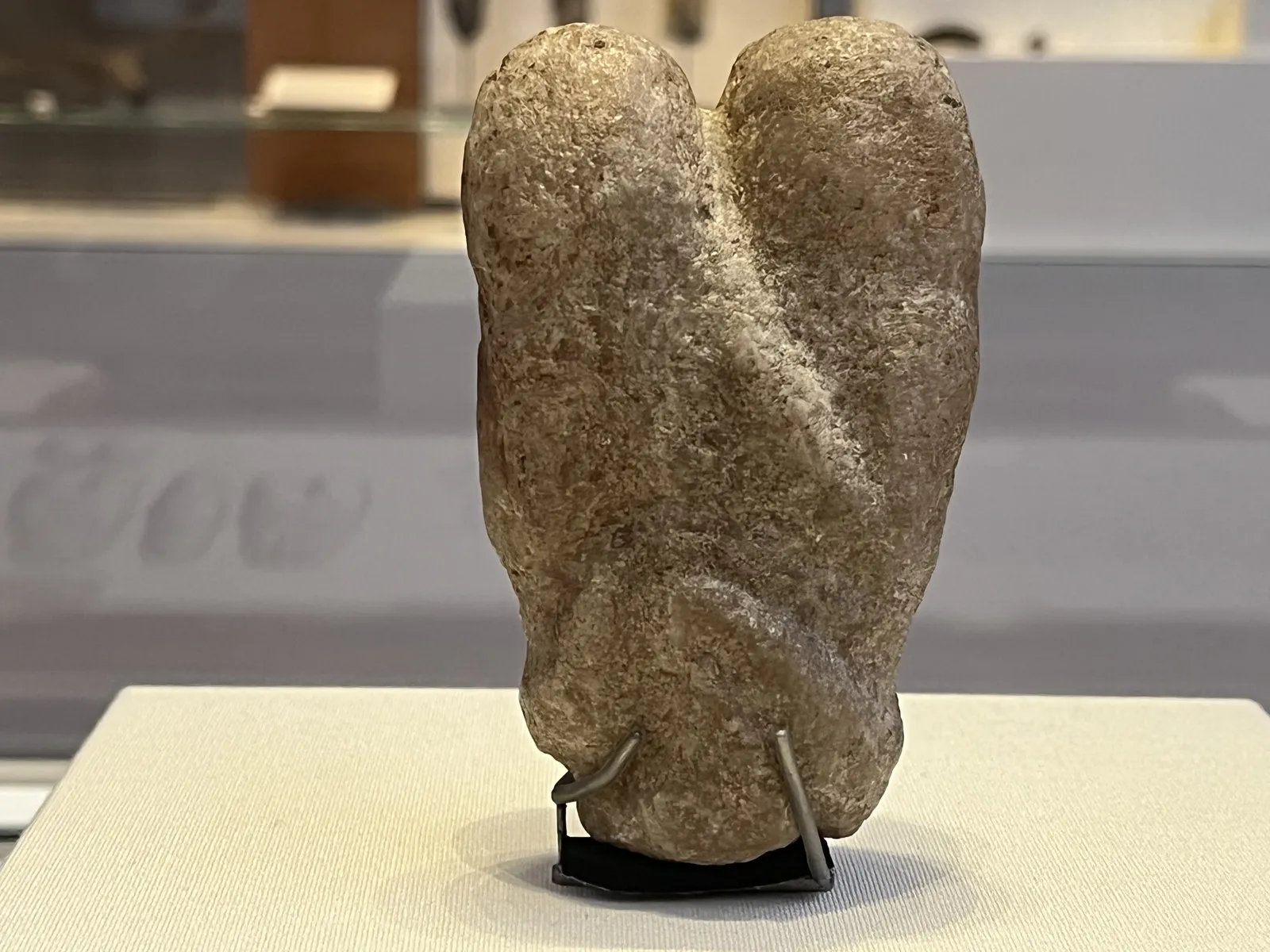
Ain Sakhri Lovers
This calcite figurine (c. 9000 BC) from Bethlehem is the oldest known depiction of two people in an intimate embrace. The forms are deliberately abstract: the curved backs and interlocked shapes read as a couple when viewed one way, but from another angle the piece appears phallic. This intentional ambiguity—shifting between human and sexual imagery—reflects early symbolic views of intimacy, fertility, and the generative power of union.
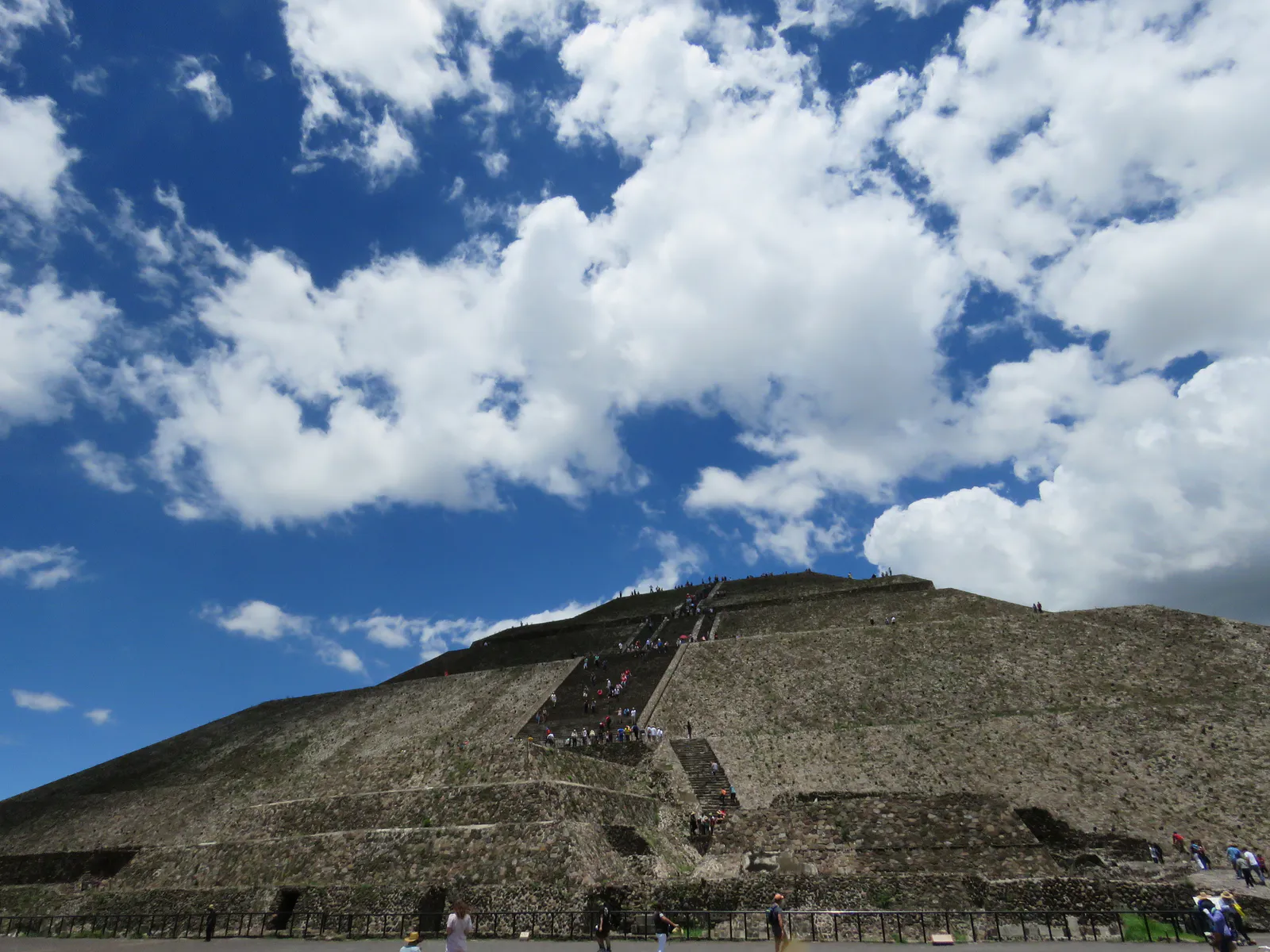
Ascent Toward the Sacred
Seen from below, the Pyramid of the Sun (c. 100) rises sharply into the sky, its steps filled with pilgrims and visitors. In ancient Teotihuacán, climbing its massive tiers was a ritual act—symbolic of moving from the earthly plane toward celestial order and divine communion.
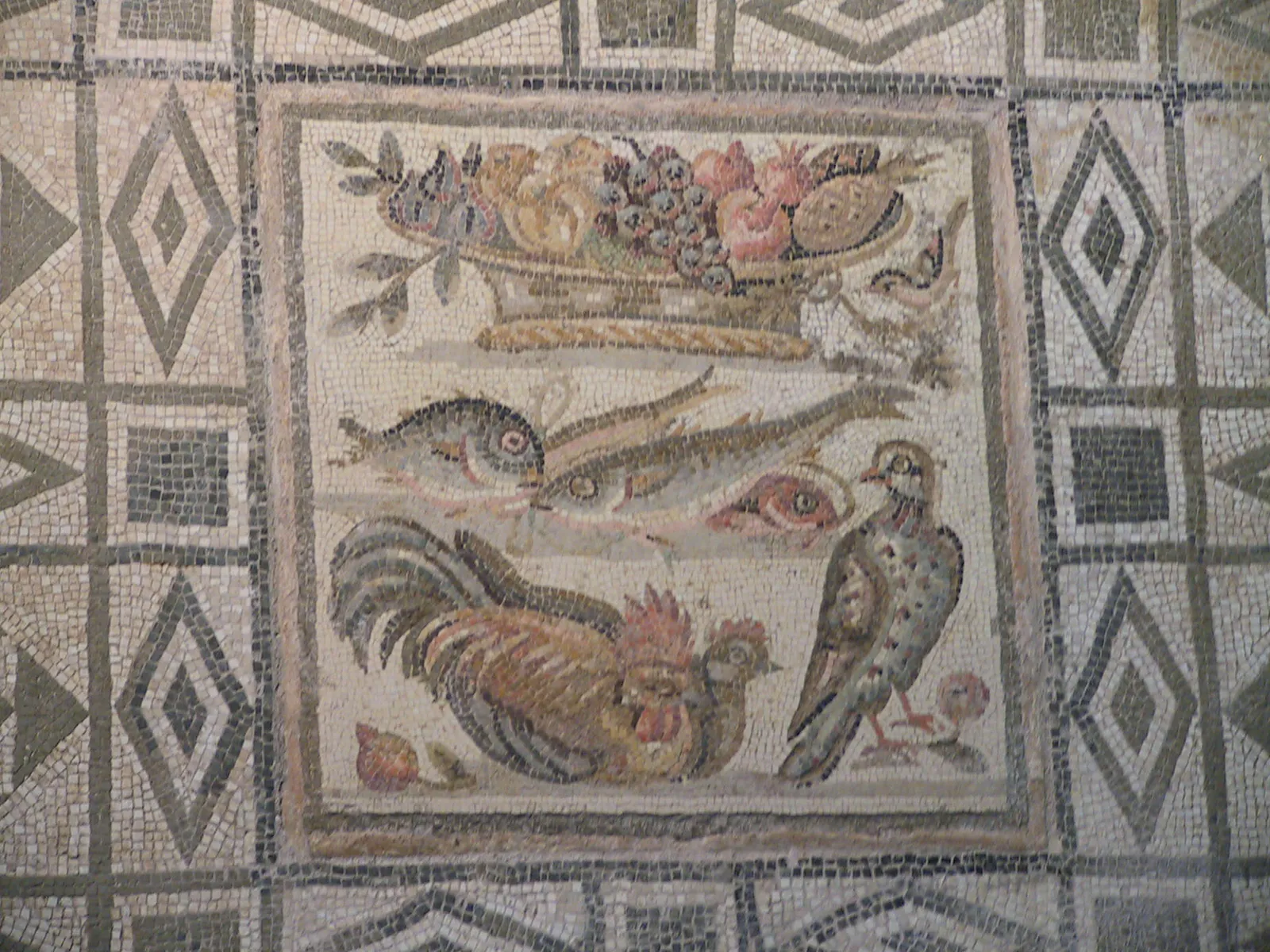
Abundance
This mosaic (2nd–3rd cc.) depicts fruits, fish, and birds, symbolizing abundance and domestic prosperity. Mosaics like this adorned Roman villa floors, reflecting the wealth and refined tastes of their owners. They celebrated nature’s pleasures and the household’s connection to the empire’s bounty, serving as decorative elements and cultural statements that emphasized agriculture and trade’s role in sustaining Roman society.
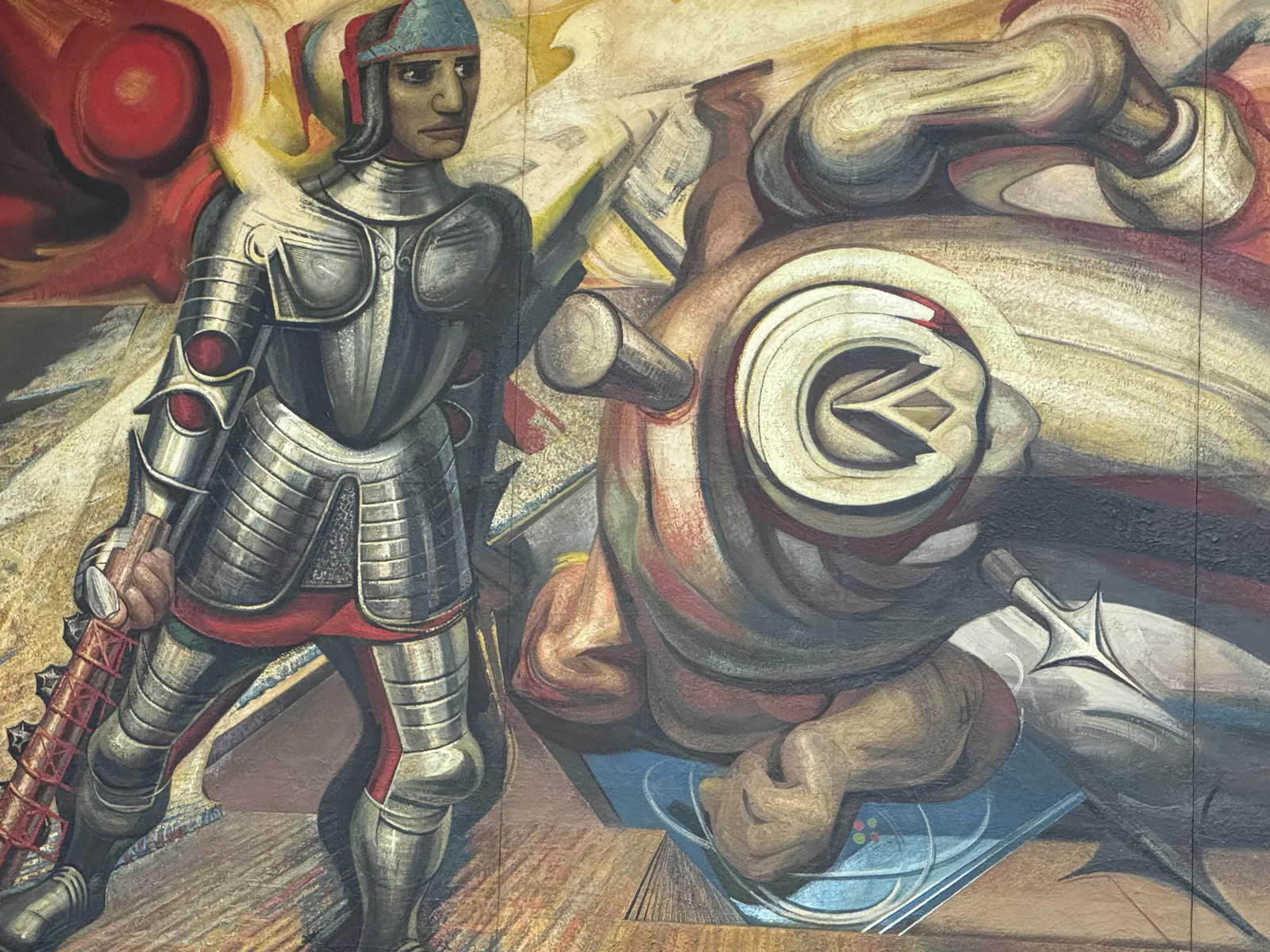
Apoteosis de Cuauhtémoc (detail)
David Alfaro Siqueiros
In this dynamic panel from Apoteosis de Cuauhtémoc (1950–51), Siqueiros reimagines the last Aztec emperor as a defiant figure armored against colonial violence. The clash of Indigenous resistance and mechanized conquest evokes Mexico’s historical trauma and the enduring spirit of revolution. Bold forms and forceful lines heighten the scene’s urgency.
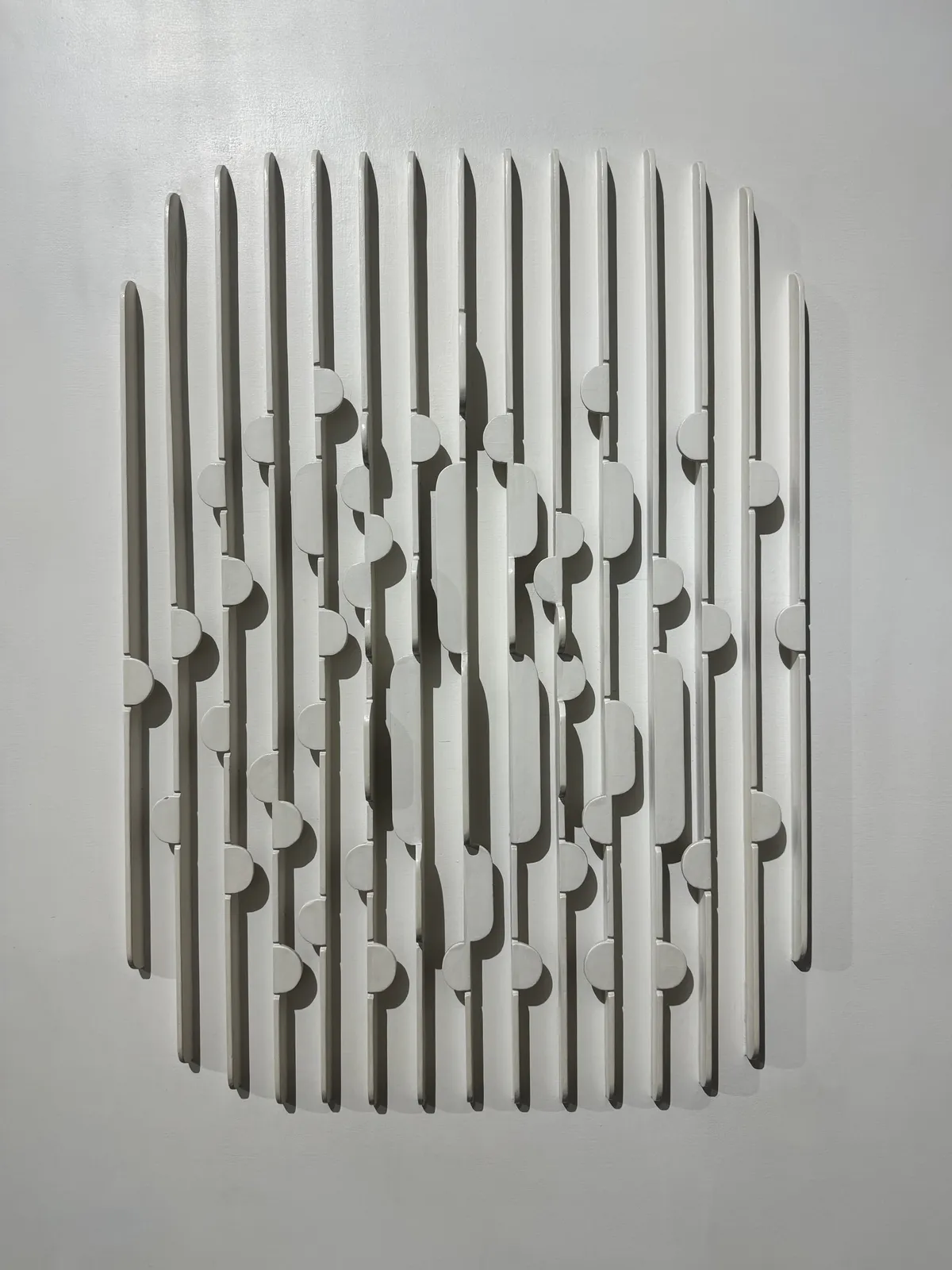
Homage to Vivaldi
Eduardo Ramírez Villamizar
This sculptural relief in painted wood (1963) reflects Villamizar’s fusion of geometric abstraction and musical rhythm. Vertical repetition and modulated forms evoke the structured elegance of Vivaldi’s compositions, transforming sound into visual cadence. It belongs to the museum’s permanent collection.
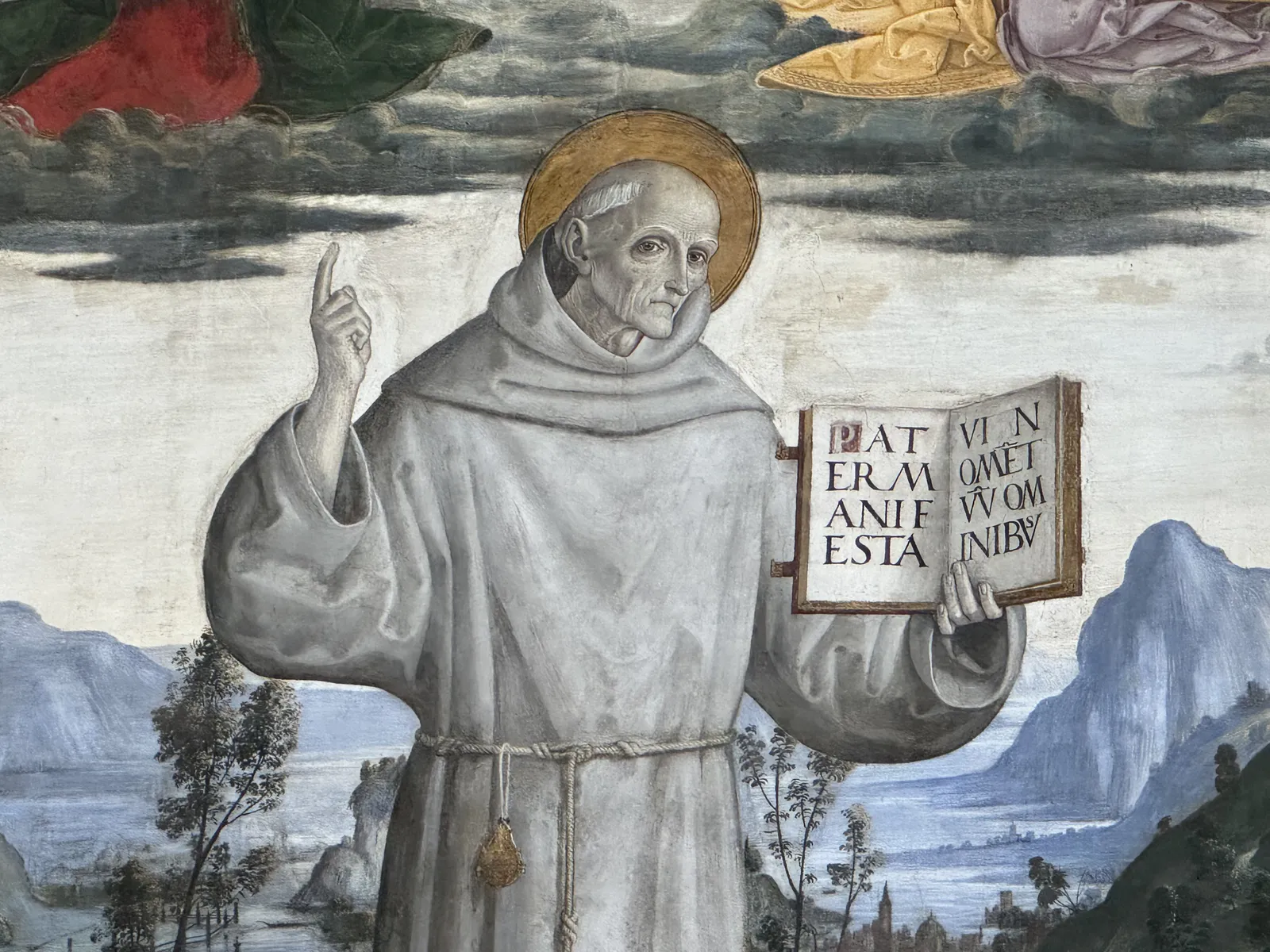
St. Bernardino (Detail)
Pinturicchio
In this detail (1484–1486), Pinturicchio portrays St. Bernardino holding an open book inscribed PATER MANIFESTA NOMEN TUUM OMNIBUS (Father, manifest Your name to all). His raised finger points toward heaven, symbolizing his mission to glorify the Holy Name of Jesus and promote peace amid social discord.
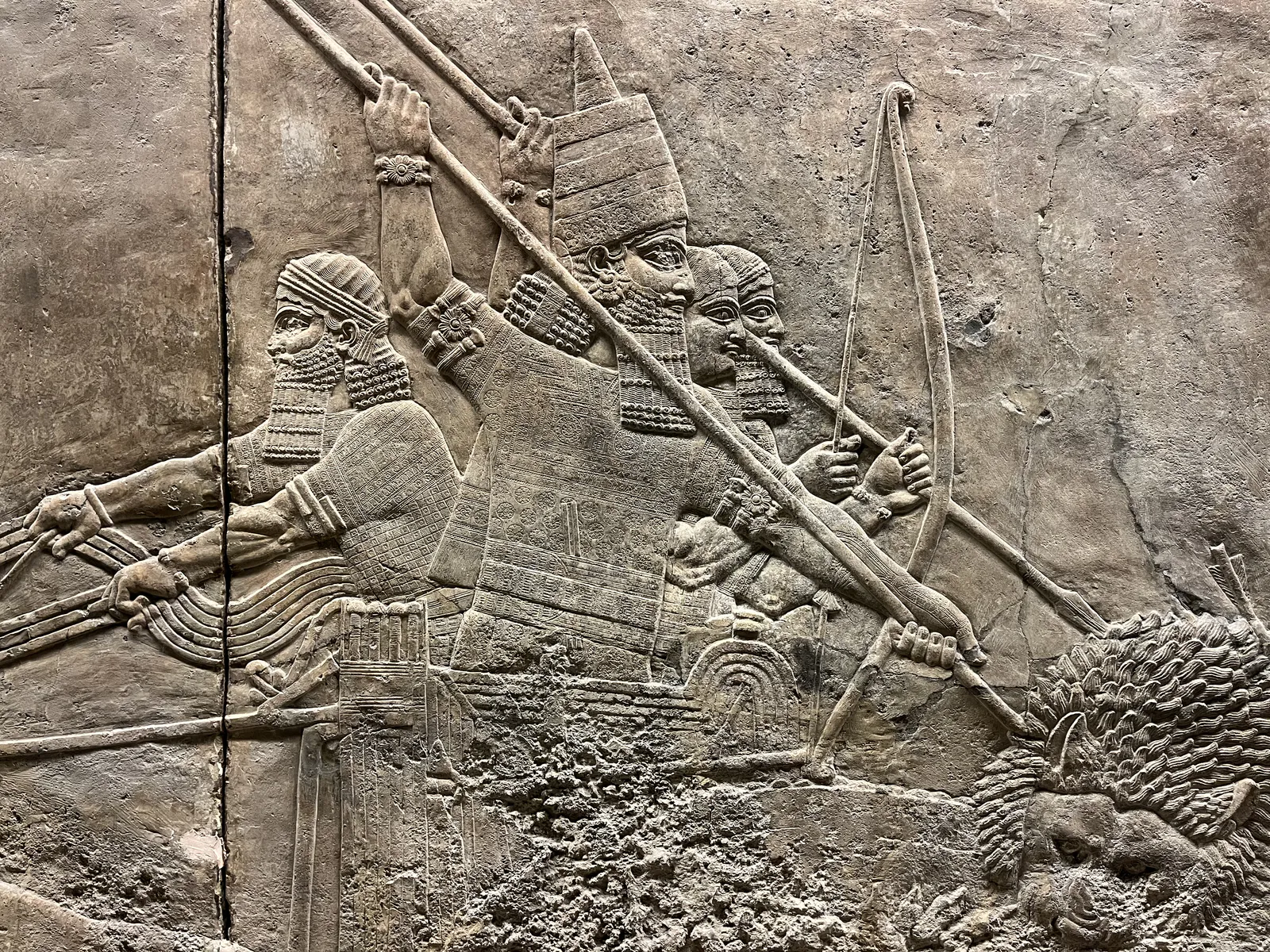
Ashurbanipal Strikes
This 7th-c. BC relief from Nineveh depicts King Ashurbanipal in a chariot, spearing a lion. The dynamic carving symbolizes royal power and valor. The lion’s defiant stance, even in defeat, highlights the king’s dominance over nature’s mightiest creature. Such scenes reinforced the king’s divine right to rule, portraying him as a protector and conqueror of chaos, a central theme in Assyrian royal ideology.
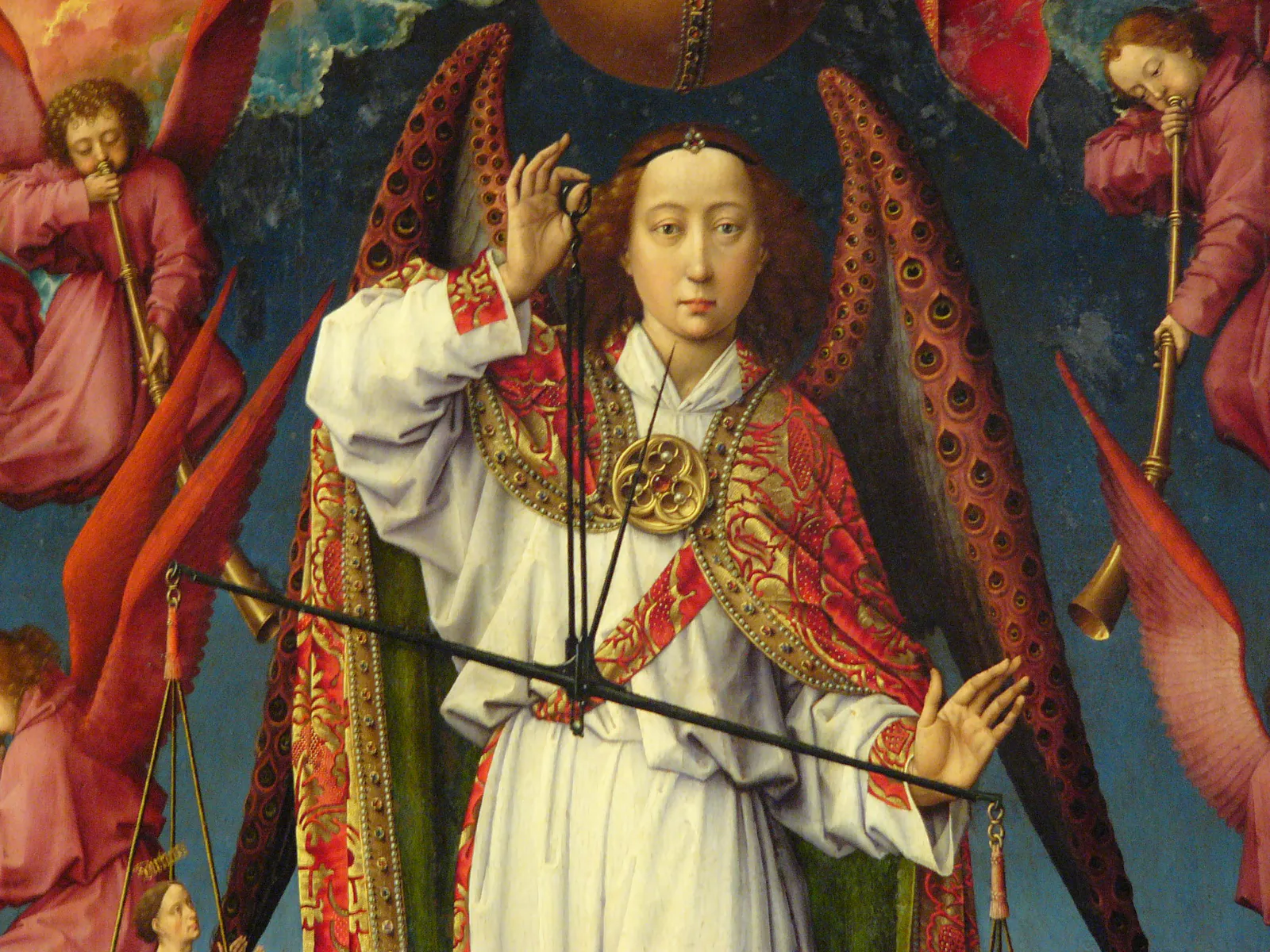
Archangel Michael Weighing Souls
Rogier van der Weyden
Detail from the Last Judgment Altarpiece (1445–50), created for Beaune’s Hôtel-Dieu. Archangel Michael holds scales to weigh souls, his calm gaze contrasting with the cosmic drama around him. Trumpeting angels herald resurrection, while Michael’s jeweled vestments and red wings embody divine authority. For the hospital’s patients, this image linked earthly suffering to the hope of eternal salvation.
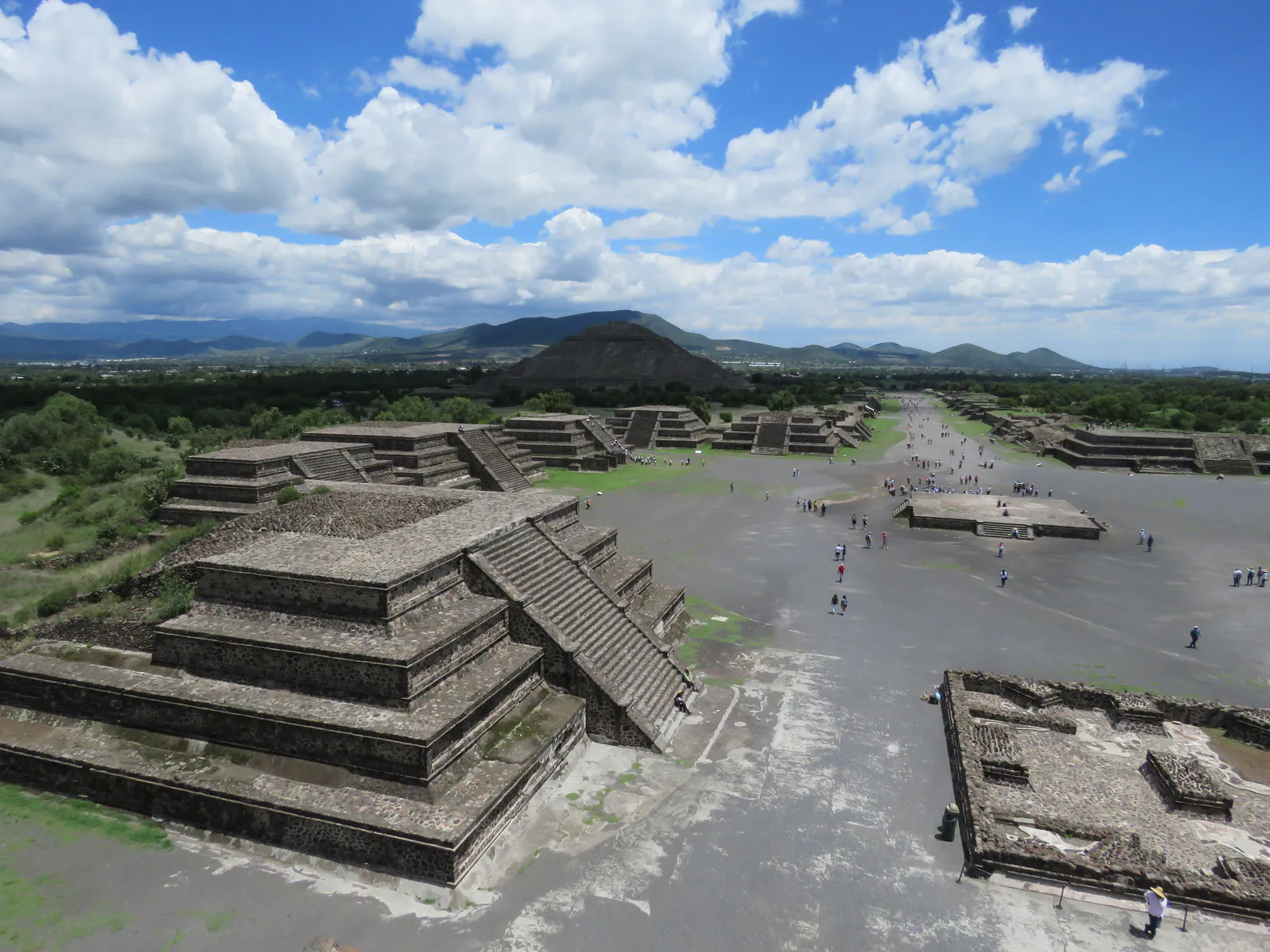
Avenue of the Dead and Pyramid of the Sun
The Aztecs later named this processional route the Avenue of the Dead, believing the flanking stepped platforms were royal tombs. These platforms (c. 100) functioned as ceremonial structures that organized ritual movement along the axis. The avenue culminates at the Pyramid of the Sun, expressing the city’s alignment with sacred and cosmic order.
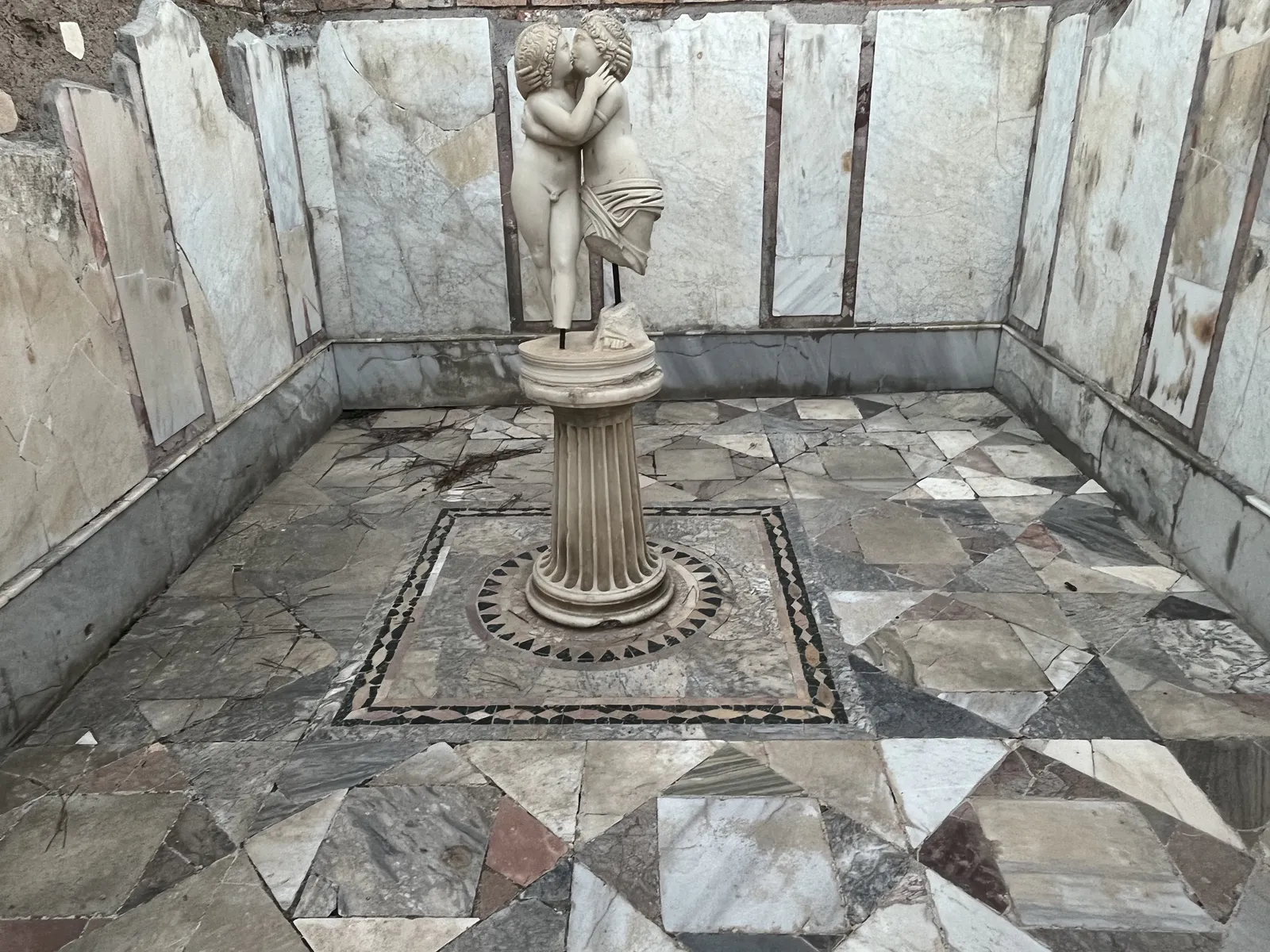
Statue of Cupid and Psyche
This 4th-c. sculptural from the Domus di Amore e Psiche depicts the tender embrace of Cupid and Psyche, symbolizing eternal love and the soul’s union with desire. Positioned within a marble-clad chamber, the piece crowned the luxurious decor, blending intimacy, myth, and refined domestic aesthetics.
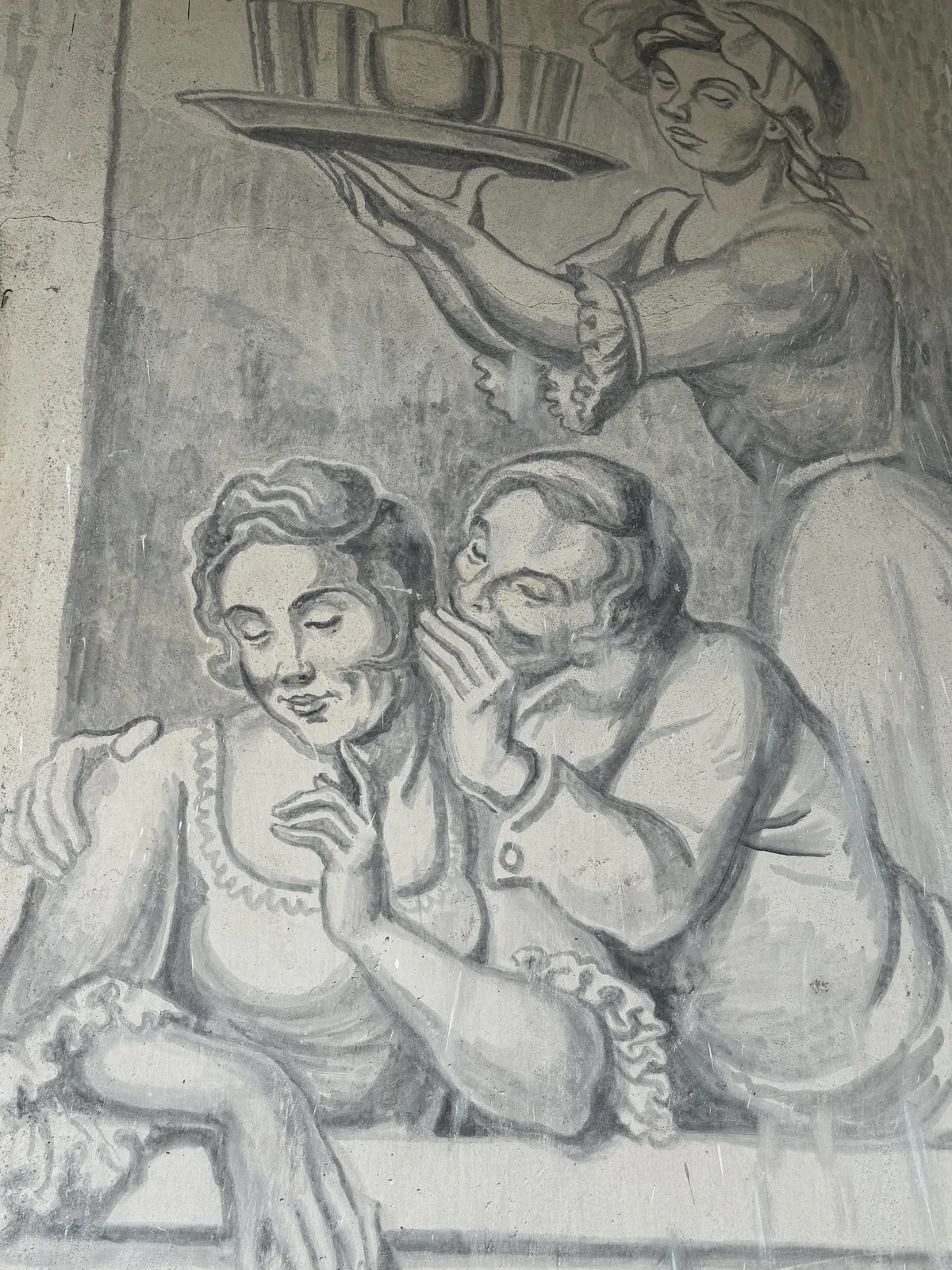
A Dangerous Whisper
Luis Alberto Acuña
This mural (1950s) by Luis Alberto Acuña depicts a man whispering seductively into a woman’s ear while she listens with a mix of curiosity and restraint. The intimate gesture contrasts with the servant above, who quietly performs her duties, reinforcing themes of gender dynamics, social roles, and the tension between desire and decorum in colonial society.
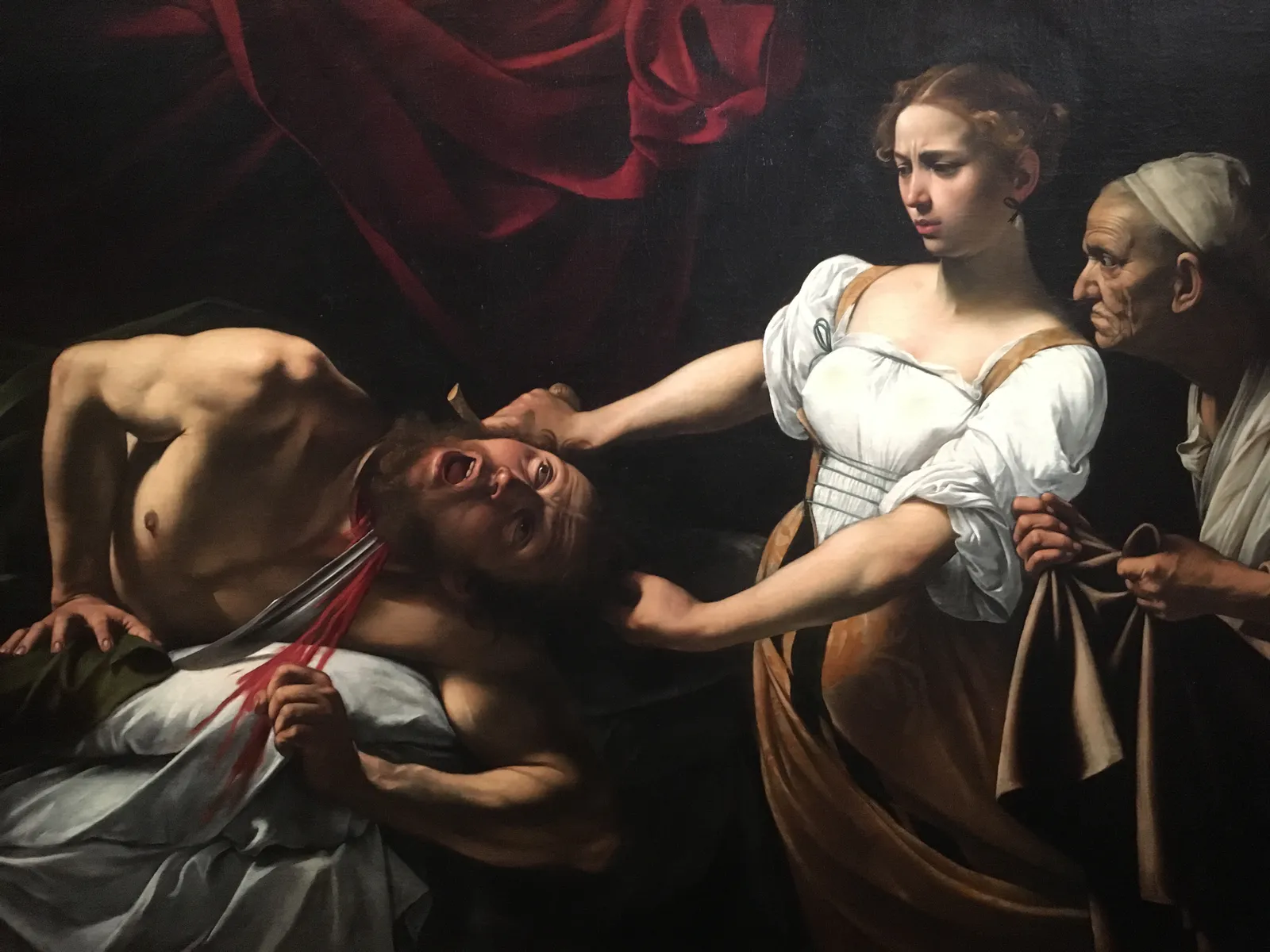
Judith Beheading Holofernes
Caravaggio
This canvas (c. 1599) painted in Rome embodies Caravaggio’s radical realism and theatrical chiaroscuro. Judith, a young widow, slays the Assyrian general Holofernes to save her people. Her calm determination contrasts with his violent death and the maid’s aged pragmatism. By staging sacred violence with unflinching naturalism, Caravaggio redefined biblical painting as a drama of human courage and divine justice.

Boy Resting on a Fishing Pirogue
A boy stretches across the prow of a hand-painted fishing canoe, basking in the afternoon sun. These pirogues, adorned with symbols and names of saints, serve both work and leisure. The moment captures coastal life where tradition, faith, and youthful joy drift together on the tides.
Explore the world through my eyes: begin with the image below, the map, the dropdowns above, or the search button. Every photo includes a thoughtful caption.
Explore the world through my eyes: begin with the image below, the map, the dropdowns above, or the search button. Every photo includes a thoughtful caption.
When the path is beautiful, do not ask where it leads.
My travels have always been shaped by two intertwined forms of discovery. One is intellectual: learning why the world is the way it is. History became my guide, drawing me toward museums, old cities, architecture, and the layers of meaning carried by places. The other is emotional: the search for beauty, harmony, and moments of elevation, often found in nature, monasteries, and sacred spaces.
Together, these impulses shape how I travel, what I photograph, and how I interpret what I see. This site is my way of sharing that lifelong learning in visual form—one image at a time, with enough context to deepen curiosity and understanding. I hope these photographs leave you with a sense of wonder and a deeper feeling for the world.
Now let’s explore together.