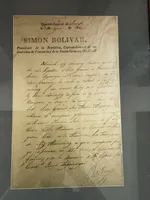
Grant of Property to Anzoátegui
News of General Anzoátegui’s Sudden Death
Bolívar had barely left Pamplona when, on December 19, a messenger reached him with the news that General Anzoátegui had died there on the 15th. The announcement shocked him: they had only just parted, and Anzoátegui had seemed healthy, ambitious, and full of hope. O’Leary wrote that Anzoátegui was a brave and capable soldier whose love for his homeland and hostility toward Spain guided his actions. His premature death created an immense and painful loss for the army, leaving a void difficult to fill.
Bolívar’s Bold Strategy Against Spain’s Reconquest
In 1815 Spain launched a forceful reconquest. General Pablo Morillo sailed from Cádiz with 10,000 soldiers, imposing a harsh Regime of Terror for nearly five years. With Viceroy Sámano’s support, he executed independence leaders and spread fear, but also intensified patriot resolve. After pacifying New Granada, Morillo moved to Venezuela in 1816, leaving Sámano with a small force.
From Jamaica and Haiti, Bolívar and Anzoátegui prepared resistance and, after returning to Venezuela, faced alternating victories and setbacks. On May 23, 1819, they met in Setenta with Venezuelan officers to plan the next phase. Bolívar proposed invading New Granada first, where discontent was stronger, royalist forces weaker, and support greater—especially from the army organized in Casanare by Francisco de Paula Santander. As Morillo noted, Bolívar defeated is more dangerous than victorious.
After agreeing, the troops crossed the flooded Llanos: swamps, deep rivers, constant rain, hunger, exhaustion, and soldiers half-naked after days soaked to the waist. Anzoátegui wrote that only such hardened men could endure the crossing. After 180 km, Bolívar met Santander in Tame, uniting their armies and beginning the campaign that would lead to the victory at Boyacá.
From Jamaica and Haiti, Bolívar and Anzoátegui prepared resistance and, after returning to Venezuela, faced alternating victories and setbacks. On May 23, 1819, they met in Setenta with Venezuelan officers to plan the next phase. Bolívar proposed invading New Granada first, where discontent was stronger, royalist forces weaker, and support greater—especially from the army organized in Casanare by Francisco de Paula Santander. As Morillo noted, Bolívar defeated is more dangerous than victorious.
After agreeing, the troops crossed the flooded Llanos: swamps, deep rivers, constant rain, hunger, exhaustion, and soldiers half-naked after days soaked to the waist. Anzoátegui wrote that only such hardened men could endure the crossing. After 180 km, Bolívar met Santander in Tame, uniting their armies and beginning the campaign that would lead to the victory at Boyacá.
The Battle of Pantano de Vargas: Turning the Tide in 1819
After resuming the march, clashes erupted in Gámeza and in Tópaga—one of the bloodiest fights of the campaign—though without a decisive outcome. On 25 July 1819, Bolívar launched a new attack on Barreiro to sever his communications with Santa Fe, block reinforcements, and advance toward Tunja. The royalists, positioned advantageously, forced the patriots to retreat, but renewed efforts regained ground. The battle raged with shouts, commands, and gunfire as the patriots again fell back with heavy losses. Certain of victory, Barreiro pressed on until Bolívar called to Rondón: Colonel, save the homeland. Anzoátegui and Santander attacked as well, and the desperate patriot charge shattered the enemy lines, creating chaos and securing key positions. Nightfall and rain ended the daylong fight in the marshy terrain. The royalists withdrew to Paipa, pursued by patriot cavalry, while captured weapons, horses, and uniforms were gathered to equip local militias. The Battle of Pantano de Vargas marked the beginning of the end of Spanish domination.
Anzoátegui’s Origins: From Noble Roots to Hardship
On 14 November 1789, José Antonio Cayetano de la Trinidad Anzoátegui Hernández was born in Barcelona, Venezuela. His father, José Anzoátegui, was a distinguished and wealthy Spaniard of Basque origin, and his mother, Petronila Hernández, came from a family with noble titles. Over time, the family’s economic situation deteriorated, forcing them into more modest social conditions. The future hero’s surname, Anzoátegui—meaning place of thorns in Basque—seemed to foreshadow both family hardships and José Antonio’s arduous life.
His siblings were Pedro María, Joaquín, Agustín, Juan José, and Juana Dolores; Agustín and Juan José also became soldiers. José Antonio studied in his native city and soon entered the military academy of the Spanish colonel Sebastián de Blesa, where he learned army discipline, fortification building, and the basics of military tactics.
His siblings were Pedro María, Joaquín, Agustín, Juan José, and Juana Dolores; Agustín and Juan José also became soldiers. José Antonio studied in his native city and soon entered the military academy of the Spanish colonel Sebastián de Blesa, where he learned army discipline, fortification building, and the basics of military tactics.
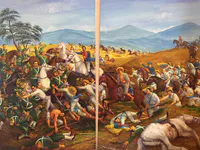
Battle of Vargas Swamp
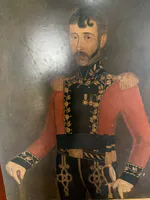
José Antonio Anzoátegui
Anzoátegui’s Final Days and Sudden Death in Pamplona
After the victory at Boyacá, Bolívar received public honors in Santa Fe de Bogotá, accompanied by Anzoátegui, Santander, and their troops, before turning to a new campaign toward Venezuela. He created the Army of the North under Anzoátegui’s command in Pamplona, a strategic base for movements toward Bucaramanga, Cúcuta, and the Venezuelan frontier. Anzoátegui’s mission was politically and militarily critical: to keep Sámano and Morillo apart, control the Llanos, advance toward Venezuela’s liberation, and prepare for the capture of Maracaibo. He and Bolívar parted on November 8, and on the 13th Anzoátegui submitted his final report. The next day he fell suddenly ill and died on November 15 at age thirty. Accounts cite either apoplexy during a birthday celebration or an epidemic such as typhus. His sudden death cut short the shared goal of helping secure Venezuela’s independence—achieved in 1821—and deprived the young republic of one of its most dedicated commanders.
Descent Toward Tunja: Survival in the High Andes
Above 3,500 meters, soldiers from the hot plains struggled for breath. The route was marked by bones and crosses left by earlier travelers. Mountain sickness struck men and animals; one woman in the column gave birth. Horses died of exhaustion, ammunition was lost, and many soldiers fell ill or froze—Santander called the army a dying body. When Bolívar hesitated, Anzoátegui encouraged him to continue. After finally crossing the cordillera, the descent brought relief. Residents near Socha provided food and clothing to help the troops recover. Bolívar reorganized the force and advanced toward Tunja, while Barreiro’s attempt to block the liberators proved unsuccessful.
Crossing the Andes: Bolívar’s Perilous Mountain Gamble
To penetrate New Granada, Bolívar considered three possible routes and chose the steepest and most difficult, which allowed him to evade and surprise the enemy: crossing the Andes through the Páramo de Pisha. Near Paya, the patriots defeated a Spanish detachment and continued toward the icy heights. Horses and provisions were scarce, clothing was miserable, and weapons insufficient. Bolívar planned the ascent in stages, organising the army into two divisions: the vanguard under Santander and the rearguard under Anzoátegui, with battalions such as Rifles, Barcelona, Guías de Apure, Carabineros, Bravos de Páez, the British Legion, and the squadrons of Rondón and Infante.
The enemy now was the untamed mountain. It rained day and night; icy winds swept down from granite cliffs; torrents and slippery paths clung to endless precipices. The animals found only moss to eat. O’Leary wrote that each summit revealed others still higher, whose peaks seemed to vanish into the sky. Men from the hot plains gasped for breath above 3,500 metres, passing bones and crosses that recalled earlier failures. Altitude sickness plagued soldiers and beasts; blows sometimes served to rouse them. One woman in the column gave birth on the march. Anzoátegui crossed the páramo at Bolívar’s side. Mounts died of exhaustion, and along the route lay scattered food and ammunition. Sick and frozen, many soldiers perished; the army, Santander recalled, was a dying body. Yet the cordillera was finally conquered.
On the descent, the climate softened. With help from sympathisers near Socha, survivors, weapons, and supplies were gathered. The priest and mayor collected blankets, hats, trousers, sandals, and even women’s nightgowns; peasant women cooked their best dishes for the exhausted victors of the heights. Bolívar issued new orders and resumed his plan to reach Tunja, sending reconnaissance missions ahead. Barreiro tried to block the liberators’ advance, but in vain: the unexpected expedition had already opened the road to victory.
The enemy now was the untamed mountain. It rained day and night; icy winds swept down from granite cliffs; torrents and slippery paths clung to endless precipices. The animals found only moss to eat. O’Leary wrote that each summit revealed others still higher, whose peaks seemed to vanish into the sky. Men from the hot plains gasped for breath above 3,500 metres, passing bones and crosses that recalled earlier failures. Altitude sickness plagued soldiers and beasts; blows sometimes served to rouse them. One woman in the column gave birth on the march. Anzoátegui crossed the páramo at Bolívar’s side. Mounts died of exhaustion, and along the route lay scattered food and ammunition. Sick and frozen, many soldiers perished; the army, Santander recalled, was a dying body. Yet the cordillera was finally conquered.
On the descent, the climate softened. With help from sympathisers near Socha, survivors, weapons, and supplies were gathered. The priest and mayor collected blankets, hats, trousers, sandals, and even women’s nightgowns; peasant women cooked their best dishes for the exhausted victors of the heights. Bolívar issued new orders and resumed his plan to reach Tunja, sending reconnaissance missions ahead. Barreiro tried to block the liberators’ advance, but in vain: the unexpected expedition had already opened the road to victory.
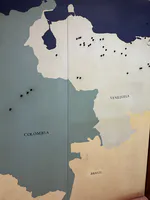
Campaign Map of General Anzoátegui
The Battle of Boyacá and the Final Triumph of Freedom
The Sublime Freedom: Boyacá
A month after descending from the Andes, Bolívar had reinforced and re-equipped his army. He seized Paipa, forcing Barreiro to retreat, studied the terrain, strengthened intelligence networks, and kept his plans in strict secrecy. The new soldiers of liberty received training and discipline. On the night of 5 August, the army silently changed course toward Santafé, even banning smoking to avoid detection. Santander commanded the vanguard, Anzoátegui the centre, with Córdoba as his lieutenant. The patriotic forces numbered 3,420 veterans and recruits; the royalists had 2,940 men and artillery.
On 7 August the two sides met. Bolívar again ordered Barreiro’s communications cut. The battle began at two in the afternoon; half an hour later, the royalists crossed the bridge of Boyacá, but Bolívar occupied key positions and unleashed heavy fire. Anzoátegui hurled his brave soldiers against the enemy with great effectiveness, supported by Santander. His strategic skill proved decisive: the Spaniards were split, suffered heavy losses, and many fled. Barreiro was captured and the victory total. The war bulletin declared that nothing compared to the boldness with which General Anzoátegui, leading two battalions and a cavalry squadron, attacked and defeated the enemy’s main body. Overwhelmed by defeat, Viceroy Sámano fled in secret; Anzoátegui pursued him as far as Nare, taking numerous prisoners. Less bloody and shorter than other battles, Boyacá nonetheless sealed the definitive triumph of the liberating forces. After one hundred days of campaigning, the horrible night of five years of reconquest ended, and on 7 August 1819 the independence of New Granada was secured, with Anzoátegui playing an extraordinary part.
A month after descending from the Andes, Bolívar had reinforced and re-equipped his army. He seized Paipa, forcing Barreiro to retreat, studied the terrain, strengthened intelligence networks, and kept his plans in strict secrecy. The new soldiers of liberty received training and discipline. On the night of 5 August, the army silently changed course toward Santafé, even banning smoking to avoid detection. Santander commanded the vanguard, Anzoátegui the centre, with Córdoba as his lieutenant. The patriotic forces numbered 3,420 veterans and recruits; the royalists had 2,940 men and artillery.
On 7 August the two sides met. Bolívar again ordered Barreiro’s communications cut. The battle began at two in the afternoon; half an hour later, the royalists crossed the bridge of Boyacá, but Bolívar occupied key positions and unleashed heavy fire. Anzoátegui hurled his brave soldiers against the enemy with great effectiveness, supported by Santander. His strategic skill proved decisive: the Spaniards were split, suffered heavy losses, and many fled. Barreiro was captured and the victory total. The war bulletin declared that nothing compared to the boldness with which General Anzoátegui, leading two battalions and a cavalry squadron, attacked and defeated the enemy’s main body. Overwhelmed by defeat, Viceroy Sámano fled in secret; Anzoátegui pursued him as far as Nare, taking numerous prisoners. Less bloody and shorter than other battles, Boyacá nonetheless sealed the definitive triumph of the liberating forces. After one hundred days of campaigning, the horrible night of five years of reconquest ended, and on 7 August 1819 the independence of New Granada was secured, with Anzoátegui playing an extraordinary part.
A General’s Loving Letter from the Battlefields of 1819
Bogotá, August 28, 1819
My always-beloved Teresa:
At last I have a little time to write and tell you what has happened to your husband since the day I left you in Cumaná, full of anguish and fear for whatever fate awaited me. Well then: fortune has favored me in ways you cannot imagine. As soon as I joined the Liberator in Angostura, he overwhelmed me with honors and attentions that I do not deserve except for being your husband. I was appointed, with the rank of colonel, Chief of the General Staff of the Army of Venezuela, and with this position I accompanied him to Apure, where this extraordinary man has worked miracles of strategy to save an army of 3,000 men from the clutches of Morillo, who commanded 7,000.
It is true he has had the effective help of men like Páez and his llanero officers, who may rightly be called heroes. Already on April 2 of this year Morillo feared us because of the astonishing feat at Las Queseras del Medio, which you must know of through the official reports. The Liberator, who can make use of anything, took advantage of this situation to undertake the boldest and most dangerous enterprise imaginable: to invade New Granada by crossing the plains of Apure, Arauca, and Casanare in the harshest part of winter, and then the Andes mountain range.
Once in the Páramo de Pisba, my companions and I thought we were lost, for we lost many men to the cold and nearly all of us fell ill. Only the genius of the Liberator could save us—and he did—helped, yes, by the patriotism and enthusiasm of the people of the province of Tunja, especially the women, who—you will hardly believe it!—literally stripped themselves of their own clothing to make shirts, trousers, and jackets for our soldiers, giving everything they had at home to help us. It was a miraculous resurrection. Life, courage, and faith returned to us, as you will see in the papers I enclose, which report our victories at the Pantano de Vargas and Boyacá, and my promotion to General of Division on that battlefield—a title that your loving husband lays at your feet.
José
P.S. We shall soon see one another, for I have managed to obtain permission to come embrace you; and this letter, with my embraces, is for the whole family. Farewell.
My always-beloved Teresa:
At last I have a little time to write and tell you what has happened to your husband since the day I left you in Cumaná, full of anguish and fear for whatever fate awaited me. Well then: fortune has favored me in ways you cannot imagine. As soon as I joined the Liberator in Angostura, he overwhelmed me with honors and attentions that I do not deserve except for being your husband. I was appointed, with the rank of colonel, Chief of the General Staff of the Army of Venezuela, and with this position I accompanied him to Apure, where this extraordinary man has worked miracles of strategy to save an army of 3,000 men from the clutches of Morillo, who commanded 7,000.
It is true he has had the effective help of men like Páez and his llanero officers, who may rightly be called heroes. Already on April 2 of this year Morillo feared us because of the astonishing feat at Las Queseras del Medio, which you must know of through the official reports. The Liberator, who can make use of anything, took advantage of this situation to undertake the boldest and most dangerous enterprise imaginable: to invade New Granada by crossing the plains of Apure, Arauca, and Casanare in the harshest part of winter, and then the Andes mountain range.
Once in the Páramo de Pisba, my companions and I thought we were lost, for we lost many men to the cold and nearly all of us fell ill. Only the genius of the Liberator could save us—and he did—helped, yes, by the patriotism and enthusiasm of the people of the province of Tunja, especially the women, who—you will hardly believe it!—literally stripped themselves of their own clothing to make shirts, trousers, and jackets for our soldiers, giving everything they had at home to help us. It was a miraculous resurrection. Life, courage, and faith returned to us, as you will see in the papers I enclose, which report our victories at the Pantano de Vargas and Boyacá, and my promotion to General of Division on that battlefield—a title that your loving husband lays at your feet.
José
P.S. We shall soon see one another, for I have managed to obtain permission to come embrace you; and this letter, with my embraces, is for the whole family. Farewell.
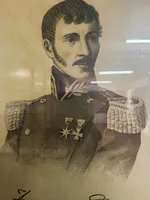
José Antonio Anzoátegui with Military Medals
Independence Awakens in Spanish America
Anzoátegui’s life unfolded between two defining dates: 1789, the French Revolution, and 1819, the patriot victory at Boyacá. Liberty shaped the era, and its ideals marked his formation. By the late 18th c., unrest spread across Spanish America. The Comunero Revolt (1781) revealed deep social tensions, while Antonio Nariño’s 1794 translation of the Rights of Man circulated ideas of equality and freedom. At that time Bolívar was eleven and Anzoátegui five.
Napoleon’s invasion of Spain created internal turmoil that weakened the monarchy and encouraged independence movements. In 1809 Camilo Torres wrote the Memorial de Agravios, defending Creole rights. Revolutionary sentiment expanded from Venezuela to Chile. On July 20, 1810, Bogotá rose in its independence movement, triggered symbolically by the dispute over Llorente’s flower vase, and other provinces soon declared full separation from Spain. From 1810 to 1815, political instability and failed attempts at governance produced the period known as La Patria Boba, a turbulent stage before renewed struggle.
Napoleon’s invasion of Spain created internal turmoil that weakened the monarchy and encouraged independence movements. In 1809 Camilo Torres wrote the Memorial de Agravios, defending Creole rights. Revolutionary sentiment expanded from Venezuela to Chile. On July 20, 1810, Bogotá rose in its independence movement, triggered symbolically by the dispute over Llorente’s flower vase, and other provinces soon declared full separation from Spain. From 1810 to 1815, political instability and failed attempts at governance produced the period known as La Patria Boba, a turbulent stage before renewed struggle.
Unequal Forces: Weapons and Armies in the Independence War
Spanish and patriot forces fought with starkly unequal resources. Spanish troops had well-made foreign uniforms, steady pay, reliable food, and complete weaponry—swords, pistols, sabers, lances, flintlock muskets with bayonets, and artillery—all financed by the Crown. Their battalions carried distinctive uniforms and benefited from consistent logistical support.
Patriot armies were smaller and poorly supplied, relying on secrecy, night marches, and deceptive maneuvers. Clothing was precarious: many soldiers wore only guayucos, lacked hats, or went barefoot; a few officers had leather coats or spare garments. Weapons were scarce—broad lances, albarico spears, knives, homemade firearms, and captured Spanish muskets. Saddles were rough wood tied with rawhide. Ammunition mules, cattle for food, and accompanying women formed the supply line. Without royal funding, patriots depended on voluntary and forced contributions and confiscated goods to secure horses, arms, and provisions. Medical resources were minimal, and many died from untreated wounds.
Patriot armies were smaller and poorly supplied, relying on secrecy, night marches, and deceptive maneuvers. Clothing was precarious: many soldiers wore only guayucos, lacked hats, or went barefoot; a few officers had leather coats or spare garments. Weapons were scarce—broad lances, albarico spears, knives, homemade firearms, and captured Spanish muskets. Saddles were rough wood tied with rawhide. Ammunition mules, cattle for food, and accompanying women formed the supply line. Without royal funding, patriots depended on voluntary and forced contributions and confiscated goods to secure horses, arms, and provisions. Medical resources were minimal, and many died from untreated wounds.
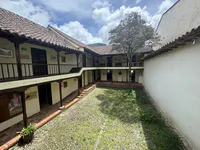
Courtyard of Casa Anzoátegui
Tributes to General Anzoátegui in the New Granada Campaign
In the New Granada campaign, General Anzoátegui played a decisive role. Santander recalled that in Gámeza, Vargas, and especially Boyacá, he showed remarkable courage—steadfast in hardship, skillful in strategy, and inspiring renewed strength in the army while instilling fear in the enemy. He died honored and admired, his memory bound to the cause of liberty. Bolívar likewise affirmed that Anzoátegui’s service in the campaign, and particularly at Boyacá alongside Colonel Rondón, was so distinguished that the victory was owed in great part to their efforts.
Anzoátegui House MuseumCasa Museo Anzoátegui
Anzoátegui House Museum preserves a late-18th-c. colonial home in Pamplona where Venezuelan general José Antonio Anzoátegui (1789–1819), one of Simón Bolívar’s most trusted commanders, spent his last days and died on 15 November 1819, shortly after the victories at Vargas Swamp and Boyaca. The quiet courtyard turns domestic space into a witness to the independence wars, when campaigns across the Llanos and Andes remade New Granada. In the region it remains a sober memorial to youthful sacrifice and the fragile birth of a republic.
Explore by type and place