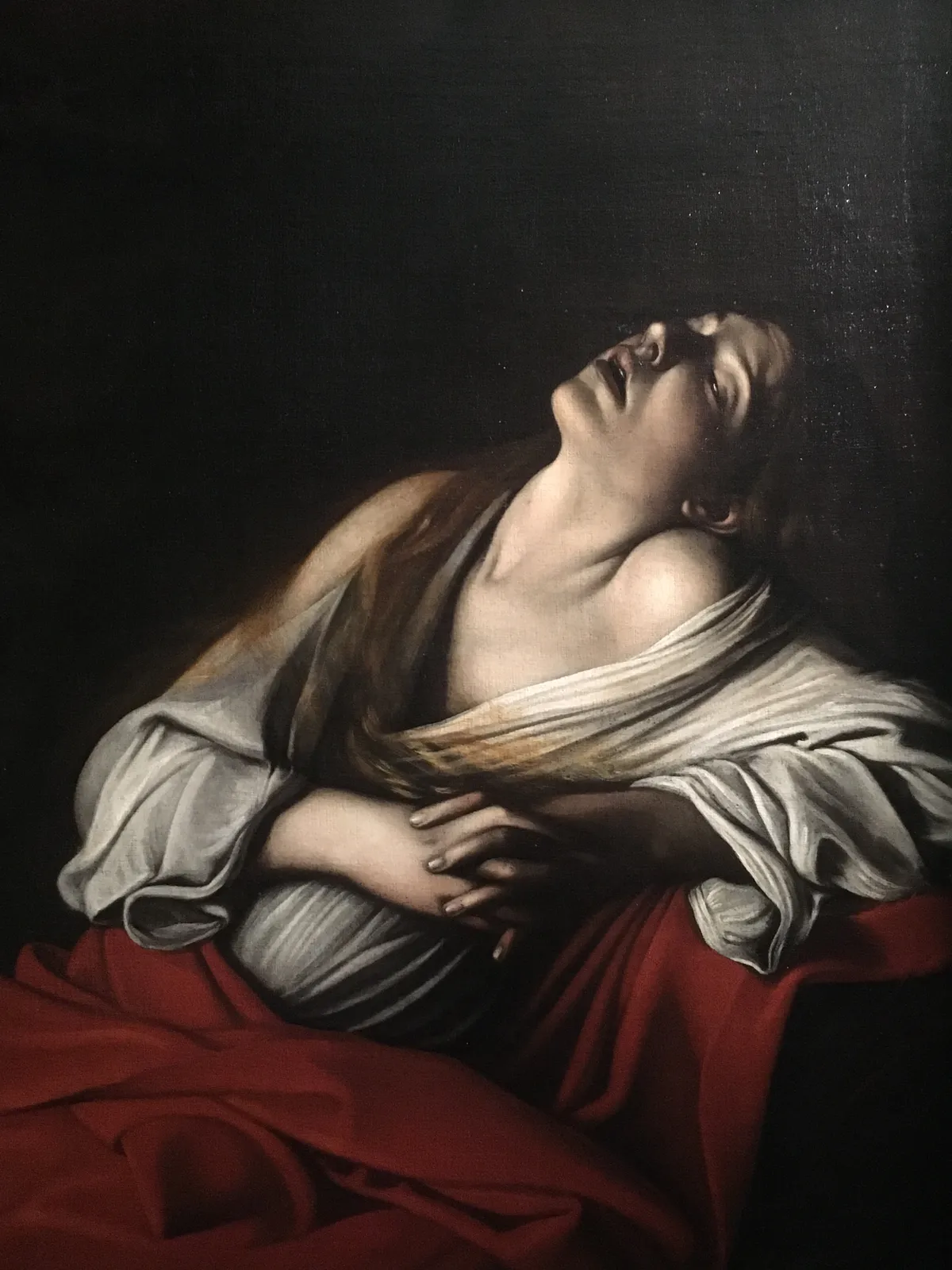
The Penitent Magdalene
Caravaggio
This painting (1594–95) shows Mary Magdalene seated in repentance, jewels cast aside at her feet. With downcast eyes and folded hands, she embodies both sensual beauty and spiritual transformation. Caravaggio merges naturalism with sacred symbolism, turning penitence into a deeply human, intimate moment of grace.
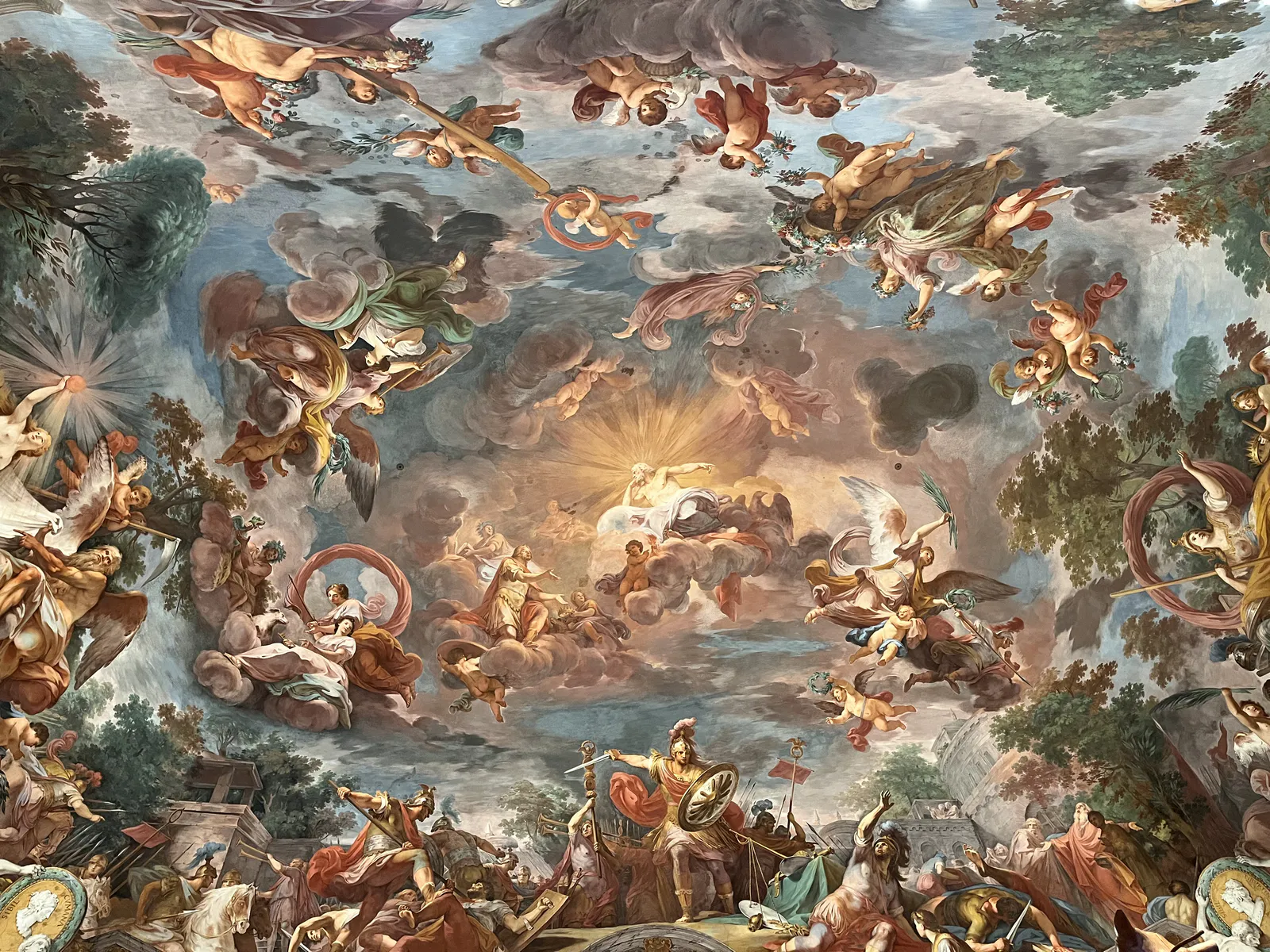
Roman Civilization and the Heroic Virtue of Honor
Mariano Rossi
This illusionistic ceiling (1775) shows a vortex of gods, heroes, and allegorical figures arranged in rising spirals. Rossi organized the composition with deep foreshortening to create a theatrical Baroque panorama. The central burst of light frames scenes of conflict and ascent, indicating how Roman culture linked civic honor with collective greatness.
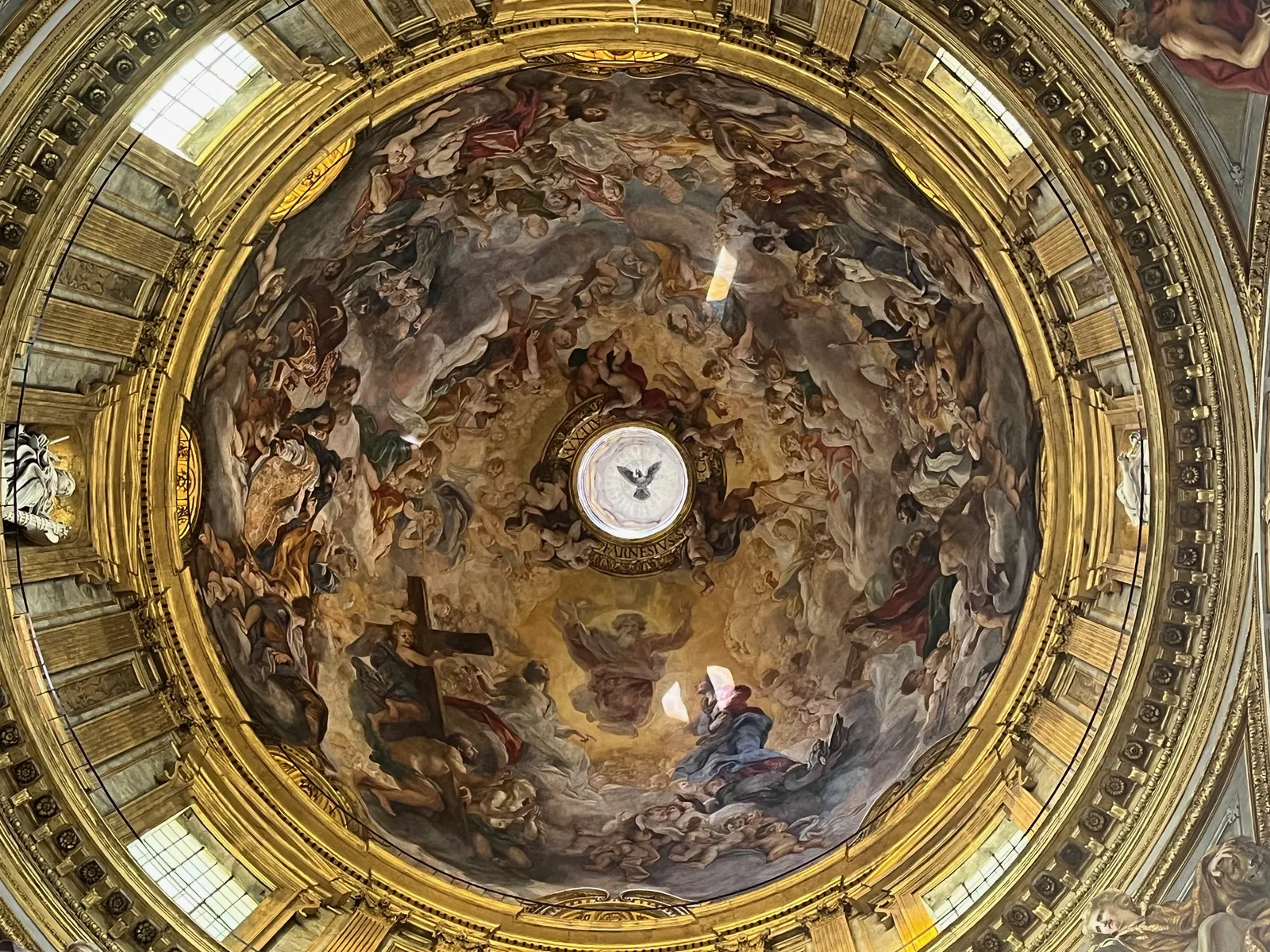
The Glory of the Holy Spirit
Giovanni Battista Gaulli
This radiant fresco (c. 1679) fills the dome with concentric rings of clouds, gilded ribs, and crowded figures. At the center, the Holy Spirit appears as a white dove in a glowing medallion, encircled by saints and angels swept upward in swirling light. The painted architecture merges with the real cornice, a Baroque illusion that makes the vault seem to open into a realm of revelation.
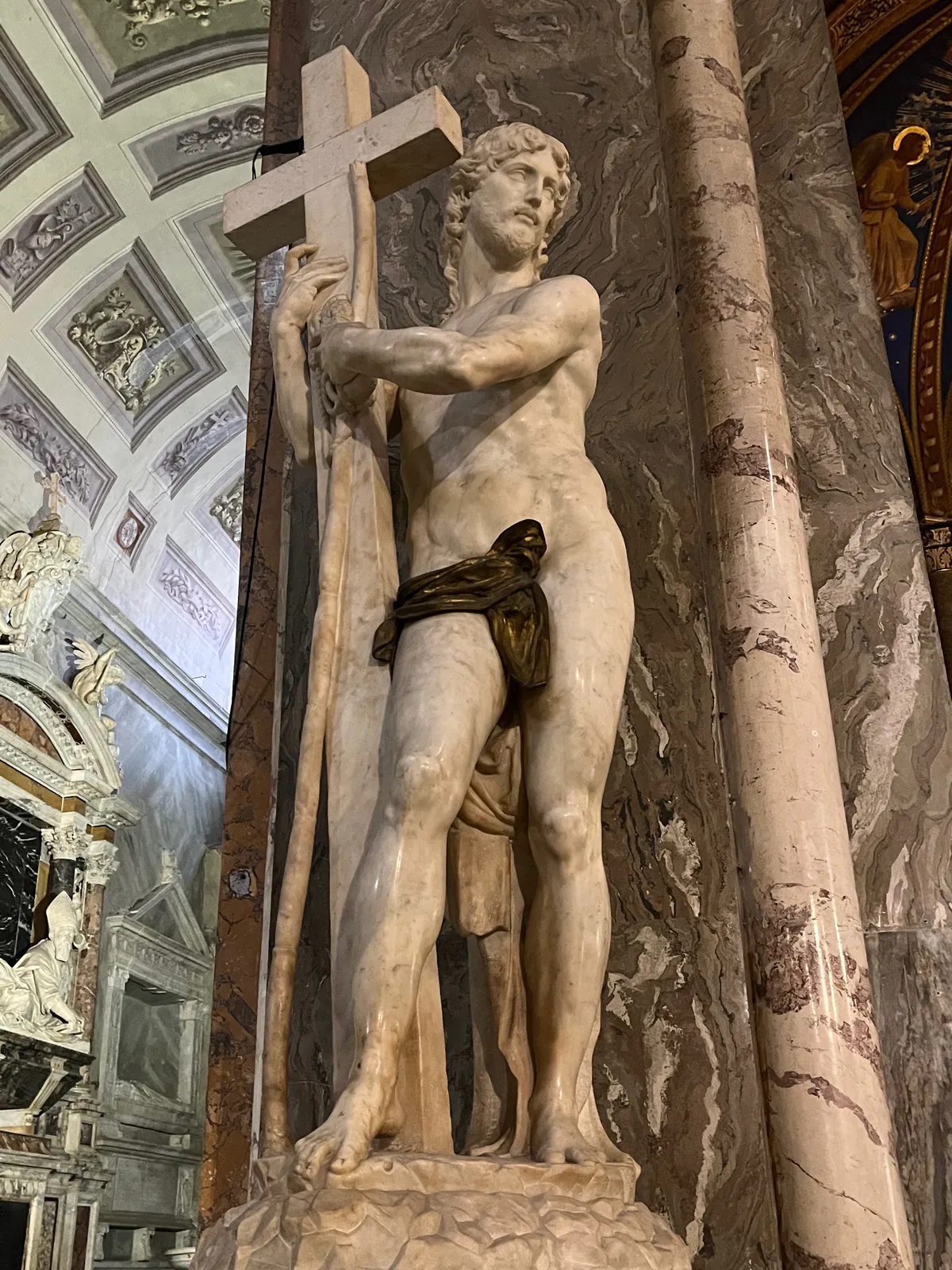
The Risen Christ
Michelangelo
Michelangelo's The Risen Christ (1521) depicts the resurrected Christ holding a cross, symbolizing triumph over death. This marble statue embodies Renaissance humanism, blending classical beauty with spiritual dignity. The idealized nude form reflects the fusion of divine suffering and victory, showcasing Michelangelo's mastery in capturing both physical perfection and profound spiritual themes.
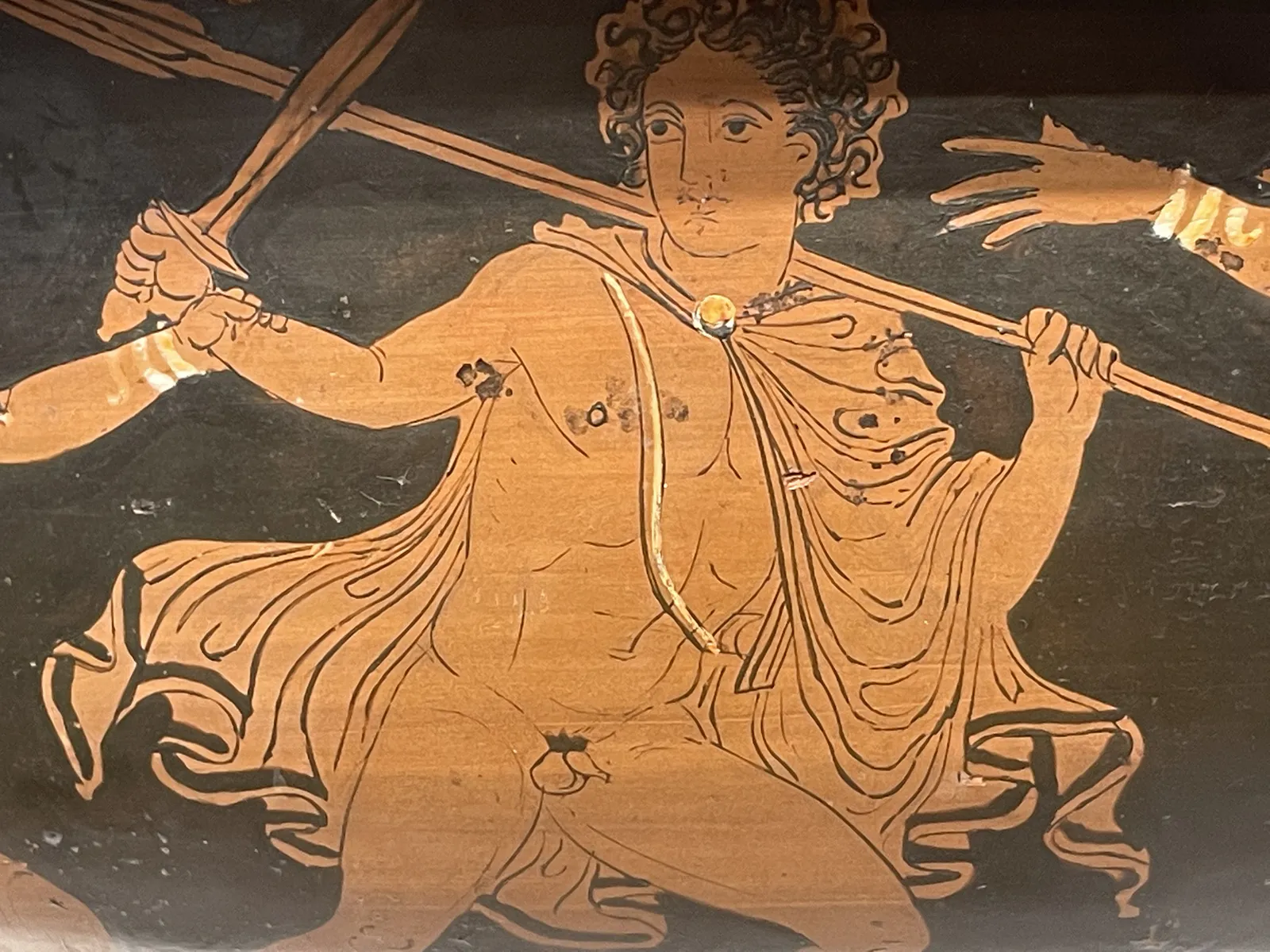
Pentheus Attacked by Bacchic Women
The Oxford Group Workshop
This Apulian red-figure plate (360–350 BC) shows Pentheus arming himself against Dionysus’ cult. In myth, he is seized by Bacchic women, including his mother Agave, who mistake him for prey and tear him apart. The scene warns against impiety and defying divine power, embodying the tragic cost of resisting Dionysian ecstasy and communal worship.
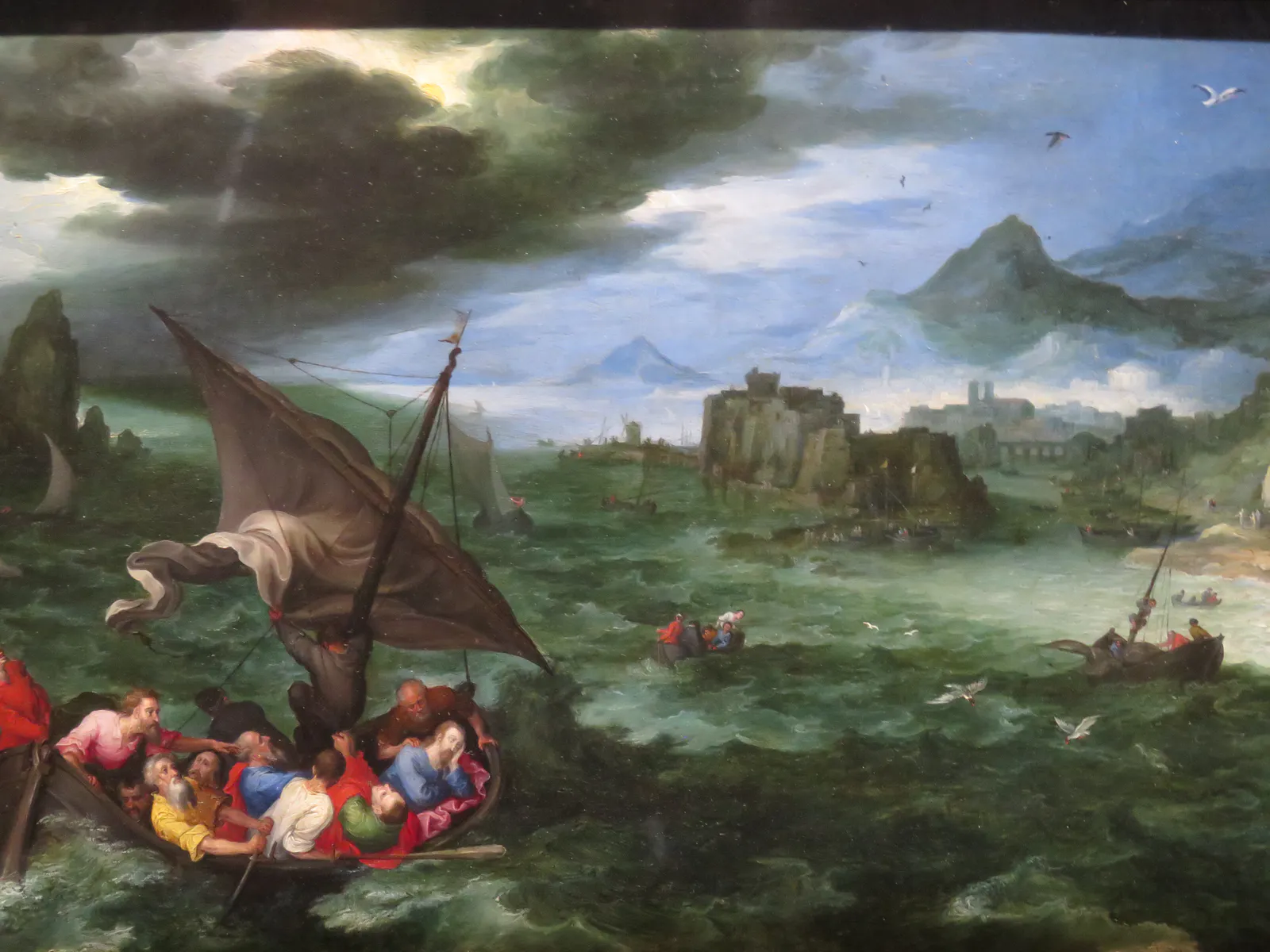
Christ in the Storm on the Sea of Galilee
Jan Brueghel
This oil on copper (1596) shows Christ asleep during a storm as an apostle wakes him amid violent waves on the Sea of Galilee. The heeling boat and twisted sail convey imminent peril, while the darkened sky dramatizes the disciples’ fear. Brueghel’s vivid rendering turns natural turbulence into a meditation on faith and divine control.
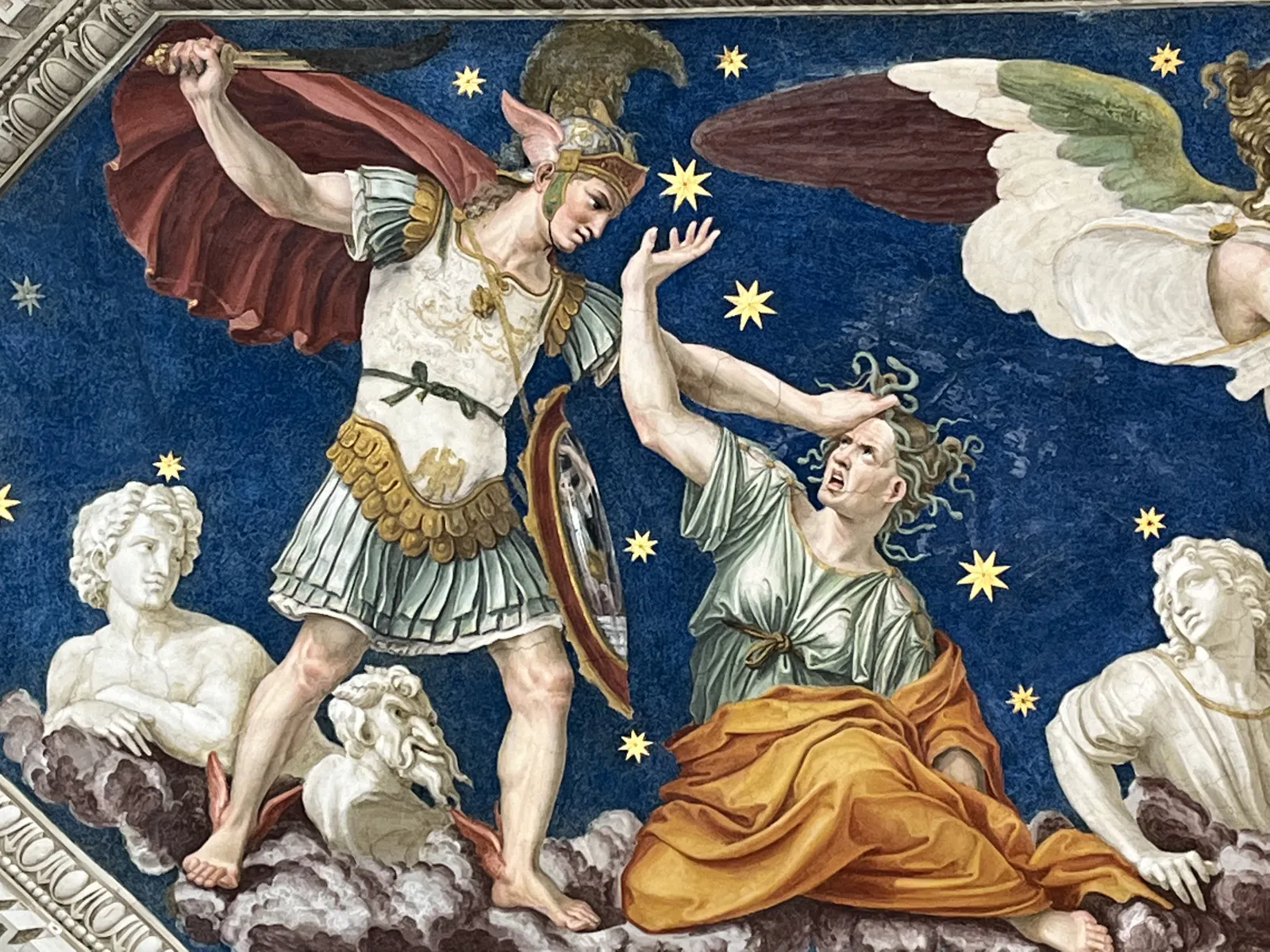
Perseus and Medusa
Baldassarre Peruzzi
In this fresco (c. 1511), Peruzzi depicts Perseus about to behead Medusa. Medusa’s petrifying gaze has already turned victims to stone, visible as pale figures below. Pegasus, born from Medusa’s blood, emerges nearby, symbolizing rebirth. The scene reflects triumph over monstrous chaos.
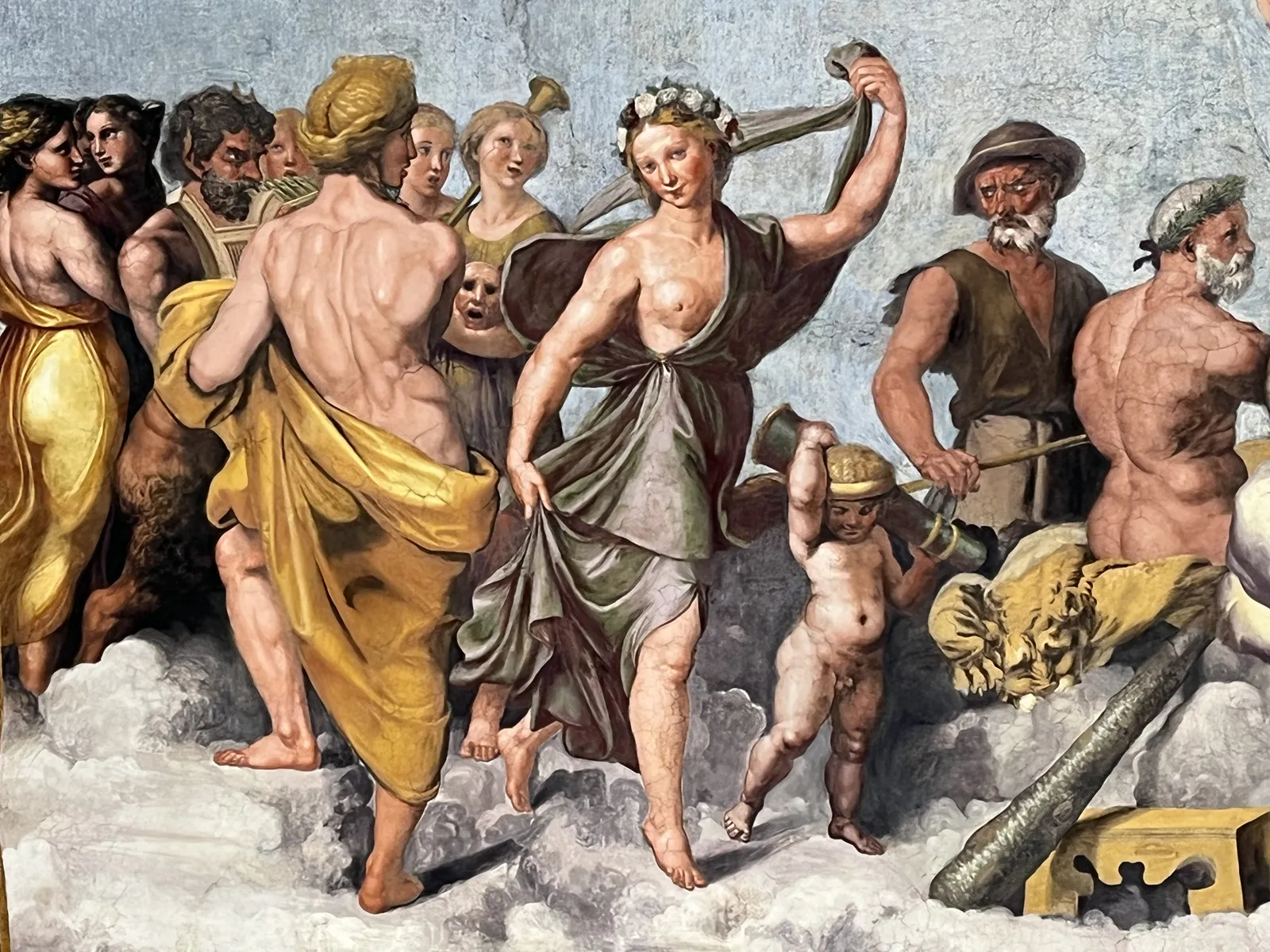
Dionysian Procession
Raphael
In this scene (1518), Raphael depicts Bacchus (Dionysus) leading a joyful procession of Maenads, Satyrs toward Cupid and Psyche’s wedding. The central Maenad, in ecstasy, embodies the Dionysian cult of revelry, blending divine intoxication with theatrical festivity.
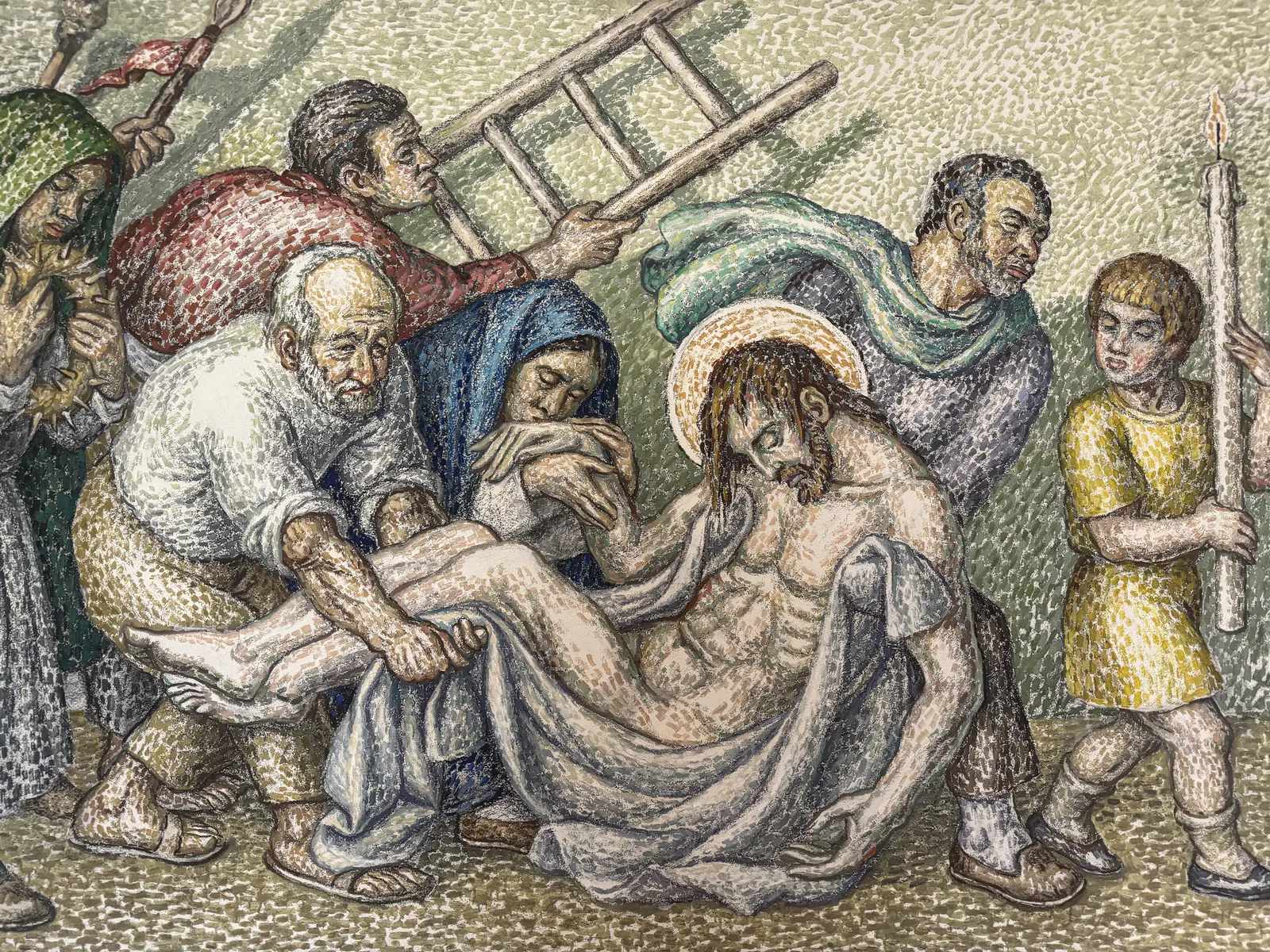
Descent from the Cross
Luis Alberto Acuña
Acuña (mid-1950s) renders the moment of Christ’s body being lowered from the cross with emotional gravity and communal sorrow. The composition emphasizes solidarity in grief, surrounding Christ with figures of all ages and backgrounds, reinforcing the universality of human suffering and compassion.
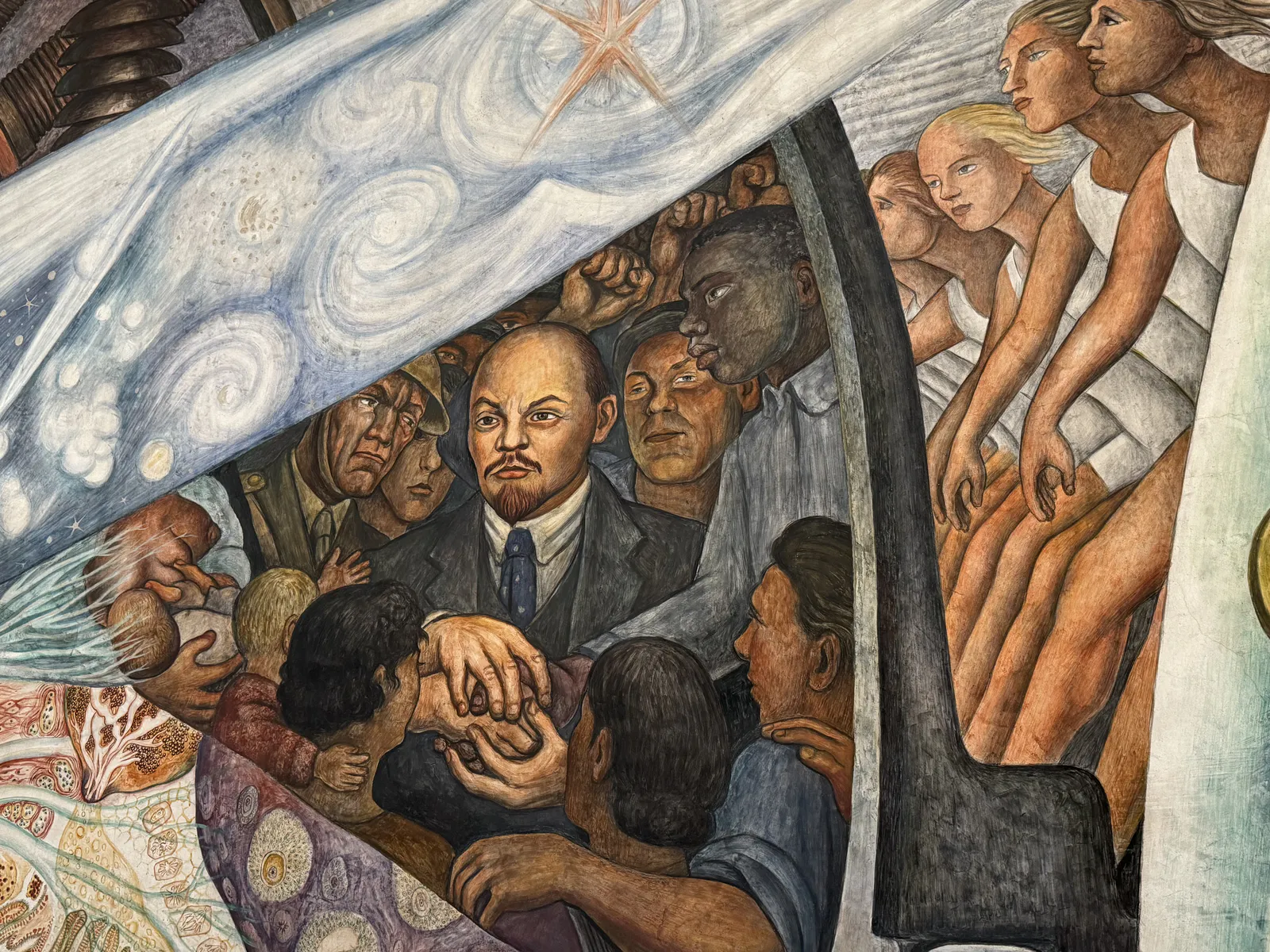
Lenin and the Workers (detail)
Diego Rivera
In this vivid section of Man, Controller of the Universe (1934), Lenin extends his hand to unite workers of different races and backgrounds. His central placement amid galaxies and scientific motifs reflects Rivera’s belief in a revolutionary, rational future led by socialist ideals and global class solidarity.
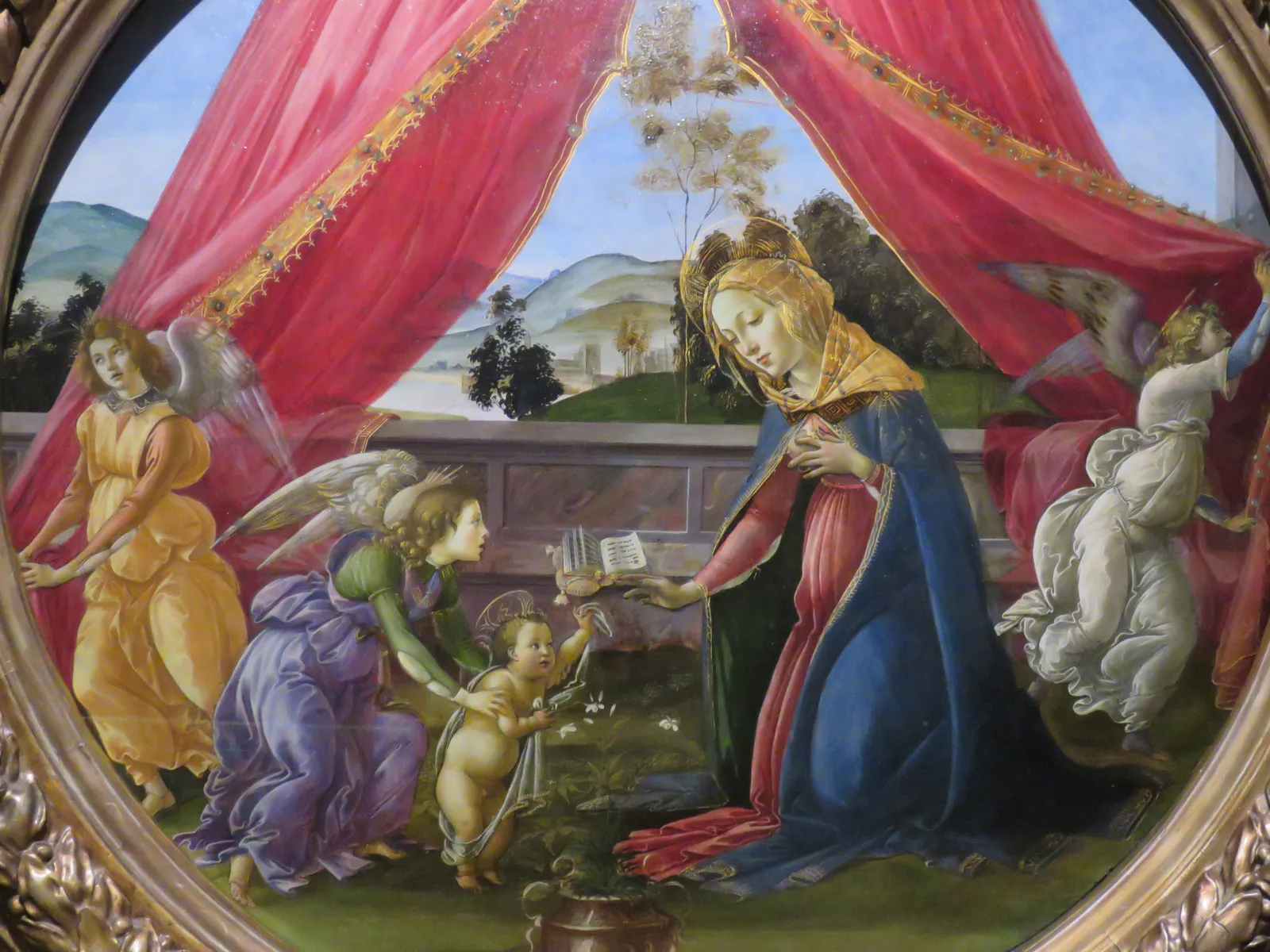
Madonna del Padiglione
Sandro Botticelli
This tempera painting (c. 1493) shows the Virgin Mary adoring the Christ Child beneath a luxurious red canopy, assisted by angels. Botticelli fuses spiritual intimacy with courtly elegance. The open book and flowering symbols evoke divine wisdom and purity, while the tent references the tabernacle—God’s dwelling among humanity.
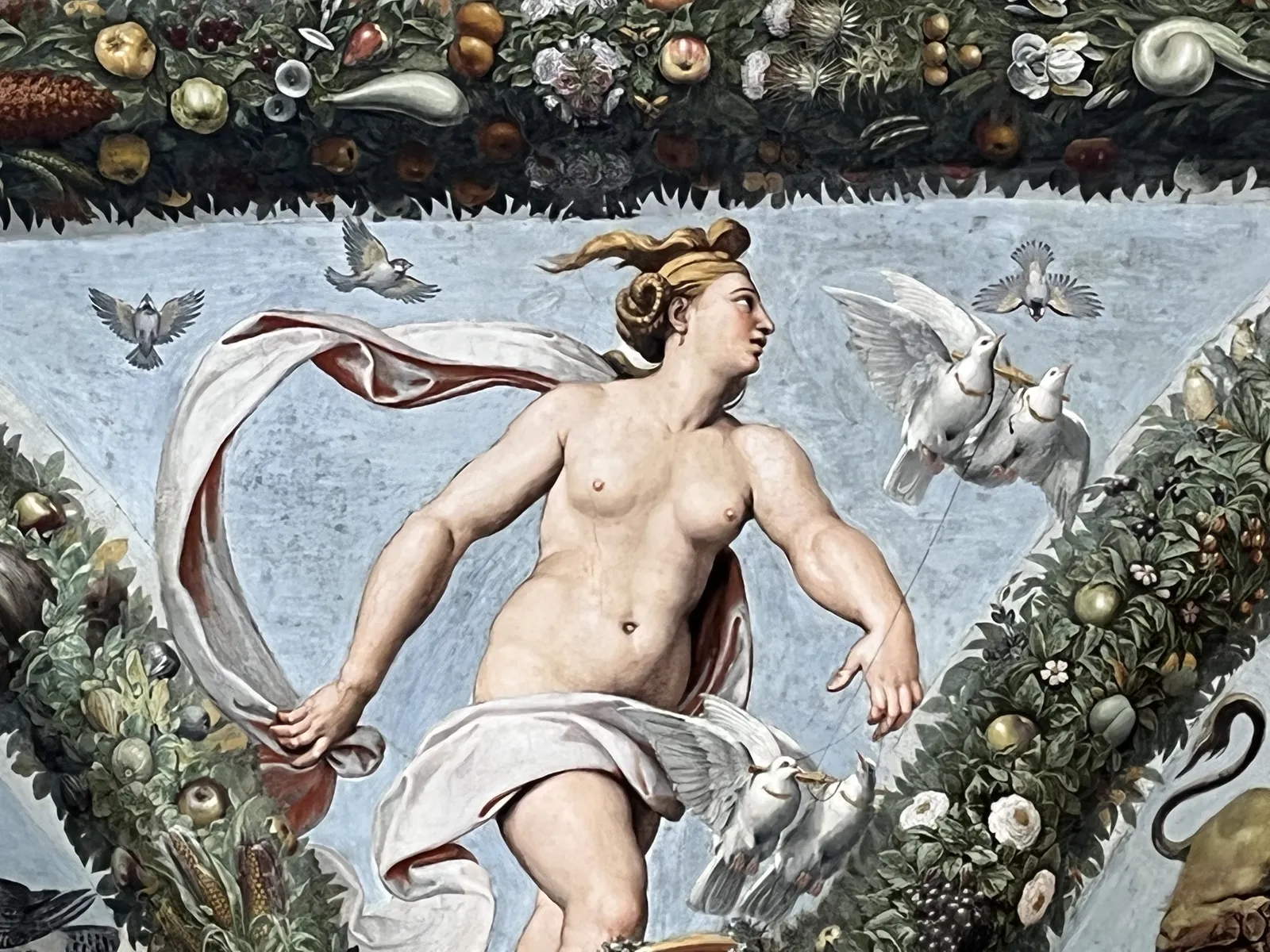
Venus and the Doves
Raphael
In this fresco (1518), Raphael presents Venus, goddess of love, gracefully accompanied by doves, her sacred birds. The flowing ribbon emphasizes her divine beauty and motion, while the doves allude to purity and erotic desire. The image echoes Venus’ central role in the myth of Cupid and Psyche, where love governs both divine and mortal fates.
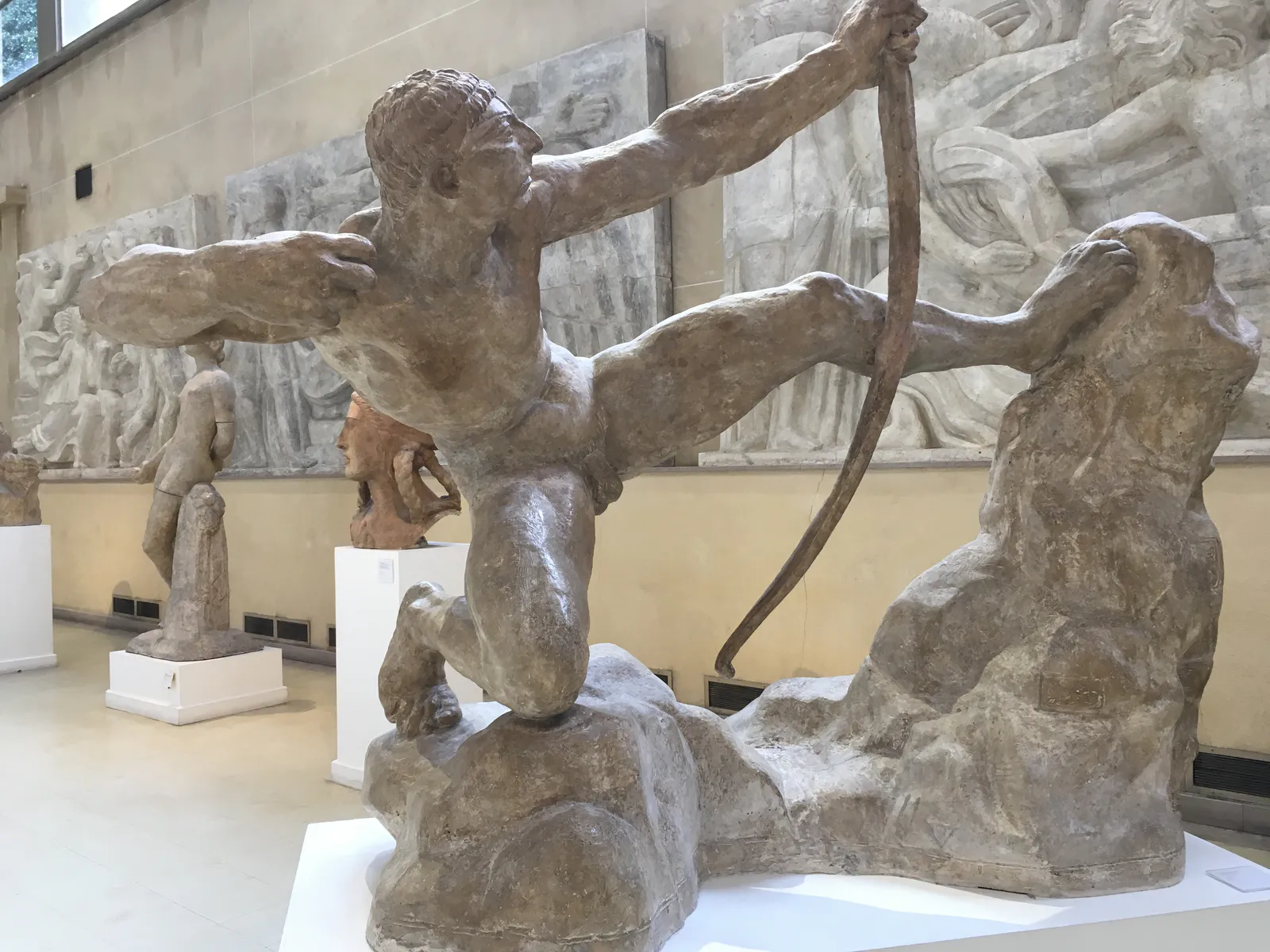
Hercules the Archer
Antoine Bourdelle
This plaster sculpture (1906–09) shows Hercules, the Greek hero, drawing his bow with taut energy. Bourdelle captures both physical strain and mythic power, fusing classical subject with modern dynamism. The work marks a turning point in early 20th-c. sculpture, bridging academic tradition with expressive innovation.
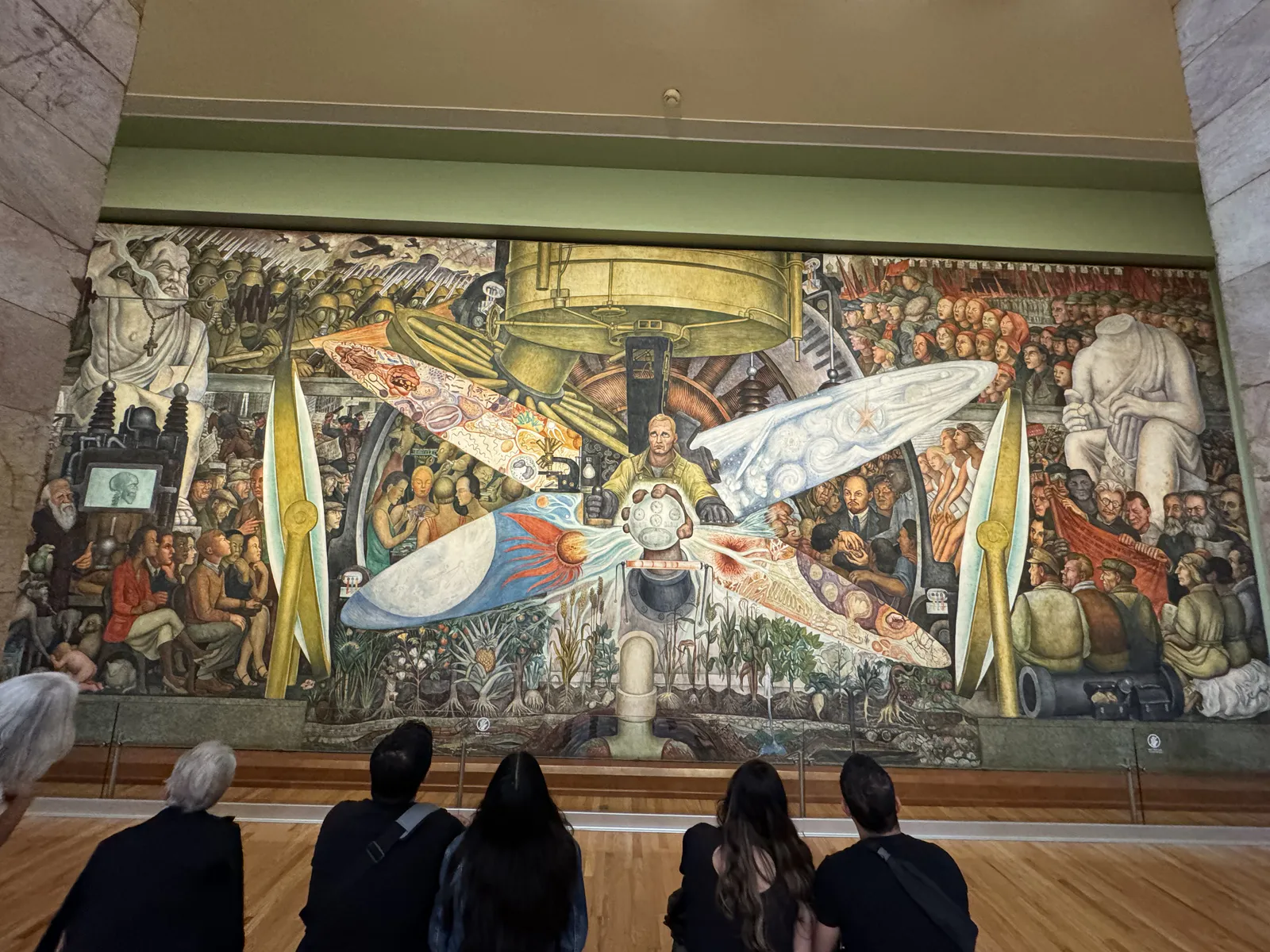
Man, Controller of the Universe
Diego Rivera
This monumental mural (1934) shows a central worker operating a machine that aligns planetary, biological, and industrial forces. Rivera recreates and expands his destroyed Rockefeller Center fresco for a Mexican audience, filling the scene with scientists, workers, and political leaders. The contrast between capitalist luxury and organized labor articulates his Marxist belief that technology should serve collective progress.
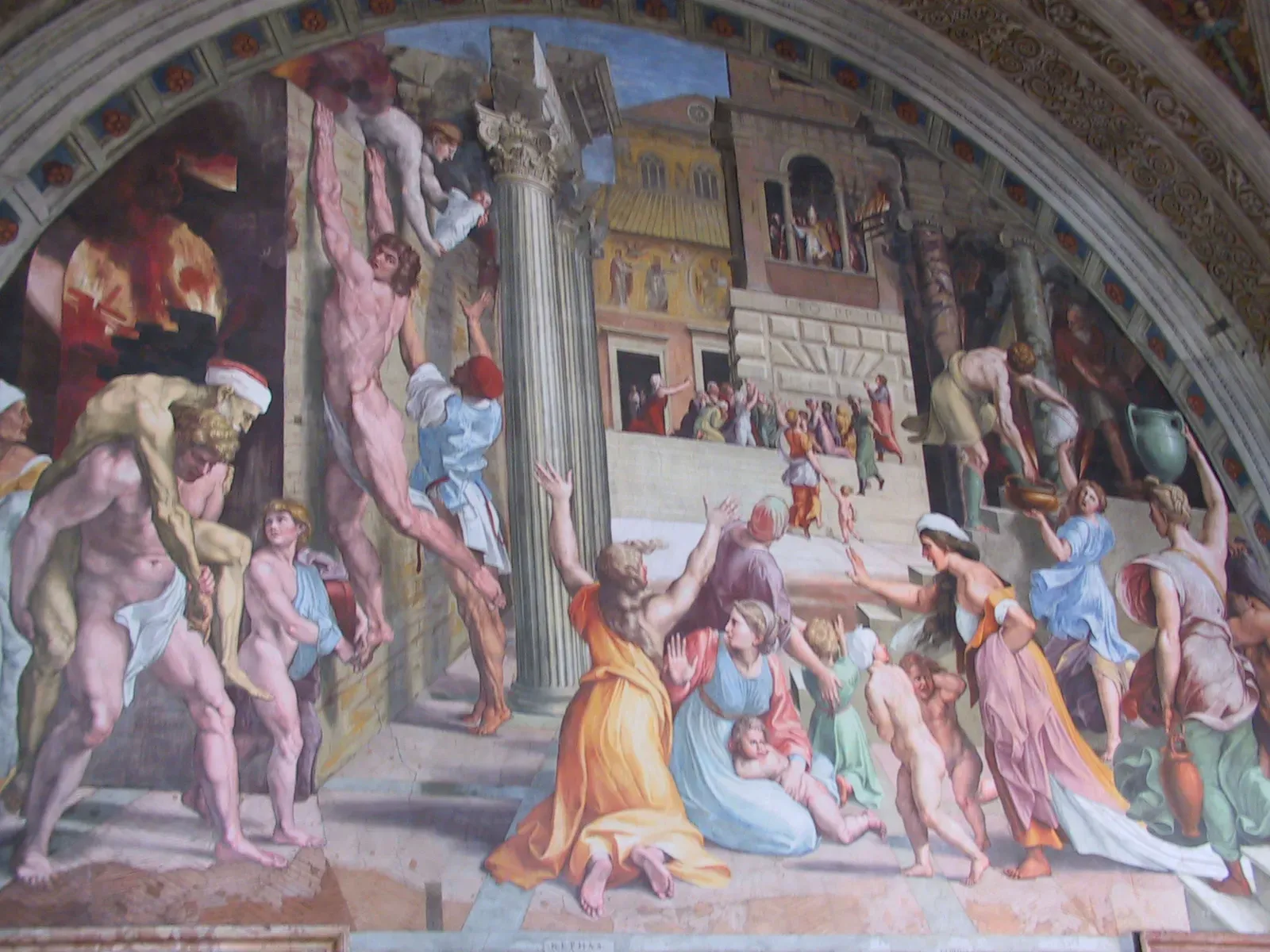
Fire in the Borgo
Rapahael and Giulio Romano
This fresco (1514) captures a legendary fire in Rome's Borgo district, illustrating divine intervention through Pope Leo IV's prayer. The fresco, part of the Raphael Rooms in the Vatican, blends classical and Renaissance elements, showcasing dynamic figures and architectural precision. This work reflects the era's belief in the power of faith and the church's central role in societal protection and order.
“When the path is beautiful, do not ask where it leads.” — Zen proverb
Welcome to my travel photography!
“When the path is beautiful, do not ask where it leads.” — Zen proverb
Welcome to my travel photography!
For as long as I can remember, my path has been one of discovery—seeking beauty, timelessness, and connection in every corner of the world. It has also been a journey of deep learning and understanding. I’ve been an avid traveler (or perhaps a travel addict?) for most of my life. My love for travel began long before I ever left home: as a child, I drew a fantasy map of my grandparents’ apartment and “traveled” through it with my cousin Sonya, imagining adventures in every corner. Nearly 90 countries and countless moments of awe later, I’m excited to share this journey with you.
Thanks to the tireless and ingenious programming of Diagilev, we’re now able to present about fifteen percent of the images I’ve accumulated over the years. More will be released in small batches depending on your interest. While the first release leans toward museum photography, later ones will include more nature, architecture, culture, and general travel experiences. If you’d like to receive email notifications about new releases, feel free to reach out—no commercial use, ever.
Throughout my travels, I’ve been drawn to two intertwined kinds of discovery. One is intellectual: learning why the world is the way it is. History became my guide, shaping my perspective and filling my camera roll with museums and old buildings. To me, history is not the past—it is the key to understanding the present and how the world became what it is. The other is emotional: seeking moments of elevation—spirituality, beauty, harmony—often found in nature, monasteries, and ancient sacred spaces. Together, these impulses shape my photography. It invites you to learn, admire, and soar—to rise above the mundane and see the world through a lens of curiosity and wonder.
Much of my later travel became possible thanks to my job with Delta Air Lines, but the wanderlust began years earlier. By the time I joined the industry, I had already visited over 35 countries and lived in several—largely thanks to a backpacking journey around the world with Luis León, whose face appears in many early photos. I grew up in Ufa in the USSR, and since leaving it I have lived, studied, and worked in Latvia, the United States, France, South Korea, Canada, Spain, Italy, Brazil, Japan, and Colombia.
A life of near-constant movement may seem a little crazy, but it has deepened my understanding of the world and produced the photography you are about to see. Over the years, my style has evolved—more intentional, more refined—yet its core remains the same: a search for understanding, timeless beauty, and a connection to those who walked this earth long before us.
I hope these photos stir something in your soul, just as they did in mine. I’d love to hear from you—whether reactions, suggestions, corrections, or a request to be added to the email list for new releases (no commercial use, I promise). You can learn more about my travels here, and my academic life here.
Enjoy our shared journey!