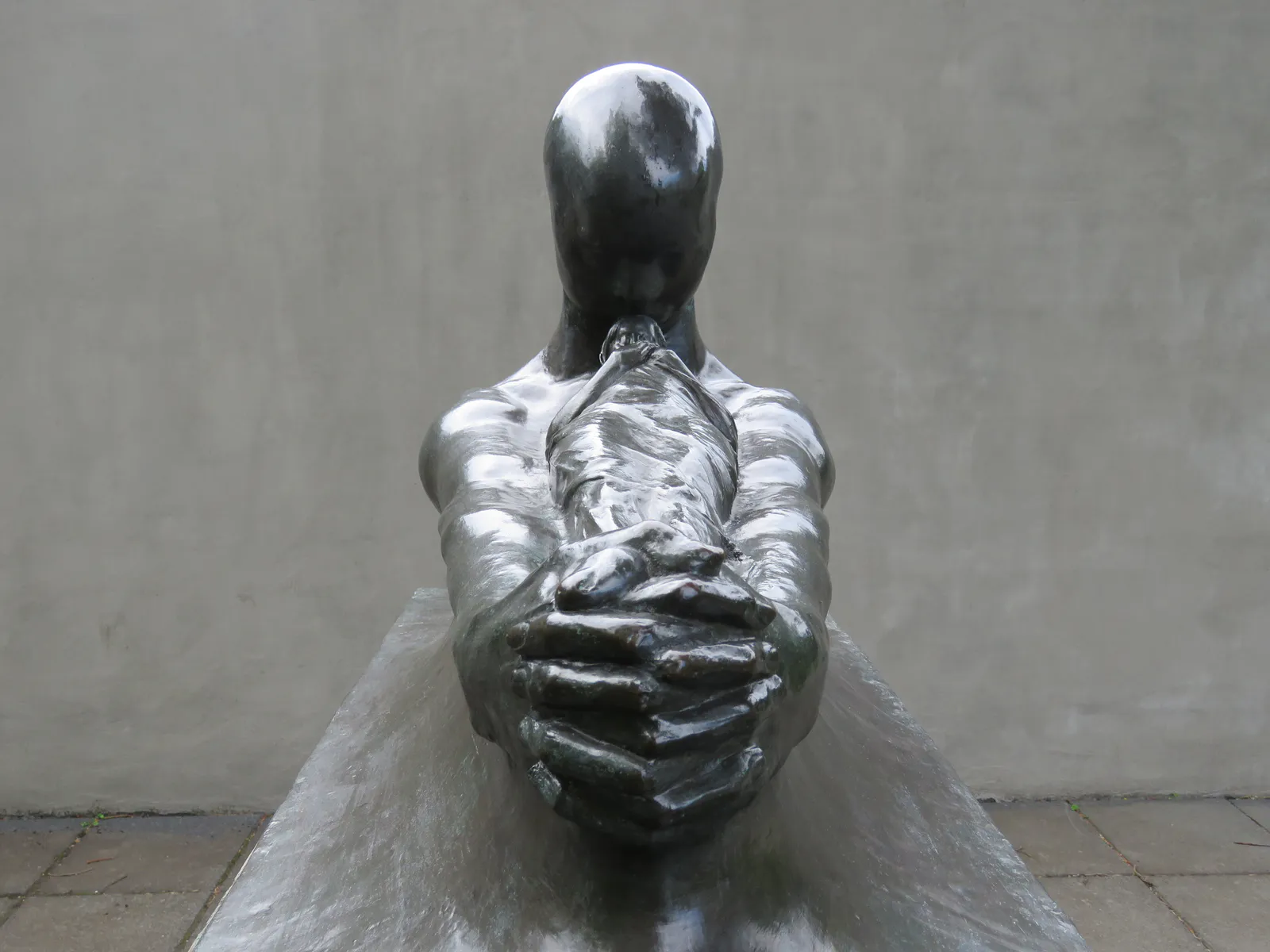
Earth (Mother Earth)
Einar Jónsson
Einar Jónsson’s sculpture (1904–1908) portrays a monumental figure cradling a smaller, draped form symbolizing Earth. Blending allegory and myth, it reflects Icelandic spirituality and cultural narratives. The work embodies humanity’s protective yet dependent bond with nature, inviting reflection on cosmic order and the fragility of existence.
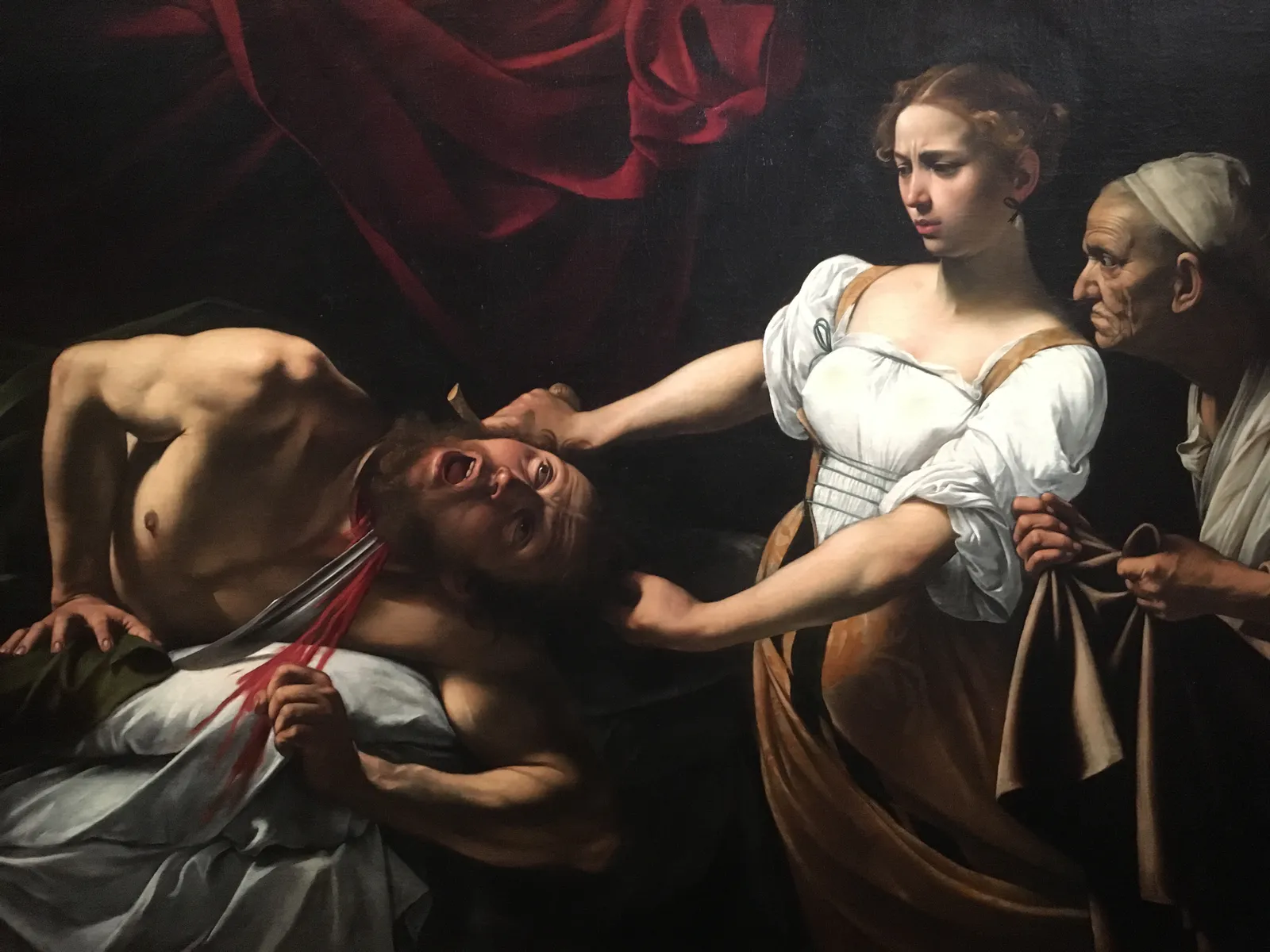
Judith Beheading Holofernes
Caravaggio
This canvas (c. 1599) painted in Rome embodies Caravaggio’s radical realism and theatrical chiaroscuro. Judith, a young widow, slays the Assyrian general Holofernes to save her people. Her calm determination contrasts with his violent death and the maid’s aged pragmatism. By staging sacred violence with unflinching naturalism, Caravaggio redefined biblical painting as a drama of human courage and divine justice.
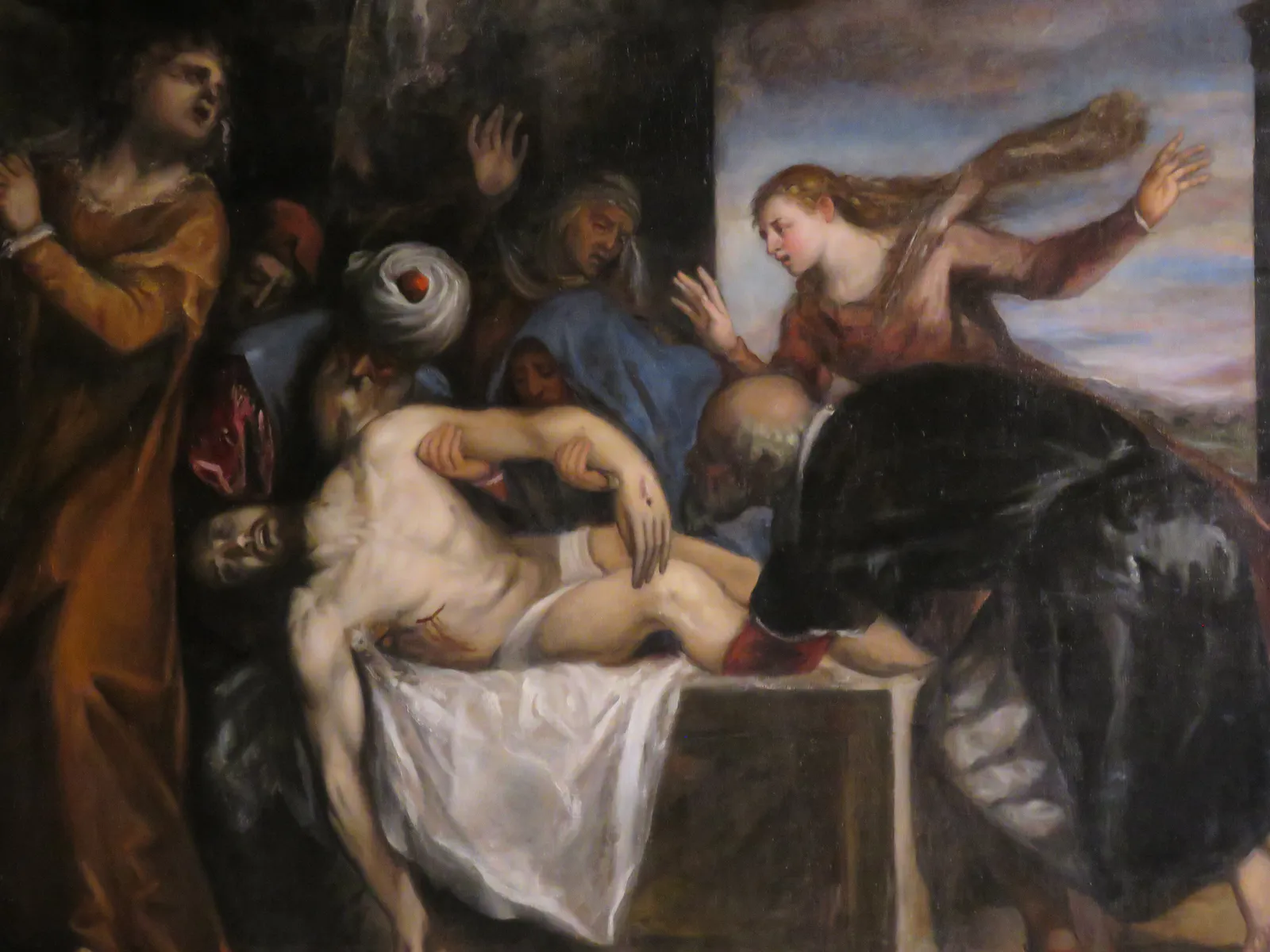
The Entombment of Christ
Titian and Palma the Younger
A poignant rendering of Christ’s burial, this oil on canvas (1618) was begun by Titian and completed by Palma the Younger. The composition captures collective grief, emphasizing the physical weight of death and the emotional weight of loss. The figures’ gestures and expressions mirror Renaissance ideals of pathos and human dignity.
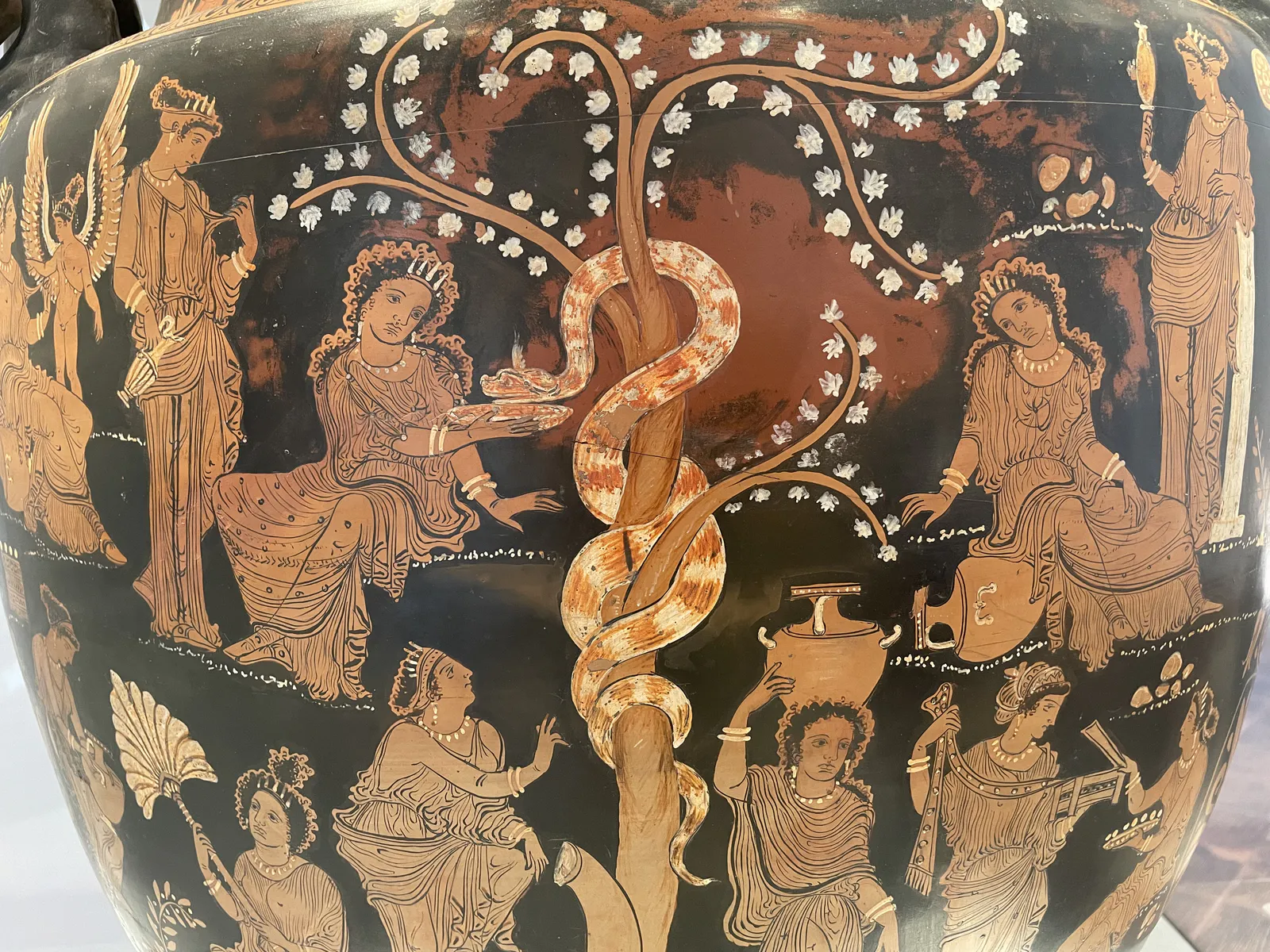
The Garden of the Hesperides
Lycurgus Painter
This Apulian red-figure volute krater (360–345 BC) shows maidens guarding the golden apples gifted by Gaia, with the serpent Ladon coiling around the sacred tree. Heracles is tasked with retrieving these apples in his final labor. The scene symbolizes the hero's triumph over peril, reflecting the ancient Greek themes of challenge and victory.
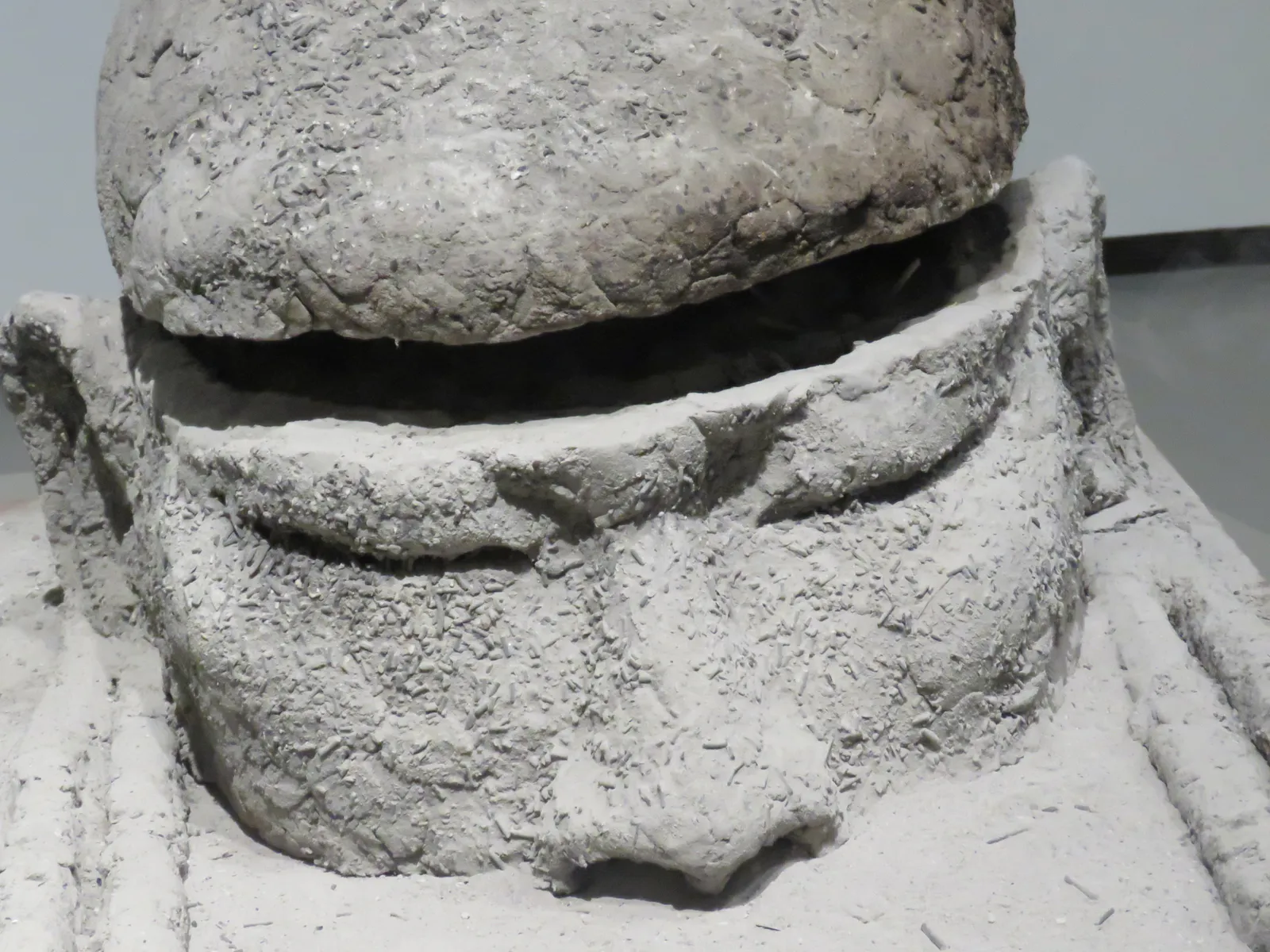
Sudden Awakening
Zhang Huan
This large Buddha head sculpture (2006) lies fragmented on the ground, its heavy upper section slightly shifted above closed eyes and rough, ash-coated features. Formed from ash and steel, it draws on materials linked to ritual burning and industrial residue. The broken, weighty face reveals how contemporary Buddhist art confronts impermanence and the tension between spiritual ideals and material collapse.
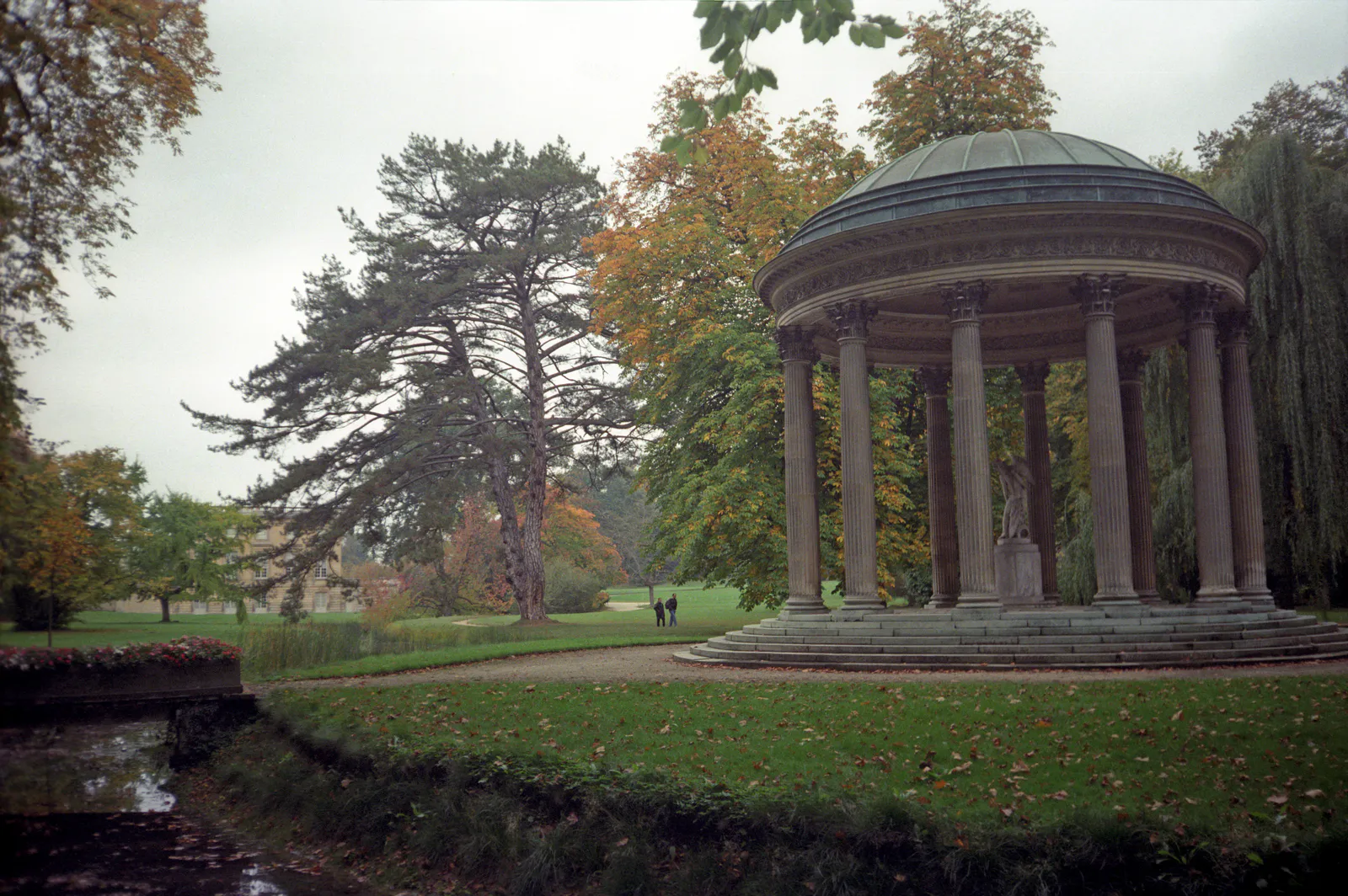
Temple of Love
Richard Mique
Erected in the gardens of the Petit Trianon (1778), this neoclassical rotunda shelters a sculpture of Cupid and symbolizes Marie Antoinette’s idealized vision of romance and pastoral escape. Designed by architect Richard Mique, the temple reflects Enlightenment-era aesthetics and the queen’s longing for simplicity within Versailles’ opulence.
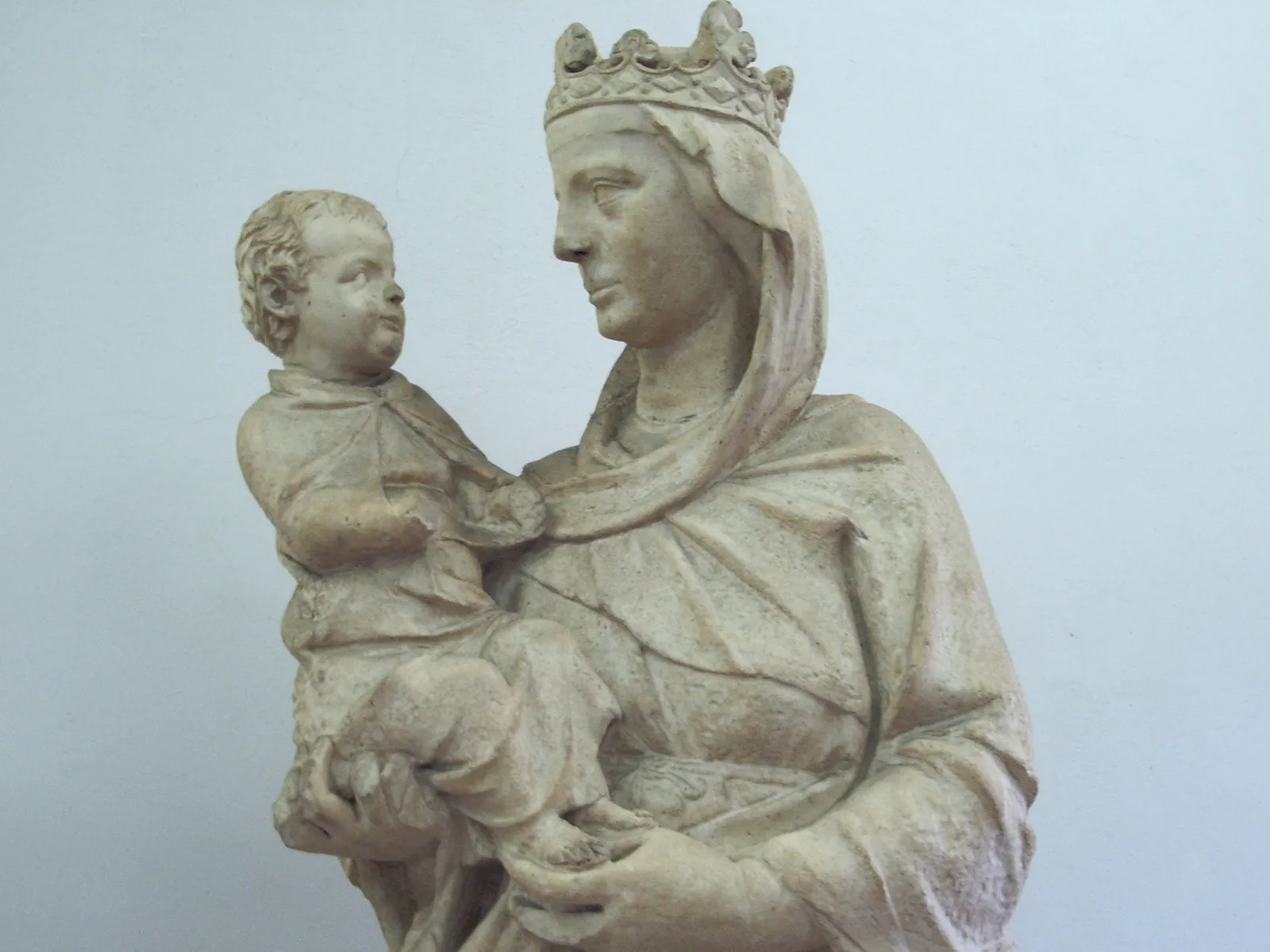
Madonna del colloquio
Giovanni Pisano
This half-length marble Virgin and Child (c. 1280–1284) originally stood at the south transept portal of Pisa Cathedral. Now, it captures a striking emotional exchange between mother and son. The Child gently grasps Mary’s veil, emphasizing Pisano’s innovative focus on tenderness and psychological realism in sacred art.
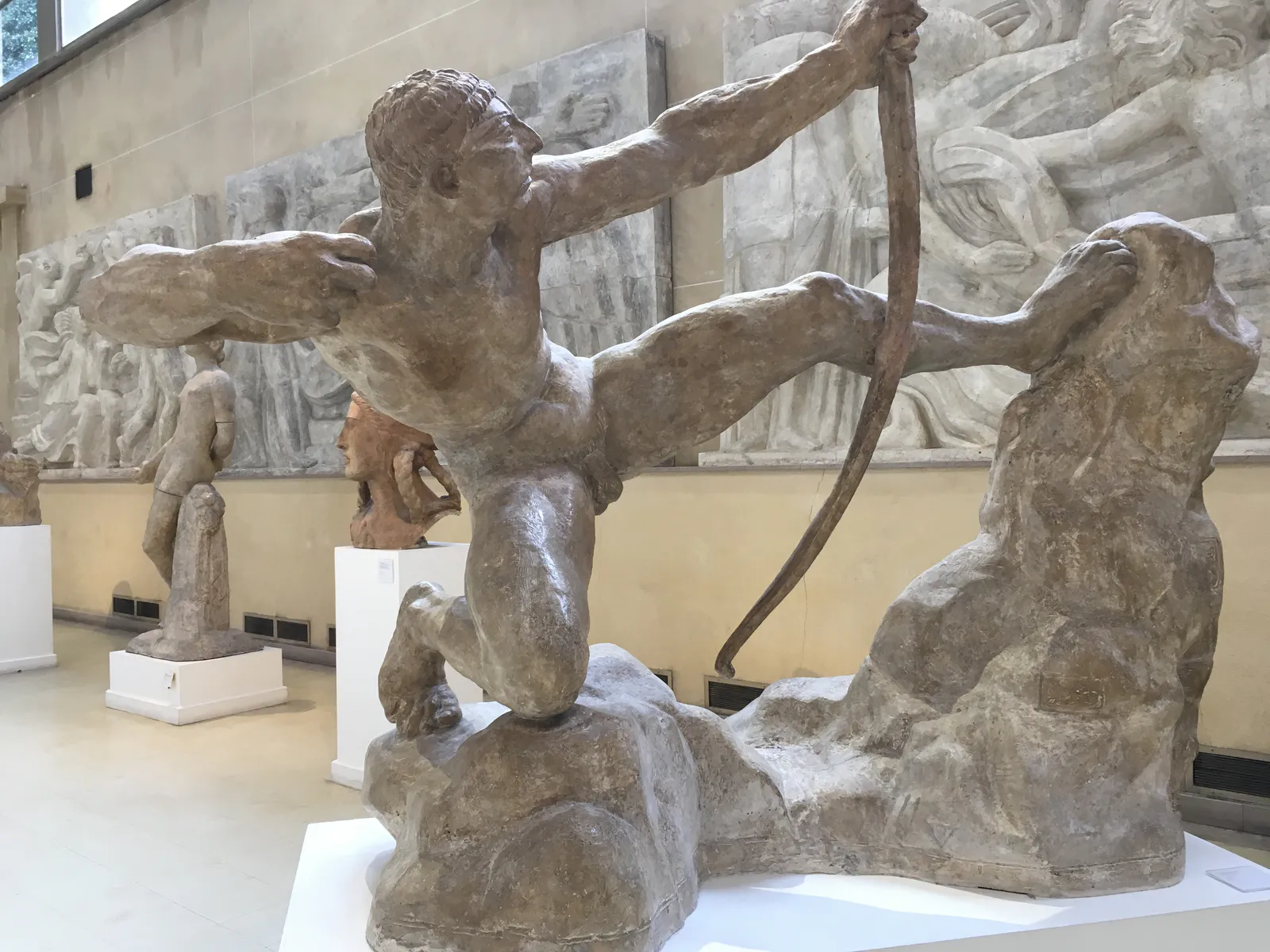
Hercules the Archer
Antoine Bourdelle
This plaster sculpture (1906–09) shows Hercules, the Greek hero, drawing his bow with taut energy. Bourdelle captures both physical strain and mythic power, fusing classical subject with modern dynamism. The work marks a turning point in early 20th-c. sculpture, bridging academic tradition with expressive innovation.
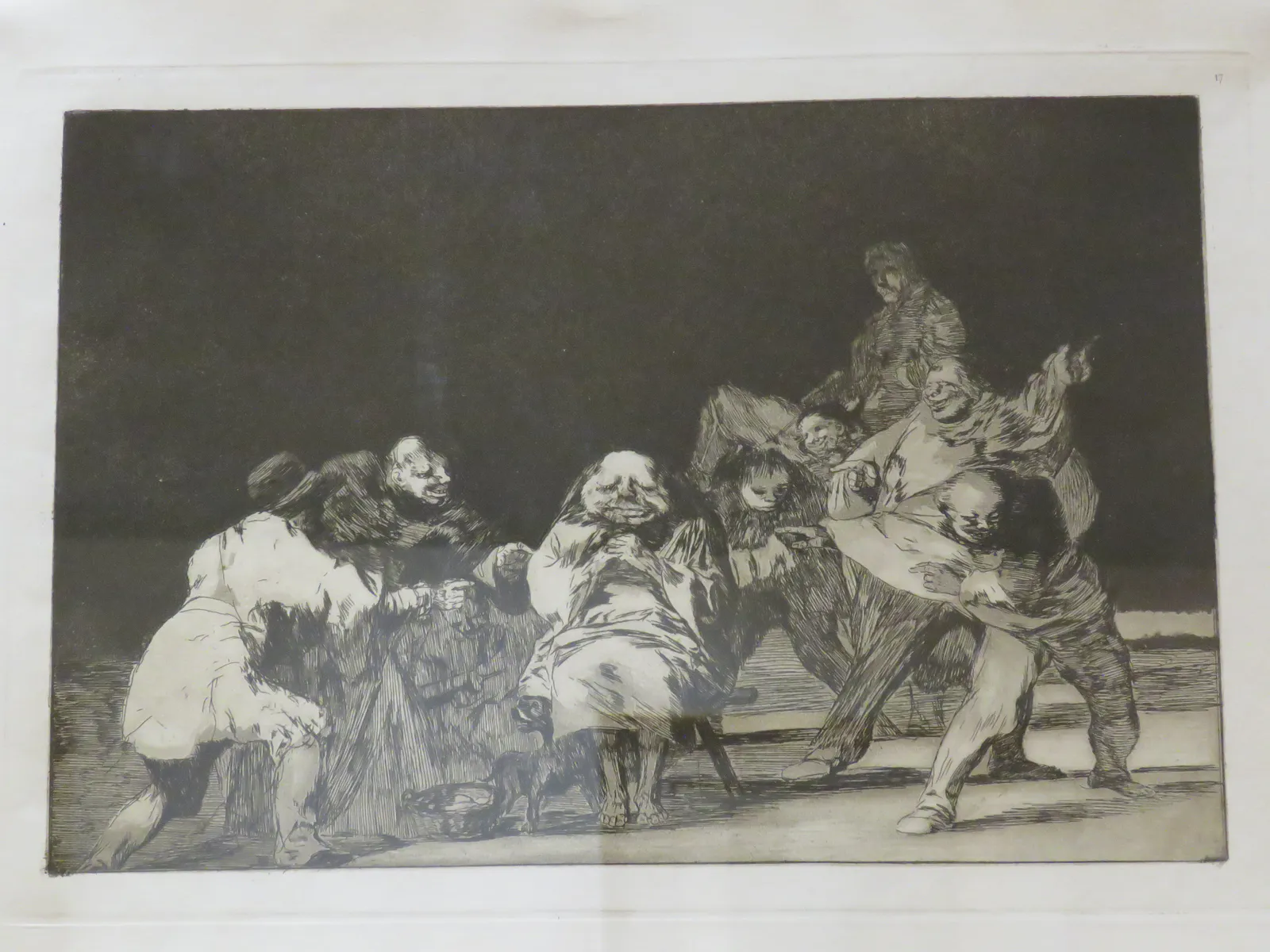
Loyalty from Los Disparates Series
Francisco Goya
This etching (1815–1823) by Francisco Goya, part of the Los Disparates series, explores themes of chaos and irrationality. Featuring grotesque figures, it suggests blind loyalty or foolishness, reflecting the turbulent era of Ferdinand VII’s reign in Spain. Goya’s use of aquatint and etching techniques enhances dramatic contrasts and textures, providing a dark commentary on the social and political upheavals of his time.
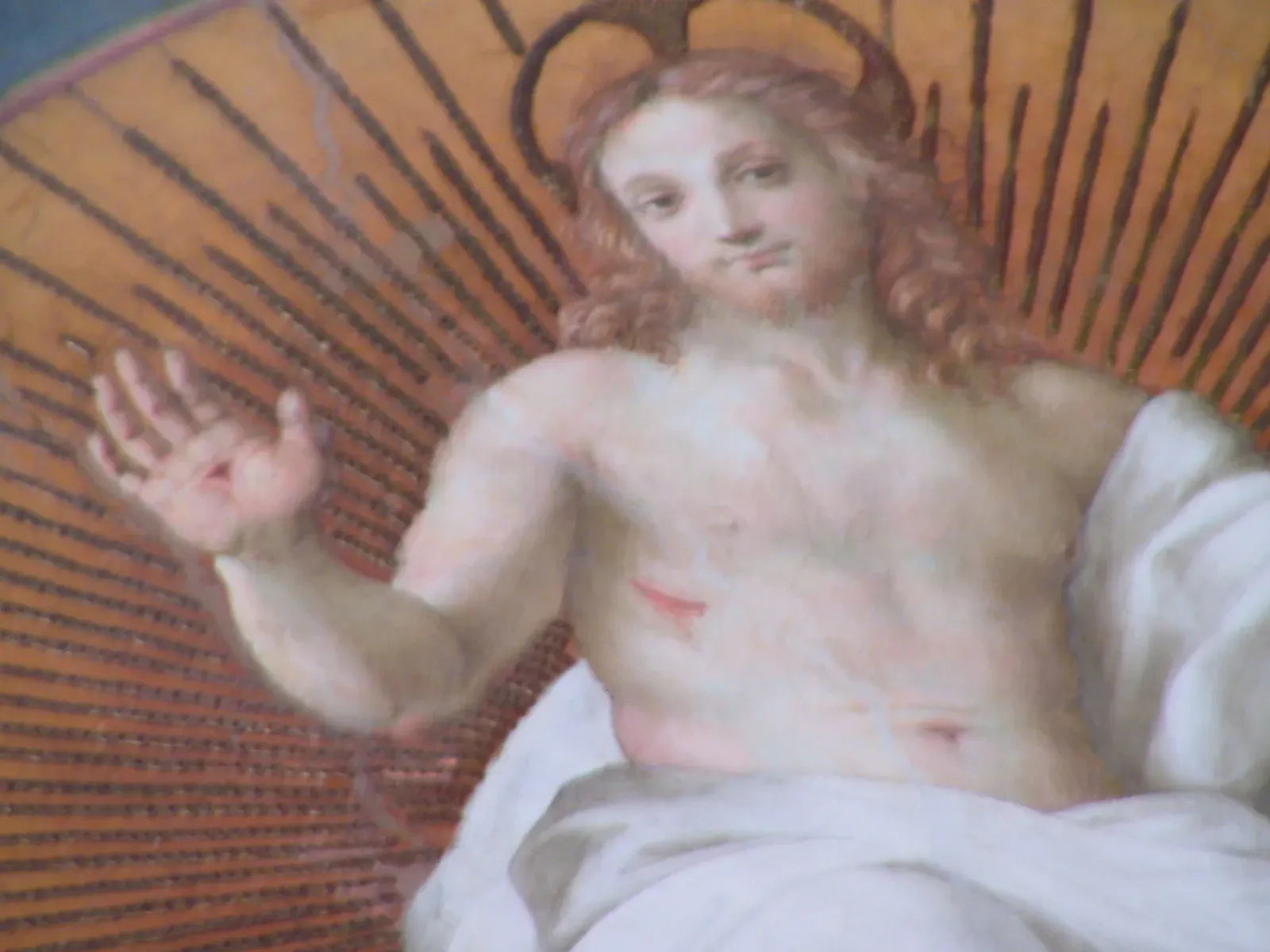
Christ in Glory (detail)
Raphael
The radiant figure of the risen Christ (1508–10) crowns the celestial register of The Disputation of the Sacrament. His raised hand and visible wounds recall both his Passion and his role as judge at the end of time. Encircled by golden rays, he visually affirms the doctrine of the Eucharist as the enduring, real presence of Christ.
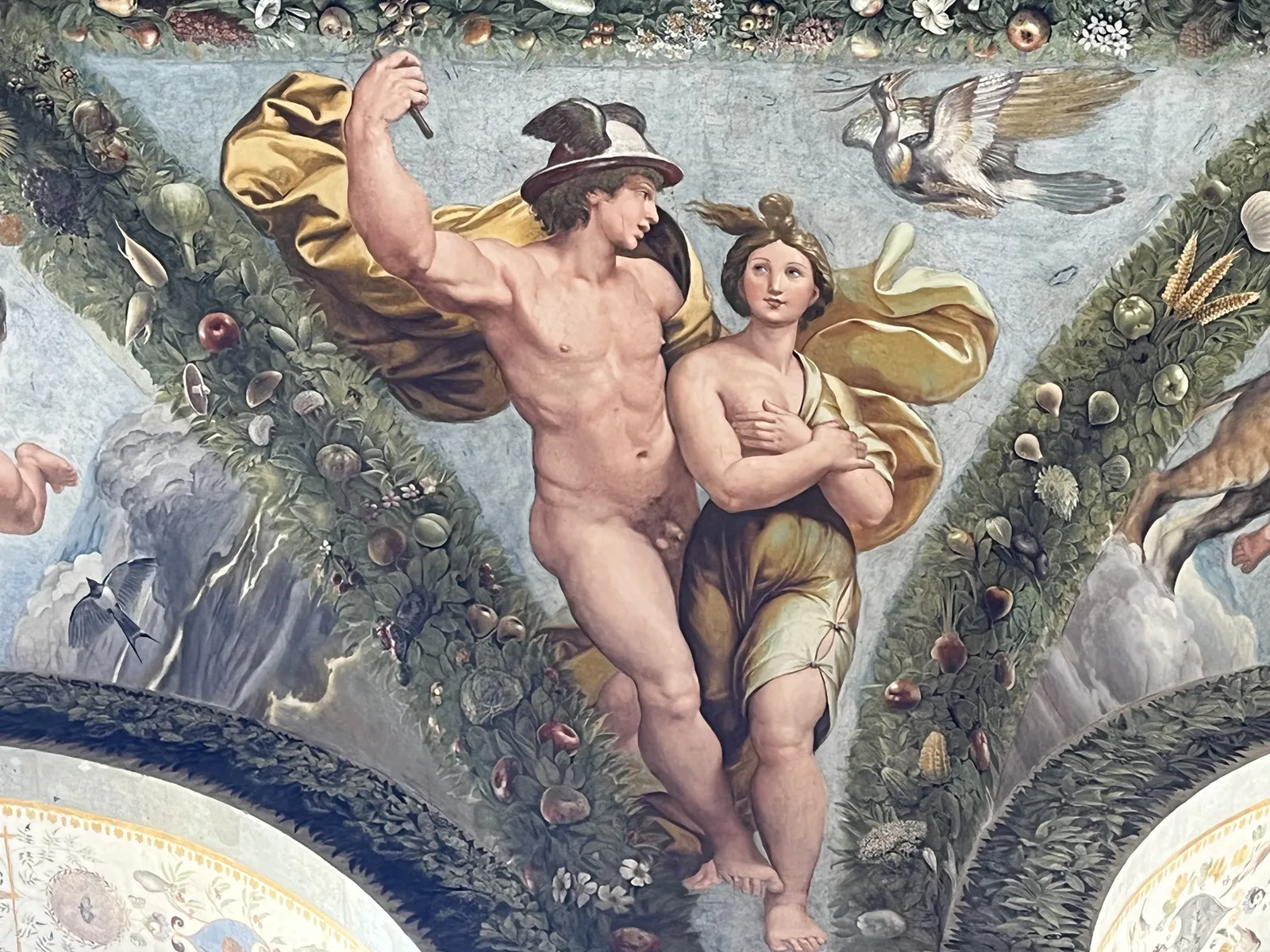
Mercury Brings Psyche up to Olympus
Raphael
In this fresco (1517–18), Raphael depicts Mercury escorting Psyche to Olympus, symbolizing her apotheosis. Mercury’s winged hat and caduceus highlight his role as divine messenger, while Psyche embodies the soul’s ascent to immortality. The scene reflects Renaissance fascination with classical myths as allegories of spiritual transformation.
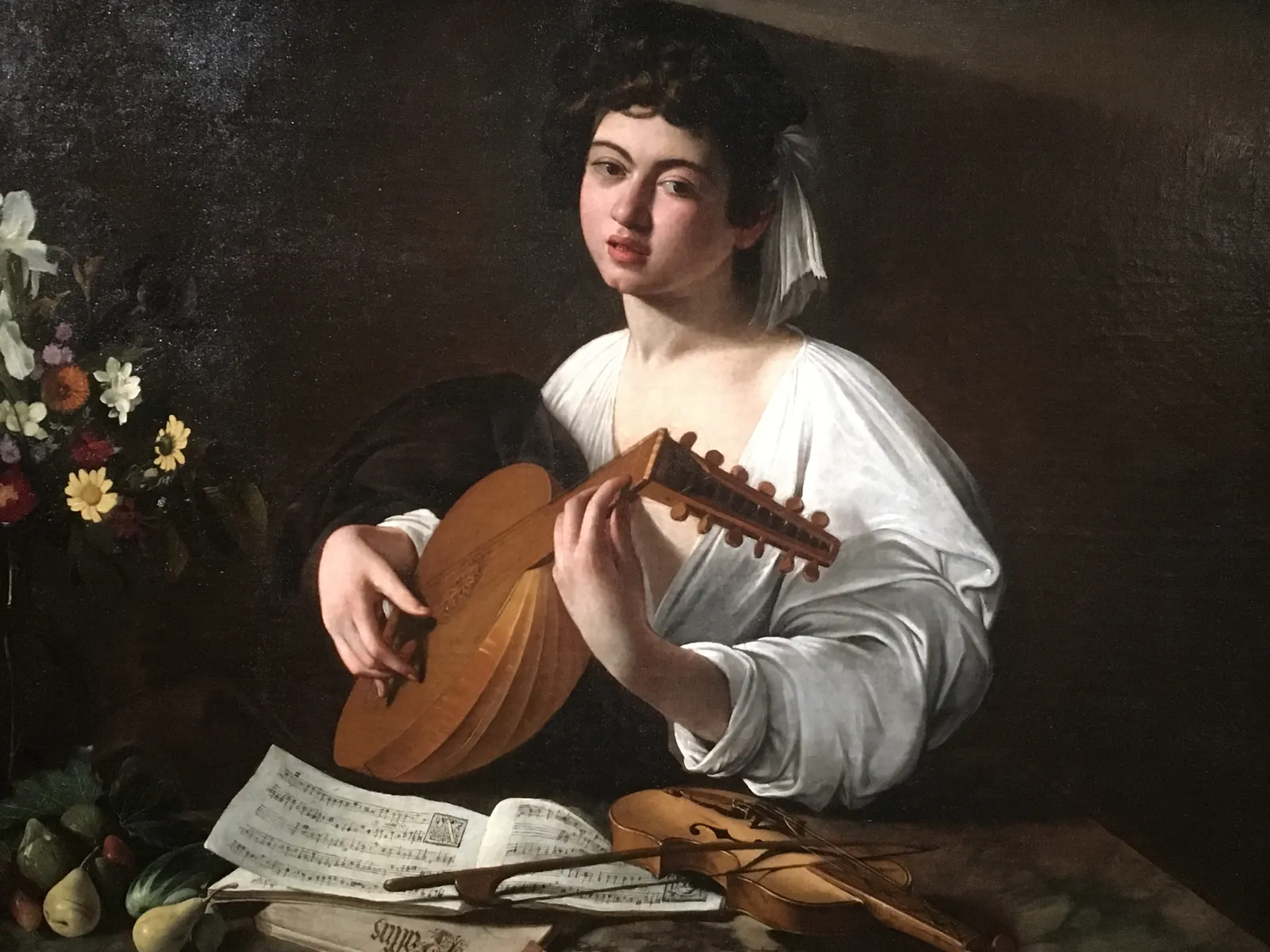
The Lute Player
Caravaggio
This painting (c. 1596) portrays a young musician absorbed in performance. Before him lie a violin, scores, and fruit, symbols of sensuality and transience. Caravaggio uses natural light to animate the delicate textures of skin, cloth, and petals. The figure embodies the Renaissance ideal of harmony between music and emotion, while also hinting at life’s fragility and fleeting pleasures.
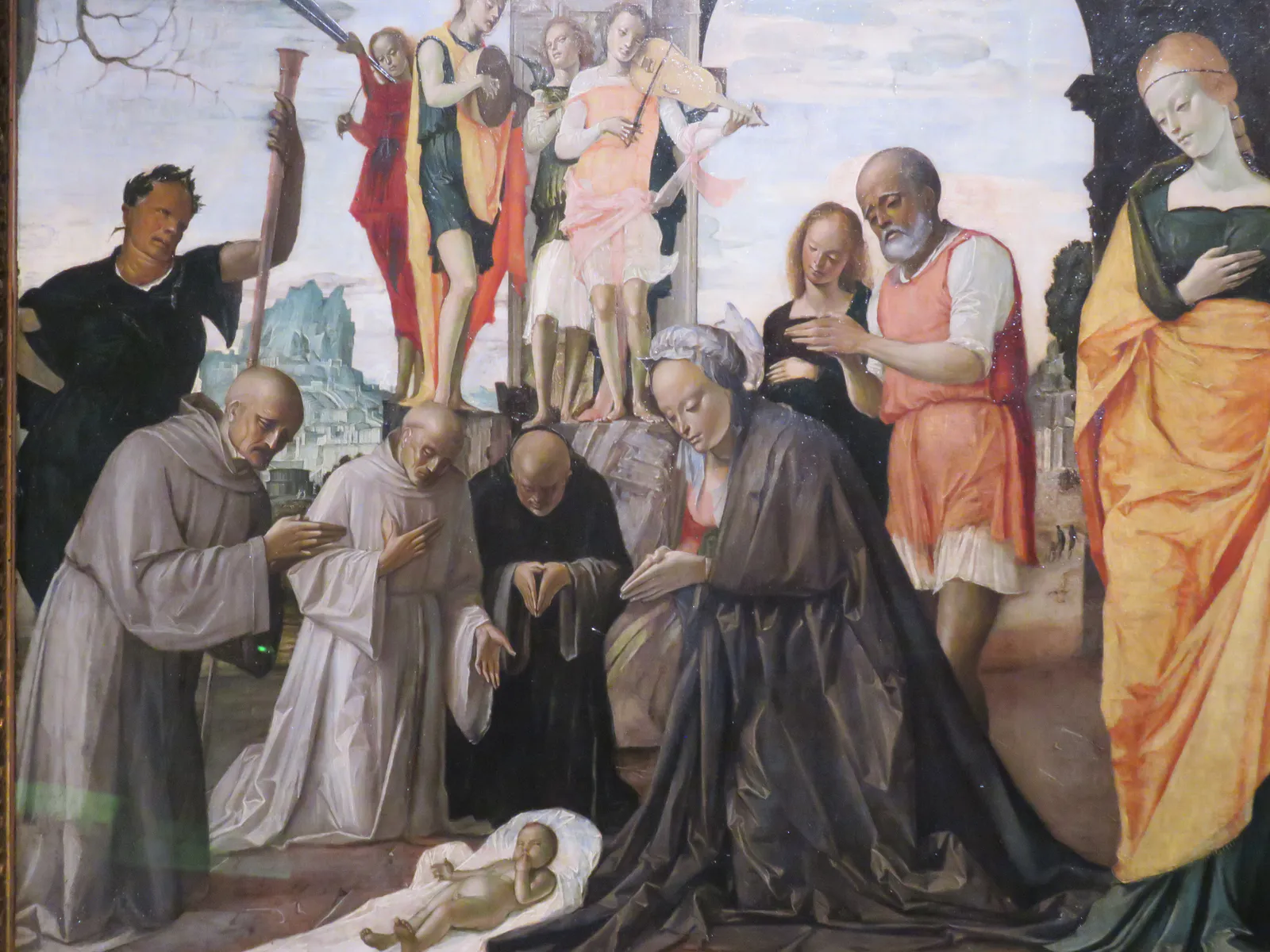
Adoration of the Christ Child
Bramantino
In this tempera panel (c. 1485), the Milanese innovator arranges the Nativity as a cool study of space. The Child rests on a stone slab, flanked by Mary and Saints Bernardino, Francis, and Benedict, while angel musicians provide a celestial motet. Rigid perspective, sculptural figures, and an architectonic backdrop reveal Bramantino’s quest for mathematical order within devotional feeling.
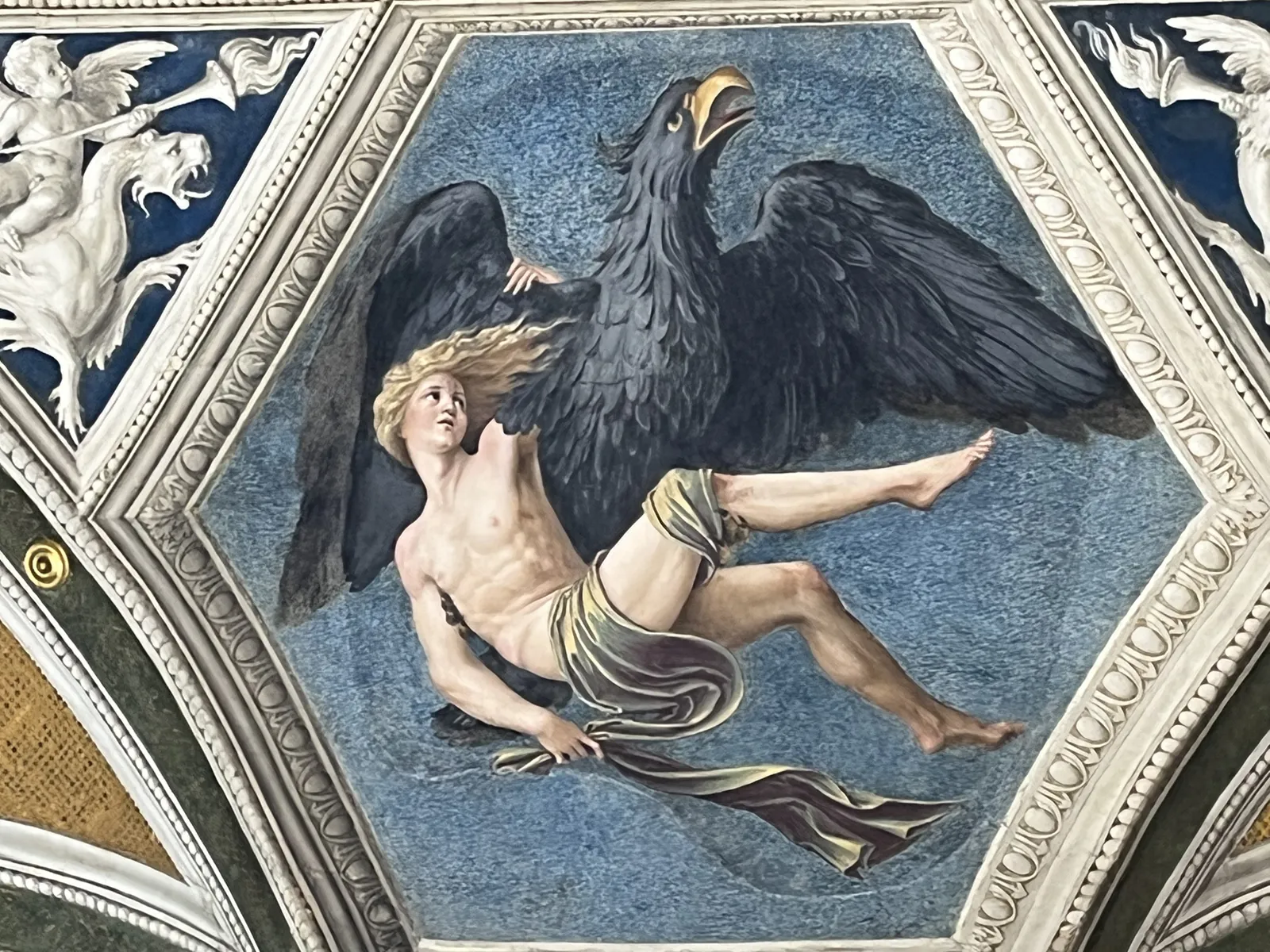
The Rape of Ganymede
Baldassarre Peruzzi
This Renaissance ceiling panel (1509–14) shows Zeus, in the form of an eagle, abducting the beautiful youth Ganymede to Olympus. The myth frames the act as a moment of divine erotic desire, with Ganymede raised to immortal companionship as Zeus’s beloved. The term rape follows the Latin raptus, meaning abduction, not its modern sense.
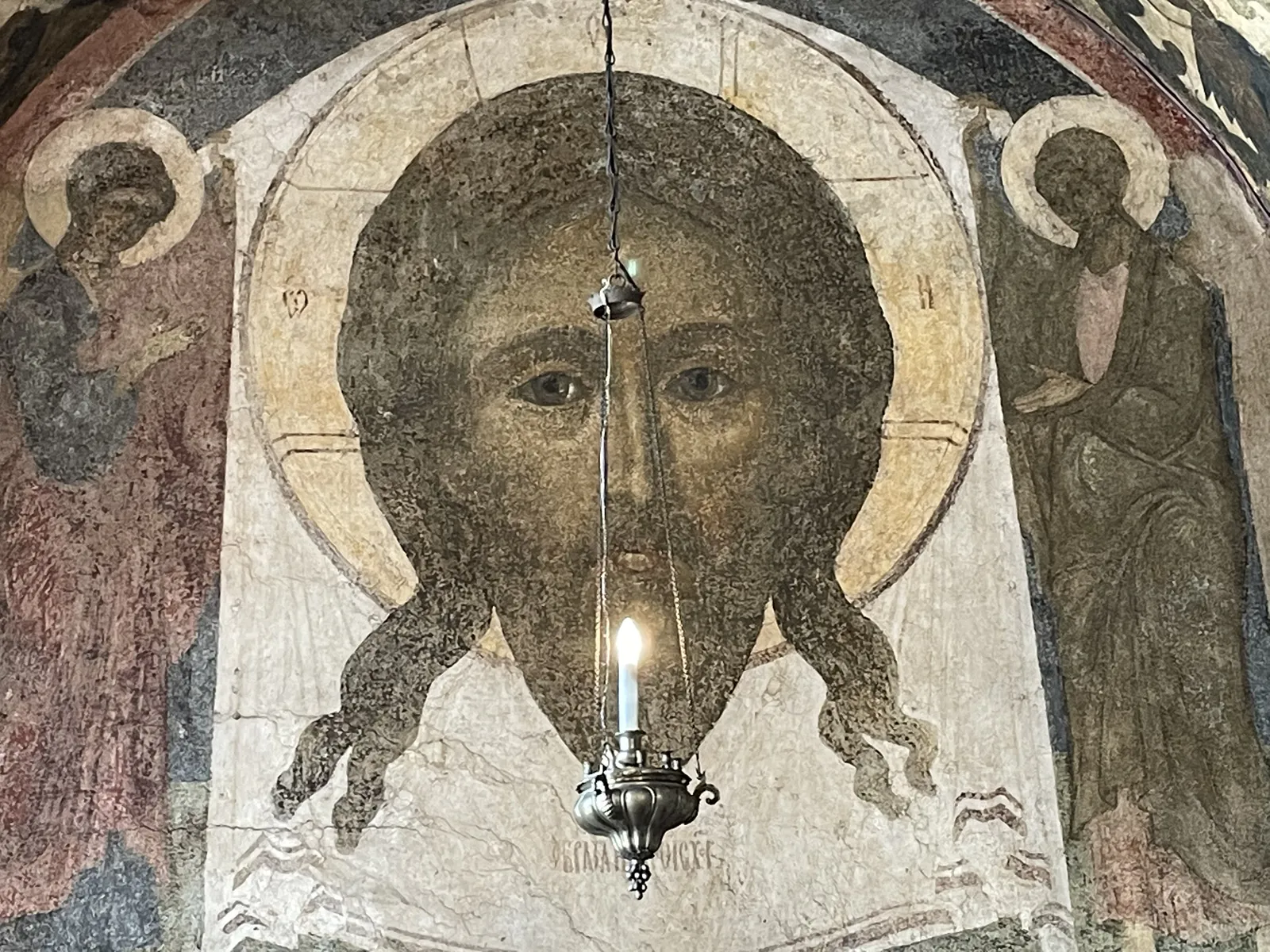
The Saviour Not Made by Hand
Simon Ushakov
This mid–late 17th-c. fresco depicts Spas Nerukotvorny (The Saviour Not Made by Hand), an image understood as a direct imprint of Christ’s face and a sign of his enduring presence. Ushakov follows Byzantine conventions yet introduces soft modeling and spatial depth drawn from Western art. The work reflects a moment when Moscow blended inherited Orthodox forms with new artistic influences to express religious renewal.
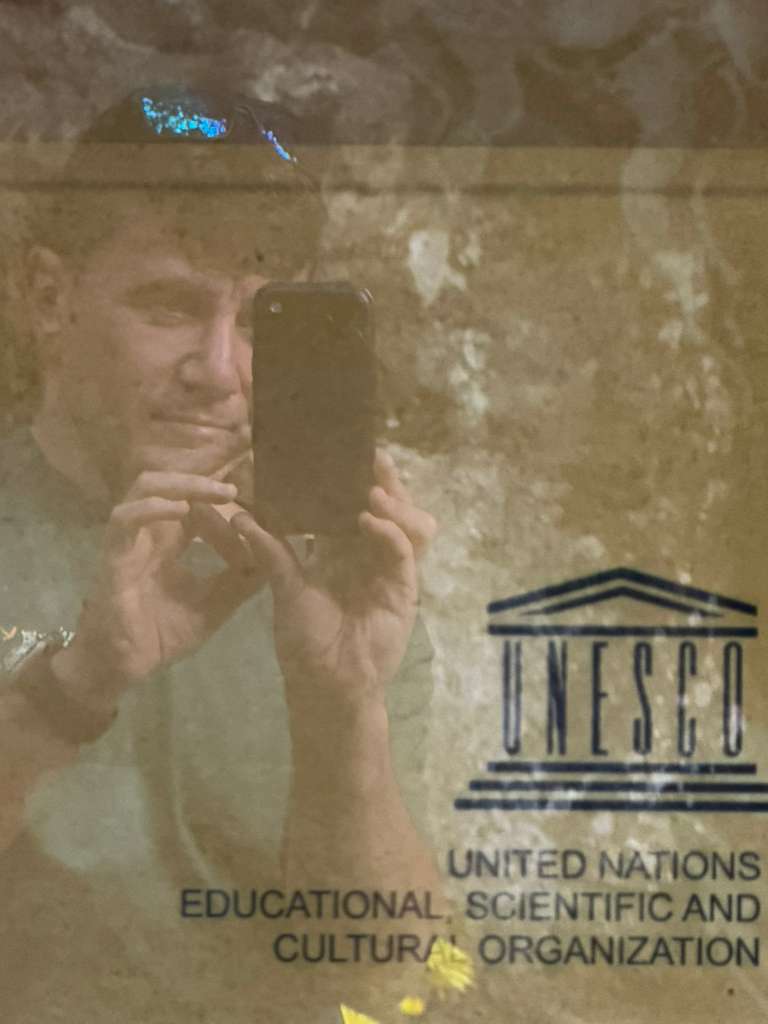
“When the path is beautiful, do not ask where it leads.” — Zen proverb
Welcome to my travel photography!
“When the path is beautiful, do not ask where it leads.” — Zen proverb
Welcome to my travel photography!
For as long as I can remember, my path has been one of discovery—seeking beauty, timelessness, and connection in every corner of the world. It has also been a journey of deep learning and understanding. I’ve been an avid traveler (or perhaps a travel addict?) for most of my life. My love for travel began long before I ever left home: as a child, I drew a fantasy map of my grandparents’ apartment and “traveled” through it with my cousin Sonya, imagining adventures in every corner. Nearly 90 countries and countless moments of awe later, I’m excited to share this journey with you.
Thanks to the tireless and ingenious programming of Diagilev, we’re now able to present about fifteen percent of the images I’ve accumulated over the years. More will be released in small batches depending on your interest. While the first release leans toward museum photography, later ones will include more nature, architecture, culture, and general travel experiences. If you’d like to receive email notifications about new releases, feel free to reach out—no commercial use, ever.
Throughout my travels, I’ve been drawn to two intertwined kinds of discovery. One is intellectual: learning why the world is the way it is. History became my guide, shaping my perspective and filling my camera roll with museums and old buildings. To me, history is not the past—it is the key to understanding the present and how the world became what it is. The other is emotional: seeking moments of elevation—spirituality, beauty, harmony—often found in nature, monasteries, and ancient sacred spaces. Together, these impulses shape my photography. It invites you to learn, admire, and soar—to rise above the mundane and see the world through a lens of curiosity and wonder.
Much of my later travel became possible thanks to my job with Delta Air Lines, but the wanderlust began years earlier. By the time I joined the industry, I had already visited over 35 countries and lived in several—largely thanks to a backpacking journey around the world with Luis León, whose face appears in many early photos. I grew up in Ufa in the USSR, and since leaving it I have lived, studied, and worked in Latvia, the United States, France, South Korea, Canada, Spain, Italy, Brazil, Japan, and Colombia.
A life of near-constant movement may seem a little crazy, but it has deepened my understanding of the world and produced the photography you are about to see. Over the years, my style has evolved—more intentional, more refined—yet its core remains the same: a search for understanding, timeless beauty, and a connection to those who walked this earth long before us.
I hope these photos stir something in your soul, just as they did in mine. I’d love to hear from you—whether reactions, suggestions, corrections, or a request to be added to the email list for new releases (no commercial use, I promise). You can learn more about my travels here, and my academic life here.
Enjoy our shared journey!