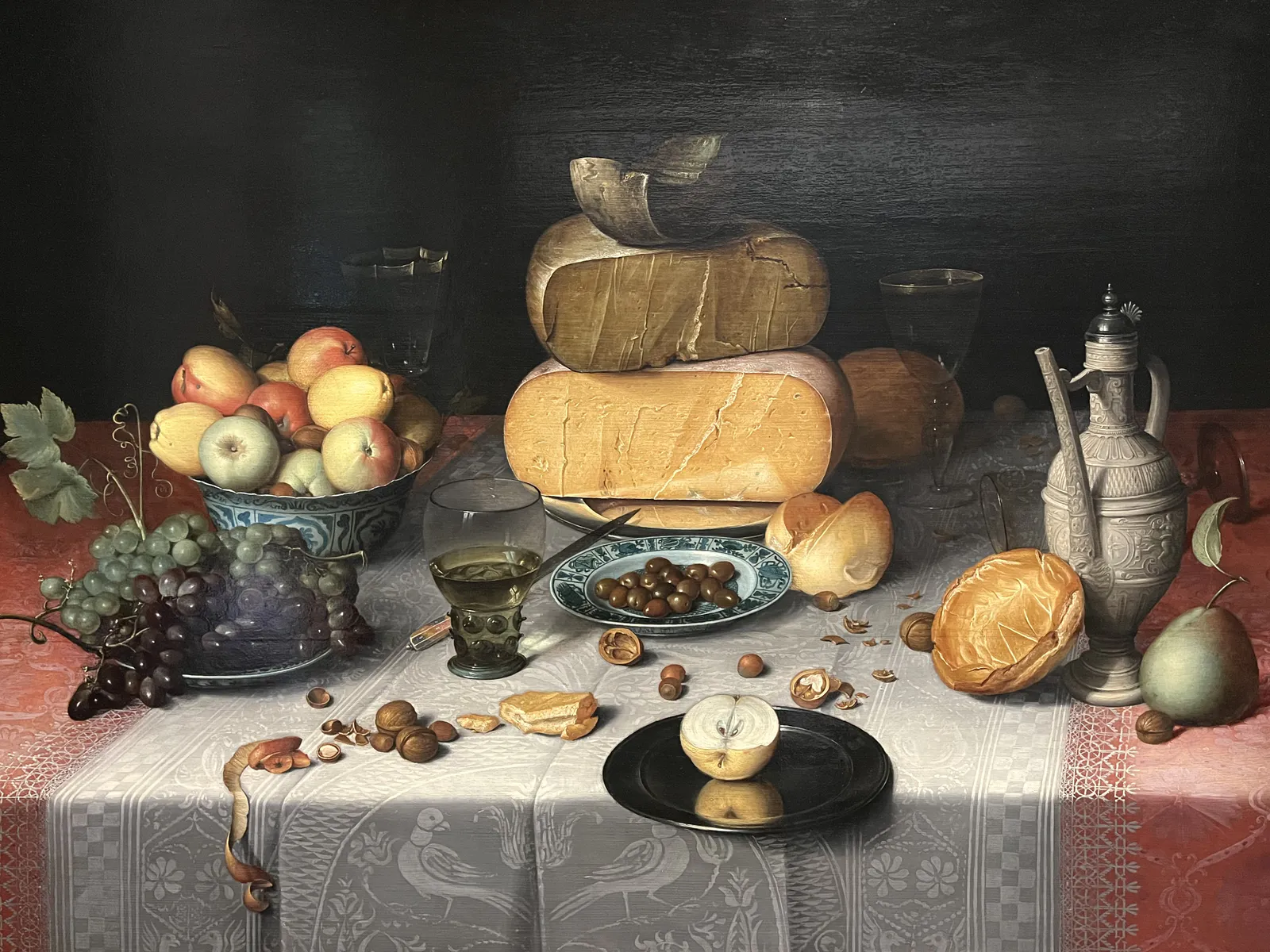
Still Life with Cheese
Floris Claesz van Dijck
On a damask-draped table (c.1615) lie fruit, bread, and three cheeses, carefully grouped by type. Floris van Dijck’s mastery of illusion is evident in the pewter plate jutting over the edge, as if within reach. A pioneer of Haarlem still-life painting, he helped establish the Dutch Golden Age tradition of rendering everyday abundance with startling realism.
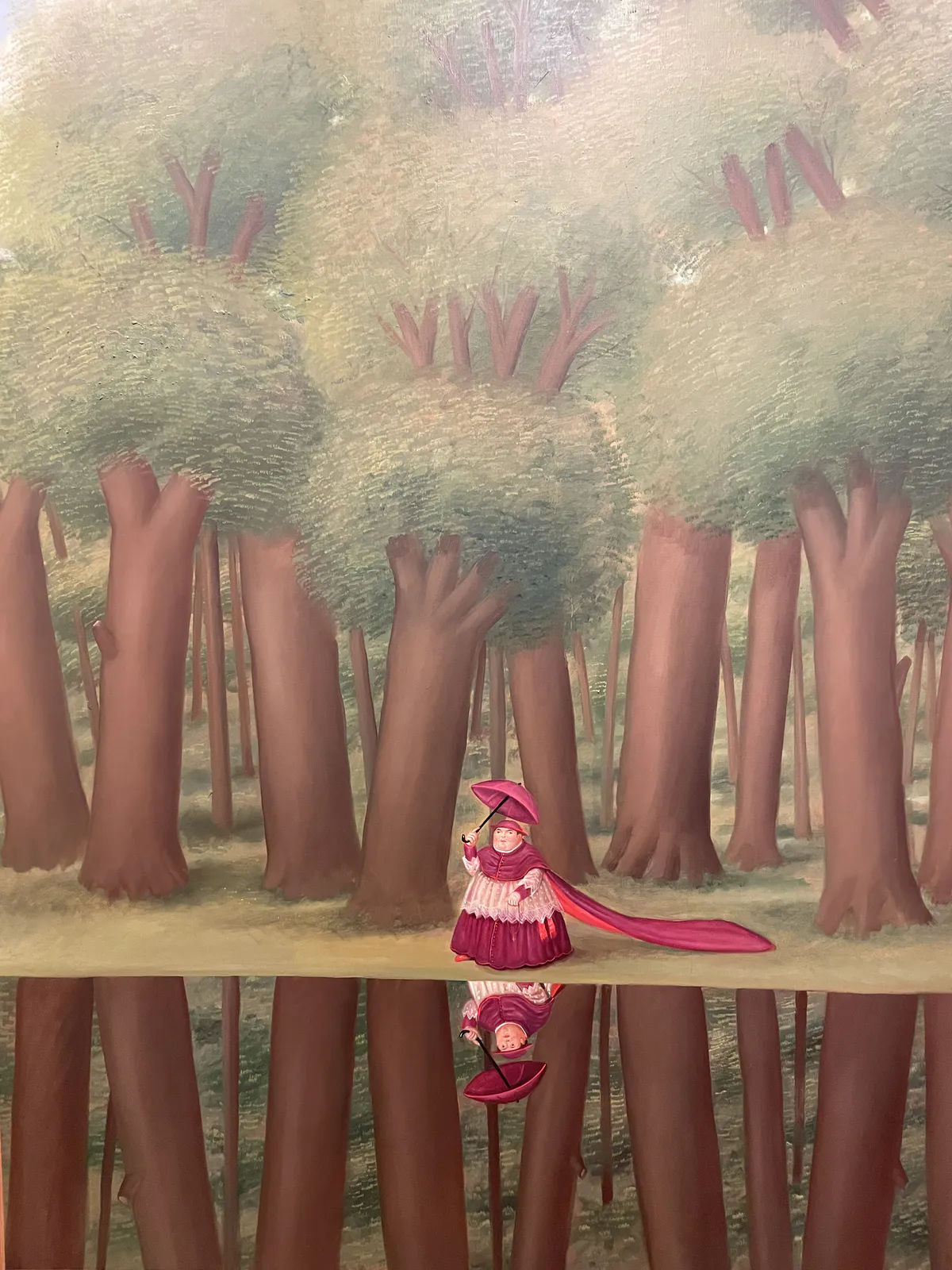
Woman with Umbrella
Fernando Botero
A solitary figure walks through a forest, her reflection mirrored below as if suspended between worlds. Her voluminous dress and umbrella contrast with the vertical rhythm of the trees. With surreal calm and poetic symmetry, Botero (1989) transforms a simple stroll into a meditation on solitude, identity, and the quiet theatricality of everyday life.
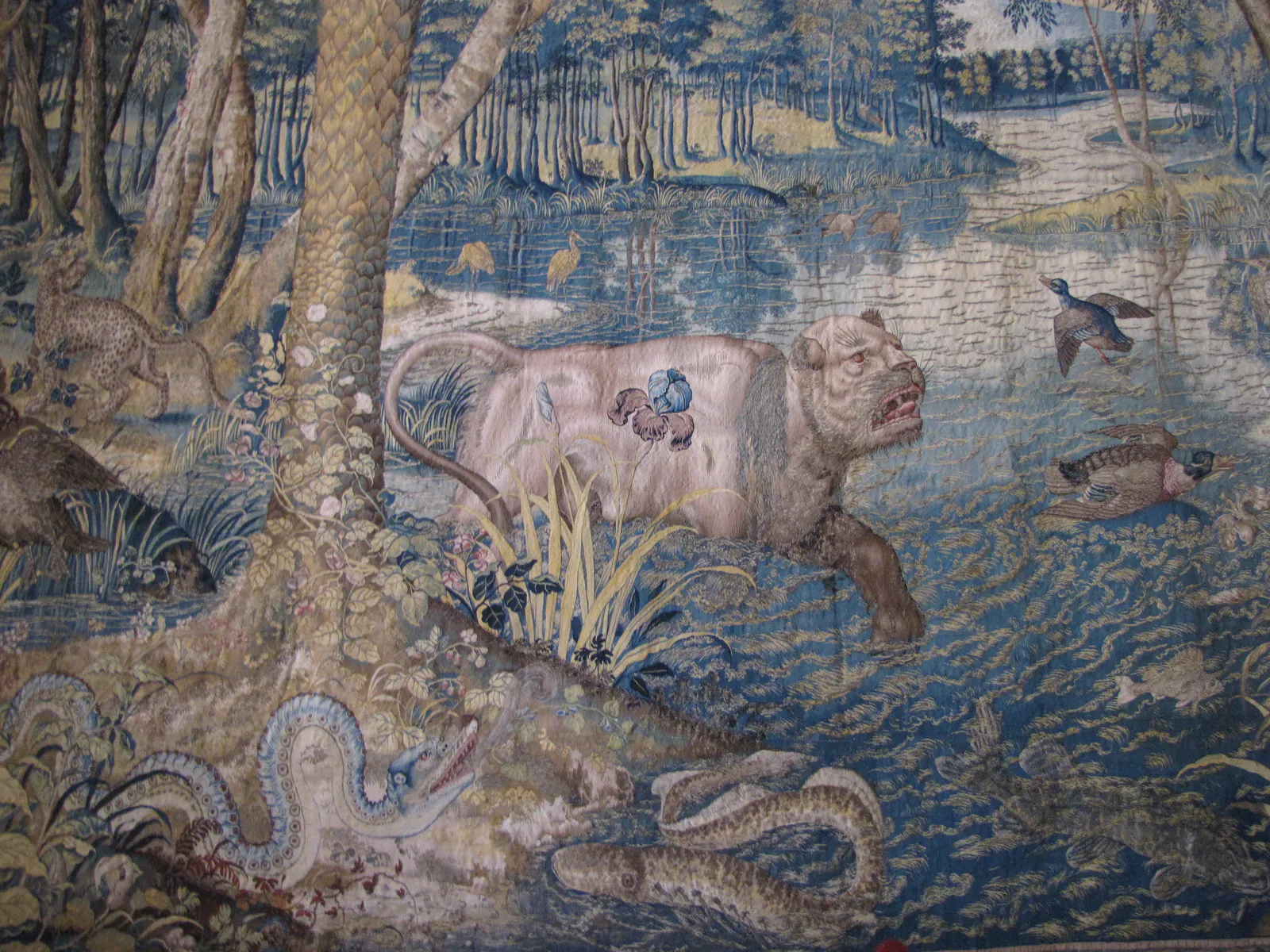
Tapestry of Fantastical Beasts in a River
Michael Coxcie
Woven in Brussels (c.1565) in a Flemish workshop according to Coxcie's design, this tapestry depicts hybrid beasts and serpents in a dense river landscape reflecting Renaissance fascination with nature’s wildness and moral allegory, symbolizing sin and chaos before divine order.
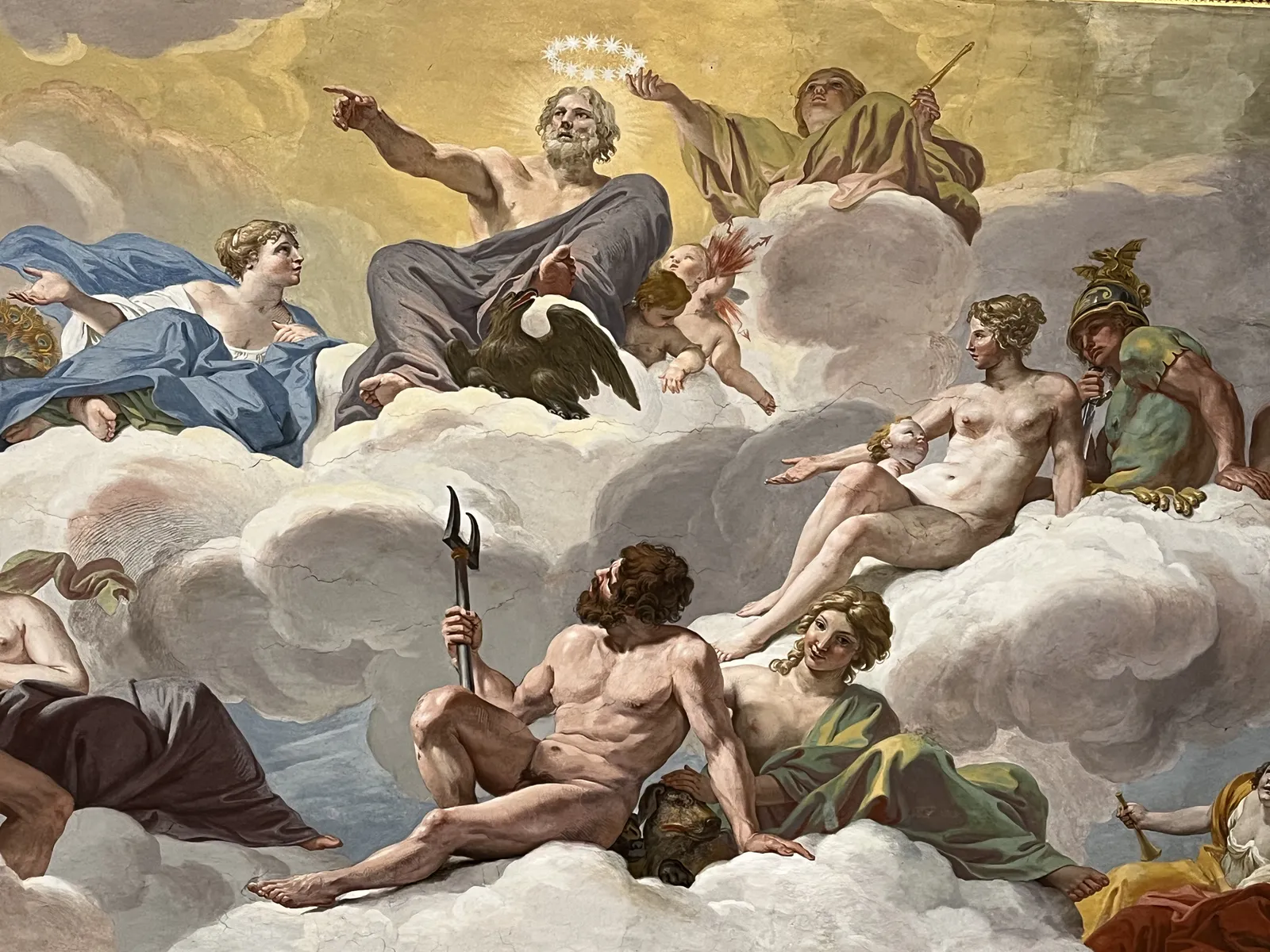
The Council of the Gods (detail)
Giovanni Lanfranco
In this celestial scene from The Council of the Gods (1624–25), Jupiter presides over Olympus, crowned with stars and flanked by his eagle. Surrounding him are Juno, Venus, Mars, and Pluto, their divine forms emerging from clouds. Painted for the Sala della Loggia in Villa Borghese, the fresco evokes the grandeur and illusionistic power of Baroque heaven.
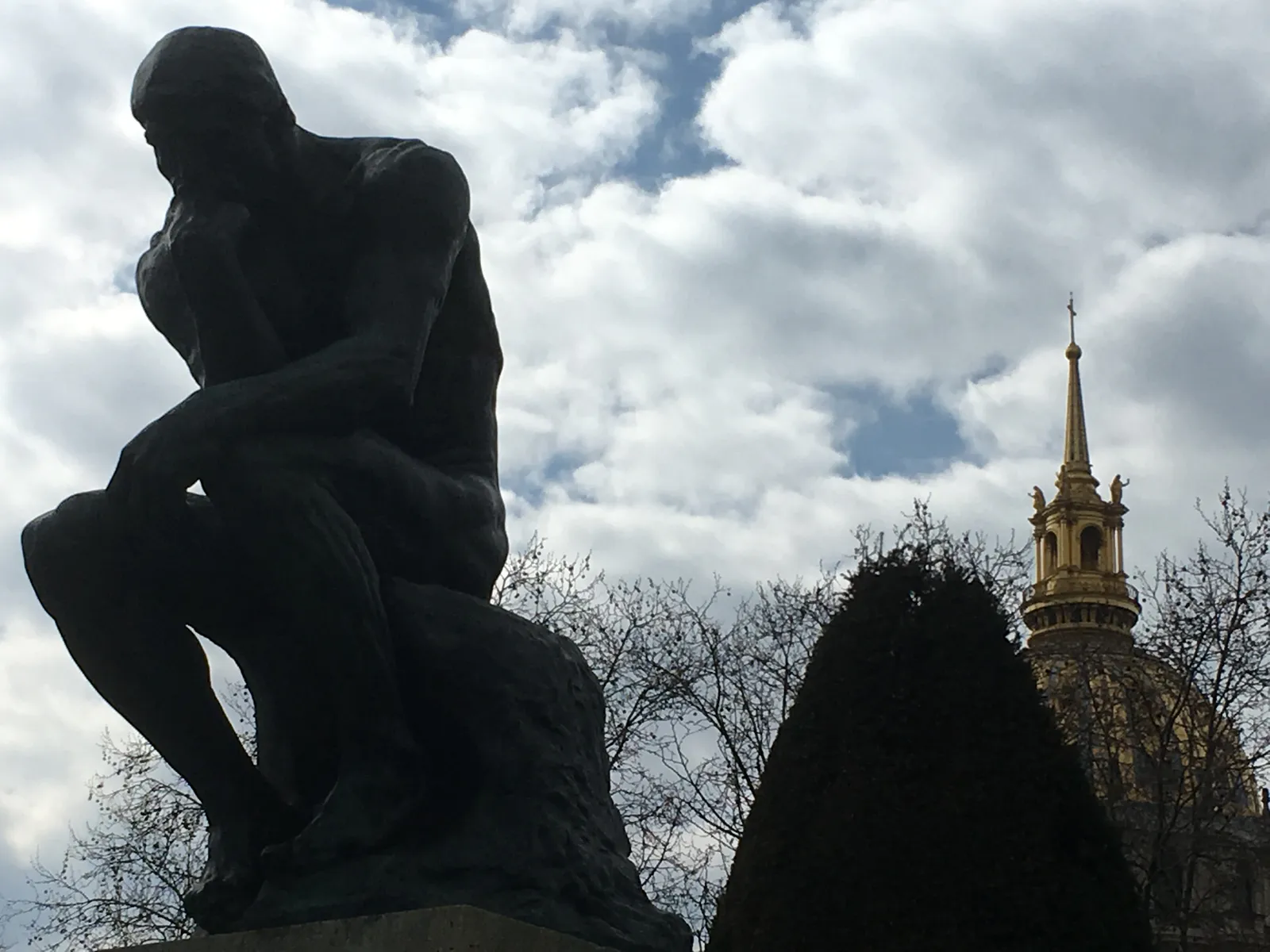
The Thinker
Auguste Rodin
Rodin's iconic bronze sculpture, The Thinker(1904), depicts a nude male figure in deep contemplation, symbolizing profound thought. Originally part of The Gates of Hell, it reflects on philosophy and introspection. This one is the monumental casting, with 27 full-sized versions worldwide. The masterpiece invites viewers to ponder life's complexities, embodying the universal quest for understanding and intellectual pursuit.
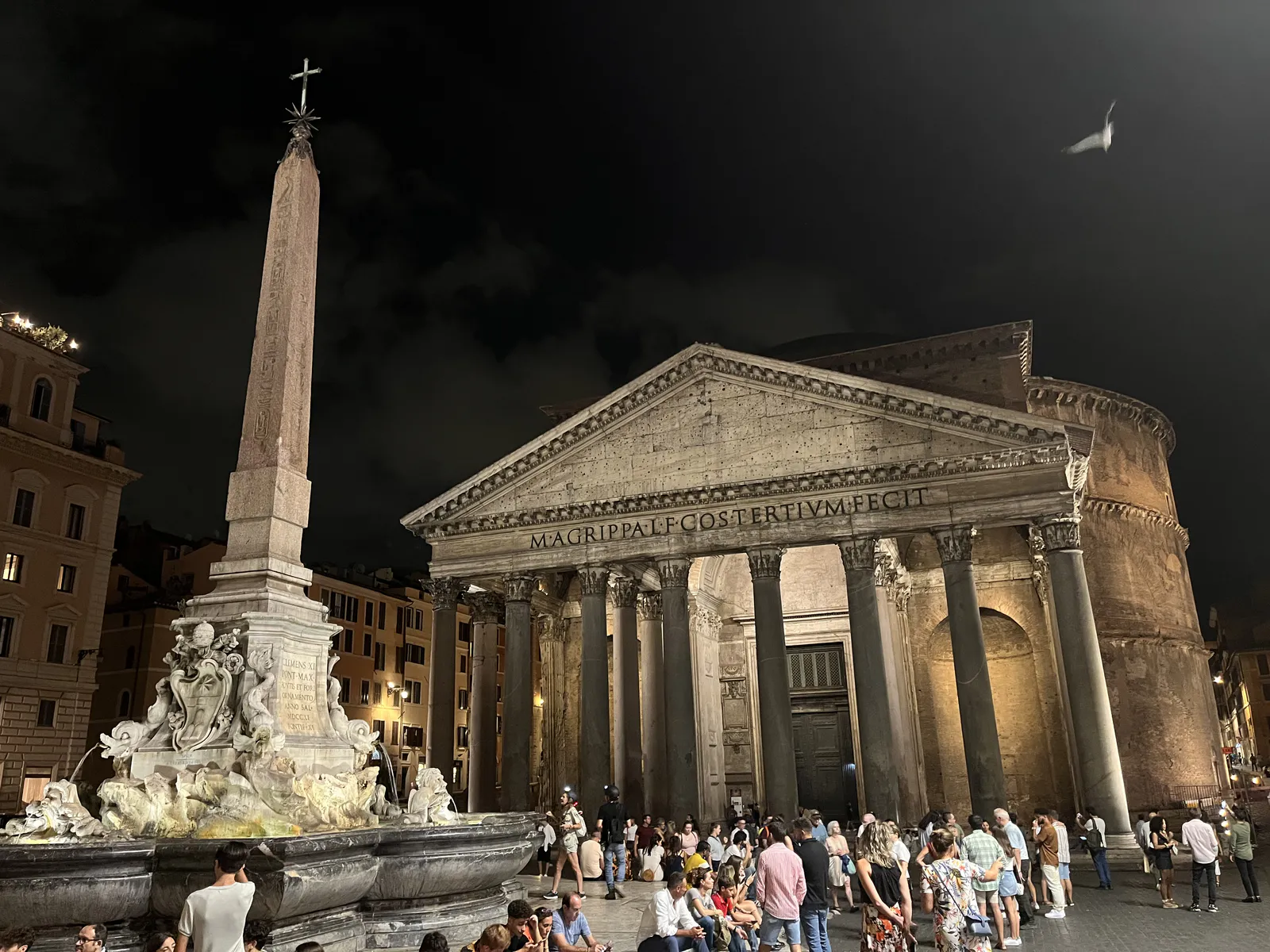
Pantheon with Macuteo Obelisk and Fountain
Filippo Barigioni
The Pantheon’s façade (118–125 AD), built under Emperor Hadrian, preserves Agrippa’s earlier inscription (M·AGRIPPA·L·F·COS·TERTIVM·FECIT - Marcus Agrippa, son of Lucius, consul for the third time, built this). Before it stands the Macuteo Obelisk from Egypt (rededicated here in 1711) and the Baroque fountain by Filippo Barigioni (1711), blending imperial Rome, Christian Rome, and papal urban renewal into one historic vista.
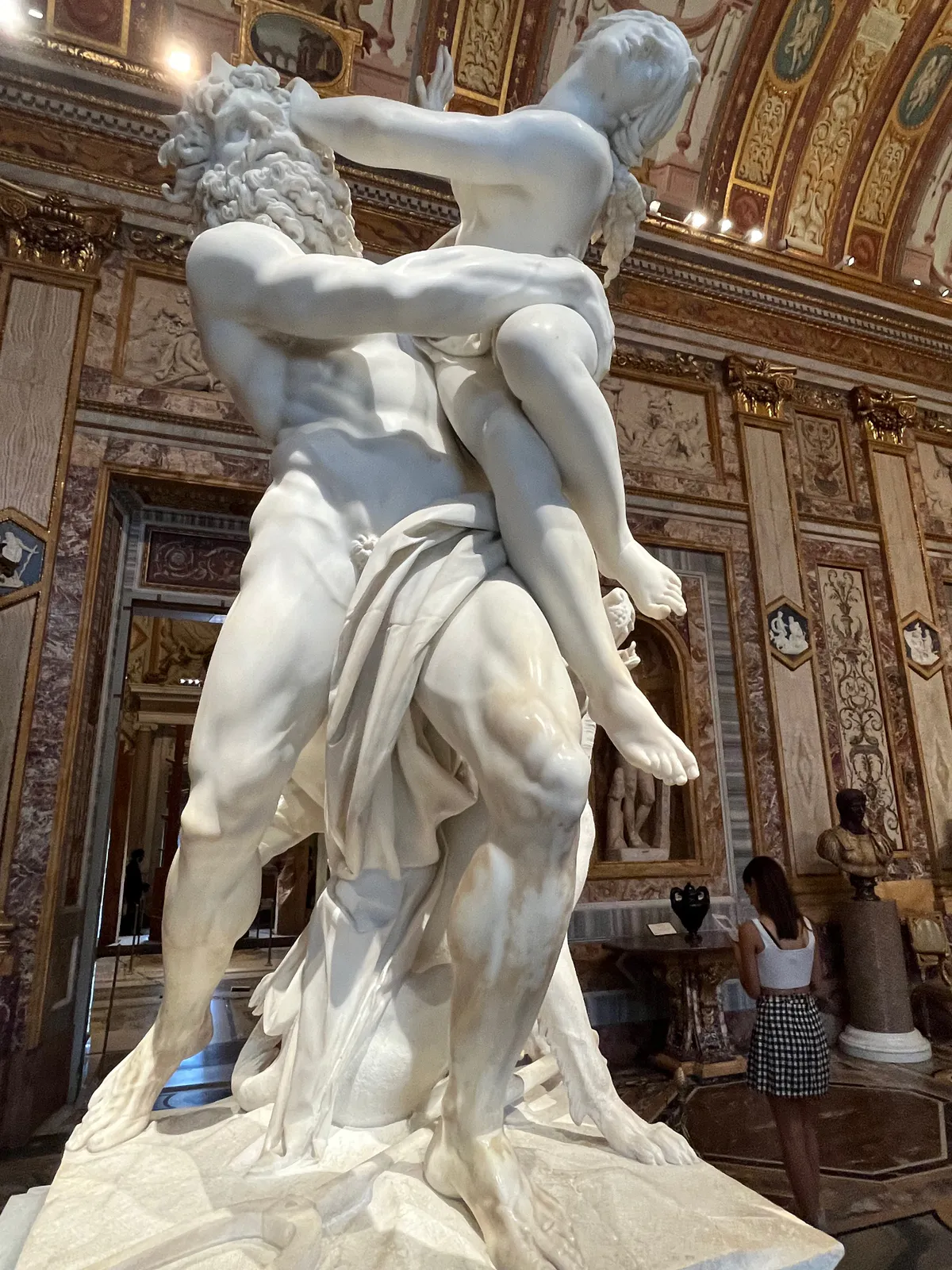
The Rape of Proserpina
Gian Lorenzo Bernini
From this angle, Bernini’s technical genius is apparent. Pluto’s gripping hands sink into Proserpina’s flesh with astonishing realism, turning marble into living form. The work (1621–22) stages emotional and physical tension at its peak, embodying the Baroque goal of stirring awe, drama, and pathos in a single breathtaking moment.
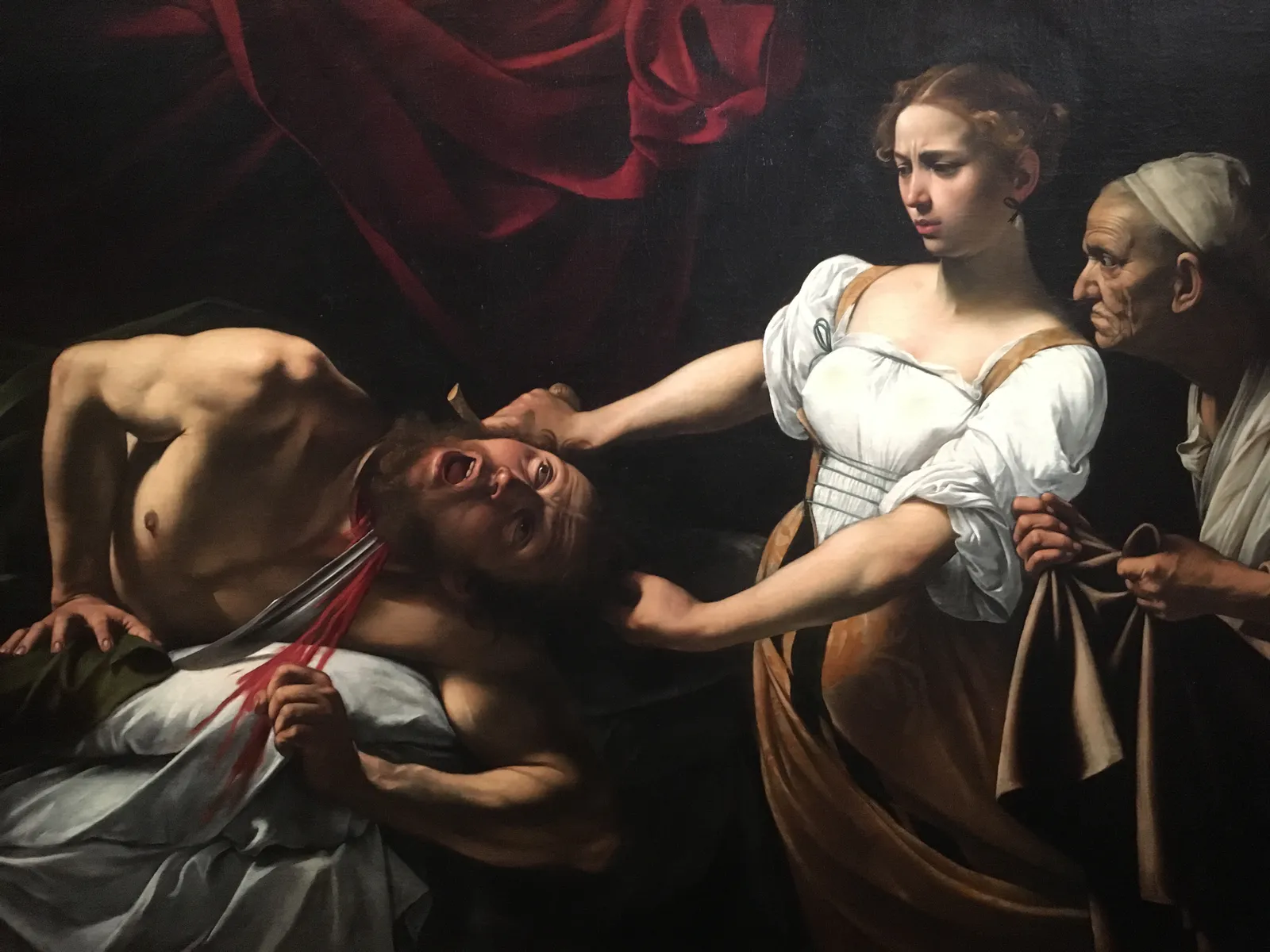
Judith Beheading Holofernes
Caravaggio
This canvas (c. 1599) painted in Rome embodies Caravaggio’s radical realism and theatrical chiaroscuro. Judith, a young widow, slays the Assyrian general Holofernes to save her people. Her calm determination contrasts with his violent death and the maid’s aged pragmatism. By staging sacred violence with unflinching naturalism, Caravaggio redefined biblical painting as a drama of human courage and divine justice.
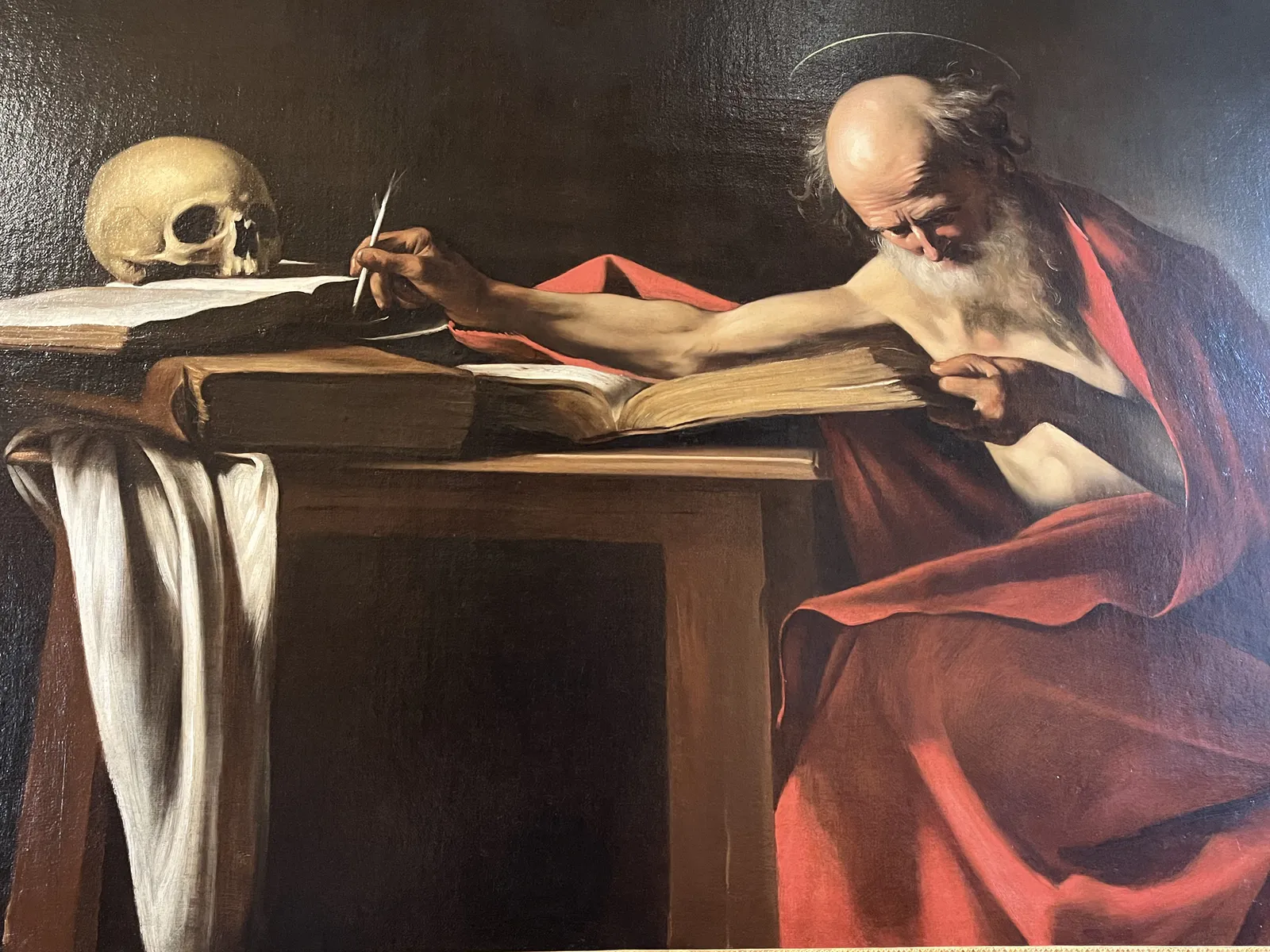
St. Jerome Writing
Caravaggio
This introspective painting (1605–6) shows Saint Jerome translating the Bible, immersed in thought. A skull atop the desk serves as a memento mori (remembrance of death), while dramatic lighting and vivid red drapery highlight the tension between divine labor and mortal fragility. Caravaggio transforms study into a spiritual battleground of flesh, faith, and time.
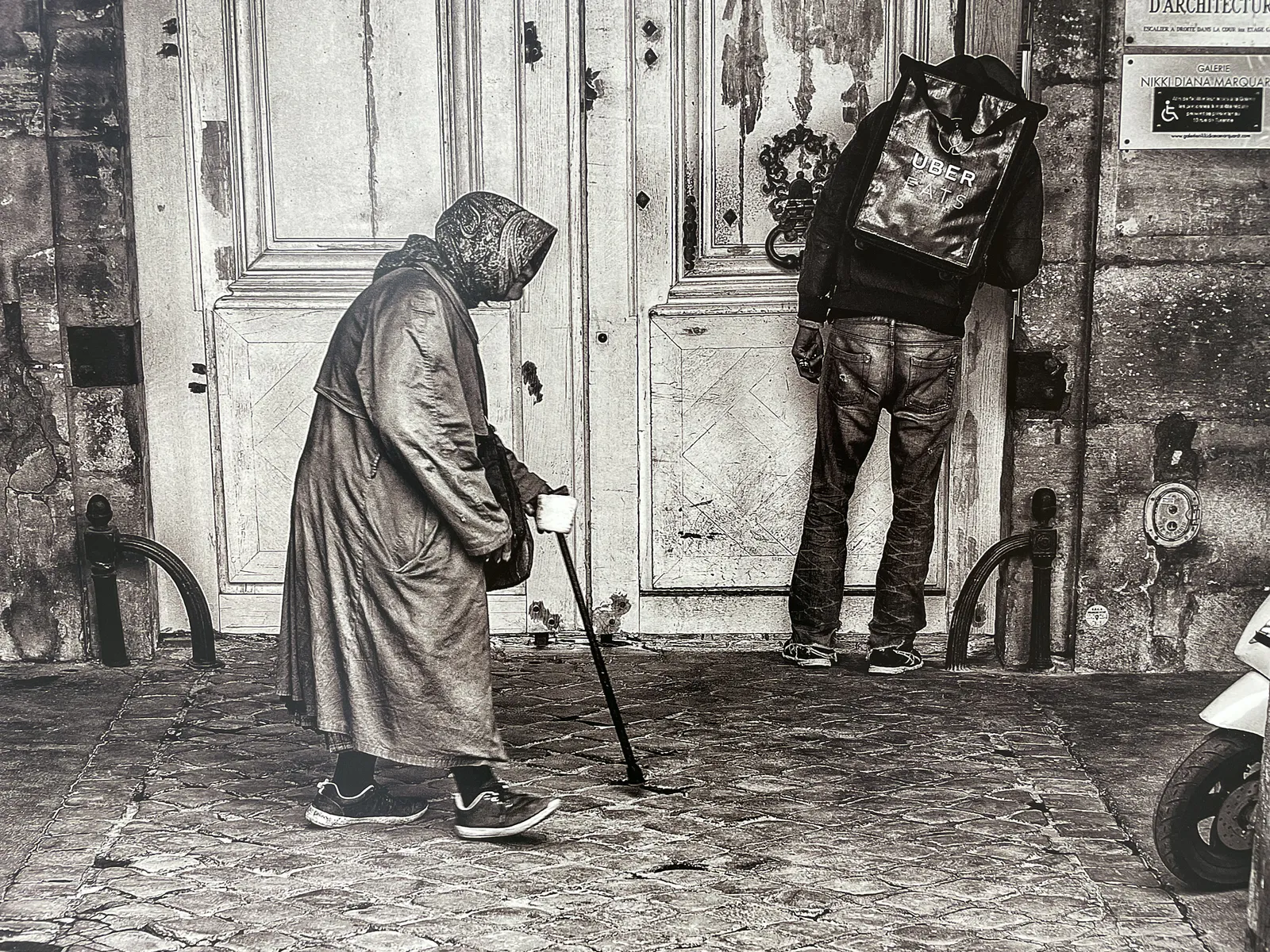
Uber Eats
Roger Zayas
This photo (2017), taken in the historic Marais district of Paris, captures a striking urban contrast: an elderly woman with a cane passes a food courier bent over a doorway. Zayas underscores generational divides and social invisibility, reflecting on aging and shifting economic realities in the European metropolis.
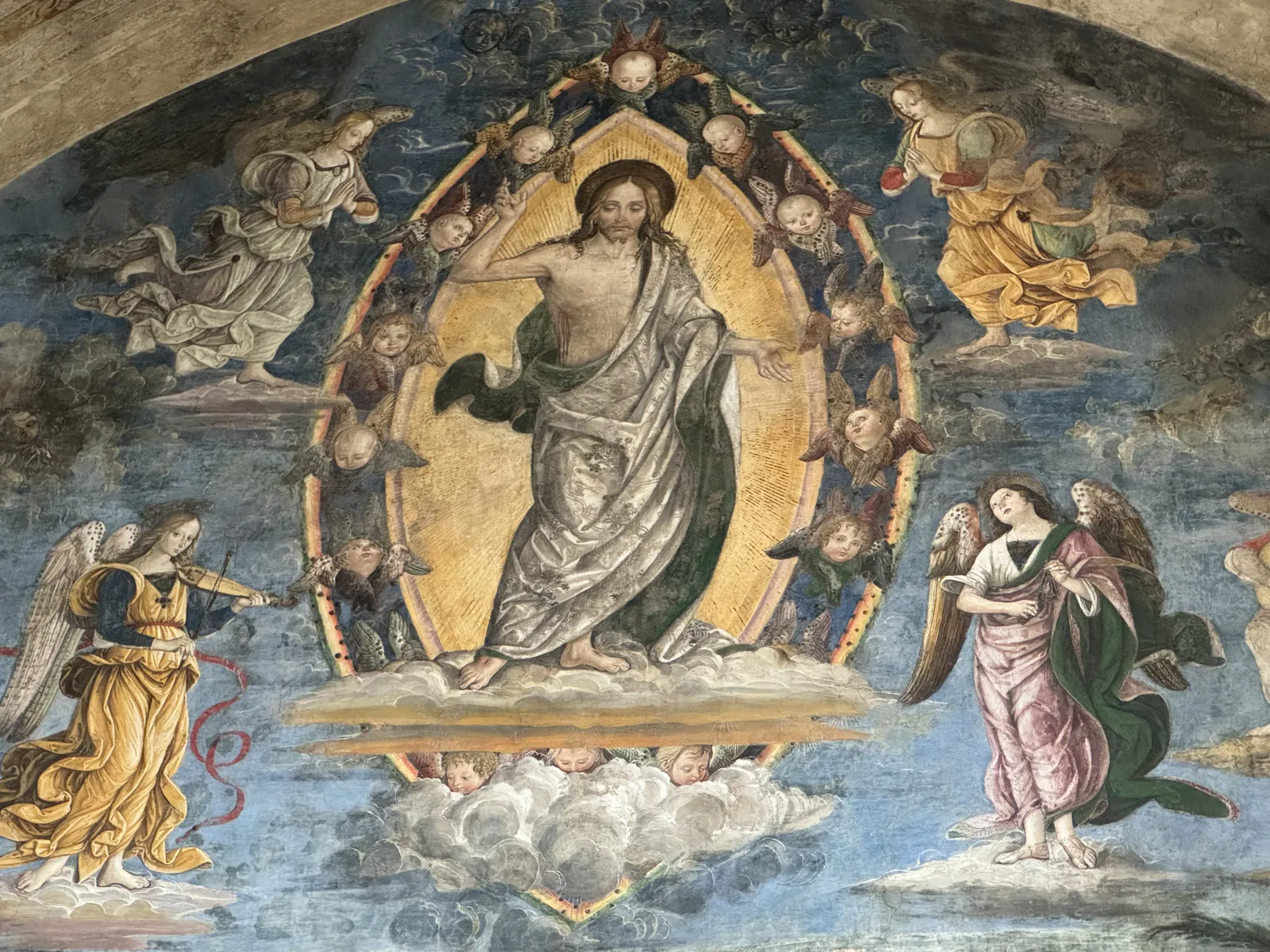
Christ in Majesty
Pinturicchio
Nikolo-Dvorishchensky Cathedral (1113) rises in compact tiers with clustered domes and narrow slit windows. Its pale plaster, often pink in daylight, stands in Yaroslav’s Court, the precinct founded by Yaroslav the Wise. Commissioned by Prince Mstislav to honor St Nicholas, it shaped the civic core of the Novgorod Republic and adapted Byzantine forms locally. The white building behind is part of the 17th-c. Merchant Court complex.
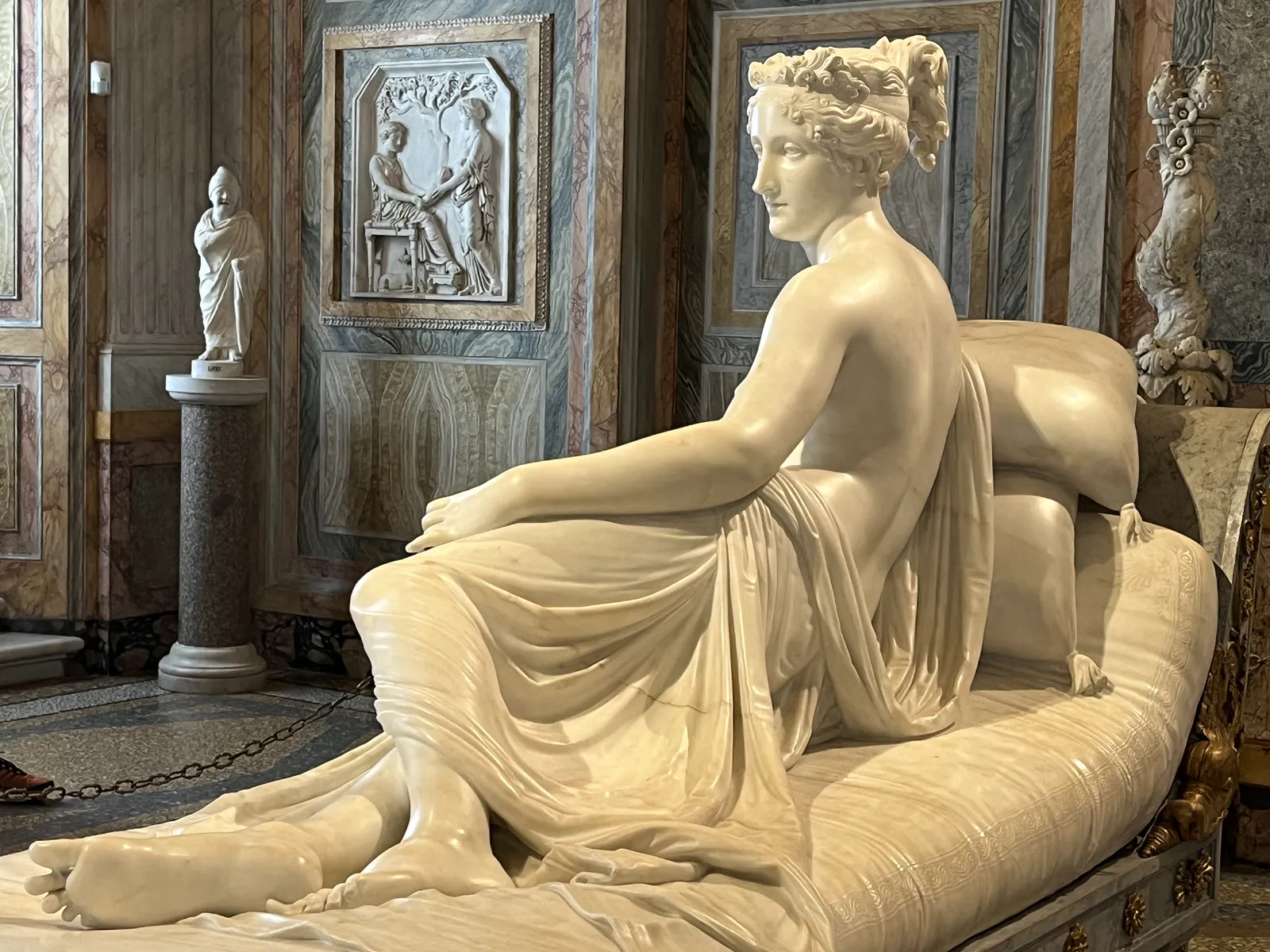
Pauline Bonaparte as Venus Victrix
Antonio Canova
Antonio Canova's marble masterpiece (1805–08) depicts Pauline Bonaparte as Venus Victrix, reclining semi-nude on a couch, holding an apple symbolizing Venus's triumph in the Judgement of Paris. Commissioned by her husband, Camillo Borghese, Pauline insisted on being portrayed as Venus rather than Diana. The sculpture, originally designed to rotate, reflects both personal ambition and classical beauty.
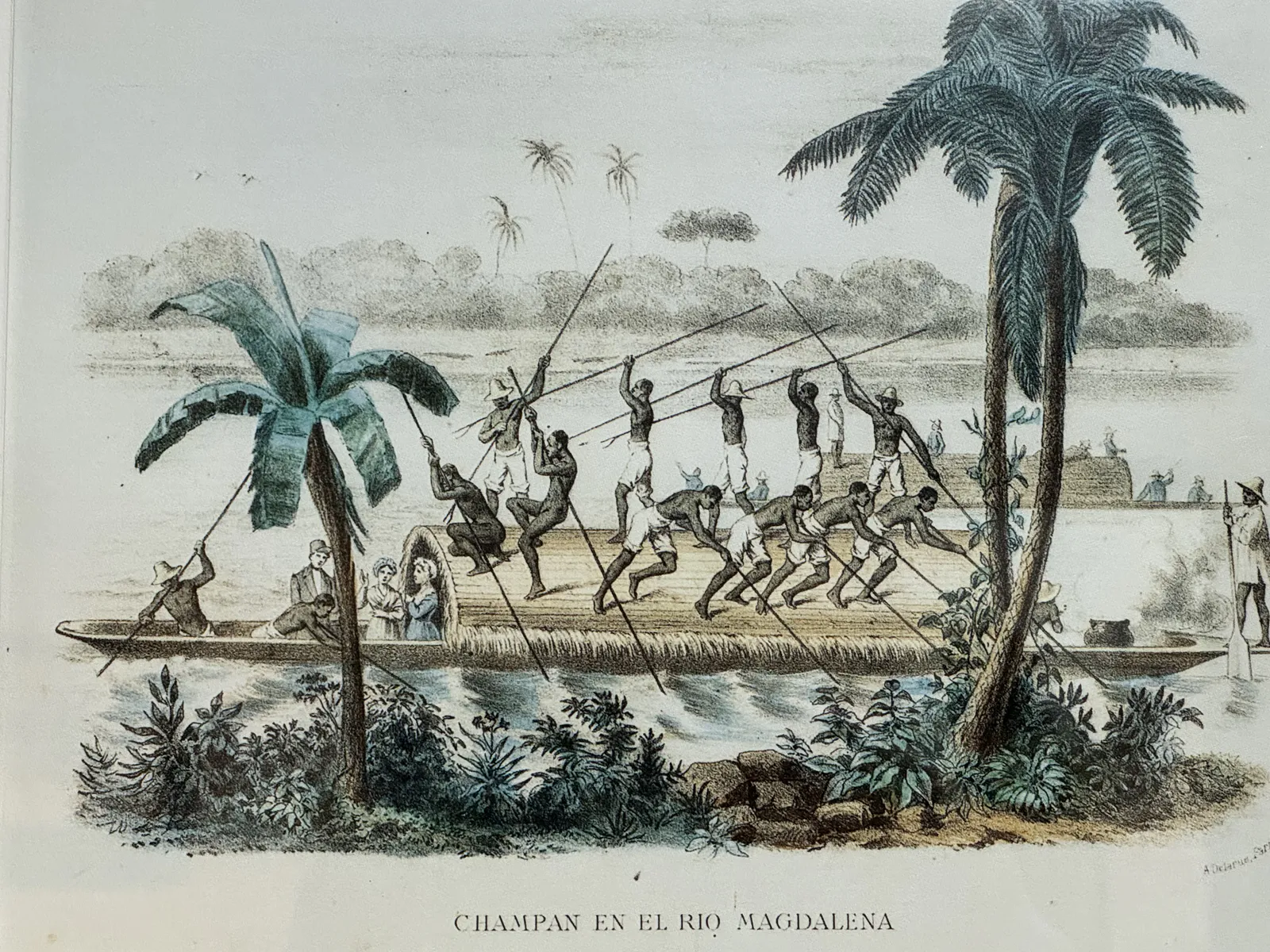
Champán en el río Magdalena
De la Rue & Torres Méndez
This 1878 lithograph depicts a champán, a flat-bottomed river raft common on the Magdalena River, propelled by Afro-Colombian workers using long poles. Wealthy passengers rest under a thatched shelter, highlighting the stark racial and class divisions of the era. The image captures both Colombia’s natural landscape and its colonial labor hierarchies in transition.
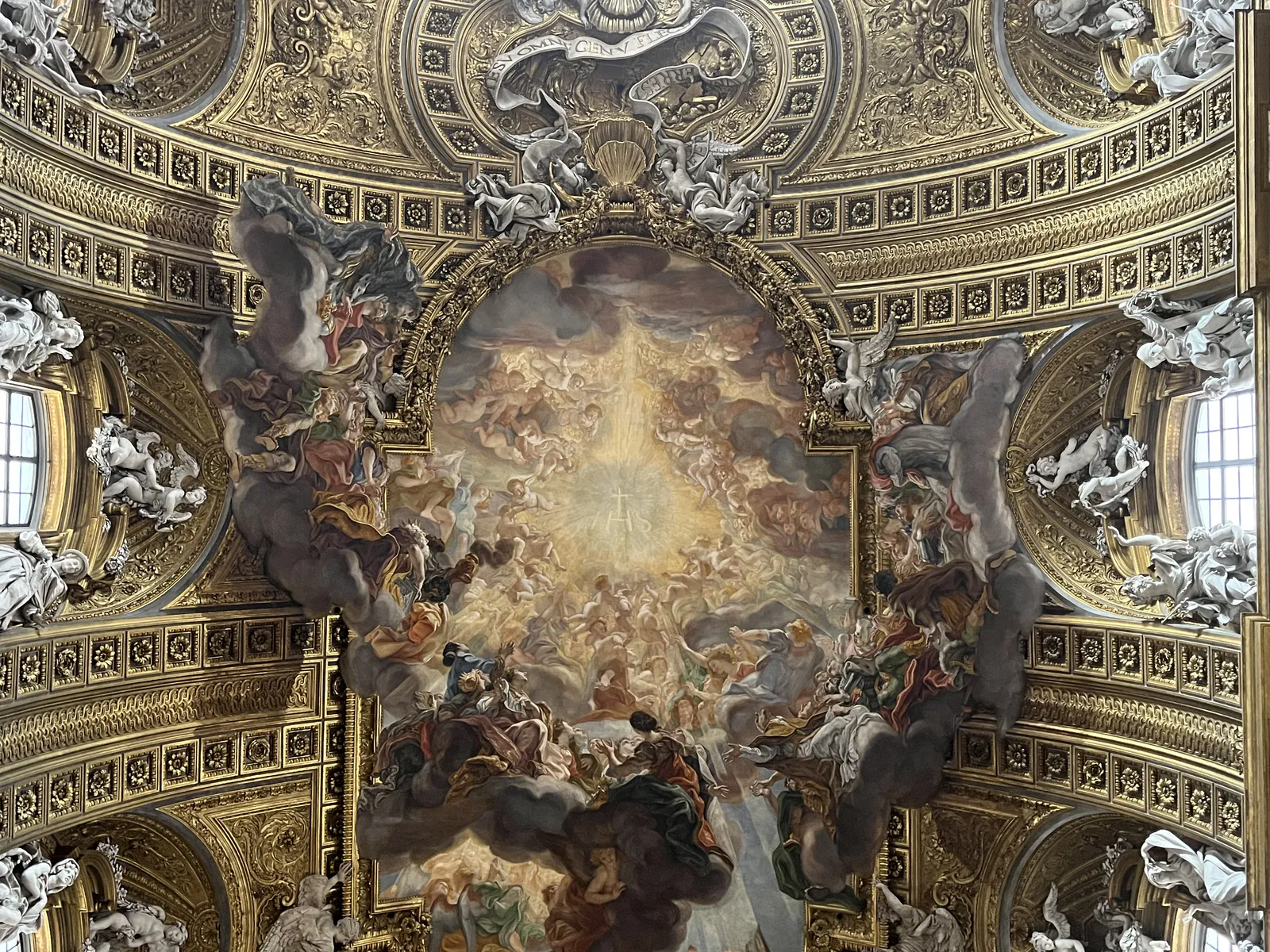
Triumph of the Name of Jesus
Giovanni Battista Gaulli
This dramatic fresco (1676–79) fills the nave ceiling with a celestial eruption of light and figures. At its center, divine radiance emanates from the monogram IHS, the symbol of Jesus. Saved souls rise toward the light, while sinners tumble into shadow. Blending paint and stucco, the work fuses heaven and church in Baroque theatricality.
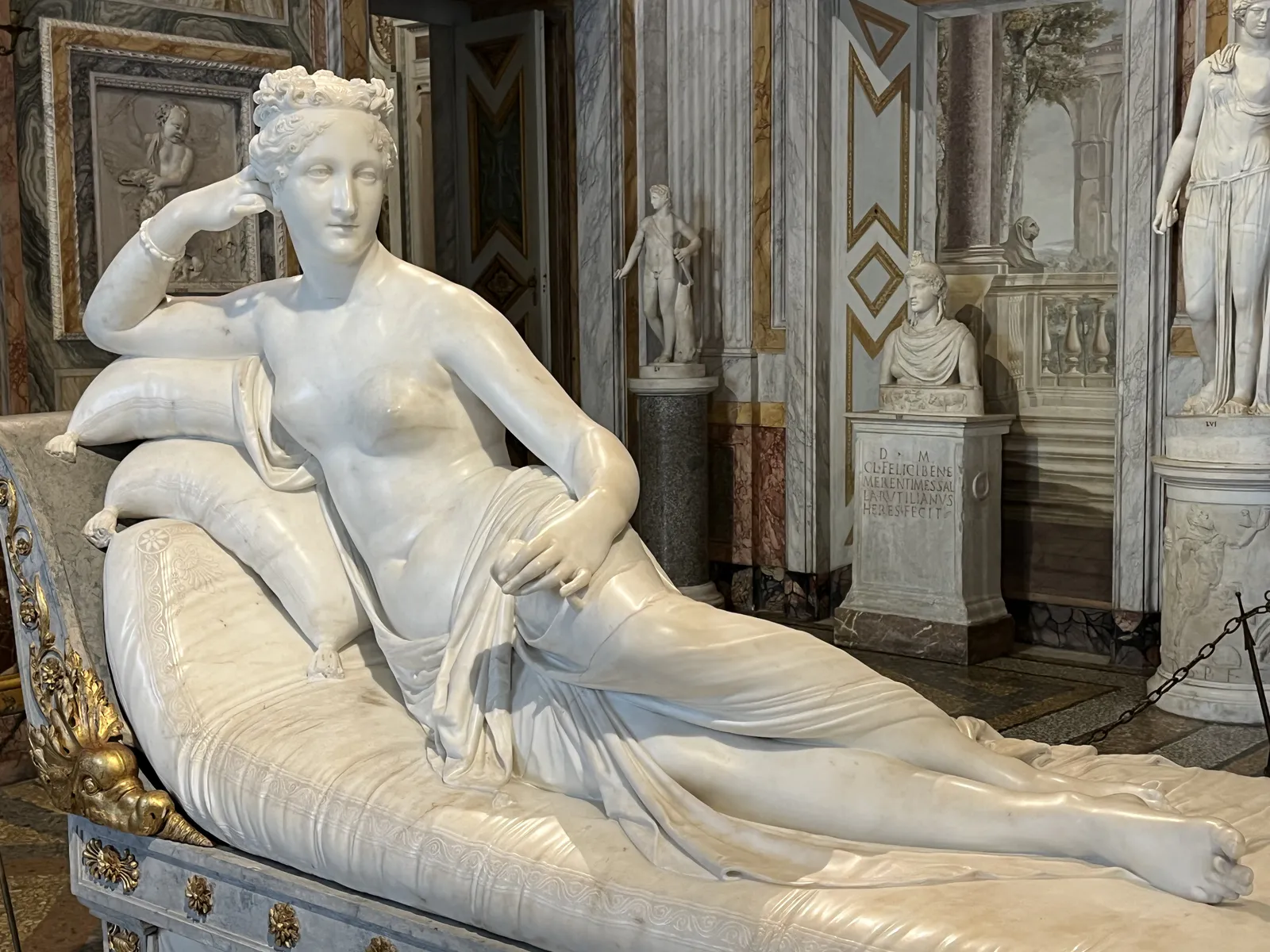
Pauline Bonaparte as Venus Victrix
Antonio Canova
This statue (1805–08) presents Pauline Bonaparte, sister of Napoleon, as Venus, reclining semi-nude and holding the golden apple of victory. Commissioned by her husband Camillo Borghese, the statue blends neoclassical elegance with sensual myth. Its rotating base once allowed viewers to admire it from every angle.
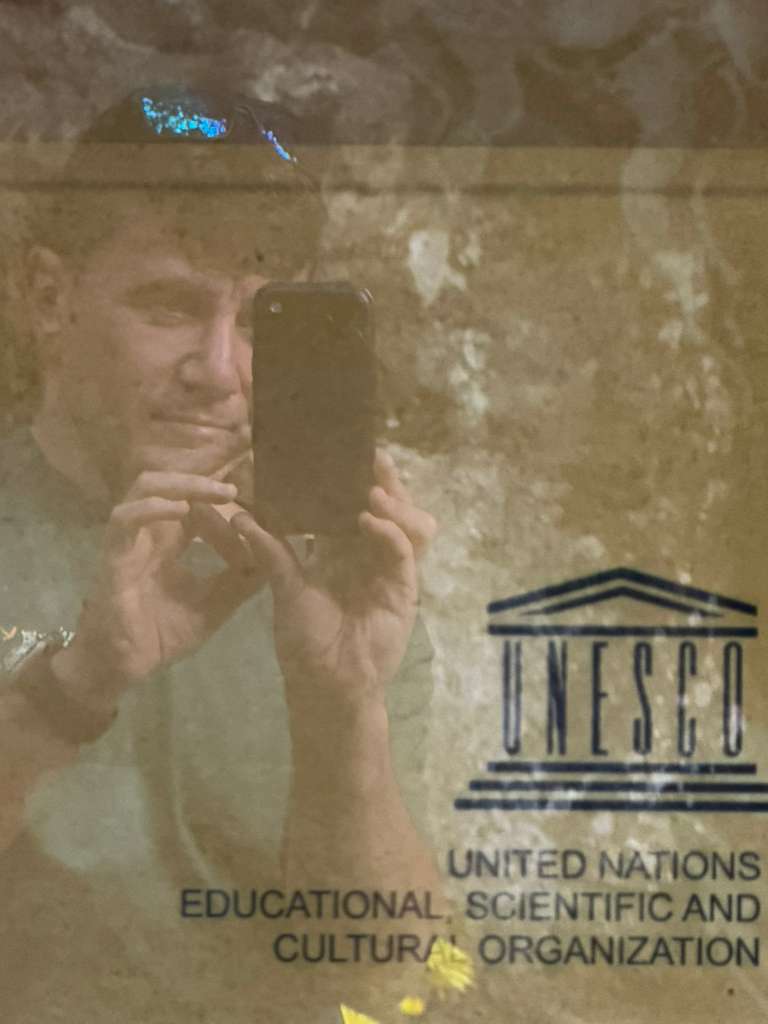
“When the path is beautiful, do not ask where it leads.” — Zen proverb
Welcome to my travel photography!
“When the path is beautiful, do not ask where it leads.” — Zen proverb
Welcome to my travel photography!
For as long as I can remember, my path has been one of discovery—seeking beauty, timelessness, and connection in every corner of the world. It has also been a journey of deep learning and understanding. I’ve been an avid traveler (or perhaps a travel addict?) for most of my life. My love for travel began long before I ever left home: as a child, I drew a fantasy map of my grandparents’ apartment and “traveled” through it with my cousin Sonya, imagining adventures in every corner. Nearly 90 countries and countless moments of awe later, I’m excited to share this journey with you.
Thanks to the tireless and ingenious programming of Diagilev, we’re now able to present about fifteen percent of the images I’ve accumulated over the years. More will be released in small batches depending on your interest. While the first release leans toward museum photography, later ones will include more nature, architecture, culture, and general travel experiences. If you’d like to receive email notifications about new releases, feel free to reach out—no commercial use, ever.
Throughout my travels, I’ve been drawn to two intertwined kinds of discovery. One is intellectual: learning why the world is the way it is. History became my guide, shaping my perspective and filling my camera roll with museums and old buildings. To me, history is not the past—it is the key to understanding the present and how the world became what it is. The other is emotional: seeking moments of elevation—spirituality, beauty, harmony—often found in nature, monasteries, and ancient sacred spaces. Together, these impulses shape my photography. It invites you to learn, admire, and soar—to rise above the mundane and see the world through a lens of curiosity and wonder.
Much of my later travel became possible thanks to my job with Delta Air Lines, but the wanderlust began years earlier. By the time I joined the industry, I had already visited over 35 countries and lived in several—largely thanks to a backpacking journey around the world with Luis León, whose face appears in many early photos. I grew up in Ufa in the USSR, and since leaving it I have lived, studied, and worked in Latvia, the United States, France, South Korea, Canada, Spain, Italy, Brazil, Japan, and Colombia.
A life of near-constant movement may seem a little crazy, but it has deepened my understanding of the world and produced the photography you are about to see. Over the years, my style has evolved—more intentional, more refined—yet its core remains the same: a search for understanding, timeless beauty, and a connection to those who walked this earth long before us.
I hope these photos stir something in your soul, just as they did in mine. I’d love to hear from you—whether reactions, suggestions, corrections, or a request to be added to the email list for new releases (no commercial use, I promise). You can learn more about my travels here, and my academic life here.
Enjoy our shared journey!