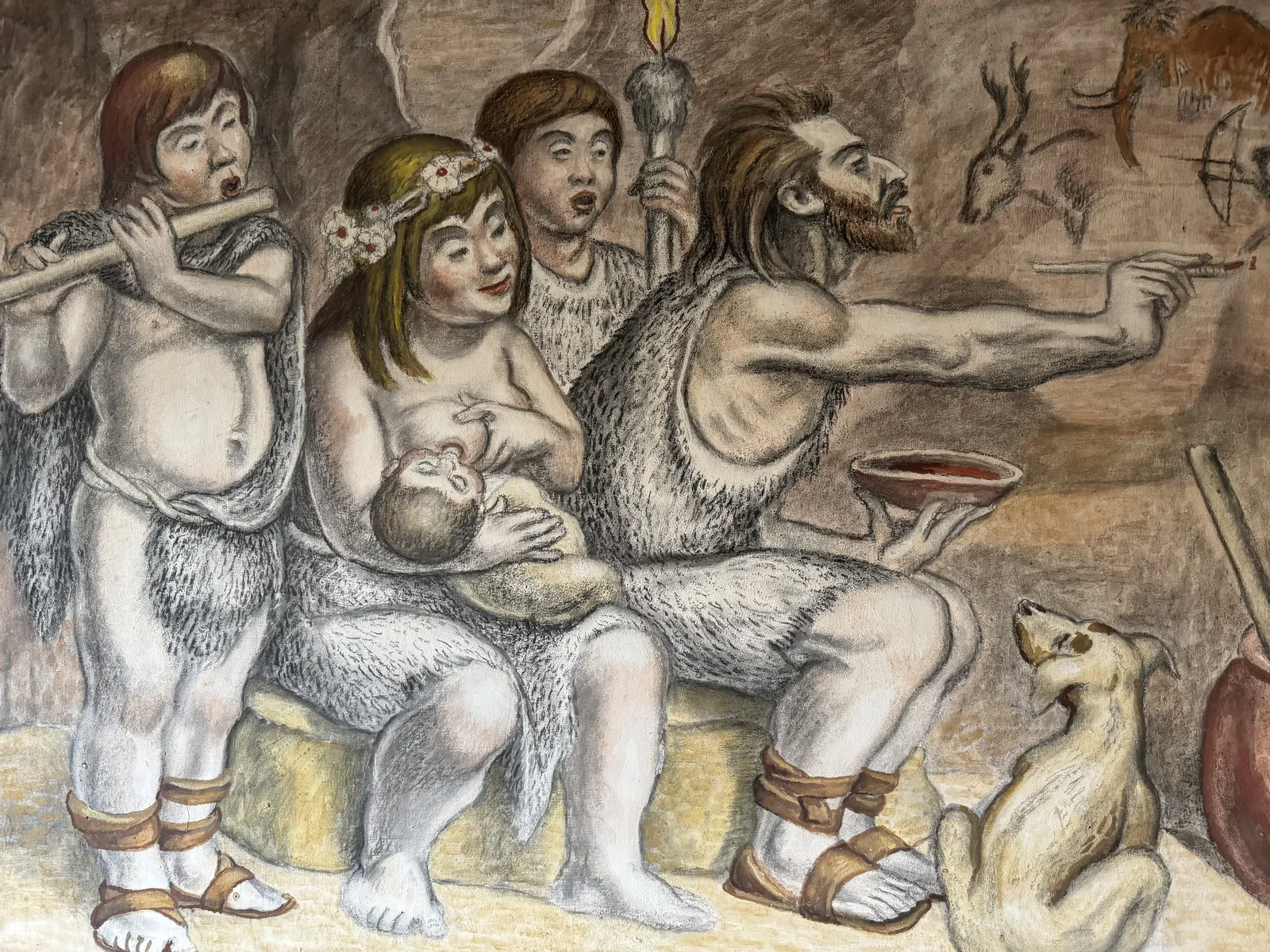
Cave Painter
Luis Alberto Acuña
In this mural (1960-75), Acuña imagines a prehistoric family gathered as the father paints on a cave wall. The scene blends idealized innocence with artistic origin: music, fire, and breastfeeding evoke harmony, while the act of painting becomes a metaphor for humanity’s first attempt to narrate its world. This work reflects Acuña’s fascination with the roots of civilization and his desire to forge a national artistic identity that honors both primitivism and cultural continuity.
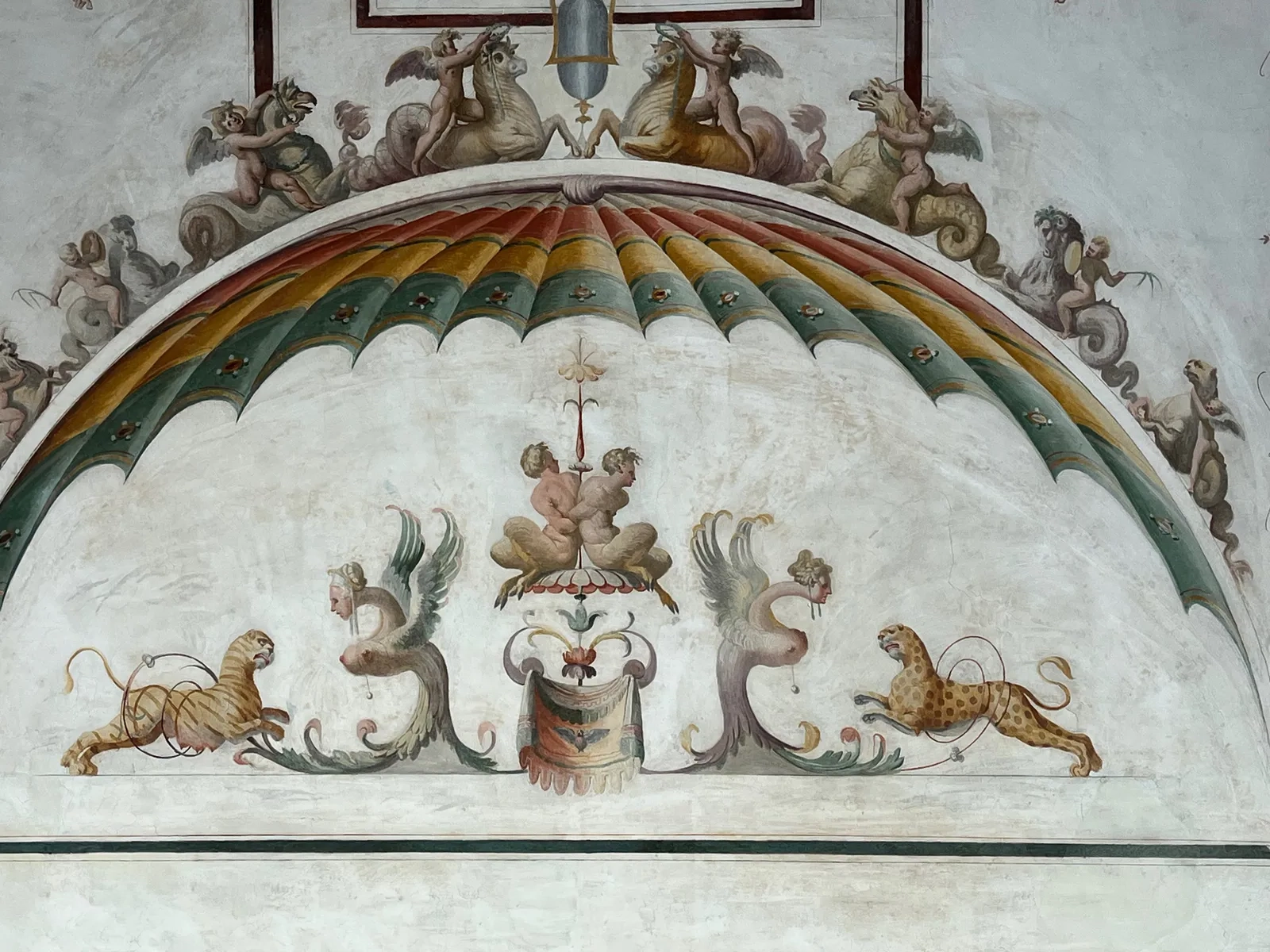
Grotesque Fantasy with Beasts
Perino del Vaga, Rietti Domenico
This fresco (1545–46) shows a rainbow-like arch filled with hybrid beasts, winged creatures, feline predators, and playful putti (cherubic child figures) arranged over a pale ground. The painters adapt the Roman taste for grottesche (fantastic ornamental motifs) rediscovered in ancient ruins. Their dense fantasy best reveals how Renaissance courts used such imagery to turn walls into imaginative spectacle.
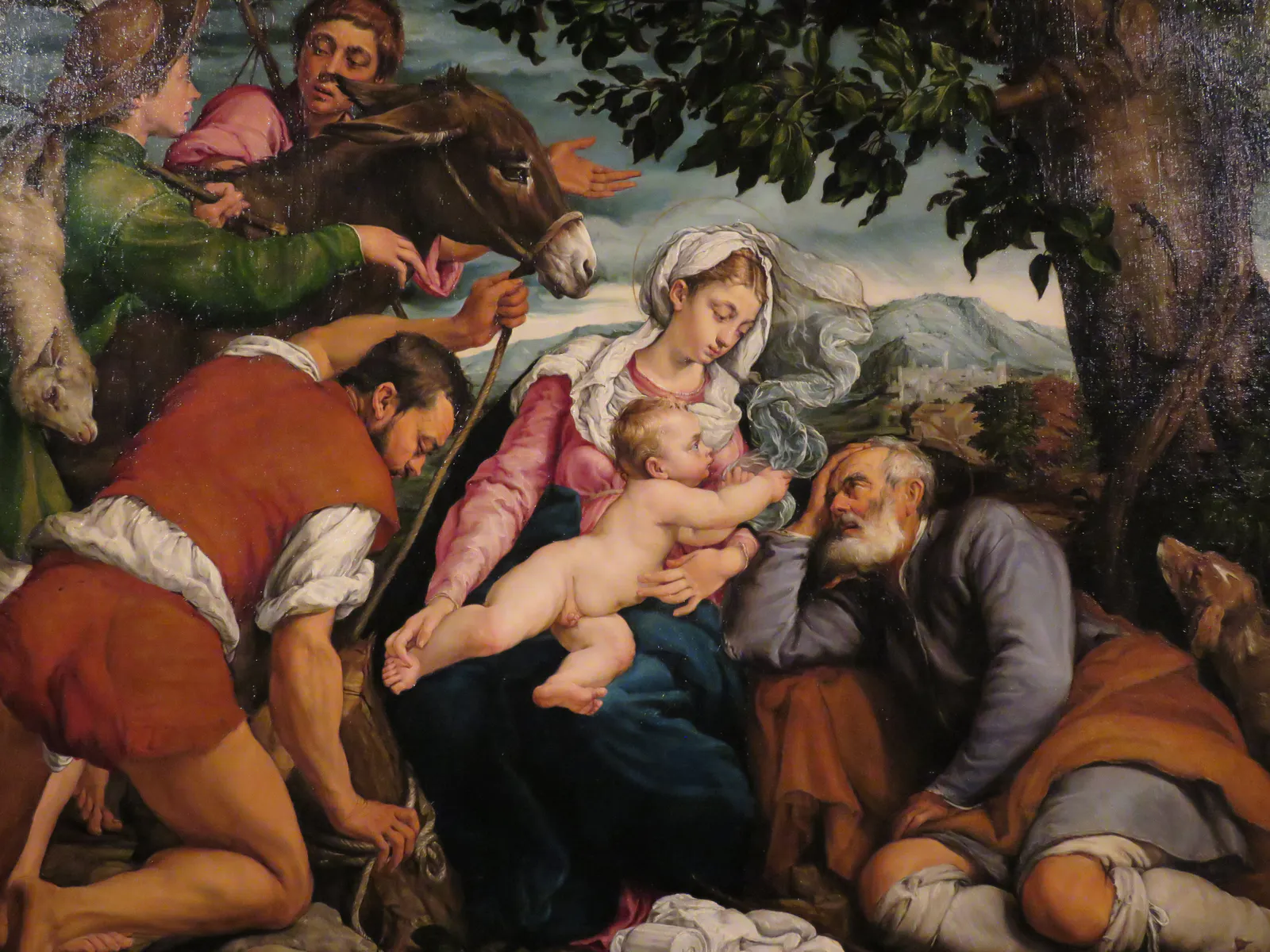
Rest on the Flight to Egypt
Jacopo Bassano
In this luminous canvas (c. 1547), Bassano blends biblical narrative with rustic realism. The Holy Family, joined by shepherds and animals, pauses under a tree. The tender gesture of the Child reaching for Joseph evokes familial warmth amid hardship, while the detailed pastoral setting links divine history to everyday Venetian life.
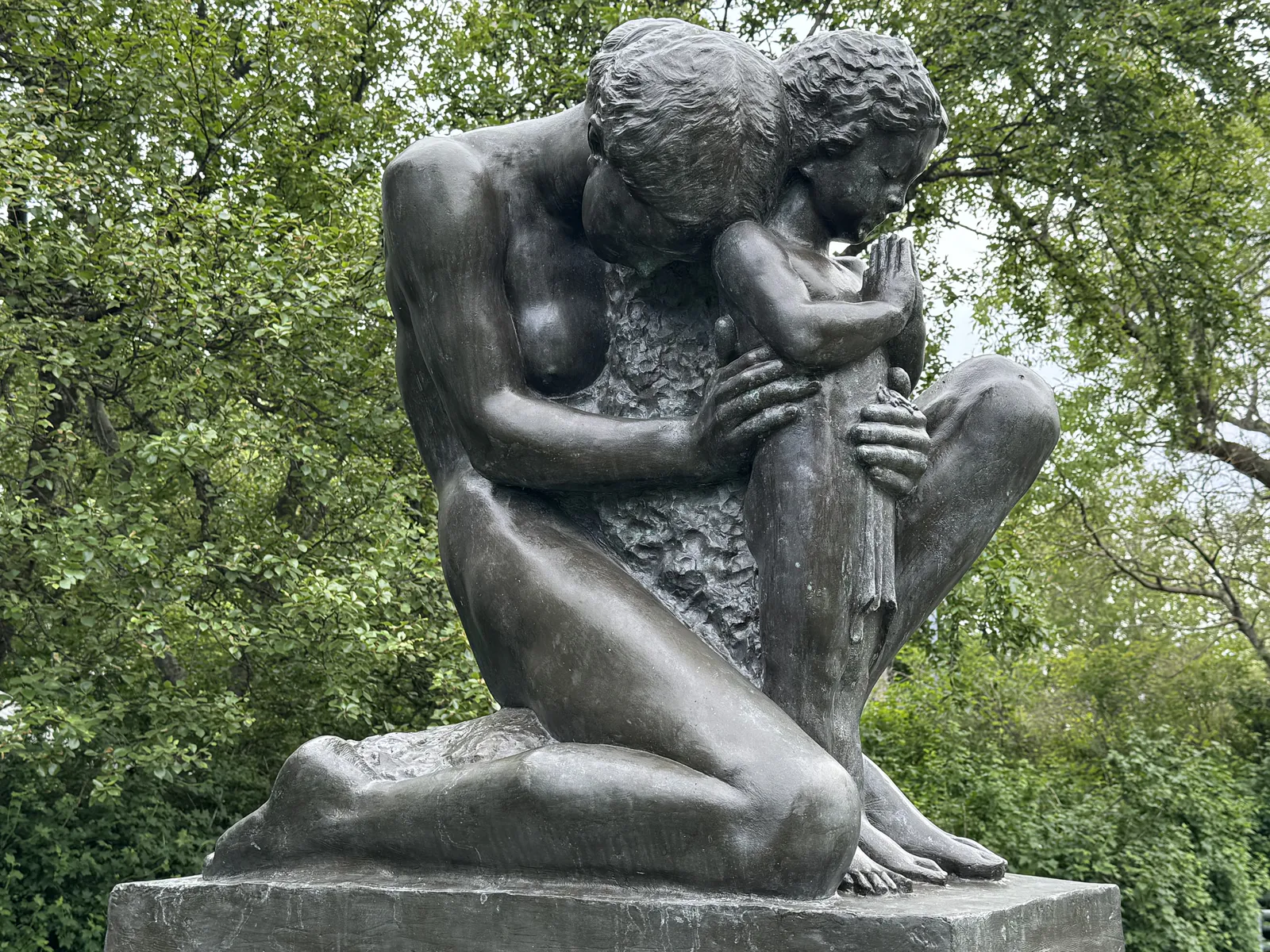
The Prayer
Einar Jónsson
Created in 1909 and later cast in bronze, this sculpture shows a kneeling woman embracing a praying child, merging maternal love with spiritual devotion. Jónsson, pioneer of Icelandic sculpture, wove Nordic symbolism into works that joined earthly care and divine aspiration. His 1909 donation of all his art to the nation ensured the founding of Iceland’s first art museum in 1923, making pieces like The Prayer central to national identity.
Landscape with Hermits
Paul Bril
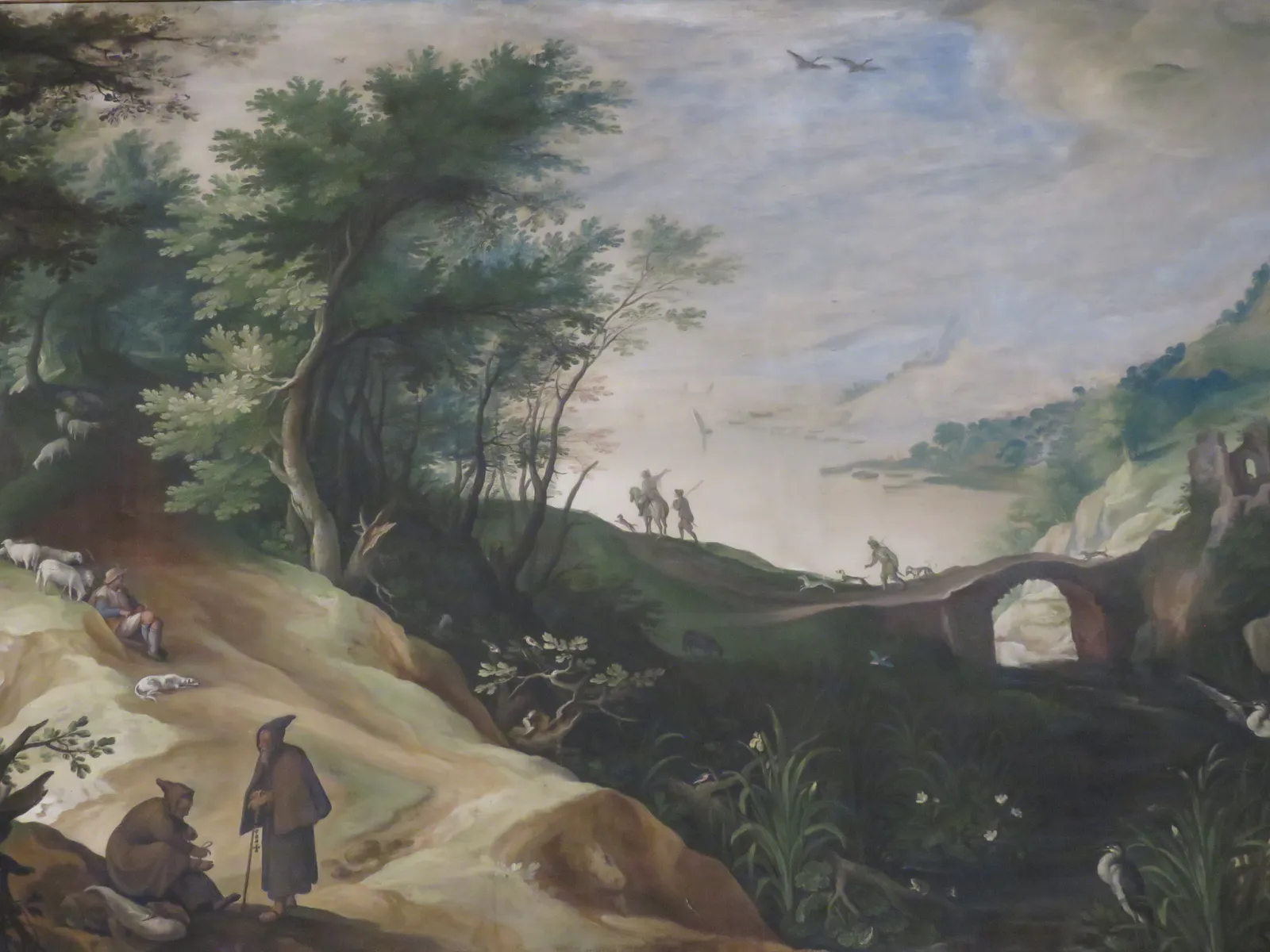
This landscape (c. 1600) shows monks gathered in a wooded clearing beneath a broad, luminous sky. Their small figures sit or stand along a path that opens toward distant hills. Such scenes appeared in early Baroque painting, especially in northern regions where sacred retreat was a common theme. The composition indicates how artists linked hermitic life with the ordered quiet of nature.
The Veil Torn (The Door to Heaven)
Mariano Bidó
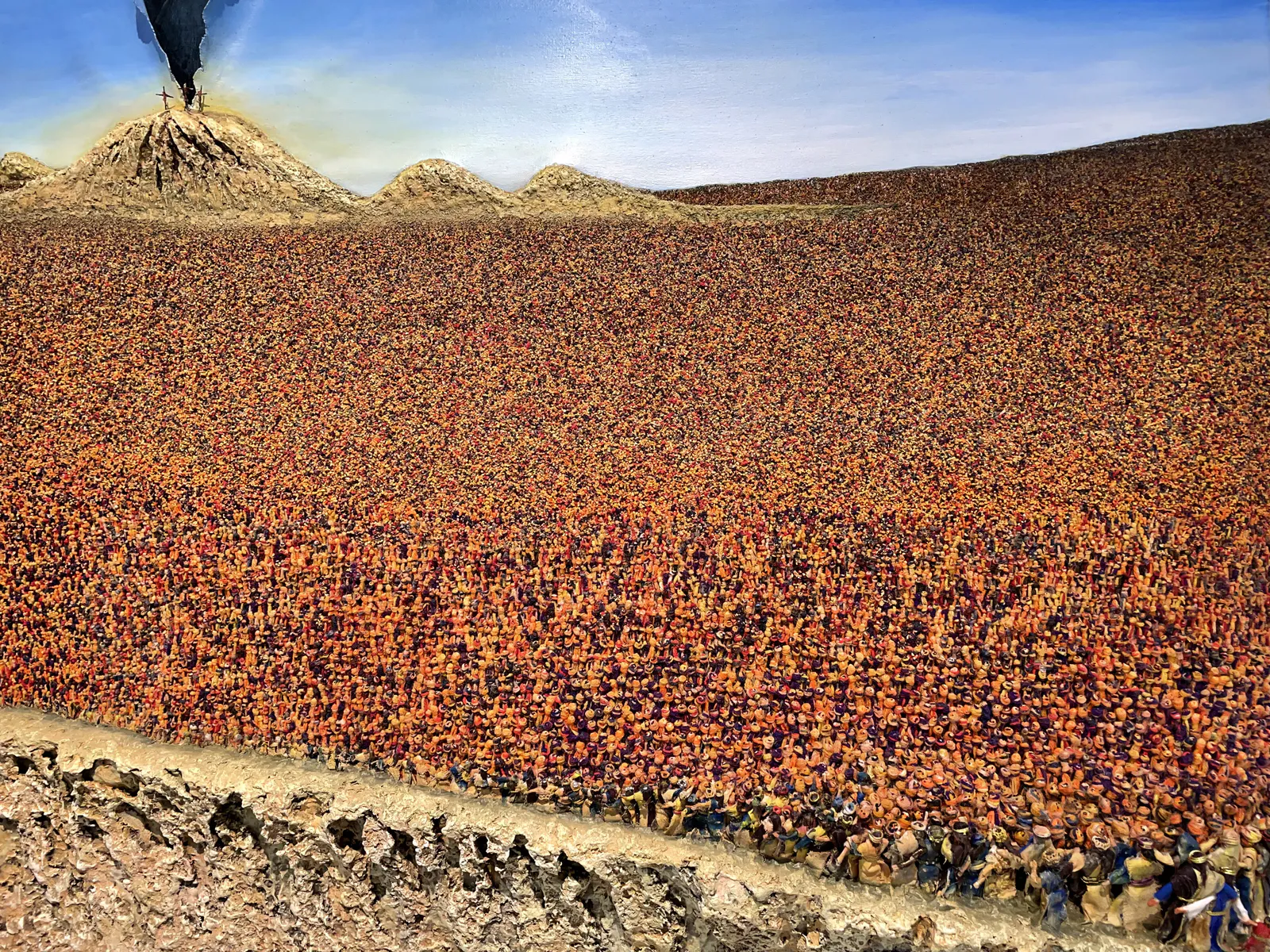
In this mixed-media work (2018), a vast crowd moves toward a hill crowned by three crosses under a black veil of smoke. Referencing the crucifixion, the piece evokes mass devotion, suffering, and salvation. The dense humanity contrasts with the distant, divine climax—highlighting faith as both a collective journey and personal reckoning.
Apollo and Daphne (detail)
Gian Lorenzo Bernini
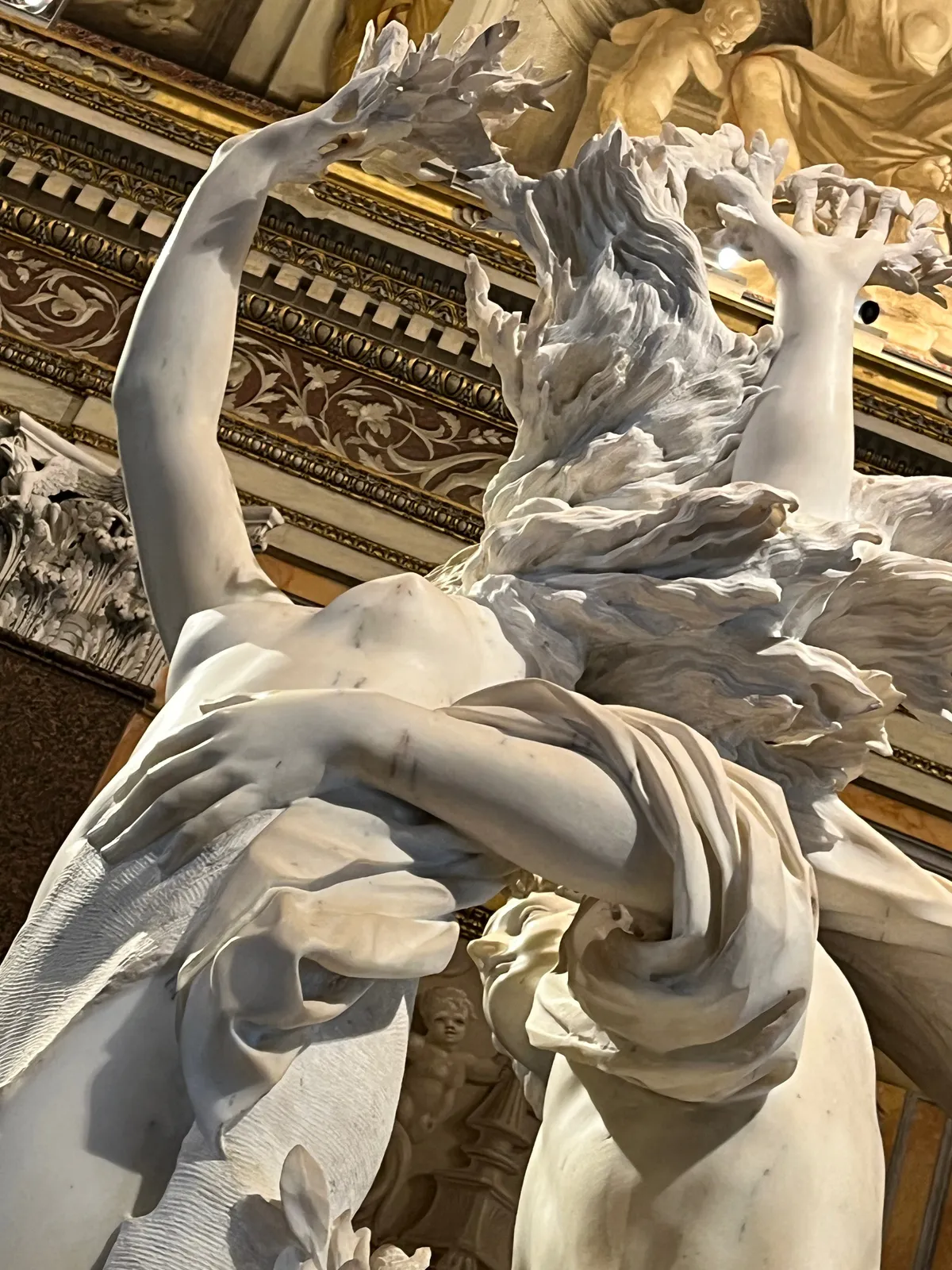
In this electrifying detail from Apollo and Daphne (1622–25), Daphne’s transformation peaks: her fingers stretch skyward as they fracture into laurel branches. Bernini’s carving achieves an uncanny fluidity—Apollo’s embrace contrasts her fleeing limbs, while bark and hair blur into motion, embodying divine metamorphosis and tragic escape.
Bacchus and Ariadne
Baldassare Peruzzi
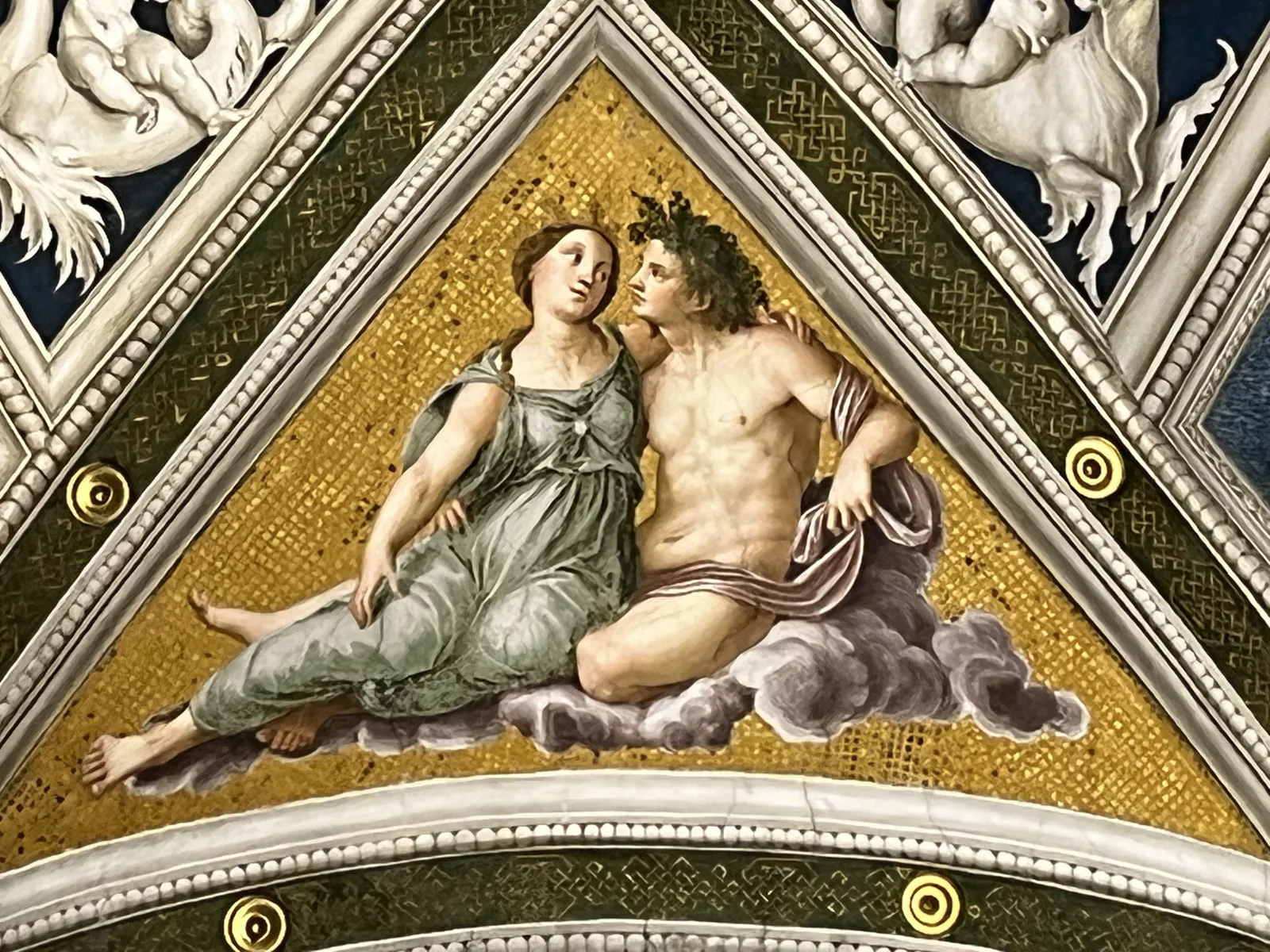
Painted c. 1511 in the Loggia of Galatea, Villa Farnesina, this scene depicts Bacchus, the god of wine, with Ariadne, whom he marries after her abandonment by Theseus. The golden mosaic-like background evokes classical luxury, while Peruzzi’s composition aligns with the villa’s mythological and astrological themes. This artwork reflects Renaissance fascination with classical mythology and the interplay of fate and divine intervention.
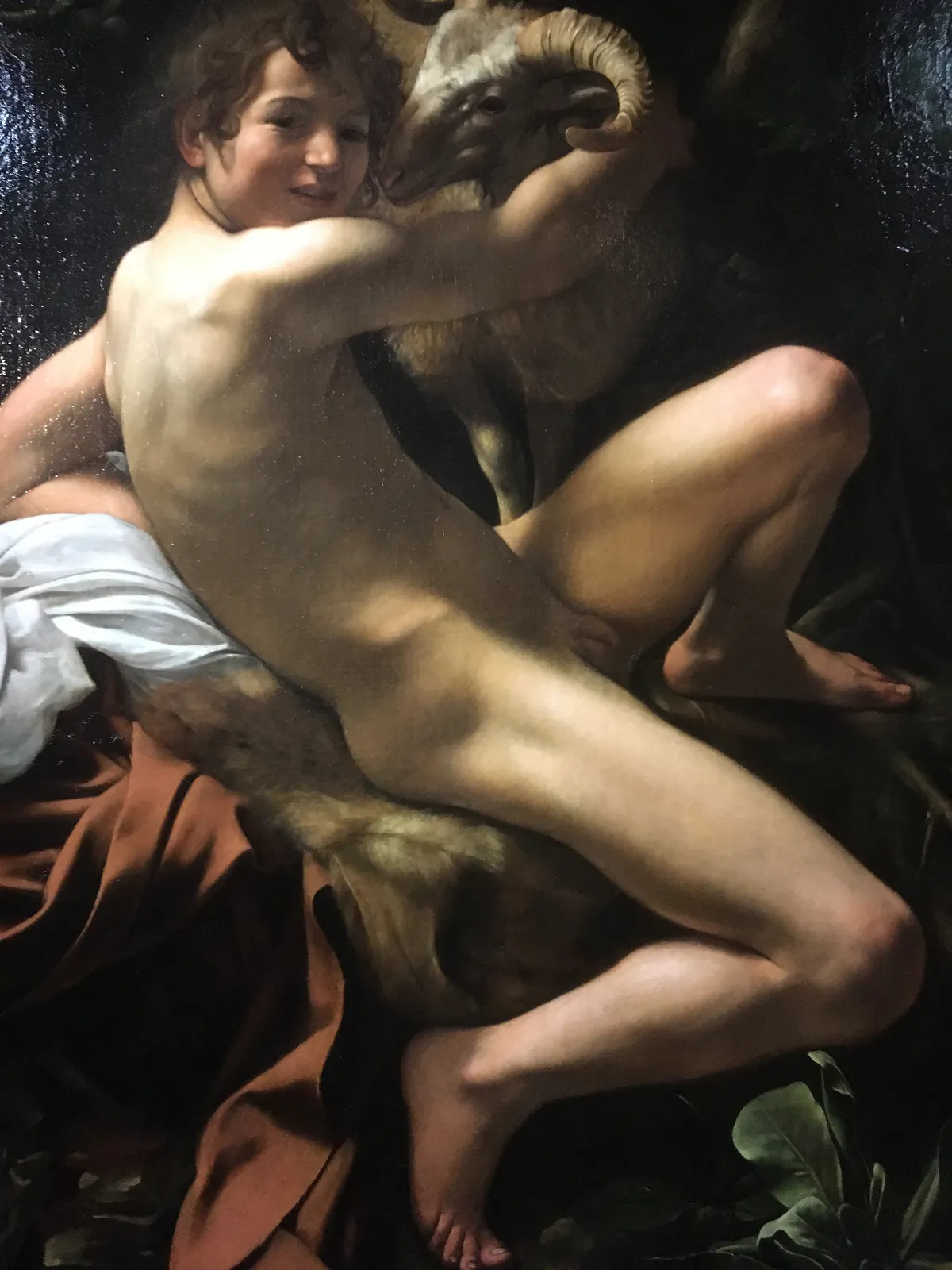
John the Baptist (Youth with a Ram)
Caravaggio
Painted around 1602, this work portrays John the Baptist as a youthful figure embracing a ram. Caravaggio departs from solemn prophecy to present vitality, sensuality, and human immediacy. The saint’s glance engages the viewer, while the animal evokes sacrifice and redemption. Through natural light and unidealized form, the painting fuses biblical meaning with raw, earthy presence.
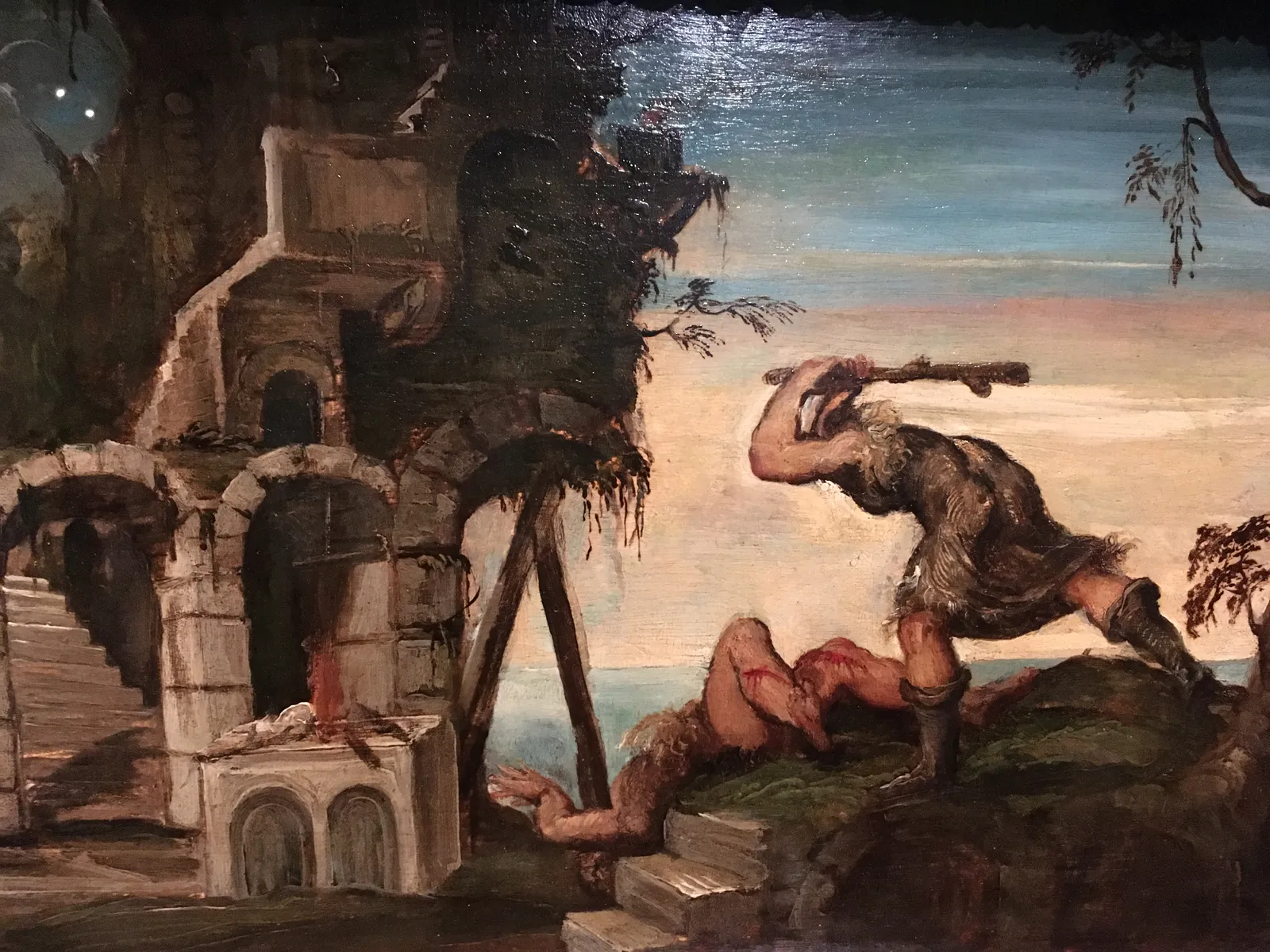
Cain and Abel
Tintoretto
The scene (1550–53) shows the biblical story of Cain’s jealousy and the murder of his brother Abel. The work reflects the Mannerist style through sharp contrasts of light and shadow, twisting poses, and tense, compressed space. Tintoretto’s hallmark energy appears in the sweeping gestures and urgent brushwork that heighten the scene’s violence, underscoring the enduring power of biblical themes in Renaissance art.
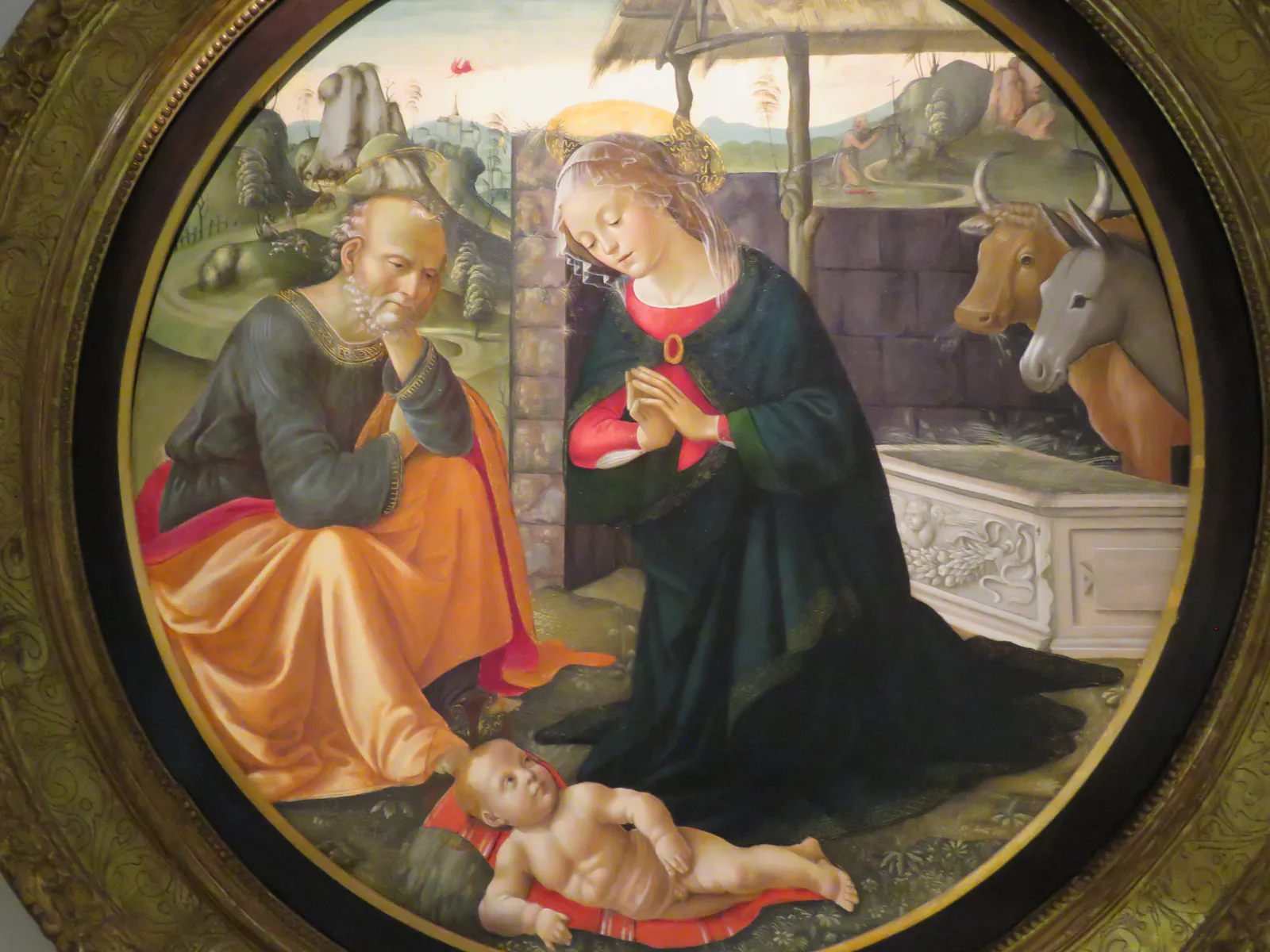
Adoration of the Christ Child
Workshop of Domenico Ghirlandaio
This tondo (c. 1485–1490) shows Mary and Joseph adoring the infant Christ, lying humbly on the earth. The sarcophagus-like manger prefigures his Passion, while the ox and donkey fulfill Isaiah and Habakkuk’s prophecy of animals recognizing the Lord. The scene binds intimacy, humility, and cosmic redemption.
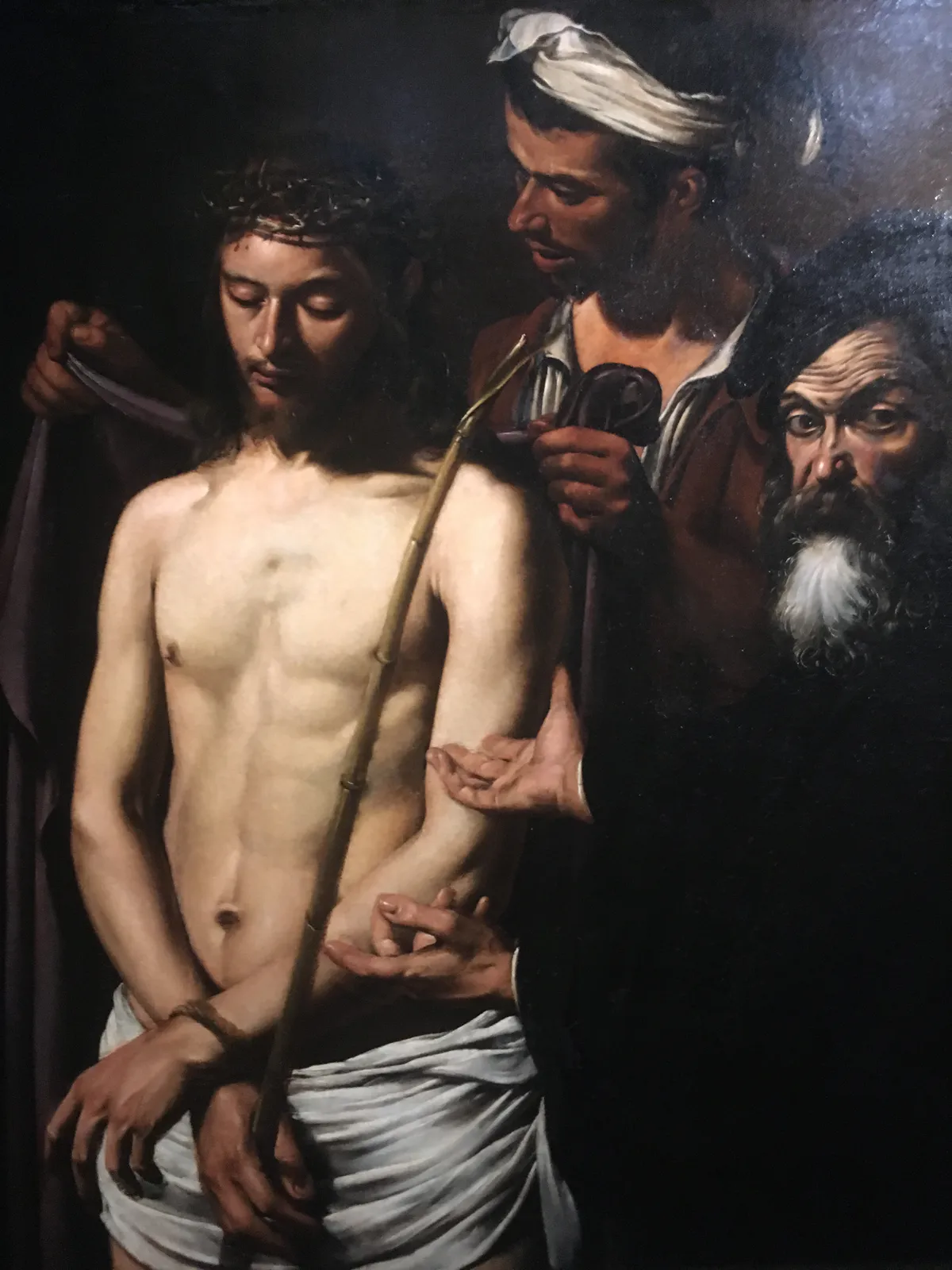
The Crowning with Thorns
Caravaggio
This painting (1602–04) depicts Christ humiliated before crucifixion. Crowned with thorns and bound, he stands in silent suffering as soldiers force the reed into his hand and mock him as king. Caravaggio’s harsh chiaroscuro strips away grandeur, presenting raw cruelty and dignity in contrast. The work confronts viewers with the violence of power and the endurance of faith.
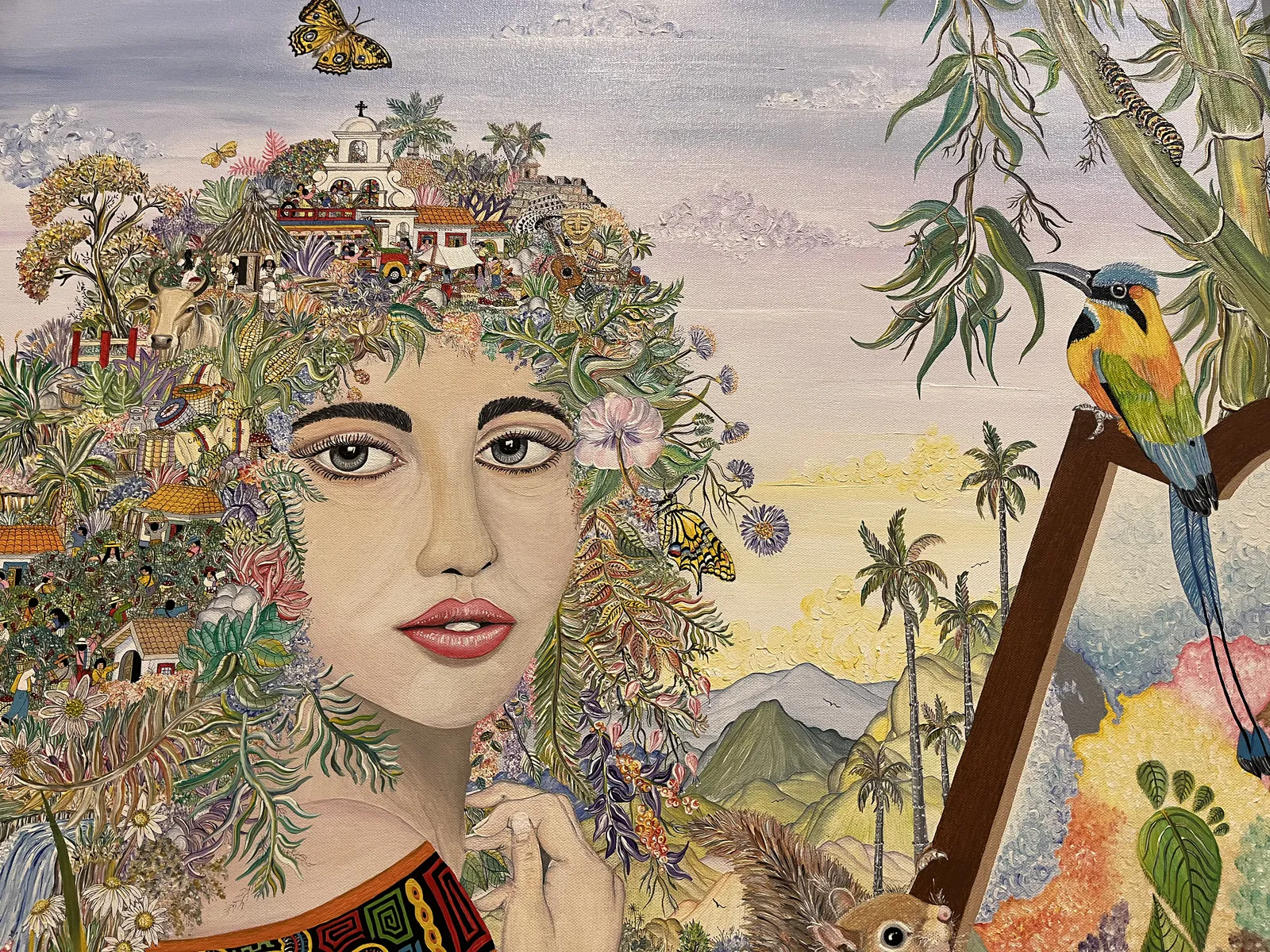
Aún Hay Tiempo
Julio César Ojeda Ariza
This 2021 work blends oil and ink to portray a woman whose hair becomes a lush tapestry of biodiversity and rural life. Symbolizing Colombia’s natural and cultural abundance, it warns of its fragility. The title, There’s Still Time, urges collective action to preserve the environment and ancestral wisdom.
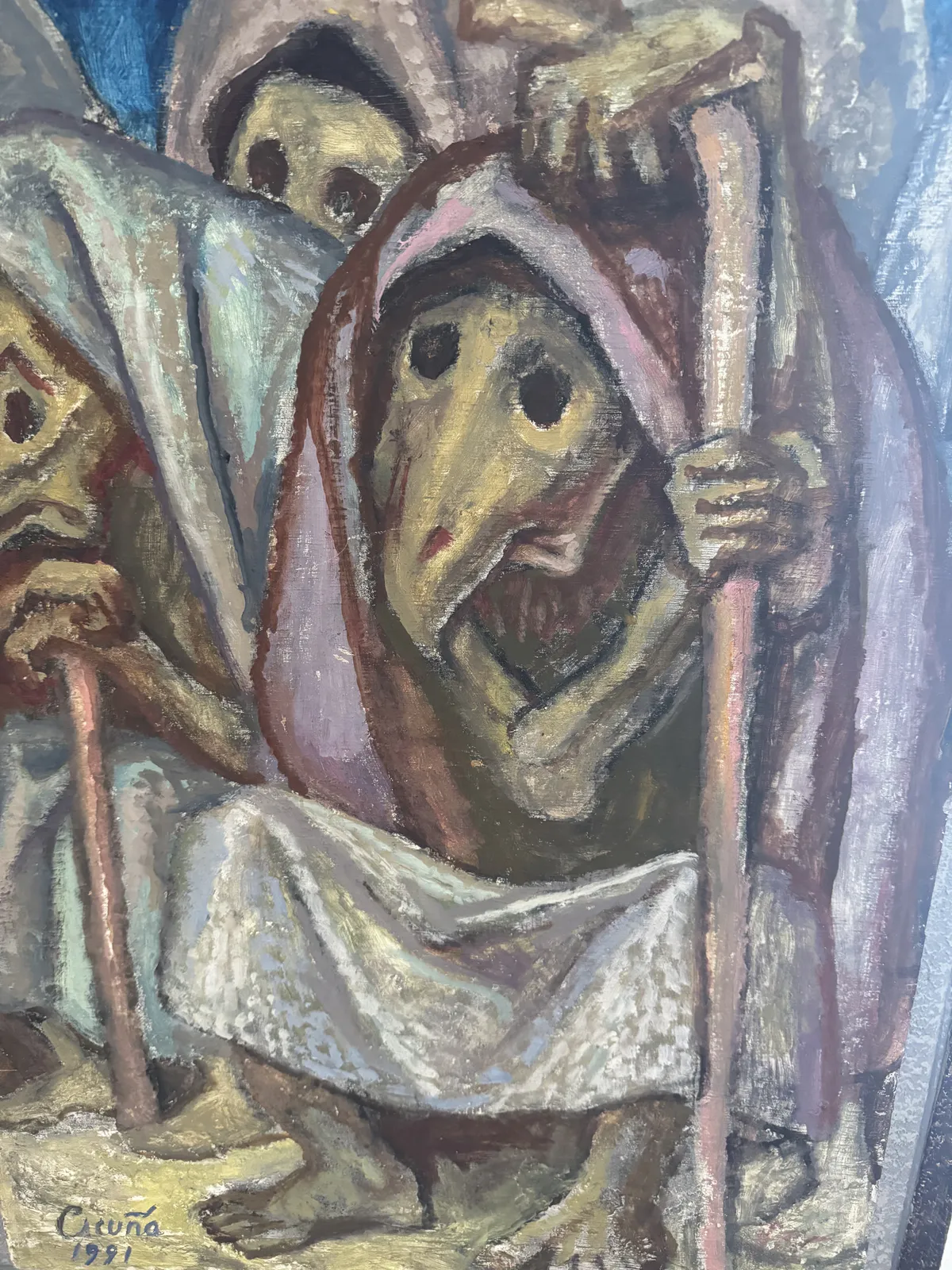
The Witch of Zascandil
Luis Alberto Acuña
This portrait (1991) shows the Witch of Zascandil, a figure rooted in Colombian folklore. Sharp features and widened eyes create a tense, exaggerated profile. The name Zascandil refers to a trickster or wandering mischief-maker in regional stories. The image indicates how rural mythology blends satire, fear, and ancestral belief.
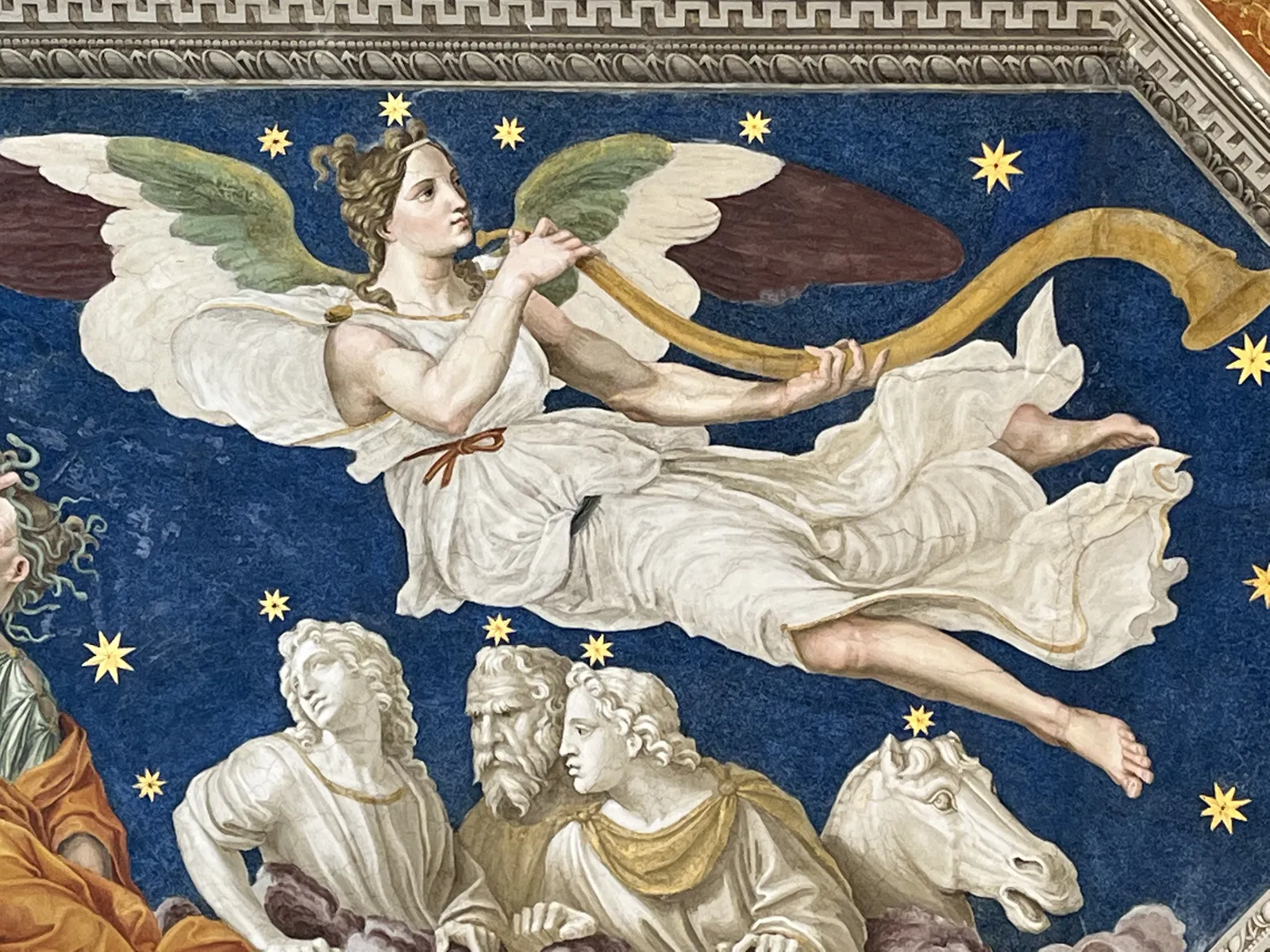
Fame and Medusa's Victims
Baldassarre Peruzzi
This fresco (1511) shows Fame soaring through the sky, announcing glory with her trumpet. Below, three men and a horse emerge from the clouds, their pallor and stiffness indicating they are victims turned to stone by Medusa's gaze. The composition reflects Renaissance interest in mythology, illustrating the power of reputation and the consequences of divine encounters.
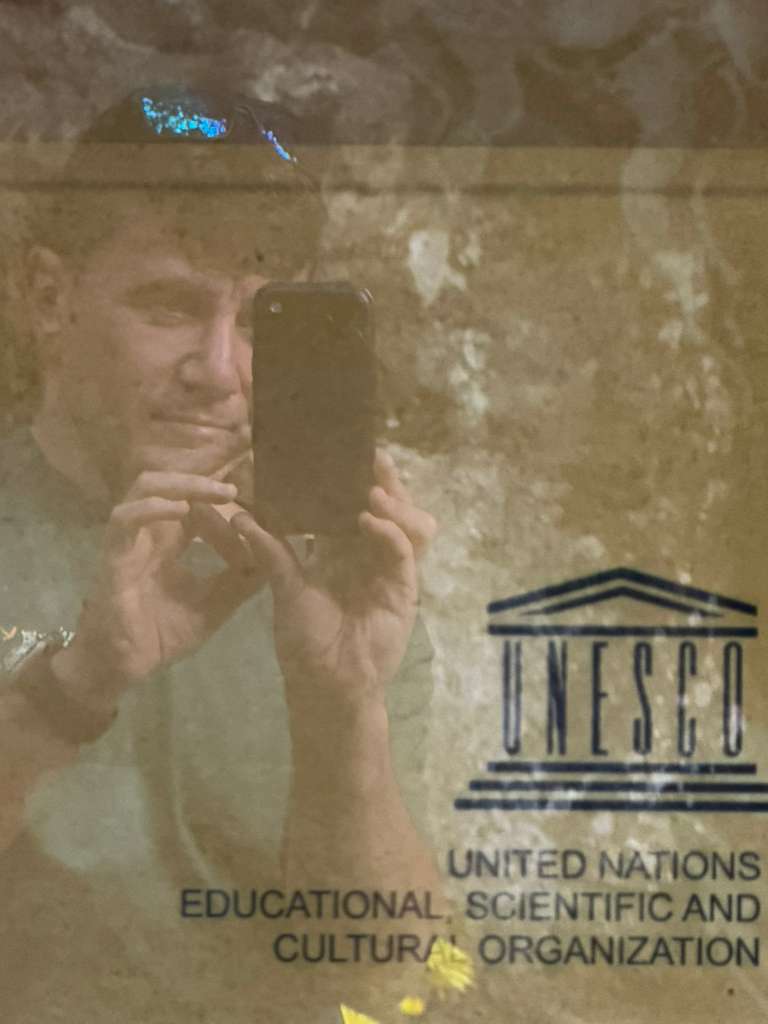
“When the path is beautiful, do not ask where it leads.” — Zen proverb
Welcome to my travel photography!
“When the path is beautiful, do not ask where it leads.” — Zen proverb
Welcome to my travel photography!
For as long as I can remember, my path has been one of discovery—seeking beauty, timelessness, and connection in every corner of the world. It has also been a journey of deep learning and understanding. I’ve been an avid traveler (or perhaps a travel addict?) for most of my life. My love for travel began long before I ever left home: as a child, I drew a fantasy map of my grandparents’ apartment and “traveled” through it with my cousin Sonya, imagining adventures in every corner. Nearly 90 countries and countless moments of awe later, I’m excited to share this journey with you.
Thanks to the tireless and ingenious programming of Diagilev, we’re now able to present about fifteen percent of the images I’ve accumulated over the years. More will be released in small batches depending on your interest. While the first release leans toward museum photography, later ones will include more nature, architecture, culture, and general travel experiences. If you’d like to receive email notifications about new releases, feel free to reach out—no commercial use, ever.
Throughout my travels, I’ve been drawn to two intertwined kinds of discovery. One is intellectual: learning why the world is the way it is. History became my guide, shaping my perspective and filling my camera roll with museums and old buildings. To me, history is not the past—it is the key to understanding the present and how the world became what it is. The other is emotional: seeking moments of elevation—spirituality, beauty, harmony—often found in nature, monasteries, and ancient sacred spaces. Together, these impulses shape my photography. It invites you to learn, admire, and soar—to rise above the mundane and see the world through a lens of curiosity and wonder.
Much of my later travel became possible thanks to my job with Delta Air Lines, but the wanderlust began years earlier. By the time I joined the industry, I had already visited over 35 countries and lived in several—largely thanks to a backpacking journey around the world with Luis León, whose face appears in many early photos. I grew up in Ufa in the USSR, and since leaving it I have lived, studied, and worked in Latvia, the United States, France, South Korea, Canada, Spain, Italy, Brazil, Japan, and Colombia.
A life of near-constant movement may seem a little crazy, but it has deepened my understanding of the world and produced the photography you are about to see. Over the years, my style has evolved—more intentional, more refined—yet its core remains the same: a search for understanding, timeless beauty, and a connection to those who walked this earth long before us.
I hope these photos stir something in your soul, just as they did in mine. I’d love to hear from you—whether reactions, suggestions, corrections, or a request to be added to the email list for new releases (no commercial use, I promise). You can learn more about my travels here, and my academic life here.
Enjoy our shared journey!