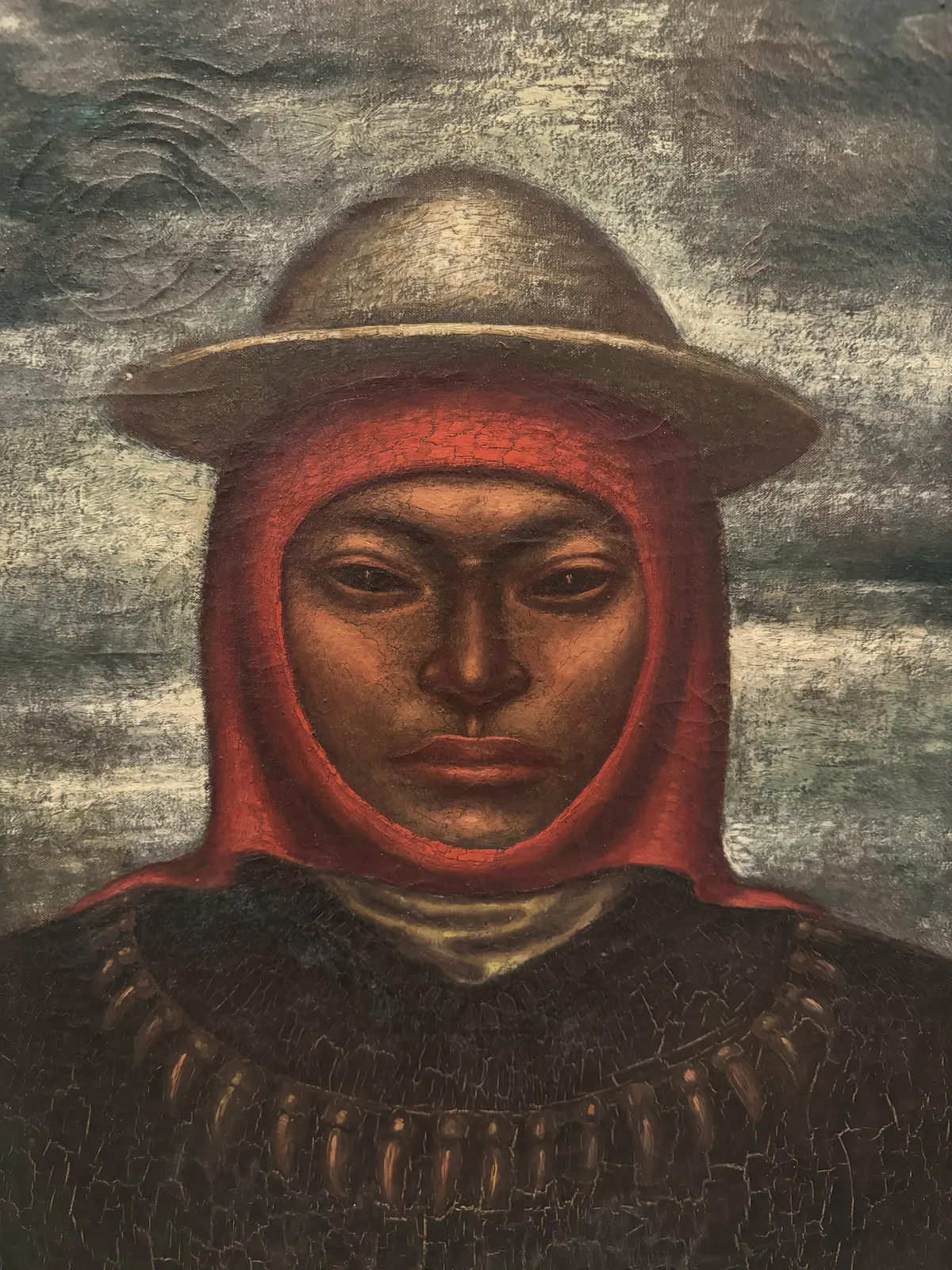
Portrait of an Indigenous Person
Luis Alberto Acuña
This striking 1934 oil painting reflects the artist’s deep engagement with indigenous identity and pre-Columbian heritage. The stoic, symmetrical face, wrapped in a red hood beneath a wide-brimmed hat, evokes dignity and resilience. Acuña, a key figure in Colombian modernism, often highlighted native ancestry as a counter-narrative to Eurocentric ideals.
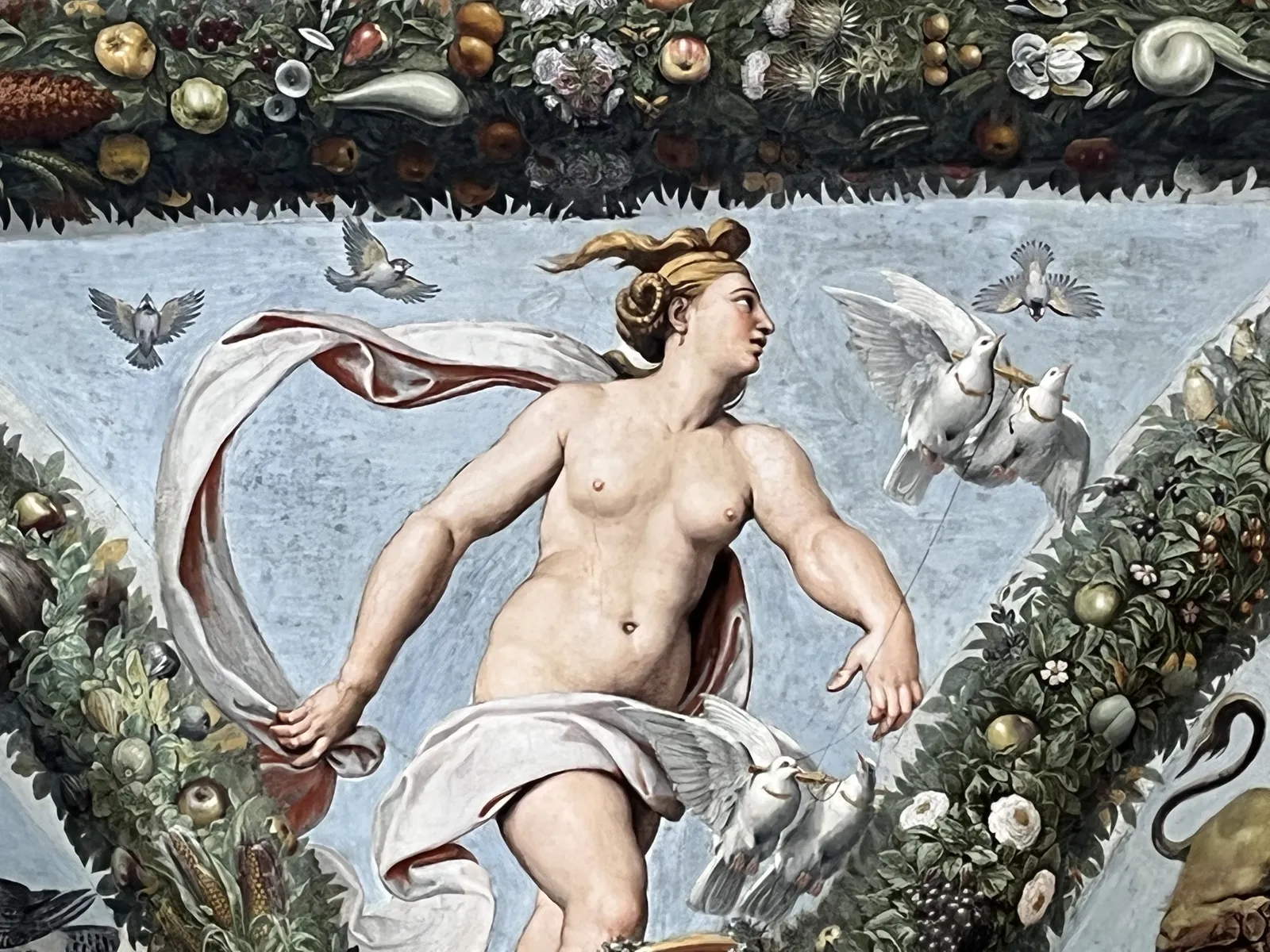
Venus and the Doves
Raphael
In this fresco (1518), Raphael presents Venus, goddess of love, gracefully accompanied by doves, her sacred birds. The flowing ribbon emphasizes her divine beauty and motion, while the doves allude to purity and erotic desire. The image echoes Venus’ central role in the myth of Cupid and Psyche, where love governs both divine and mortal fates.
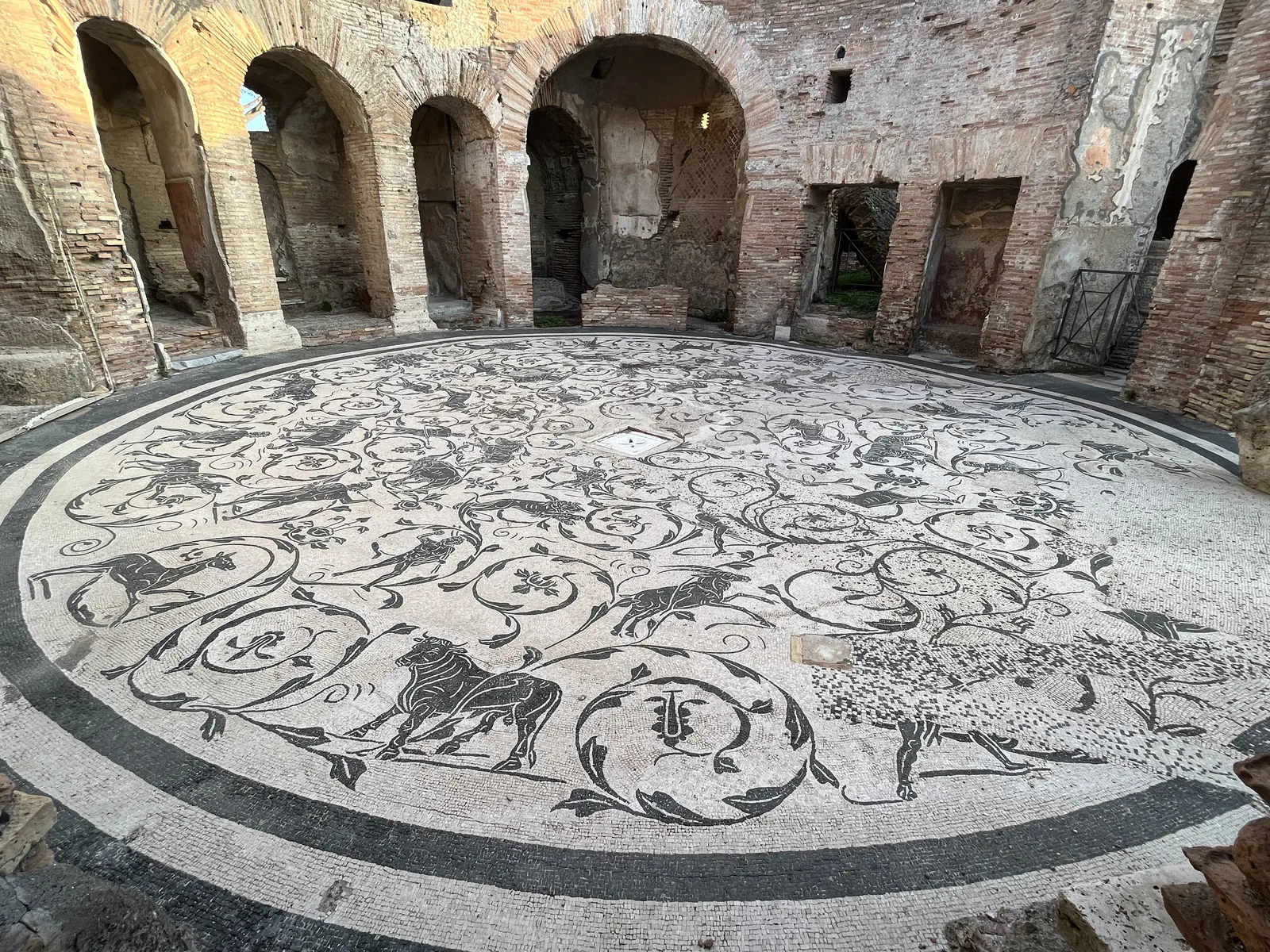
Frigidarium Mosaic
This intricate black-and-white mosaic (2nd c. AD) adorned the frigidarium floor of the Baths of the Seven Sages. Rich in vegetal motifs and encircled by animals, including a panther and a bull, it evoked Dionysian associations. Its elegance and symmetry reflect the refined aesthetic of Ostia’s upper-middle-class bathing culture.
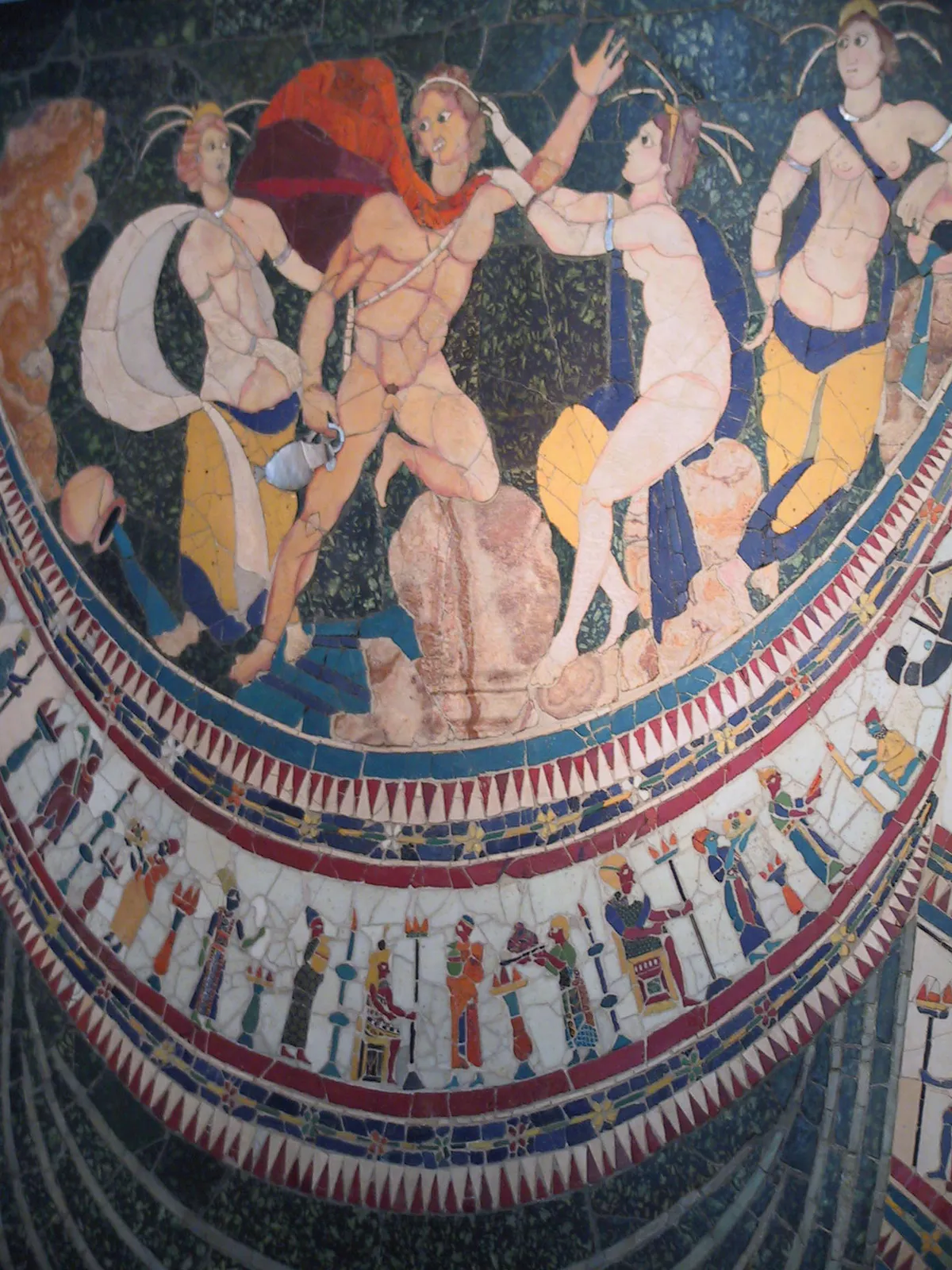
Opus Sectile Panel: Abduction of Hylas and Festive Procession
This early 4th-c. opus sectile from the Basilica of Junius Bassus—an elite civic complex built by the powerful urban prefect—shows Hylas, Heracles' beloved companion sent to fetch water for the Argonauts, kneeling with his water jar as nymphs seize him, enchanted by his beauty. In the myth they pull him into the spring forever, leaving Heracles to search in vain. Below, a marble procession panel evokes order and civic ritual, contrasting mortal duty with divine seduction.
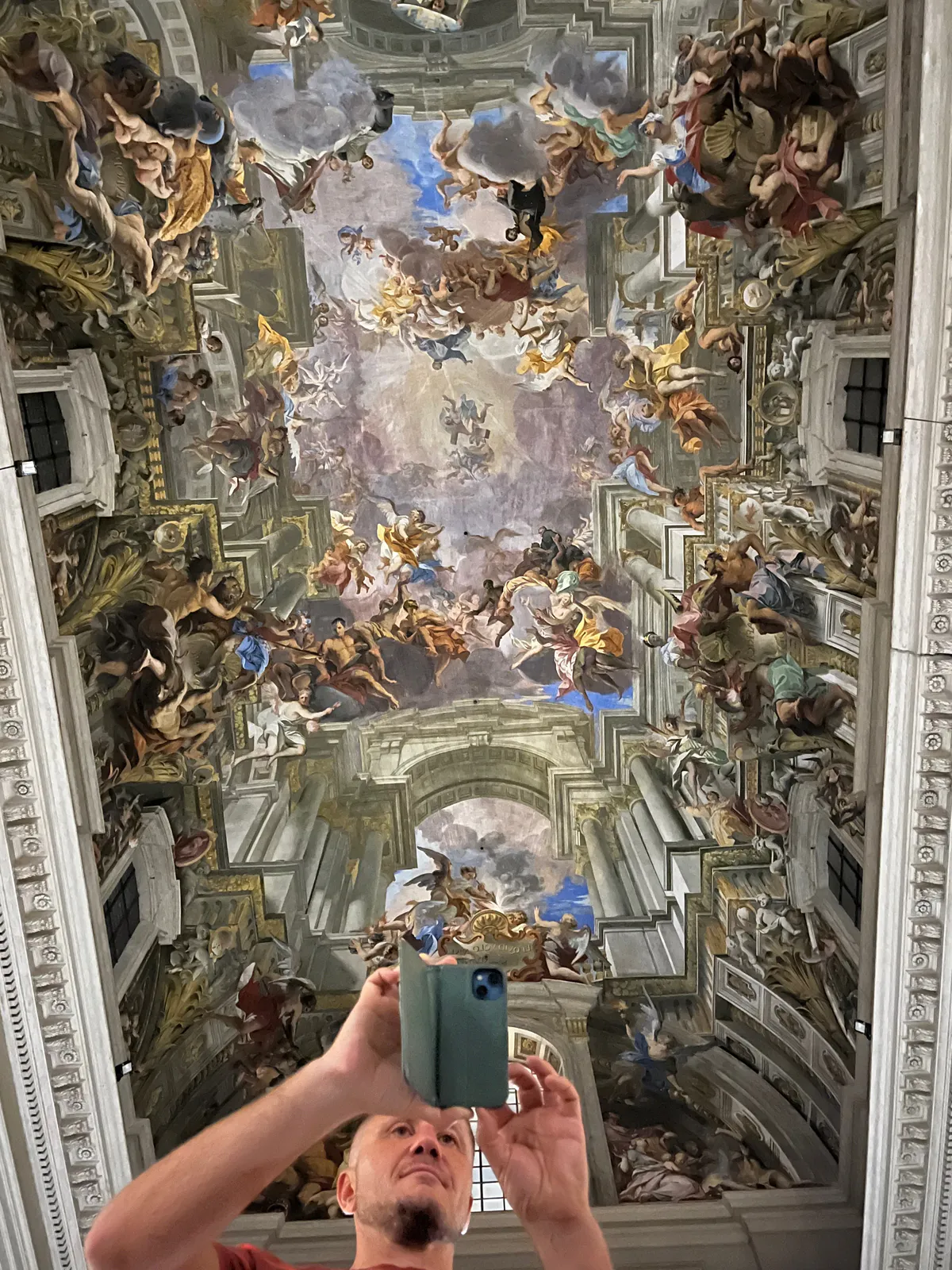
The Apotheosis of St. Ignatius
Andrea Pozzo
Max captures The Apotheosis of St. Ignatius (1685–1694) using a viewing mirror beneath the ceiling, enhancing Pozzo’s Baroque illusionism. This optical device unveils the masterful perspective that transforms the flat vault into a celestial vision, merging art and exemplifying the Baroque fascination with perspective: a dynamic interplay between earthly and divine realms.
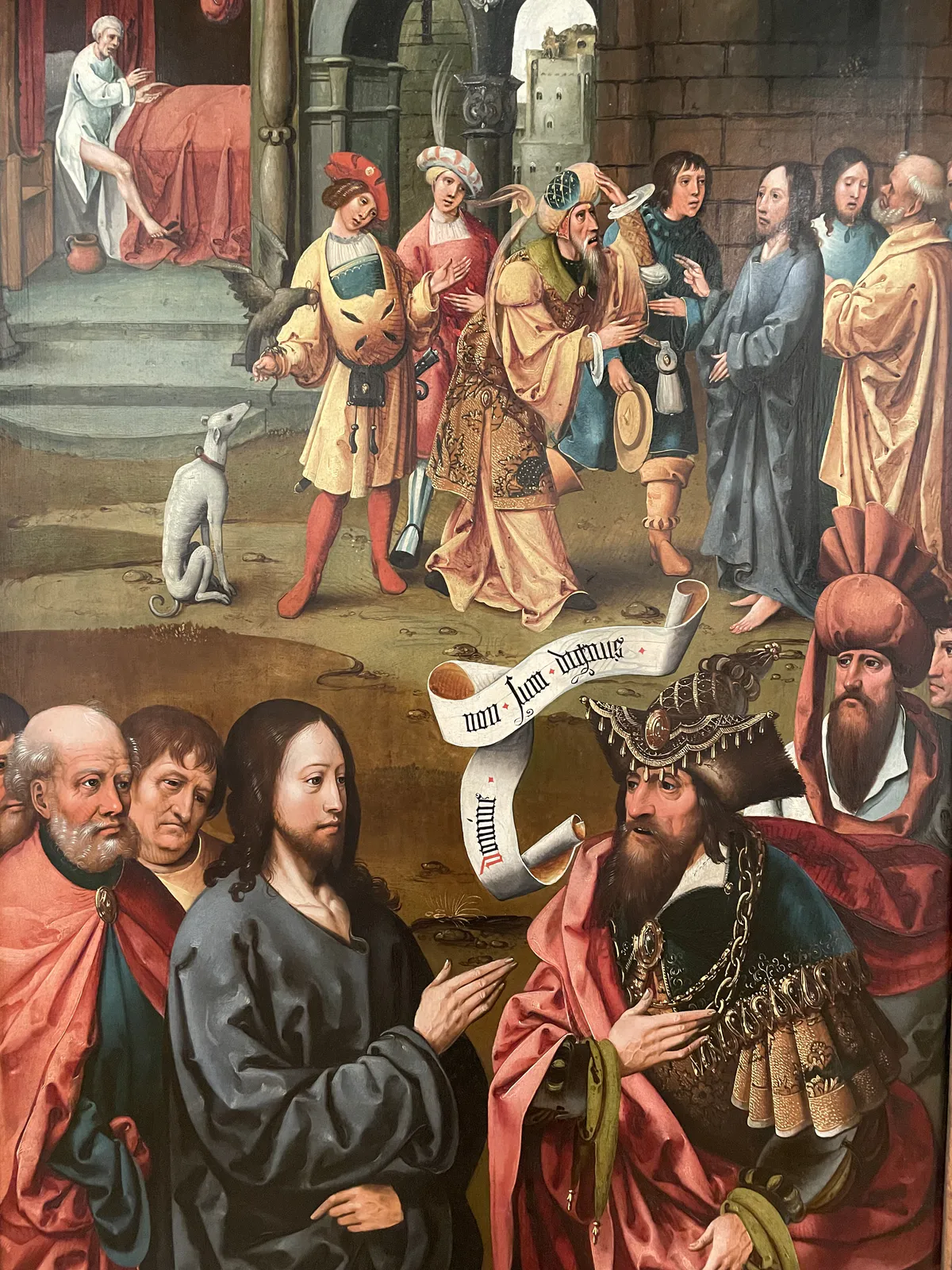
Christ and the Centurion of Capernaum
Master of the Adoration of Antwerp
This Northern Renaissance panel (1520–30) captures the moment a Roman centurion asks Christ to heal his servant, saying Lord, I am not worthy. The scene blends biblical narrative with contemporary Flemish attire, highlighting faith over status. The expressive gestures and rich details emphasize humility and the universal appeal of compassion, reflecting the era's fusion of religious and cultural elements.
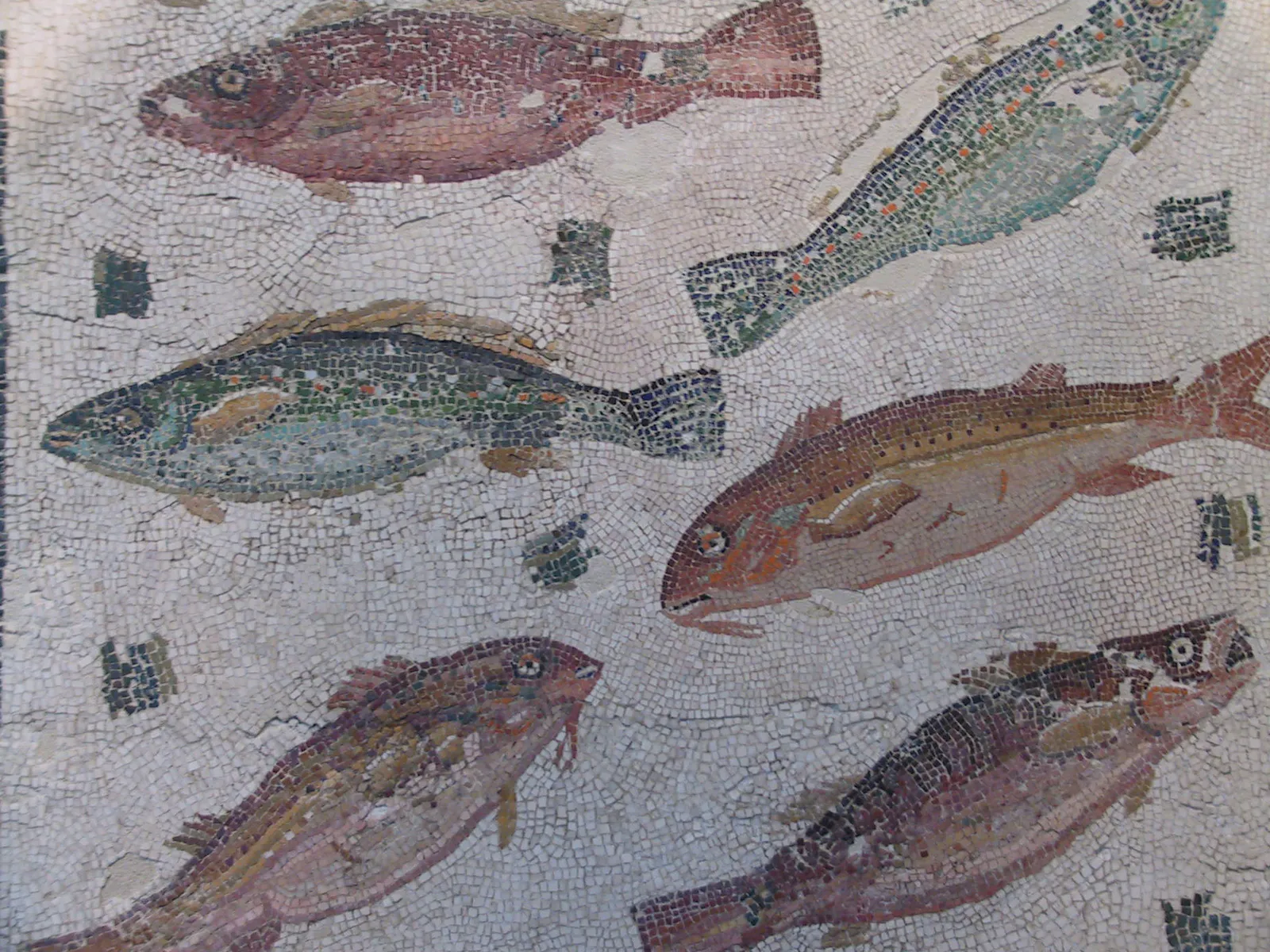
Fish
This mosaic (2nd–3rd cc.) depicts a vivid array of Mediterranean fish rendered with striking naturalism. Such panels commonly adorned dining rooms or bathhouses, where marine imagery symbolized abundance, freshness, and the pleasures of banqueting. The detailed species and lively movement reflect Roman fascination with the sea as both a resource and a marker of cultivated taste.
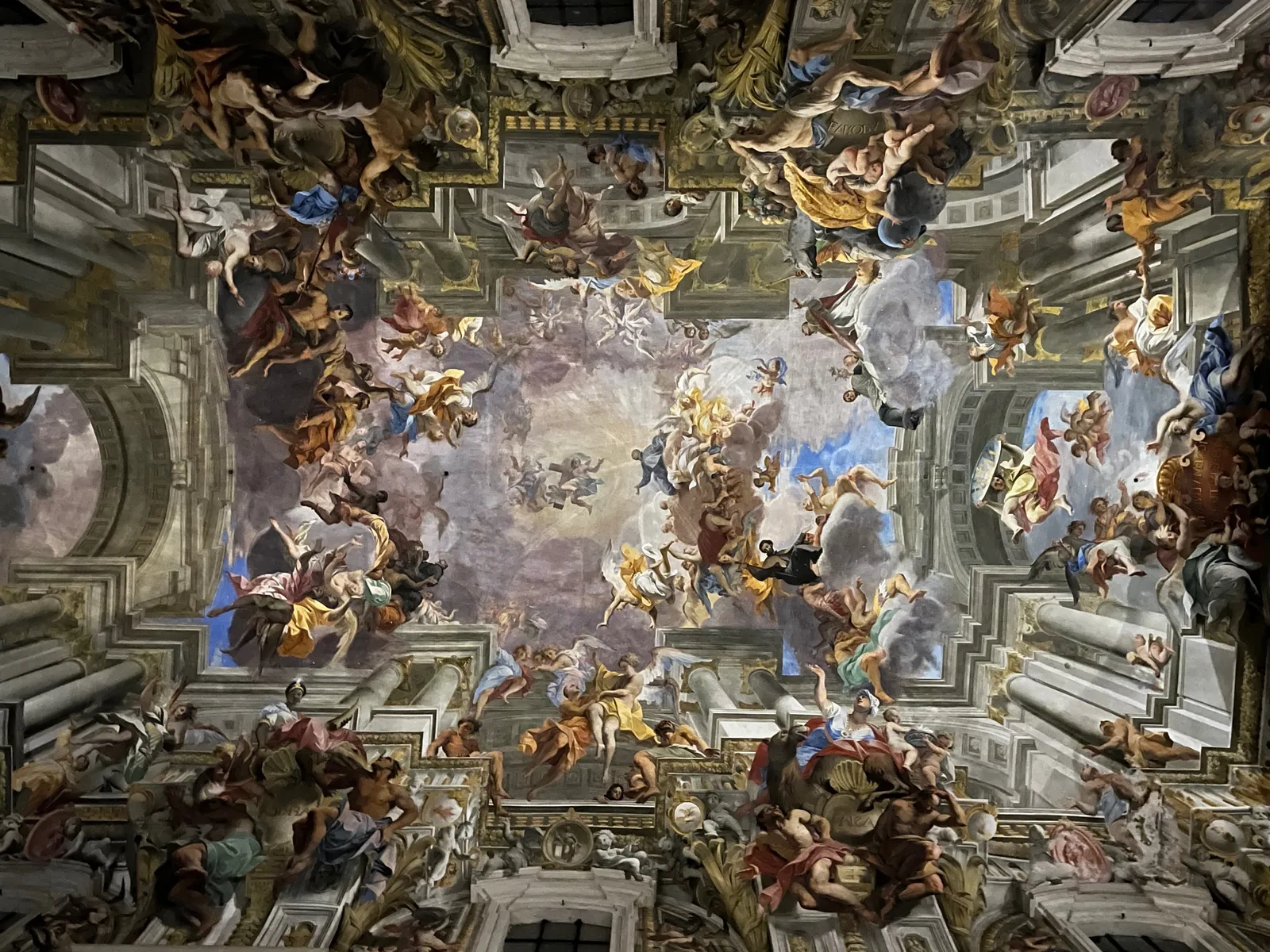
The Apotheosis of St. Ignatius
Andrea Pozzo
This Baroque trompe-l’œil painting (1685–94) transforms the flat ceiling into a soaring heavenly vision. St. Ignatius is welcomed into paradise by Christ and the Virgin, while allegories of the continents celebrate Jesuit missions. Pozzo’s masterful illusionism merges faith, perspective, and global ambition.
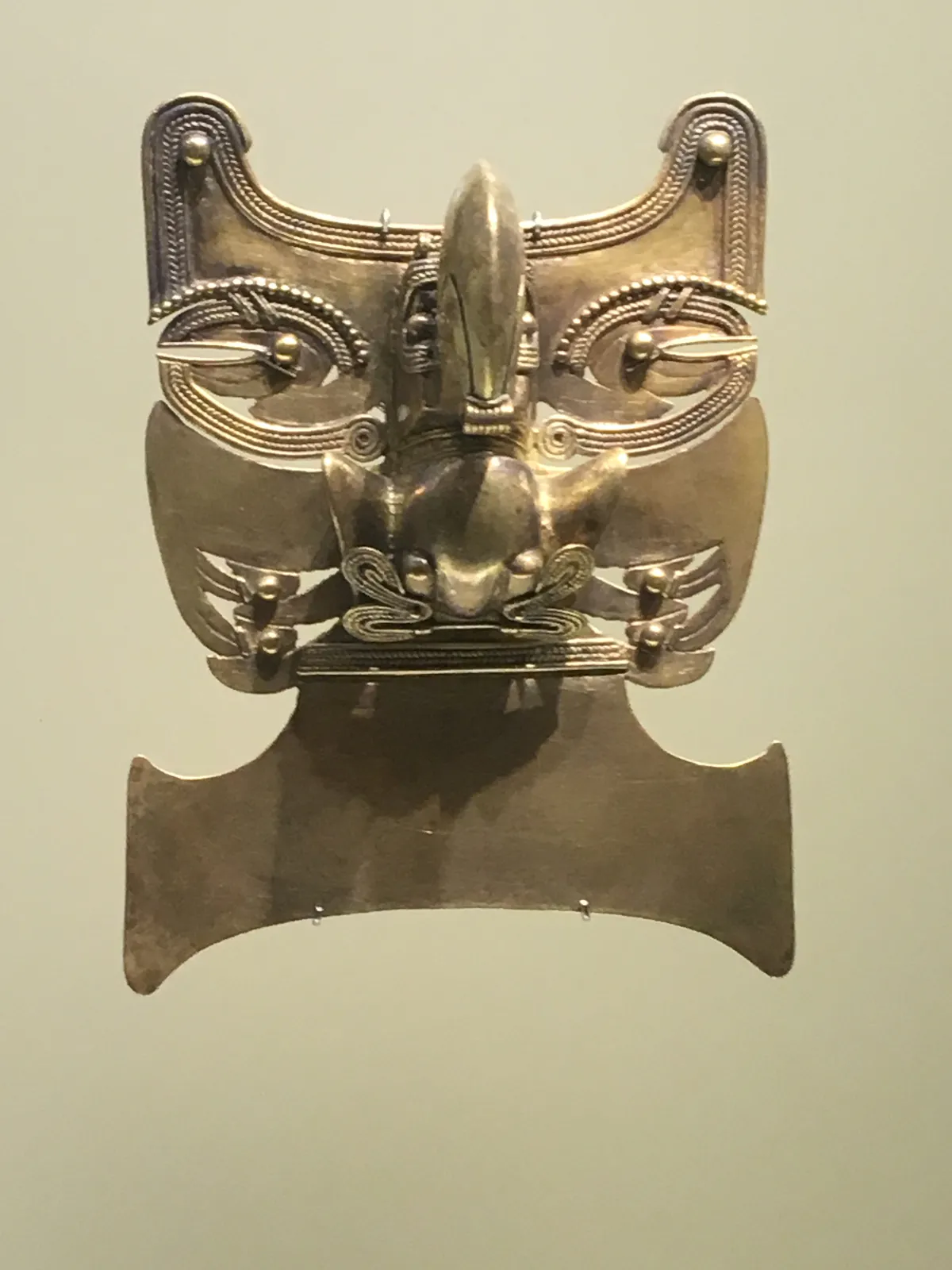
Stylized Tairona Bird Pendant
This stylized bird pendant, crafted in a gold alloy by the Tairona (900–1600 AD), reflects the sacred role of animals in their cosmology. Birds symbolized flight between worlds—linking earth, sky, and spirit realms. Such pendants, worn in life or ritual, embodied protection, status, and ancestral connection in the Sierra Nevada de Santa Marta.
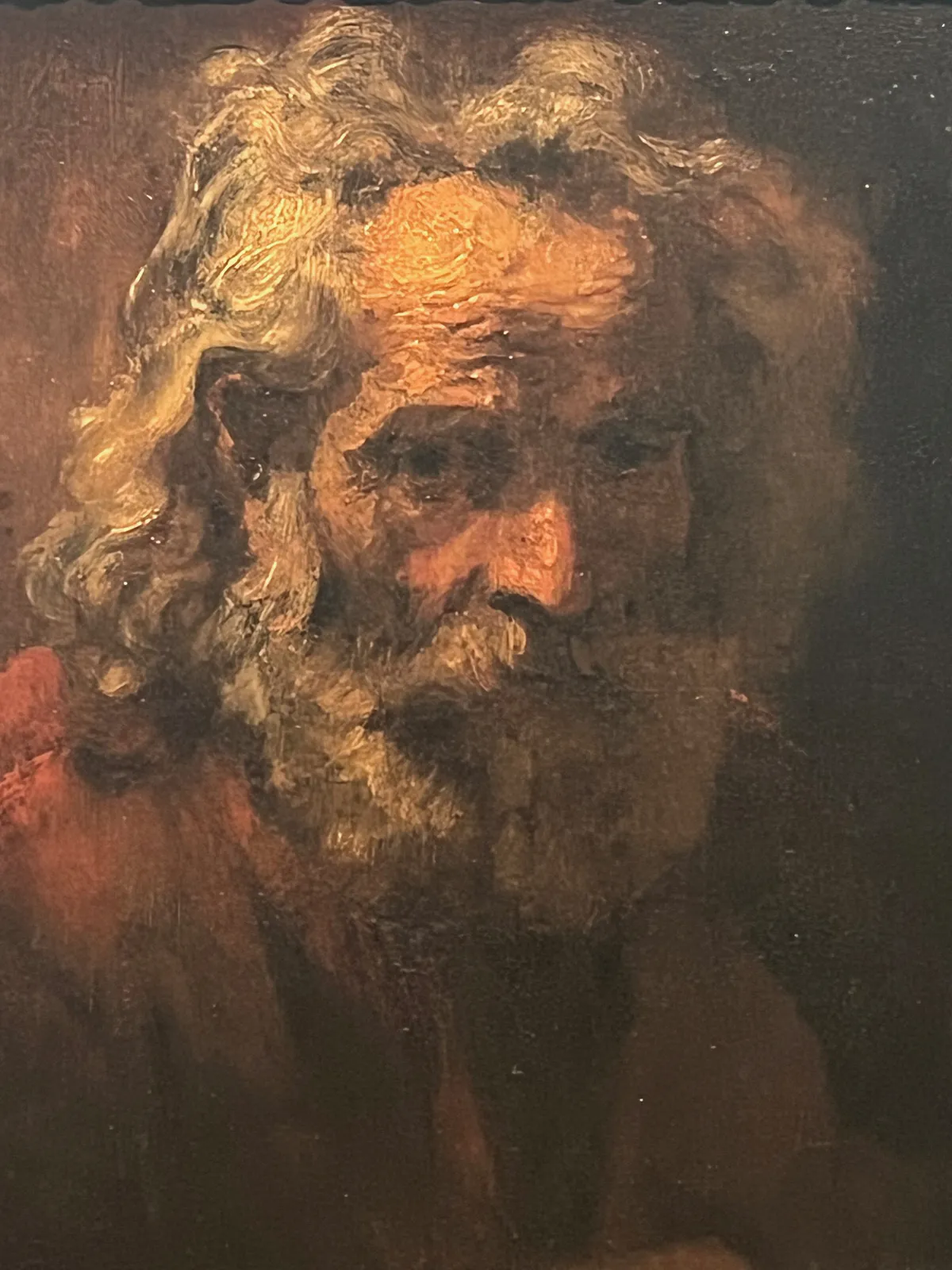
Bust of a Bearded Old Man
Rembrandt
This painting (c. 1630) by Rembrandt van Rijn exemplifies the tronie genre, focusing on character over identity. The expressive face of the elderly man, rendered in oil on panel, showcases Rembrandt’s mastery of light and shadow. As one of his smallest works, it explores themes of old age, capturing the nuances of human expression and emotion, marking an early exploration of the artist’s fascination with the human condition.
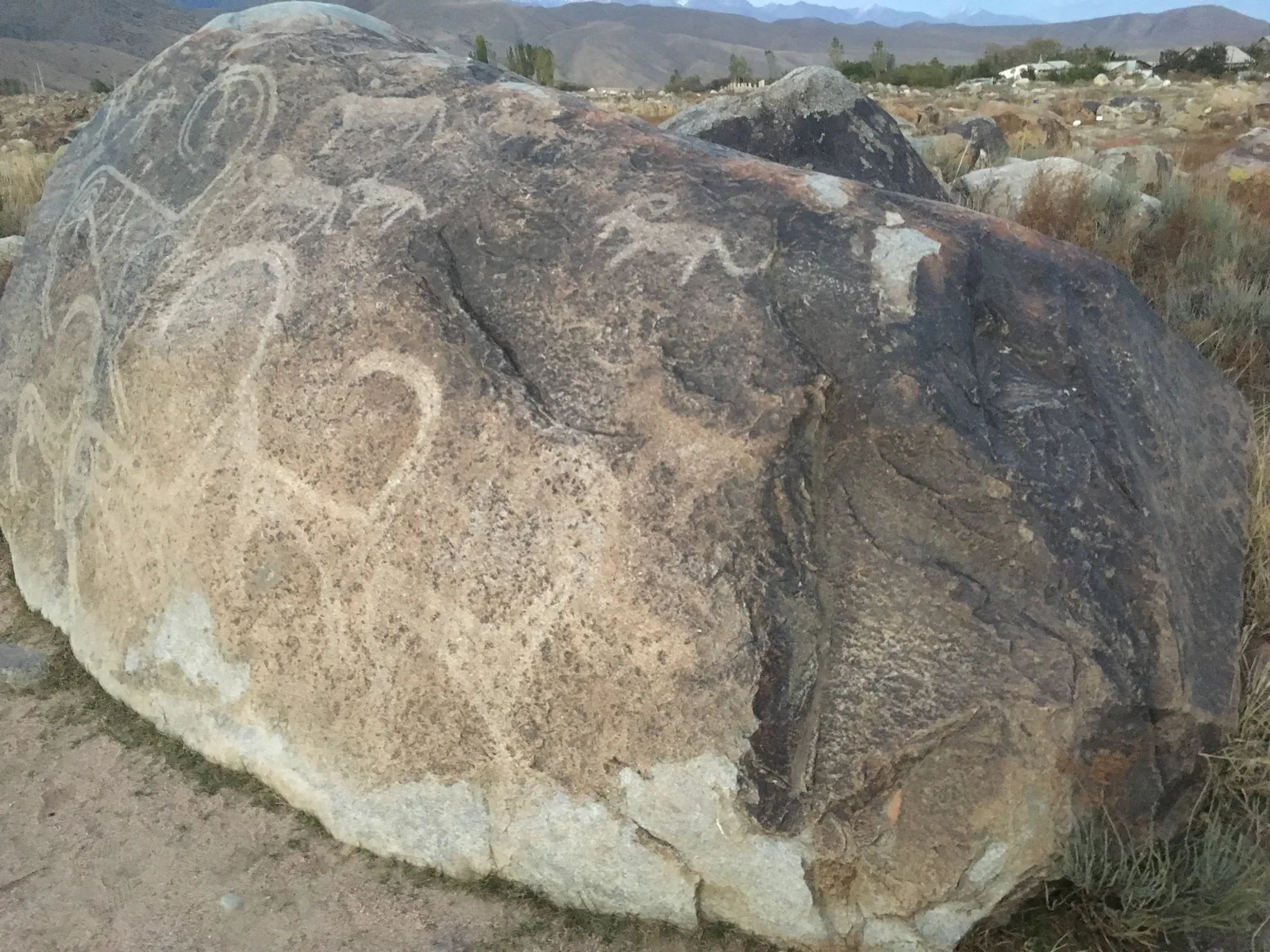
Ibex Hunt and Sun Symbols
This boulder from Cholpon-Ata features ibexes, feline predators, and curling solar motifs. Created between the 8th c. BC and 5th c. AD, the scene likely reflects sacred hunting practices and solar worship central to early nomadic cultures of the Tian Shan region.
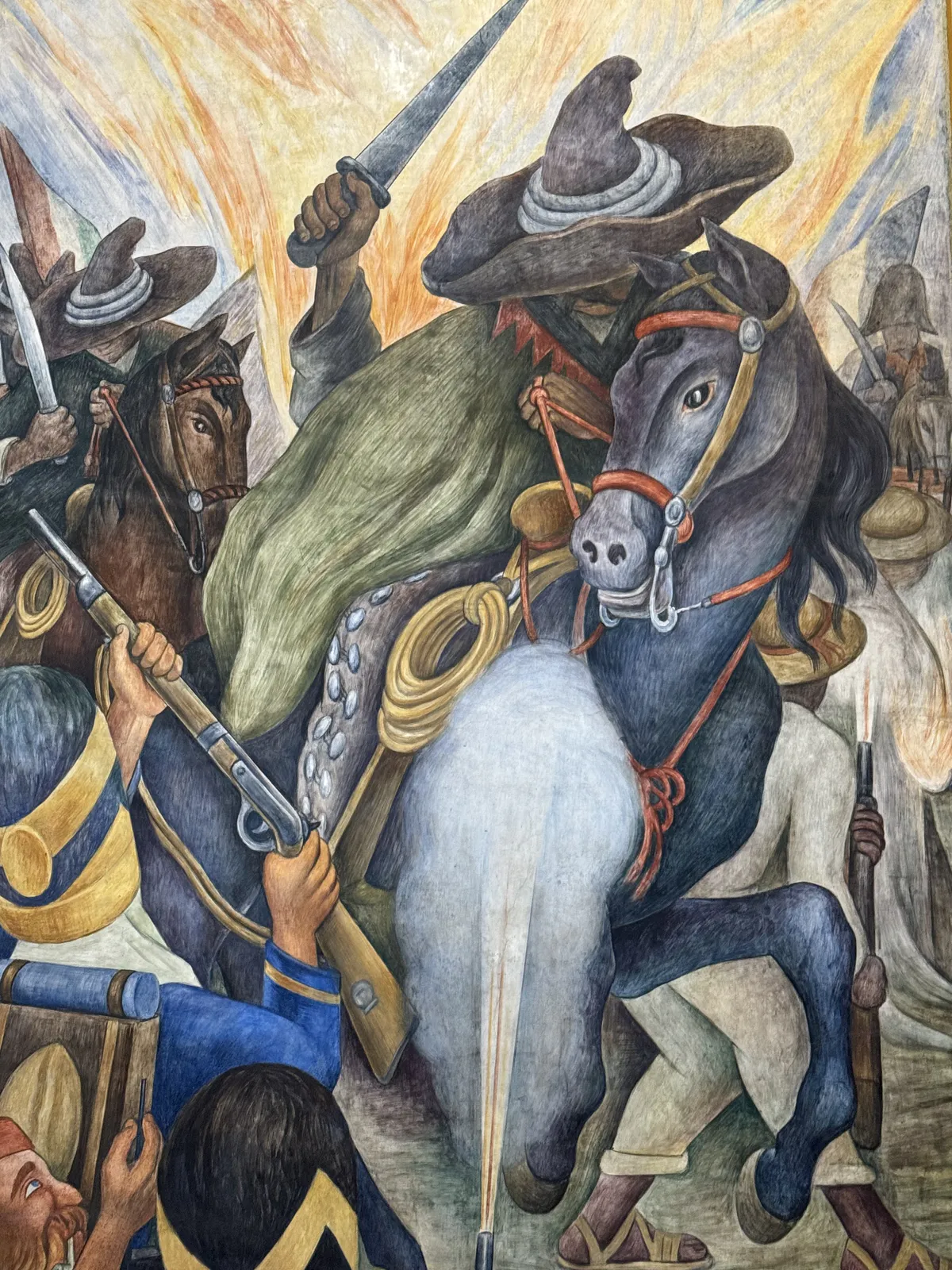
The Legend of Agustín Lorenzo (detail)
Diego Rivera
This 1936 fresco dramatizes the legendary outlaw Agustín Lorenzo as a symbol of resistance. Armed revolutionaries clash with government forces, their horses rearing amid smoke and flames. Rivera fuses myth and history, casting Lorenzo as a Mexican Robin Hood whose defiant struggle against injustice became folklore in the national imagination.
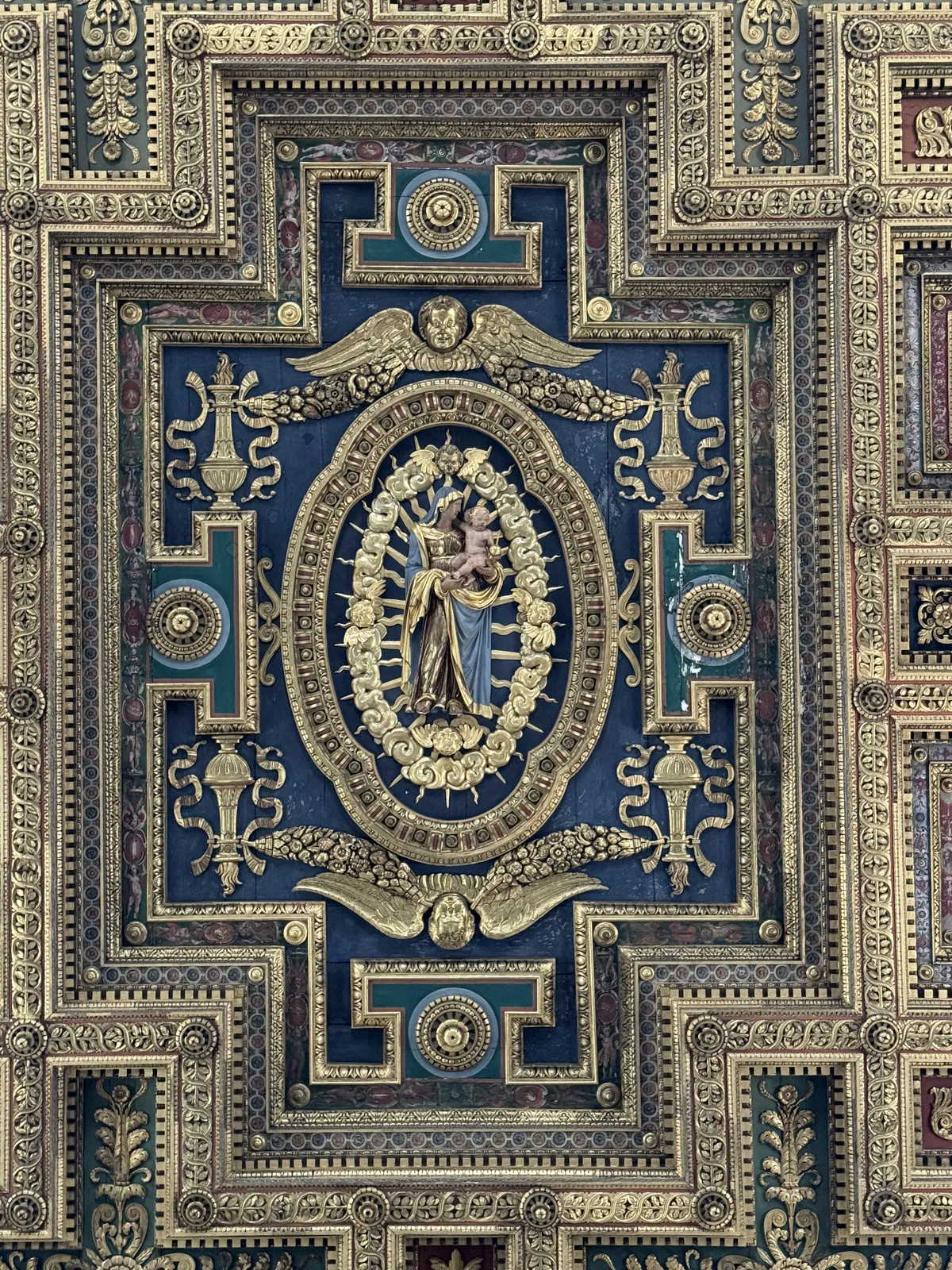
Madonna and Child on the Coffered Ceiling
This close-up of the coffered ceiling (1570s) reveals the gilded Madonna and Child, framed by laurel wreaths, winged cherubs, and intricate Baroque ornament. The richly symbolic centerpiece reflects Marian devotion, civic pride, and gratitude for the Virgin’s protection, particularly following the Christian victory at Lepanto.
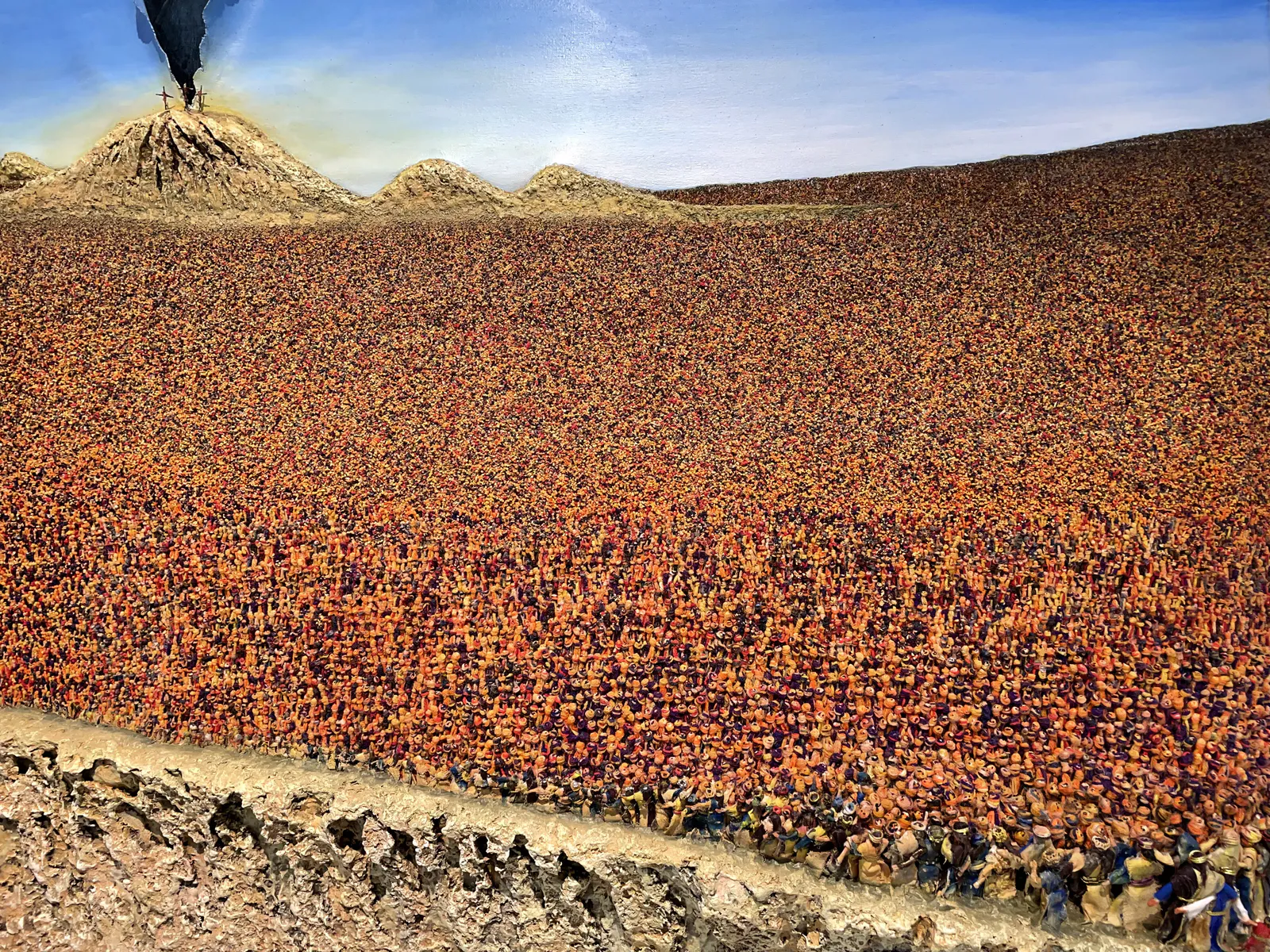
The Veil Torn (The Door to Heaven)
Mariano Bidó
In this mixed-media work (2018), a vast crowd moves toward a hill crowned by three crosses under a black veil of smoke. Referencing the crucifixion, the piece evokes mass devotion, suffering, and salvation. The dense humanity contrasts with the distant, divine climax—highlighting faith as both a collective journey and personal reckoning.
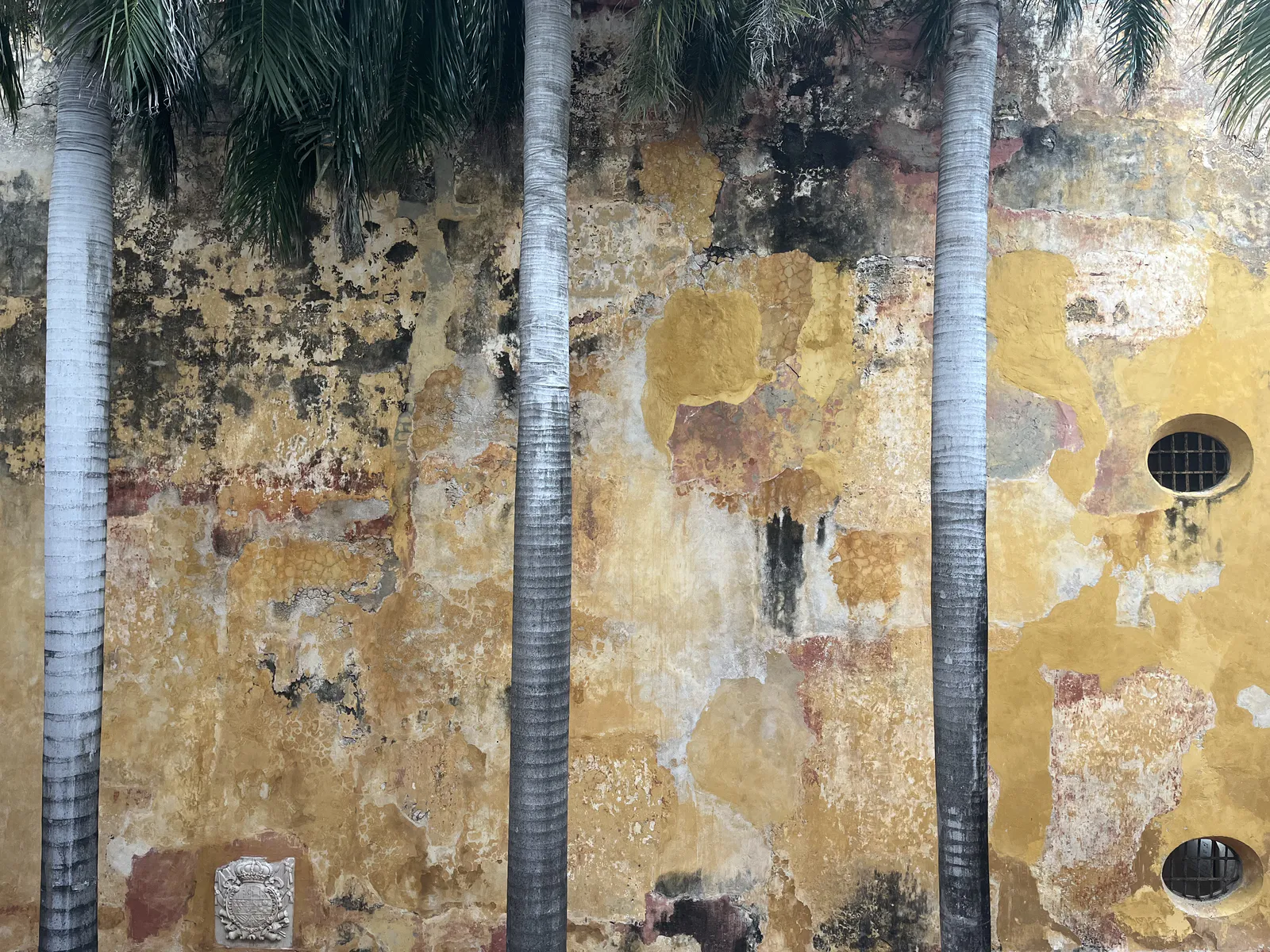
The Wall of the Palace of the Inquisition
This weathered colonial wall (18th c.) once enclosed spaces of interrogation and judgment. Faded plaster, barred openings, and irregular patches of repair record successive phases of use and restoration. The layered surface turns an instrument of control into a historical document of shifting ideas about justice, power, and remembrance.
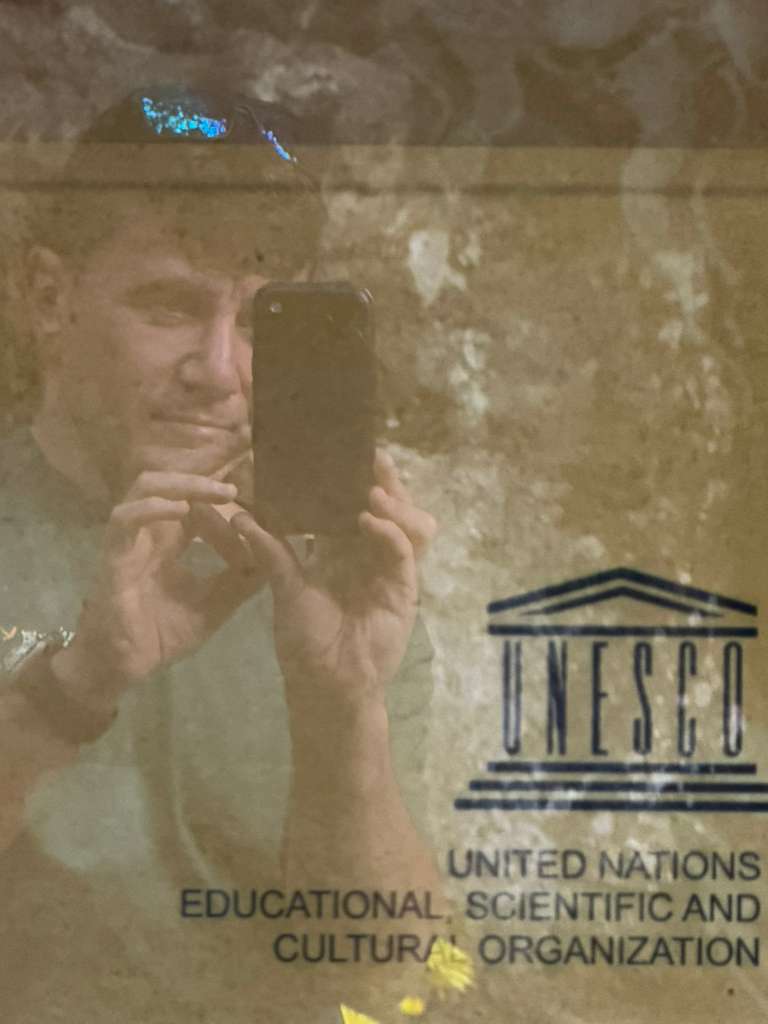
Explore the world through my eyes: begin with the image below, the map, the dropdowns above, or the search button. Every photo includes a thoughtful caption.
Explore the world through my eyes: begin with the image below, the map, the dropdowns above, or the search button. Every photo includes a thoughtful caption.
When the path is beautiful, do not ask where it leads.
My travels have always been shaped by two intertwined forms of discovery. One is intellectual: learning why the world is the way it is. History became my guide, drawing me toward museums, old cities, architecture, and the layers of meaning carried by places. The other is emotional: the search for beauty, harmony, and moments of elevation, often found in nature, monasteries, and sacred spaces.
Together, these impulses shape how I travel, what I photograph, and how I interpret what I see. This site is my way of sharing that lifelong learning in visual form—one image at a time, with enough context to deepen curiosity and understanding. I hope these photographs leave you with a sense of wonder and a deeper feeling for the world.
Now let’s explore together.