
Horned God Panel, Gundestrup Cauldron
This iconic inner Gundestrup Cauldron panel (150 BC - 1 AD) depicts a horned god, often identified with the Celtic Cernunnos, seated cross-legged among animals. He holds a torque (a symbol of nobility) and a serpent, merging themes of power, fertility, and the natural world. The scene evokes shamanic authority and cosmic balance.
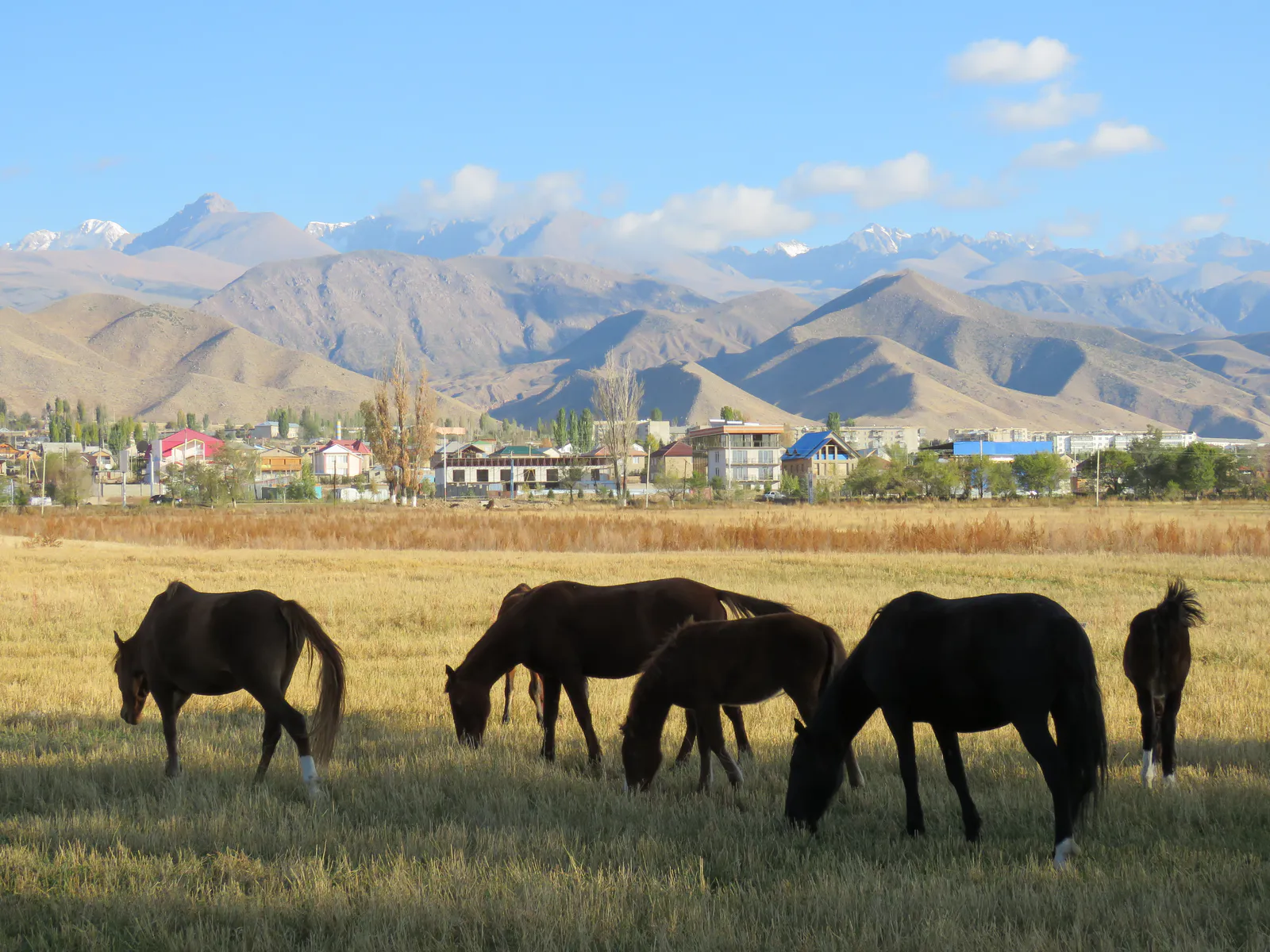
Horses and Mountains near Issyk-Kul
Framed by the towering Tian Shan range, this pastoral scene near Issyk-Kul captures horses grazing on open fields with a village in the background. In Kyrgyz tradition, horses are not just livestock—they are companions, warriors, and cultural emblems tied to centuries of nomadic life and mountain freedom.
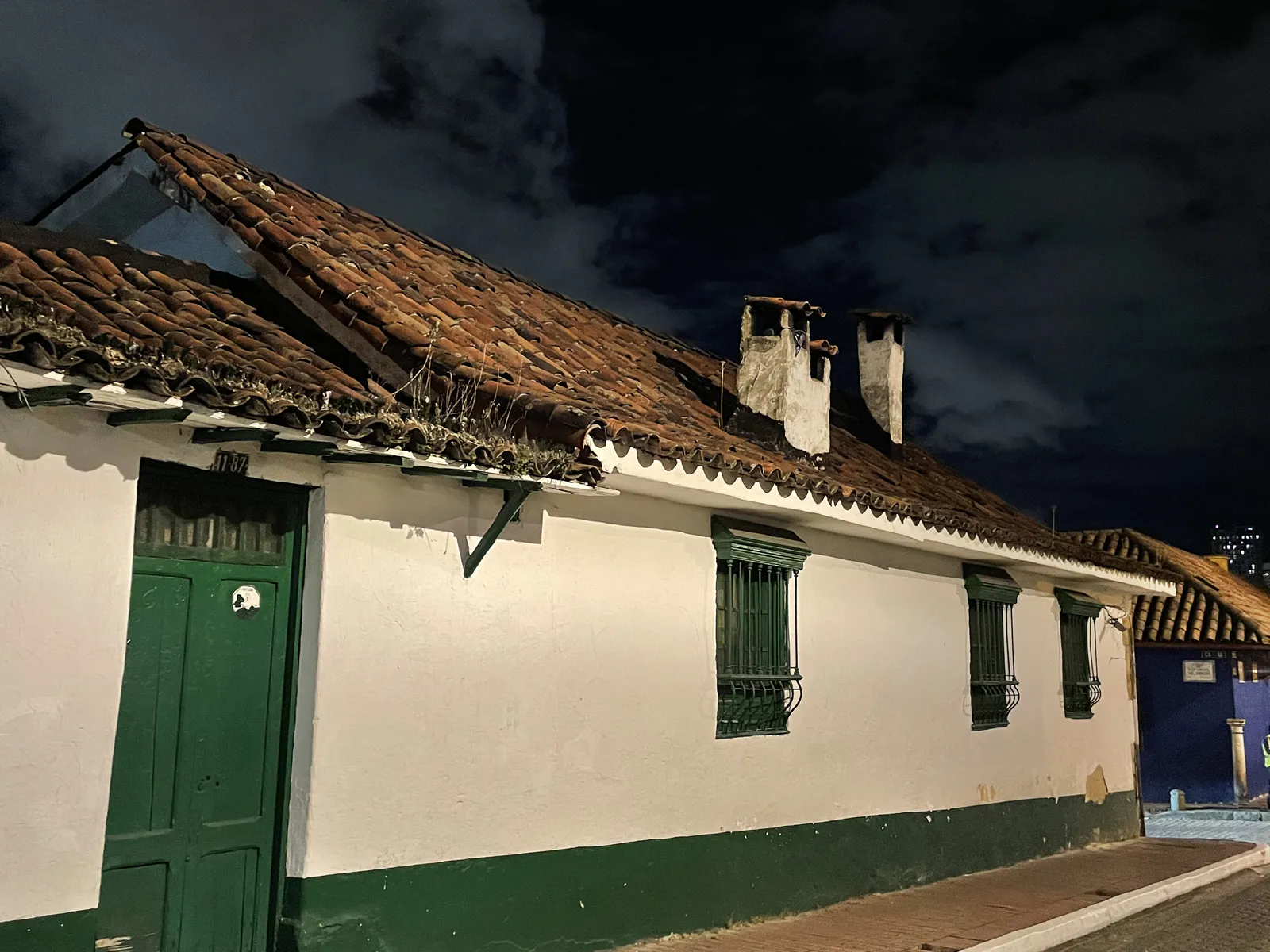
Colonial House with Chimneys
This long, low house shows whitewashed walls, green doors and windows, a clay tile roof, and two tall chimneys. Built in the colonial period (18th c.), it follows Spanish urban models adapted to Bogotá’s Andean setting. The chimneys indicate the need for indoor heating at high altitude, while barred windows and roof tiles maintain recognizable colonial street frontage.
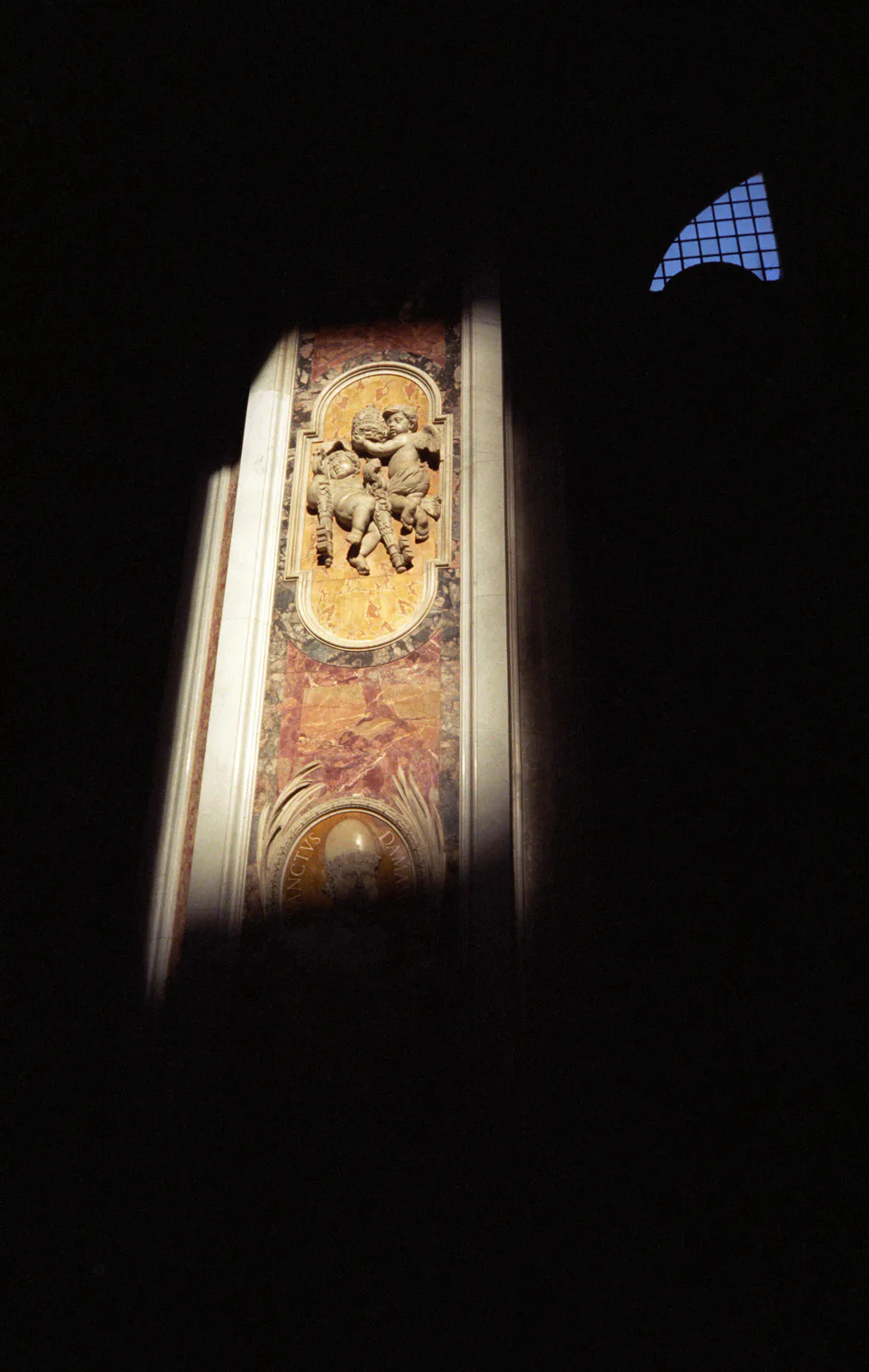
Putti with Garland
This 17th-century marble relief in St. Peter’s Basilica features playful putti—cherubic figures—holding a garland of fruit and flowers, symbolizing abundance and divine grace. Set against richly colored marble inlays, it merges classical motifs with Baroque exuberance. Below, the Sanctus inscription, meaning "holy," underscores the sacred atmosphere. This decoration reflects the Basilica’s synthesis of art, devotion, and splendor, embodying a timeless celebration of faith and creativity.
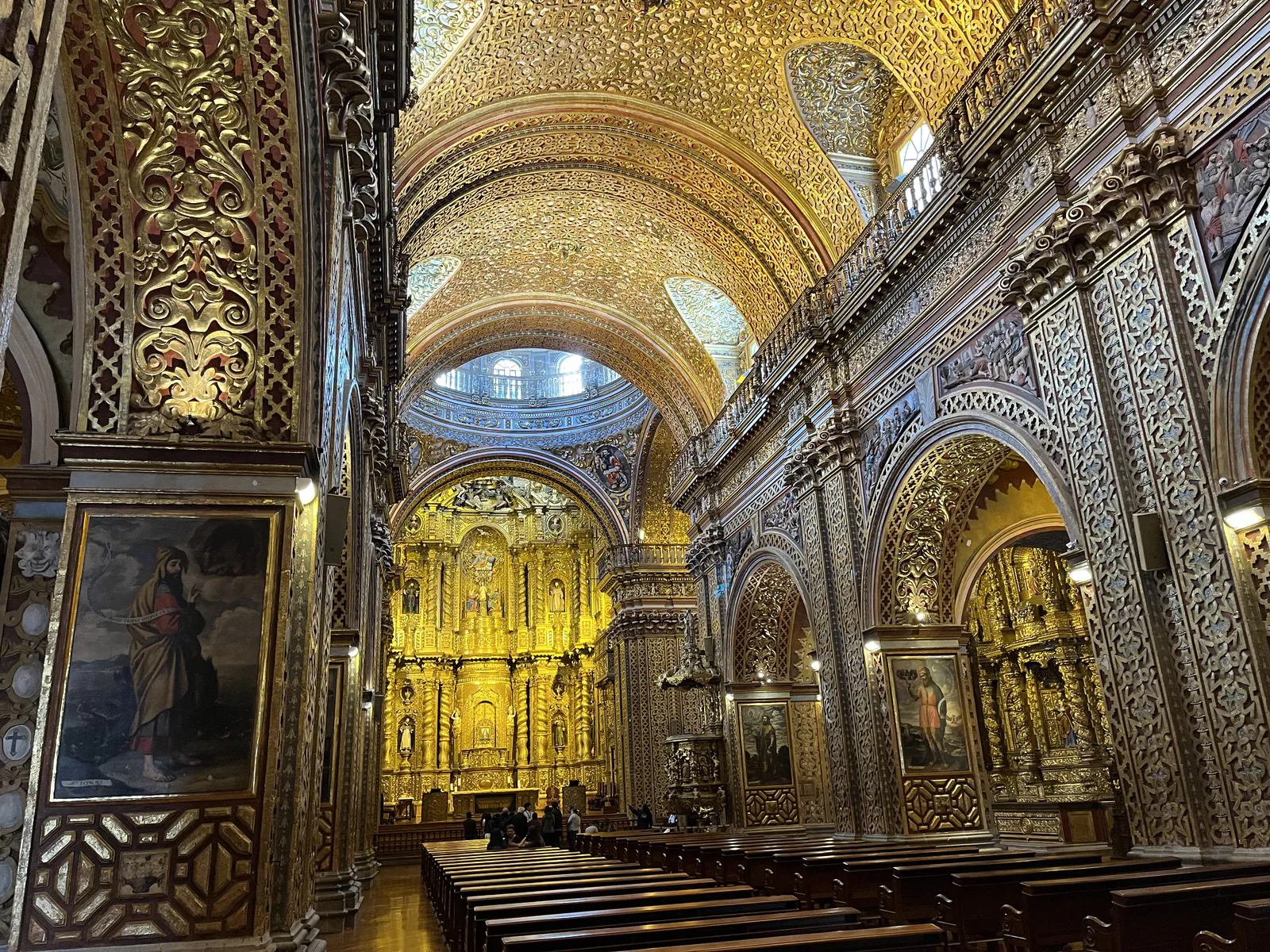
Nave and Main Altar
This nave (17th c.) is clad almost entirely in gold leaf, with barrel vaults, arches, and altarpieces covered in dense relief. Jesuit designers used gilded wood, painted panels, and sculpted saints to structure processional space and focus attention on the main altar. The repetition of arches and mudejar patterns shows how European Baroque forms merged with local carving traditions.
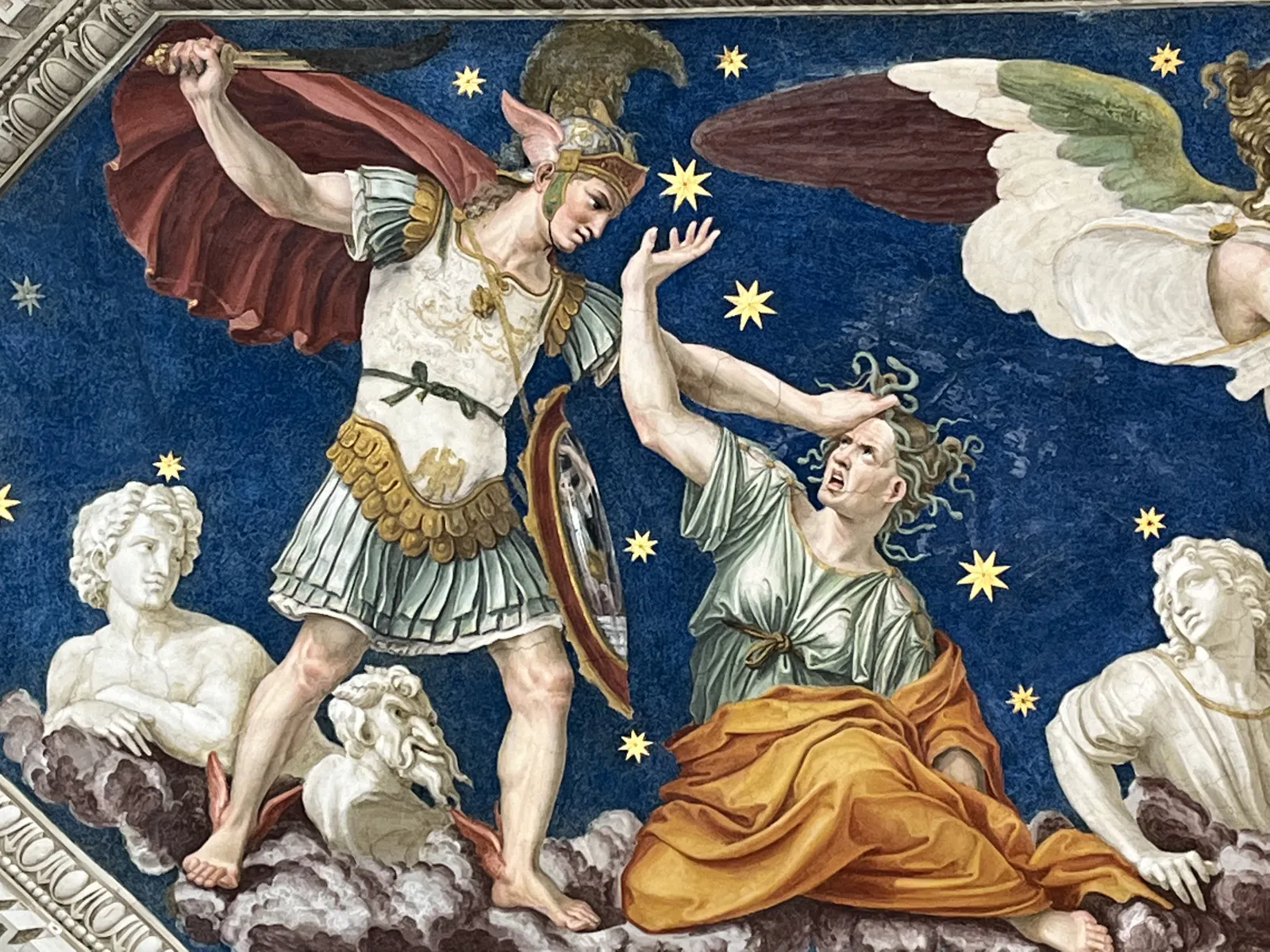
Perseus and Medusa
Baldassarre Peruzzi
In this fresco (c. 1511), Peruzzi depicts Perseus about to behead Medusa. Medusa’s petrifying gaze has already turned victims to stone, visible as pale figures below. Pegasus, born from Medusa’s blood, emerges nearby, symbolizing rebirth. The scene reflects triumph over monstrous chaos.
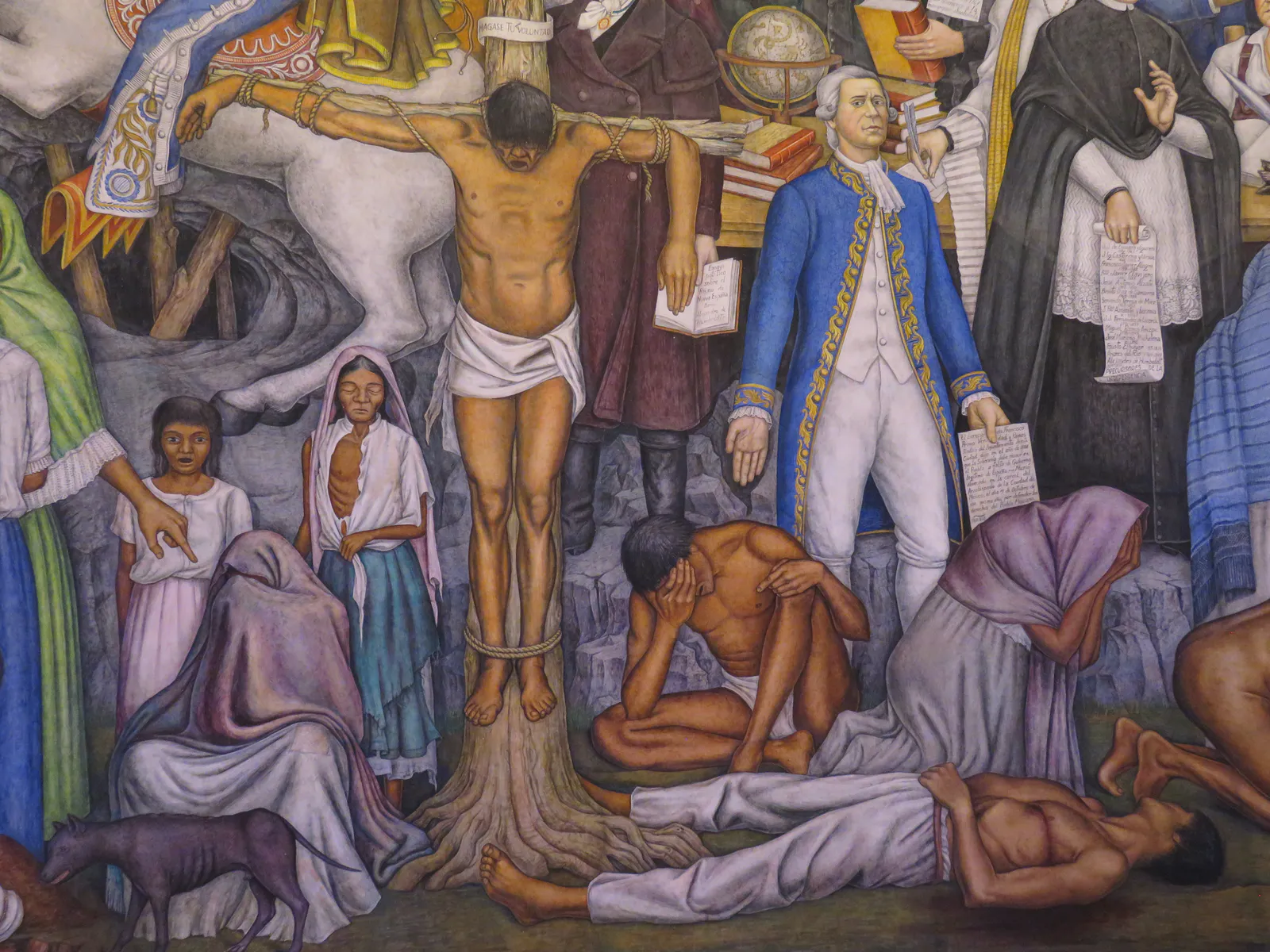
Mexican War of Independence (Detail)
Juan O'Gorman
This mural detail (1960–61) depicts Mexico’s struggle against colonial rule. At center, an Indigenous man is crucified on a tree, symbolizing the suffering of native peoples. Around him, women and children grieve, while men collapse in despair. To the right, Miguel Hidalgo in blue and José María Morelos in clerical robes embody the revolution’s leaders, joined by thinkers holding books and scrolls of Enlightenment ideals.
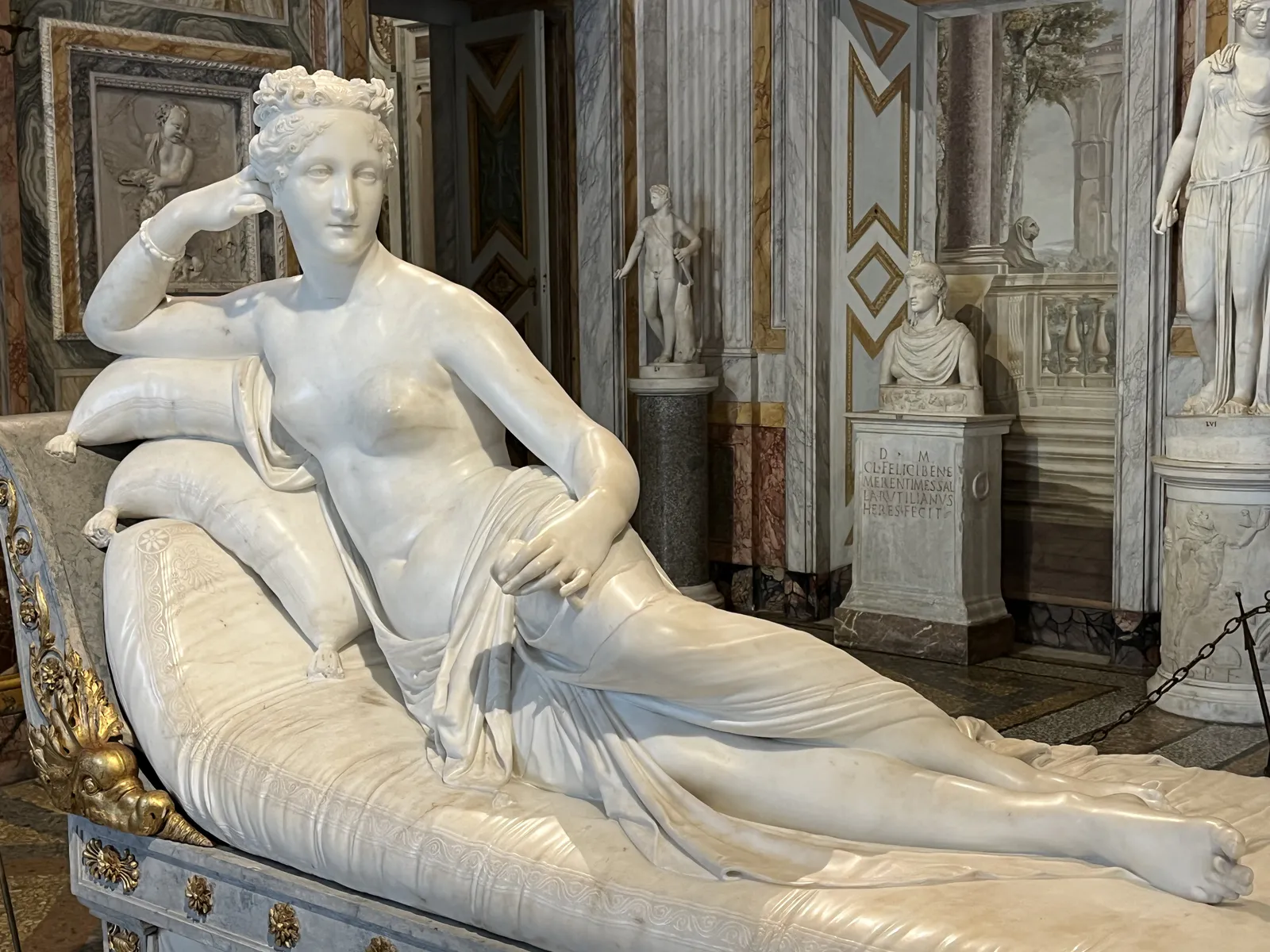
Pauline Bonaparte as Venus Victrix
Antonio Canova
This statue (1805–08) presents Pauline Bonaparte, sister of Napoleon, as Venus, reclining semi-nude and holding the golden apple of victory. Commissioned by her husband Camillo Borghese, the statue blends neoclassical elegance with sensual myth. Its rotating base once allowed viewers to admire it from every angle.
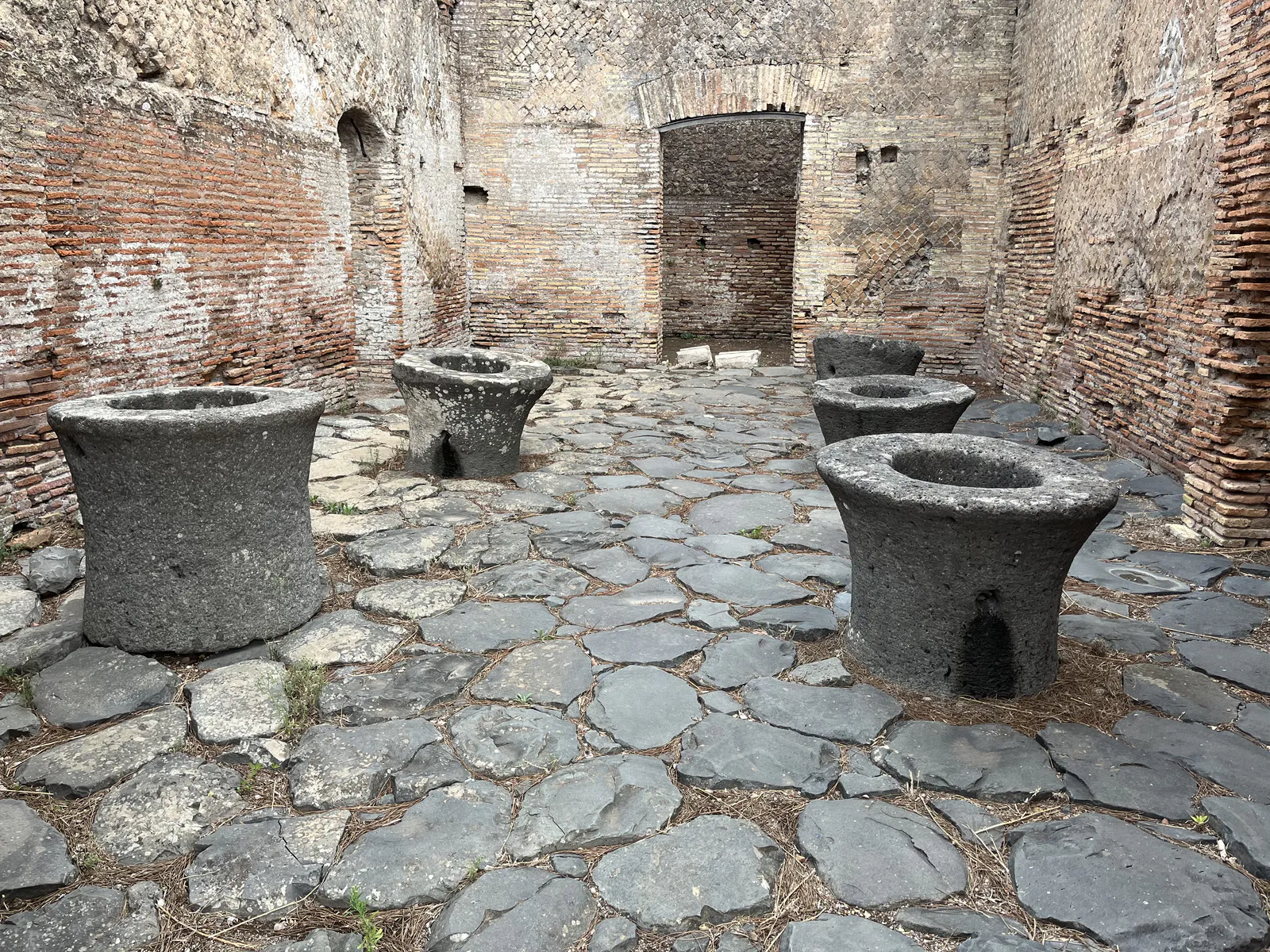
Millstones in a Roman Bakery
These lava stone millstones (2nd–3rd c. AD) come from a large bakery in Ostia Antica. Their hourglass shape held a rotating upper stone turned by humans or animals to grind grain. The presence of multiple mills in one room reveals the industrial scale of bread production in the Roman world, essential to feeding the densely populated port city.
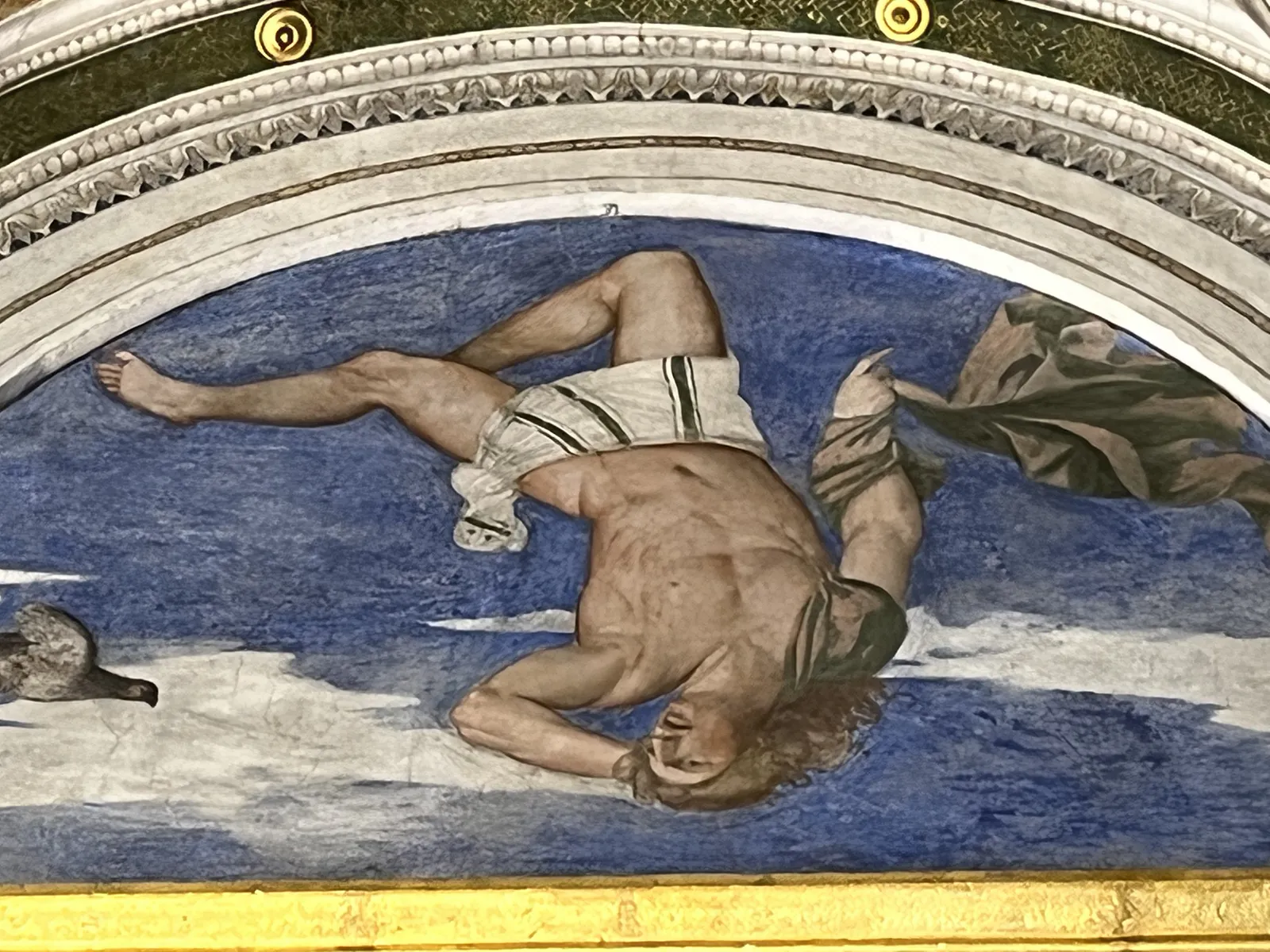
The Fall of Phaeton
Sebastiano del Piombo
This fragment (c. 1511) shows Phaeton falling from the sky after failing to control the sun chariot of his father Helios. To save the world, Zeus strikes him down. Part of Sebastiano del Piombo’s mythological cycle at Villa Farnesina, it complements Raphael’s Triumph of Galatea with a dramatic warning against hubris.
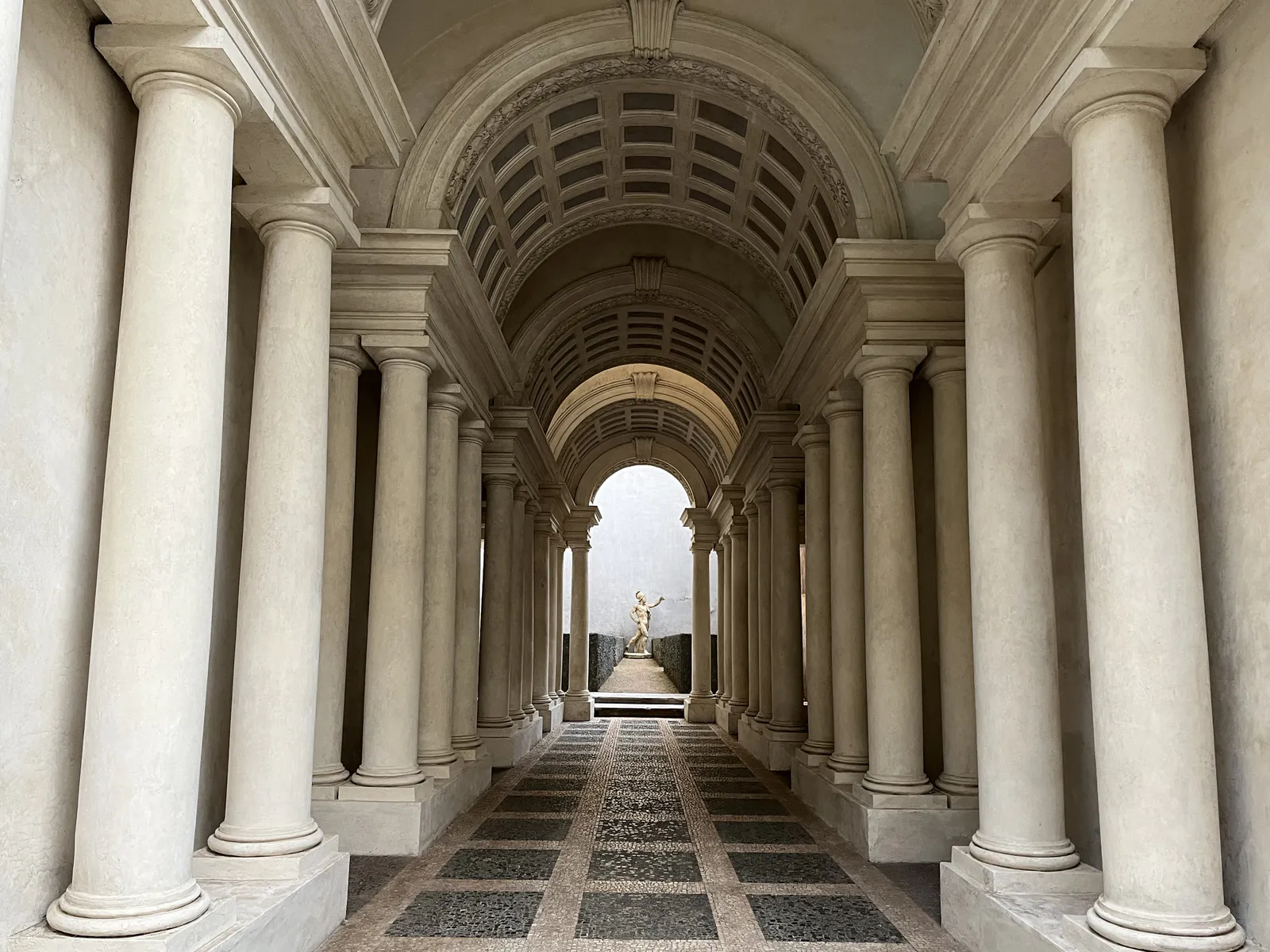
Perspective Gallery
Francesco Borromini
Created for Cardinal Spada, this architectural illusion (1653) compresses nine meters into an illusion of great depth. By subtly reducing the size of columns, floor tiles, and ceiling coffers, Borromini crafted a vanishing point that evokes grandeur. The statue at the end, appearing monumental, is just 90 cm tall—transforming scale into metaphysical reflection.
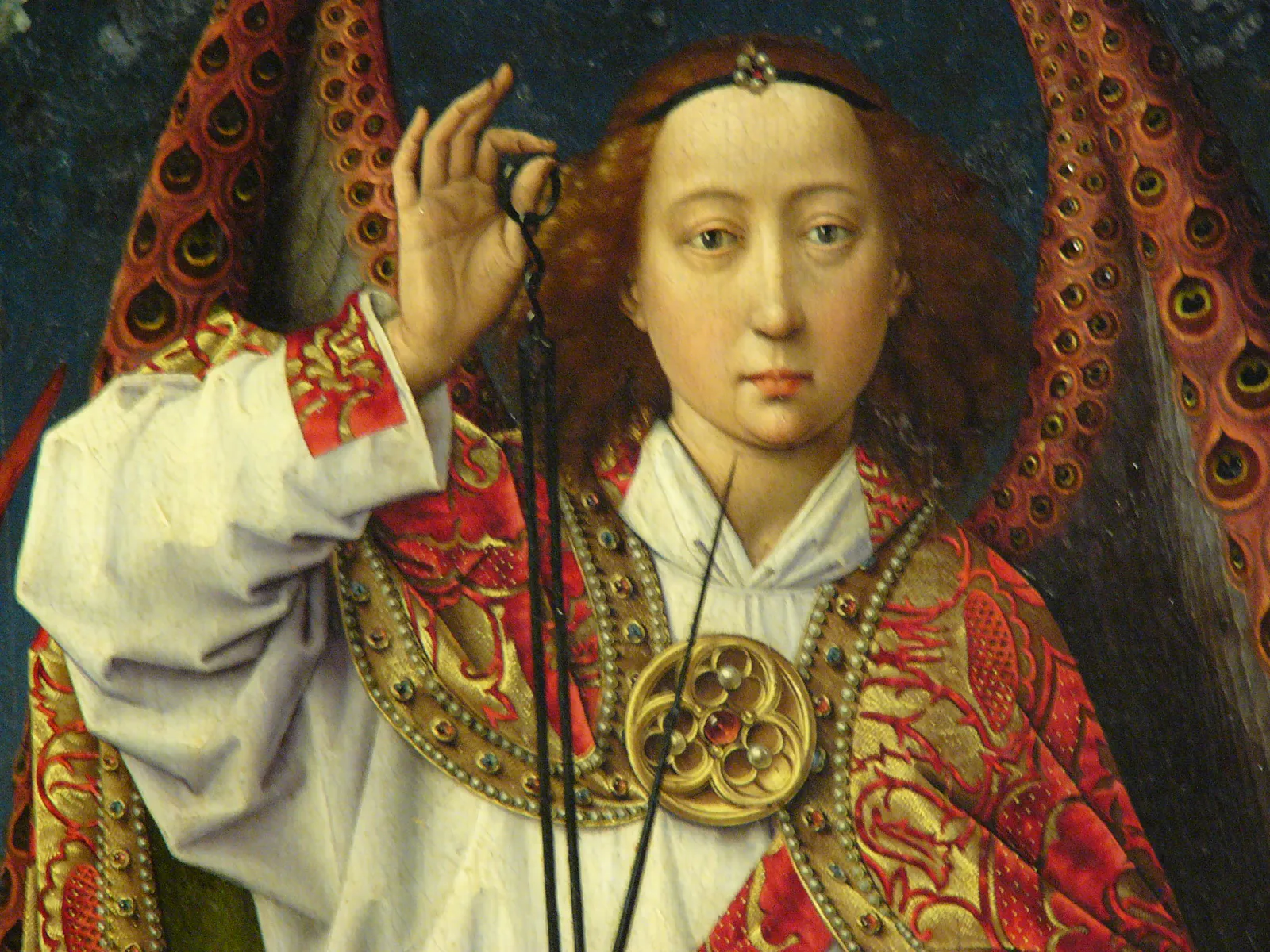
Archangel Michael
Rogier van der Weyden
This panel (1445–50) from the Beaune Altarpiece shows Archangel Michael weighing souls on Judgment Day. His youthful calm contrasts with the gravity of divine judgment. The richly patterned brocade and peacock-feather wings reflect Burgundian court opulence, linking celestial imagery with the devotional grandeur of 15th-century Flanders.

Cheikh Ahmed Tidiane Fishing Canoe
This vividly painted pirogue bears the name of a revered Sufi saint, Cheikh Ahmed Tidiane, reflecting the deep ties between Islam and daily life in coastal communities. Local children lounge on empty boats while fishermen prepare theirs for sea, continuing a tradition passed down through generations along West Africa’s Atlantic shore.
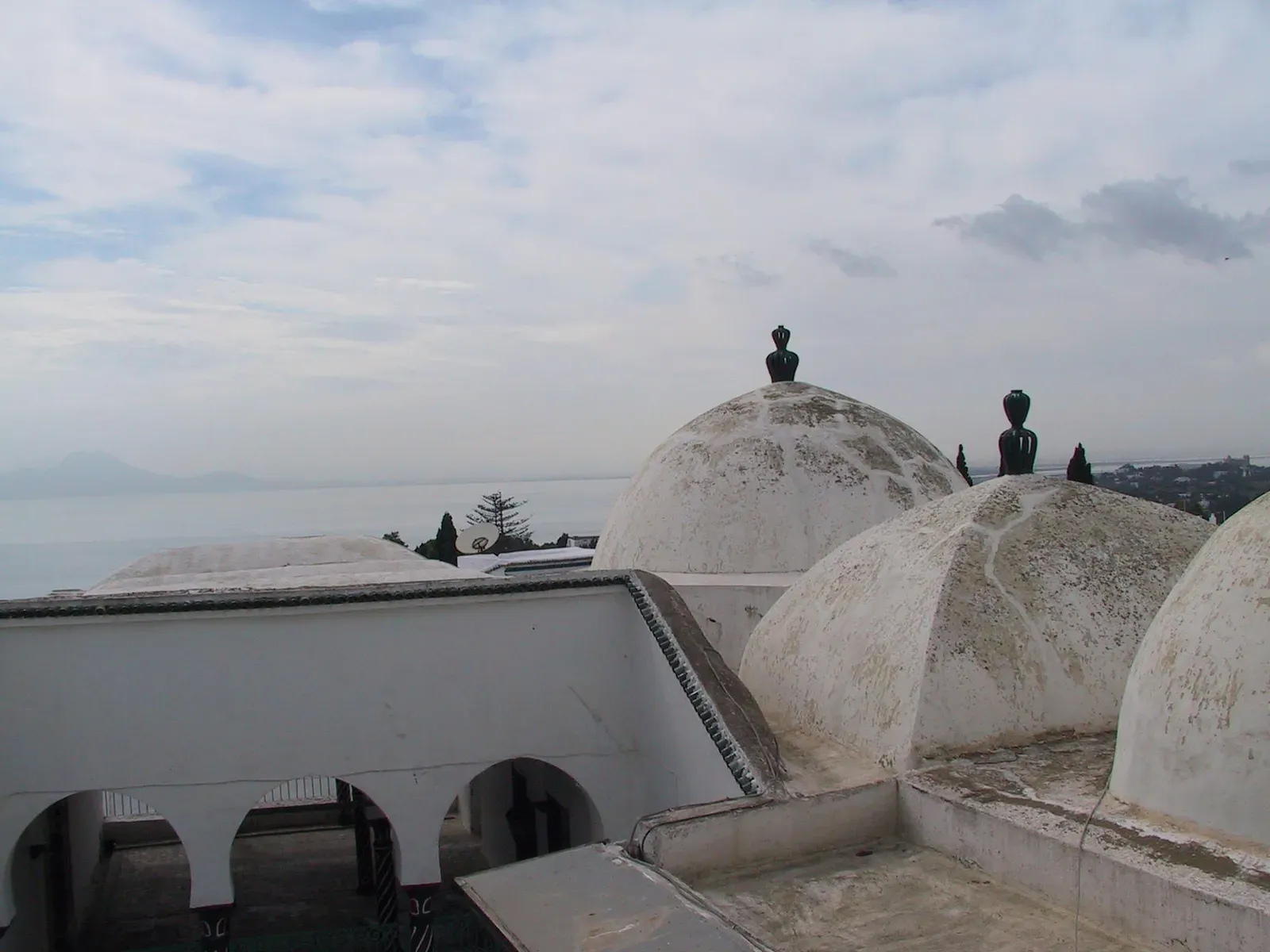
Domes of Zaouia
These whitewashed domes crown a zaouia (Sufi sanctuary) from the 18th c., dedicated to a revered mystic. Rising above the surrounding terraces, they frame wide views toward the Gulf of Tunis and the coastal plain. The domes, each capped with a finial, mark the site as both a place of devotion and a landmark in the spiritual landscape of northern Tunisia.
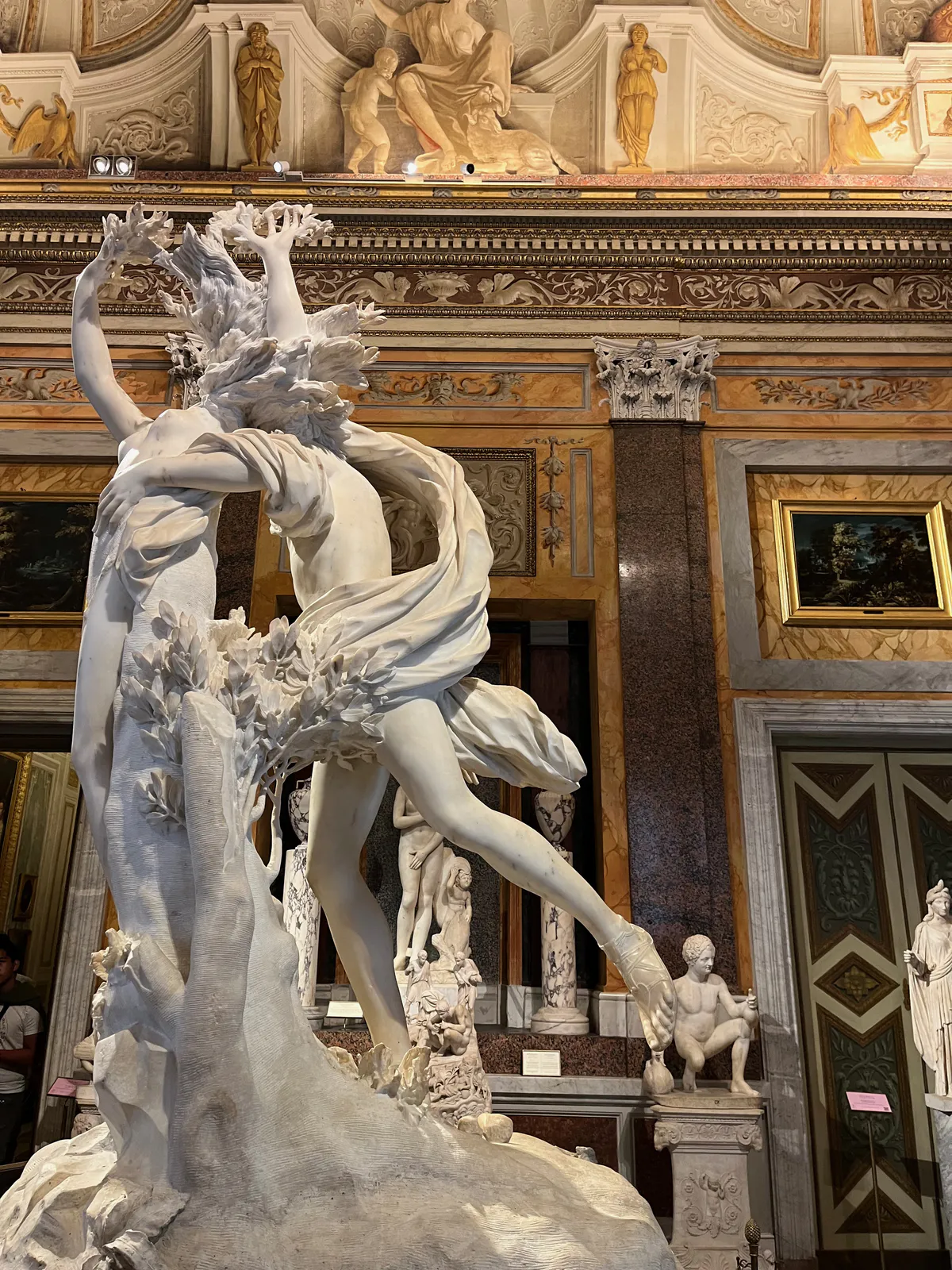
Apollo and Daphne
Bernini
Seen from behind, Bernini’s Apollo and Daphne (1622–25) reveals the spiraling tension of flight and pursuit. Daphne’s transformation accelerates—branches burst from her hair as Apollo strains forward, barely grounded. This angle heightens the illusion of motion, capturing the myth’s fleeting climax with lyrical virtuosity.
Explore the world through my eyes: begin with the image below, the map, the dropdowns above, or the search button. Every photo includes a thoughtful caption.
Explore the world through my eyes: begin with the image below, the map, the dropdowns above, or the search button. Every photo includes a thoughtful caption.
When the path is beautiful, do not ask where it leads.
My travels have always been shaped by two intertwined forms of discovery. One is intellectual: learning why the world is the way it is. History became my guide, drawing me toward museums, old cities, architecture, and the layers of meaning carried by places. The other is emotional: the search for beauty, harmony, and moments of elevation, often found in nature, monasteries, and sacred spaces.
Together, these impulses shape how I travel, what I photograph, and how I interpret what I see. This site is my way of sharing that lifelong learning in visual form—one image at a time, with enough context to deepen curiosity and understanding. I hope these photographs leave you with a sense of wonder and a deeper feeling for the world.
Now let’s explore together.