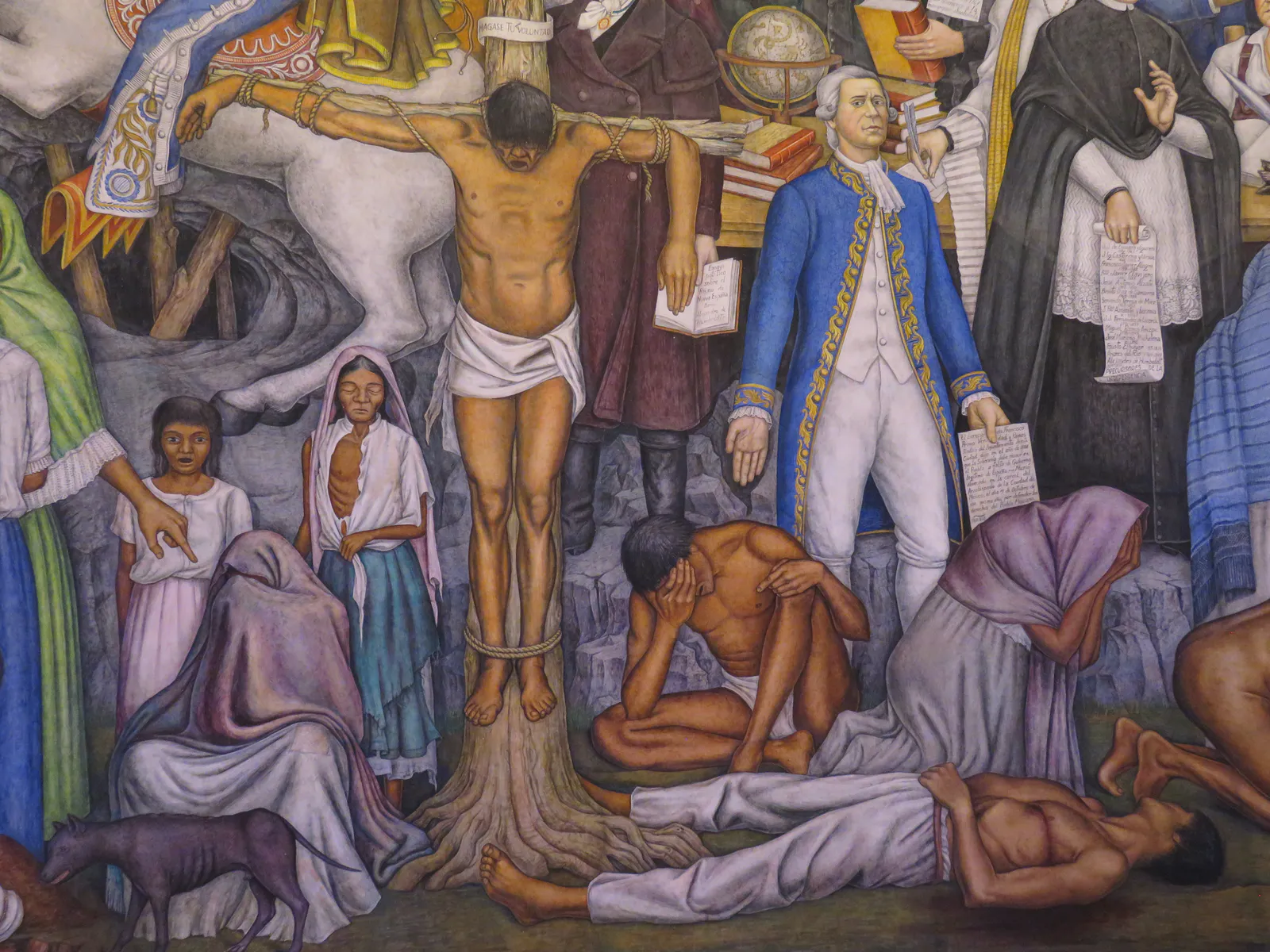
Mexican War of Independence (Detail)
Juan O'Gorman
This mural detail (1960–61) depicts Mexico’s struggle against colonial rule. At center, an Indigenous man is crucified on a tree, symbolizing the suffering of native peoples. Around him, women and children grieve, while men collapse in despair. To the right, Miguel Hidalgo in blue and José María Morelos in clerical robes embody the revolution’s leaders, joined by thinkers holding books and scrolls of Enlightenment ideals.
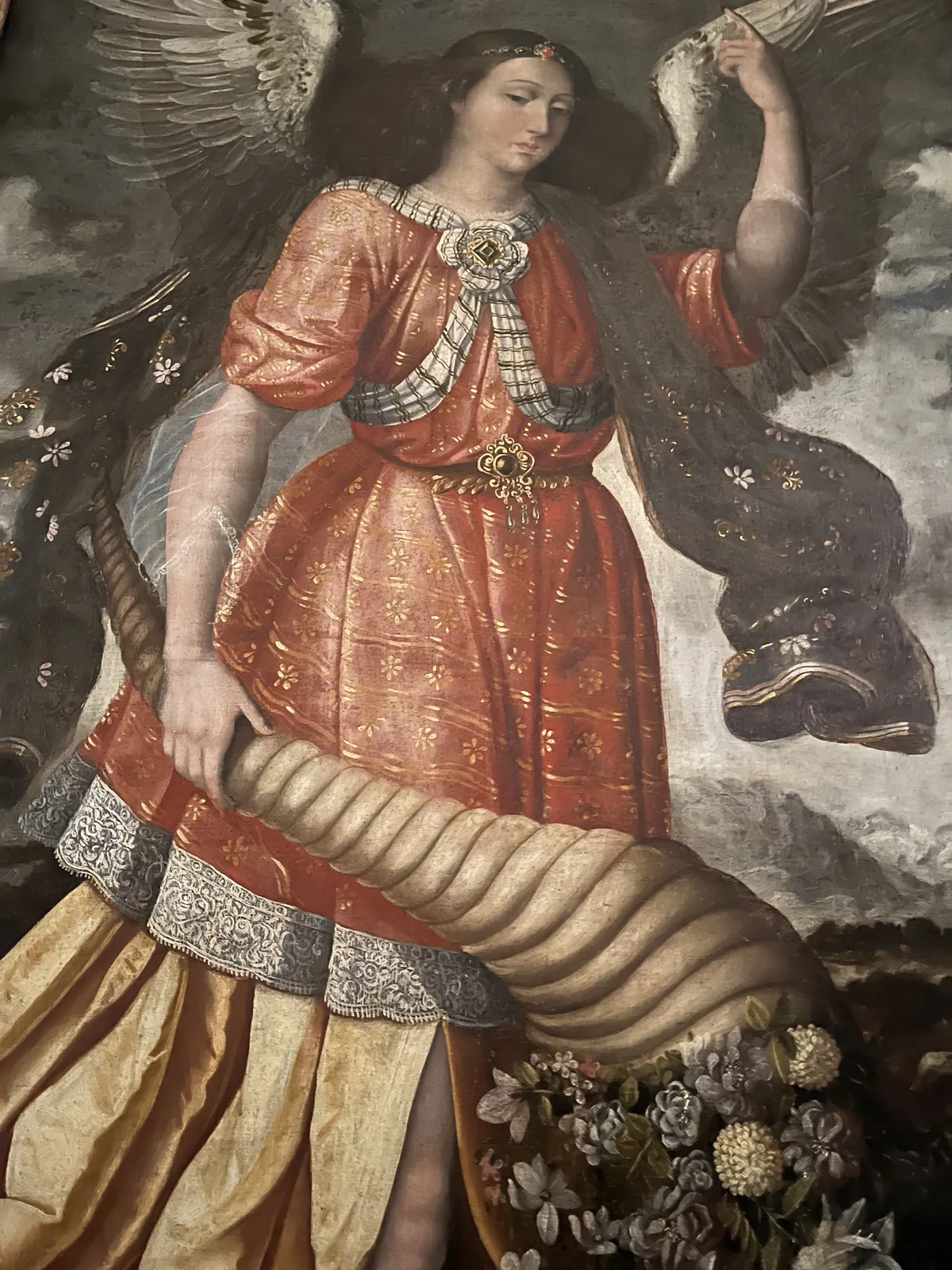
Archangel Gabriel (Isabel de Santiago)
Isabel de Santiago
This early 18th-c. work by Isabel de Santiago—a rare female artist of the Quito School—portrays Gabriel as a celestial messenger of abundance. Draped in luminous textiles, the archangel holds a cornucopia, blending classical fertility symbols with baroque angelology in a uniquely Andean devotional image.
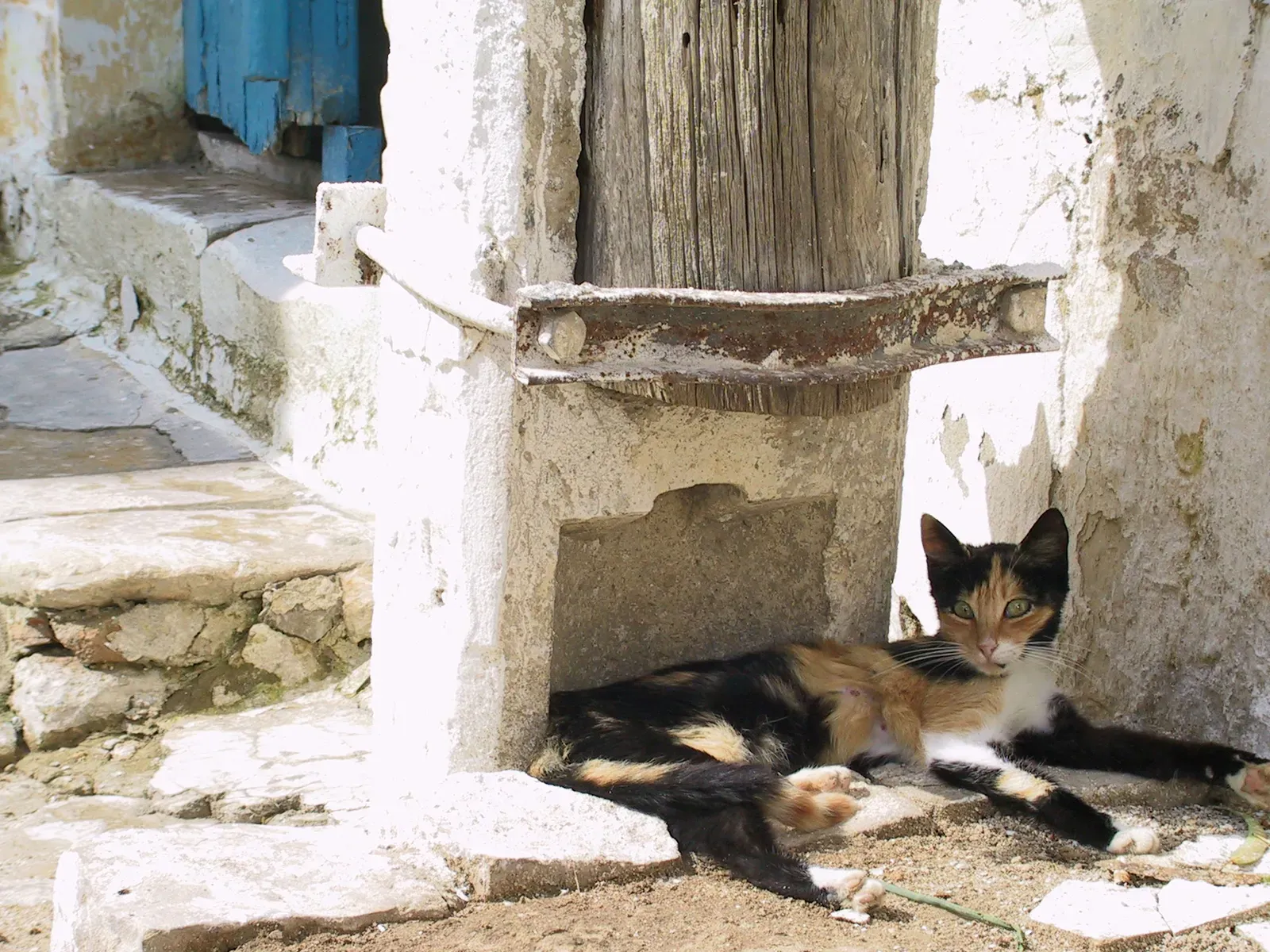
Cat in the Shade of Sidi Bou Said
Beneath a weathered doorframe and beside sun-bleached walls, a calico cat finds refuge from the midday heat. This quiet scene captures the harmony between the architecture of Sidi Bou Said and the daily rhythm of its feline residents, who have become silent guardians of the village’s peaceful, timeworn charm.
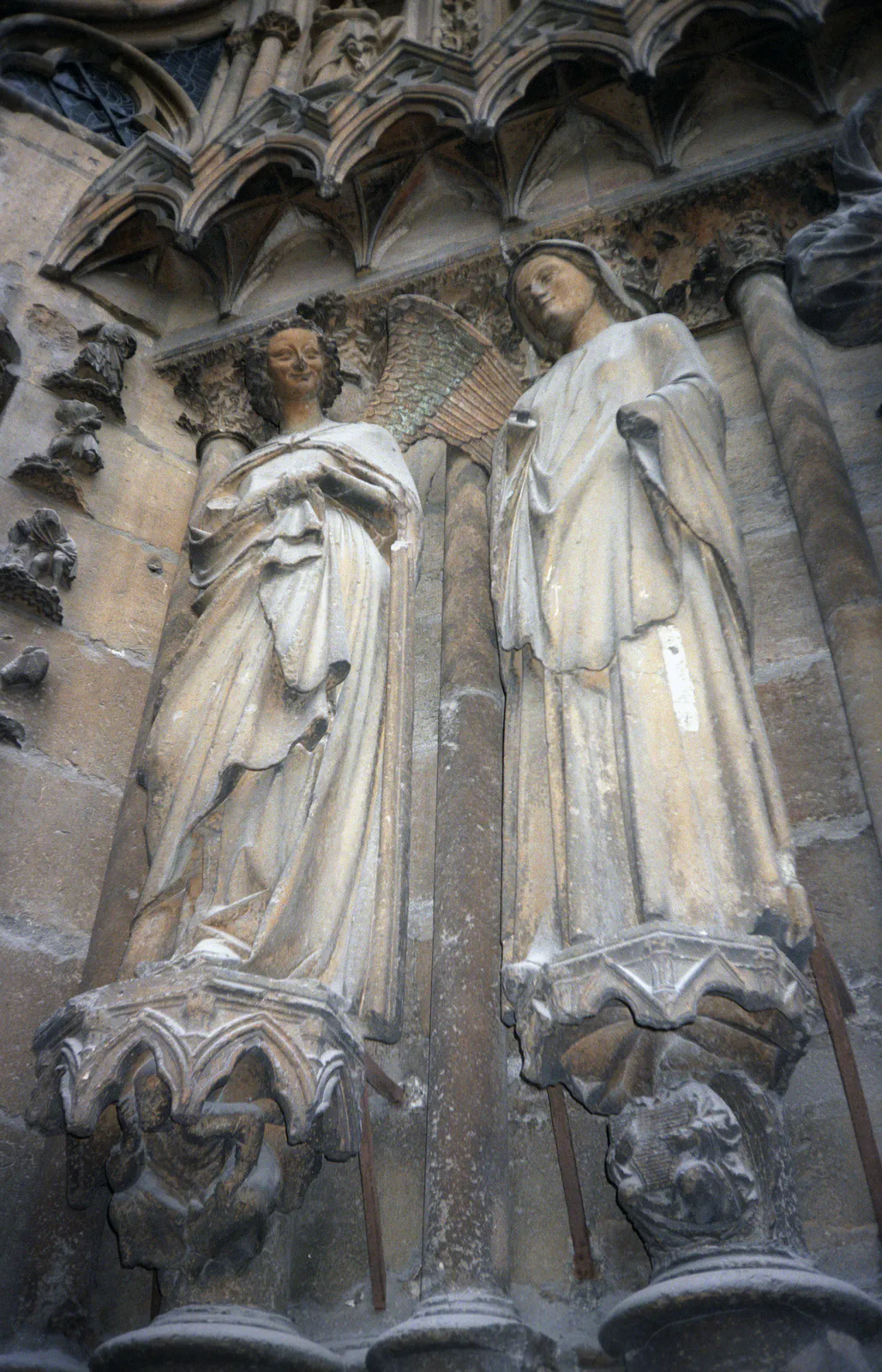
Smiling Angel and Virgin Mary
This pair of sculptures (13th c.) decorates the north portal. On the left, the famed Smiling Angel radiates warmth unusual in Gothic art. On the right stands the Virgin Mary, receiving the Annunciation with serene gravity. Damaged in World War I and later restored, the group illustrates the stylistic evolution of Gothic sculpture from solemnity toward greater human presence.
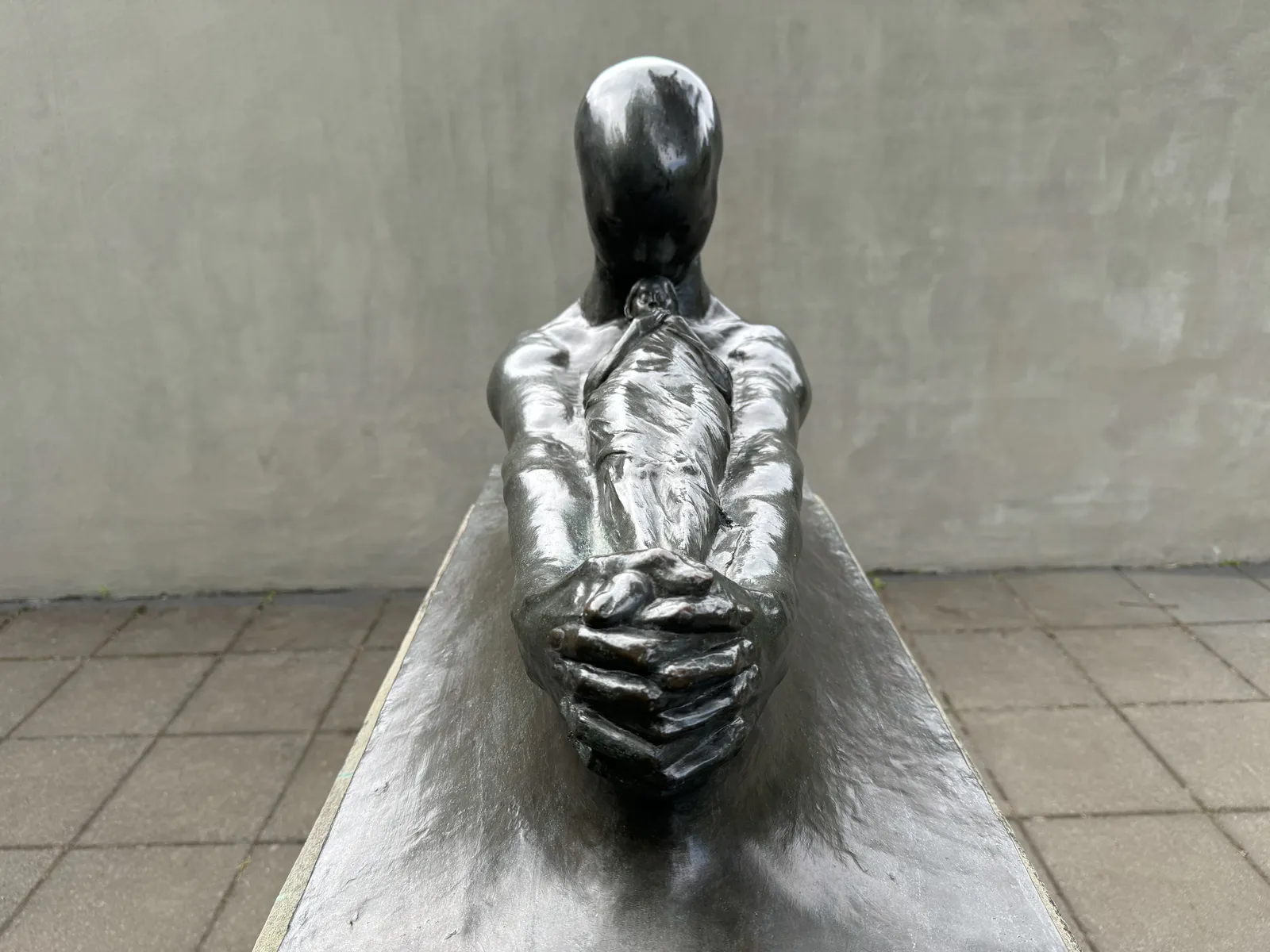
The Earth
Einar Jónsson
Jónsson’s bronze sculpture, The Earth (1904–1908), features a seated figure cradling a smaller form, reflecting his shift to Symbolism after 1903. It explores themes of life, death, and the cyclical nature of existence. Jónsson, a pioneering Icelandic sculptor, studied at the Royal Danish Academy of Fine Arts, significantly influencing the evolution of Icelandic art.
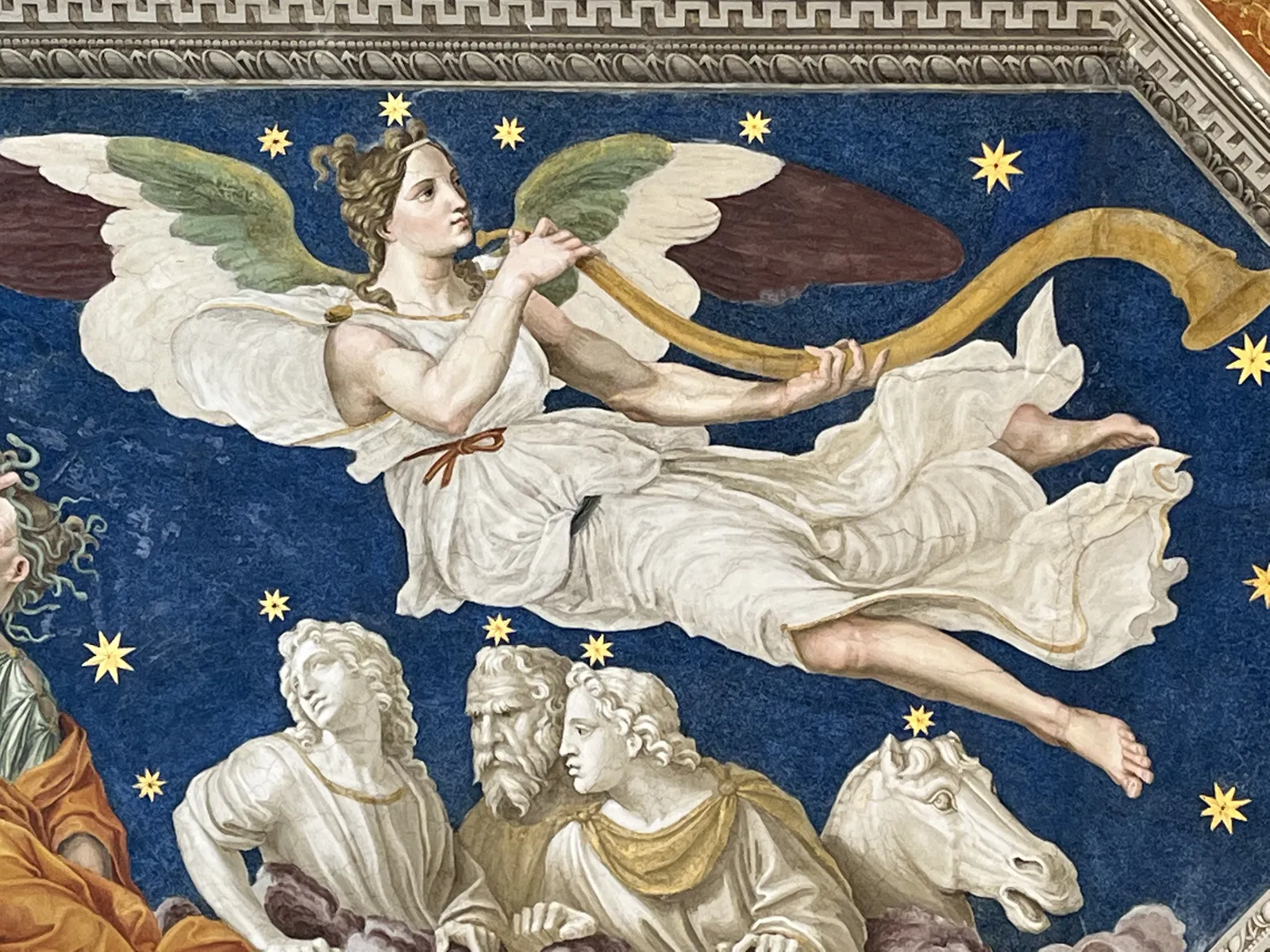
Fame and Medusa's Victims
Baldassarre Peruzzi
This fresco (1511) shows Fame soaring through the sky, announcing glory with her trumpet. Below, three men and a horse emerge from the clouds, their pallor and stiffness indicating they are victims turned to stone by Medusa's gaze. The composition reflects Renaissance interest in mythology, illustrating the power of reputation and the consequences of divine encounters.
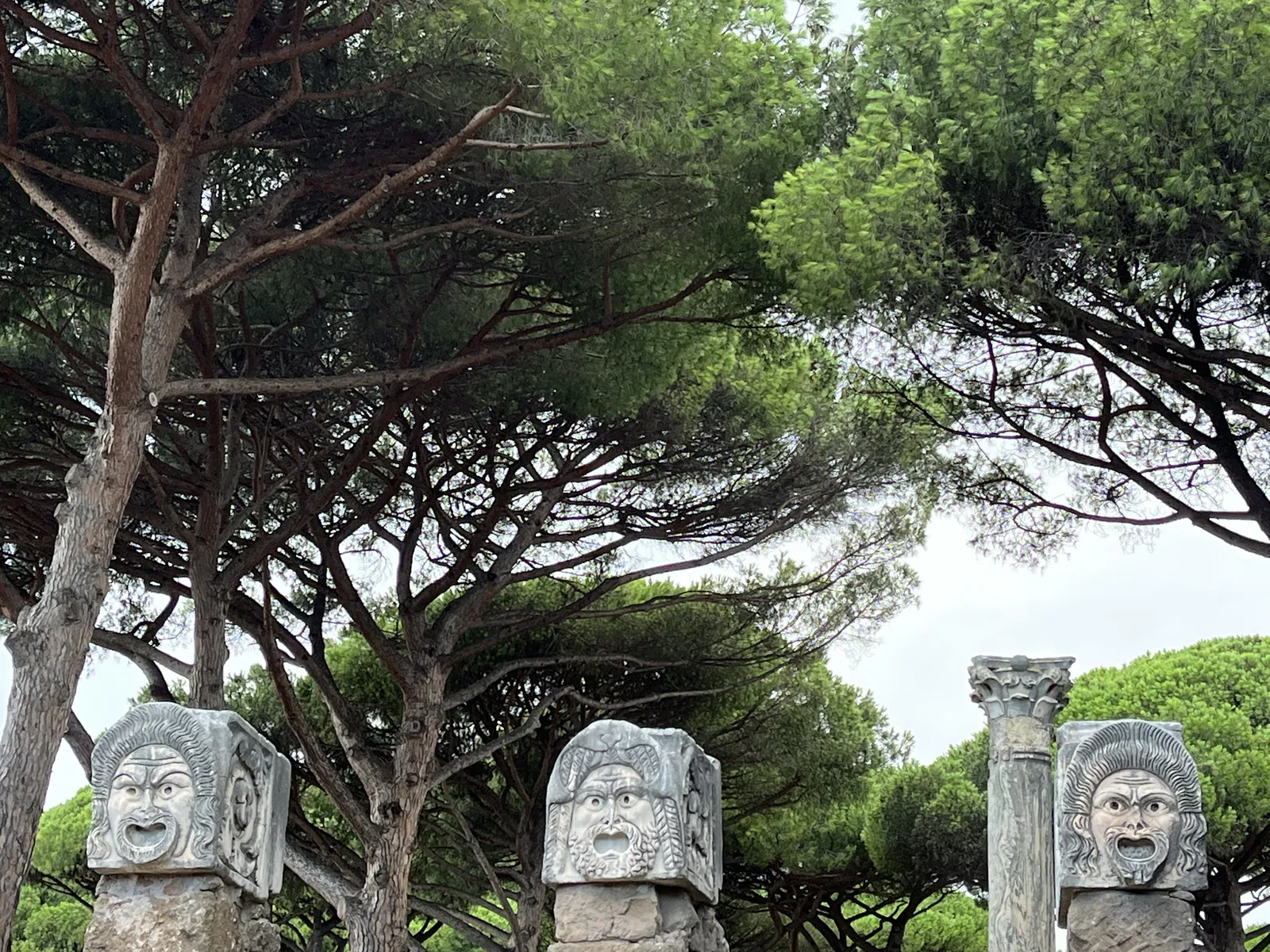
Theater Masks on Capitals
These theatrical masks (2nd–3rd c. AD), carved into marble capitals, once adorned the ancient theater of Ostia. Representing comic and tragic roles, they reflect the deep integration of drama into Roman urban life. Such imagery evoked Dionysian themes of transformation and spectacle, linking performance, architecture, and communal identity in the Roman world.
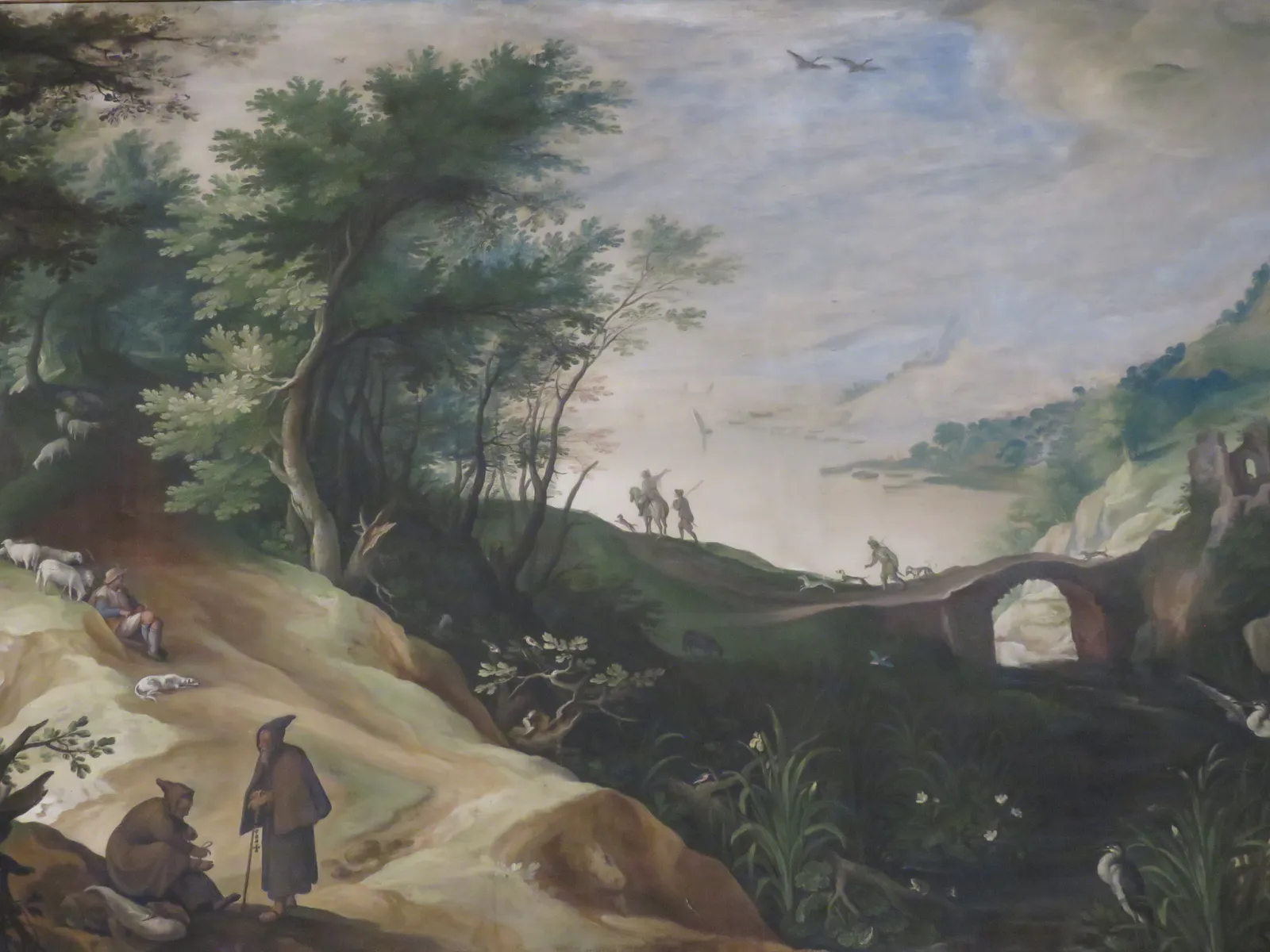
Landscape with Hermits
Paul Bril
This landscape (c. 1600) shows monks gathered in a wooded clearing beneath a broad, luminous sky. Their small figures sit or stand along a path that opens toward distant hills. Such scenes appeared in early Baroque painting, especially in northern regions where sacred retreat was a common theme. The composition indicates how artists linked hermitic life with the ordered quiet of nature.
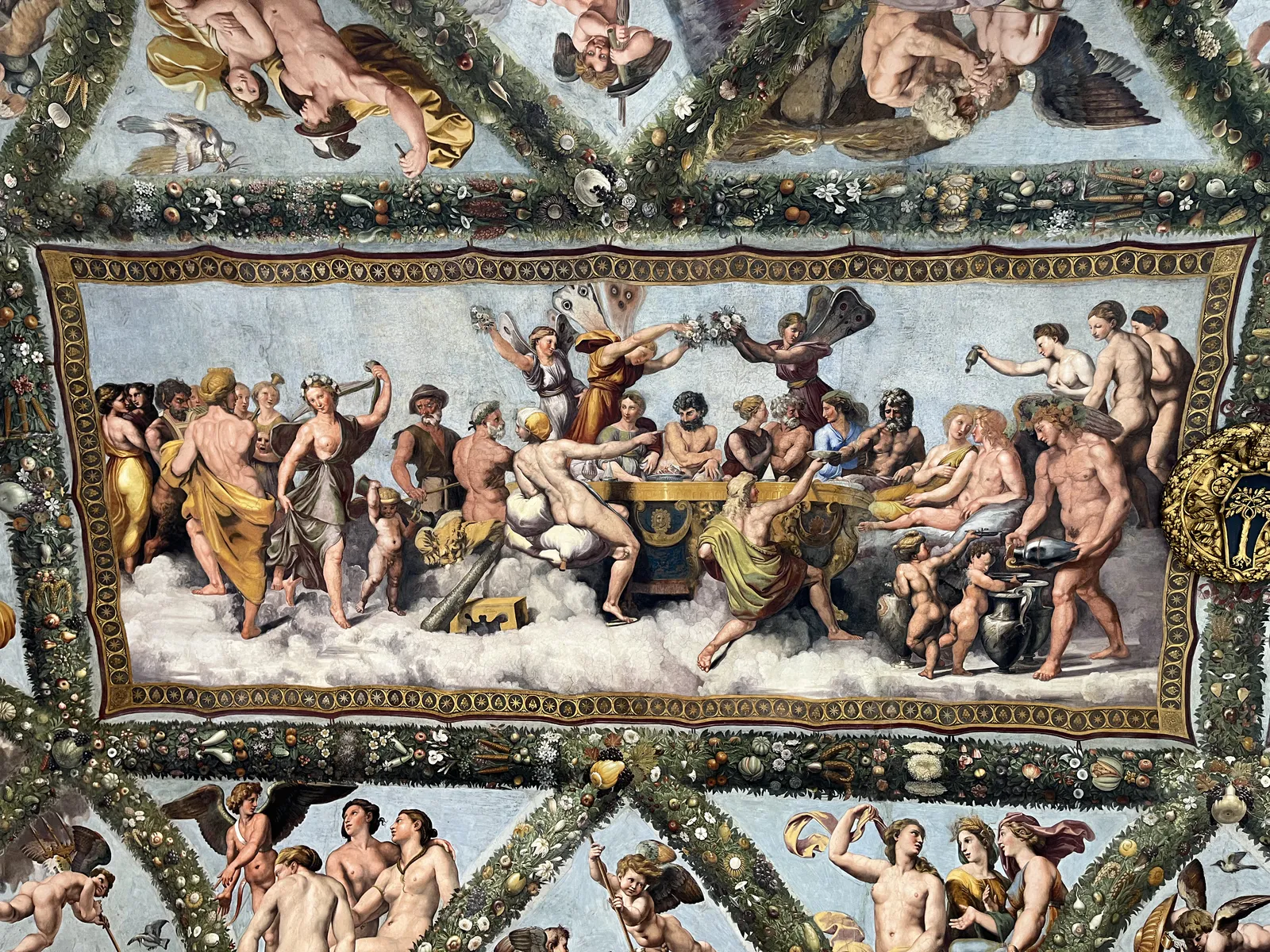
The Wedding Banquet of Cupid and Psyche
Raphael
In this grand fresco (1518), Raphael depicts the divine banquet celebrating the marriage of Cupid and Psyche. At the center, Jupiter and Juno preside; beside them sit Pluto, Persephone, Neptune, and Venus. Ganymede offers wine to Jupiter, while Bacchus (Dionysus), assisted by putti, pours wine at the right. The scene embodies divine harmony, joy, and the union of soul and love.
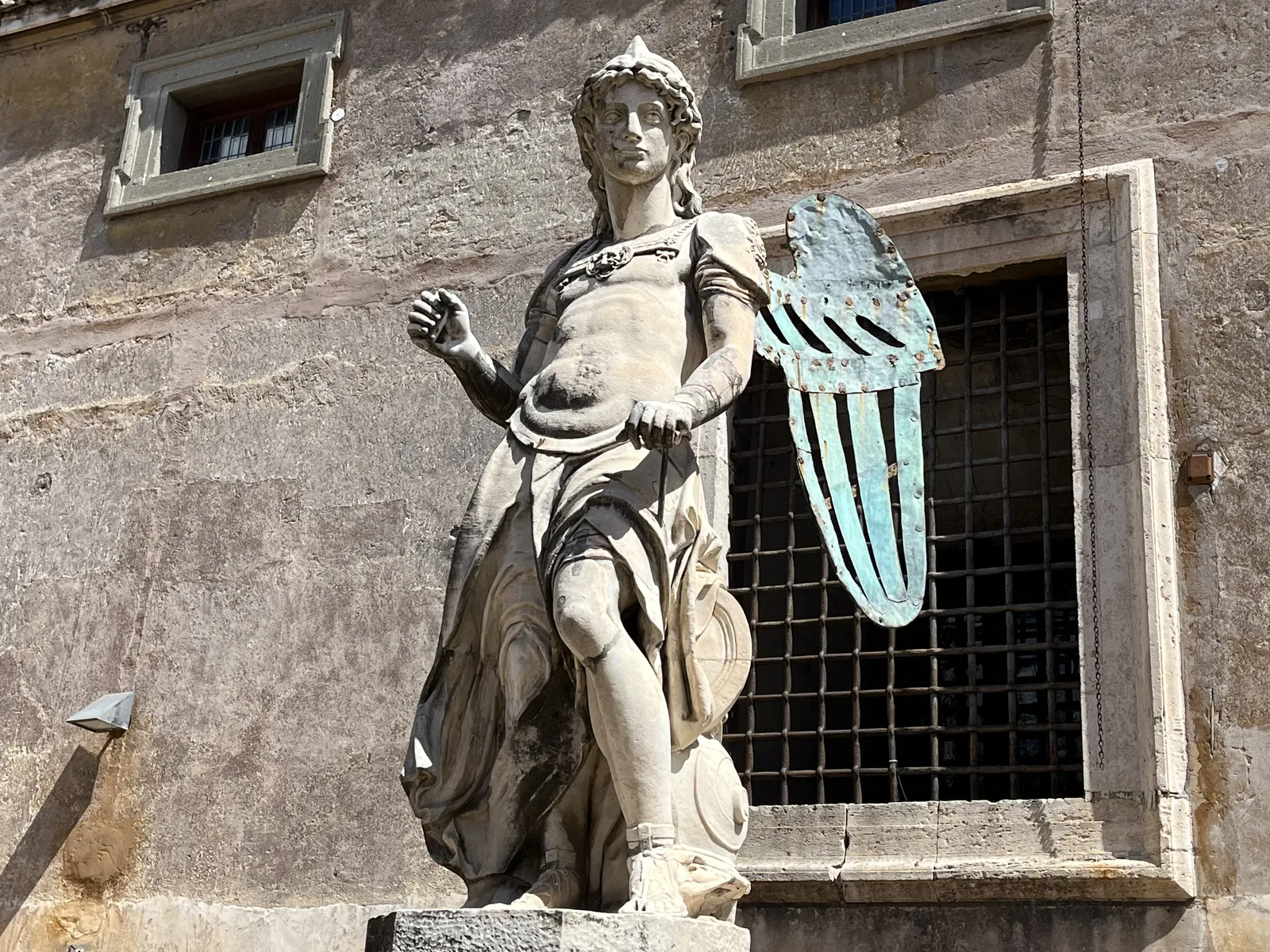
Archangel Michael
Raffaello da Montelupo
This marble statue (1544) once crowned the fortress, showing the Archangel Michael in the moment of sheathing his sword after ending the plague of 590. The figure’s contrapposto stance and idealized anatomy recall classical sculpture, while the raised wings and military dress assert his role as heavenly protector. The blend of antique form and Christian subject turns a local miracle into a civic symbol of deliverance.
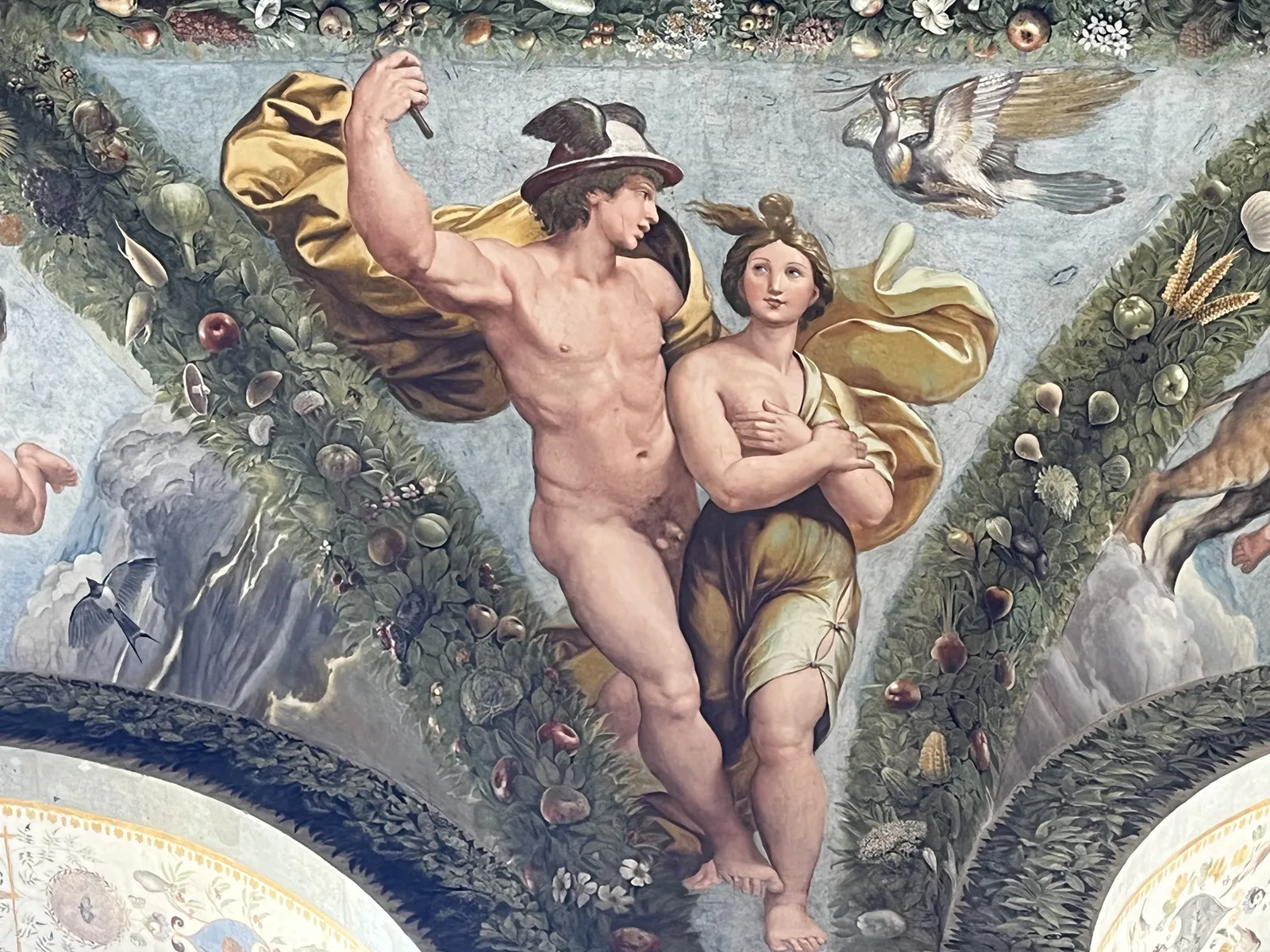
Mercury Brings Psyche up to Olympus
Raphael
In this fresco (1517–18), Raphael depicts Mercury escorting Psyche to Olympus, symbolizing her apotheosis. Mercury’s winged hat and caduceus highlight his role as divine messenger, while Psyche embodies the soul’s ascent to immortality. The scene reflects Renaissance fascination with classical myths as allegories of spiritual transformation.
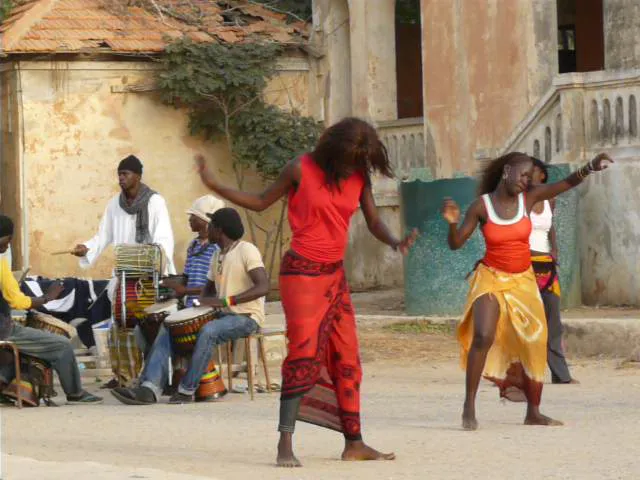
Dance and Drum on Gorée Island
In a burst of movement and rhythm, dancers perform to the beat of West African drums—sabar and djembe—on a street steeped in history. Once a site of trauma, Gorée now resonates with resilience. This performance reclaims public space, turning collective memory into celebration, where embodied tradition becomes both remembrance and resistance.
Hunting Scene with Ibex
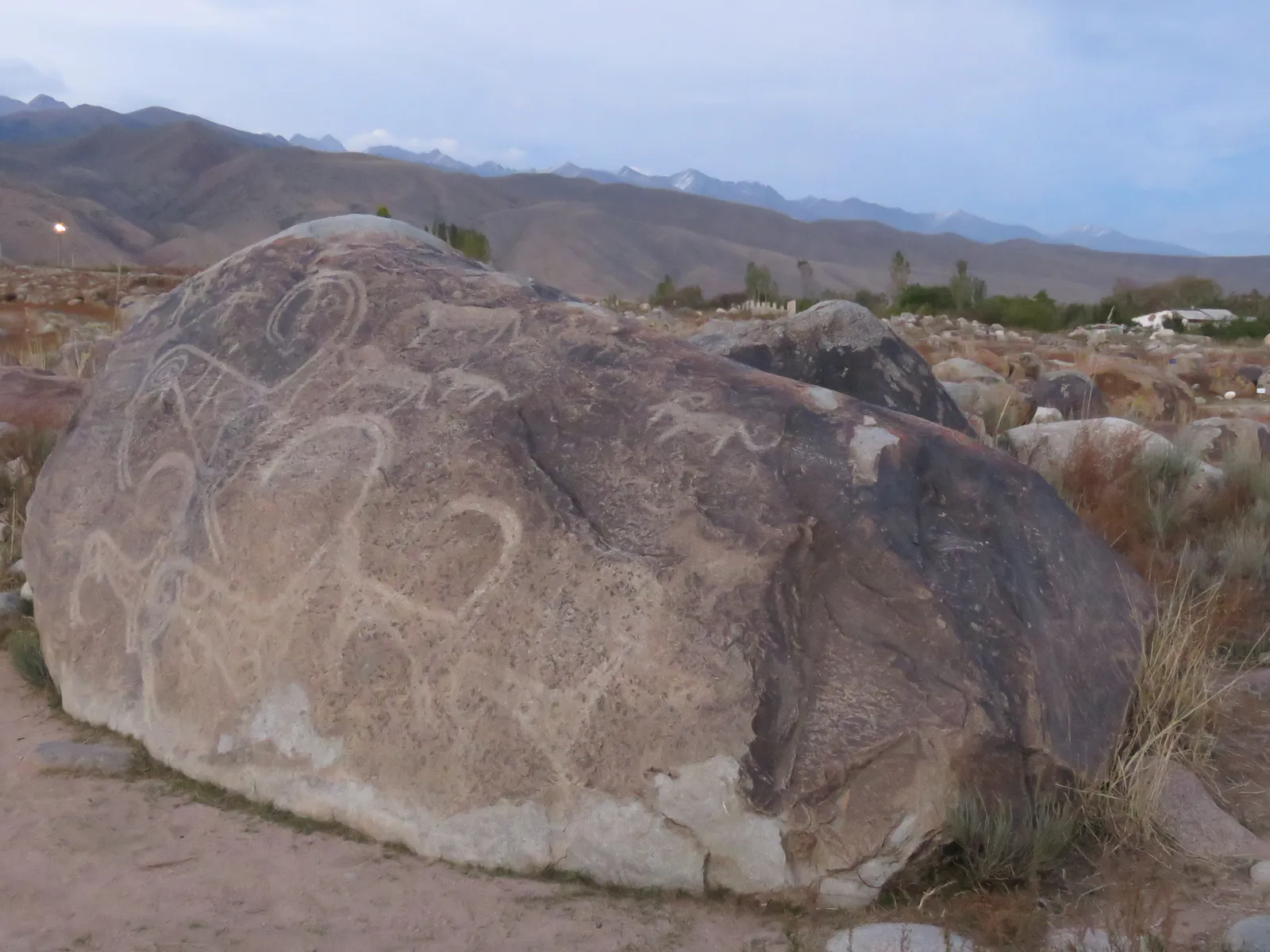
This engraved boulder (8th c. BC–5th c. AD) shows a hunting scene with wild ibexes and human figures in motion across its surface. The pecked outlines follow the rock’s curves, using natural contours to animate the animals and hunters. Such imagery reflects the importance of mountain game in early nomadic subsistence and ritual, linking the surrounding landscape to group identity and shamanic practice.
Ajiaco in Colonial Setting
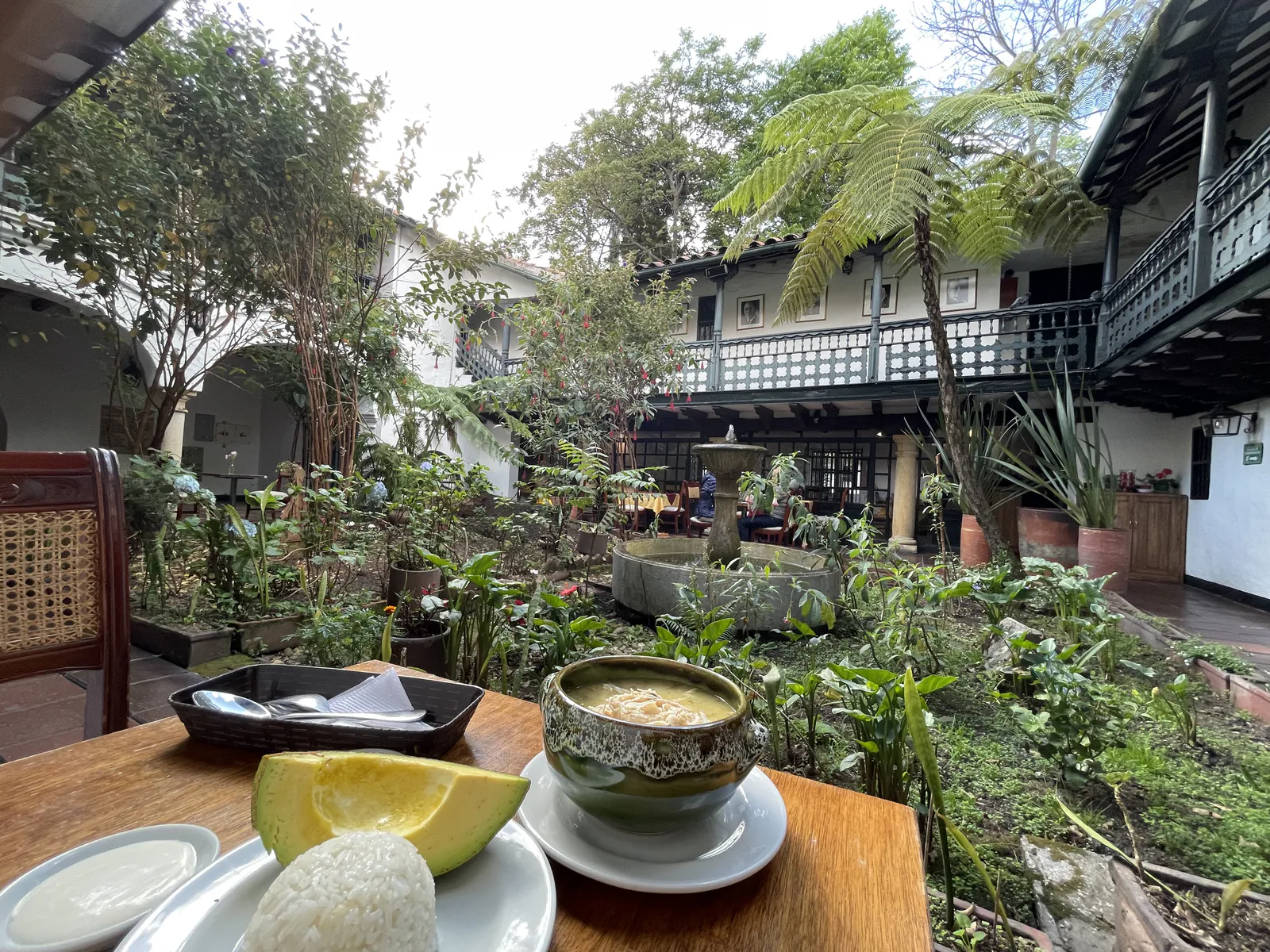
Served in Bogotá’s Tinteo restaurant, this bowl of ajiaco—Colombia’s iconic chicken and potato soup—is paired with rice, avocado, and cream. Ajiaco reflects the blend of indigenous, Spanish, and Creole traditions. Its setting in a preserved colonial courtyard (18th–19th c.) deepens the experience of national heritage through food and place.
The Apotheosis of St. Ignatius
Andrea Pozzo
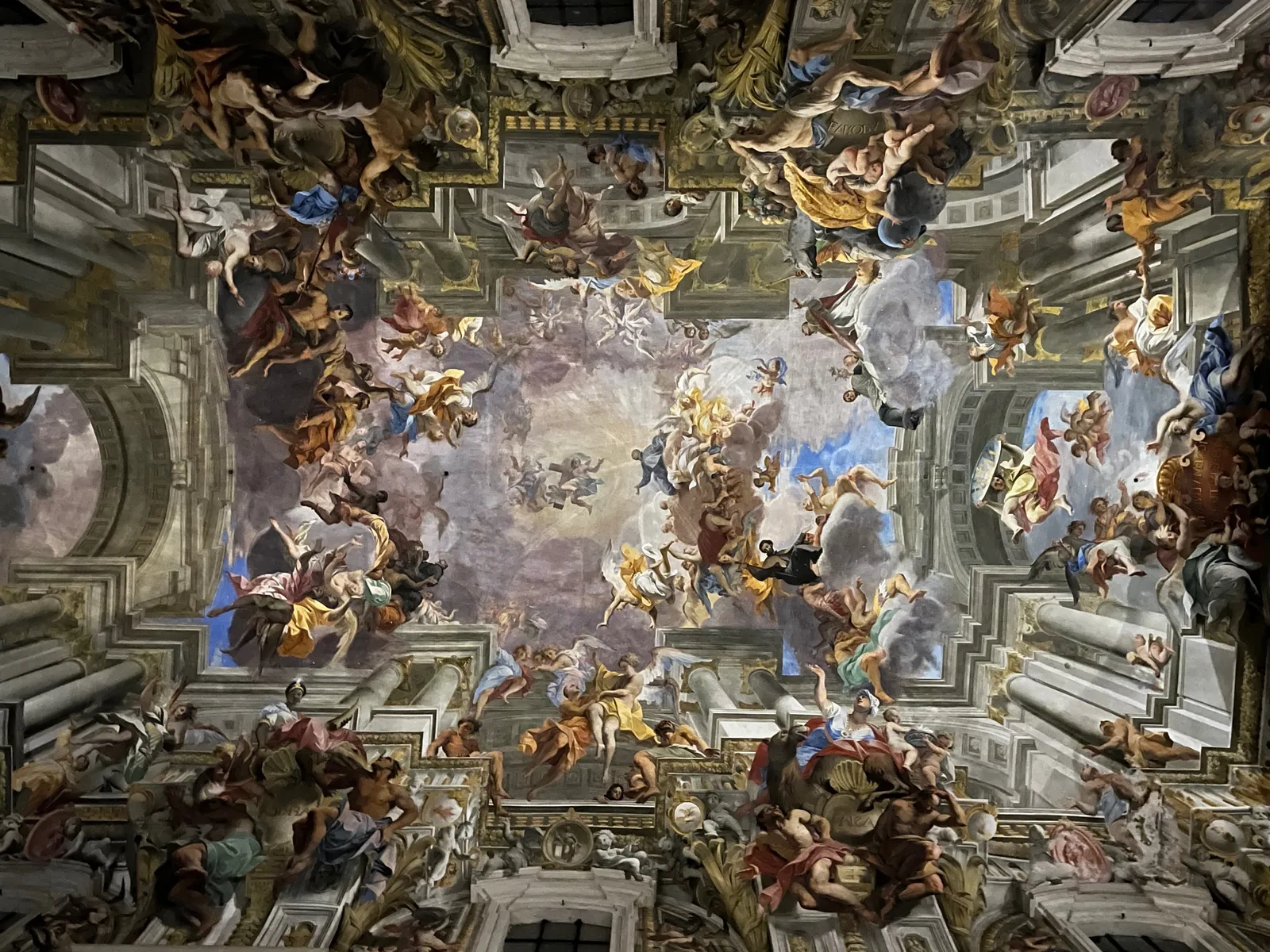
This Baroque trompe-l’œil painting (1685–94) transforms the flat ceiling into a soaring heavenly vision. St. Ignatius is welcomed into paradise by Christ and the Virgin, while allegories of the continents celebrate Jesuit missions. Pozzo’s masterful illusionism merges faith, perspective, and global ambition.
Explore the world through my eyes: begin with the image below, the map, the dropdowns above, or the search button. Every photo includes a thoughtful caption.
Explore the world through my eyes: begin with the image below, the map, the dropdowns above, or the search button. Every photo includes a thoughtful caption.
When the path is beautiful, do not ask where it leads.
My travels have always been shaped by two intertwined forms of discovery. One is intellectual: learning why the world is the way it is. History became my guide, drawing me toward museums, old cities, architecture, and the layers of meaning carried by places. The other is emotional: the search for beauty, harmony, and moments of elevation, often found in nature, monasteries, and sacred spaces.
Together, these impulses shape how I travel, what I photograph, and how I interpret what I see. This site is my way of sharing that lifelong learning in visual form—one image at a time, with enough context to deepen curiosity and understanding. I hope these photographs leave you with a sense of wonder and a deeper feeling for the world.
Now let’s explore together.