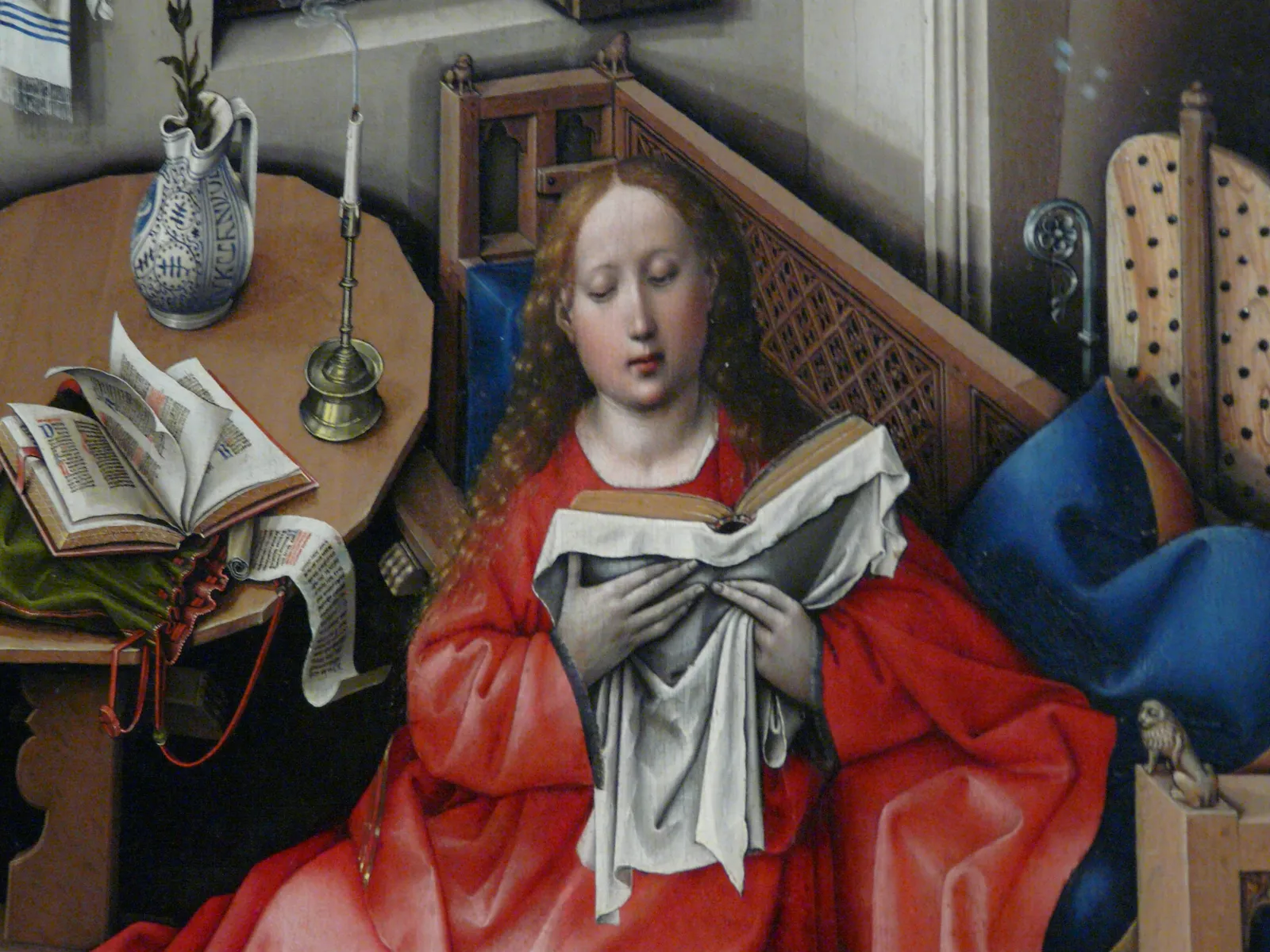
Mérode Altarpiece Central Panel
Robert Campin
This panel (c.1425–1428) shows Mary reading as Gabriel arrives. Domestic details carry layered meaning: the open book signals devotion, the lily purity, and the candle the Incarnation. The water jug with a white cloth evokes Mary’s virginity, while the enclosed garden glimpsed outside recalls her chastity. Named after later owners, the Mérode family, the work unites divine mystery with Flemish household realism.
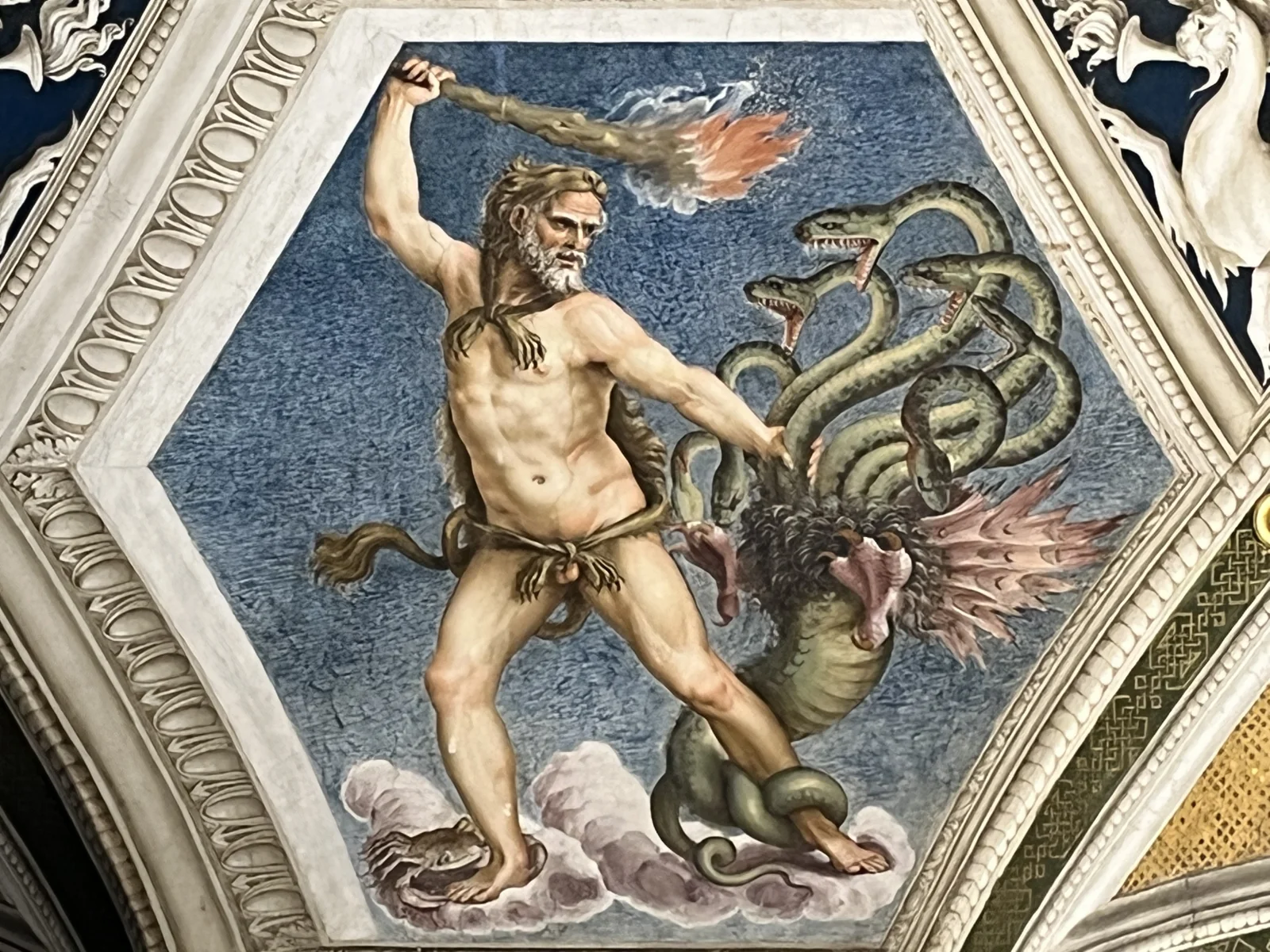
Hercules and the Hydra
Baldassarre Peruzzi
This ceiling fresco (c. 1510) in the Hall of the Perspectives shows Hercules battling the multi-headed Hydra. The creature symbolizes the zodiac sign Cancer, aligning with the room’s astrological theme. Peruzzi demonstrates heroic virtue triumphing over chaos and earthly temptation, reflecting Renaissance ideals of order and moral strength.
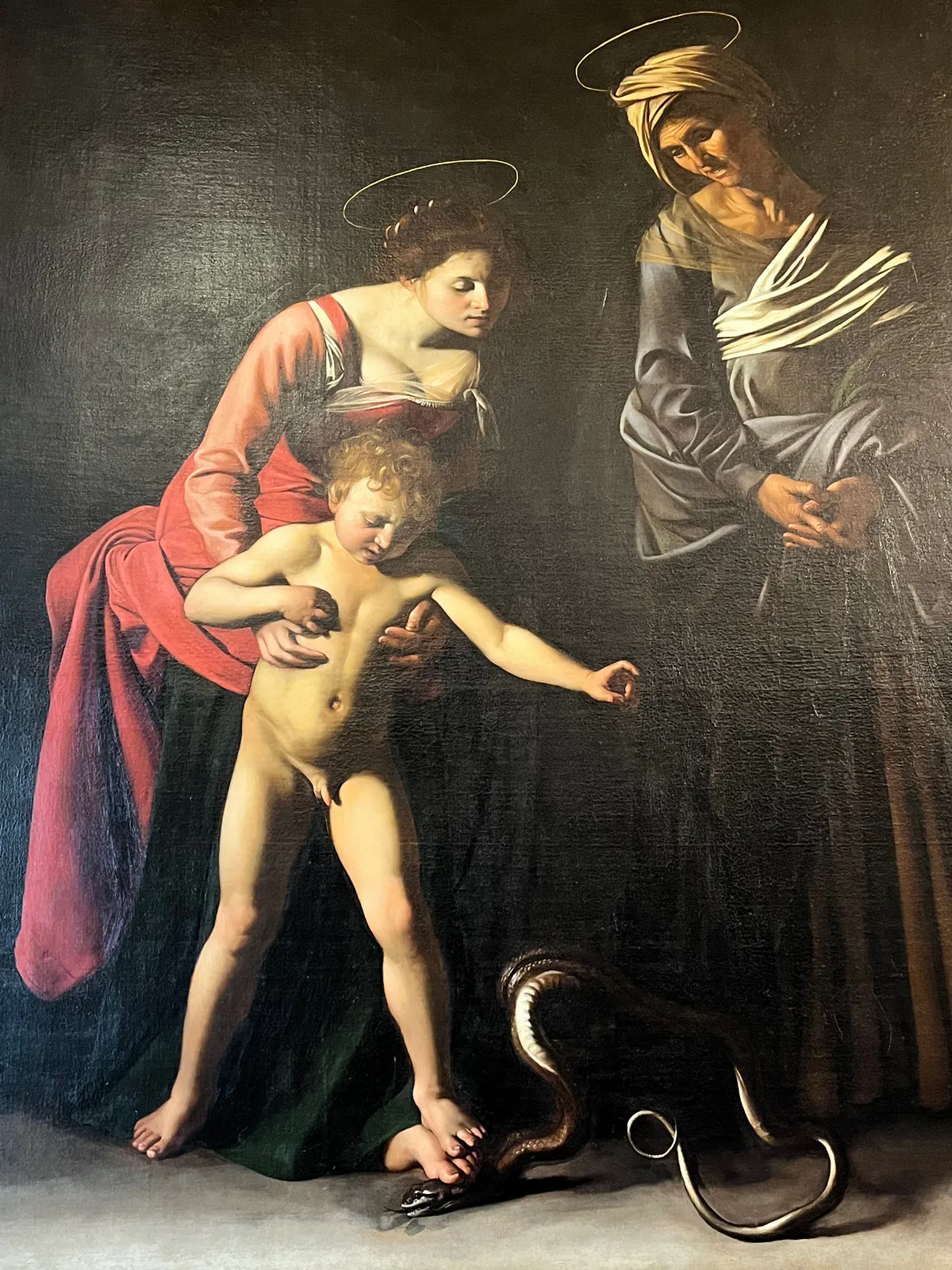
Madonna and Child with St Anne (Madonna dei Palafrenieri)
Caravaggio
This bold altarpiece (1605–06) shows the Virgin Mary guiding the Christ Child as he crushes a serpent—symbol of original sin. St Anne watches solemnly, evoking generational grace. Caravaggio’s realism and chiaroscuro infuse the holy scene with human emotion, provoking awe and controversy upon its brief display in St Peter’s.
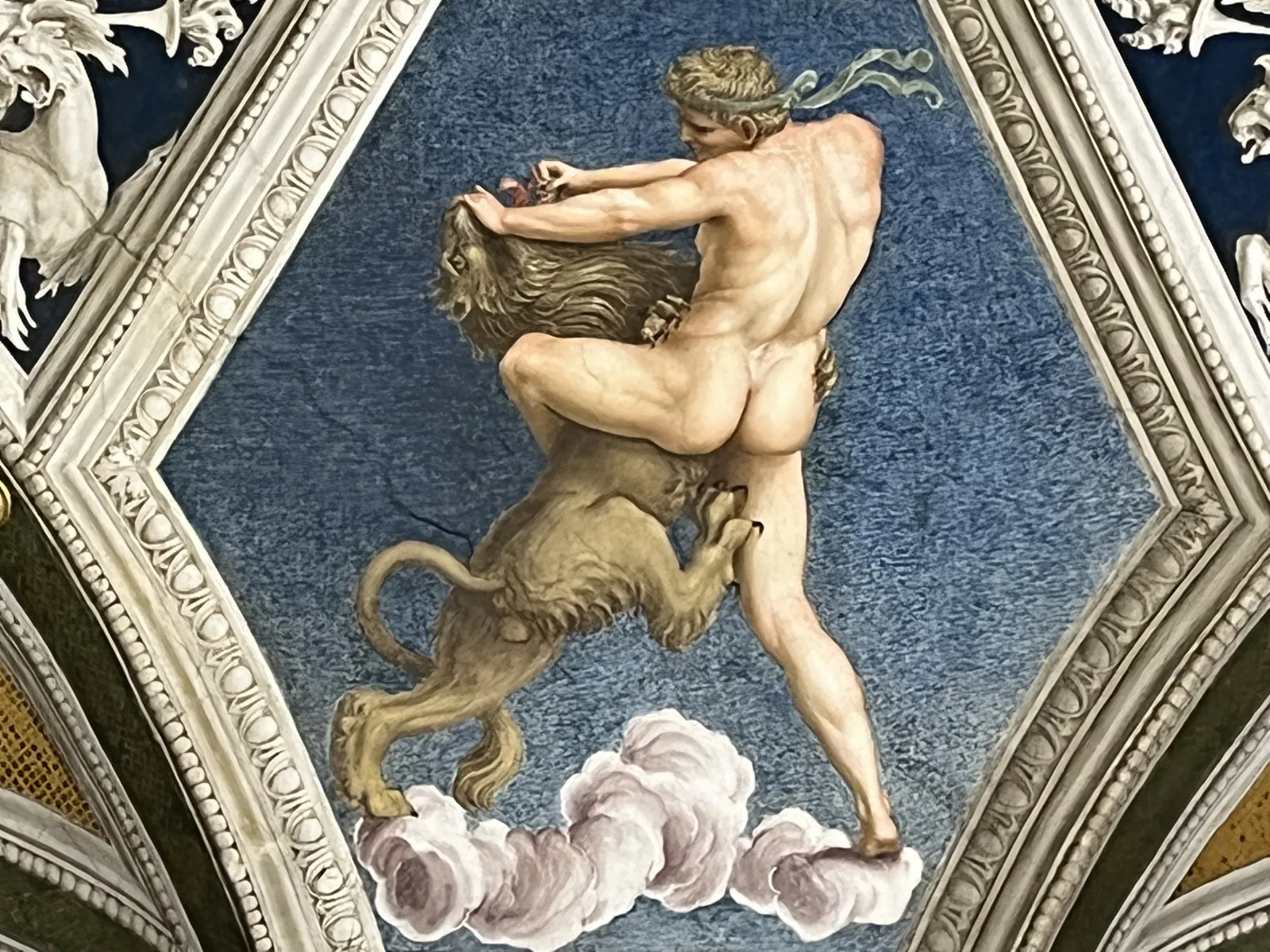
Hercules Defeating the Nemean Lion
Baldassare Peruzzi
This fresco (c. 1511) in the Loggia of Galatea shows Hercules wrestling the invulnerable Nemean Lion, one of his Twelve Labors. The hero’s twisting nude body and the lion’s straining muscles emphasize physical struggle and controlled force. As part of a zodiac cycle, the scene represents the sign of Leo and links mythological heroism to Renaissance interests in astrology and humanist virtue.
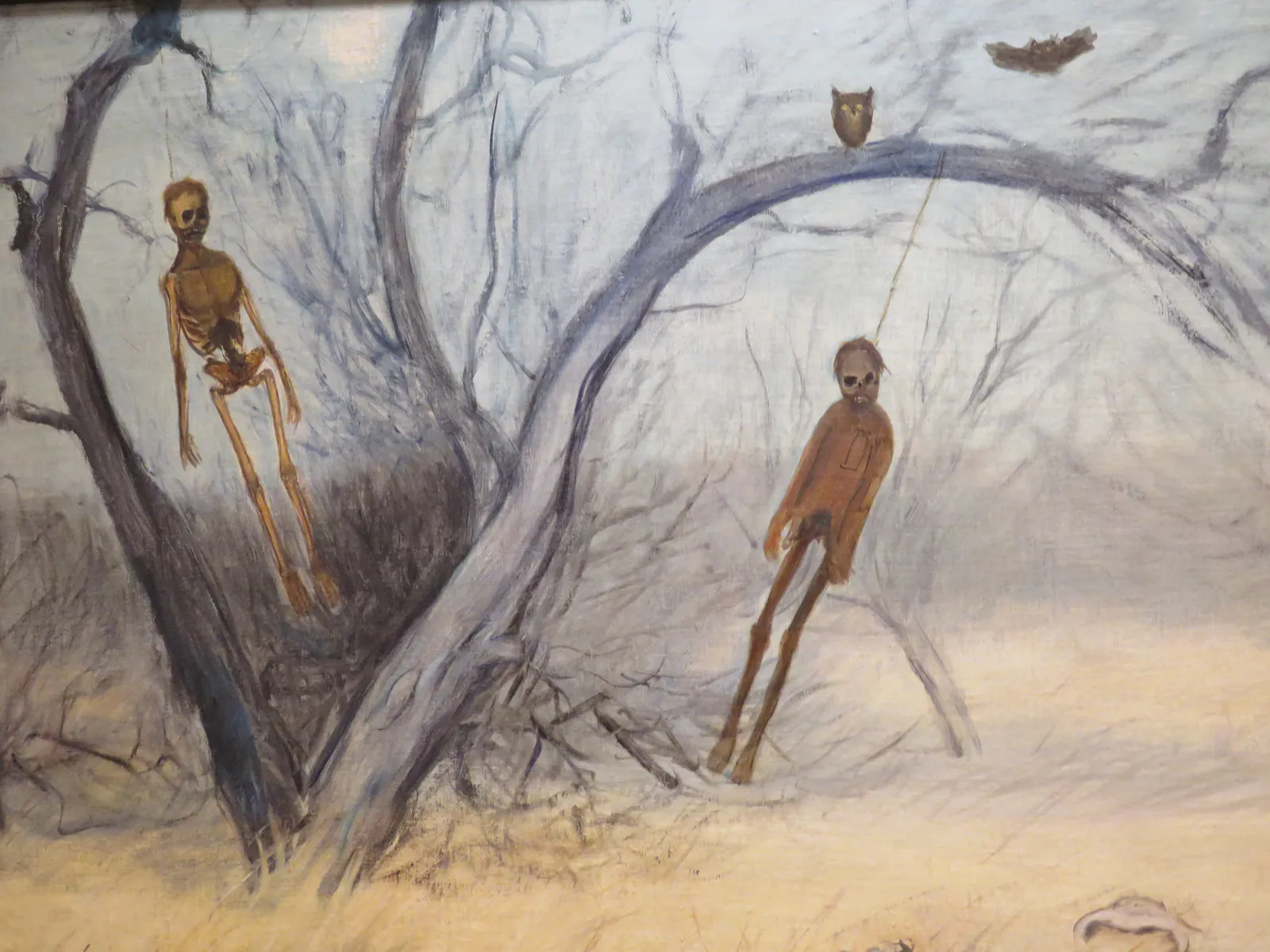
Zacatecas Landscape with Hanged Men
Francisco Goitia
This 1914 canvas exposes the horrors of the Mexican Revolution. Two skeletal corpses hang from a barren tree, their twisted bodies blending with the lifeless landscape, while an owl perches above as a symbol of death. Goitia, who witnessed the battle of Zacatecas, rejected heroic depictions in favor of brutal realism. His work stands as both testimony and condemnation, capturing the trauma of a nation torn by war.
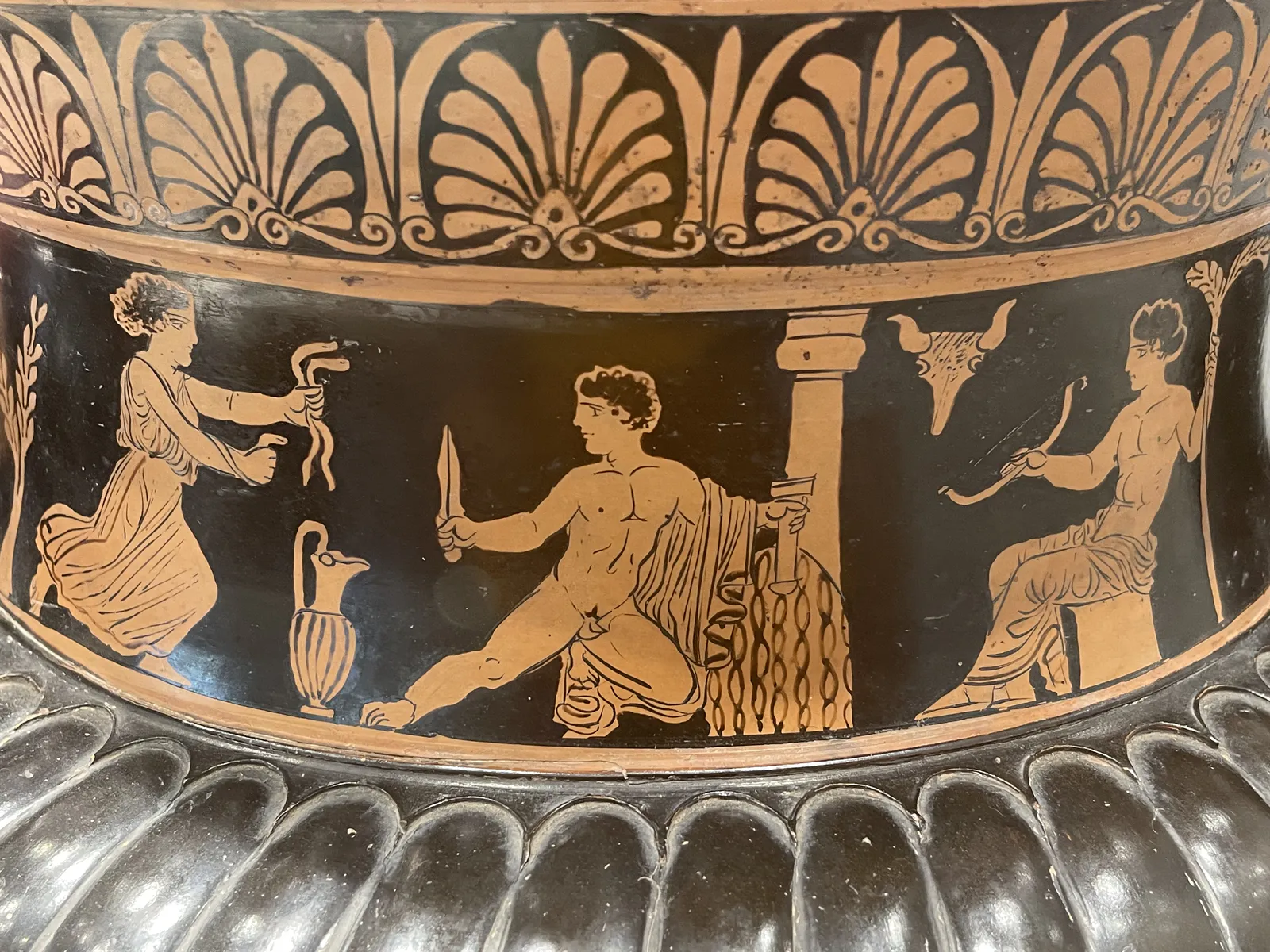
Orestes Pursued by the Furies
Painter of the Birth of Dionysus
This Apulian red-figure krater, used for mixing wine and water, (410–390 BC) depicts Orestes defending himself with a sword against the Erinyes, avenging his mother's death. Apollo, seated with a bow, offers protection, symbolizing divine sanction amid human guilt. This scene illustrates the complex interplay of justice and retribution in Greek mythology.
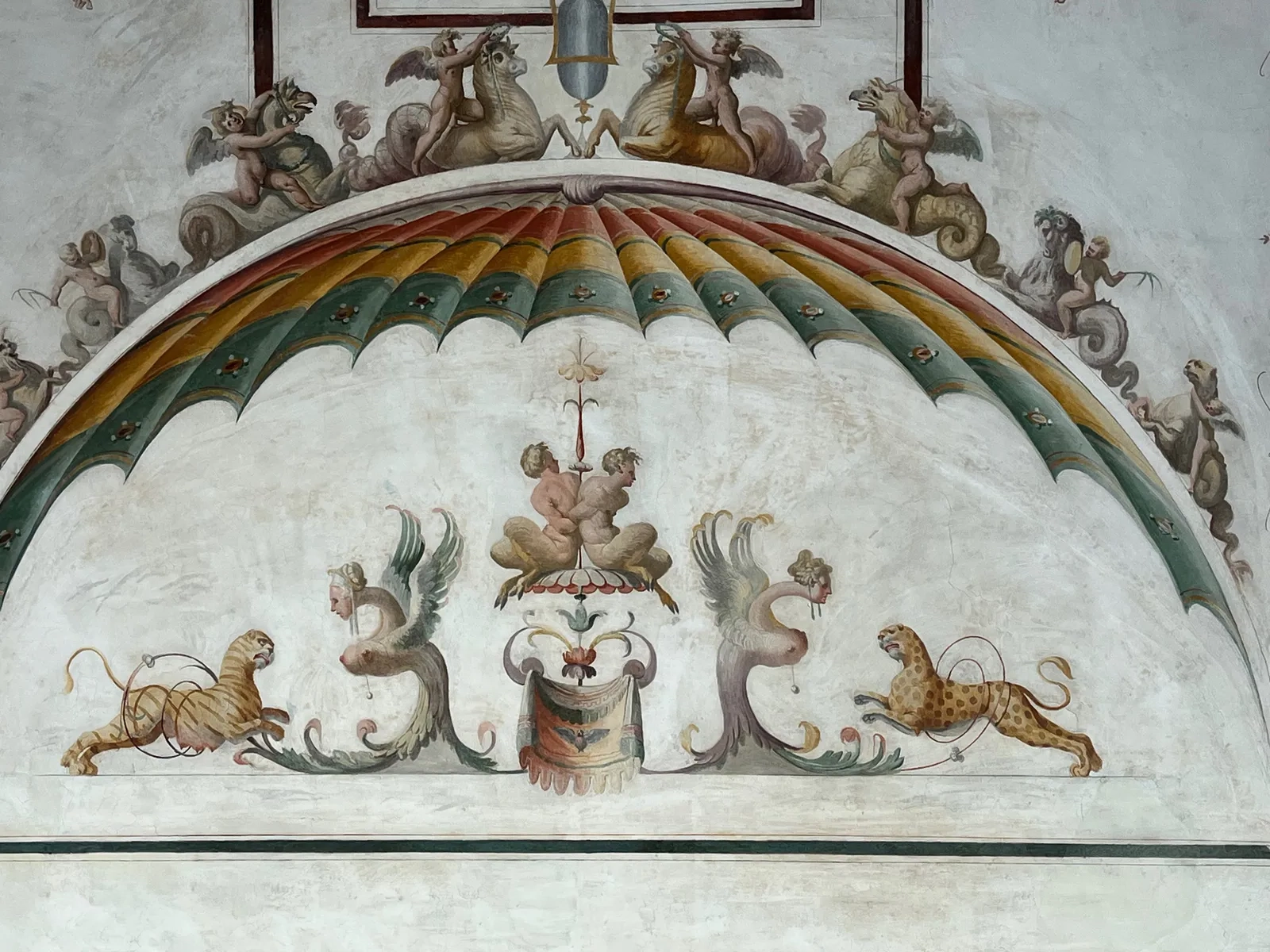
Grotesque Fantasy with Beasts
Perino del Vaga, Rietti Domenico
This fresco (1545–46) shows a rainbow-like arch filled with hybrid beasts, winged creatures, feline predators, and playful putti (cherubic child figures) arranged over a pale ground. The painters adapt the Roman taste for grottesche (fantastic ornamental motifs) rediscovered in ancient ruins. Their dense fantasy best reveals how Renaissance courts used such imagery to turn walls into imaginative spectacle.
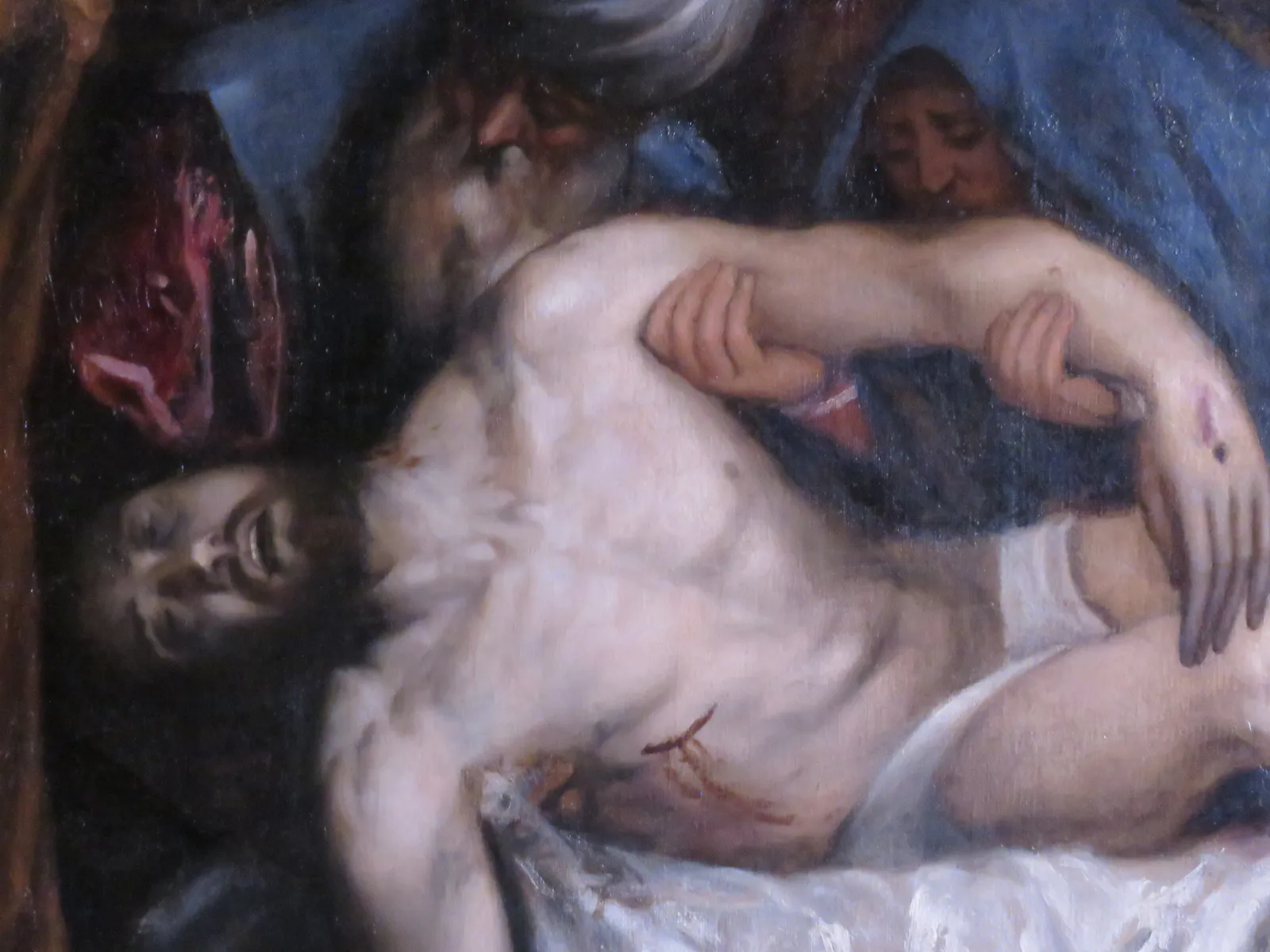
The Entombment of Christ (detail)
Titian and Palma the Younger
This fragment (1618) reveals Christ’s lifeless body marked by crucifixion wounds, cradled with reverence by mourning figures. The interplay of flesh, fabric, and sorrow exemplifies Titian’s emotive realism, while Palma the Younger completes the drama with expressive gestures—honoring human grief and divine sacrifice in one timeless moment.
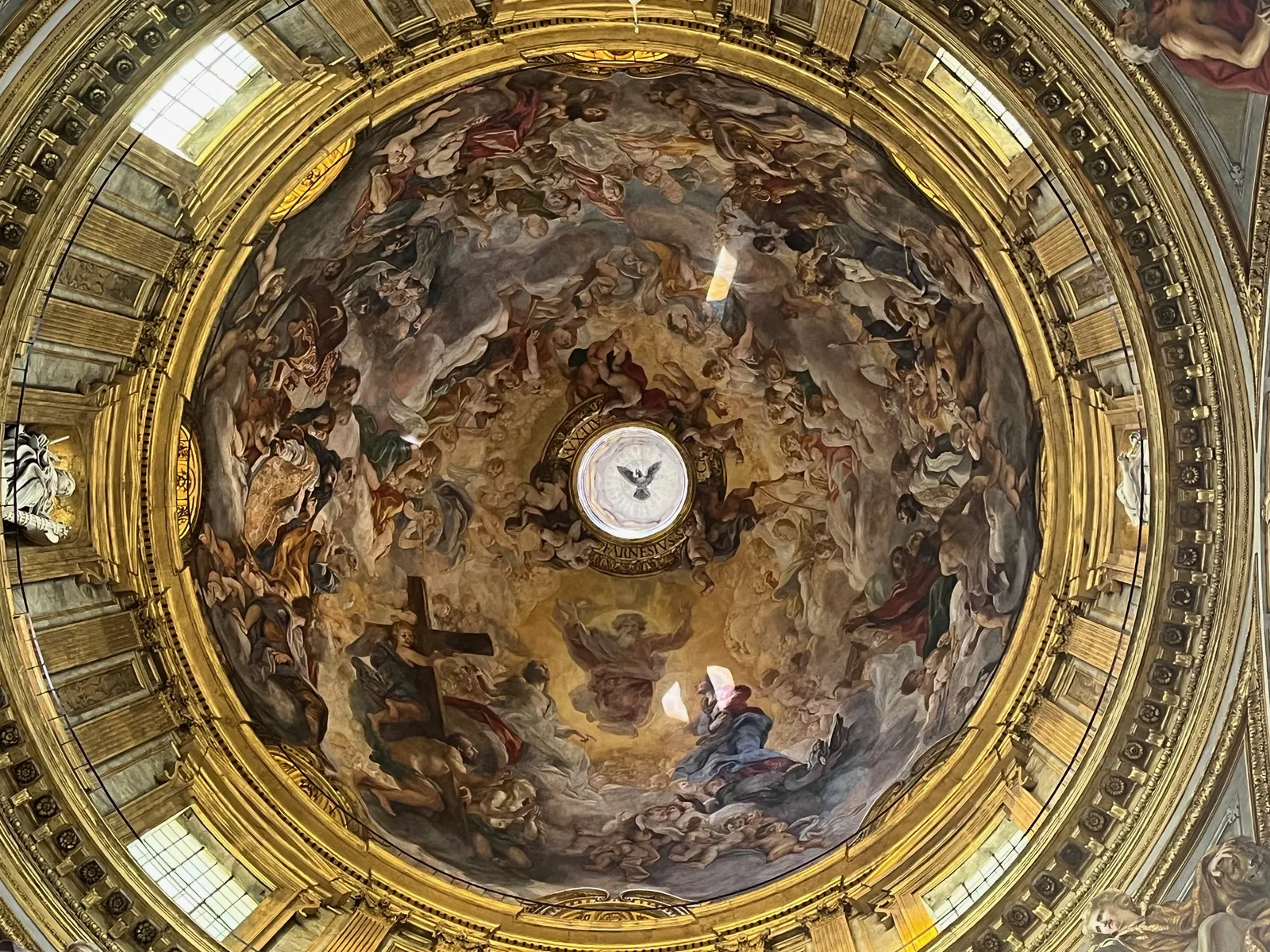
The Glory of the Holy Spirit
Giovanni Battista Gaulli
This radiant fresco (c. 1679) fills the dome with concentric rings of clouds, gilded ribs, and crowded figures. At the center, the Holy Spirit appears as a white dove in a glowing medallion, encircled by saints and angels swept upward in swirling light. The painted architecture merges with the real cornice, a Baroque illusion that makes the vault seem to open into a realm of revelation.
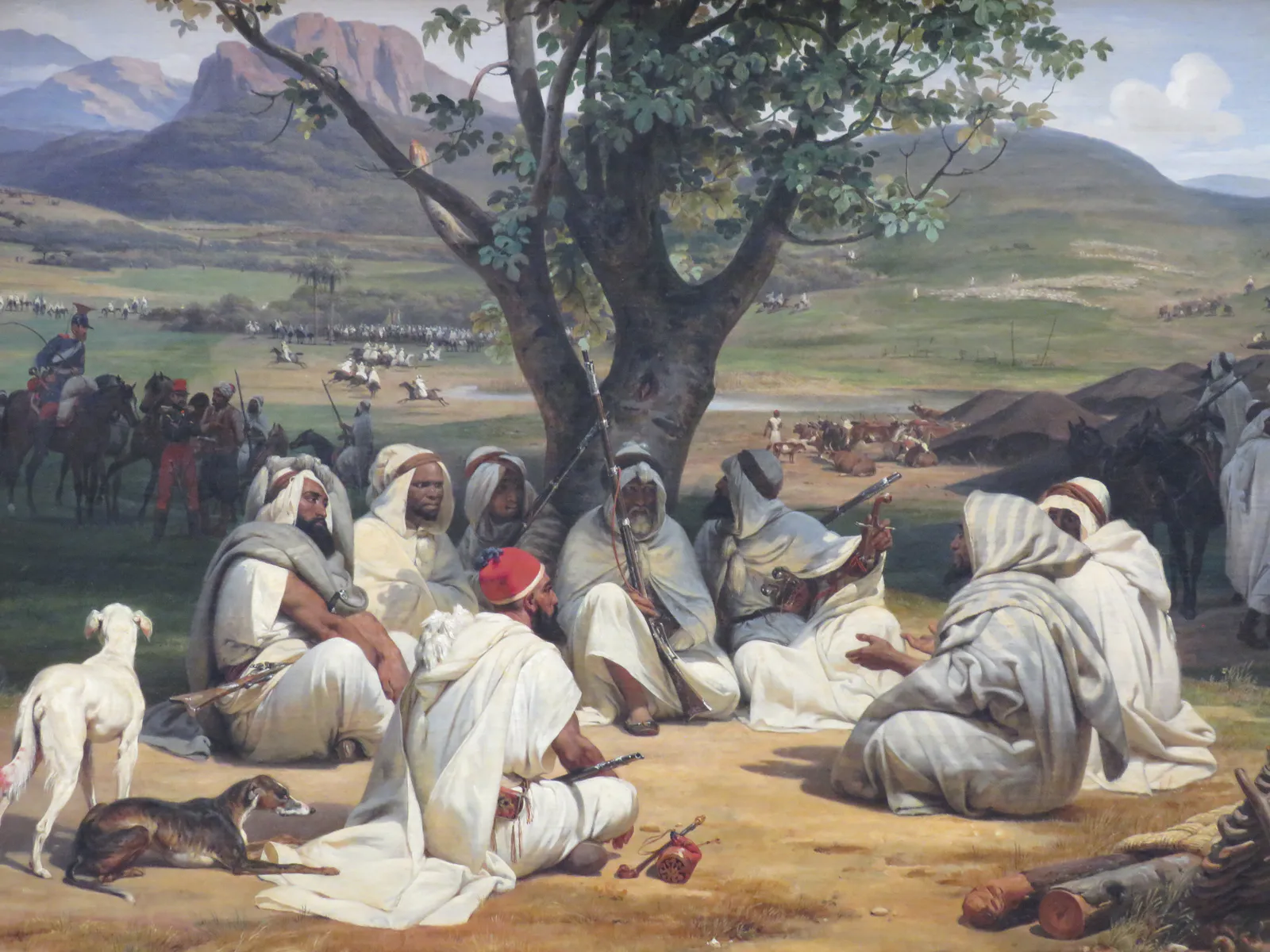
Arab Chieftains in Council
Horace Vernet
This 1834 work depicts Arab chieftains in council, likely discussing tribal matters or alliances. Vernet, a French artist known for battle scenes and Orientalist themes, illustrates the 19th-c. European interest in the Orient. The painting reflects the complex interplay of art, culture, and imperialism of the era.
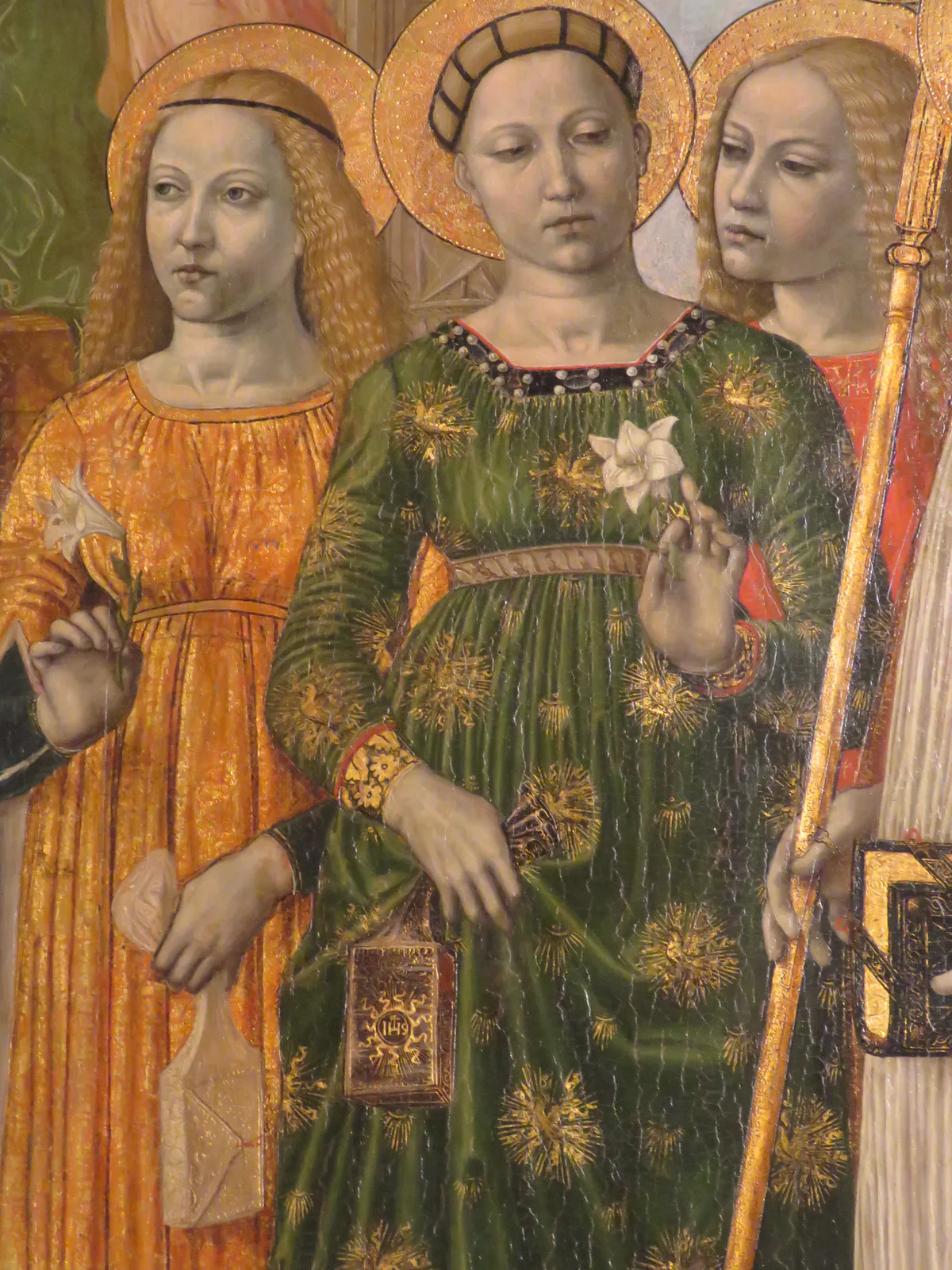
Santa Conversazione (detail)
Ambrogio Bergognone
This panel 1490-95) features a trio of female saints bearing lilies, symbolizing purity. Adorned with gold and intricate embroidery, their garments suggest sanctity and nobility. The solemn expressions and clasped books evoke wisdom and devotion, emphasizing the fusion of holiness and human dignity in late Gothic religious art.
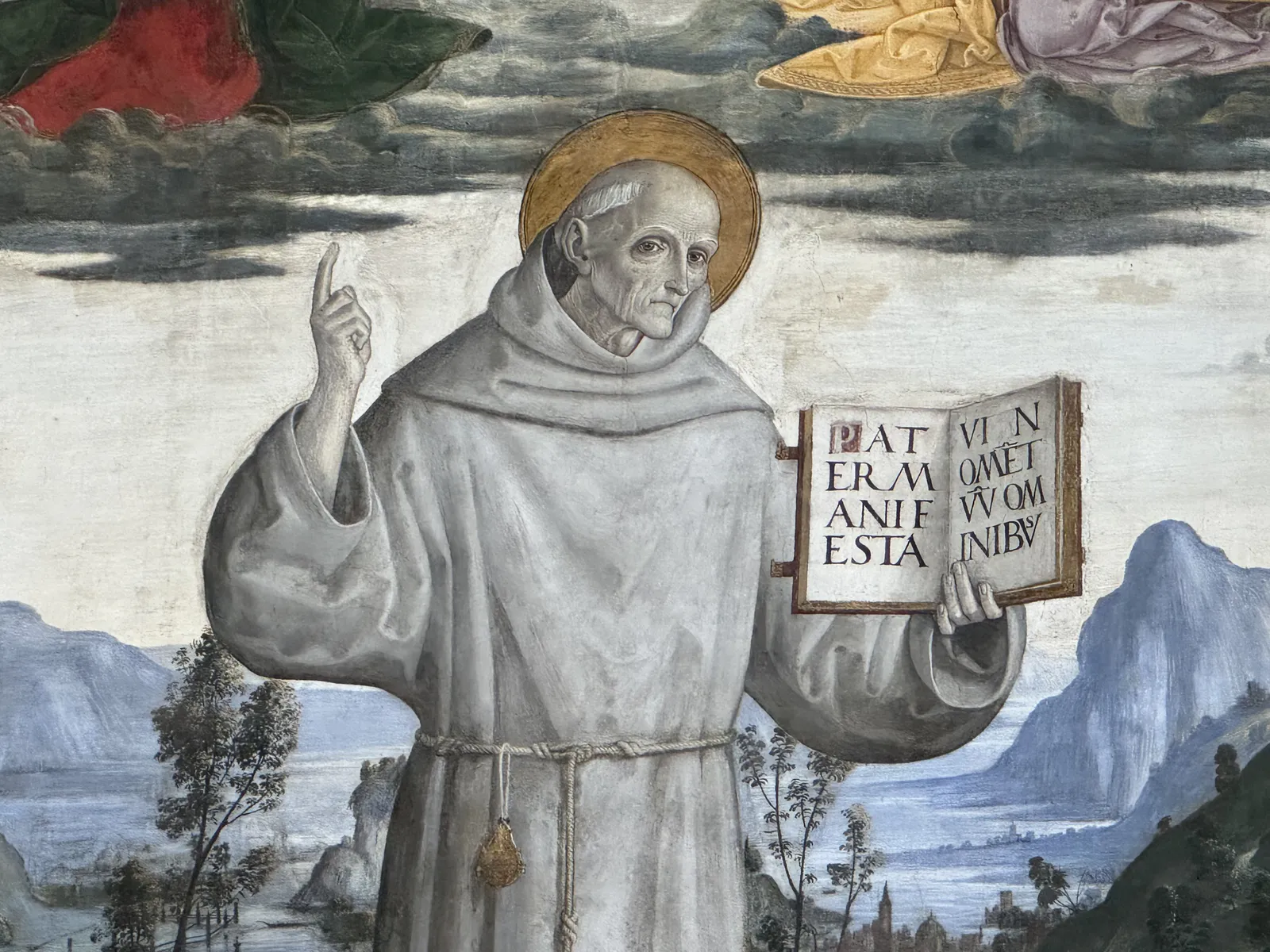
St. Bernardino (detail)
Pinturicchio
In this detail (1484–1486), Pinturicchio portrays St. Bernardino holding an open book inscribed PATER MANIFESTA NOMEN TUUM OMNIBUS (Father, manifest Your name to all). His raised finger points toward heaven, symbolizing his mission to glorify the Holy Name of Jesus and promote peace amid social discord.
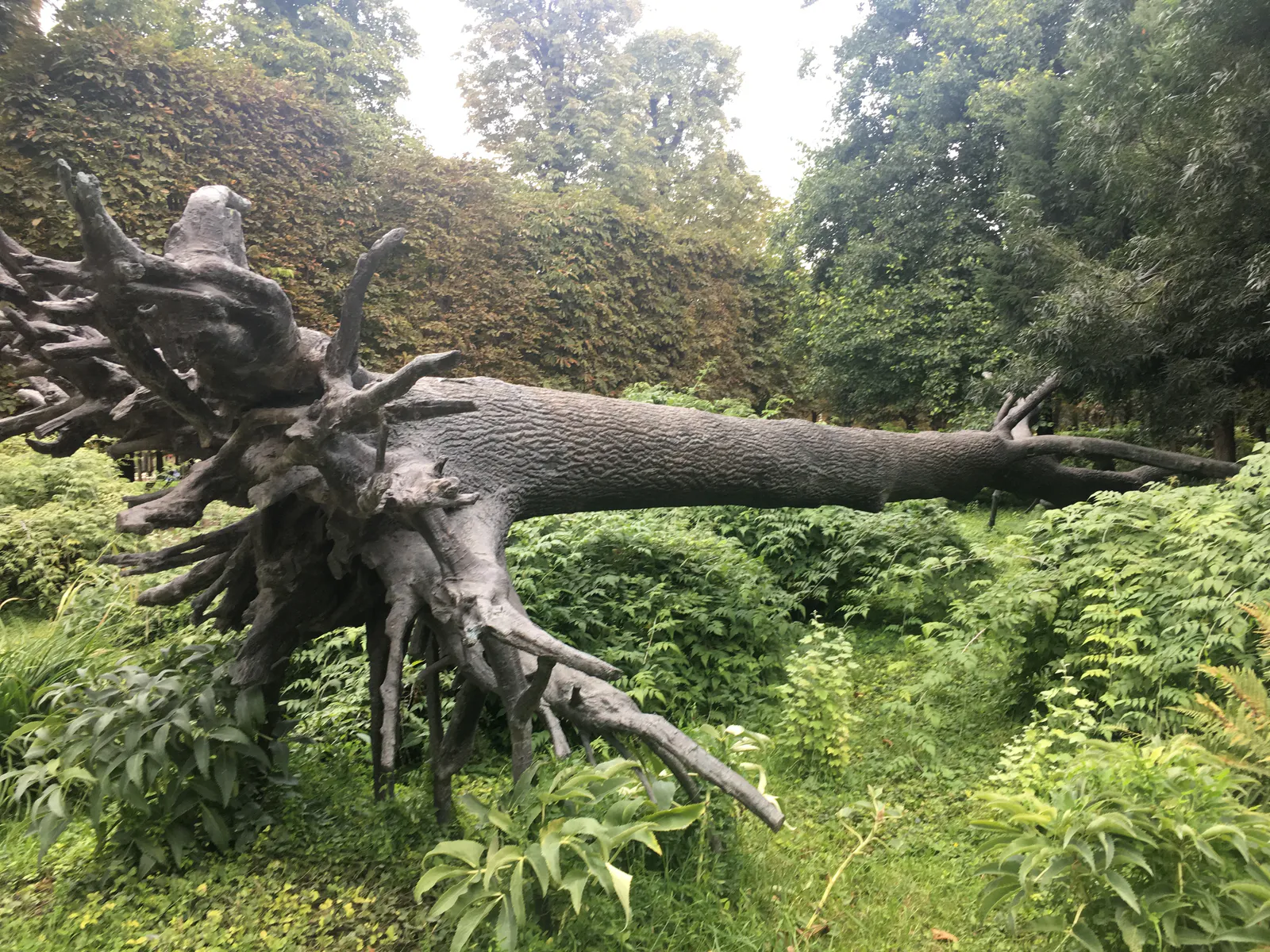
The Tree of Vowels
Giuseppe Penone
This monumental bronze sculpture (2000) shows a fallen oak with roots extending like veins across the ground. Installed in the Jardin des Tuileries, it demonstrates Penone’s exploration of the connection between humanity and nature. The work combines organic memory with sculptural permanence, inviting reflection on time, fragility, and the endurance of natural forms.
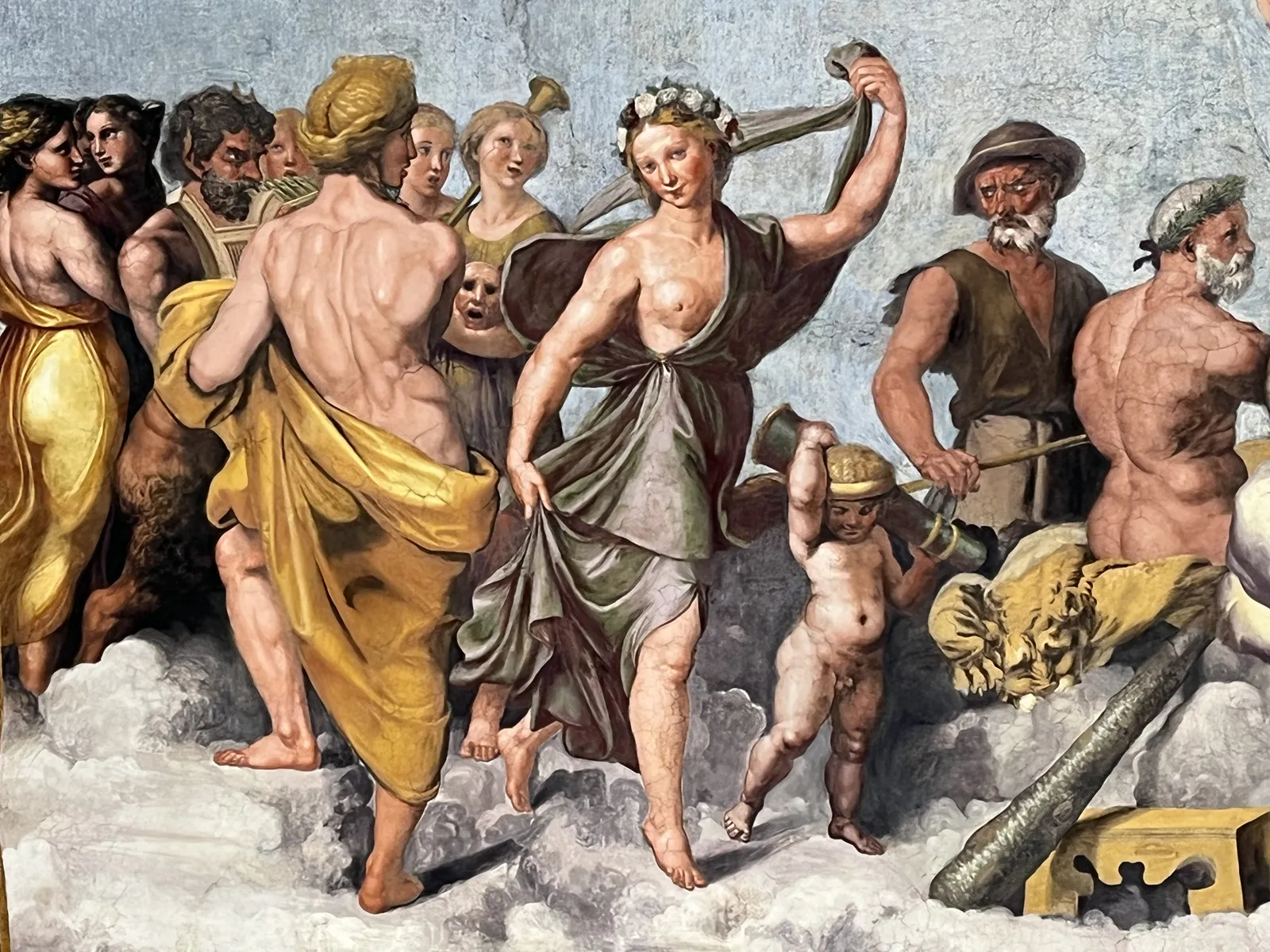
Dionysian Procession
Raphael
In this scene (1518), Raphael depicts Bacchus (Dionysus) leading a joyful procession of Maenads, Satyrs toward Cupid and Psyche’s wedding. The central Maenad, in ecstasy, embodies the Dionysian cult of revelry, blending divine intoxication with theatrical festivity.
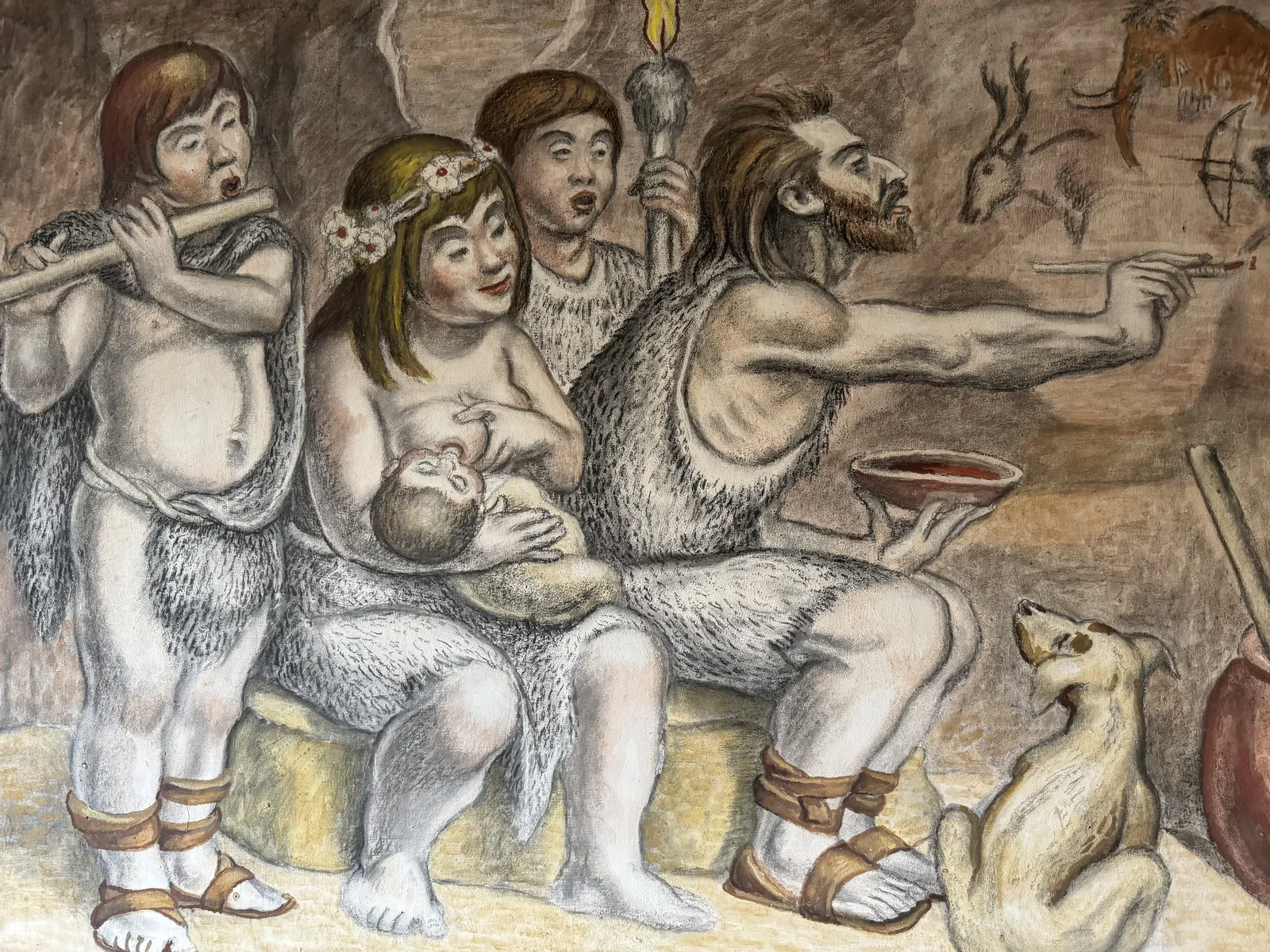
Cave Painter
Luis Alberto Acuña
In this mural (1960-75), Acuña imagines a prehistoric family gathered as the father paints on a cave wall. The scene blends idealized innocence with artistic origin: music, fire, and breastfeeding evoke harmony, while the act of painting becomes a metaphor for humanity’s first attempt to narrate its world. This work reflects Acuña’s fascination with the roots of civilization and his desire to forge a national artistic identity that honors both primitivism and cultural continuity.
“When the path is beautiful, do not ask where it leads.” — Zen proverb
Welcome to my travel photography!
“When the path is beautiful, do not ask where it leads.” — Zen proverb
Welcome to my travel photography!
For as long as I can remember, my path has been one of discovery—seeking beauty, timelessness, and connection in every corner of the world. It has also been a journey of deep learning and understanding. I’ve been an avid traveler (or perhaps a travel addict?) for most of my life. My love for travel began long before I ever left home: as a child, I drew a fantasy map of my grandparents’ apartment and “traveled” through it with my cousin Sonya, imagining adventures in every corner. Nearly 90 countries and countless moments of awe later, I’m excited to share this journey with you.
Thanks to the tireless and ingenious programming of Diagilev, we’re now able to present about fifteen percent of the images I’ve accumulated over the years. More will be released in small batches depending on your interest. While the first release leans toward museum photography, later ones will include more nature, architecture, culture, and general travel experiences. If you’d like to receive email notifications about new releases, feel free to reach out—no commercial use, ever.
Throughout my travels, I’ve been drawn to two intertwined kinds of discovery. One is intellectual: learning why the world is the way it is. History became my guide, shaping my perspective and filling my camera roll with museums and old buildings. To me, history is not the past—it is the key to understanding the present and how the world became what it is. The other is emotional: seeking moments of elevation—spirituality, beauty, harmony—often found in nature, monasteries, and ancient sacred spaces. Together, these impulses shape my photography. It invites you to learn, admire, and soar—to rise above the mundane and see the world through a lens of curiosity and wonder.
Much of my later travel became possible thanks to my job with Delta Air Lines, but the wanderlust began years earlier. By the time I joined the industry, I had already visited over 35 countries and lived in several—largely thanks to a backpacking journey around the world with Luis León, whose face appears in many early photos. I grew up in Ufa in the USSR, and since leaving it I have lived, studied, and worked in Latvia, the United States, France, South Korea, Canada, Spain, Italy, Brazil, Japan, and Colombia.
A life of near-constant movement may seem a little crazy, but it has deepened my understanding of the world and produced the photography you are about to see. Over the years, my style has evolved—more intentional, more refined—yet its core remains the same: a search for understanding, timeless beauty, and a connection to those who walked this earth long before us.
I hope these photos stir something in your soul, just as they did in mine. I’d love to hear from you—whether reactions, suggestions, corrections, or a request to be added to the email list for new releases (no commercial use, I promise). You can learn more about my travels here, and my academic life here.
Enjoy our shared journey!