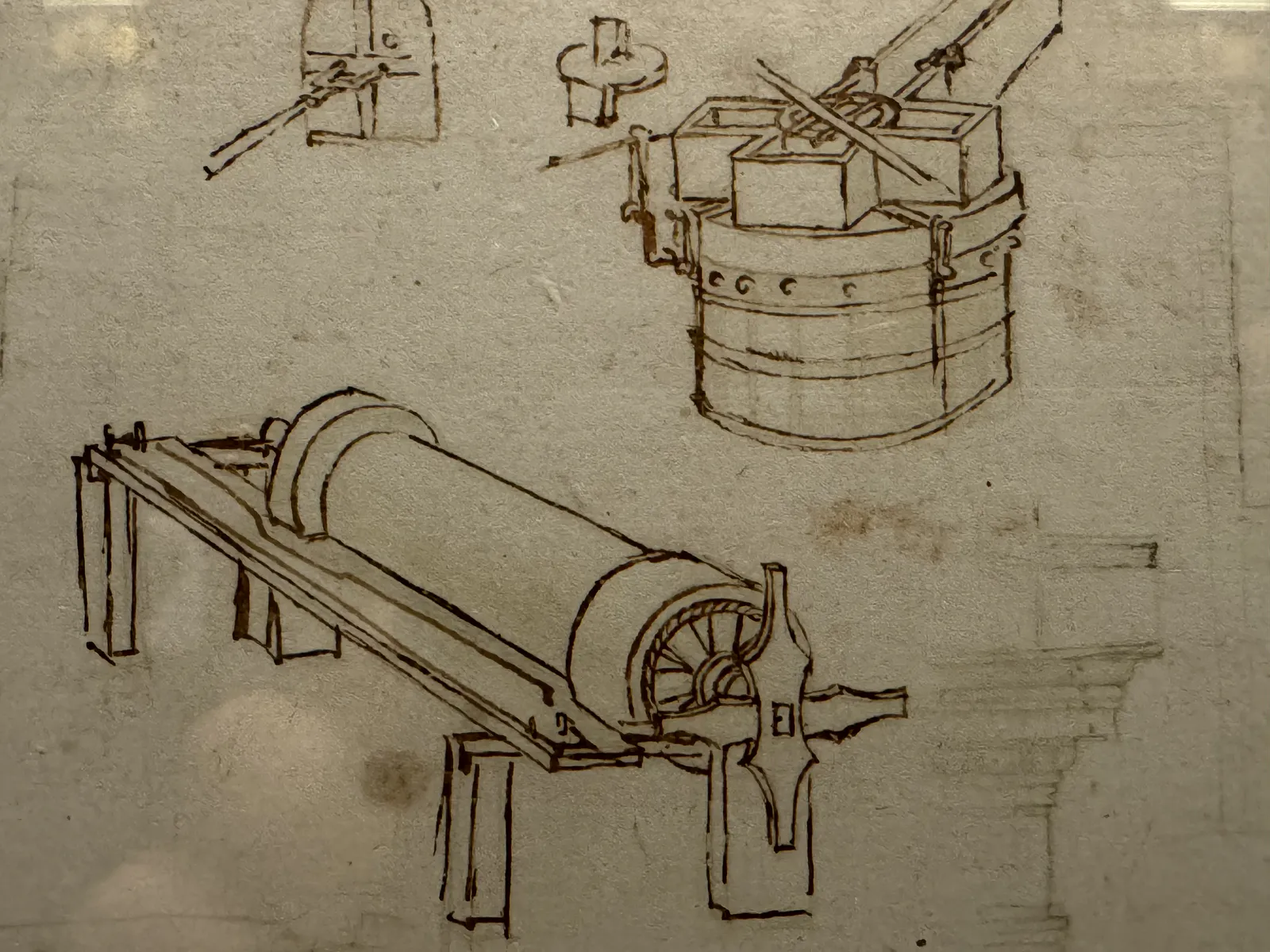
Machine for Polishing Mirrors
Leonardo da Vinci
This technical drawing (c. 1490) shows Leonardo’s device for polishing concave mirrors, likely used in optical or experimental studies. Its mechanism demonstrates advanced knowledge of geometry, motion, and material tension. The design reflects his pursuit of instruments that could extend human perception through mechanical precision.
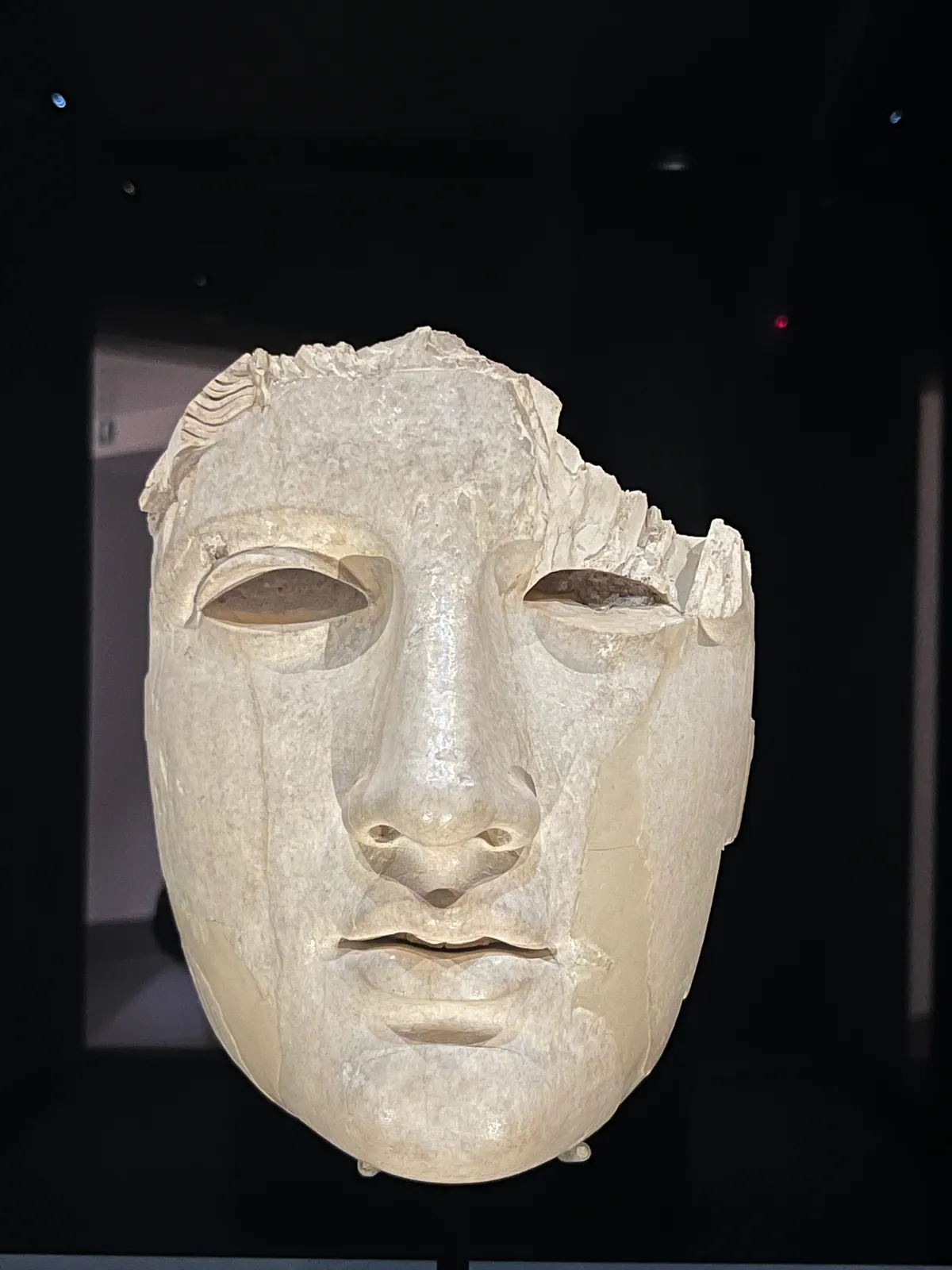
Apollo
Phidias
This ivory mask (5th c. BC) represents Apollo-Greek god of light, music, and prophecy-and once belonged to a chryselephantine statue (a prestigious cult image of ivory and gold). Attributed to Phidias, the master sculptor of classical Greece, it is an exceptionally rare survival of this luxury art form. Looted in 1995 and recovered in 2003, it now serves as both a rare survival of luxury cult sculpture and a reminder of ongoing threats to archaeological heritage.
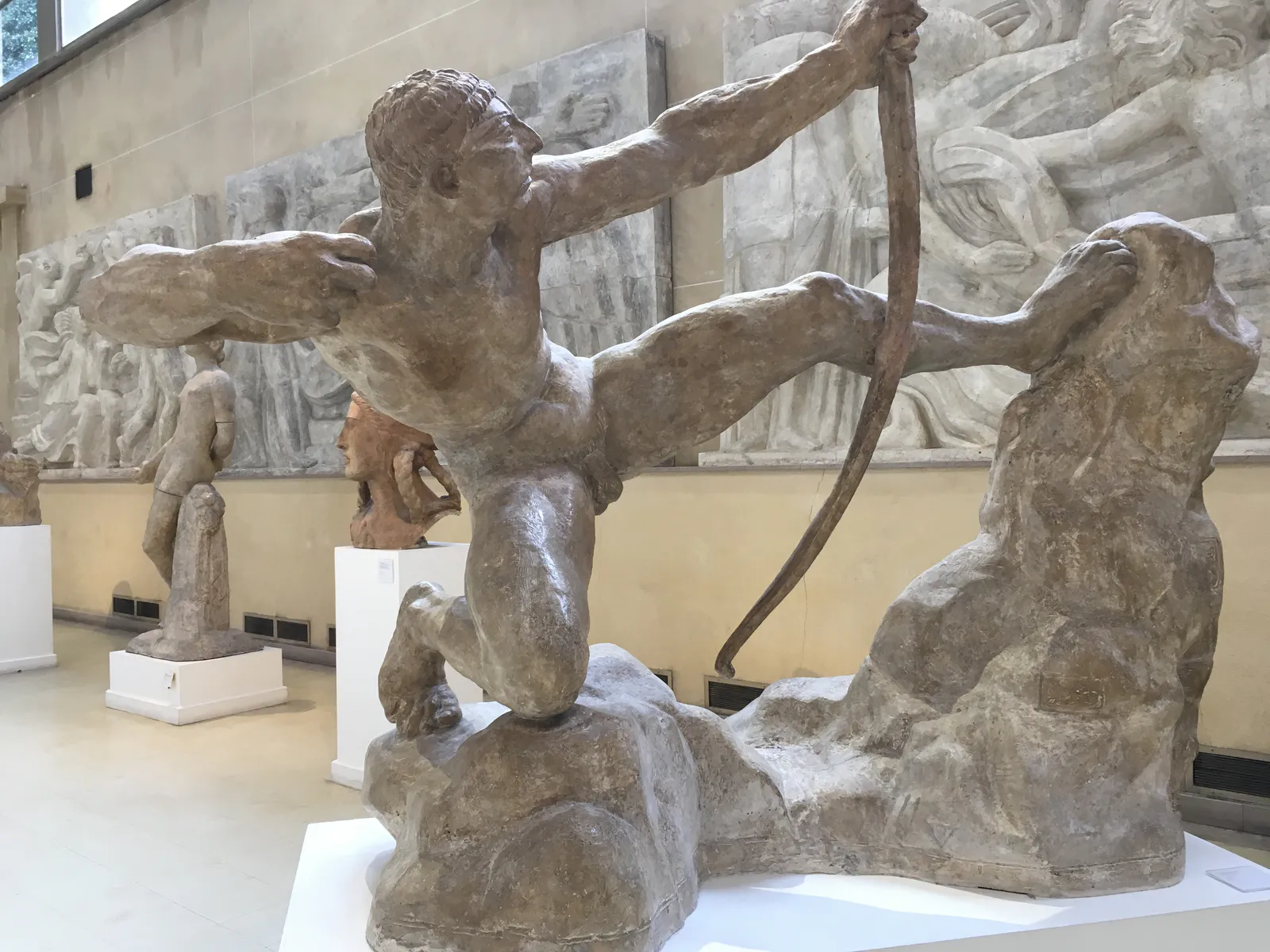
Hercules the Archer
Antoine Bourdelle
This plaster sculpture (1906–09) shows Hercules, the Greek hero, drawing his bow with taut energy. Bourdelle captures both physical strain and mythic power, fusing classical subject with modern dynamism. The work marks a turning point in early 20th-c. sculpture, bridging academic tradition with expressive innovation.
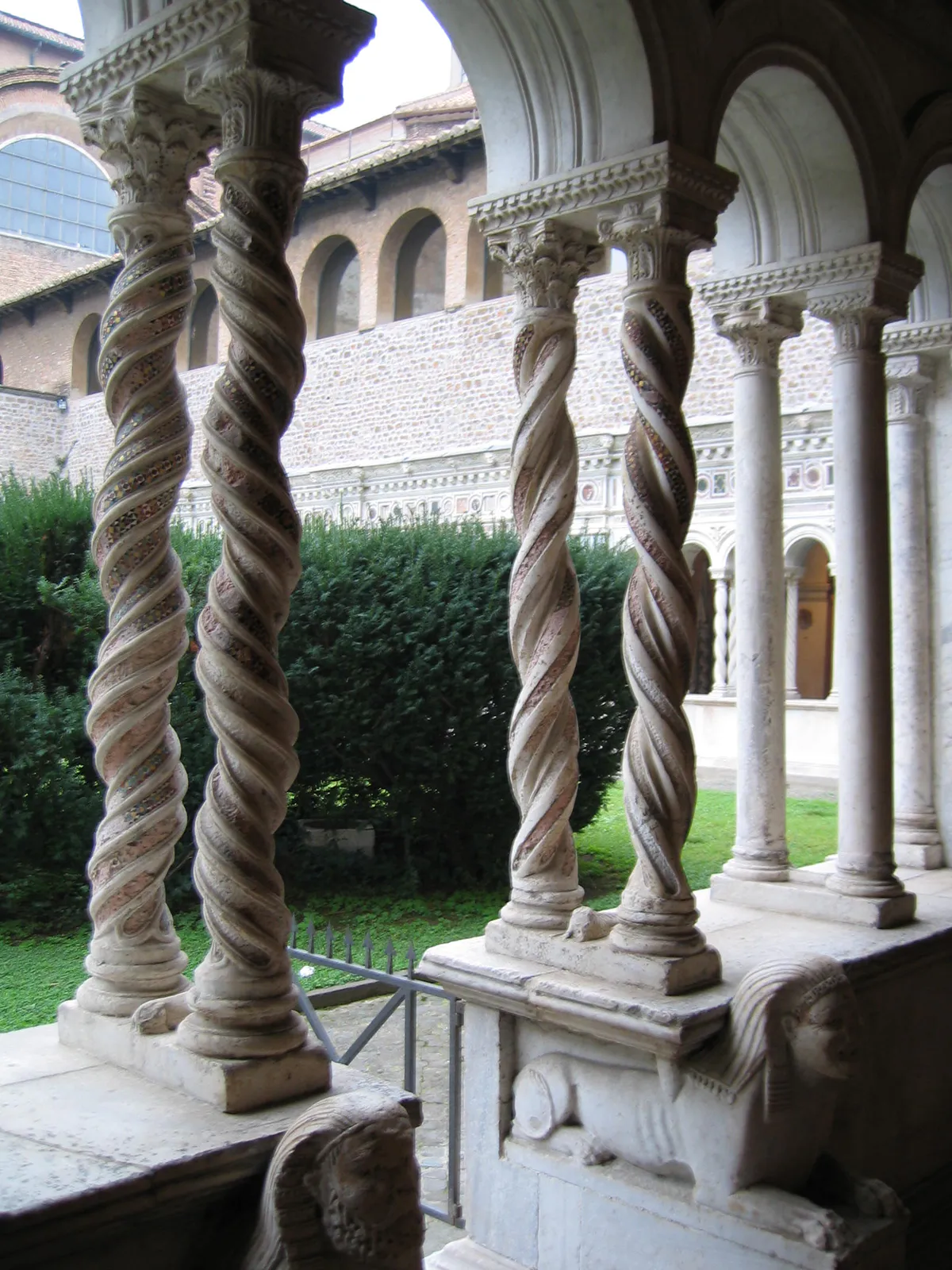
Cosmatesque Columns with Lions and Sphinxes
Vassalletto Workshop
These cloister columns (c.1215), with spiraled shafts and vivid mosaic inlays in the cosmatesque style—a Roman art blending colored marble, glass, and porphyry into geometric patterns—rest on sculpted lions and sphinxes. Crafted by the Vassalletto masters, they unite classical form and Christian meaning, embodying medieval Rome’s vision of divine order through ancient craft.
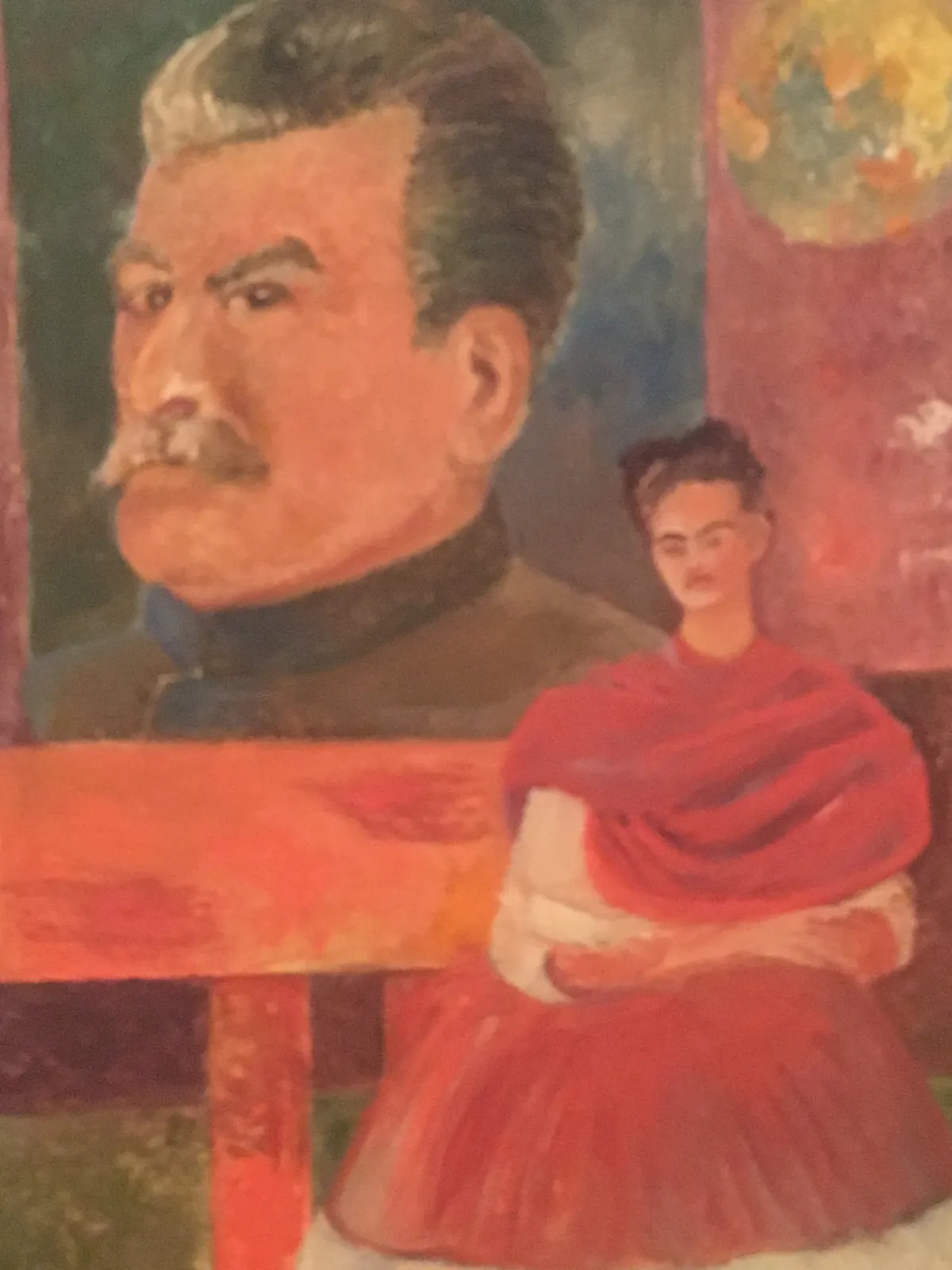
Self-Portrait with Stalin
Frida Kahlo
Painted in 1954, right before death, this political work shows Kahlo seated beside an imposing image of Stalin, whom she revered late in life. The portrait—originally titled Peace on Earth so the Marxist Science may Save the Sick and Those Oppressed by Criminal Yankee Capitalism—reflects her Marxist convictions and final artistic ideological defiance.
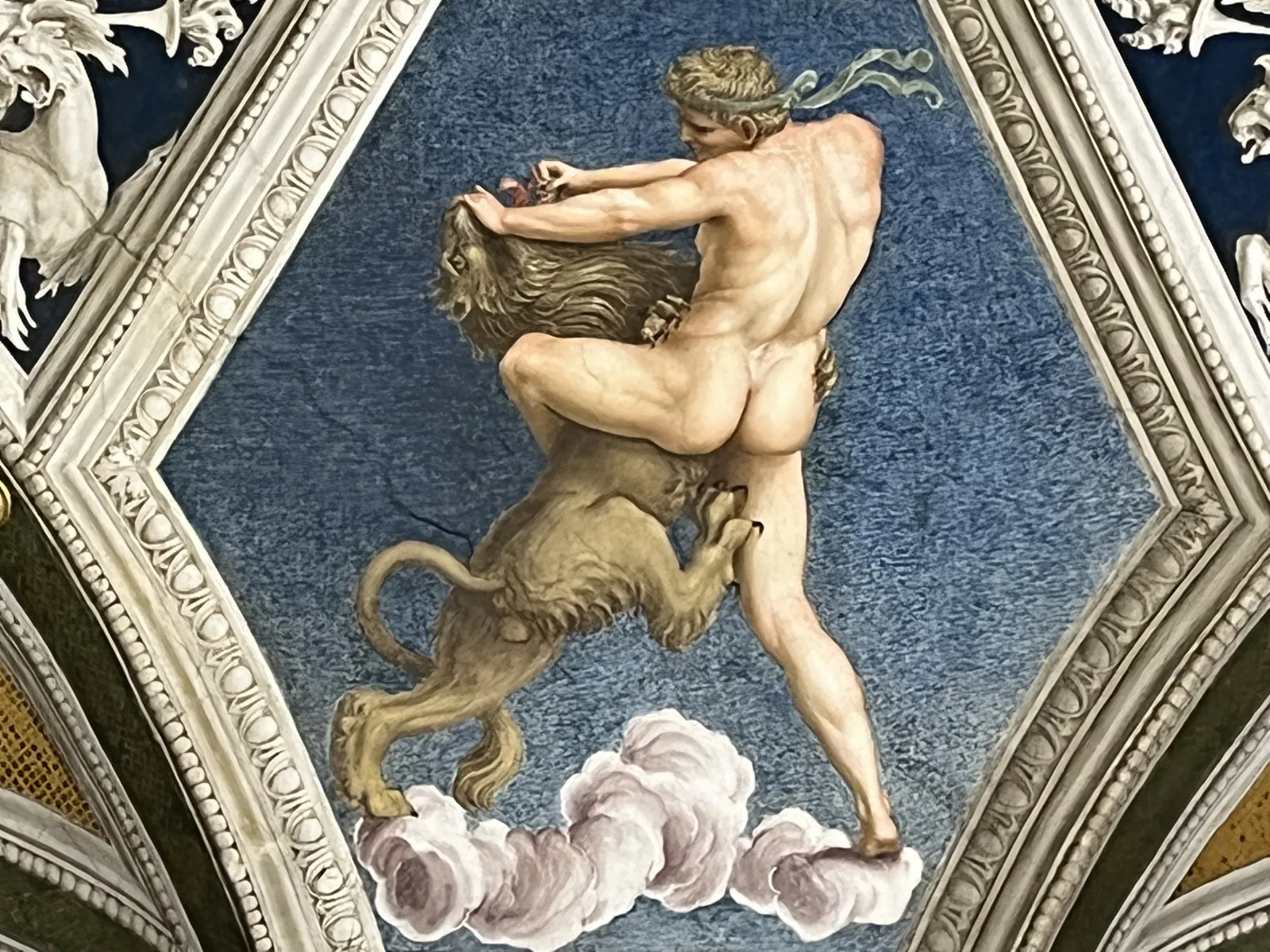
Hercules Defeating the Nemean Lion
Baldassare Peruzzi
This fresco (c. 1511) in the Loggia of Galatea shows Hercules wrestling the invulnerable Nemean Lion, one of his Twelve Labors. The hero’s twisting nude body and the lion’s straining muscles emphasize physical struggle and controlled force. As part of a zodiac cycle, the scene represents the sign of Leo and links mythological heroism to Renaissance interests in astrology and humanist virtue.
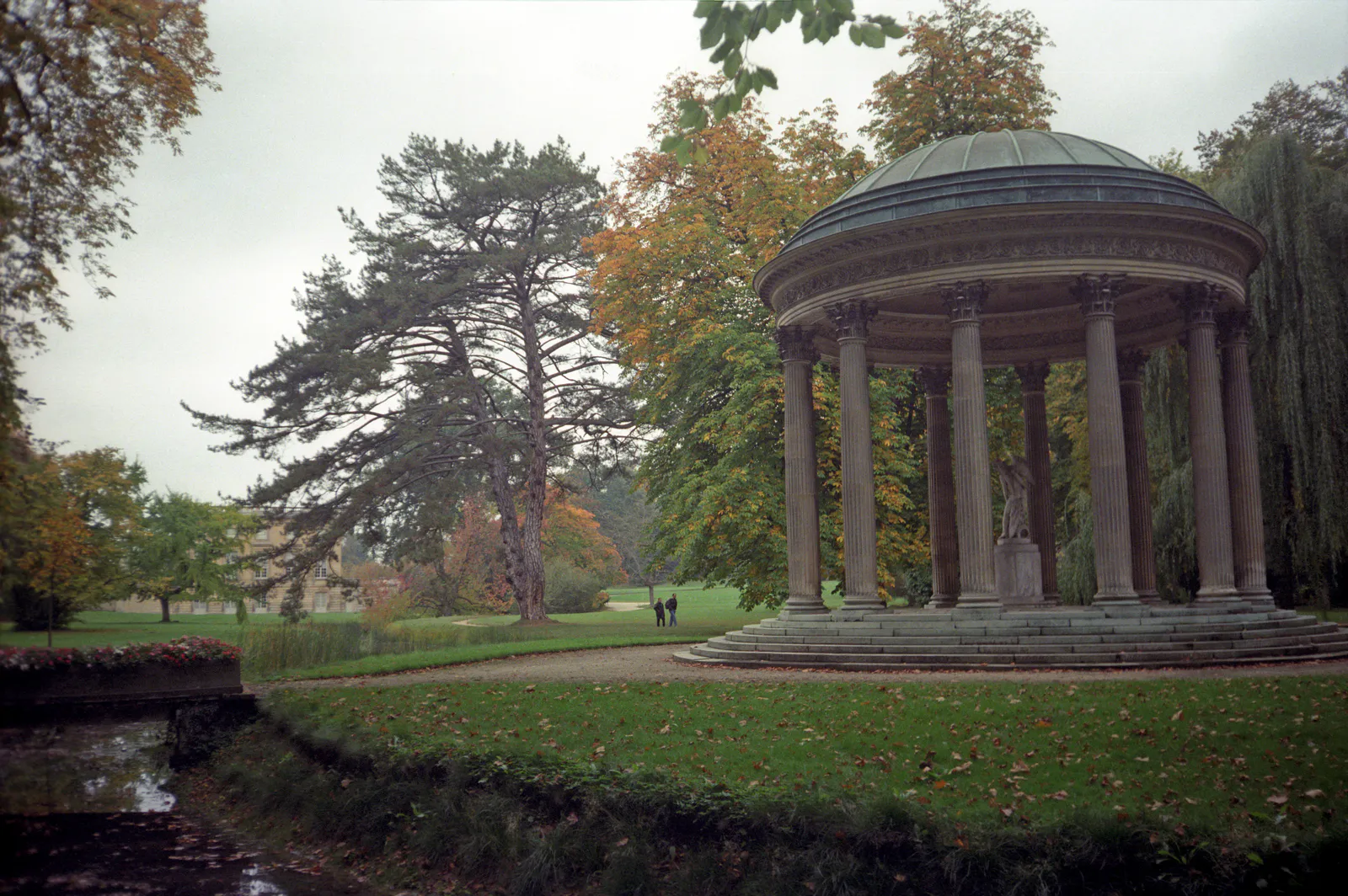
Temple of Love
Richard Mique
Erected in the gardens of the Petit Trianon (1778), this neoclassical rotunda shelters a sculpture of Cupid and symbolizes Marie Antoinette’s idealized vision of romance and pastoral escape. Designed by architect Richard Mique, the temple reflects Enlightenment-era aesthetics and the queen’s longing for simplicity within Versailles’ opulence.
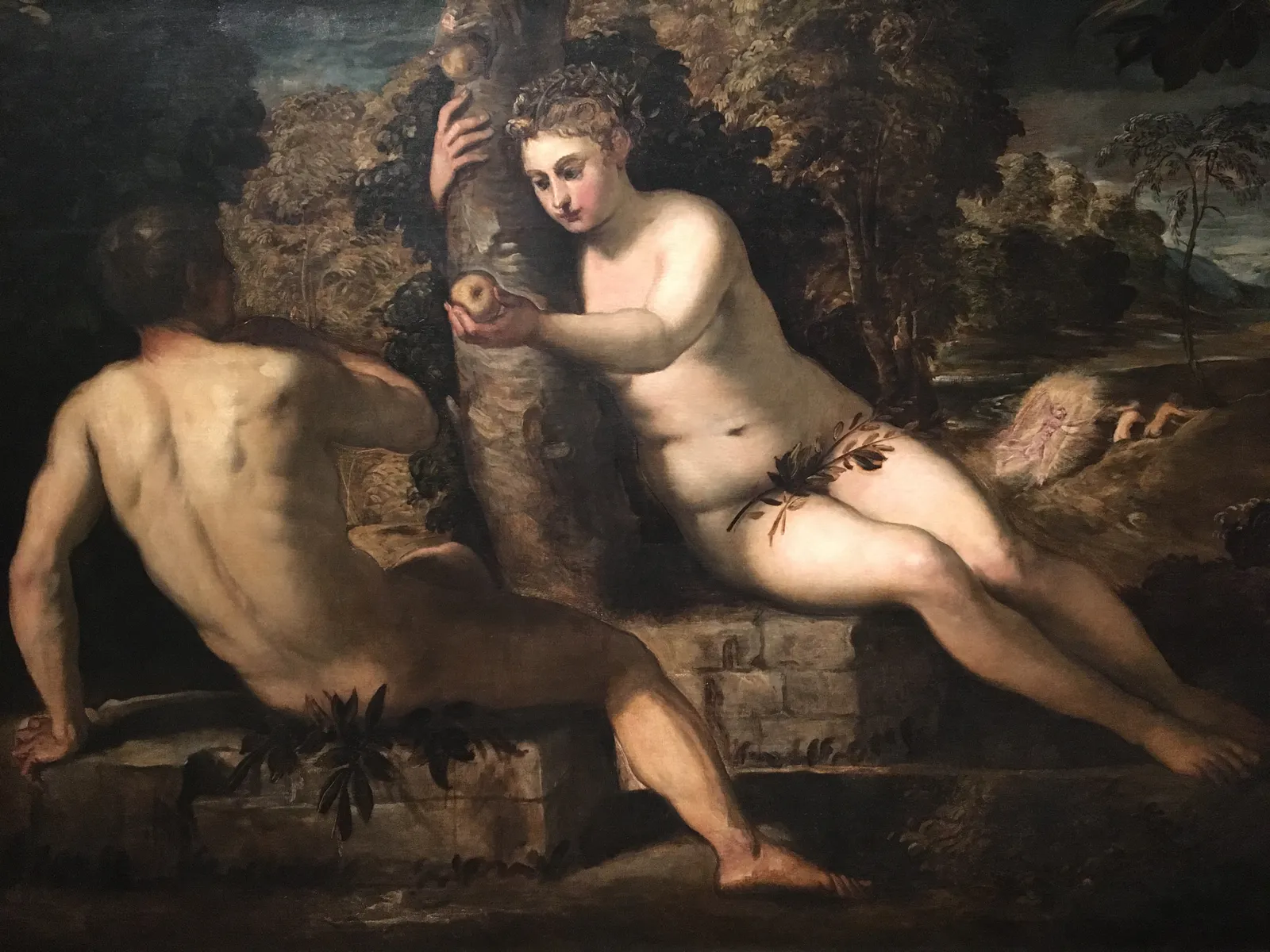
Adam and Eve in the Garden of Eden
Tintoretto
Tintoretto’s work (1550–1553) depicts the biblical moment of temptation in the Garden of Eden. Eve, holding the forbidden fruit, entices Adam, who hesitates, capturing the tension between desire and conscience. The background suggests their impending expulsion, a consequence of their choice. Dramatic lighting highlights the figures, emphasizing their forms and the scene’s gravity.
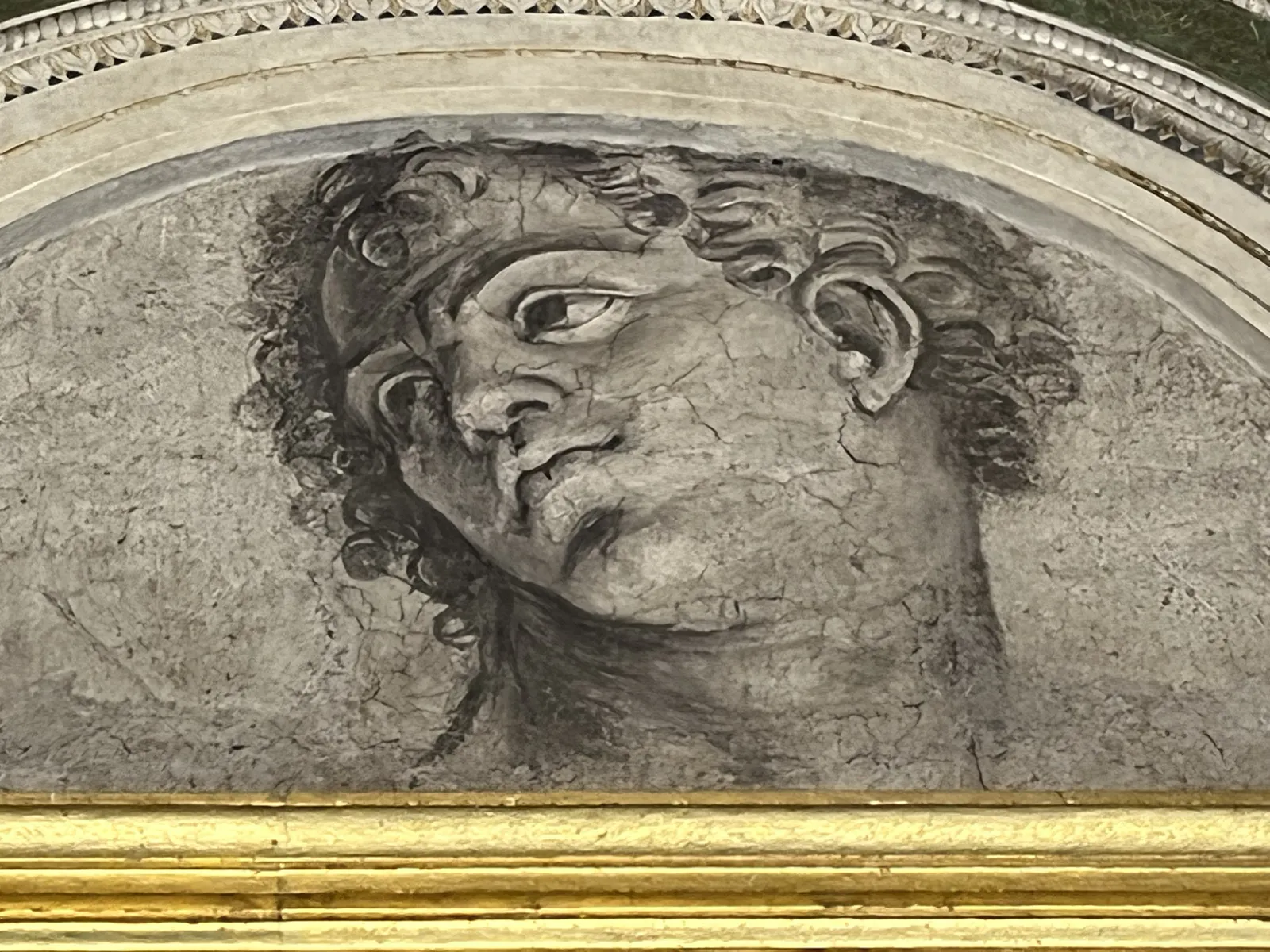
Head of a Youth
Michelangelo
This charcoal head of a youth (1511–12) fills a shallow lunette, the face turned sharply upward and modeled with dense, sculptural shading. Created while Michelangelo worked at Villa Farnesina, it is understood as a visual homage to Raphael’s work in the same setting. The fusion of muscular anatomy with a calm, idealized profile demonstrates how Michelangelo engaged directly with Raphael’s Renaissance style.
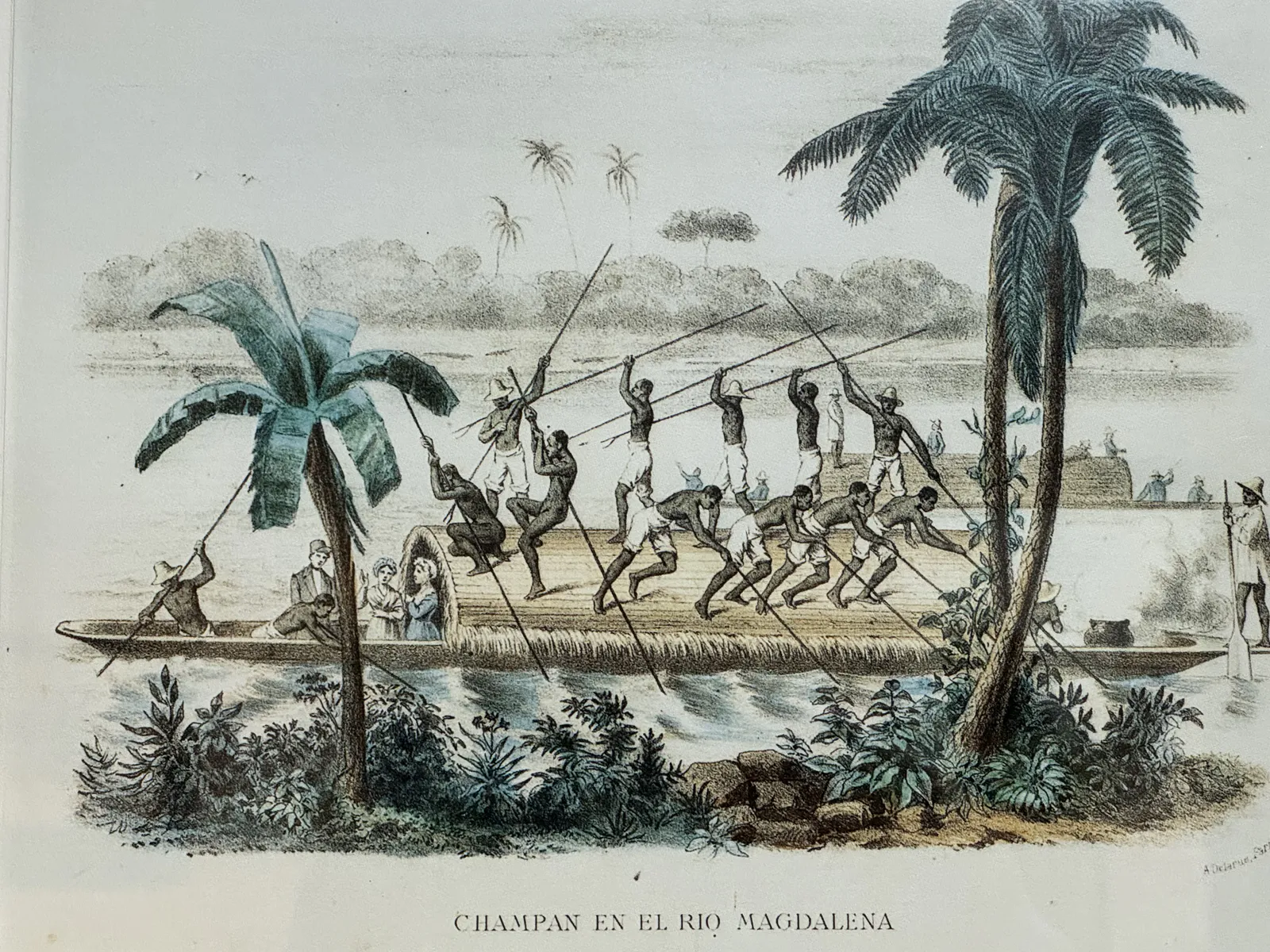
Champán en el río Magdalena
De la Rue & Torres Méndez
This 1878 lithograph depicts a champán, a flat-bottomed river raft common on the Magdalena River, propelled by Afro-Colombian workers using long poles. Wealthy passengers rest under a thatched shelter, highlighting the stark racial and class divisions of the era. The image captures both Colombia’s natural landscape and its colonial labor hierarchies in transition.
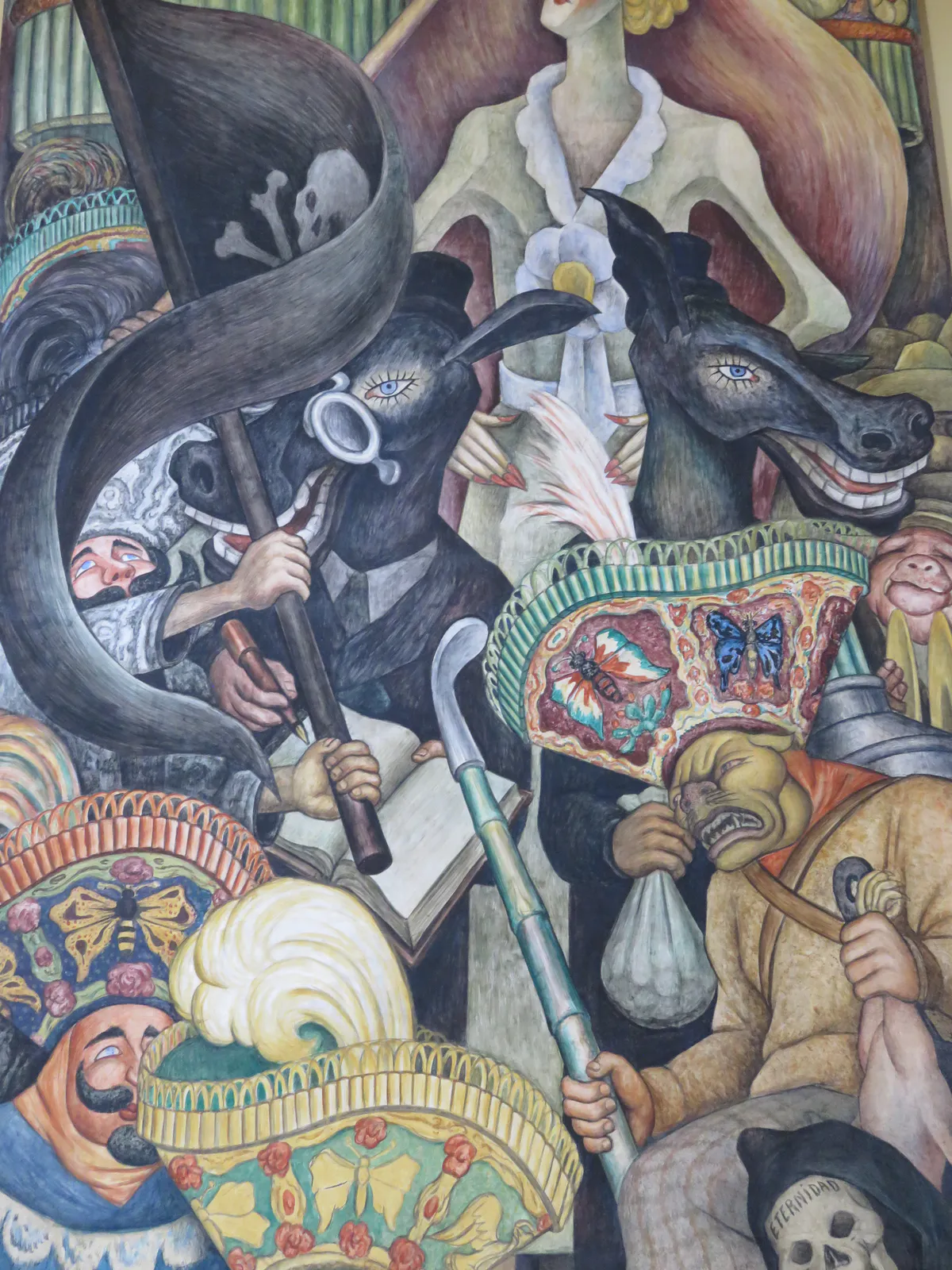
Carnival of Mexican Life (detail)
Diego Rivera
This scene from Carnival of Mexican Life (1936) mocks imperial and capitalist excess. Donkey-headed elites, masked peasants, and a skull-emblazoned flag form a surreal parade of corruption and resistance. Drawing on the Carnival of Huejotzingo, Rivera fuses satire, folk ritual, and political critique to expose social hypocrisy.
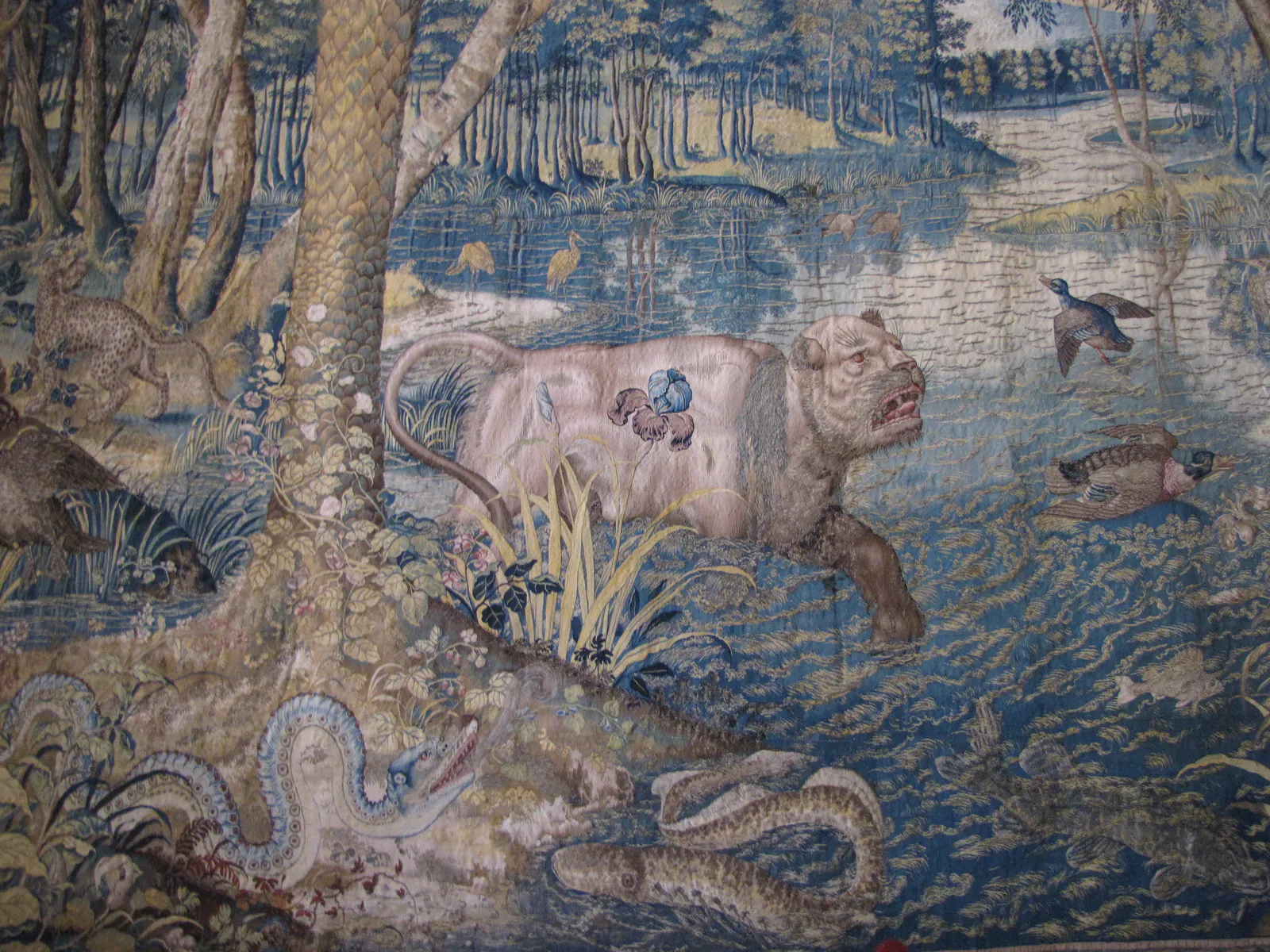
Tapestry of Fantastical Beasts in a River
Michael Coxcie
Woven in Brussels (c.1565) in a Flemish workshop according to Coxcie's design, this tapestry depicts hybrid beasts and serpents in a dense river landscape reflecting Renaissance fascination with nature’s wildness and moral allegory, symbolizing sin and chaos before divine order.
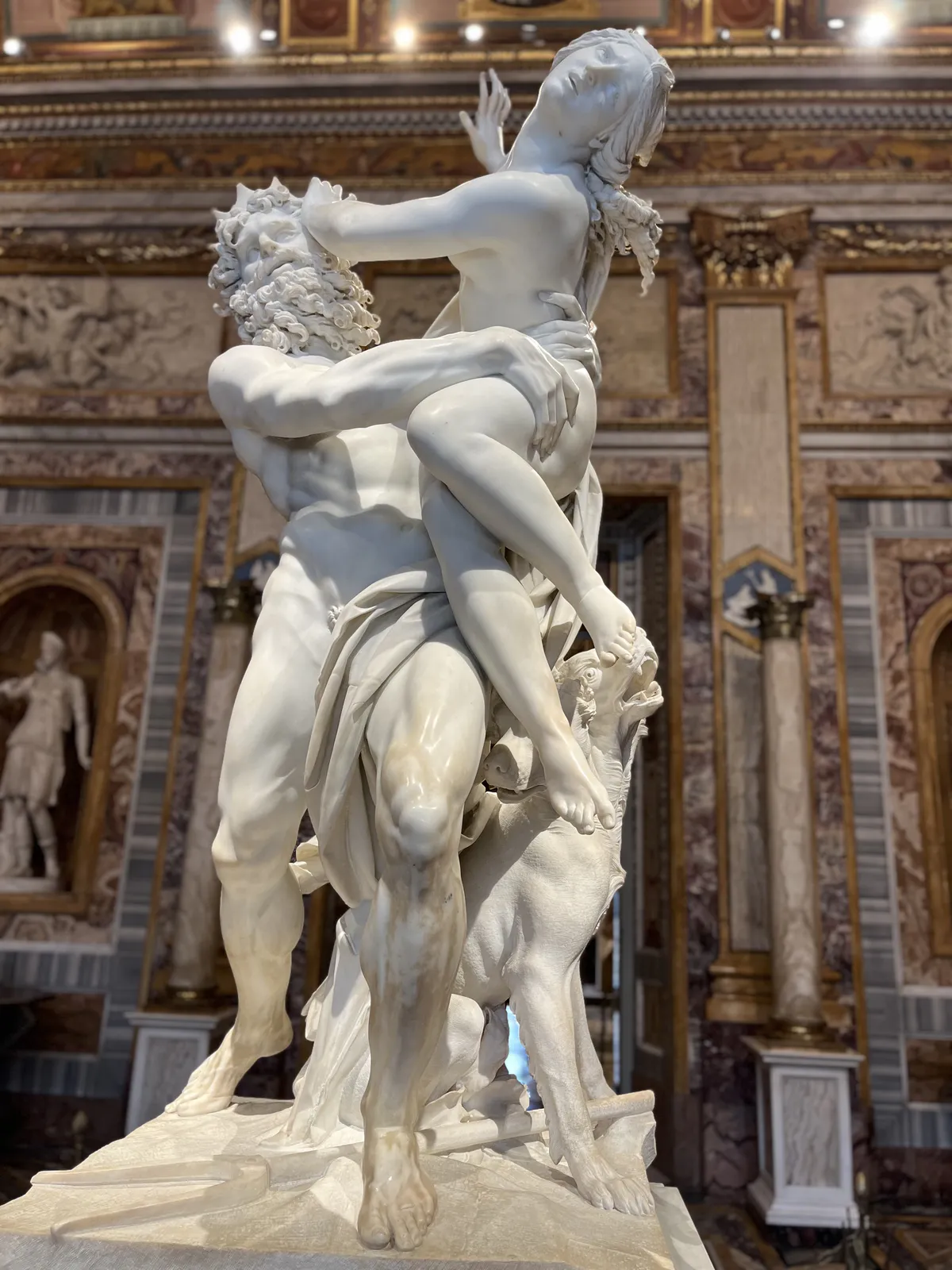
The Rape of Proserpina
Bernini
In this masterful marble (1621–22), Bernini captures Pluto’s violent abduction of Proserpina—an allegory for the changing seasons from Roman myth. Her twisting body and anguished face contrast Pluto’s force, while Cerberus, the underworld’s three-headed hound, reinforces the drama. At just 23, Bernini infused the stone with breathless motion and tactile realism, anchoring the Borghese legacy in Baroque brilliance.
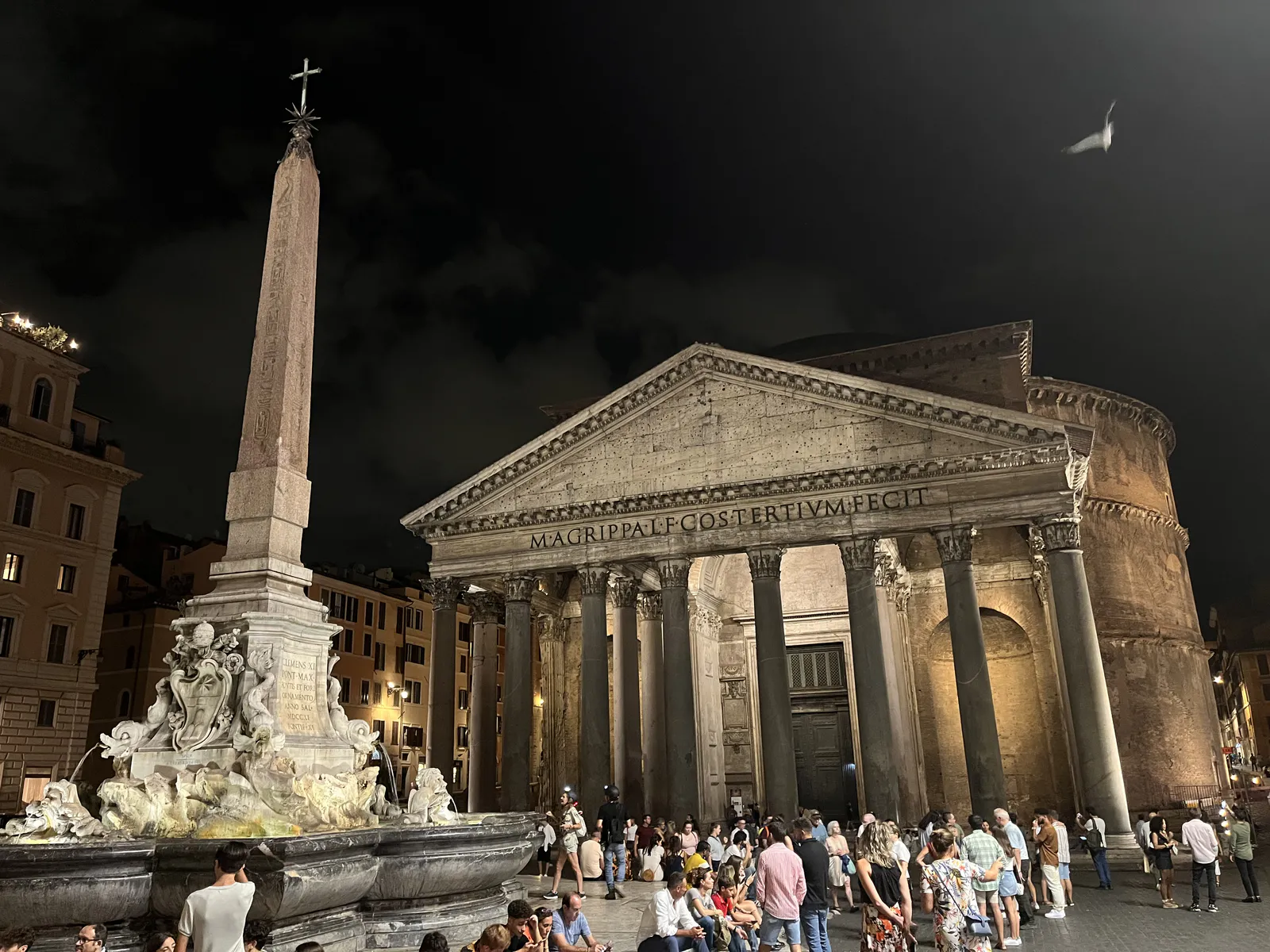
Pantheon with Macuteo Obelisk and Fountain
Filippo Barigioni
The Pantheon’s façade (118–125 AD), built under Emperor Hadrian, preserves Agrippa’s earlier inscription (M·AGRIPPA·L·F·COS·TERTIVM·FECIT - Marcus Agrippa, son of Lucius, consul for the third time, built this). Before it stands the Macuteo Obelisk from Egypt (rededicated here in 1711) and the Baroque fountain by Filippo Barigioni (1711), blending imperial Rome, Christian Rome, and papal urban renewal into one historic vista.
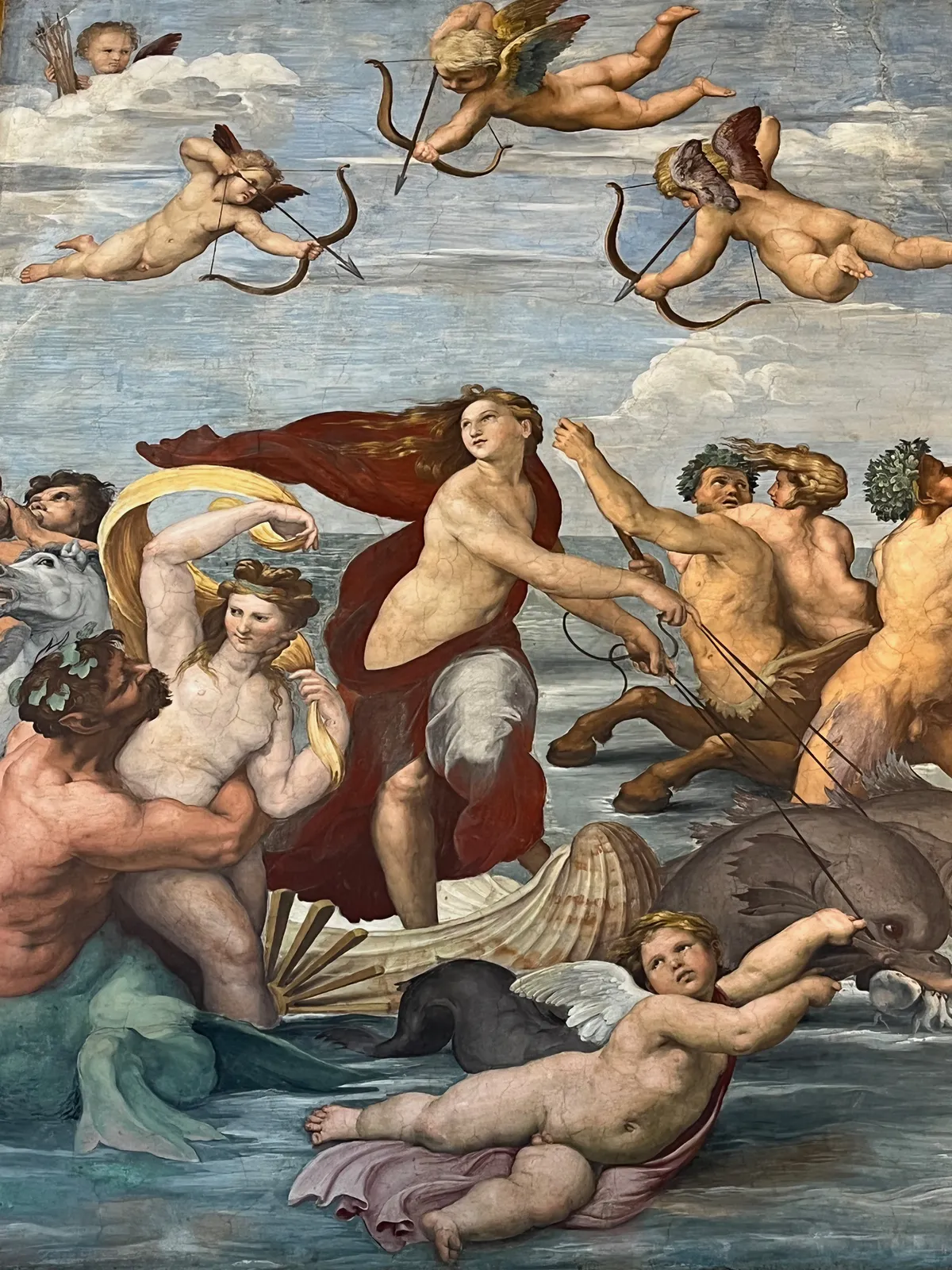
The Triumph of Galatea
Raphael
In this fresco (c. 1512), Raphael transforms Galatea’s myth into a celebration of divine beauty. The sea nymph rides a shell chariot drawn by dolphins (linked to Venus), while cupids shoot arrows symbolizing love’s universal power. Though the original tale includes jealousy and tragedy, Raphael omits them, presenting an idealized vision of harmony and grace.
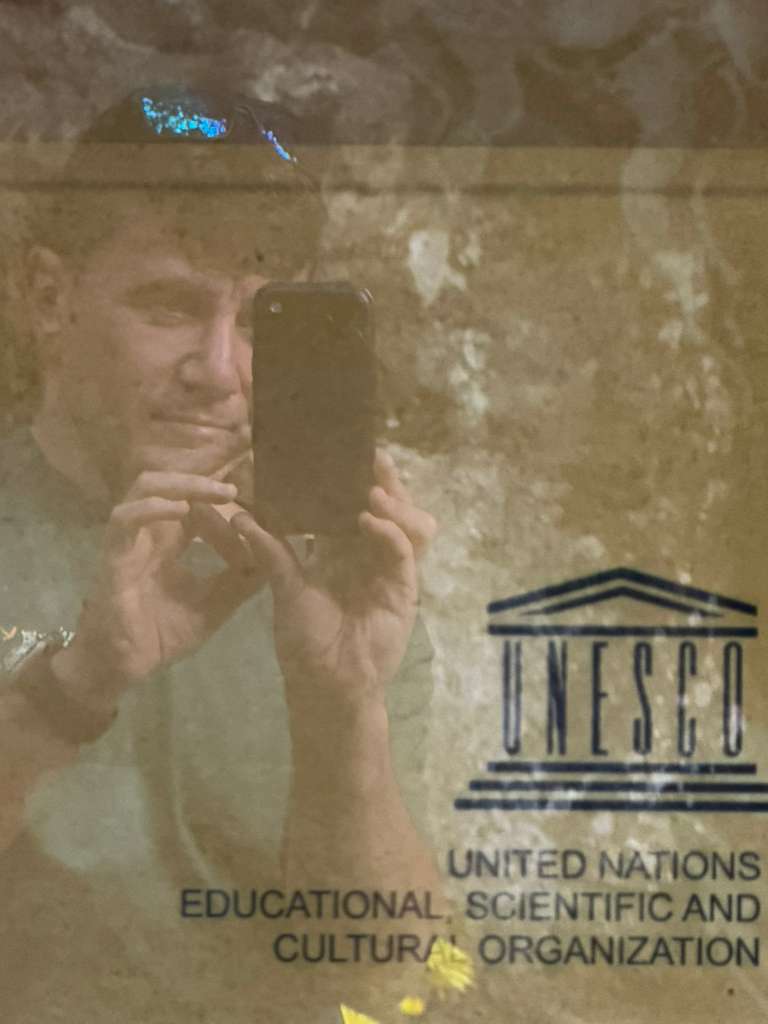
“When the path is beautiful, do not ask where it leads.” — Zen proverb
Welcome to my travel photography!
“When the path is beautiful, do not ask where it leads.” — Zen proverb
Welcome to my travel photography!
For as long as I can remember, my path has been one of discovery—seeking beauty, timelessness, and connection in every corner of the world. It has also been a journey of deep learning and understanding. I’ve been an avid traveler (or perhaps a travel addict?) for most of my life. My love for travel began long before I ever left home: as a child, I drew a fantasy map of my grandparents’ apartment and “traveled” through it with my cousin Sonya, imagining adventures in every corner. Nearly 90 countries and countless moments of awe later, I’m excited to share this journey with you.
Thanks to the tireless and ingenious programming of Diagilev, we’re now able to present about fifteen percent of the images I’ve accumulated over the years. More will be released in small batches depending on your interest. While the first release leans toward museum photography, later ones will include more nature, architecture, culture, and general travel experiences. If you’d like to receive email notifications about new releases, feel free to reach out—no commercial use, ever.
Throughout my travels, I’ve been drawn to two intertwined kinds of discovery. One is intellectual: learning why the world is the way it is. History became my guide, shaping my perspective and filling my camera roll with museums and old buildings. To me, history is not the past—it is the key to understanding the present and how the world became what it is. The other is emotional: seeking moments of elevation—spirituality, beauty, harmony—often found in nature, monasteries, and ancient sacred spaces. Together, these impulses shape my photography. It invites you to learn, admire, and soar—to rise above the mundane and see the world through a lens of curiosity and wonder.
Much of my later travel became possible thanks to my job with Delta Air Lines, but the wanderlust began years earlier. By the time I joined the industry, I had already visited over 35 countries and lived in several—largely thanks to a backpacking journey around the world with Luis León, whose face appears in many early photos. I grew up in Ufa in the USSR, and since leaving it I have lived, studied, and worked in Latvia, the United States, France, South Korea, Canada, Spain, Italy, Brazil, Japan, and Colombia.
A life of near-constant movement may seem a little crazy, but it has deepened my understanding of the world and produced the photography you are about to see. Over the years, my style has evolved—more intentional, more refined—yet its core remains the same: a search for understanding, timeless beauty, and a connection to those who walked this earth long before us.
I hope these photos stir something in your soul, just as they did in mine. I’d love to hear from you—whether reactions, suggestions, corrections, or a request to be added to the email list for new releases (no commercial use, I promise). You can learn more about my travels here, and my academic life here.
Enjoy our shared journey!