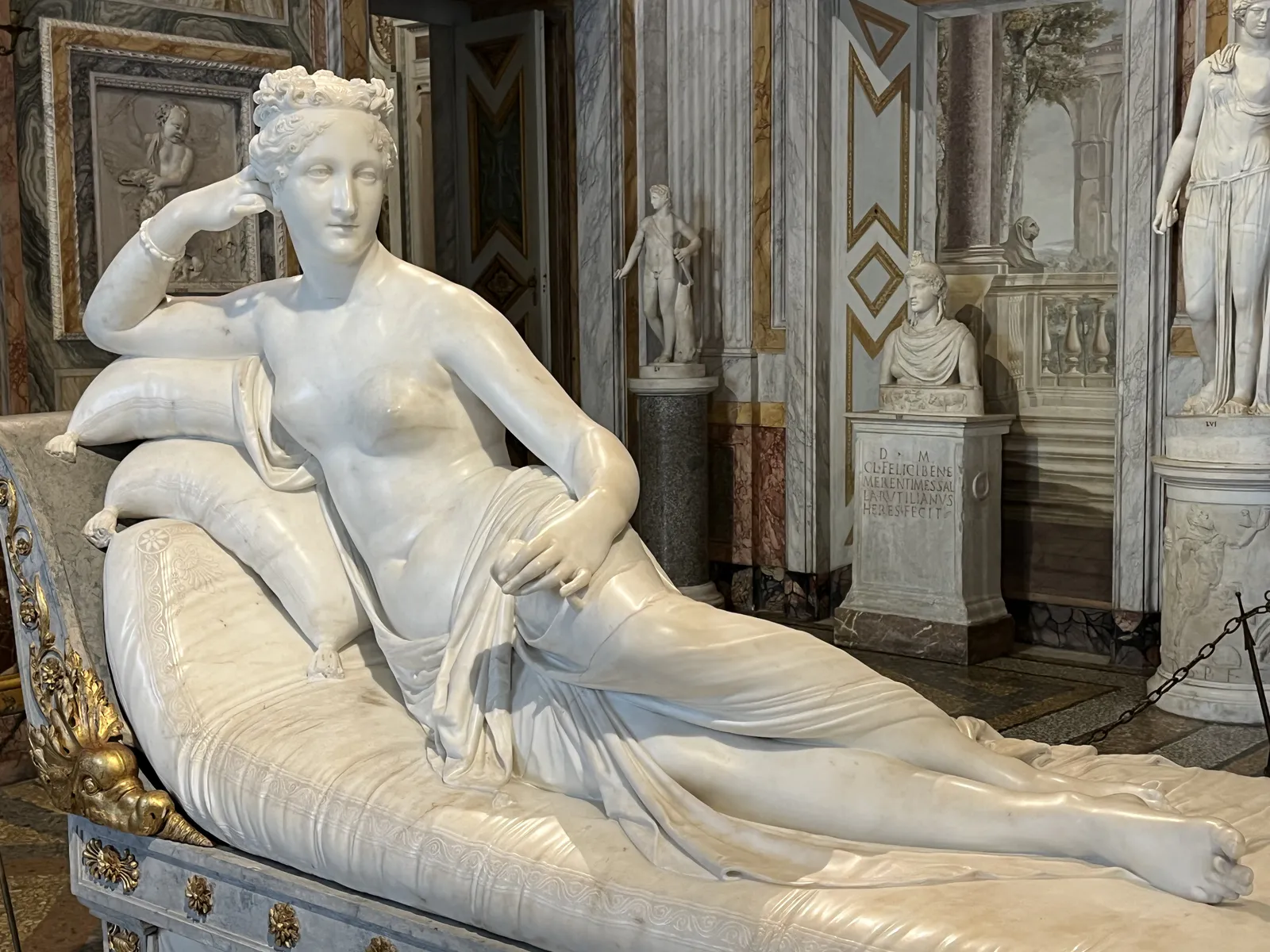
Pauline Bonaparte as Venus Victrix
Antonio Canova
This statue (1805–08) presents Pauline Bonaparte, sister of Napoleon, as Venus, reclining semi-nude and holding the golden apple of victory. Commissioned by her husband Camillo Borghese, the statue blends neoclassical elegance with sensual myth. Its rotating base once allowed viewers to admire it from every angle.
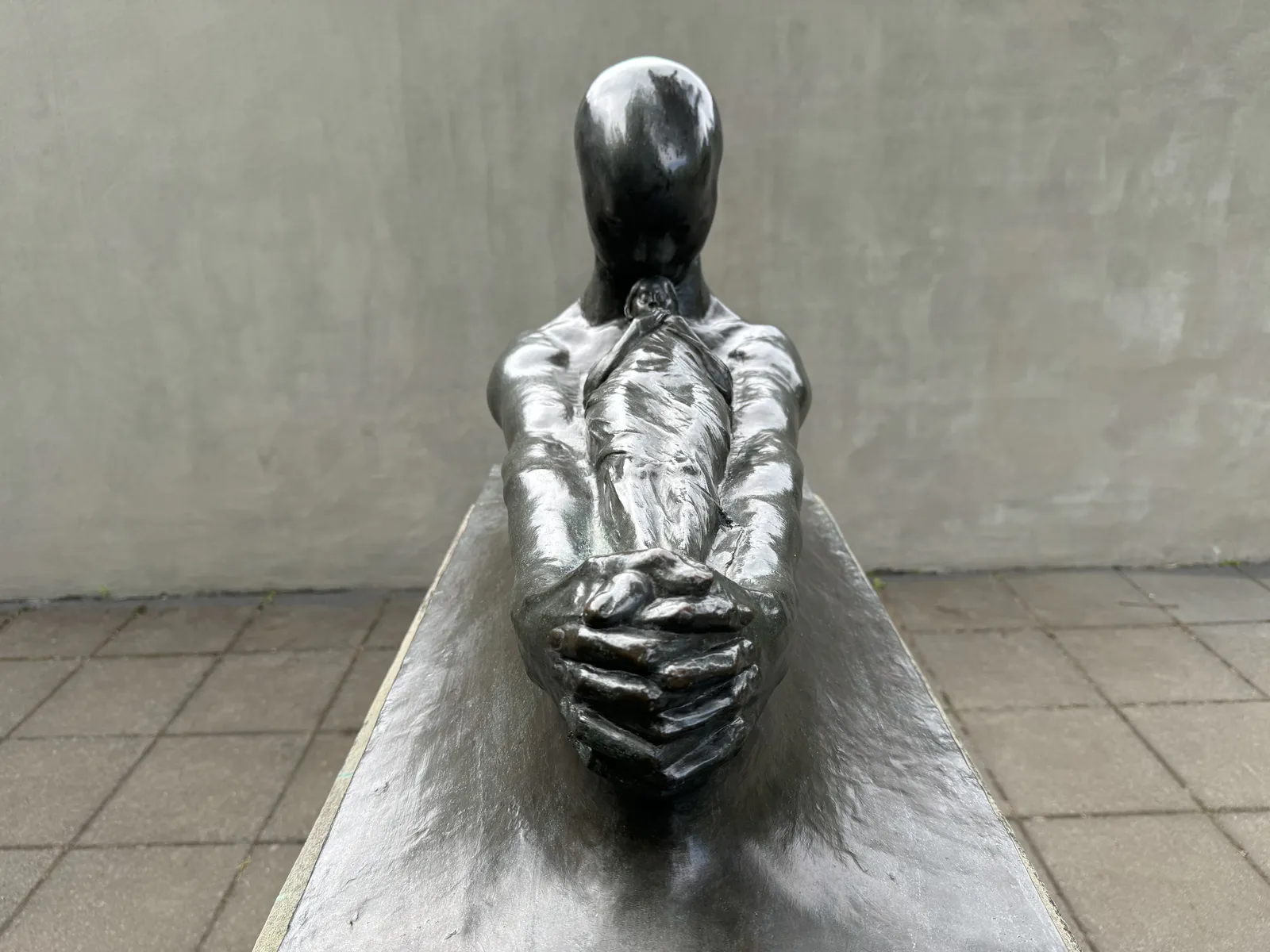
The Earth
Einar Jónsson
Jónsson’s bronze sculpture, The Earth (1904–1908), features a seated figure cradling a smaller form, reflecting his shift to Symbolism after 1903. It explores themes of life, death, and the cyclical nature of existence. Jónsson, a pioneering Icelandic sculptor, studied at the Royal Danish Academy of Fine Arts, significantly influencing the evolution of Icelandic art.
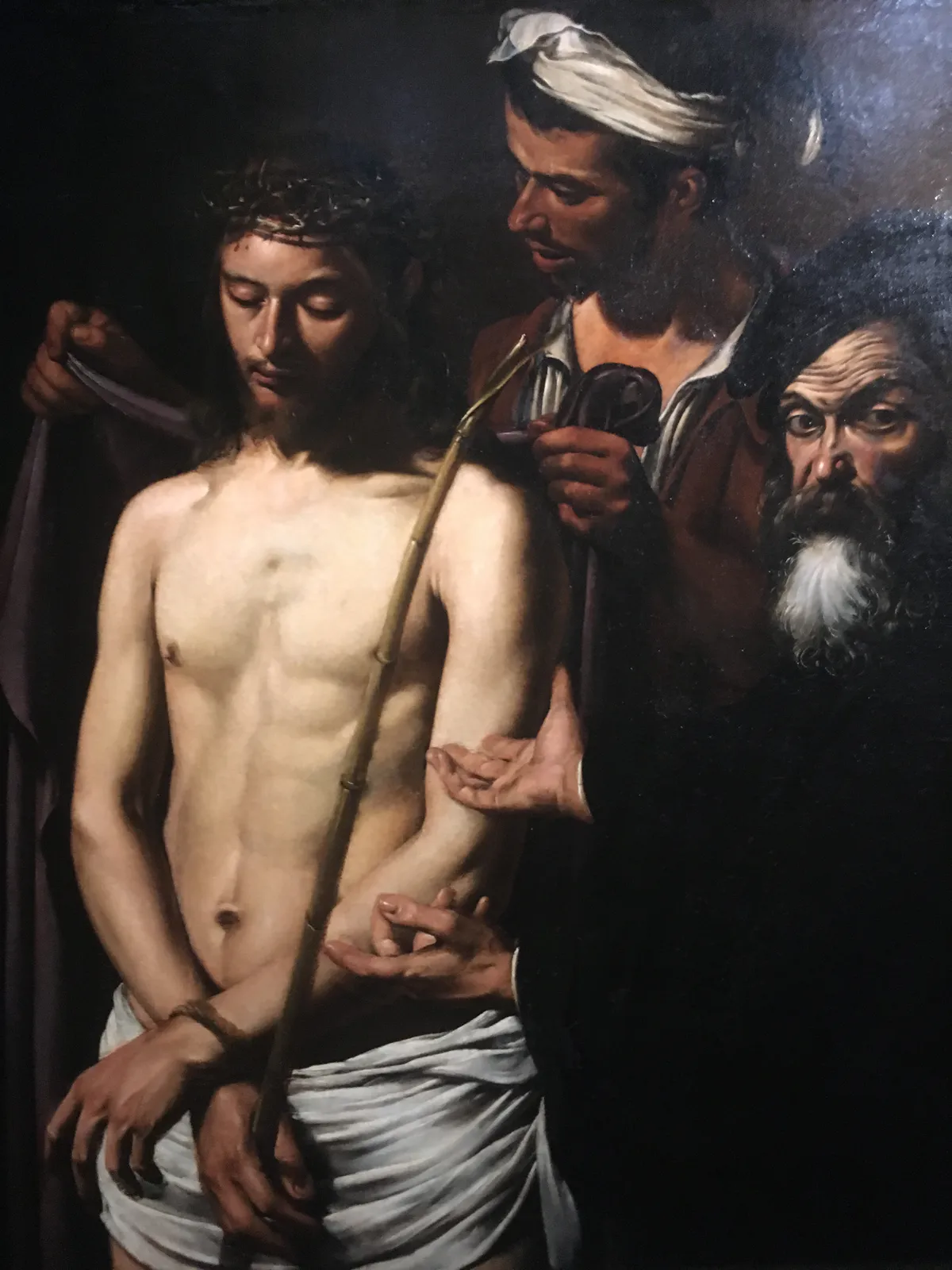
The Crowning with Thorns
Caravaggio
This painting (1602–04) depicts Christ humiliated before crucifixion. Crowned with thorns and bound, he stands in silent suffering as soldiers force the reed into his hand and mock him as king. Caravaggio’s harsh chiaroscuro strips away grandeur, presenting raw cruelty and dignity in contrast. The work confronts viewers with the violence of power and the endurance of faith.
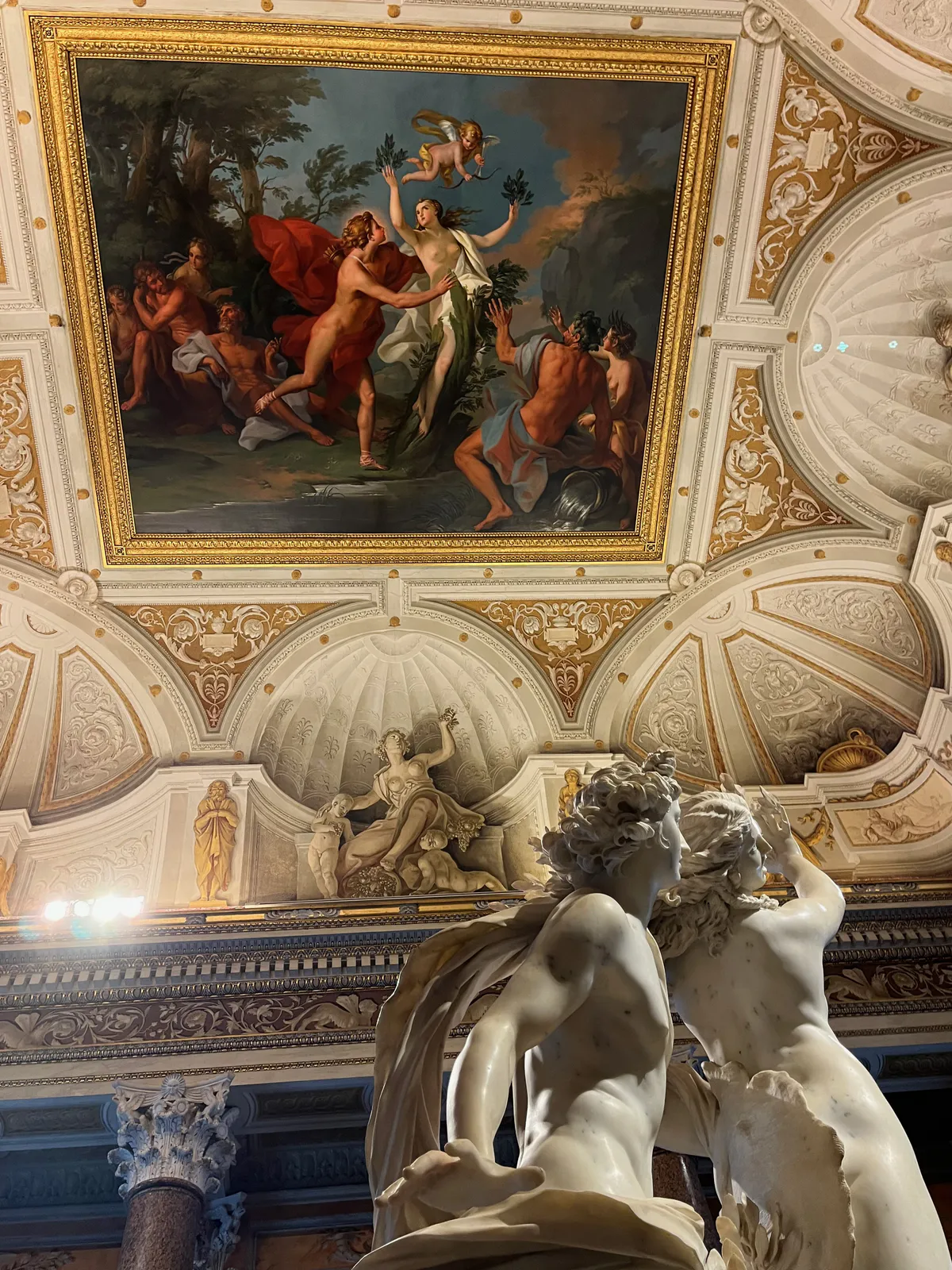
Apollo and Daphne with The Apotheosis of Romulus
Gian Lorenzo Bernini, Mariano Rossi
Bernini’s sculpture (1622–25) captures the climactic moment in Ovid’s Metamorphoses when the nymph Daphne, fleeing Apollo’s desire, transforms into a laurel tree. Above, Rossi’s Apotheosis of Romulus celebrates Rome’s divine origins. Romulus ascends, clutching Roma—helmeted symbol of the eternal city—while Fame, winged and bearing a trumpet, heralds his glory with laurel crowns. Together, sculpture and fresco exalt mythic transformation and Rome’s enduring legacy.
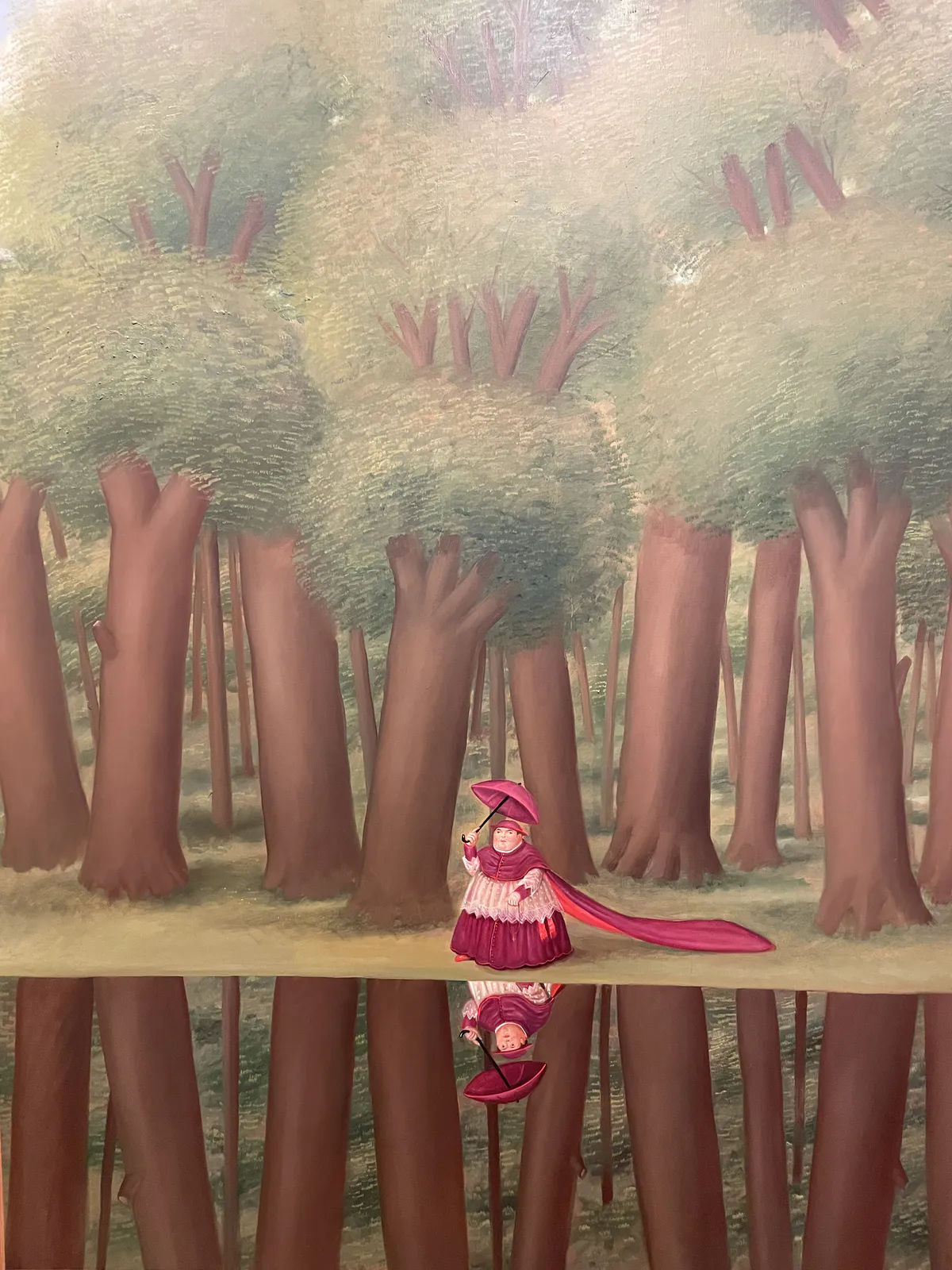
Woman with Umbrella
Fernando Botero
A solitary figure walks through a forest, her reflection mirrored below as if suspended between worlds. Her voluminous dress and umbrella contrast with the vertical rhythm of the trees. With surreal calm and poetic symmetry, Botero (1989) transforms a simple stroll into a meditation on solitude, identity, and the quiet theatricality of everyday life.
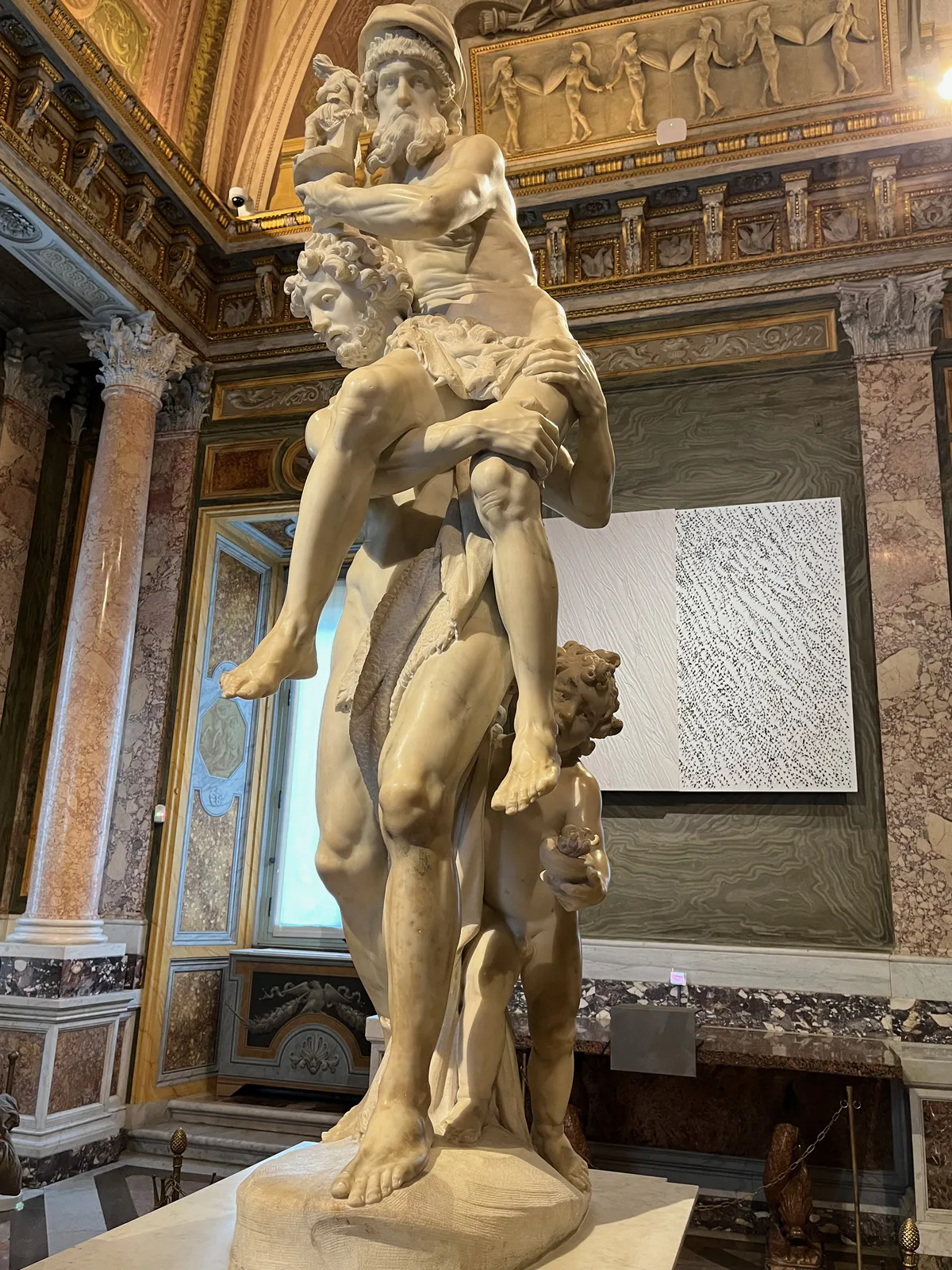
Aeneas, Anchises, and Ascanius
Bernini
This early masterpiece (1618–19) shows Aeneas carrying his father Anchises and leading his son Ascanius as they flee Troy. Anchises holds the Penates (household gods safeguarding family and hearth), while Ascanius carries a flame, symbol of Rome’s divine lineage. Bernini unites filial duty, piety, and sacrifice with striking youthful vigor.
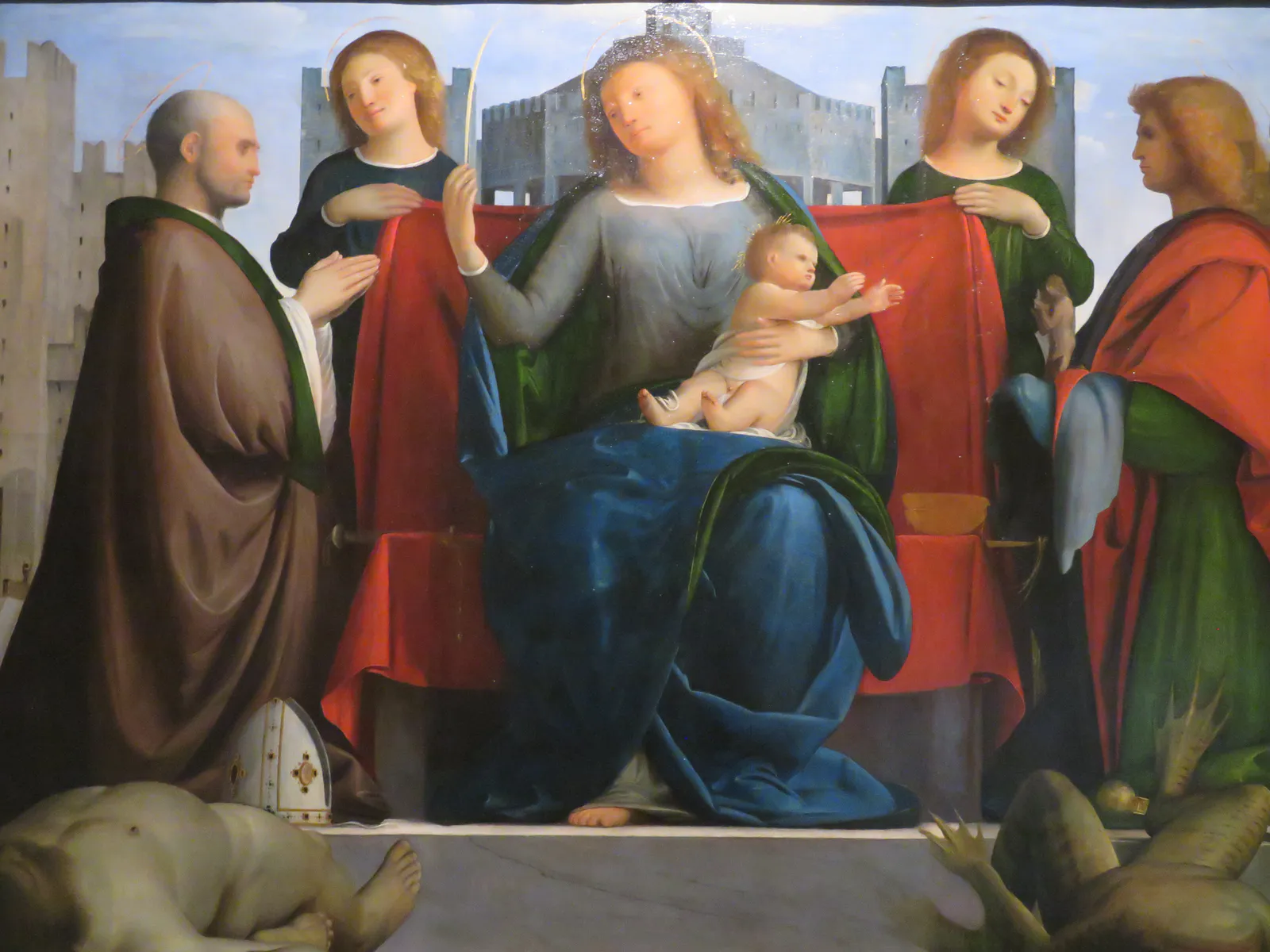
Madonna of the Towers
Bramantino
This tempera and oil painting (1515–20) presents the Madonna and Child enthroned between Saint Ambrose and Saint Michael. Set before fortified towers symbolizing Marian protection, the composition reflects Leonardo’s influence in its symmetry and restraint. Below, a toad representing the Devil lies defeated, underscoring the Virgin’s triumph over evil.
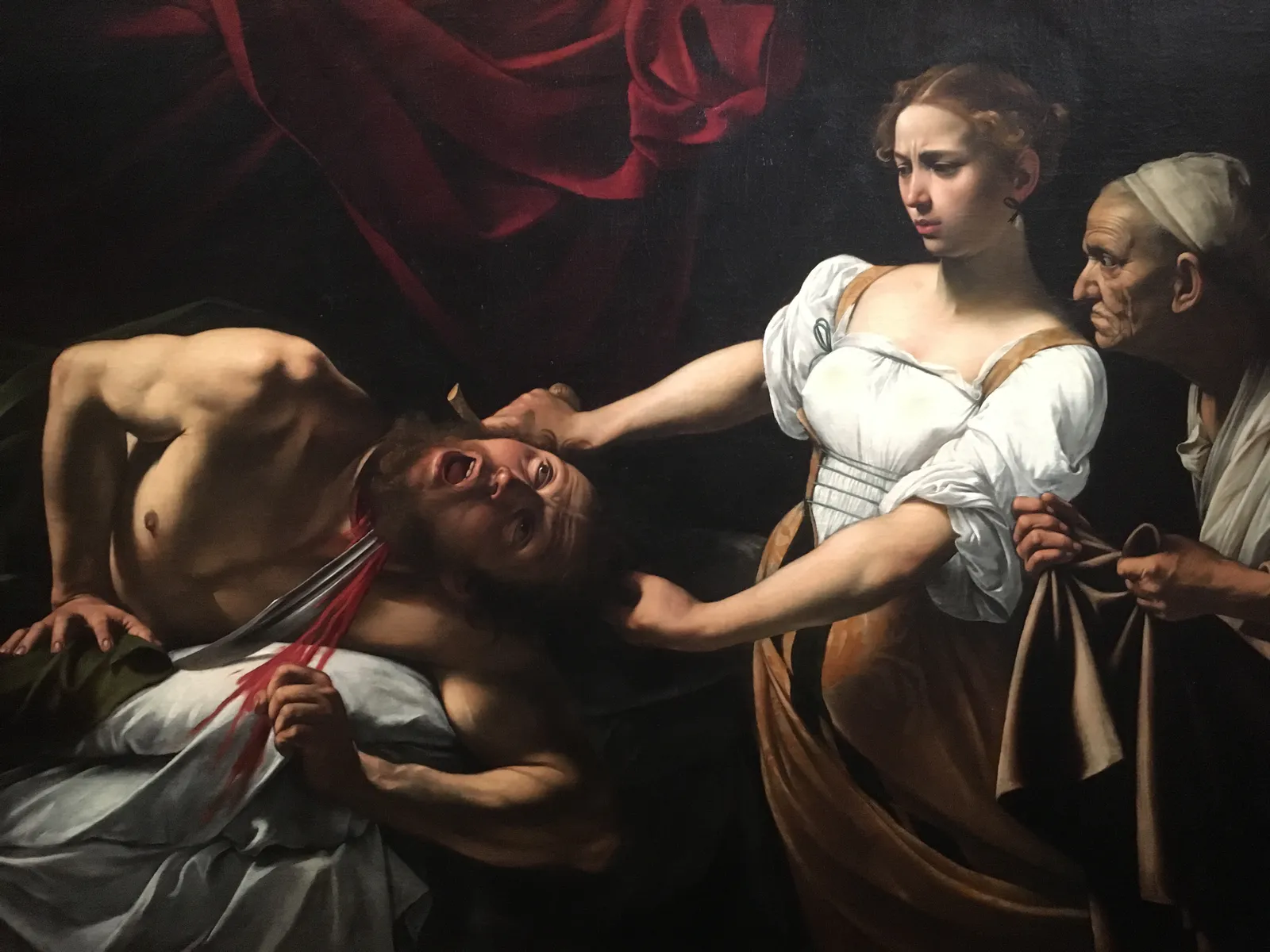
Judith Beheading Holofernes
Caravaggio
This canvas (c. 1599) painted in Rome embodies Caravaggio’s radical realism and theatrical chiaroscuro. Judith, a young widow, slays the Assyrian general Holofernes to save her people. Her calm determination contrasts with his violent death and the maid’s aged pragmatism. By staging sacred violence with unflinching naturalism, Caravaggio redefined biblical painting as a drama of human courage and divine justice.
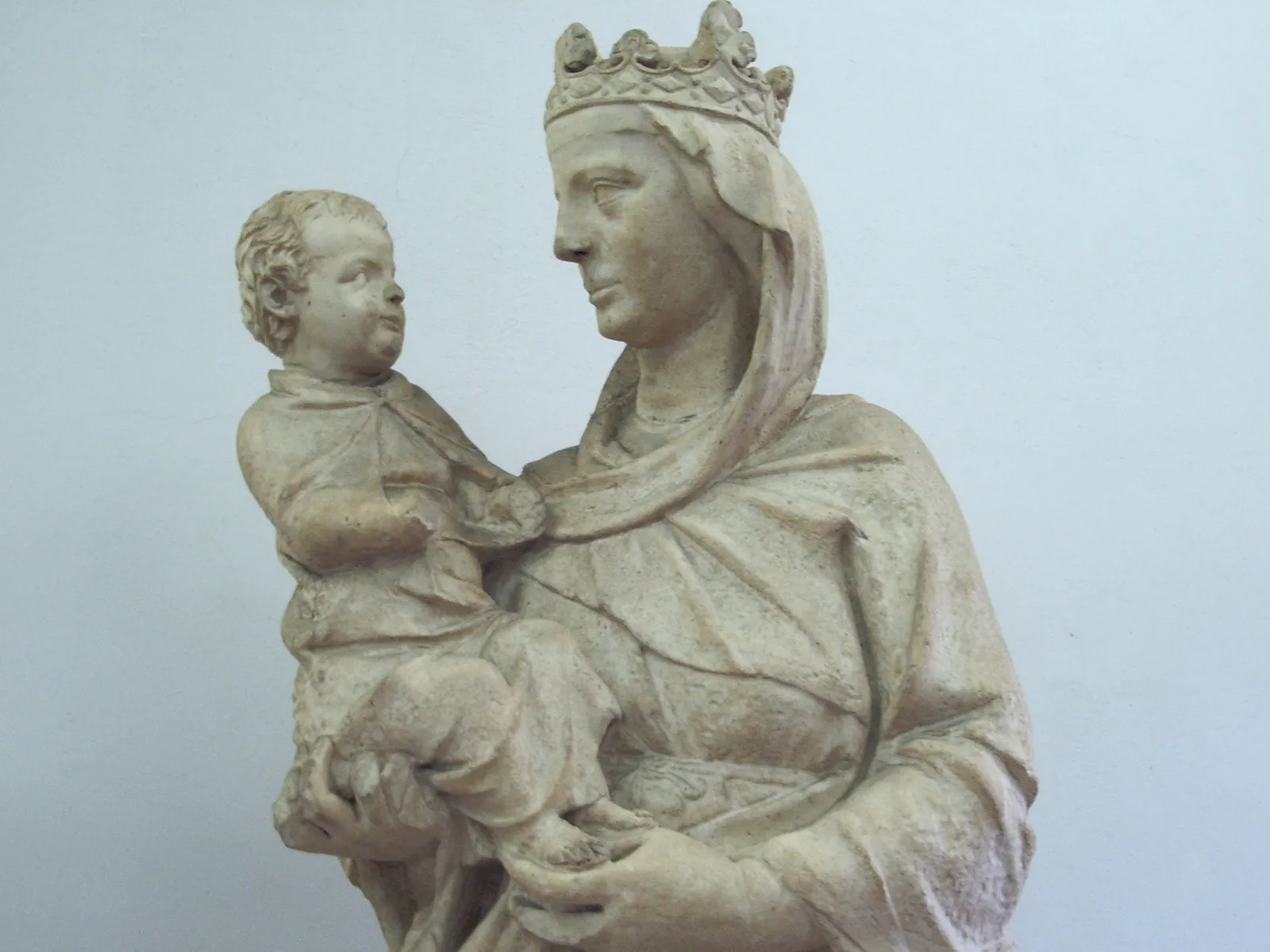
Madonna del colloquio
Giovanni Pisano
This half-length marble Virgin and Child (c. 1280–1284) originally stood at the south transept portal of Pisa Cathedral. Now, it captures a striking emotional exchange between mother and son. The Child gently grasps Mary’s veil, emphasizing Pisano’s innovative focus on tenderness and psychological realism in sacred art.
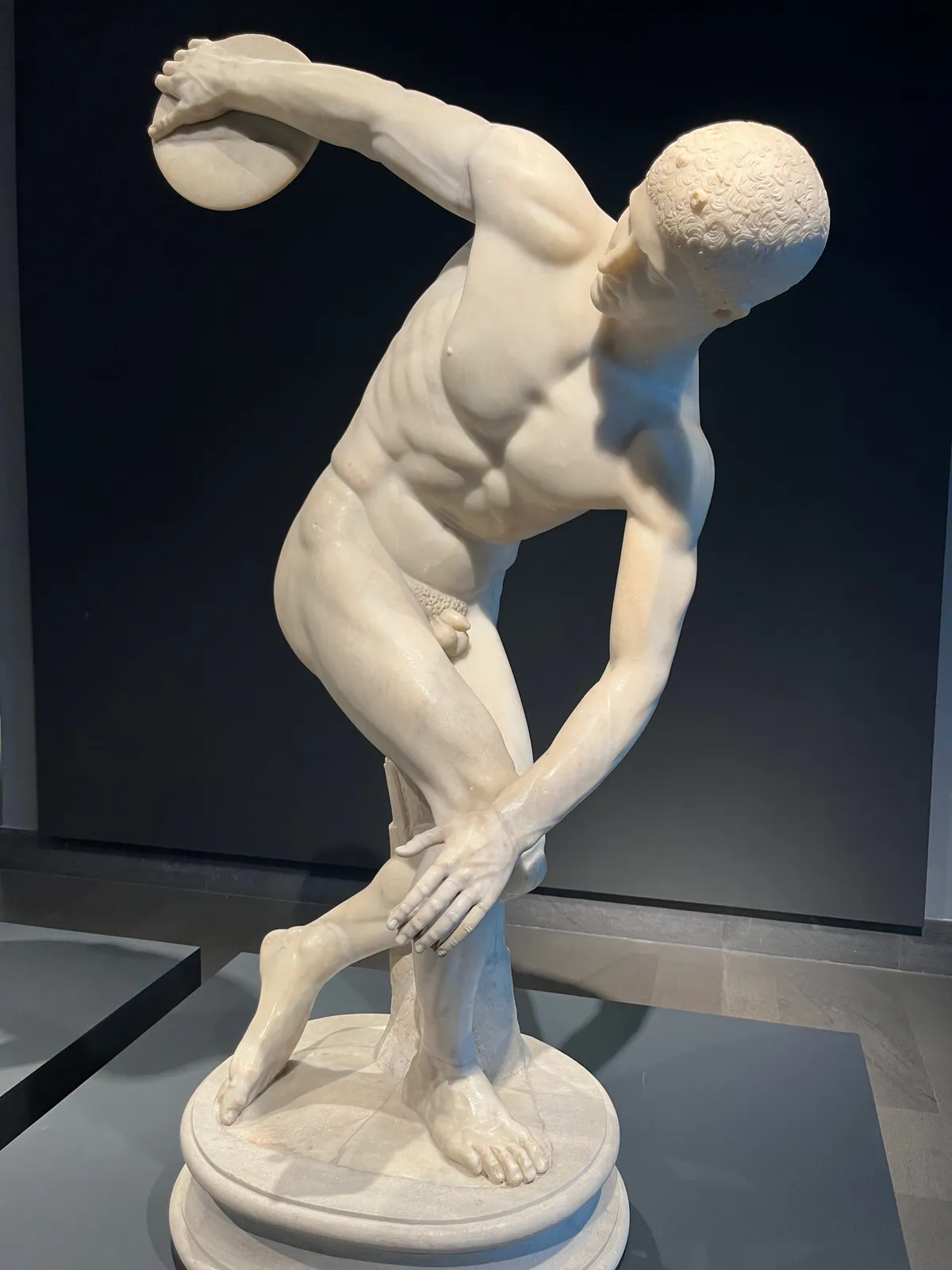
Discobolus
Myron
This Roman marble statue (mid-2nd c.) is a faithful copy of Myron’s Greek bronze Discobolus (c. 450 BC). It depicts an athlete in a dynamic pose, poised to release a discus, showcasing the Greek exploration of human form and movement. The sculpture highlights the tension and grace of athletic prowess, reflecting Roman admiration for Greek art and the enduring legacy of classical ideals in depicting the human body.
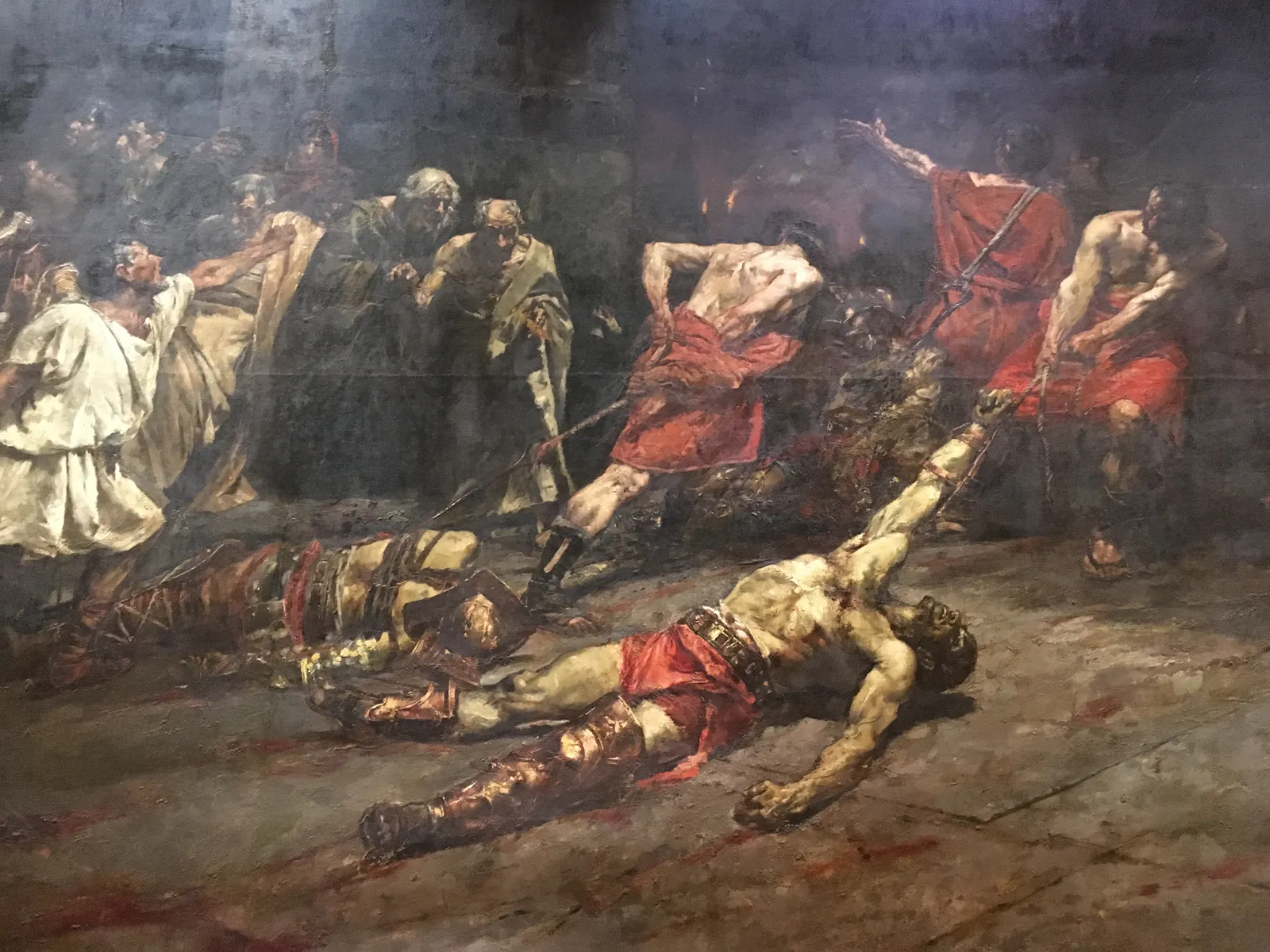
Spoliarium
Juan Luna
This vast 1884 canvas depicts slain gladiators dragged from the Roman arena, their bodies stripped in the spoliarium — the chamber beneath the Colosseum where the dead were despoiled. Luna used the scene as an allegory for the Philippines under Spanish rule, exposing oppression and voicing a nationalist cry for dignity and liberation.
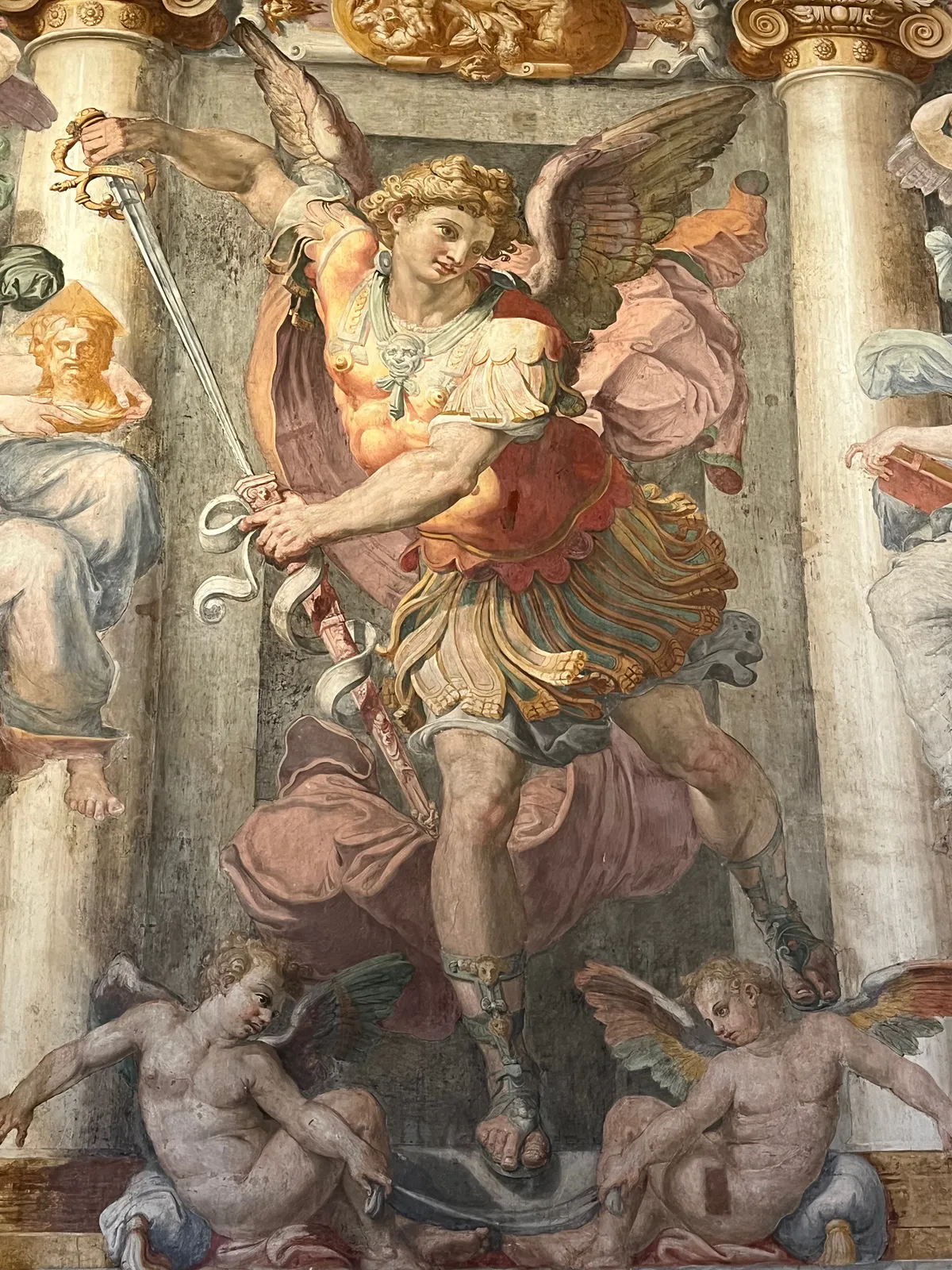
Saint Michael the Archangel
Pellegrino Tibaldi
This fresco (1545–46) in the Sala Paolina at Castel Sant'Angelo depicts the Archangel Michael sheathing his sword, symbolizing the end of the plague in 590. His muscular form and gilded armor convey divine justice and Roman salvation, highlighting the spiritual and civic authority of angelic intervention.
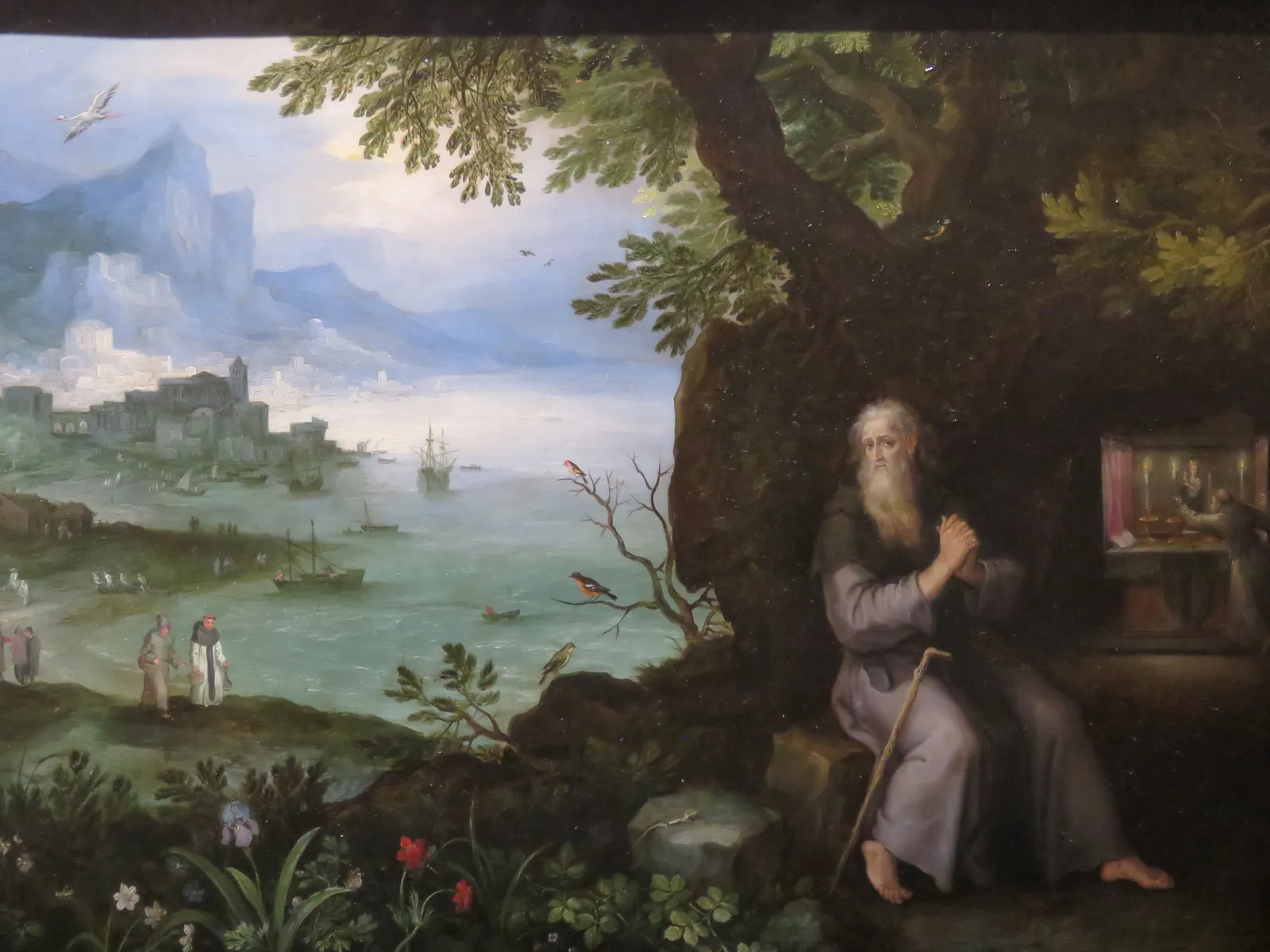
Saint Anthony the Hermit
Jan Brueghel
This tranquil painting (early 17th c.) shows Saint Anthony seated at the mouth of a cave, gazing contemplatively toward the city and sea. The vivid flora and distant harbor contrast with his solitude, symbolizing the tension between worldly life and spiritual retreat. A vision of a sacred altar within the cave suggests divine presence in the midst of earthly temptation.
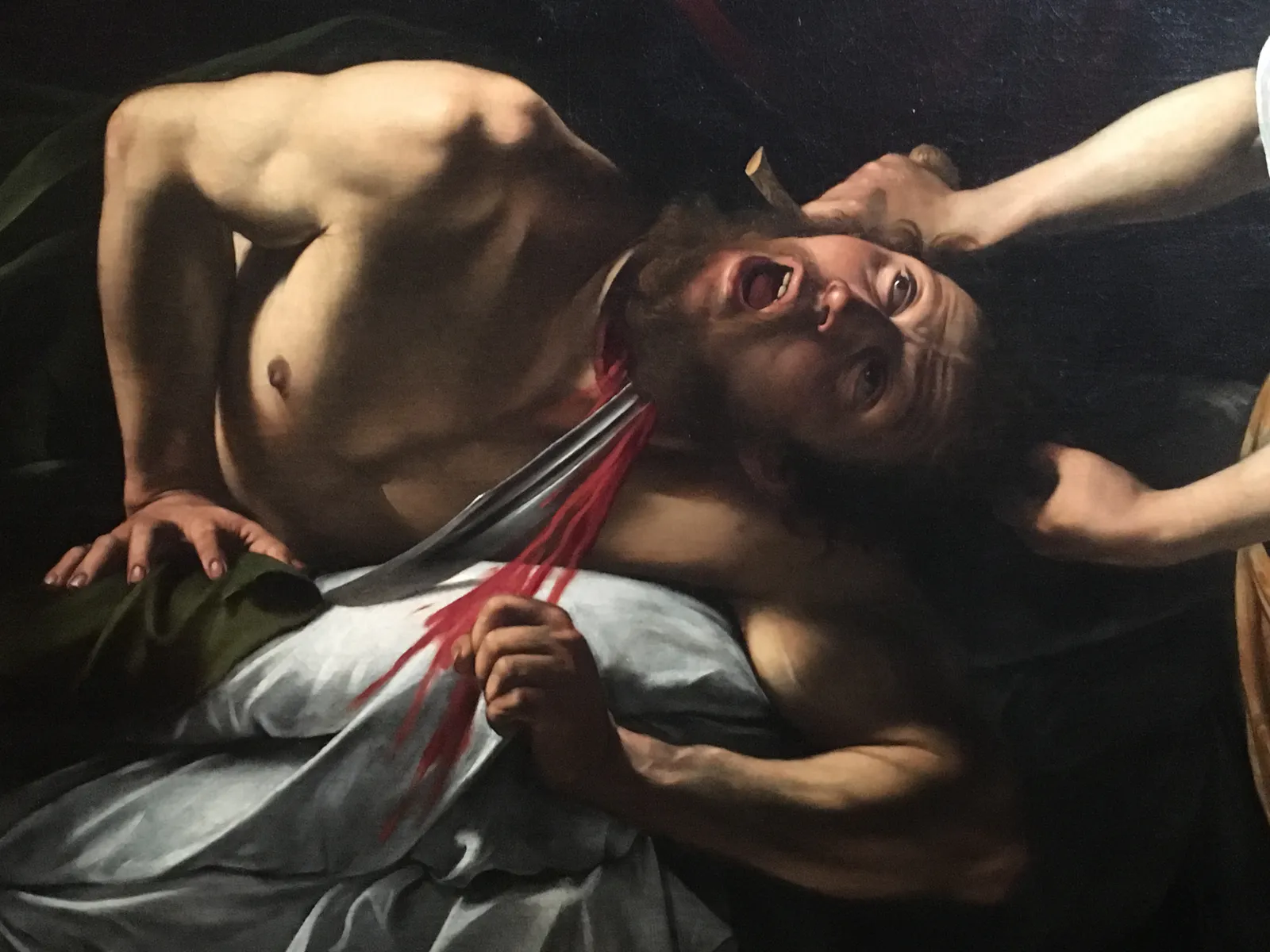
Judith Beheading Holofernes (detail)
Caravaggio
In this dramatic scene from Judith Beheading Holofernes (c.1598), the Assyrian general Holofernes struggles in his final moments as Judith, the Jewish widow, delivers the fatal blow. Caravaggio captures his terror with a contorted face and blood spurting across the bed, while Judith's hands hold him with determination. This raw depiction distills the narrative to its core: virtue triumphing over tyranny, conveyed with intense immediacy.
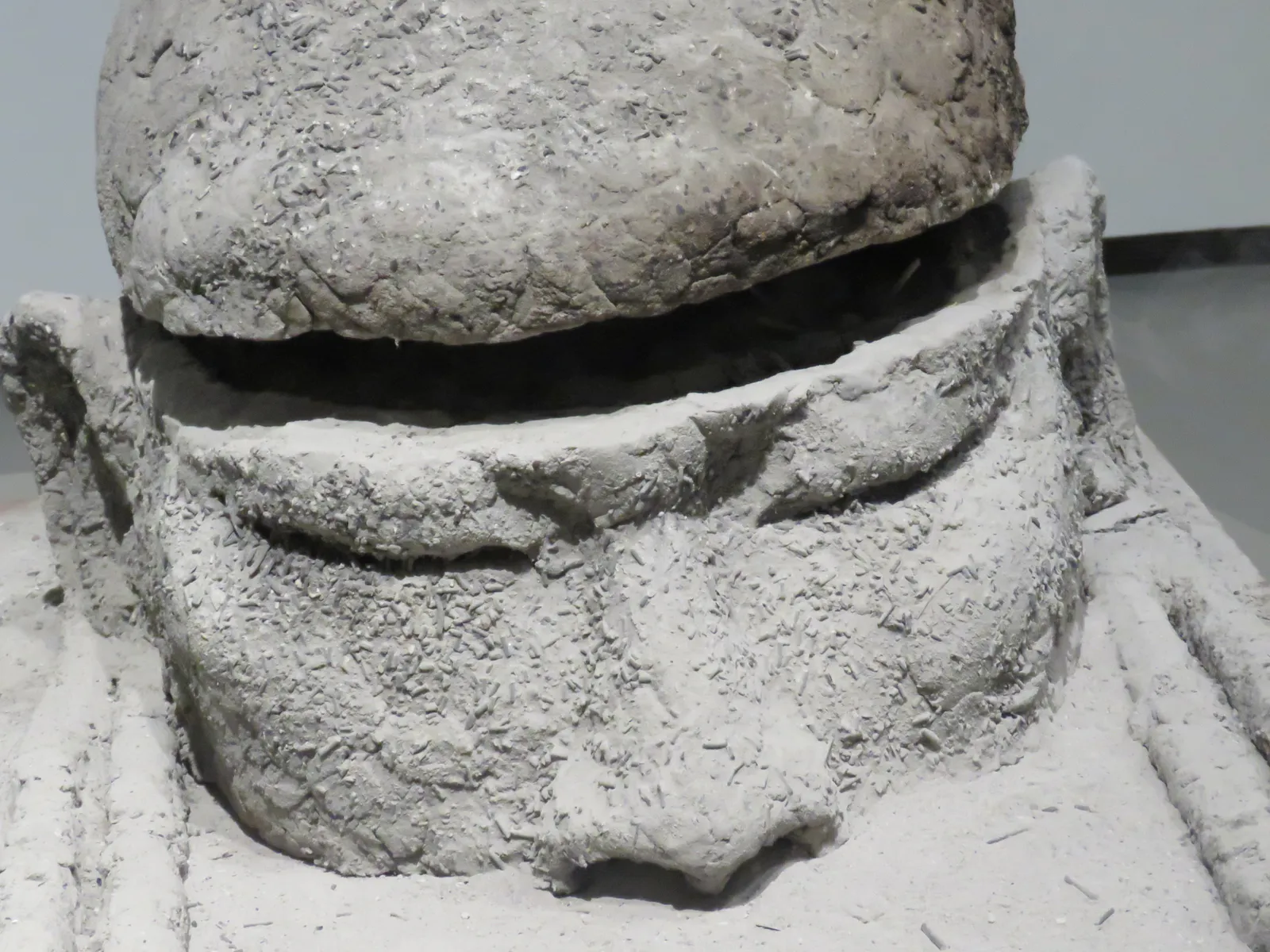
Sudden Awakening
Zhang Huan
This large Buddha head sculpture (2006) lies fragmented on the ground, its heavy upper section slightly shifted above closed eyes and rough, ash-coated features. Formed from ash and steel, it draws on materials linked to ritual burning and industrial residue. The broken, weighty face reveals how contemporary Buddhist art confronts impermanence and the tension between spiritual ideals and material collapse.
“When the path is beautiful, do not ask where it leads.” — Zen proverb
Welcome to my travel photography!
“When the path is beautiful, do not ask where it leads.” — Zen proverb
Welcome to my travel photography!
For as long as I can remember, my path has been one of discovery—seeking beauty, timelessness, and connection in every corner of the world. It has also been a journey of deep learning and understanding. I’ve been an avid traveler (or perhaps a travel addict?) for most of my life. My love for travel began long before I ever left home: as a child, I drew a fantasy map of my grandparents’ apartment and “traveled” through it with my cousin Sonya, imagining adventures in every corner. Nearly 90 countries and countless moments of awe later, I’m excited to share this journey with you.
Thanks to the tireless and ingenious programming of Diagilev, we’re now able to present about fifteen percent of the images I’ve accumulated over the years. More will be released in small batches depending on your interest. While the first release leans toward museum photography, later ones will include more nature, architecture, culture, and general travel experiences. If you’d like to receive email notifications about new releases, feel free to reach out—no commercial use, ever.
Throughout my travels, I’ve been drawn to two intertwined kinds of discovery. One is intellectual: learning why the world is the way it is. History became my guide, shaping my perspective and filling my camera roll with museums and old buildings. To me, history is not the past—it is the key to understanding the present and how the world became what it is. The other is emotional: seeking moments of elevation—spirituality, beauty, harmony—often found in nature, monasteries, and ancient sacred spaces. Together, these impulses shape my photography. It invites you to learn, admire, and soar—to rise above the mundane and see the world through a lens of curiosity and wonder.
Much of my later travel became possible thanks to my job with Delta Air Lines, but the wanderlust began years earlier. By the time I joined the industry, I had already visited over 35 countries and lived in several—largely thanks to a backpacking journey around the world with Luis León, whose face appears in many early photos. I grew up in Ufa in the USSR, and since leaving it I have lived, studied, and worked in Latvia, the United States, France, South Korea, Canada, Spain, Italy, Brazil, Japan, and Colombia.
A life of near-constant movement may seem a little crazy, but it has deepened my understanding of the world and produced the photography you are about to see. Over the years, my style has evolved—more intentional, more refined—yet its core remains the same: a search for understanding, timeless beauty, and a connection to those who walked this earth long before us.
I hope these photos stir something in your soul, just as they did in mine. I’d love to hear from you—whether reactions, suggestions, corrections, or a request to be added to the email list for new releases (no commercial use, I promise). You can learn more about my travels here, and my academic life here.
Enjoy our shared journey!