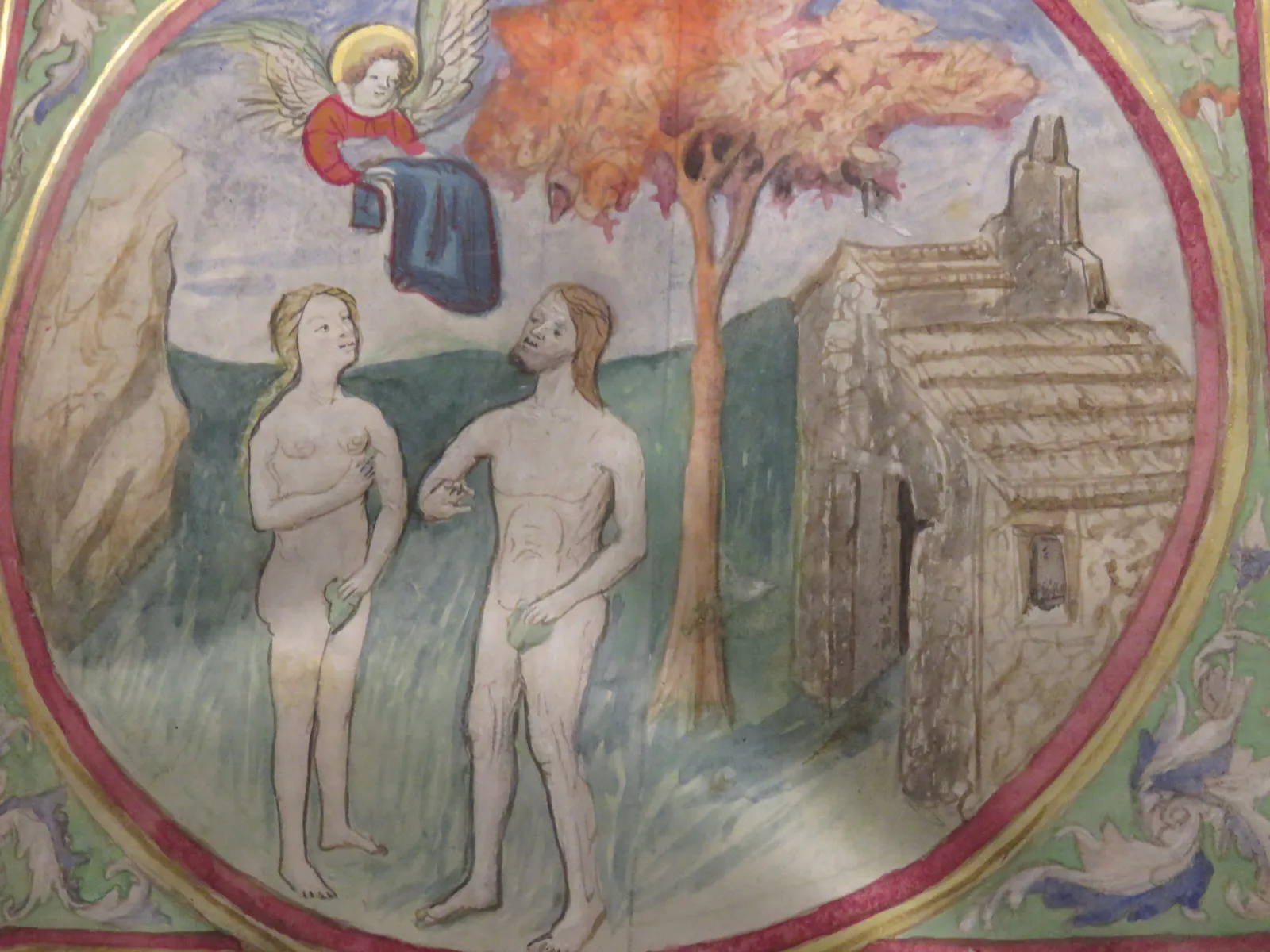
Expulsion from Eden
Maître des Médaillons
This French manuscript miniature (early 15th c.) shows Adam and Eve after the Fall, modestly covering themselves with leaves. An angel descends with a robe, while the Tree of Knowledge burns red above them. To the right stands a stone building, symbolizing exile from Paradise. The vivid colors and fine detail reflect late medieval devotional art.
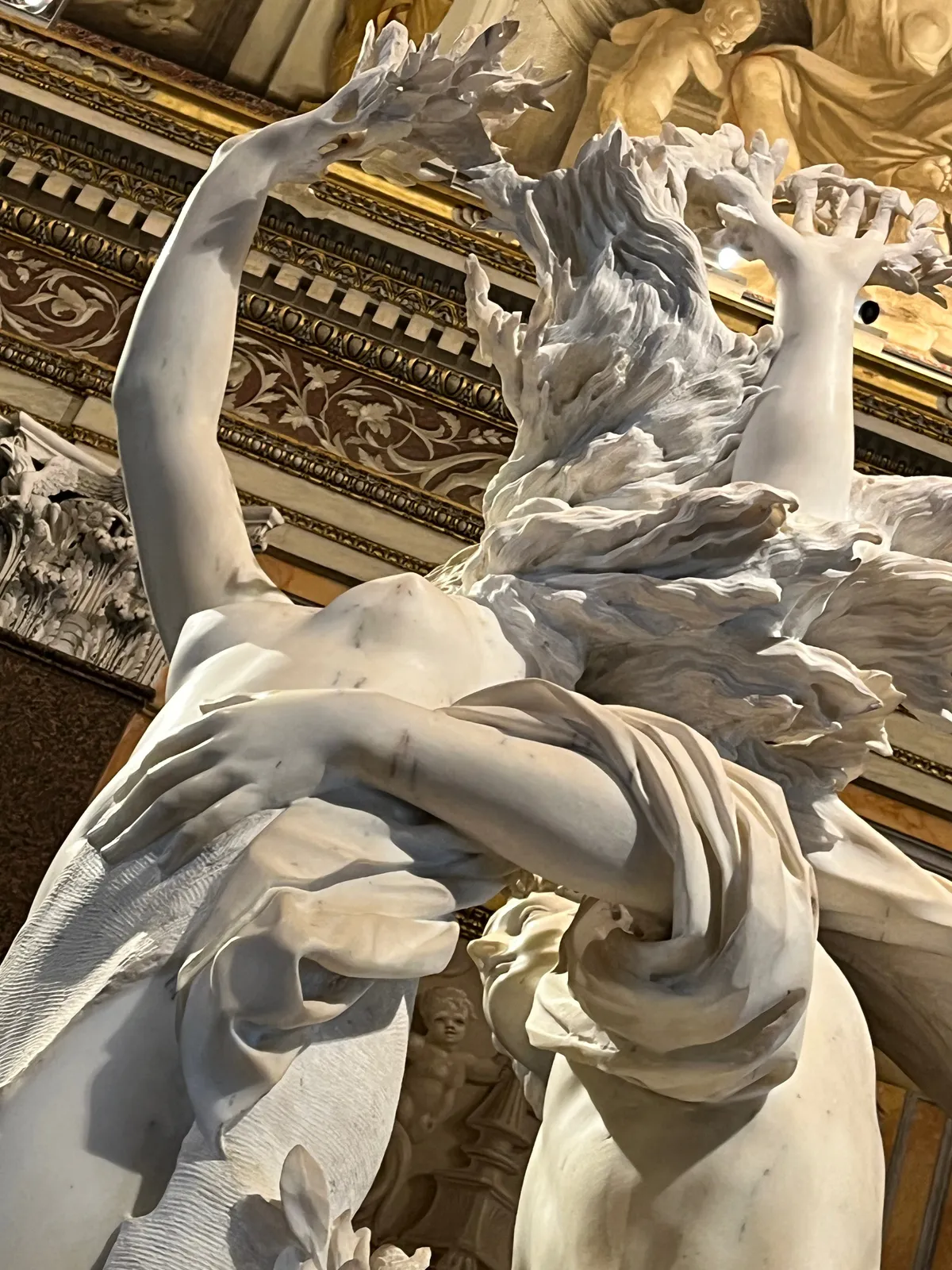
Apollo and Daphne (detail)
Gian Lorenzo Bernini
In this electrifying detail from Apollo and Daphne (1622–25), Daphne’s transformation peaks: her fingers stretch skyward as they fracture into laurel branches. Bernini’s carving achieves an uncanny fluidity—Apollo’s embrace contrasts her fleeing limbs, while bark and hair blur into motion, embodying divine metamorphosis and tragic escape.
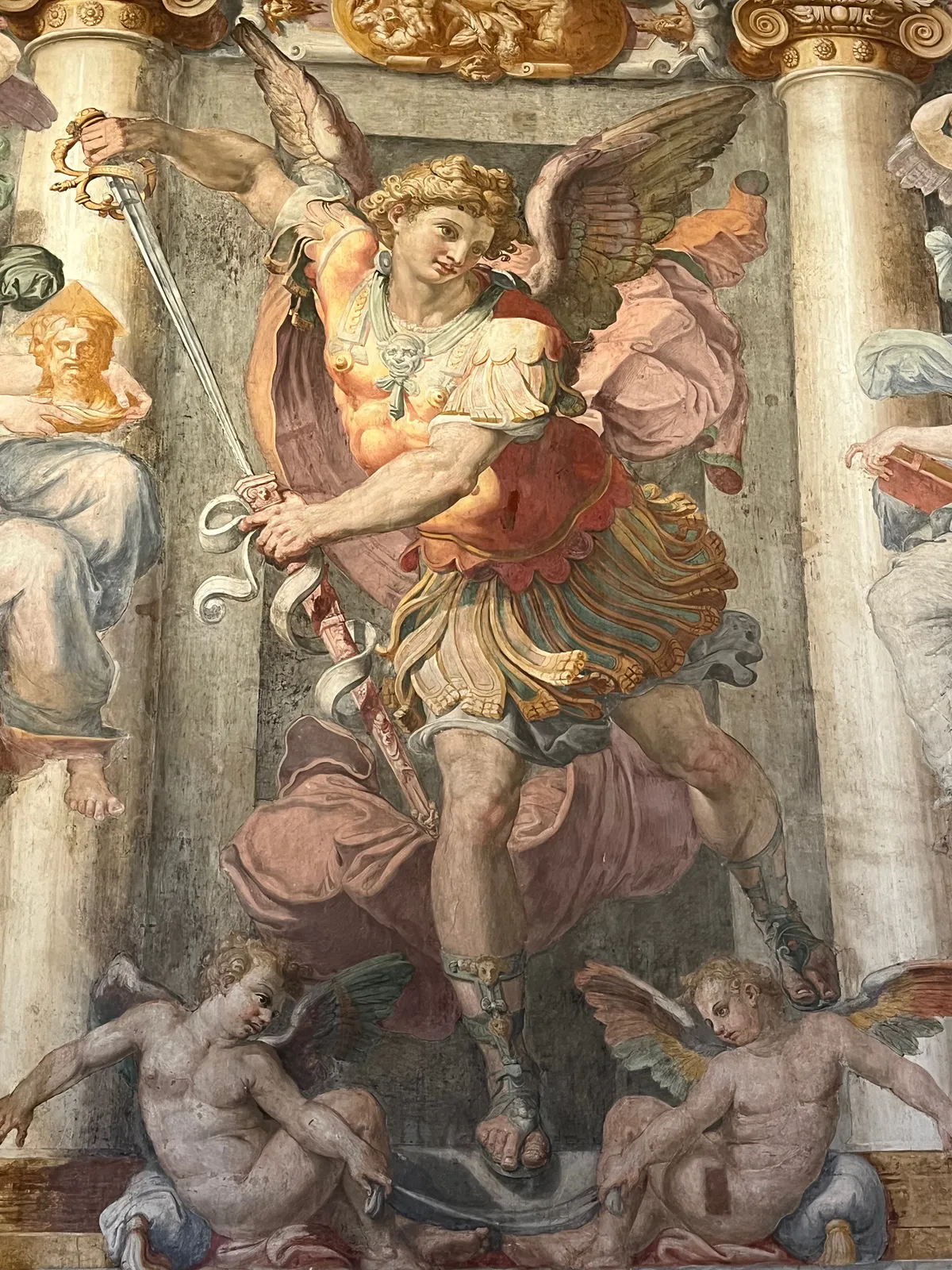
Saint Michael the Archangel
Pellegrino Tibaldi
This fresco (1545–46) in the Sala Paolina at Castel Sant'Angelo depicts the Archangel Michael sheathing his sword, symbolizing the end of the plague in 590. His muscular form and gilded armor convey divine justice and Roman salvation, highlighting the spiritual and civic authority of angelic intervention.
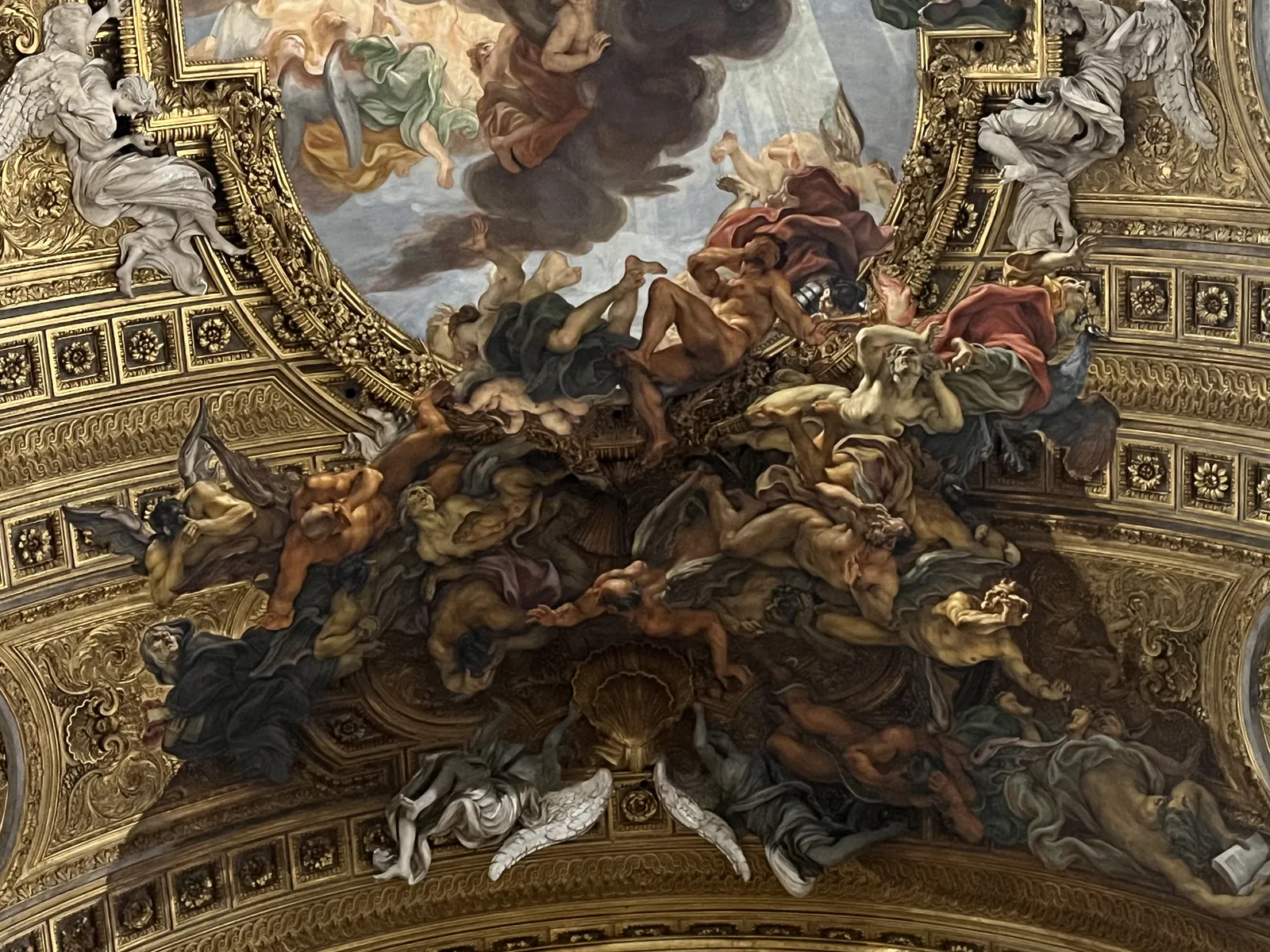
The Damned
Giovanni Battista Gaulli
In this dramatic segment (1676–79) from the Triumph of the Name of Jesus, Gaulli casts the damned from heaven into shadow and chaos. Their bodies twist, morph, and scream as they recoil from the divine light. Cloaked in darkness and shame, they contrast sharply with the radiant saved above—embodying Baroque emotion and the terrifying cost of spiritual failure.
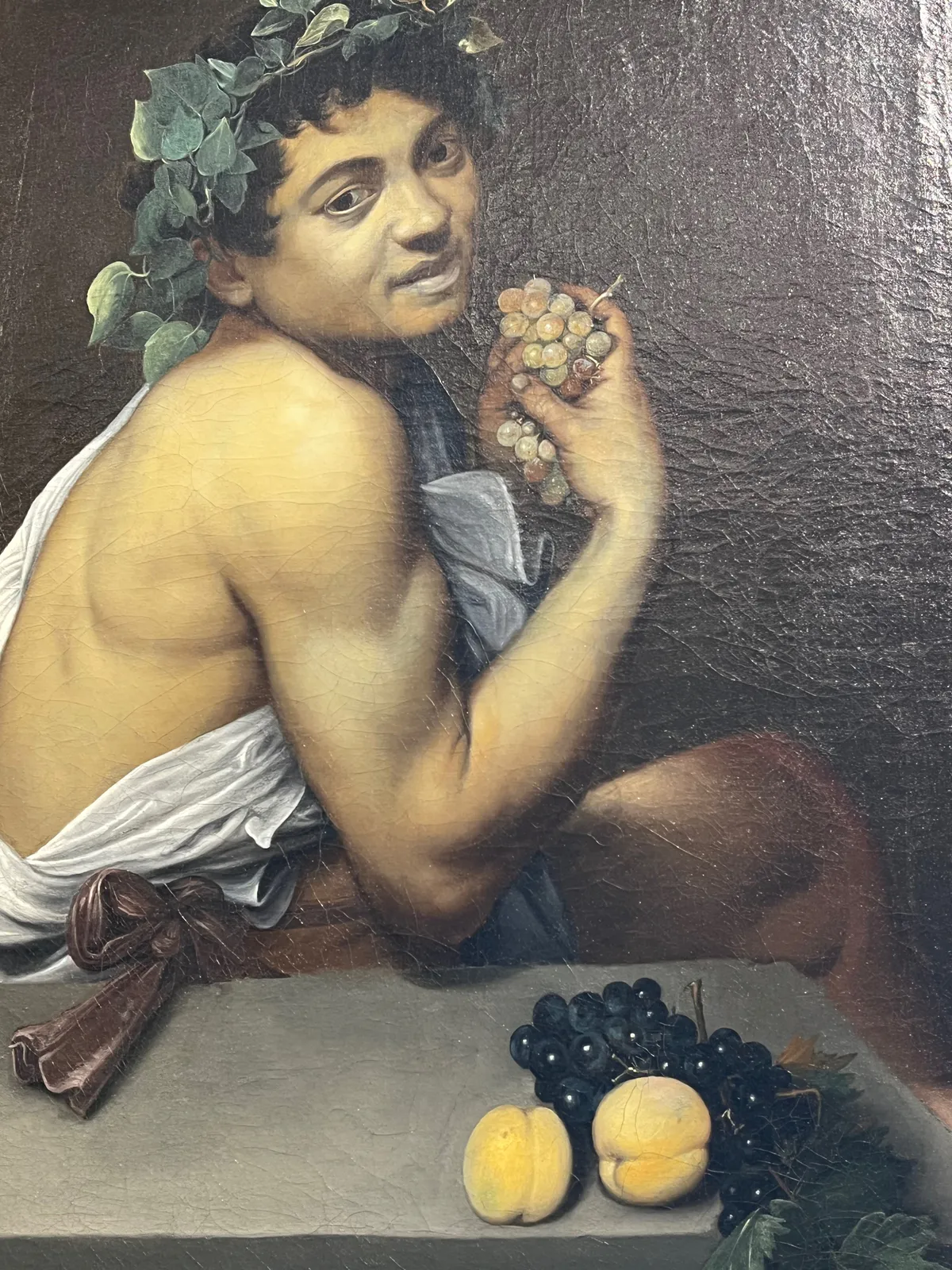
Young Sick Bacchus
Caravaggio
This self-portrait (c. 1593) shows Caravaggio as Bacchus with jaundiced skin and tense features, painted while recovering from illness. The ivy crown replaces the usual vine leaves, subverting divine idealism. Both sensual and unsettling, the image mocks classical beauty and reveals the artist’s own physical vulnerability.
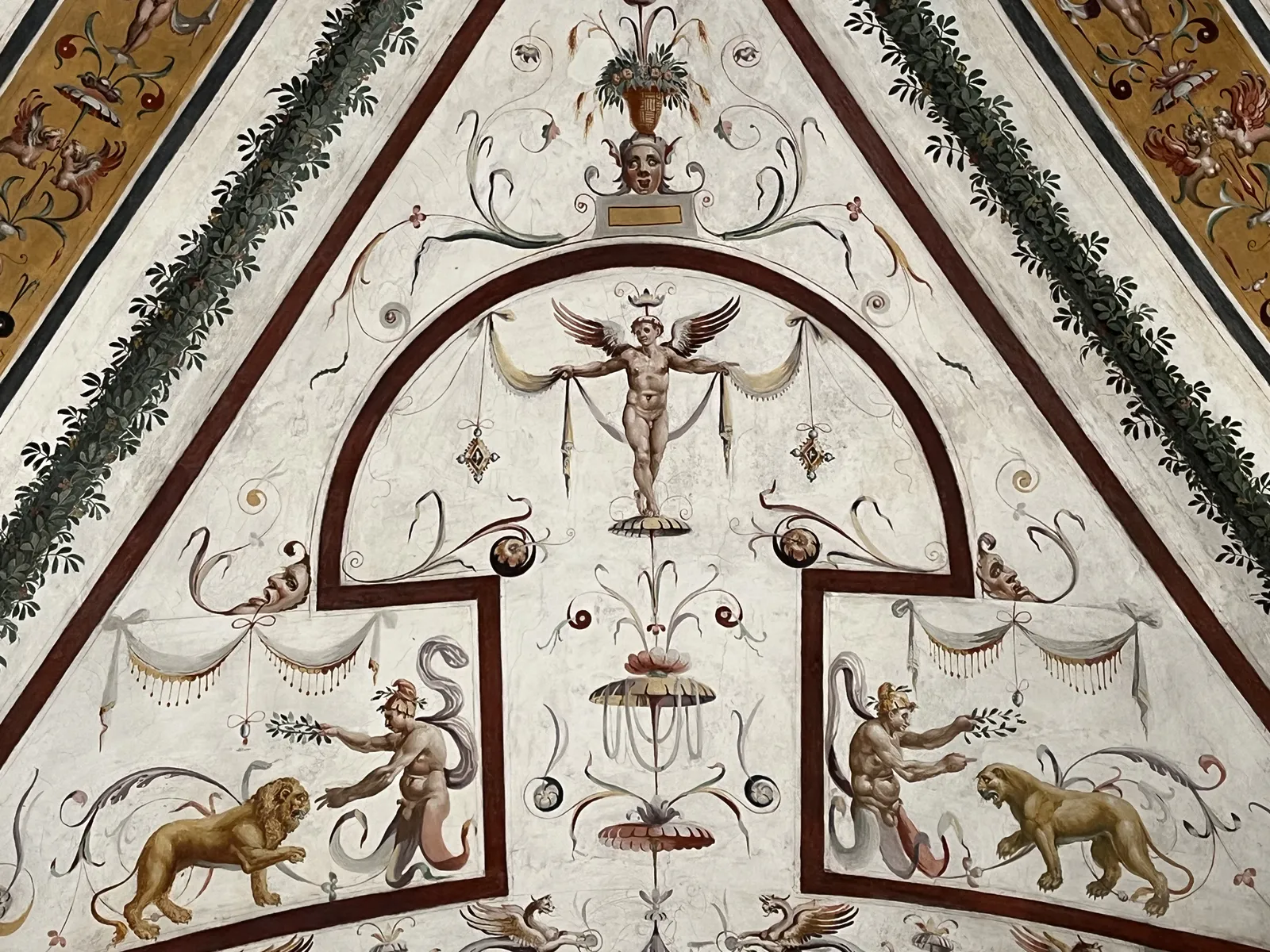
Grotesque Ceiling Decoration
Bonaccorsi Pietro (Perin del Vaga) and Rietti Domenico
This fresco (c. 16th c.) blends Renaissance whimsy with ancient Roman influence, reviving the grotesque style unearthed in Nero’s Domus Aurea. Figures with human and animal features balance symmetrical vines, mythical beasts, and theatrical masks. The composition celebrates harmony through fantasy, playfully bridging antiquity and imagination.
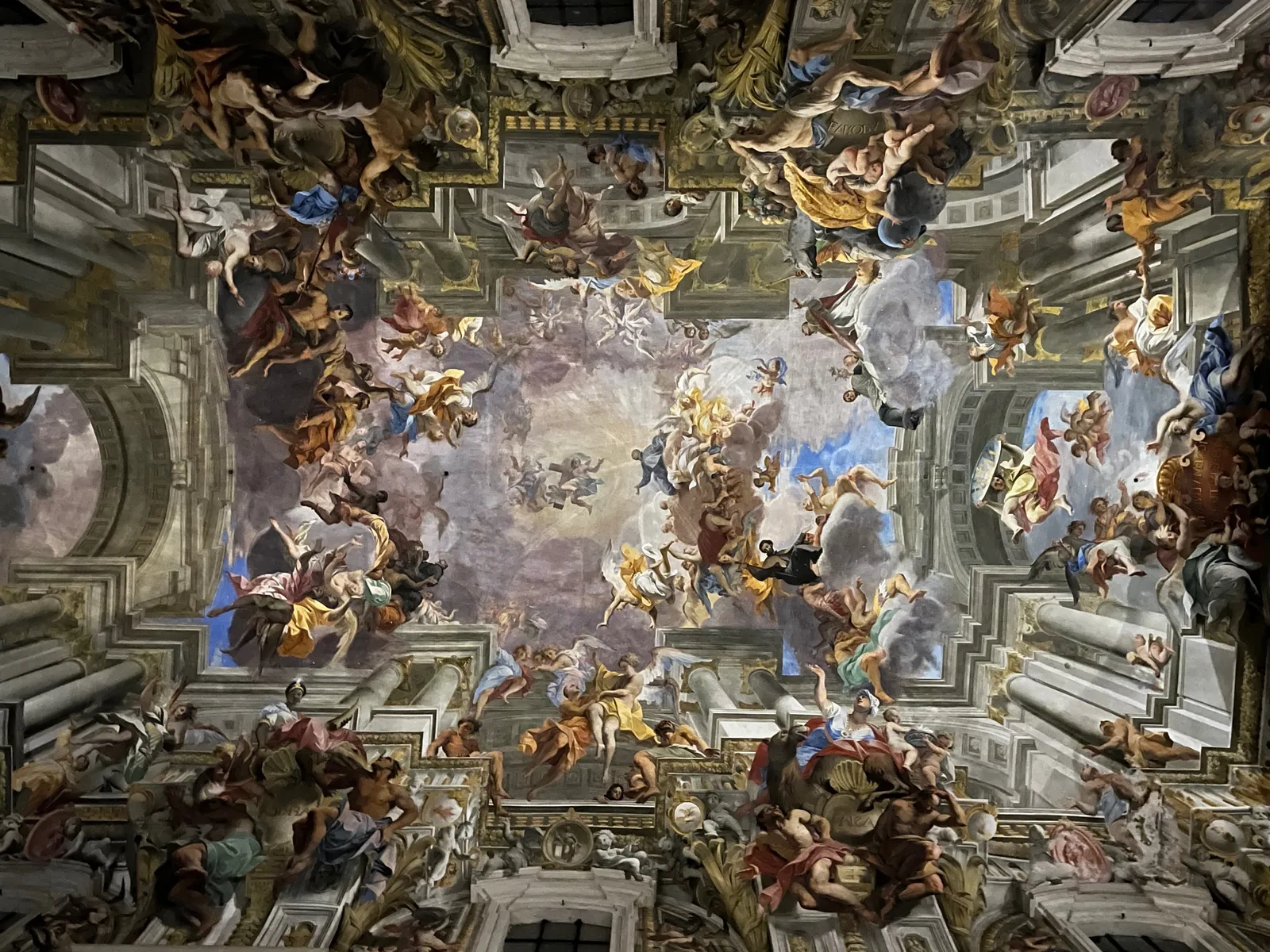
The Apotheosis of St. Ignatius
Andrea Pozzo
This Baroque trompe-l’œil painting (1685–94) transforms the flat ceiling into a soaring heavenly vision. St. Ignatius is welcomed into paradise by Christ and the Virgin, while allegories of the continents celebrate Jesuit missions. Pozzo’s masterful illusionism merges faith, perspective, and global ambition.
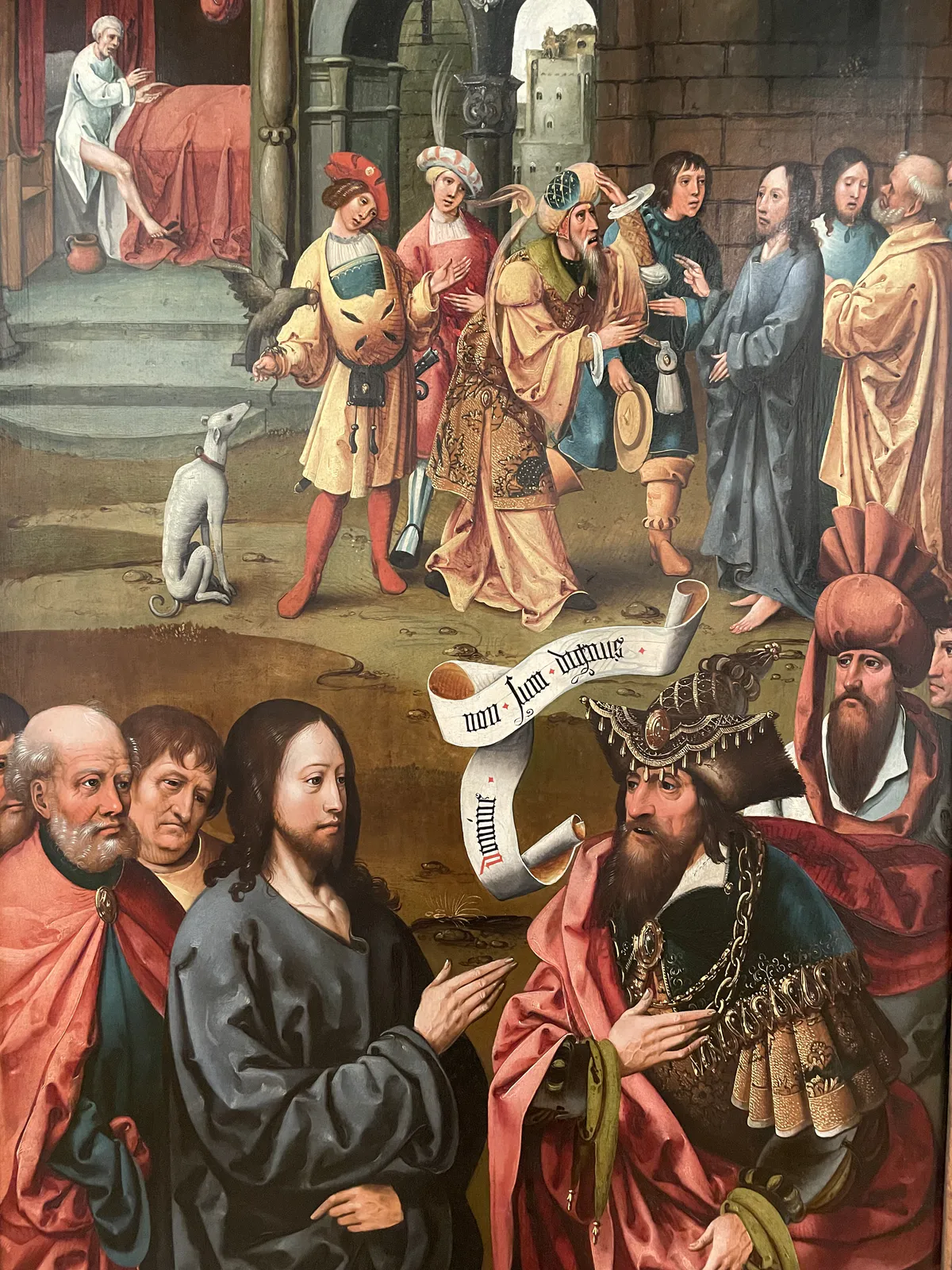
Christ and the Centurion of Capernaum
Master of Adoration of Amberes
This Northern Renaissance panel (1520–30) captures the moment a Roman centurion asks Christ to heal his servant, saying Lord, I am not worthy. The scene blends biblical narrative with contemporary Flemish attire, highlighting faith over status. The expressive gestures and rich details emphasize humility and the universal appeal of compassion, reflecting the era's fusion of religious and cultural elements.
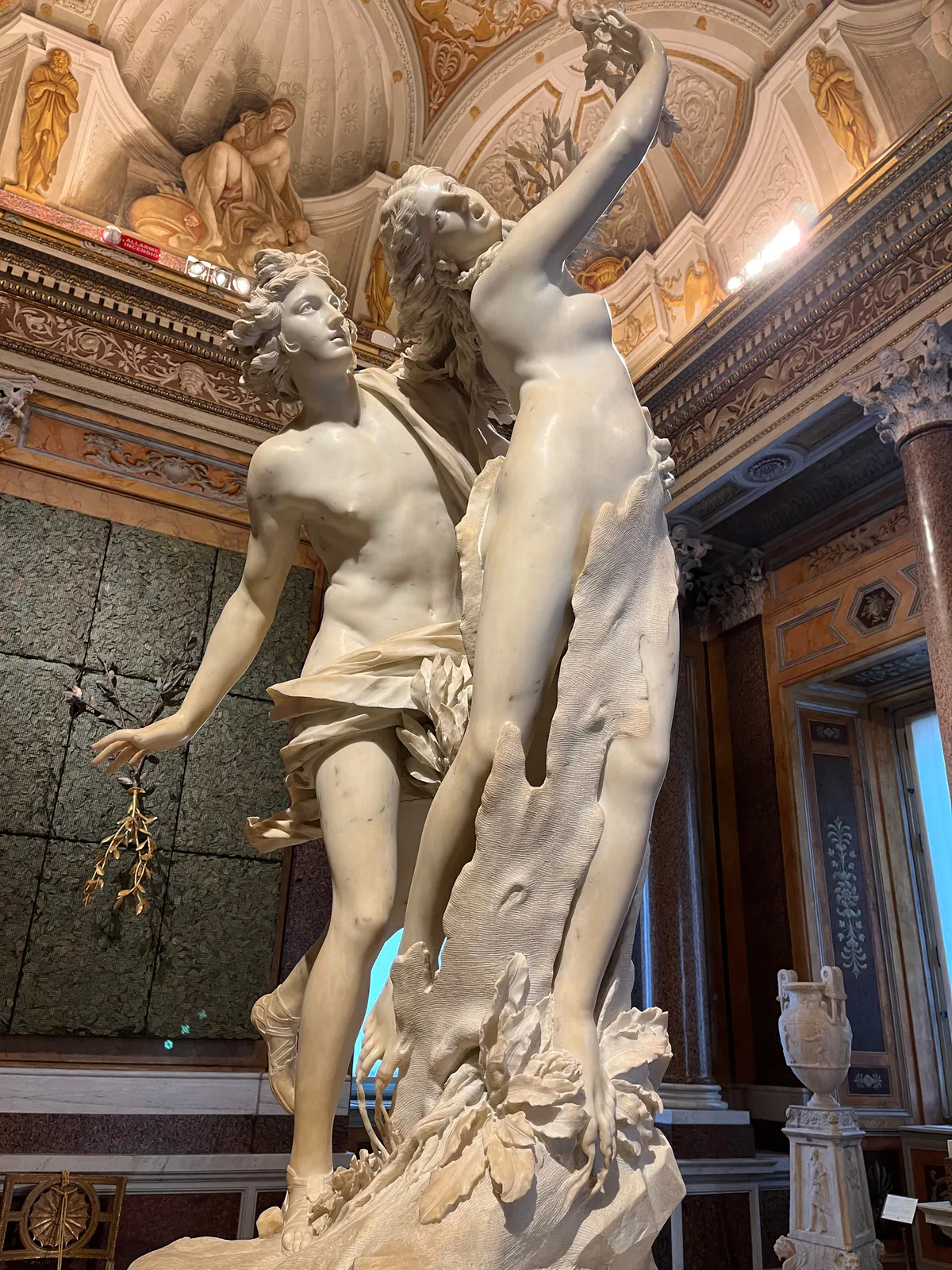
Apollo and Daphne
Bernini
This electrifying marble group (1622–25) freezes the climax of Ovid’s tale as Daphne begins to turn into a laurel tree to escape Apollo’s grasp. Her fingers sprout leaves, her torso hardens into bark. Bernini renders transformation with astonishing fluidity, embodying Baroque ideals of movement, emotion, and divine drama.
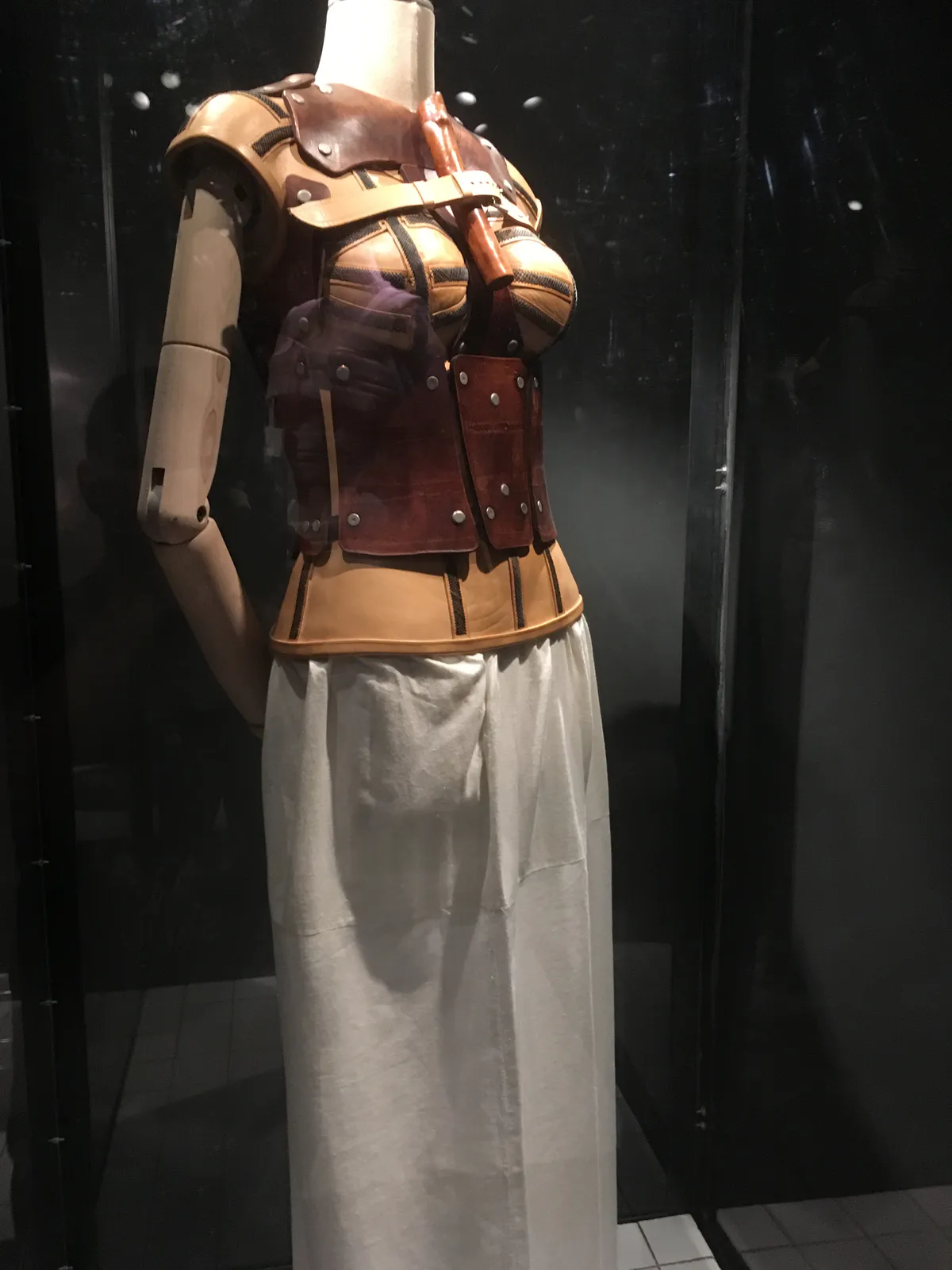
Painted Orthopedic Corset
Frida Kahlo
This hand-painted leather corset (c.1944), worn by Frida Kahlo, illustrates both her physical suffering and creative defiance. After spinal injuries and repeated surgeries, Kahlo turned orthopedic braces into canvases, inscribing them with personal symbols. She transformed medical necessity into art, merging pain, identity, and resilience.
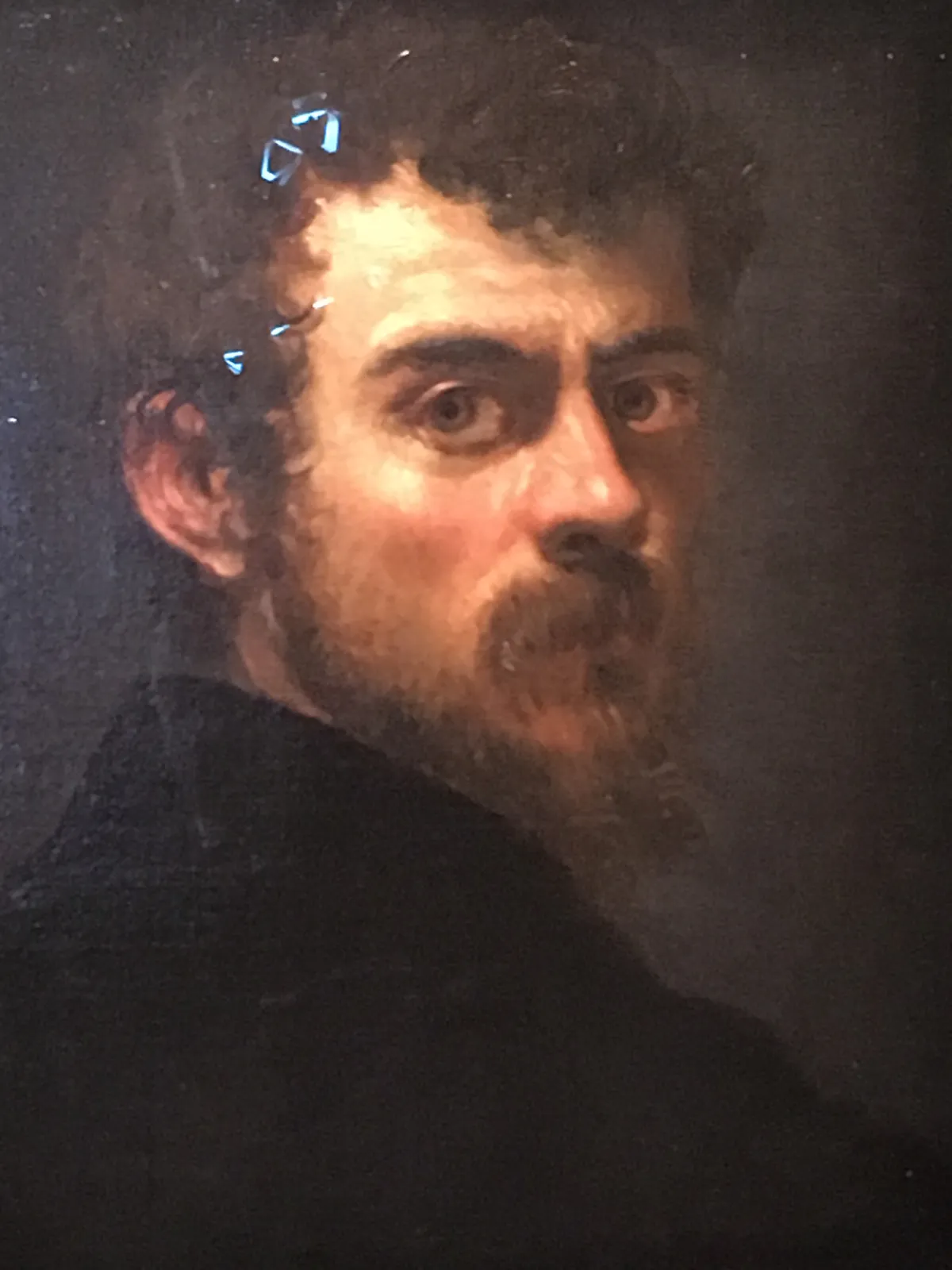
Self-Portrait
Tintoretto
This self-portrait (1546–48) by Tintoretto, a leading figure of the Venetian Renaissance, presents the artist with an intense, direct gaze that suggests introspection and resolve. The subdued palette and earthy tones create a solemn mood, yet the brisk, energetic handling of paint hints at the dramatic style that defined his larger works. Emphasizing inner character over setting, the portrait later entered the Orleans Collection and was acquired for Marie Antoinette in 1785.
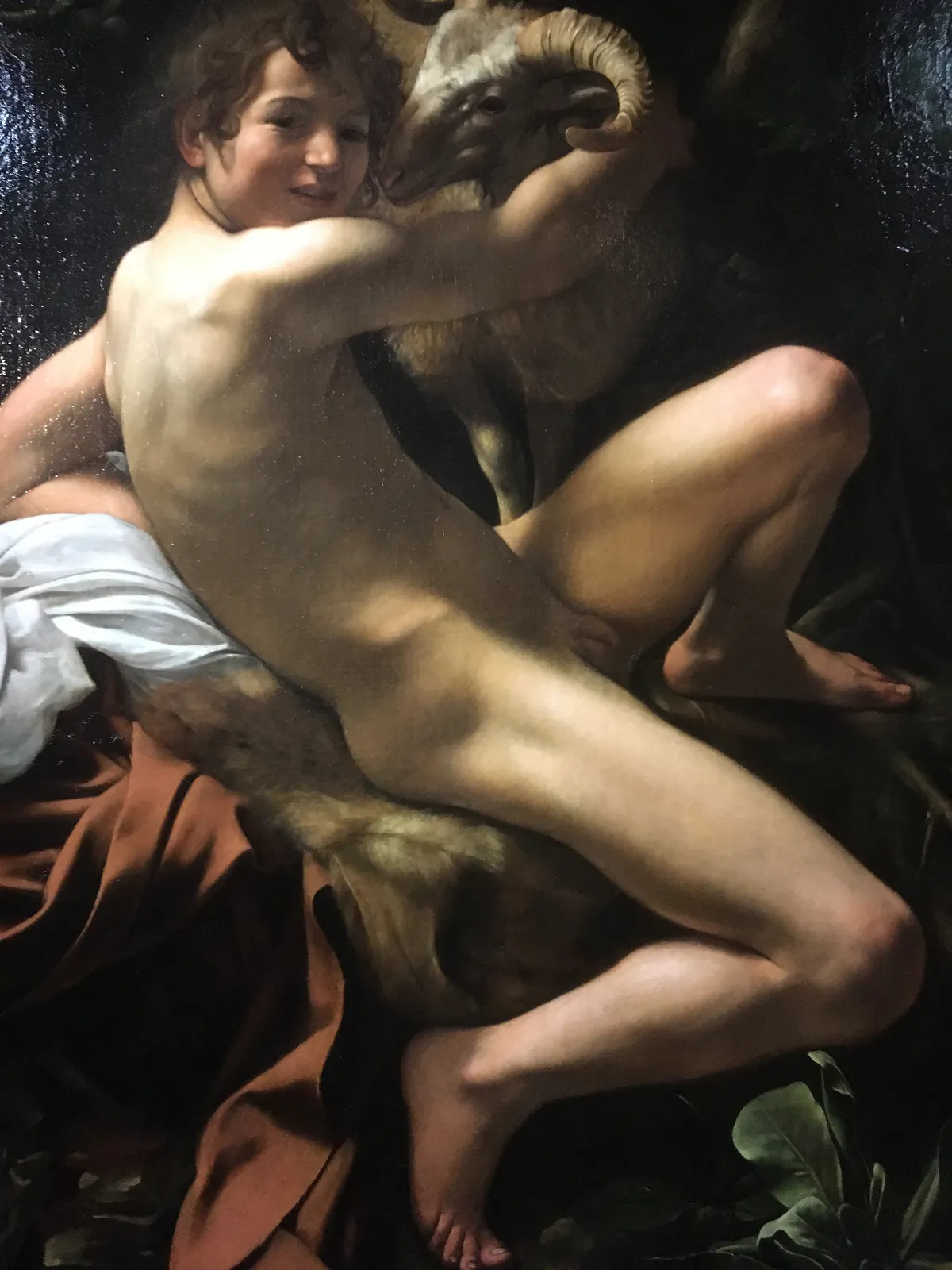
John the Baptist (Youth with a Ram)
Caravaggio
Painted around 1602, this work portrays John the Baptist as a youthful figure embracing a ram. Caravaggio departs from solemn prophecy to present vitality, sensuality, and human immediacy. The saint’s glance engages the viewer, while the animal evokes sacrifice and redemption. Through natural light and unidealized form, the painting fuses biblical meaning with raw, earthy presence.
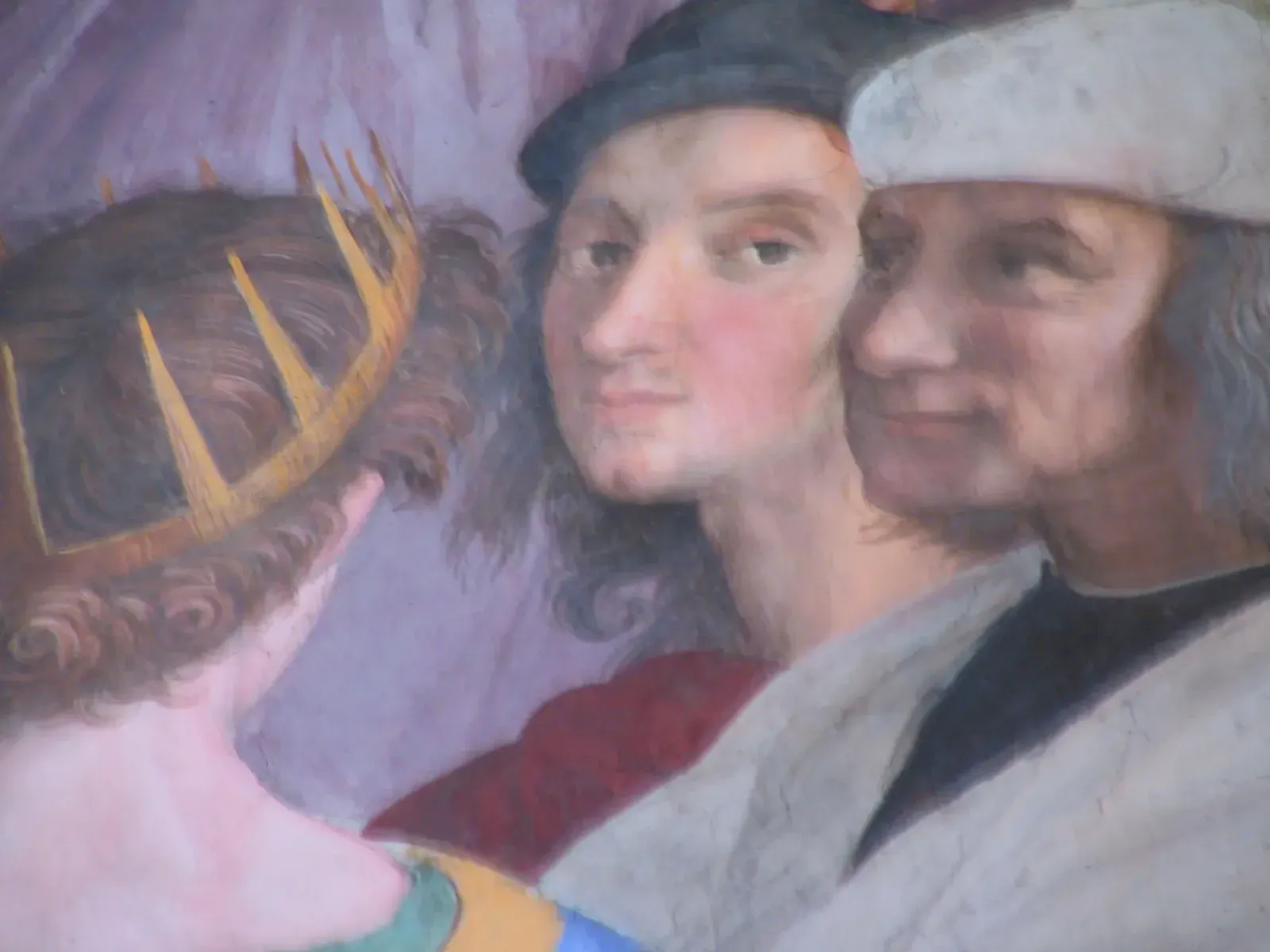
Raphael and Perugino (detail)
Raphael
This section of The School of Athens (1509-11) features a rare self-portrait of Raphael (center) alongside his teacher Perugino (right). Originating from the Italian High Renaissance, the work subtly inserts the artist into the legacy of classical knowledge, aligning painters with philosophers as bearers of intellectual ideals.
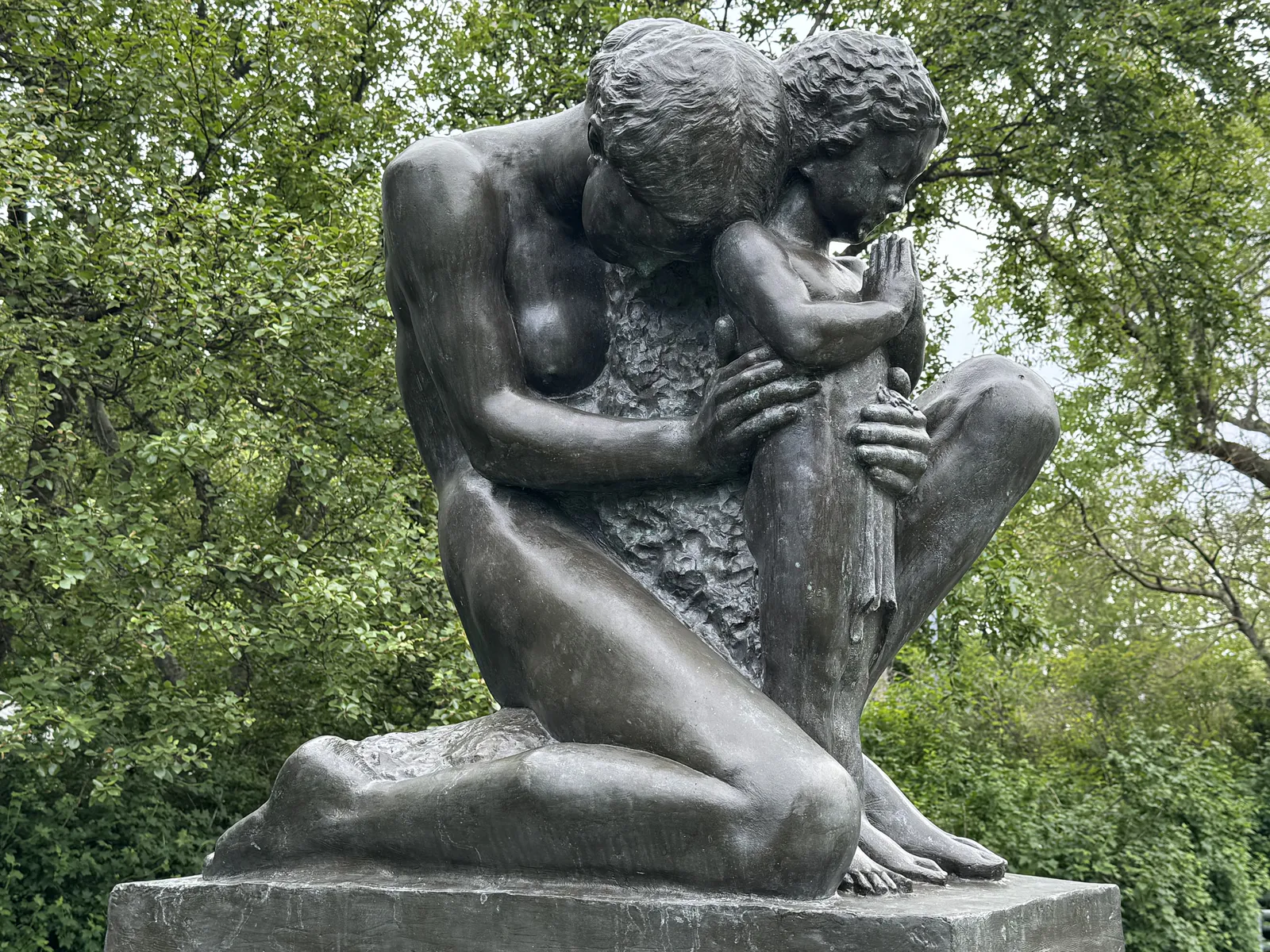
The Prayer
Einar Jónsson
Created in 1909 and later cast in bronze, this sculpture shows a kneeling woman embracing a praying child, merging maternal love with spiritual devotion. Jónsson, pioneer of Icelandic sculpture, wove Nordic symbolism into works that joined earthly care and divine aspiration. His 1909 donation of all his art to the nation ensured the founding of Iceland’s first art museum in 1923, making pieces like The Prayer central to national identity.
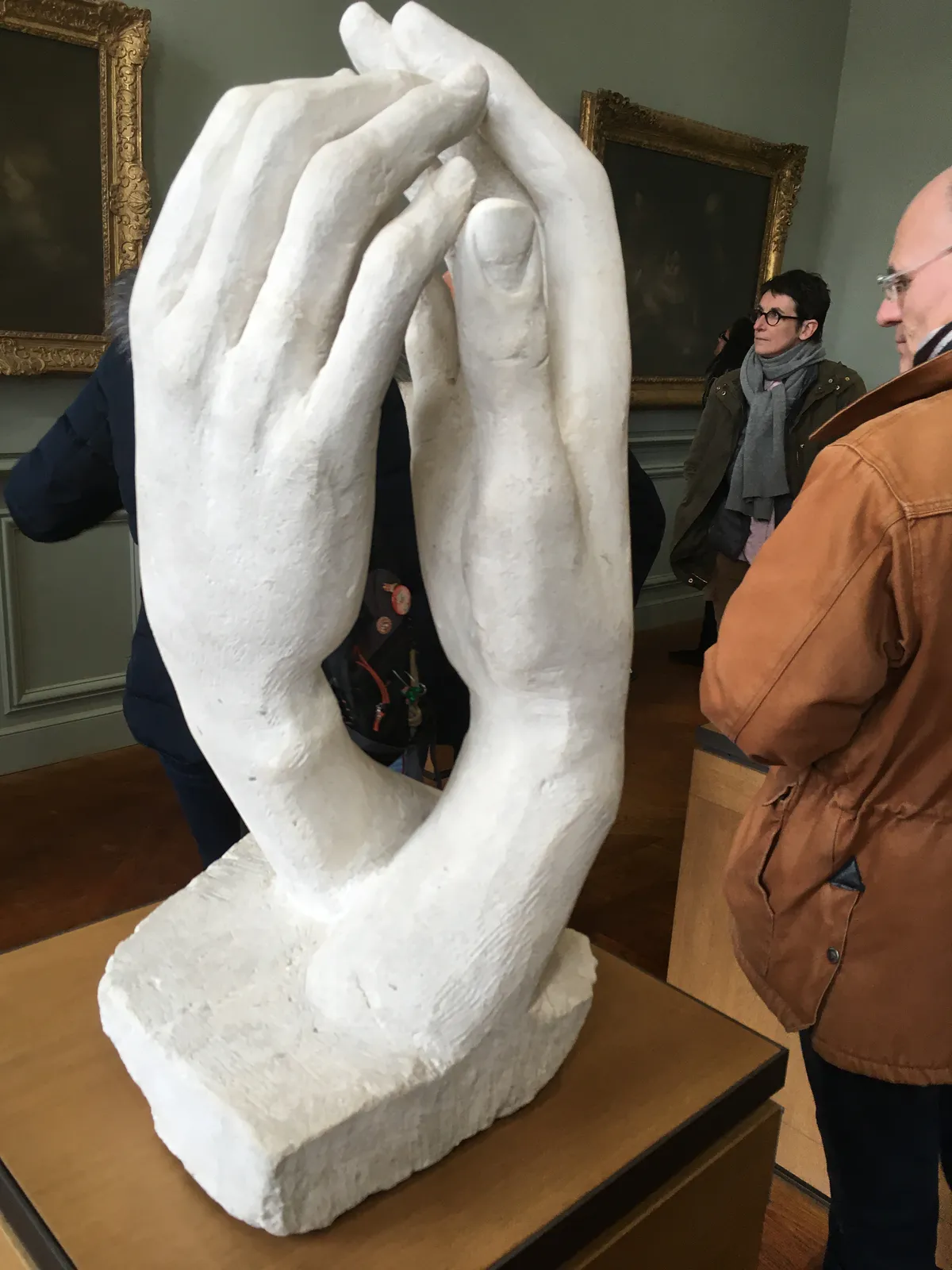
The Cathedral
Auguste Rodin
This 1908 sculpture features two right hands reaching towards each other, symbolizing connection and unity. Initially named The Arch of Alliance, it was inspired by Gothic cathedral rib vaults and renamed in 1914. The texture and interplay of light and shadow evoke prayer and contemplation. This work marks Rodin’s shift from realism to modernism, emphasizing emotional depth over physical form.
“When the path is beautiful, do not ask where it leads.” — Zen proverb
Welcome to my travel photography!
“When the path is beautiful, do not ask where it leads.” — Zen proverb
Welcome to my travel photography!
For as long as I can remember, my path has been one of discovery—seeking beauty, timelessness, and connection in every corner of the world. It has also been a journey of deep learning and understanding. I’ve been an avid traveler (or perhaps a travel addict?) for most of my life. My love for travel began long before I ever left home: as a child, I drew a fantasy map of my grandparents’ apartment and “traveled” through it with my cousin Sonya, imagining adventures in every corner. Nearly 90 countries and countless moments of awe later, I’m excited to share this journey with you.
Thanks to the tireless and ingenious programming of Diagilev, we’re now able to present about fifteen percent of the images I’ve accumulated over the years. More will be released in small batches depending on your interest. While the first release leans toward museum photography, later ones will include more nature, architecture, culture, and general travel experiences. If you’d like to receive email notifications about new releases, feel free to reach out—no commercial use, ever.
Throughout my travels, I’ve been drawn to two intertwined kinds of discovery. One is intellectual: learning why the world is the way it is. History became my guide, shaping my perspective and filling my camera roll with museums and old buildings. To me, history is not the past—it is the key to understanding the present and how the world became what it is. The other is emotional: seeking moments of elevation—spirituality, beauty, harmony—often found in nature, monasteries, and ancient sacred spaces. Together, these impulses shape my photography. It invites you to learn, admire, and soar—to rise above the mundane and see the world through a lens of curiosity and wonder.
Much of my later travel became possible thanks to my job with Delta Air Lines, but the wanderlust began years earlier. By the time I joined the industry, I had already visited over 35 countries and lived in several—largely thanks to a backpacking journey around the world with Luis León, whose face appears in many early photos. I grew up in Ufa in the USSR, and since leaving it I have lived, studied, and worked in Latvia, the United States, France, South Korea, Canada, Spain, Italy, Brazil, Japan, and Colombia.
A life of near-constant movement may seem a little crazy, but it has deepened my understanding of the world and produced the photography you are about to see. Over the years, my style has evolved—more intentional, more refined—yet its core remains the same: a search for understanding, timeless beauty, and a connection to those who walked this earth long before us.
I hope these photos stir something in your soul, just as they did in mine. I’d love to hear from you—whether reactions, suggestions, corrections, or a request to be added to the email list for new releases (no commercial use, I promise). You can learn more about my travels here, and my academic life here.
Enjoy our shared journey!