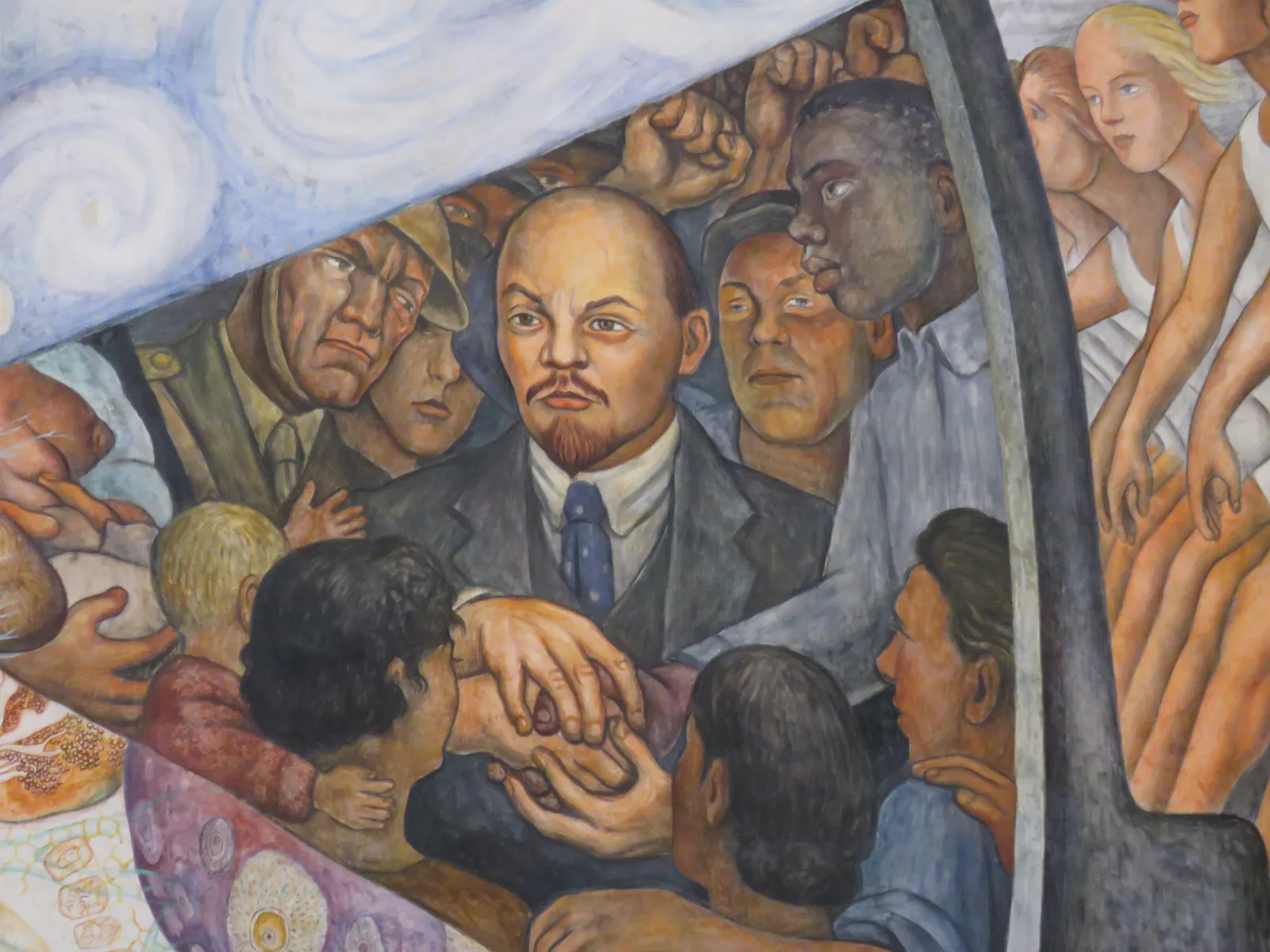
Lenin
Diego Rivera
This mural fragment (1934) shows Vladimir Lenin at the center, joining the hands of workers of different races in a dense crowd. The scene comes from Rivera’s Man at the Crossroads mural destroyed at Rockefeller Center, whose inclusion of Lenin provoked its removal. By recreating the composition at the Palacio de Bellas Artes, Rivera reaffirmed his Marxist political stance.
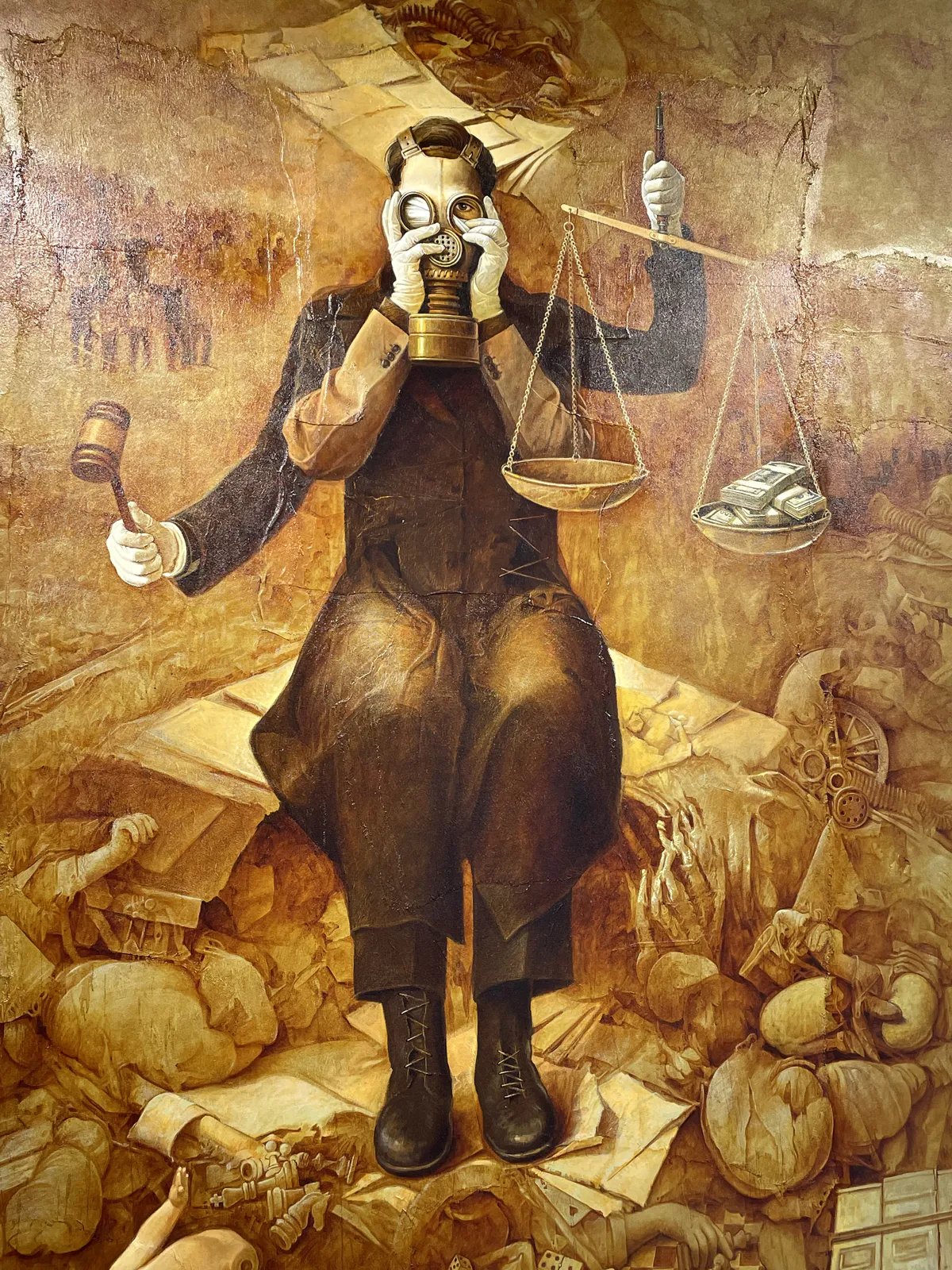
Retrato alegórico de la injusticia
Dustín Muñoz
In his powerful Allegoric Portrait of Justice (2018), Muñoz portrays a masked judge seated atop chaos, weighing gold bars against an empty scale. His gavel and gas mask signal institutional blindness and moral decay. Painted in acrylic on canvas, the work denounces injustice as systemic, silencing truth and privileging wealth over human life.
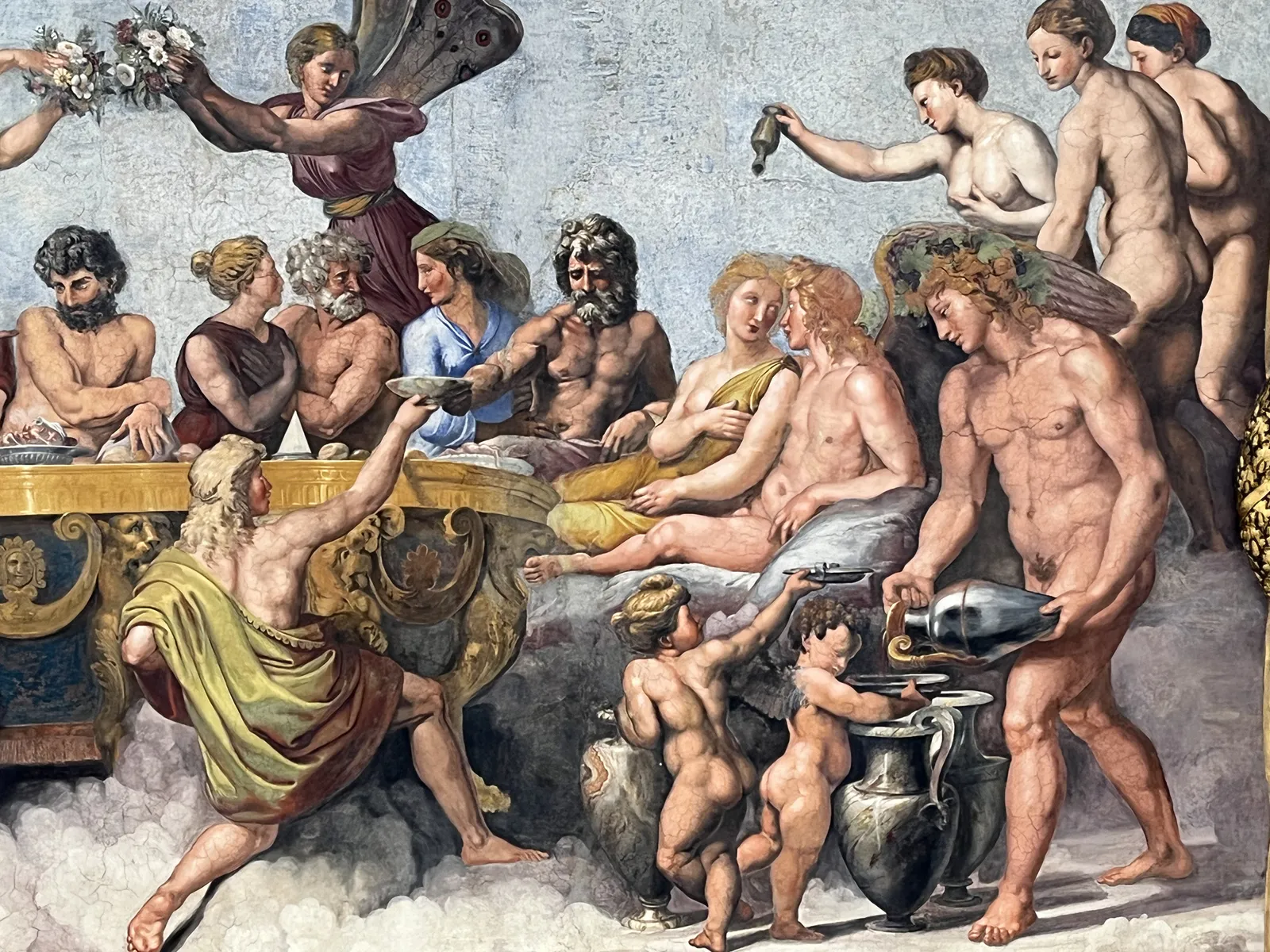
The Wedding Banquet of Cupid and Psyche
Raphael
In this fresco (1518–19), Raphael presents the divine banquet:on the left are Neptune, Persephone, Pluto, Juno, and Jupiter receiving a drink from Ganymede. On the right sit Psyche and Cupid, gazing at each other. In the foreground, Bacchus and a young satyr pour wine, highlighting the festive nature of Cupid’s immortal union with Psyche.
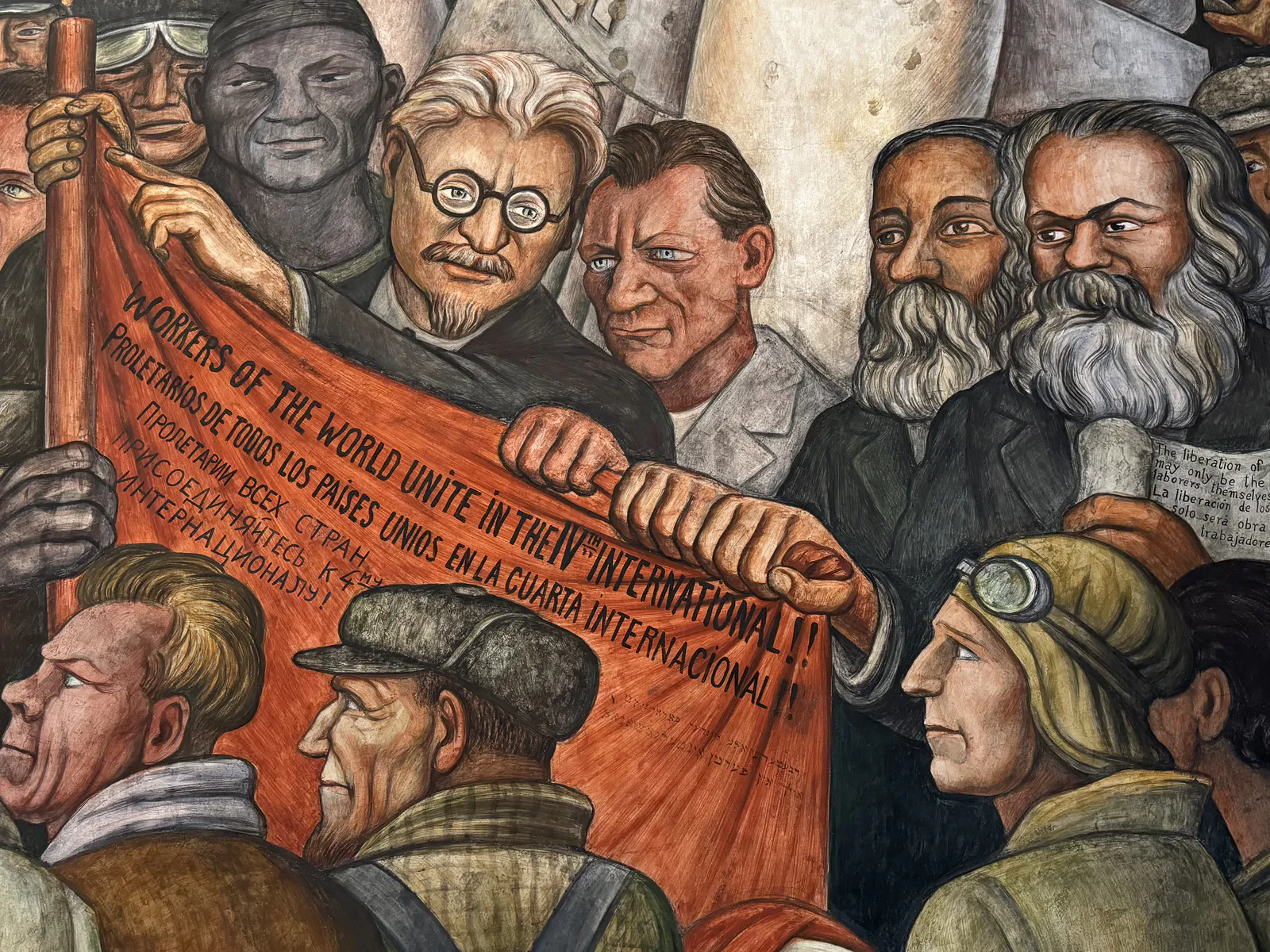
Fourth International (detail)
Diego Rivera
This segment of Rivera’s 1934 mural shows Marx, Engels, and Trotsky rallying workers beneath a red banner proclaiming unity across nations. The multilingual call to join the Fourth International affirms Rivera’s radical vision: true liberation must come from the workers themselves, guided by socialist ideals and international solidarity.
Mapiripana
Luis Alberto Acuña
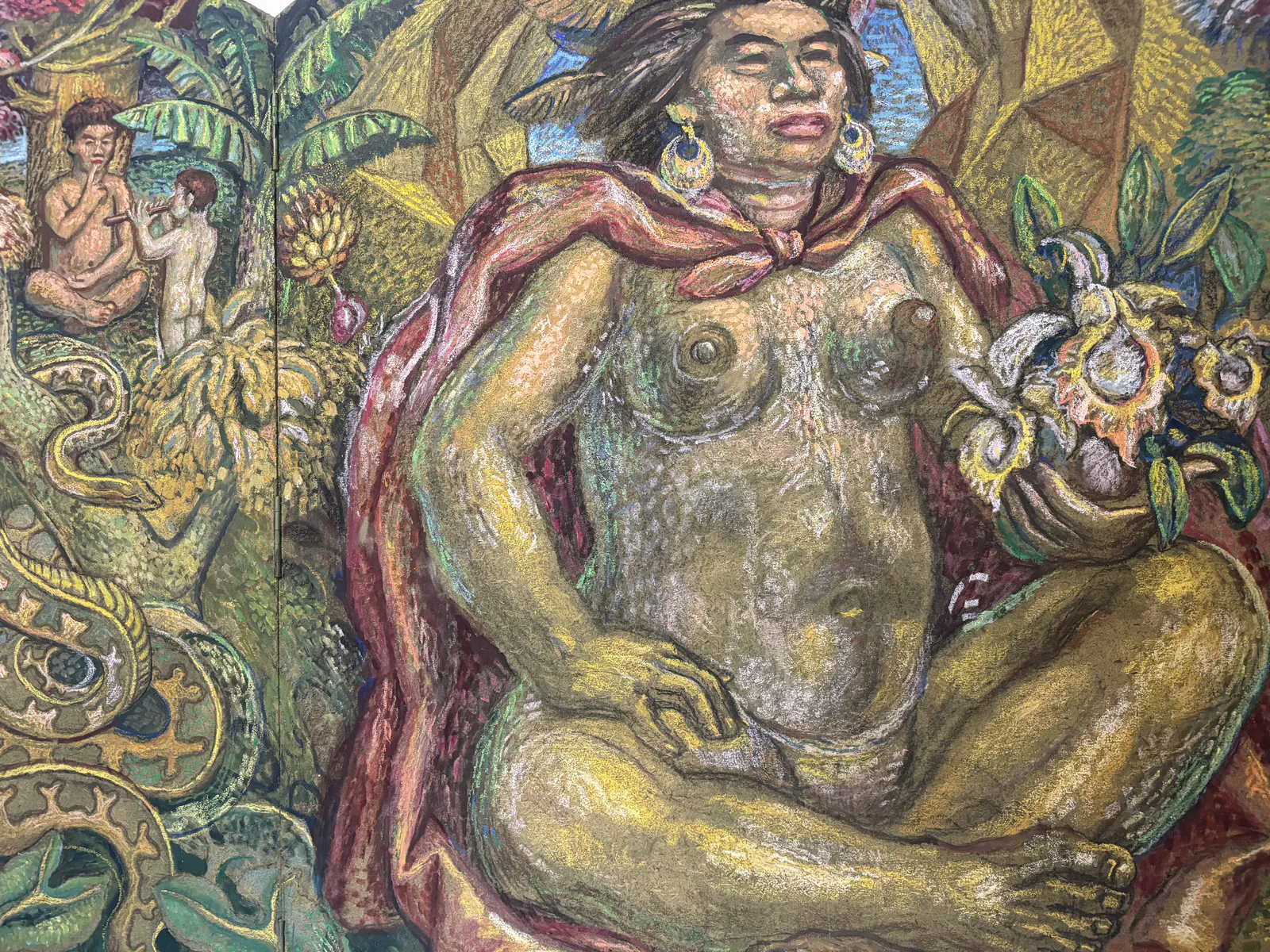
Inspired by a myth from La Vorágine (a novel by José Eustasio Rivera), this 1950s painting depicts Mapiripana, a river spirit who guards silence and nature’s purity. When a missionary attempts to capture her, she punishes him by birthing monstrous twins—a vampire and an owl. In his final feverish agony, he sees a blue butterfly, symbol of his soul’s escape and eternal remorse.
El pueblo en lucha
Ramón Oviedo
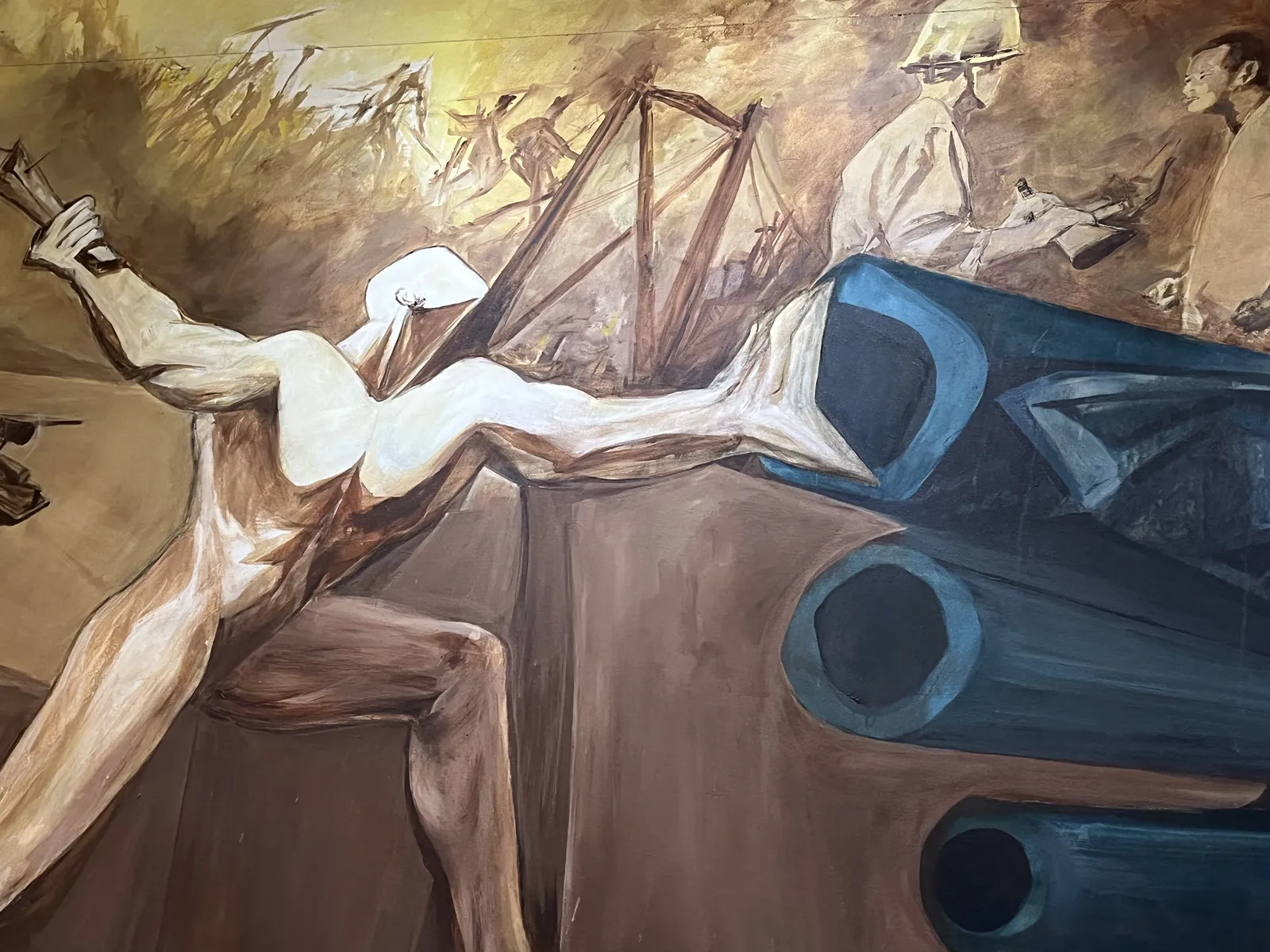
This mural (2013) shows a bound, faceless figure hurling itself toward the dark mouths of cannons, while ghostly soldiers and crowds emerge in the background. The scene recalls the Dominican struggle against dictatorship and foreign intervention in the 20th c. By fusing a single straining body with collective, blurred forms, Oviedo concentrates individual sacrifice into a broader history of resistance.
Satyr Pouring Wine
Praxiteles
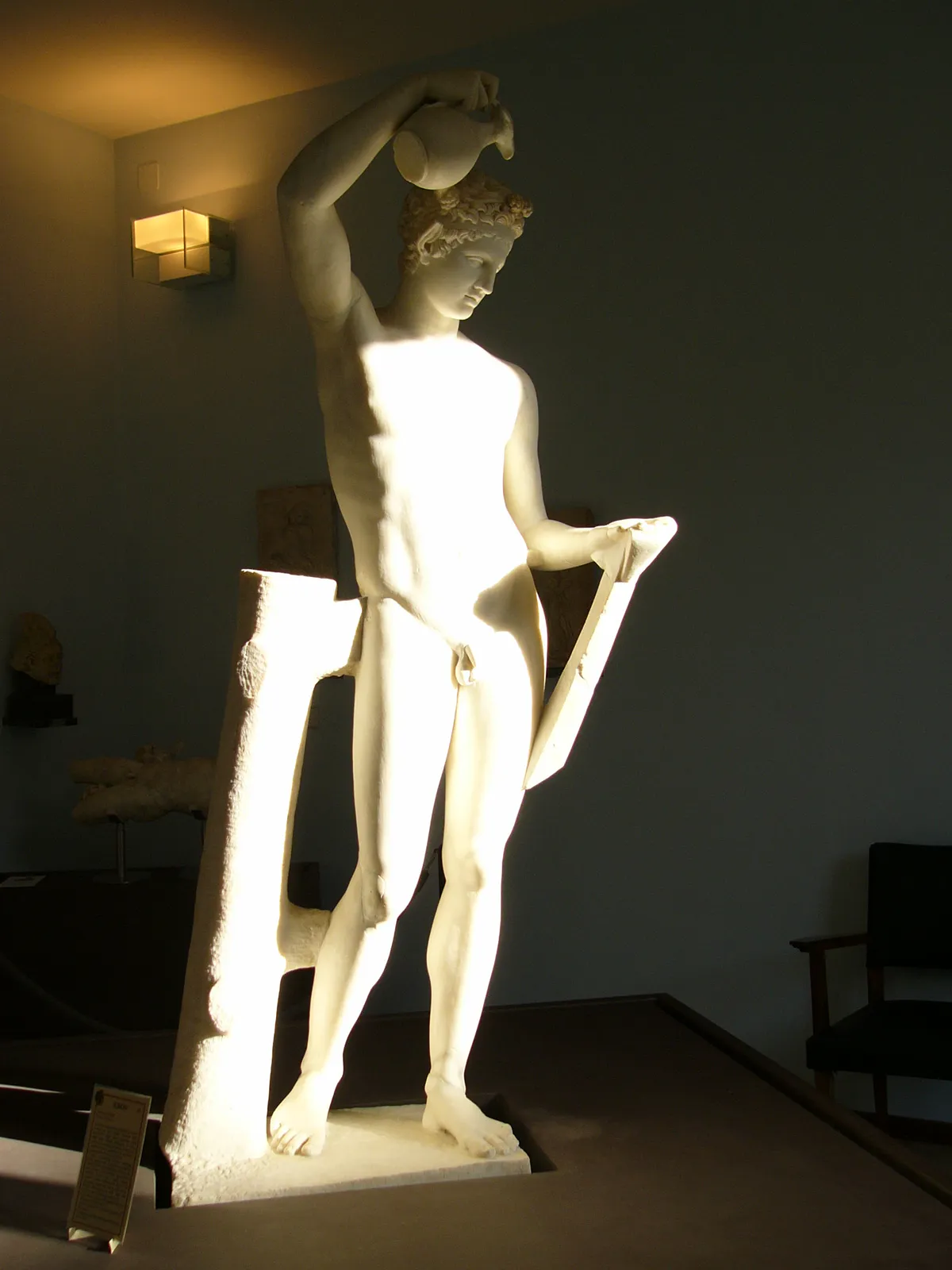
This Roman marble statue is a copy of Praxiteles’ 4th-c. BC Greek original, depicting a youthful satyr, a companion of Dionysus, pouring wine. Though the pitcher and cup are missing, it captures the revelry and music linked to satyrs. Found near Naples in 1797, it exemplifies Praxiteles’ style with sinuous curves and a naturalistic pose, embodying the carefree spirit of Dionysian myth.
It’s Not Where You Come From, but Where You’re Going
Ramón Calcaño
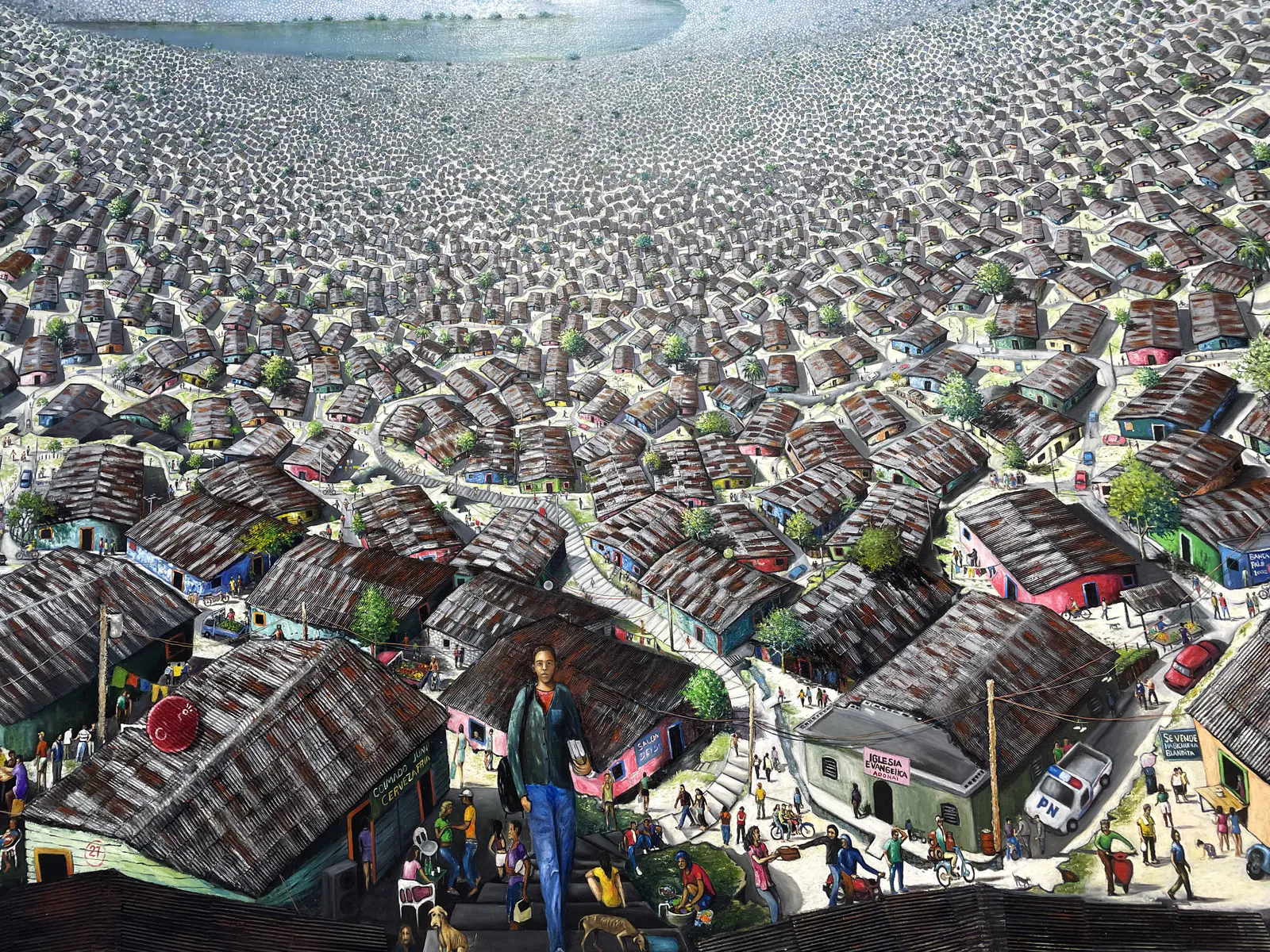
This oil painting (2018), entitled No importa de dónde vienes, sino hacia dónde vas, Calcaño presents a vast view of informal housing. Central to the scene is a figure holding books, emerging from the margins. The work highlights resilience and the transformative power of education, emphasizing the pursuit of a better future beyond one's origins.
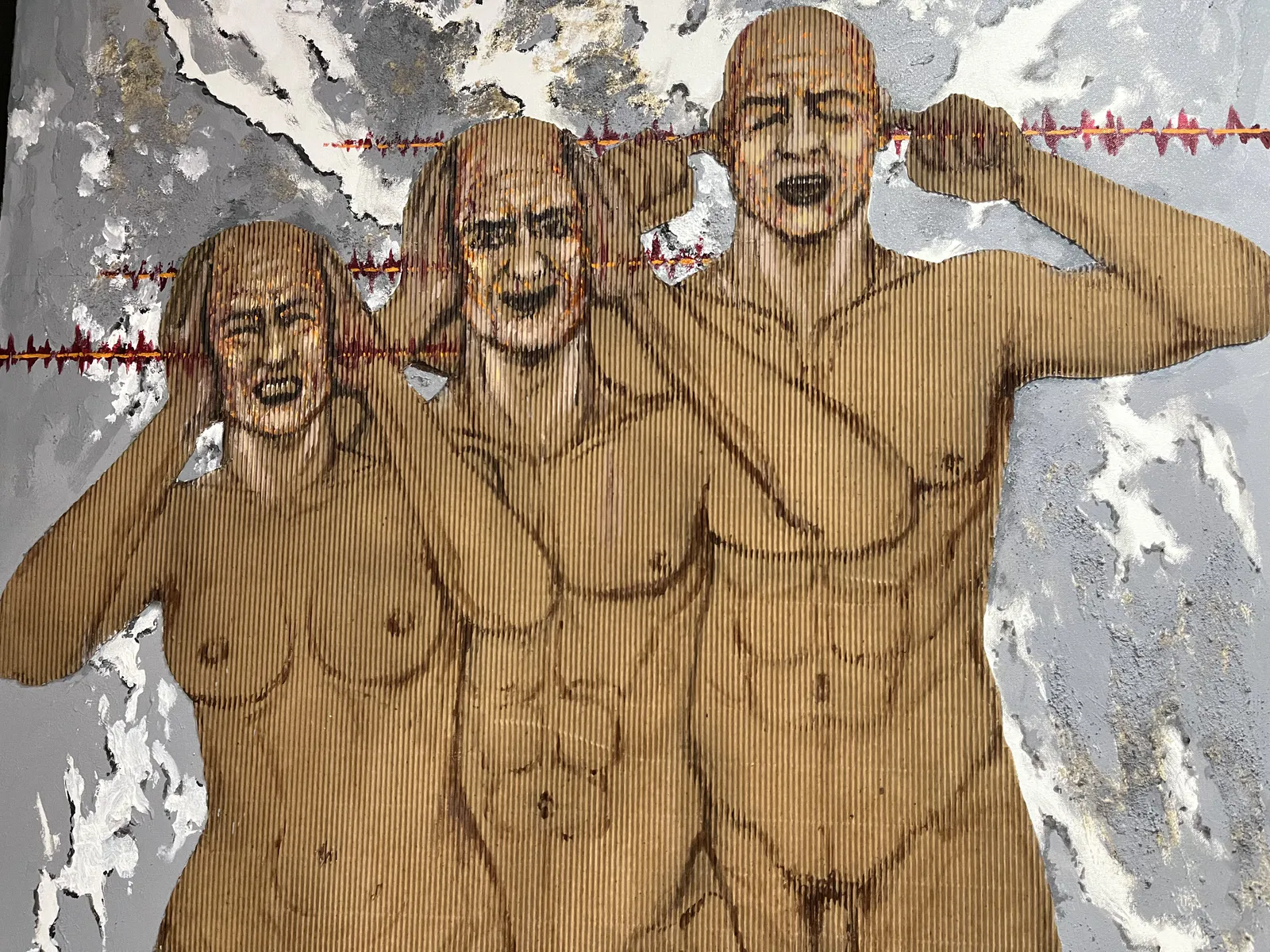
Silenced by Pain
Ángel Haché
This mixed-media work (2014) uses corrugated cardboard to depict three anguished nude figures pierced through the head by jagged red waves, symbols of auditory torture or psychological trauma. Their tense bodies and gestures of covering their ears suggest helplessness before systemic violence. The scene recalls the enforced silence and invisible suffering experienced under Trujillo’s dictatorship in the Dominican Republic.
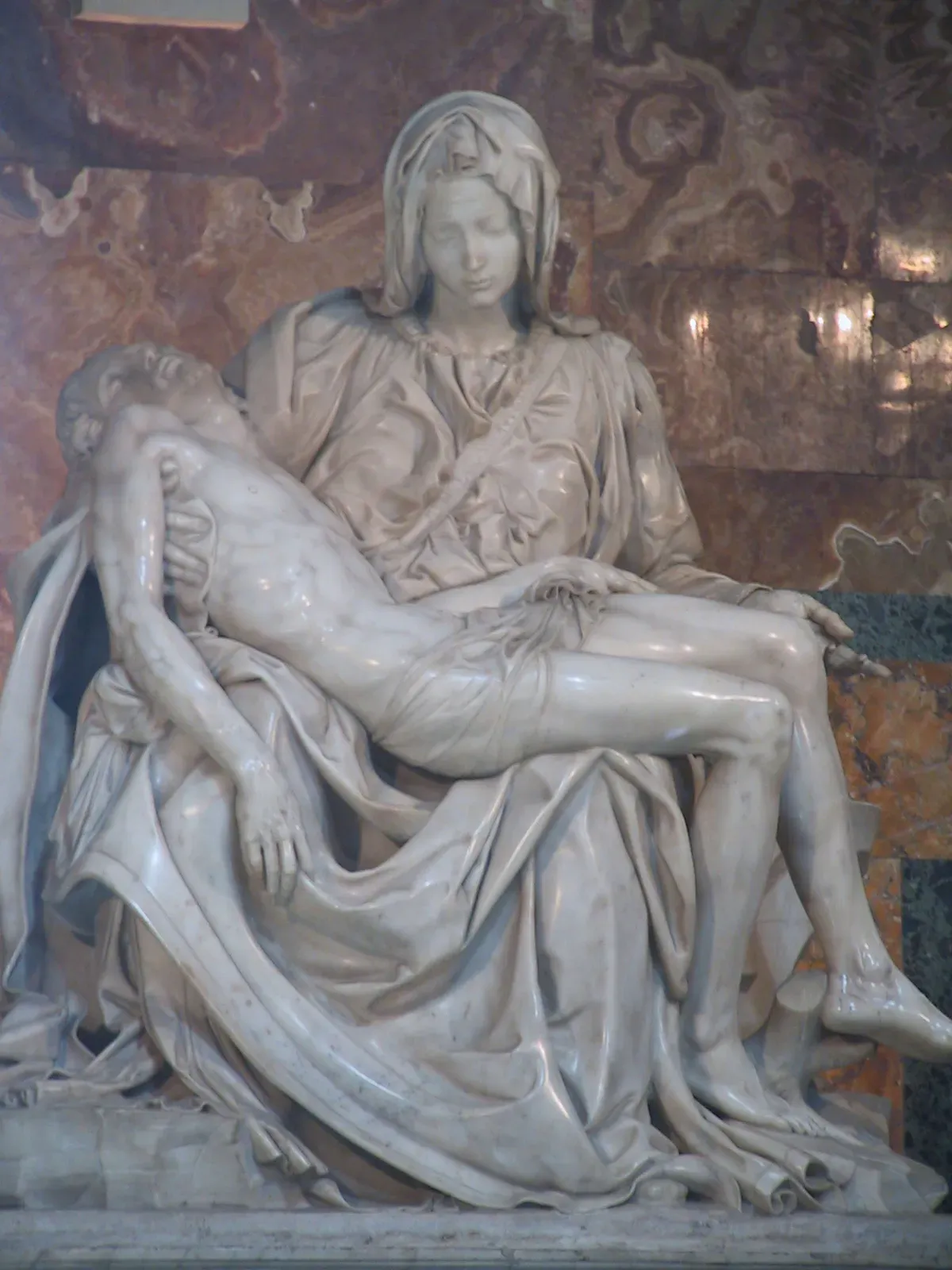
Pietà
Michelangelo
This marble sculpture (1498–99) shows the Virgin Mary holding the body of Christ after the Crucifixion. Carved by Michelangelo at age twenty-four, it unites idealized form and anatomical accuracy with restrained pathos. Commissioned for St. Peter’s Basilica, the Pietà exemplifies High Renaissance harmony between human beauty and divine suffering.
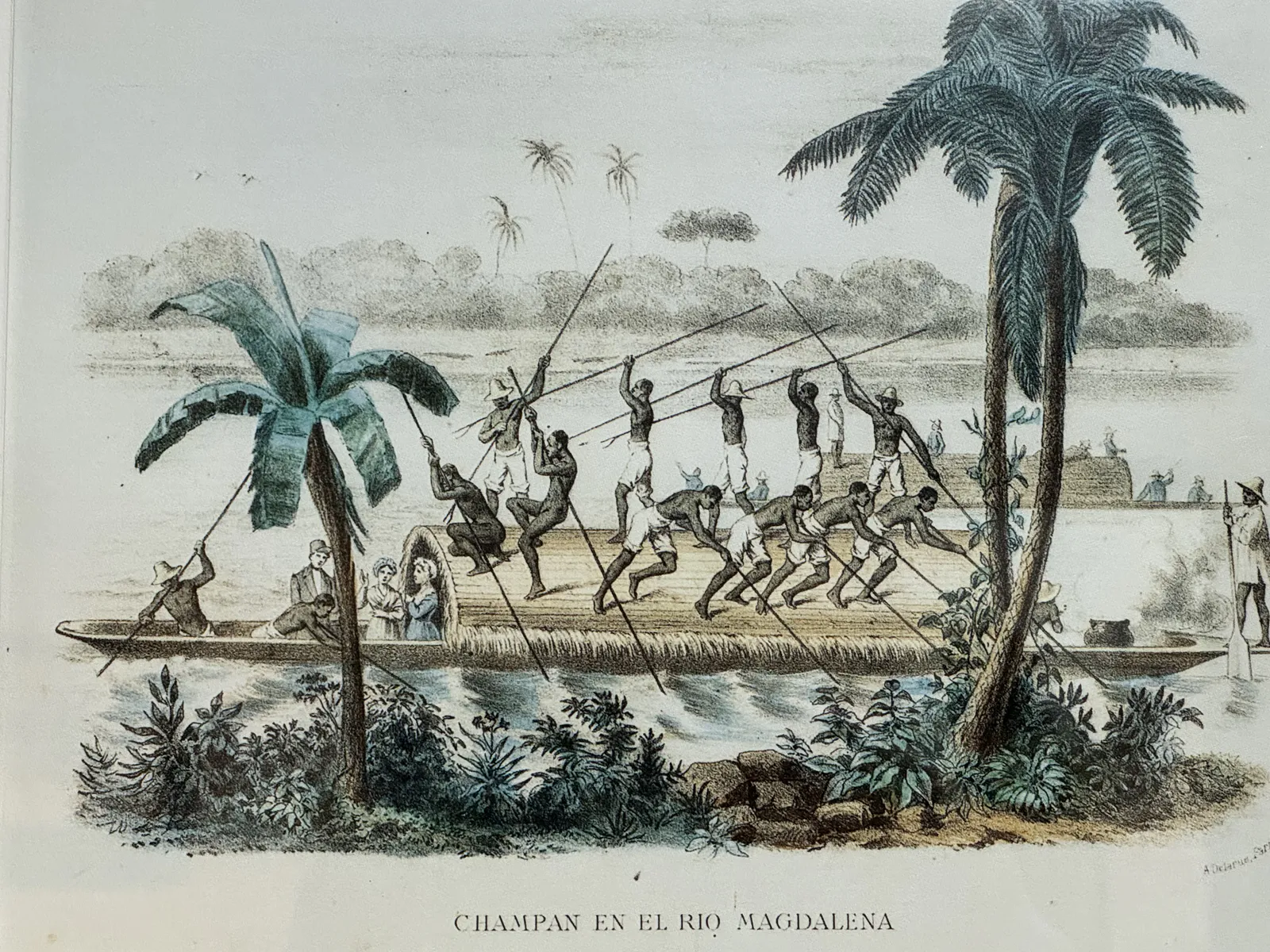
Champán en el río Magdalena
De la Rue & Torres Méndez
This 1878 lithograph depicts a champán, a flat-bottomed river raft common on the Magdalena River, propelled by Afro-Colombian workers using long poles. Wealthy passengers rest under a thatched shelter, highlighting the stark racial and class divisions of the era. The image captures both Colombia’s natural landscape and its colonial labor hierarchies in transition.
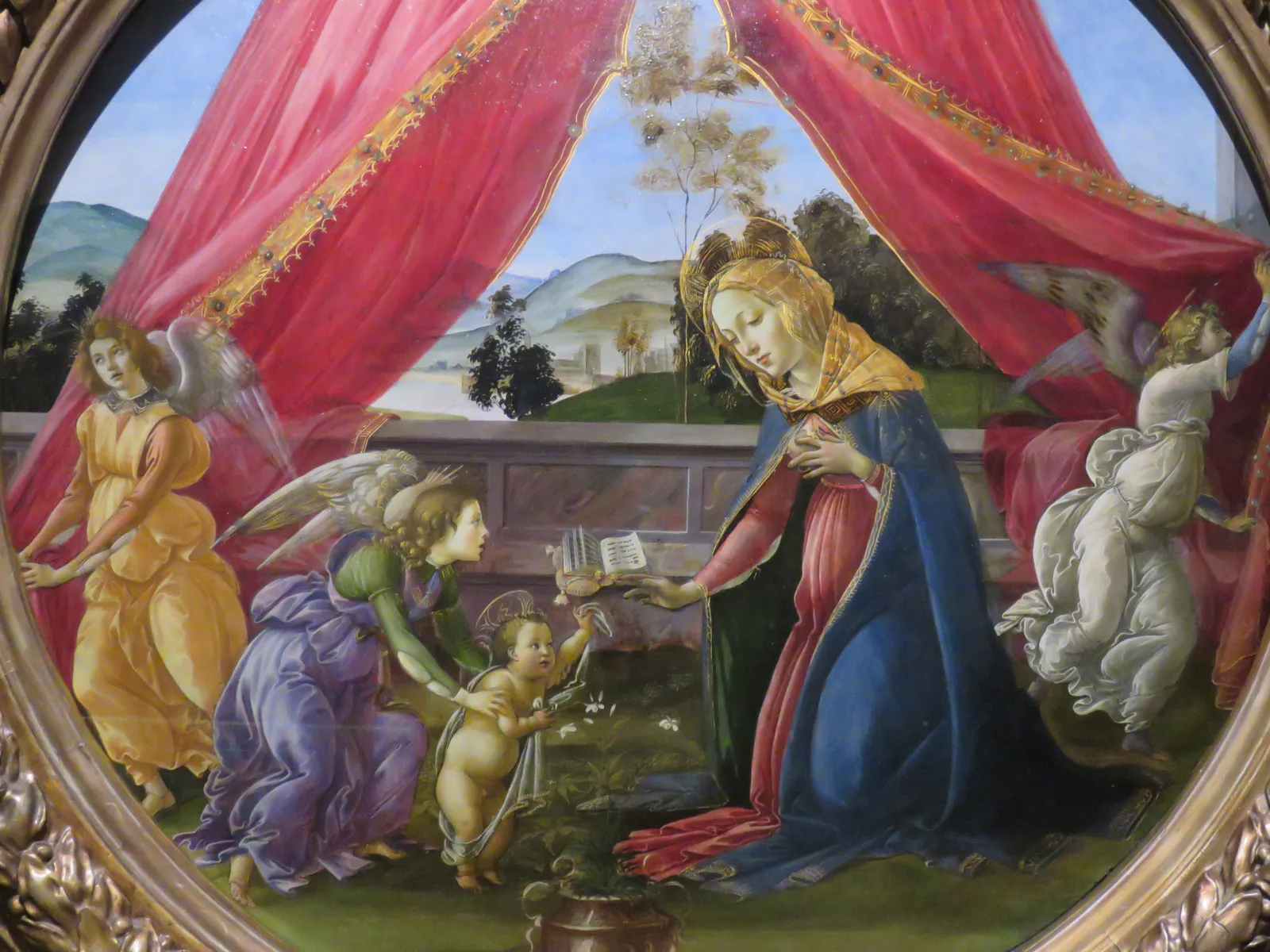
Madonna del Padiglione
Sandro Botticelli
This tempera painting (c. 1493) shows the Virgin Mary adoring the Christ Child beneath a luxurious red canopy, assisted by angels. Botticelli fuses spiritual intimacy with courtly elegance. The open book and flowering symbols evoke divine wisdom and purity, while the tent references the tabernacle—God’s dwelling among humanity.
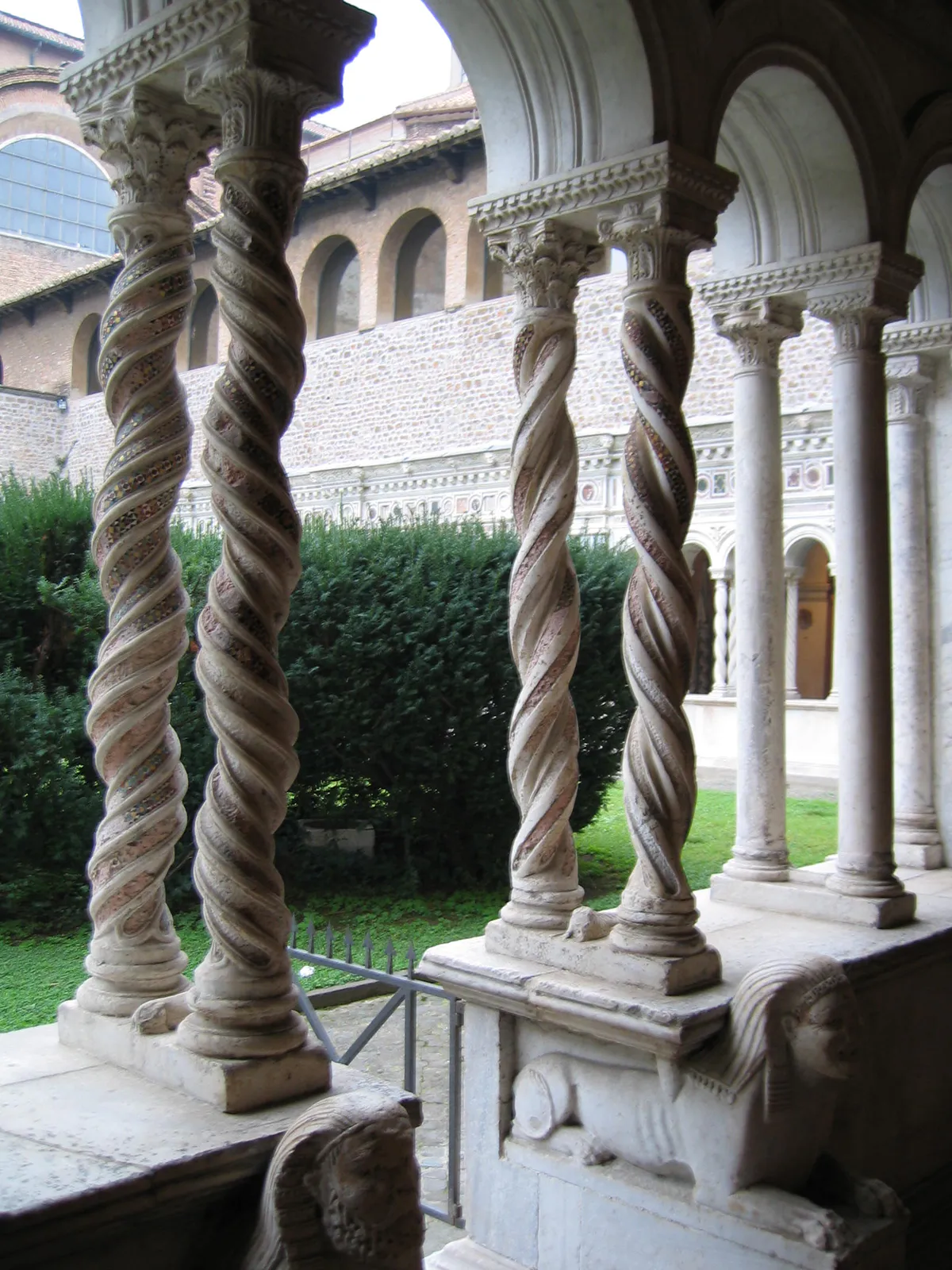
Cosmatesque Columns with Lions and Sphinxes
Vassalletto Workshop
These cloister columns (c.1215), with spiraled shafts and vivid mosaic inlays in the cosmatesque style—a Roman art blending colored marble, glass, and porphyry into geometric patterns—rest on sculpted lions and sphinxes. Crafted by the Vassalletto masters, they unite classical form and Christian meaning, embodying medieval Rome’s vision of divine order through ancient craft.
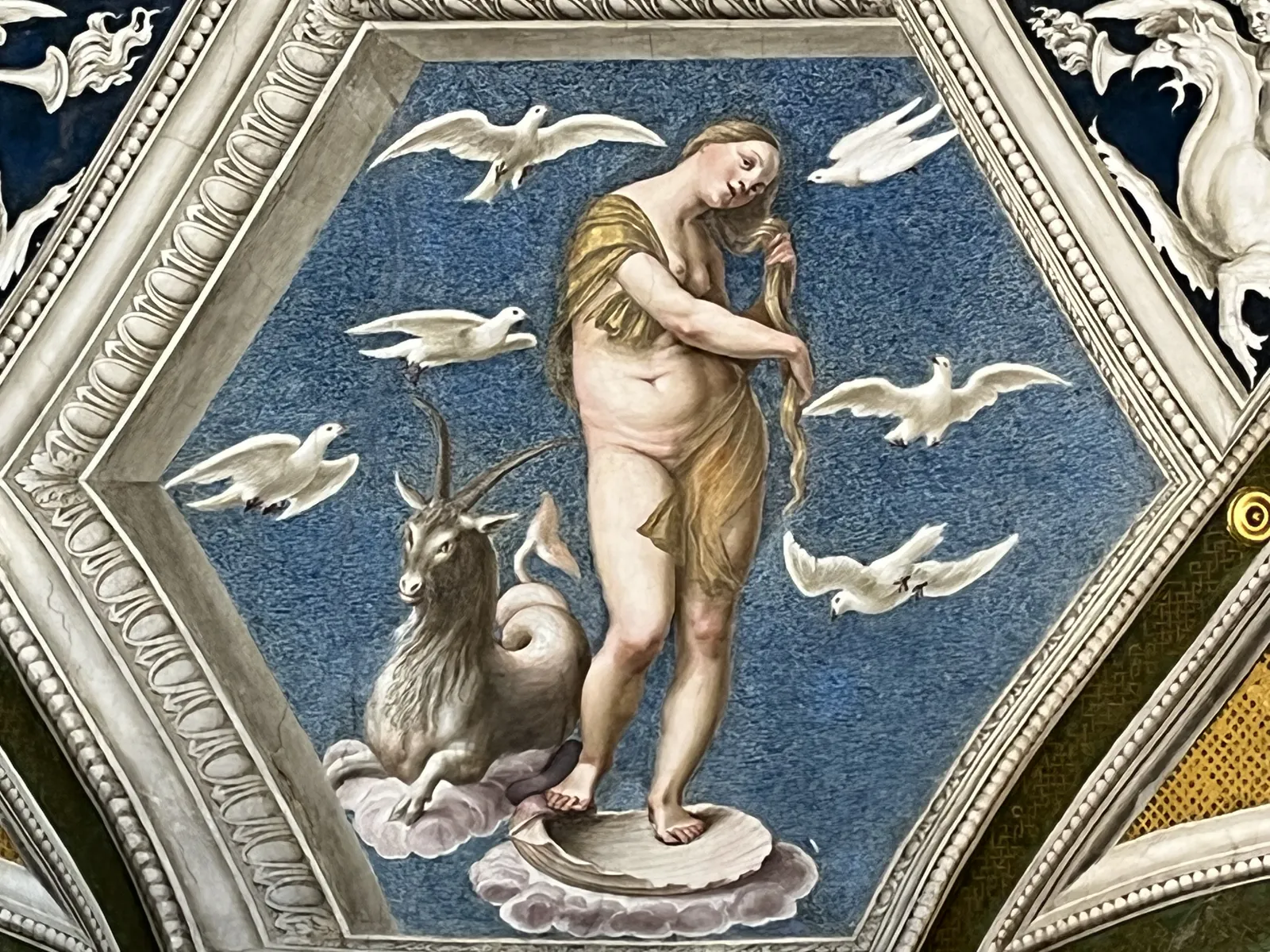
Venus and Capricorn
Baldassarre Peruzzi
The painting (c.1511) in the Loggia of Galatea depicts Venus, the goddess of love, on a shell surrounded by doves, symbols of love. Beside her, Capricorn, a hybrid creature, represents astrological wisdom. This artwork merges mythological beauty with cosmic symbolism, reflecting the Renaissance fascination with harmony between earthly and celestial realms. The inclusion of Capricorn underscores the era's belief in astrology's influence on human affairs.
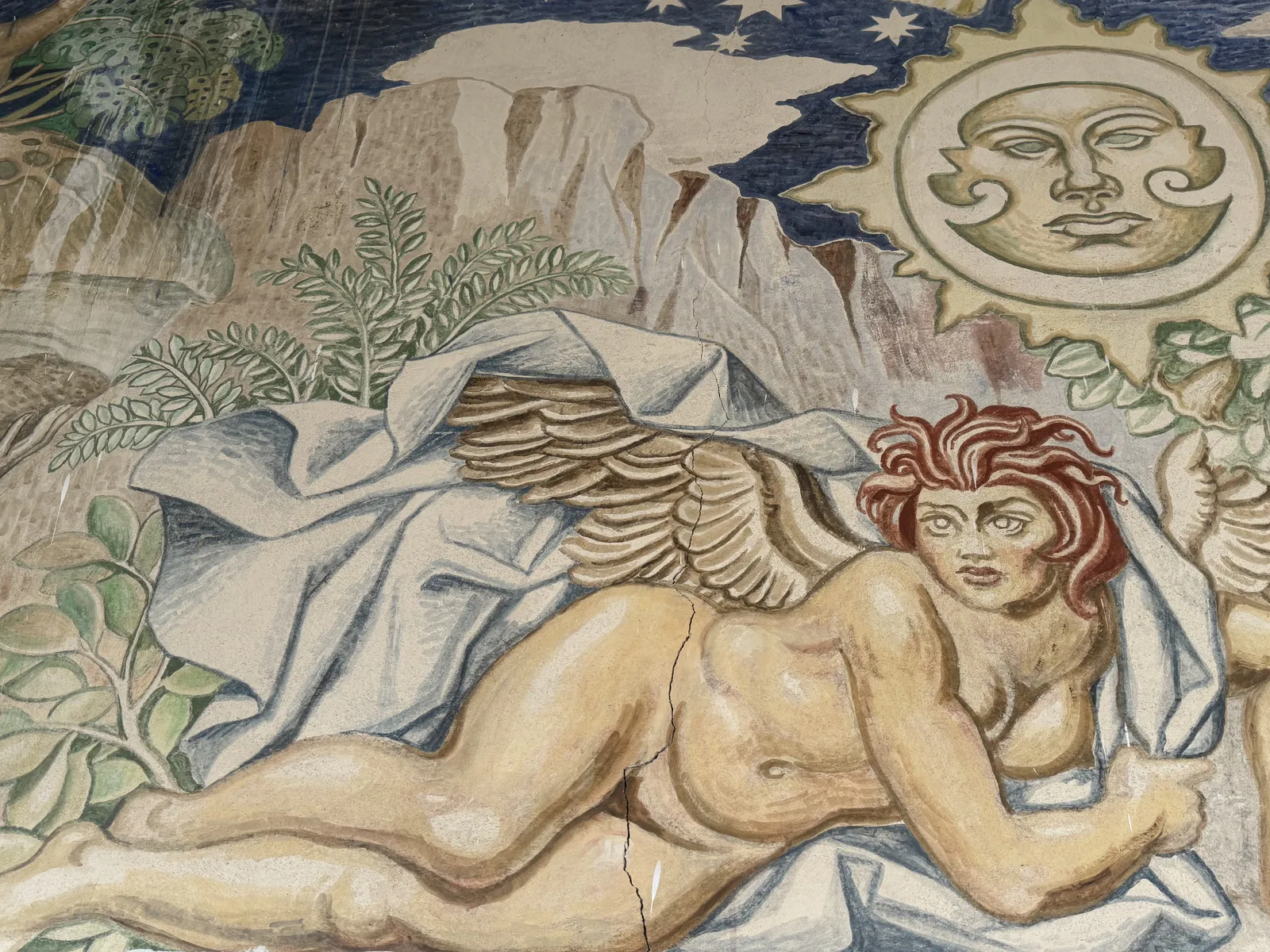
Mural of Huitaca the Rebellious Deity
Luis Alberto Acuña
This mural (1950s) portrays Huitaca, a sensual Muisca goddess of pleasure and disorder, who defied Bochica, the culture hero who taught law, farming, and morality. Condemned for her rebellion, she was transformed into an owl. Her winged form here embodies the clash between instinct and discipline, chaos and cosmic order at the heart of Muisca belief.
“When the path is beautiful, do not ask where it leads.” — Zen proverb
Welcome to my travel photography!
“When the path is beautiful, do not ask where it leads.” — Zen proverb
Welcome to my travel photography!
For as long as I can remember, my path has been one of discovery—seeking beauty, timelessness, and connection in every corner of the world. It has also been a journey of deep learning and understanding. I’ve been an avid traveler (or perhaps a travel addict?) for most of my life. My love for travel began long before I ever left home: as a child, I drew a fantasy map of my grandparents’ apartment and “traveled” through it with my cousin Sonya, imagining adventures in every corner. Nearly 90 countries and countless moments of awe later, I’m excited to share this journey with you.
Thanks to the tireless and ingenious programming of Diagilev, we’re now able to present about fifteen percent of the images I’ve accumulated over the years. More will be released in small batches depending on your interest. While the first release leans toward museum photography, later ones will include more nature, architecture, culture, and general travel experiences. If you’d like to receive email notifications about new releases, feel free to reach out—no commercial use, ever.
Throughout my travels, I’ve been drawn to two intertwined kinds of discovery. One is intellectual: learning why the world is the way it is. History became my guide, shaping my perspective and filling my camera roll with museums and old buildings. To me, history is not the past—it is the key to understanding the present and how the world became what it is. The other is emotional: seeking moments of elevation—spirituality, beauty, harmony—often found in nature, monasteries, and ancient sacred spaces. Together, these impulses shape my photography. It invites you to learn, admire, and soar—to rise above the mundane and see the world through a lens of curiosity and wonder.
Much of my later travel became possible thanks to my job with Delta Air Lines, but the wanderlust began years earlier. By the time I joined the industry, I had already visited over 35 countries and lived in several—largely thanks to a backpacking journey around the world with Luis León, whose face appears in many early photos. I grew up in Ufa in the USSR, and since leaving it I have lived, studied, and worked in Latvia, the United States, France, South Korea, Canada, Spain, Italy, Brazil, Japan, and Colombia.
A life of near-constant movement may seem a little crazy, but it has deepened my understanding of the world and produced the photography you are about to see. Over the years, my style has evolved—more intentional, more refined—yet its core remains the same: a search for understanding, timeless beauty, and a connection to those who walked this earth long before us.
I hope these photos stir something in your soul, just as they did in mine. I’d love to hear from you—whether reactions, suggestions, corrections, or a request to be added to the email list for new releases (no commercial use, I promise). You can learn more about my travels here, and my academic life here.
Enjoy our shared journey!