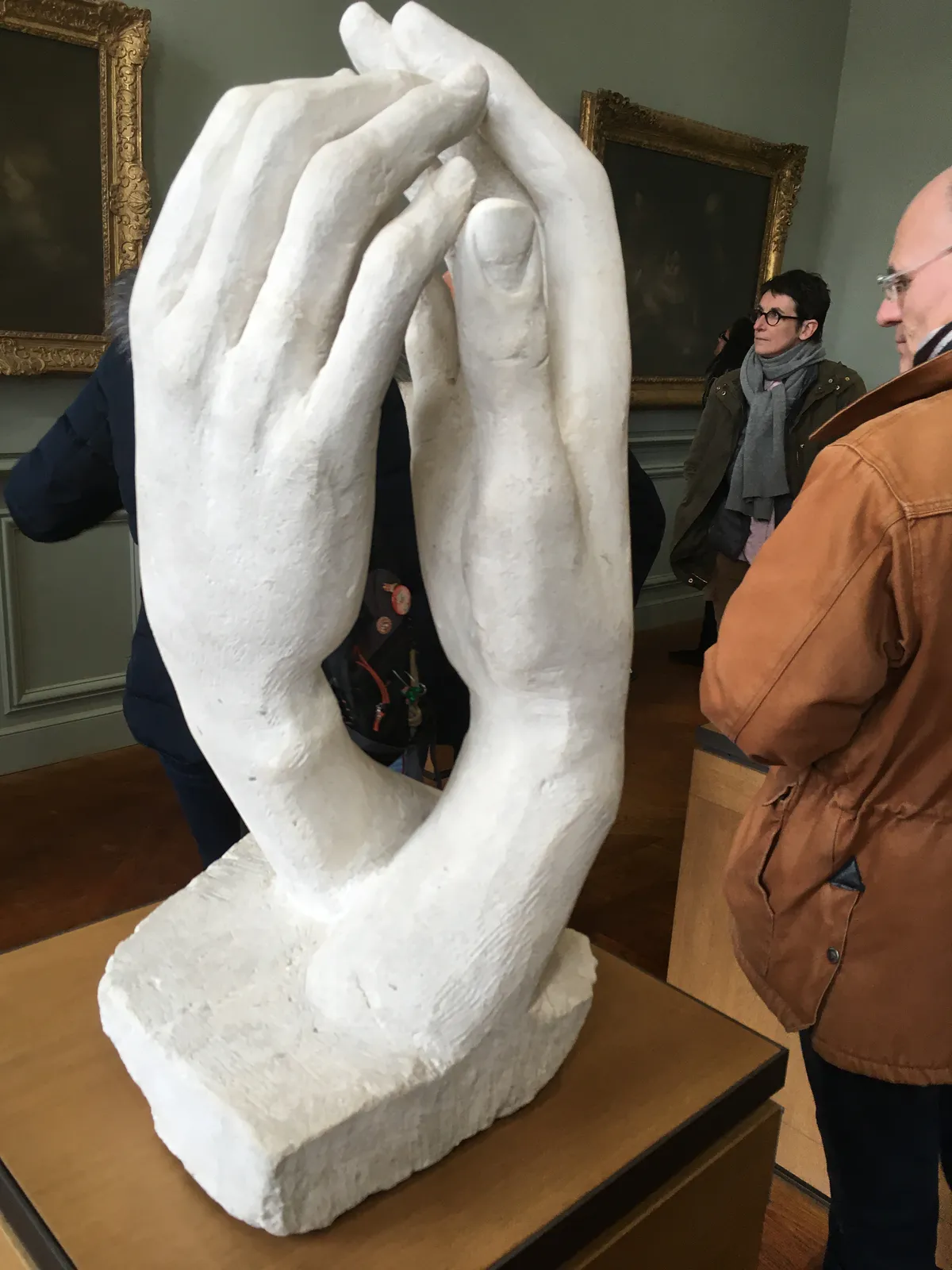
The Cathedral
Auguste Rodin
This 1908 sculpture features two right hands reaching towards each other, symbolizing connection and unity. Initially named The Arch of Alliance, it was inspired by Gothic cathedral rib vaults and renamed in 1914. The texture and interplay of light and shadow evoke prayer and contemplation. This work marks Rodin’s shift from realism to modernism, emphasizing emotional depth over physical form.
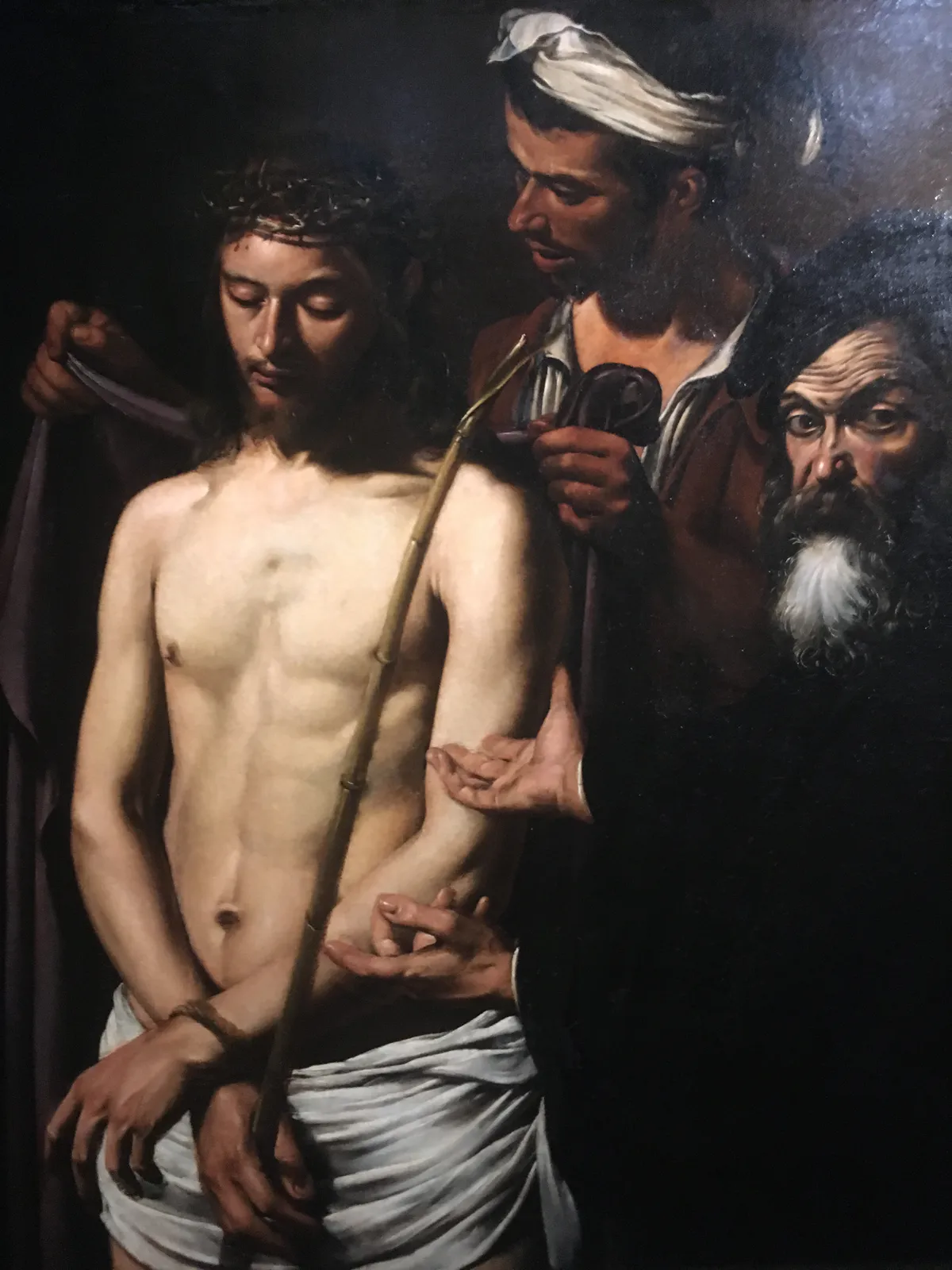
The Crowning with Thorns
Caravaggio
This painting (1602–04) depicts Christ humiliated before crucifixion. Crowned with thorns and bound, he stands in silent suffering as soldiers force the reed into his hand and mock him as king. Caravaggio’s harsh chiaroscuro strips away grandeur, presenting raw cruelty and dignity in contrast. The work confronts viewers with the violence of power and the endurance of faith.
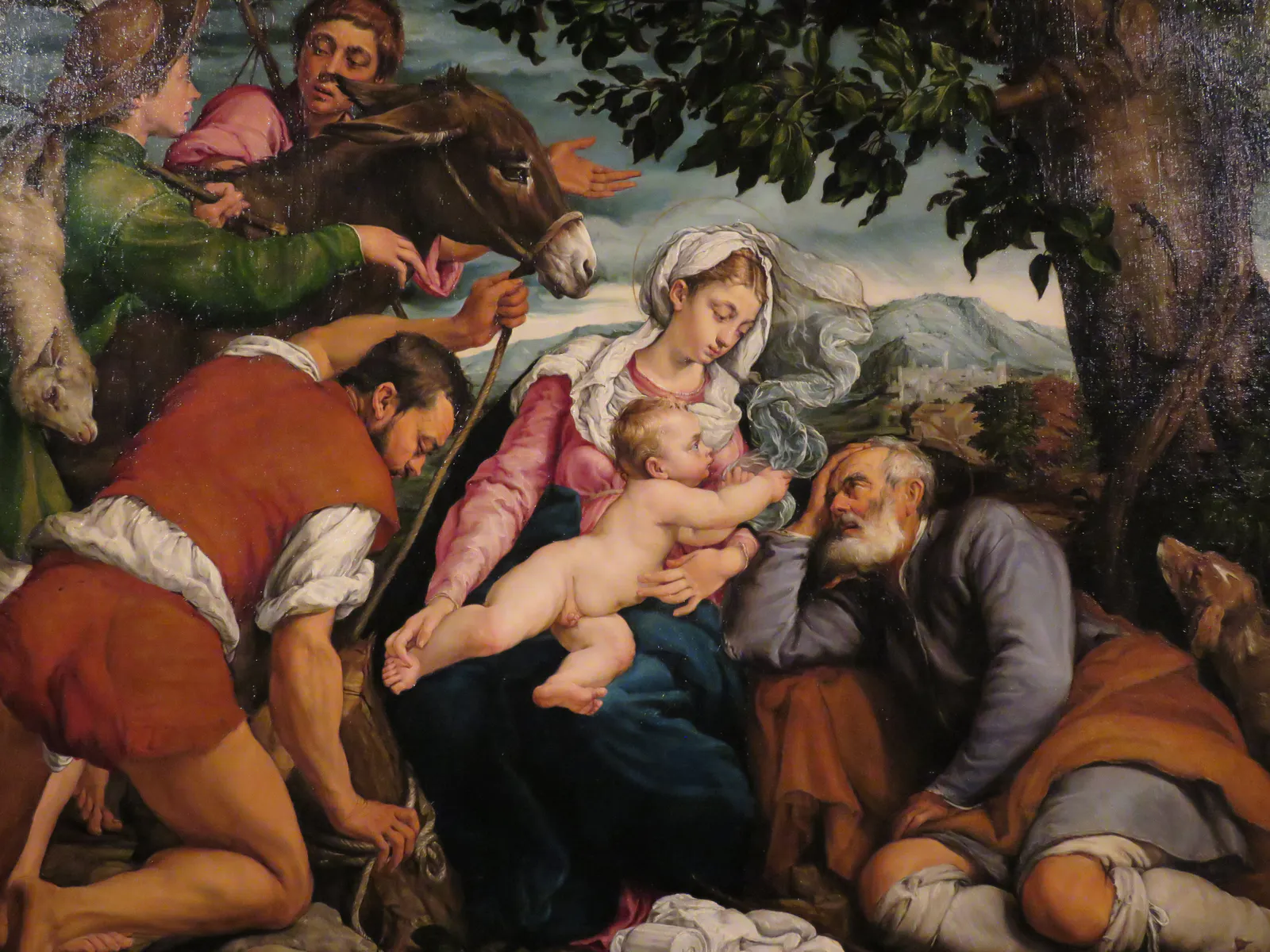
Rest on the Flight to Egypt
Jacopo Bassano
In this luminous canvas (c. 1547), Bassano blends biblical narrative with rustic realism. The Holy Family, joined by shepherds and animals, pauses under a tree. The tender gesture of the Child reaching for Joseph evokes familial warmth amid hardship, while the detailed pastoral setting links divine history to everyday Venetian life.
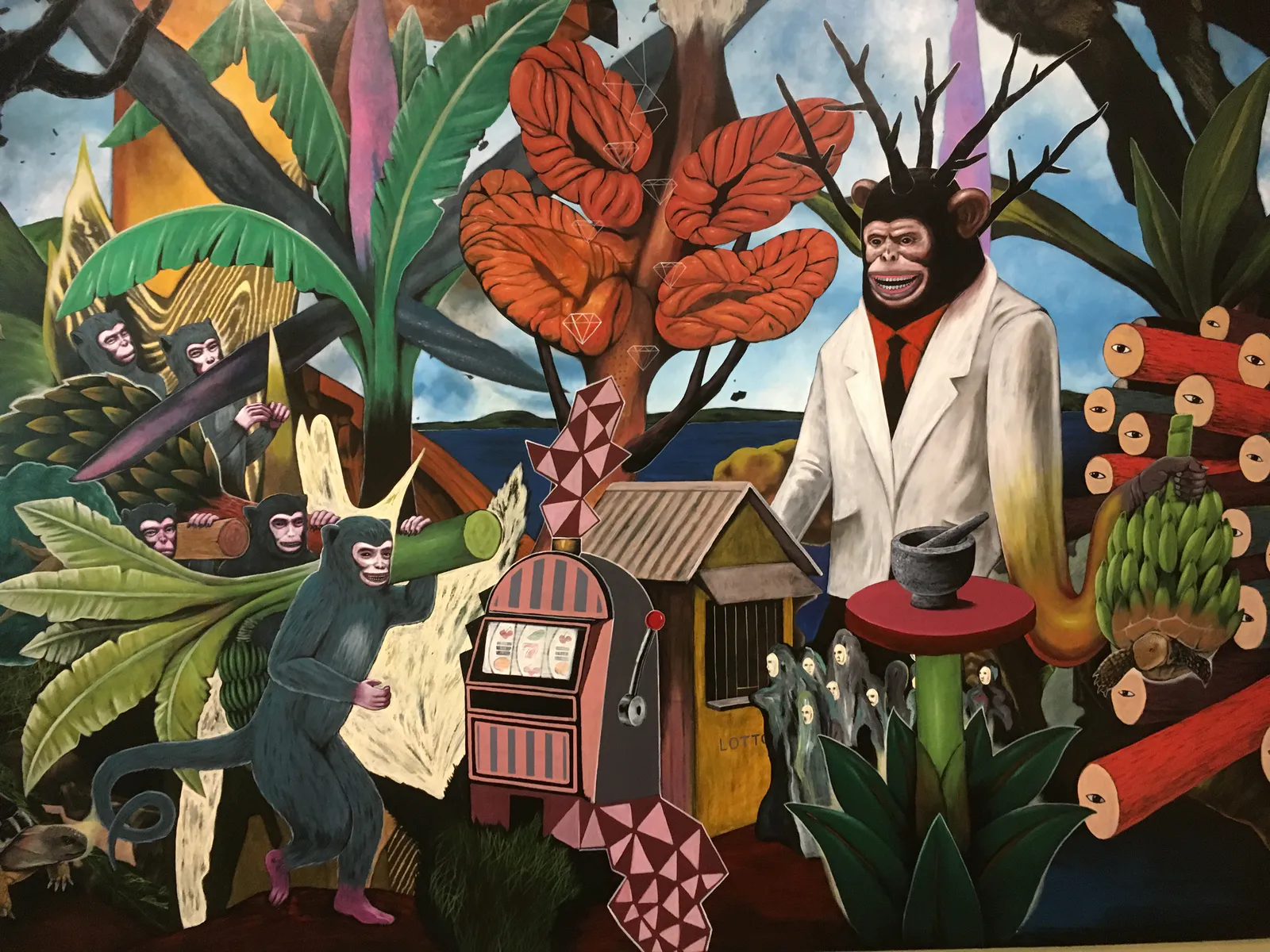
Instant Gratification
Rodel Tapaya
This work (2018) reinterprets the Filipino fable of The Monkey and the Turtle, placing its lesson within a crowded jungle of gambling stalls and restless figures. Monkeys embody the tale’s impatience and hunger for quick gain, while a small turtle-the steady effort outlasts reckless desire. Log piles, patterned trunks, and theatrical foliage frame a world driven by instant gratification and easy profit. Tapaya adapts indigenous storytelling to expose modern cycles of greed.
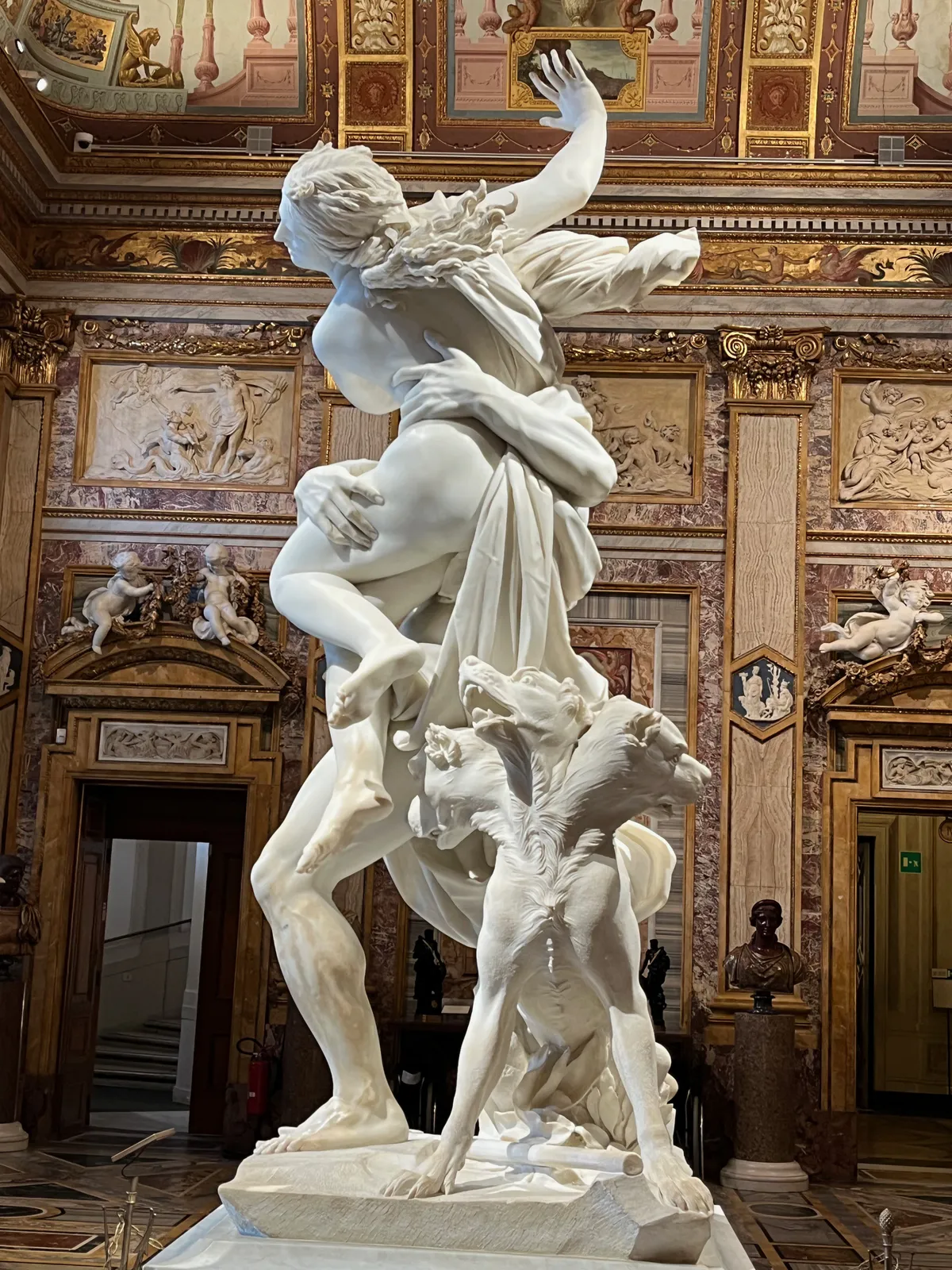
The Rape of Proserpina
Bernini
This angle captures the emotional arc of Proserpina’s resistance as she twists away from Pluto’s grasp. Her outstretched arm and flowing hair dramatize the violence of the abduction. Cerberus, the infernal hound, reinforces the mythological setting, while the composition’s spiral motion showcases Bernini’s virtuosity in carving living flesh from marble.
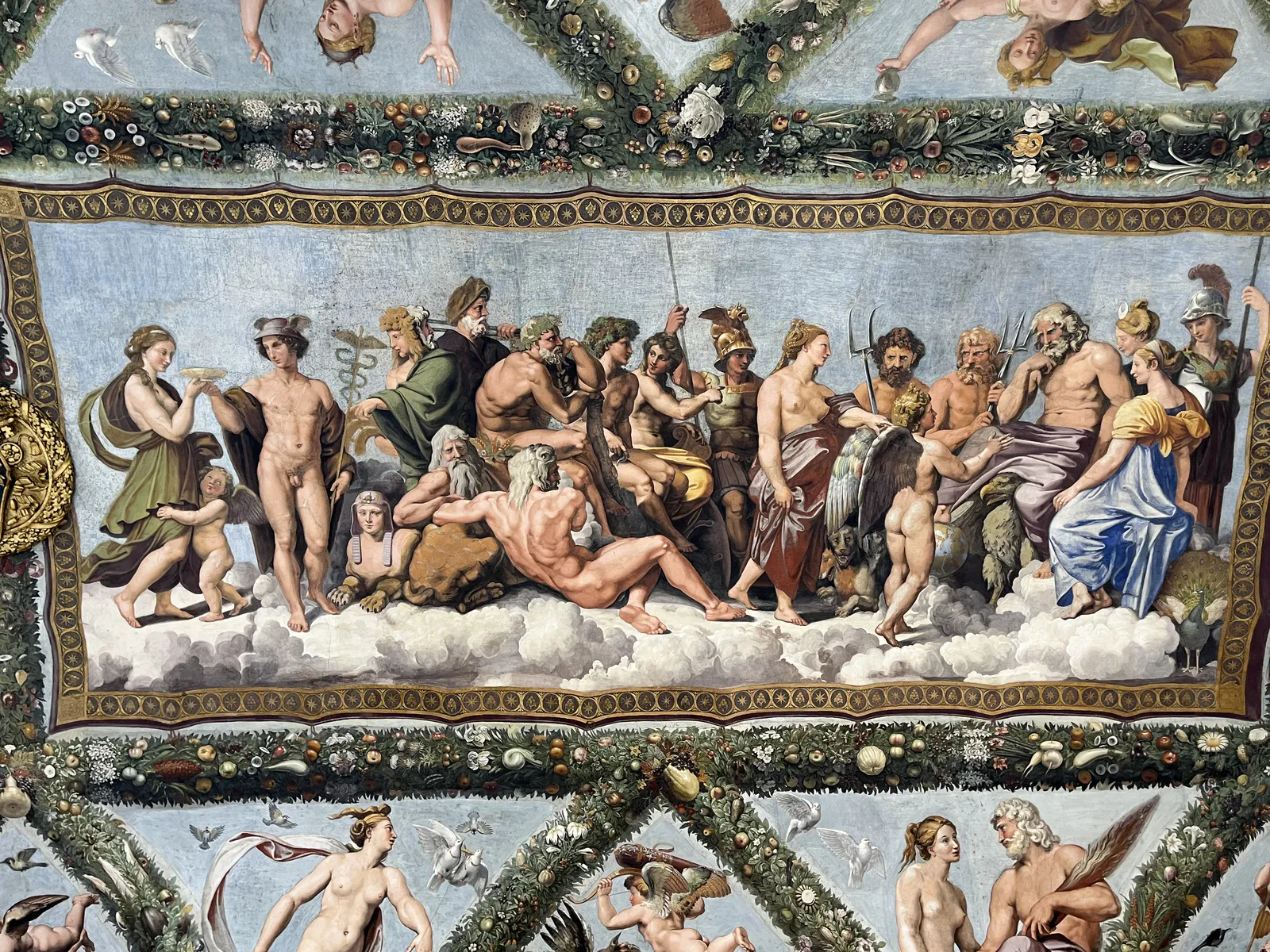
Council of the Gods
Raphael
In this scene (1518), Raphael depicts the gods deciding Psyche’s fate. Right to left: Minerva (helmet), Diana (with crescent moon), Jupiter (eagle below), Juno (blue robe), Neptune (trident), Pluto (bident, dog Cerberus), Venus (semi-nude, pointing), Mars (helmet). On the far left, Mercury (caduceus) leads Psyche to Olympus. Cupid kneels before Jupiter, pleading for Psyche’s immortality. The council embodies divine justice, granting the soul eternal union with love.
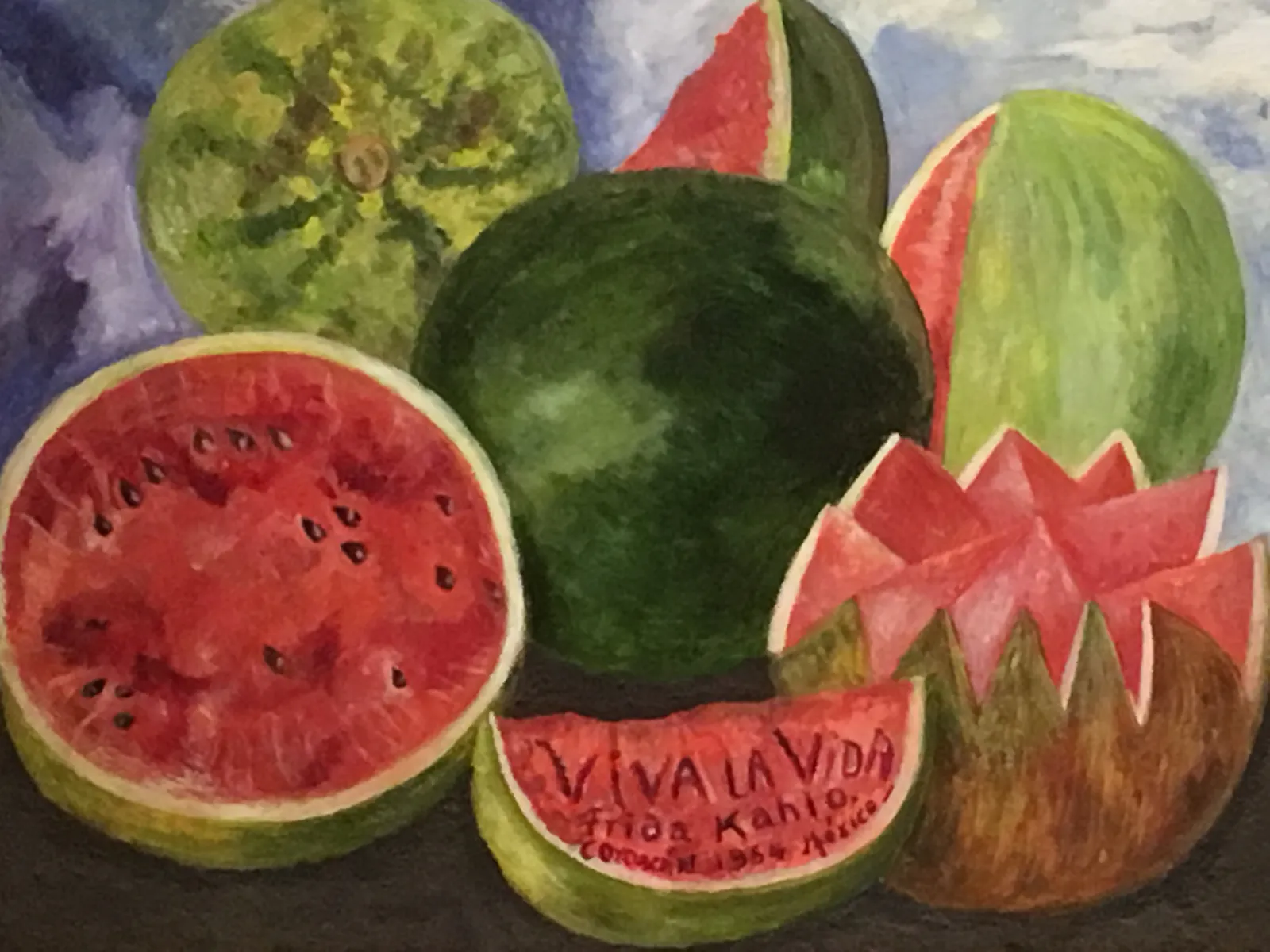
Viva la Vida, Watermelons
Frida Kahlo
Painted just days before her death in 1954, this still life features ripe watermelons—some whole, some cut—bursting with color and vitality. The inscription Viva la Vida (Long Live Life) appears carved into a slice, signed and dated by Kahlo. Though her body was failing, this joyful image radiates defiance and reverence for life’s beauty amid suffering.
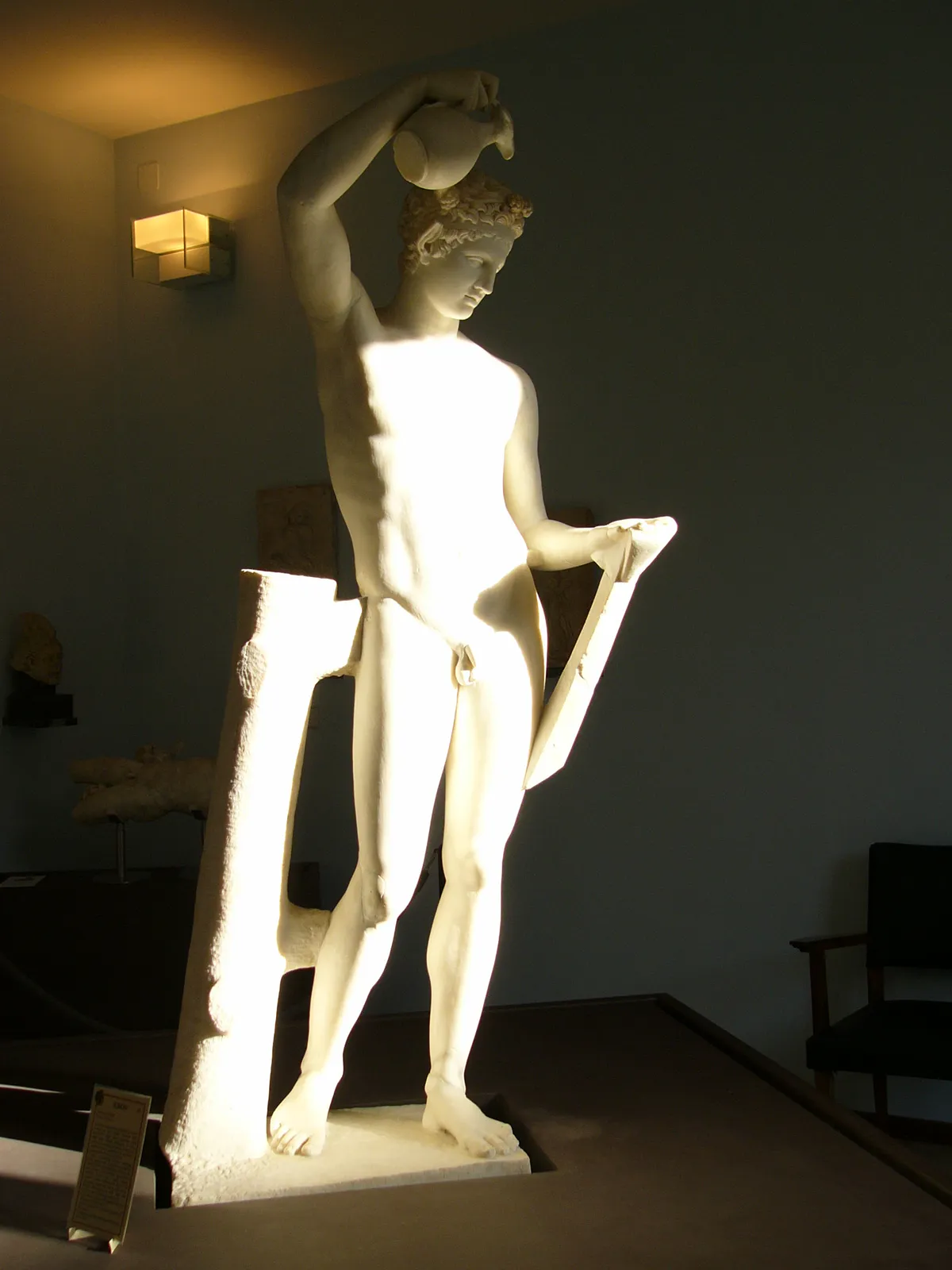
Satyr Pouring Wine
Praxiteles
This Roman marble statue is a copy of Praxiteles’ 4th-c. BC Greek original, depicting a youthful satyr, a companion of Dionysus, pouring wine. Though the pitcher and cup are missing, it captures the revelry and music linked to satyrs. Found near Naples in 1797, it exemplifies Praxiteles’ style with sinuous curves and a naturalistic pose, embodying the carefree spirit of Dionysian myth.
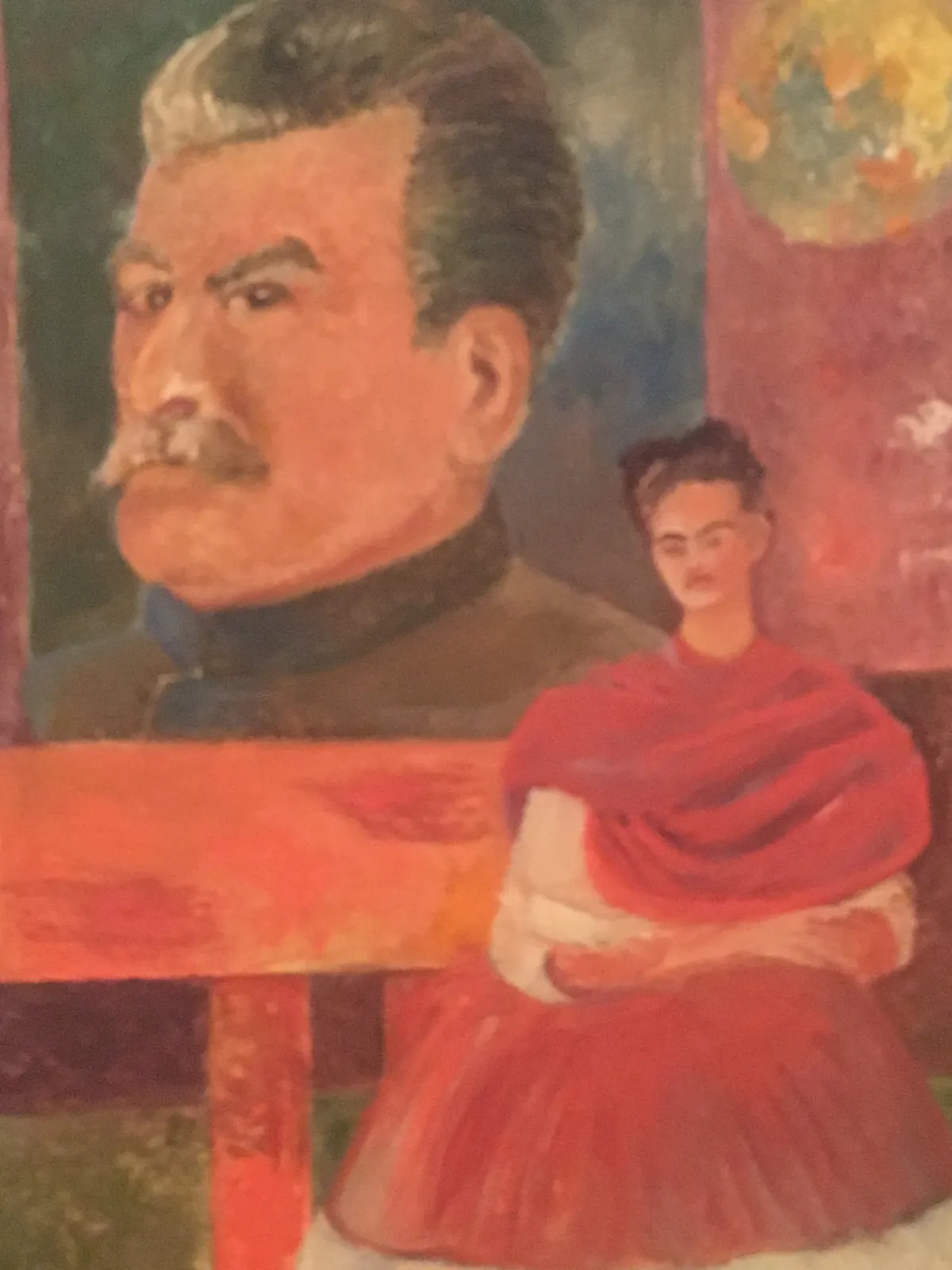
Self-Portrait with Stalin
Frida Kahlo
Painted in 1954, right before death, this political work shows Kahlo seated beside an imposing image of Stalin, whom she revered late in life. The portrait—originally titled Peace on Earth so the Marxist Science may Save the Sick and Those Oppressed by Criminal Yankee Capitalism—reflects her Marxist convictions and final artistic ideological defiance.
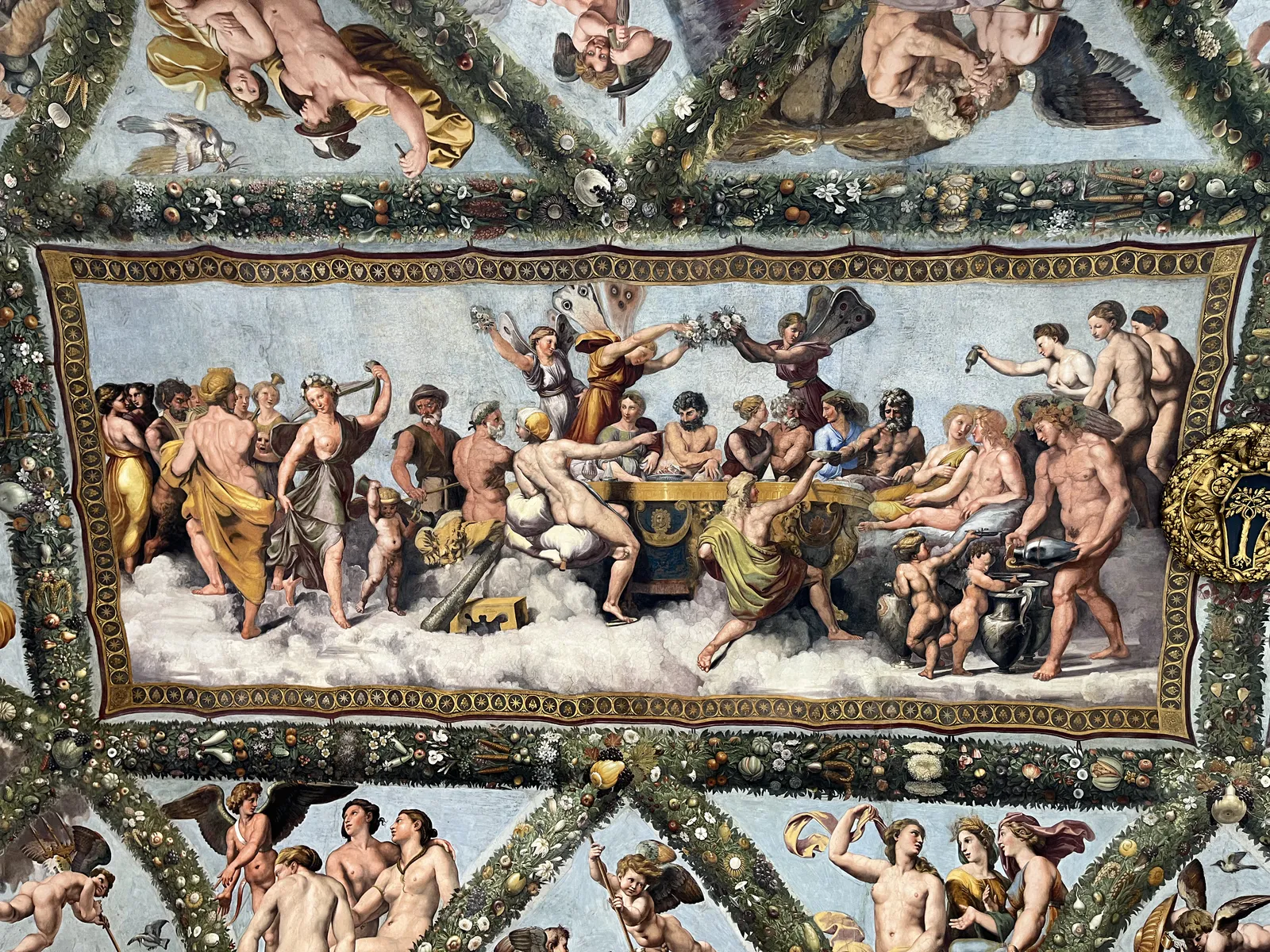
The Wedding Banquet of Cupid and Psyche
Raphael
In this grand fresco (1518), Raphael depicts the divine banquet celebrating the marriage of Cupid and Psyche. At the center, Jupiter and Juno preside; beside them sit Pluto, Persephone, Neptune, and Venus. Ganymede offers wine to Jupiter, while Bacchus (Dionysus), assisted by putti, pours wine at the right. The scene embodies divine harmony, joy, and the union of soul and love.
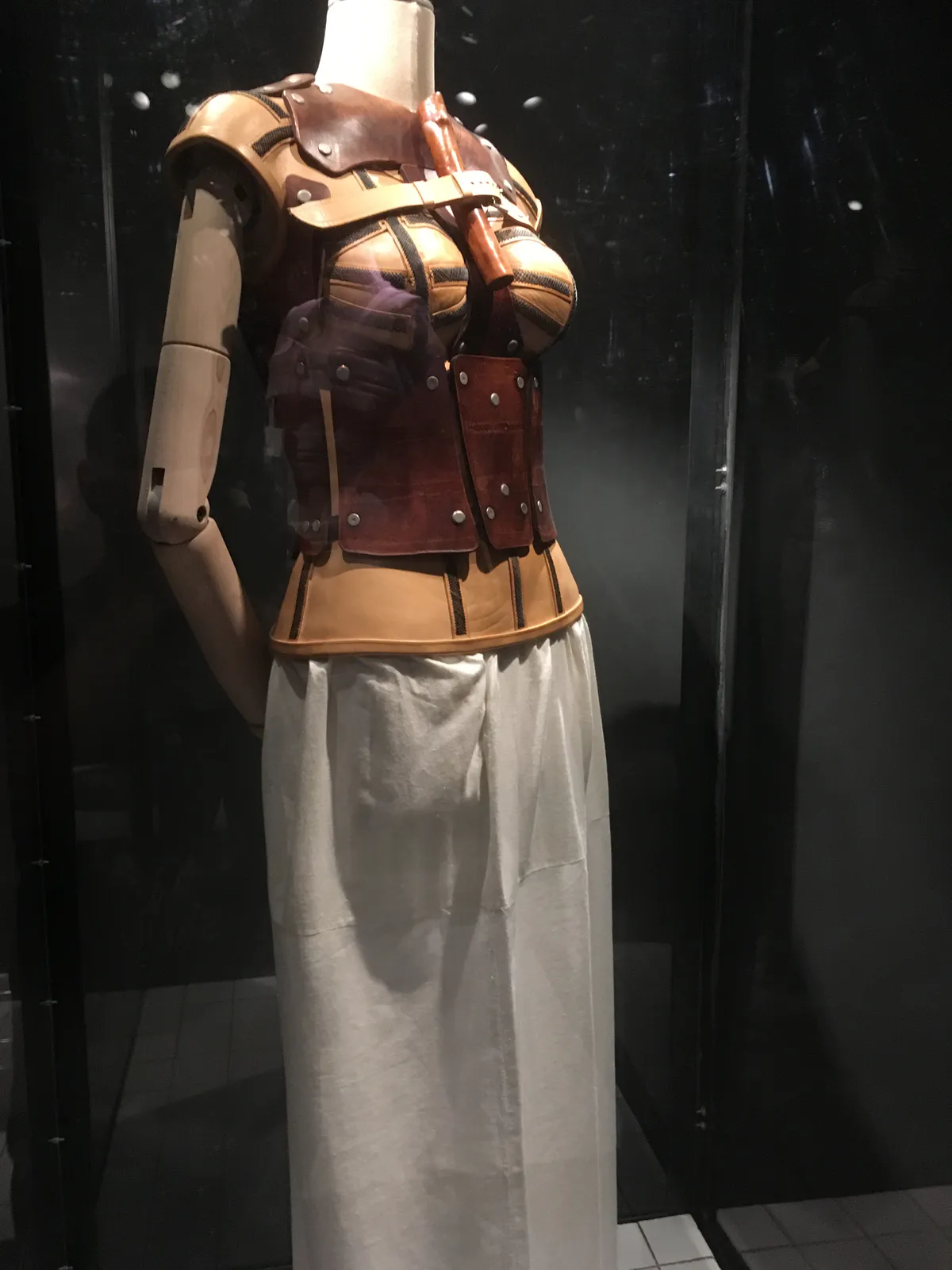
Painted Orthopedic Corset
Frida Kahlo
This hand-painted leather corset (c.1944), worn by Frida Kahlo, illustrates both her physical suffering and creative defiance. After spinal injuries and repeated surgeries, Kahlo turned orthopedic braces into canvases, inscribing them with personal symbols. She transformed medical necessity into art, merging pain, identity, and resilience.
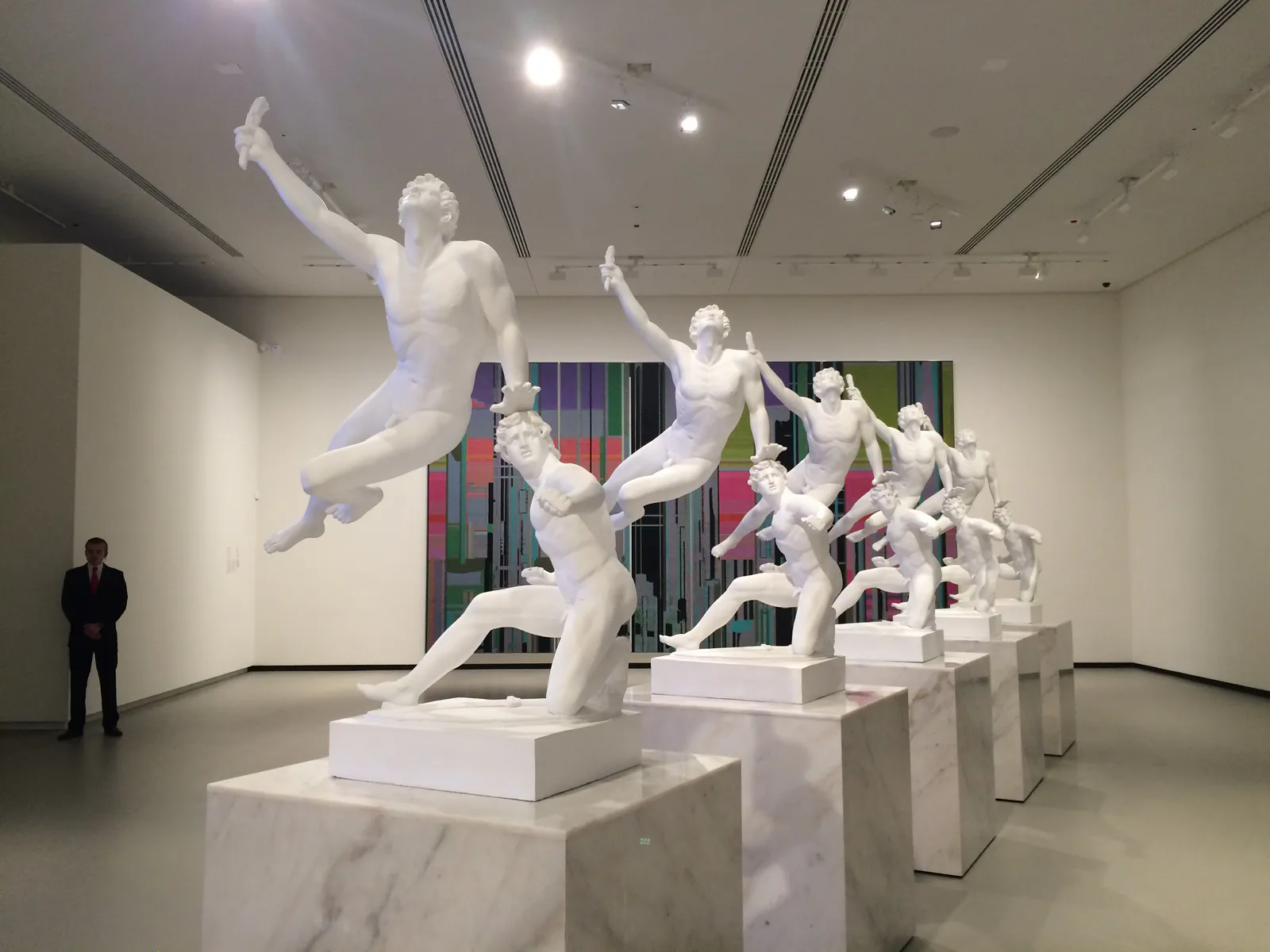
Eternity - The Soldier of Marathon Announcing Victory
Xu Zhen
This 2011 sculpture installation Eternity – Eternity - The Soldier of Marathon Announcing Victory, a Wounded Galatian fuses classical Greek forms with contemporary fragmentation. Crafted from concrete, fiberglass, marble powder, and metal, the sequence begins with a whole figure and gradually breaks apart, evoking cultural transformation and the erosion of historical continuity.
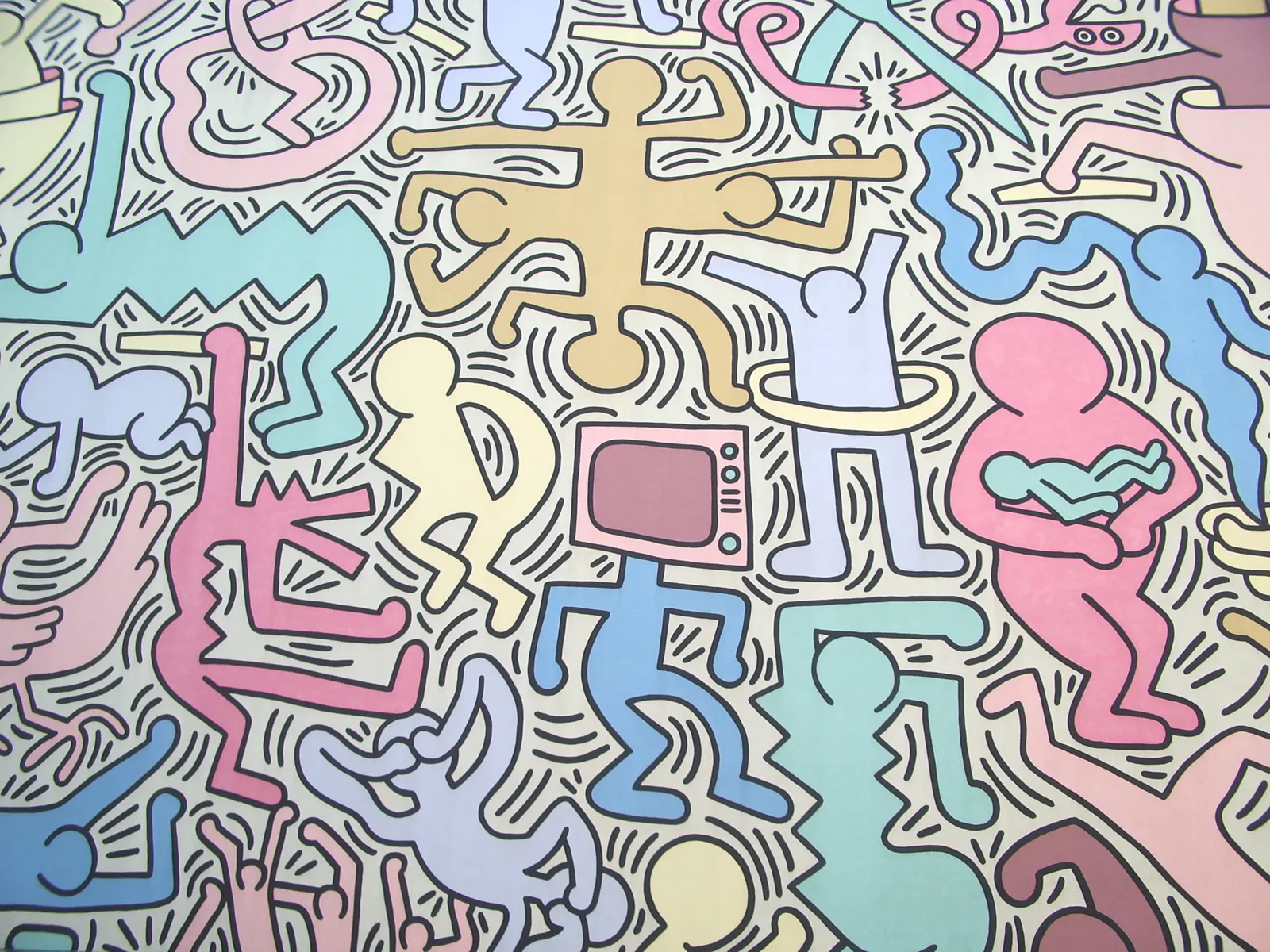
Tuttomondo
Keith Haring
This section of Tuttomondo (1989) showcases Keith Haring’s vibrant visual language with simplified human forms, radiant lines, and vivid colors in rhythmic harmony. The mural, painted in Pisa, celebrates peace and collective action, with each figure symbolizing a social or spiritual force working toward global unity. Haring’s work demonstrates the power of art to convey universal themes of cooperation and harmony.
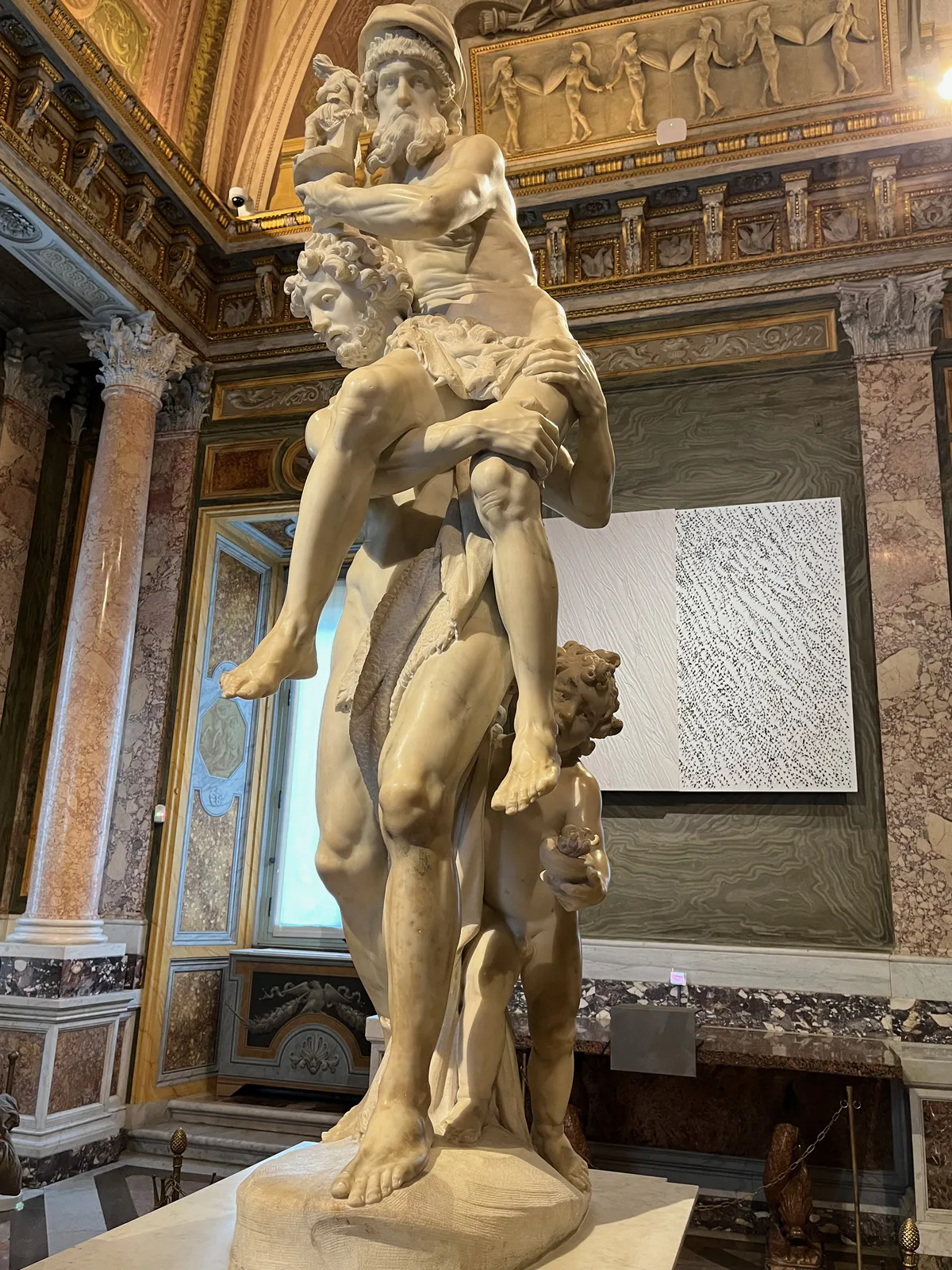
Aeneas, Anchises, and Ascanius
Bernini
This early masterpiece (1618–19) shows Aeneas carrying his father Anchises and leading his son Ascanius as they flee Troy. Anchises holds the Penates (household gods safeguarding family and hearth), while Ascanius carries a flame, symbol of Rome’s divine lineage. Bernini unites filial duty, piety, and sacrifice with striking youthful vigor.
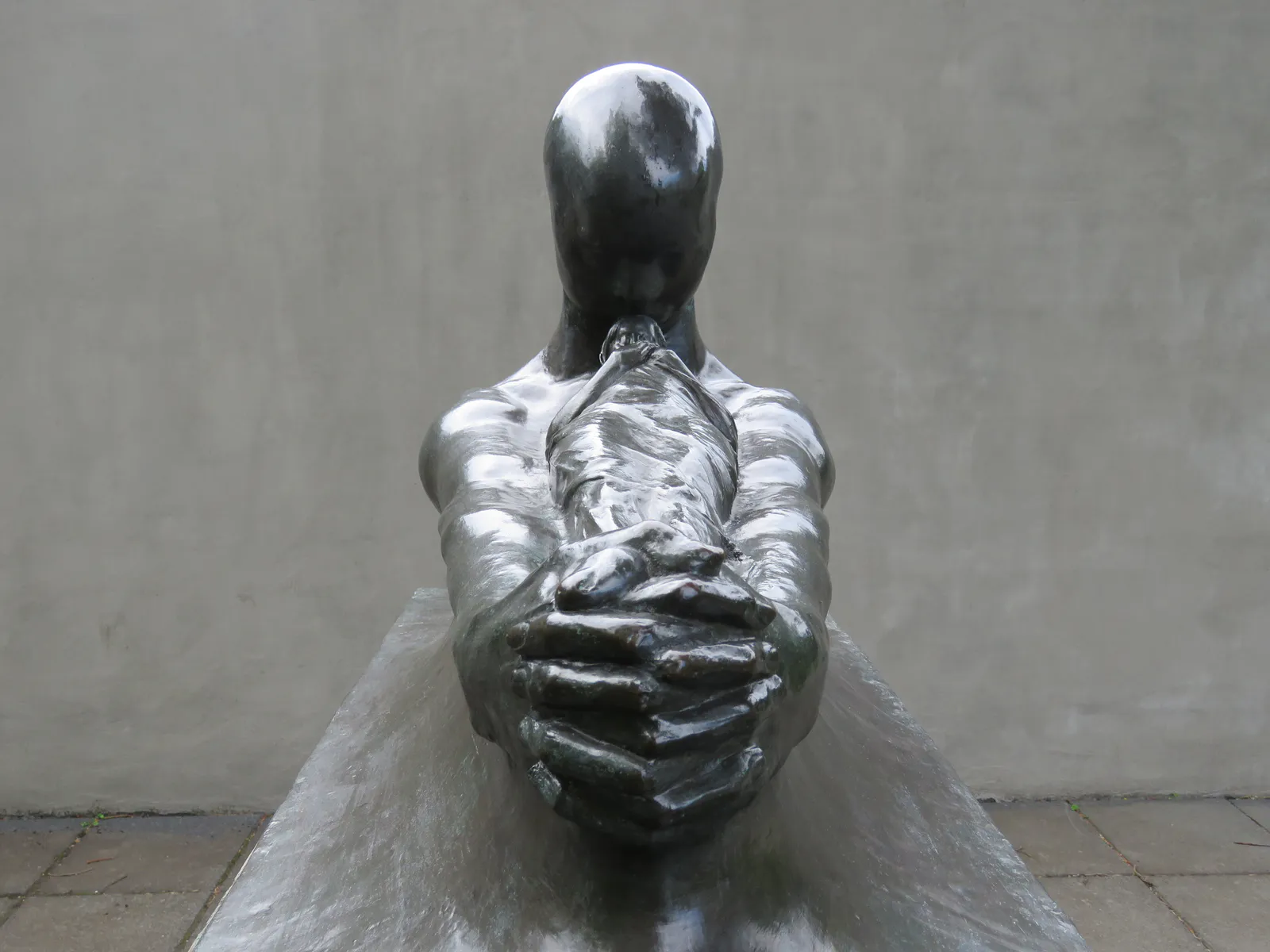
Earth (Mother Earth)
Einar Jónsson
Einar Jónsson’s sculpture (1904–1908) portrays a monumental figure cradling a smaller, draped form symbolizing Earth. Blending allegory and myth, it reflects Icelandic spirituality and cultural narratives. The work embodies humanity’s protective yet dependent bond with nature, inviting reflection on cosmic order and the fragility of existence.
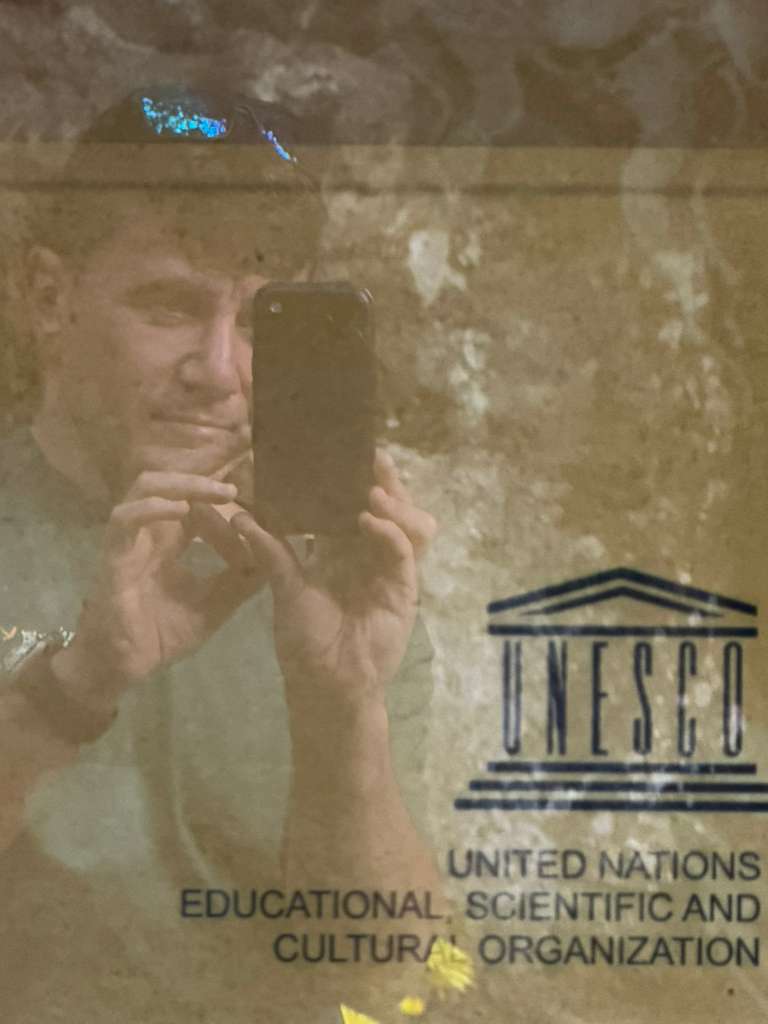
“When the path is beautiful, do not ask where it leads.” — Zen proverb
Welcome to my travel photography!
“When the path is beautiful, do not ask where it leads.” — Zen proverb
Welcome to my travel photography!
For as long as I can remember, my path has been one of discovery—seeking beauty, timelessness, and connection in every corner of the world. It has also been a journey of deep learning and understanding. I’ve been an avid traveler (or perhaps a travel addict?) for most of my life. My love for travel began long before I ever left home: as a child, I drew a fantasy map of my grandparents’ apartment and “traveled” through it with my cousin Sonya, imagining adventures in every corner. Nearly 90 countries and countless moments of awe later, I’m excited to share this journey with you.
Thanks to the tireless and ingenious programming of Diagilev, we’re now able to present about fifteen percent of the images I’ve accumulated over the years. More will be released in small batches depending on your interest. While the first release leans toward museum photography, later ones will include more nature, architecture, culture, and general travel experiences. If you’d like to receive email notifications about new releases, feel free to reach out—no commercial use, ever.
Throughout my travels, I’ve been drawn to two intertwined kinds of discovery. One is intellectual: learning why the world is the way it is. History became my guide, shaping my perspective and filling my camera roll with museums and old buildings. To me, history is not the past—it is the key to understanding the present and how the world became what it is. The other is emotional: seeking moments of elevation—spirituality, beauty, harmony—often found in nature, monasteries, and ancient sacred spaces. Together, these impulses shape my photography. It invites you to learn, admire, and soar—to rise above the mundane and see the world through a lens of curiosity and wonder.
Much of my later travel became possible thanks to my job with Delta Air Lines, but the wanderlust began years earlier. By the time I joined the industry, I had already visited over 35 countries and lived in several—largely thanks to a backpacking journey around the world with Luis León, whose face appears in many early photos. I grew up in Ufa in the USSR, and since leaving it I have lived, studied, and worked in Latvia, the United States, France, South Korea, Canada, Spain, Italy, Brazil, Japan, and Colombia.
A life of near-constant movement may seem a little crazy, but it has deepened my understanding of the world and produced the photography you are about to see. Over the years, my style has evolved—more intentional, more refined—yet its core remains the same: a search for understanding, timeless beauty, and a connection to those who walked this earth long before us.
I hope these photos stir something in your soul, just as they did in mine. I’d love to hear from you—whether reactions, suggestions, corrections, or a request to be added to the email list for new releases (no commercial use, I promise). You can learn more about my travels here, and my academic life here.
Enjoy our shared journey!