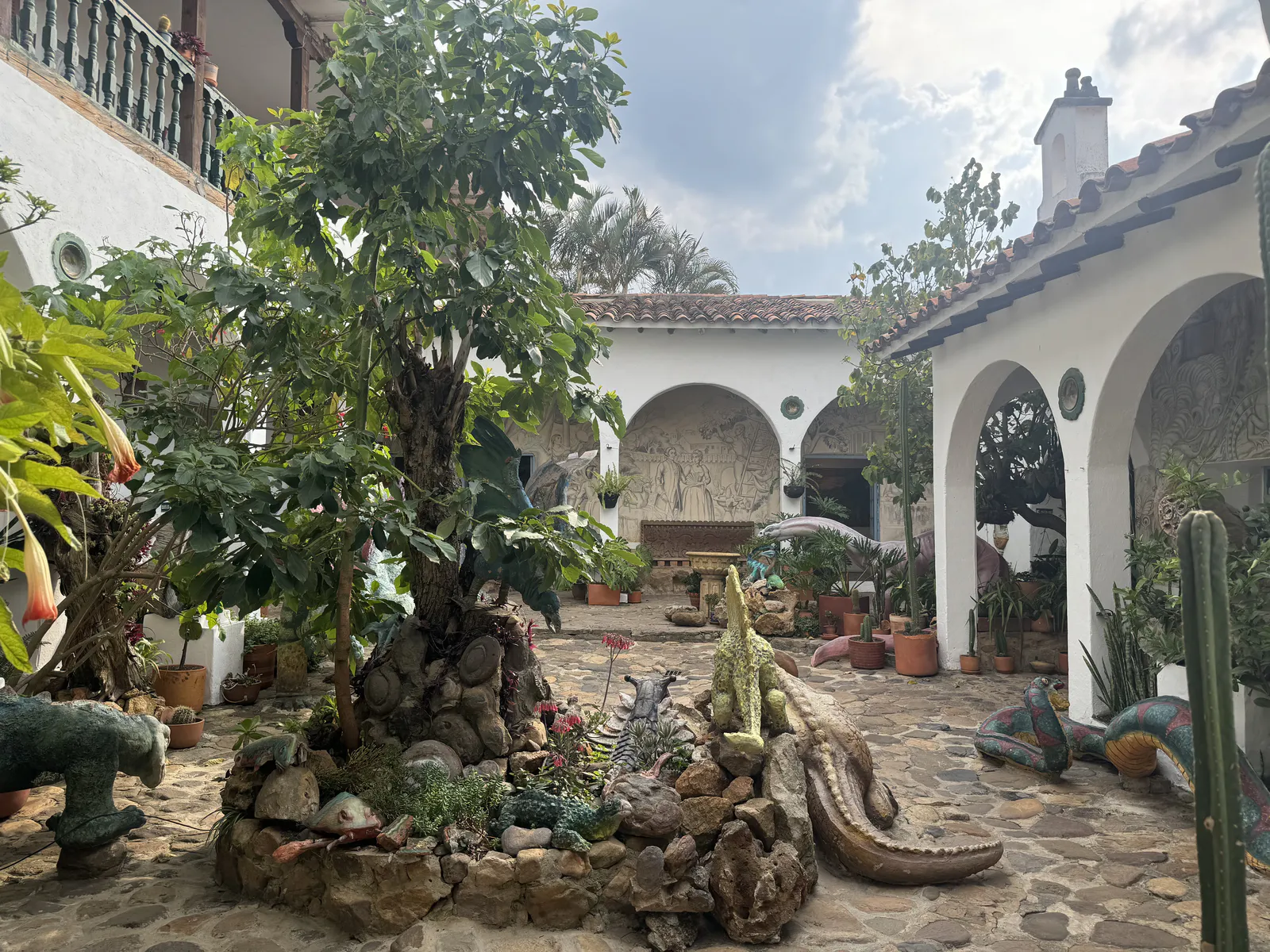
Museum Courtyard
Luis Alberto Acuña
This eclectic courtyard blends colonial architecture with fantastical sculptures and lush vegetation. Dinosaurs, jaguars, and snakes emerge from the stone paths, reflecting Acuña’s imaginative fusion of pre-Columbian, mythological, and surrealist influences.
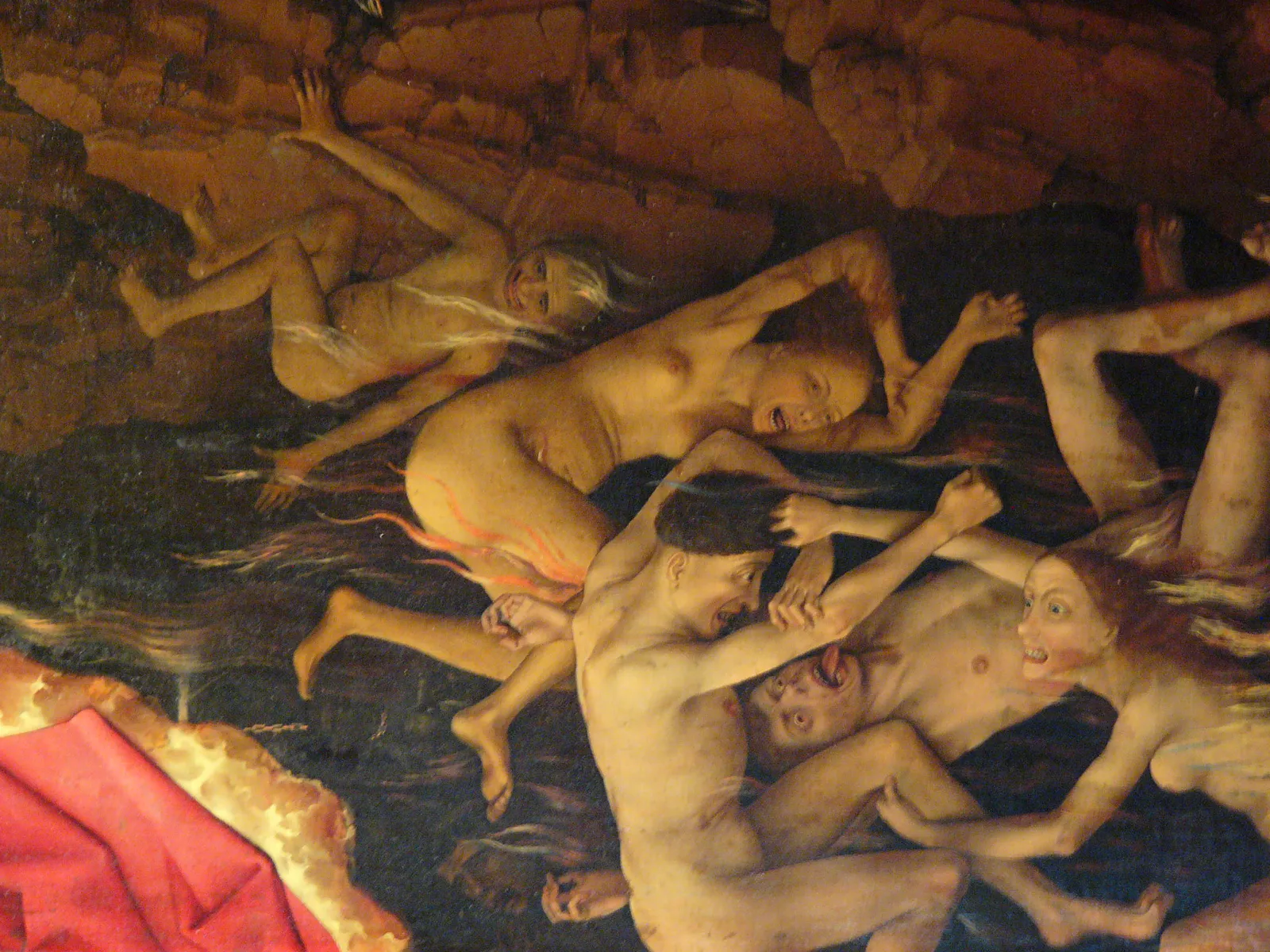
The Damned in Torment
Rogier van der Weyden
This detail from the Last Judgment Altarpiece (1445–50) intensifies the vision of damnation. Naked figures twist and collide as they plunge into dark flames, their limbs tangled in chaotic knots. Strained muscles and distorted faces display a studied range of terror and despair. For patients and caregivers at the Hôtel-Dieu, such visceral imagery sharpened awareness of sin, repentance, and the uncertainty of salvation.
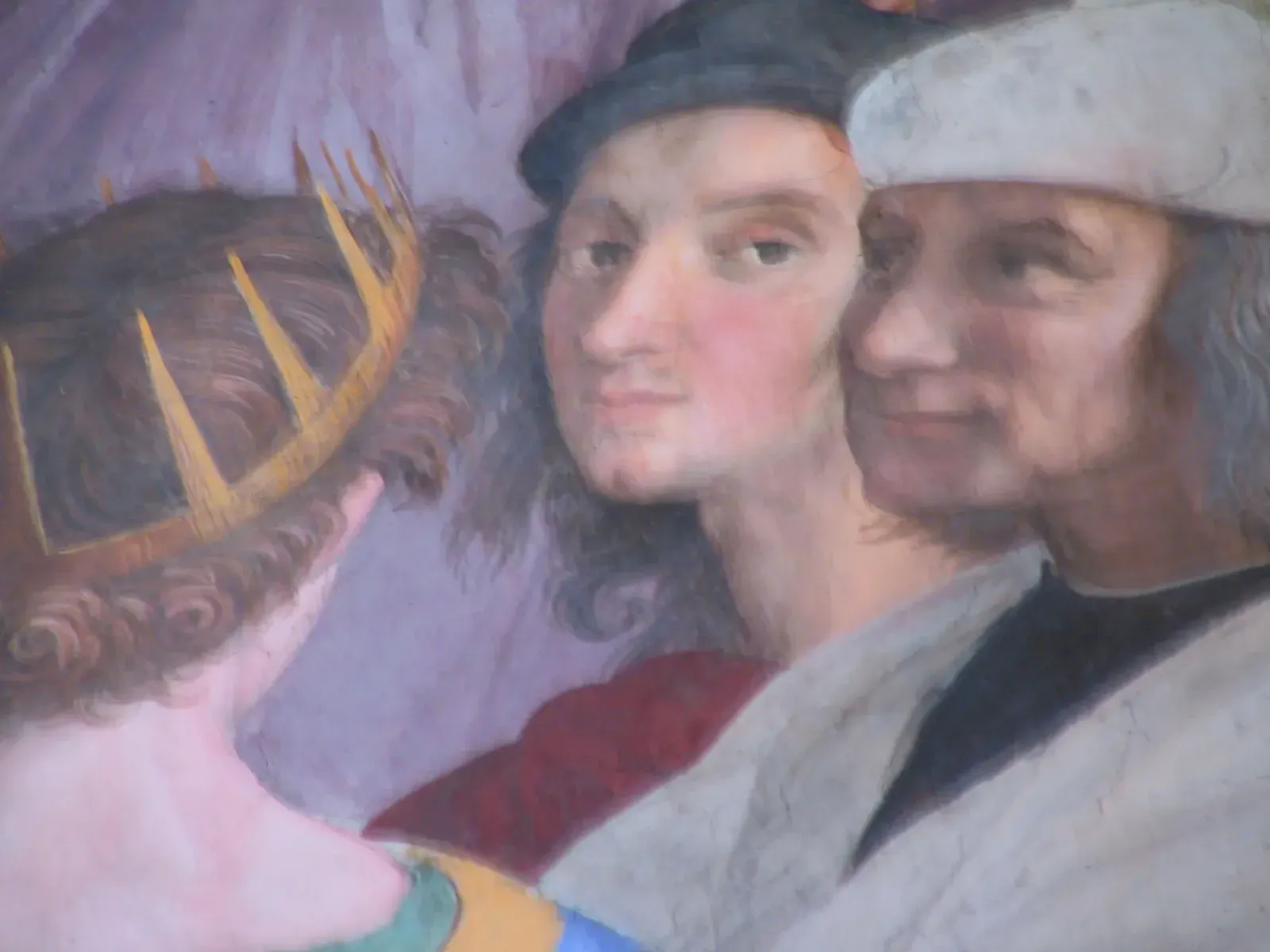
Raphael and Perugino (detail)
Raphael
This section of The School of Athens (1509-11) features a rare self-portrait of Raphael (center) alongside his teacher Perugino (right). Originating from the Italian High Renaissance, the work subtly inserts the artist into the legacy of classical knowledge, aligning painters with philosophers as bearers of intellectual ideals.
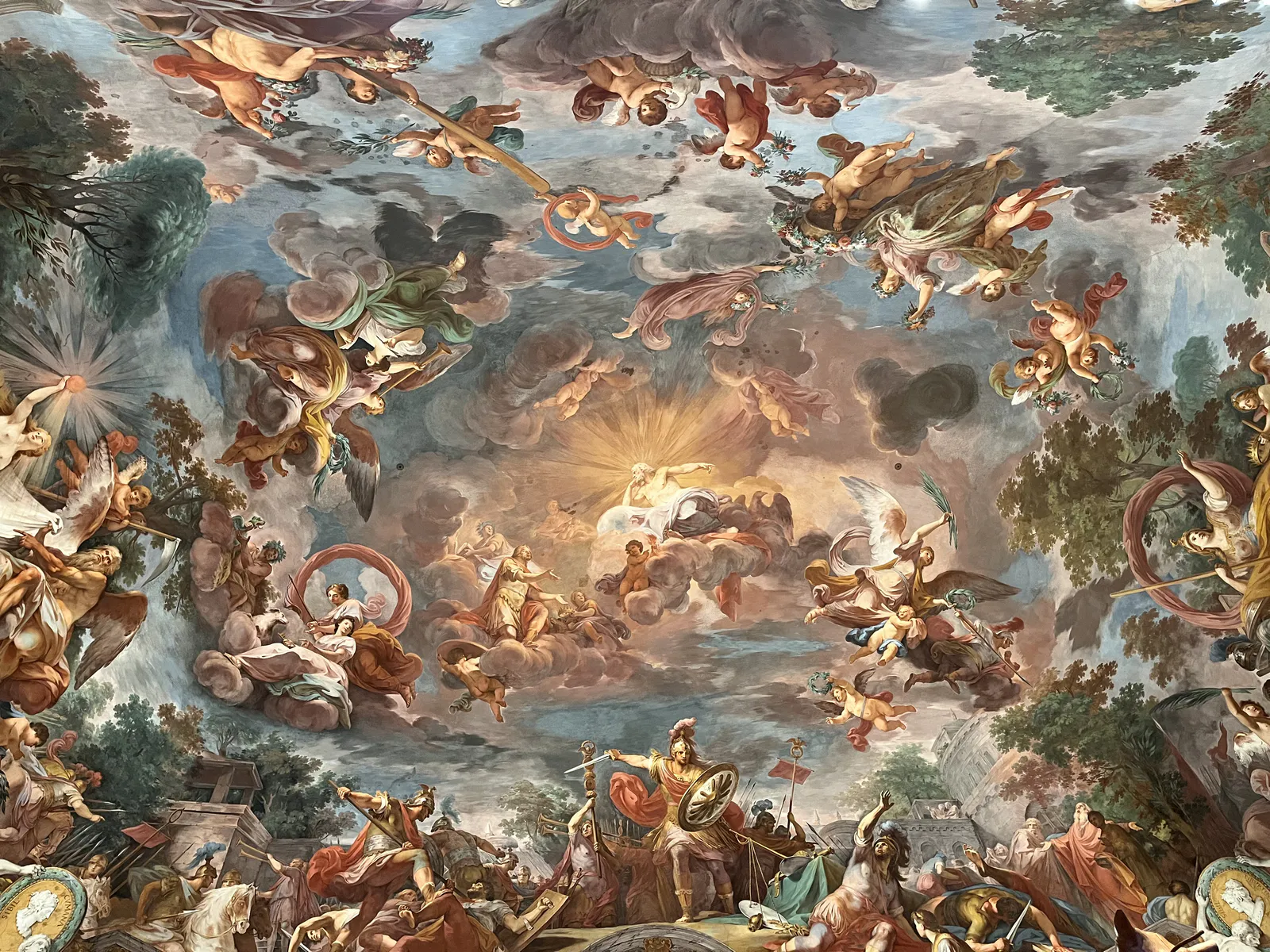
Roman Civilization and the Heroic Virtue of Honor
Mariano Rossi
This illusionistic ceiling (1775) shows a vortex of gods, heroes, and allegorical figures arranged in rising spirals. Rossi organized the composition with deep foreshortening to create a theatrical Baroque panorama. The central burst of light frames scenes of conflict and ascent, indicating how Roman culture linked civic honor with collective greatness.
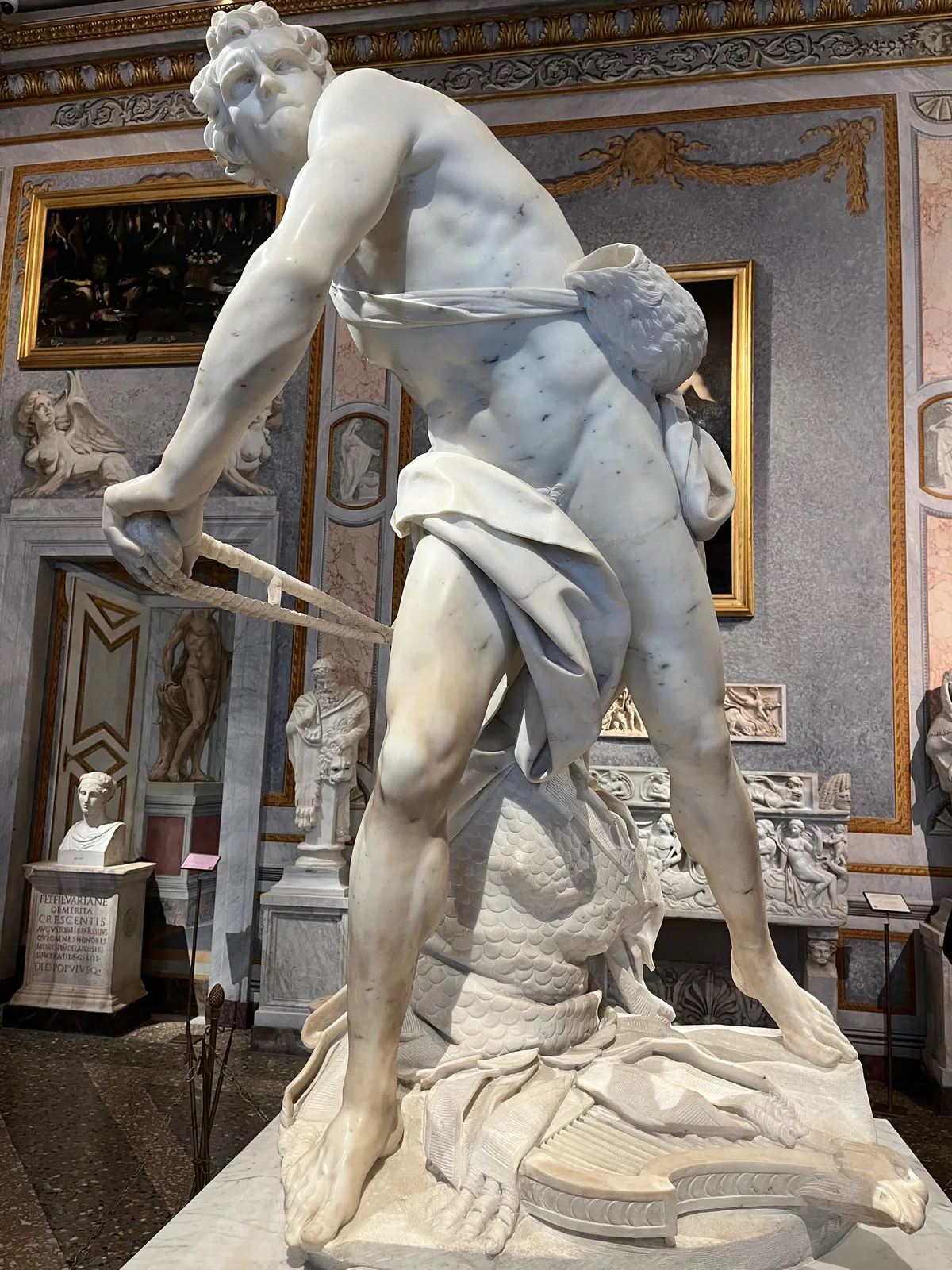
David
Gian Lorenzo Bernini
This electrifying sculpture (1623–24) captures David mid-swing as he prepares to strike Goliath. Commissioned by Cardinal Scipione Borghese, it breaks from static Renaissance models by freezing a moment of intense motion and psychological resolve. Bernini’s vivid realism and spiraling pose typify the Baroque celebration of drama and energy.
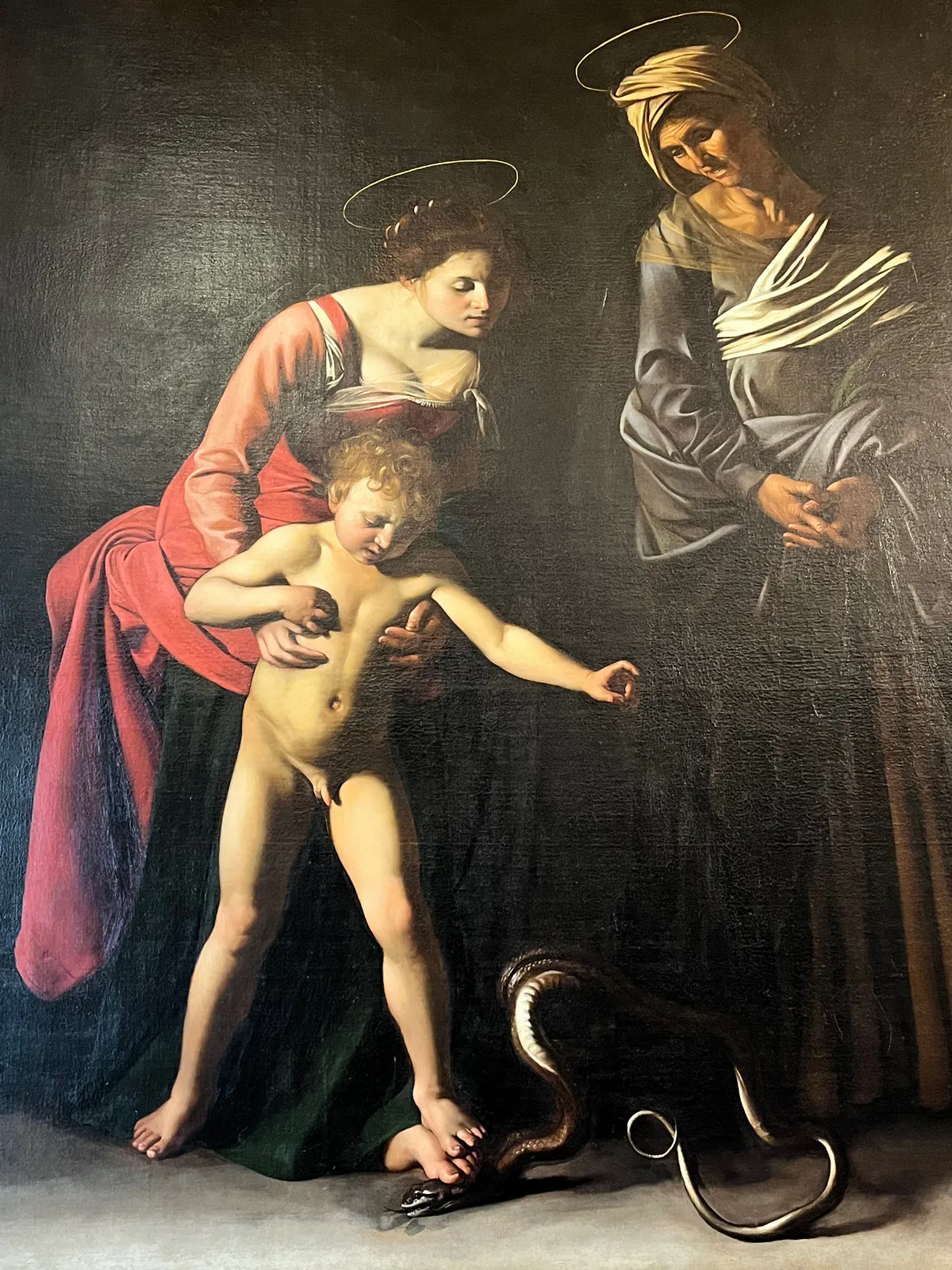
Madonna and Child with St Anne (Madonna dei Palafrenieri)
Caravaggio
This bold altarpiece (1605–06) shows the Virgin Mary guiding the Christ Child as he crushes a serpent—symbol of original sin. St Anne watches solemnly, evoking generational grace. Caravaggio’s realism and chiaroscuro infuse the holy scene with human emotion, provoking awe and controversy upon its brief display in St Peter’s.
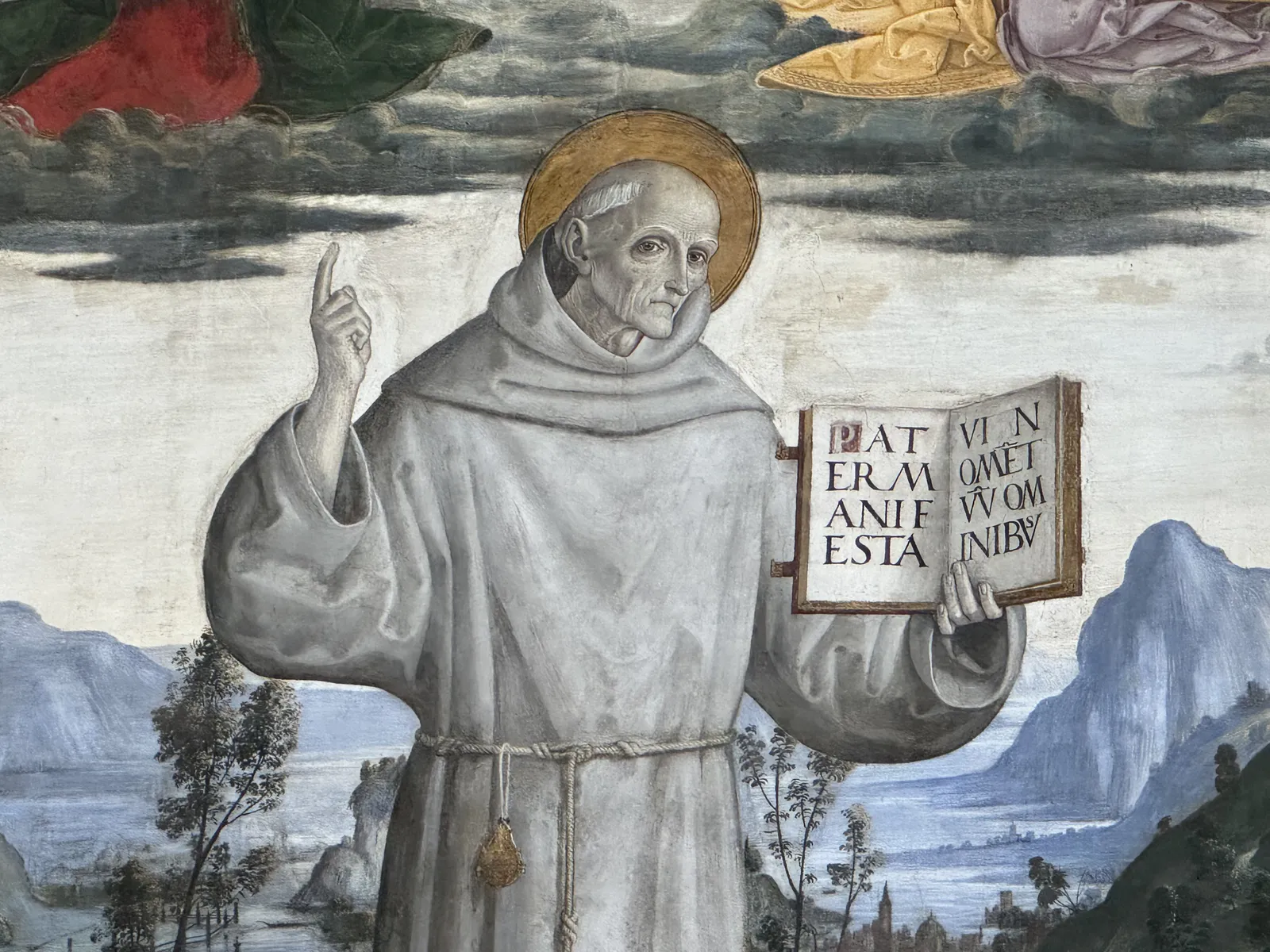
St. Bernardino (detail)
Pinturicchio
In this detail (1484–1486), Pinturicchio portrays St. Bernardino holding an open book inscribed PATER MANIFESTA NOMEN TUUM OMNIBUS (Father, manifest Your name to all). His raised finger points toward heaven, symbolizing his mission to glorify the Holy Name of Jesus and promote peace amid social discord.
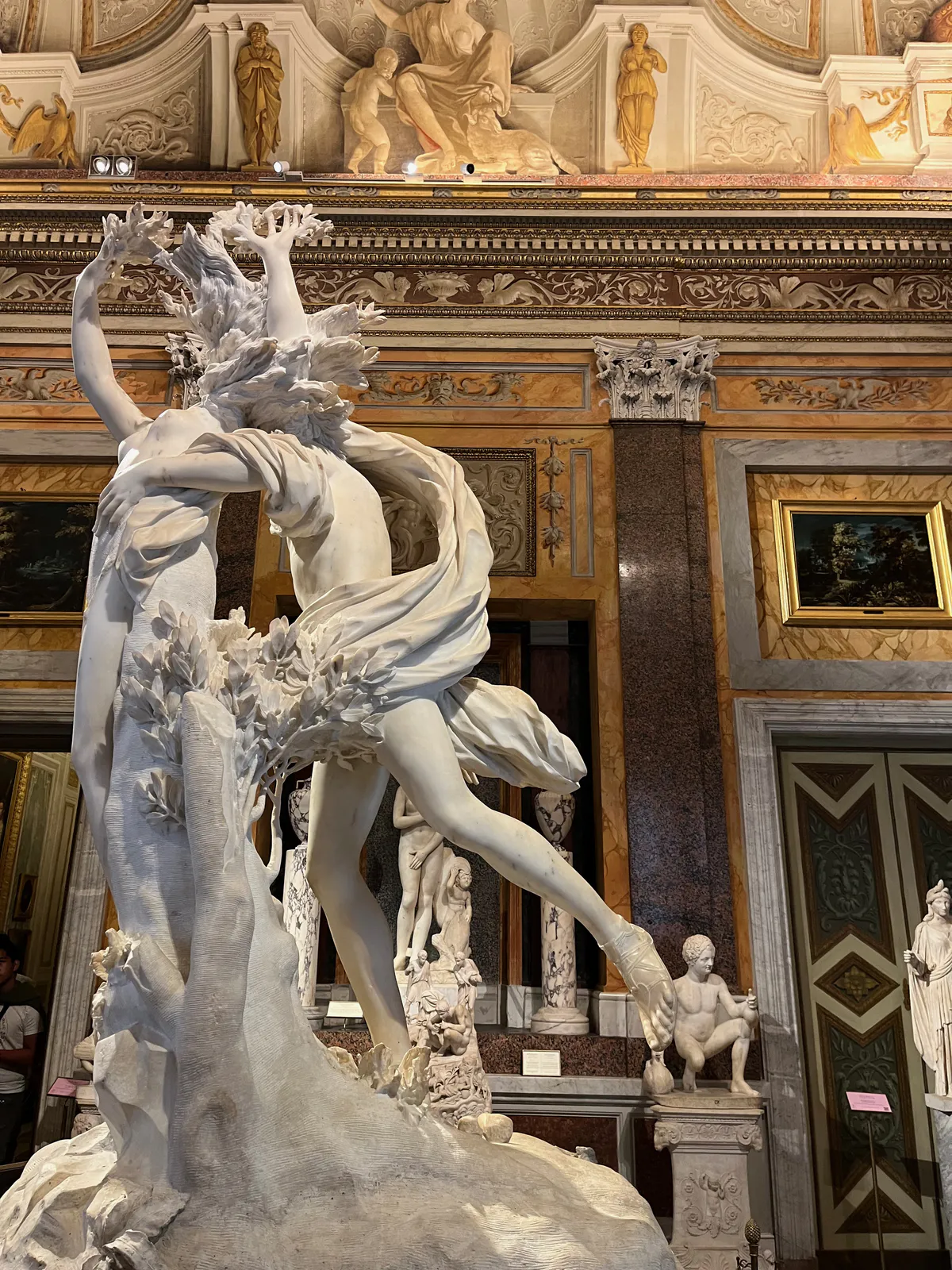
Apollo and Daphne
Bernini
Seen from behind, Bernini’s Apollo and Daphne (1622–25) reveals the spiraling tension of flight and pursuit. Daphne’s transformation accelerates—branches burst from her hair as Apollo strains forward, barely grounded. This angle heightens the illusion of motion, capturing the myth’s fleeting climax with lyrical virtuosity.
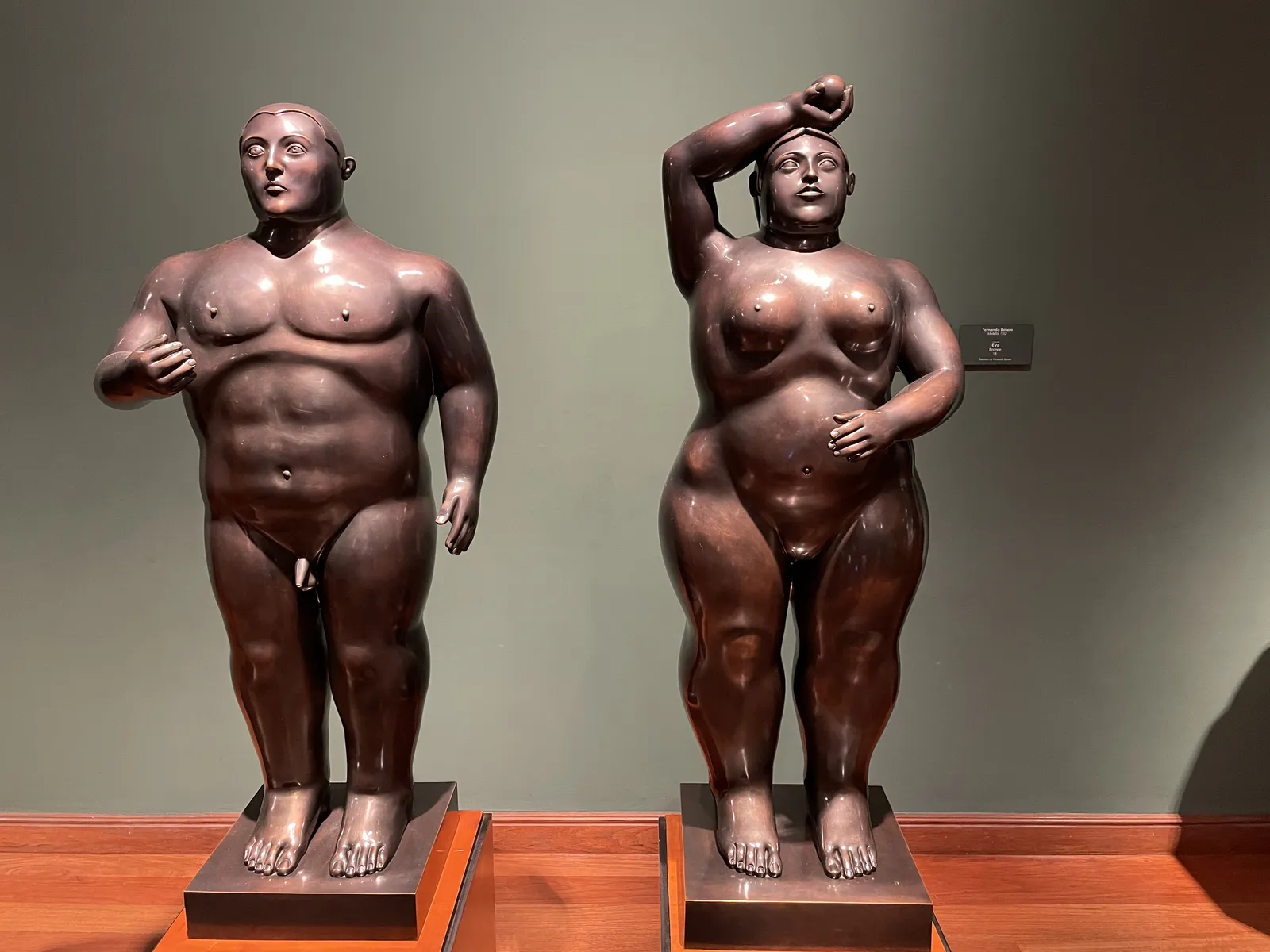
Adam and Eve
Fernando Botero
These 1999 bronze figures reimagine the biblical first humans with Botero’s hallmark voluminous style. Their serene, exaggerated forms strip the myth of guilt and drama, offering a playful yet dignified meditation on innocence, corporeality, and the timeless tension between flesh and spirit.
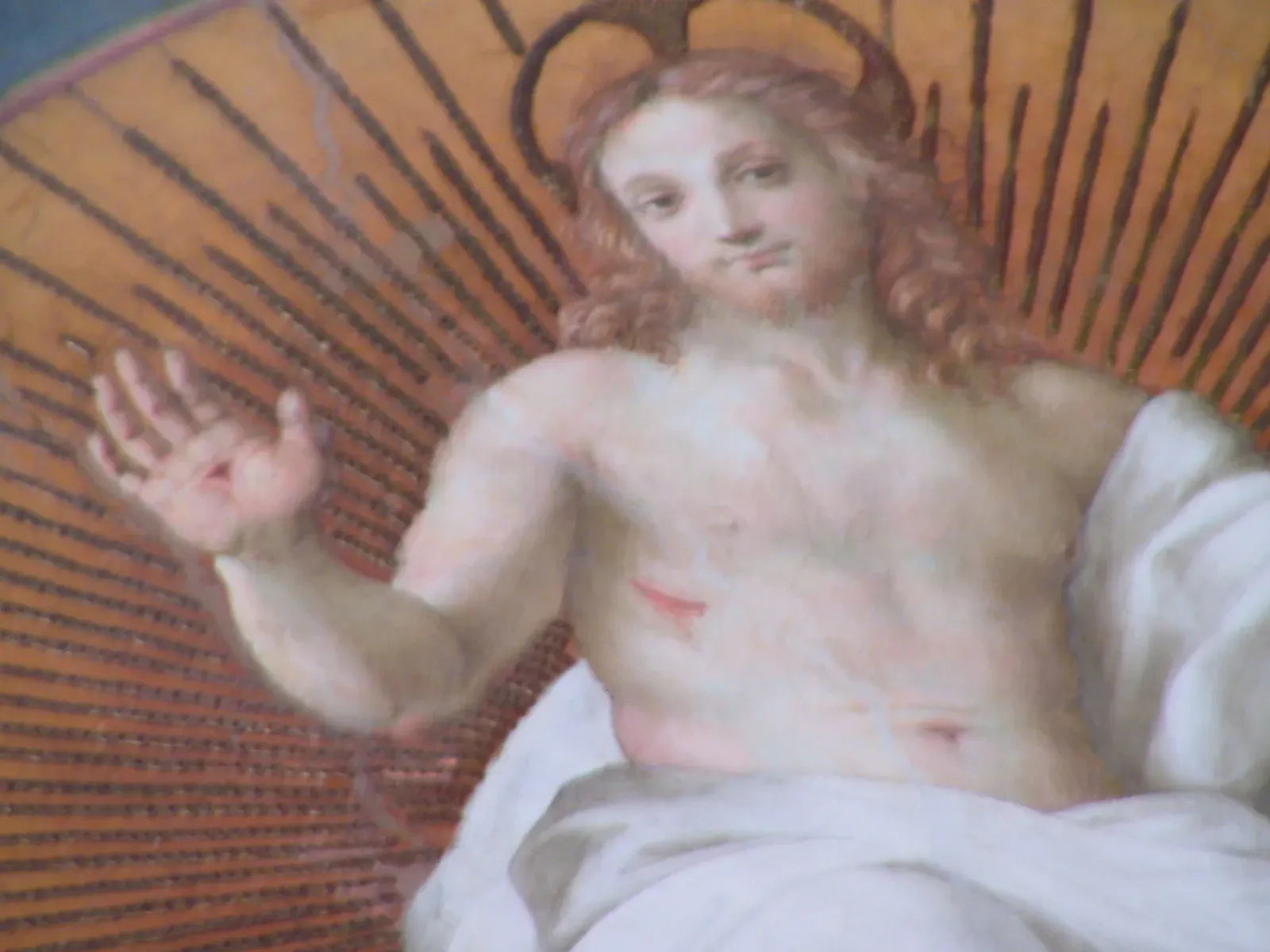
Christ in Glory (detail)
Raphael
The radiant figure of the risen Christ (1508–10) crowns the celestial register of The Disputation of the Sacrament. His raised hand and visible wounds recall both his Passion and his role as judge at the end of time. Encircled by golden rays, he visually affirms the doctrine of the Eucharist as the enduring, real presence of Christ.
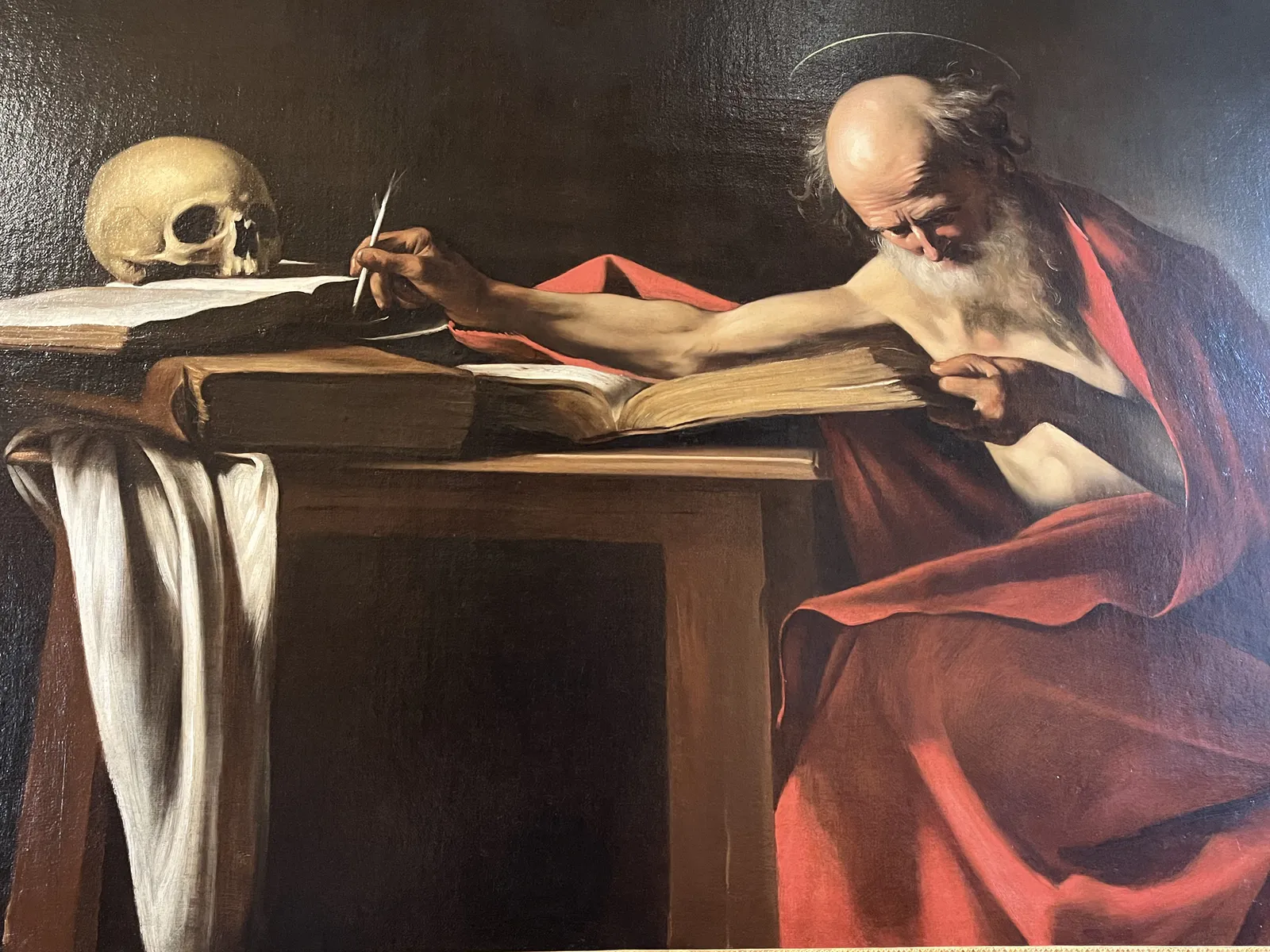
St. Jerome Writing
Caravaggio
This introspective painting (1605–6) shows Saint Jerome translating the Bible, immersed in thought. A skull atop the desk serves as a memento mori (remembrance of death), while dramatic lighting and vivid red drapery highlight the tension between divine labor and mortal fragility. Caravaggio transforms study into a spiritual battleground of flesh, faith, and time.
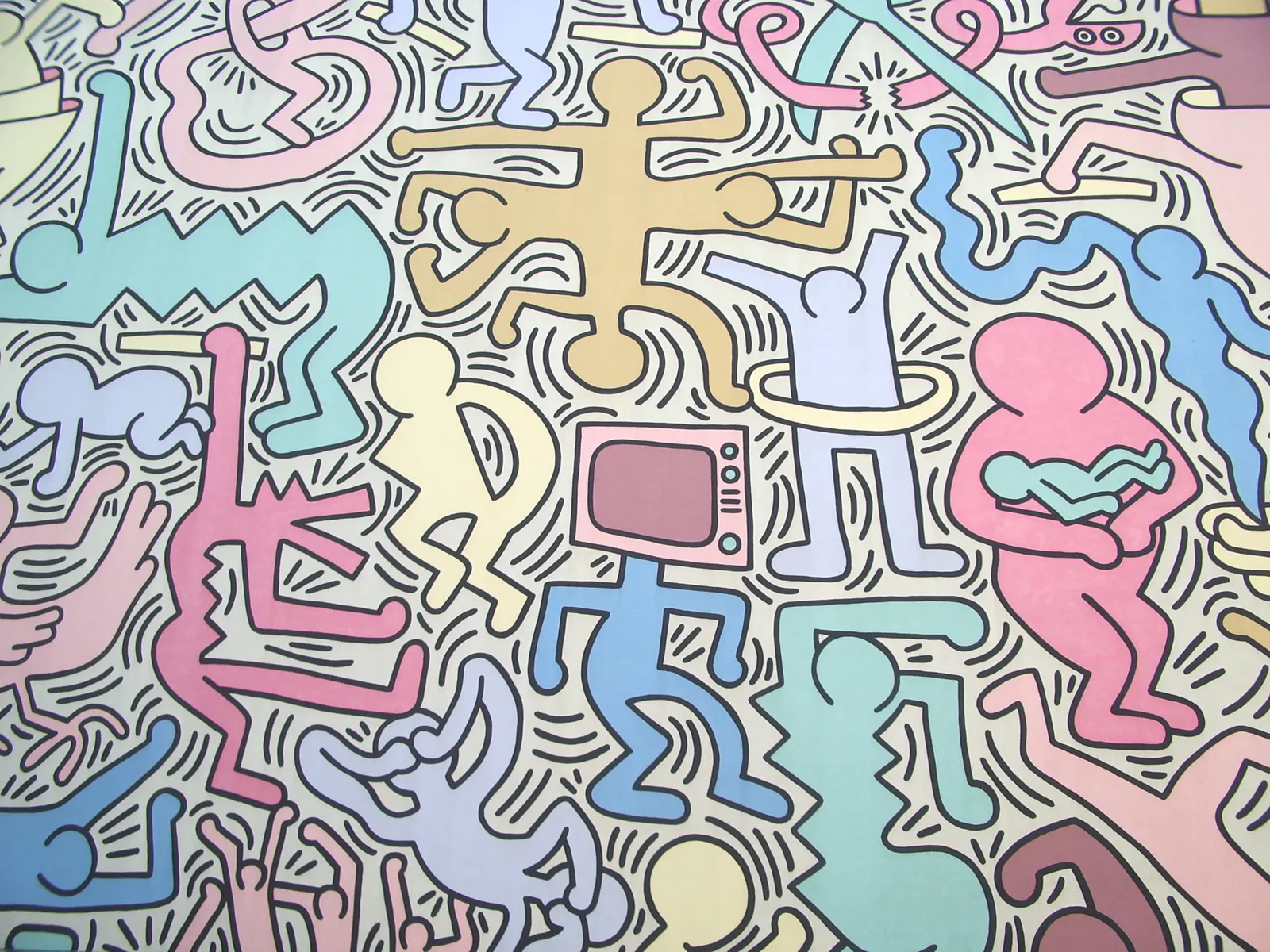
Tuttomondo
Keith Haring
This section of Tuttomondo (1989) showcases Keith Haring’s vibrant visual language with simplified human forms, radiant lines, and vivid colors in rhythmic harmony. The mural, painted in Pisa, celebrates peace and collective action, with each figure symbolizing a social or spiritual force working toward global unity. Haring’s work demonstrates the power of art to convey universal themes of cooperation and harmony.
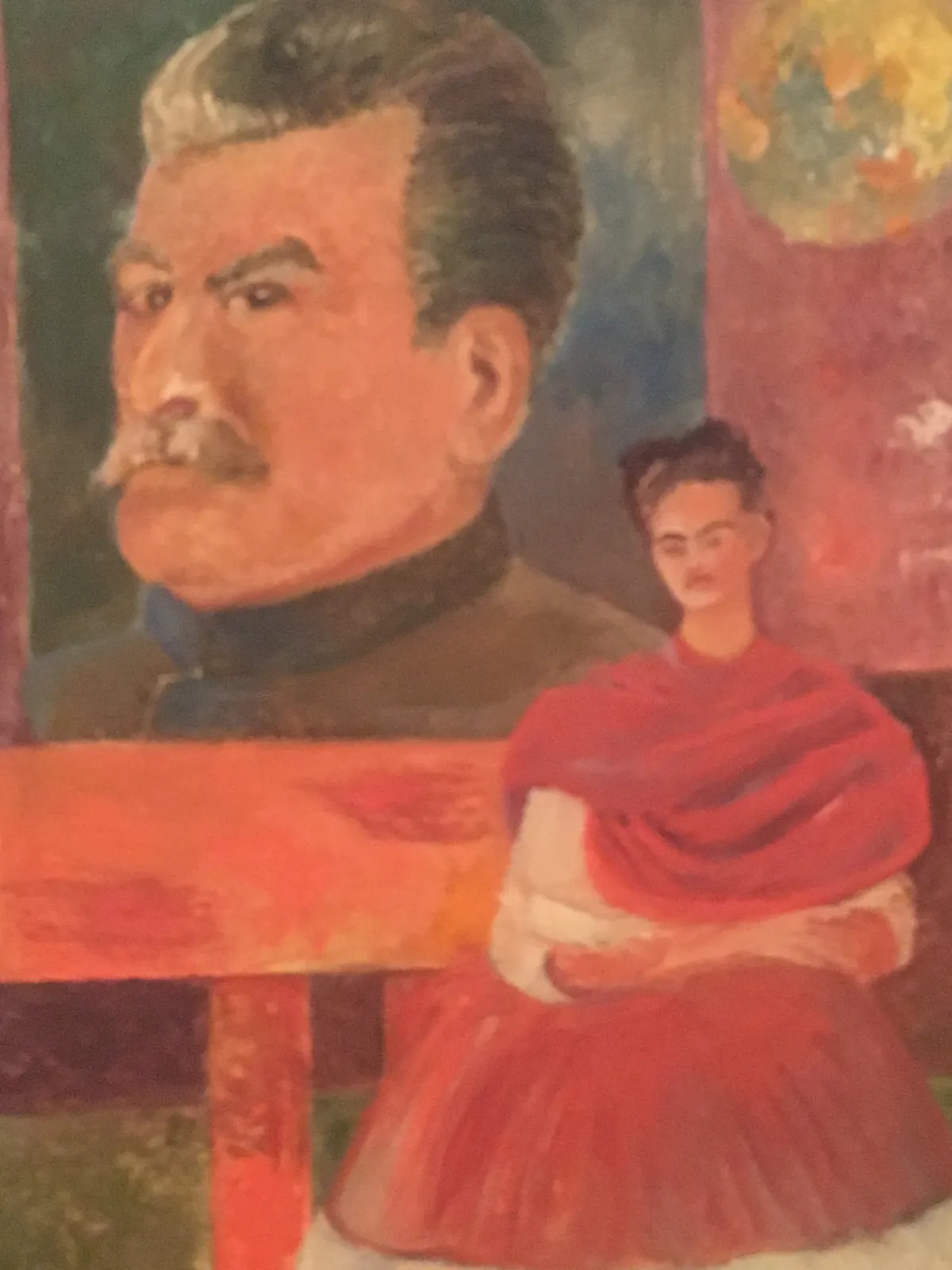
Self-Portrait with Stalin
Frida Kahlo
Painted in 1954, right before death, this political work shows Kahlo seated beside an imposing image of Stalin, whom she revered late in life. The portrait—originally titled Peace on Earth so the Marxist Science may Save the Sick and Those Oppressed by Criminal Yankee Capitalism—reflects her Marxist convictions and final artistic ideological defiance.
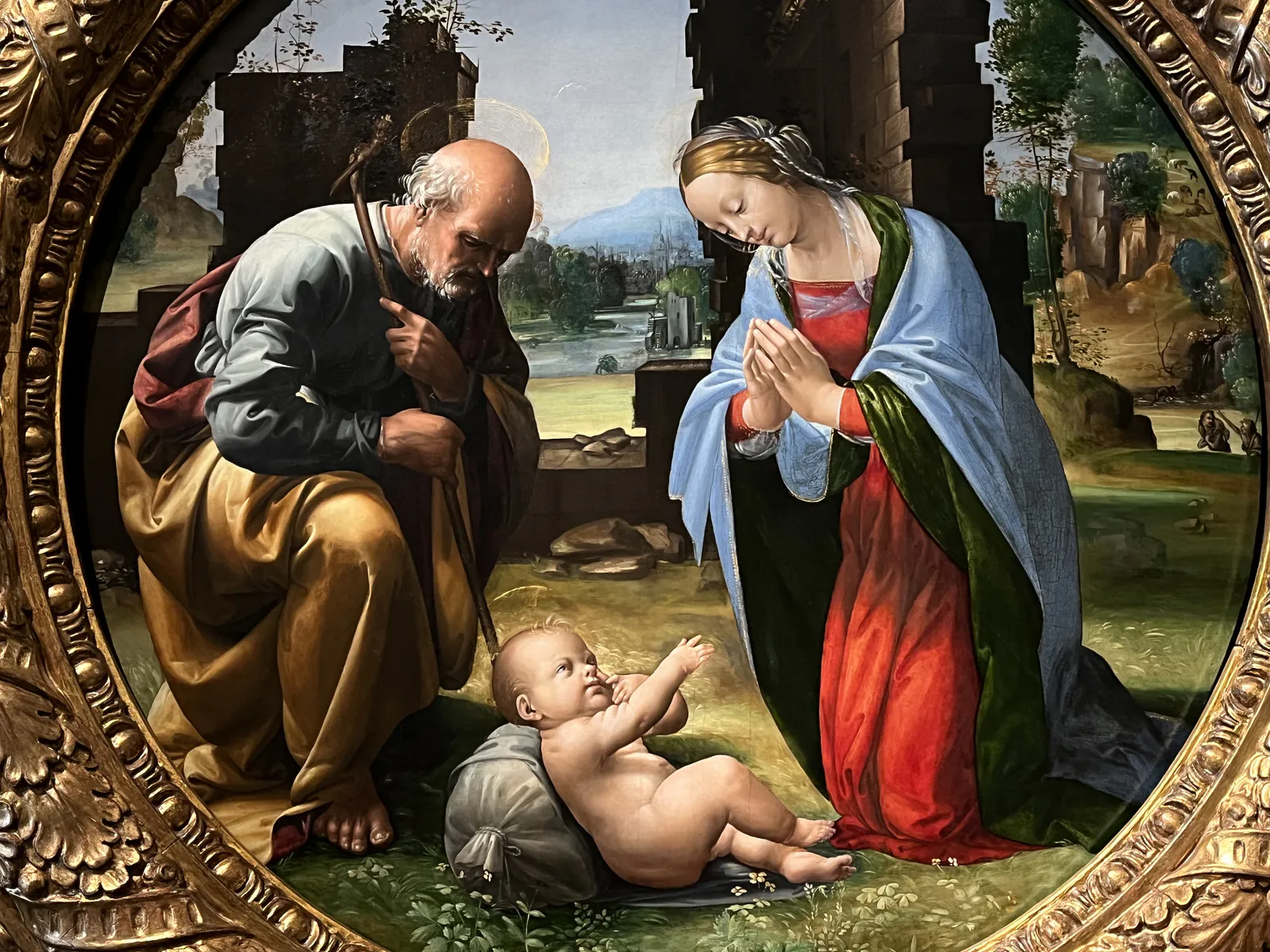
Adoration of the Child (detail)
Fra Bartolomeo
This tondo or circular painting (c.1495), Mary and Joseph kneel in reverence before the infant Christ, who rests on a sack amid delicate vegetation. The ruined architecture behind them symbolizes the fall of paganism, while the balanced composition and radiant palette reflect Bartolomeo’s early embrace of Renaissance ideals.
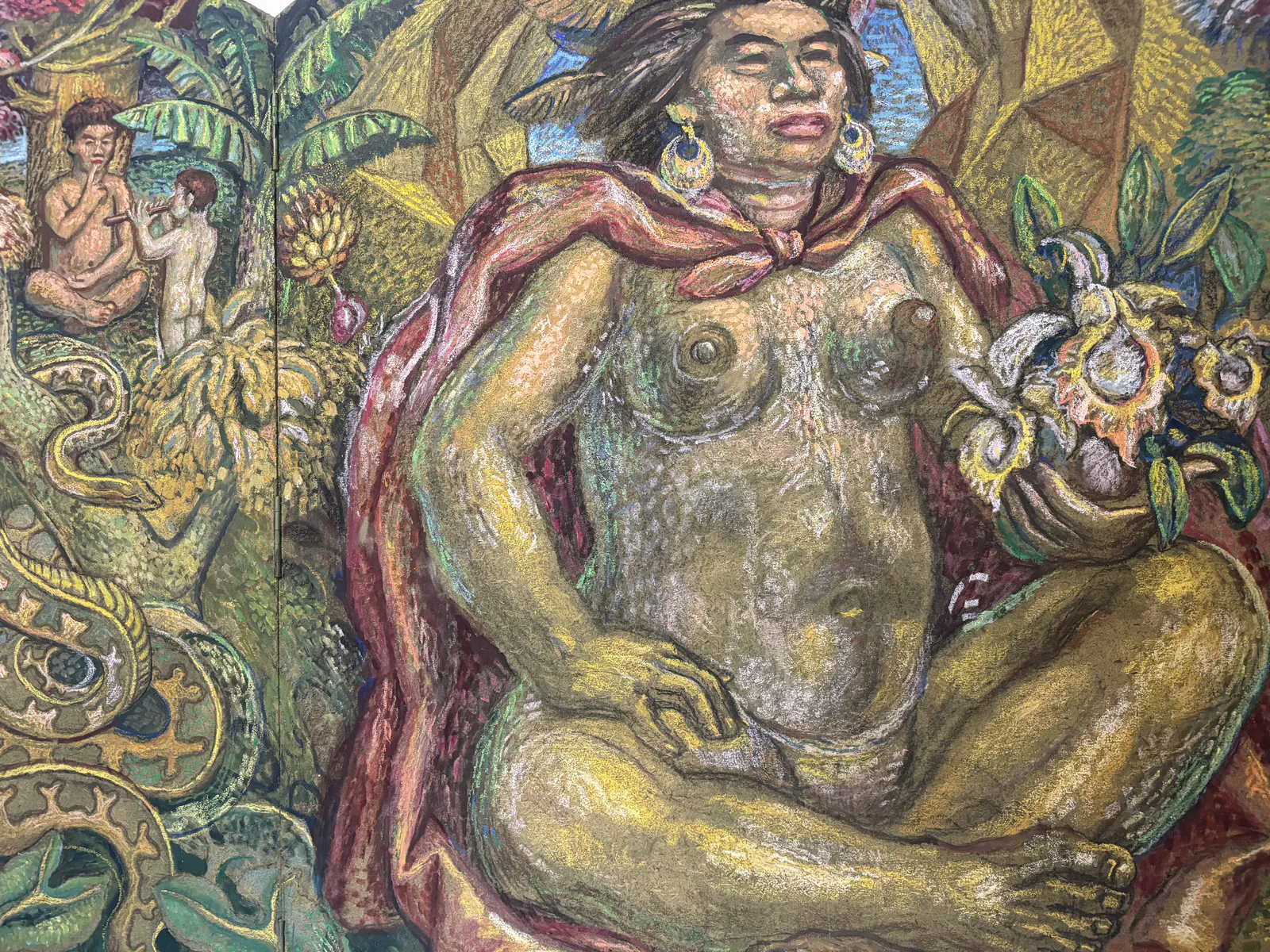
Mapiripana
Luis Alberto Acuña
Inspired by a myth from La Vorágine (a novel by José Eustasio Rivera), this 1950s painting depicts Mapiripana, a river spirit who guards silence and nature’s purity. When a missionary attempts to capture her, she punishes him by birthing monstrous twins—a vampire and an owl. In his final feverish agony, he sees a blue butterfly, symbol of his soul’s escape and eternal remorse.
“When the path is beautiful, do not ask where it leads.” — Zen proverb
Welcome to my travel photography!
“When the path is beautiful, do not ask where it leads.” — Zen proverb
Welcome to my travel photography!
For as long as I can remember, my path has been one of discovery—seeking beauty, timelessness, and connection in every corner of the world. It has also been a journey of deep learning and understanding. I’ve been an avid traveler (or perhaps a travel addict?) for most of my life. My love for travel began long before I ever left home: as a child, I drew a fantasy map of my grandparents’ apartment and “traveled” through it with my cousin Sonya, imagining adventures in every corner. Nearly 90 countries and countless moments of awe later, I’m excited to share this journey with you.
Thanks to the tireless and ingenious programming of Diagilev, we’re now able to present about fifteen percent of the images I’ve accumulated over the years. More will be released in small batches depending on your interest. While the first release leans toward museum photography, later ones will include more nature, architecture, culture, and general travel experiences. If you’d like to receive email notifications about new releases, feel free to reach out—no commercial use, ever.
Throughout my travels, I’ve been drawn to two intertwined kinds of discovery. One is intellectual: learning why the world is the way it is. History became my guide, shaping my perspective and filling my camera roll with museums and old buildings. To me, history is not the past—it is the key to understanding the present and how the world became what it is. The other is emotional: seeking moments of elevation—spirituality, beauty, harmony—often found in nature, monasteries, and ancient sacred spaces. Together, these impulses shape my photography. It invites you to learn, admire, and soar—to rise above the mundane and see the world through a lens of curiosity and wonder.
Much of my later travel became possible thanks to my job with Delta Air Lines, but the wanderlust began years earlier. By the time I joined the industry, I had already visited over 35 countries and lived in several—largely thanks to a backpacking journey around the world with Luis León, whose face appears in many early photos. I grew up in Ufa in the USSR, and since leaving it I have lived, studied, and worked in Latvia, the United States, France, South Korea, Canada, Spain, Italy, Brazil, Japan, and Colombia.
A life of near-constant movement may seem a little crazy, but it has deepened my understanding of the world and produced the photography you are about to see. Over the years, my style has evolved—more intentional, more refined—yet its core remains the same: a search for understanding, timeless beauty, and a connection to those who walked this earth long before us.
I hope these photos stir something in your soul, just as they did in mine. I’d love to hear from you—whether reactions, suggestions, corrections, or a request to be added to the email list for new releases (no commercial use, I promise). You can learn more about my travels here, and my academic life here.
Enjoy our shared journey!